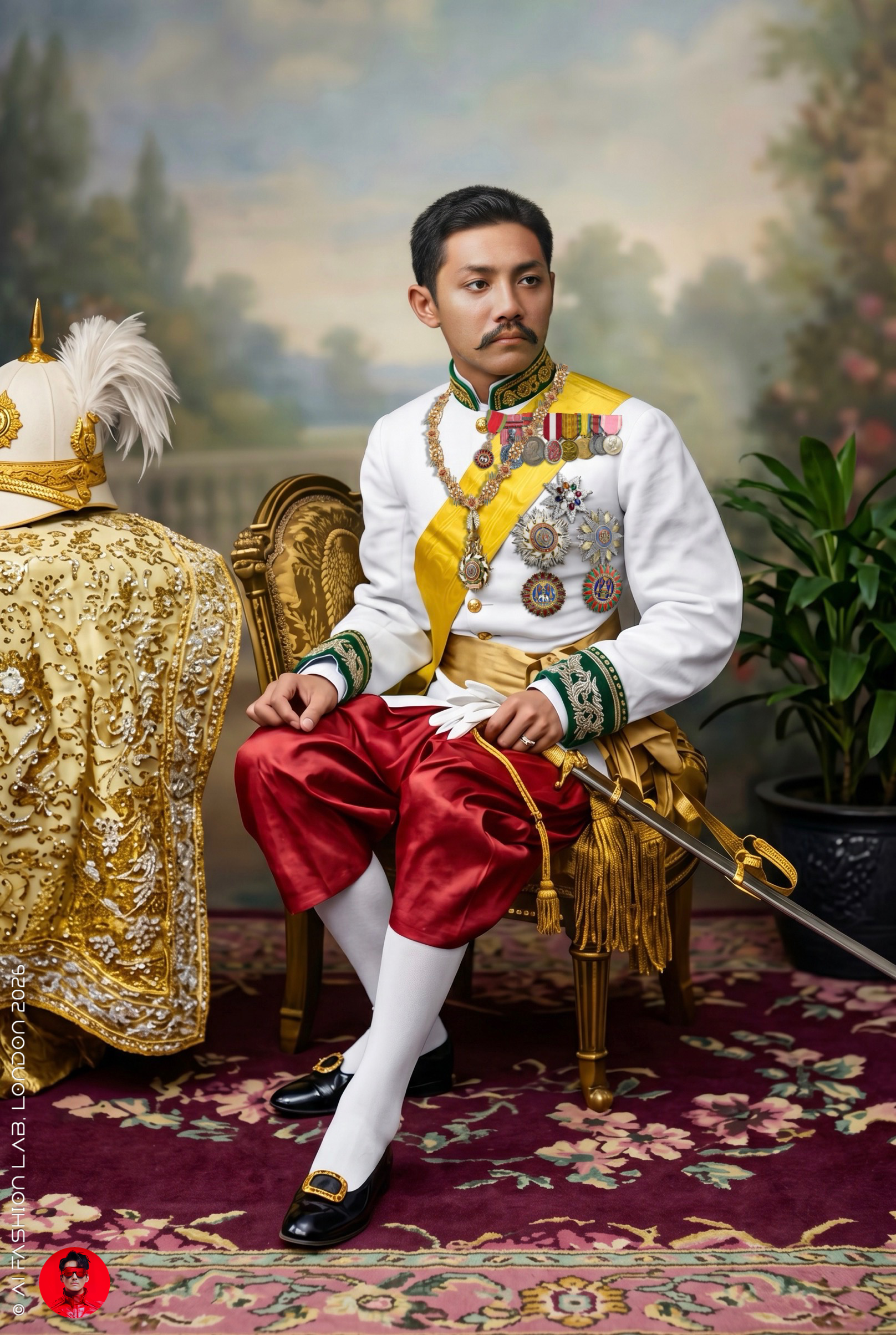
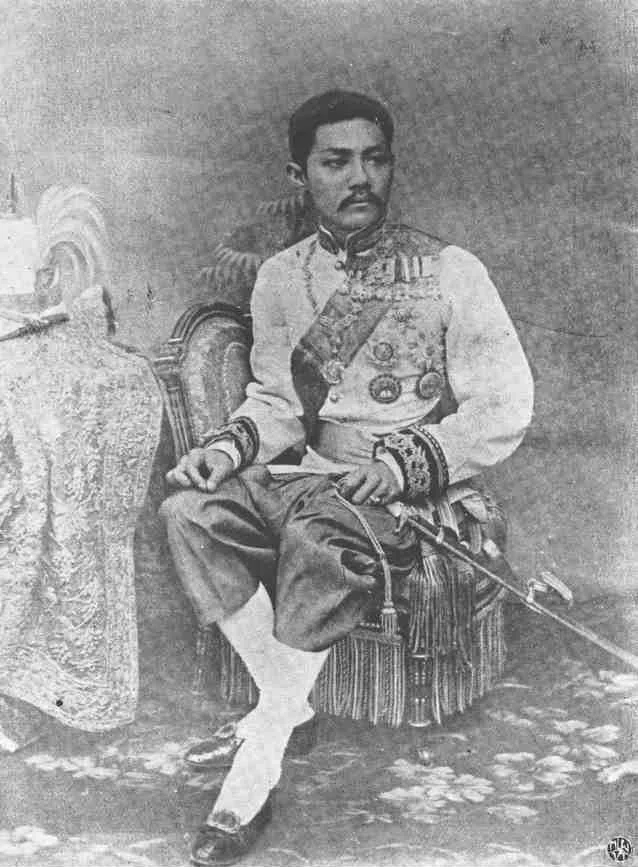
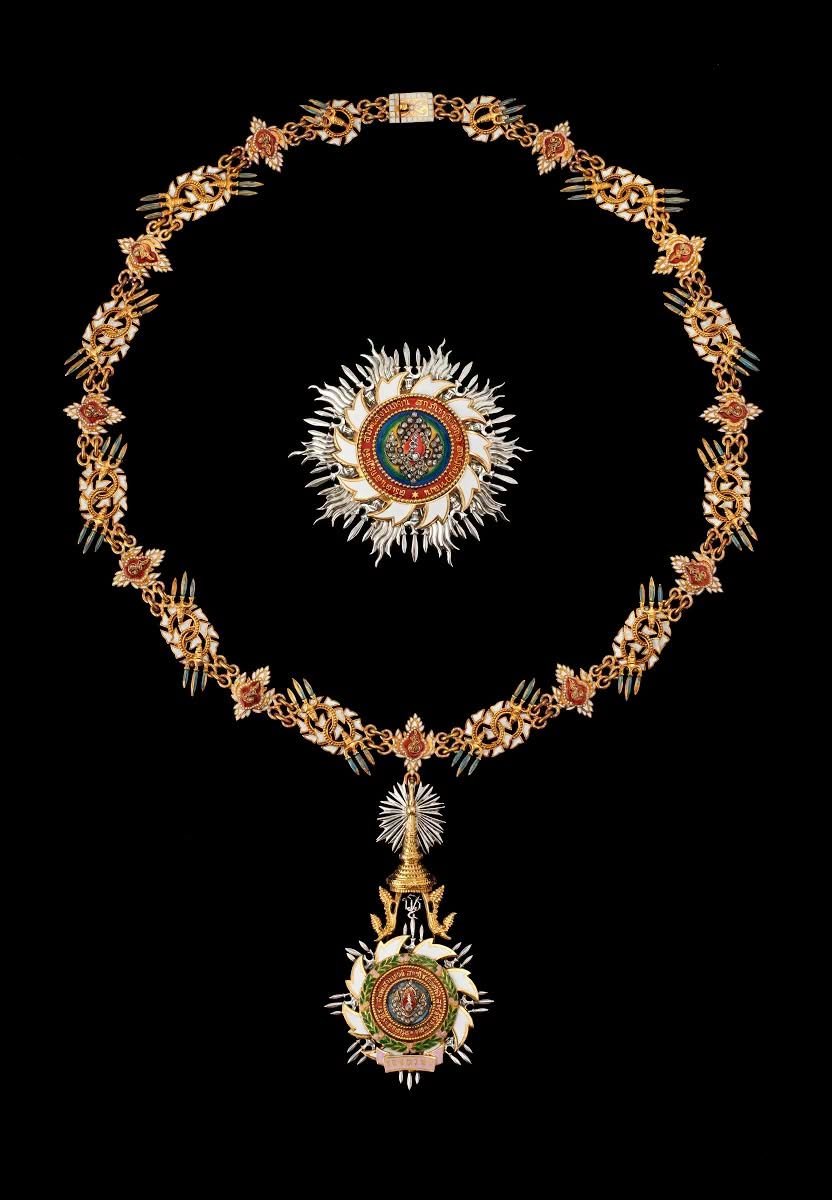
สมเด็จพระราชปิตุลา บรมพงศาภิมุข เจ้าฟ้ากรมพระยาภาณุพันธุวงศ์วรเดช และฉลองพระองค์ "คณาภยันดร" แห่ง เครื่องขัตติยราชอิสริยาภรณ์อันมีเกียรติคุณรุ่งเรืองยิ่งมหาจักรีบรมราชวงศ์
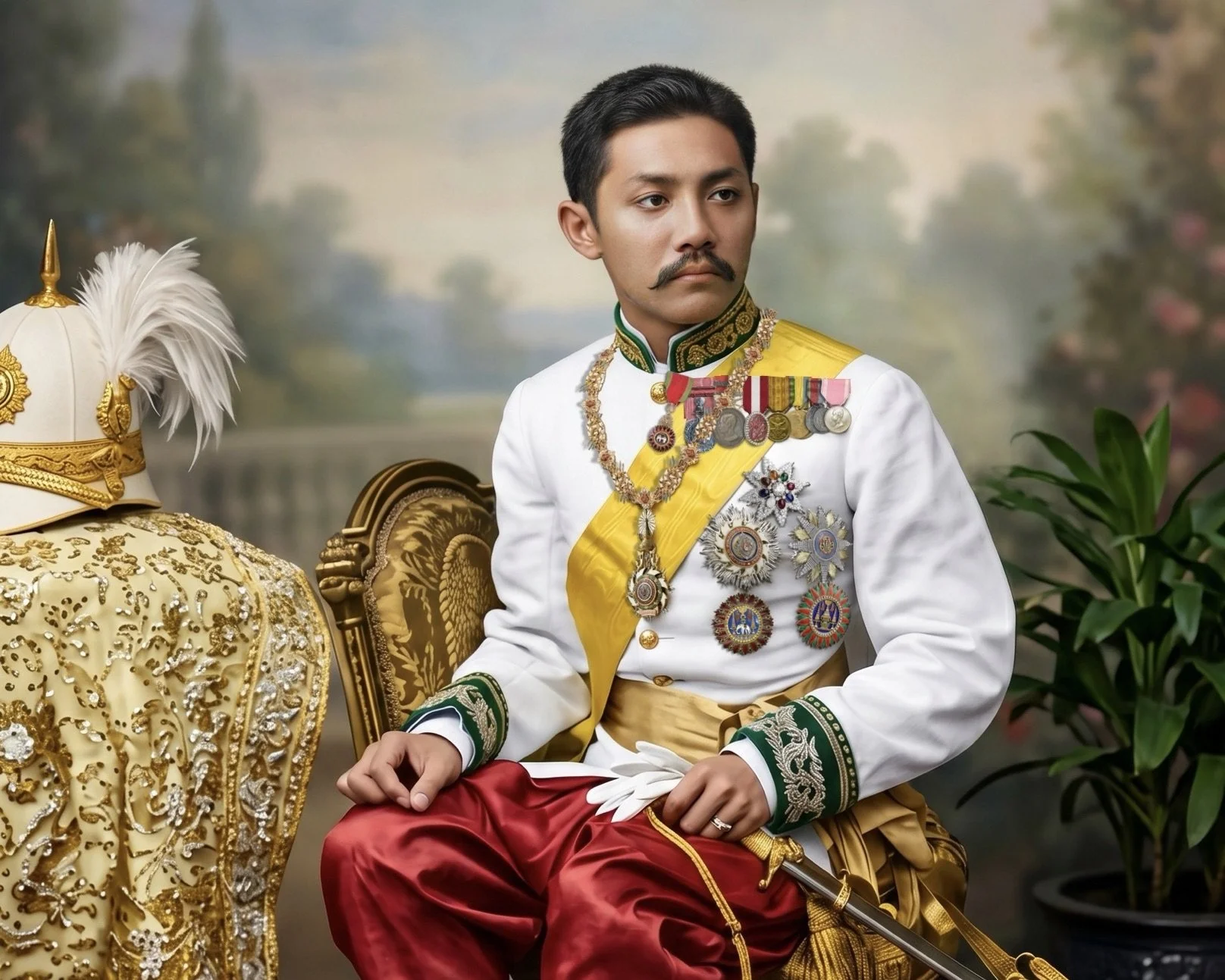
สมเด็จพระราชปิตุลา บรมพงศาภิมุข เจ้าฟ้ากรมพระยาภาณุพันธุวงศ์วรเดช และฉลองพระองค์ "คณาภยันดร" แห่ง เครื่องขัตติยราชอิสริยาภรณ์อันมีเกียรติคุณรุ่งเรืองยิ่งมหาจักรีบรมราชวงศ์
ภาพที่ได้รับการบูรณะและสร้างสรรค์ขึ้นด้วยเทคโนโลยี AI ภาพนี้ เป็นพระฉายาลักษณ์ของ สมเด็จพระราชปิตุลา บรมพงศาภิมุข เจ้าฟ้ากรมพระยาภาณุพันธุวงศ์วรเดช ขณะทรงฉลองพระองค์ "คณาภยันดร" แห่ง เครื่องขัตติยราชอิสริยาภรณ์อันมีเกียรติคุณรุ่งเรืองยิ่งมหาจักรีบรมราชวงศ์ ในฐานะองค์สมาชิกฝ่ายหน้า
สมเด็จพระราชปิตุลา บรมพงศาภิมุข เจ้าฟ้าภาณุรังษีสว่างวงศ์ กรมพระยาภาณุพันธุวงศ์วรเดช (๑๑ มกราคม พ.ศ. ๒๔๐๓ - ๑๓ มิถุนายน พ.ศ. ๒๔๗๑) เป็นพระราชโอรสในพระบาทสมเด็จพระจอมเกล้าเจ้าอยู่หัว และสมเด็จพระเทพศิรินทราบรมราชินี เป็นพระโสทรานุชาในพระบาทสมเด็จพระจุลจอมเกล้าเจ้าอยู่หัว
สมเด็จเจ้าฟ้าฯ กรมพระยาภาณุพันธุวงศ์วรเดช ชาววังมักเอ่ยพระนามอย่างลำลองว่า "สมเด็จพระราชปิตุลาฯ" ส่วนชาวบ้านมักออกพระนามว่า "สมเด็จวังบูรพา" เพราะทรงมีวังชื่อว่า "วังบูรพาภิรมย์" ซึ่งก็คือตำแหน่งที่เป็นย่านวังบูรพาในปัจจุบัน ตามพระประวัตินั้น ทรงเป็นจอมพลในพระบาทสมเด็จพระปกเกล้าเจ้าอยู่หัวที่ทหารรักมาก เล่ากันมาว่าพวกทหารมักจะแบกพระองค์ท่านขึ้นบนบ่าแห่แหนในวาระที่มีการฉลองต่าง ๆ เช่น ฉลองคล้ายวันประสูติ เป็นต้น
พระองค์ทรงเป็นผู้ให้กำเนิดกิจการไปรษณีย์ในประเทศไทย เป็นต้นราชสกุลภาณุพันธุ์
ฉลองพระองค์คณาภยันดร คือชุดเครื่องแบบสำหรับฝ่ายหน้าในชั้นพระบรมวงศานุวงศ์ ใช้สวมคู่กับเครื่องขัตติยราชอิสริยาภรณ์มหาจักรีบรมราชวงศ์ ซึ่งเป็นเครื่องขัตติยราชอิสริยาภรณ์ชั้นสูงของราชสำนักสยาม
ผู้เป็นใหญ่แห่งเครื่องขัตติยราชอิสริยาภรณ์ฝ่ายหน้า เรียกว่า มหาสวามิศราธิบดี ได้แก่พระมหากษัตริย์ หรือพระบรมวงศานุวงศ์ที่ได้รับพระบรมราชโองการโปรดเกล้าฯ แต่งตั้ง คณะผู้ที่ได้รับพระราชทานเครื่องขัตติยราชอิสริยาภรณ์ฝ่ายหน้า เรียกว่า คณาภยันดร และผู้ที่ได้รับพระราชทานตราเฉพาะพระองค์ เรียกว่า ภราดร โดยสามารถใช้อักษรย่อ ภ.จ.ก. ต่อท้ายพระนามได้ เครื่องขัตติยราชอิสริยาภรณ์ฝ่ายหน้ามีจำนวนรวมทั้งสิ้น ๔๒ สำรับ
ฉลองพระองค์คณาภยันดรฝ่ายหน้าประกอบด้วย
๑. ฉลองพระองค์ราชปะแตนสีขาว คอและแถบข้อมือสีเขียว ปักดิ้นทองและเงิน ตราจักรและตรี
๒. พระภูษาโจงแพรสีแดง
๓. พระมาลาขาวยอดตรี ประดับขนนกการเวกสีขาว ปักพระยี่ก่าทอง และตราจักรีสีทอง
๔. พระแสงกระบี่จักรี
๕. สายสะพายสีเหลือง พาดจากพระอังสาซ้าย พร้อมสายสร้อย ตรามหาจักรี และดาราจักรี
_____________
เครื่องขัตติยราชอิสริยาภรณ์อันมีเกียรติคุณรุ่งเรืองยิ่งมหาจักรีบรมราชวงศ์
📜ประวัติ
เมื่อปี พ.ศ. ๒๔๒๕ ในโอกาสครบรอบการสถาปนากรุงเทพมหานครเป็นราชธานีมาเป็นเวลาครบ ๑๐๐ ปี พระบาทสมเด็จพระจุลจอมเกล้าเจ้าอยู่หัวจึงได้ทรงสร้างเครื่องราชอิสริยาภรณ์นี้ขึ้น เพื่อเป็นการระลึกถึงพระมหากรุณาธิคุณ และเพื่อเฉลิมพระเกียรติยศแห่งพระบาทสมเด็จพระพุทธยอดฟ้าจุฬาโลก ปฐมบรมกษัตริย์แห่งราชวงศ์จักรี พระราชทานนามว่า “เครื่องขัตติยราชอิสริยาภรณ์อันมีเกียรติคุณรุ่งเรืองยิ่งมหาจักรีบรมราชวงศ์” หรือเรียกอย่างย่อว่า “ตรามหาจักรีบรมราชวงศ์” สำหรับพระราชทานแก่พระบรมวงศานุวงศ์ที่สืบเชื้อสายโดยตรงจากพระบาทสมเด็จพระพุทธยอดฟ้าจุฬาโลก
ตรามหาจักรีบรมราชวงศ์นี้ มีพระมหากษัตริย์ทรงเป็นประธานแห่งเครื่องขัตติยราชอิสริยาภรณ์ และพระราชทานแก่พระบรมวงศานุวงศ์ รวมทั้งสิ้น ๗๑ สำรับ โดยแบ่งออกเป็น ๒ ฝ่าย ได้แก่
___
⚜️ฝ่ายหน้า
ผู้เป็นใหญ่แห่งเครื่องขัตติยราชอิสริยาภรณ์ฝ่ายหน้า เรียกว่า มหาสวามิศราธิบดี ได้แก่พระมหากษัตริย์ หรือพระบรมวงศานุวงศ์ที่ได้รับพระบรมราชโองการโปรดเกล้าฯ แต่งตั้ง คณะผู้ที่ได้รับพระราชทานเครื่องขัตติยราชอิสริยาภรณ์ฝ่ายหน้า เรียกว่า คณาภยันดร และผู้ที่ได้รับพระราชทานตราเฉพาะพระองค์ เรียกว่า ภราดร โดยสามารถใช้อักษรย่อ ภ.จ.ก. ต่อท้ายพระนามได้ เครื่องขัตติยราชอิสริยาภรณ์ฝ่ายหน้ามีจำนวนรวมทั้งสิ้น ๔๒ สำรับ
___
🌸ฝ่ายใน
ผู้เป็นใหญ่แห่งเครื่องขัตติยราชอิสริยาภรณ์ฝ่ายใน เรียกว่า มหาสวามินี ได้แก่สมเด็จพระบรมราชเทวี คณะผู้ที่ได้รับพระราชทานเครื่องขัตติยราชอิสริยาภรณ์ฝ่ายใน เรียกว่า คณาภยันดรี และผู้ที่ได้รับพระราชทานตราเฉพาะพระองค์ เรียกว่า ภคินี โดยสามารถใช้อักษรย่อ ภ.จ.ก. ต่อท้ายพระนามได้ เครื่องขัตติยราชอิสริยาภรณ์ฝ่ายในมีจำนวนรวมทั้งสิ้น ๒๙ สำรับ
นอกจากนี้ เครื่องขัตติยราชอิสริยาภรณ์นี้ยังสามารถพระราชทานแก่พระประมุขของต่างประเทศ เรียกว่า กิตติมศักดิ์คณาภยันดร โดยนับแยกจำนวนจากสำรับสำหรับพระราชทานแก่พระบรมวงศานุวงศ์
ต่อมา ในรัชสมัยพระบาทสมเด็จพระเจ้าอยู่หัวอานันทมหิดล ได้มีการตราพระราชบัญญัติเครื่องขัตติยราชอิสริยาภรณ์อันมีเกียรติคุณรุ่งเรืองยิ่งมหาจักรีบรมราชวงศ์ขึ้นใหม่ โดยลดจำนวนเครื่องขัตติยราชอิสริยาภรณ์เหลือ ๒๕ สำรับ ได้แก่ สำหรับพระมหากษัตริย์ ๑ สำรับ สมเด็จพระบรมราชินี ๑ สำรับ และสำหรับพระราชทานแก่พระบรมวงศานุวงศ์ ๒๓ สำรับ พร้อมทั้งยกเลิกตำแหน่งเดิมบางตำแหน่ง เช่น มหาสวามิศราธิบดี และ มหาสวามินี พระราชบัญญัติเครื่องขัตติยราชอิสริยาภรณ์อันมีเกียรติคุณรุ่งเรืองยิ่งมหาจักรีบรมราชวงศ์ พ.ศ. ๒๔๘๔ นี้ เป็นพระราชบัญญัติที่ใช้มาจนถึงปัจจุบัน
เครื่องขัตติยราชอิสริยาภรณ์อันมีเกียรติคุณรุ่งเรืองยิ่งมหาจักรีบรมราชวงศ์เคยจัดเป็นเครื่องราชอิสริยาภรณ์ที่มีลำดับเกียรติสูงสุด ก่อนที่จะมีการสร้าง เครื่องราชอิสริยาภรณ์อันเป็นมงคลยิ่งราชมิตราภรณ์ ขึ้นในรัชสมัยพระบาทสมเด็จพระเจ้าอยู่หัวภูมิพลอดุลยเดช ปัจจุบัน มหาจักรีบรมราชวงศ์จัดเป็นเครื่องราชอิสริยาภรณ์ที่มีลำดับเกียรติเป็นลำดับที่ ๒ รองจากราชมิตราภรณ์ ซึ่งเป็นเครื่องราชอิสริยาภรณ์สำหรับพระราชทานแด่พระประมุขของต่างประเทศเท่านั้น อย่างไรก็ตาม เครื่องขัตติยราชอิสริยาภรณ์มหาจักรีบรมราชวงศ์ยังคงเป็นเครื่องราชอิสริยาภรณ์สูงสุดที่พระบรมวงศานุวงศ์จะได้รับพระราชทาน
___
🔱ตรามหาจักรี
ตรามหาจักรีด้านหน้าเป็นรูปจักร ๘ กลีบ ลงยาสีขาว มีรูปตรีศูลเงินอยู่ระหว่างกลีบจักร กลางวงจักรเป็นรูปปทุมอุณาโลมประดับเพชร พื้นลงยาสีฟ้า ขอบลงยาสีแดง มีอักษรทองเป็นคาถาภาษิตภาษาบาลีว่า “ติรตเนสกรัฏ์เฐจ สัมพํเสจมมายนํ สกราโชชุจิต์ตัญ์จ สกรัฏ์ฐภิวัฑํฒนํ” สามารถถอดเป็นรูปการเขียนภาษาบาลีด้วยอักษรไทยแบบปัจจุบันได้ว่า “ติรตนเน สกรฏฺเฐ จ สมฺพํเส จ มมายนํ สกราโชชุจิตฺตญฺจ สกรฏฺฐภิวฑฺฒนํ” แปลว่า “ความนับถือรักใคร่ในพระรัตนตรัยก็ดี ในรัฐของตนก็ดี ในวงศ์ตระกูลของตนก็ดี มีจิตซื่อตรงในพระราชาของตนก็ดี ย่อมเป็นเครื่องทำให้รัฐของตนเจริญยิ่ง”
รอบขอบเป็นมาลัยชัยพฤกษ์ ใบลงยาสีเขียว ดอกลงยาสีชมพู ใต้พวงมาลัยเป็นแพรแถบลงยาสีชมพู มีอักษรย่อเป็นภาษิตของเครื่องขัตติยราชอิสริยาภรณ์นี้ว่า ร.จ.บ.ต.ว.ห.จ. ย่อมาจาก “เราจะบำรุงตระกูลวงศ์ให้เจริญ” ซึ่งปรากฏเป็นภาษิตของเครื่องราชอิสริยาภรณ์จุลจอมเกล้าด้วย
เบื้องบนมีอักษรพระปรมาภิไธยย่อ ป.ร.ร. ๔ ไขว้กัน โดยย่อมาจากคำว่า “บรมราชาธิราชรามาธิบดีที่ ๔” อันหมายถึงพระบาทสมเด็จพระพุทธยอดฟ้าจุฬาโลกมหาราช ปฐมกษัตริย์แห่งพระบรมราชจักรีวงศ์ และมีพระมหามงกุฎทองรัศมีเงิน ด้านหลังเป็นรูปครุฑปราสาท มหามงกุฎ และจุลมงกุฎ ทำด้วยทอง พื้นลงยาสีเขียว ขอบรอบลงยาสีแดง และมีอักษรทองว่า “ปีมะเมีย จัตวาศก ศักราช ๑๒๔๔” โดยตรามหาจักรีสำหรับพระราชทานฝ่ายในมีลักษณะเช่นเดียวกับที่พระราชทานสำหรับฝ่ายหน้า แต่มีขนาดย่อมกว่าและประดับเพชรทั้งดวง
___
⚔️ตราจุลจักรี
ตราจุลจักรีเป็นรูปจักรและตรีศูลขัดกัน เบื้องบนเป็นเครื่องอัษฎาวุธ อันประกอบด้วย พระแสงหอกเพชรรัตน์ พระแสงดาบเชลย พระแสงตรี พระแสงจักร พระแสงดาบและเขน หรือดาบและโล่ พระแสงธนู พระแสงของ้าวแสนพลพ่าย พระแสงปืนคาบชุดข้ามแม่น้ำสะโตง และเครื่องพิชัยสงครามไขว้กัน ทำด้วยทอง และมีคาถาภาษิตในวงจักรอย่างเดียวกับตรามหาจักรี โดยตราจุลจักรีสำหรับพระราชทานฝ่ายในมีลักษณะเช่นเดียวกับที่พระราชทานสำหรับฝ่ายหน้า แต่มีขนาดย่อมกว่า
___
✴️ดาราจักรี
ดาราจักรีเป็นรูปจักร ๑๐ กลีบ ลงยาสีขาว มีรูปตรีศูลเงินและรัศมีเปลวสีเงินสลับกันไปรอบกลีบจักร กลางดาราเป็นรูปปทุมอุณาโลมประดับเพชร ขอบลงยา และมีคาถาภาษิตเช่นเดียวกับตรามหาจักรี แต่ไม่มีพวงมาลัย ใช้ประดับที่อกเสื้อเบื้องซ้าย โดยดาราจักรีสำหรับพระราชทานฝ่ายในมีลักษณะเช่นเดียวกับที่พระราชทานสำหรับฝ่ายหน้า แต่มีขนาดย่อมกว่า
___
🟡สายสร้อยและแพรแถบ
สายสร้อยเป็นรูปอุณาโลมลงยา กลางอุณาโลมประดับเพชร สลับกับจักรีแฝดลงยา มีสร้อยทองยึดตลอด ยาว ๕๕ เซนติเมตรสำหรับห้อยกับตรามหาจักรี ส่วนแพรแถบมีลักษณะสีเหลือง กว้าง ๑๐ เซนติเมตร สำหรับฝ่ายหน้า และกว้าง ๗.๕ เซนติเมตรสำหรับฝ่ายใน โดยให้สะพายบ่าซ้ายเฉียงลงทางขวา พร้อมทั้งห้อยตราจุลจักรี
นอกจากนี้ ยังมีเครื่องหมายสำหรับประดับแพรแถบเครื่องราชอิสริยาภรณ์ มีลักษณะเป็นรูปปทุมอุณาโลมเพชรสร่งเงิน และมีเครื่องหมายที่ใช้เป็นดุมเสื้อ เป็นรูปดอกไม้จีบด้วยแพรแถบของเครื่องราชอิสริยาภรณ์ ผู้ได้รับพระราชทานมีสิทธิใช้ประดับเป็นดุมเสื้อเวลาแต่งเครื่องสากล โดยให้ประดับที่รังดุมคอพับของเสื้อชั้นนอกเบื้องซ้าย และสามารถใช้ประดับเมื่อสวมชุดไทยได้ด้วย โดยบุรุษมีสิทธิใช้ประดับเป็นดุมเสื้อเวลาแต่งเสื้อชุดไทยสีสุภาพ โดยประดับที่อกเสื้อเบื้องซ้ายบริเวณปากกระเป๋าเสื้อ ส่วนสตรีมีสิทธิใช้ประดับเป็นดุมเสื้อเวลาแต่งเสื้อชุดไทยเรือนต้น ชุดไทยจิตรลดา ชุดไทยอมรินทร์ และชุดไทยบรมพิมาน โดยประดับที่อกเสื้อเบื้องซ้าย
_____________
His Royal Highness Prince Bhanurangsi Savangwongse, Prince Bhanubandhu Vongsevoradej (สมเด็จพระราชปิตุลา บรมพงศาภิมุข เจ้าฟ้ากรมพระยาภาณุพันธุวงศ์วรเดช), wearing the “Khanaphayandorn” Robe (ฉลองพระองค์ “คณาภยันดร”) of the Most Illustrious Order of the Royal House of Chakri (เครื่องขัตติยราชอิสริยาภรณ์อันมีเกียรติคุณรุ่งเรืองยิ่งมหาจักรีบรมราชวงศ์)
This image, restored and recreated using AI technology, is a royal portrait of His Royal Highness Prince Bhanurangsi Savangwongse, Prince Bhanubandhu Vongsevoradej (สมเด็จพระราชปิตุลา บรมพงศาภิมุข เจ้าฟ้ากรมพระยาภาณุพันธุวงศ์วรเดช), wearing the “Khanaphayandorn” Robe (ฉลองพระองค์ “คณาภยันดร”) of the Most Illustrious Order of the Royal House of Chakri (เครื่องขัตติยราชอิสริยาภรณ์อันมีเกียรติคุณรุ่งเรืองยิ่งมหาจักรีบรมราชวงศ์), in his capacity as a male member of the Order.
His Royal Highness Prince Bhanurangsi Savangwongse, Prince Bhanubandhu Vongsevoradej (สมเด็จพระราชปิตุลา บรมพงศาภิมุข เจ้าฟ้าภาณุรังษีสว่างวงศ์ กรมพระยาภาณุพันธุวงศ์วรเดช; 11 January 1860–13 June 1928), was a son of His Majesty King Mongkut, Rama IV (พระบาทสมเด็จพระจอมเกล้าเจ้าอยู่หัว), and Her Majesty Queen Debsirindra (สมเด็จพระเทพศิรินทราบรมราชินี). He was the full younger brother of His Majesty King Chulalongkorn, Rama V (พระบาทสมเด็จพระจุลจอมเกล้าเจ้าอยู่หัว).
Within the royal court, His Royal Highness Prince Bhanurangsi Savangwongse was commonly referred to informally as “Somdet Phra Ratchapitula” (สมเด็จพระราชปิตุลาฯ), while members of the public often called him “Somdet Wang Burapha” (สมเด็จวังบูรพา), after his residence, Buraphaphirom Palace (วังบูรพาภิรมย์). The palace once stood in the area now known as Wang Burapha.
According to accounts of his life, he served as a Field Marshal during the reign of His Majesty King Prajadhipok, Rama VII (พระบาทสมเด็จพระปกเกล้าเจ้าอยู่หัว), and was greatly loved by the soldiers under his command. It is said that soldiers would often lift him onto their shoulders and carry him in procession during celebratory occasions, such as festivities marking the anniversary of his birth.
He is regarded as the founder of Thailand’s postal service and was the progenitor of the Bhanubandhu royal family (ราชสกุลภาณุพันธุ์).
The Kanaphayanthon ceremonial uniform [ฉลองพระองค์คณาภยันดร] was the prescribed court uniform for male members of the Royal Family. It was worn together with the insignia of the Most Illustrious Order of the Royal House of Chakri, one of the highest royal orders of the Siamese court.
The head of the male division of the Order was known as the Mahasawamitsarathibodi [มหาสวามิศราธิบดี]. This position was held either by the King or by a member of the Royal Family appointed by royal command.
The collective body of male recipients of the Order was known as the Kanaphayanthon [คณาภยันดร], while an individual recipient of the insignia was known as a Pharadon [ภราดร]. Recipients were entitled to place the post-nominal initials Ph.Ch.K. [ภ.จ.ก.] after their names. The male division of the Order originally comprised a total of 42 sets of insignia.
The Kanaphayanthon Ceremonial Uniform for the Male Division
The ceremonial uniform consisted of:
1. A white Raj-pattern jacket [ฉลองพระองค์ราชปะแตน], with a green collar and green cuffs, embroidered in gold and silver thread with the Chakra and Trident emblems [ตราจักรและตรี].
2. Red silk chong kraben trousers [พระภูษาโจงแพรสีแดง].
3. A white ceremonial helmet surmounted by a trident, decorated with white karavika-bird feathers, gold royal plume embroidery, and the golden Chakri emblem.
4. The Chakri ceremonial sword [พระแสงกระบี่จักรี].
5. A yellow sash worn from the left shoulder, together with the collar chain, the Great Chakri badge, and the Star of Chakri.
The Most Illustrious Order of the Royal House of Chakri
[เครื่องขัตติยราชอิสริยาภรณ์อันมีเกียรติคุณรุ่งเรืองยิ่งมหาจักรีบรมราชวงศ์]
📜 History
In B.E. 2425, on the occasion of the 100th anniversary of the establishment of Bangkok as the capital of Siam, His Majesty King Chulalongkorn commissioned the creation of this royal order.
It was established to commemorate the royal benevolence and glorify the honour of His Majesty King Buddha Yodfa Chulaloke, Rama I [พระบาทสมเด็จพระพุทธยอดฟ้าจุฬาโลก], the founding monarch of the Chakri Dynasty.
The Order was formally named the “Most Illustrious Order of the Royal House of Chakri” [เครื่องขัตติยราชอิสริยาภรณ์อันมีเกียรติคุณรุ่งเรืองยิ่งมหาจักรีบรมราชวงศ์], commonly abbreviated as the “Insignia of the Great Chakri Royal House” [ตรามหาจักรีบรมราชวงศ์].
It was created for presentation to members of the Royal Family who were directly descended from His Majesty King Buddha Yodfa Chulaloke.
The sovereign serves as the head of the Order. A total of 71 sets of insignia were originally designated for presentation to members of the Royal Family, divided into 2 divisions.
⚜️ Male Division
[ฝ่ายหน้า]
The head of the male division of the Order was known as the Mahasawamitsarathibodi [มหาสวามิศราธิบดี]. This position was held either by the King or by a member of the Royal Family appointed by royal command.
The collective body of recipients in the male division was known as the Kanaphayanthon [คณาภยันดร], while an individual recipient was known as a Pharadon [ภราดร].
Recipients were entitled to use the post-nominal initials Ph.Ch.K. [ภ.จ.ก.] after their names.
The male division originally comprised a total of 42 sets of insignia.
🌸 Female Division
[ฝ่ายใน]
The head of the female division of the Order was known as the Mahasawamini [มหาสวามินี]. This position was held by the Queen Consort [สมเด็จพระบรมราชเทวี].
The collective body of female recipients was known as the Kanaphayanthari [คณาภยันดรี], while an individual female recipient was known as a Phakhini [ภคินี].
Recipients were entitled to use the post-nominal initials Ph.Ch.K. [ภ.จ.ก.] after their names.
The female division originally comprised a total of 29 sets of insignia.
The Order could also be conferred upon foreign sovereigns. Such recipients were known as Honorary Kanaphayanthon [กิตติมศักดิ์คณาภยันดร], and their insignia were counted separately from the sets reserved for members of the Siamese Royal Family.
During the reign of His Majesty King Ananda Mahidol [พระบาทสมเด็จพระเจ้าอยู่หัวอานันทมหิดล], a new Act governing the Most Illustrious Order of the Royal House of Chakri was promulgated.
Under this legislation, the number of sets of insignia was reduced to 25:
* 1 set for the King;
* 1 set for the Queen; and
* 23 sets for presentation to members of the Royal Family.
Several of the former offices, including Mahasawamitsarathibodi [มหาสวามิศราธิบดี] and Mahasawamini [มหาสวามินี], were abolished.
The Most Illustrious Order of the Royal House of Chakri Act, B.E. 2484, remains the legislation governing the Order to the present day.
The Most Illustrious Order of the Royal House of Chakri was formerly ranked as the highest order of chivalry in Siam. It retained this position until the creation of the Most Auspicious Order of the Rajamitrabhorn [เครื่องราชอิสริยาภรณ์อันเป็นมงคลยิ่งราชมิตราภรณ์] during the reign of His Majesty King Bhumibol Adulyadej.
Today, the Order of the Royal House of Chakri ranks 2nd in precedence after the Order of the Rajamitrabhorn, which is reserved exclusively for foreign heads of state.
Nevertheless, the Most Illustrious Order of the Royal House of Chakri remains the highest royal order that may be conferred upon members of the Thai Royal Family.
🔱 The Great Chakri Badge
[ตรามหาจักรี]
The obverse of the Great Chakri Badge consists of an 8-petalled white-enamelled chakra, with a silver trident positioned between each of its petals.
At the centre of the chakra is a diamond-set Unalome lotus emblem [ปทุมอุณาโลม], placed against a light-blue enamelled field surrounded by a red enamelled border.
The border bears a Pali motto in gold lettering:
“ติรตเนสกรัฏ์เฐจ สัมพํเสจมมายนํ สกราโชชุจิต์ตัญ์จ สกรัฏ์ฐภิวัฑํฒนํ”
In contemporary Thai-script Pali, this may be rendered as:
“ติรตนเน สกรฏฺเฐ จ สมฺพํเส จ มมายนํ สกราโชชุจิตฺตญฺจ สกรฏฺฐภิวฑฺฒนํ”
The motto may be translated as:
“Respect and devotion to the Triple Gem, to one’s own state and to one’s own lineage, together with a loyal and upright heart towards one’s sovereign, shall bring increasing prosperity to one’s state.”
The outer border is surrounded by a wreath of chaiyaphruek leaves [มาลัยชัยพฤกษ์], enamelled green with pink flowers.
Beneath the wreath is a pink enamelled ribbon bearing the abbreviated motto of the Order:
R.Ch.B.T.W.H.Ch. [ร.จ.บ.ต.ว.ห.จ.]
This abbreviation represents the phrase:
“We shall cause our royal lineage to prosper” [เราจะบำรุงตระกูลวงศ์ให้เจริญ].
The same motto also appears in connection with the Most Illustrious Order of Chula Chom Klao [เครื่องราชอิสริยาภรณ์จุลจอมเกล้า].
Above the badge are 4 interlaced royal cyphers reading P.R.R. 4 [ป.ร.ร. 4], an abbreviation of Borommarachathirat Ramathibodi the Fourth [บรมราชาธิราชรามาธิบดีที่ 4].
This title refers to His Majesty King Buddha Yodfa Chulaloke the Great, Rama I, founder of the Chakri Dynasty.
The badge is surmounted by a gold Great Crown of Victory with silver rays.
The reverse depicts the Garuda, a prasat throne, the Great Crown, and a lesser crown, all executed in gold against a green enamelled field with a red enamelled border.
It also bears the inscription:
“Year of the Horse, Chattawasok, Era 1244” [ปีมะเมีย จัตวาศก ศักราช 1244]
The Great Chakri Badge presented to female recipients is similar in design to that presented to male recipients, but is smaller and completely set with diamonds.
⚔️ The Lesser Chakri Badge
[ตราจุลจักรี]
The Lesser Chakri Badge takes the form of an interlocking chakra and trident.
Above it appears the Asada Weapons [เครื่องอัษฎาวุธ], comprising:
* the Phetcharat Spear [พระแสงหอกเพชรรัตน์];
* the Captive Sword [พระแสงดาบเชลย];
* the Royal Trident [พระแสงตรี];
* the Royal Discus [พระแสงจักร];
* the sword and shield [พระแสงดาบและเขน];
* the Royal Bow [พระแสงธนู];
* the Saen Phon Phai Naginata [พระแสงของ้าวแสนพลพ่าย];
* the matchlock gun associated with the crossing of the Sittaung River [พระแสงปืนคาบชุดข้ามแม่น้ำสะโตง]; and
* crossed emblems of military victory [เครื่องพิชัยสงคราม].
These elements are executed in gold.
The same Pali motto appearing on the Great Chakri Badge is inscribed around the chakra.
The Lesser Chakri Badge presented to female recipients follows the same design as that presented to male recipients, but is smaller.
✴️ The Star of Chakri
[ดาราจักรี]
The Star of Chakri takes the form of a 10-petalled white-enamelled chakra.
Silver tridents and silver flame-like rays alternate around the petals of the chakra.
At its centre is a diamond-set Unalome lotus emblem [ปทุมอุณาโลม], surrounded by an enamelled border bearing the same motto as the Great Chakri Badge.
Unlike the Great Chakri Badge, the Star does not include the surrounding wreath.
It is worn on the left breast.
The Star of Chakri presented to female recipients follows the same design as that presented to male recipients, but is smaller.
🟡 Collar and Sash
[สายสร้อยและแพรแถบ]
The collar consists of enamelled Unalome motifs, each set with a diamond at its centre, alternating with enamelled double Chakri emblems.
The individual elements are linked throughout by gold chains.
The collar measures 55 centimetres in length and is used to suspend the Great Chakri Badge.
The sash is yellow and measures:
* 10 centimetres in width for male recipients; and
* 7.5 centimetres in width for female recipients.
It is worn from the left shoulder diagonally across the body towards the right, with the Lesser Chakri Badge suspended from it.
The Order also includes an emblem intended for attachment to the ribbon. This takes the form of a diamond-set Unalome lotus motif mounted in silver.
A ribbon rosette is also provided for use as a buttonhole decoration with Western formal dress.
Recipients are entitled to wear the rosette in the buttonhole of the left lapel of an outer coat. It may also be worn with formal Thai dress.
Male recipients may wear it as a buttonhole decoration with a formal Thai-style shirt in an appropriate subdued colour, positioned on the left breast near the opening of the breast pocket.
Female recipients may wear it with the Ruean Ton, Chitralada, Amarin, and Boromphiman styles of formal Thai dress, positioned on the left breast.
_____________
เรียนเชิญกด Subscribe ได้ที่ลิงก์นี้ครับ เพื่อร่วมติดตามงานสร้างสรรค์ต้นฉบับ งานวิจัยประวัติศาสตร์แฟชั่น และผลงานอนุรักษ์มรดกวัฒนธรรมด้วยเทคโนโลยี AI ของ AI Fashion Lab, London ซึ่งมุ่งตีความอดีตผ่านมิติใหม่ของการบูรณะภาพ การสร้างสรรค์ภาพ และการเล่าเรื่องด้วยศิลปะเชิงดิจิทัล https://www.facebook.com/aifashionlab/subscribe/
#aifashionlab #AI #aiartist #aiart #aifashion #aifashiondesign #aifashionstyling #aifashiondesigner #fashion #fashionhistory #historyoffashion #fashionstyling #fashionphotography #digitalfashion #digitalfashiondesign #digitalcostumedesign #digitaldesign #digitalaiart #ThaiFashionHistory #ThaiFashionAI #thailand #UNESCO