สวัสดิรักษาและแฟชั่นในราชสำนักสยาม วันพุธ: นุ่งสีเขียวดิน ห่มเหลืองจำปา
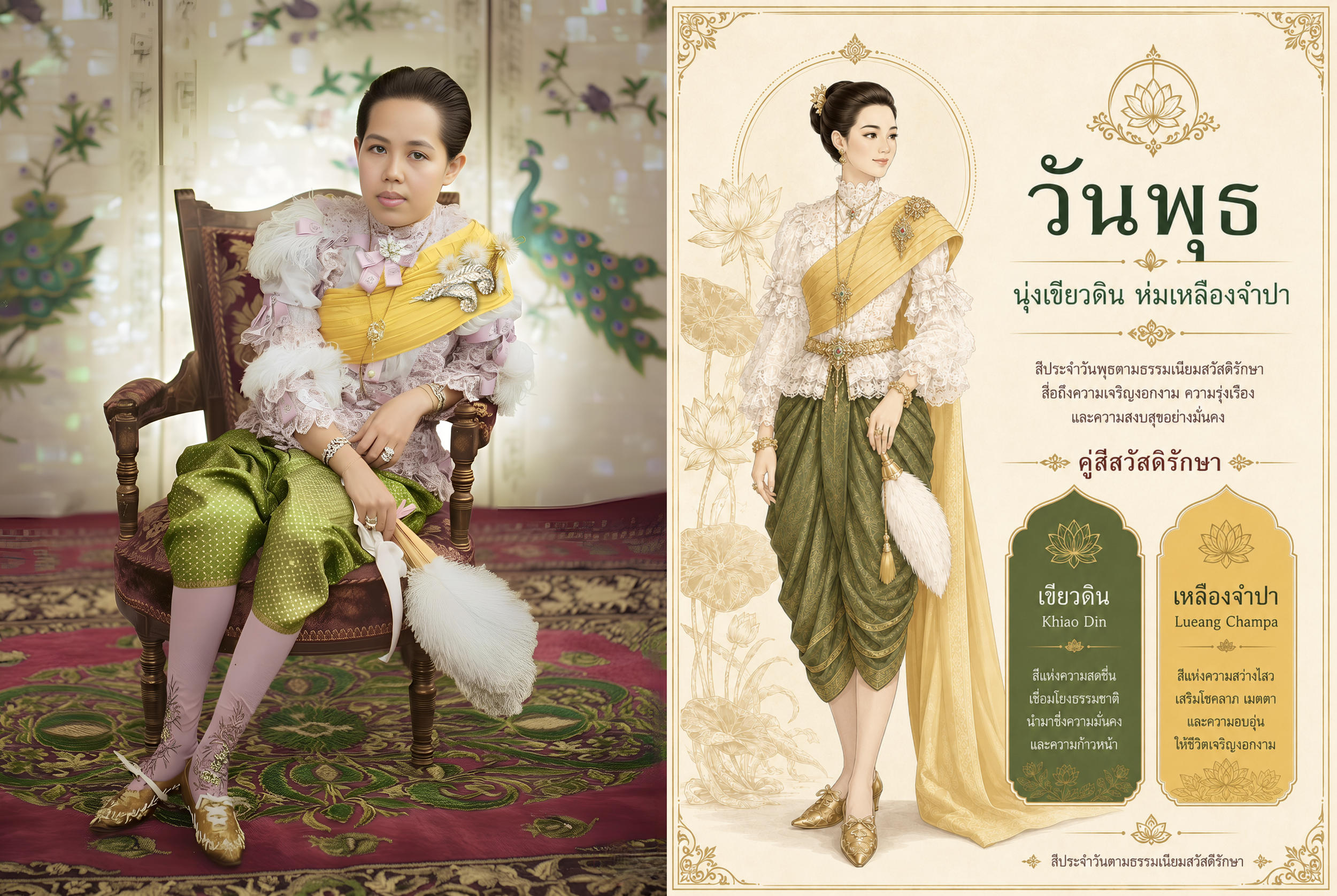
สวัสดิรักษาและแฟชั่นในราชสำนักสยาม วันพุธ: นุ่งสีเขียวดิน ห่มเหลืองจำปา
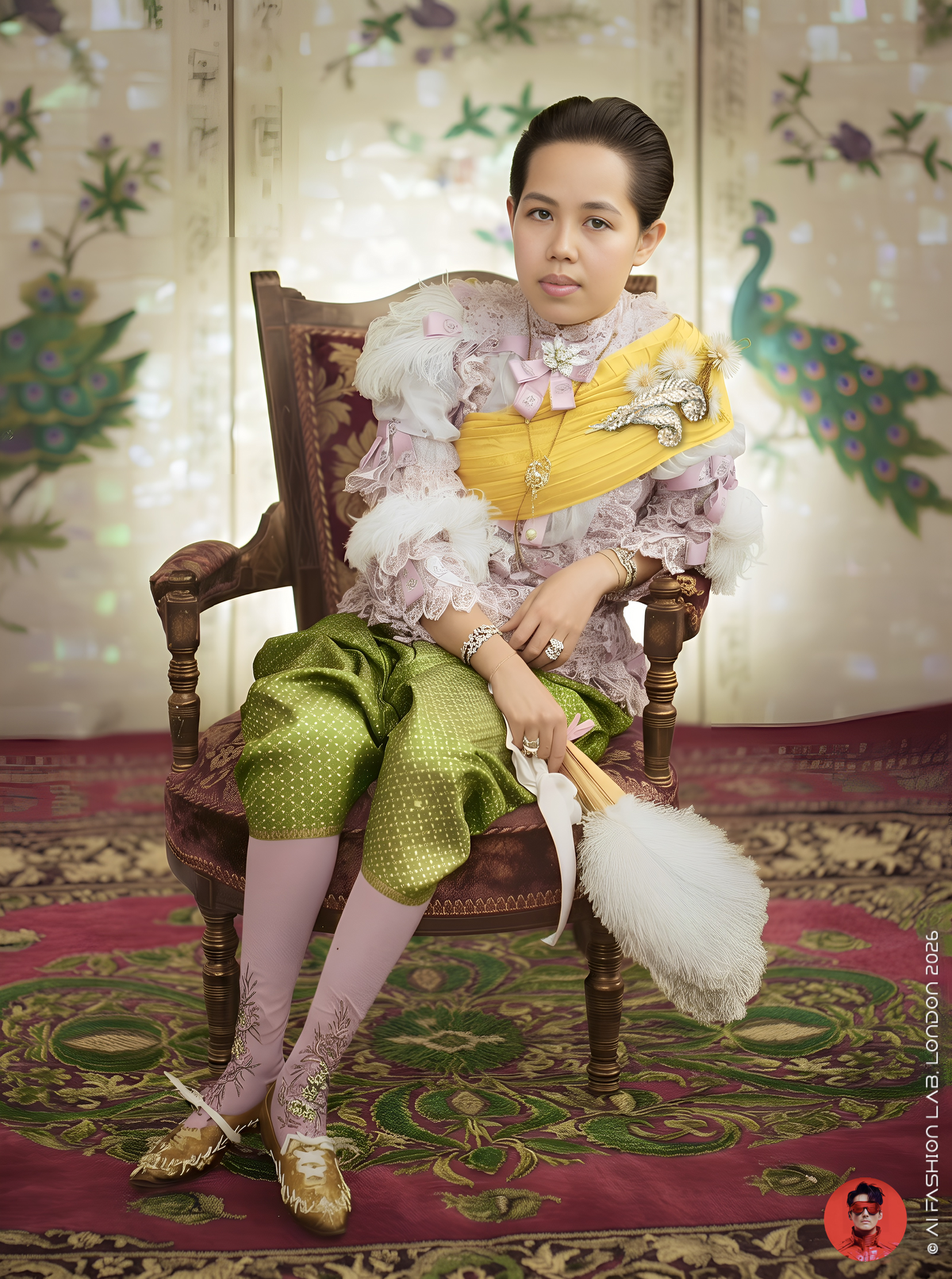
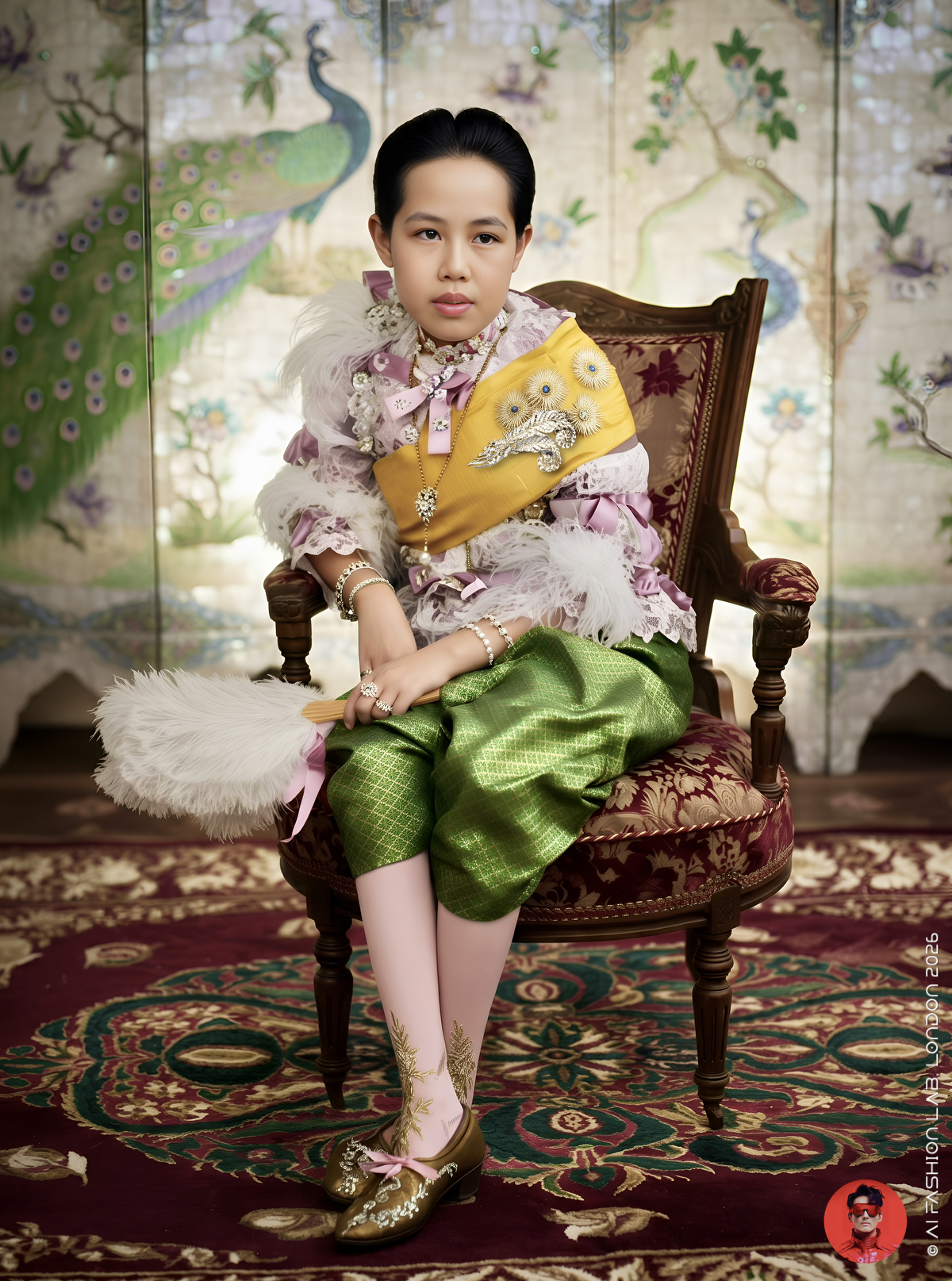
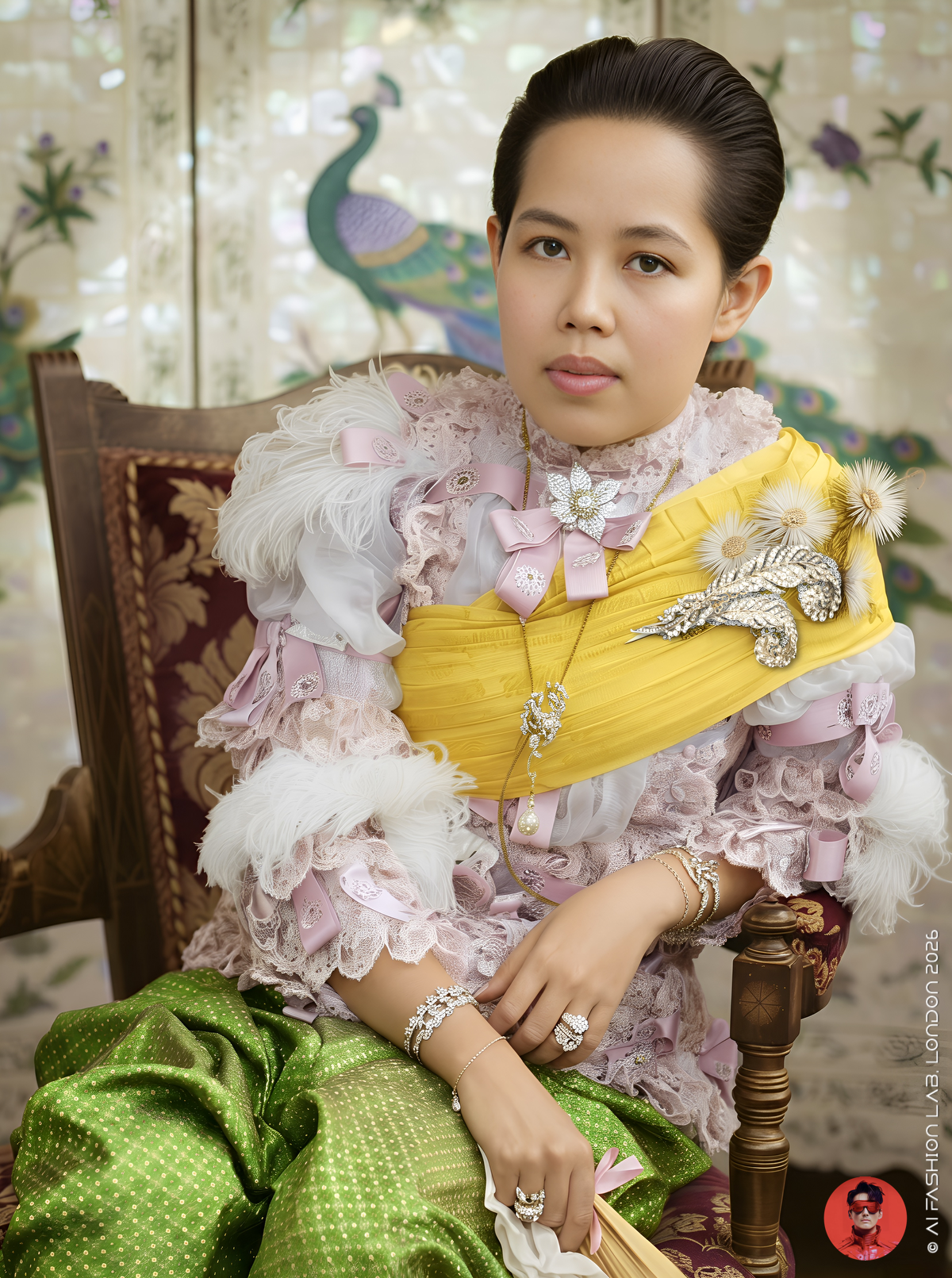
คอลเลกชันภาพที่ได้รับการบูรณะและสร้างสรรค์ด้วยเทคโนโลยี AI นี้ คือ พระฉายาลักษณ์ สมเด็จพระศรีพัชรินทราบรมราชินีนาถ ทรงฉลองพระองค์ผ้าลูกไม้แบบแขนกระดิ่ง (ruffled trumpet/bell sleeves) ด้วยการการแต่งพระองค์ในคอนเซ็ตป์คู่สีประจำวัน หรือสวัสดิรักษา ที่เป็นธรรมเนียมปฏิบัติในสมัยรัชกาลที่ ๕
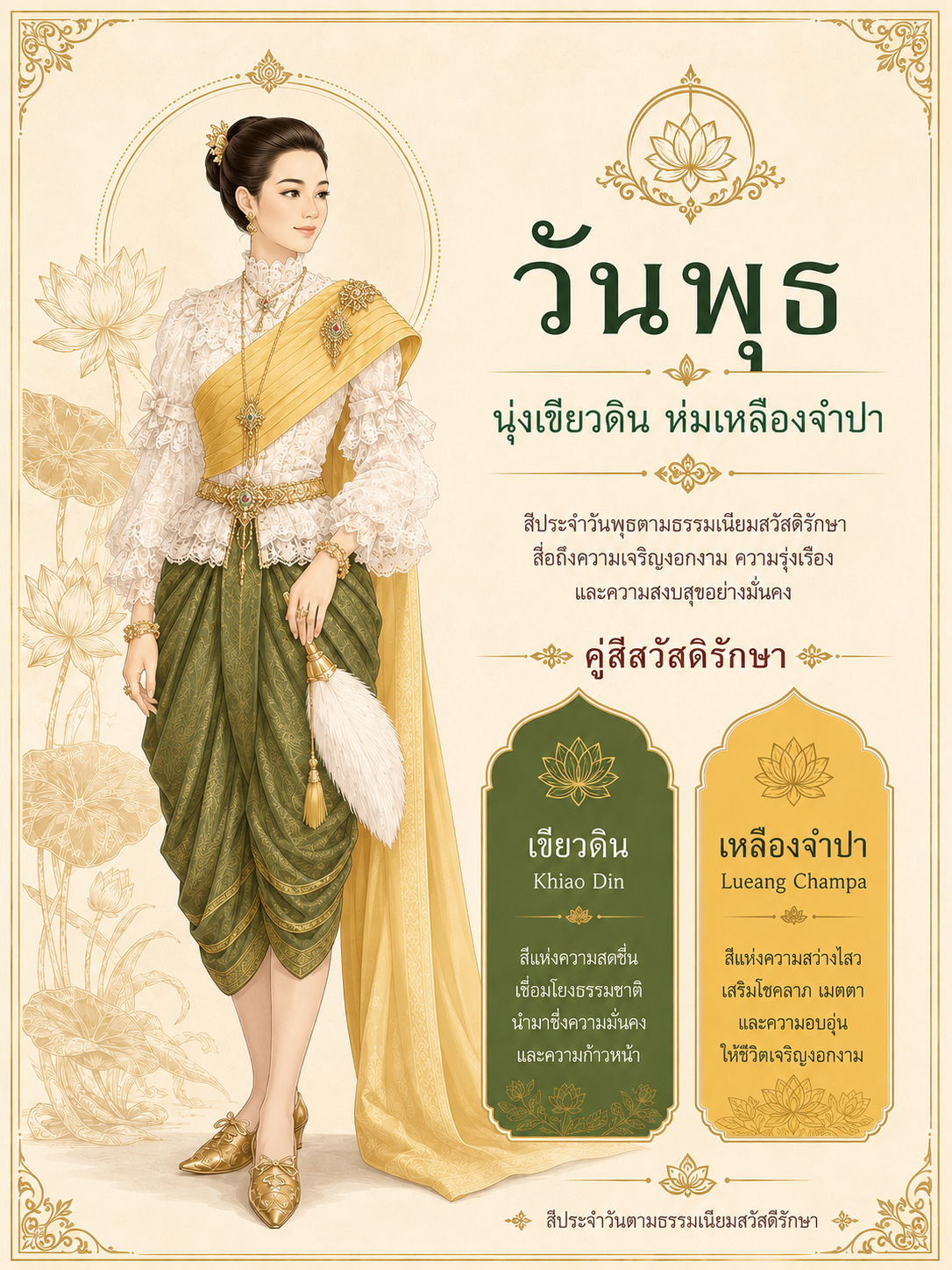
สำหรับพระฉายาลักษณ์นี้ คือ วันพุธ: นุ่งสีเขียวดิน ห่มเหลืองจำปา
สมเด็จพระศรีพัชรินทราบรมราชินีนาถ พระบรมราชินีในรัชกาลที่ ๕ ทรงเป็นแบบผู้นำแฟชั่นในราชสำนักสยามในห้วงเวลาแห่งการเปลี่ยนผ่านสู่ความทันสมัย ฉลองพระองค์ลักษณะต่างๆ สะท้อนถึงการผสมผสานระหว่าง แฟชั่นตะวันตกแบบเอ็ดเวิร์ดเดียน (Edwardian) กับ เครื่องแต่งกายแบบราชสำนัก ได้อย่างสง่างามและเปี่ยมด้วยพระอัจฉริยภาพทางรสนิยม
ฉลองพระองค์ที่ทรงเป็น รูปทรงแฟชั่นสตรีในทศวรรษ 1880 (The 1880s Fashion Silhouette)
หากมองในบริบทของแฟชั่นตะวันตก ทศวรรษ 1880 เป็นช่วงที่ silhouette ของสตรีถูกกำหนดอย่างชัดเจนด้วยเสื้อท่อนบนเข้ารูป คอเสื้อสูง เอวคอด และโครงสร้างกระโปรงที่เน้นปริมาตรด้านหลัง ซึ่งในยุโรปมักสัมพันธ์กับแฟชั่นแบบ bustle หรือกระโปรงเสริมโครงด้านหลัง
รูปทรงสำคัญของแฟชั่นสตรีตะวันตกในทศวรรษนี้คือ ช่วงลำตัวที่รัดกระชับด้วยคอร์เซ็ต ทำให้เอวดูเล็กและลำตัวตั้งตรง เสื้อท่อนบนมักเข้ารูปแนบกับร่างกาย มีคอสูง และแขนเสื้อโดยทั่วไปยังไม่ขยายใหญ่เท่าช่วงทศวรรษ 1890 ส่วนกระโปรงด้านหน้ามักค่อนข้างเรียบหรือแคบ ขณะที่ด้านหลังมีการจับเดรป การซ้อนผ้า หรือเสริมโครงให้เกิดปริมาตร เป็น silhouette ที่เน้นความสง่างาม ความเป็นระเบียบ และวินัยของร่างกายแบบวิกตอเรียน
อย่างไรก็ตาม เมื่อแฟชั่นตะวันตกเข้ามาสู่ราชสำนักสยาม รูปทรงเหล่านี้มิได้ถูกนำมาใช้แบบเต็มชุดตะวันตกเสมอไป หากถูกปรับให้เข้ากับเครื่องแต่งกายไทย โดยเฉพาะการสวมเสื้อแบบตะวันตกกับโจงกระเบนและสไบ การแต่งกายของสตรีฝ่ายในจึงมิใช่การลอกเลียนแฟชั่นยุโรปโดยตรง แต่เป็นการเลือกใช้องค์ประกอบบางส่วน เช่น เสื้อคอสูง ลูกไม้ แขนเสื้อแบบตะวันตก และโครงสร้างช่วงไหล่หรือช่วงอก มาผสมกับรูปแบบการนุ่งห่มของสยาม
ในภาพสร้างสรรค์ชุดนี้ เราจึงเห็นการตีความ silhouette ของสตรีราชสำนักสยามผ่านการผสมผสานระหว่างเสื้อแบบตะวันตก โจงกระเบนสีเขียวดิน ห่มเสไบเหลืองจำปา ซึ่งสัมพันธ์กับธรรมเนียมสวัสดิรักษาในราชสำนัก ขณะที่เสื้อท่อนบนมีรายละเอียดลูกไม้ ระบาย และแขนเสื้อที่ได้รับแรงบันดาลใจจากแฟชั่นยุโรปช่วงปลายคริสต์ศตวรรษที่ 19
_____
👗ธรรมเนียมสวัสดิรักษา: การนุ่งผ้าสีประจำวัน
การเลือกสีผ้านุ่งและผ้าห่มจึงถูกมองว่าเป็น การเสริมสิริมงคล ให้แก่ผู้สวมใส่ และถือเป็นธรรมเนียมที่สืบต่อมาในราชสำนักเรื่อยจนถึงสมัยรัชกาลที่ ๕
ในเอกสารเก่าและคำบอกเล่ายังมีการบันทึกชื่อสีที่ใช้จริงในราชสำนัก ซึ่งมีความละเมียดละไมเกินกว่าคำเรียกสีทั่วไป เช่น
🟡⚪วันจันทร์: นุ่งสีนวล ห่มมอคราม หรือห่มบานเย็น / นุ่งน้ำเงินนกพิราบอ่อน ห่มจำปาแดง
🟢🟣วันอังคาร: - นุ่งสีปูนหรือม่วงเม็ดมะปราง ห่มโศก / นุ่งโศกหรือเขียวอ่อน ห่มม่วงอ่อน
🟢🟡วันพุธ: นุ่งสีเขียวดิน ห่มเหลืองจำปา
🟠🟢วันพฤหัสบดี: นุ่งสีแสด ห่มเขียวตองอ่อน / นุ่งสีเขียวไพร ห่มแดงชาด
🔵🟡วันศุกร์: นุ่งสีคราม ห่มจันทร์
🟣🟢วันเสาร์: นุ่งม่วงเม็ดมะปราง ห่มโศก
🟢🔴วันอาทิตย์: นุ่งเขียวก้ามปู ห่มดินแดงเทศ / นุ่งสีลิ้นจี่ ห่มโศกอ่อน
_____
📜🖋️สวัสดิรักษาในวรรณกรรมและบทกวี
ธรรมเนียมนี้ยังถูกบันทึกไว้ในวรรณกรรมคำสอนที่เรียกว่า “สวัสดิรักษาคำฉันท์” ซึ่งเดิมเป็นร้อยกรองที่เข้าใจยาก ต่อมา สุนทรภู่ กวีเอกแห่งรัชกาลที่ ๒ ได้นำมาแต่งใหม่เป็นกลอนสุภาษิต เพื่อถวายสมเด็จเจ้าฟ้าอาภรณ์ พระราชโอรสในรัชกาลที่ ๒ โดยกลอนดังกล่าวได้อธิบายสีมงคลของแต่ละวันไว้อย่างไพเราะ เช่น
“อนึ่งภูษาผ้าทรงณรงค์รบ
ให้มีครบเครื่องเสร็จทั้งเจ็ดสี
วันอาทิตย์สิทธิโชคโฉลกดี
เอาเครื่องสีแดงทรงเป็นมงคล
เครื่องวันจันทร์นั้นควรสีนวลขาว
จะยืนยาวชันษาสถาผล
อังคารม่วงช่วงงามสีครามปน
เป็นมงคลขัตติยาเข้าราวี
เครื่องวันพุธสุดดีด้วยสีแสด
กับเหลือบแปดปนประดับสลับสี
วันพฤหัสจัดเครื่องเขียวเหลืองดี
วันศุกร์สีเมฆหมอกออกสงคราม
วันเสาร์ทรงดำจึงล้ำเลิศ
แสนประเสริฐเสี้ยนศึกจะนึกขาม
หนึ่งพาชีขี่ขับประดับงาม
ให้ต้องตามสีสันจึงกันภัย”
_____
👗⏳ รูปทรงแฟชั่นสตรีในทศวรรษ 1880
(The 1880s Fashion Silhouette)
หากมองในบริบทของแฟชั่นตะวันตก ทศวรรษ 1880 เป็นช่วงที่ silhouette ของสตรีถูกกำหนดอย่างชัดเจนด้วยเสื้อท่อนบนเข้ารูป คอเสื้อสูง เอวคอด และโครงสร้างกระโปรงที่เน้นปริมาตรด้านหลัง ซึ่งในยุโรปมักสัมพันธ์กับแฟชั่นแบบ bustle หรือกระโปรงเสริมโครงด้านหลัง
รูปทรงสำคัญของแฟชั่นสตรีตะวันตกในทศวรรษนี้คือ ช่วงลำตัวที่รัดกระชับด้วยคอร์เซ็ต ทำให้เอวดูเล็กและลำตัวตั้งตรง เสื้อท่อนบนมักเข้ารูปแนบกับร่างกาย มีคอสูง และแขนเสื้อโดยทั่วไปยังไม่ขยายใหญ่เท่าช่วงทศวรรษ 1890 ส่วนกระโปรงด้านหน้ามักค่อนข้างเรียบหรือแคบ ขณะที่ด้านหลังมีการจับเดรป การซ้อนผ้า หรือเสริมโครงให้เกิดปริมาตร เป็น silhouette ที่เน้นความสง่างาม ความเป็นระเบียบ และวินัยของร่างกายแบบวิกตอเรียน
อย่างไรก็ตาม เมื่อแฟชั่นตะวันตกเข้ามาสู่ราชสำนักสยาม รูปทรงเหล่านี้มิได้ถูกนำมาใช้แบบเต็มชุดตะวันตกเสมอไป หากถูกปรับให้เข้ากับเครื่องแต่งกายไทย โดยเฉพาะการสวมเสื้อแบบตะวันตกกับโจงกระเบนและสไบ การแต่งกายของสตรีฝ่ายในจึงมิใช่การลอกเลียนแฟชั่นยุโรปโดยตรง แต่เป็นการเลือกใช้องค์ประกอบบางส่วน เช่น เสื้อคอสูง ลูกไม้ แขนเสื้อแบบตะวันตก และโครงสร้างช่วงไหล่หรือช่วงอก มาผสมกับรูปแบบการนุ่งห่มของสยาม
ในภาพสร้างสรรค์ชุดนี้ เราจึงเห็นการตีความ silhouette ของสตรีราชสำนักสยามผ่านการผสมผสานระหว่างเสื้อแบบตะวันตก โจงกระเบนสีม่วงเม็ดมะปราง และสไบสีโศก ซึ่งสัมพันธ์กับธรรมเนียมสวัสดิรักษาในราชสำนัก ขณะที่เสื้อท่อนบนมีรายละเอียดลูกไม้ ระบาย และแขนเสื้อที่ได้รับแรงบันดาลใจจากแฟชั่นยุโรปช่วงปลายคริสต์ศตวรรษที่ 19
_____
👚🌸 จากทศวรรษ 1880 สู่ทศวรรษ 1890: การเปลี่ยนผ่านของแขนเสื้อ
ในช่วงปลายทศวรรษ 1880 ไปสู่ทศวรรษ 1890 แฟชั่นตะวันตกเริ่มเปลี่ยนจากเสื้อท่อนบนที่ค่อนข้างเข้ารูปและแขนเสื้อแคบ ไปสู่การเน้นปริมาตรบริเวณหัวไหล่มากขึ้น การเปลี่ยนแปลงนี้นำไปสู่แฟชั่นแขนพองขนาดใหญ่ที่กลายเป็นเอกลักษณ์ของทศวรรษ 1890
โดยเฉพาะในช่วงกลางทศวรรษ 1890 เสื้อแขนพองแบบแขนหมูแฮม หรือ Leg-of-Mutton Sleeve กลายเป็นรูปทรงสำคัญของยุค แขนเสื้อจะขยายใหญ่บริเวณหัวไหล่และค่อย ๆ แคบลงสู่ข้อมือ เมื่อสวมคู่กับคอร์เซ็ตรัดเอวและกระโปรงทรงเอไลน์ จะทำให้เกิด silhouette ที่เน้นความกว้างของไหล่ ความเล็กของเอว และความสมดุลระหว่างช่วงบนกับช่วงล่างของร่างกาย
ในราชสำนักสยาม แฟชั่นแขนเสื้อแบบนี้ถูกปรับใช้ร่วมกับโจงกระเบนและสไบสีสวัสดิรักษา เกิดเป็นรูปแบบการแต่งกายที่งดงามและเฉพาะตัว สตรีฝ่ายในสามารถรับแฟชั่นตะวันตกเข้ามาโดยไม่จำเป็นต้องละทิ้งโครงสร้างการแต่งกายแบบไทย แขนเสื้อที่พองใหญ่หรือมีระบายจึงเพิ่มความรู้สึกทันสมัย ขณะที่โจงกระเบนและสไบยังคงยืนยันอัตลักษณ์ของราชสำนักสยาม
_____
👚🧵 แขนเสื้อแบบระบายซ้อนชั้น
(Manches à volants superposés / Tiered Flounce Sleeves)
เมื่อเข้าสู่ช่วงปลายทศวรรษ 1890 โดยเฉพาะราว ค.ศ. 1897 หรือ พ.ศ. 2440 แฟชั่นสตรีในปารีสเริ่มเปลี่ยนจากแขนหมูแฮมขนาดใหญ่ไปสู่รูปแบบที่อ่อนหวานและละเมียดละไมมากขึ้น หนึ่งในรูปแบบที่พบได้ในนิตยสารแฟชั่นฝรั่งเศส คือแขนเสื้อแบบระบายซ้อนชั้น หรือ Manches à volants superposés / Tiered Flounce Sleeves
แขนเสื้อชนิดนี้ใช้ลูกไม้ ผ้าโปร่ง หรือผ้าบางซ้อนกันหลายชั้น ไล่จากหัวไหล่ลงมาสู่ช่วงแขน เกิดเป็นความเบา ความพลิ้ว และความโรแมนติกมากกว่าความแข็งแรงของแขนหมูแฮมในช่วงก่อนหน้า รูปทรงเช่นนี้ถือเป็นสะพานสำคัญจากแฟชั่นปลายวิกตอเรียนไปสู่ความอ่อนหวานของแฟชั่นสมัยเอ็ดเวิร์ดเดียนในต้นคริสต์ศตวรรษที่ 20
หากนำมาอ่านร่วมกับแฟชั่นราชสำนักสยาม จะเห็นว่าแขนเสื้อระบายซ้อนชั้นสามารถเข้ากับการแต่งกายแบบไทยได้อย่างน่าสนใจ เพราะให้ความหรูหราและความทันสมัยแก่เสื้อท่อนบน ขณะเดียวกันก็ยังปล่อยให้โจงกระเบนและสไบทำหน้าที่เป็นโครงสร้างหลักของเครื่องแต่งกาย
_____
🟣🍃 สวัสดิรักษา แฟชั่นยุโรป และการแต่งกายฝ่ายในสมัยรัชกาลที่ ๕
การแต่งกายของสตรีฝ่ายในในสมัยรัชกาลที่ ๕ จึงสะท้อนสองมิติสำคัญพร้อมกัน
หนึ่ง คือคติความเชื่อเรื่องสวัสดิรักษา ผ่านการเลือกสีผ้านุ่งและผ้าห่มให้สัมพันธ์กับวัน เช่น วันเสาร์ซึ่งกำหนดให้นุ่งม่วงเม็ดมะปรางและห่มโศก
สอง คือการรับกระแสแฟชั่นตะวันตก ผ่านเสื้อคอสูง ลูกไม้ แขนเสื้อแบบยุโรป แขนพอง แขนระบาย และโครงสร้างช่วงลำตัวแบบวิกตอเรียนที่ถูกปรับให้เหมาะสมกับบริบทไทย
การนุ่งห่มสีตามวันและการรับแฟชั่นตะวันตกจึงไม่ใช่สิ่งที่ขัดแย้งกัน หากเป็นภาพแทนของความสามารถของราชสำนักสยามในการผสมผสานธรรมเนียมดั้งเดิมกับความเป็นสมัยใหม่ สตรีฝ่ายในมิได้เพียงรักษาธรรมเนียมการแต่งกายเพื่อเสริมสิริมงคล แต่ยังเลือก ปรับ และแปลความแฟชั่นยุโรปให้กลายเป็นภาษาการแต่งกายแบบสยามที่งดงามและมีเอกลักษณ์
___________________
Sawasdiraksa and Fashion in the Siamese Court Wednesday: Wearing Earth Green and Draping Champa Yellow
This AI-restored and AI-created image collection presents a creative interpretation of Queen Sri Bajarindra, the Queen Mother (สมเด็จพระศรีพัชรินทราบรมราชินีนาถ พระบรมราชชนนีพันปีหลวง) wearing a lace gown with ruffled trumpet sleeves (ruffled bell sleeves), reimagined through the concept of daily colour pairings, or Sawasdiraksa (สวัสดิรักษา), a courtly tradition practised during the reign of King Chulalongkorn, Rama V.
For this portrait, the colour pairing is:
Wednesday: wearing Earth Green (Khiao Din / เขียวดิน) and draping Champa Yellow (Lueang Champa / เหลืองจำปา).
Queen Sri Bajarindra, the Queen Consort of King Chulalongkorn, was one of the leading fashion figures of the Siamese court during a period of transition towards modernity. Her various ensembles reflected an elegant fusion of Western Edwardian fashion and traditional court dress, demonstrating both refinement and remarkable sartorial vision.
👗⏳ The 1880s Fashion Silhouette
Viewed within the context of Western dress history, the 1880s were characterised by a clearly defined female silhouette consisting of a fitted bodice, a high neckline, a narrow waist, and a skirt structure that emphasised volume at the back. In Europe, this was closely associated with the bustle, a framework used to create fullness behind the skirt.
The defining features of women’s fashion during this decade included a tightly corseted torso that created a small waist and an upright posture. Bodices were closely fitted to the body and generally featured high collars, while sleeves remained comparatively restrained, unlike the dramatic sleeve shapes that would emerge during the 1890s. Skirts were often relatively smooth or narrow at the front, while the rear was arranged with drapery, layered fabric, or structural supports to create volume. The resulting silhouette emphasised elegance, order, and the disciplined ideals of Victorian femininity.
When Western fashion entered the Siamese court, however, these silhouettes were rarely adopted as complete European outfits. Instead, they were adapted to suit Siamese modes of dress, particularly through the combination of Western-style blouses with the chongkraben and sabai. Court women did not simply imitate European fashion; rather, they selectively incorporated elements such as high collars, lace, Western sleeve styles, and bodice structures into existing Siamese dress traditions.
In this creative interpretation, the silhouette of a Siamese court lady is expressed through the combination of an Earth Green chongkraben and a Champa Yellow sabai, in accordance with the Sawasdiraksa tradition. The upper garment incorporates lace, ruffles, and sleeve treatments inspired by late nineteenth-century European fashion.
👗🌈 The Sawasdiraksa Tradition: Wearing Colours According to the Day
The selection of colours for the lower cloth and shoulder cloth was traditionally regarded as a means of enhancing auspiciousness for the wearer. This custom continued within the Siamese court throughout the reign of Rama V. Historical documents and oral traditions preserve numerous refined court colour names that go far beyond simple modern colour descriptions.
🟡⚪ Monday: Wearing Nuan and draping Mokkhram or Ban Yen; alternatively, wearing Pale Pigeon Blue and draping Champa Pink. 🟢🟣 Tuesday: Wearing Poon or Muang Medmaprang and draping Srok; alternatively, wearing Srok (Pale Green) and draping Soft Purple. 🟢🟡 Wednesday: Wearing Earth Green and draping Champa Yellow. 🟠🟢 Thursday: Wearing Orange and draping Young Banana Leaf Green; alternatively, wearing Forest Green and draping Vermilion Red. 🔵🟡 Friday: Wearing Indigo and draping Chan. 🟣🟢 Saturday: Wearing Muang Medmaprang and draping Srok. 🟢🔴 Sunday: Wearing Bottle Green and draping Terracotta Red; alternatively, wearing Lychee Red and draping Pale Srok.
📜🖋️ Sawasdiraksa in Literature and Poetry
This tradition was also preserved in a didactic literary work known as Sawasdiraksa Kham Chan (สวัสดิรักษาคำฉันท์). Originally composed in a complex poetic form, it was later reworked by Sunthorn Phu, the celebrated poet of the reign of King Rama II, into a more accessible moral poem dedicated to Prince Aphorn, a royal son of Rama II. The poem elegantly describes the auspicious colours associated with each day of the week.
👚🌸 From the 1880s to the 1890s: The Evolution of Sleeves
During the transition from the late 1880s into the 1890s, Western fashion gradually shifted from fitted bodices with relatively narrow sleeves towards silhouettes that emphasised greater volume at the shoulders. This evolution culminated in the dramatic Leg-of-Mutton Sleeve, one of the defining features of the 1890s.
These sleeves expanded dramatically at the shoulder before tapering towards the wrist. Combined with tightly corseted waists and A-line skirts, they created silhouettes that emphasised broad shoulders, narrow waists, and balanced proportions between the upper and lower body.
Within the Siamese court, these sleeve fashions were adapted to complement the chongkraben and sabai in Sawasdiraksa colours. Court women embraced Western influences without abandoning the fundamental structure of Siamese dress. Large puffed sleeves and decorative ruffles introduced a sense of modernity, while traditional garments continued to express Siamese identity.
👚🧵 Tiered Flounce Sleeves
(Manches à volants superposés / Tiered Flounce Sleeves)
By the late 1890s, particularly around 1897, women’s fashion in Paris began to move away from the dramatic Leg-of-Mutton Sleeve towards softer and more delicate forms. One such style, frequently illustrated in French fashion magazines, was the Tiered Flounce Sleeve.
Constructed from layers of lace, net, or fine fabric cascading from the shoulder down the arm, these sleeves created an impression of lightness, movement, and romantic elegance. They formed an important bridge between the structured silhouettes of the late Victorian era and the softer femininity associated with Edwardian Fashion in the early twentieth century.
When interpreted within the context of Siamese court dress, Tiered Flounce Sleeves integrated remarkably well with traditional garments. They added luxury and modernity to the blouse while allowing the chongkraben and sabai to remain the principal structural elements of the ensemble.
🟢🟡 Sawasdiraksa, European Fashion, and Court Dress during the Reign of Rama V
The dress of women in the Siamese court during the reign of King Chulalongkorn therefore reflected two important dimensions simultaneously.
The first was the belief system of Sawasdiraksa, expressed through the careful selection of colours corresponding to each day of the week.
The second was the adoption of Western fashion, through high-necked blouses, lace, European sleeve styles, puffed sleeves, ruffles, and Victorian bodice structures adapted to suit the Siamese context.
Wearing colours according to the day and embracing Western fashion were not contradictory practices. Rather, they demonstrate the remarkable ability of the Siamese court to combine inherited traditions with modern influences. Court women did not merely preserve auspicious customs; they selected, adapted, and translated European fashion into a distinctly Siamese language of dress that was elegant, sophisticated, and culturally unique.
For further reading, including the English-language article, visit:
___________________
เรียนเชิญกด Subscribe ได้ที่ลิงก์นี้ครับ เพื่อร่วมติดตามงานสร้างสรรค์ต้นฉบับ งานวิจัยประวัติศาสตร์แฟชั่น และผลงานอนุรักษ์มรดกวัฒนธรรมด้วยเทคโนโลยี AI ของ AI Fashion Lab, London ซึ่งมุ่งตีความอดีตผ่านมิติใหม่ของการบูรณะภาพ การสร้างสรรค์ภาพ และการเล่าเรื่องด้วยศิลปะเชิงดิจิทัล https://www.facebook.com/aifashionlab/subscribe/
#aifashionlab #AI #aiartist #aiart #aifashion #aifashiondesign #aifashionstyling #aifashiondesigner #fashion #fashionhistory #historyoffashion #fashionstyling #fashionphotography #digitalfashion #digitalfashiondesign #digitalcostumedesign #digitaldesign #digitalaiart #ThaiFashionHistory #ThaiFashionAI #thailand #UNESCO