พระฉายาลักษณ์ของหมู่เจ้านายฝ่ายใน
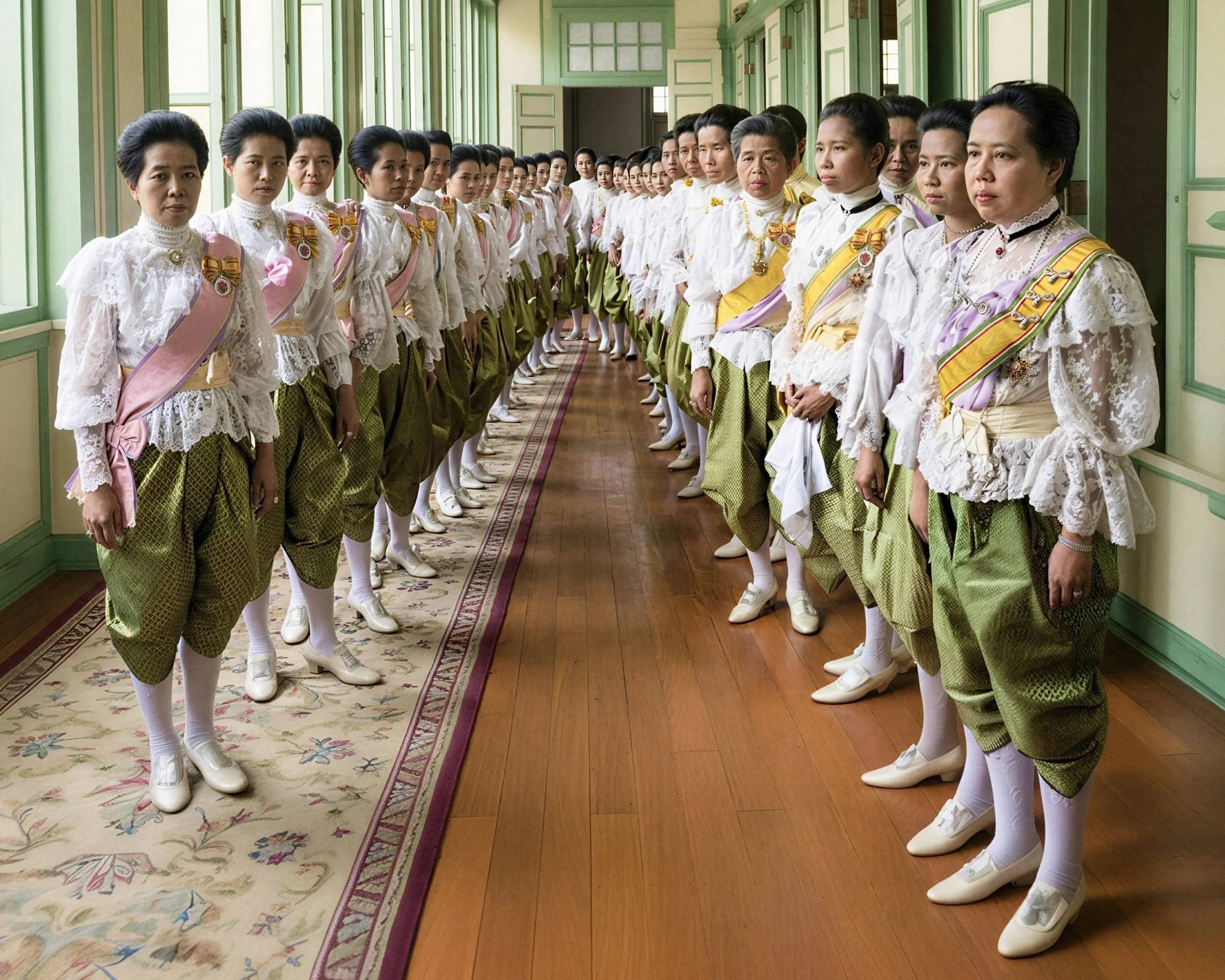
ภาพที่ได้รับการบูรณะและสร้างสรรค์ขึ้นด้วยเทคโนโลยี AI นี้ เป็น พระฉายาลักษณ์ของหมู่เจ้านายฝ่ายใน ขณะรอเฝ้าทูลละอองธุลีพระบาทรับเสด็จ
พระบาทสมเด็จพระจุลจอมเกล้าเจ้าอยู่หัว เสด็จฯ กลับจากยุโรปครั้งที่ ๒
เมื่อพุทธศักราช ๒๔๕๐
ณ พระที่นั่งวิมานเมฆ พระราชวังดุสิต
ทางขวามือของภาพ ปรากฏพระองค์สำคัญ ได้แก่
สมเด็จพระพัชรินทราบรมราชินีนาถ พระบรมราชชนนีพันปีหลวง,
พระนางเจ้าสุขุมาลมารศรี พระราชเทวี,
สมเด็จพระศรีสวรินทราบรมราชเทวี, พระอรรคชายาเธอ พระองค์เจ้าสายสวลีภิรมย์ กรมขุนสุทธาสินีนาฏ (อยู่ข้างหลังแถว เห็นแค่พระพักต์)
และ พระเจ้าบรมวงศ์เธอ กรมหลวงสมรรัตนศิริเชฐ
ทางซ้ายมือ ประกอบด้วย
พระเจ้าบรมวงศ์เธอ พระองค์เจ้าศรีนาคสวาดิ
พร้อมด้วย เจ้านายฝ่ายในชั้นสูง และหมู่เจ้านายฝ่ายในในพระราชสำนัก
พระองค์ทั้งหลายทรงแต่งกายตาม พระราชนิยมปลายรัชกาลที่ ๕ ซึ่งสะท้อนการผสมผสานระหว่างจารีตสยามกับแฟชั่นตะวันตกอย่างชัดเจน ได้แก่
การสวม เสื้อลูกไม้แขนยาวแบบยุโรป ตามแบบนิยมในยุค Edwardian,
ประดับ *เครื่องราชอิสริยาภรณ์และเครื่องประดับแบบตะวันตก,
สะพาย *ผ้าแพรสีแสดงพระอิสริยยศ,
และทรง พระภูษาโจงกระเบน อันเป็นเอกลักษณ์ของราชสำนักสยาม
พระฉายาลักษณ์ชุดนี้จึงมิได้เป็นเพียงภาพบันทึกเหตุการณ์การรับเสด็จ หากยังสะท้อน ภาพลักษณ์ของราชสำนักสยามในห้วงเวลาการเปลี่ยนผ่านสู่ความเป็นสากล ผ่านการแต่งกาย พิธีการ และโครงสร้างลำดับชั้นภายในพระราชสำนักฝ่ายในได้อย่างชัดเจน
นอกจากนี้ ยังสามารถสังเกตได้ว่า การจัดวางพระองค์ในพระฉายาลักษณ์ชุดนี้ ชวนให้เกิดคำถามเกี่ยวกับลำดับ “โปเจียม” หรือพระอิสริยยศในการยืน กล่าวคือ
สมเด็จพระพัชรินทราบรมราชินีนาถ พระบรมราชชนนีพันปีหลวง ทรงยืนอยู่ในตำแหน่งที่ ๑
ขณะที่ สมเด็จพระพันวสาอัยยิกาเจ้า ทรงยืนอยู่ในตำแหน่งที่ ๓ ของแถว แทนที่จะเป็นตำแหน่งที่ ๒ ตามลำดับพระอิสริยยศ
ส่วน พระนางเจ้าสุขุมาลมารศรี พระราชเทวี ทรงยืนอยู่ในตำแหน่งที่ ๒ ซึ่งนับเป็นลำดับที่น่าสังเกตอย่างยิ่ง
อย่างไรก็ตาม ลำดับโปเจียมในพระราชสำนักฝ่ายใน มิได้พิจารณาเพียงพระอิสริยยศโดยตรงเท่านั้น หากยังสัมพันธ์กับ สถานะและลำดับความสำคัญของพระราชโอรสในการสืบราชสันตติวงศ์ ด้วย โดยพระราชโอรสของพระนางเจ้าสุขุมาลมารศรี พระราชเทวี คือ
สมเด็จพระเจ้าบรมวงศ์เธอ เจ้าฟ้าบริพัตรสุขุมพันธุ์ กรมพระนครสวรรค์วรพินิต
ซึ่งตามลำดับอาวุโสและลำดับการสืบราชสันตติวงศ์ในช่วงเวลาดังกล่าว อยู่ในอันดับรองลงมาจาก
สมเด็จพระมงกุฎเกล้าเจ้าอยู่หัว พระราชโอรสพระองค์โตของสมเด็จพระพันปีหลวง
ทั้งนี้ บริบทสำคัญที่ไม่อาจละเลยได้คือ การสิ้นพระชนม์ของ สมเด็จเจ้าฟ้าวชิรุณหิส เมื่อพุทธศักราช ๒๔๓๘ ซึ่งส่งผลโดยตรงต่อโครงสร้างลำดับอำนาจและสถานะในพระราชสำนักฝ่ายใน เหตุการณ์ดังกล่าวทำให้ สมเด็จพระพันวสาอัยยิกาเจ้าเปลี่ยนสถานะจากตำแหน่งลำดับหนึ่งตามโปเจียมฝ่ายใน มาเป็นลำดับรองจากสมเด็จพระพันปีหลวง และ อาจเป็นไปได้ว่าในทางปฏิบัติ ทรงถูกจัดลำดับให้อยู่ถัดจากพระนางเจ้าสุขุมาลมารศรี พระราชเทวี แม้พระอิสริยยศจะสูงกว่าก็ตาม
ด้วยเหตุนี้ จึงอาจกล่าวได้ว่า การจัดลำดับการยืนในพระฉายาลักษณ์ชุดนี้ สะท้อนการพิจารณา “โปเจียม” ในมิติที่ซับซ้อนกว่าลำดับพระอิสริยยศโดยตรง หากยังรวมถึงบทบาท สถานะ และศักยภาพของพระราชโอรสในโครงสร้างอำนาจของราชสำนักสยามในช่วงปลายรัชกาลที่ ๕ อย่างมีนัยสำคัญ
_____________
This AI-restored and creatively reconstructed image presents a group portrait of the ladies of the Siamese Inner Court, photographed while awaiting the royal return of
King Chulalongkorn (พระบาทสมเด็จพระจุลจอมเกล้าเจ้าอยู่หัว)
from his second journey to Europe in 1907 (B.E. 2450),
at Vimanmek Mansion (พระที่นั่งวิมานเมฆ), Dusit Palace.
On the right-hand side of the image appear the principal royal figures, namely:
Queen Saovabha Phongsri (สมเด็จพระพัชรินทราบรมราชินีนาถ พระบรมราชชนนีพันปีหลวง),
Queen Sukhumala Marasri (พระนางเจ้าสุขุมาลมารศรี พระราชเทวี),
Queen Savang Vadhana (สมเด็จพระศรีสวรินทราบรมราชเทวี), and
Princess Samratanasiri (พระเจ้าบรมวงศ์เธอ กรมหลวงสมรรัตนศิริเชฐ).
On the left-hand side stand
Princess Srinagswasti (พระเจ้าบรมวงศ์เธอ พระองค์เจ้าศรีนาคสวาดิ),
together with other senior ladies of the Inner Court and high-ranking royal women of the Siamese court.
All figures are dressed in accordance with late-reign Rama V court fashion, reflecting a clear synthesis of Siamese tradition and Western influence. Their attire includes long-sleeved European lace blouses in the Edwardian style, Western jewellery and decorations, coloured silk sashes denoting royal rank, and the chong kraben (โจงกระเบน), which remained a defining element of Siamese court dress.
This photograph therefore serves not merely as a visual record of a royal reception, but as an eloquent reflection of the Siamese court at a moment of transition toward international modernity, expressed through dress, ceremony, and the hierarchical structure of the Inner Court.
Notably, the arrangement of figures invites questions regarding court precedence (โปเจียม).
Queen Saovabha Phongsri stands in the first position, while
Queen Savang Vadhana (สมเด็จพระพันวสาอัยยิกาเจ้า) appears in the third position, rather than the second as might be expected based solely on royal rank.
The second position is instead occupied by Queen Sukhumala Marasri, an arrangement that is particularly striking.
However, Inner Court precedence was not determined exclusively by royal rank. It was also closely linked to the status and succession potential of royal sons. Queen Sukhumala Marasri was the mother of
Prince Paribatra Sukhumbandhu (สมเด็จพระเจ้าบรมวงศ์เธอ เจ้าฟ้าบริพัตรสุขุมพันธุ์ กรมพระนครสวรรค์วรพินิต),
who, at that time, ranked second in the order of royal succession, following
King Vajiravudh (สมเด็จพระมงกุฎเกล้าเจ้าอยู่หัว), the eldest son of Queen Saovabha Phongsri.
A further crucial context is the death of Crown Prince
Prince Vajirunhis (สมเด็จเจ้าฟ้าวชิรุณหิส) in 1895 (B.E. 2438). This event significantly altered the hierarchy of the Inner Court, effectively shifting Queen Savang Vadhana’s position from primary precedence to a secondary rank beneath Queen Saovabha Phongsri, and arguably, in practical terms, below Queen Sukhumala Marasri, despite her higher formal title.
Consequently, the standing order observed in this photograph may be understood as reflecting a more complex and pragmatic interpretation of court precedence, one that incorporated dynastic strategy, maternal status, and succession politics, rather than royal rank alone, within the power structure of the Siamese court in the late reign of King Chulalongkorn.
_____________
เรียนเชิญกด Subscribe ได้ที่ลิงก์นี้ครับ เพื่อร่วมติดตามงานสร้างสรรค์ต้นฉบับ งานวิจัยประวัติศาสตร์แฟชั่น และผลงานอนุรักษ์มรดกวัฒนธรรมด้วยเทคโนโลยี AI ของ AI Fashion Lab, London ซึ่งมุ่งตีความอดีตผ่านมิติใหม่ของการบูรณะภาพ การสร้างสรรค์ภาพ และการเล่าเรื่องด้วยศิลปะเชิงดิจิทัล 🔗 https://www.facebook.com/aifashionlab/subscribe/
#aifashionlab #AI #aiartist #aiart #aifashion #aifashiondesign #aifashionstyling #aifashiondesigner #fashion #fashionhistory #historyoffashion #fashionstyling #fashionphotography #digitalfashion #digitalfashiondesign #digitalcostumedesign #digitaldesign #digitalaiart #ThaiFashionHistory #ThaiFashionAI #thailand #UNESCO