ซูสีไทเฮา (慈禧太后) (ตอนที่ ๓) - “พระฉายาลักษณ์ชุดแรกของ ซูสีไทเฮา (慈禧太后, Cíxǐ Tàihòu): ภาพถ่าย อำนาจศักดิ์สิทธิ์ และการเปลี่ยนผ่านของราชสำนักจีนปลายราชวงศ์ชิง” (1/2)
ซูสีไทเฮา (慈禧太后) (ตอนที่ ๓)
“พระฉายาลักษณ์ชุดแรกของ ซูสีไทเฮา (慈禧太后, Cíxǐ Tàihòu): ภาพถ่าย อำนาจศักดิ์สิทธิ์ และการเปลี่ยนผ่านของราชสำนักจีนปลายราชวงศ์ชิง” (1/2)
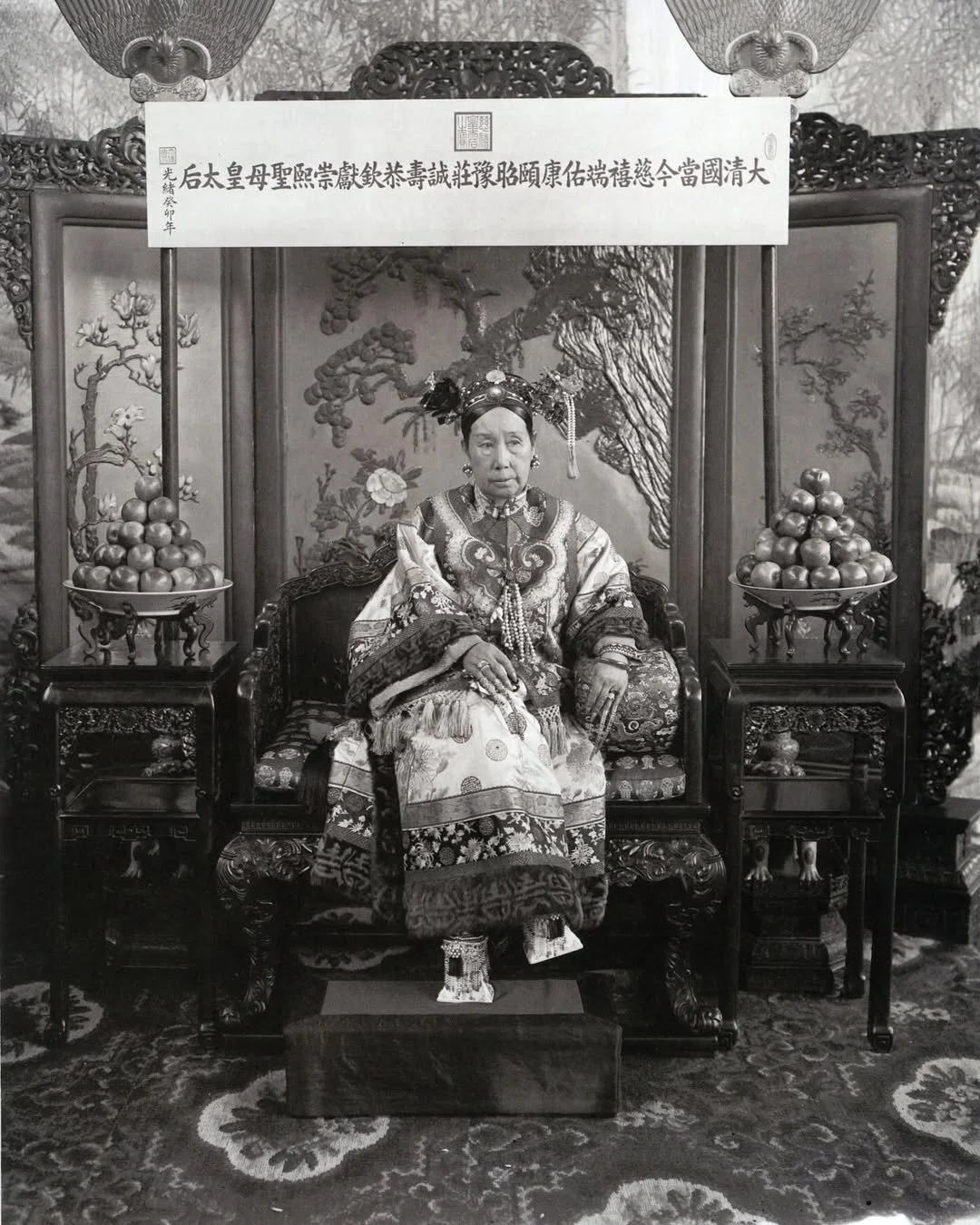
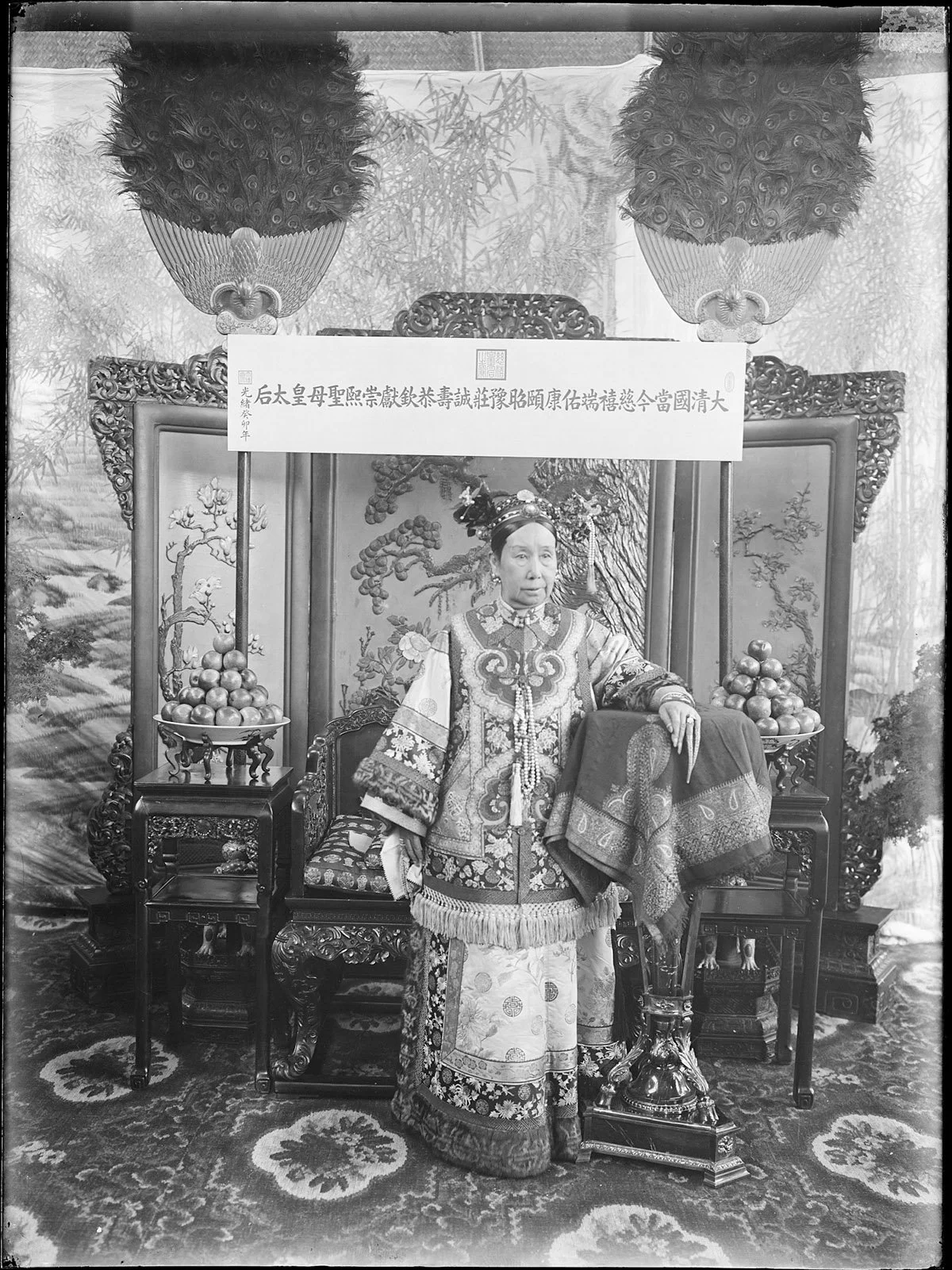
พระฉายาลักษณ์ของ ซูสีไทเฮา (慈禧太后) ซึ่ง ถ่ายราว ค.ศ. 1903–1904 โดยช่างภาพหลวงประจำราชสำนักชิง หยูซวิ่นหลิง (裕勋龄, Yù Xūnlíng) ถือเป็นหมุดหมายสำคัญอย่างยิ่งในประวัติศาสตร์วัฒนธรรมภาพของจีนจักรพรรดิ ภาพชุดนี้มิได้เป็นเพียงหลักฐานทางเทคโนโลยีของการรับสื่อสมัยใหม่ หากแต่เป็นการเปลี่ยนโครงสร้างความสัมพันธ์ระหว่าง “องค์จักรพรรดิ” “ภาพแทน” และ “สายตาของผู้คน” อย่างลึกซึ้ง
ตลอดระยะเวลากว่าแปดศตวรรษ ตั้งแต่ราชวงศ์ซ่ง ราชวงศ์หมิง จนถึงราชวงศ์ชิง การเผยแพร่พระบรมฉายาทิสลักษณ์ของสมเด็จพระจักรพรรดิหรือสมเด็จพระจักรพรรดินีในช่วงที่ยังทรงพระชนม์ชีพ ถือเป็นข้อห้ามอย่างเด็ดขาด ภาพพระพักตร์เป็นสิ่งศักดิ์สิทธิ์ที่ผูกโยงกับอำนาจแห่งสวรรค์ (天命, Tiānmìng) และถูกควบคุมผ่านพิธีกรรม กฎหมาย และขนบราชสำนัก การครอบครองหรือรวบรวมภาพของจักรพรรดิอาจถูกตีความว่าเป็นการสมคบคิดต่อรัฐ
ในบริบทเช่นนี้ การที่ซูสีไทเฮาทรงตัดสินพระทัยให้มีการถ่ายภาพพระองค์ จึงเป็นการกระทำที่ “ก้าวข้ามเส้นประวัติศาสตร์” ด้วยจุดมุ่งหมายและเจตจำนง มิใช่การรับเทคโนโลยีตะวันตกอย่างไร้ทิศทาง แต่เป็นการนำสื่อสมัยใหม่มาอยู่ภายใต้การควบคุมของอำนาจจักรพรรดิอย่างเบ็ดเสร็จ
_______________
“การกำกับภาพแทนอำนาจ: ซูสีไทเฮาในฐานะผู้สร้างภาพลักษณ์”
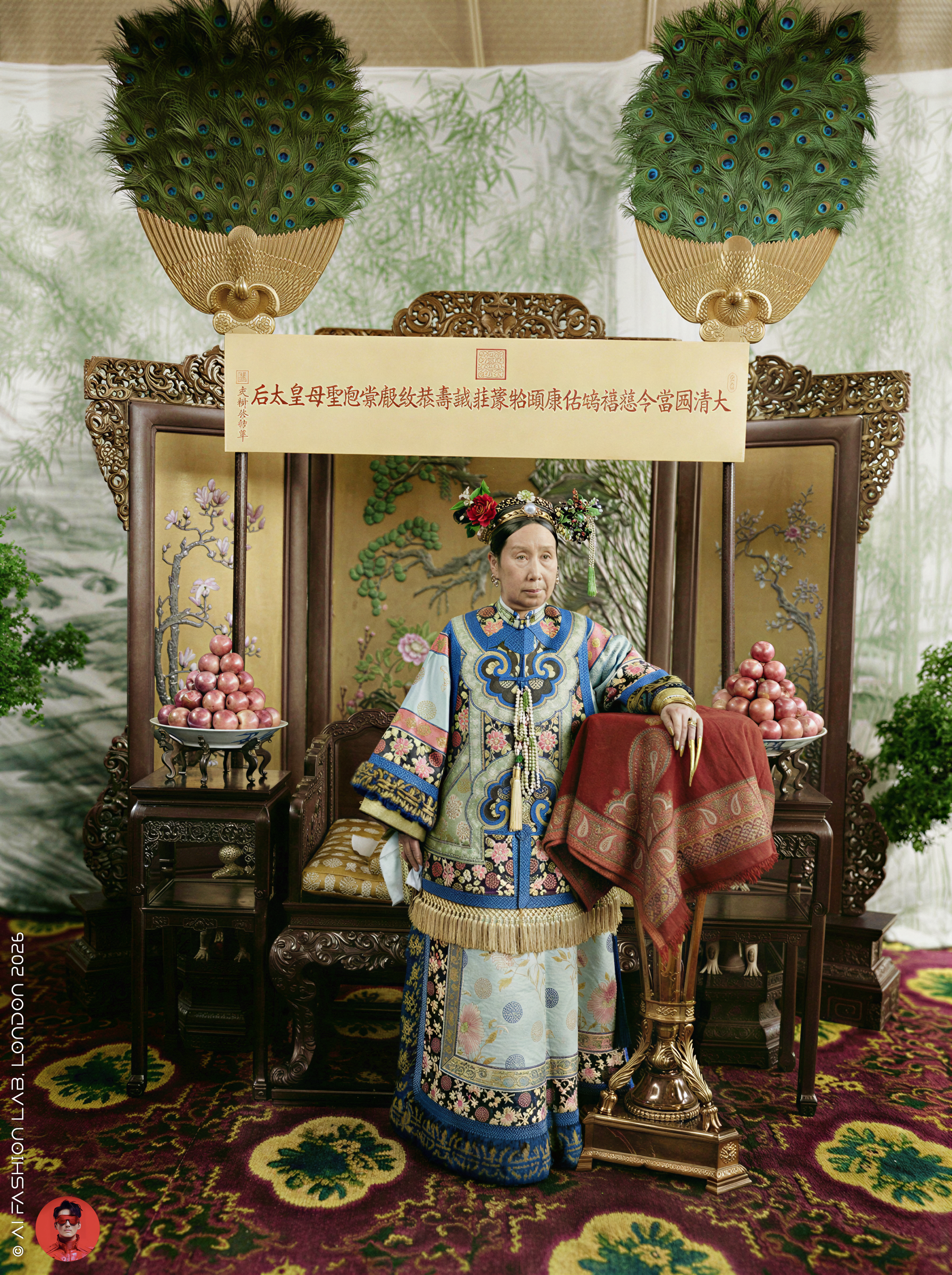
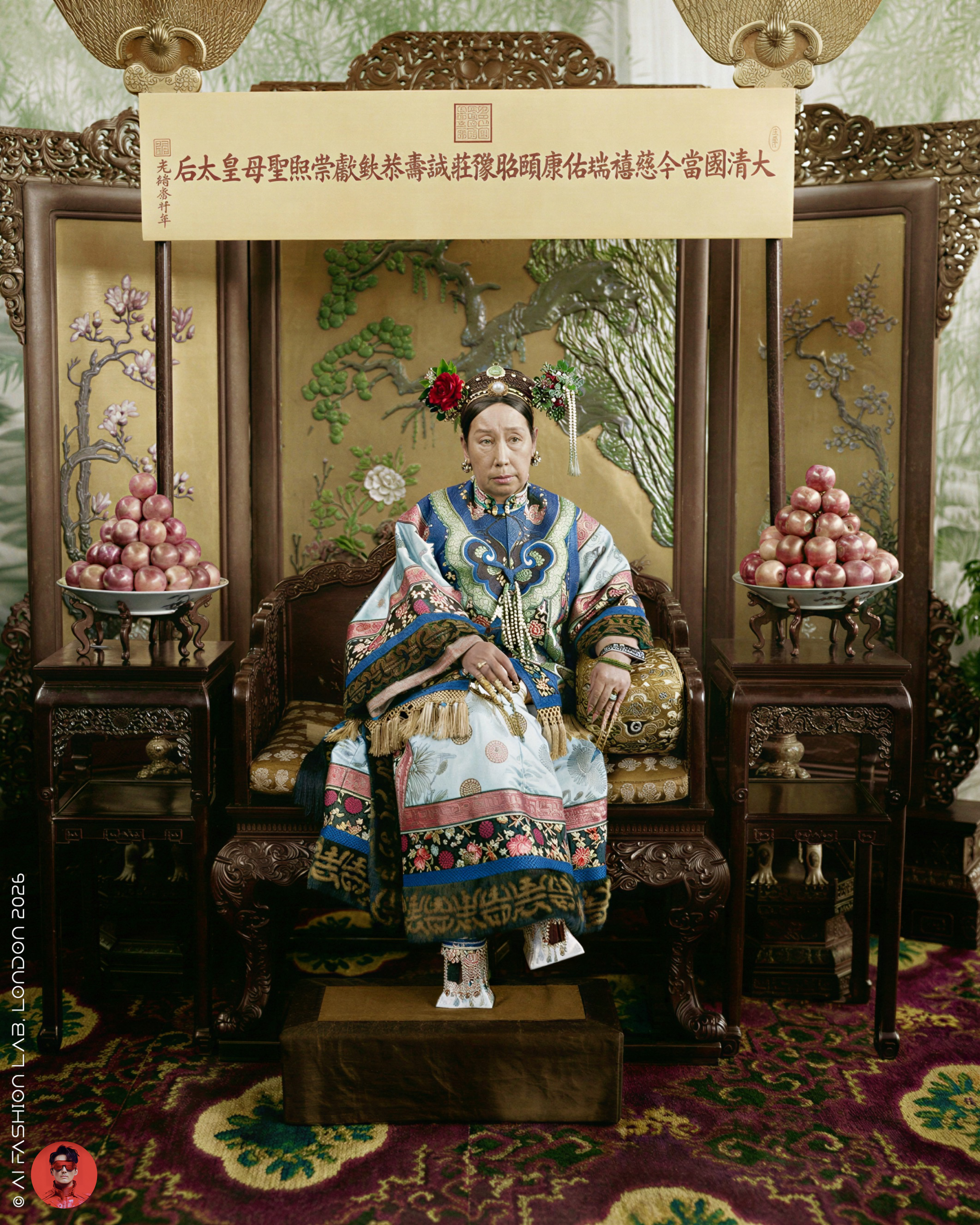
สิ่งสำคัญที่ต้องตระหนักคือ ภาพถ่ายชุดนี้ มิใช่ภาพที่ “ถูกถ่าย” หากเป็นภาพที่ “ทรงกำกับ” ซูสีไทเฮาทรงมีบทบาทโดยตรงในการกำหนดองค์ประกอบของภาพ ตั้งแต่ท่วงท่าการประทับนั่ง เครื่องทรง เครื่องประดับ ฉากหลัง ไปจนถึงบทบาทเชิงสัญลักษณ์ของฉลองพระองค์ที่พระองค์ทรงเลือกสวมใส่
ในบางภาพ พระองค์ทรงปรากฏในฐานะสมเด็จพระจักรพรรดินีผู้ทรงอำนาจสูงสุดของจักรวรรดิ ในบางภาพกลับทรงจำแลงเป็นพระโพธิสัตว์ อวโลกิเตศวร (观音 / 观世音菩萨, Guānyīn / Guānshìyīn Púsà) ผู้เปี่ยมด้วยเมตตา ภาพเหล่านี้มิใช่การแสดงบทบาทเชิงศาสนาอย่างผิวเผิน หากเป็นการหลอมรวม “อำนาจทางโลก” เข้ากับ “คุณธรรมทางพุทธศาสนา” เพื่อยืนยันความชอบธรรมในการปกครองในช่วงเวลาที่ราชวงศ์ชิงเผชิญแรงสั่นสะเทือนจากทั้งภายในและภายนอกจักรวรรดิ
_______________
“หยูซวิ่นหลิง (裕勋龄) และกำเนิดการถ่ายภาพเชิงศิลปะในจีน”
ช่างภาพผู้อยู่เบื้องหลังภาพเหล่านี้ หยูซวิ่นหลิง (裕勋龄) เป็นบุตรของนักการทูตชิง อวี้เกิง (裕庚, Yù Gēng) อดีตเอกอัครราชทูตจีนประจำโตเกียวและปารีส ประสบการณ์ในต่างประเทศเปิดโอกาสให้เขาได้สัมผัสเทคนิคการถ่ายภาพแบบตะวันตก ขณะเดียวกัน การเติบโตในครอบครัวข้าราชการระดับสูง ทำให้เขาเข้าใจภาษาเชิงพิธีกรรมของราชสำนักอย่างลึกซึ้ง
พี่สาวของเขา เต๋อหลิง (德龄, Dé Líng) และ หรงหลิง (容龄, Róng Líng) ทำหน้าที่เป็นข้าหลวงผู้ใกล้ชิดซูสีไทเฮา และบางครั้งปรากฏอยู่ในฉากถ่ายภาพร่วมด้วย สิ่งนี้สะท้อนความเป็น “พื้นที่ส่วนพระองค์” ของกระบวนการสร้างภาพ ซึ่งแตกต่างจากการสร้างภาพจักรพรรดิในพิธีการแบบดั้งเดิมอย่างสิ้นเชิง
นักประวัติศาสตร์ภาพถ่ายจำนวนมากจึงยกให้หยูซวิ่นหลิงเป็นหนึ่งในผู้บุกเบิกการถ่ายภาพเชิงศิลปะของจีน และความสัมพันธ์ระหว่างเขากับซูสีไทเฮา ถือเป็นหนึ่งในตัวอย่างแรกของความร่วมมือเชิงสร้างสรรค์ระหว่างศิลปินกับผู้ปกครองในประวัติศาสตร์จีนสมัยใหม่
_______________
“มุกเม็ดใหญ่บนพระเศียร: ภาษาสัญลักษณ์ภายใต้สายตากล้อง”
ในพระฉายาลักษณ์หลายภาพ สิ่งที่สะดุดตาอย่างยิ่งคือ มุกขนาดใหญ่อย่างผิดสัดส่วน ที่ประดับเป็นศิราภรณ์ มุกในระบบสัญลักษณ์ของราชสำนักชิงมิได้เป็นเพียงเครื่องประดับ หากเป็นตัวแทนของความบริสุทธิ์ ความสมบูรณ์ และอำนาจแห่งสวรรค์ การเลือกใช้มุกขนาดใหญ่ในภาพถ่ายจึงเป็นการ “ขยายสัญลักษณ์” ให้ยังคงทรงพลังภายใต้ความแม่นยำของเลนส์กล้อง ซึ่งต่างจากสายตาของจิตรกรในอดีต
รายละเอียดเช่นนี้สะท้อนให้เห็นว่า ซูสีไทเฮาทรงเข้าใจธรรมชาติของสื่อใหม่อย่างลึกซึ้ง และทรงปรับภาษาทางพิธีกรรมให้สามารถทำงานได้ในโลกของภาพถ่าย
_______________
“วัตถุทางการทูตในภาพถ่าย: ผ้าคลุมแคชเมียร์สีแดงและโต๊ะดาราศาสตร์แบบยุโรป”
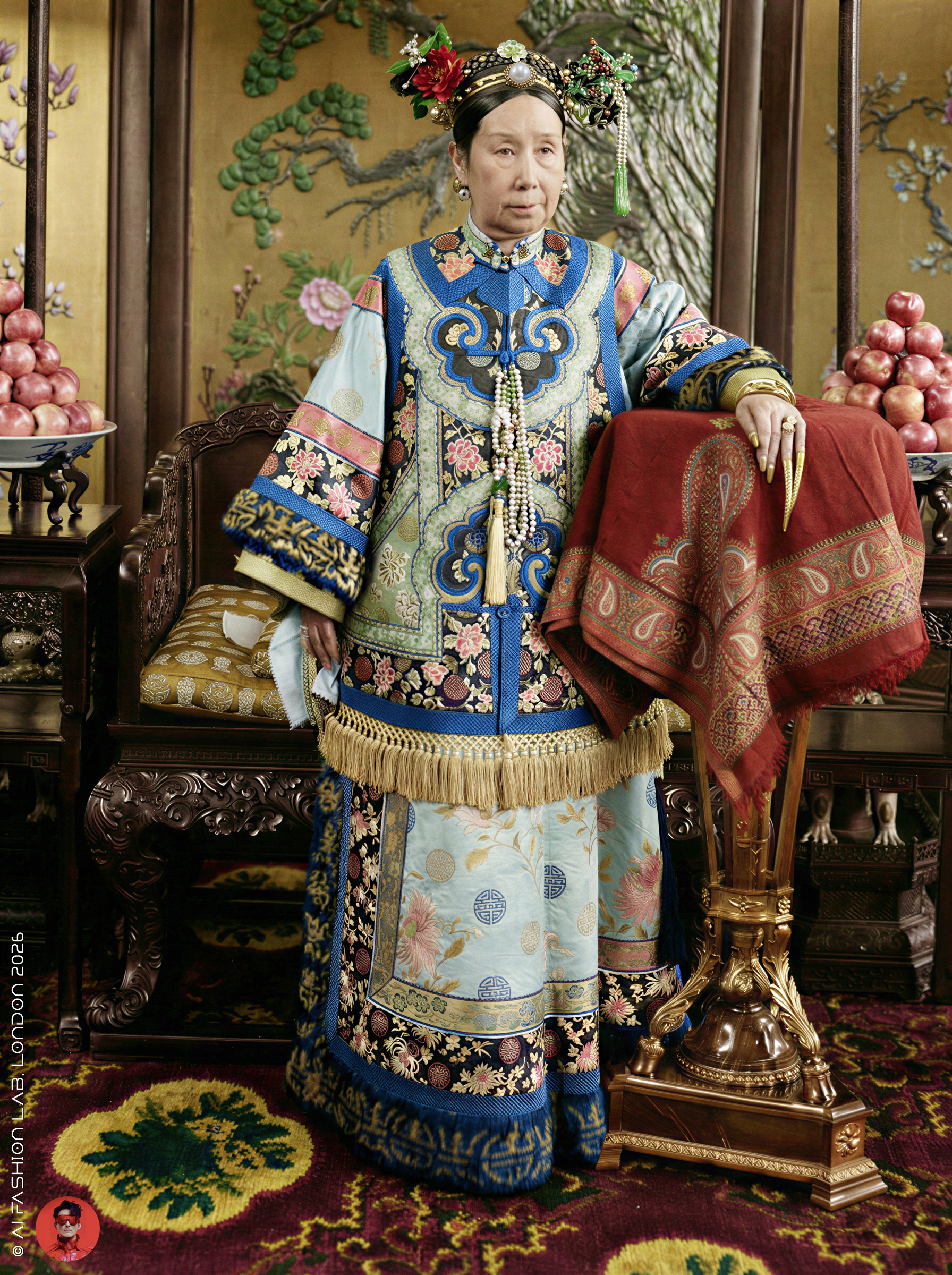
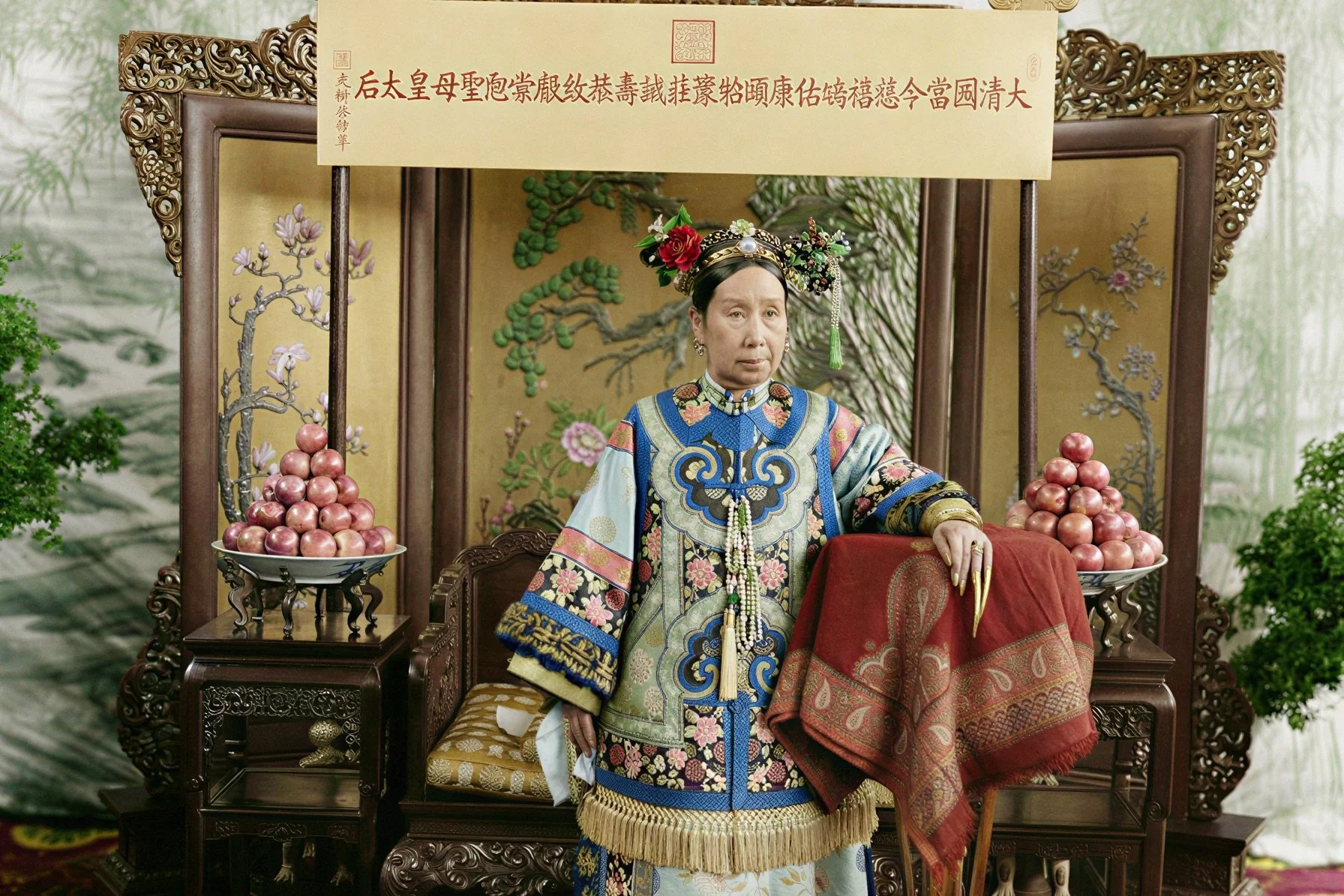
นอกเหนือจากเครื่องทรงและศิราภรณ์ วัตถุที่ถูกจัดวางอย่างจงใจภายในกรอบภาพยังมีบทบาทสำคัญในการสื่อสารเชิงการทูต ผ้าคลุม แคชเมียร์สีแดงเข้ม ซึ่งพาดอยู่บนโต๊ะข้างพระองค์ มิได้เป็นเพียงเครื่องใช้ส่วนพระองค์ หากควรถูกอ่านในฐานะ “ของขวัญ” (gift-object) ผ้าชนิดนี้ประดับด้วยลวดลายเพสลีย์ (boteh) อันประณีต บ่งชี้ถึงแหล่งผลิตในแคว้นแคชเมียร์หรือเอเชียกลาง ซึ่งเป็นสิ่งทอหรูหราที่หมุนเวียนอยู่ในเครือข่ายการทูตของจักรวรรดิอังกฤษ รัสเซีย และจีนในช่วงปลายคริสต์ศตวรรษที่ 19 ผ้าแคชเมียร์ระดับนี้มักถูกใช้เป็นบรรณาการหรือของถวายจากคณะทูตต่างชาติ เพื่อแสดงความเคารพและความสัมพันธ์เชิงอำนาจ
ในขณะเดียวกัน โต๊ะทรงยุโรปซึ่งมีลักษณะเป็น โต๊ะดาราศาสตร์หรือโต๊ะเชิงวิทยาศาสตร์ ทำจากไม้โอ๊คพร้อมกับตกแต่งด้วยโลหะหล่อปิดทองประดับขาโต๊ะ เชิงประติมากรรมแบบตะวันตก ก็สะท้อนที่มาในวัฒนธรรมยุโรปอย่างชัดเจน วัตถุประเภทเครื่องมือวิทยาศาสตร์ นาฬิกา หรือเฟอร์นิเจอร์เชิงดาราศาสตร์ เป็นของขวัญที่คณะทูตยุโรปนิยมถวายแด่ราชสำนักเอเชีย เนื่องจากสื่อถึง “ความรู้สมัยใหม่” และ “อารยธรรมทางวิทยาการ” การจัดวางผ้าคลุมแคชเมียร์และโต๊ะดาราศาสตร์ไว้ร่วมกันในภาพถ่าย จึงมีนัยว่า พระฉายาลักษณ์นี้อาจถ่ายขึ้นเพื่อทำหน้าที่เป็น ภาพตอบแทนหรือภาพแสดงการรับของถวาย ในเชิงพิธีการ เป็นการบันทึกเชิงทัศนาของการรับบรรณาการ และในขณะเดียวกันก็เป็นการยืนยันว่า วัตถุจากโลกภายนอกทั้งหมด ถูกนำมาจัดวางและตีความใหม่ภายใต้กรอบอำนาจของจักรวรรดิชิงอย่างสมบูรณ์
_______________
“ภาพถ่ายในฐานะสิ่งของสำหรับพระราชทาน และการเปลี่ยนความสัมพันธ์ระหว่างราชสำนักกับผู้คน”
ภาพถ่ายชุดนี้ถ่ายในช่วงใกล้พระชนมายุ 70 พรรษา ภาพจำนวนหนึ่ง โปรดเกล้าฯ พระราชทานแก่ขุนนางคนสำคัญและผู้นำต่างชาติ ขุนนางชั้นสูง ฉวีหงจี (瞿鸿禨, Qú Hóngjī) ได้บันทึกไว้ในปี ค.ศ. 1904 ว่า การได้รับพระฉายาลักษณ์เช่นนี้เป็นสิ่งที่ “ไม่เคยเกิดขึ้นมาก่อนในอดีต” และควรได้รับการเคารพสืบทอดในหมู่ลูกหลาน
การพระราชทานภาพถ่ายจึงไม่ใช่เพียงของขวัญ หากเป็นการสร้างสายสัมพันธ์รูปแบบใหม่ ระหว่างองค์จักรพรรดินีกับข้าราชการ ผ่านสื่อที่สามารถดำรงอยู่เหนือกาลเวลาและความทรงจำ
_______________
“การบูรณะภาพถ่ายและประวัติศาสตร์นิพนธ์เชิงทัศนา”
คอลเลกชันภาพที่สร้างสรรค์ด้วยเทคโนโลยี AI ชุดนี้ ได้รับการบูรณะและตีความจากชุดภาพถ่ายต้นฉบับของหยูซวิ่นหลิง (裕勋龄) ระหว่างปี ค.ศ. 1903–1904 ซึ่งปัจจุบันเก็บรักษาอยู่ในสถาบันสำคัญ ได้แก่ Freer Gallery of Art, Arthur M. Sackler Gallery และ National Palace Museum (故宫博物院, Gùgōng Bówùyuàn)
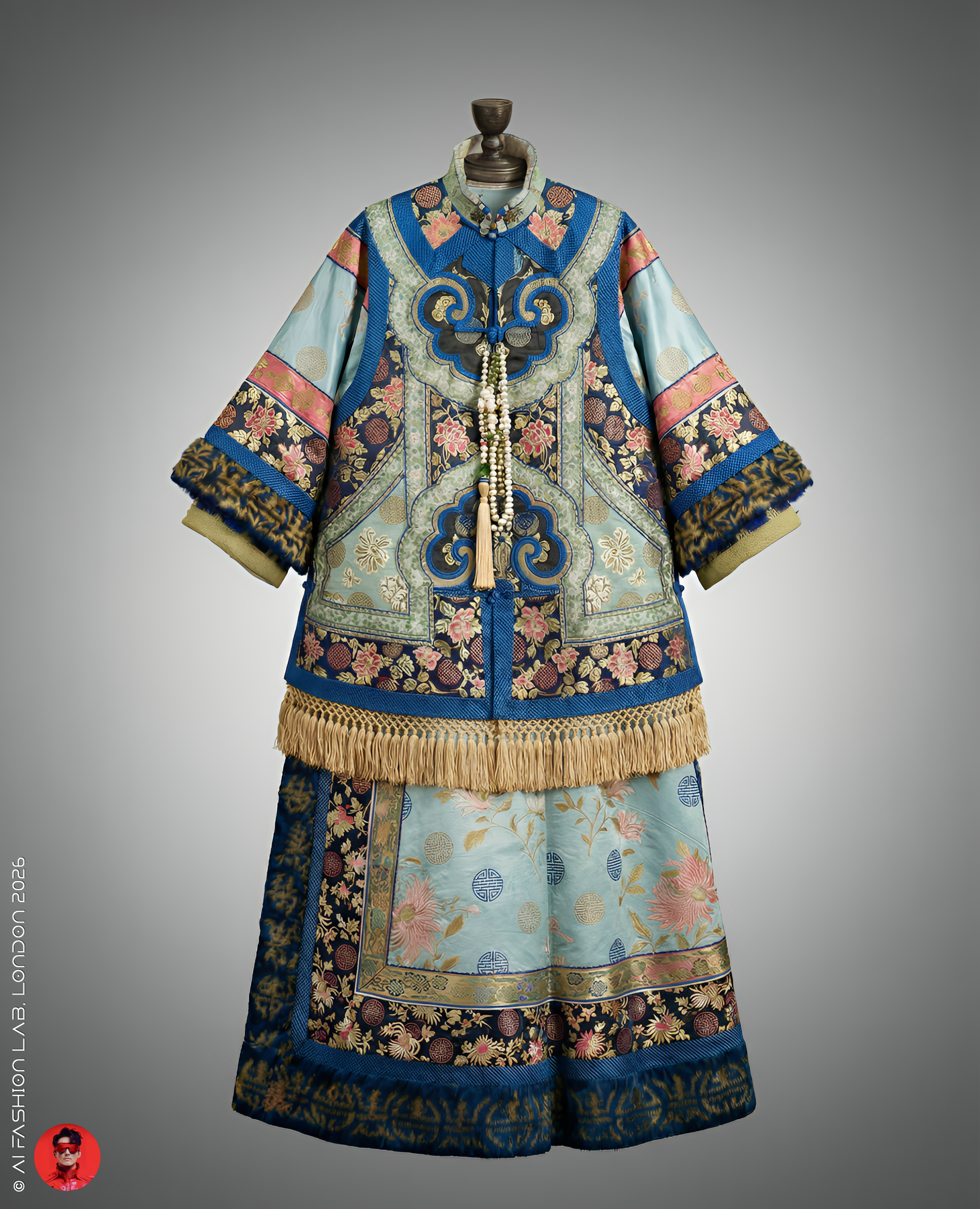
การใช้ AI ในที่นี้ มิได้มีเป้าหมายเพื่ออ้างความถูกต้องเชิงภาพถ่าย หากเป็นกระบวนการของการสร้าง ประวัติศาสตร์นิพนธ์เชิงทัศนา (visual historiography) เพื่อช่วยให้เข้าใจโครงสร้างเครื่องทรง สิ่งทอ เครื่องประดับ และภาษาสัญลักษณ์ที่ซูสีไทเฮาทรงใช้ในการสร้างภาพแทนอำนาจของพระองค์
ภาพถ่ายถ่ายชุดแรกของซูสีไทเฮา (慈禧太后) จึงมิได้เป็นเพียงภาพของบุคคล หากเป็นภาพของช่วงหัวเลี้ยวหัวต่อ ระหว่างราชสำนักศักดิ์สิทธิ์กับโลกสมัยใหม่—ช่วงเวลาที่อำนาจเริ่มถูกมองเห็น ผ่านเลนส์กล้อง และผ่านสายตาของผู้คนเป็นครั้งแรกในประวัติศาสตร์จีน.
_______________
The First Photographic Image of Empress Dowager Cixi and the Transformation of Imperial Perception
The photographic portraits of Empress Dowager Cixi taken around 1903–1904 by her court photographer Yu Xunlingmark a decisive rupture in the visual and political culture of imperial China. For nearly eight centuries—from the Song dynasty through the late Qing—the public circulation of images of reigning emperors and empresses was strictly forbidden. To possess or disseminate an imperial portrait during the sovereign’s lifetime was not merely taboo; it was a criminal offence, interpreted as an act of political conspiracy. Sovereignty was sustained through ritual, distance, and sacred invisibility.
Cixi’s decision to commission photographic portraits therefore represented an unprecedented act. Photography, a modern and foreign medium, was introduced into the heart of the Qing court not as a passive document but as an instrument of power, diplomacy, and self-fashioning. These images were not taken of Cixi; they were created by her direction. She dictated pose, costume, symbolism, and narrative content with meticulous precision, redefining the relationship between monarch, image, and subjecthood.
Yu Xunling and the Birth of Chinese Art Photography
Yu Xunling, the son of the diplomat Yugeng, was uniquely positioned to realise Cixi’s vision. Having lived abroad in Tokyo and Paris, he absorbed Western photographic techniques while remaining deeply embedded in Qing court culture. His sisters, Der Ling and Rong Ling, served as close attendants to the Empress Dowager and occasionally appeared in the photographic tableaux, reinforcing the intimacy and theatricality of these images.
Historians now regard Yu Xunling as one of China’s earliest art photographers. His collaboration with Cixi constitutes one of the first recorded creative partnerships between a photographer and a sovereign in Chinese history. The resulting photographs transcend mere likeness; they are carefully staged visual statements that merge Manchu court ritual, Buddhist iconography, opera performance, and modern photographic realism.
Photography, Sacred Authority, and the Public Gaze
Cixi commissioned these portraits as she approached her seventieth birthday—a moment of ritual significance and political consolidation. Some images were distributed as imperial gifts to trusted officials and foreign leaders, while others remained private until her death in 1908. The statesman Qu Hongji recorded receiving such a portrait in 1904, noting that this act was without historical precedent and should be revered by his descendants as a lasting mark of imperial favour.
This circulation subtly but profoundly altered the perception of monarchy. Photography collapsed distance. It allowed the sovereign’s image to exist beyond the palace, beyond ritual space, and beyond the control of ancestral halls. Yet rather than diminishing imperial authority, Cixi used photography to modernise it. By controlling every visual detail, she transformed a potentially destabilising medium into a new language of sacred power—one that could speak simultaneously to tradition and modernity.
Iconography and the Enormous Pearl Headdress
In the portrait referenced here, Cixi appears wearing an enormous pearl headdress, a detail of immense symbolic weight. Pearls in Qing court culture signified cosmic purity, legitimacy, and celestial authority. Their exaggerated scale in photographic portraits was deliberate: under the unforgiving clarity of the camera lens, symbols needed to assert themselves visually. The pearl becomes both ornament and statement—anchoring Cixi’s image in sacred tradition even as she embraced a modern medium.
Cixi frequently posed not only as empress but also as the compassionate bodhisattva Avalokitesvara, merging political sovereignty with spiritual virtue. Such imagery reinforced her role as both ruler and moral guardian of the empire at a time when Qing authority faced internal rebellion and foreign pressure.
Diplomatic Objects and the Visual Language of Gift Exchange
Beyond costume and iconography, the carefully staged objects within the composition further illuminate the diplomatic purpose of these photographs. The red cashmere shawl, richly patterned with paisley (boteh) motifs and draped conspicuously over a European astral table, should be understood as a gift-object rather than a personal accessory. Shawls of this type—likely of Kashmiri or Central Asian origin—were prized luxury textiles within nineteenth-century diplomatic exchange networks linking British India, Russia, and Qing China. Their prominent display signals not only material wealth but the ritualised acceptance of foreign tribute.
Equally significant is the European astronomical or astral table itself, executed in gilt bronze with sculptural Western ornamentation. Scientific instruments, clocks, and astronomical furnishings were among the most common diplomatic gifts presented by European envoys, valued as symbols of modern knowledge and technological sophistication. The deliberate pairing of these objects within the photographic frame suggests that the image may have functioned as a visual acknowledgment or return gesture, documenting the reception of foreign presents. In this way, the photograph operates simultaneously as portrait, diplomatic record, and assertion of imperial hierarchy: foreign luxuries are displayed, yet firmly absorbed into the visual grammar of Qing sovereignty.
This AI Collection: Restoration and Visual Historiography
This AI-assisted collection is restored and reconstructed from the surviving photographic series created by Yu Xunling between 1903 and 1904, now held in major institutions including the Freer Gallery of Art, the Arthur M. Sackler Gallery, and the National Palace Museum. Few original prints survive, and many are faded, damaged, or lacking legible detail.
The purpose of this AI restoration is not to claim photographic truth, but to support visual historiography: to clarify costume structure, textile hierarchy, jewellery scale, and symbolic intent that are otherwise obscured in early monochrome photography. The restored colours, textures, and spatial depth are interpretive, guided by historical knowledge of Qing court dress, ritual objects, and photographic conventions of the period.
Through this process, we are able to better understand how Cixi consciously constructed her image at the threshold between sacred monarchy and modern visual culture—and how the first photographs of a living Chinese sovereign reshaped the relationship between ruler, image, and the people she governed.
_______________
เรียนเชิญกด Subscribe ได้ที่ลิงก์นี้ครับ เพื่อร่วมติดตามงานสร้างสรรค์ต้นฉบับ งานวิจัยประวัติศาสตร์แฟชั่น และผลงานอนุรักษ์มรดกวัฒนธรรมด้วยเทคโนโลยี AI ของ AI Fashion Lab, London ซึ่งมุ่งตีความอดีตผ่านมิติใหม่ของการบูรณะภาพ การสร้างสรรค์ภาพ และการเล่าเรื่องด้วยศิลปะเชิงดิจิทัล 🔗 https://www.facebook.com/aifashionlab/subscribe/
#aifashionlab #AI #aiartist #aiart #aifashion #aifashiondesign #aifashionstyling #aifashiondesigner #fashion #fashionhistory #historyoffashion #fashionstyling #fashionphotography #digitalfashion #digitalfashiondesign #digitalcostumedesign #digitaldesign #digitalaiart #ThaiFashionHistory #ThaiFashionAI #thailand #UNESCO