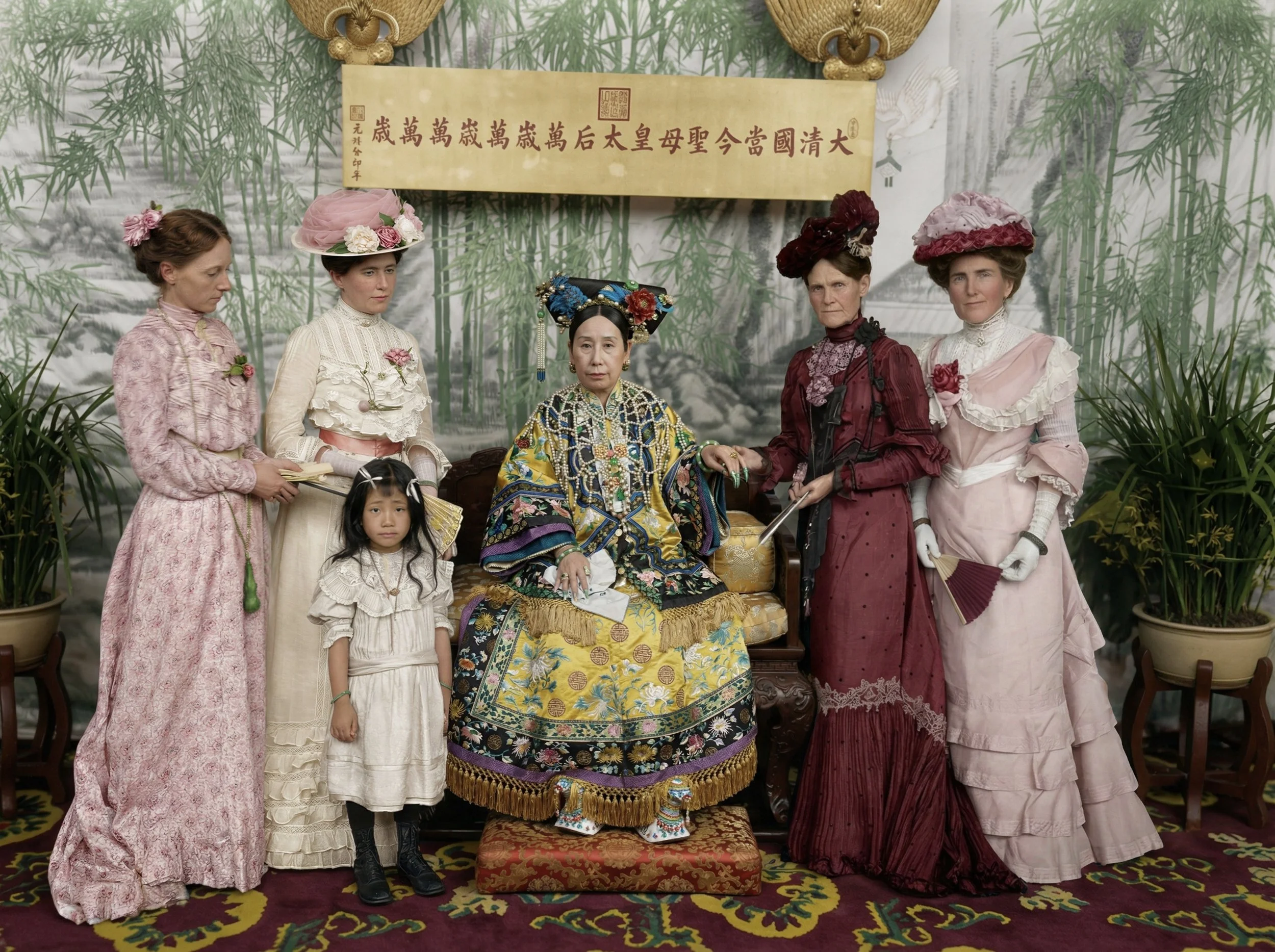
ซูสีไทเฮา (慈禧太后) (ตอนที่ ๖)“พระฉายาลักษณ์ของ ซูสีไทเฮา (慈禧太后) พร้อมทั้งคณะภริยาของเอกอัครราชทูตสหรัฐอเมริกาประจำราชสำนักชิง”
ซูสีไทเฮา (慈禧太后) (ตอนที่ ๖)
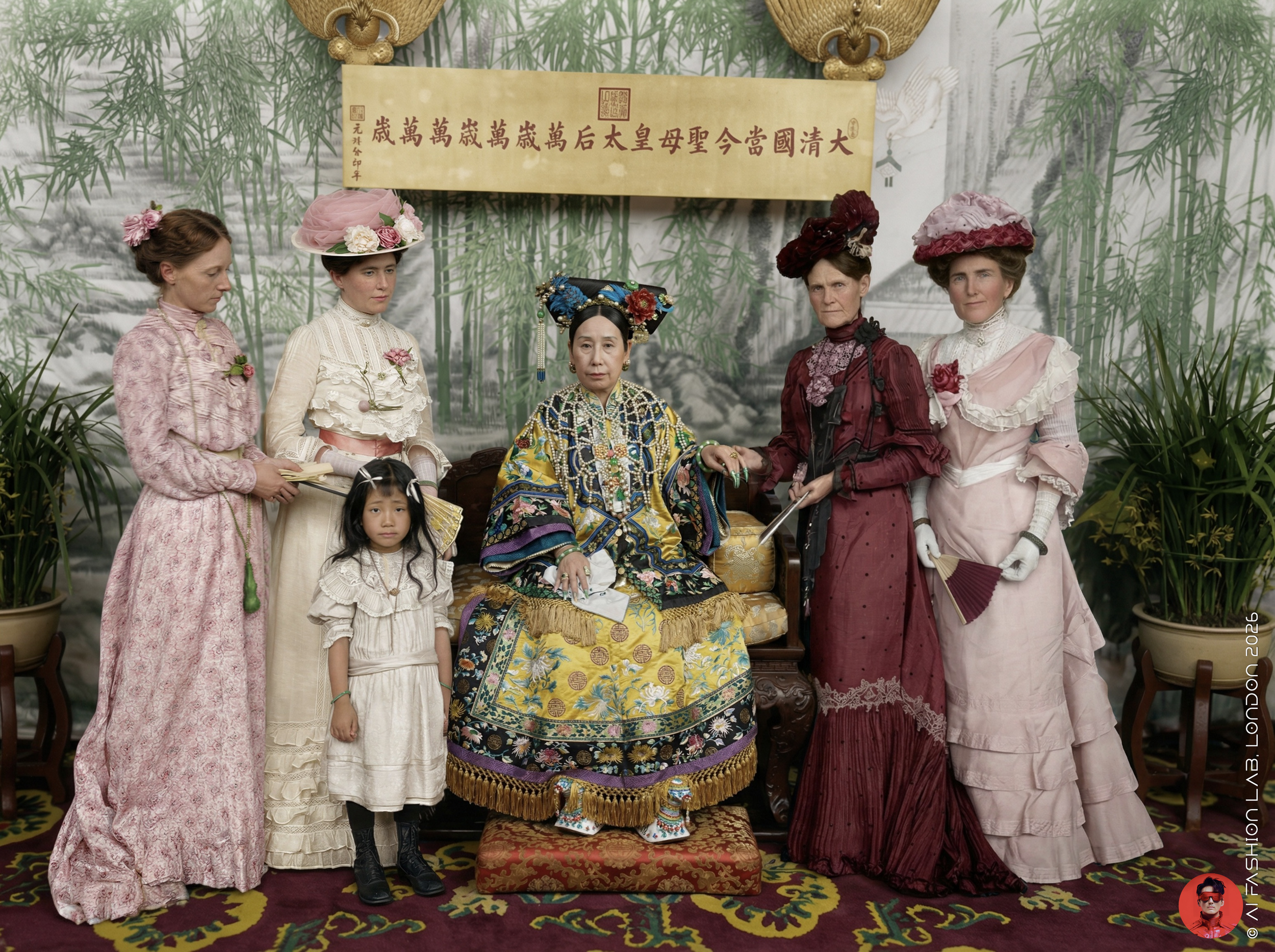
“พระฉายาลักษณ์ของ ซูสีไทเฮา (慈禧太后) พร้อมทั้งคณะภริยาของเอกอัครราชทูตสหรัฐอเมริกาประจำราชสำนักชิง”
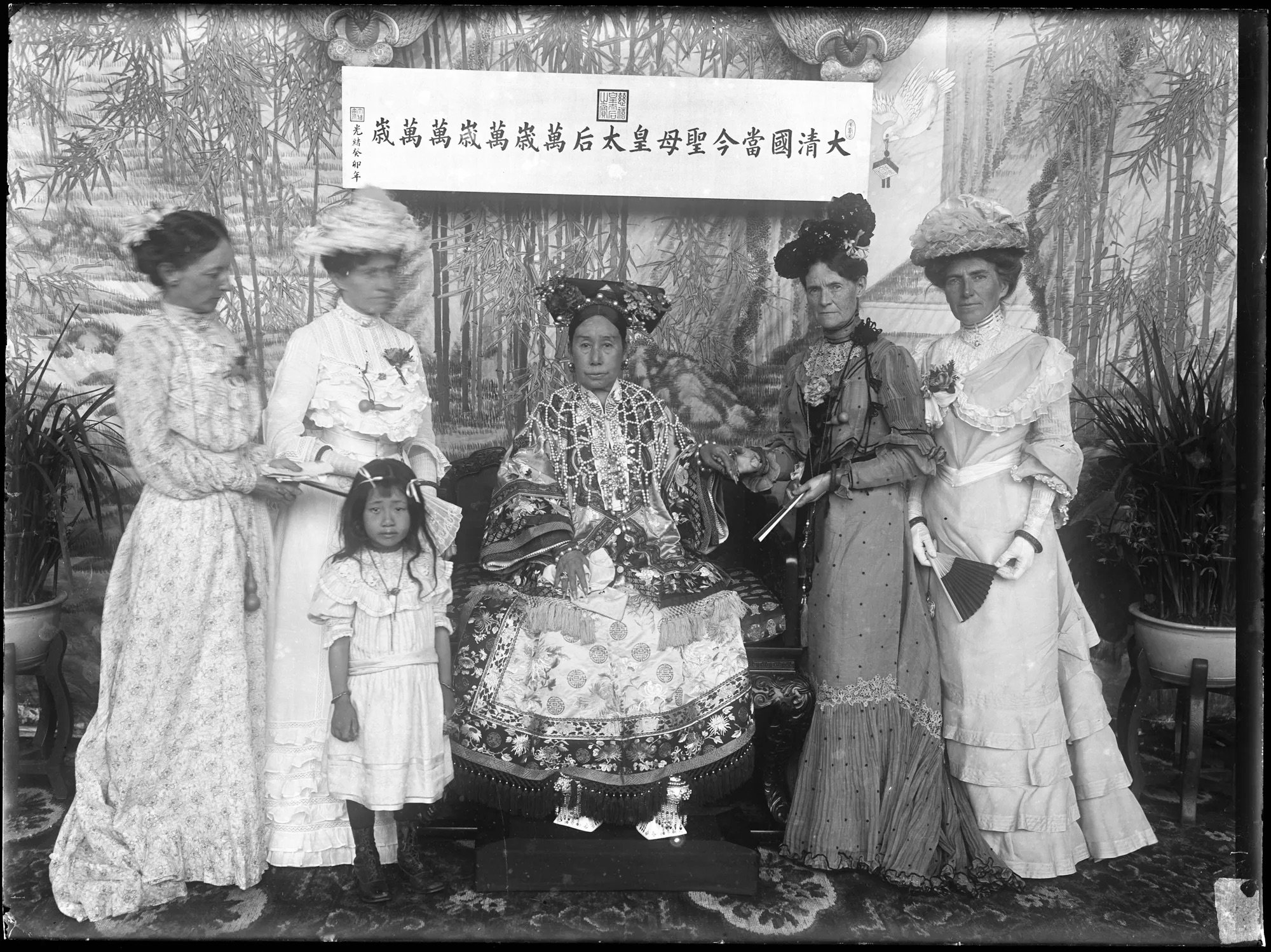
ภาพที่ได้รับการบูรณะและลงสร้างสรรค์ด้วยเทคโนโลยี AI ภาพนี้คือ พระฉายาลักษณ์ของ ซูสีไทเฮา (慈禧太后) (หรือ ฉือสี่ไท่โฮ่ว ในสำเนียงจีนกลาง) ซึ่ง ถ่ายราว ค.ศ. 1903–1904 โดยช่างภาพหลวงประจำราชสำนักชิง หยูซวิ่นหลิง (裕勋龄, Yù Xūnlíng) ถือเป็นหมุดหมายสำคัญอย่างยิ่งในประวัติศาสตร์วัฒนธรรมภาพของจีนจักรพรรดิ ภาพชุดนี้มิได้เป็นเพียงหลักฐานทางเทคโนโลยีของการรับสื่อสมัยใหม่ หากแต่เป็นการเปลี่ยนโครงสร้างความสัมพันธ์ระหว่าง “องค์จักรพรรดิ” “ภาพแทน” และ “สายตาของผู้คน” อย่างลึกซึ้ง
พระองค์ทรงทรงยื่นพระหัตถ์ให้ ซาราห์ ไพค์ คองเกอร์ (Sarah Pike Conger) ภริยาของเอกอัครราชทูตสหรัฐอเมริกาประจำราชสำนักชิง ภาพถ่ายจากปลายราชวงศ์ชิงเพียงไม่กี่ภาพเท่านั้นที่ถ่ายทอดความใกล้ชิดในลักษณะนี้ได้อย่างชัดเจน เพียงแค่ท่าทาง—การที่ซูสีไทเฮาทรงจับมือสตรีชาวตะวันตก—ก็เป็นสิ่งที่แทบจะเป็นไปไม่ได้เลยหากย้อนกลับไปเพียงสิบปีก่อนหน้า อย่างไรก็ตาม ภาพนี้มิใช่เพียงภาพแห่งความเป็นกันเอง หากแต่เป็นภาพที่ถูกจัดวางอย่างรอบคอบ เปี่ยมไปด้วยสัญลักษณ์ และมีเป้าหมายทางการเมืองอย่างชัดเจน
ภาพถ่ายนี้ถ่ายโดย หยูซวิ่นหลิง (裕勋龄, Yù Xūnlíng) ช่างภาพหลวงประจำราชสำนัก ผู้เป็นบุตรของนักการทูตหยูเกิง และเป็นหนึ่งในไม่กี่คนที่ได้รับอนุญาตให้เข้าเฝ้าและบันทึกพระฉายาลักษณ์ของพระนางโดยตรง นอกจากซูสีไทเฮาและซาราห์ คองเกอร์แล้ว ยังมีสตรีอีกสามคนจากคณะทูตอเมริกัน รวมถึงบุตรสาววัยเยาว์ของซวิ่นหลิงร่วมอยู่ในภาพ องค์ประกอบทั้งหมดถูกจัดวางอย่างมีนัยสำคัญ ซูสีไทเฮาประทับอยู่กึ่งกลาง รายล้อมด้วยสตรีชาวต่างชาติ สื่อถึงทั้งพระราชอำนาจและการเปิดรับโลกภายนอกอย่างเปี่ยมพระเมตตา
____________
“เสื้อคลุมไข่มุก: อำนาจ ความมั่งคั่ง และการแสดงออกเชิงสัญลักษณ์”
ก่อนจะกล่าวถึงบริบททางการทูต สิ่งที่สะดุดตาที่สุดในภาพนี้คือ ไข่มุก
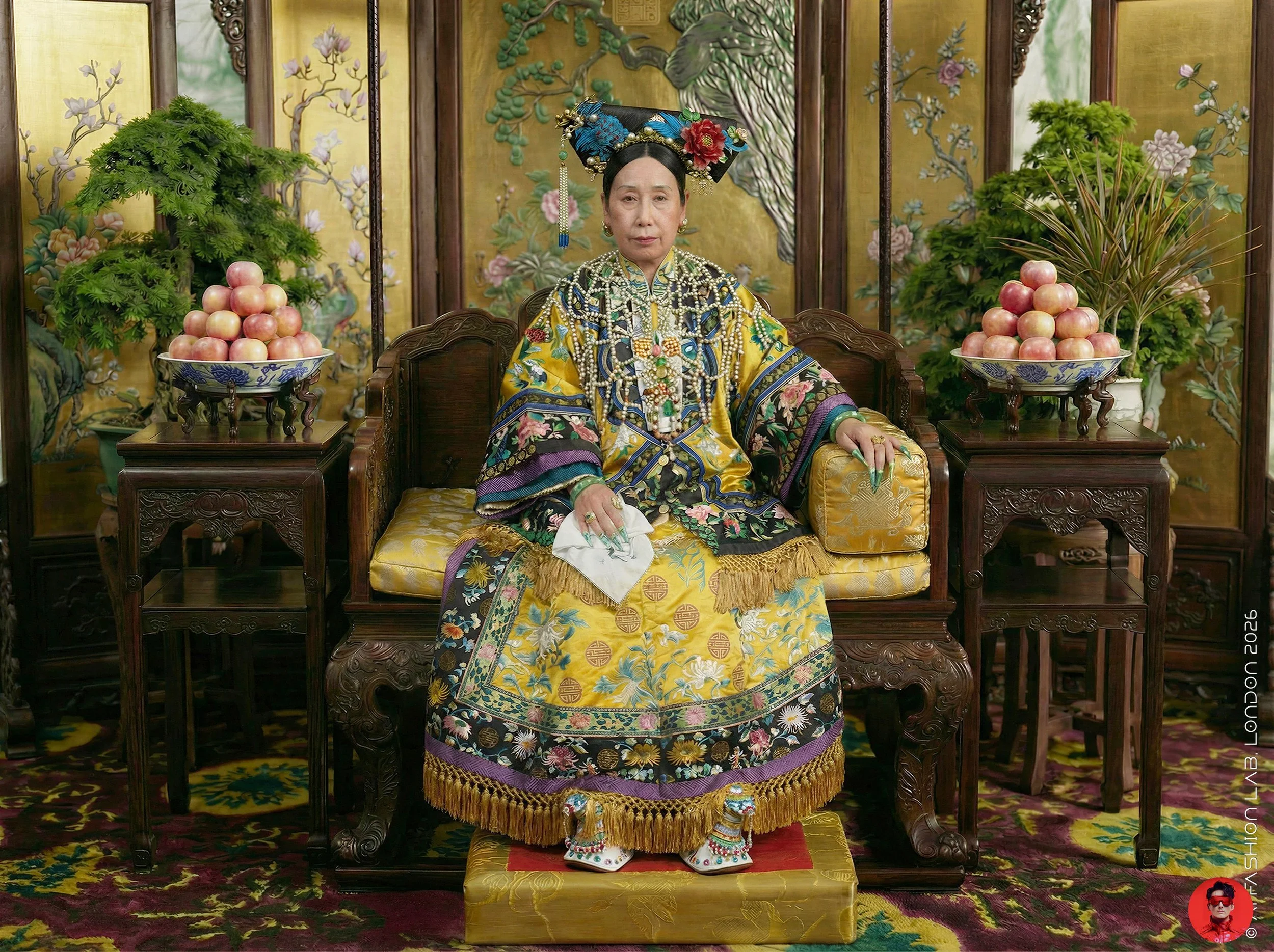
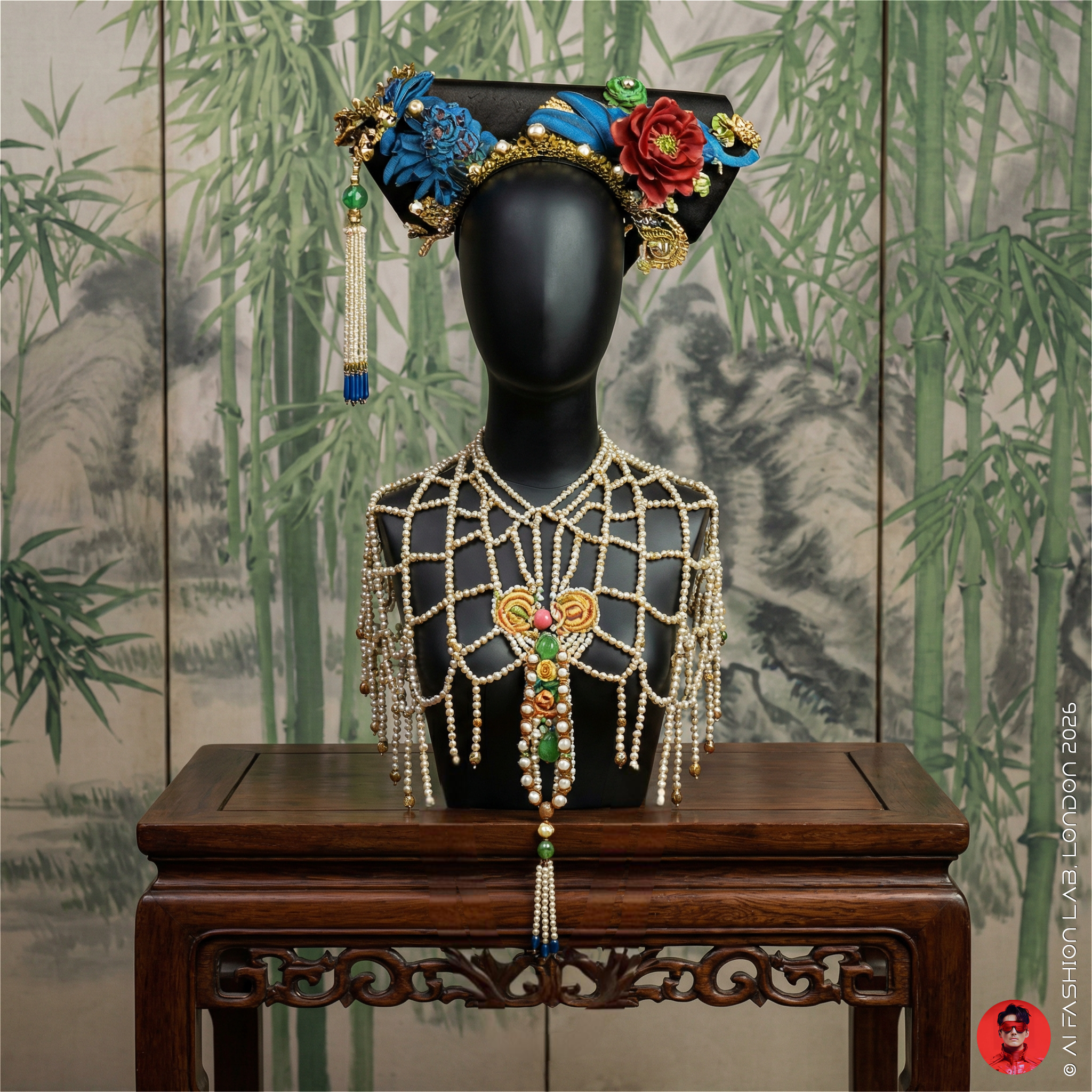
ซูสีไทเฮาทรงฉลองพระองค์ด้วย เสื้อคลุมไข่มุก อันเลื่องชื่อ ซึ่งเป็นผลงานออกแบบของพระองค์ ตามบันทึกของ เดอร์หลิง(Der Ling) นางข้าหลวงผู้สามารถใช้ภาษาอังกฤษและทำหน้าที่ล่ามถวาย เสื้อคลุมผืนนี้ประดับด้วยไข่มุกจำนวน 3,500 เม็ดซึ่งมีรูปร่างและสีสันสมบูรณ์แบบทั้งหมด ไข่มุกเหล่านี้เป็นไข่มุกธรรมชาติ เนื่องจากในขณะนั้นเทคโนโลยีการเพาะเลี้ยงไข่มุกยังไม่ถือกำเนิด มูลค่าของเสื้อคลุมนี้—แม้แต่ ในมาตรฐานของราชสำนัก—จึงสูงล้ำอย่างยิ่ง หากยังคงหลงเหลืออยู่และไม่ถูกปล้นจากสุสานของพระนางในปี ค.ศ. 1928 พร้อมกับอัญมณีล้ำค่าอื่น ๆ มูลค่าในปัจจุบันย่อมประเมินมิได้
นอกเหนือจากราคาแล้ว ยังมีคำถามเรื่องน้ำหนัก ไข่มุกแต่ละเม็ดถูกกล่าวว่ามีขนาดใหญ่เท่าฟองไข่นกขมิ้น หรือประมาณเม็ดถั่วช็อกโกแลต M&M แม้จะดูเล็กกว่านั้นในภาพถ่าย แต่เมื่อรวมจำนวนถึง 3,500 เม็ด เสื้อคลุมนี้ย่อมหนักอย่างยิ่ง เสื้อผ้าชิ้นนี้จึงเป็นการแสดงออกเชิงสัญลักษณ์ของจักรวรรดิ—ซูสีไทเฮาทรง “แบกรับน้ำหนักของอำนาจ” ไว้บนพระวรกายอย่างแท้จริง
____________
“อัตลักษณ์แมนจูและรองเท้าส้นสูงทรง "กระถางดอกไม้"”
ใต้ชายฉลองพระองค์สามารถมองเห็น รองเท้าส้นสูงทรง "กระถางดอกไม้" หรือ 旗鞋 ฉีเซีย ซึ่งมีพื้นยกสูงตรงกลางฝ่าเท้า มิใช่ที่ส้น ชาวแมนจู—ชนชั้นปกครองแห่งราชวงศ์ชิง—ไม่รัดเท้า ต่างจากสตรีชาวฮั่นซึ่งเป็นประชากรส่วนใหญ่ของจีน รองเท้าประเภทนี้จึงถูกออกแบบให้สร้างภาพลวงตาของเท้าเล็กแบบสตรีฮั่น โดยไม่ต้องรัดเท้า
รองเท้าดังกล่าวจึงทำหน้าที่สองชั้นในเวลาเดียวกัน คือการยืนยันอัตลักษณ์แมนจู พร้อมกับยอมรับรสนิยมทางความงามของชาวฮั่น เช่นเดียวกับเสื้อคลุมไข่มุก รองเท้าเหล่านี้คือการต่อรองเชิงภาพระหว่างอัตลักษณ์ อำนาจ และการรับรู้ของผู้ชม
____________
“หลังเหตุการณ์กบฏนักมวย: อำนาจละมุนของราชสำนัก”
ช่วงต้นคริสต์ศตวรรษที่ 20 ภายหลังเหตุการณ์กบฏนักมวย (Boxer Uprising) หรือ ขบวนการอี้เหอถ้วน หรือ ศึกพันธมิตรแปดชาติ ในปี ค.ศ. 1900 ราชสำนักชิงเผชิญความเปลี่ยนแปลงทางการทูตอย่างรุนแรง การต่อต้านชาวต่างชาติด้วยความรุนแรงส่งผลให้จักรวรรดิอ่อนแอและโดดเดี่ยวในเวทีโลก ซูสีไทเฮาและราชสำนักตระหนักว่าการยุติความปิดตายของจักรวรรดิและสร้างความสัมพันธ์ส่วนบุคคลกับมหาอำนาจตะวันตกเป็นสิ่งจำเป็น
หนึ่งในกลยุทธ์ที่โดดเด่นที่สุดคือ การจัดงานเลี้ยงรับรองสตรีภริยาของคณะทูต ณ พระราชวัง พระนางเชื่อว่าสตรีจะเปิดใจรับมิตรภาพได้ง่ายกว่า และจะถ่ายทอดภาพลักษณ์เชิงบวกกลับไปยังสามีและประเทศของตน งานเหล่านี้ได้รับการรายงานอย่างกว้างขวางในสื่อมวลชนตะวันตก และช่วยปรับภาพลักษณ์ของซูสีไทเฮาให้ละมุนขึ้นอย่างเห็นได้ชัด
ในบรรดามิตรภาพเหล่านี้ ความสัมพันธ์กับซาราห์ ไพค์ คองเกอร์มีความสำคัญอย่างยิ่ง คองเกอร์เขียนบทความและหนังสือที่กล่าวถึงพระปรีชาสามารถ พระอัธยาศัย และพระเมตตาของซูสีไทเฮา ซึ่งขัดแย้งอย่างสิ้นเชิงกับภาพเหมารวมเชิงลบที่ตะวันตกเคยสร้างไว้
ภาพถ่ายที่ซูสีไทเฮาทรงจับมือคองเกอร์จึงเป็นภาพสรุปของยุทธศาสตร์นี้—เป็นการแสดงความใกล้ชิดเชิงสัญลักษณ์ เพื่อสร้างความไว้วางใจทางการเมือง
____________
“ภาพถ่ายสำหรับทำเนียบขาว”
เอกสารทางการทูตช่วยขยายความหมายของภาพเหล่านี้ให้ชัดเจนยิ่งขึ้น ในปี ค.ศ. 1904 เอ็ดวิน คองเกอร์ (Edwin Conger) รัฐมนตรีสหรัฐประจำกรุงปักกิ่ง ได้ส่งบันทึกถึง จอห์น เฮย์ (John Hay) รัฐมนตรีต่างประเทศ ขอให้นำพระฉายาลักษณ์ขนาดใหญ่ของซูสีไทเฮาไปถวายแก่ประธานาธิบดี ธีโอดอร์ รูสเวลต์ (Theodore Roosevelt)
คำบรรยายถึงบรรจุภัณฑ์ของภาพเผยให้เห็นพิธีกรรมแห่งอำนาจอย่างชัดเจน ภาพถูกบรรจุในกล่องไม้สีดำ บุด้วยผ้าไหมสีเหลือง มีม่านผ้าไหมสีเหลืองปิดด้านหน้า กล่องทั้งใบถูกหุ้มด้วยปลอกผ้าไหมบุนวม และคลุมด้วยผ้าปักสีเหลืองจักรพรรดิ แม้ก่อนเปิดดูภาพ รหัสเชิงพิธีของจักรวรรดิก็ถูกแสดงออกอย่างสมบูรณ์แล้ว
หลังจากสูญหายไปหลายทศวรรษ ภาพนี้ถูกค้นพบอีกครั้งในห้องใต้หลังคาของ Blair House ซึ่งเป็นที่พำนักรับรองแขกของกระทรวงการต่างประเทศสหรัฐฯ แม้กล่องและผ้าคลุมเดิมจะสูญหายไป แต่ภาพยังคงความงดงามจากการแต้มสีและทองอย่างประณีต ให้ความรู้สึกของพระราชอำนาจควบคู่กับความเป็นกันเองอย่างแยบยล
____________
“การตกแต่งภาพ ความเยาว์วัย และการเมืองของภาพถ่าย”
ในยุคแรกของการขยายภาพถ่าย ข้อจำกัดทางเทคนิคมักทำให้รายละเอียดและมิติหายไป อย่างไรก็ตาม ในกรณีของซูสีไทเฮา ข้อจำกัดนี้กลับถูกใช้ให้เกิดประโยชน์
การวิเคราะห์ภาพต้นฉบับโดยลบสีที่แต้มออกเผยให้เห็นว่ารายละเอียดใบหน้าแทบจะสูญหายไปทั้งหมด เหลือเพียงโครงร่างจาง ๆ รายละเอียดที่ถูกวาดเพิ่ม—โดยเฉพาะแนวคางและกราม—ช่วยสร้างภาพลวงตาของความเยาว์วัยอย่างแนบเนียน ภาพถ่ายจึงอยู่กึ่งกลางระหว่าง “ความสมจริงของภาพถ่าย” กับ “เสรีภาพทางศิลปะของจิตรกรรม”
ซูสีไทเฮาเอง—ในวัยเกือบเจ็ดสิบ—ทรงพอพระทัยอย่างยิ่งกับเทคนิคการตกแต่งภาพนี้ แต่นี่ไม่ใช่เพียงเรื่องของความงาม หลังปี ค.ศ. 1900 จักรวรรดิชิงต้องแบกรับค่าปฏิกรรมสงครามจำนวนมหาศาล สหรัฐอเมริกาถูกมองว่าเป็นชาติที่มีแนวโน้มผ่อนปรนมากกว่าชาติตะวันตกอื่น ๆ การมอบของกำนัลส่วนพระองค์แก่รูสเวลต์และครอบครัวจึงมิใช่เรื่องบังเอิญ
ภาพถ่ายเหล่านี้อาจถูกมองได้ว่าเป็น “เครื่องมือทางการทูต” ที่ออกแบบมาเพื่อโน้มน้าวใจอย่างอ่อนโยน
____________
“อลิซ รูสเวลต์ และภาพจักรวรรดิในต่างแดน”
ยุทธศาสตร์นี้ยังขยายไปถึงบุตรสาวของประธานาธิบดี เมื่อ อลิซ รูสเวลต์ (Alice Roosevelt, 1884–1980) เดินทางเยือนปักกิ่งในปี ค.ศ. 1905 เธอก็ได้รับพระฉายาลักษณ์ของซูสีไทเฮาเช่นกัน อลิซเป็นบุคคลสาธารณะที่มีชื่อเสียงจากบุคลิกซุกซนและรูปลักษณ์งดงาม สื่อมวลชนจึงนำเสนอการพบกันของเธอกับซูสีไทเฮาในฐานะการปะทะเชิงสัญลักษณ์ของอารยธรรม
การเข้าเฝ้าเกิดขึ้นที่พระราชวังฤดูร้อนใหม่ กลางเดือนกันยายน อลิซบันทึกไว้ว่า ภาพถ่ายถูกส่งมาพร้อมพิธีการเต็มรูปแบบ มีทหารม้าคุ้มกัน เก้าอี้สีเหลืองจักรพรรดิ และข้าราชการชั้นสูง ภาพถ่ายจึงไม่ใช่เพียงของที่ระลึก หากแต่เป็น “ตัวแทนของพระองค์” ที่ได้รับการถวายความเคารพเช่นเดียวกับซูสีไทเฮาเอง
เช่นเดียวกับภาพที่ส่งให้ประธานาธิบดี รูปลักษณ์ของซูสีไทเฮาในภาพนี้ถูกปรับให้ดูอ่อนวัยลงหลายสิบปี
____________
“ความฟุ่มเฟือยหรือยุทธศาสตร์?”
ภาพถ่ายของอวี้ ซวิ่นหลิง มิใช่เพียงสิ่งแปลกตา หากแต่เป็นส่วนหนึ่งของความพยายามเชิงระบบของราชสำนักชิงที่กำลังอ่อนแรง เพื่อรักษาความชอบธรรม อำนาจ และความเกี่ยวข้องในโลกสมัยใหม่ผ่านวัฒนธรรมภาพ
น่าสังเกตว่า การลดค่าปฏิกรรมสงครามโดยสภาคองเกรสสหรัฐฯ เกิดขึ้นในปี ค.ศ. 1908—ปีเดียวกับการสิ้นพระชนม์ของซูสีไทเฮา จะเป็นเพียงความบังเอิญ หรือเป็นผลจากการทูตเชิงภาพที่คำนวณมาอย่างรอบคอบ?
ภาพของซูสีไทเฮาที่ทรงจับมือซาราห์ ไพค์ คองเกอร์ ชวนให้เชื่อในอย่างหลัง ภาพนี้ไม่ใช่เพียงภาพถ่าย แต่คือ “การแสดง” ของความใกล้ชิด พระราชอำนาจ และพระปรีชาทางการเมือง ในยุคที่ภาพถ่ายได้กลายเป็นหนึ่งในเครื่องมือสำคัญของจักรวรรดิ.
_______________
Empress Dowager Cixi holding the hand of Sarah Pike Conger
This restored and colourised image shows Empress Dowager Cixi holding the hand of Sarah Pike Conger, the wife of the American minister to the Qing court. Few surviving photographs from the late Qing period convey such intimacy. The gesture alone—Cixi physically holding a foreign woman’s hand—would have been unthinkable only a decade earlier. Yet this image was carefully staged, deeply symbolic, and politically purposeful.
The photograph was taken by Yu Xunling, son of the diplomat Yu Geng, and one of the few photographers permitted direct access to the Empress Dowager. Alongside Cixi and Sarah Conger stand three other ladies of the American legation, as well as Xunling’s young daughter. The composition is deliberate: Cixi occupies the centre, encircled by foreign women, projecting both authority and benevolent inclusion.
The Pearl Cape: Power, Wealth, and Spectacle
Before addressing the diplomatic context, the most arresting feature of the image demands attention: the pearls.
Cixi is wearing her famous pearl cape, a garment of her own design. According to Der Ling, the English-speaking lady-in-waiting who frequently translated for the Empress Dowager, the cape contained 3,500 pearls of perfect shape and colour. These were natural pearls—cultured pearl techniques had not yet been developed—making their value, even by imperial standards, extraordinary. Had the cape survived intact, rather than being looted from Cixi’s tomb in 1928 along with many of her treasured jewels, its monetary worth today would be incalculable.
Beyond cost lies the question of weight. Each pearl was said to be as large as a canary egg, roughly comparable to a peanut M&M. While the pearls appear smaller to modern eyes, the sheer number—3,500—suggests a garment that was not only visually opulent but physically burdensome. The cape thus becomes an embodied display of imperial endurance: Cixi literally wearing the weight of empire.
Manchu Identity and the Platform Shoes
Visible beneath the hem are the distinctive Manchu platform shoes, with raised soles positioned at the centre of the foot rather than at the heel. Qing rulers were Manchurian, and Manchu women did not bind their feet. Instead, these elevated shoes created the illusion of the tiny, bound feet associated with Han Chinese women, who formed the majority of China’s female population.
The footwear therefore operates on two levels: it asserts Manchu difference while simultaneously acknowledging Han aesthetic norms. Like the pearl cape, it is a calculated visual negotiation between identity, power, and perception.
After the Boxer Uprising: Soft Power at Court
The early years of the twentieth century, following the Boxer Uprising of 1900, marked a dramatic shift in Qing diplomacy. The violent backlash against foreign presence had left the empire politically weakened and internationally isolated. In response, the court—under Cixi’s direction—recognised the need to abandon imperial seclusion and cultivate personal relationships with foreign powers.
One of Cixi’s most striking strategies was to host a series of palace gatherings for the wives of foreign diplomats. The assumption was astute: women, she believed, would be more receptive to gestures of friendship and would relay favourable impressions to their husbands and home audiences. These events were widely reported in the foreign press and contributed to a noticeable softening of Cixi’s international image.
Among these relationships, none was more significant than her friendship with Sarah Pike Conger. Conger wrote warmly of Cixi’s intelligence, charm, and generosity in newspaper articles and later publications, offering Western readers an image that contrasted sharply with prevailing caricatures of the “dragon lady.”
The photograph of Cixi holding Conger’s hand encapsulates this approach. It reveals the extent to which the Empress Dowager was willing to perform intimacy—visually and symbolically—to forge political goodwill.
Photographs for the White House
Diplomatic correspondence sheds further light on how these images functioned beyond the palace. In 1904, Sarah Conger’s husband, Edwin Conger, then American Minister to Peking, sent a memo to John Hay requesting that a large photographic portrait of the Empress Dowager be presented to President Theodore Roosevelt.
The description of the object is revealing. The portrait arrived in a black wooden box lined with yellow silk, concealed behind a yellow silk curtain. The box itself was encased in a fitted quilted silk cover, over which lay an exquisitely embroidered cloth of imperial yellow. Even before the image was seen, the ritual language of empire had already been enacted.
After decades of obscurity, the photograph was eventually rediscovered in the attic of Blair House, the State Department’s official guest residence. Although the original box and brocades have been lost, the portrait—now held in a modern frame—retains its lavishly tinted surface, enriched with gold paint and dense decorative detail.
Retouching, Youth, and Political Illusion
By the early twentieth century, photographic enlargement posed technical challenges: loss of clarity, tonal depth, and fine detail was common. In Cixi’s case, these limitations became an opportunity.
Digital analysis of the Blair House portrait, with applied colours removed, reveals a near-total loss of facial modelling in the underlying print. Painted details were strategically added—especially around the chin and jawline—to redefine her features and create a persuasive illusion of youthfulness. The result occupies a liminal space between photograph and painted portrait: technologically modern, yet artistically manipulative.
Cixi herself, then in her late sixties, reportedly delighted in the possibilities of retouching. This was not mere vanity. After 1900, the Qing government faced crushing indemnities imposed by foreign powers, threatening economic collapse and political legitimacy. The United States was viewed as more amenable than European empires to reducing its share of these payments. It is no coincidence that Roosevelt and his family became the recipients of particularly personal imperial gifts.
In this context, the portraits can be read as instruments of statecraft—visual ambassadors designed to humanise, flatter, and persuade.
Alice Roosevelt and the Imperial Image Abroad
The strategy extended beyond the president himself. When Roosevelt’s daughter, Alice (1884–1980), visited Beijing in 1905, she too received a portrait of the Empress Dowager. Alice was already a celebrity in her own right, known for her rebellious charm and widely covered in the press. Newspapers framed her meeting with Cixi as a symbolic encounter between civilisations.
The audience took place at the New Summer Palace in mid-September. Alice later recalled that the photograph was delivered to the legations with full ceremonial splendour: an imperial yellow chair, a cavalry escort, and officials of notably high rank. The photograph, though framed in an ordinary Western gilt frame, was treated as an extension of the Empress Dowager’s presence, deserving of ritual deference.
Like the earlier portrait sent to her father, Alice’s image of Cixi was carefully reworked to erase decades from the ruler’s appearance. The message was clear: the Qing court, though weakened, remained sophisticated, strategic, and visually commanding.
Calculation or Caprice?
The photographs produced by Yu Xunling were not isolated curiosities. They formed part of a broader effort by an increasingly embattled Qing court to maintain relevance, legitimacy, and international sympathy through modern visual culture.
Strikingly, the United States Congress approved reductions in indemnity payments in 1908—the same year as Cixi’s death. Whether coincidence or consequence, the timing invites reflection. Were these images the indulgences of an ageing ruler fascinated by modernity, or carefully calibrated tools of foreign policy?
The photograph of Empress Dowager Cixi holding Sarah Pike Conger’s hand suggests the latter. It is not merely a portrait, but a performance—of intimacy, authority, and political intelligence—captured at a moment when images themselves had become instruments of empire.
_______________
เรียนเชิญกด Subscribe ได้ที่ลิงก์นี้ครับ เพื่อร่วมติดตามงานสร้างสรรค์ต้นฉบับ งานวิจัยประวัติศาสตร์แฟชั่น และผลงานอนุรักษ์มรดกวัฒนธรรมด้วยเทคโนโลยี AI ของ AI Fashion Lab, London ซึ่งมุ่งตีความอดีตผ่านมิติใหม่ของการบูรณะภาพ การสร้างสรรค์ภาพ และการเล่าเรื่องด้วยศิลปะเชิงดิจิทัล 🔗 https://www.facebook.com/aifashionlab/subscribe/
#aifashionlab #AI #aiartist #aiart #aifashion #aifashiondesign #aifashionstyling #aifashiondesigner #fashion #fashionhistory #historyoffashion #fashionstyling #fashionphotography #digitalfashion #digitalfashiondesign #digitalcostumedesign #digitaldesign #digitalaiart #ThaiFashionHistory #ThaiFashionAI #thailand #UNESCO