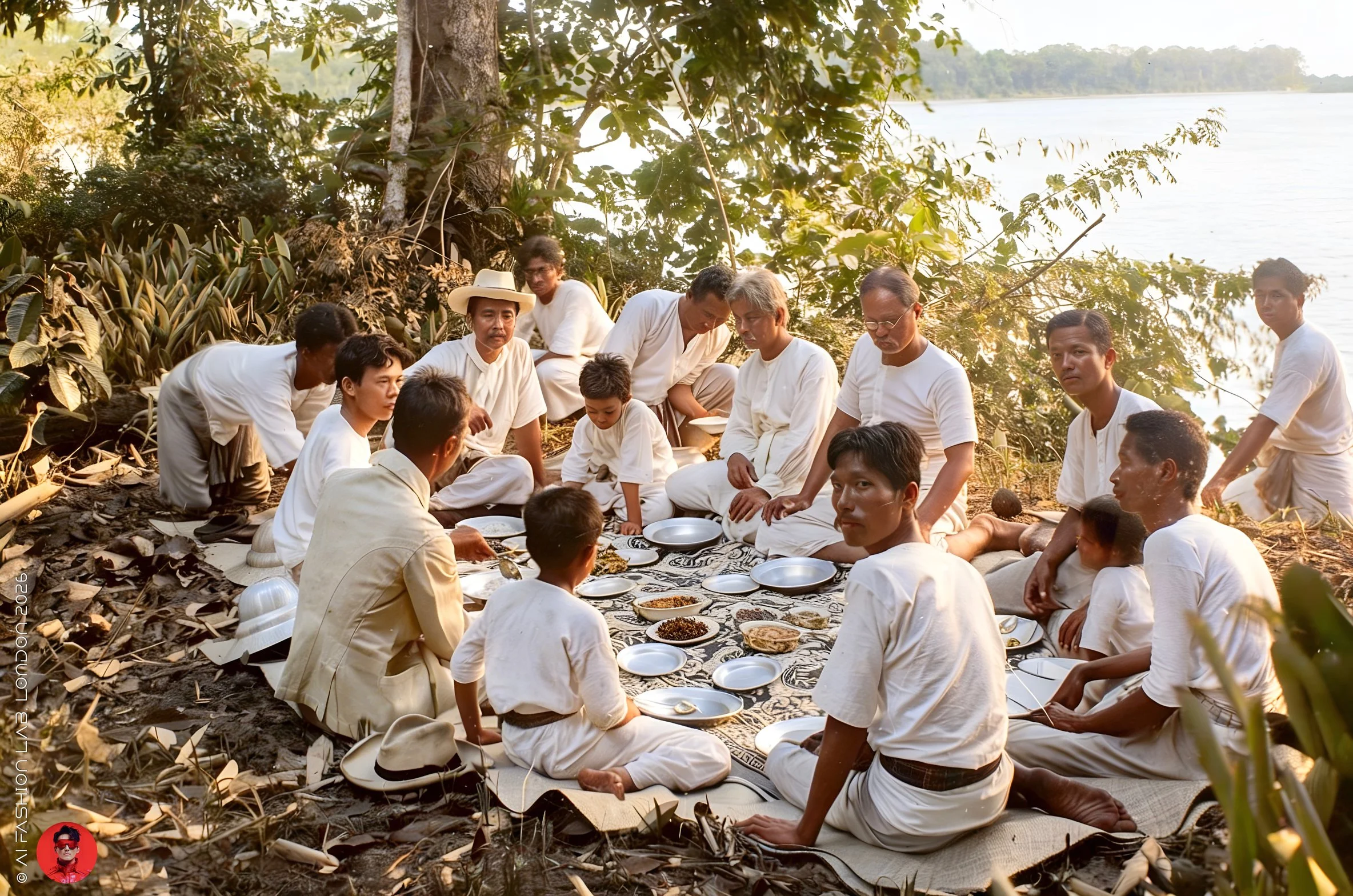
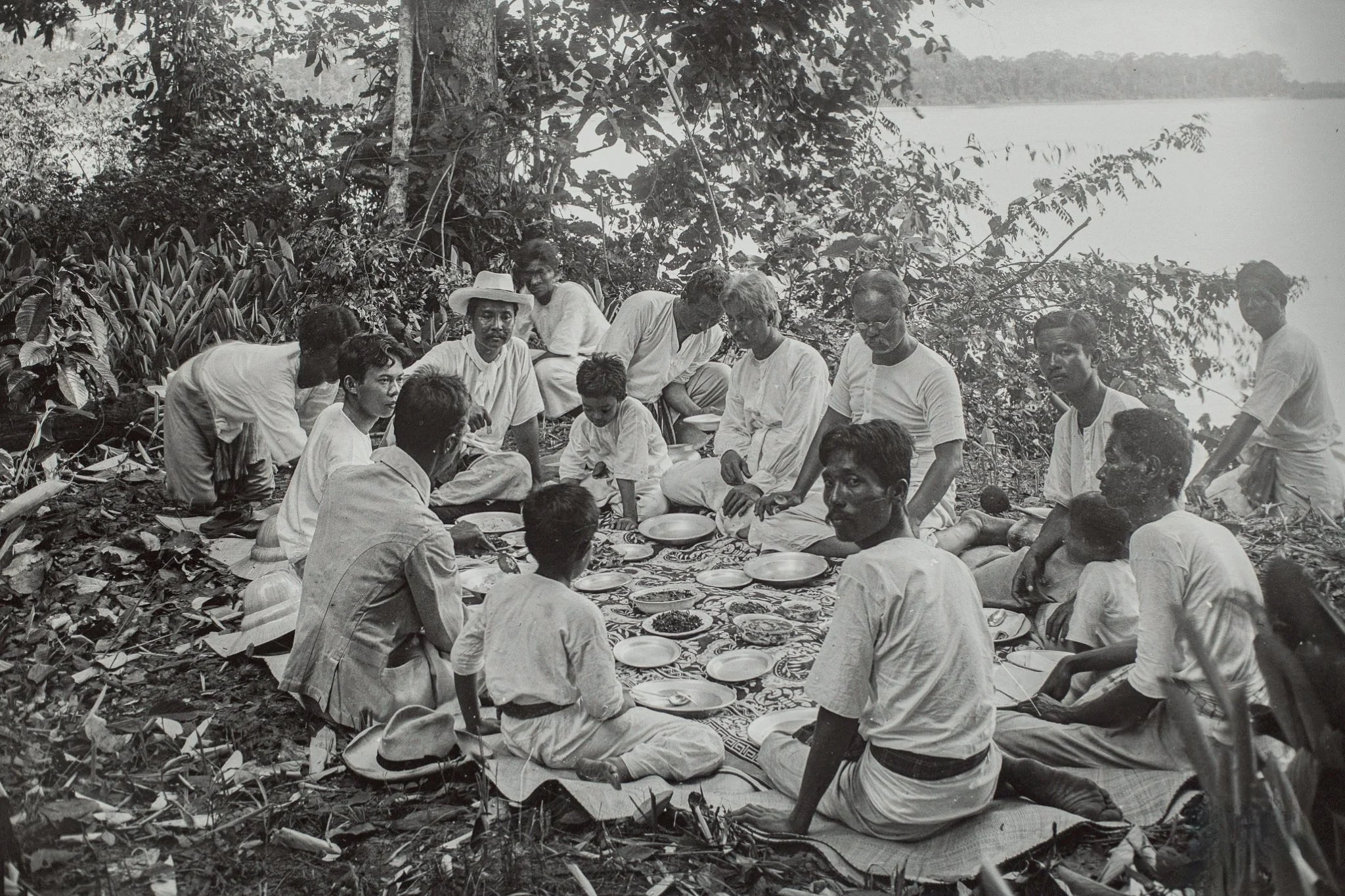
รัชกาลที่ ๕ เสด็จประพาสต้น เสวยพระกระยาหารใต้ร่มไม้กับคณะตามเสด็จ พ.ศ. ๒๔๔๙
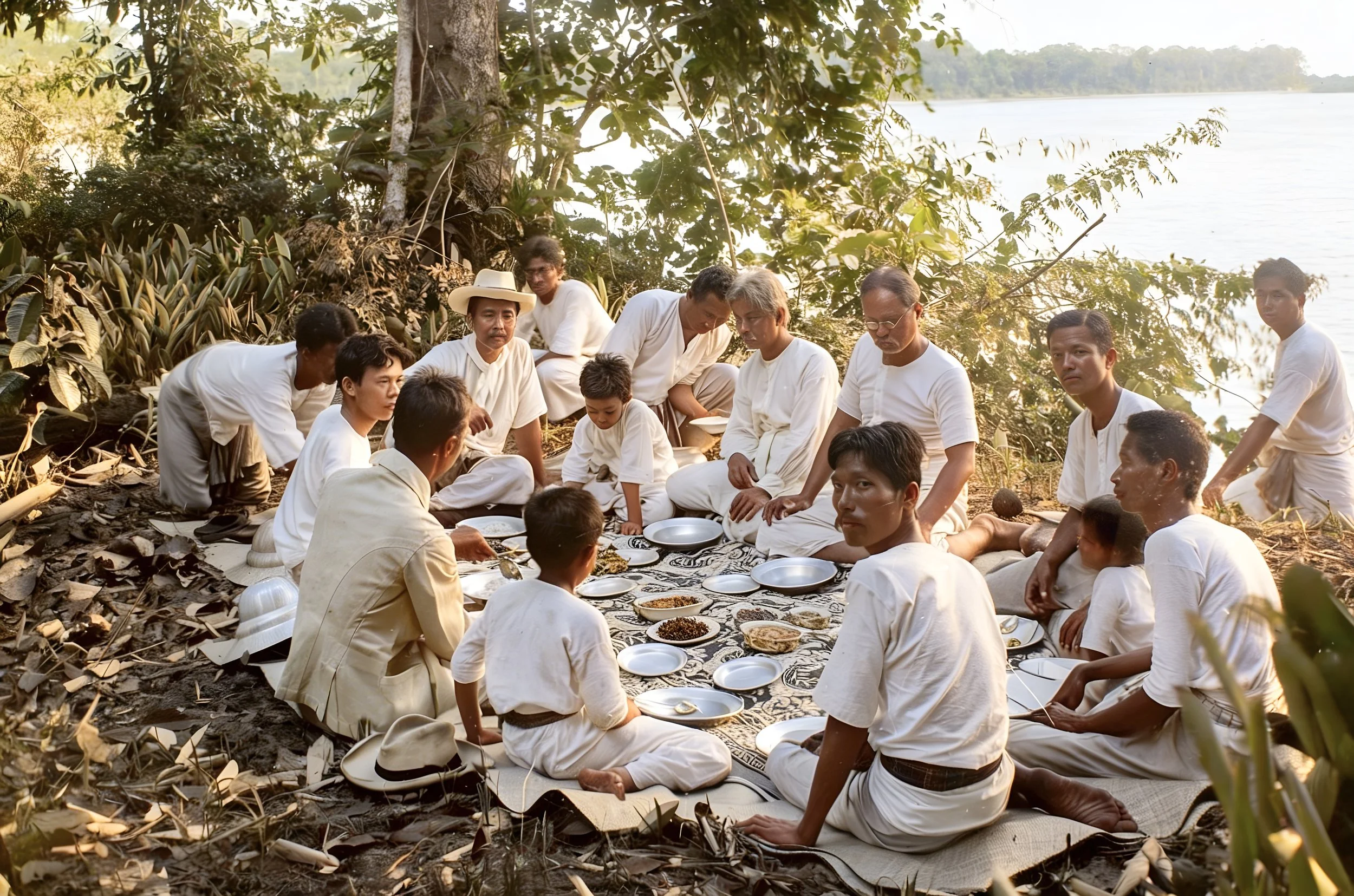
รัชกาลที่ ๕ เสด็จประพาสต้น เสวยพระกระยาหารใต้ร่มไม้กับคณะตามเสด็จ พ.ศ. ๒๔๔๙
ภาพที่ได้รับการบูรณะและสร้างสรรค์ขึ้นด้วยเทคโนโลยี AI นี้ เป็นพระบรมฉายาลักษณ์ พระบาทสมเด็จพระจุลจอมเกล้าเจ้าอยู่หัว พร้อมทั้งคณะตามเสด็จ ในการเสด็จที่เรียกว่าประพาสต้น ซึ่งมี ๒ ครั้ง ครั้งแรกเมื่อปี พ.ศ. ๒๔๔๗ ครั้งที่ ๒ พ.ศ. ๒๔๔๙
ในพระบรมฉายาลักษณ์องค์นี้ พระบาทสมเด็จพระจุลจอมเกล้าเจ้าอยู่หัว รัชกาลที่ ๕ (ประทับด้านซ้ายทรงพระมาลาสีขาวนวล) ขณะเสด็จประพาสต้นครั้งที่ ๒ พ.ศ. ๒๔๔๙ ที่เมืองกำแพงเพชร
อ. เอนก นาวิกมูล เชื่อว่าเป็นภาพที่ฉายเมื่อ พ.ศ. ๒๔๔๙ ชุดเดียวกับภาพฉายใต้ร่มไผ่ แถบกำแพงเพชร หรือบริเวณใกล้เคียง (ในภาพนั้นจะเห็น รัชกาลที่ ๕ ประทับอยู่ขวาสุด และเห็นซุ้มไผ่ข้างบน) เพราะมีผู้ตามเสด็จตรงกับที่ทรงเอ่ยนามไว้ในพระราชนิพนธ์เรื่อง เสด็จประพาสต้นครั้งที่สอง เช่น
พระยาบุรุษรัตนราชพัลลภ (นพ ไกรฤกษ์ – ไว้หนวด หันหน้ามามองกล้อง มีผ้าคาดสะเอว นั่งเท้าแขน) ถัดไป (ทวนเข็มนาฬิกา) คือ พระยาโบราณราชธานินทร์ (พร เดชะคุปต์) ถัดไปน่าจะเป็นเงาะคนัง (เด็กเล็ก) กรมหลวงราชบุรีดิเรกฤทธิ์
ถัดไปคือ กรมหลวงสรรพสาสตรศุภกิจ (ที่พระยาบุรุษรัตนฯ บังอยู่) ถัดไปคือ กรมหลวงประจักษ์ศิลปาคม และจากนั้น (ติดกับรัชกาลที่ ๕) น่าจะเป็นพระองค์เจ้าอุรุพงษ์รัชสมโภช ด้านซ้าย สวมเสื้อนอก หันหลัง คือ สมเด็จฯ กรมพระยาดำรงราชานุภาพ
ในพระราชนิพนธ์ พ.ศ. ๒๔๔๙ รัชกาลที่ ๕ ทรงกล่าวถึงการถ่ายรูปไว้มาก เพราะเป็นสมัยที่ทรงสนพระทัยเล่นกล้อง เท่าที่ผู้บรรยายนับคำในพระราชนิพนธ์ฯ ชิ้นนี้ดู (ต้นฉบับมีถึงคลองบอระเพ็ด) ปรากฏว่าทรงพูดถึงการถ่ายรูปถึง ๕๒ ครั้ง
อ. ศันสนีย์ วีระศิลป์ชัย เขียนเพิ่มเติมว่า ในการเสด็จประพาสต้นครั้งนั้น ทรงปลอมพระองค์ เพื่อทรงทราบสภาพที่แท้จริง แต่มิวายถูกประชาชนจำได้
“—เที่ยวไล่ตามสุ่มเอาตัวที่รู้จักด้วยรูปแหละเป็นที่ตั้ง เพราะรูปนั้นกันได้สารพัด ผีก็ไม่หลอก ไข้เจ็บก็รักษาได้ เสมาก็แช่กินน้ำหายเจ็บ—“
เป็นวาทะตอนหนึ่งในพระราชหัตถเลขาของพระบาทสมเด็จพระจุลจอมเกล้าเจ้าอยู่หัว ถึงพระยายมราชลงวันที่ ๒๑ ตุลาคม ร.ศ. ๑๒๗ ทรงเล่าถึงการเสด็จประพาสต้น ซึ่งเป็นการเสด็จเพื่อสำราญพระราชอิริยาบถส่วนพระองค์ ไม่โปรดให้จัดการรับเสด็จอย่างเป็นทางการ
การเสด็จครั้งแรกนั้นนับเป็นการเสด็จที่ทรงสนุกและสำราญพระราชหฤทัยอย่างที่สุด เพราะเป็นไปตามพระราชประสงค์ทุกประการ ทรงสามารถประทับปะปนไปกับราษฎรโดยที่ราษฎรไม่รู้ตัว ทำให้ทรงทราบถึงชีวิตความเป็นอยู่และทุกข์สุขที่แท้จริงของราษฎร ไม่มีการจัดฉากหรือเสแสร้ง ราษฎรไม่ต้องระมัดระวังตัวกลัวเกรงพระบารมีจนไม่กล้าแสดงความจริงใจออกมา
อย่างเช่นเหตุการณ์ที่เล่าสืบกันมาด้วยความชื่นชมพระจริยวัตรที่ทรงแสดงออก กรณีนายช้าง บ้านบางหลวงอ้ายเอียง เขตจังหวัดพระนครศรีอยุธยา ซึ่งได้ถวายการต้อนรับพระองค์โดยเข้าใจว่าเป็นขุนนางคนหนึ่ง เรื่องนี้สมเด็จฯ กรมพระยาดำรงราชานุภาพ ทรงเล่าไว้ในจดหมายเหตุเสด็จประพาสต้นว่า
“—ดูท่าทางนายช้าง เห็นจะรู้จักผู้ลากมากดี กว้างขวาง พอเห็นพวกเราก็ไม่ต้องไต่ถามว่าใครเป็นใคร เข้าใจเอาทีเดียวว่าเราเป็นพวกขุนนางที่ตามเสด็จมาข้างหลัง บอกว่าเสด็จไปเมื่อสักครู่นี้เอง เชิญให้พวกเราเข้าไปนั่งบนแคร่ในโรงยาว หาน้ำร้อนน้ำชามาตั้ง แล้วเข้าไปนั่งเคียงบ่าเคียงไหล่สนทนากับพระเจ้าอยู่หัว มิได้มีความรู้สึกและสงสัย—“
ในการเสด็จประพาสต้นทั้ง ๒ ครั้ง ทำให้ทรงตระหนักพระทัยว่า ความจงรักภักดีของราษฎรนั้นส่วนใหญ่แสดงออกในรูปของการเคารพบูชาอย่างเห็นเป็นสิ่งศักดิ์สิทธิ์ ทั้งนี้เกิดจากการที่ราษฎรยังคงฝังแน่นกับความเชื่อที่ว่าพระมหากษัตริย์เป็นสมมติเทพ จึงพากันกราบไหว้บูชาแบบเดียวกับที่ปฏิบัติกับเทพเจ้า หรือสิ่งศักดิ์สิทธิ์เพื่ออธิษฐานขอในสิ่งที่ปรารถนา ดังที่ทรงเล่าไว้ในลายพระราชหัตถเลขาส่วนพระองค์ถึงเจ้าพระยายมราช (ปั้น สุขุม) เรื่องการเสด็จประพาสต้นเมืองสุพรรณ ความว่า
“—ชาวสุพรรณดูนับถือเจ้านายมาก ลักษณะอาการกิริยาที่ไหว้กราบออกจะใกล้ข้างพระมากกว่าเจ้า มิอธิษฐานขอพรเชิงบน ๆ ต่อไป—“
และทรงเล่าเกี่ยวกับความเชื่อที่ราษฎรมีต่อเสมาที่โปรดพระราชทานให้ว่า
“—เสมานั้นเป็นเครื่องคุ้มกันอันตรายดีอย่างยิ่ง เพราะเวลาท่านประทาน ท่านให้พร หลานได้มาครั้งนั้น ๒ คน เดี๋ยวนี้ต้องแบ่งไปให้หลานบ้านอื่นเสียอัน ๑ เพราะขี้โรค ที่อยู่บ้านเดี๋ยวนี้ต้องผลัดกันผูก ท่านแจกก็มากจะหาซื้อสักอันหนึ่งไม่ได้เลย ไม่มีใครเขาขาย—“
การเสด็จประพาสต้นครั้งที่ ๒ ประชาชนพยายามสืบทราบเพื่อจะได้มีโอกาสเข้าเฝ้าใกล้ชิด และครั้งนี้ประชาชนพากันระมัดระวังไม่ยอมกราบไหว้ผิดตัวเหมือนครั้งแรก การเสด็จประพาสต้นครั้งต่อมาจึงไม่เป็นไปตามพระราชประสงค์ ด้วยเหตุนี้จึงต้องทรงเลิกเสด็จประพาสต้น ดังที่ทรงบอกเล่าถึงความรู้สึกของพระองค์ที่มีต่อราษฎร ความว่า
“—เที่ยวไล่ตามสุ่มเอาตัวที่รู้จักด้วยรูปแหละเป็นที่ตั้ง เพราะรูปนั้นกันได้สารพัด ผีก็ไม่หลอก ไข้เจ็บก็รักษาได้ เสมาก็แช่กินน้ำหายเจ็บดูรู้จักทุกคนไม่มีใครจะเงอะงะเสียเลย จนต้องตกลงเลิกประพาสต้น เพราะดูก็น่าสงสาร เที่ยวไล่ตามหาทุกหนทุกแห่ง เสมาไม่พอถึงไหนก็หมดที่นั่น ซื้อขายกันราคาแพงมาก—“
ที่มา : ศิลปวัฒนธรรม ผู้เขียน : อ. เอนก นาวิกมูล และ อ. ศันสนีย์ วีระศิลป์ชัย เผยแพร่ : วันอาทิตย์ที่ ๑๓ กุมภาพันธ์ พ.ศ. ๒๕๖๕ และ วันเสาร์ที่ ๒๘ มิถุนายน พ.ศ. ๒๕๖๘
อ่านข่าวต้นฉบับได้ที่ : https://www.silpa-mag.com/old-photos-tell-the-historical-story/article_54510 และ https://www.silpa-mag.com/history/article_20980
____________
King Chulalongkorn (Rama V) on an Incognito Royal Journey, Taking a Meal Beneath the Trees with His Retinue in 1906
This AI-restored and creatively reimagined image is a royal photograph of King Chulalongkorn (พระบาทสมเด็จพระจุลจอมเกล้าเจ้าอยู่หัว, Rama V) together with the members of his accompanying party during the journeys known as Prarphat Ton (เสด็จประพาสต้น), or informal incognito royal tours. There were two such journeys: the first in 1904 and the second in 1906.
In this particular photograph, King Chulalongkorn (seated on the left, wearing an off-white hat) is shown during the second Prarphat Ton journey in 1906, at Kamphaeng Phet (กำแพงเพชร).
Anek Nawikamul believes that this photograph was taken in 1906, and belongs to the same group as another image taken beneath a bamboo grove in the Kamphaeng Phet area, or somewhere nearby. In that other photograph, Rama V appears seated at the far right, and a bamboo arch can be seen above. He draws this conclusion because the people accompanying the King correspond to those named in the royal travel narrative Sadet Prarphat Ton Khrang Thi Song (เสด็จประพาสต้นครั้งที่สอง), including the following figures:
Phraya Burutsarattana Ratchaphallop (พระยาบุรุษรัตนราชพัลลภ; Nop Krairik), the man with a moustache looking towards the camera, wearing a sash and seated with his arm propped up; next to him, moving anticlockwise, is Phraya Boranratchathanin (พระยาโบราณราชธานินทร์; Phon Dechakhup); next is probably Ngo Khanang (เงาะคนัง), a young child; then Prince Raphi Phatthanasak, Prince of Ratchaburi (กรมหลวงราชบุรีดิเรกฤทธิ์).
Next comes Krom Luang Sanphatsatr Suphakit (กรมหลวงสรรพสาสตรศุภกิจ), partly obscured by Phraya Burutsarattana; then Krom Luang Prachaksilapakhom (กรมหลวงประจักษ์ศิลปาคม); and after that, seated beside Rama V, is likely Prince Urubongse Rajasombhoj (พระองค์เจ้าอุรุพงษ์รัชสมโภช). On the left, wearing an outer coat and turned away from the camera, is Prince Damrong Rajanubhab (สมเด็จฯ กรมพระยาดำรงราชานุภาพ).
In his royal travel account of 1906, King Chulalongkorn frequently referred to photography, for this was a period in which he had a keen interest in cameras. According to the narrator’s count of the surviving manuscript, which continues as far as Khlong Boraphet (คลองบอระเพ็ด), the King mentioned photography no fewer than 52 times.
Sansanee Wirasilpchai adds that during this journey the King travelled in disguise in order to observe the true condition of his people, yet he was still recognised by the public.
“People went about trying to track down anyone they recognised from photographs, because photographs could do everything: ghosts would not trouble you, illness could be cured, and even boundary stones soaked in water could heal sickness.”
This passage comes from a royal letter written by King Chulalongkorn to Phraya Yommarat (พระยายมราช) on 21 October, R.S. 127, in which he recounted the Prarphat Ton journey. These journeys were undertaken for his own recreation and relaxation, and he expressly forbade any formal arrangements for royal reception.
The first journey was said to have been one of the most enjoyable and delightful of all, for it fulfilled his wishes in every respect. He was able to mingle among ordinary people without them recognising him, which allowed him to learn of their real lives, hardships, and happiness. There was no staging and no pretence; the people did not have to restrain themselves out of fear of royal authority, and thus were free to reveal their true feelings.
One well-known incident, long remembered with admiration for the King’s gracious conduct, concerns Nai Chang of Ban Bang Luang Ai Iang, in the province of Phra Nakhon Si Ayutthaya, who welcomed him while believing him to be merely a nobleman. Prince Damrong Rajanubhab recorded the episode in the chronicle of the journey as follows:
“From Nai Chang’s manner, he seemed to know at once that those with us were people of standing and wide acquaintance. As soon as he saw us, he did not ask who was who, but immediately assumed that we were nobles following behind the King. He said that His Majesty had just passed by a moment earlier, invited us to sit on the platform in the long hall, had hot water and tea brought out, and then sat shoulder to shoulder conversing with the King, without the slightest suspicion or awareness.”
During both Prarphat Ton journeys, the King came to realise that the loyalty of his subjects was often expressed in the form of reverence akin to the worship of something sacred. This arose from the deeply rooted belief that the monarch was a devarāja-like figure, a semi-divine king, and so people bowed and prayed to him in much the same way as they would to gods or sacred beings when seeking blessings. He described this in a private royal letter to Chaophraya Yommarat (Pan Sukhum) (เจ้าพระยายมราช, ปั้น สุขุม) regarding the journey to Suphan Buri:
“The people of Suphan seem to revere princes deeply. Their gestures and manner of bowing are almost closer to the way one worships a sacred being than a prince, and they go on to make petitions and vows.”
He also recounted the beliefs people held regarding the sema stones he bestowed upon them:
“Those sema stones are considered excellent protection against danger, because when they are bestowed, blessings are given with them. My grandchildren received two that time, but now one has had to be shared with relatives in another household because of illness. The one remaining at home must be worn in turns. He gives away so many of them, but one cannot buy even a single piece, for no one will sell them.”
During the second Prarphat Ton journey, people tried actively to discover his whereabouts in the hope of gaining an opportunity to approach him closely. This time they were careful not to bow to the wrong person, as had happened on the first journey. As a result, the second journey no longer proceeded according to the King’s original wish. For this reason, he eventually had to abandon such journeys. He expressed his feelings about this in the following words:
“People went about trying to pick out those they recognised from photographs, because photographs could do everything: ghosts would not trouble you, illness could be cured, and sema stones soaked in water could heal sickness. Everyone seemed to know us all; no one was awkward or uncertain any more. In the end, I had to give up these incognito journeys, for it was rather pitiful to see people following and searching everywhere. There were never enough sema stones to go round; wherever one went, they were all gone at once, and they came to be bought and sold at very high prices.”
Original articles: https://www.silpa-mag.com/old-photos-tell-the-historical-story/article_54510 https://www.silpa-mag.com/history/article_20980
Source: Silpa Wattanatham Authors: Anek Nawikamul (อ. เอนก นาวิกมูล) and Sansanee Wirasilpchai (อ. ศันสนีย์ วีระศิลป์ชัย) Published: Sunday, 13 February 2022, and Saturday, 28 June 2025
____________
เรียนเชิญกด Subscribe ได้ที่ลิงก์นี้ครับ เพื่อร่วมติดตามงานสร้างสรรค์ต้นฉบับ งานวิจัยประวัติศาสตร์แฟชั่น และผลงานอนุรักษ์มรดกวัฒนธรรมด้วยเทคโนโลยี AI ของ AI Fashion Lab, London ซึ่งมุ่งตีความอดีตผ่านมิติใหม่ของการบูรณะภาพ การสร้างสรรค์ภาพ และการเล่าเรื่องด้วยศิลปะเชิงดิจิทัล https://www.facebook.com/aifashionlab/subscribe/
#aifashionlab #AI #aiartist #aiart #aifashion #aifashiondesign #aifashionstyling #aifashiondesigner #fashion #fashionhistory #historyoffashion #fashionstyling #fashionphotography #digitalfashion #digitalfashiondesign #digitalcostumedesign #digitaldesign #digitalaiart #ThaiFashionHistory #ThaiFashionAI #thailand #UNESCO