มหาราชาเซอร์ศรีกฤษณราช วเดยาร์ บาฮาดูร์ (Maharaja Sir Sri Krishnaraja Wodeyar Bahadur)
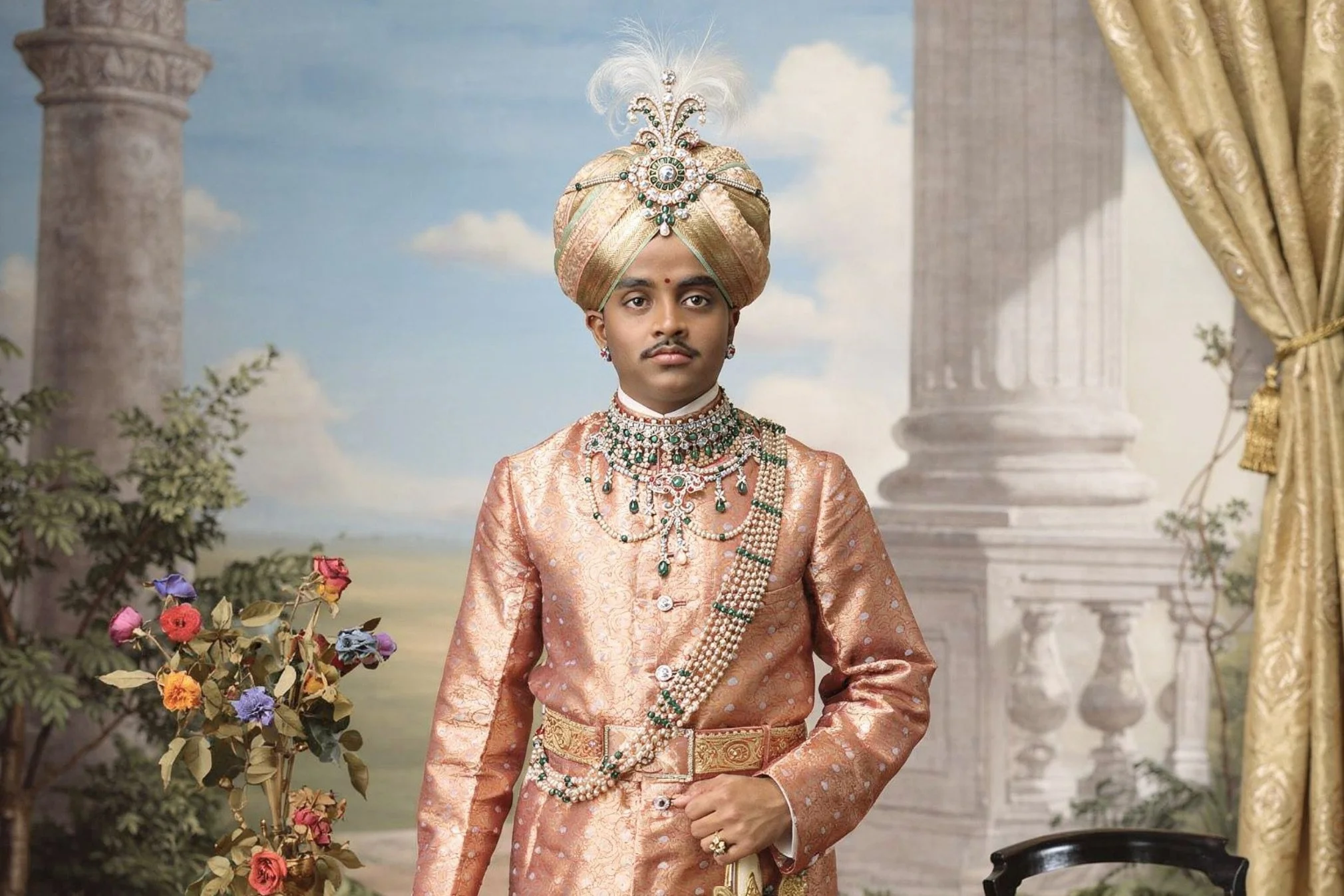
มหาราชาเซอร์ศรีกฤษณราช วเดยาร์ บาฮาดูร์ (Maharaja Sir Sri Krishnaraja Wodeyar Bahadur)
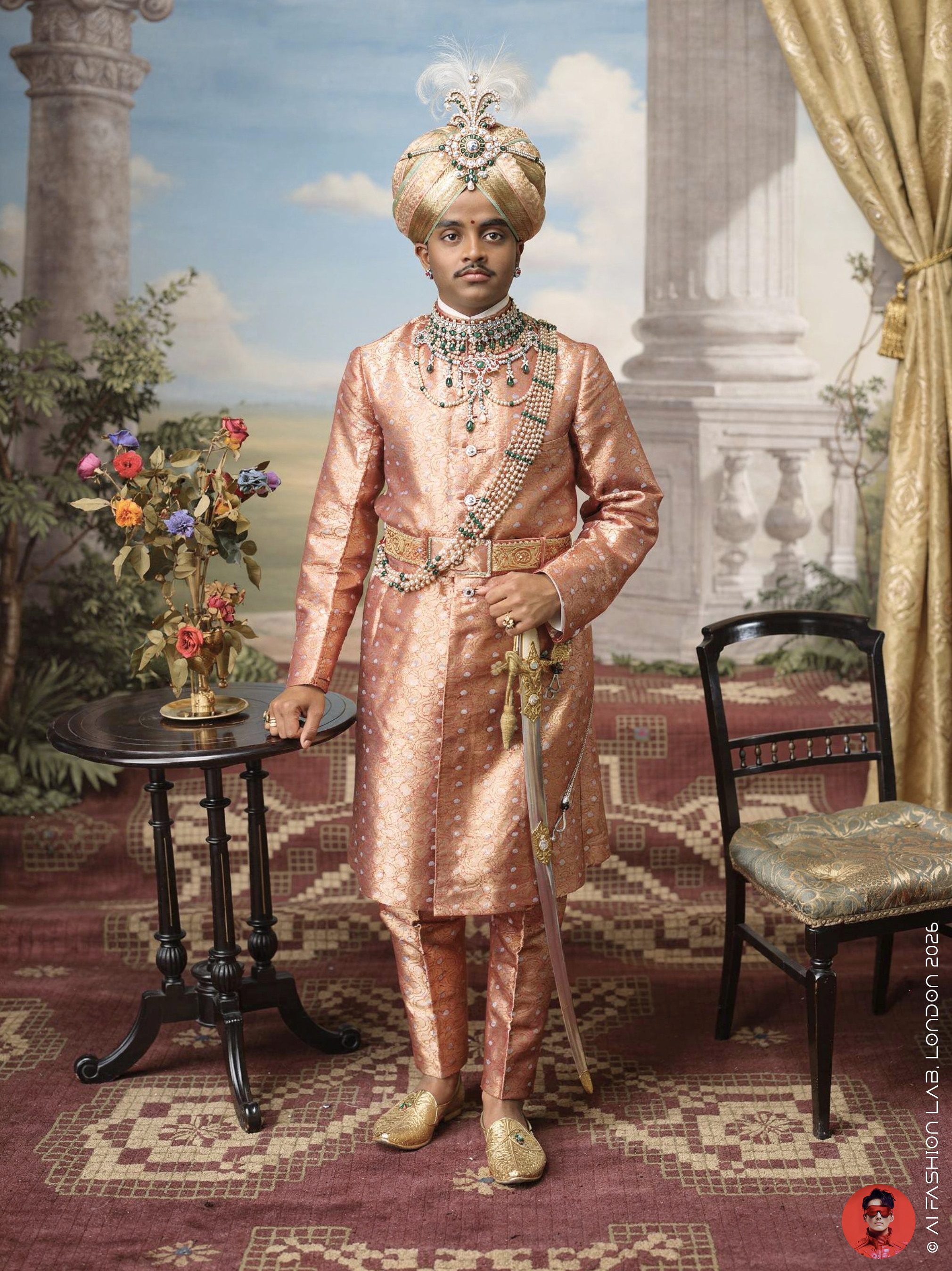
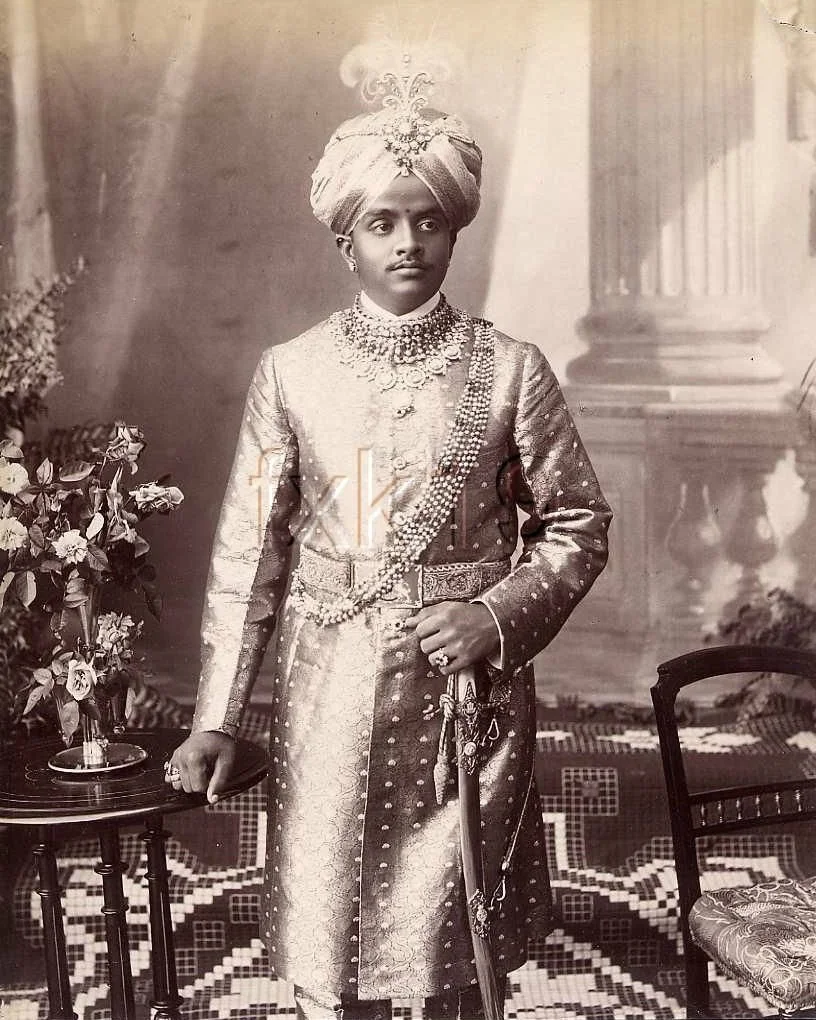
ภาพที่ผ่านการบูรณะและสร้างสรรค์ด้วยเทคโนโลยี AI ภาพนี้ เป็นพระบรมฉายาลักษณ์ มหาราชาเซอร์ศรีกฤษณราช วเดยาร์ บาฮาดูร์ ซึ่งสร้างสรรค์จาก พระสาทิสลักษณ์ต้นฉบับ
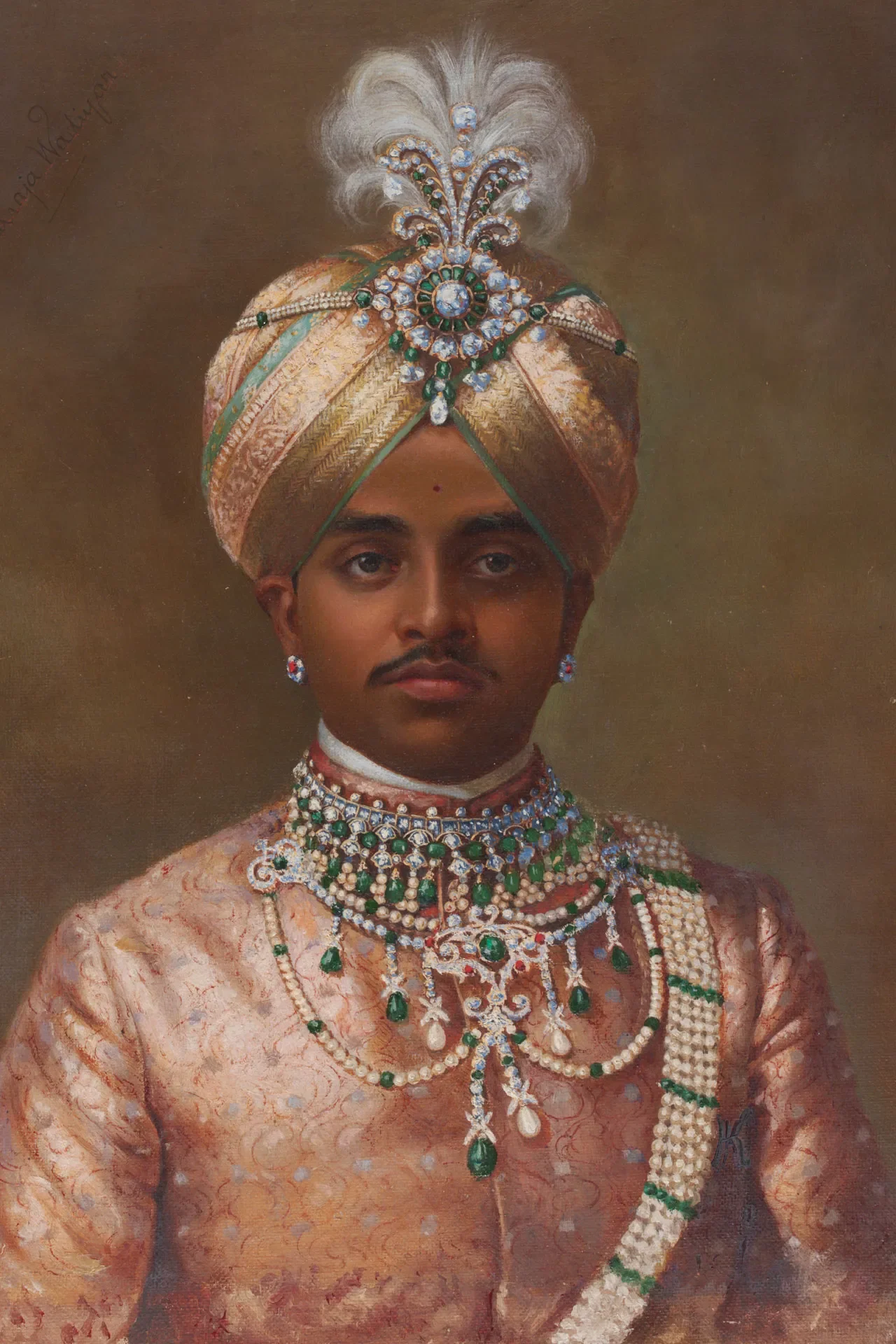
ภาพต้นฉบับเป็น พระสาทิสลักษณ์สีน้ำมัน ของ มหาราชาเซอร์ศรีกฤษณราช วเดยาร์ บาฮาดูร์ หรือที่เป็นที่รู้จักโดยทั่วไปว่า กฤษณราช วาดิยาร์ที่ ๔ แห่งไมซอร์ และในภาษากันนาดาเรียกว่า นัลวาดี กฤษณราช วาดิยาร์ ภาพนี้วาดขึ้นที่เมืองไมซอร์ในปี ค.ศ. 1906 โดยศิลปินอินเดียชื่อ เค. เกศวายยา (K. Keshavayya) เป็นภาพสีน้ำมันบนผ้าใบที่เสริมด้วยกระดาษแข็งด้านหลัง ปัจจุบันอยู่ในคอลเลกชันของ Victoria and Albert Museum กรุงลอนดอน โดยบันทึกของ V&A Images ระบุเลขทะเบียนพิพิธภัณฑ์ว่า IM.226-1923 ซึ่งสอดคล้องกับข้อมูลว่า ภาพนี้เข้าสู่คอลเลกชันของพิพิธภัณฑ์ในปี ค.ศ. 1923 อย่างไรก็ดี จากข้อมูลออนไลน์ที่เข้าถึงได้ในขณะนี้ ยังไม่พบชื่อผู้บริจาคอย่างชัดเจน
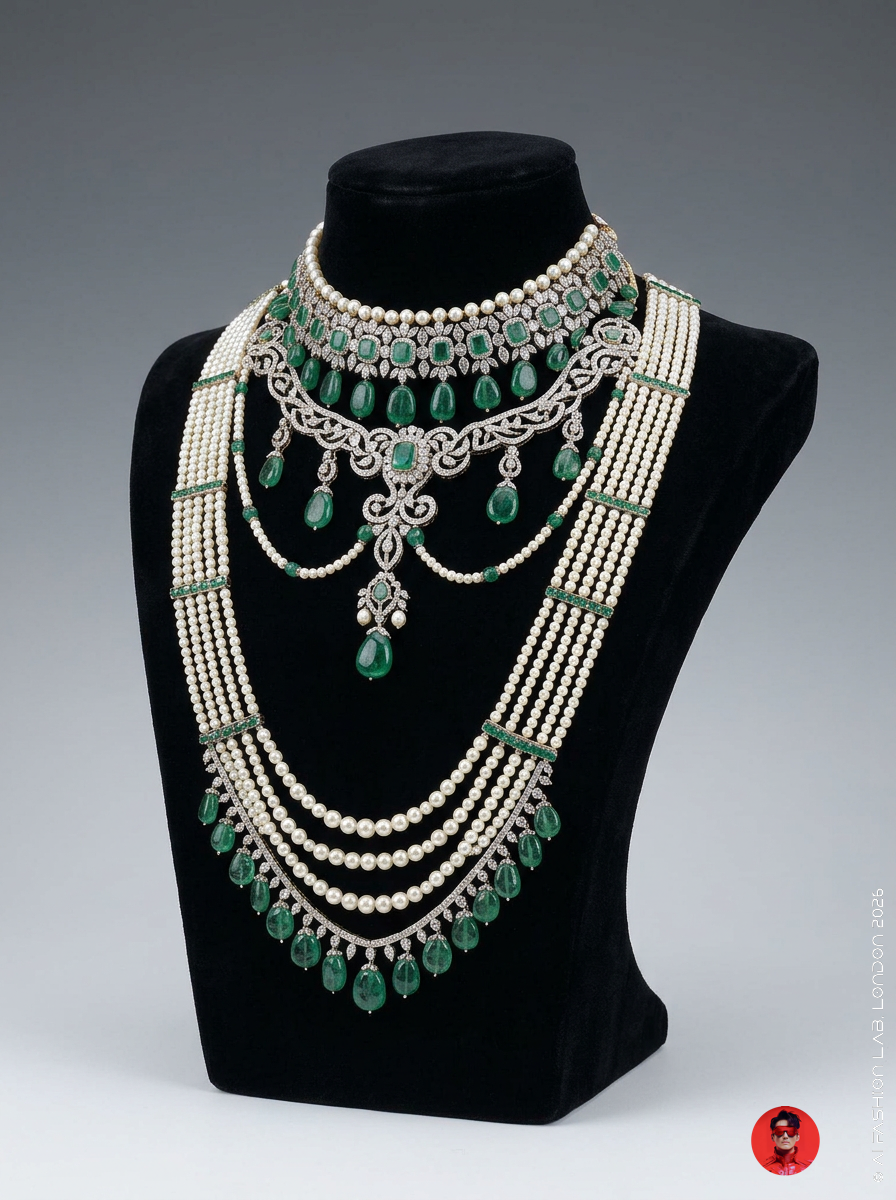
ในภาพต้นฉบับ พระองค์ประทับหันพระพักตร์ตรงมายังผู้ชม ทรงฉลองพระองค์แบบราชสำนักอินเดียด้วย เสื้อผ้ายกซาตินสีชมพูจากเบนาเรส ติดกระดุมถึงพระศอ ทรง ผ้าโพกพระเศียรสีชมพูและทอง ประดับเครื่องประดับศีรษะชนิด ซาร์เพช (sarpesh) และขนนก เครื่องประดับของพระองค์ประกอบด้วยเพชร มรกต ไข่มุก และสร้อยพระศอหลายชั้น ภาพนี้จึงเป็นทั้งพระสาทิสลักษณ์ทางการเมืองและภาพแฟชั่นราชสำนัก ที่แสดงอำนาจ รสนิยม และความมั่งคั่งของรัฐไมซอร์ในยุคอาณานิคมอังกฤษ
ส่วนภาพที่สร้างสรรค์ด้วยด้วย AI เป็นการแปลภาพครึ่งองค์ต้นฉบับให้กลายเป็นภาพเต็มพระองค์ในลักษณะคล้ายภาพถ่ายสตูดิโอราชสำนัก ปรากฏฉากหลัง พรม โต๊ะ เก้าอี้ พระแสงดาบ และองค์ประกอบแบบฉากถ่ายภาพปลายคริสต์ศตวรรษที่ 19 ถึงต้นศตวรรษที่ 20
กฤษณราช วาดิยาร์ที่ ๔ ประสูติเมื่อวันที่ 4 มิถุนายน ค.ศ. 1884 ณ พระราชวังไมซอร์ ทรงเป็นพระราชโอรสของ มหาราชาจามาราเชนทร วาดิยาร์ที่ 10 และ มหารานีเก็มปนันจัมมันนี / วานี วิลาส สันนิธานา หลังจากพระราชบิดาสิ้นพระชนม์ พระองค์ขึ้นเป็นมหาราชาขณะยังทรงพระเยาว์ โดยพระราชมารดาทรงทำหน้าที่ผู้สำเร็จราชการ จนกระทั่งพระองค์ได้รับพระราชอำนาจเต็มในการปกครองเมื่อปี ค.ศ. 1902 ในพิธีที่ลอร์ดเคอร์ซัน อุปราชแห่งอินเดีย มาเป็นผู้มอบอำนาจการปกครองให้ ณ ไมซอร์
รัชสมัยของพระองค์ตั้งแต่ปี 1902 จนถึงปี 1940 มักได้รับการกล่าวถึงว่าเป็นยุคสำคัญของ “ไมซอร์สมัยใหม่” พระองค์ทรงสนับสนุนการบริหารราชการ การศึกษา อุตสาหกรรม งานสาธารณสุข ดนตรี และศิลปะอย่างกว้างขวาง University of Mysore ซึ่งก่อตั้งขึ้นเมื่อวันที่ 27 กรกฎาคม ค.ศ. 1916 ระบุว่ามหาวิทยาลัยนี้เกิดขึ้นจากพระวิสัยทัศน์ของกฤษณราช วาดิยาร์ที่ ๔ ร่วมกับเสนาบดี เซอร์ เอ็ม. วิศเวศวรายะ (Sir M. Visvesvaraya) และถือเป็นมหาวิทยาลัยแห่งแรกของรัฐกรณาฏกะ รวมทั้งเป็นมหาวิทยาลัยที่ตั้งขึ้นนอกขอบเขตของ British India ในความหมายหนึ่งของยุคนั้น
พระองค์ยังมีบทบาทสำคัญต่อประวัติศาสตร์วิทยาศาสตร์ของอินเดีย Indian Institute of Science ระบุว่าสถาบันนี้ก่อตั้งขึ้นในปี 1909 จากความร่วมมือระหว่าง ชัมเชตจี นุสเซอร์วานจี ทาทา, รัฐบาลอินเดีย และมหาราชาแห่งไมซอร์ โดยกฤษณราช วเดยาร์ที่ ๔ ทรงบริจาคที่ดินกว่า 370 เอเคอร์ ที่เบงกาลูรูเพื่อใช้ตั้งสถาบันดังกล่าว
ในด้านศิลปะและดนตรี พระองค์ทรงเป็นองค์อุปถัมภ์สำคัญของศิลปินและนักดนตรีหลายคน รวมถึง นัตทัน ข่าน, วิลายัต ฮุสเซน ข่าน, อับดุล คาริม ข่าน และ เกาฮาร์ จาน บทบาทนี้ทำให้ราชสำนักไมซอร์เป็นหนึ่งในศูนย์กลางสำคัญของวัฒนธรรมดนตรีและศิลปะอินเดียในยุคอาณานิคม
ความสัมพันธ์กับอังกฤษ
ความสัมพันธ์ของกฤษณราช วาดิยาร์ที่ ๔ กับอังกฤษต้องเข้าใจผ่านระบบการเมืองของ British Raj ไมซอร์มิใช่รัฐเอกราชเต็มรูปแบบแบบสมัยใหม่ แต่เป็น รัฐเจ้าผู้ครองนคร หรือ princely state ภายใต้อำนาจสูงสุดของจักรวรรดิอังกฤษ พระองค์มีอำนาจบริหารภายในรัฐ แต่สถานะทางการเมืองยังอยู่ภายใต้โครงสร้างจักรวรรดิ เห็นได้จากสุนทรพจน์ในพิธีรับอำนาจการปกครองเมื่อปี 1902 ซึ่งพระองค์ทรงกล่าวถึงความจงรักภักดีต่อ พระเจ้าเอ็ดเวิร์ดที่ 7 และความกตัญญูต่อราชบัลลังก์อังกฤษ
ระบบเครื่องราชอิสริยาภรณ์ของอังกฤษก็เป็นส่วนหนึ่งของความสัมพันธ์นี้เช่นกัน ในปี ค.ศ. 1907 The London Gazette ระบุว่า “His Highness Maharaja Sri Krishnaraja Wadiar Bahadur of Mysore” ได้รับแต่งตั้งเป็น Knight Grand Commander of the Order of the Star of India หรือ GCSI ซึ่งเป็นตำแหน่งที่ปรากฏต่อท้ายพระนามของพระองค์ในเอกสารและคำบรรยายพิพิธภัณฑ์หลายแห่ง
ในเชิงภาพ พระสาทิสลักษณ์นี้จึงมีความน่าสนใจมาก เพราะเป็นภาพที่ใช้สื่อแบบยุโรปคือ “จิตรกรรมสีน้ำมัน” และปัจจุบันอยู่ในพิพิธภัณฑ์อังกฤษ แต่เนื้อหาภาพกลับสื่อพระราชอำนาจผ่านภาษาเครื่องแต่งกายแบบอินเดียอย่างชัดเจน ทั้งผ้าโพกพระเศียร เครื่องเพชร เครื่องมรกต ไข่มุก และผ้าบรอเคด กล่าวได้ว่า ภาพนี้ไม่ได้เป็นเพียงภาพของเจ้าผู้ครองนครภายใต้อาณานิคม แต่เป็นภาพของอำนาจราชสำนักอินเดียที่ต่อรองสถานะของตนผ่านความงาม พิธีการ และความเป็นสมัยใหม่ภายใต้ระบบจักรวรรดิอังกฤษ
ประวัติศาสตร์เปรียบเทียบของราชสำนักเอเชียในยุคจักรวรรดิ: สยามและไมซอร์
ประวัติศาสตร์เปรียบเทียบระหว่างราชสำนักสยามและราชสำนักไมซอร์ในยุคจักรวรรดิ ช่วยให้เห็นว่า “ความเป็นสมัยใหม่” ของราชสำนักเอเชียมิได้เกิดขึ้นจากการรับอิทธิพลตะวันตกอย่างตรงไปตรงมาเท่านั้น แต่เป็นกระบวนการคัดเลือก ต่อรอง และดัดแปลงอย่างมีชั้นเชิง ภายใต้แรงกดดันของจักรวรรดิยุโรป ในกรณีของสยาม พระบาทสมเด็จพระจุลจอมเกล้าเจ้าอยู่หัวทรงใช้การปฏิรูประบบราชการ การทหาร การศึกษา การทูต และภาพลักษณ์ของพระมหากษัตริย์สมัยใหม่ เพื่อรักษาเอกราชของราชอาณาจักรท่ามกลางการแข่งขันของอังกฤษและฝรั่งเศส ขณะที่ราชสำนักไมซอร์ภายใต้มหาราชากฤษณราช วเดยาร์ที่ ๔ ดำรงอยู่ในฐานะรัฐเจ้าผู้ครองนครภายใต้อำนาจสูงสุดของบริติชราช แม้จะมิได้มีเอกราชทางการเมืองในแบบสยาม แต่ก็สามารถใช้การปกครองที่มีประสิทธิภาพ การอุปถัมภ์การศึกษา วิทยาศาสตร์ ดนตรี และศิลปะ เพื่อสร้างภาพของราชสำนักอินเดียที่ทันสมัย เจริญรุ่งเรือง และมีอารยธรรมในสายตาทั้งของประชาชนและจักรวรรดิอังกฤษ
ในแง่ของภาพลักษณ์ราชสำนัก ทั้งสยามและไมซอร์ต่างใช้เครื่องแต่งกาย พระบรมฉายาลักษณ์ พระฉายาลักษณ์ และพระฉายาทิสลักษณ์เป็นภาษาทางการเมืองที่สำคัญ ราชสำนักสยามในรัชกาลที่ ๕ และรัชกาลที่ ๖ มักผสมผสานเครื่องแบบทหารตะวันตก เครื่องราชอิสริยาภรณ์ และเครื่องแต่งกายแบบราชสำนักไทย เพื่อสื่อถึงอำนาจอธิปไตย ความศิวิไลซ์ และความสามารถในการยืนเคียงข้างชาติมหาอำนาจ ส่วนพระฉายาทิสลักษณ์ของมหาราชากฤษณราช วเดยาร์ที่ ๔ แห่งไมซอร์ แสดงให้เห็นการใช้สื่อจิตรกรรมสีน้ำมันแบบยุโรป แต่กลับเน้นภาษาเครื่องแต่งกายแบบอินเดียอย่างเด่นชัด ไม่ว่าจะเป็นผ้าโพกพระเศียร เครื่องเพชร มรกต ไข่มุก เสื้อผ้าบรอเคด และเครื่องประดับราชสำนัก ภาพนี้จึงมิใช่เพียงภาพเหมือนของเจ้าผู้ครองนครภายใต้อาณานิคม หากเป็นการประกาศศักดิ์ศรีของราชสำนักอินเดียผ่านความงาม ความมั่งคั่ง และพิธีการของตนเอง
ความแตกต่างสำคัญคือ สยามใช้ความเป็นสมัยใหม่เพื่อรักษาเอกราชทางการเมือง ขณะที่ไมซอร์ใช้ความเป็นสมัยใหม่เพื่อขยายอำนาจบริหารและศักดิ์ศรีภายในโครงสร้างของจักรวรรดิอังกฤษ แต่ทั้งสองกรณีต่างสะท้อนปรากฏการณ์ร่วมกันของราชสำนักเอเชียในช่วงปลายคริสต์ศตวรรษที่ ๑๙ ถึงต้นศตวรรษที่ ๒๐ นั่นคือ การใช้วัฒนธรรมทางสายตา เครื่องแต่งกาย การศึกษา และสถาบันสมัยใหม่เป็นเครื่องมือในการต่อรองสถานะกับโลกจักรวรรดิ ภาพของมหาราชาแห่งไมซอร์จึงสามารถนำมาอ่านคู่กับพระบรมฉายาลักษณ์ของพระมหากษัตริย์สยามได้ในฐานะหลักฐานของ “ราชสำนักเอเชียสมัยใหม่” ที่มิได้เป็นเพียงผู้รับอิทธิพลตะวันตก แต่เป็นผู้สร้างความหมายใหม่ให้แก่ความเป็นกษัตริย์ อำนาจ และความศิวิไลซ์ในบริบทของตนเอง.
___________
Maharaja Sir Sri Krishnaraja Wodeyar Bahadur: the original portrait and AI-assisted reconstruction
The original image is an oil portrait of Maharaja Sir Sri Krishnaraja Wodeyar Bahadur, more commonly known as Krishnaraja Wadiyar IV of Mysore or Nalwadi Krishnaraja Wadiyar. It was painted in Mysore in 1906 by the Indian artist K. Keshavayya. The work is recorded as oil on canvas backed with card, and is now in the collection of the Victoria and Albert Museum, London. The V&A image record gives the museum number as IM.226-1923, which indicates its accession into the museum’s collection in 1923. The accessible V&A-derived description states that the painting was given to the museum in 1923, although the publicly accessible record I found does not name the donor.
In the portrait, the Maharaja is shown frontally in a highly formalised princely image. He wears a Benares pink satin brocade coat, buttoned to the neck, with a pink-and-gold turban decorated with a feathered sarpesh. His jewels are described as being set with diamonds and emeralds, and the portrait deliberately emphasises the spectacular language of Indian court jewellery: pearls, emerald drops, turban ornament, layered necklaces, and a jewelled chest ornament.
This AI-rendered version translates the half-length painted portrait into a full-length studio-style royal image. It expands the body, setting, carpet, furniture, sword, and theatrical painted backdrop, creating the visual impression of a late nineteenth- or early twentieth-century princely studio portrait.
Biography and historical context
Krishnaraja Wadiyar IV was born on 4 June 1884 at Mysore Palace. He became Maharaja as a child after the death of his father, Maharaja Chamarajendra Wadiyar X, and his mother, Maharani Kempananjammanni / Vani Vilas Sannidhana, acted as regent during his minority. He received full ruling powers in 1902, when Lord Curzon, then Viceroy and Governor-General of India, came to Mysore to invest him with authority over the state. His collected speeches record that Curzon came specifically for the purpose of investing the Maharaja with the ruling powers of Mysore on 8 August 1902.
His reign, from 1902 until his death in 1940, is often remembered as one of the most significant periods in the modern history of Mysore. He was associated with administrative reform, education, industrial development, public works, music, and the arts. The University of Mysore, established on 27 July 1916, credits its foundation to the efforts of Krishnaraja Wadiyar IV and his Diwan, Sir M. Visvesvaraya; the university describes itself as the first in Karnataka and, in a particular sense, the first university established outside the limits of British India.
His patronage also had a major scientific legacy. The Indian Institute of Science records that it was founded in 1909 through the joint efforts of Jamsetji Nusserwanji Tata, the Government of India, and the Maharaja of Mysore. The Institute states that Krishnaraja Wodeyar IV donated over 370 acres of land in Bengaluru for the institution; it was formally vested in 1909, its foundation stone was laid in 1911, and students began studying there the same year.
He was also a major patron of art and music. The Impart Encyclopedia of Art notes that Krishnaraja Wadiyar, who lived from 1884 to 1940 and ruled Mysore from 1894/1902 to 1940 depending on whether one counts his minority or his full assumption of power, supported artists and musicians including Nattan Khan, Vilayat Hussain Khan, Abdul Karim Khan, and Gauhar Jan.
Relationship with Britain
Krishnaraja Wadiyar IV’s relationship with Britain must be understood through the political structure of the British Raj. Mysore was not a fully independent kingdom in the modern diplomatic sense; it was a princely state under British paramountcy. The Maharaja retained internal authority, but his sovereignty operated within the hierarchy of the British Empire. This is visible in the language of his 1902 installation speech, in which he publicly expressed loyalty to King Edward VII and gratitude to the British throne at the moment he received ruling powers from Lord Curzon.
The British imperial honours system also formed part of this relationship. In 1907, The London Gazette recorded that “His Highness Maharaja Sri Krishnaraja Wadiar Bahadur of Mysore” was appointed Knight Grand Commander of the Order of the Star of India. This is the source of the GCSI after his name. Later records and museum descriptions also style him GBE, Knight Grand Cross of the Order of the British Empire.
Visually, the portrait itself belongs to this Anglo-Indian courtly world. It uses the European medium of oil portraiture, now preserved in a British museum, but the sitter’s authority is communicated through Indian royal dress, jewels, turban ornament, pearls, emeralds, and brocade. It is not simply a portrait of a colonised subject; it is an image of princely sovereignty negotiated through the ceremonial language of empire, courtly splendour, and modern institutional visibility.
Comparative History of Asian Courts in the Age of Empire: Siam and Mysore
A comparative history of the Siamese court and the Mysore court in the age of empire helps us understand that Asian royal modernity was not simply a matter of imitating the West. Rather, it was a selective, strategic, and highly negotiated process shaped by the pressures of European imperialism. In the case of Siam, King Chulalongkorn, Rama V [พระบาทสมเด็จพระจุลจอมเกล้าเจ้าอยู่หัว รัชกาลที่ ๕], used administrative reform, military modernisation, education, diplomacy, and the visual image of the modern monarch to preserve the kingdom’s independence amid the competing pressures of Britain and France. By contrast, the Mysore court under Maharaja Krishnaraja Wodeyar IV [มหาราชากฤษณราช วเดยาร์ที่ ๔] existed as a princely state under British paramountcy. Although Mysore did not possess political independence in the same way as Siam, the Maharaja was able to use efficient governance, patronage of education, science, music, and the arts to project the image of an Indian court that was modern, prosperous, and civilised in the eyes of both its subjects and the British Empire.
In terms of royal image-making, both Siam and Mysore used dress, royal photography, princely portraiture, and painted portraits as important political languages. The Siamese court during the reigns of Rama V and Rama VI often combined Western military uniforms, orders and decorations, and traditional Siamese court dress to communicate sovereignty, civilisation, and the ability to stand alongside the great powers of the world. The painted portrait of Maharaja Krishnaraja Wodeyar IV of Mysore, by contrast, uses the European medium of oil painting while placing strong emphasis on the visual language of Indian kingship: the turban, diamonds, emeralds, pearls, brocade textiles, and elaborate court jewellery. The image is therefore not merely a portrait of a ruler under colonial rule; it is also a declaration of Indian courtly dignity through beauty, wealth, ceremony, and material splendour.
The crucial difference is that Siam used royal modernity to defend political independence, while Mysore used royal modernity to strengthen administrative authority and courtly prestige within the structure of the British Empire. Yet both cases reveal a shared phenomenon among Asian courts from the late nineteenth to the early twentieth century: the use of visual culture, dress, education, and modern institutions as instruments for negotiating status in an imperial world. The image of the Maharaja of Mysore can therefore be read alongside the royal portraits of Siamese monarchs as evidence of a wider Asian royal modernity — one in which Asian courts were not passive recipients of Western influence, but active makers of new meanings around kingship, authority, civilisation, and sovereignty within their own historical contexts.
Portrait of Maharaja Sir Sri Krishnaraja Wodeyar Bahadur
V&A Images, vaimages@vam.ac.uk
ACCESSION NUMBER
IM.226-1923
https://collections.vam.ac.uk/item/O198864/portrait-of-maharaja-sir-sri-oil-painting-k-keshavayya/
___________
เรียนเชิญกด Subscribe ได้ที่ลิงก์นี้ครับ เพื่อร่วมติดตามงานสร้างสรรค์ต้นฉบับ งานวิจัยประวัติศาสตร์แฟชั่น และผลงานอนุรักษ์มรดกวัฒนธรรมด้วยเทคโนโลยี AI ของ AI Fashion Lab, London ซึ่งมุ่งตีความอดีตผ่านมิติใหม่ของการบูรณะภาพ การสร้างสรรค์ภาพ และการเล่าเรื่องด้วยศิลปะเชิงดิจิทัล https://www.facebook.com/aifashionlab/subscribe/
#aifashionlab #AI #aiartist #aiart #aifashion #aifashiondesign #aifashionstyling #aifashiondesigner #fashion #fashionhistory #historyoffashion #fashionstyling #fashionphotography #digitalfashion #digitalfashiondesign #digitalcostumedesign #digitaldesign #digitalaiart #ThaiFashionHistory #ThaiFashionAI #thailand #UNESCO