สมเด็จพระเจ้าบรมวงศ์เธอ เจ้าฟ้าบริพัตรสุขุมพันธุ์ กรมพระนครสวรรค์วรพินิต
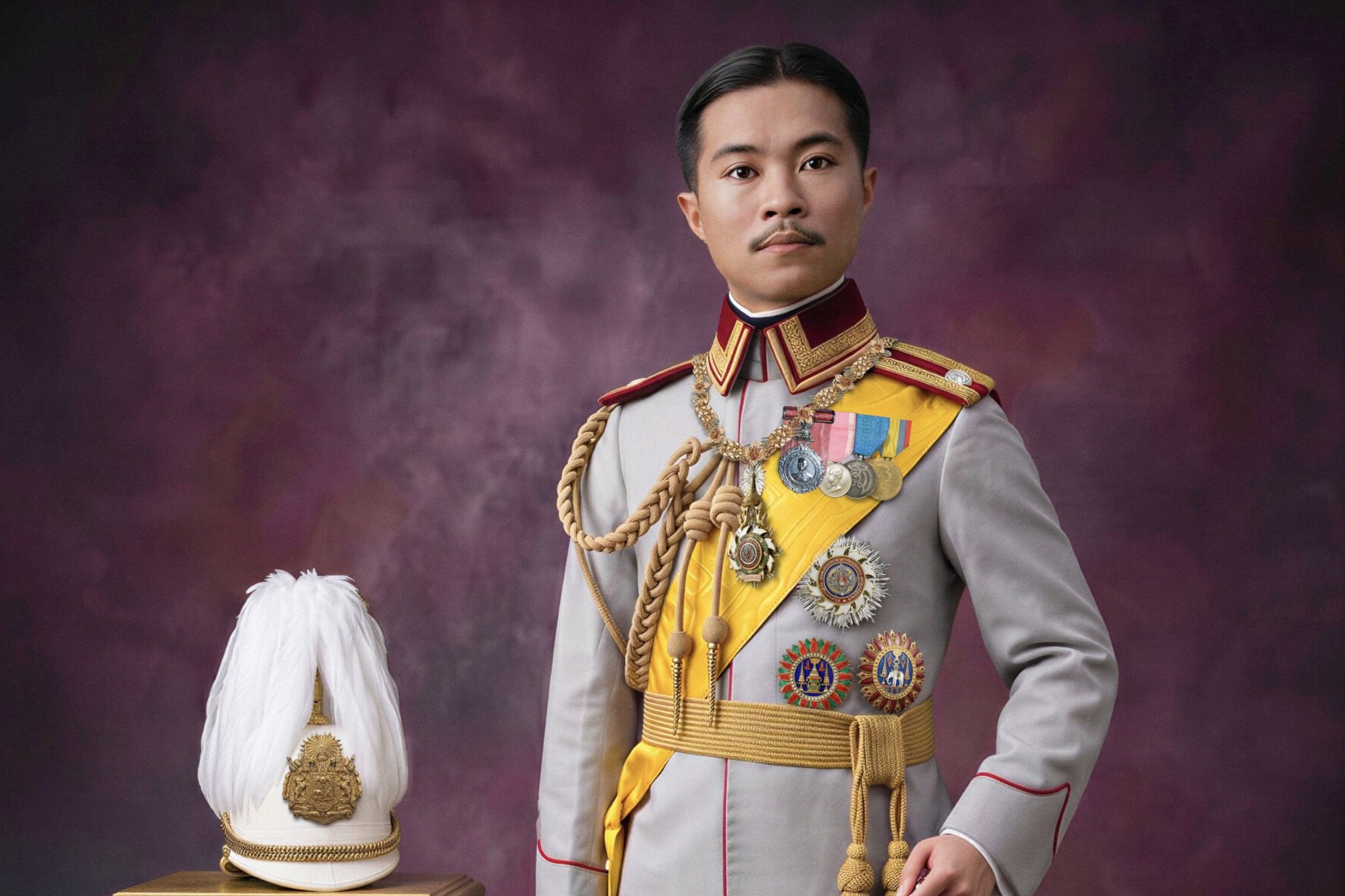
สมเด็จพระเจ้าบรมวงศ์เธอ เจ้าฟ้าบริพัตรสุขุมพันธุ์ กรมพระนครสวรรค์วรพินิต
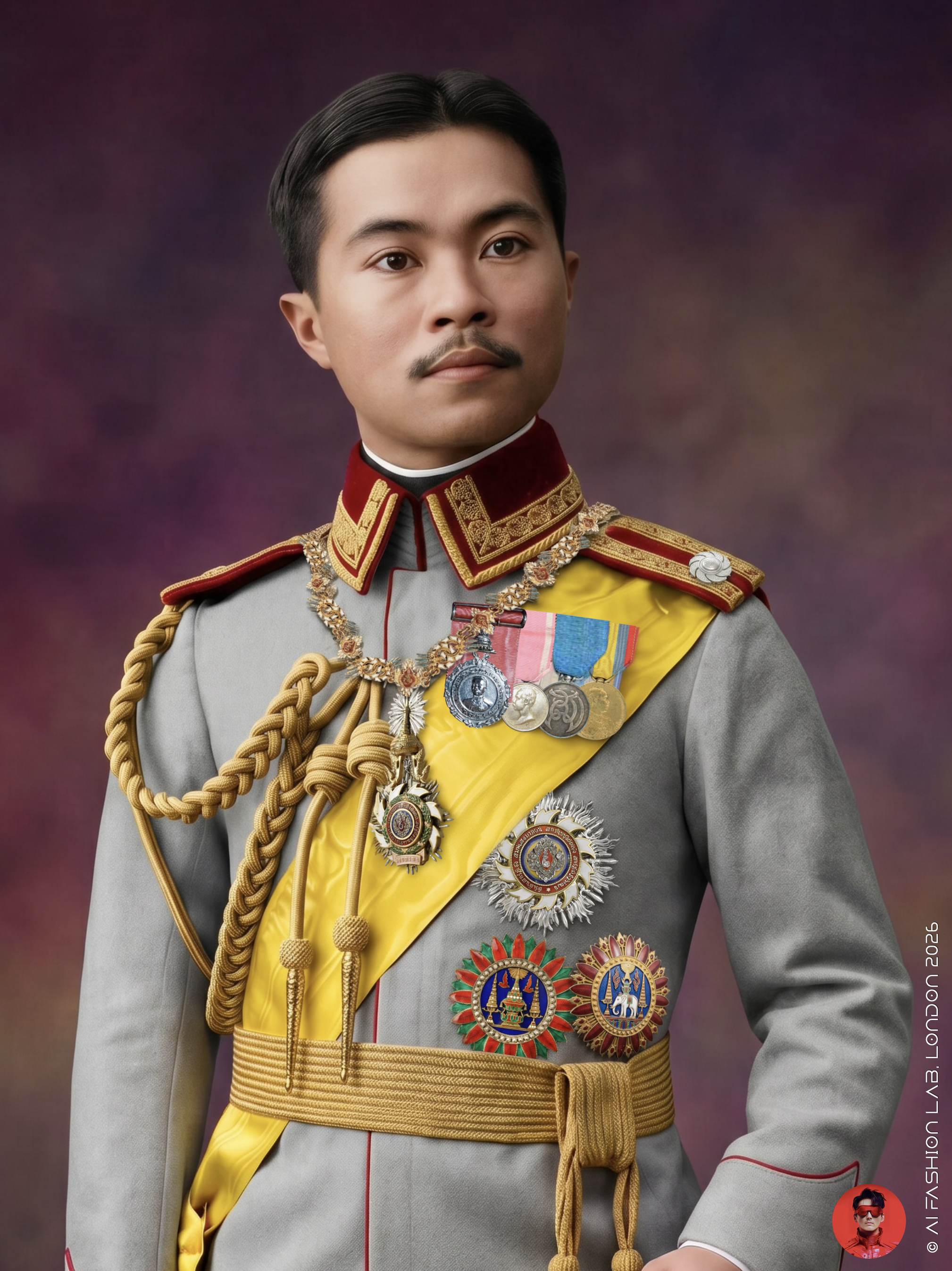
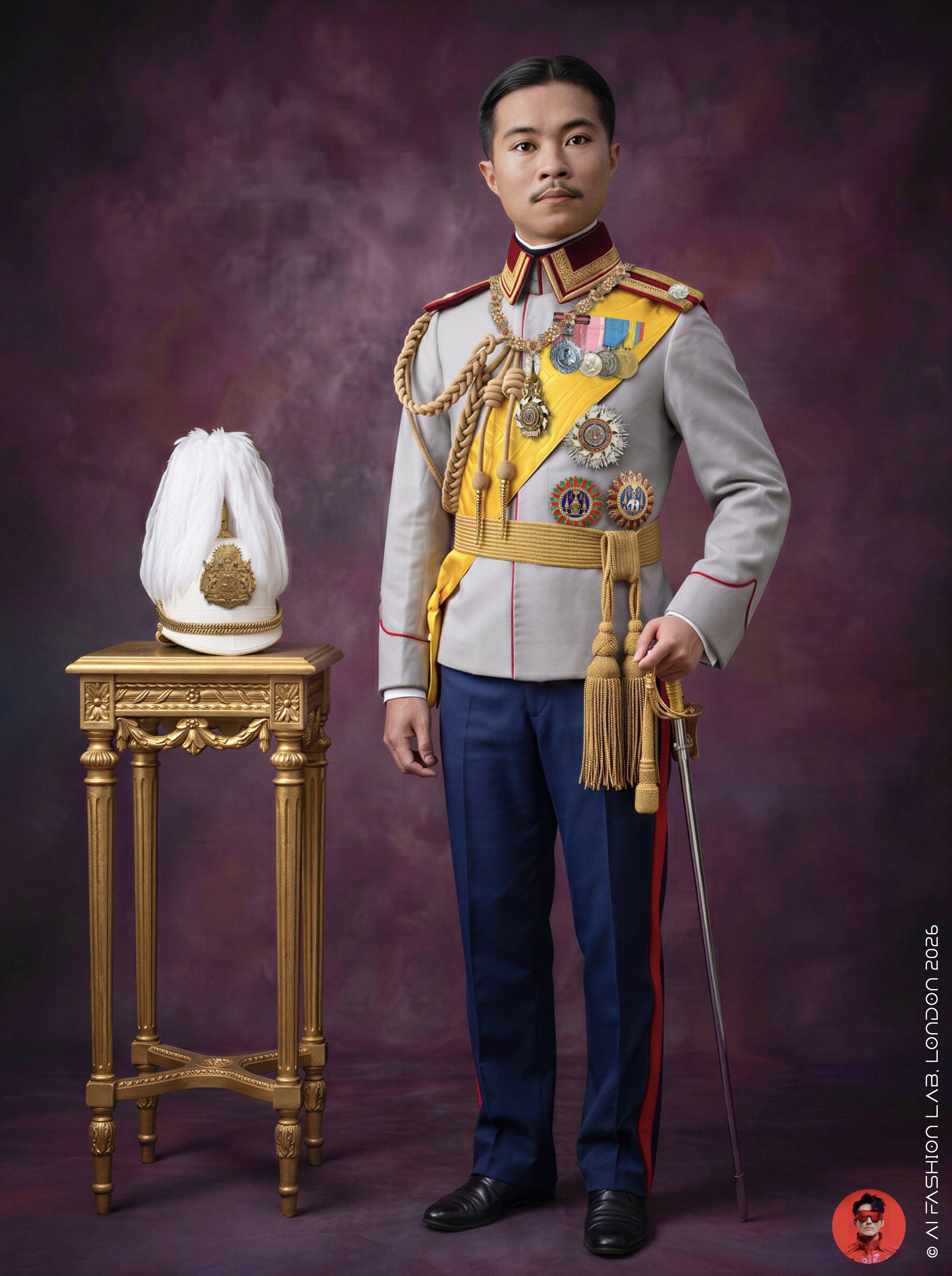
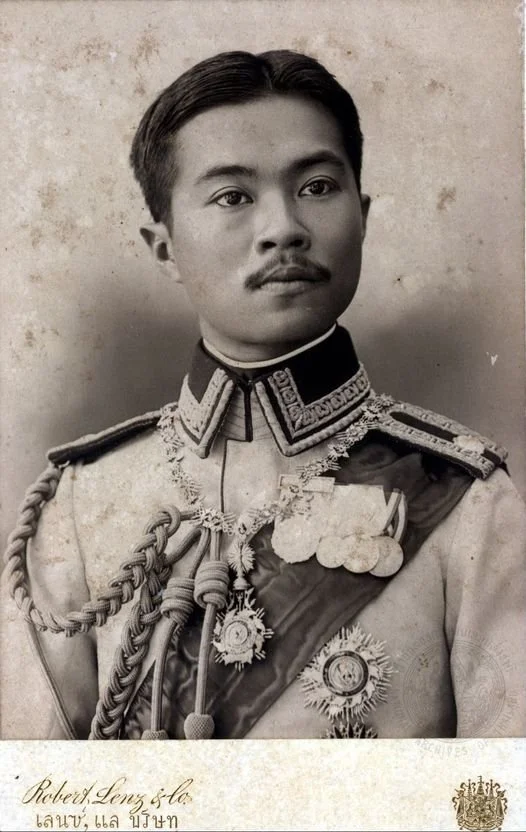
ภาพที่ผ่านการบูรณะและสร้างสรรค์ด้วยเทคโนโลยี AI ภาพนี้ เป็นพระฉายาลักษณ์ สมเด็จพระเจ้าบรมวงศ์เธอ เจ้าฟ้าบริพัตรสุขุมพันธุ์ กรมพระนครสวรรค์วรพินิต ทรงฉลองพระองค์เครื่องแบบเทาเต็มยศ พระยศนายพลตรี คอเสื้อและอินทรธนูปักดิ้ทองพื้นสีแดง ส่วนยศจอมพลมีเครื่องหมายคทาและกระบี่ไขว้ใต้พระเกี้ยวเงิ ซึ่งเป็นสีประจำเหล่าทหารในยุค ร.ศ. ๑๑๖ ก่อนจะเปลี่ยนเป็นสีชมพูใน ร.ศ. ๑๒๗
ในสมัยรัชกาลที่ ๕ สีประจำเหล่าทหารโดยสังเขป ได้แก่
🔴 ทหารราบ / นักเรียนนายร้อย / คชบาล — สีแดง
🔵 ทหารม้า — สีฟ้าหม่น
🟡 ทหารปืนใหญ่ — สีเหลือง
🟥 ทหารพาหนะ — สีเลือดหมู
🟢 ทหารพราน / แพทย์ — สีเขียว
🟠 ทหารสื่อสาร — สีเม็ดมะปราง
⚫ ทหารช่าง — สีดำ
___________
สมเด็จเจ้าฟ้าบริพัตรสุขุมพันธุ์ฯ ประสูติเมื่อวันที่ ๒๙ มิถุนายน พ.ศ. ๒๔๒๔ ในพระบรมมหาราชวัง เป็นพระราชโอรสใน พระบาทสมเด็จพระจุลจอมเกล้าเจ้าอยู่หัว รัชกาลที่ ๕ กับ สมเด็จพระปิตุจฉาเจ้า สุขุมาลมารศรี พระอัครราชเทวี พระองค์ทรงเป็นเจ้านายชั้นสูงที่ได้รับการวางพระองค์ให้มีบทบาทสำคัญในราชการแผ่นดินตั้งแต่ยังทรงพระเยาว์ ทรงศึกษาชั้นต้นที่โรงเรียนพระตำหนักสวนกุหลาบ ก่อนเสด็จไปทรงศึกษาวิชาการทหาร ณ ประเทศเยอรมนี ซึ่งเป็นหนึ่งในประเทศต้นแบบด้านการทหารสมัยใหม่ของยุโรปในเวลานั้น
เมื่อเสด็จนิวัติสยาม พระองค์ได้ทรงรับราชการในตำแหน่งสำคัญทั้งฝ่ายทหารบกและทหารเรือ ทรงดำรงตำแหน่ง เสนาธิการทหารบก ผู้บัญชาการทหารเรือ เสนาบดีกระทรวงทหารเรือ เสนาบดีกระทรวงกลาโหม และเสนาบดีกระทรวงมหาดไทย อีกทั้งยังทรงเป็นองคมนตรีในหลายรัชกาล บทบาทของพระองค์จึงมิได้จำกัดอยู่เพียงด้านการทหาร หากยังครอบคลุมถึงการบริหารราชการแผ่นดิน การปกครอง และความมั่นคงของประเทศในช่วงหัวเลี้ยวหัวต่อของสยามสมัยใหม่
พระองค์ประทับ ณ วังบางขุนพรหม ซึ่งเป็นวังสำคัญริมแม่น้ำเจ้าพระยา และด้วยพระยศ ตำแหน่งหน้าที่ ตลอดจนพระบารมีทางราชการ พระองค์จึงเป็นที่รู้จักในนาม “จอมพลบางขุนพรหม” หรือ “เจ้าฟ้าวังบางขุนพรหม” พระองค์ทรงเป็นต้นราชสกุล บริพัตร และเป็นหนึ่งในเจ้านายที่มีบทบาทโดดเด่นที่สุดในช่วงปลายรัชกาลที่ ๕ ต่อเนื่องถึงรัชกาลที่ ๖ และรัชกาลที่ ๗
ภายหลังการเปลี่ยนแปลงการปกครองเมื่อวันที่ ๒๔ มิถุนายน พ.ศ. ๒๔๗๕ สมเด็จเจ้าฟ้าบริพัตรสุขุมพันธุ์ฯ ทรงเป็นเจ้านายพระองค์สำคัญที่คณะราษฎรต้องควบคุมพระองค์ เนื่องจากทรงมีบทบาทสูงในด้านความมั่นคงและการบริหารราชการ พระองค์เสด็จออกจากประเทศไทยในเวลาต่อมา และไปประทับ ณ เมืองบันดุง เกาะชวา ประเทศอินโดนีเซีย จนกระทั่งสิ้นพระชนม์เมื่อวันที่ ๑๘ มกราคม พ.ศ. ๒๔๘๗ พระชันษา ๖๓ ปี
นอกจากพระปรีชาสามารถด้านการทหารและการบริหารราชการแล้ว พระองค์ยังทรงมีพระอัจฉริยภาพด้าน ดนตรีไทย ดนตรีสากล และการประพันธ์เพลง วังบางขุนพรหมในสมัยของพระองค์กลายเป็นศูนย์กลางสำคัญของดนตรีไทย การประชันวงปี่พาทย์ และการสร้างสรรค์เพลงไทยเดิมหลายบทเพลง พระองค์ยังทรงสนพระทัยด้านพฤกษศาสตร์ โดยเฉพาะกล้วยไม้ และทรงพระนิพนธ์ ตำราเล่นกล้วยไม้ เล่มแรกของประเทศไทย เมื่อ พ.ศ. ๒๔๖๐ จนได้รับการยกย่องว่าเป็น “พระบิดาแห่งวงการกล้วยไม้ไทย”
พระประวัติของสมเด็จเจ้าฟ้าบริพัตรสุขุมพันธุ์ฯ จึงสะท้อนภาพของเจ้านายสยามผู้ทรงอยู่ระหว่างโลกเก่าและโลกใหม่ ทั้งในฐานะนายทหารสมัยใหม่ นักบริหารราชการแผ่นดิน ผู้มีบทบาททางการเมือง ศิลปินดนตรี และปัญญาชนผู้สนใจวิทยาการสมัยใหม่ของสยามในช่วงเปลี่ยนผ่านสู่คริสต์ศตวรรษที่ ๒๐.
___________
Prince Paribatra Sukhumbandhu, Prince of Nakhon Sawan [สมเด็จพระเจ้าบรมวงศ์เธอ เจ้าฟ้าบริพัตรสุขุมพันธุ์ กรมพระนครสวรรค์วรพินิต]
This AI-restored and AI-enhanced image is a royal portrait photograph of Prince Paribatra Sukhumbandhu, Prince of Nakhon Sawan [สมเด็จพระเจ้าบรมวงศ์เธอ เจ้าฟ้าบริพัตรสุขุมพันธุ์ กรมพระนครสวรรค์วรพินิต].
In this portrait, the Prince wears the full-dress grey military uniform of the rank of Major General. The collar and gold-embroidered shoulder straps are set on a red ground, corresponding to the military branch colour used in the period around Rattanakosin Era 116. This was before the later change to pink in Rattanakosin Era 127. For the later ranks of field marshal and marshal-admiral, the insignia would include a crossed baton and sword beneath a silver royal coronet.
In the reign of King Chulalongkorn, Rama V [พระบาทสมเด็จพระจุลจอมเกล้าเจ้าอยู่หัว รัชกาลที่ ๕], the military branch colours may be summarised as follows:
🔴 Infantry / Royal Military Cadets / Elephant Corps — Red
🔵 Cavalry — Greyish blue
🟡 Artillery — Yellow
🟥 Transport Corps — Burgundy
🟢 Rangers / Medical Corps — Green
🟠 Signal Corps — Apricot orange
⚫ Engineers — Black
Prince Paribatra Sukhumbandhu was born on 29 June 1881 in the Grand Palace, Bangkok. He was a son of King Chulalongkorn, Rama V [พระบาทสมเด็จพระจุลจอมเกล้าเจ้าอยู่หัว] and Queen Sukhumala Marasri, the Royal Consort [สมเด็จพระปิตุจฉาเจ้า สุขุมาลมารศรี พระอัครราชเทวี]. As a high-ranking prince of the Chakri dynasty, he was prepared from an early age for significant service to the Siamese state. He received his early education at Suan Kularb Palace School before continuing his military studies in Germany, then one of the leading models for modern military training in Europe.
Upon his return to Siam, Prince Paribatra served in some of the most important military and administrative positions of the kingdom. He held office as Chief of Staff of the Royal Siamese Army, Commander of the Royal Siamese Navy, Minister of the Navy, Minister of War, Minister of Defence, and Minister of the Interior. He also served as a Privy Counsellor across several reigns. His influence therefore extended far beyond the military, reaching into state administration, internal security, and the broader governance of Siam during a crucial period of modernisation.
The Prince resided at Bang Khun Phrom Palace [วังบางขุนพรหม], an important riverside palace in Bangkok. Because of his rank, authority, and central role in government, he became widely known as “the Field Marshal of Bang Khun Phrom” or “the Prince of Bang Khun Phrom Palace.” He was also the founder of the Paribatra family line [ราชสกุลบริพัตร], and was one of the most prominent royal figures from the late reign of Rama V through the reigns of King Vajiravudh, Rama VI [พระบาทสมเด็จพระมงกุฎเกล้าเจ้าอยู่หัว] and King Prajadhipok, Rama VII [พระบาทสมเด็จพระปกเกล้าเจ้าอยู่หัว].
After the Siamese Revolution of 24 June 1932, Prince Paribatra was one of the most important royal figures detained by the People’s Party because of his powerful position in military affairs, internal security, and government administration. He was subsequently compelled to leave Siam and settled in Bandung, Java, in present-day Indonesia, where he lived in exile until his death on 18 January 1944, at the age of 63.
Beyond his military and political career, Prince Paribatra was also an accomplished musician, composer, and patron of both Thai classical music and Western music. During his lifetime, Bang Khun Phrom Palace became a major centre for Thai musical performance, piphat competitions, and the creation of important classical compositions. He was also deeply interested in horticulture, particularly orchids, and authored Tamra Len Kluai Mai [ตำราเล่นกล้วยไม้], the first Thai manual on orchid cultivation, published in 1917. For this reason, he has been honoured as “the Father of Thai Orchid Culture.”
Prince Paribatra’s life reflects the complex world of Siamese royalty at the turn of the twentieth century: a modern military officer, a senior statesman, a political figure, a musician, and an intellectual shaped by both traditional court culture and the modernising ambitions of Siam.
___________
เรียนเชิญกด Subscribe ได้ที่ลิงก์นี้ครับ เพื่อร่วมติดตามงานสร้างสรรค์ต้นฉบับ งานวิจัยประวัติศาสตร์แฟชั่น และผลงานอนุรักษ์มรดกวัฒนธรรมด้วยเทคโนโลยี AI ของ AI Fashion Lab, London ซึ่งมุ่งตีความอดีตผ่านมิติใหม่ของการบูรณะภาพ การสร้างสรรค์ภาพ และการเล่าเรื่องด้วยศิลปะเชิงดิจิทัล https://www.facebook.com/aifashionlab/subscribe/
#aifashionlab #AI #aiartist #aiart #aifashion #aifashiondesign #aifashionstyling #aifashiondesigner #fashion #fashionhistory #historyoffashion #fashionstyling #fashionphotography #digitalfashion #digitalfashiondesign #digitalcostumedesign #digitaldesign #digitalaiart #ThaiFashionHistory #ThaiFashionAI #thailand #UNESCO