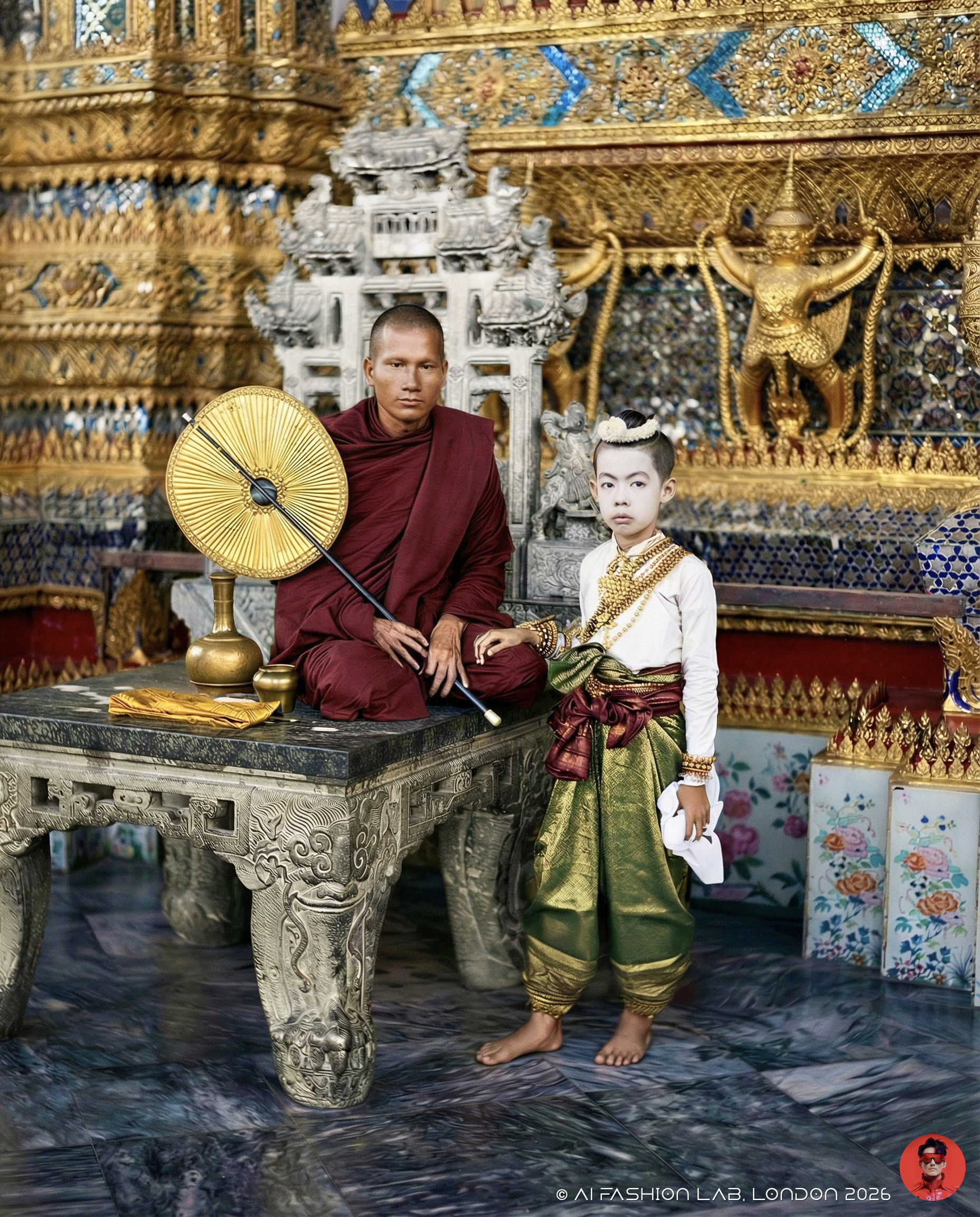
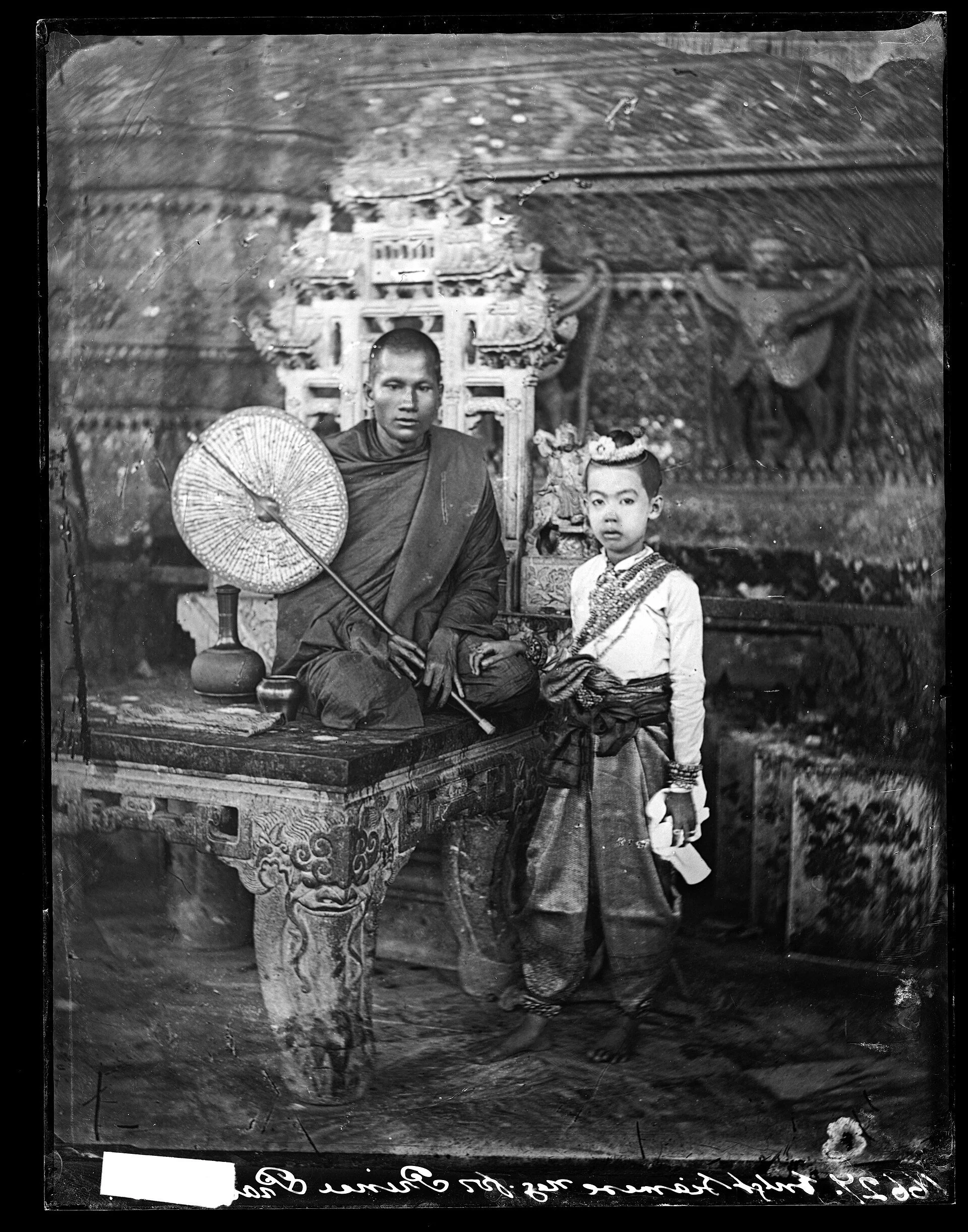
หม่อมเจ้าพระศีลวราลังการ (เนตร) ทรงฉายพระรูปร่วมกับพระเจ้าบรมวงศ์เธอ กรมพระนเรศรวรฤทธิ์ ที่พระอุโบสถวัดพระศรีรัตนศาสดาราม เมื่อ พ.ศ. ๒๔๐๘ (ภาพถ่ายโดย จอห์น ทอมสัน)
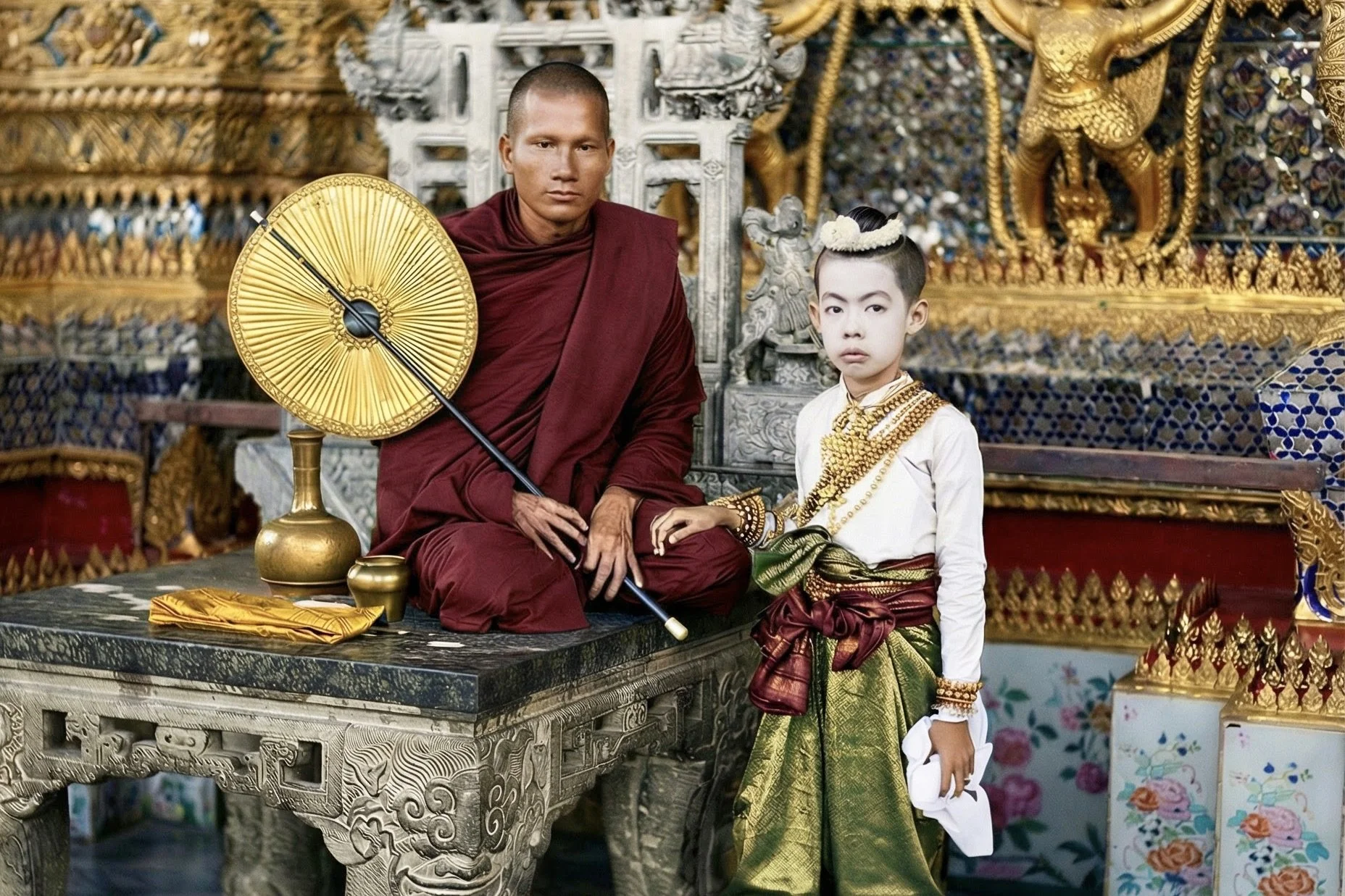
หม่อมเจ้าพระศีลวราลังการ (เนตร) ทรงฉายพระรูปร่วมกับพระเจ้าบรมวงศ์เธอ กรมพระนเรศรวรฤทธิ์ ที่พระอุโบสถวัดพระศรีรัตนศาสดาราม เมื่อ พ.ศ. ๒๔๐๘ (ภาพถ่ายโดย จอห์น ทอมสัน)
พระรูปที่ได้รับการบูรณะและสร้างสรรค์ขึ้นใหม่ด้วยเทคโนโลยี AI นี้ คือพระรูปของ หม่อมเจ้าพระศีลวราลังการ (เนตร) และ พระเจ้าบรมวงศ์เธอ กรมพระนเรศรวรฤทธิ์ เมื่อครั้งทรงฉายพระรูปร่วมกัน ณ พระอุโบสถวัดพระศรีรัตนศาสดาราม เมื่อพุทธศักราช ๒๔๐๘ ภาพต้นฉบับถ่ายโดยช่างภาพชาวตะวันตก จอห์น ทอมสัน ในช่วงปลายรัชกาลที่ ๔ นับเป็นหลักฐานทางภาพถ่ายยุคแรก ๆ ของราชสำนักสยามที่ยังหลงเหลืออยู่
หม่อมเจ้าพระศีลวราลังการ มีพระนามเดิมว่า หม่อมเจ้าเนตร ประสูติเมื่อพุทธศักราช ๒๓๗๗ ในรัชสมัยพระบาทสมเด็จพระนั่งเกล้าเจ้าอยู่หัว รัชกาลที่ ๓ ทรงเป็นพระโอรสในพระเจ้าราชวรวงศ์เธอ พระองค์เจ้าบัว ต้นราชสกุลปัทมสิงห์ อันสืบสายจากสมเด็จพระบวรราชเจ้ามหาสุรสิงหนาท ประสูติแต่หม่อมชะมด ธิดาเจ้าพระยามหาโยธา (ทอเรียะ คชเสนี) ขุนนางเชื้อสายมอญผู้มีบทบาทสำคัญในราชสำนักตั้งแต่สมัยกรุงธนบุรี ด้วยเหตุนี้ พระองค์จึงทรงมีสายสัมพันธ์ทางเครือญาติฝ่ายมารดาเชื่อมโยงกับตระกูลคชเสนี และทรงเป็นพระญาติฝ่ายพระชนนีกับกรมพระนเรศรวรฤทธิ์
เมื่อทรงพระเยาว์ มิได้สนพระทัยรับราชการอย่างจริงจัง ครั้นเจริญพระชันษาขึ้นจึงเสด็จไปผนวช ณ เมืองมอญ ทรงห่มจีวรสีแดงก่ำน้ำหมากตามแบบพระรามัญ ครั้นเสด็จนิวัตสู่พระนคร จึงประทับจำพรรษาที่วัดบวรนิเวศวิหาร ก่อนจะย้ายมาประทับ ณ วัดชนะสงครามราชวรมหาวิหาร ซึ่งเป็นวัดฝ่ายรามัญและมีความผูกพันกับสายสกุลของพระองค์เอง พระบาทสมเด็จพระจุลจอมเกล้าเจ้าอยู่หัวทอดพระเนตรเห็นถึงความตั้งมั่นในสมณธรรม จึงทรงพระกรุณาโปรดเกล้าฯ พระราชทานนิตยภัตไตรปีตามแบบอย่างที่พระราชทานแก่หม่อมเจ้าพระผู้ทรงศีลอื่น ๆ
เหตุการณ์สำคัญครั้งหนึ่งเกิดขึ้นเมื่อคืนวันที่ ๙ กรกฎาคม พุทธศักราช ๒๔๔๖ เมื่อเกิดเพลิงไหม้พระปรางค์ภายในวัดพระศรีรัตนศาสดาราม หม่อมเจ้าพระเนตรทรงเป็นผู้แรกที่เสด็จเข้าไปทอดพระเนตรพระพุทธมหามณีรัตนปฏิมากร ด้วยทรงห่วงใยในพระพุทธปฏิมาอันเป็นศูนย์รวมจิตใจของแผ่นดิน พระบาทสมเด็จพระจุลจอมเกล้าเจ้าอยู่หัวทรงสรรเสริญว่าเป็นผู้มีความกตัญญูและกล้าหาญ ครั้นถึงวันที่ ๑๐ พฤศจิกายน ปีเดียวกัน จึงทรงสถาปนาขึ้นเป็น หม่อมเจ้าพระศีลวราลังการ ที่พระราชาคณะ พร้อมพระราชทานนิตยภัตราคาเดือนละ ๔ ตำลึ
ภายหลังประชวรด้วยโรคชรา สิ้นชีพิตักษัยเมื่อวันที่ ๑๙ พฤษภาคม พุทธศักราช ๒๔๕๗ ในรัชสมัยพระบาทสมเด็จพระมงกุฎเกล้าเจ้าอยู่หัว สิริพระชันษา ๘๑ ปี นับเป็นเจ้านายผู้ทรงพระชันษายืนพระองค์หนึ่งในราชวงศ์จักรี
ส่วนพระเจ้าบรมวงศ์เธอ กรมพระนเรศรวรฤทธิ์ ทรงเป็นพระราชโอรสในพระบาทสมเด็จพระจอมเกล้าเจ้าอยู่หัว รัชกาลที่ ๔ ประสูติแต่เจ้าจอมมารดากลิ่น เมื่อวันที่ ๗ พฤษภาคม พุทธศักราช ๒๓๙๘ เมื่อแรกประสูติมีพระนามว่า พระเจ้าลูกยาเธอ พระองค์เจ้ากฤษดาภินิหาร เจ้าจอมมารดากลิ่นเป็นธิดาพระยาดำรงราชพลขันธ์ (จุ้ย คชเสนี) ซึ่งเป็นบุตรของเจ้าพระยามหาโยธา (ทอเรียะ คชเสนี) ทำให้พระองค์ทรงมีสายสัมพันธ์กับตระกูลคชเสนีเช่นเดียวกัน และมีความคุ้นเคยกับวัดชนะสงครามมาตั้งแต่ทรงพระเยาว์
นอกจากจะทรงรับราชการในตำแหน่งสำคัญหลายประการ อาทิ เสนาบดีกรมพระนครบาล องคมนตรี และรัฐมนตรีสภาแล้ว ในทางพระพุทธศาสนายังทรงดำรงตำแหน่งมัคนายกวัดชนะสงครามและวัดบวรนิเวศวิหาร อันสะท้อนถึงความผูกพันระหว่างพระองค์กับสถาบันศาสนาและสายสกุลฝ่ายรามัญอย่างแนบแน่น พระองค์สิ้นพระชนม์เมื่อวันที่ ๑๐ สิงหาคม พุทธศักราช ๒๔๖๘ ภายหลังพระราชทานเพลิงพระศพแล้ว ได้อัญเชิญพระอัฐิบรรจุไว้ ณ พระเจดีย์หน้าพระอุโบสถวัดชนะสงคราม ร่วมกับเจ้าจอมมารดากลิ่นและสมาชิกในราชสกุลกฤดากร
วัดชนะสงครามราชวรมหาวิหารเอง เป็นวัดโบราณสร้างแต่ครั้งกรุงศรีอยุธยา เดิมเรียกว่า “วัดกลางนา” ครั้นสถาปนากรุงรัตนโกสินทร์ พระบาทสมเด็จพระพุทธยอดฟ้าจุฬาโลกมหาราชโปรดเกล้าฯ ให้ปฏิสังขรณ์และเปลี่ยนชื่อเป็น “วัดตองปุ” ให้เป็นวัดฝ่ายรามัญ เพื่อเทิดเกียรติทหารรามัญในกองทัพสมเด็จพระบวรราชเจ้ามหาสุรสิงหนาทผู้มีชัยเหนือพม่าในสงครามเก้าทัพ พุทธศักราช ๒๓๒๘ และศึกต่อเนื่องอีกหลายครั้ง ต่อมาจึงพระราชทานนามใหม่ว่า “วัดชนะสงคราม” เพื่อเป็นอนุสรณ์แห่งชัยชนะทั้งสามคราวนั้น
วัดแห่งนี้ได้รับการบูรณปฏิสังขรณ์สืบต่อมา โดยเฉพาะในรัชสมัยพระบาทสมเด็จพระมงกุฎเกล้าเจ้าอยู่หัว ซึ่งได้ดำเนินการก่อสร้างที่บรรจุพระอัฐิเจ้านายฝ่ายกรมพระราชวังบวรสถานมงคลตามพระราชดำริของพระบาทสมเด็จพระจุลจอมเกล้าเจ้าอยู่หัว การก่อสร้างแล้วเสร็จในรัชสมัยพระบาทสมเด็จพระปกเกล้าเจ้าอยู่หัว และมีพิธีอัญเชิญพระอัฐิมาประดิษฐานเมื่อพุทธศักราช ๒๔๗๐
พระรูปครั้งนั้นจึงมิได้เป็นเพียงภาพบุคคลสองพระองค์ หากยังสะท้อนเครือญาติ สายสกุล และศรัทธาทางศาสนาฝ่ายรามัญ ที่สืบเนื่องมาตั้งแต่ต้นราชวงศ์จักรีจนถึงต้นคริสต์ศตวรรษที่ ๒๐ อีกด้วย
_____________
The restored and re-imagined image presented here is a reconstructed likeness of Mom Chao Phra Silavaralangkarn (Net) and Phra Chao Borom Wongse Ther Krom Phra Nares Worarit, photographed together at the Ubosot of Wat Phra Si Rattana Satsadaram in B.E. 2408 (1865). The original photograph was taken by the Scottish photographerJohn Thomson during the later years of King Rama IV’s reign and stands among the earliest surviving photographic records of the Siamese royal circle.
Mom Chao Phra Silavaralangkarn, originally named Mom Chao Net, was born in B.E. 2377 (1834) during the reign of King Rama III. He was the son of Phra Chao Ratchaworawongse Ther Phra Ong Chao Bua, progenitor of the Padmasingh lineage and a descendant of Somdet Phra Boworn Ratchao Maha Sura Singhanat, and Mom Chamot, daughter of Chao Phraya Mahayotha (Thoriya Khoseni), a prominent Mon nobleman whose family had played an important role since the Thonburi period. Through his mother’s lineage, he was connected to the powerful Khoseni family of Mon descent and was maternally related to Krom Phra Nares Worarit.
In his youth, Mom Chao Net did not pursue a formal career in royal service. Instead, he left Siam to ordain in the Mon territories, adopting the distinctive deep reddish-brown robes characteristic of the Mon ecclesiastical tradition. Upon returning to Bangkok, he resided at Wat Bowonniwet Vihara before later moving to Wat Chana Songkhram Ratchaworamahawihan, a temple long associated with the Mon community and closely connected to his maternal lineage. King Chulalongkorn (Rama V), recognising the sincerity of his religious devotion, granted him a royal stipend in accordance with established precedent for princes in monastic life.
A defining moment in his life occurred on the night of 9 July B.E. 2446 (1903), when a fire broke out at the prang within the Temple of the Emerald Buddha complex. Mom Chao Phra Net was reportedly the first to enter and inspect the Phra Phuttha Maha Mani Rattana Patimakon (the Emerald Buddha), acting out of profound concern for the kingdom’s most sacred palladium. King Chulalongkorn praised him for his loyalty and filial devotion to the faith and the throne. On 10 November of the same year, he was elevated to the ecclesiastical title Mom Chao Phra Silavaralangkarn and appointed as a royal prelate, with a monthly stipend of four tamlueng.
He passed away from age-related illness on 19 May B.E. 2457 (1914), during the reign of King Vajiravudh (Rama VI), at the age of eighty-one. He remains remembered as one of the longer-lived princes of the Chakri dynasty.
Phra Chao Borom Wongse Ther Krom Phra Nares Worarit was a son of King Mongkut (Rama IV), born on 7 May B.E. 2398 (1855) to Chao Chom Manda Klin. At birth, he was named Phra Chao Luk Ya Ther Phra Ong Chao Kritsada Phinihan. His mother, Chao Chom Manda Klin, was the daughter of Phraya Damrong Rajapol Khan (Jui Khoseni), himself the son of Chao Phraya Mahayotha (Thoriya Khoseni), thereby linking him also to the Mon-descended Khoseni lineage. The family residence stood near Wat Chana Songkhram, and land was presented at his birth for the construction of a palace, later known as Wang Thanon Phra Athit. From childhood, therefore, he maintained a close association with the temple and with relatives ordained there, including Mom Chao Phra Silavaralangkarn.
Beyond his distinguished civil career — serving as Minister of the Metropolitan Department (Krom Phra Nakhonban), Privy Councillor, and State Councillor — he was deeply engaged in Buddhist affairs, acting as lay patron (makkhanayok) of both Wat Chana Songkhram and Wat Bowonniwet Vihara. He died on 10 August B.E. 2468 (1925). After his royal cremation, his ashes were enshrined in a chedi in front of the Ubosot at Wat Chana Songkhram, alongside Chao Chom Manda Klin and members of the Kritsadakorn lineage.
Wat Chana Songkhram Ratchaworamahawihan itself is an ancient temple dating back to the Ayutthaya period, originally known as Wat Klang Na. Upon the establishment of the Rattanakosin kingdom, King Rama I ordered its restoration and renamed it Wat Tong Pu, designating it as a Mon monastery in honour of the Mon soldiers who served under Maha Sura Singhanat in the Nine Armies War of B.E. 2328 (1785) and subsequent campaigns. Later, it was granted the name “Wat Chana Songkhram” — the Temple of Victory — to commemorate those triumphs.
In later reigns, particularly under King Vajiravudh (Rama VI), construction began on a structure to house the ashes of princes associated with the Front Palace, following the earlier initiative of King Chulalongkorn. The project was completed during the reign of King Prajadhipok (Rama VII), and in B.E. 2470 (1927) the royal ashes were ceremonially transferred and enshrined there.
Thus, the photograph taken in 1865 is more than a record of two royal figures standing within the sacred precinct of the Emerald Buddha Temple. It quietly encapsulates networks of kinship, Mon heritage, religious devotion, and the intertwined histories of temple, dynasty, and state during a formative period of modern Siam.
_____________
เรียนเชิญกด Subscribe ได้ที่ลิงก์นี้ครับ เพื่อร่วมติดตามงานสร้างสรรค์ต้นฉบับ งานวิจัยประวัติศาสตร์แฟชั่น และผลงานอนุรักษ์มรดกวัฒนธรรมด้วยเทคโนโลยี AI ของ AI Fashion Lab, London ซึ่งมุ่งตีความอดีตผ่านมิติใหม่ของการบูรณะภาพ การสร้างสรรค์ภาพ และการเล่าเรื่องด้วยศิลปะเชิงดิจิทัล 🔗 https://www.facebook.com/aifashionlab/subscribe/
#aifashionlab #AI #aiartist #aiart #aifashion #aifashiondesign #aifashionstyling #aifashiondesigner #fashion #fashionhistory #historyoffashion #fashionstyling #fashionphotography #digitalfashion #digitalfashiondesign #digitalcostumedesign #digitaldesign #digitalaiart #ThaiFashionHistory #ThaiFashionAI #thailand #UNESCO