พระองค์เจ้าอรไทยเทพกัญญา และแฟชั่นผสมผสานในราชสำนักสยามช่วงรัชกาลที่ ๕ ตอนต้น
พระองค์เจ้าอรไทยเทพกัญญา และแฟชั่นผสมผสานในราชสำนักสยามช่วงรัชกาลที่ ๕ ตอนต้น
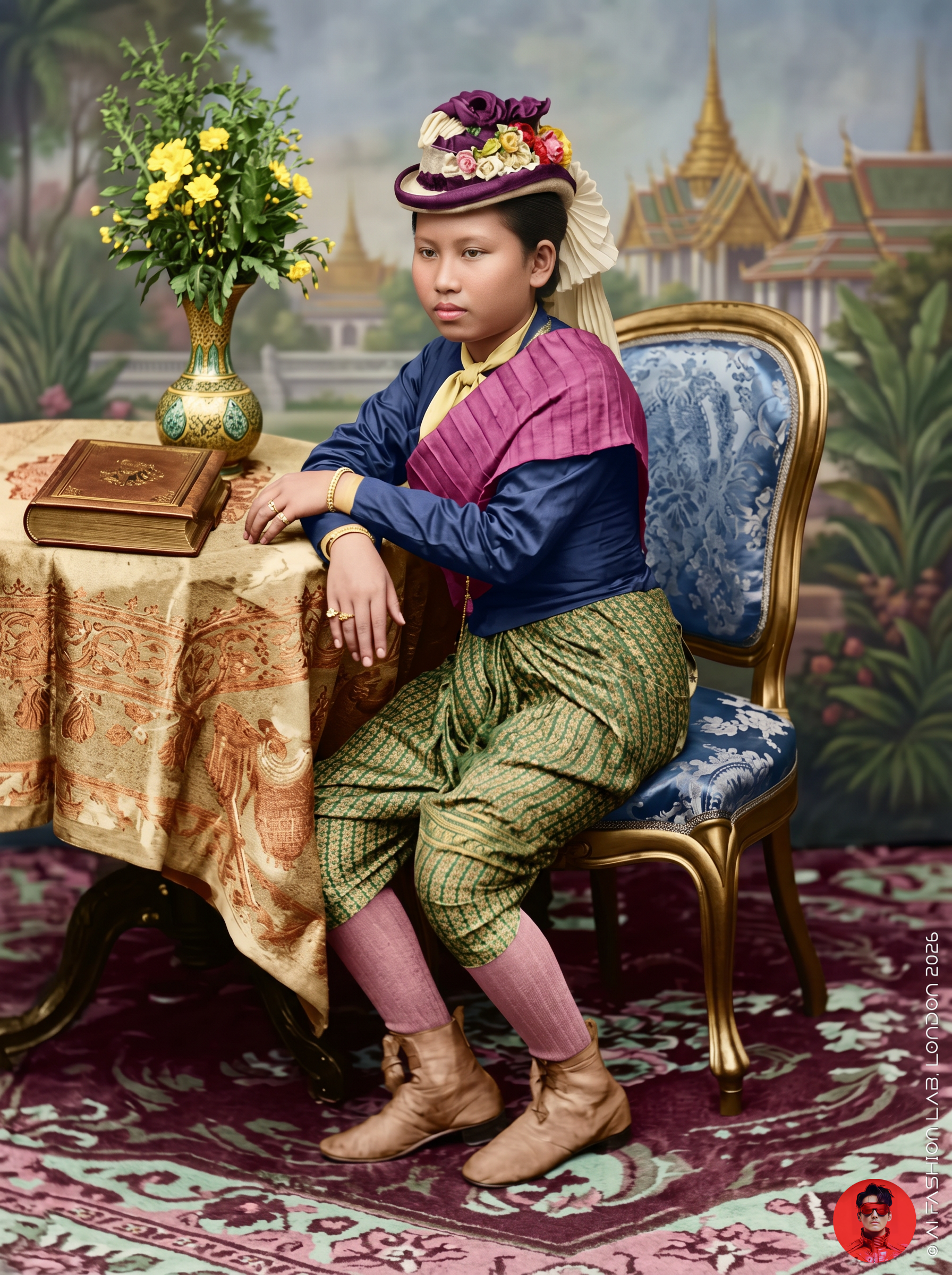
ภาพที่ได้รับการบูรณะและสร้างสรรค์ขึ้นด้วยเทคโนโลยี AI ในคอลเลกชันนี้ เป็นพระรูปของพระเจ้าบรมวงศ์เธอ พระองค์เจ้าอรไทยเทพกัญญา หรือพระองค์เจ้าอรไทยเทพกัลยา ประสูติเมื่อวันที่ ๑๘ กันยายน พ.ศ. ๒๔๐๒ และสิ้นพระชนม์เมื่อวันที่ ๔ เมษายน พ.ศ. ๒๔๔๙ สิริพระชันษา ๔๖ ปี พระองค์เป็นพระราชธิดาใน พระบาทสมเด็จพระจอมเกล้าเจ้าอยู่หัว รัชกาลที่ ๔ ประสูติแต่ เจ้าจอมมารดาบัว
พระชนม์ชีพของพระองค์อยู่ในช่วงหัวเลี้ยวหัวต่อสำคัญของประวัติศาสตร์ราชสำนักสยาม กล่าวคือ พระองค์ประสูติในปลายรัชกาลที่ ๔ แต่ทรงเจริญพระชนม์ขึ้นในช่วงต้นรัชกาลที่ ๕ อันเป็นยุคที่สยามเริ่มปรับตัวเข้าสู่โลกสมัยใหม่อย่างเข้มข้น ทั้งในด้านการเมือง การทูต การศึกษา วัฒนธรรมวัตถุ และการแต่งกาย
พระรูปนี้จึงมีความสำคัญอย่างยิ่งในฐานะหลักฐานทางประวัติศาสตร์แฟชั่น เพราะเป็นหนึ่งในภาพที่หาชมได้ยากมากของเจ้านายฝ่ายในแห่งราชสำนักสยาม ซึ่งทรงเครื่องแต่งกายแบบสยาม แต่ผสมผสานองค์ประกอบจากแฟชั่นตะวันตก โดยเฉพาะ หมวกสตรีแบบวิกตอเรียน ถุงเท้า รองเท้า และสตูดิโอถ่ายภาพแบบตะวันตก
_______
✨การกำหนดอายุภาพ: ทศวรรษ 1870-1880 และยุคบัสเซิล (Pustle Period) ของแฟชั่นวิกตอเรียน
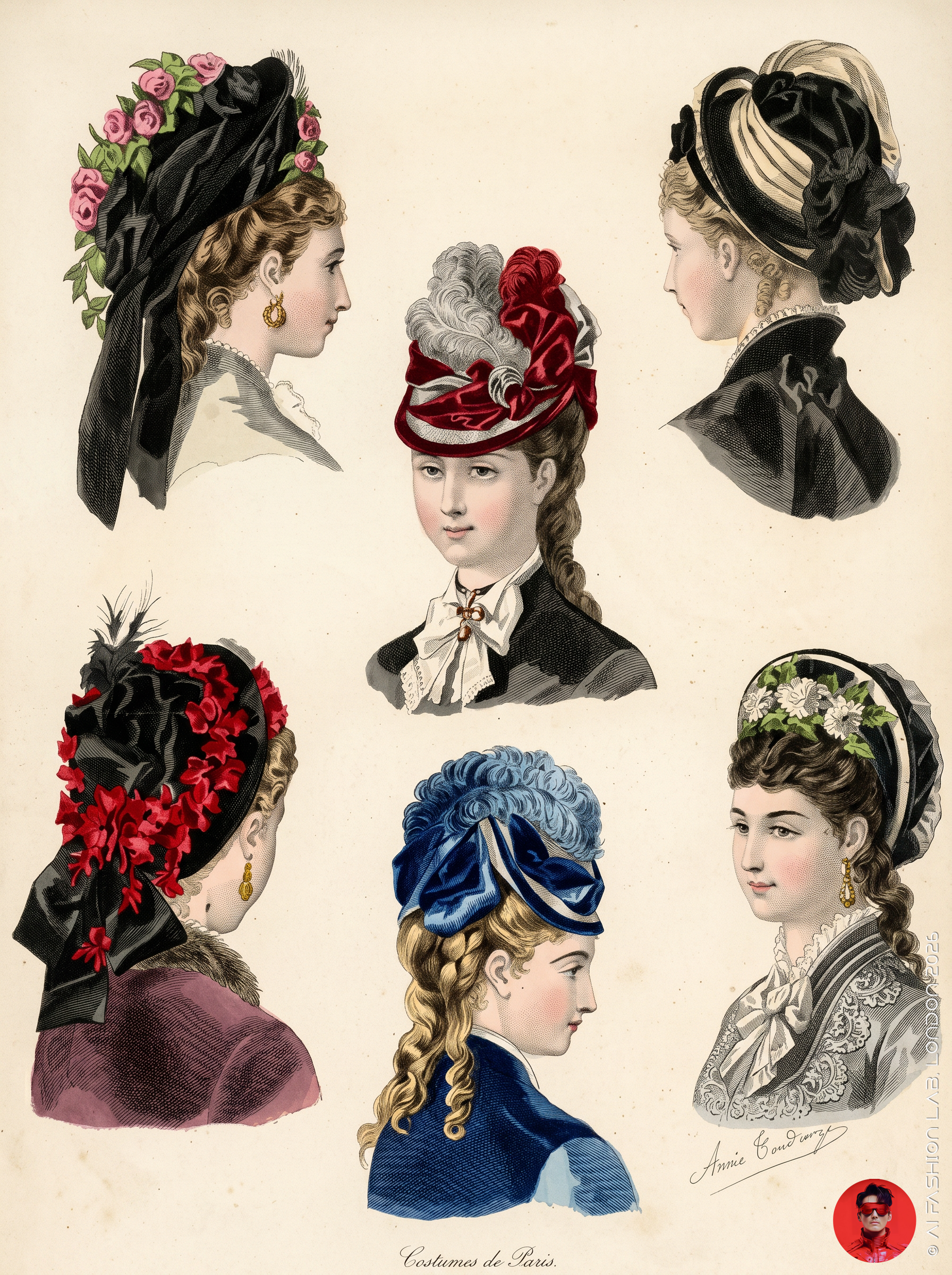
หากพิจารณาจากรูปทรงของหมวก พระรูปนี้น่าจะถ่ายขึ้นในช่วง ทศวรรษ 1870-1880 หรือราว พ.ศ. ๒๔๑๓–๒๔๒๒ ซึ่งตรงกับช่วงต้นรัชกาลที่ ๕ และอยู่ในยุคที่แฟชั่นสตรียุโรปกำลังเข้าสู่สมัย บัสเซิล หรือ Bustle Period ของแฟชั่นวิกตอเรียน
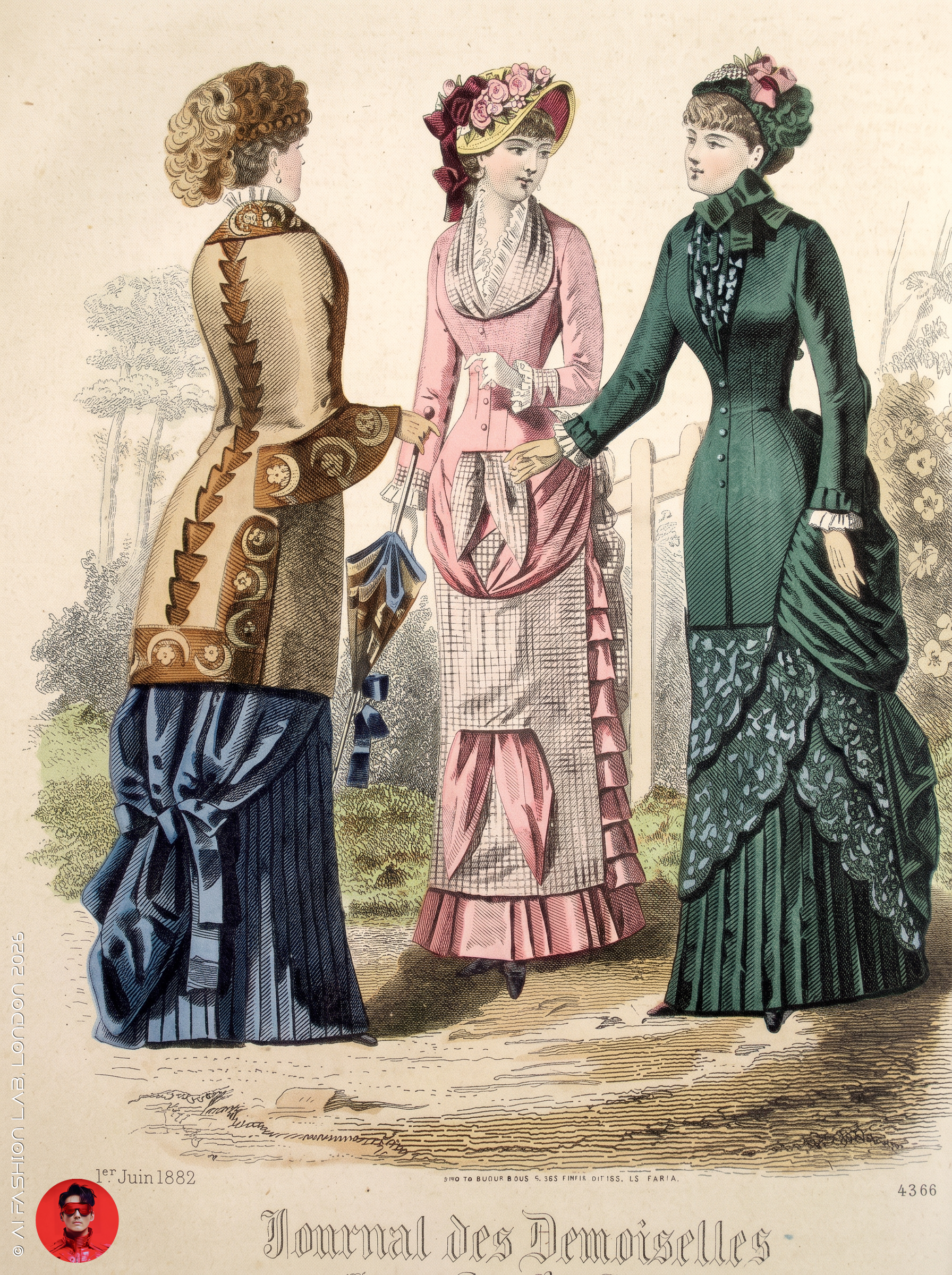
ในช่วงนี้ แฟชั่นตะวันตกเปลี่ยนจากกระโปรงทรงสุ่มกว้างแบบคริโนลีน ไปสู่โครงร่างที่เน้นความพองและน้ำหนักผ้าด้านหลังลำตัว หมวกของสตรีในยุคนี้มักมีขนาดค่อนข้างกะทัดรัด วางอยู่บนศีรษะในลักษณะประดับตกแต่งอย่างประณีต มีริบบิ้น ดอกไม้ ผ้าพลีต หรือโครงผ้าที่ยกตัวขึ้น ไม่ใช่หมวกใบใหญ่แบบปลายศตวรรษที่ ๑๙ หรือหมวกสตรีขนาดใหญ่ในยุคเอ็ดเวิร์ดเดียน
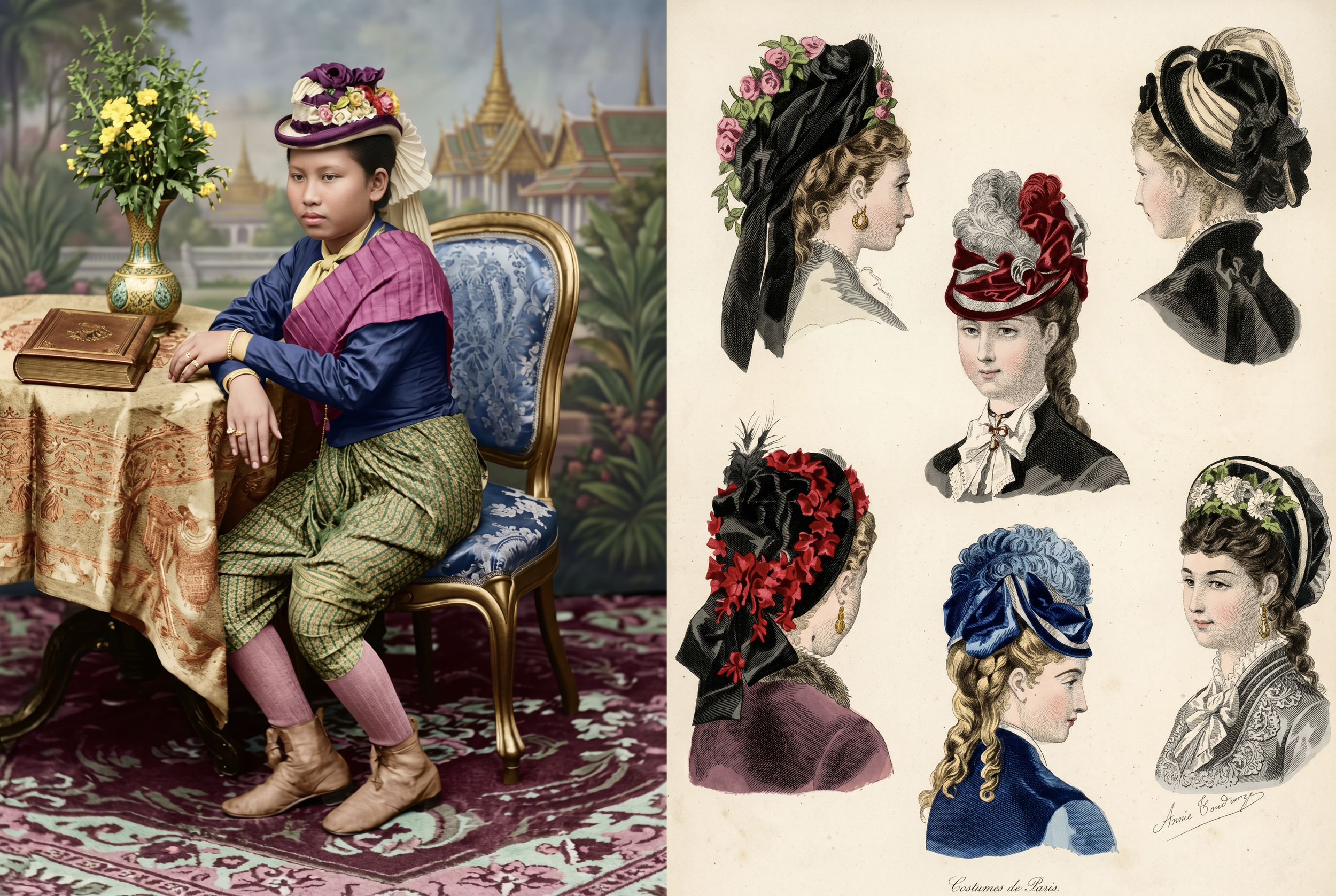
ลักษณะหมวกในพระรูปนี้จึงช่วยชี้ให้เห็นว่า ภาพน่าจะอยู่ในกรอบเวลาของแฟชั่นยุคบัสเซิลช่วงแรก มากกว่าจะเป็นแฟชั่นปลายรัชกาลที่ ๕ หรือสมัยรัชกาลที่ ๖ หากถ่ายในช่วงทศวรรษ 1870-1880 จริง พระองค์เจ้าอรไทยเทพกัญญาจะมีพระชนมายุระหว่างประมาณ ๒๐ ปี ซึ่งสอดคล้องกับพระพักตร์และรูปลักษณ์ของผู้ประทับในภาพ
_______
👗เครื่องแต่งกายสยามกับองค์ประกอบตะวันตก
สิ่งที่ทำให้พระรูปนี้น่าสนใจอย่างยิ่งคือ พระองค์มิได้ทรงเครื่องแต่งกายตะวันตกทั้งชุด หากแต่ทรงฉลองพระองค์ในลักษณะ แฟชั่นผสมผสานของราชสำนักสยาม คือยังคงโครงสร้างหลักของเครื่องแต่งกายฝ่ายใน แต่เลือกนำองค์ประกอบตะวันตกบางอย่างเข้ามาประกอบอย่างมีนัยสำคัญ
ส่วนบนของเครื่องแต่งกายมีลักษณะเป็นเสื้อค่อนข้างเข้ารูป คล้ายเสื้อราชสำนักสตรีในสมัยต้นรัชกาลที่ ๕ พร้อมกับการห่มสไบแพรจีบ ซึ่งให้ความรู้สึกสุภาพ เป็นทางการ และเหมาะกับการถ่ายพระรูปในสตูดิโอ
ส่วนล่างยังคงเป็น โจงกระเบน ซึ่งเป็นหัวใจสำคัญของเครื่องแต่งกายสยามในยุคนั้น ลวดลายผ้าและรูปทรงของโจงกระเบนช่วยยืนยันว่า พระองค์ยังคงประทับอยู่ภายในกรอบวัฒนธรรมการแต่งกายแบบไทย แม้จะทรงรับองค์ประกอบตะวันตกเข้ามาประกอบก็ตาม
ขณะเดียวกัน การสวมถุงเท้าและรองเท้าบูท เป็นรายละเอียดที่สำคัญมาก เพราะแสดงให้เห็นว่าความเป็นตะวันตกมิได้เข้ามาเฉพาะในรูปของเครื่องประดับเด่น เช่น หมวก แต่ยังเข้ามาในระดับของการจัดระเบียบร่างกาย การนั่ง และการปรากฏพระองค์ในฐานะสตรีสมัยใหม่ตามแบบภาพถ่ายสตูดิโอในคริสต์ศตวรรษที่ ๑๙
_______
👒หมวกวิกตอเรียน: สัญลักษณ์ของความเป็นสมัยใหม่
พระมาลาในพระรูปนี้เป็นองค์ประกอบที่โดดเด่นที่สุด และอาจเป็นกุญแจสำคัญในการอ่านภาพทั้งภาพ ในบริบทของแฟชั่นยุโรปสมัยวิกตอเรียน หมวกมิได้เป็นเพียงของประดับศีรษะ หากยังเป็นเครื่องหมายของกาลเทศะ ชนชั้น รสนิยม และความสุภาพเรียบร้อยของสตรีชนชั้นสูง
เมื่อหมวกเช่นนี้ปรากฏในภาพของเจ้านายฝ่ายในแห่งราชสำนักสยาม จึงไม่ควรถูกอ่านอย่างง่าย ๆ ว่าเป็นการ “เลียนแบบ” ตะวันตก หากควรเข้าใจว่าเป็นการ เลือกสรรและดัดแปลงองค์ประกอบตะวันตกให้เข้ากับระบบการแต่งกายของสยาม
กล่าวอีกนัยหนึ่ง หมวกใบนี้มิได้ทำให้พระองค์กลายเป็นสตรีตะวันตก แต่ทำหน้าที่เป็นสัญลักษณ์ของราชสำนักสยามที่รู้จักโลกภายนอก เข้าใจรหัสแฟชั่นสากล และสามารถนำมาปรับใช้โดยไม่ละทิ้งอัตลักษณ์ของตนเองนอกจากเครื่องแต่งกายแล้ว ฉากและวัตถุประกอบในพระฉายาลักษณ์ก็มีความหมายทางวัฒนธรรมเช่นกัน โต๊ะ ผ้าคลุมโต๊ะ แจกันดอกไม้ เก้าอี้ และหนังสือที่ดูเป็นวัตถุตะวันตก ล้วนเป็นองค์ประกอบสำคัญของการถ่ายภาพสตูดิโอในคริสต์ศตวรรษที่ ๑๙
_______
Princess Orathai Thep Kanya and Hybrid Fashion in the Siamese Court during the Early Reign of King Rama V
The image restored and creatively reconstructed through AI technology in this collection is a royal portrait of Her Royal Highness Princess Orathai Thep Kanya (พระเจ้าบรมวงศ์เธอ พระองค์เจ้าอรไทยเทพกัญญา), also known as Princess Orathai Thep Kalaya (พระองค์เจ้าอรไทยเทพกัลยา). She was born on 18 September 1859 (๑๘ กันยายน พ.ศ. ๒๔๐๒) and passed away on 4 April 1906 (๔ เมษายน พ.ศ. ๒๔๔๙) at the age of forty-six. She was a royal daughter of King Mongkut, Rama IV (พระบาทสมเด็จพระจอมเกล้าเจ้าอยู่หัว รัชกาลที่ ๔), born to Chao Chom Manda Bua (เจ้าจอมมารดาบัว).
Her life belonged to a crucial transitional moment in the history of the Siamese court. She was born during the late reign of Rama IV, but grew up during the early reign of King Chulalongkorn, Rama V (พระบาทสมเด็จพระจุลจอมเกล้าเจ้าอยู่หัว รัชกาลที่ ๕), a period in which Siam increasingly adapted itself to the modern world through politics, diplomacy, education, material culture, and dress.
This royal portrait is therefore highly significant as a piece of fashion-historical evidence. It is one of the very rare images of a royal woman of the Siamese Inner Court (ฝ่ายใน) wearing Siamese court dress while incorporating elements of Western fashion, especially a Victorian women’s hat, stockings, boots, and the visual language of a Western photographic studio.
_______
✨ Dating the Image: The 1870s–1880s and the Bustle Period of Victorian Fashion
Judging from the shape of the hat, this royal portrait was likely taken during the 1870s to around 1880, or approximately 1870–1879 (พ.ศ. ๒๔๑๓–๒๔๒๒). This corresponds with the early reign of Rama V and with the period when European women’s fashion was entering the Bustle Period.
During this period, Western fashion shifted away from the wide crinoline silhouette towards a form that emphasised fullness and fabric weight at the back of the body. Women’s hats of this era were often relatively compact, placed decoratively on the head, and trimmed with ribbons, flowers, pleated fabric, or raised textile structures. They were not the large hats of the late nineteenth century, nor the oversized women’s hats associated with the Edwardian period.
The form of the hat in this royal portrait therefore helps suggest that the image belongs to the early Bustle Period, rather than to the later reign of Rama V or the reign of Rama VI. If the photograph was taken during the late 1870s or around 1880, Princess Orathai Thep Kanya (พระองค์เจ้าอรไทยเทพกัญญา) would have been around twenty years old, which corresponds with the youthful facial appearance and physical presentation of the sitter.
_______
👗 Siamese Dress and Western Elements
What makes this royal portrait particularly fascinating is that the princess is not dressed entirely in Western clothing. Instead, she wears a form of hybrid fashion within the Siamese court: the main structure of Inner Court dress (เครื่องแต่งกายฝ่ายใน) remains intact, while selected Western elements are incorporated in a meaningful and deliberate way.
The upper part of the costume appears to be a fairly fitted jacket, similar to women’s court jackets worn in early Rama V Siam, together with a pleated silk shoulder cloth (สไบแพรจีบ). The overall effect is formal, refined, and appropriate for a royal studio portrait.
The lower part remains a jong kraben (โจงกระเบน), which was a central element of Siamese dress during this period. The textile pattern and the form of the garment confirm that the princess is still situated firmly within Thai court dress culture, even as Western elements are introduced into the ensemble.
At the same time, the wearing of stockings and boots is a highly significant detail. It shows that Western influence entered Siamese court fashion not only through prominent accessories such as the hat, but also through the organisation of the body, seated posture, covered legs, and the presentation of the royal female subject within the conventions of nineteenth-century photographic portraiture.
_______
👒 The Victorian Hat: A Symbol of Modernity
The hat, or phra mala (พระมาลา), in this royal portrait is the most striking element, and may be the key to reading the whole image. In the context of Victorian European fashion, the hat was not merely a decorative object. It also signalled occasion, class, taste, propriety, and the respectability expected of upper-class women.
When such a hat appears in the portrait of a royal woman of the Siamese Inner Court (เจ้านายฝ่ายใน), it should not be read simply as an act of “imitation” of the West. Rather, it should be understood as the selective adoption and adaptation of Western sartorial elements within the dress system of Siam.
In other words, this hat does not turn the princess into a Western woman. Instead, it functions as a symbol of a Siamese court that was aware of the outside world, understood the codes of international fashion, and was able to adapt them without abandoning its own identity.
Beyond the costume itself, the setting and studio props in the royal portrait also carry cultural meaning. The table, tablecloth, flower vase, chair, and foreign-looking book are all important elements of nineteenth-century studio photography. Together, they frame the princess within a visual language of refinement, education, cultivated taste, and modern courtly self-presentation.
__________________
เรียนเชิญกด Subscribe ได้ที่ลิงก์นี้ครับ เพื่อร่วมติดตามงานสร้างสรรค์ต้นฉบับ งานวิจัยประวัติศาสตร์แฟชั่น และผลงานอนุรักษ์มรดกวัฒนธรรมด้วยเทคโนโลยี AI ของ AI Fashion Lab, London ซึ่งมุ่งตีความอดีตผ่านมิติใหม่ของการบูรณะภาพ การสร้างสรรค์ภาพ และการเล่าเรื่องด้วยศิลปะเชิงดิจิทัล https://www.facebook.com/aifashionlab/subscribe/
#aifashionlab #AI #aiartist #aiart #aifashion #aifashiondesign #aifashionstyling #aifashiondesigner #fashion #fashionhistory #historyoffashion #fashionstyling #fashionphotography #digitalfashion #digitalfashiondesign #digitalcostumedesign #digitaldesign #digitalaiart #ThaiFashionHistory #ThaiFashionAI #thailand #UNESCO