สมเด็จพระศรีพัชรินทราบรมราชินีนาถ และสร้อยพระศอมุกแบบสองชั้นประดับเพชรทรงหยดน้ำ
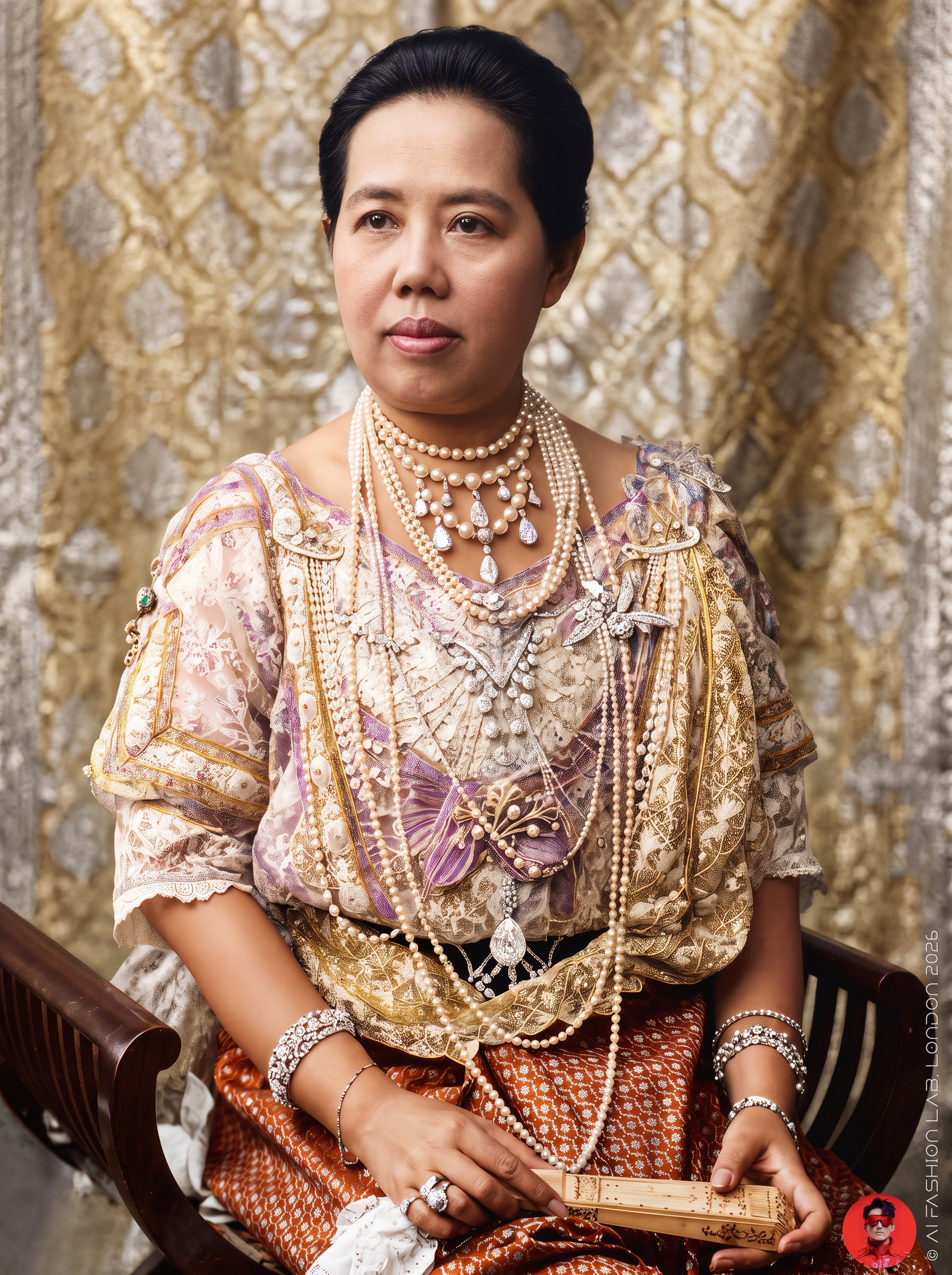
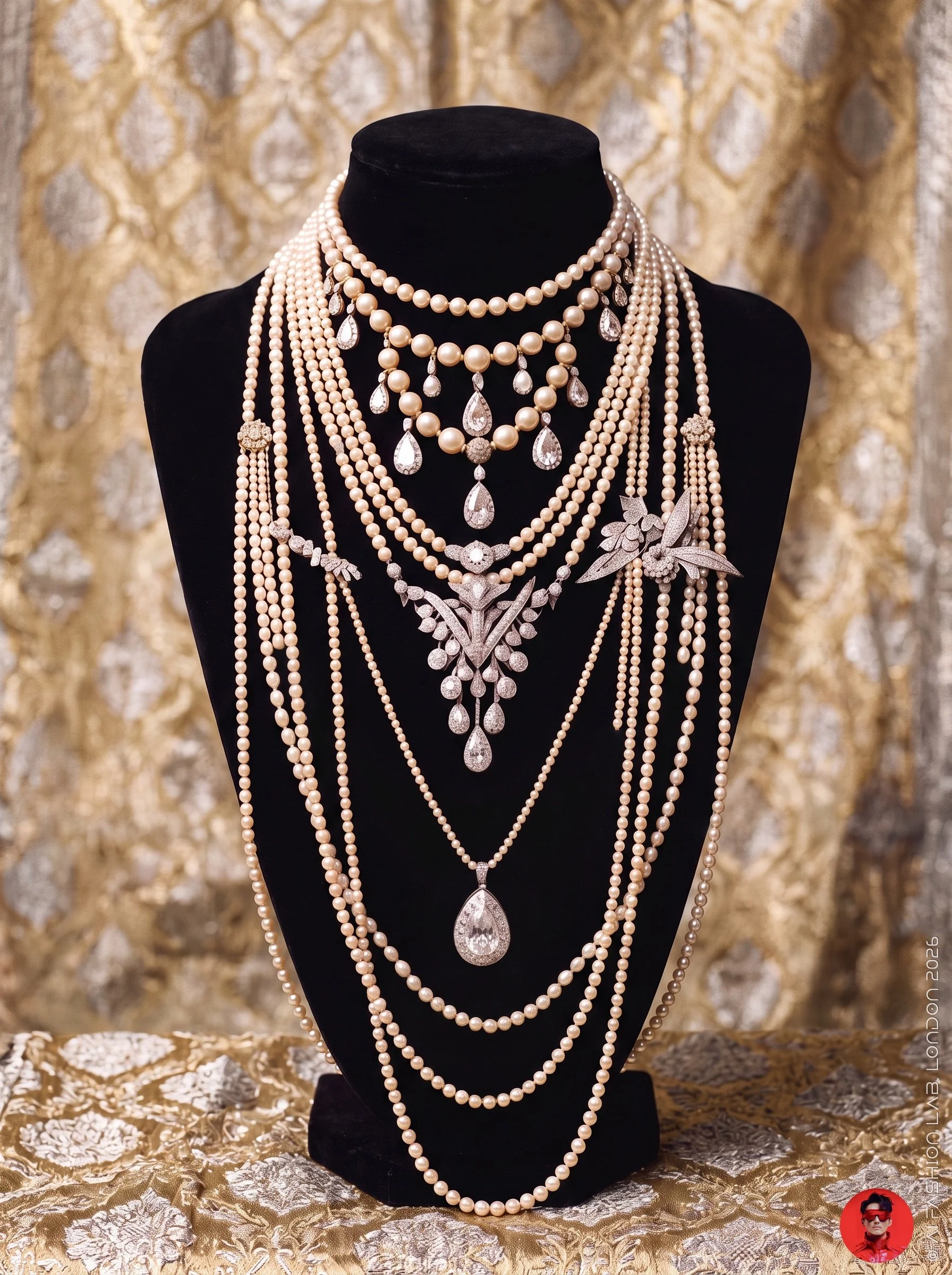
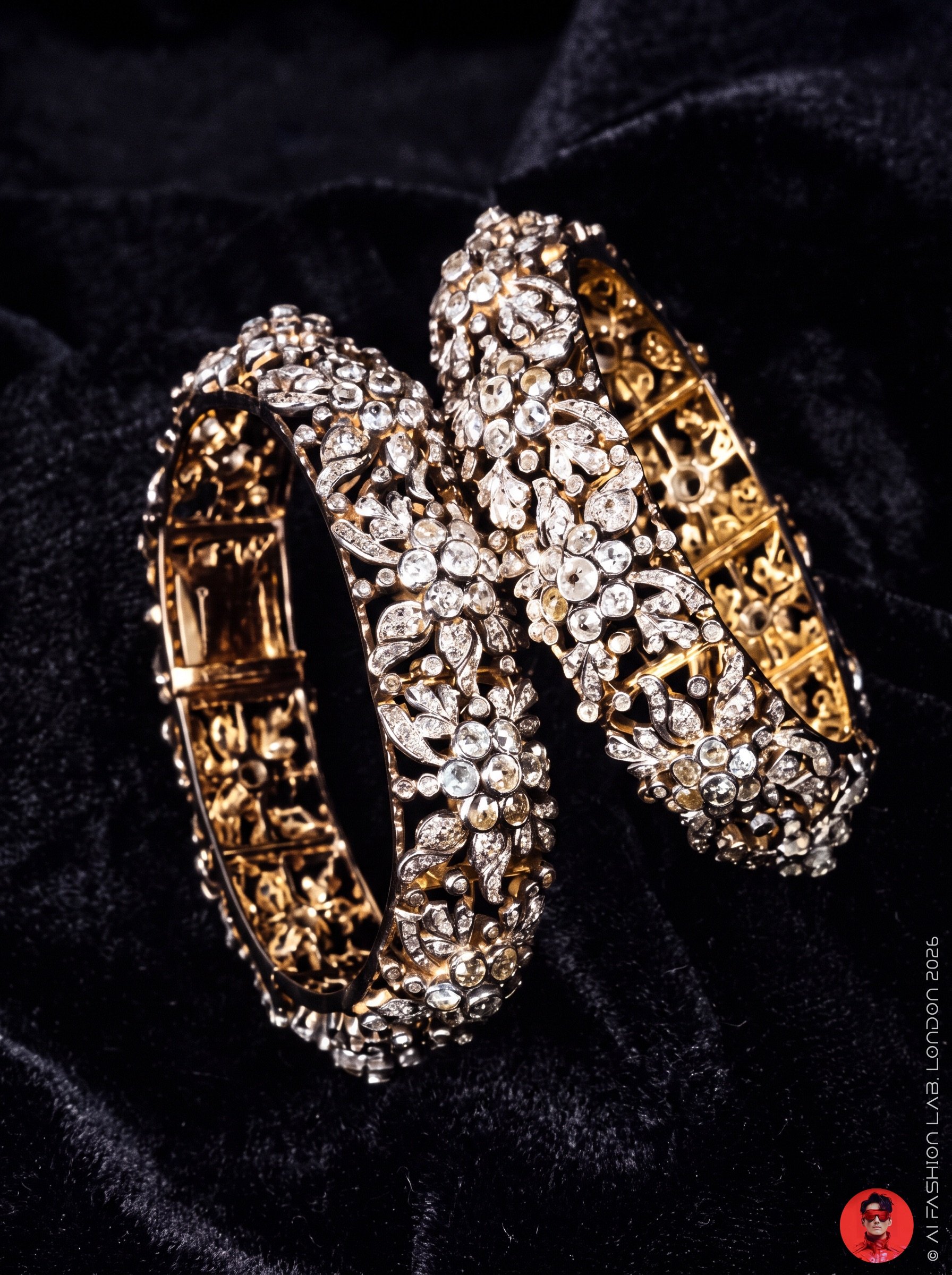
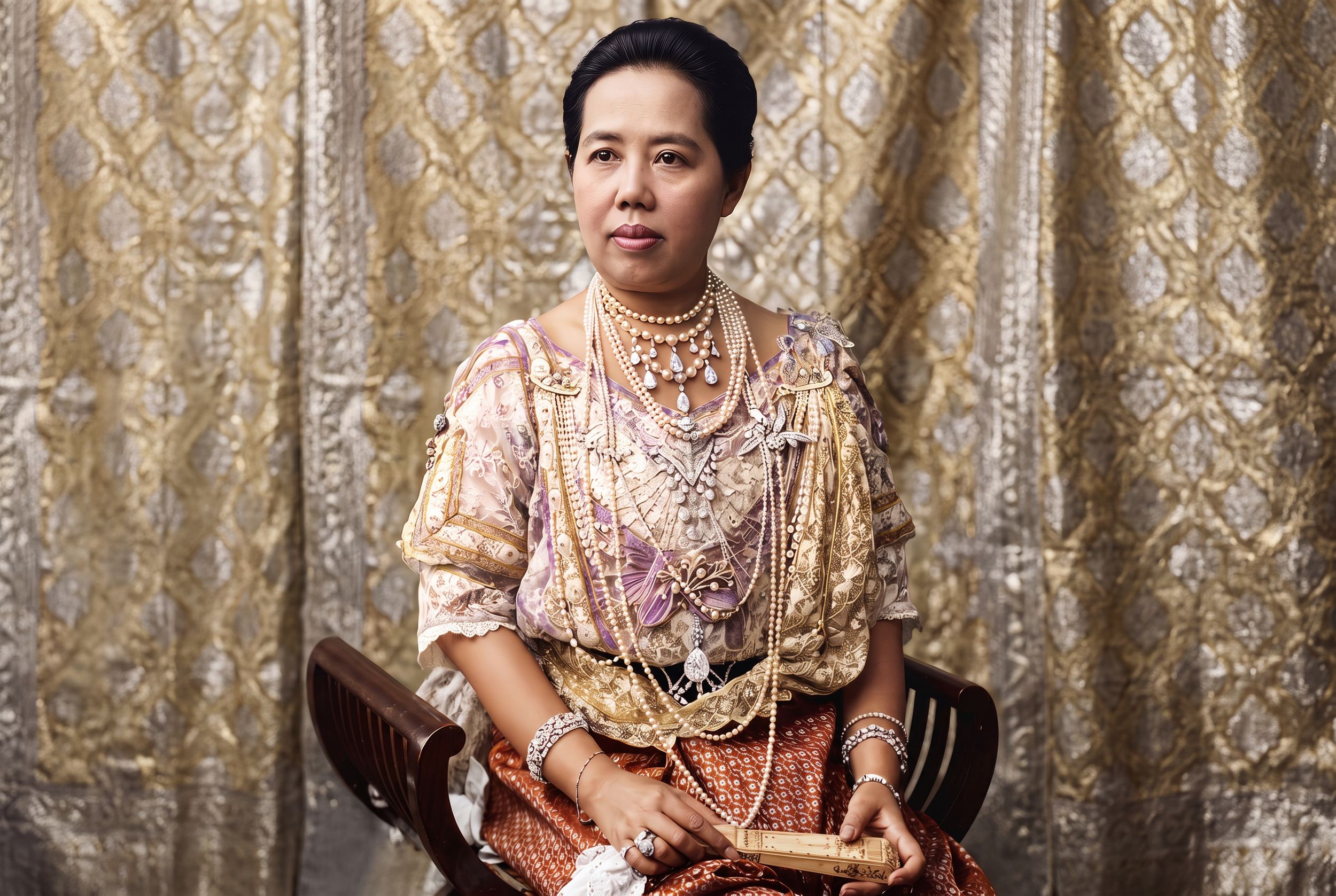
ภาพที่ได้รับการบูรณะและสร้างสรรค์ขึ้นด้วยเทคโนโลยี AI นี้ เป็นพระฉายาลักษณ์ สมเด็จพระศรีพัชรินทราบรมราชินีนาถ พระบรมราชชนนีพันปีหลวง ทรงฉายพร้อมกับสร้อยพระศอมุกแบบสองชั้นประดับเพชรทรงหยดน้ำ ซึ่งเป็นเครื่องประดับที่ทรงโปรด พร้อมด้วย สร้อยพระศอมุกเส้นยาวซ้อนกันหลายเส้น พร้อมกับจี้เพชรเม็ดใหญ่ขนาดเท่ากับไข่นกกระทา และเข็มกลัดเพชรและเครื่องประดับเพชรนำ้งามหลากหลายชิ้น อันสะท้อนพระเกียรติยศและรสนิยมอันประณีต
นอกจากนี้ เครื่องเพชรที่ทรงสวมใส่ยังแสดงให้เห็นถึง อิทธิพลของศิลปะแบบเอ็ดเวิร์เดียนและอาร์ตนูโว (Edwardian and Art Nouveau style jewellery) ซึ่งเน้นความอ่อนช้อยของเส้นสายและแรงบันดาลใจจากธรรมชาติ พระองค์ทรงเลือกเครื่องเพชรในรูปแบบที่เป็นที่นิยมในยุคนั้น เช่น
พระฉายาลักษณ์องค์นี้ คาดว่าฉายขึ้นในช่วงปลายรัชกาลที่ ๕ ถึง ต้นรัชกาลที่ ๖ ระหว่างประมาณ พ.ศ. ๒๔๔๘–๒๔๕๘ (ค.ศ. 1905–1915) ซึ่งเป็นยุคที่ยังคงมีหลักฐานทางภาพถ่ายที่งดงามและสมบูรณ์หลงเหลืออยู่เป็นจำนวนมาก
ฉลองพระองค์เป็นสไตล์ ลูกไม้แบบปลายยุคเอ็ดเวิร์ดเดียน (Late Edwardian) หรือช่วงต้นของ ยุคทีนส์ (Early Teens)ลักษณะเด่นคือ คอเสื้อต่ำและแขนเสื้อสามส่วน ประดับด้วยผ้าลูกไม้พาดคล้ายแพรสะพาย โดยติดเข็มกลัดบริเวณพระอุระด้านซ้าย แล้วปล่อยชายผ้าทิ้งยาวลงทางด้านขวา พระองค์ทรง นุ่งโจงกระเบน และทรงถือพัดและผ้าเช็ดพระพักตร์ลูกไม้ ซึ่งช่วยเสริมความอ่อนช้อยและงดงามให้กับองค์ประกอบโดยรวม
_____________
“หมอสมิธ แพทย์หลวง ส่วนพระองค์ กล่าวถึงสร้อยพระศอไข่มุกของสมเด็จพระพันปีหลวง”
“หมอสมิธบันทึกว่า เมื่อครั้ง พระบาทสมเด็จพระจุลจอมเกล้าเจ้าอยู่หัว เสด็จประพาสยุโรปครั้งแรกเมื่อ พ.ศ. 2440 พระองค์ทรงซื้อสร้อยพระศอไข่มุกพระราชทานแด่สมเด็จพระพันปีหลวง เมื่อครั้งยังทรงดำรงพระอิสริยยศเป็น สมเด็จพระนางเจ้าเสาวภาผ่องศรี พระบรมราชินีนาถ ซึ่งสร้อยพระศอไข่มุกเส้นดังกล่าวมีมูลค่าถึง 100,000 ปอนด์
“คืนนั้นข้าพเจ้าได้ทูลขอให้สมเด็จพระพันปีหลวงทรงนำสร้อยพระศอไข่มุก ที่พระบาทสมเด็จพระจุลจอมเกล้าเจ้าอยู่หัวพระราชทานเป็นของขวัญแก่พระองค์ เมื่อคราวเสด็จประพาสยุโรปครั้งแรก ซึ่งมีมูลค่าถึง ๑๐๐,๐๐๐ ปอนด์ออกมาให้ชม
แม้ว่าข้าพเจ้าจะเคยเห็นสร้อยพระศอเส้นนี้มาแล้วหลายครั้งในขณะที่พระองค์ทรงสวมอยู่ แต่ก็ยังไม่เคยได้เห็นและสัมผัสอย่างใกล้ชิด สร้อยพระศอเส้นดังกล่าวถูกนำออกมาจากห้องที่อยู่ติด ๆ กันเกือบจะในทันที และเมื่อข้าพเจ้าเห็นข้าพเจ้าก็มิได้รู้สึกผิดหวังเลย
ไข่มุกเม็ดที่จัดว่าเป็น ‘น้ำเอก’ มีขนาดกำลังพอเหมาะ ประดับตกแต่งด้วยอัญญมณีงดงาม ภายใต้แสงตะเกียงสลัว ๆ ขณะปล่อยให้มันไหวตัวกลิ้งไปมาส่งประกายระยิบระยับอยู่ในอุ้งมือของข้าพเจ้า นับเป็นประสบการณ์ที่ไม่อาจลืมเลือน
ความยาวเต็มที่ของสร้อยที่ร้อยเข้าไว้ด้วยกันทั้งเส้นวัดได้เกือบ ๖ ฟุต เวลาสวมสามารถจัดแต่งให้พันรอบพระศอได้เป็น ๒ ทบ มุกเม็ดที่ใหญ่ที่สุดขนาดเท่าลูกหินห้อยอยู่ตรงกลางของมุกแต่ละสาย”
นอกจากสร้อยพระศอไข่มุกเส้นนี้แล้ว ยังมีสร้อยพระศอไข่มุกเส้นที่สอง ซึ่งมีขนาดเล็กกว่า ทรงซื้อไว้เมื่อ พ.ศ. 2450 ด้วยราคา 20,000 ปอนด์ ภายหลังถูกโจรกรรมที่สิงคโปร์ แต่ในที่สุดก็สามารถตามกลับคืนมาได้
มูลค่าอันมหาศาลของสร้อยพระศอไข่มุกเส้นนี้ จำเป็นต้องพิจารณาภายใต้บริบททางประวัติศาสตร์ของการค้าไข่มุกธรรมชาติในช่วงปลายคริสต์ศตวรรษที่ ๑๙ ถึงต้นคริสต์ศตวรรษที่ ๒๐ เนื่องจากในยุคนั้น ไข่มุกที่นำมาใช้ในการทำเครื่องประดับชั้นสูงล้วนเป็นไข่มุกธรรมชาติที่เกิดขึ้นเองภายในหอยมุก โดยปราศจากการแทรกแซงของมนุษย์ แตกต่างจากไข่มุกเพาะเลี้ยงที่พบเห็นได้ทั่วไปในปัจจุบัน ไข่มุกธรรมชาติที่มีคุณภาพยอดเยี่ยมถือเป็นอัญมณีที่หาได้ยากยิ่ง และในบางกรณีอาจมีมูลค่าสูงกว่าเพชรเสียอีก
ความยากลำบากมิได้อยู่เพียงการค้นหาไข่มุกธรรมชาติที่มีคุณภาพดีเป็นรายเม็ดเท่านั้น หากแต่อยู่ที่การรวบรวมไข่มุกจำนวนมากให้มีขนาด รูปทรง สีสัน และความแวววาวใกล้เคียงกันอย่างกลมกลืน โดยเฉพาะอย่างยิ่งการคัดเลือกไข่มุกสำหรับร้อยเป็นสร้อยพระศอที่มีความยาวเกือบ ๖ ฟุต หรือประมาณ ๑๘๓ เซนติเมตร ตามที่หมอสมิธได้บันทึกไว้ ย่อมเป็นความสำเร็จอันน่าทึ่งทั้งในด้านการเสาะหาอัญมณีและฝีมือประณีตศิลป์ของช่างเครื่องประดับชั้นสูง
ดังนั้น มูลค่าของสร้อยพระศอไข่มุกที่มีการกล่าวถึงว่าสูงถึง ๑๐๐,๐๐๐ ปอนด์ หรือคิดเป็นเงินไทยในสมัยนั้นประมาณ ๑๖ ล้านบาท และหากเทียบมูลค่าตามอัตราเงินเฟ้อของอังกฤษกับค่าเงินบาทในปัจจุบัน (พ.ศ. ๒๕๖๙) จะมีมูลค่าประมาณ ๗๑๘ ล้านบาท จึงมิได้สะท้อนเพียงความยาวหรือขนาดของสร้อยเท่านั้น หากยังสะท้อนถึงความหายากอย่างยิ่งของไข่มุกธรรมชาติคุณภาพสูงจำนวนมากที่ต้องผ่านการคัดเลือกอย่างพิถีพิถัน เพื่อประกอบขึ้นเป็นเครื่องประดับอันล้ำค่าที่คู่ควรกับพระเกียรติยศของสมเด็จพระบรมราชินีนาถแห่งสยาม
_____________
Queen Saovabha Phongsri and Her Double-Strand Pearl Necklace Adorned with Pear-Shaped Diamonds
This photograph of Her Majesty Queen Saovabha Phongsri, Queen Consort of King Chulalongkorn (Rama V), and later Queen Mother of King Vajiravudh (Rama VI), has been restored and creatively enhanced using artificial intelligence (AI).
In this portrait, Her Majesty is wearing a magnificent double-strand pearl necklace adorned with pear-shaped diamonds, a style of jewellery she particularly favoured. She is also wearing several long strands of pearls draped across her bodice, together with an exceptionally large diamond pendant, approximately the size of a quail’s egg. These are complemented by elaborate diamond brooches and various other pieces of jewellery set with diamonds of exceptional clarity and brilliance, reflecting both her royal status and her refined personal taste.
The diamond jewellery worn by the Queen also demonstrates the influence of Edwardian and Art Nouveau jewellery, fashionable in Europe during the late nineteenth and early twentieth centuries. These styles were characterised by graceful, flowing lines, delicate craftsmanship, and motifs inspired by the natural world. Her Majesty’s choice of jewellery reflects her awareness of contemporary European fashions and her ability to incorporate them into the visual language of the Siamese royal court.
The original photograph is believed to date from approximately 1905–1915 (B.E. 2448–2458), spanning the final years of the reign of King Chulalongkorn (Rama V) and the early years of King Vajiravudh (Rama VI). This period is particularly well documented through surviving royal photographs, many of which provide valuable evidence of court dress, jewellery, and the changing fashions of the Siamese monarchy.
Her Majesty’s attire reflects the fashions of the late Edwardian period and the early 1910s, featuring a low neckline and three-quarter-length sleeves. The bodice is richly embellished with lace, while an additional length of lace is draped diagonally across the upper body in a manner reminiscent of a ceremonial sash. Fastened with a diamond brooch on the left side of the bust, the lace falls gracefully towards the right.
The ensemble combines European-inspired dress with traditional Siamese attire. Her Majesty wears a chong kraben, a traditional wrapped lower garment, and carries a fan and a delicate lace handkerchief. Together, these elements create an elegant composition that exemplifies the distinctive synthesis of European fashion and Siamese royal dress during this period.
Dr Smith, Royal Physician, Describes the Queen Mother's Pearl Necklace
According to an account by Dr Smith, the royal physician, King Chulalongkorn purchased a magnificent pearl necklace for Queen Saovabha Phongsri during his first European tour in 1897 (B.E. 2440). At the time, she held the title of Queen Consort. The necklace was reportedly valued at the extraordinary sum of £100,000.
The extraordinary value of this necklace must be understood within the historical context of the natural pearl trade at the turn of the twentieth century. Unlike the cultured pearls widely available today, the pearls used in fine jewellery during this period were predominantly natural, formed within wild oysters without human intervention. Exceptional natural pearls were extraordinarily rare and, in some instances, more valuable than diamonds. The principal challenge lay not merely in finding individual pearls of exceptional quality, but in assembling sufficient numbers that matched in size, shape, colour, and lustre. A necklace measuring almost six feet in length, as described by Dr Smith, would therefore have represented an exceptional achievement in gemstone selection and jewellery craftsmanship. Its reported valuation of £100,000 reflected not simply its considerable size, but the rarity of the natural pearls required to create such an extraordinary piece of royal jewellery.
Dr Smith recalled an occasion when he was granted the rare opportunity to examine this remarkable piece of royal jewellery at close quarters:
That evening, I asked Her Majesty the Queen Mother if she would allow me to see the pearl necklace which King Chulalongkorn had presented to her as a gift during his first visit to Europe, and which was valued at £100,000.
Although I had seen the necklace on numerous occasions when Her Majesty was wearing it, I had never had the opportunity to examine or handle it closely. The necklace was brought almost immediately from an adjoining room, and I was certainly not disappointed by what I saw.
The pearls were of the finest quality, beautifully proportioned, and exquisitely complemented by precious gemstones. In the dim light of the lamps, as I allowed the necklace to move gently and roll across the palms of my hands, its pearls and gemstones shimmered and sparkled. It was an experience I shall never forget.
When fully extended, the necklace measured almost six feet in length. When worn, it could be arranged in two loops around Her Majesty’s neck. The largest pearls, each approximately the size of a marble, hung at the centre of the individual strands.
In addition to this remarkable necklace, Her Majesty possessed a second pearl necklace of smaller dimensions, reportedly purchased in 1907 (B.E. 2450) for £20,000. This necklace was subsequently stolen in Singapore but was eventually recovered and returned.
These accounts offer a fascinating insight into the extraordinary collection of pearls and precious jewels owned by Queen Saovabha Phongsri, as well as the significance of European jewellery within the Siamese royal court at the turn of the twentieth century.
_____________
เรียนเชิญกด Subscribe ได้ที่ลิงก์นี้ครับ เพื่อร่วมติดตามงานสร้างสรรค์ต้นฉบับ งานวิจัยประวัติศาสตร์แฟชั่น และผลงานอนุรักษ์มรดกวัฒนธรรมด้วยเทคโนโลยี AI ของ AI Fashion Lab, London ซึ่งมุ่งตีความอดีตผ่านมิติใหม่ของการบูรณะภาพ การสร้างสรรค์ภาพ และการเล่าเรื่องด้วยศิลปะเชิงดิจิทัล 🔗 https://www.facebook.com/aifashionlab/subscribe/
#aifashionlab #AI #aiartist #aiart #aifashion #aifashiondesign #aifashionstyling #aifashiondesigner #fashion #fashionhistory #historyoffashion #fashionstyling #fashionphotography #digitalfashion #digitalfashiondesign #digitalcostumedesign #digitaldesign #digitalaiart #ThaiFashionHistory #ThaiFashionAI #thailand #UNESCO