สมเด็จพระศรีพัชรินทราบรมราชินีนาถ ทรงฉลองพระองค์แขนหมูแฮม
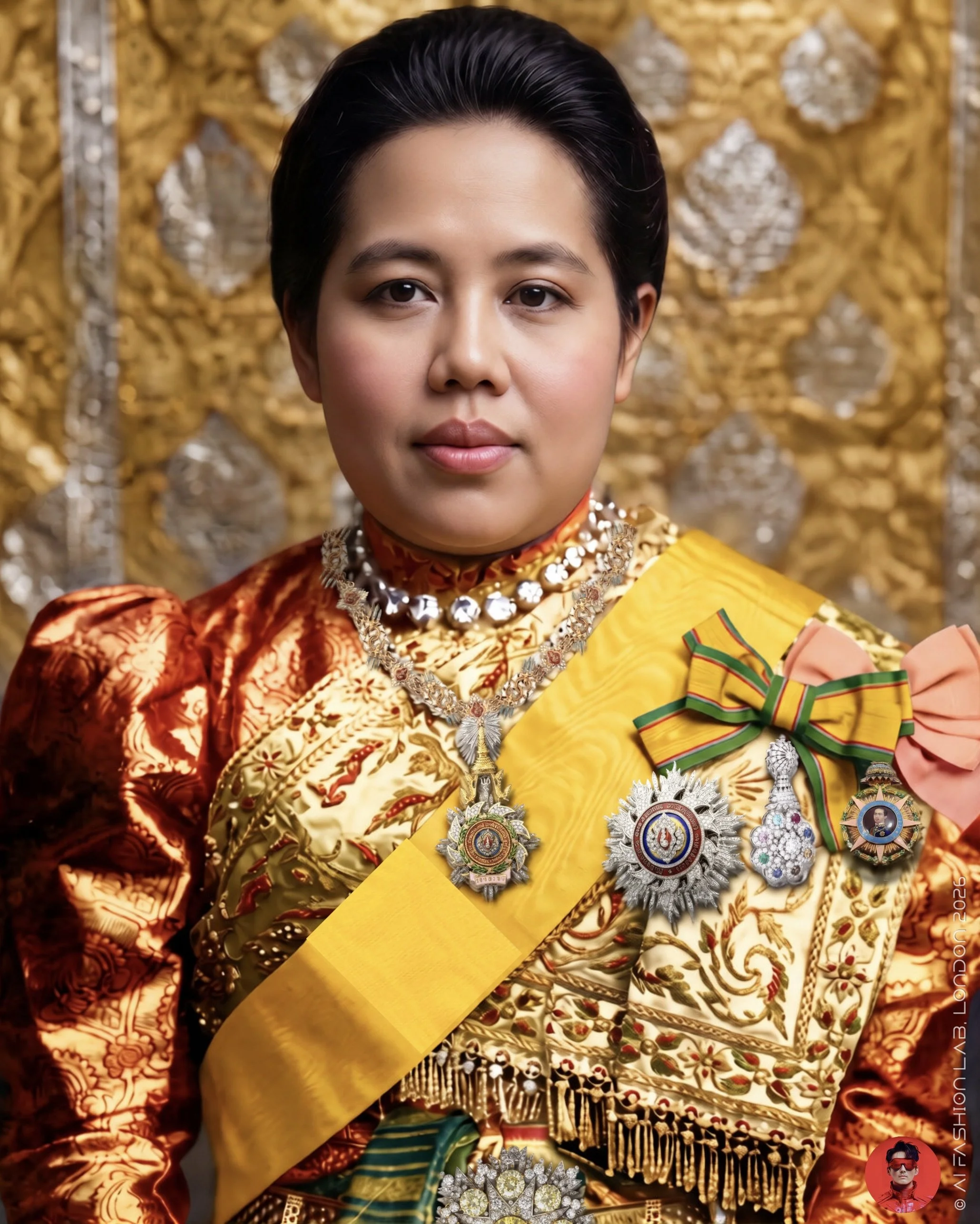
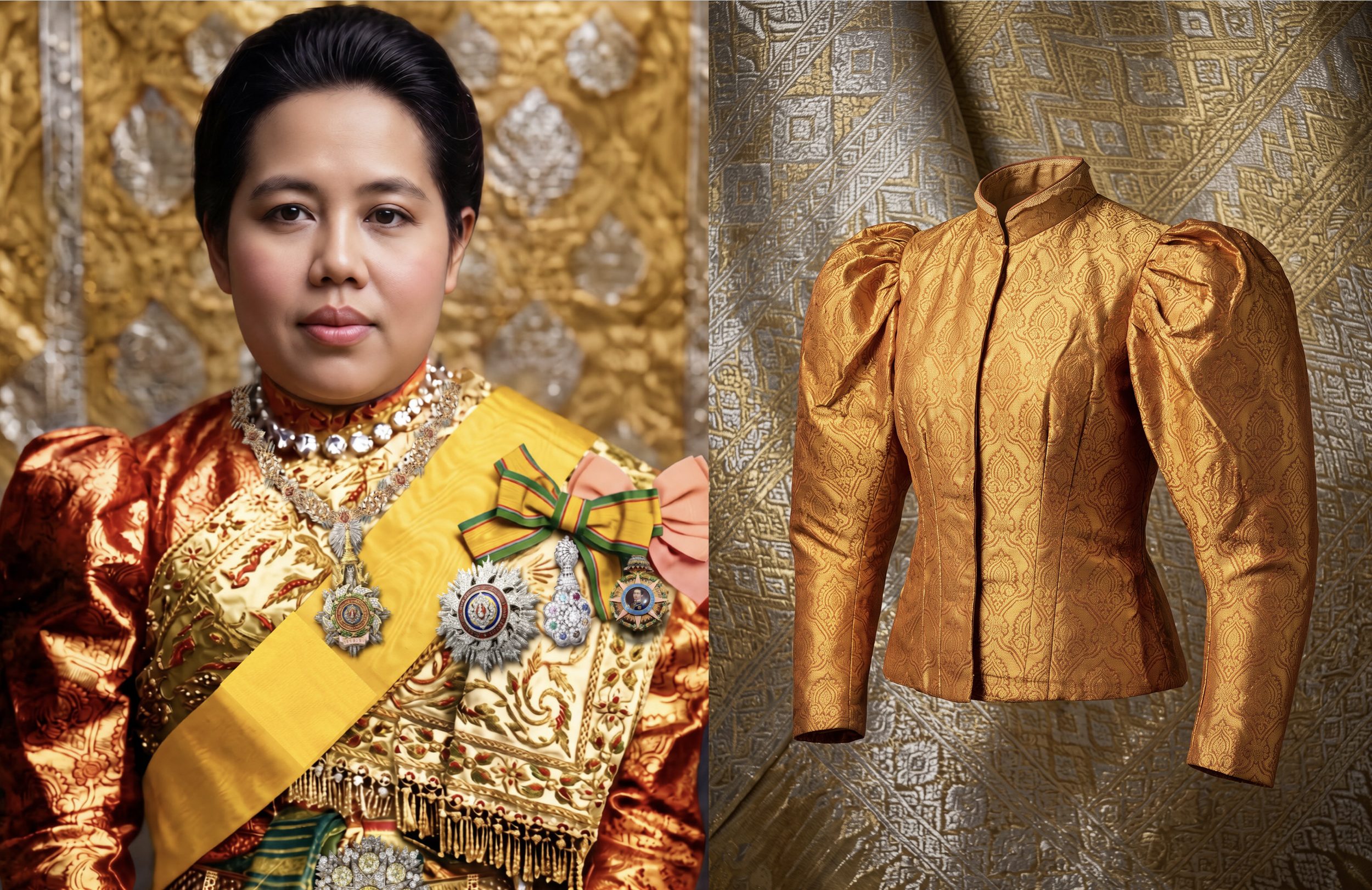
พระฉายาลักษณ์ของ สมเด็จพระศรีพัชรินทราบรมราชินีนาถ พระบรมราชชนนีพันปีหลวง ที่ได้รับการบูรณะและสร้างสรรค์ขึ้นใหม่ด้วยเทคโนโลยี AI โดยได้รับแรงบันดาลใจจากฉลองพระองค์จริงจาก พิพิธภัณฑ์ผ้าในสมเด็จพระนางเจ้าสิริกิติ์ พระบรมราชินีนาถ ซึ่งมีรายละเอียดที่น่าสนใจดังนี้
ฉลองพระองค์แขนหมูแฮม
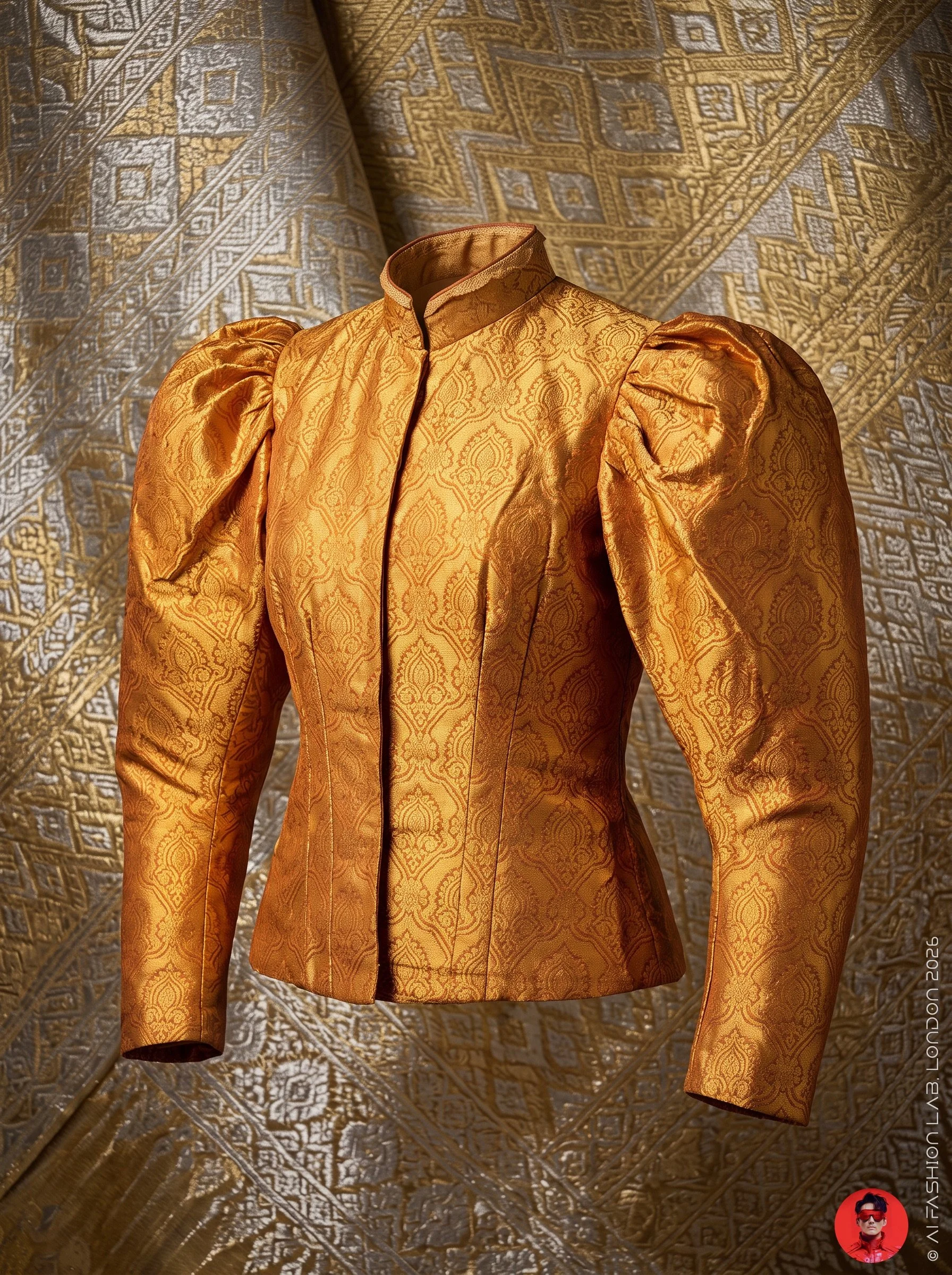
สมเด็จพระศรีพัชรินทราบรมราชินีนาถทรงฉลองพระองค์แขนหมูแฮม ตัดเย็บจากผ้าเยียรบับที่สั่งมาจากประเทศอินเดีย โดยได้รับอิทธิพลจากรูปแบบเครื่องแต่งกายสตรีชาวยุโรปในช่วงราว ค.ศ. 1890 ตรงกับรัชสมัยพระบาทสมเด็จพระจุลจอมเกล้าเจ้าอยู่หัว รัชกาลที่ 5
ฉลองพระองค์มีลักษณะเป็นเสื้อคอตั้ง เข้ารูป แขนยาว ปลายแขนประดับด้วยลูกไม้ จุดเด่นอยู่ที่บริเวณต้นแขนซึ่งตัดเย็บให้พองออก มีรูปทรงคล้ายขาหมูแฮม อันเป็นที่มาของชื่อเรียกฉลองพระองค์ลักษณะนี้
ผ้าเยียรบับ เป็นผ้าที่ทอด้วยไหมสีร่วมกับไหมเงินหรือไหมทอง โดยใช้ไหมเงินหรือไหมทองเป็นเส้นพุ่งพิเศษในการทอยกให้เกิดลวดลายนูนขึ้นจากพื้นผ้า ทำให้มองเห็นลวดลายจากไหมเงินหรือไหมทองเด่นชัดกว่าพื้นไหมสี สันนิษฐานว่าคำว่า “เยียรบับ” มีที่มาจากคำว่า Zarabaft หรือ Zarbaft ในภาษาเปอร์เซีย ซึ่งหมายถึง “ผ้าทอง” และจัดเป็นผ้าชั้นเลิศในบรรดาผ้าที่ทอด้วยเทคนิคในลักษณะเดียวกัน
เครื่องเพชรและเครื่องราชอิสริยาภรณ์
ในพระฉายาลักษณ์องค์นี้ สมเด็จพระศรีพัชรินทราบรมราชินีนาถทรงสร้อยพระศอเพชรที่รู้จักกันในนาม “สร้อยเพชรแม่เศรษฐี” อันเลื่องชื่อ ประกอบด้วยเพชรรูปกลมขนาดใหญ่เรียงรายรอบพระศอ โดยจัดลำดับขนาดจากเล็กไปใหญ่ เป็นหนึ่งในเครื่องประดับเพชรสำหรับทรงเมื่อทรงเครื่องเต็มยศอย่างขัตติยนารี
นอกจากนี้ พระองค์ยังทรงผ้าสะพักตามแบบแผนการแต่งกายของฝ่ายในแห่งราชสำนักสยาม พร้อมด้วยเครื่องขัตติยราชอิสริยาภรณ์อันมีเกียรติยศสูง ได้แก่ เครื่องขัตติยราชอิสริยาภรณ์มหาจักรีบรมราชวงศ์ แพรแถบเครื่องราชอิสริยาภรณ์นพรัตนราชวราภรณ์ และแพรแถบเครื่องราชอิสริยาภรณ์จุลจอมเกล้าชั้นปฐมจุลจอมเกล้า
พระฉายาลักษณ์ที่สร้างสรรค์ขึ้นใหม่นี้จึงสะท้อนให้เห็นถึงความงดงามของฉลองพระองค์ในราชสำนักสยามช่วงปลายคริสต์ศตวรรษที่ 19 ซึ่งผสมผสานอิทธิพลแฟชั่นตะวันตกเข้ากับขนบการแต่งกายไทย ตลอดจนความประณีตของงานทอผ้า เครื่องเพชร และเครื่องราชอิสริยาภรณ์อันเป็นส่วนหนึ่งของราชประเพณีสยาม
_______________
💎“สร้อยเพชรแม่เศรษฐี” กับตำนานแห่งสร้อยคอริวิแยร์
สร้อยคอแบบริวิแยร์ หรือแบบสายธาร (Rivière necklace) นับเป็นหนึ่งในสัญลักษณ์แห่งความสง่างามของสตรีชั้นสูงที่ทรงคุณค่ามากที่สุดในประวัติศาสตร์แฟชั่น เครื่องประดับชนิดนี้ปรากฏขึ้นเป็นครั้งแรกในช่วงต้นคริสต์ศตวรรษที่ 18 หรือยุค จอร์เจียน (Georgian era, 1714–1830) โดยพัฒนามาจากสร้อยเพชรที่ร้อยเม็ดอัญมณีด้วยตะขอทองคำหรือเงินแบบ “คอลเลต์ (collet-set)” ซึ่งช่วยให้แสงสะท้อนผ่านตัวอัญมณีได้อย่างเต็มที่
ลักษณะของสร้อยริวิแยร์คือการเรียงร้อยเพชรหรืออัญมณีเม็ดกลมขนาดต่าง ๆ ต่อกันอย่างต่อเนื่อง ไล่เรียงจากเม็ดเล็กไปจนถึงเม็ดใหญ่ สร้างเส้นสายที่เปล่งประกายราวกับสายธารน้ำที่ไหลรินอย่างไม่มีที่สิ้นสุด — ซึ่งเป็นที่มาของชื่อ Rivière มาจากภาษาฝรั่งเศส แปลว่า “แม่น้ำ (river)”
ในยุคแรก สร้อยคอชนิดนี้มักทำจาก เพชรแบบ table-cut หรือ old mine-cut และใช้ตัวเรือนเงินเพื่อขับให้เพชรแวววาวยิ่งขึ้นในแสงเทียน ต่อมาเมื่อเทคนิคการเจียระไนพัฒนาไปสู่ brilliant cut ความระยิบระยับของอัญมณีก็ยิ่งชัดเจนขึ้น และชื่อ “ริวิแยร์” ก็เริ่มถูกใช้เพื่อเปรียบเปรยกับสายธารน้ำแห่งแสงที่ไหลไปทั่วลำคอของผู้สวมใส่
ราชสำนักฝรั่งเศสในสมัย พระเจ้าหลุยส์ที่ 15 และพระเจ้าหลุยส์ที่ 16 ถือเป็นยุคทองของสร้อยคอชนิดนี้ สตรีสูงศักดิ์ เช่น สมเด็จพระราชินีมารี เลซซินสกา (Queen Marie Leszczyńska) และ สมเด็จพระราชินีมารี อองตัวแนต (Queen Marie Antoinette) ต่างทรงนิยมสวมสร้อยริวิแยร์เพชรเจียระไนอย่างประณีต เพื่อเสริมความงามของชุดราตรีและศิราภรณ์ชั้นสูง ผลงานในยุคนี้มักสร้างสรรค์โดยช่างอัญมณีแห่งราชสำนัก เช่น Bapst และ Boehmer & Bassenge ซึ่งภายหลังมีชื่อเสียง (และอื้อฉาว) จาก “คดีสร้อยเพชรแห่งราชินีฝรั่งเศส” อันเป็นหนึ่งในเหตุการณ์ที่นำไปสู่การปฏิวัติฝรั่งเศส
เมื่อกาลเวลาล่วงสู่ยุค วิกตอเรีย (Victorian era) และ เอ็ดเวิร์ดเดียน (Edwardian era) สร้อยคอริวิแยร์ก็ได้รับความนิยมอีกครั้ง โดยเฉพาะในหมู่ราชวงศ์อังกฤษ สมเด็จพระราชินีอเล็กซานดรา (Queen Alexandra) พระอัครมเหสีในสมเด็จพระเจ้าเอ็ดเวิร์ดที่ 7 ทรงเป็นผู้ที่ทำให้การสวมสร้อยเพชรแบบริวิแยร์และโชกเกอร์หลายชั้นกลับมาเป็นที่นิยม พระองค์ทรงสวมทับกันหลายเส้นเพื่อปกปิดรอยแผลเป็นบนพระศอ และนั่นเองที่กลายเป็นแรงบันดาลใจให้แฟชั่นการสวมสร้อยคอริวิแยร์เป็นที่นิยมในหมู่สตรีชั้นสูงทั่วทั้งยุโรป
ต่อมา สมเด็จพระราชินีแมรี (Queen Mary) ทรงครอบครองสร้อยคอริวิแยร์หลายเส้น ทั้งที่ประดับเพชร มรกต และไพลิน พระองค์มักทรงสวมร่วมกับเทียร่าและสร้อยระย้าแบบ sautoir ผลงานส่วนใหญ่ในราชสำนักอังกฤษนั้นมาจากสำนักอัญมณีชั้นนำ เช่น Garrard, Collingwood, และ Carrington & Co. ซึ่งต่อมาถูกท้าทายโดยช่างอัญมณีฝรั่งเศสอย่าง Cartier, Boucheron, และ Chaumet ผู้บุกเบิกการใช้ทองคำขาวและแพลทินัมในช่วง Belle Époque ให้เครื่องเพชรดูอ่อนช้อยและเบาบางยิ่งขึ้น
ยุค เอ็ดเวิร์ดเดียน (ราว ค.ศ. 1890–1910) ถือเป็นจุดสูงสุดของศิลปะการทำสร้อยริวิแยร์ เพราะเทคโนโลยีการขึ้นตัวเรือนด้วย แพลทินัม (platinum) ช่วยให้เพชรสามารถลอยอยู่รอบลำคอได้อย่างไร้น้ำหนักราวกับแสงที่ส่องผ่านอากาศ ความงดงามนี้สะท้อนอยู่ในพระฉายาลักษณ์ของ สมเด็จพระศรีพัชรินทราบรมราชินีนาถ พระบรมราชชนนีพันปีหลวง ที่ได้รับการบูรณะด้วยเทคโนโลยี AI ในคอลเลกชันนี้ — ซึ่งทรงสวม สร้อยพระศอเพชรแม่เศรษฐี อันโด่งดังในราชสำนักสยามช่วงปลายรัชกาลที่ ๕
ในสยาม การรับรูปแบบเครื่องประดับตะวันตกเริ่มขึ้นอย่างเด่นชัดในรัชสมัยของ พระบาทสมเด็จพระจุลจอมเกล้าเจ้าอยู่หัว (รัชกาลที่ ๕) พระมเหสีและพระราชธิดาหลายพระองค์ทรงรับวัฒนธรรมการแต่งกายและเครื่องอัญมณีแบบยุโรปเข้ามาอย่างงดงาม นอกจากนี้ยังมีการนำเข้าเครื่องประดับจากยุโรปโดยตรง ทั้งจาก Garrard, Cartier, และ Van Cleef & Arpels ผ่านทางราชทูตหรือเป็นของถวายจากประเทศพันธมิตร ทำให้ราชสำนักสยามในช่วงปลายศตวรรษที่ 19 และต้นศตวรรษที่ 20 มีคอลเลกชันเพชรพลอยที่เทียบเท่าราชสำนักยุโรปได้อย่างภาคภูมิ
สร้อยพระศอเพรชแม่เศรษฐี 2 ชุดนี้ บางท่านอาจเข้าใจผิดว่าเป็นชุดเดียวกันแต่แยกส่วนมาสวมใส่คนละคราว — แท้จริงแล้วเป็น คนละชุดโดยสิ้นเชิง สมเด็จพระพันปีหลวงทรงมีสร้อยเพชรแม่เศรษฐีรวมทั้งสิ้น ห้าเส้น ตามที่ระบุไว้ในหนังสือของคุณ อมรดรุณารักษ์ (อุทุมพร สุนทรเวช) ดังนี้
💎๑. ชุดเพชรรูปกลม (สองชั้น) — เป็นเพชรลูกน้ำขาวแท้เม็ดใหญ่เรียงรอบพระศอเป็นเฟืองระย้าซ้อนสองชั้น ทรงรัดเกล้ารูปดอกเบญจมาศเพชรอันงดงามคาดรอบพระเศียร เข้าชุดกับเข็มกลัดดอกเบญจมาศระย้าเพชรสามดอก พระวลัยกรเพชรลายละเอียดโปร่งทั้งสองข้าง และพระธำมรงค์เพชรที่เข้าชุดกันทั้งหมด เครื่องทรงชุดนี้ปรากฏในพระฉายาลักษณ์เมื่อคราว ตามเสด็จพระบาทสมเด็จพระจุลจอมเกล้าเจ้าอยู่หัว เสด็จประพาสชวาและสิงคโปร์ ทรงฉลองพระองค์ชุดราตรีสโมสรแบบสตรีชาวยุโรป
💎๒. ชุดเพชรรูปกลมขนาดใหญ่ (สามชั้น) — เป็นสร้อยสังวาลเฟื่องเพชรสามชั้น เรียงลดหลั่นจากเม็ดใหญ่สู่เม็ดเล็กประดับรอบพระศอ ใช้สำหรับทรงเครื่องเต็มยศอย่าง ขัตติยราชนารีตามแบบโบราณราชประเพณีของไทยเดิม
สองชุดนี้ถือเป็นหัวใจของ “สร้อยเพชรแม่เศรษฐี” อันเลื่องชื่อ และถูกจดจำในฐานะหนึ่งในเครื่องเพชรที่งดงามที่สุดของสมเด็จพระพันปีหลวง ทั้งในด้านการออกแบบที่สมดุล ความวิจิตรแห่งลวดลาย และความประณีตของการร้อยเรียงอัญมณีที่ไล่ขนาดอย่างลงตัว
ดังนั้น สร้อยคอริวิแยร์จึงมิได้เป็นเพียงเครื่องประดับ หากแต่เป็นสัญลักษณ์ของ “สายน้ำแห่งอำนาจและความงาม” ที่ไหลผ่านประวัติศาสตร์ของราชวงศ์จากยุโรปสู่สยาม — จากพระศอของ พระราชินีมารี อองตัวแนต ใต้แสงเทียนในพระราชวังแวร์ซายส์ สู่พระศอของ สมเด็จพระราชินีอเล็กซานดรา ในยุคเอ็ดเวิร์ดเดียน และต่อเนื่องถึง สมเด็จพระศรีพัชรินทราบรมราชินีนาถ แห่งกรุงสยาม ที่ทรงเปล่งประกายงดงามในพระฉายาลักษณ์อันทรงคุณค่าแห่งยุค
อ่านเพิ่มเติมได้ที่นี้ https://www.aifashionlab.design/history-of-fashion/the-legendary-rivire-necklace-and-its-royal-origins
โพสต้นฉบับ https://www.facebook.com/share/p/19o1doUomC/?mibextid=wwXIfr
หมายเหตุ พระฉายาลักษณ์ต้นฉบับขาวดำอยู่ใต้คอมเมนต์ของภาพ
________________
Queen Saovabha Phongsri in a Leg-of-Mutton Blouse
A royal portrait of Her Majesty Queen Saovabha Phongsri, the Queen Mother of Siam, restored and creatively reconstructed using artificial intelligence (AI). The image draws inspiration from an original royal blouse preserved in the collection of the Queen Sirikit Museum of Textiles, Thailand.
The Leg-of-Mutton Blouse
Her Majesty Queen Saovabha Phongsri wore a leg-of-mutton blouse made from luxurious Yiarabab fabric imported from India. Its design was influenced by European women's fashion of approximately the 1890s, during the reign of King Chulalongkorn (Rama V) of Siam.
The blouse features a high standing collar, a fitted bodice, long sleeves, and lace-trimmed cuffs. Its most distinctive feature is the exaggerated fullness at the upper arms, where the fabric expands into a rounded silhouette resembling the shape of a leg of mutton, from which this particular style of sleeve derives its name.
Yiarabab is a luxurious textile woven from coloured silk combined with silver or gold threads. The metallic threads are introduced as supplementary wefts, creating raised decorative patterns against the silk ground. This weaving technique allows the silver or gold motifs to stand out prominently from the coloured background.
The Thai term Yiarabab is believed to derive from the Persian word Zarabaft or Zarbaft, meaning "cloth of gold". It is regarded as one of the finest varieties of textiles produced using this particular weaving technique.
Diamond Jewellery and Royal Orders
In this royal portrait, Queen Saovabha Phongsri wears the celebrated diamond necklace known as the Mae Setthi Diamond Necklace (สร้อยเพชรแม่เศรษฐี), a magnificent piece composed of exceptionally large round diamonds arranged around the neck, graduating in size from smaller to larger stones.
This necklace was among the elaborate diamond ornaments worn by the Queen on occasions requiring full royal ceremonial dress, befitting her status as a queen consort of Siam.
In addition, Her Majesty wears a traditional ceremonial shoulder cloth in accordance with the dress conventions of the Siamese royal court, together with several prestigious royal decorations, including the Most Illustrious Order of the Royal House of Chakri, the sash of the Ancient and Auspicious Order of the Nine Gems, and the sash of the Most Illustrious Order of Chula Chom Klao, First Class.
This AI-reconstructed royal portrait therefore reflects the elegance and sophistication of Siamese court dress during the late nineteenth century, when Western fashion influences were incorporated into traditional Siamese royal attire. It also illustrates the extraordinary craftsmanship of textile weaving, diamond jewellery, and royal insignia that formed an integral part of Siamese court ceremonial traditions.
💎 💎 The Mother of All Billionaires’ Diamond Necklace (Mae Setthi Diamond Necklace) (สร้อยเพชรแม่เศรษฐี) or Rivière Necklace
The magnificent diamond necklace known in Thai as Soi Phet Mae Setthi (สร้อยเพชรแม่เศรษฐี), here rendered as “The Mother of All Billionaires’ Diamond Necklace”, takes its evocative name from the extraordinary size, rarity, and splendour of its diamonds. The name conveys a degree of wealth and magnificence beyond that associated with even the wealthiest individuals, reflecting the exceptional status of its royal owner, Her Majesty Queen Saovabha Phongsri, the Queen Mother of Siam.
Composed of exceptionally large diamonds arranged in elaborate graduated strands, the necklace represents one of the most remarkable expressions of royal jewellery associated with the Siamese court during the reign of King Chulalongkorn (Rama V).
The Mae Setthi Diamond Necklace and the History of the Rivière Necklace
The rivière necklace, literally meaning "river necklace", is one of the most enduring symbols of elegance and aristocratic refinement in the history of jewellery.
This particular form of necklace first emerged during the early eighteenth century, within the Georgian era (1714–1830), developing from earlier arrangements of diamonds mounted in gold or silver settings known as collet settings. These settings were designed to enhance the appearance and brilliance of gemstones.
The defining characteristic of a rivière necklace is its continuous arrangement of diamonds or other gemstones, traditionally graduating in size from smaller stones towards a larger central stone. This creates an uninterrupted, flowing line of brilliance resembling a stream of water, from which its French name, rivière, meaning "river", is derived.
Early examples frequently incorporated table-cut or old mine-cut diamonds, often mounted in silver to enhance their brilliance under candlelight. As diamond-cutting techniques advanced towards the brilliant cut, the sparkle and luminosity of these necklaces became increasingly pronounced. The term rivière consequently came to evoke the poetic image of a flowing river of light encircling the wearer's neck.
The Rivière Necklace in the French Royal Court
The reigns of King Louis XV and King Louis XVI represented an important period in the development of elaborate diamond jewellery within the French royal court.
Royal and aristocratic women, including Queen Marie Leszczyńska and Queen Marie Antoinette, were associated with the courtly fashion for magnificent diamond ornaments, which complemented elaborate gowns, ceremonial attire, and royal headdresses.
Jewellery during this period was produced by distinguished court jewellers, including the Bapst family and the celebrated partnership of Boehmer and Bassenge.
The latter became particularly notorious through their association with the Affair of the Diamond Necklace, a scandal involving Queen Marie Antoinette's name that contributed to the declining reputation of the French monarchy in the years preceding the French Revolution.
The intricate craftsmanship of eighteenth-century diamond necklaces reflected not only extraordinary artistic and technical skill but also the political and ceremonial significance of jewellery within European royal courts.
Rivière Necklaces during the Victorian and Edwardian Periods
During the Victorian and Edwardian eras, rivière necklaces enjoyed renewed popularity, particularly among members of the British royal family and European aristocracy.
Queen Alexandra, consort of King Edward VII, played an influential role in popularising elaborate diamond necklaces and multilayered chokers.
She frequently wore several necklaces together, creating a distinctive high-necked arrangement of diamonds and pearls. This fashion has traditionally been associated with her desire to conceal a scar on her neck, although her jewellery also reflected the broader aesthetic preferences of the late nineteenth-century royal court.
Her style subsequently influenced fashionable women throughout Britain and continental Europe.
Queen Mary, consort of King George V, later became particularly renowned for her extensive jewellery collection, which included several rivière-style necklaces featuring diamonds and coloured gemstones such as emeralds and sapphires.
She frequently combined these necklaces with elaborate tiaras and long pendant necklaces known as sautoirs, creating the richly ornamented appearance characteristic of royal ceremonial dress.
Many prestigious British royal jewels were produced by leading jewellery houses such as Garrard, Collingwood, and Carrington & Co.
Meanwhile, French jewellery houses including Cartier, Boucheron, and Chaumet became increasingly influential through their innovative designs and technical developments.
During the Belle Époque, the introduction and refinement of platinum settings allowed jewellers to create increasingly delicate and intricate arrangements of gemstones, reducing the visual prominence of metal supports and enhancing the apparent lightness of diamond jewellery.
The Edwardian period, particularly the years around 1901–1910, represented a significant moment in the development of this refined aesthetic, although its stylistic foundations had already emerged during the preceding decade.
The use of platinum enabled diamonds to appear almost suspended around the neck, creating an impression of remarkable delicacy and luminosity.
This aesthetic finds a fascinating parallel in the royal jewellery depicted in the AI-reconstructed portrait of Queen Saovabha Phongsri, who wears the celebrated Mae Setthi Diamond Necklace, one of the magnificent diamond ornaments associated with the Siamese royal court during the later years of King Chulalongkorn's reign.
European Jewellery and the Royal Court of Siam
The adoption of European styles of jewellery and dress became increasingly prominent in Siam during the reign of King Chulalongkorn (Rama V).
Several of the King's consorts and daughters incorporated European fashion and jewellery into their wardrobes, combining imported styles with established Siamese court traditions.
European jewellery was also introduced into the royal court through purchases, diplomatic exchanges, and gifts from foreign dignitaries.
Prestigious European jewellery houses, including Garrard and Cartier, became important names within the international luxury jewellery trade, while Van Cleef & Arpels emerged in the early twentieth century.
These developments formed part of a broader transformation of Siamese royal visual culture, as Western artistic and sartorial influences were selectively incorporated into the ceremonial and social life of the court.
By the late nineteenth and early twentieth centuries, the Siamese royal family possessed an extraordinary collection of diamonds and precious gemstones, reflecting the kingdom's wealth, international connections, and increasingly cosmopolitan court culture.
The Two Distinct Sets of the Mae Setthi Diamond Necklace
The two sets of diamond necklaces associated with Queen Saovabha Phongsri are sometimes mistakenly understood to be different configurations of a single piece, separated and worn on different occasions.
In fact, they are described as two entirely distinct sets of jewellery.
According to the writings of Amorn Darunarak (Uthumphon Sunthonwet), Queen Saovabha Phongsri possessed a total of five necklaces associated with the celebrated Mae Setthi collection.
Two particularly important examples are described below.
💎 1. The Double-Strand Round Diamond Necklace
The first set consists of two tiers of exceptionally fine, large white diamonds arranged around the neck in an elaborate cascading design.
The diamonds are distinguished by their remarkable clarity and brilliance, while the arrangement creates a richly ornamented and harmonious composition.
The necklace was worn together with an exquisite chrysanthemum-shaped diamond head ornament encircling the Queen's head.
The accompanying jewellery included a magnificent brooch composed of three cascading diamond chrysanthemums, intricately fashioned openwork diamond bracelets worn on both wrists, and matching diamond rings.
This remarkable ensemble appears in a royal portrait associated with Queen Saovabha Phongsri accompanying King Chulalongkorn during his royal visits to Java and Singapore.
On this occasion, Her Majesty wore European-style evening dress, reflecting the adoption of Western court fashion among members of the Siamese royal family.
💎 2. The Triple-Strand Large Round Diamond Necklace
The second set consists of an elaborate three-tiered diamond necklace, featuring large round diamonds arranged in graduated strands around the neck.
The composition creates a striking visual effect, with diamonds descending in carefully balanced tiers of diminishing size.
This necklace was intended to accompany full traditional Siamese royal ceremonial attire, consistent with the established dress conventions of a queen of the Siamese royal court.
Unlike the first ensemble, which was associated with European-style evening dress, this arrangement complemented traditional Siamese royal costume and its accompanying insignia.
These two distinct sets are among the most celebrated examples of the Mae Setthi Diamond Necklace, remembered for their extraordinary craftsmanship, harmonious proportions, and the exceptional quality of their gemstones.
Their intricate arrangements demonstrate the technical sophistication of the jewellers responsible for their creation, as well as the remarkable aesthetic refinement of the Siamese royal court.
A River of Diamonds: From European Royal Courts to Siam
The rivière necklace is therefore more than a magnificent piece of jewellery. It represents an enduring symbol of royal authority, feminine elegance, artistic craftsmanship, and the circulation of luxury across cultures.
Its history may be imagined as a "river of power and beauty", flowing through the courts of Europe and ultimately finding new expressions within the royal traditions of Siam.
From the glittering diamond ornaments associated with Queen Marie Antoinette beneath the candlelit chandeliers of Versailles, to the elaborate necklaces worn by Queen Alexandra during the Edwardian era, and finally to the extraordinary diamond jewellery of Queen Saovabha Phongsri, the rivière necklace provides a compelling visual connection between royal cultures across centuries.
In the reconstructed portrait of Queen Saovabha Phongsri, this legacy is expressed through the remarkable combination of the leg-of-mutton blouse, luxurious Siamese textiles, traditional royal insignia, and the celebrated Mae Setthi Diamond Necklace.
Together, these elements encapsulate a distinctive moment in the history of Siamese royal fashion, when European sartorial influences were integrated into the established ceremonial traditions of the Siamese court, producing an aesthetic of exceptional elegance and cultural sophistication.
________________
#aifashionlab #AI #aiartist #aiart #aifashion #aifashiondesign #aifashionstyling #aifashiondesigner #fashion #fashionhistory #historyoffashion #fashionstyling #fashionphotography #digitalfashion #digitalfashiondesign #digitalcostumedesign #digitaldesign #digitalaiart #ThaiFashionHistory #ThaiFashionAI #thailand #UNESCO