สามราชบัลลังก์ ใต้อาณานิคมเดียวกันอินโดจีนของฝรั่งเศส (French Indochina) · พ.ศ. ๒๔๕๙–๒๔๖๘
สามราชบัลลังก์ ใต้อาณานิคมเดียวกัน
อินโดจีนของฝรั่งเศส (French Indochina) · พ.ศ. ๒๔๕๙–๒๔๖๘
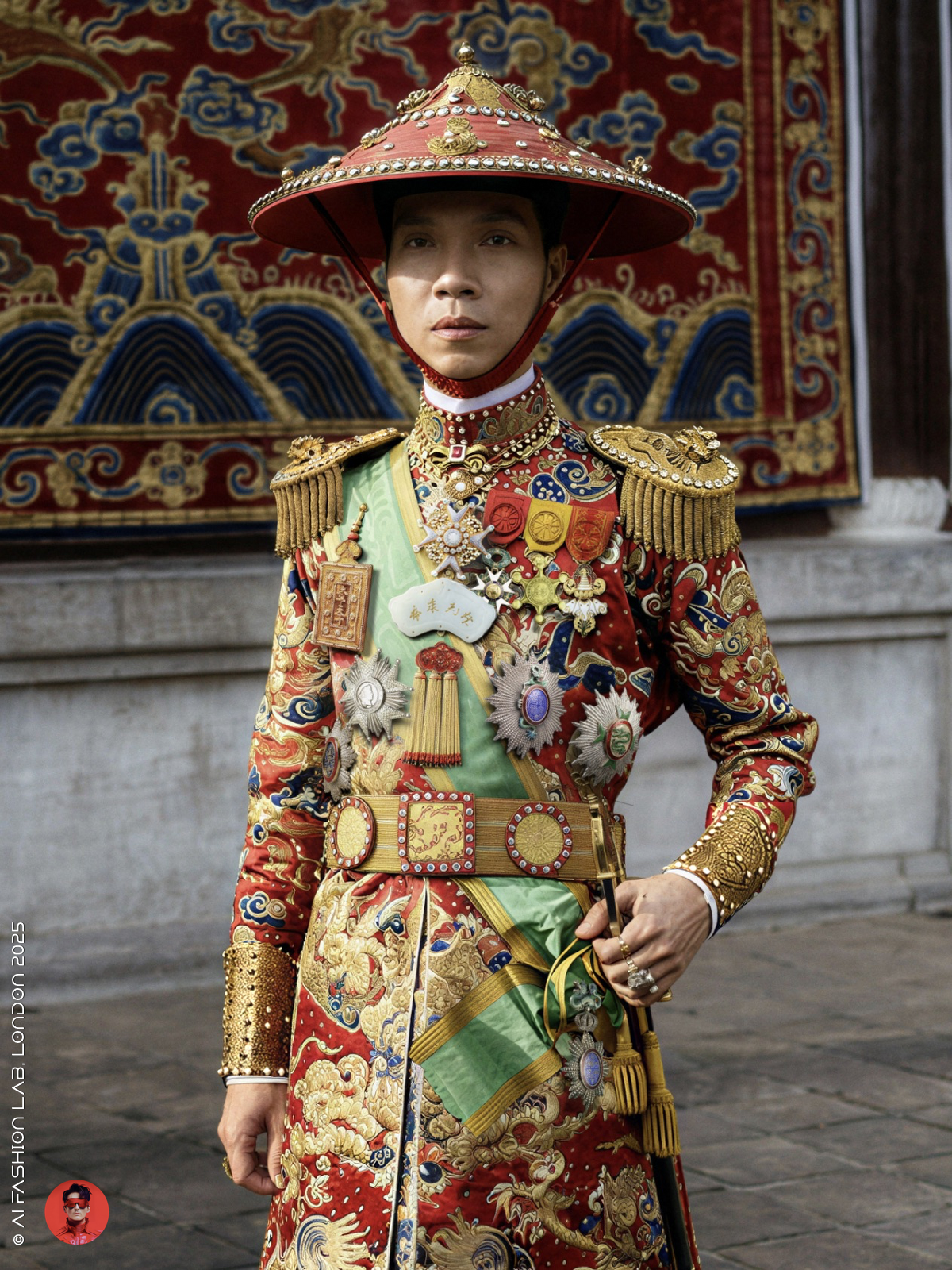
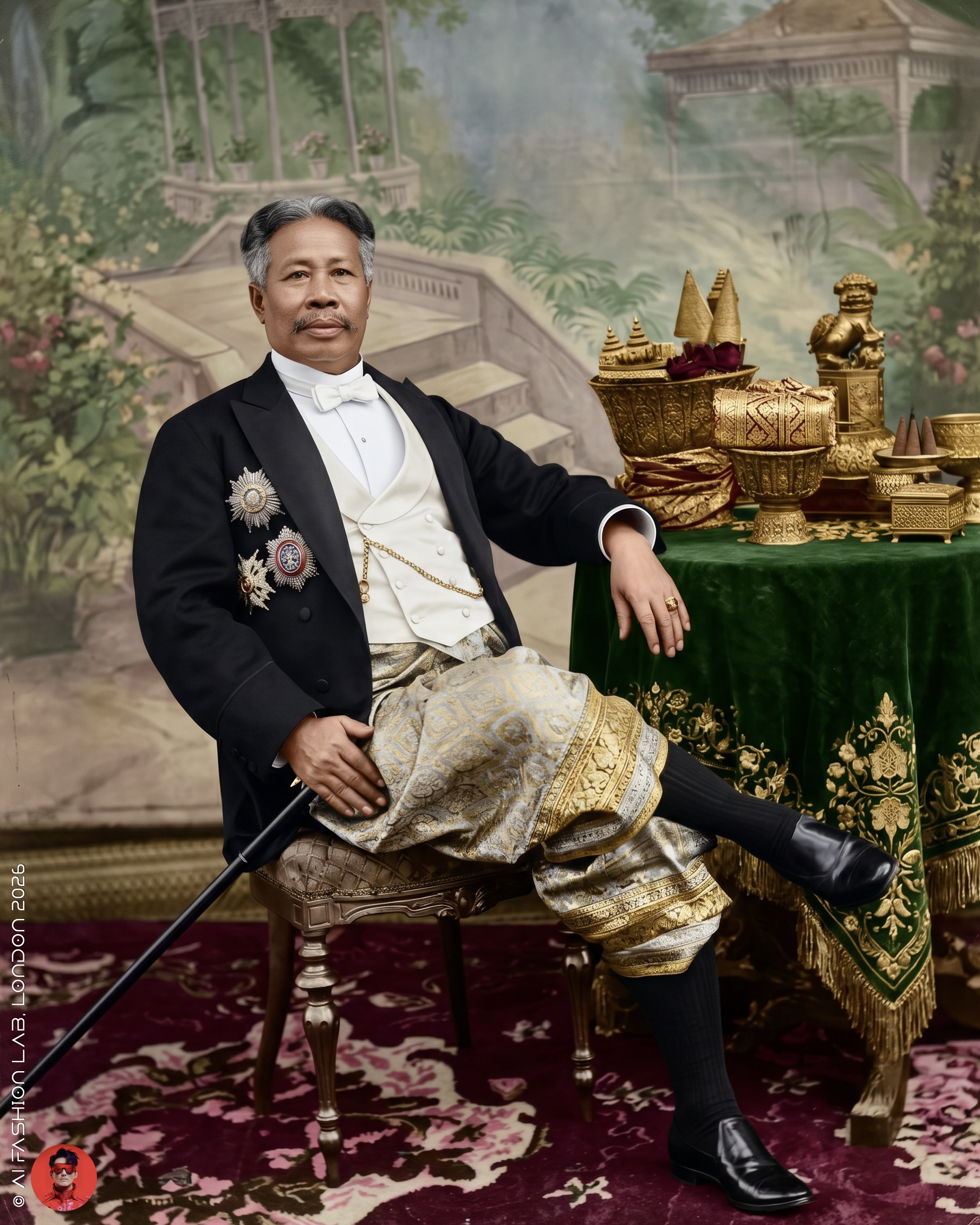
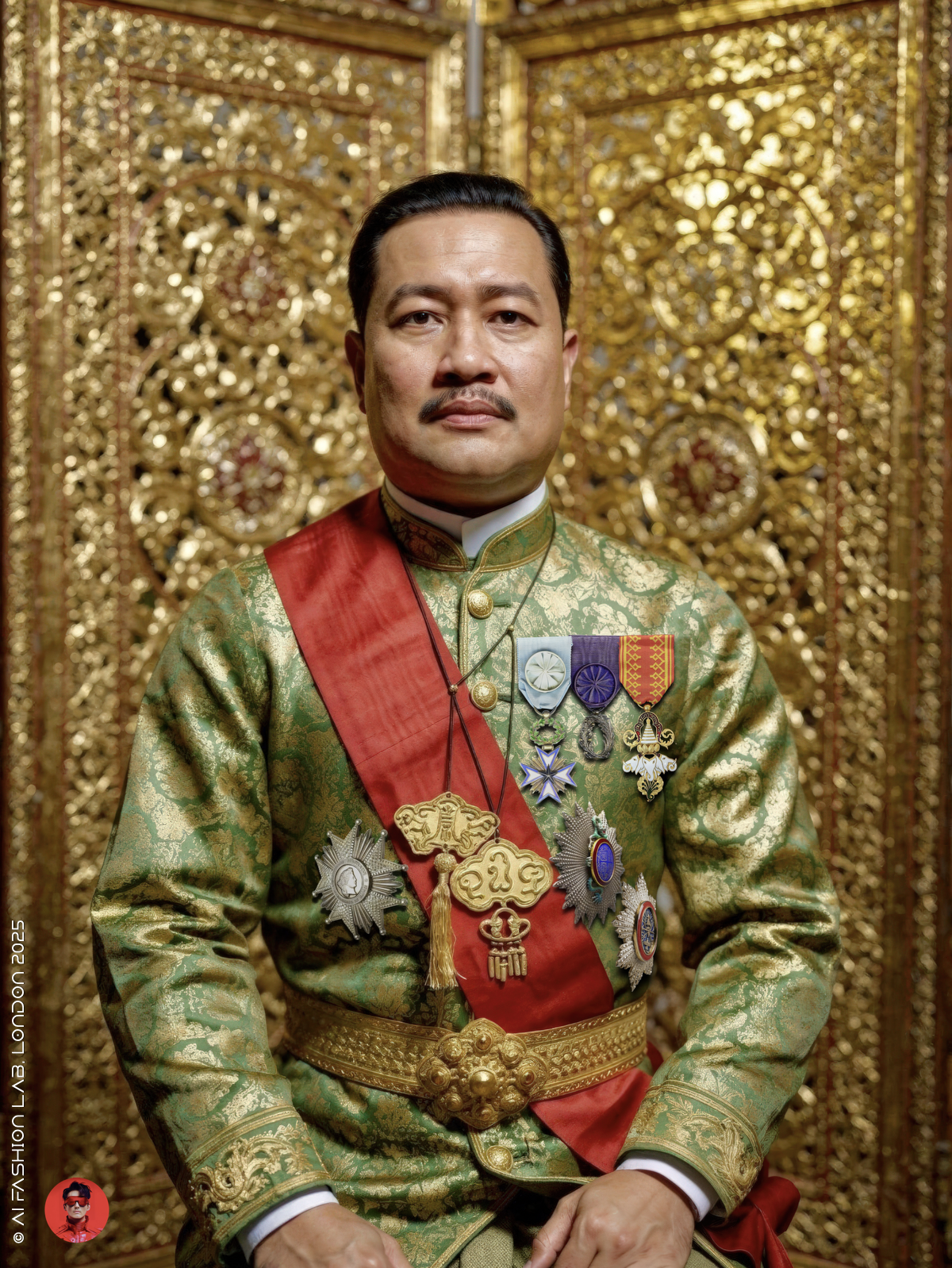
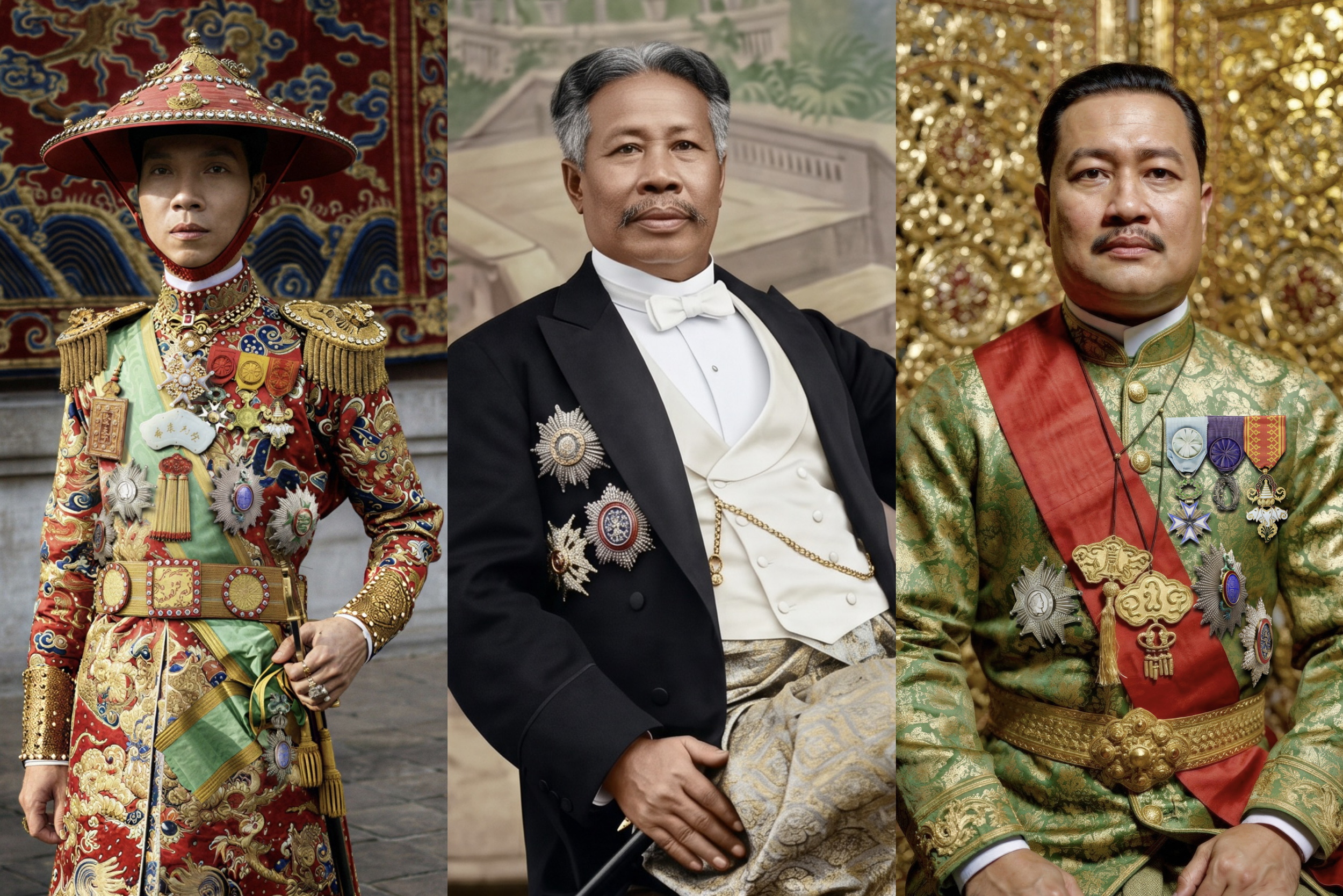
ภาพที่ได้รับการบูรณะและสร้างสรรค์ขึ้นด้วยเทคโนโลยี AI ในคอลเลกชันนี้ เป็นพระบรมฉายาลักษณ์ของกษัตริย์ ๓ พระองค์ แห่งจักรวรรดิ อินโดจีนของฝรั่งเศส (French Indochina) · พ.ศ. ๒๔๕๙–๒๔๖๘ : สมเด็จพระจักรพรรดิขาย ดิ่ญ (Khải Định : 啟定) แห่งอันนัม, พระเจ้าสีสุวัตถิ์ (ព្រះបាទស៊ីសុវតិ្ថ : Sisowath) แห่งพระราชอาณาจักรกัมพูชา,และ พระเจ้าสีสว่างวงศ์ (ສີສວ່າງວົງ — Sisavang Vong) แห่งราชอาณาจักรล้านช้างหลวงพระบาง และพระมหากษัตริย์พระองค์แรกแห่งพระราชอาณาจักรลาว
___________
ปีที่ราชบัลลังก์ทั้งสามตกอยู่ใต้อาณัติเดียวกัน (พ.ศ. ๒๔๕๙ / ค.ศ. 1916)
ในฤดูใบไม้ผลิของปี พ.ศ. ๒๔๕๙ (ค.ศ. 1916) ฝ่ายบริหารอาณานิคมในฮานอยกำลังเผชิญวิกฤต พระเจ้าหวีตัน (維新 — Duy Tân) พระชนมายุเพียงสิบหกพรรษา ถูกจับได้ว่าวางแผนก่อการลุกฮือต่อต้านฝรั่งเศส พระองค์ถูกจับกุม ปลดออกจากราชบัลลังก์ และเนรเทศไปยังเกาะเรอูนียงในมหาสมุทรอินเดียพร้อมกับพระบิดา ฝรั่งเศสจึงเลือก เหงียนฟุกบุ่วเดา (阮福寶嶹 — Nguyễn Phúc Bửu Đảo) โอรสของพระมหากษัตริย์เวียดนามผู้ยอมศิโรราบแก่ฝรั่งเศสมากที่สุด เมื่อวันที่ ๑๘ พฤษภาคม พ.ศ. ๒๔๕๙ (18 May 1916) พระองค์ขึ้นครองราชบัลลังก์อันนัมที่เว้ ทรงใช้รัชสมัยว่า จักรพรรดิไคดิ่ญ (啓定 — Khải Định) อันมีความหมายว่า "ลางดีแห่งสันติภาพและเสถียรภาพ"
ในช่วงเวลาเดียวกันนั้น ห่างออกไปสี่ร้อยไมล์ทางตะวันตกเฉียงใต้ในพนมเปญ พระเจ้าสีสุวัตถิ์ (ព្រះសិរីសុវត្ថិ — Sisowath) ซึ่งครองราชย์ ณ ราชอาณากัมพูชามาตั้งแต่ พ.ศ. ๒๔๔๗ (ค.ศ. 1904) กำลังรับมือกับปีที่วุ่นวายที่สุดในรัชสมัย ชาวนาชาวเขมรระหว่าง ๓๐,๐๐๐ ถึง ๑๐๐,๐๐๐ คนเดินขบวนไปยังเมืองหลวงเพื่อประท้วงภาษีและแรงงานบังคับของฝรั่งเศส และไกลออกไปทางเหนือในหลวงพระบาง พระเจ้าสีสว่างวงศ์ (ສີສວ່າງວົງ — Sisavang Vong) ผู้ครองราชย์มาตั้งแต่ พ.ศ. ๒๔๔๗ (ค.ศ. 1904) ต้องจับตาดูกบฏต่อต้านฝรั่งเศสของชาวไทลื้อและนักปฏิวัติชาวจีนที่คุกคามสันติภาพริมแม่น้ำโขง สามกษัตริย์ สามพระราชวัง ธงฝรั่งเศสผืนเดียวโบกสะบัดเหนือทั้งหมด
___________
สงครามโลกครั้งที่หนึ่งแผ่ซึมเข้าสู่เอเชีย (พ.ศ. ๒๔๕๙–๒๔๖๑ / ค.ศ. 1916–1918)
ฝรั่งเศสกำลังต่อสู้เพื่อความอยู่รอดบนแนวรบด้านตะวันตก และอินโดจีนถูกคาดหวังให้ชำระหนี้ของสงคราม ชายชาวเวียดนามเกือบหนึ่งแสนคนถูกเกณฑ์ทหาร ส่งไปขุดสนามเพลาะในฟลานเดอร์ส ขนส่งกระสุนที่แวร์เดิง และทำงานในโรงงานอาวุธของฝรั่งเศส ชาวกัมพูชาและชาวลาวก็ถูกเกณฑ์เช่นกัน แม้จำนวนน้อยกว่า รัฐบาลอาณานิคมดึงเอาทอง ๓๘๑ ล้านฟรังก์และวัตถุดิบ ๓๔๐,๐๐๐ ตันจากอินโดจีนตลอดช่วงสงคราม คิดเป็นประมาณ ๖๐% ของเงินสนับสนุนทั้งหมดที่ฝรั่งเศสได้รับจากจักรวรรดิอาณานิคม พระเจ้าสีสุวัตถิ์ (Sisowath) ทรงปฏิบัติหน้าที่อย่างเชื่อฟัง ส่งทหารเขมรไปยังสำนักงานสงครามของฝรั่งเศสโดยไม่คัดค้านการใช้แรงงานบังคับ พระเจ้าสีสว่างวงศ์ (Sisavang Vong) ในหลวงพระบางก็ทรงนิ่งเงียบเช่นกัน ขณะที่ชายชาวลาวถูกเกณฑ์และกองทัพฝรั่งเศสปราบกบฏชนกลุ่มน้อย จักรพรรดิไคดิ่ญ (Khải Định) ผู้เพิ่งขึ้นครองราชย์ไม่มีทางเลือก โครงสร้างของการร่วมมือกับอาณานิคมได้ถูกวางไว้ก่อนพระองค์จะขึ้นครองราชย์เสียอีก
___________
การชำระบัญชีหลังสงคราม (พ.ศ. ๒๔๖๒–๒๔๖๔ / ค.ศ. 1919–1921)
สงครามได้เปลี่ยนแปลงทุกสิ่ง ยกเว้นราชบัลลังก์ ทหารเวียดนามเดินทางกลับจากฝรั่งเศสหลังจากได้เห็นสังคมที่ซึ่งเชื้อชาติไม่ได้เป็นตัวกำหนดชะตากรรม ในปารีส ชายหนุ่มผู้ใช้ชื่อว่า เหงียนอ๋ายก๊วก (阮愛國 — Nguyễn Ái Quốc) ผู้ซึ่งต่อมาโลกรู้จักในนาม โฮจิมินห์ (Hồ Chí Minh) ได้ยื่นบันทึกข้อเรียกร้องต่อการประชุมสันติภาพแวร์ซาย (ค.ศ. 1919) เพื่อเรียกร้องสิทธิขั้นพื้นฐานให้แก่ประชาชนอินโดจีน บันทึกนั้นถูกเพิกเฉย พระองค์จึงเริ่มเขียนให้กับสื่อคอมมิวนิสต์ฝรั่งเศสแทน ผู้ว่าการอัลเบิร์ต ซาร์โรต์ (Albert Sarraut) ดำเนินนโยบาย "ความร่วมมือฝรั่งเศส-อันนัม" ซึ่งในทางปฏิบัติหมายความว่าชาวเวียดนามที่ได้รับการศึกษาอาจได้รับตำแหน่งบริหารเล็กน้อย ขณะที่อำนาจการตัดสินใจทั้งหมดยังคงอยู่ในมือฝรั่งเศส จักรพรรดิไคดิ่ญ (Khải Định) ทรงยอมรับนโยบายนี้อย่างเปิดเผย พระเจ้าสีสุวัตถิ์ (Sisowath) ในพนมเปญก็ทรงทำเช่นเดียวกัน และในหลวงพระบาง พระราชวังของพระเจ้าสีสว่างวงศ์ (Sisavang Vong) ที่สร้างขึ้นด้วยเงินและรสนิยมของฝรั่งเศสเป็นสัญลักษณ์แห่งการพึ่งพาอย่างตรงไปตรงมา
___________
นิทรรศการอาณานิคมที่มาร์เซย์ (พ.ศ. ๒๔๖๕ / ค.ศ. 1922)
ในเดือนพฤษภาคม พ.ศ. ๒๔๖๕ (May 1922) จักรพรรดิไคดิ่ญ (啓定 — Khải Định) ทรงสร้างประวัติศาสตร์ในฐานะพระมหากษัตริย์เวียดนามที่ครองราชย์อยู่พระองค์แรกที่เสด็จเยือนยุโรป โดยทรงเข้าร่วมนิทรรศการอาณานิคมที่มาร์เซย์ (Colonial Exhibition, Marseille) ในฐานะสัญลักษณ์มีชีวิตแห่งความสำเร็จของอินโดจีนฝรั่งเศส พระองค์ทรงฉลองพระองค์ด้วยชุดราชสำนักเต็มยศ เสื้อครุยปักมังกร หมวกกรวยของจักรพรรดิ และเครื่องราชอิสริยาภรณ์ฝรั่งเศสและเวียดนามหลายชั้น และถูกถ่ายภาพอย่างละเอียดโดยสตูดิโอหวงกี (Huong-Ky) ในฮานอย แต่ประชาชนของพระองค์เองมองต่างออกไป นักปัญญาชนชาตินิยม ฝานเจาตริญ (潘周楨 — Phan Châu Trinh) ส่งจดหมายเปิดผนึกอันทรงพลังที่เรียกว่า "ข้อกล่าวหาเจ็ดประการ" กล่าวหาพระองค์ว่าใช้ชีวิตอย่างหรูหราขณะที่ชาวเวียดนามทนทุกข์ และ เหงียนอ๋ายก๊วก (Nguyễn Ái Quốc) เขียนบทละครเสียดสีชื่อ "มังกรไม้ไผ่" โดยให้ไคดิ่ญปรากฏในฐานะตัวละครที่มีแต่พิธีกรรมโดยไม่มีเนื้อหาสาระ พระเจ้าสีสุวัตถิ์ (Sisowath) เคยเสด็จไปมาร์เซย์ก่อนหน้านี้สิบหกปี ในปี พ.ศ. ๒๔๔๙ (ค.ศ. 1906) และศิลปะการร่ายรำของราชสำนักกัมพูชาได้ทำให้ผู้ชมชาวปารีสตื่นตะลึง รวมถึงประติมากรโรแดง (Rodin) ที่วาดภาพนางรำเหล่านั้นอย่างหลงใหล การเสด็จเยือนของพระมหากษัตริย์ทั้งสองพระองค์ทำหน้าที่อย่างเดียวกัน คือทำให้จักรวรรดิอินโดจีนดูงดงามและเต็มไปด้วยความเมตตาและกรุณา
___________
ภาษีที่สร้างสุสาน (พ.ศ. ๒๔๖๖ / ค.ศ. 1923)
ในปี พ.ศ. ๒๔๖๖ (ค.ศ. 1923) จักรพรรดิไคดิ่ญ (Khải Định) ยินยอมให้ฝรั่งเศสขึ้นภาษีชาวนาเวียดนาม ๓๐% จุดประสงค์หลักคือเพื่อระดมทุนสร้างพระสุสานของพระองค์เอง คือ ลังไคดิ่ญ (Lăng Khải Định) บนเนินเขาชานเมืองเว้ โครงสร้างที่ผุดขึ้นที่นั่นไม่เหมือนสุสานของราชวงศ์เหงียนใดๆ ที่ผ่านมา เป็นการผสมผสานระหว่างสถาปัตยกรรมจักรพรรดิเวียดนามกับลวดลายโกธิคของยุโรป ประดับด้วยโมเสกที่ทำจากเครื่องเคลือบและกระจกสีนำเข้าจากฝรั่งเศส ญี่ปุ่น และจีน งดงามอย่างยิ่ง แปลกประหลาด และเป็นที่ขุ่นเคืองอย่างกว้างขวาง คนยากจนเป็นผู้จ่าย จักรพรรดิเป็นผู้ออกแบบ ข้ามภูเขาไปในกัมพูชา บริษัทยางพาราของฝรั่งเศสกำลังขยายสวนในกำปงจาม ดึงผลกำไรมหาศาลจากแรงงานชาวเขมรที่ถูกบังคับให้ทำงานตั้งแต่ตีสามจนพระอาทิตย์ตก พระเจ้าสีสุวัตถิ์ (Sisowath) ไม่มีอำนาจแทรกแซง เพราะข้าหลวงใหญ่ฝรั่งเศส (Résident Supérieur) เป็นผู้ควบคุมนโยบายแรงงานทั้งหมด บทบาทของพระองค์คือการปรากฏพระองค์ ทรงเป็นประธานในพิธี และทรงสวมเครื่องราชอิสริยาภรณ์
___________
สิ้นสุดยุคสมัย (พ.ศ. ๒๔๖๗–๒๔๖๘ / ค.ศ. 1924–1925)
เมื่อถึงปี พ.ศ. ๒๔๖๗ (ค.ศ. 1924) จักรพรรดิไคดิ่ญ (Khải Định) ทรงประชวรอย่างเห็นได้ชัด ทรงเป็นวัณโรคและทรุดโทรมจากการครองราชย์ที่ดำเนินไปตามเงื่อนไขของฝรั่งเศสมาโดยตลอด มกุฎราชกุมารวิญถุย (永瑞 — Vĩnh Thụy) พระชนมายุสิบสองพรรษา ถูกส่งไปฝรั่งเศสเพื่อรับการศึกษาภายใต้การดูแลของผู้ปกครองชาวฝรั่งเศส อนาคต เบ๋าได๋ (Bảo Đại) กำลังถูกหล่อหลอมในปารีสขณะที่พระบิดากำลังจะสิ้นพระชนม์ในเว้ เมื่อวันที่ ๖ พฤศจิกายน พ.ศ. ๒๔๖๘ (6 November 1925) จักรพรรดิไคดิ่ญ (Khải Định) สวรรคตในพระนครหลวงที่เว้ พระชนมายุสี่สิบพรรษา ในปีเดียวกันนั้น เหงียนอ๋ายก๊วก (Nguyễn Ái Quốc) ก่อตั้งสันนิบาตเยาวชนปฏิวัติเวียดนามในกวางตุ้ง กษัตริย์ทั้งสามทรงรักษาสันติภาพไว้ได้ แต่สันติภาพนั้นกำลังจะสิ้นสุดลง
พระเจ้าสีสุวัตถิ์ (ព្រះសិរីសុវត្ថិ — Sisowath) สวรรคตเมื่อ พ.ศ. ๒๔๗๐ (ค.ศ. 1927) พระชนมายุ ๘๖ พรรษา ทรงเป็นหนึ่งในพระมหากษัตริย์ที่มีพระชนมายุสูงสุดในโลกขณะสวรรคต พระเจ้าสีสว่างวงศ์ (ສີສວ່າງວົງ — Sisavang Vong) ทรงมีชีวิตยืนยาวกว่าทั้งสองพระองค์อีกหลายทศวรรษ สวรรคตเมื่อ พ.ศ. ๒๕๐๒ (ค.ศ. 1959) หลังทรงเป็นประธานในการประกาศเอกราช สงครามเย็น และการล่มสลายของทุกสิ่งที่ฝรั่งเศสสร้างขึ้น
___________
Three Thrones under One Colonial Power
French Indochina · B.E. 2459–2468 / 1916–1925
The AI-restored and creatively reconstructed royal photographic portraits in this collection depict three monarchs of French Indochina during B.E. 2459–2468 / 1916–1925: Emperor Khải Định (啓定 — Khải Định) of Annam, King Sisowath (ព្រះបាទស៊ីសុវតិ្ថ — Sisowath) of the Kingdom of Cambodia, and King Sisavang Vong (ສີສວ່າງວົງ — Sisavang Vong) of the Kingdom of Lan Xang Luang Prabang, later the first monarch of the Kingdom of Laos.
The Year when the Three Thrones Fell under One Authority B.E. 2459 / 1916
In the spring of B.E. 2459 / 1916, the colonial administration in Hanoi was facing a crisis. King Duy Tân (維新 — Duy Tân), only sixteen years old, had been discovered plotting an anti-French uprising. He was arrested, deposed from the throne, and exiled to Réunion Island in the Indian Ocean together with his father.
The French therefore selected Nguyễn Phúc Bửu Đảo (阮福寶嶹 — Nguyễn Phúc Bửu Đảo), the son of one of the Vietnamese monarchs most compliant towards French rule. On 18 May B.E. 2459 / 18 May 1916, he ascended the throne of Annam at Huế and took the reign title Emperor Khải Định (啓定 — Khải Định), meaning “an auspicious omen of peace and stability”.
At the same time, four hundred miles to the south-west in Phnom Penh, King Sisowath (ព្រះសិរីសុវត្ថិ — Sisowath), who had ruled the Kingdom of Cambodia since B.E. 2447 / 1904, was confronting the most turbulent year of his reign. Between 30,000 and 100,000 Khmer peasants marched to the capital to protest against French taxes and forced labour.
Farther north, in Luang Prabang, King Sisavang Vong (ສີສວ່າງວົງ — Sisavang Vong), who had also reigned since B.E. 2447 / 1904, had to keep watch over anti-French rebellions by Tai Lue groups and Chinese revolutionaries threatening the fragile peace along the Mekong.
Three kings. Three palaces. One French flag flying above them all.
The First World War Seeps into Asia B.E. 2459–2461 / 1916–1918
France was fighting for survival on the Western Front, and Indochina was expected to pay the debts of war. Almost one hundred thousand Vietnamese men were conscripted, sent to dig trenches in Flanders, transport munitions at Verdun, and work in French armament factories. Cambodians and Laotians were also recruited, although in smaller numbers.
The colonial government extracted 381 million francs in gold and 340,000 tonnes of raw materials from Indochina during the war, representing roughly sixty per cent of all financial support France received from its colonial empire.
King Sisowath (ព្រះសិរីសុវត្ថិ — Sisowath) fulfilled his role obediently, sending Khmer soldiers to the French War Office and offering no objection to the use of forced labour. King Sisavang Vong (ສີສວ່າງວົງ — Sisavang Vong) in Luang Prabang remained equally silent while Lao men were conscripted and French forces suppressed minority uprisings.
Emperor Khải Định (啓定 — Khải Định), newly enthroned, had little choice. The structure of colonial collaboration had already been put in place before his reign began.
The Post-War Reckoning B.E. 2462–2464 / 1919–1921
The war changed everything except the thrones.
Vietnamese soldiers returned from France having seen a society in which race did not necessarily determine one’s fate. In Paris, a young man using the name Nguyễn Ái Quốc (阮愛國 — Nguyễn Ái Quốc), later known to the world as Hồ Chí Minh (Hồ Chí Minh), submitted a petition to the Versailles Peace Conference in 1919, demanding basic rights for the peoples of Indochina. The petition was ignored. He therefore began writing for the French communist press instead.
Governor-General Albert Sarraut (Albert Sarraut) pursued a policy of “Franco-Annamite collaboration”, which in practice meant that educated Vietnamese men might receive minor administrative posts while all real decision-making power remained in French hands.
Emperor Khải Định (啓定 — Khải Định) openly accepted this policy. King Sisowath (ព្រះសិរីសុវត្ថិ — Sisowath) in Phnom Penh did the same. In Luang Prabang, the palace of King Sisavang Vong (ສີສວ່າງວົງ — Sisavang Vong), built with French money and shaped by French taste, became a visible symbol of dependency.
The Colonial Exhibition at Marseille B.E. 2465 / 1922
In May B.E. 2465 / May 1922, Emperor Khải Định (啓定 — Khải Định) made history as the first reigning Vietnamese monarch to visit Europe. He attended the Colonial Exhibition at Marseille as a living emblem of the success of French Indochina.
He appeared in full court dress: a dragon-embroidered robe, the imperial conical headdress, and multiple layers of French and Vietnamese decorations. He was photographed in great detail by the Huong-Ky Studio (Huong-Ky) in Hanoi.
His own people, however, saw the matter differently. The nationalist intellectual Phan Châu Trinh (潘周楨 — Phan Châu Trinh) sent a powerful open letter known as “The Seven Accusations”, accusing the emperor of living in luxury while the Vietnamese people suffered. Nguyễn Ái Quốc (阮愛國 — Nguyễn Ái Quốc) wrote a satirical play entitled “The Bamboo Dragon”, in which Khải Định appeared as a figure of ceremony without substance.
King Sisowath (ព្រះសិរីសុវត្ថិ — Sisowath) had visited Marseille sixteen years earlier, in B.E. 2449 / 1906. The dancers of the Cambodian royal court astonished Parisian audiences, including the sculptor Auguste Rodin (Rodin), who sketched them with fascination.
The visits of both monarchs served the same purpose: to make the empire of Indochina appear beautiful, benevolent, and gracious.
The Tax that Built a Tomb B.E. 2466 / 1923
In B.E. 2466 / 1923, Emperor Khải Định (啓定 — Khải Định) agreed to allow the French to raise taxes on Vietnamese peasants by thirty per cent. The principal purpose was to raise funds for the construction of his own mausoleum, Lăng Khải Định (Lăng Khải Định), on a hillside outside Huế.
The structure that rose there was unlike any previous tomb of the Nguyễn dynasty. It fused Vietnamese imperial architecture with European Gothic motifs, and was decorated with mosaics made from imported porcelain and coloured glass from France, Japan, and China. It was magnificent, strange, and widely resented.
The poor paid for it. The emperor designed it.
Across the mountains in Cambodia, French rubber companies were expanding plantations in Kampong Cham, extracting enormous profits from Khmer labourers forced to work from three in the morning until sunset. King Sisowath (ព្រះសិរីសុវត្ថិ — Sisowath) had no power to intervene, for labour policy was controlled by the French Résident Supérieur. His role was to appear, preside over ceremonies, and wear decorations.
The End of an Era B.E. 2467–2468 / 1924–1925
By B.E. 2467 / 1924, Emperor Khải Định (啓定 — Khải Định) was visibly ill. He was suffering from tuberculosis and was physically weakened by a reign conducted entirely on French terms.
Crown Prince Vĩnh Thụy (永瑞 — Vĩnh Thụy), aged twelve, was sent to France to be educated under the supervision of French guardians. The future Bảo Đại (Bảo Đại) was being shaped in Paris while his father was approaching death in Huế.
On 6 November B.E. 2468 / 6 November 1925, Emperor Khải Định (啓定 — Khải Định) died in the imperial capital of Huế at the age of forty. In that same year, Nguyễn Ái Quốc (阮愛國 — Nguyễn Ái Quốc) founded the Vietnamese Revolutionary Youth League in Canton.
The three monarchs had preserved peace, but that peace was already coming to an end.
King Sisowath (ព្រះសិរីសុវត្ថិ — Sisowath) died in B.E. 2470 / 1927 at the age of eighty-six, making him one of the oldest reigning monarchs in the world at the time of his death.
King Sisavang Vong (ສີສວ່າງວົງ — Sisavang Vong) outlived the other two monarchs by several decades. He died in B.E. 2502 / 1959, after presiding over independence, the Cold War, and the collapse of everything France had built.
___________
เรียนเชิญกด Subscribe ได้ที่ลิงก์นี้ครับ เพื่อร่วมติดตามงานสร้างสรรค์ต้นฉบับ งานวิจัยประวัติศาสตร์แฟชั่น และผลงานอนุรักษ์มรดกวัฒนธรรมด้วยเทคโนโลยี AI ของ AI Fashion Lab, London ซึ่งมุ่งตีความอดีตผ่านมิติใหม่ของการบูรณะภาพ การสร้างสรรค์ภาพ และการเล่าเรื่องด้วยศิลปะเชิงดิจิทัล https://www.facebook.com/aifashionlab/subscribe/
#aifashionlab #AI #aiartist #aiart #aifashion #aifashiondesign #aifashionstyling #aifashiondesigner #fashion #fashionhistory #historyoffashion #fashionstyling #fashionphotography #digitalfashion #digitalfashiondesign #digitalcostumedesign #digitaldesign #digitalaiart #ThaiFashionHistory #ThaiFashionAI #thailand #UNESCO