History of Fashion
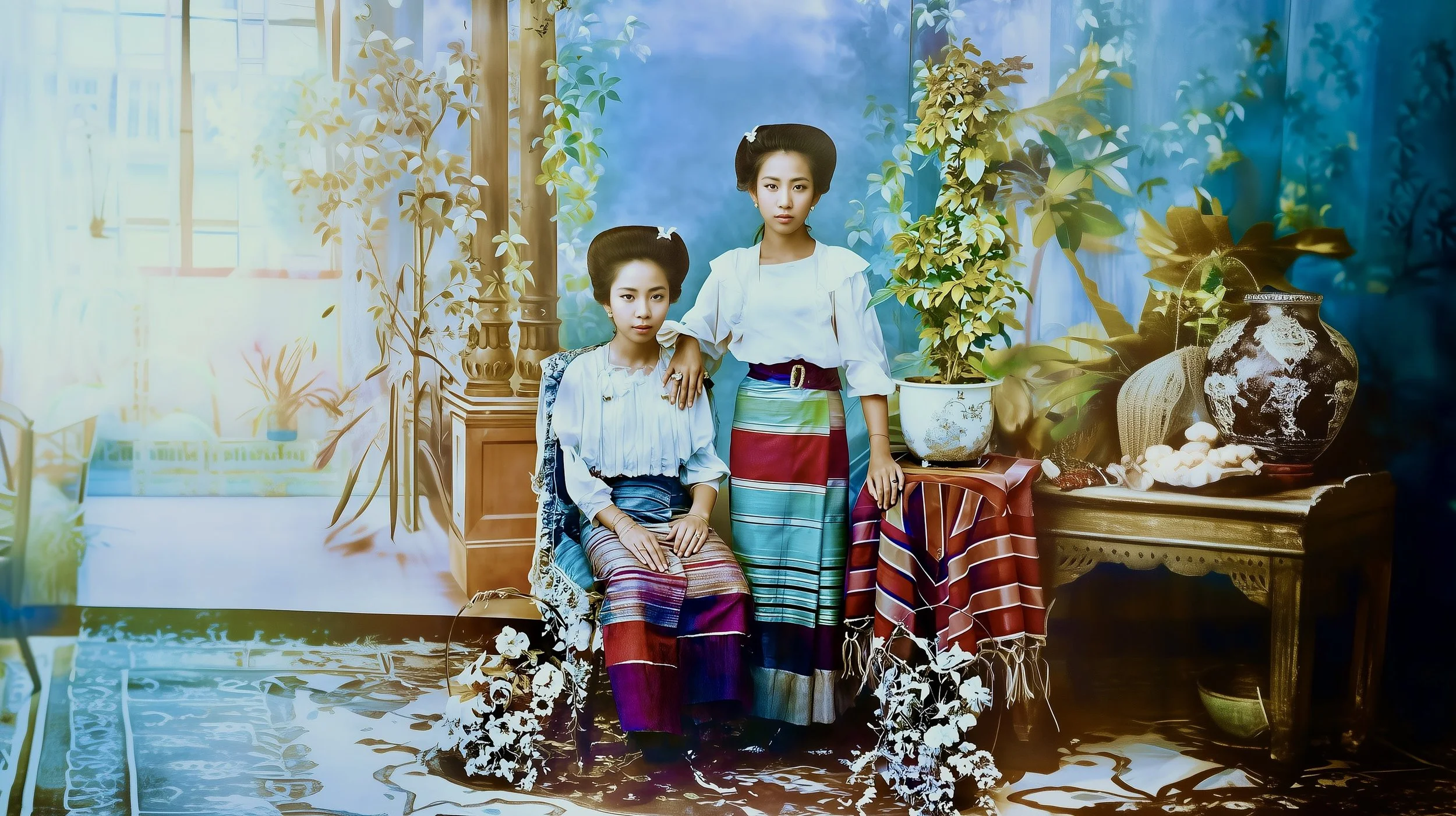
Fashion of Lanna Women (1900–1910)
Fashion of Lanna Women (1900–1910)
The fashion of Lanna women during the early 1900s to 1910 reflects the Edwardian influences blended with traditional Thai aesthetics. This era marked the late reign of King Chulalongkorn and the early reign of King Vajiravudh.
Lanna women embraced the upswept hairstyles, a popular Edwardian trend, often adorned with pins, flowers, or decorative accessories. Their blouses featured Victorian-inspired high collars, lace, and puffed sleeves, paired elegantly with the traditional phasin, a tubular skirt woven with vibrant patterns unique to Lanna culture.
About the Colourisation:
I colourised these photographs with bright, vivid tones to evoke a sense of playfulness and creativity. While the colours of the pha-sin, blouses, and accessories may not be historically accurate, they aim to bring a fresh perspective to the elegance of the period.
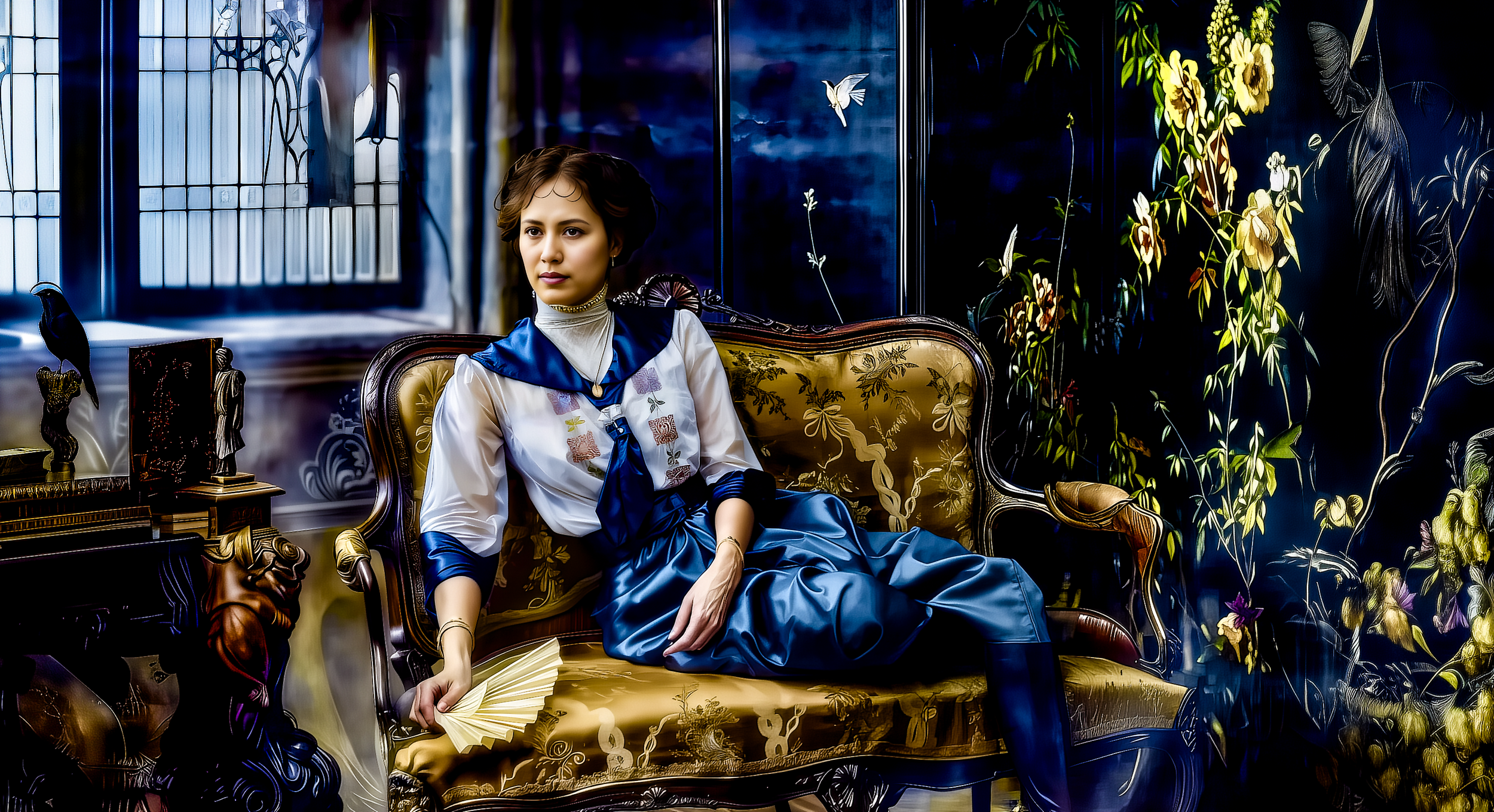
Women's Fashion During the Reign of King Rama VI: A Reflection of Society and Culture
This collection showcases the restoration of historical photographs using AI technology, bringing old images of Thai women during the reign of King Rama VI (1910–1925) back to life. By colourising and enhancing these photographs into realistic, 3D-like visuals, these restored images not only highlight the elegance of past fashion but also provide deep insights into the cultural and social contexts of the era.
The reign of King Rama VI marked a golden age of cultural transformation in Siam. Women's fashion during this period went beyond mere clothing—it reflected the social, political, and economic dynamics, harmonising globalisation with the preservation of Thai identity.
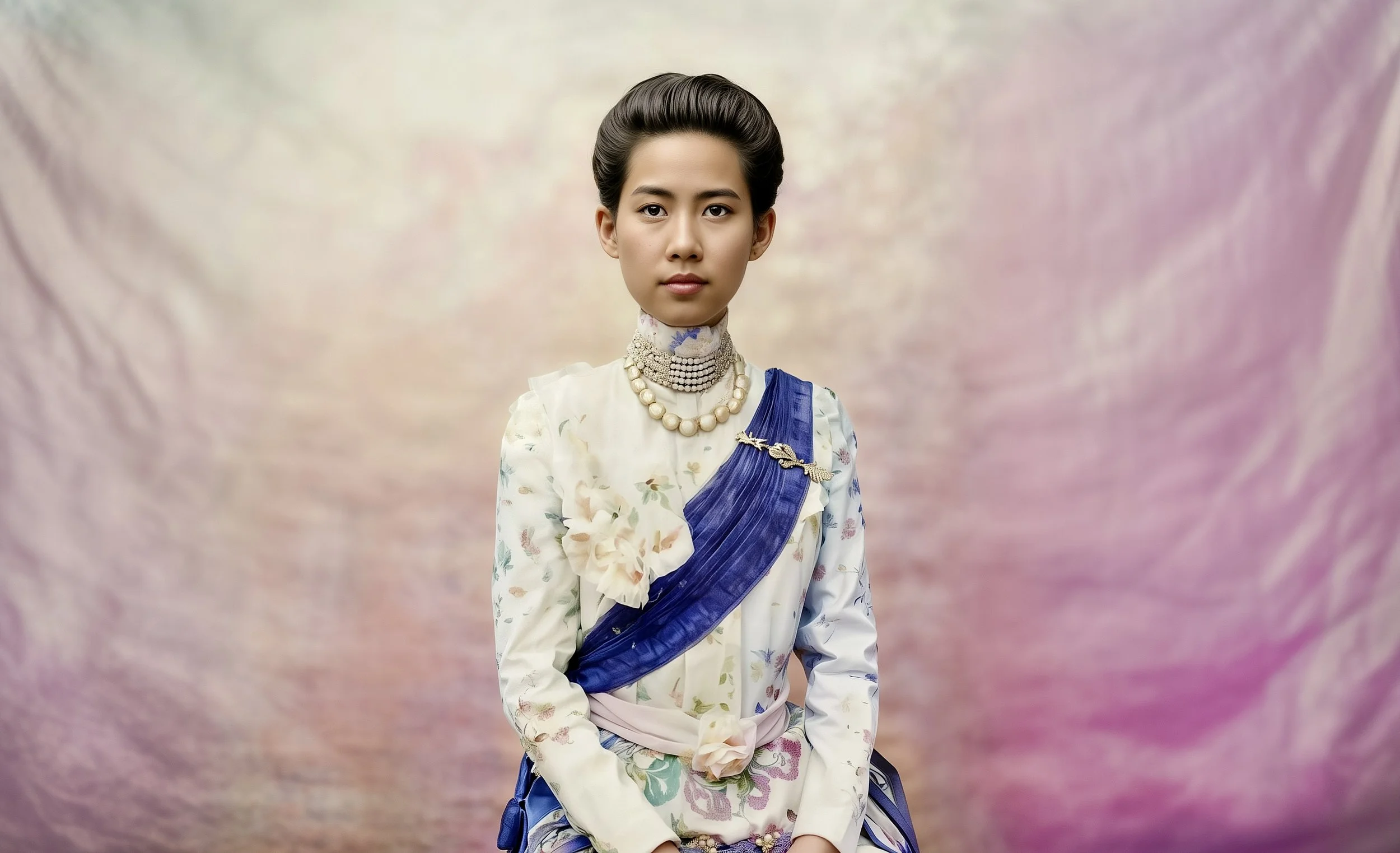
The Princess of Rattanakosin
King Chulalongkorn the Great had many sons and daughters, as he wished to have them assist in the administration of the kingdom. Among them was Her Royal Highness Princess Sudaratana Dibyabha, who was granted the prestigious title of Princess of Rattanakosin, akin to a duchy in Western terms. Affectionately known by the palace staff as "Toon Kramom Ying," she served as a royal secretary during King Rama V's reign, accompanying her father on royal trips and hosting foreign dignitaries. She also played a role in addressing the crises of the R.S. 112 (1893). It is said that her beauty was so striking that even her father remarked, "She is as beautiful as an angel."
The Princess of Rattanakosin, originally known as Princess Sudaratana Dibyabha Sukhumkattiya Kanlayawadi, was the 19th daughter of King Rama V. She was born to Queen Sukhumala Marasri on 14 September 1877.
King Rama V referred to her as “Luk Ying” (“Daughter”), while the palace staff addressed her as “Toon Kramom Ying” or “Toon Kramom Ying Yai” (“Eldest Royal Daughter”). She was the first high-ranking princess of the reign and the only daughter of King Rama V to be elevated to the prestigious rank of Krom Luang, a title comparable to a duchy in Western tradition. While in the West, a woman with such a title would typically be styled as the Duchess of [Place], in Thai royal traditions, the title was not altered based on gender. Her title, Princess of Rattanakosin, not only reflected her noble status but also symbolised Bangkok itself, as the name of the capital city was incorporated into her title, honouring her importance within the royal family.
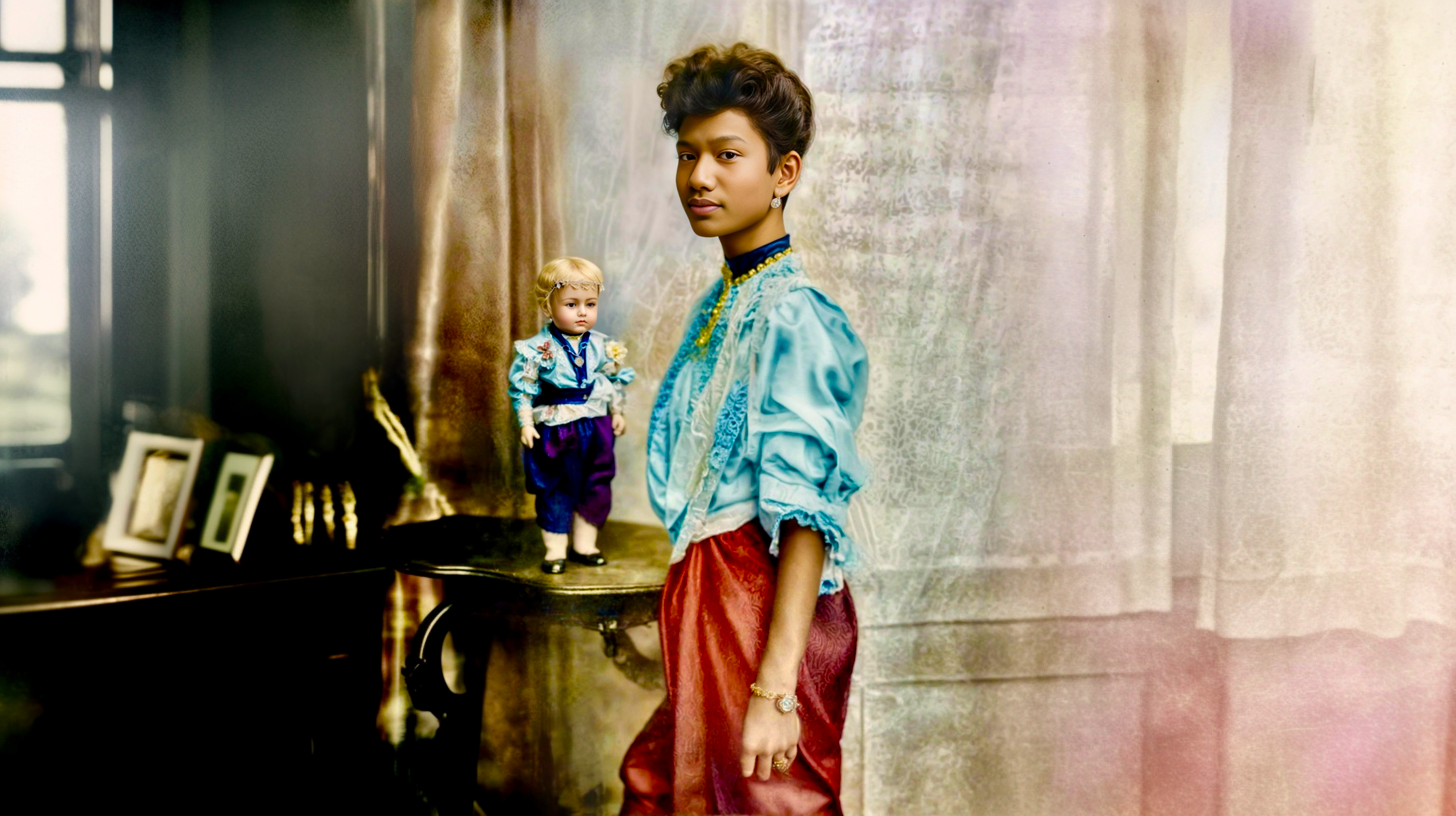
Exploring Gender and Identity in Early 20th-Century Siam
Exploring Gender and Identity in Early 20th-Century Siam
These images offer a unique glimpse into early 20th-century Siam, during the transformative reign of King Rama VI (1910–1925). They depict young men dressed in women’s attire, blending traditional Siamese clothing such as the pha-nung and sabai with a clear exploration of gender presentation. These outfits may reflect artistic expression, theatrical performance, fancy dress, or even early expressions of transgender identity, showcasing the fluidity of gender roles during a time of cultural evolution.
The reign of King Rama VI was marked by the blending of traditional Siamese values with the growing influence of Western modernity. Globally, this era saw increasing scrutiny of masculinity and rigid gender expectations shaped by Edwardian norms. In Siam, however, the arts provided a space where traditional forms of gender fluidity persisted. Theatrical performances, especially khon and lakhon, maintained a long-standing tradition of cross-dressing, offering socially acceptable venues to explore identity beyond societal constraints.
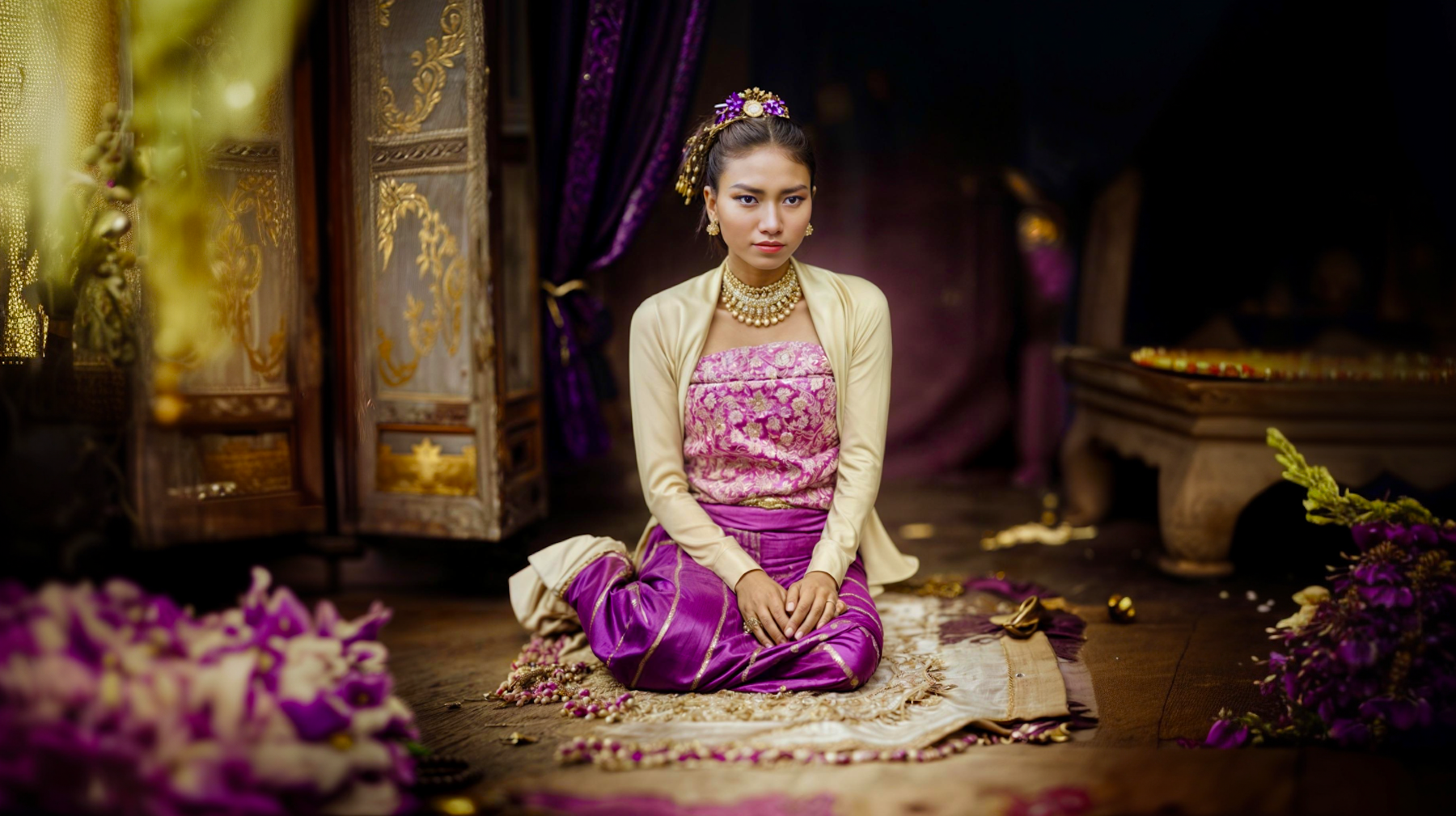
Queen Supayalat: The Last Queen of Burma
Queen Supayalat: The Last Queen of Burma
Queen Supayalat (စုဖုရားလတ်), born on 13 December 1859 in Mandalay, stands as one of the most controversial figures in Burmese history. As the daughter of King Mindon and Queen Hsinbyumashin (also known as the Lady of the White Elephant), she rose to prominence through her marriage to her half-brother Thibaw, the last monarch of the Konbaung dynasty. Her life was marked by ambition, political intrigue, and an unyielding determination to consolidate power during one of Burma's most tumultuous periods.
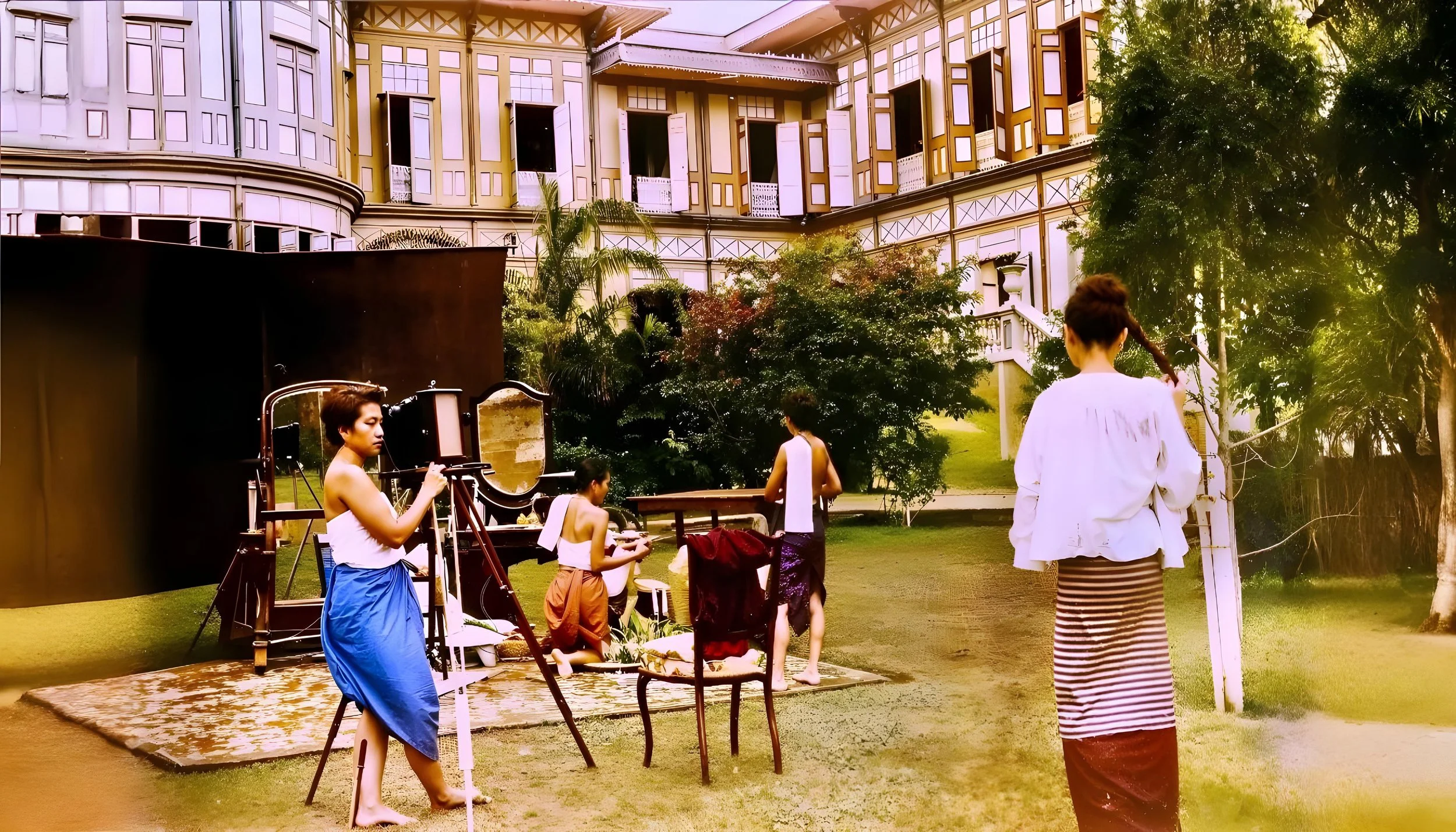
Princess Dara Rasmi, by Erb Bunnag, 1905, Bangkok
The set of eight photographs showcase Princess Dara Rasami of Chiang Mai, taken in 1905 by Chao Chom Erb Bunnag in an outdoor studio setting at Vimanmek Mansion, Dusit Palace in Bangkok, complete with a European-style toilette table, mirrors, and rugs. This intimate portrayal captures Princess Dara Rasami letting down her exceptionally long hair—a notable symbol of her ethnic and regional identity from Lan Na (Northern Thailand).
These images exemplify both the evolving roles of Siamese royal women in early 20th-century photography and the cultural distinctions between Siamese and Lan Na elites. Princess Dara Rasami, a royal consort of King Chulalongkorn (Rama V), entered the Siamese court as part of a diplomatic alliance. Unlike Siamese women who embraced the cropped hair style and wearing chong kraben (a wrapped lower garment), Lan Na women like Princess Dara retained their traditional tubular skirts (pha-sin) and long hair, often styled in a bun. This sartorial distinction highlighted her ethnic identity and her unique role as both a representative of Lan Na culture and a member of the Siamese royal court.
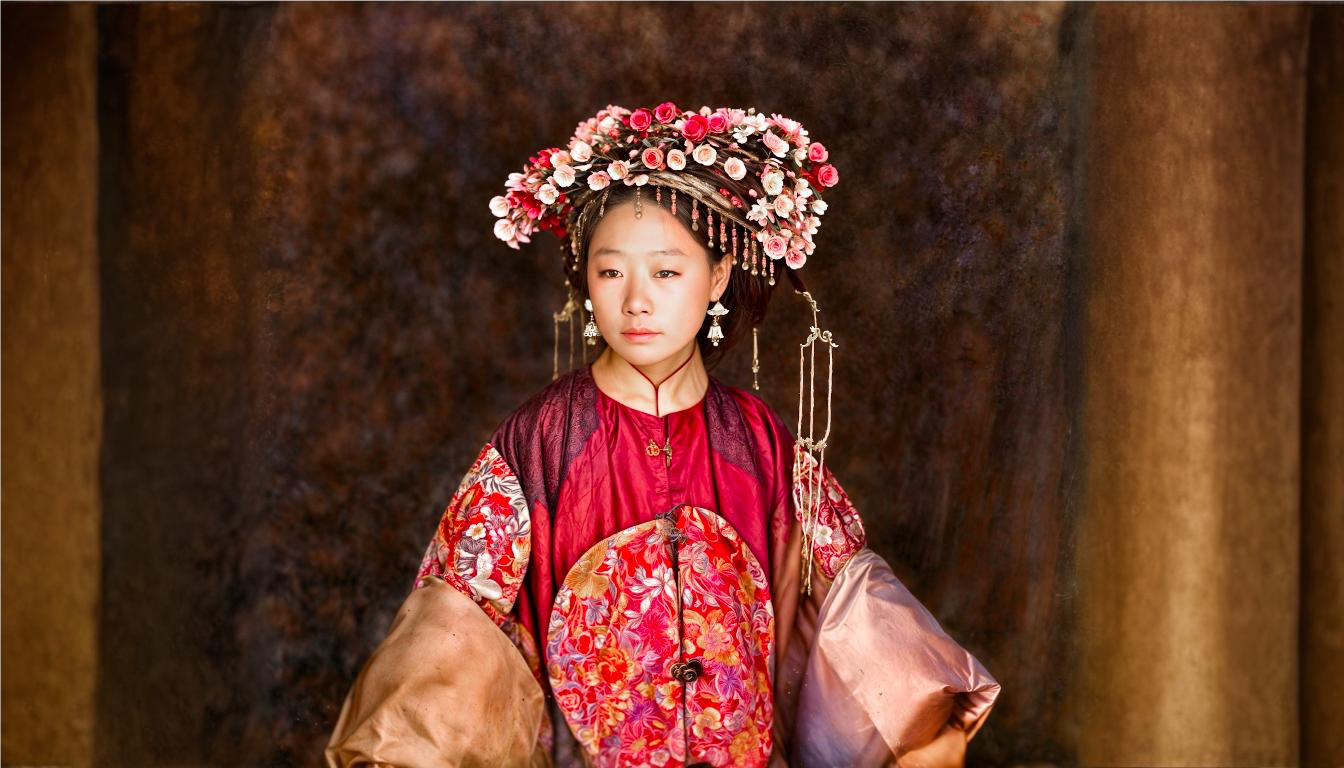
John Thomson in China 1868-1872
The AI-enhanced photographs presented here breathe new life into the iconic glass plate portraits captured by John Thomson during his travels in China from 1868 to 1872. Focusing on Chinese women of the Qing dynasty, these images reveal the beauty, cultural richness, and intricate fashion of a bygone era. By utilising advanced AI technology, these photographs restore vivid details of traditional garments, elaborate hairstyles, and accessories, bridging the historical and the modern.
John Thomson, a pioneering Scottish photographer and traveller, was among the first Western photographers to document life in East Asia. Born in Edinburgh in 1837, Thomson developed a passion for photography and exploration early in life. His travels spanned Southeast Asia, the Middle East, and China, where he captured stunning portraits and landscapes, making him a significant figure in the history of photography.
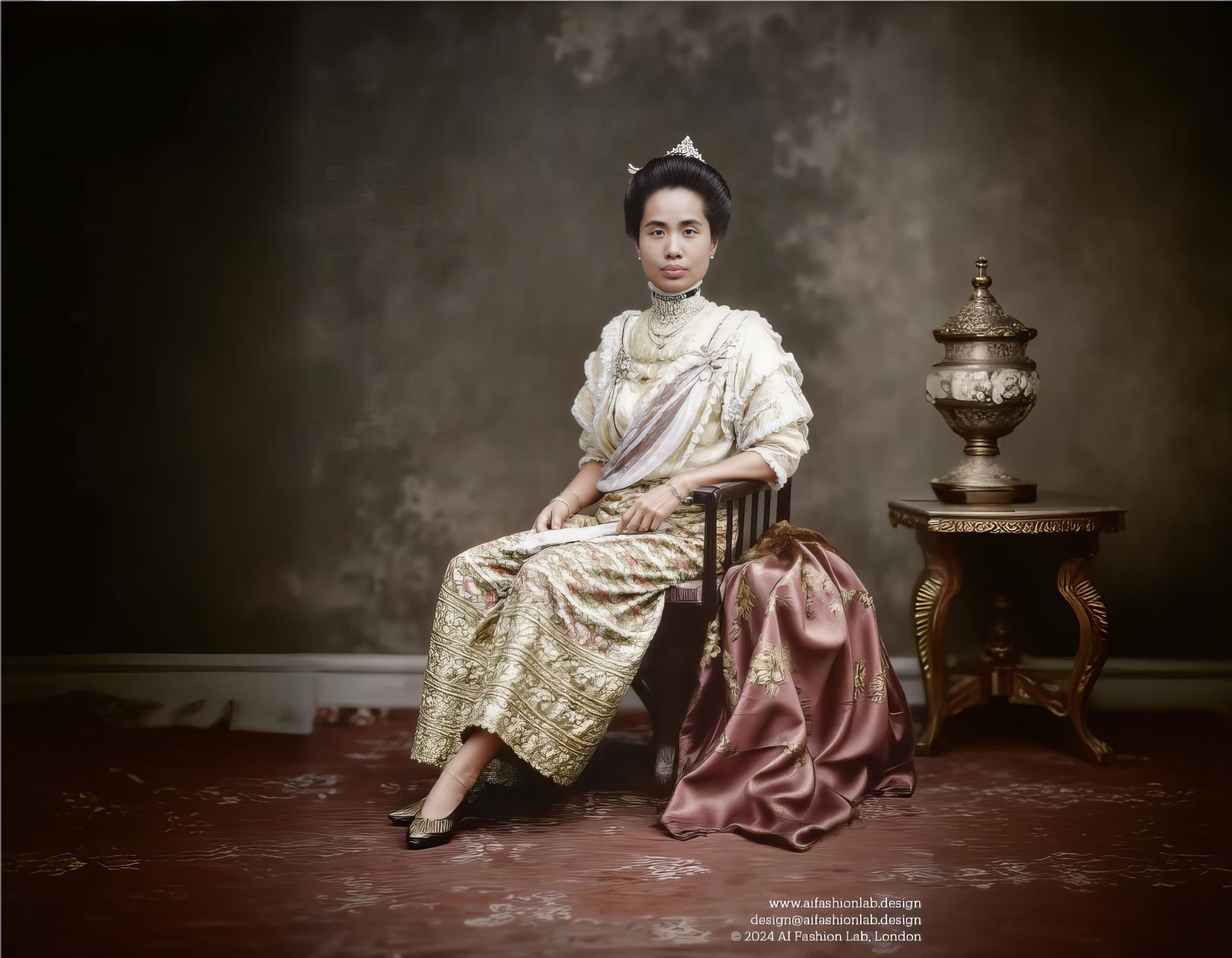
Princess Dara Rasmi of Chiang Mai
ภาพของพระราชชายาดารารัศมีในพระอิริยาบถต่าง ๆ ถูกสร้างสรรค์ขึ้นเพื่อแสดงความน้อมสักการะในพระคุณงามความดีของพระองค์ โดยภาพเหล่านี้เป็นการผสมผสานภาพวาดลงสีหลายภาพเข้าด้วยกัน จนกลายเป็นภาพเสมือนจริงที่งดงามและทรงคุณค่า ทั้งนี้ ภาพดังกล่าวจัดทำขึ้นด้วยความเคารพยิ่ง โดยไม่มีเจตนาใดที่จะลดทอนพระเกียรติของพระองค์
The images of Princess Dara Rasami in various postures have been created as a gesture of reverence to honour her virtues. These works are a blend of several coloured illustrations, seamlessly combined into lifelike depictions that are both beautiful and dignified. They have been produced with the utmost respect and hold no intention whatsoever of diminishing her honour.
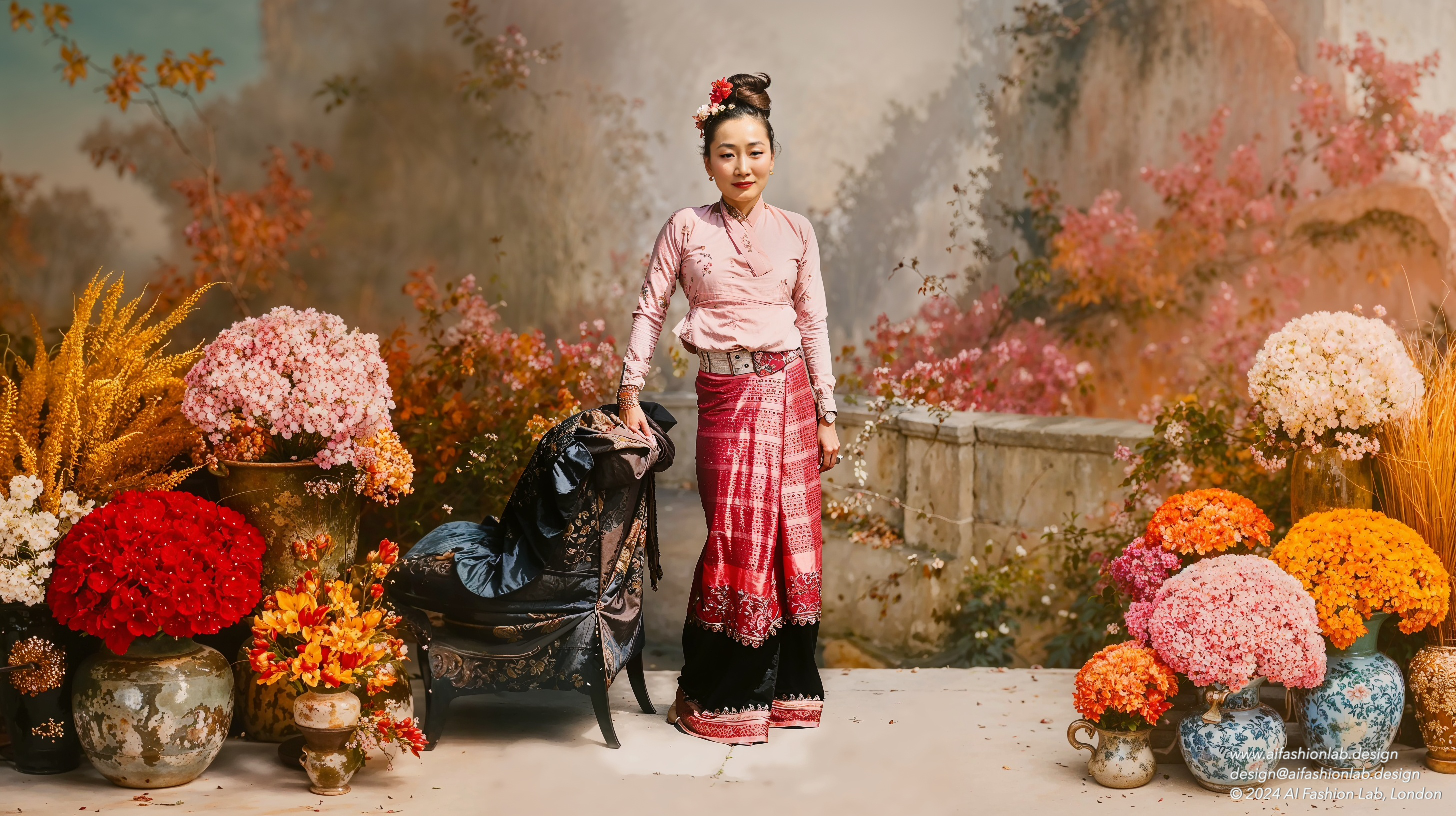
Sao Nang Tip Htila: Reimagining Her Beauty and Legacy Through AI Art
Sao Nang Tip Htila’s legacy is deeply rooted in the history of Kengtung and the Shan States. As the daughter of Sao Kawng Tai II and the elder sister of Sao Kawng Kiao Intaleng, she played a pivotal role in governance during a critical transition. In 1895, she served as regent for her younger brother before he came of age. Later, in 1897, she married Hkun Un of Kenghkam, assuming the title of Mahadevi. After her husband’s passing, she uniquely rose to govern Kenghkam as the only female Saopha in Shan history, earning admiration for her administrative skills, trade acumen, and infrastructural contributions.
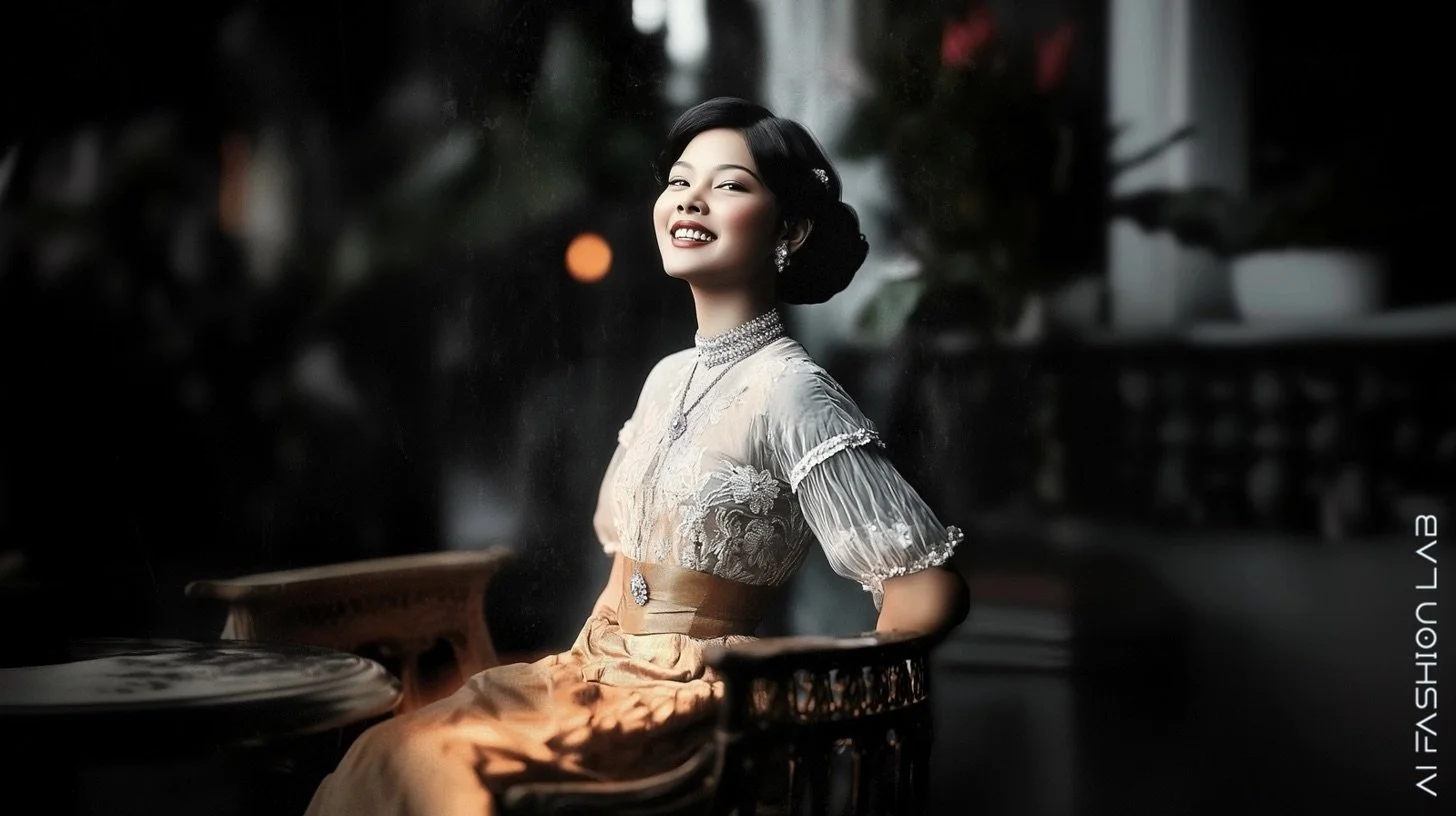
Edwardian Elegance in Siam: The Royal Court’s Western Fashion
During the late reign of King Chulalongkorn, Siam experienced a cultural transformation, particularly in fashion, as it sought to modernise and engage with the Western world. The royal court, especially the all-female inner court, began to incorporate Western dress elements, blending them with traditional Thai styles to create a unique identity for Siamese aristocracy. Influenced by Edwardian elegance, these women might have worn delicate lace gowns, high-waisted skirts, and upswept hairstyles, mirroring the sophistication of European nobility while maintaining Siamese grace and refinement.
This fusion of styles was not only a statement of modernity but also a powerful cultural force within the palace, influencing fashion standards across Siamese society. The adoption of Western elements by the inner court symbolised openness to change and reinforced Siam’s position on the world stage. While the Edwardian-inspired fashions evolved, they left a lasting legacy that continued to shape Thai fashion throughout the 20th century, where Western tailoring and silhouettes remain integrated into traditional attire, embodying a harmonious blend of East and West.
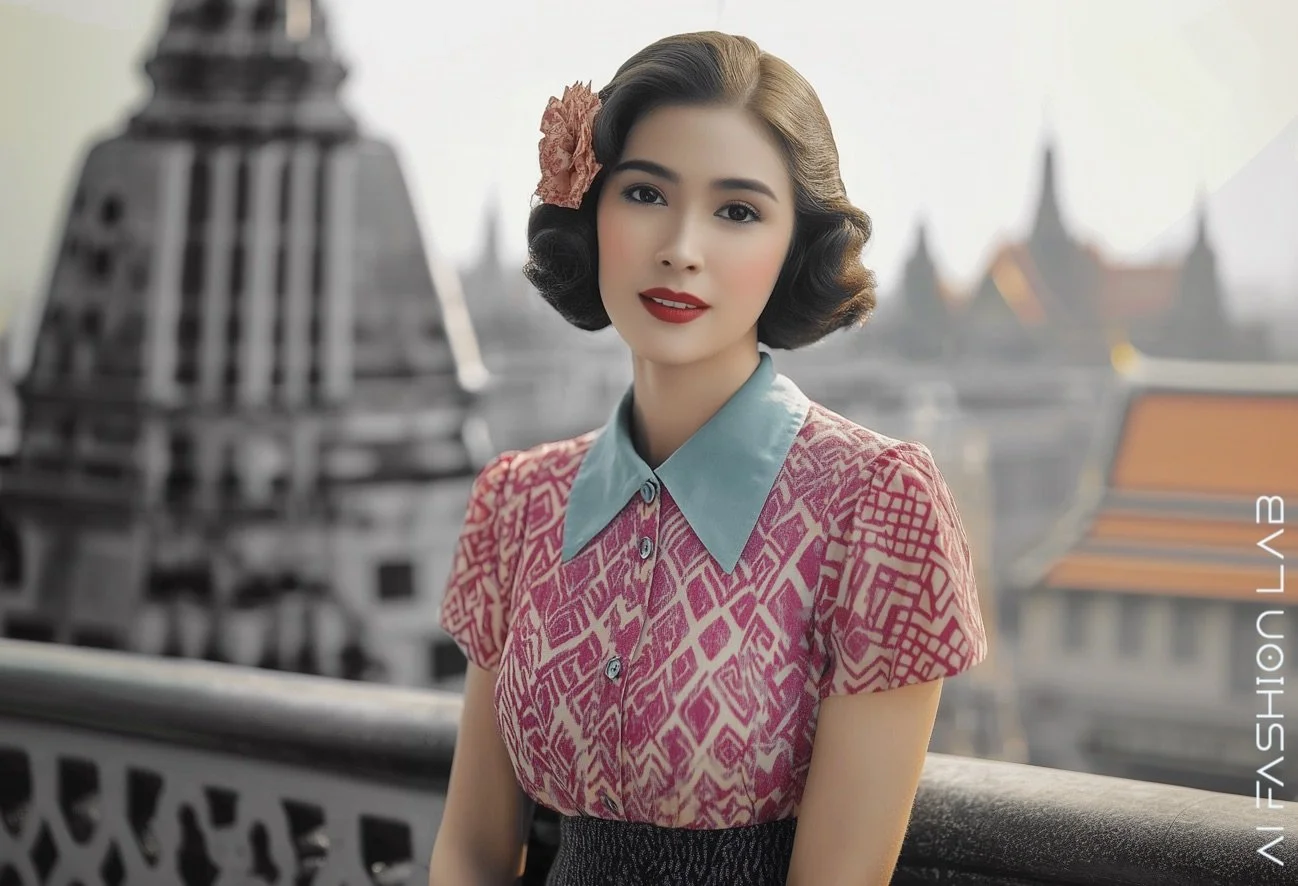
1930s Thai Fashion: Auspicious Colours Paired with Western Collars
In 1930s Thailand, during the reign of King Rama VII, fashion experienced a fascinating blend of Western and traditional Thai elements. This era saw Western collar styles like Peter Pan, winged, and Windsor becoming popular among the Thai elite, especially as Western influences in clothing design grew. To complement these styles, this article accompanies a collection of vintage-inspired, colourised photographs. The images bring a unique cultural touch by incorporating Thailand’s traditional “auspicious dual colours” for each day of the week, a practice rooted in the royal inner court traditions from the reign of King Chulalongkorn. The concept pairs skirts with sabai shawls in symbolic colour combinations such as light yellow and blue for Monday or plum and green for Tuesday, each believed to bring good fortune. This careful pairing of Thai colours with Western collars symbolises an elegant fusion of East and West, honouring the beauty of Thai heritage while embracing Western sophistication in 1930s fashion.
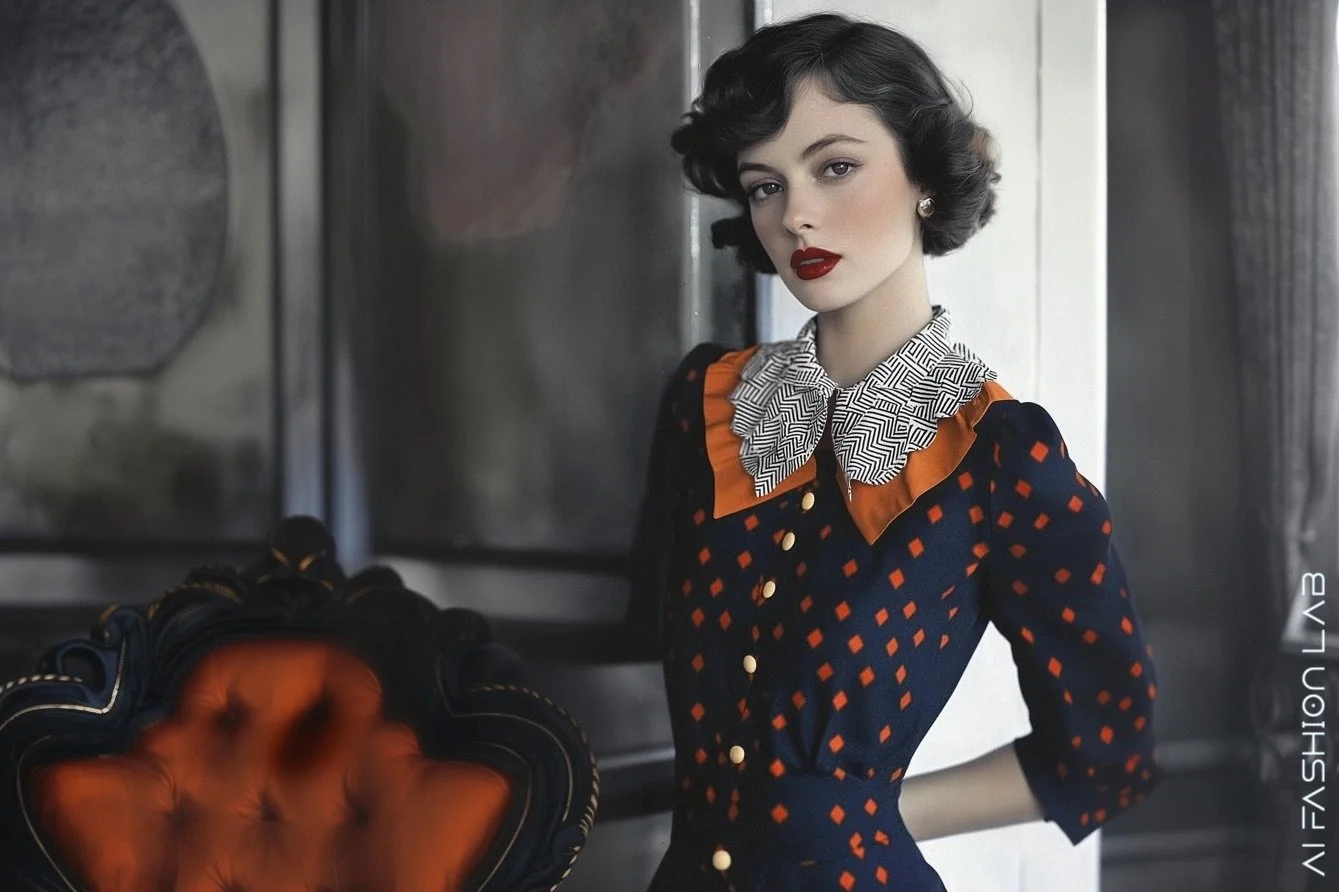
The Practical Elegance of Detached Collars in 1930s Fashion
In the 1930s, the detached collar became a key feature in women’s fashion due to its economic and practical advantages. Amidst economic hardship, detached collars offered a versatile way for women to refresh their wardrobe without purchasing entirely new garments. Available in various materials, such as lace, cotton, and velvet, these collars allowed for customisation suited to different occasions, from everyday wear to formal events. Their ability to be laundered separately also prolonged the lifespan of garments, making detached collars a clever, stylish solution that balanced elegance with affordability.
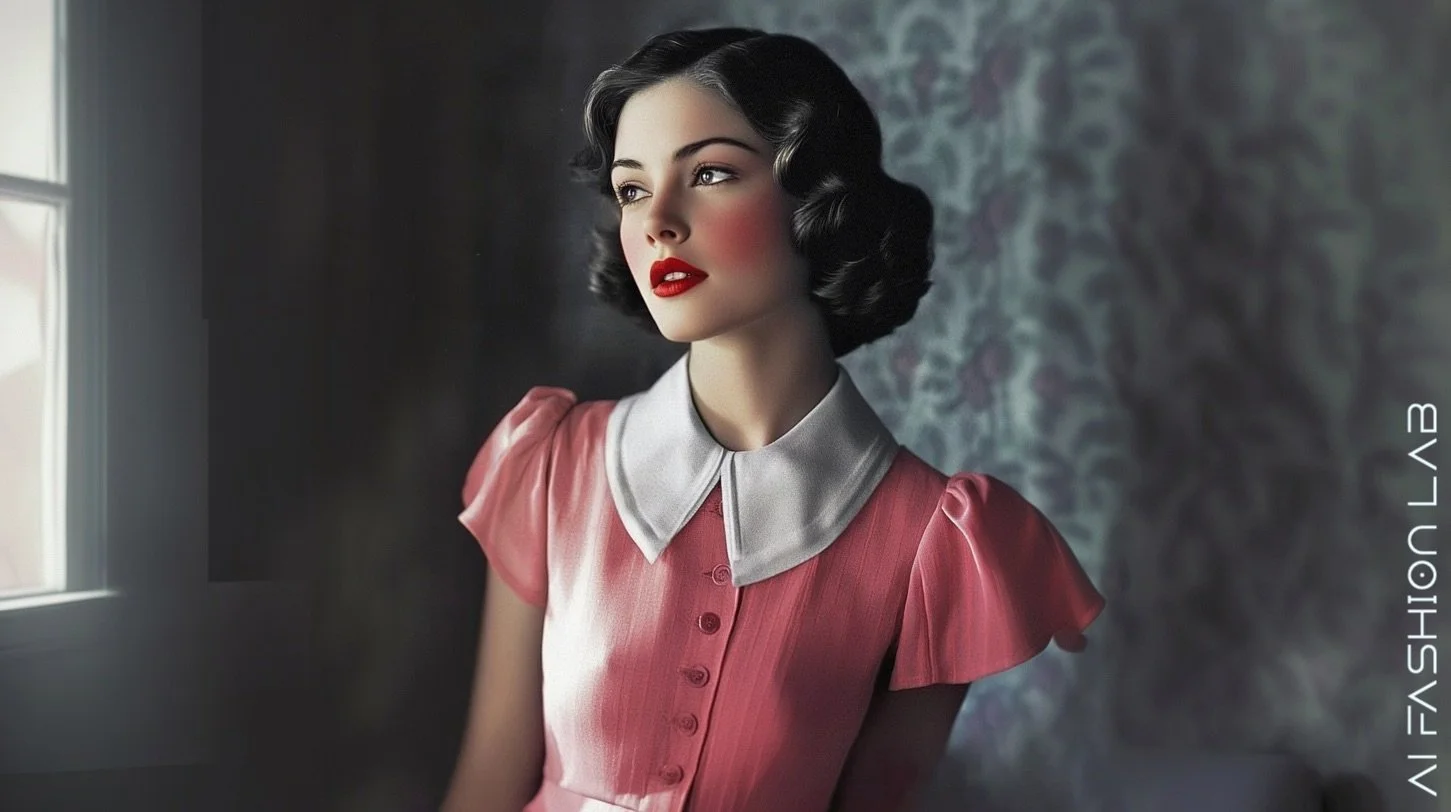
Collars of the 1930s: From Practicality to Glamour
In the 1930s, collars became a defining element in women’s fashion, adding sophistication and structure to various outfits. Influenced by economic hardships, fashion shifted towards practical yet elegant designs, with collars offering a way to express individuality within modest budgets. Styles ranged from high Victorian-inspired collars and delicate Peter Pan designs for daywear, to dramatic, Hollywood-influenced wide collars for evening wear. These collars framed the face and added balance to the broad-shouldered silhouettes of the decade, symbolising a blend of practicality, femininity, and resilience in 1930s women’s fashion.
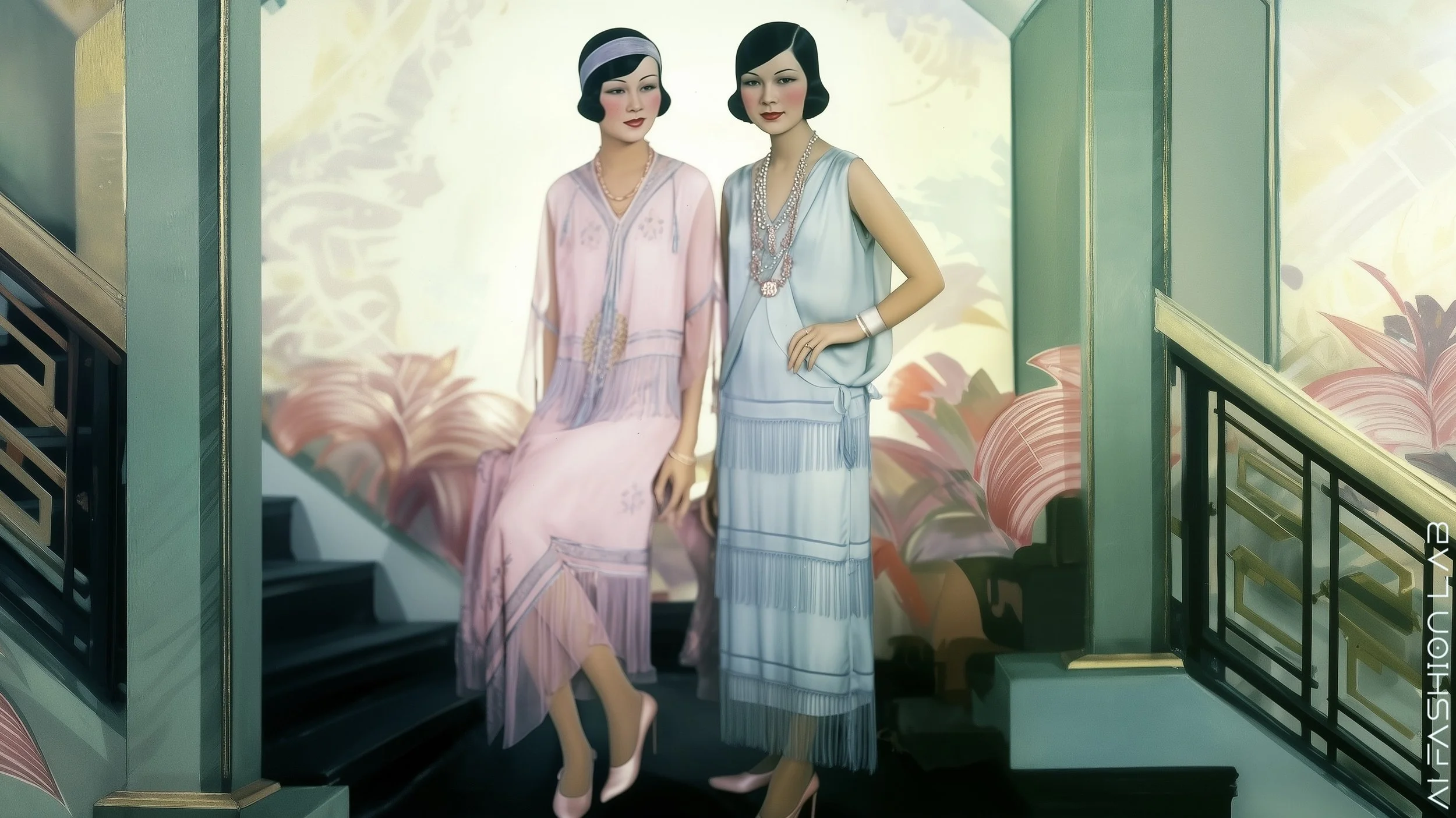
The Art of Fashion Fusion: Thai Elite Style in 1920s Bangkok
This album presents a series of AI-enhanced images inspired by Bangkok in the 1920s, capturing the elegance and allure of flapper fashion infused with Thai cultural aesthetics. Each image reimagines the essence of Bangkok’s Art Deco period, portraying Thai women adorned in sophisticated flapper dresses. The scenes are set in opulent, colonial-inspired interiors that evoke the cosmopolitan charm of early 20th-century Bangkok.
The images have been purposefully crafted to resemble the style of 1920s paintings and print advertisements, evoking the tinted hues and soft, refined quality characteristic of that time. The pastel tones, though not typically associated with 1920s fashion, add a nostalgic, dreamlike layer to the images, enhancing the sense of high society sophistication. This use of colour, combined with the composition, aims to replicate the essence of early advertising art and portraiture of the era, often associated with members of the upper strata.
Through these AI-generated images, this album invites you to explore a seamless blend of vintage fashion and traditional Thai elegance, with each piece crafted to resemble painted portraits of the elite, capturing both the style and cultural charm of a bygone era in Bangkok’s history. These images stand as modern interpretations of the past, merging high art with the allure of Thai society in the 1920s.

Space Samurai: Embracing AI in Costume Design through Promptography
As a costume designer, I’ve embraced AI promptography as an advanced tool to explore and visualise new costume ideas. This series blends Samurai heritage, space-age futurism, soft pastel colours, and hyper-realistic details—not as final designs but as examples of how AI can help me quickly test how different elements might interact to shape a character. By carefully crafting prompts, I guide the AI to produce images that give a clear sense of a concept’s overall look and feel. This approach allows me to experiment freely with new ideas, combining traditional and futuristic themes.

Space Geisha: A Fusion of Tradition and Futurism through AI Promptography
The "Space Geisha" collection is an AI-generated photo series, created through promptography, where descriptive text prompts generate photorealistic images rather than using traditional photography. This series merges the elegance of a Japanese geisha with futuristic space aesthetics, crafting a surreal yet detailed vision of a hybrid kimono-space suit costume. Using soft pastel colours, ceramic textures, and high-tech tools like C4D and Unreal Engine at 36K resolution, the images evoke a harmonious blend of cultural heritage and technological futurism. The "Space Geisha" concept invites viewers to imagine a world where tradition and technology coexist in beauty and innovation.
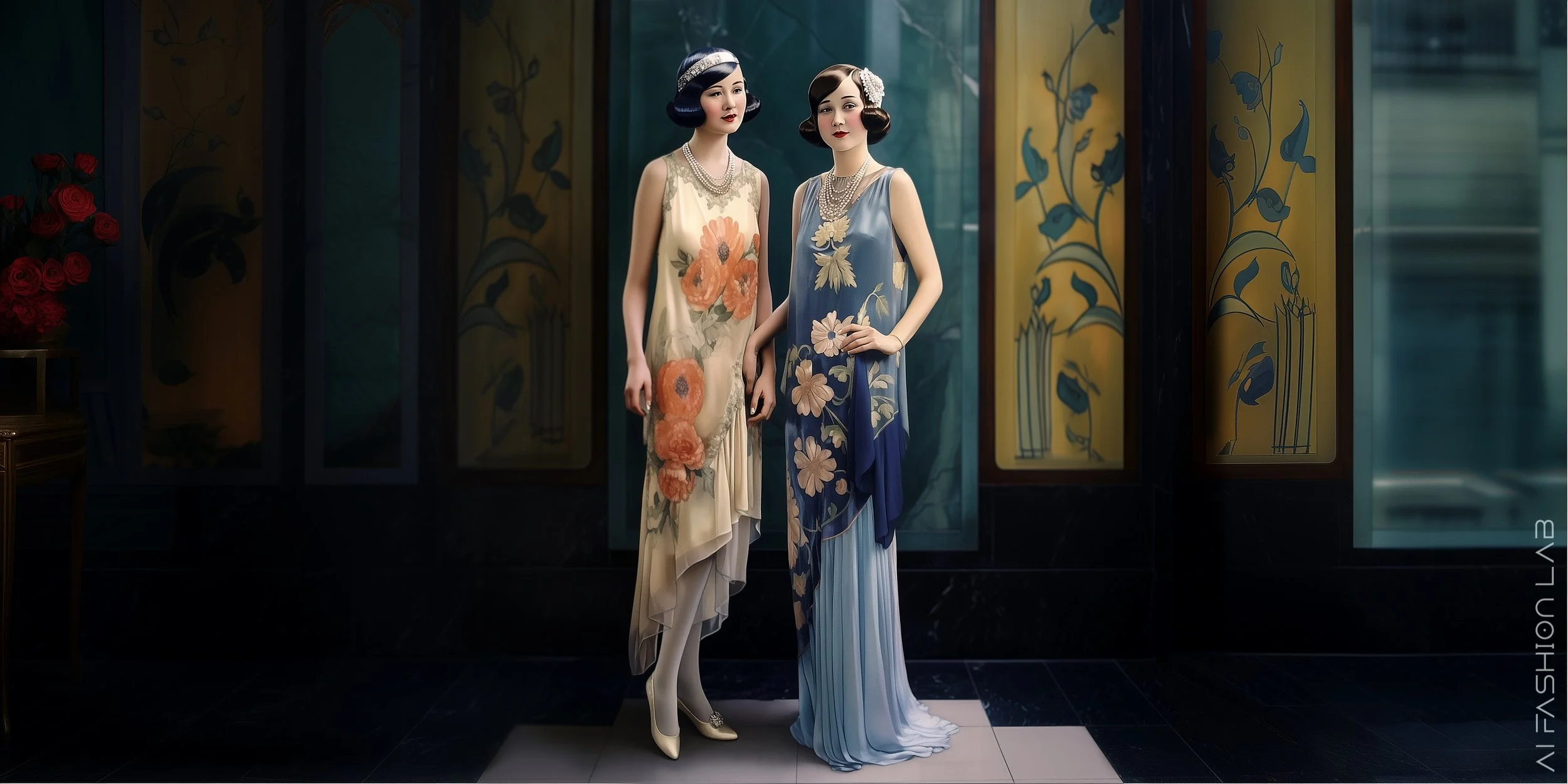
A Dream of Bangkok: An Alternative 1920s Elegance
This is an imagined photo collection capturing an alternative Bangkok in the late 1920s. The collection presents a nostalgic charm reminiscent of painted portraits or magazine illustrations from that era. With an Art Deco elegance, the photos feature soft colours, detailed craftsmanship, and a dreamlike atmosphere. Inspired by the reign of King Rama VII, this alternative history envisions a Bangkok that embraced Western fashion fully. The city’s elite sported luxurious gowns adorned with intricate beading and floral embroidery, blending Western aesthetics with Thai artistry. Social gatherings, influenced by Western ballroom culture, showcased these styles, highlighting a unique fusion of Jazz Age glamour with Thai traditional elegance.
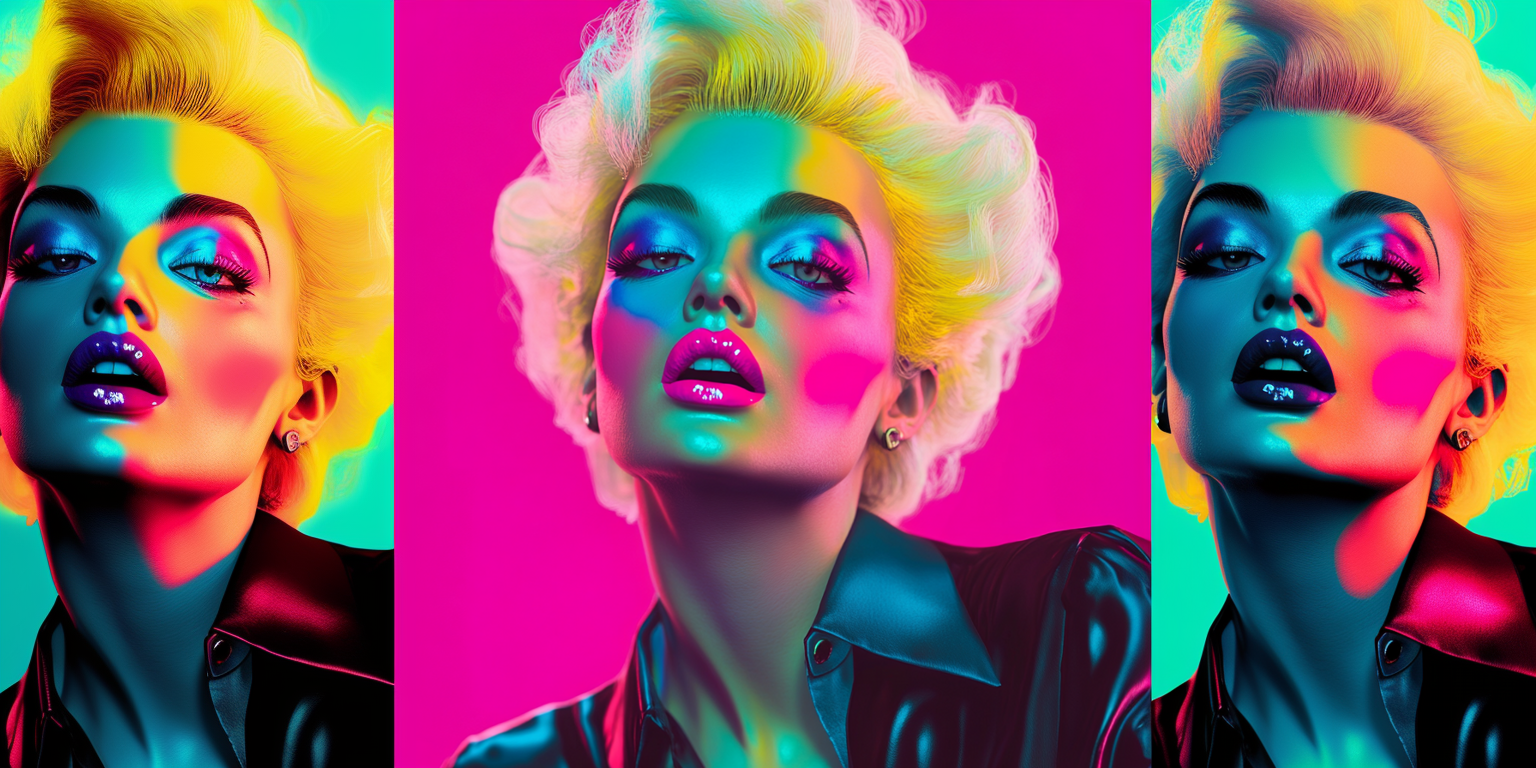
Pop Real: Marilyn Reimagined
"Pop Real: Marilyn Reimagined" is an AI-generated photo collection inspired by Andy Warhol's iconic portfolio of Marilyn Monroe screen prints, held at MoMA. By merging the vibrant, stylised colours of pop art with hyper-realistic digital techniques, this collection brings Monroe’s timeless beauty to life with a modern twist, capturing her essence as both a 1950s icon and a contemporary figure. In the spirit of RuPaul’s Drag Race, each image evokes high drama, blending classic Hollywood glamour with bold artistry. The result is a celebration of Monroe’s enduring allure, transformed and revitalised for a new generation.
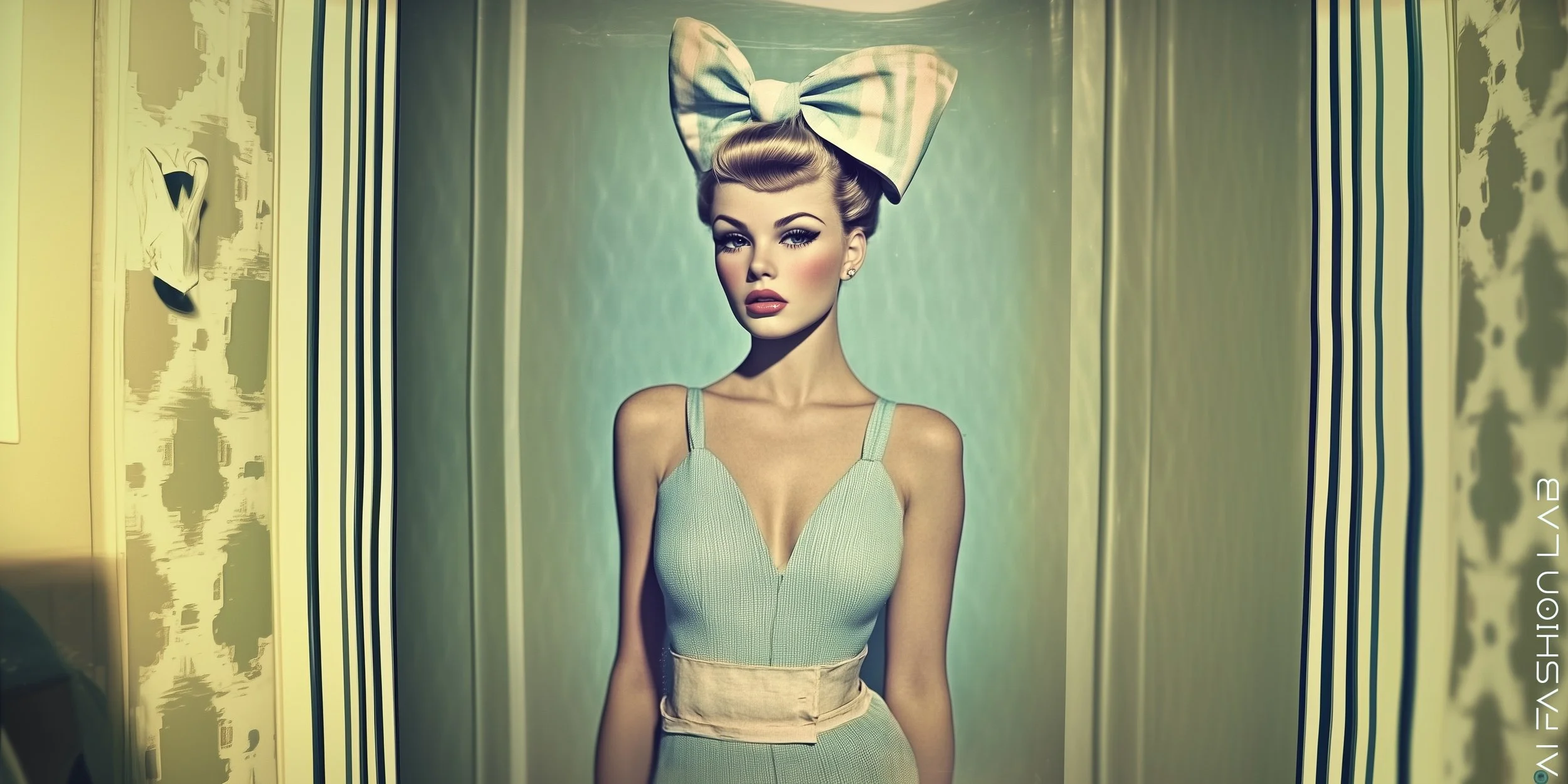
Retro Whimsy: A Playful Spin on Mid-Century Glamour
Introducing my latest photo collection, inspired by the iconic Vargas Girls of Alberto Vargas and the timeless charm of mid-century vintage style, reminiscent of the classic pin-up art of the 1940s and 1950s. These images evoke the elegance and playfulness of the 1940s and 1950s, captured through the nostalgic lens of photography techniques reminiscent of real film cameras like Kodak—complete with softly faded frames that transport viewers back in time.
However, this collection adds a modern twist: a touch of hyper-realism and clean digital precision that enhances the classic aesthetic, giving these retro scenes a fresh, contemporary glow. The entire collection features a serene and stylish duck egg green colour theme, infusing each frame with a sense of vintage sophistication while embracing a modern palette.
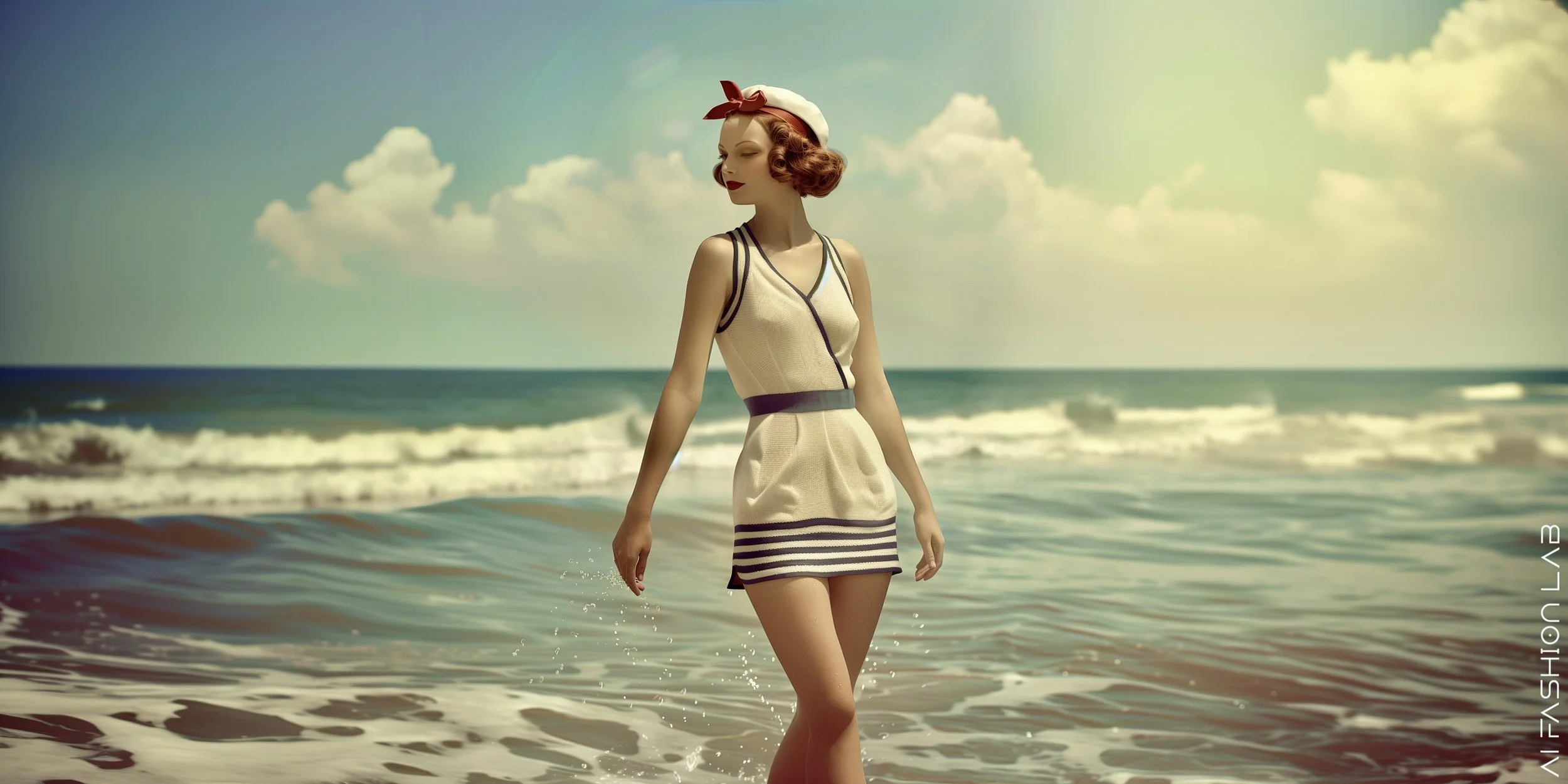
From Wool to Knit: The 1930s Transformation of Women's Swimwear
The Evolution of Swimwear: From Modesty to Modernity in the 1930s
The 1930s marked a significant change in women’s swimwear, driven by new fabrics like knitted materials that made swimsuits lighter, more form-fitting, and comfortable. This era embraced the nautical theme as part of summer fashion, reflecting the popularity of sea travel before the rise of air travel. Knitwear enabled designers to create figure-hugging swimsuits that aligned with both functionality and style, reflecting the evolving social attitudes towards beachwear. While the glamour of sea travel faded post-WWII, the influence of 1930s swimwear remains visible in retro-inspired designs today.
วิวัฒนาการของชุดว่ายน้ำ: จากความเรียบร้อยสู่สมัยใหม่ในยุค 1930
ทศวรรษ 1930 เป็นช่วงเวลาที่ชุดว่ายน้ำของผู้หญิงเปลี่ยนแปลงไปอย่างมาก ด้วยการนำวัสดุถักที่ยืดหยุ่นมาใช้ ทำให้ชุดว่ายน้ำเบา แนบเนื้อ และสวมใส่สบาย ธีมการเดินเรือได้รับความนิยมในแฟชั่นฤดูร้อน เนื่องจากการเดินทางทางทะเลเป็นที่นิยมก่อนการเดินทางทางอากาศจะกลายเป็นกระแสหลัก ผ้าถักทำให้นักออกแบบสร้างชุดว่ายน้ำที่กระชับและดูดี สะท้อนทัศนคติทางสังคมที่พัฒนาไปเรื่อย ๆ แม้ว่าความนิยมในการเดินทางทางทะเลจะลดลงหลังสงครามโลกครั้งที่ 2 แต่เสน่ห์ของชุดว่ายน้ำยุค 1930 ยังคงปรากฏในแฟชั่นย้อนยุคในปัจจุบัน