กษัตริย์สยามในฉลองพระองค์กษัตริย์ยุโรป: งานแฟนซีกับภาษาทางอำนาจของรัชกาลที่ ๕
กษัตริย์สยามในฉลองพระองค์กษัตริย์ยุโรป: งานแฟนซีกับภาษาทางอำนาจของรัชกาลที่ ๕
ในโอกาสวันคริสต์มาส ค.ศ. 2025 ขอร่วมส่งความปรารถนาดีให้ทุกท่านเปี่ยมด้วยความสุข ความสดใส และบรรยากาศแห่งการเฉลิมฉลอง พร้อมแบ่งปันเรื่องราวทางประวัติศาสตร์ผ่านคอลเลกชันพิเศษ “Fancy Dress” ชุดนี้ ซึ่งมิได้เป็นเพียงการรำลึกถึงงานรื่นเริง หากยังเปิดพื้นที่ให้เราได้ทบทวนบทบาทของแฟชั่นในฐานะภาษาทางการเมืองและการทูตของราชสำนักสยามในคริสต์ศตวรรษที่ ๑๙
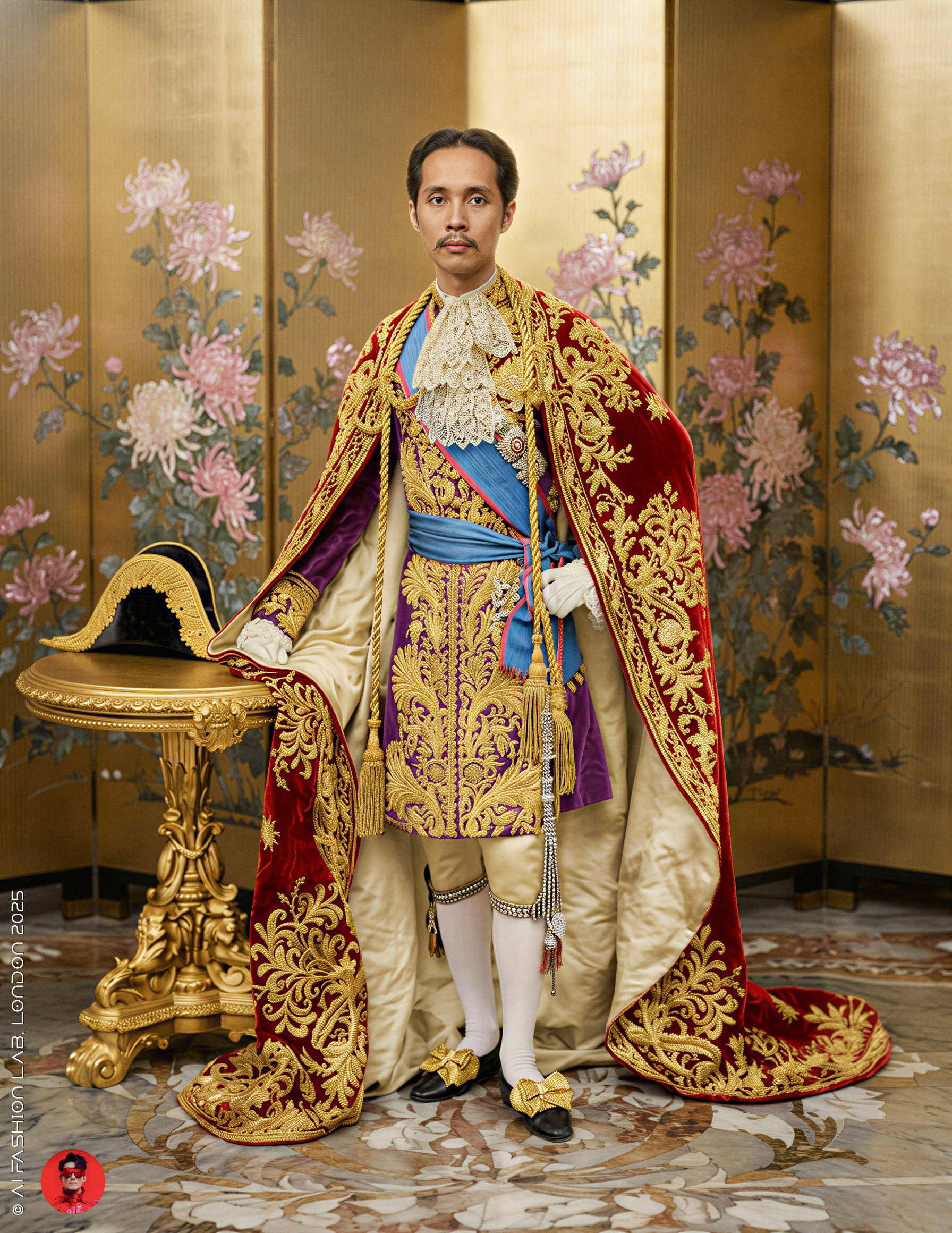
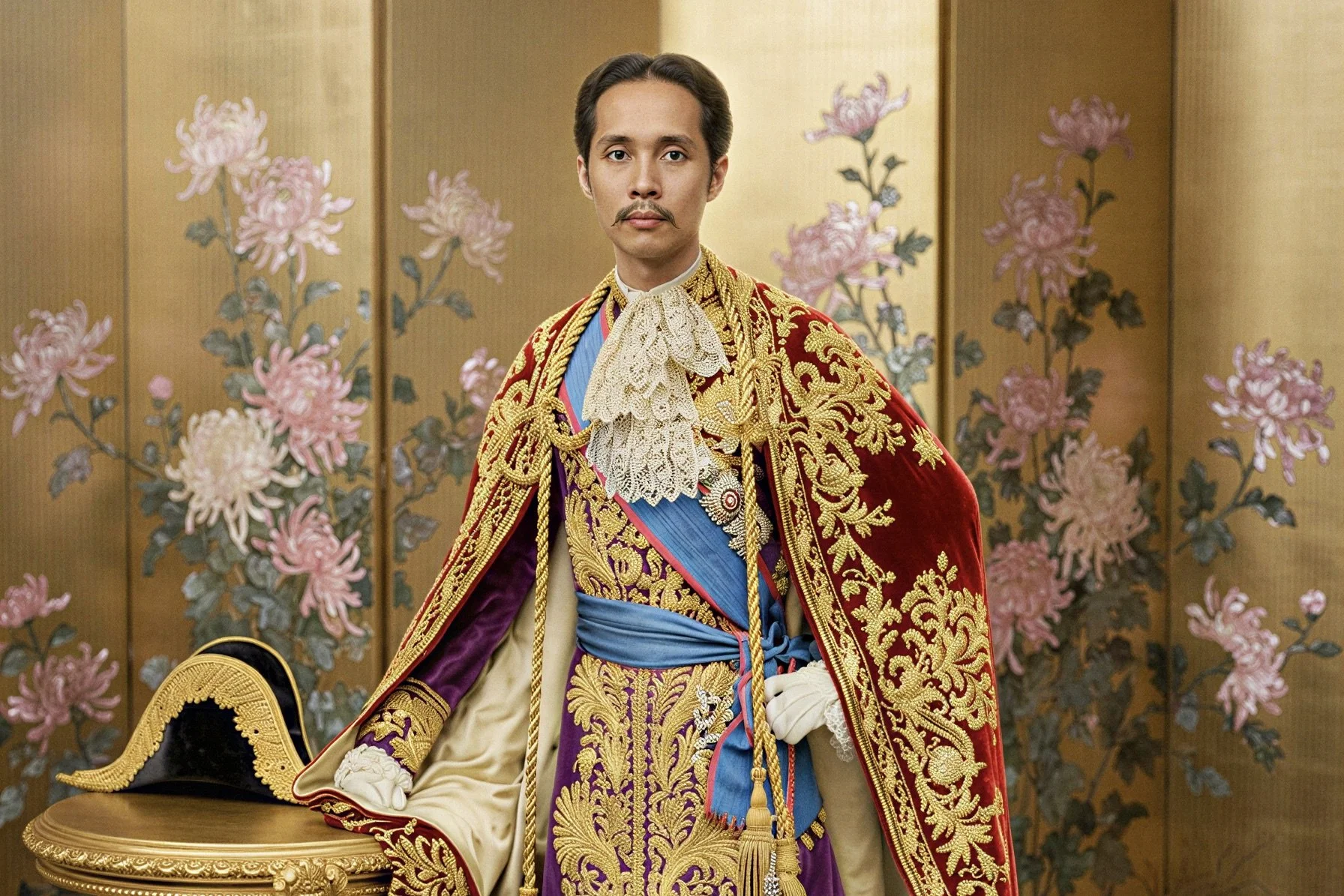
ภาพที่ผ่านการบูรณะและสร้างสรรค์ด้วยเทคโนโลยี AI ภาพนี้ เป็นพระบรมฉายาลักษณ์ของ พระบาทสมเด็จพระจุลจอมเกล้าเจ้าอยู่หัว (รัชกาลที่ ๕) ในฉลองพระองค์แบบกษัตริย์ยุโรป อันเชื่อมโยงโดยตรงกับ “งานแฟนซี” ครั้งแรกในราชสำนักสยาม ซึ่งจัดขึ้นในวันขึ้นปีใหม่ พุทธศักราช ๒๔๑๗ (ค.ศ. 1874) ช่วงต้นรัชกาล และจัดซ้ำอีกครั้งในอีกสองปีให้หลัง งานเหล่านี้มิได้มีความหมายเพียงความสนุกสนาน หากเป็นเวทีเชิงสัญลักษณ์ที่ราชสำนักใช้ทดลอง บ่มเพาะ และแสดงอัตลักษณ์ของรัฐสยามในโลกสมัยใหม่
งานแฟนซี: พื้นที่ทดลองอัตลักษณ์ของราชสำนัก
งานแฟนซีในราชสำนักสยามเปิดพื้นที่ให้การแต่งกายกลายเป็นภาษาสากล พระบรมวงศานุวงศ์และขุนนางแต่งกายหลากหลายรูปแบบ ทั้งชุดฝรั่ง ชุดจีน ชุดแขก ชุดสัตว์ หรือชุดตัวละครในวรรณคดี ความหลากหลายนี้สะท้อนว่าราชสำนักสยามมิได้มอง “ความเป็นสากล” เป็นสิ่งตรงข้ามกับอัตลักษณ์ แต่เป็นสนามแห่งการเรียนรู้และการกำหนดตำแหน่งของสยามในเวทีโลกอย่างมั่นคง
ฉลองพระองค์กษัตริย์ยุโรป: ภาษาแห่งราชอำนาจ
ฉลองพระองค์ในภาพนี้มิได้อ้างอิงชาติยุโรปใดชาติหนึ่งโดยเฉพาะ หากเป็นการผสมผสาน “ภาษาภาพ” ของราชสำนักยุโรปโดยรวม ทั้งผ้ากำมะหยี่ปักดิ้นทองอย่างวิจิตร เสื้อคอตั้งประดับลูกไม้ (lace cravat) สายสะพายไหม เครื่องราชอิสริยาภรณ์ และรองเท้าพิธีการ รายละเอียดทั้งหมดสะท้อนภาพลักษณ์ของกษัตริย์ยุโรปในคริสต์ศตวรรษที่ ๑๙ ซึ่งสื่อถึงอำนาจ ความสง่างาม และความชอบธรรมของราชวงศ์
อย่างไรก็ตาม นี่มิใช่การเลียนแบบ หากเป็นการ “เลือกและแปลความ” อย่างมีชั้นเชิง ราชสำนักสยามหยิบยืมรูปแบบเหล่านี้มาปรับใช้ให้สอดคล้องกับรสนิยม ความสมดุล และความงามแบบตะวันออก เกิดเป็นฉลองพระองค์ที่เป็นสากล แต่ยังคงศักดิ์ศรีและอธิปไตยของสยามอย่างชัดเจน
เครื่องราชอิสริยาภรณ์และการตีความเชิงสร้างสรรค์
สิ่งที่น่าสนใจเป็นพิเศษ คือการใช้สัญลักษณ์แห่งเกียรติยศแบบยุโรป โดยเฉพาะองค์ประกอบที่ชวนให้นึกถึงเครื่องราชอิสริยาภรณ์ชั้นสูงของอังกฤษ เช่น Order of the Garter ซึ่งตามขนบตะวันตกมีธรรมเนียมการใช้ที่เคร่งครัด แต่ในบริบทของราชสำนักสยาม สัญลักษณ์เหล่านี้สามารถถูกนำมาตีความใหม่อย่างสร้างสรรค์ โดยให้ความสำคัญกับความงาม ความสมดุล และการสื่อความหมายเชิงอำนาจ มากกว่าการยึดถือพิธีรีตองแบบตะวันตกอย่างตายตัว
แฟชั่นในฐานะการทูต
เมื่อพิจารณาในบริบทการเมืองโลก ภาพแฟนซีของรัชกาลที่ ๕ มิใช่เพียงภาพงดงามทางแฟชั่น หากเป็นถ้อยแถลงทางการทูต สยามกำลังสื่อสารว่าตนคือรัฐเอกราชที่เข้าใจภาษาแห่งอำนาจของโลกตะวันตก และสามารถยืนเคียงข้างราชสำนักยุโรปได้อย่างเท่าเทียม ในยุคที่หลายดินแดนในเอเชียตกอยู่ภายใต้อำนาจอาณานิคม ภาพลักษณ์เช่นนี้มีนัยสำคัญอย่างยิ่ง
พระบาทสมเด็จพระจุลจอมเกล้าเจ้าอยู่หัวทรงแสดงให้เห็นถึงความสามารถในการใช้เครื่องแต่งกายเป็นเครื่องมือเชิงสัญลักษณ์ ทั้งในฐานะศิลปะ แฟชั่น และการเมือง แฟนซีเดรสจึงมิใช่เพียงการ “แต่งกายแฟนซี” หากเป็นกระบวนการเจรจาทางวัฒนธรรมที่ละเอียดอ่อนและทรงพลัง
การแต่งกายในฐานะการประกาศ “ความเสมอภาคเชิงอำนาจ”
การทรงฉลองพระองค์ในลักษณะกษัตริย์ยุโรปของพระบาทสมเด็จพระจุลจอมเกล้าเจ้าอยู่หัว ยังอาจตีความได้ว่าเป็นการแสดงเจตจำนงเชิงสัญลักษณ์ของสยาม ในการยืนอยู่บนฐานะ “เสมอภาค” กับบรรดาพระมหากษัตริย์ยุโรป ท่ามกลางบรรยากาศแห่งความไม่แน่นอนของยุคล่าอาณานิคมในคริสต์ศตวรรษที่ ๑๙ ขณะที่รัฐเอเชียจำนวนมากถูกจัดวางให้อยู่ในสถานะผู้ใต้ปกครองหรือรัฐกึ่งอารักขา สยามกลับเลือกสื่อสารภาพลักษณ์ของตนในฐานะราชอาณาจักรอธิปไตย ที่เข้าใจและใช้ภาษาแห่งอำนาจแบบเดียวกับโลกตะวันตกได้อย่างเท่าเทียม
ฉลองพระองค์แบบกษัตริย์ยุโรปในงานแฟนซีจึงมิใช่เพียงการ “แต่งกายตามแบบฝรั่ง” หากเป็นการประกาศอย่างแยบยลว่าสยามรับรู้กติกา ภาพลักษณ์ และพิธีกรรมของราชสำนักยุโรป และสามารถเข้าร่วมในระบบนั้นได้ในฐานะ equal sovereign มิใช่ในฐานะผู้เลียนแบบหรือผู้ด้อยกว่า เครื่องแต่งกายจึงทำหน้าที่เสมือนถ้อยคำทางการเมืองที่ไม่ต้องเปล่งเสียง เป็นการยืนยันว่าพระมหากษัตริย์สยามทรงยืนอยู่ในระดับเดียวกับพระมหากษัตริย์แห่งยุโรปทั้งหลาย ท่ามกลางโลกที่อำนาจจักรวรรดิกำลังขยายตัวอย่างเข้มข้น
ในบริบทนี้ งานแฟนซีและฉลองพระองค์ของรัชกาลที่ ๕ จึงสะท้อนความเข้าใจอย่างลึกซึ้งว่า “ภาพลักษณ์” คือหนึ่งในสนามการต่อรองทางการเมืองระหว่างประเทศ และการแต่งกาย—โดยเฉพาะการแต่งกายในแบบกษัตริย์ยุโรป—คือเครื่องมือที่ทรงพลังในการยืนยันสถานะ ความศิวิไลซ์ และความเป็นรัฐชาติสมัยใหม่ของสยามในสายตาโลกตะวันตก
มากกว่างานรื่นเริง
ด้วยเหตุนี้ พระบรมฉายาลักษณ์จากงานแฟนซีในช่วงต้นรัชกาลที่ ๕ จึงเป็นหลักฐานสำคัญของการก้าวเข้าสู่โลกสมัยใหม่ของสยาม เป็นภาพของพระมหากษัตริย์ผู้เข้าใจภาษาแห่งเครื่องแต่งกาย และทรงใช้แฟชั่นเป็นเครื่องมือในการสร้างภาพลักษณ์ของรัฐชาติอย่างสง่างาม
การแบ่งปันภาพนี้ในเทศกาลคริสต์มาส จึงมิได้เป็นเพียงการอวยพร หากยังเป็นการชวนระลึกว่า ความสุข ความสร้างสรรค์ และจินตนาการ สามารถดำรงอยู่ควบคู่กับประวัติศาสตร์อันลึกซึ้งได้อย่างงดงาม และ “Fancy Dress” ของรัชกาลที่ ๕ ยังคงเป็นสัญลักษณ์ของสยามที่มั่นใจ เปิดกว้าง และทรงศักดิ์ศรีในเวทีโลกจนถึงปัจจุบันครับ
_______________
A European Monarch in Siam: King Chulalongkorn and the Language of Fancy Dress
In the spirit of Christmas 2025, this special Fancy Dress collection is shared with warm wishes for joy, brightness, and celebration. Beyond seasonal goodwill, the image invites us to revisit a remarkable cultural moment in Siamese history—one in which dress, ceremony, and imagination became instruments of diplomacy and modern identity.
The AI-restored and creatively reinterpreted portrait presented here depicts King Chulalongkorn (Rama V) in a European monarch-style fancy costume, evoking the first fancy dress celebrations held at the Siamese court during the early years of his reign. These events, first organised for the New Year in 1874 (B.E. 2417) and repeated two years later, were not merely courtly amusements. They functioned as symbolic stages upon which Siam explored and articulated its place within the modern, international order.
Fancy Dress as Cultural Experiment
Within the Siamese court, the fancy dress was a space of experimentation—an arena where identities could be tried on, translated, and reimagined. Princes, courtiers, and nobles appeared in a striking range of costumes: European court dress, Chinese and Persian-inspired garments, theatrical characters, animals, and figures from literature. This eclecticism reveals a court culture that did not perceive cosmopolitanism as a threat to Siamese identity, but rather as a means of learning, adaptation, and self-definition.
The European Monarch Aesthetic
The costume shown in this image departs from a single national reference and instead draws upon the broader visual language of European monarchy. Richly embroidered velvet, gold bullion decoration, lace cravat, silk sash, jewelled orders, and ceremonial footwear collectively echo the regalia of nineteenth-century European courts—from France and Austria to Britain and Russia. The silhouette and ornamentation signal sovereignty, refinement, and dynastic legitimacy, translating these ideas into a form intelligible to Western eyes.
Crucially, this is not imitation in a passive sense. The ensemble represents a deliberate act of selection and reinterpretation. European royal codes are absorbed, adjusted, and recomposed through Siamese court taste, producing an image that is simultaneously international and unmistakably sovereign.
Orders, Honour, and Creative Interpretation
Particularly striking is the treatment of chivalric symbolism. The use of jewelled straps and insignia recalls the prestige of Europe’s highest orders of knighthood—most famously the English Order of the Garter. In orthodox British usage, such insignia are worn according to rigid conventions. Yet in Siamese interpretation, these symbols could be adapted with creative freedom, prioritising visual harmony, balance, and regal presence over strict heraldic orthodoxy. This subtle departure underscores the agency of the Siamese court in redefining imported symbols rather than merely reproducing them.
Fashion as Diplomacy
Seen in this light, the fancy dress portrait of King Chulalongkorn transcends fashion. It becomes a diplomatic statement: Siam presenting itself as a cultured, modern monarchy fully conversant with the visual grammar of global power. At a time when much of Asia was subjected to colonial domination, such imagery asserted parity rather than subordination.
The king’s ease within multiple sartorial languages—European court dress, Scottish Highland attire, and Siamese royal costume alike—demonstrates a sophisticated understanding of clothing as a political and cultural tool. Dress became a means of negotiation, signalling openness without surrendering autonomy.
Dress as a Declaration of Equality in Power
King Chulalongkorn’s choice to appear in the guise of a European monarch may also be understood as a deliberate symbolic assertion of Siam’s claim to equal standing among the ruling powers of Europe, at a time of profound uncertainty during the height of nineteenth-century colonial expansion. While many Asian polities were increasingly positioned as dependencies, protectorates, or subjects of imperial authority, Siam consciously projected itself as a fully sovereign kingdom—one that understood, mastered, and could deploy the visual and ceremonial language of European power on equal terms.
The adoption of European royal dress within the context of courtly fancy dress was therefore far more than a matter of fashion or mimicry. It constituted a nuanced declaration that Siam recognised the codes, rituals, and symbolic hierarchies of European monarchy and was able to participate within that system as an equal sovereign, rather than as an imitator or subordinate. Clothing, in this sense, functioned as a form of political speech—silent yet eloquent—asserting that the King of Siam stood on the same plane as Europe’s crowned heads, even as imperial pressures intensified across Asia.
Seen in this light, the fancy dress events and the European monarch costume of King Chulalongkorn reveal a sophisticated understanding that image itself was a crucial arena of international negotiation. Dress—particularly the dress of European kingship—became a powerful instrument through which Siam articulated its modernity, civilisation, and sovereign legitimacy in the eyes of the Western world.
Beyond Festivity
Therefore, the fancy dress of the early Rama V court should be read not as playful masquerade alone, but as a thoughtful and strategic engagement with the world. The image before us is a testament to a monarch who understood that modernity could be worn, performed, and reshaped—on Siam’s own terms.
In sharing this image during the Christmas season, we are reminded that joy, creativity, and imagination can coexist with profound historical significance. The Fancy Dress of King Chulalongkorn stands as an enduring visual record of Siam’s confident entry into the global modern age—graceful, self-aware, and unmistakably sovereign.
_______________
เรียนเชิญกด Subscribe ได้ที่ลิงก์นี้ครับ เพื่อร่วมติดตามงานสร้างสรรค์ต้นฉบับ งานวิจัยประวัติศาสตร์แฟชั่น และผลงานอนุรักษ์มรดกวัฒนธรรมด้วยเทคโนโลยี AI ของ AI Fashion Lab, London ซึ่งมุ่งตีความอดีตผ่านมิติใหม่ของการบูรณะภาพ การสร้างสรรค์ภาพ และการเล่าเรื่องด้วยศิลปะเชิงดิจิทัล 🔗 https://www.facebook.com/aifashionlab/subscribe/
#aifashionlab #AI #aiartist #aiart #aifashion #aifashiondesign #aifashionstyling #aifashiondesigner #fashion #fashionhistory #historyoffashion #fashionstyling #fashionphotography #digitalfashion #digitalfashiondesign #digitalcostumedesign #digitaldesign #digitalaiart #ThaiFashionHistory #ThaiFashionAI #thailand #UNESCO