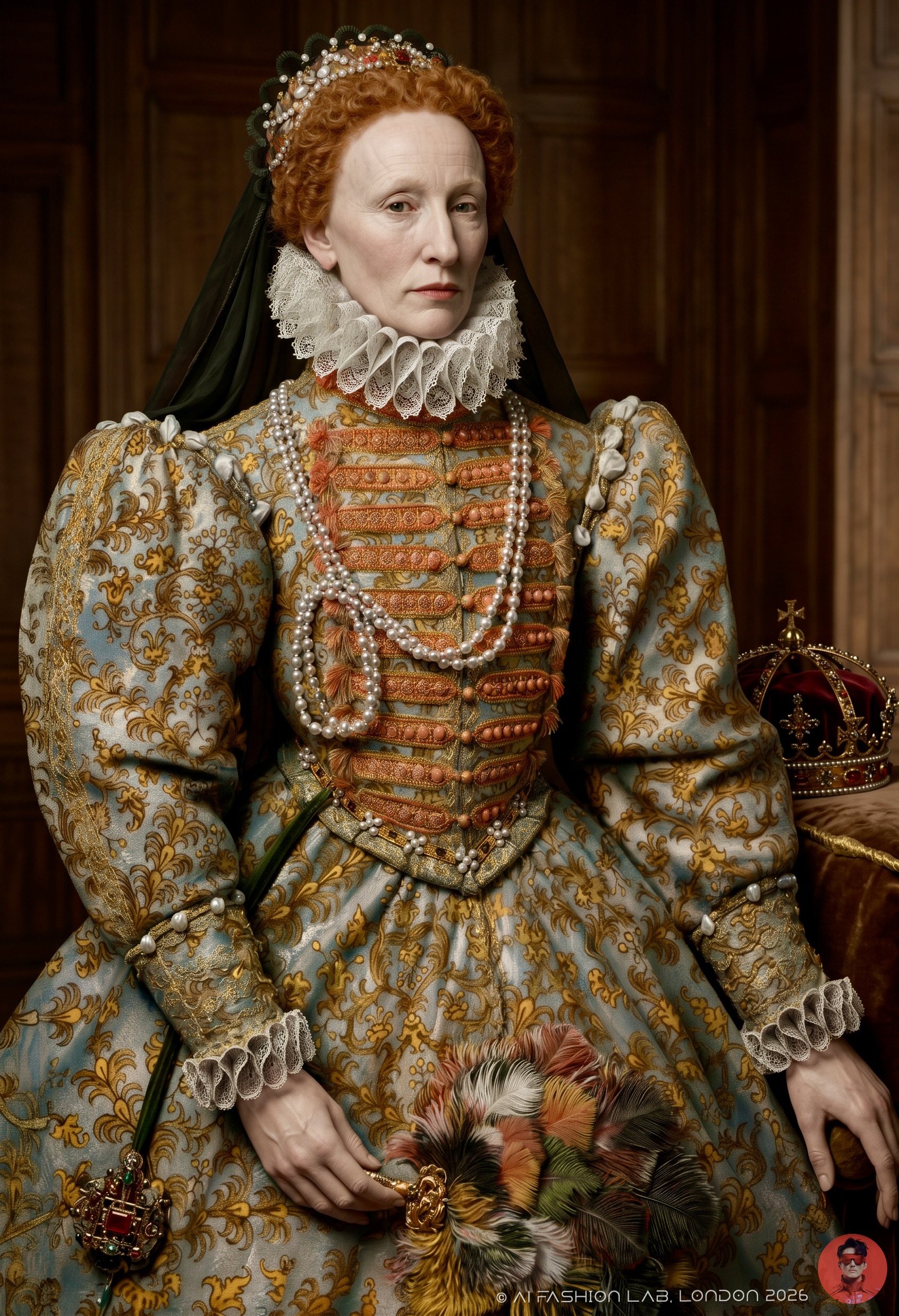
พระบรมฉายาลักษณ์แบบเสมือนจริงของสมเด็จพระราชินีนาถเอลิซาเบธที่ 1 แห่งอังกฤษ
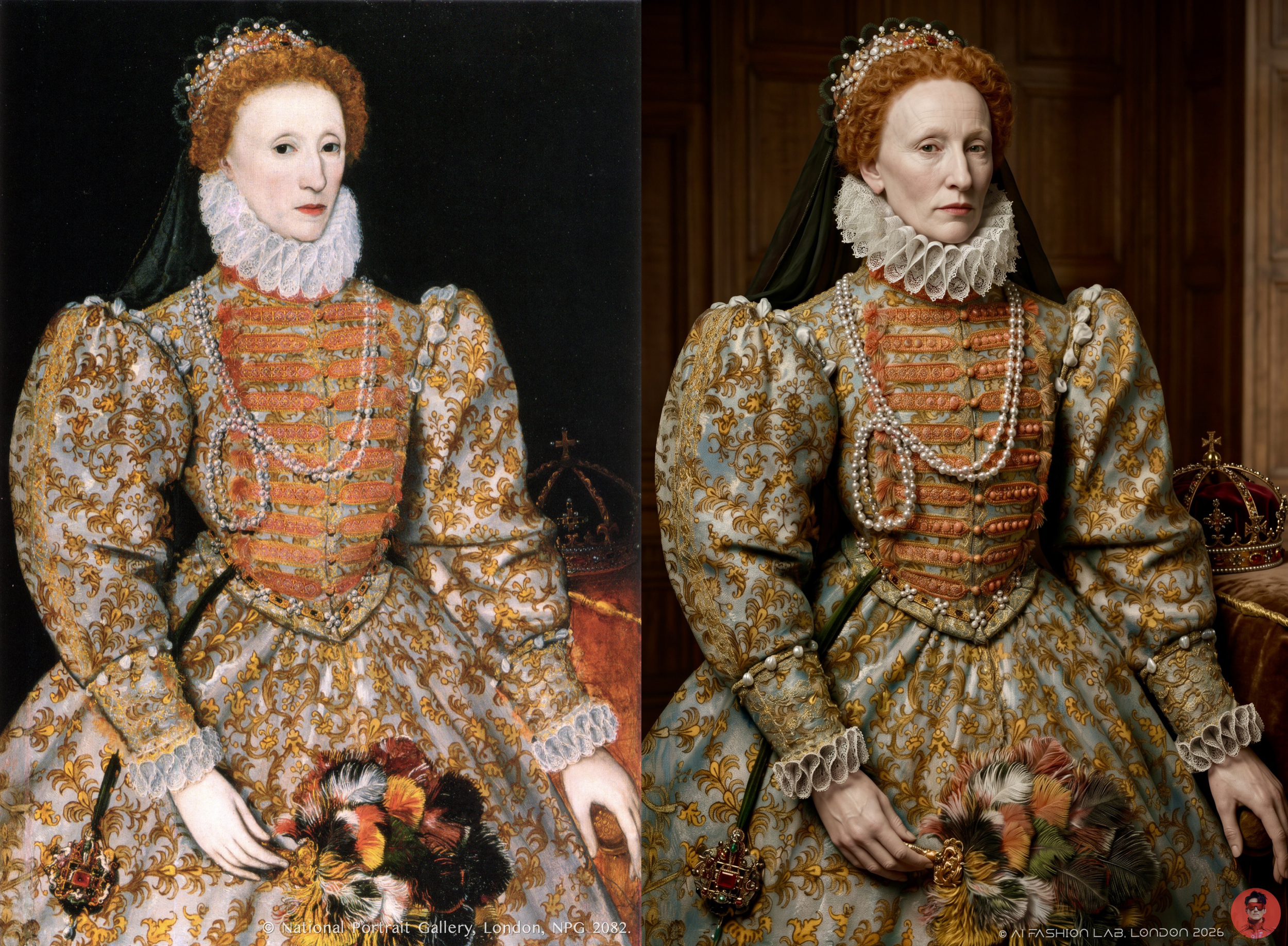
พระบรมฉายาลักษณ์แบบเสมือนจริงของสมเด็จพระราชินีนาถเอลิซาเบธที่ 1 แห่งอังกฤษ
ภาพที่ได้รับการบูรณะและสร้างสรรค์ด้วยเทคโนโลยี AI ภาพนี้คือ พระบรมฉายาลักษณ์จำลองของสมเด็จพระราชินีนาถเอลิซาเบธที่ 1 แห่งอังกฤษ
จากภาพเหมือนดาร์นลีย์สู่การตีความด้วย AI
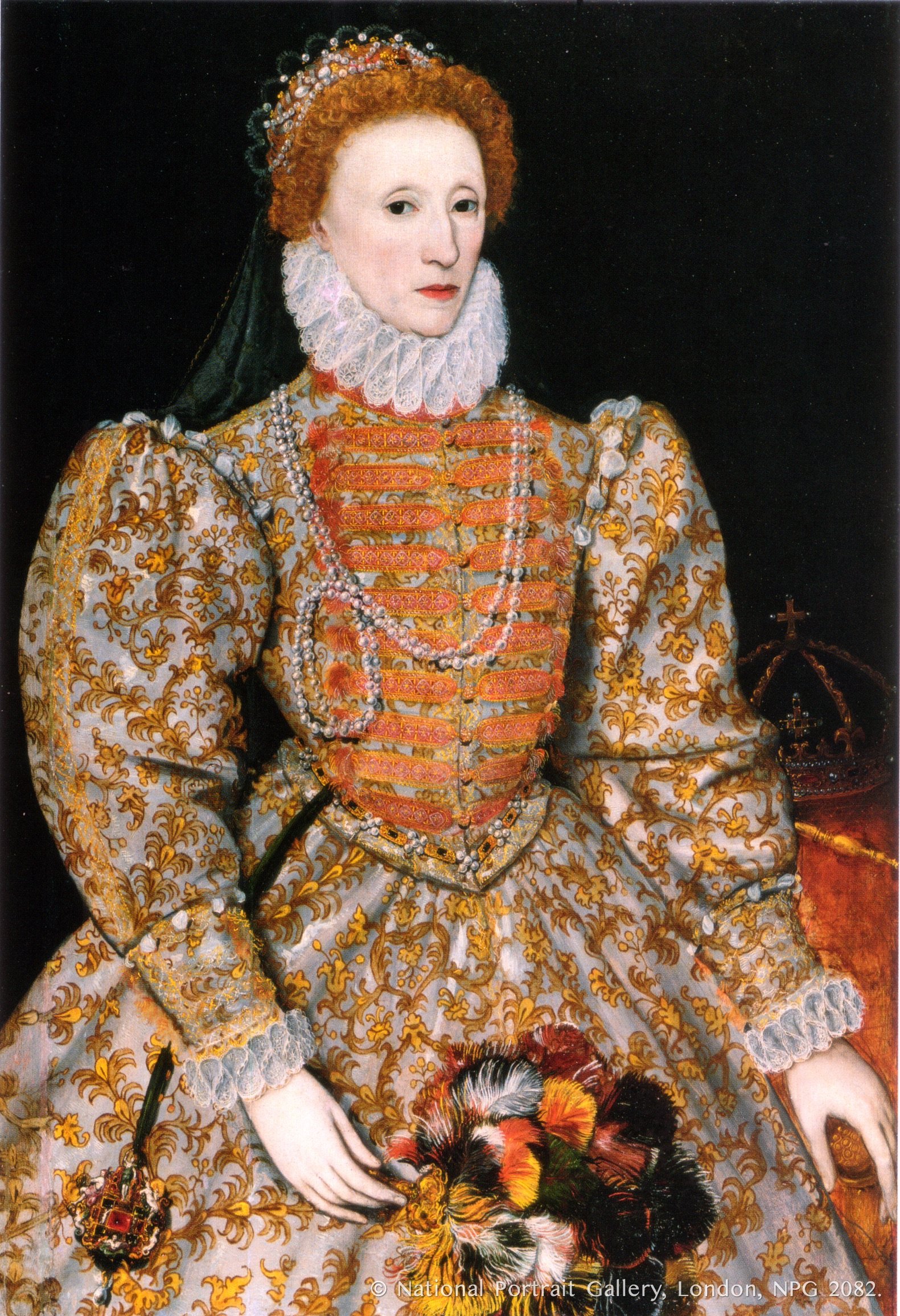
ภาพนี้เป็นการสร้างขึ้นใหม่ด้วย AI (AI-generated reconstruction) โดยอ้างอิงจากภาพเหมือนที่มีชื่อเสียงของ สมเด็จพระราชินีนาถเอลิซาเบธที่ 1 (Queen Elizabeth I, 1533–1603) ซึ่งรู้จักกันในชื่อ ภาพเหมือนดาร์นลีย์ (Darnley Portrait) ปัจจุบันอยู่ในคอลเล็กชันของ หอศิลป์ภาพเหมือนแห่งชาติ (ลอนดอน) (National Portrait Gallery, London)
ภาพต้นฉบับวาดโดย ศิลปินชาวยุโรปที่ไม่ทราบนาม (Unknown Continental Artist) ราว ค.ศ. 1575 เป็นภาพสีน้ำมันบนแผ่นไม้ (oil on panel) ขนาดประมาณ 113 × 78.7 เซนติเมตร และเข้าสู่คอลเล็กชันของหอภาพบุคคลแห่งชาติเมื่อ ค.ศ. 1925 ภาพนี้ถือเป็นหนึ่งในภาพเหมือนของสมเด็จพระราชินีนาถเอลิซาเบธที่ 1 ที่สำคัญที่สุดซึ่งยังหลงเหลืออยู่ และมีความเป็นไปได้สูงว่าศิลปินได้วาดพระพักตร์จากพระองค์จริง
ความสำคัญของภาพดาร์นลีย์อยู่ที่การสร้าง “ต้นแบบ” ของพระพักตร์ของเอลิซาเบธ ซึ่งต่อมาถูกนำไปทำซ้ำในภาพพระบรมสาทิสลักษณ์อีกจำนวนมากตลอดช่วงหลังของรัชสมัย ลักษณะพระพักตร์ในภาพนี้ยังมีความเป็นธรรมชาติมากกว่าภาพพระบรมสาทิสลักษณ์ในยุคปลาย ซึ่งมักสร้างภาพของพระองค์ในฐานะ ราชินีพรหมจารี (Virgin Queen) ที่ไร้อายุและแทบไม่แสดงร่องรอยแห่งกาลเวลา
ในภาพต้นฉบับ พระองค์ทรงฉลองพระองค์ที่มีโครงสร้างแข็งและใกล้เคียงกับ ดับเบิลต์ (doublet) แบบบุรุษ ซึ่งสะท้อนอำนาจ ความเคร่งขรึม และการควบคุมพระวรกาย พระศอประดับด้วย ปกคอระบายลูกไม้ (lace ruff) ขนาดใหญ่ พระองค์ทรงสายสร้อยไข่มุกสองชั้น ซึ่งถือว่าเป็นเครื่องประดับลำ่ค่าในยุคเรอเนสซองส์ และทรงถือ พระพัชนีขนนกกระจอกเทศ (ostrich-feather fan) ซึ่งเป็นทั้งเครื่องประดับทางแฟชั่นและสัญลักษณ์ของสถานะในราชสำนักช่วงปลายศตวรรษที่ 16
หนึ่งในรายละเอียดที่สำคัญที่สุดของภาพคือเครื่องประดับที่ห้อยอยู่บริเวณพระโสณี ซึ่งอ้างอิงถึงเรื่อง การตัดสินของปารีส (Judgement of Paris) ในเทพปกรณัมกรีก การอ้างอิงนี้มีความหมายเชิงสัญลักษณ์เกี่ยวกับคุณธรรม ความงาม อำนาจ และความชอบธรรมของพระราชินี ภายในภาพยังปรากฏ มงกุฎ (crown) วางอยู่ด้านหลังพระองค์ ซึ่งช่วยเน้นพระสถานะในฐานะผู้ปกครองอย่างชัดเจน
ภาพต้นฉบับมีบทบาทสำคัญในการสร้างภาพลักษณ์ทางการเมืองของสมเด็จพระราชินีนาถเอลิซาเบธที่ 1 พระองค์ได้รับการกล่าวถึงจากนักการทูตต่างชาติว่ามีพระพักตร์ละม้ายคล้ายพระราชบิดา คือ พระเจ้าเฮนรีที่ 8 (Henry VIII) ซึ่งมีนัยทางการเมืองอย่างมาก เพราะช่วยเน้นความต่อเนื่องของราชวงศ์ทิวดอร์ (Tudor dynasty) และความชอบธรรมในการสืบราชบัลลังก์
การวิเคราะห์ทางเทคนิคของภาพยังแสดงให้เห็นว่า สีของภาพในปัจจุบันแตกต่างจากเมื่อแรกวาดอย่างมาก สีแดงบางชนิดได้ซีดจางไปตามกาลเวลา ทำให้พระพักตร์ของพระองค์ในปัจจุบันดูขาวซีดกว่าที่ศิลปินตั้งใจไว้ แต่เดิมผิวพระพักตร์น่าจะมีสีชมพูและมีชีวิตชีวามากกว่า ในทำนองเดียวกัน ลวดลายสีน้ำตาลทองที่เราเห็นบนฉลองพระองค์ในปัจจุบัน เดิมน่าจะมีสีแดงเข้มและทองสดกว่ามาก
การสร้างภาพใหม่ด้วย AI
ภาพถ่ายเสมือนจริงที่สร้างขึ้นใหม่นี้เป็น การตีความเชิงภาพผ่าน AI (AI-generated photorealistic interpretation) โดยนำองค์ประกอบจากภาพดาร์นลีย์มาแปลงให้มีลักษณะใกล้เคียงการถ่ายภาพบุคคลร่วมสมัย
การตีความใหม่นี้คงองค์ประกอบสำคัญของภาพต้นฉบับไว้ ได้แก่ พระเกศาสีแดง ปกคอระบายลูกไม้ เครื่องประดับไข่มุก ฉลองพระองค์ปักลวดลาย มงกุฎ และพระพัชนีขนนกกระจอกเทศ แต่เพิ่มรายละเอียดทางกายภาพที่ภาพวาดสมัยคริสต์ศตวรรษที่ 16 มักลดทอน เช่น พื้นผิวของผิวหนัง รอยย่น ร่องใต้ตา ความไม่สม่ำเสมอของสีผิว และลักษณะของเส้นผมที่สมจริงยิ่งขึ้น
ด้วยเหตุนี้ ภาพ AI จึงทำหน้าที่แตกต่างจากภาพพระบรมสาทิสลักษณ์ดั้งเดิม ภาพต้นฉบับสร้างขึ้นเพื่อสื่อถึงอำนาจ ความสูงศักดิ์ และภาพลักษณ์ทางการเมืองของพระมหากษัตริย์ ในขณะที่ภาพ AI พยายามถามคำถามอีกแบบหนึ่งว่า
หากเราสามารถมองเห็นบุคคลที่อยู่เบื้องหลังพระบรมสาทิสลักษณ์ สมเด็จพระราชินีนาถเอลิซาเบธที่ 1 อาจมีพระพักตร์อย่างไรในโลกของการถ่ายภาพสมัยใหม่
ในเชิงประวัติศาสตร์การแต่งกาย ภาพนี้ยังเป็นตัวอย่างที่น่าสนใจของความสัมพันธ์ระหว่าง ภาพเหมือน แฟชั่น และอำนาจทางการเมือง (portraiture, fashion and political power) ฉลองพระองค์ มิได้เป็นเพียงเครื่องแต่งกาย แต่ทำหน้าที่ประกาศพระราชอำนาจผ่านโครงสร้างของร่างกาย สิ่งทอ เครื่องประดับ และการจัดวางพระวรกาย ภาพ AI จึงช่วยให้ผู้ชมร่วมสมัยสามารถกลับไปพิจารณารายละเอียดเหล่านี้ในรูปแบบใหม่ โดยยังคงมีภาพดาร์นลีย์เป็นหลักฐานทางประวัติศาสตร์ต้นทางครับ
_____________
ข้อมูลภาพต้นฉบับ: Queen Elizabeth I, by Unknown Continental Artist, c. 1575, oil on panel, 1130 × 787 mm, National Portrait Gallery, London, NPG 2082. ภาพด้านขวา: AI-generated photorealistic interpretation based on the Darnley Portrait.
Original Portrait: https://www.npg.org.uk/collections/search/portrait/mw02075/Queen-Elizabeth-I
เรียนเชิญกด Subscribe ได้ที่ลิงก์นี้ครับ เพื่อร่วมติดตามงานสร้างสรรค์ต้นฉบับ งานวิจัยประวัติศาสตร์แฟชั่น และผลงานอนุรักษ์มรดกวัฒนธรรมด้วยเทคโนโลยี AI ของ AI Fashion Lab, London ซึ่งมุ่งตีความอดีตผ่านมิติใหม่ของการบูรณะภาพ การสร้างสรรค์ภาพ และการเล่าเรื่องด้วยศิลปะเชิงดิจิทัล 🔗 https://www.facebook.com/aifashionlab/subscribe/
#aifashionlab #AI #aiartist #aiart #aifashion #aifashiondesign #aifashionstyling #aifashiondesigner #fashion #fashionhistory #historyoffashion #fashionstyling #fashionphotography #digitalfashion #digitalfashiondesign #digitalcostumedesign #digitaldesign #digitalaiart #ThaiFashionHistory #ThaiFashionAI #thailand #UNESCO
_____________
A Reconstructed Portrait of Queen Elizabeth I
This image, restored and reimagined using AI technology, is a reconstructed portrait of Queen Elizabeth I of England.
From the Darnley Portrait to an AI Interpretation
This image is an AI-generated reconstruction based on the celebrated portrait of Queen Elizabeth I (1533–1603)known as the Darnley Portrait, now in the collection of the National Portrait Gallery, London.
The original portrait was painted by an Unknown Continental Artist around 1575. It is an oil painting on panel measuring approximately 113 × 78.7 cm and entered the collection of the National Portrait Gallery in 1925. It is regarded as one of the most important surviving portraits of Queen Elizabeth I, and it is highly likely that the artist painted the Queen’s face directly from life.
The significance of the Darnley Portrait lies in the fact that it established a facial “pattern” for Elizabeth that was subsequently repeated in numerous royal portraits throughout the remainder of her reign. The Queen’s appearance in this work is also considerably more naturalistic than in many later portraits, which increasingly constructed her public image as the Virgin Queen — an ageless monarch whose face showed little evidence of the passage of time.
In the original portrait, Elizabeth wears a highly structured garment resembling a masculine doublet, conveying authority, severity and the disciplined presentation of the royal body. Her neck is framed by a large lace ruff, while a double strand of pearls hangs around her neck. Pearls were among the most precious forms of jewellery in Renaissance Europe. She also carries an ostrich-feather fan, which functioned both as a fashionable accessory and as an indicator of elite status at the late sixteenth-century court.
One of the most significant details is the jewel suspended at her hip, which refers to the classical story of the Judgement of Paris. The reference carries symbolic associations with virtue, beauty, authority and queenship. A crown is also placed on a table behind the Queen, clearly reinforcing her status as sovereign.
The original portrait played an important role in constructing the political image of Queen Elizabeth I. Foreign ambassadors remarked upon her physical resemblance to her father, Henry VIII, a resemblance that had considerable political significance because it visually reinforced dynastic continuity within the Tudor dynasty and strengthened the legitimacy of her claim to the throne.
Technical examination has also revealed that the colours visible in the painting today differ considerably from their original appearance. Certain red pigments have faded over time, causing Elizabeth’s complexion to appear much paler than the artist originally intended. Her face would probably have appeared rosier and more lifelike. Similarly, the golden-brown pattern now visible on her dress would originally have been much richer, with stronger crimson and gold colouring.
Recreating the Portrait with AI
The newly created photorealistic image is an AI-generated photorealistic interpretation that translates elements of the Darnley Portrait into the visual language of contemporary portrait photography.
The reconstruction retains many of the principal features of the original image, including the Queen’s red hair, lace ruff, pearl jewellery, richly patterned gown, crown and ostrich-feather fan, while introducing physical details that sixteenth-century portraiture often softened or suppressed. These include the texture of the skin, wrinkles, lines beneath the eyes, variations in complexion and a more naturalistic treatment of the hair.
The AI image therefore performs a different function from the original royal portrait. The historical painting was designed to communicate power, status, magnificence and political authority. The AI interpretation instead raises another question:
If we could look beyond the conventions of royal portraiture, what might Queen Elizabeth I have looked like through the visual language of modern photography?
From the perspective of dress history, the image also offers an interesting way of reconsidering the relationship between portraiture, fashion and political power. Elizabeth’s clothing was not simply decorative. Her garments helped construct and communicate royal authority through silhouette, textile, ornament, jewellery and the disciplined presentation of the body.
The AI reconstruction therefore allows contemporary audiences to reconsider these historical details through a different visual medium, while the Darnley Portrait remains the primary historical source on which the interpretation is based.
_____________
Original portrait: Queen Elizabeth I, by Unknown Continental Artist, c. 1575, oil on panel, 1130 × 787 mm, National Portrait Gallery, London, NPG 2082.
Image on the right: AI-generated photorealistic interpretation based on the Darnley Portrait.
Original Portrait: https://www.npg.org.uk/collections/search/portrait/mw02075/Queen-Elizabeth-I
Please click Subscribe via the link below to follow the original creative work, fashion history research, and AI-assisted cultural heritage preservation projects of AI Fashion Lab, London.
Our work explores new ways of interpreting the past through image restoration, visual reconstruction, creative image-making, and digital storytelling, bringing historical fashion and cultural heritage into dialogue with emerging AI technologies.
🔗 https://www.facebook.com/aifashionlab/subscribe/
#aifashionlab #AI #aiartist #aiart #aifashion #aifashiondesign #aifashionstyling #aifashiondesigner #fashion #fashionhistory #historyoffashion #fashionstyling #fashionphotography #digitalfashion #digitalfashiondesign #digitalcostumedesign #digitaldesign #digitalaiart #ThaiFashionHistory #ThaiFashionAI #thailand #UNESCO