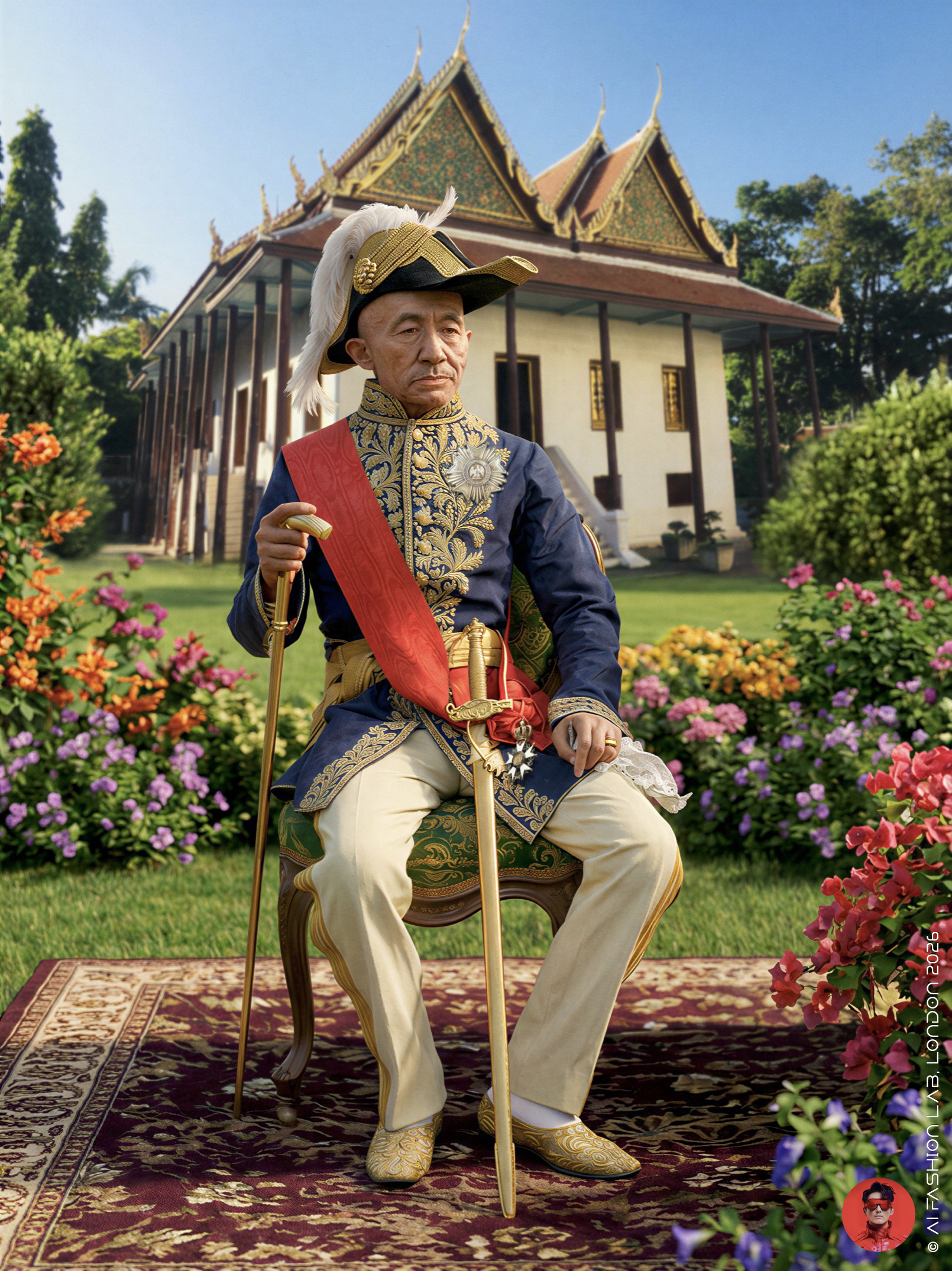
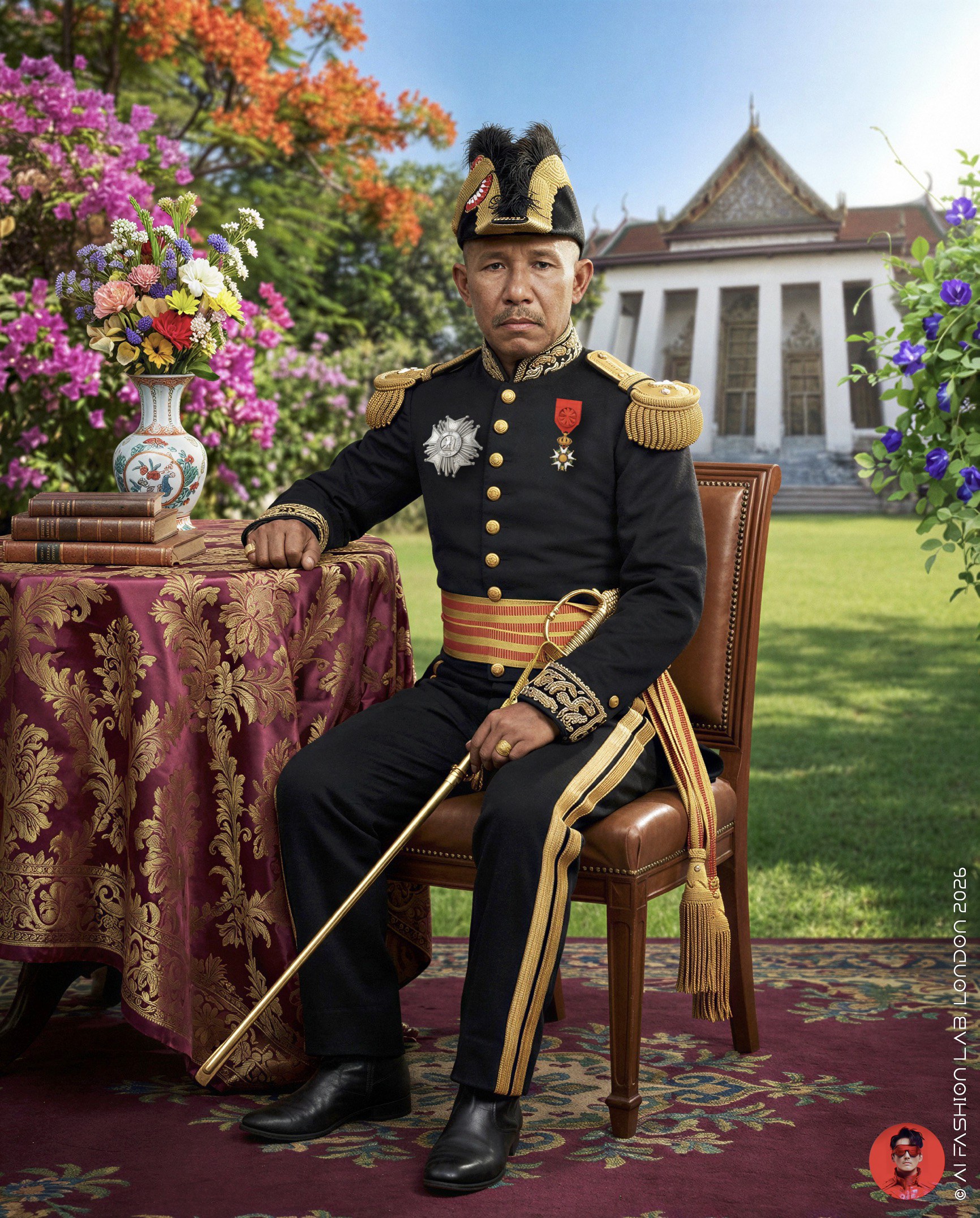
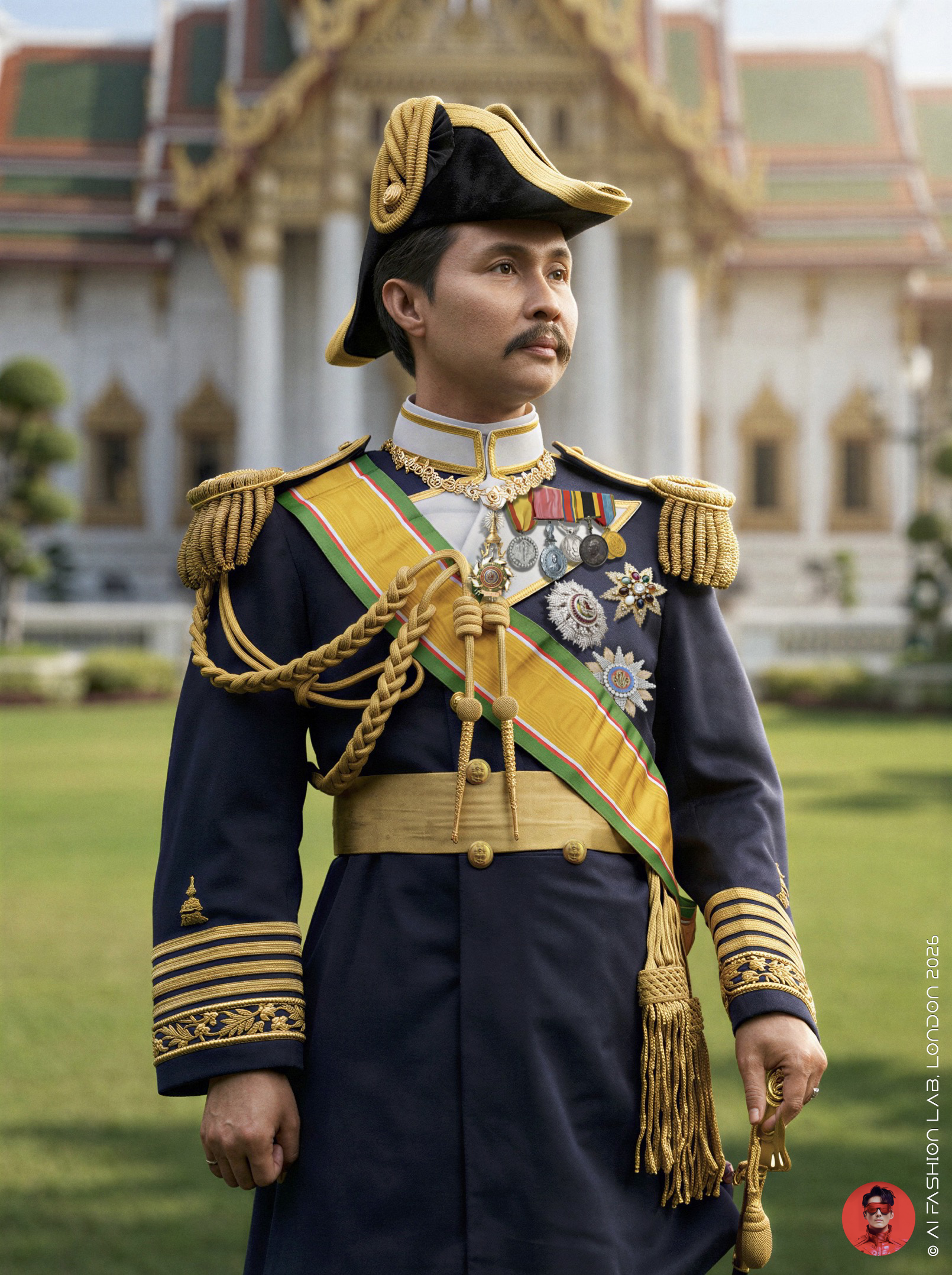
หมวก “ก๊อกแฮท”
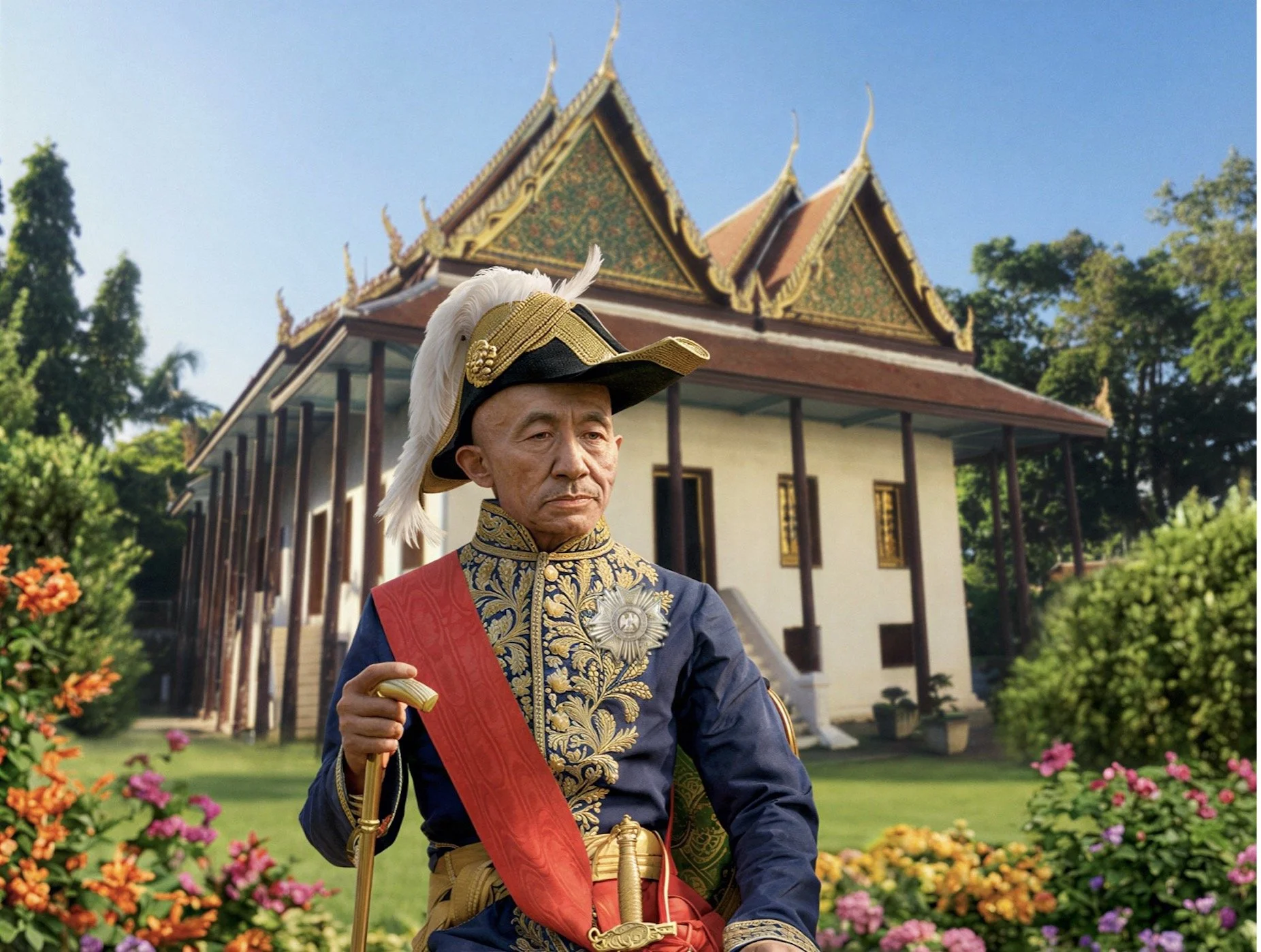
ภาพที่ได้รับการบูรณะและสร้างสรรค์ด้วยเทคโนโลยี AI ภาพนี้คือพระบรมฉายาลักษณ์พระบาทสมเด็จพระจอมเกล้าเจ้าอยู่หัว รัชกาลที่ ๔ และพระบาทสมเด็จพระจุลจอมเกล้าเจ้าอยู่หัว รัชกาลที่ ๕ พร้อมด้วยพระบวรฉายาลักษณ์พระบาทสมเด็จพระปิ่นเกล้าเจ้าอยู่หัว พระราชอนุชาในรัชกาลที่ ๔
เอ่ยถึงหมวก “ก๊อกแฮท” เชื่อว่าคนไทยน้อยคนนักที่จะรู้จักหรือเคยได้ยิน หากมิได้คลุกคลีอยู่ในวงการที่เกี่ยวข้องอย่างจริงจัง
คำว่า “ก๊อก” เป็นการเรียกทับศัพท์จากภาษาอังกฤษ ซึ่งอันที่จริงควรออกเสียงว่า “ค็อก” มากกว่า มาจากคำว่า Cock ที่แปลว่า “ไก่ตัวผู้” นั่นเอง
ส่วน “แฮท” ก็มาจากคำว่า Hat ที่แปลว่า “หมวก” เมื่อนำสองคำมารวมกันเป็น Cocked Hat จึงหมายถึงหมวกที่มีรูปทรงคล้ายหงอนไก่
หมวกก๊อกแฮทมีความเป็นมาอย่างไร และเหตุใดจึงจั่วหัวบทความว่า “จากนโปเลียนถึงพระพุทธเจ้าหลวง สู่ราชนาวีสยาม?”
หมวกก๊อกแฮทของพลตรี มหาอำมาตย์โท เจ้าจักรคำขจรศักดิ์
จุดเริ่มต้นที่ทำให้ดิฉันสนใจ “หมวกก๊อกแฮท” เกิดจากการที่เคยนั่งพินิจพิเคราะห์หมวกใบหนึ่งในตู้จัดแสดงของพิพิธภัณฑสถานแห่งชาติ หริภุญไชย อยู่นานหลายนาน
หมวกใบนั้นยังคงอยู่ในสภาพดี มีรูปทรงกระชับ กว้างประมาณ ๔๗ ซม. สูง ๑๔ ซม. ทำด้วยหนังสัตว์ ทั้งหนังกลับและหนังฟอกสีดำ ประดับด้วยไหมถักดิ้นทองและพู่ขนแกะสีขาว ได้มาพร้อมกล่องเหล็กสำหรับบรรจุเก็บรักษา แต่ตัวกล่องชำรุด
เจ้าพงษ์ธาดา ณ ลำพูน โอรสองค์โตของพลตรี มหาอำมาตย์โท เจ้าจักรคำขจรศักดิ์ เจ้าผู้ครองนครลำพูนองค์สุดท้าย เป็นผู้มอบหมวกใบนี้ให้แก่พิพิธภัณฑสถานแห่งชาติ หริภุญไชย เมื่อวันที่ ๖ มีนาคม พ.ศ. ๒๕๒๐
พิพิธภัณฑสถานแห่งชาติ หริภุญไชย ได้นำหมวกใบดังกล่าวมาจัดแสดงคู่กับเสื้อครุยปักดิ้นเงินดิ้นทองของเจ้าหลวงจักรคำฯ เช่นกัน แต่โบราณวัตถุทั้งสองชิ้นกลับไม่มีรายละเอียดข้อมูลเพียงพอสำหรับจัดทำคำบรรยายในเชิงกายภาพแต่อย่างใด
ดิฉันพยายามสอบถามผู้รู้เรื่องผ้าและเครื่องแต่งกายในแถบล้านนา แต่ก็ไม่ได้รับความกระจ่างมากนัก เนื่องจากผู้เชี่ยวชาญส่วนใหญ่มุ่งศึกษาผ้าพื้นเมืองเป็นหลัก
ในขณะที่หมวกก๊อกแฮทเป็นเครื่องแต่งกายที่นำเข้ามาจากสยาม อีกทั้งยังเป็นรูปแบบที่สยามรับอิทธิพลมาจากตะวันตกอีกทอดหนึ่ง
ในที่สุด ดิฉันจึงพยายามศึกษาค้นคว้าด้วยตนเอง จนได้ข้อสรุปว่า มาลาหรือหมวกของเจ้าจักรคำขจรศักดิ์ใบนี้เรียกว่า “มาลาทรงก๊อกแฮท” (Cocked Hat) เป็นหมวกที่ได้รับพระราชทานจากพระบาทสมเด็จพระมงกุฎเกล้าเจ้าอยู่หัว รัชกาลที่ ๖
ดังที่ได้เกริ่นไว้ตั้งแต่ต้นว่า “หมวกก๊อกแฮท” เป็นการเรียกทับศัพท์คำว่า Cocked Hat ซึ่งหากแปลตามรูปศัพท์จะหมายถึงหมวกที่มีส่วนหน้ายื่นยาวคล้ายหงอนไก่ และมีส่วนท้ายบานออกคล้ายพัด มีต้นกำเนิดจากหมวกที่นิยมในหมู่นายทหารและแม่ทัพในยุคนโปเลียนแห่งฝรั่งเศส ตั้งแต่ปลายคริสต์ศตวรรษที่ ๑๘ ราว ค.ศ. ๑๗๙๐ และใช้สืบต่อมาจนถึงช่วงต้นคริสต์ศตวรรษที่ ๒๐ ก่อนจะค่อย ๆ เลิกใช้ภายหลังสงครามโลกครั้งที่ ๑
ในภาษาฝรั่งเศสเรียกหมวกชนิดนี้ว่า Bicorne หรือ Bicorn ในภาษาอังกฤษ เนื่องจากรูปทรงดูคล้ายมีเขายื่นออกมาหนึ่งคู่ ในยุคนโปเลียน หมวกชนิดนี้นิยมใช้ในหมู่นายทหารระดับสูงและผู้บัญชาการกองทัพ โดยมีลักษณะเป็นหมวกทรงกระชับ พับปีกขึ้นทั้งสองด้าน และเน้นแนวยาวของหมวก
ตัวหมวกอาจตกแต่งขลิบตามขอบปีกซึ่งพับขึ้นมาบรรจบกัน ประดับพู่หรือขนนก เช่น ขนนกกระจอกเทศ รวมทั้งตกแต่งลวดลายด้านข้างด้วยเครื่องหมายแสดงตำแหน่งหรือยศ เวลาสวมอาจขยับหมวกให้เอียงเล็กน้อยเพื่อให้เกิดความสง่างามยิ่งขึ้น
หมวกแบบ Bicorn หรือ Cocked Hat แพร่หลายจากฝรั่งเศสไปยังประเทศต่าง ๆ ในยุโรปอย่างรวดเร็วในช่วงต้นคริสต์ศตวรรษที่ ๑๙ อาทิ อังกฤษ อิตาลี และประเทศอื่น ๆ โดยหลายแห่งนำไปใช้เป็นส่วนหนึ่งของเครื่องแบบนายทหาร โดยเฉพาะในกองทัพเรือ
บางประเทศ เช่น สเปนและออสเตรีย นำหมวก Bicorn ไปใช้กับเครื่องแบบทหารม้า ขณะที่บางประเทศ เช่น เบลเยียมและสวีเดน นำไปใช้กับเครื่องแบบนักการทูต นอกจากนี้ ยังมีหลักฐานว่าในฝรั่งเศส นอกเหนือจากการใช้ในกองทัพแล้ว หมวกก๊อกแฮทยังเคยกลายเป็นส่วนหนึ่งของเครื่องแบบนิสิตแพทย์ในกรุงปารีสอีกด้วย ก่อนที่รูปแบบดังกล่าวจะแพร่ไปยังประเทศต่าง ๆ ในเอเชียและแอฟริกาในยุคล่าอาณานิคม
สามพระมหากษัตริย์ไทยทรงพระมาลาก๊อกแฮท
ปรากฏพระบรมฉายาลักษณ์ของพระบาทสมเด็จพระจอมเกล้าเจ้าอยู่หัว รัชกาลที่ ๔ และพระบวรฉายาลักษณ์ของพระบาทสมเด็จพระปิ่นเกล้าเจ้าอยู่หัว พระราชอนุชา ขณะทรงพระมาลาแบบก๊อกแฮท พร้อมฉลองพระองค์ที่ประดับเครื่องราชอิสริยาภรณ์ Légion d’honneur ของฝรั่งเศส ซึ่งจักรพรรดินโปเลียนที่ ๓ แห่งฝรั่งเศสทรงถวายผ่านสังฆราชปัลเลอกัวซ์ สะท้อนให้เห็นว่าราชสำนักสยามเริ่มรู้จักและรับรูปแบบหมวก Bicorn หรือ Cocked Hat เข้ามาแล้วอย่างน้อยตั้งแต่สมัยรัชกาลที่ ๔
พระมหากษัตริย์พระองค์ถัดมาที่เราพบพระบรมฉายาลักษณ์ขณะทรงพระมาลาก๊อกแฮทอยู่ค่อนข้างบ่อย จนดูประหนึ่งเป็นพระราชนิยม คือ “พระพุทธเจ้าหลวง” หรือพระบาทสมเด็จพระจุลจอมเกล้าเจ้าอยู่หัว รัชกาลที่ ๕
ใน พ.ศ. ๒๔๔๘ พระบาทสมเด็จพระจุลจอมเกล้าเจ้าอยู่หัวโปรดเกล้าฯ ให้ตราพระราชกำหนดว่าด้วย “เครื่องแบบทหารเรือ” ขึ้นเป็นหลักฐานสำคัญ โดยมีผลบังคับใช้ตั้งแต่วันที่ ๑๗ กุมภาพันธ์ พ.ศ. ๒๔๔๘ กำหนดให้หมวกก๊อกแฮทสีดำซึ่งมีเครื่องหมายประดับด้านข้าง เป็นหมวกที่ใช้แสดงยศของนายทหารเรือชั้นสัญญาบัตรระดับสูง ส่วนหมวกเฮลเม็ตสีขาวและหมวกแก๊ปสักหลาดสีดำใช้สำหรับเครื่องแบบในลำดับรองลงมา
ด้วยเหตุนี้ เมื่อพระพุทธเจ้าหลวงเสด็จออกตรวจราชการในฐานะองค์จอมทัพแห่งกองทัพเรือ จึงปรากฏพระบรมฉายาลักษณ์ขณะทรงพระมาลาก๊อกแฮทอยู่หลายครั้ง
ต่อมาในสมัยรัชกาลที่ ๖ มีการปรับปรุงและเปลี่ยนแปลงเครื่องแบบทหารเรือหลายครั้ง ครั้งสำคัญเกิดขึ้นใน พ.ศ. ๒๔๕๕ โดยกำหนดให้มีการปักไหมดิ้นทองร้อยเป็นเปียตาข่ายคู่ มีรูปพระครุฑพ่าห์ทองประดับอยู่ตอนบน เหนือลายชัยพฤกษ์บนหมวกก๊อกแฮท ซึ่งเป็นหมวกรุ่นเดียวกับของเจ้าหลวงจักรคำฯ ชิ้นนี้
อย่างไรก็ตาม หลังจากนั้นไม่นาน การใช้หมวกก๊อกแฮทสำหรับนายทหารเรือระดับสูงก็ถูกยกเลิก และเปลี่ยนมาใช้หมวกในรูปแบบที่พัฒนาสืบต่อมาจนใกล้เคียงกับเครื่องแบบในปัจจุบัน
จะเห็นได้ว่า ในช่วงเวลาใกล้เคียงกัน หลายประเทศในยุโรปเริ่มลดหรือยกเลิกการใช้หมวกแบบ Bicorn ในเครื่องแบบทหาร ขณะที่สยามเองก็มีการปรับเปลี่ยนรูปแบบเครื่องแต่งกายทางทหารให้สอดคล้องกับยุคสมัยเช่นกัน
แต่สิ่งที่ยังคงชวนให้สงสัยก็คือ เหตุใดหมวกก๊อกแฮทซึ่งเกี่ยวข้องกับเครื่องแบบราชการและทหารเรือ จึงมาปรากฏอยู่กับเจ้านายฝ่ายเหนือหลายพระองค์ มิได้พบเฉพาะที่ลำพูนเท่านั้น หากยังพบหมวกในลักษณะเดียวกันที่หอวัฒนธรรมนิทัศน์ วัดศรีโคมคำ จังหวัดพะเยา ตลอดจนในพิพิธภัณฑ์คุ้มเจ้าหลายแห่งอีกด้วย
_________
This image has been restored and creatively reconstructed using AI technology. It depicts King Mongkut, Rama IV, and King Chulalongkorn, Rama V, together with the portrait of King Pinklao, the younger brother of King Mongkut.
Mention the term “Cocked Hat” to most Thai people, and relatively few are likely to recognise it or even to have heard of it, unless they are closely familiar with the subject.
The Thai term “ก๊อก” (kok) is itself a transliteration of the English word “cock”, although “ค็อก” (khok) would in fact be closer to the original pronunciation. The word cock means a male chicken or rooster.
“Hat”, of course, simply means a hat. When the two words are combined as Cocked Hat, the term refers to a distinctive form of hat whose raised silhouette was traditionally associated with the appearance of a cock’s comb.
So what is the history of the cocked hat, and why might an article about it bear the title “From Napoleon to King Chulalongkorn, and on to the Royal Siamese Navy”?
The Cocked Hat of Major General Chao Chakkham Khachonsak
My interest in the “cocked hat” began when I spent a considerable amount of time studying a particular hat displayed in a cabinet at the Hariphunchai National Museum.
The hat remains in relatively good condition and has a compact form, measuring approximately 47 centimetres in width and 14 centimetres in height. It is made from animal leather, including suede and black tanned leather, and is decorated with gold-thread braid and a white wool plume. It was acquired together with a metal storage case, although the case itself is damaged.
Chao Phongthada Na Lamphun, the eldest son of Major General Maha Ammat Tho Chao Chakkham Khachonsak, the last ruler of Lamphun, donated the hat to the Hariphunchai National Museum on 6 March 1977.
The Hariphunchai National Museum displays the hat alongside Chao Chakkham’s ceremonial robe embroidered with silver and gold thread. However, neither object was accompanied by sufficiently detailed information from which a full physical description could be prepared.
I therefore attempted to consult specialists in textiles and dress from the Lanna region, but received relatively little clarification, since most experts in the field specialise primarily in indigenous textiles.
The cocked hat, by contrast, was a form of dress introduced into Lanna from Siam, while Siam itself had adopted the style from the West.
Eventually, through independent research, I concluded that this particular hat belonging to Chao Chakkham Khachonsak was known as a Mala Song Cocked Hat, or ceremonial cocked hat, and that it had been bestowed upon him by King Vajiravudh, Rama VI.
As mentioned above, the Thai expression “kok hat” derives from the English term Cocked Hat. In its general form, it refers to a hat with raised and folded sides, producing an elongated silhouette. The type became strongly associated with senior military officers during the Napoleonic era in France from the late eighteenth century, around the 1790s, and continued to be used in various ceremonial and military contexts into the early twentieth century, before gradually declining after the First World War.
In French, this type of hat is commonly known as the bicorne, or bicorn in English, because its form appears to produce two projecting “horns”. During the Napoleonic period, such hats became strongly associated with senior military officers and commanders. They were generally compact in construction, with the brim folded upwards on two sides to create an elongated form.
The upper edges could be decorated with braid where the two folded sides met, while plumes made from feathers, including ostrich feathers, might also be added. The sides of the hat often carried embroidered insignia indicating rank or office. When worn, the hat could sometimes be tilted slightly to one side to create a more striking and elegant appearance.
The bicorn, or cocked hat, spread rapidly from France to other European countries during the early nineteenth century, including Britain and Italy. In many countries it became incorporated into military uniforms, particularly those of senior naval officers.
In some countries, such as Spain and Austria, forms of the bicorn were also used with cavalry uniforms. In others, including Belgium and Sweden, they became associated with diplomatic dress. There is also evidence that, outside the military sphere, cocked hats became part of the ceremonial dress of medical students in Paris. From Europe, the form later spread to parts of Asia and Africa during the colonial era.
Three Thai Monarchs Wearing the Cocked Hat
Photographic portraits survive of King Mongkut, Rama IV, and King Pinklao, his younger brother, wearing cocked hats together with ceremonial dress decorated with the French Légion d’honneur, bestowed by Emperor Napoleon III of France through Bishop Jean-Baptiste Pallegoix.
These images demonstrate that the Siamese royal court was already familiar with the bicorn, or cocked hat, by at least the reign of King Mongkut.
The next Thai monarch who was frequently photographed wearing the cocked hat, to the extent that it appears almost to have become a personal royal preference, was King Chulalongkorn, Rama V, affectionately remembered in Thailand as Phra Phuttha Chao Luang.
In 1905, King Chulalongkorn ordered the formal regulation of the Royal Siamese Navy uniform, creating an important documentary precedent for naval dress. The regulations came into effect on 17 February 1905 and established the black cocked hat, decorated with insignia on the side, as a form of headwear associated with the highest ranks of commissioned naval officers. White helmets and black felt caps were prescribed for uniforms of lower precedence.
For this reason, when King Chulalongkorn undertook official inspections in his capacity as supreme commander of the navy, he was frequently photographed wearing the cocked hat.
During the reign of King Vajiravudh, Rama VI, naval uniforms were revised on several occasions. One particularly significant revision took place in 1912, when regulations prescribed gold-thread embroidery arranged in paired braided or net-like patterns, together with a golden Garuda emblem positioned above decorative chaiyaphruek foliage on the cocked hat.
The hat belonging to Chao Chakkham Khachonsak appears to belong to this same general model.
Not long afterwards, however, the use of the cocked hat for senior naval officers was discontinued, and it was gradually replaced by forms of naval headwear that developed into those more familiar today.
It is noteworthy that during approximately the same period many European countries were reducing or abandoning the use of the bicorn in military dress, while Siam was likewise modernising and revising its military uniforms in accordance with changing international conventions.
Yet one question remained unresolved for me: why should a cocked hat associated primarily with official and naval dress appear among the possessions of so many northern Thai princes and rulers?
Examples are not confined to Lamphun. Similar hats can also be found at the Cultural Exhibition Hall of Wat Si Khom Kham in Phayao Province, as well as in a number of museums housed in former princely residences across northern Thailand.
_________
บทความต้นฉบับ : https://www.matichon.co.th/weekly/column/article_142416
เรียนเชิญกด Subscribe ได้ที่ลิงก์นี้ครับ เพื่อร่วมติดตามงานสร้างสรรค์ต้นฉบับ งานวิจัยประวัติศาสตร์แฟชั่น และผลงานอนุรักษ์มรดกวัฒนธรรมด้วยเทคโนโลยี AI ของ AI Fashion Lab, London ซึ่งมุ่งตีความอดีตผ่านมิติใหม่ของการบูรณะภาพ การสร้างสรรค์ภาพ และการเล่าเรื่องด้วยศิลปะเชิงดิจิทัล 🔗 https://www.facebook.com/aifashionlab/subscribe/
#aifashionlab #AI #aiartist #aiart #aifashion #aifashiondesign #aifashionstyling #aifashiondesigner #fashion #fashionhistory #historyoffashion #fashionstyling #fashionphotography #digitalfashion #digitalfashiondesign #digitalcostumedesign #digitaldesign #digitalaiart #ThaiFashionHistory #ThaiFashionAI #thailand #UNESCO