John Thomson: Siam — A Colourisation Project พระสงฆ์ไทยสมัยรัชกาลที่ ๔ ถือพัดเปรียญ
John Thomson: Siam — A Colourisation Project
พระสงฆ์ไทยสมัยรัชกาลที่ ๔ ถือพัดเปรียญ
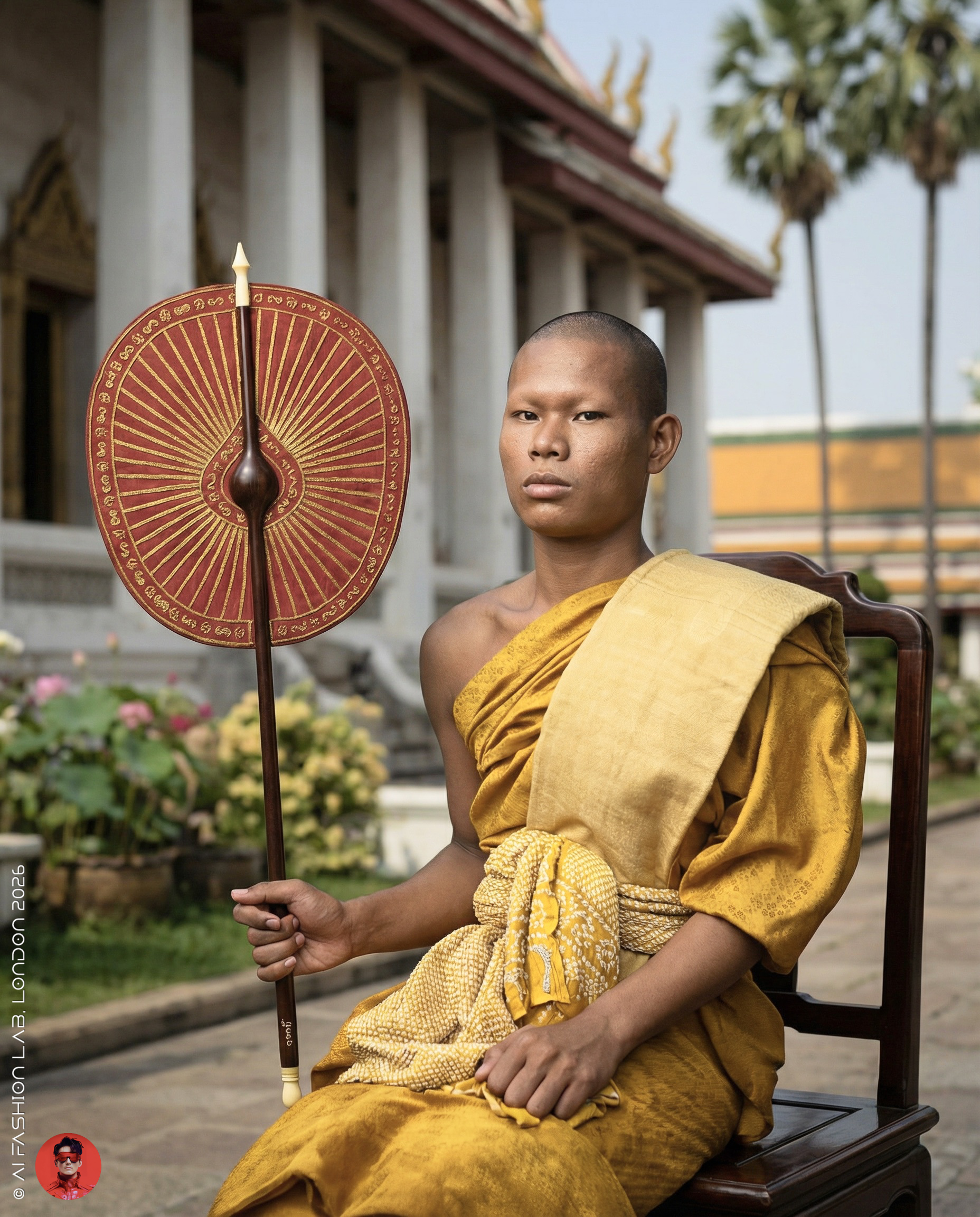
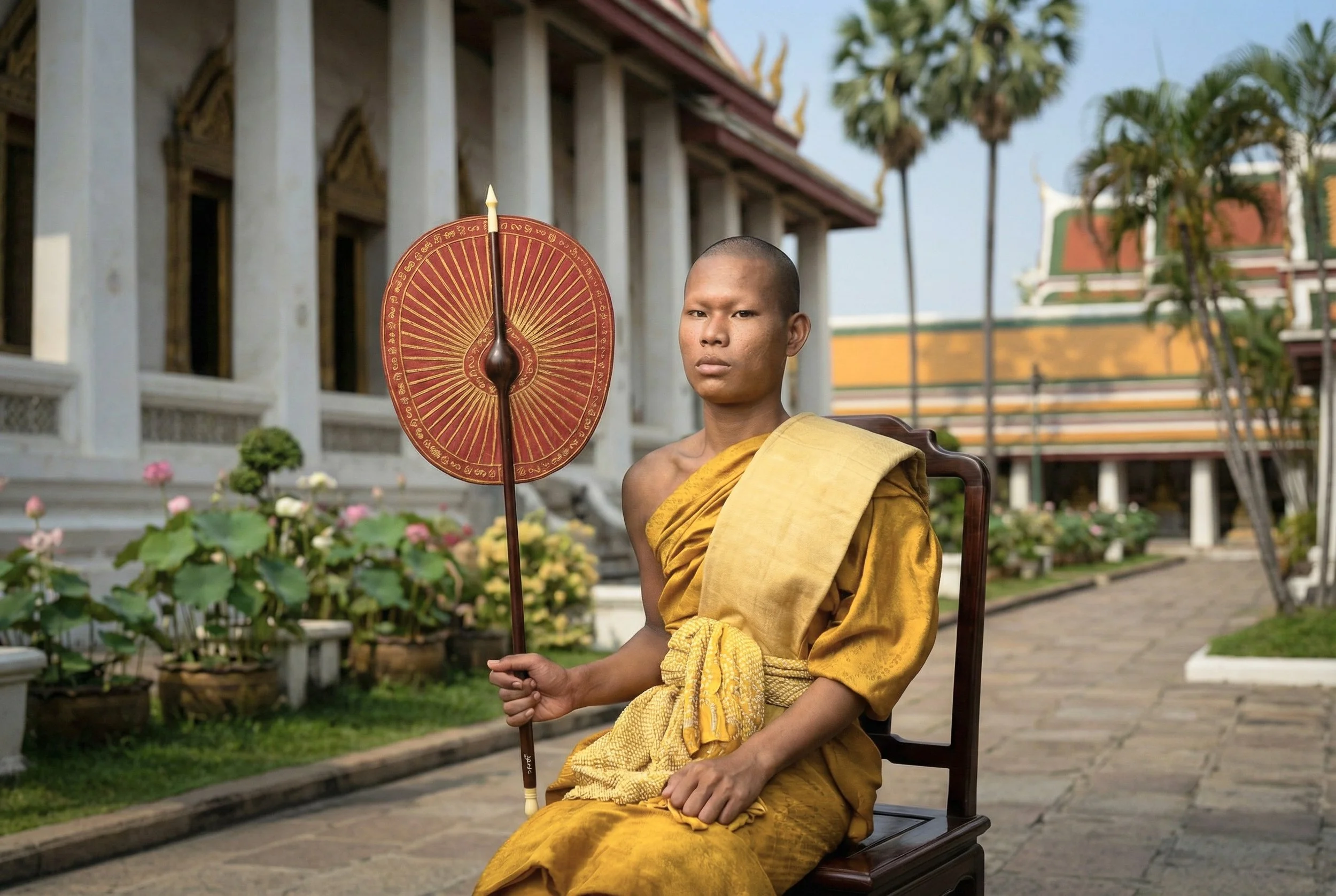
ภาพนี้นับเป็นผลงานในชุด John Thomson: Siam — A Colourisation Project ซึ่งเป็นงานศึกษาทางภาพอย่างต่อเนื่อง มุ่งบูรณะและตีความหลักฐานภาพถ่ายยุคแรกเริ่มของสยามในคริสต์ศตวรรษที่ ๑๙ ขึ้นใหม่ ผ่านกระบวนการลงสีด้วยเทคโนโลยี AI บนพื้นฐานข้อมูลทางประวัติศาสตร์อย่างรอบคอบ
ภาพถ่ายนี้บันทึกเมื่อปี ค.ศ. ๑๘๖๕ (พ.ศ. ๒๔๐๘) โดยจอห์น ทอมสัน ในรัชสมัยพระบาทสมเด็จพระจอมเกล้าเจ้าอยู่หัว (รัชกาลที่ ๔ ครองราชย์ พ.ศ. ๒๓๙๔–๒๔๑๑) แสดงภาพพระสงฆ์ชาวสยามนั่งถือพัดเปรียญลักษณะตาลปัตรใบลานคาดตับ ซึ่งสะท้อนรูปแบบพัดสมณศักดิ์ในสมัยรัชกาลที่ ๔
การพำนักของทอมสันในสยามระหว่างปี ค.ศ. ๑๘๖๕–๑๘๖๗ ส่งผลให้เกิดการบันทึกภาพอย่างเป็นระบบชุดแรก ๆ ของราชอาณาจักร โดยใช้เทคนิคเว็ตเพลตคอลโลเดียน (wet plate collodion) หรือฟิล์มกระจกเปียก ซึ่งเป็นกระบวนการที่ต้องใช้เวลาเปิดหน้ากล้องนาน และต้องล้างอัดภาพทันทีภายใต้ขั้นตอนทางเคมีที่ละเอียดอ่อน
จีวรลายดอกพิกุล: การตีความสีจากหลักฐานภาพถ่าย
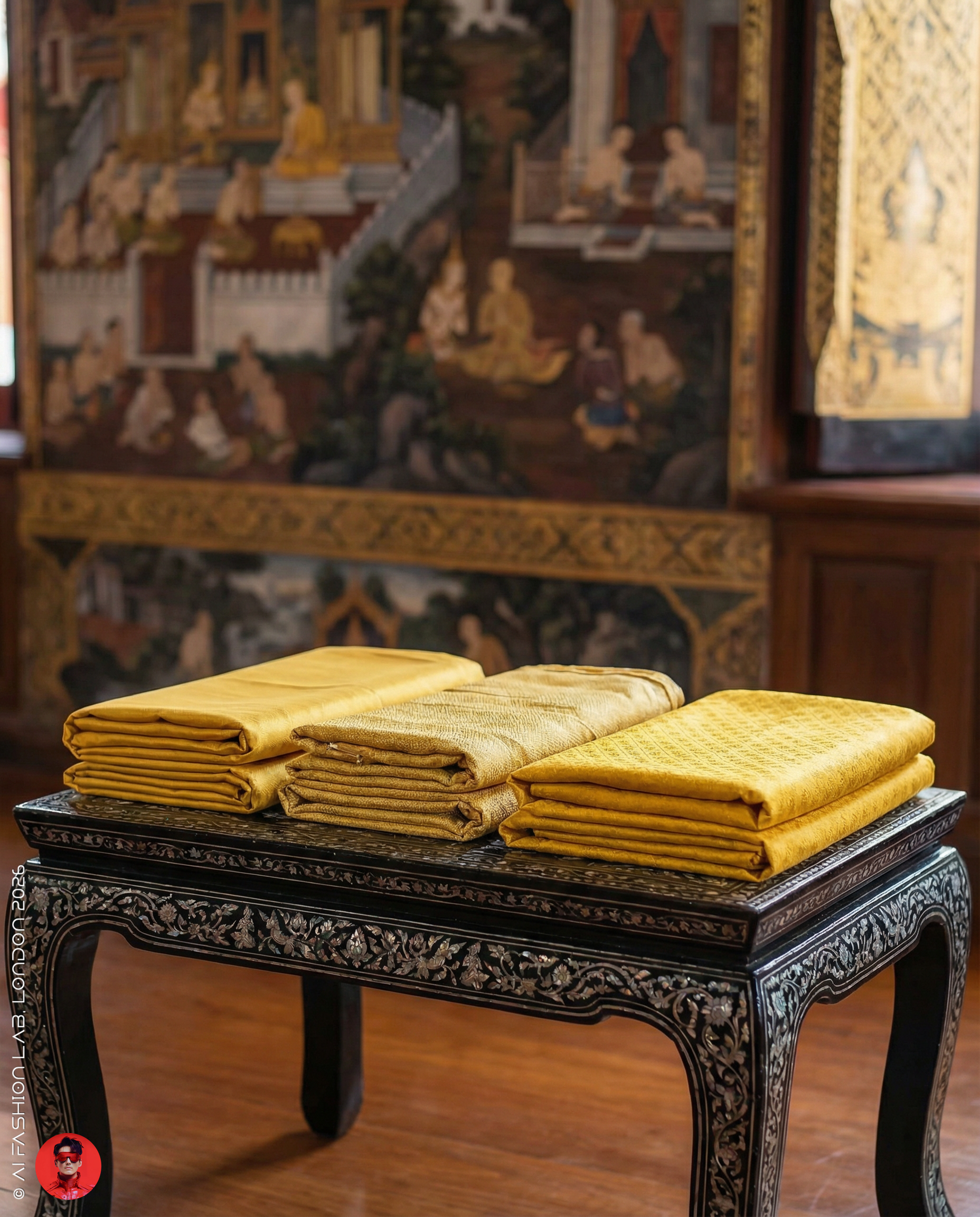
ประเด็นที่น่าสนใจอย่างยิ่งในภาพนี้คือการสร้างสรรค์สีจีวร จากการค้นคว้าเทียบค่า grey scale ของภาพถ่ายขาวดำยุคต้น ประกอบกับคำปรึกษาจากผู้ทรงคุณวุฒิ ทำให้ได้ข้อสันนิษฐานว่า จีวรลายดอกพิกุลของพระสงฆ์ในภาพควรเป็นสีเหลืองทอง สอดคล้องกับตัวอย่างจีวรผ้าไหมลายดอกพิกุลที่ยังมีหลักฐานหลงเหลืออยู่
ในภาพถ่ายยุครัชกาลที่ ๔–๕ สีเหลืองมักปรากฏเป็นค่าเทาเข้มหรือเกือบเทาเข้ม จึงอาจทำให้เข้าใจคลาดเคลื่อนว่าเป็นสีกรักหรือสีน้ำตาลแดง ดังที่พบเห็นในการสร้างรูปปั้นเหมือนหรือการลงสีภาพในภายหลัง
ที่มาของ “จีวรดอกพิกุล”
จีวรผ้าไหมลายดอกพิกุล บางครั้งพบลายดอกโบตั๋นหรือลายต้นไผ่ ปรากฏหลักฐานในกรุจีวรโบราณของวัดสุทธิวราราม สันนิษฐานว่าในสมัยต้นกรุงรัตนโกสินทร์ นายช่างได้เลียนแบบ “ผ้าต่างประเทศ” ซึ่งมีการทอเนื้อผ้าเป็นลายดอกดวงเล็ก ๆ คล้ายดอกพิกุล อันนับเป็นของแปลกใหม่ในยุคนั้น
ด้วยความงดงามและมีค่าสูง เหล่าทายกทายิกาผู้มีศรัทธาจึงนิยมนำผ้าลายดอกดังกล่าวมาตัดย้อมเป็นจีวรถวายพระภิกษุ ถือเป็น “ประณีตทาน” และแพร่หลายโดยทั่วไป จนกลายเป็นแรงบันดาลใจให้มีการสร้าง “พระพุทธรูปจีวรดอก” ขึ้นด้วย และเชื่อกันว่าเป็นจีวรที่ถวายแด่พระสงฆ์ผู้มีสมณศักดิ์ระดับสูง
ผ้าคาดอก (ผ้าหนามขนุน)
ผ้าหนามขนุน หรือที่เรียกในภาษาญี่ปุ่นว่า คะโนะโกะชิโบริ (Kanoko Shibori) เป็นผ้าแพรมัดย้อมที่เกิดจากการมัดผืนผ้าด้วยปมขนาดเล็กจำนวนมหาศาลทั่วทั้งผืน ก่อนนำไปย้อมสี ทำให้เกิดพื้นผิวนูนละเอียดคล้ายหนามของผลขนุน อันเป็นที่มาของชื่อเรียกในภาษาไทย เทคนิคดังกล่าวต้องอาศัยความชำนาญสูง บางผืนอาจใช้ช่างถึง ๕ คน และต้องมัดปมเป็นจำนวนแสนจนถึงล้านปม จึงจะได้พื้นผิวที่ยืดหยุ่น มีมิติ และมีลวดลายเป็นตุ่มเล็ก ๆ อย่างสม่ำเสมอทั่วผืนผ้า
ผ้าหนามขนุนเป็นที่นิยมตั้งแต่สมัยอยุธยาตอนปลายต่อเนื่องถึงรัตนโกสินทร์ตอนต้น จัดเป็นผ้าหรูหราหายากและมีค่าสูงในสังคมโบราณ เดิมนิยมใช้เป็นผ้าคาดเอวของเจ้านายและขุนนาง เพื่อเพิ่มความงามและแสดงฐานะ ต่อมาในบริบทของคณะสงฆ์ ผ้าชนิดนี้ยังถูกใช้เป็นผ้ารัดอกของพระภิกษุสามเณร เพื่อช่วยให้ชุดครองกระชับ เรียบร้อย และสง่างามยิ่งขึ้น สะท้อนความประณีตในรายละเอียดของการแต่งกายสมณเพศ
ในด้านแหล่งที่มา ผ้าหนามขนุนส่วนใหญ่เป็นสินค้านำเข้าจากต่างประเทศ โดยเฉพาะจากญี่ปุ่นและอินเดีย ซึ่งแบบญี่ปุ่นมักมีความละเอียดประณีตกว่า ทั้งในขนาดปมและความสม่ำเสมอของลวดลาย นอกจากการใช้ในหมู่พระเถรานุเถระแล้ว ผ้าชนิดนี้ยังเป็นสิ่งของที่พระมหากษัตริย์พระราชทานแก่ขุนนางและเจ้าเมืองต่าง ๆ อันเป็นสัญลักษณ์แห่งพระราชอำนาจและความโปรดปราน
ในปัจจุบัน ผ้าหนามขนุนกลายเป็นวัตถุโบราณที่พบเห็นได้ยาก และทรงคุณค่าทางประวัติศาสตร์การแต่งกายในราชสำนักสยาม ทั้งในฐานะหลักฐานด้านศิลปหัตถกรรม สิ่งทอ และวัฒนธรรมการแต่งกายที่เชื่อมโยงสยามกับเครือข่ายการค้าในเอเชียตะวันออกอย่างชัดเจน
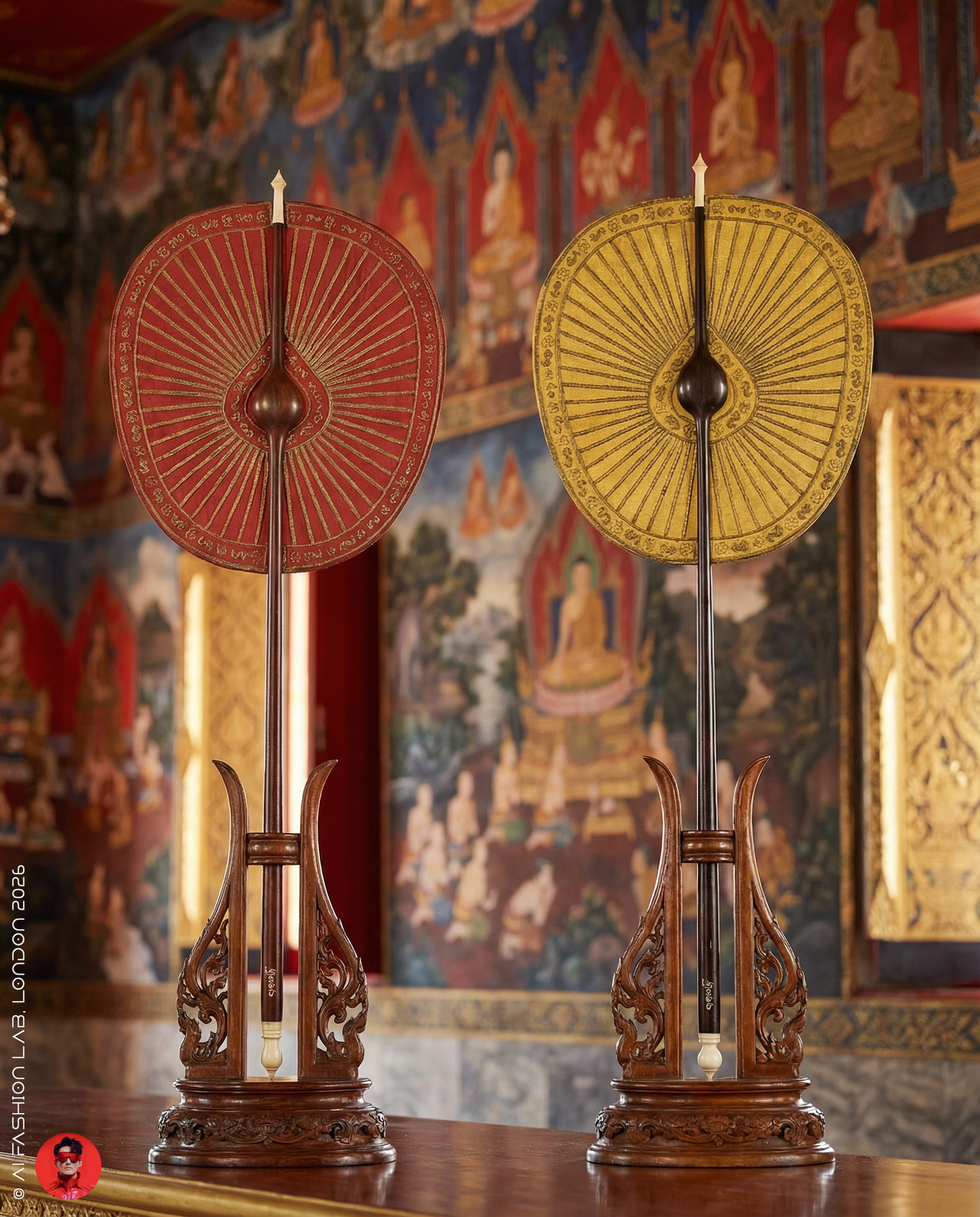
พัดที่พระสงฆ์ถือคือ พัดเปรียญ ซึ่งมีลักษณะคล้ายกับพัดเปรียญลักษณะตาลปัตรใบลานคาดตับ ที่สมเด็จพระสังฆราช พระองค์ที่ ๑๓ สมเด็จพระสังฆราชเจ้า กรมหลวงวชิรญาณวงศ์ แห่งวัดราชบพิธสถิตมหาสีมาราม ทรงสร้าง
_________
John Thomson: Siam — A Colourisation Project
A Thai Monk in the Reign of King Rama IV Holding a Parian Fan (Phat Parian)
This image forms part of the ongoing visual research initiative John Thomson: Siam — A Colourisation Project, a sustained study dedicated to restoring and reinterpreting early photographic evidence of nineteenth-century Siam through AI colourisation grounded in careful historical research.
The photograph was taken in 1865 (พ.ศ. ๒๔๐๘) by John Thomson during the reign of King Mongkut (พระบาทสมเด็จพระจอมเกล้าเจ้าอยู่หัว, Rama IV, reigned 1851–1868 / พ.ศ. ๒๓๙๔–๒๔๑๑). It depicts a Siamese monk seated while holding a Parian fan (พัดเปรียญ) of the palm-leaf talapat (ตาลปัตร) type with ribbed panel construction (ใบลานคาดตับ), reflecting the formal monastic fan style associated with ecclesiastical rank during the reign of King Rama IV.
Thomson’s residence in Siam between 1865 and 1867 resulted in one of the earliest systematic photographic documentations of the kingdom. He employed the wet plate collodion process, producing glass plate negatives that required long exposure times and immediate chemical development under highly sensitive and complex procedures.
The Dok Phikun Robe: Interpreting Colour from Photographic Evidence
One of the most compelling aspects of this image concerns the reconstruction of the robe’s colour. Through comparative grey scale analysis of early black-and-white photography, combined with consultation from subject specialists, it is possible to hypothesise that the monk’s silk robe patterned with dok phikun (ดอกพิกุล) motifs would originally have been golden yellow. This interpretation corresponds with surviving examples of silk robes woven with similar floral patterns.
In photographs from the reigns of Rama IV and Rama V, yellow frequently appears as a dark or near-dark grey tone. This tonal translation can easily lead to misinterpretation, suggesting brownish or reddish hues (krak dye tones), as later seen in sculptural representations or conventional colourisations.
The Origins of the “Dok Phikun” Robe
Silk robes woven with dok phikun motifs—sometimes incorporating peony or bamboo designs—have been documented in ancient robe repositories at Wat Suthiwararam (วัดสุทธิวราราม). It is believed that during the early Rattanakosin period, artisans adapted and imitated imported “foreign textiles” featuring finely woven small floral patterns resembling the phikun blossom. Such textiles were considered novel and exotic at the time.
Due to their beauty and high value, devout lay patrons (thayok thayika) frequently commissioned these patterned textiles to be dyed and tailored into robes as offerings to monks. This act was regarded as praneet-than (ประณีตทาน), a refined and meritorious form of donation. The popularity of these robes eventually inspired the creation of Buddha images depicted wearing floral robes (Phra Phuttha Rūp Jiwon Dok), and it is widely believed that such robes were offered to monks of high ecclesiastical rank.
The Chest Cloth (Pha Khat Ok) — “Jackfruit Thorn” Textile (Pha Nam Khanun)
The textile known as Pha Nam Khanun (ผ้าหนามขนุน), referred to in Japanese as Kanoko Shibori (คะโนะโกะชิโบริ), is a silk tie-dye fabric produced by binding the cloth into countless minute knots across its entire surface before dyeing. This technique creates a finely raised texture resembling the thorned surface of a jackfruit, from which the Thai name derives.
The production process required considerable expertise. Some pieces demanded the work of up to five artisans and involved tying hundreds of thousands, even millions, of individual knots to produce an elastic, dimensional surface evenly covered with small raised dots.
This textile was popular from the late Ayutthaya period through the early Rattanakosin era and was regarded as rare and luxurious. Originally used as a waist sash by royalty and nobility to signify status and refinement, it later became part of monastic dress as a chest binding cloth for monks and novices. In this context, it helped secure the robe neatly against the body, enhancing the overall elegance and discipline of the monastic ensemble.
Most examples were imported from abroad, particularly from Japan and India. Japanese varieties were generally more refined in the precision and consistency of their knotting. Beyond its use among senior monks, this textile was also bestowed by the monarch upon nobles and provincial rulers, serving as a symbol of royal favour and authority.
Today, Pha Nam Khanun survives as a rare historical artefact of Siamese court dress, valued both as evidence of textile craftsmanship and as testimony to Siam’s participation in wider East Asian trade networks.
Parian fan (พัดเปรียญ)
The fan held by the monk is a Parian fan (พัดเปรียญ), resembling the palm-leaf talapat type with ribbed construction associated with the fan commissioned by the Thirteenth Supreme Patriarch, Somdet Phra Sangharaja Chao Krommaluang Vajirañāṇavongsa (สมเด็จพระสังฆราชเจ้า กรมหลวงวชิรญาณวงศ์), of Wat Ratchabophit Sathit Maha Simaram (วัดราชบพิธสถิตมหาสีมาราม).
_________
เรียนเชิญกด Subscribe ได้ที่ลิงก์นี้ครับ เพื่อร่วมติดตามงานสร้างสรรค์ต้นฉบับ งานวิจัยประวัติศาสตร์แฟชั่น และผลงานอนุรักษ์มรดกวัฒนธรรมด้วยเทคโนโลยี AI ของ AI Fashion Lab, London ซึ่งมุ่งตีความอดีตผ่านมิติใหม่ของการบูรณะภาพ การสร้างสรรค์ภาพ และการเล่าเรื่องด้วยศิลปะเชิงดิจิทัล https://www.facebook.com/aifashionlab/subscribe/
#aifashionlab #AI #aiartist #aiart #aifashion #aifashiondesign #aifashionstyling #aifashiondesigner #fashion #fashionhistory #historyoffashion #fashionstyling #fashionphotography #digitalfashion #digitalfashiondesign #digitalcostumedesign #digitaldesign #digitalaiart #ThaiFashionHistory #ThaiFashionAI #thailand #UNESCO