งานสังสรรค์ในสวนยามบ่าย – ศิลปะการแต่งกายสไตล์อาร์ตเดโคในสมัยต้นรัชกาลที่ ๗ ด้วย Google’s Nano Banana Pro
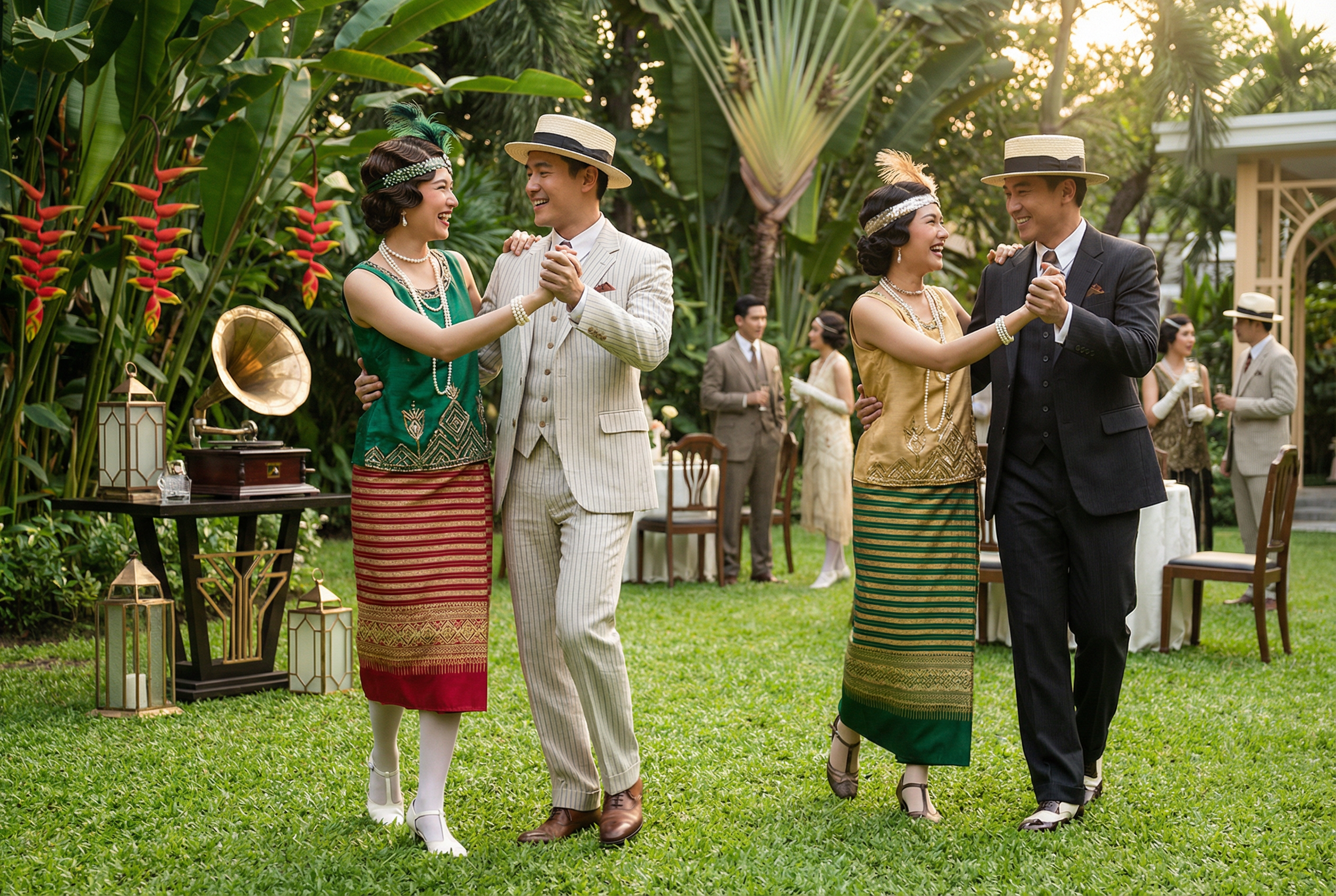
งานสังสรรค์ในสวนยามบ่าย – ศิลปะการแต่งกายสไตล์อาร์ตเดโคในสมัยต้นรัชกาลที่ ๗ ด้วย Google’s Nano Banana Pro
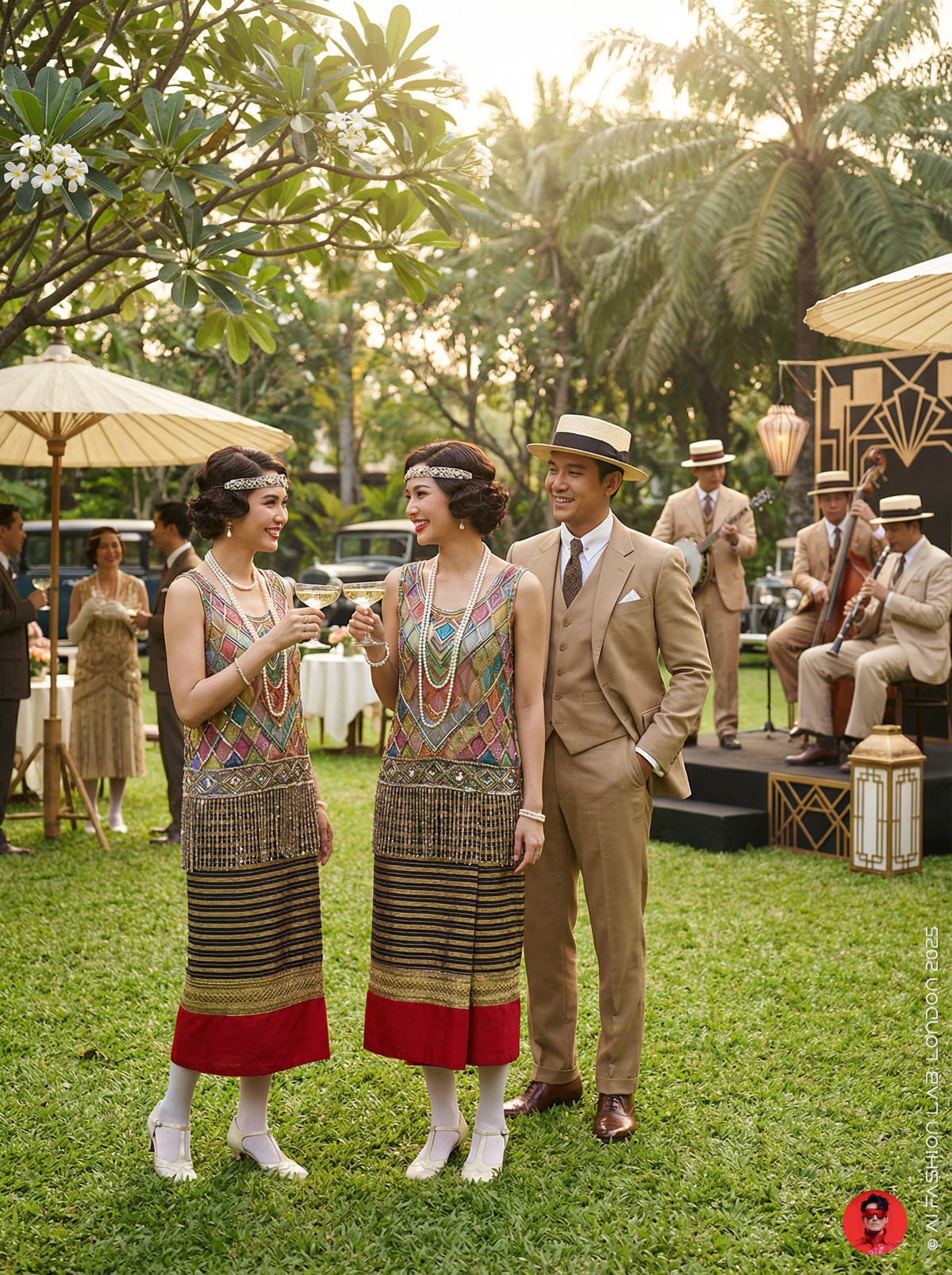
คอลเลกชันนี้ได้รับการสร้างสรรค์ขึ้นเพื่อทดสอบศักยภาพของ Google’s Nano Banana Pro ซึ่งเป็นโมเดลล่าสุดของ Google สำหรับการสร้างภาพด้วยปัญญาประดิษฐ์ โดยใช้ image prompts จากคอลเลกชันแฟชั่นสตรีและบุรุษยุคอาร์ตเดโคที่เคยออกแบบไว้แล้วเป็นฐานต้นแบบ ผลลัพธ์ที่ได้แสดงให้เห็นถึงความคมชัด ความสมจริง และความแม่นยำที่เหนือกว่า Nano Banana รุ่นก่อนหน้าอย่างชัดเจน ทั้งที่รุ่นก่อนก็ถือว่ามีคุณภาพสูงอยู่แล้ว ในรุ่น Pro นี้ โมเดลสามารถถ่ายทอดคาแรกเตอร์ของตัวแบบได้อย่างครบถ้วน มีความละเอียดสูงจนแทบไม่จำเป็นต้องอัปสเกลเพิ่มเติม อีกทั้งยังแสดงให้เห็นถึงความเข้าใจใน วัฒนธรรมไทยและวัฒนธรรมวัตถุ (material culture) ของไทยได้อย่างยอดเยี่ยม ไม่ว่าจะเป็นลวดลายผ้า เครื่องประดับ รายละเอียดชุดไทยร่วมสมัย หรือแม้แต่บรรยากาศของสังคมเมืองในสยามช่วงทศวรรษ 1920s
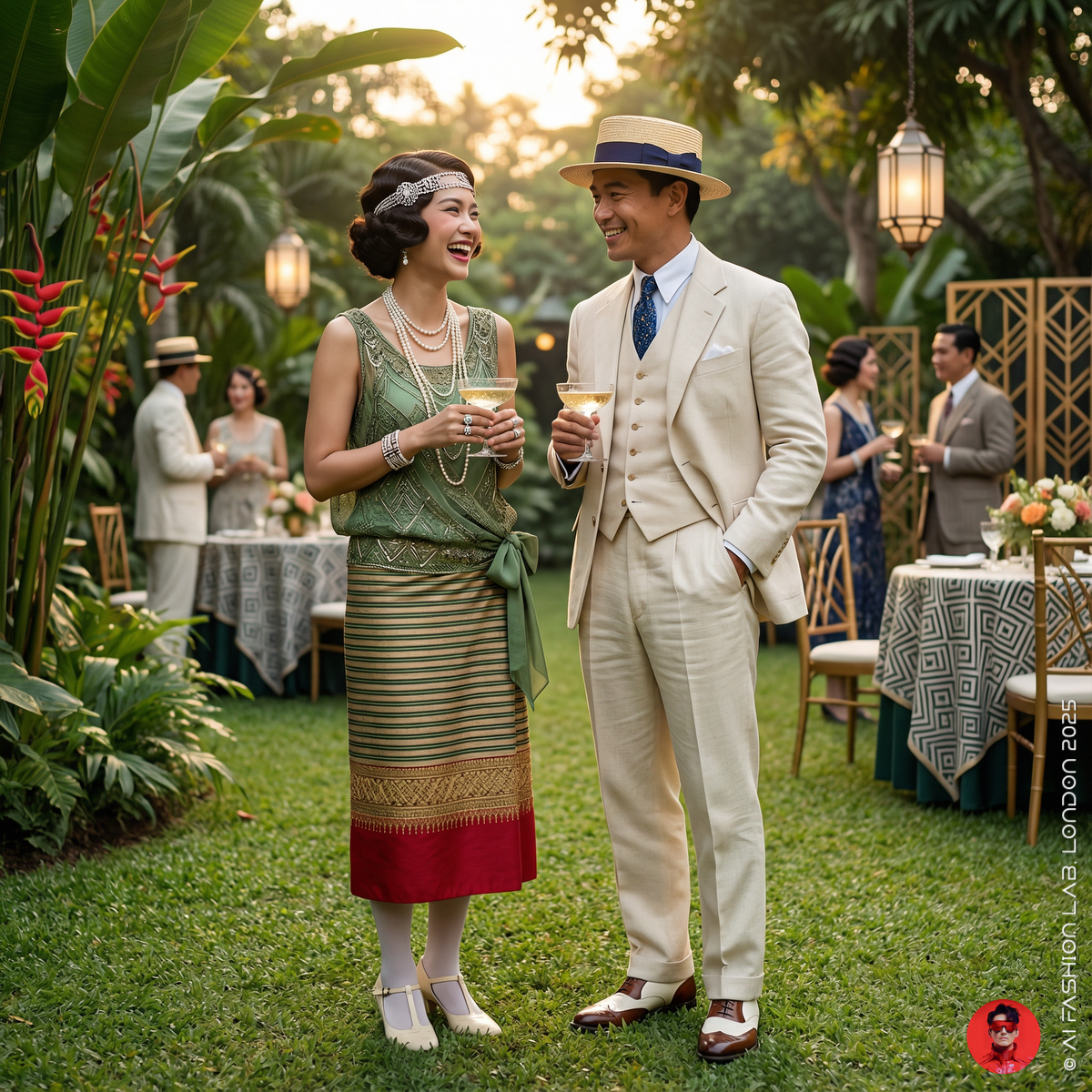
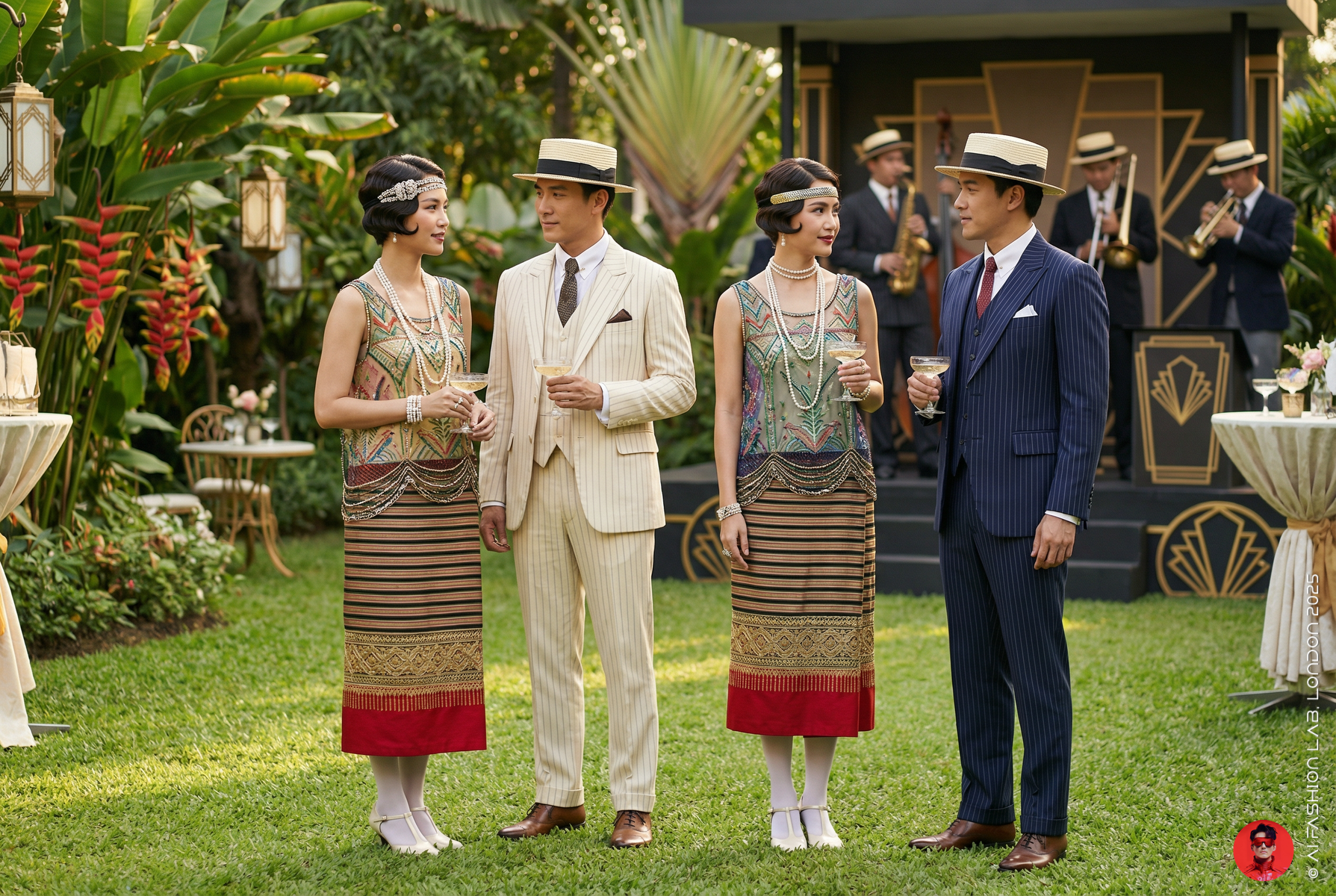
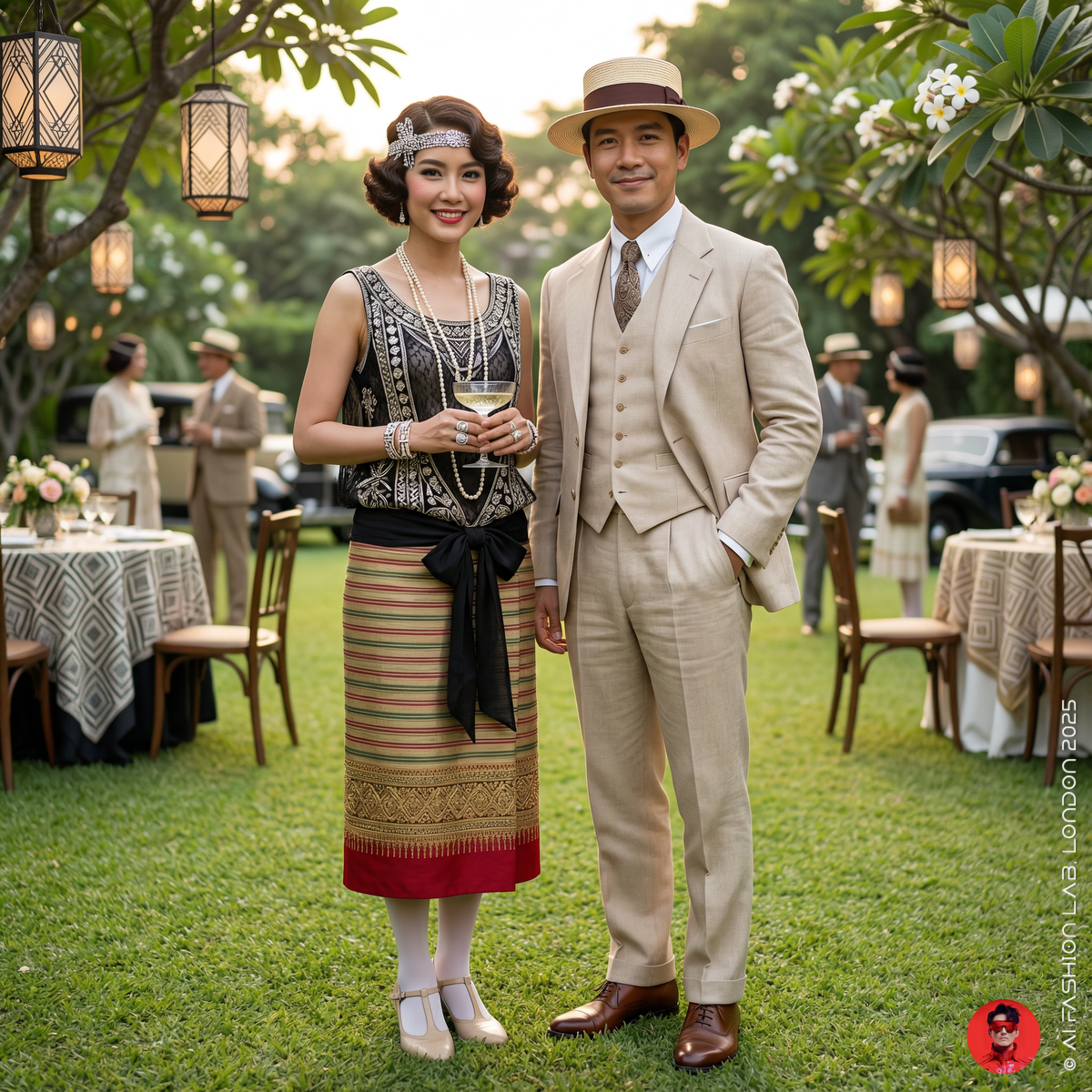
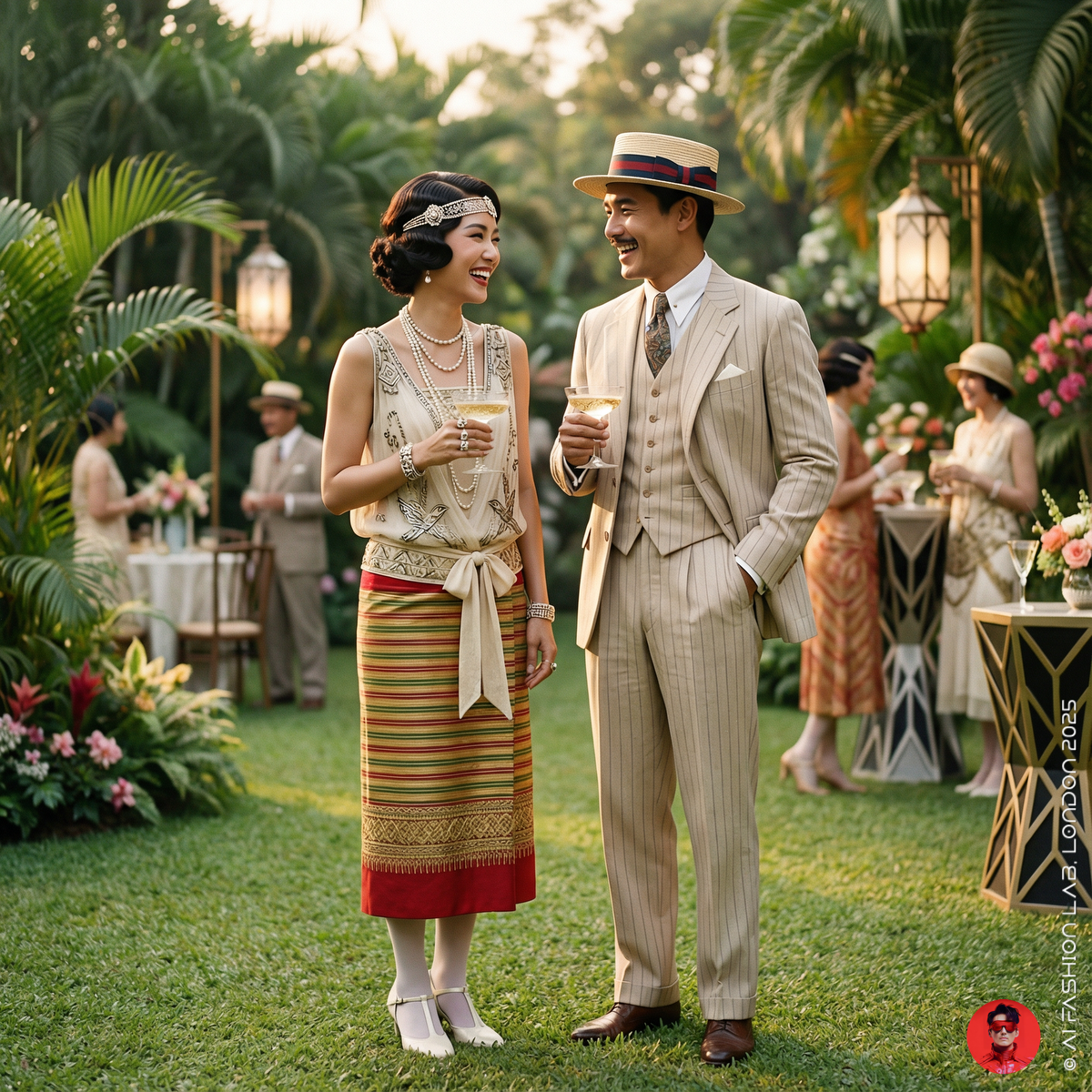
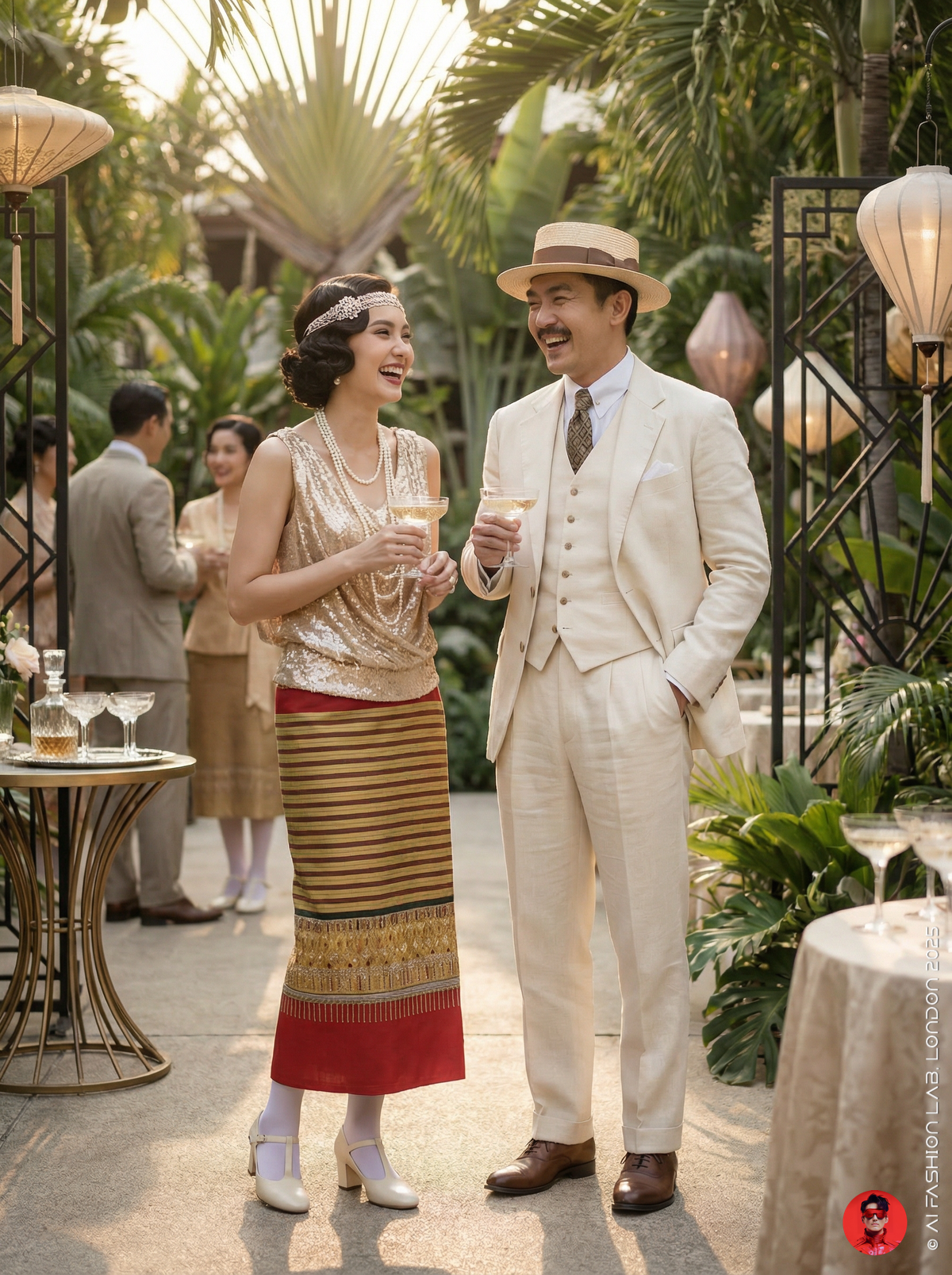
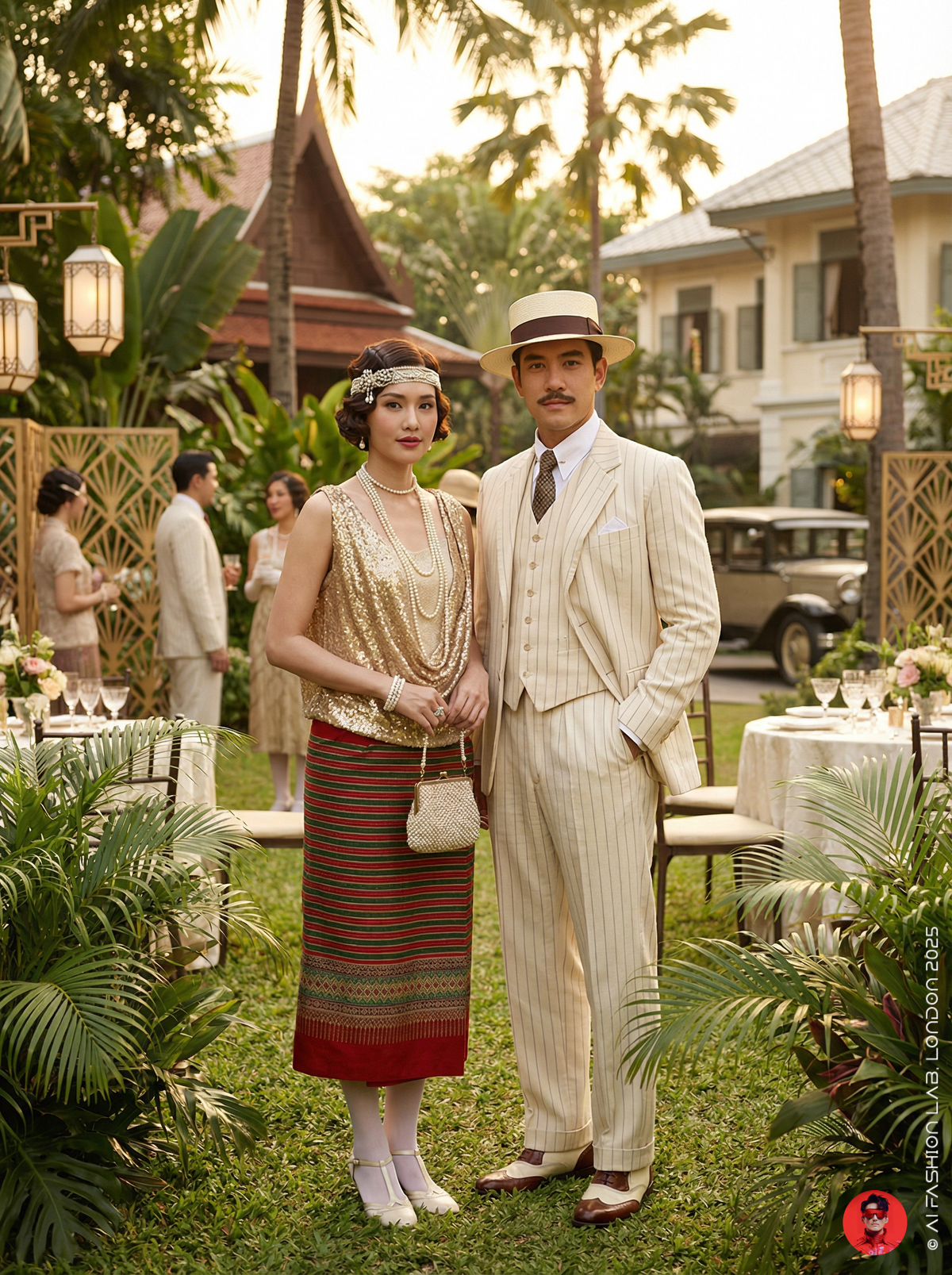
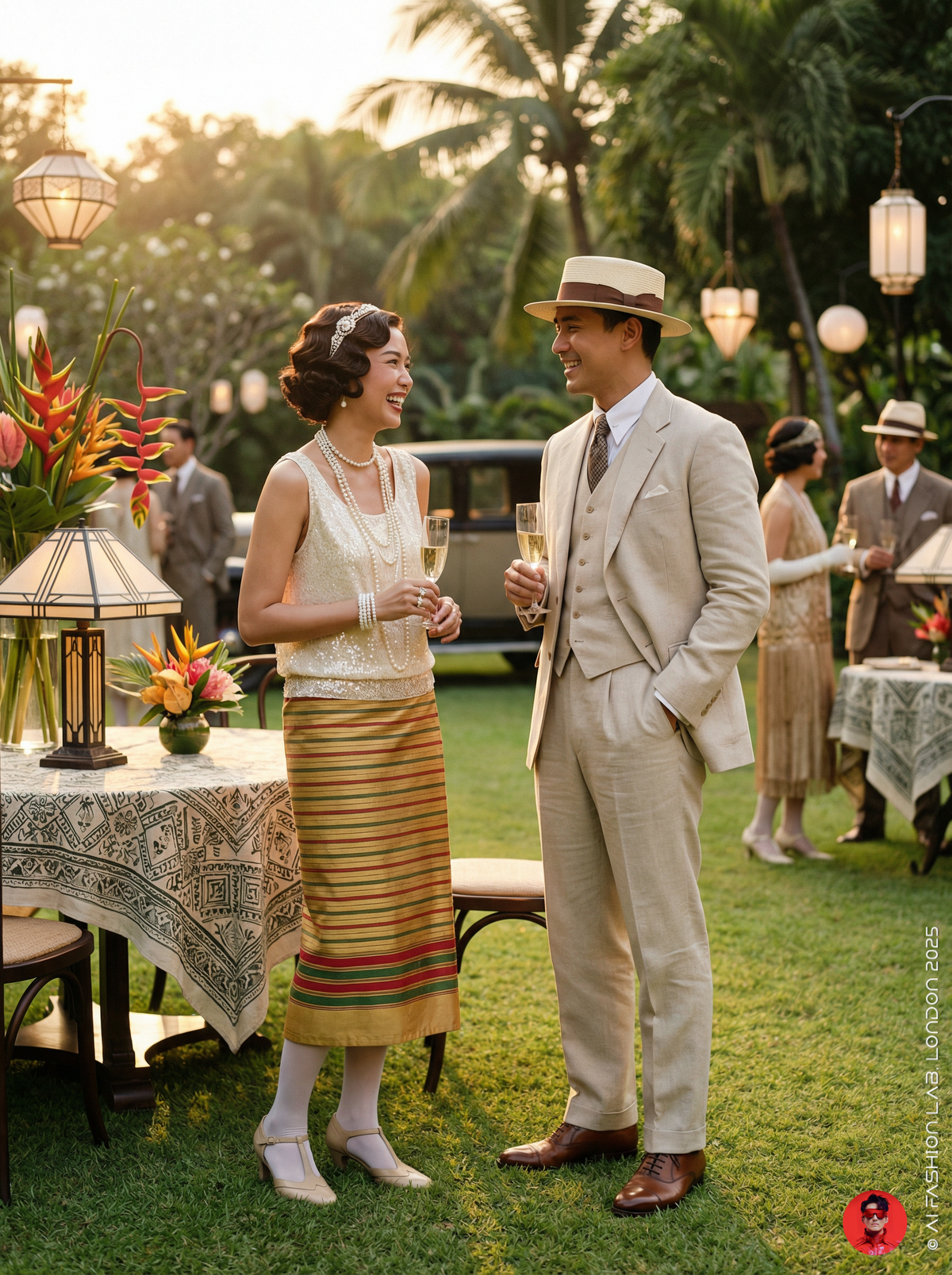
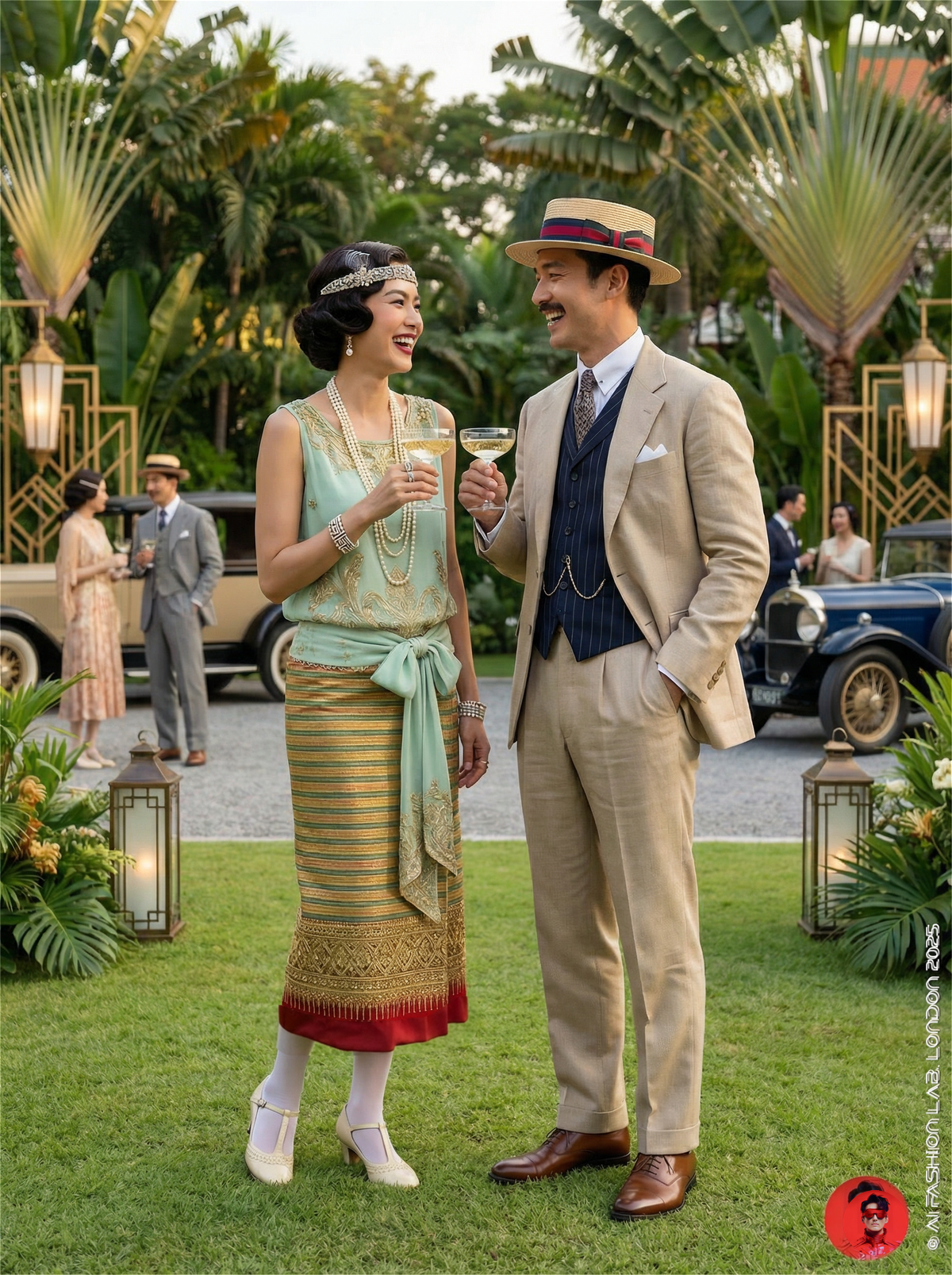
ที่สำคัญ โมเดลยังสามารถตีความ material culture ที่เหมาะสมกับยุคสมัย ได้อย่างถูกต้องและมีความละเอียดรอบคอบ ไม่ว่าจะเป็นรูปทรงของ รถยนต์โบราณตามยุคอาร์ตเดโค, แก้วแชมเปญทรงถ้วยแบน (coupe glass) ซึ่งเป็นรูปทรงที่นิยมอย่างมากในช่วงทศวรรษ 1920s (แตกต่างจากแก้วทรงสูงแบบ flute ที่นิยมในปัจจุบัน), หรือรายละเอียดด้านการออกแบบที่สอดคล้องกับแฟชั่นและศิลปะแห่งยุค Art Deco อย่างสมบูรณ์แบบ ทั้งหมดนี้ทำให้ภาพที่สร้างขึ้นมีความถูกต้องตามบริบททางประวัติศาสตร์ ถ่ายทอดอัตลักษณ์แบบไทยร่วมสมัยได้อย่างงดงาม และสะท้อนให้เห็นถึงพัฒนาการด้านปัญญาประดิษฐ์ที่ก้าวกระโดดอย่างแท้จริง
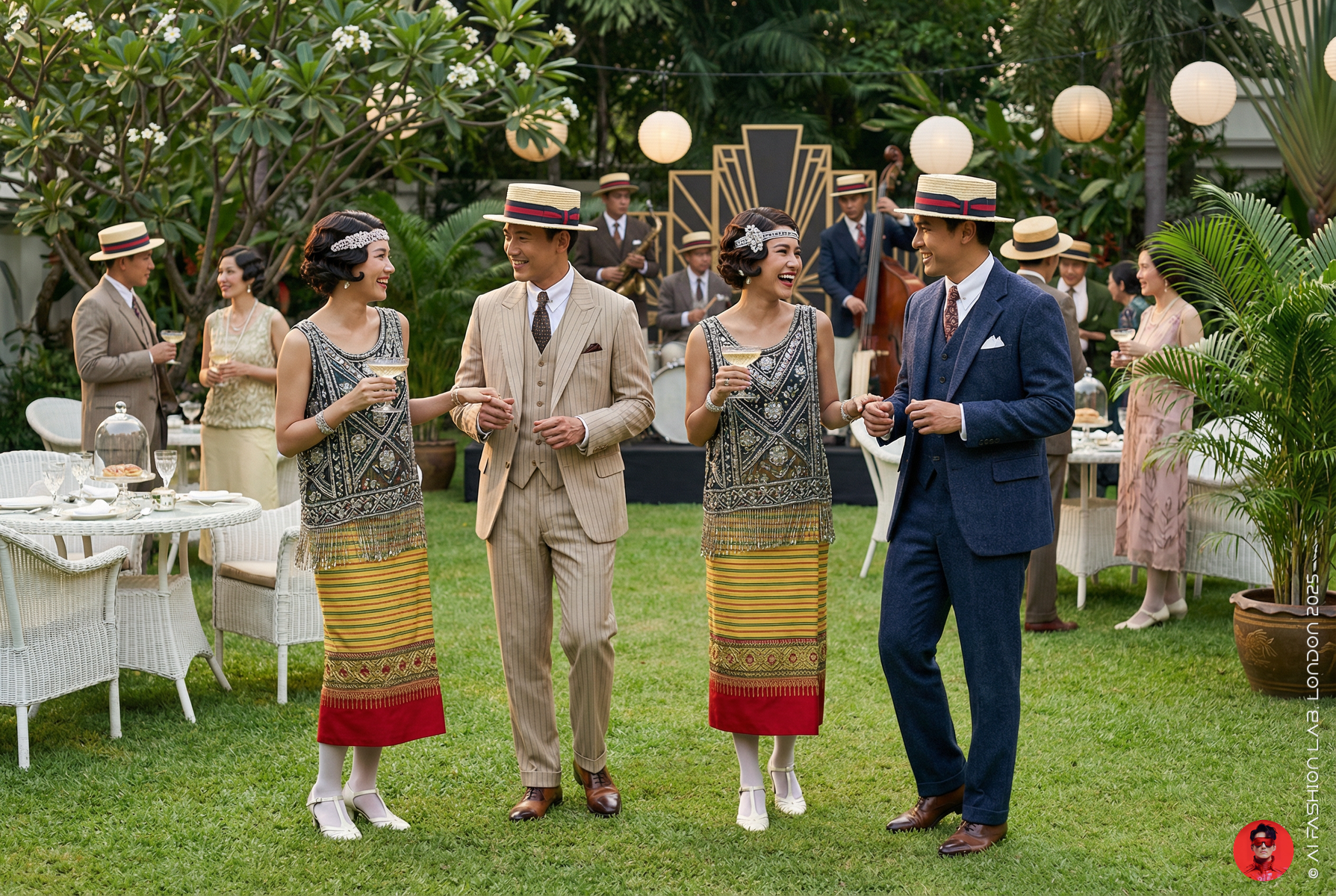
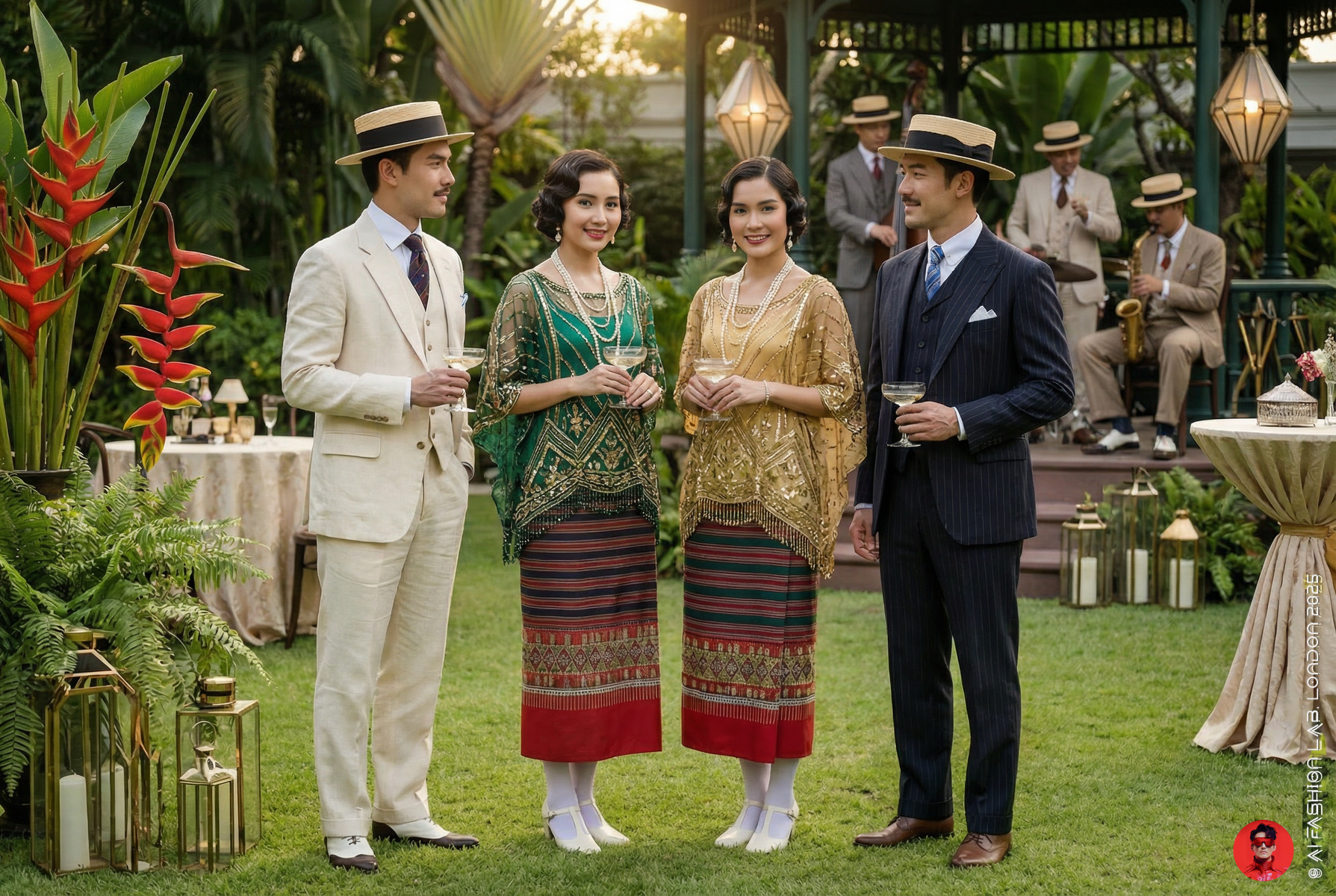
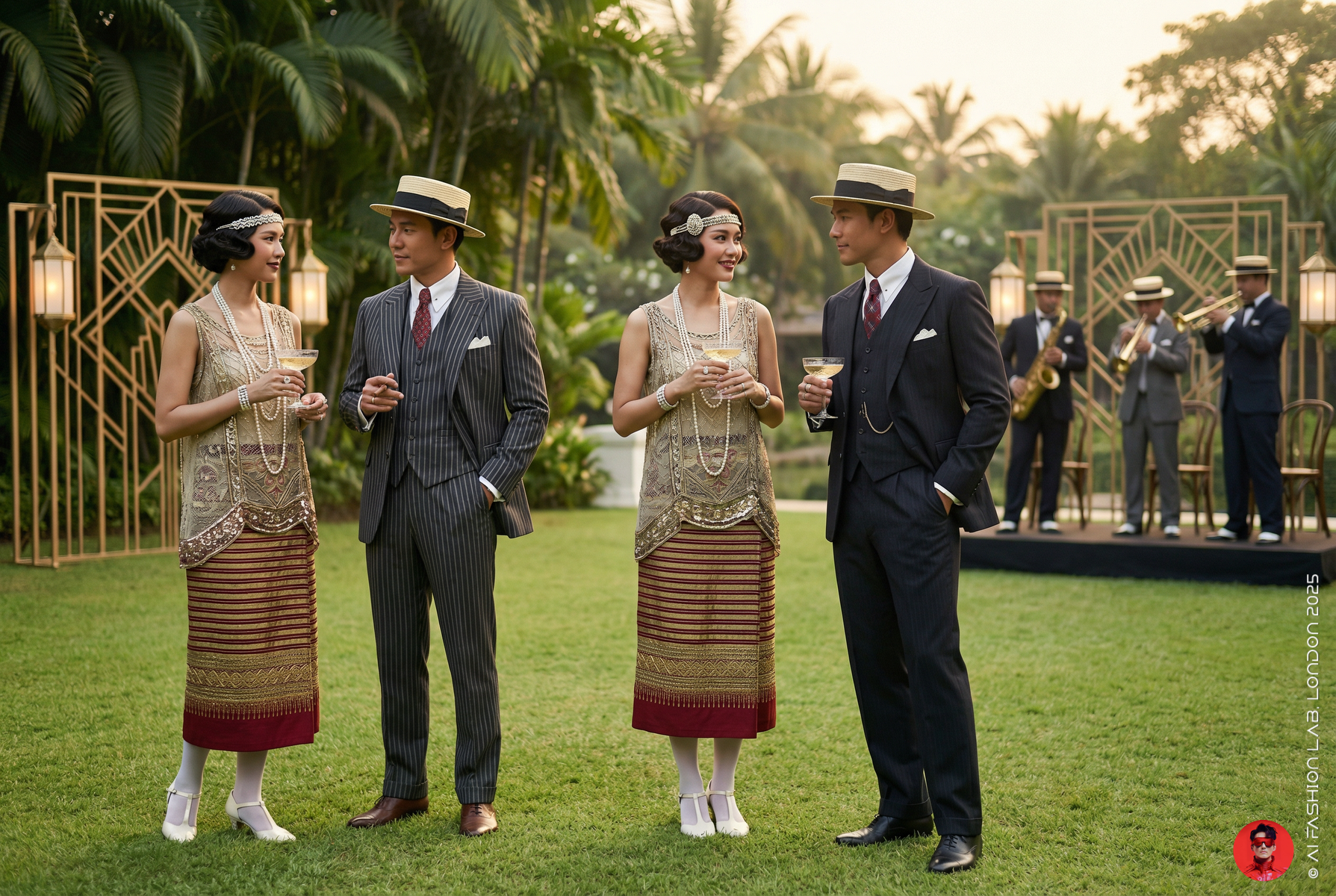
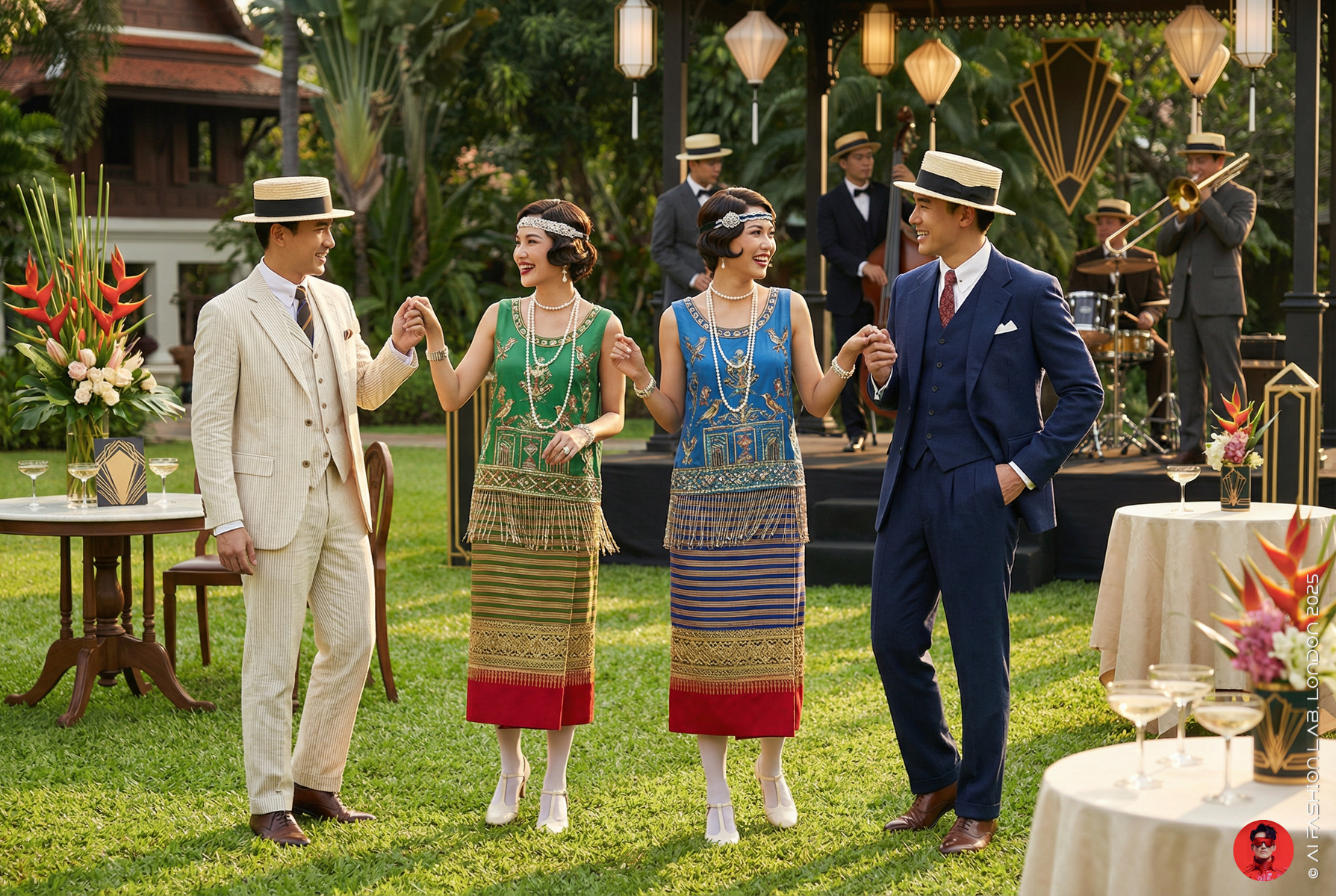
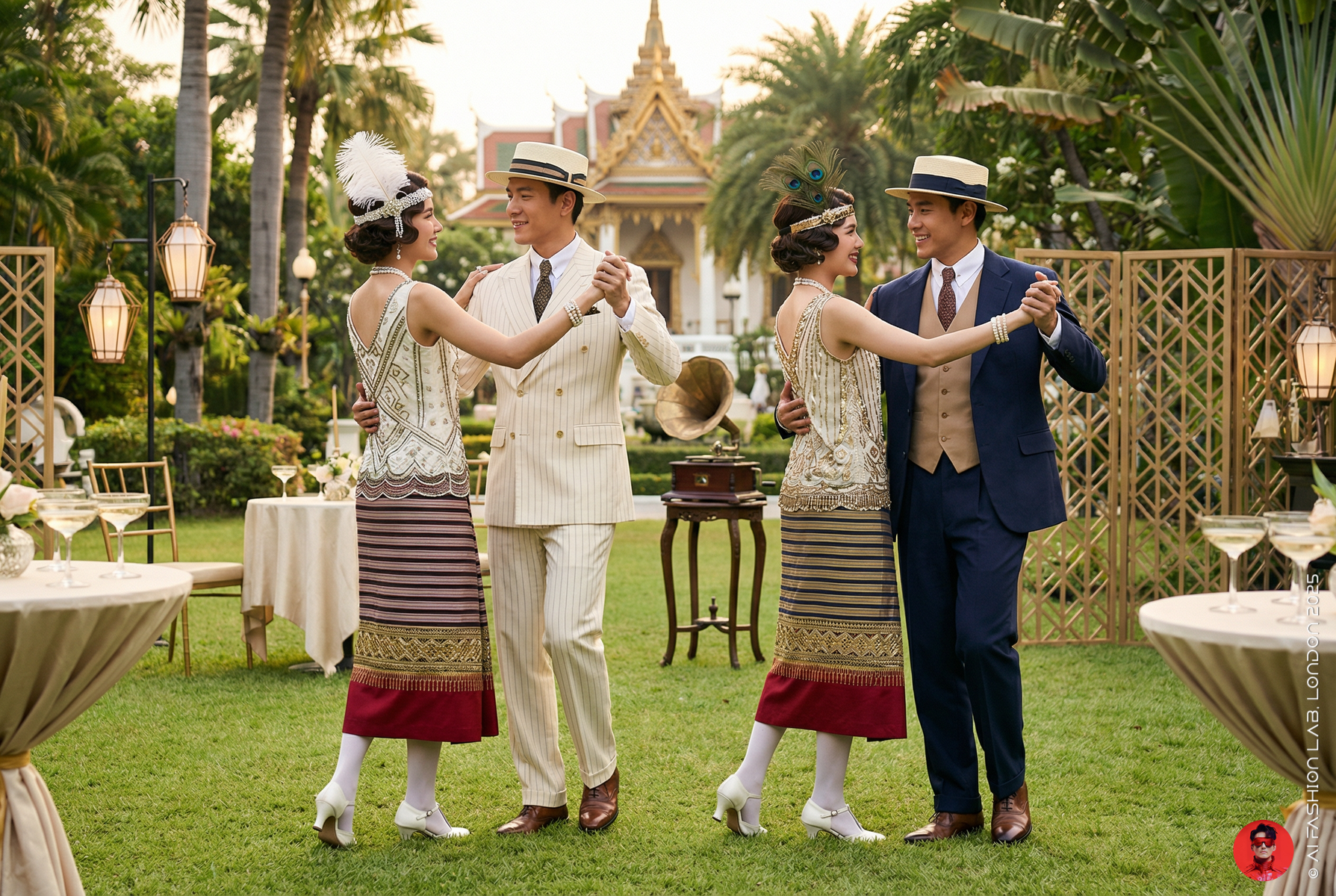
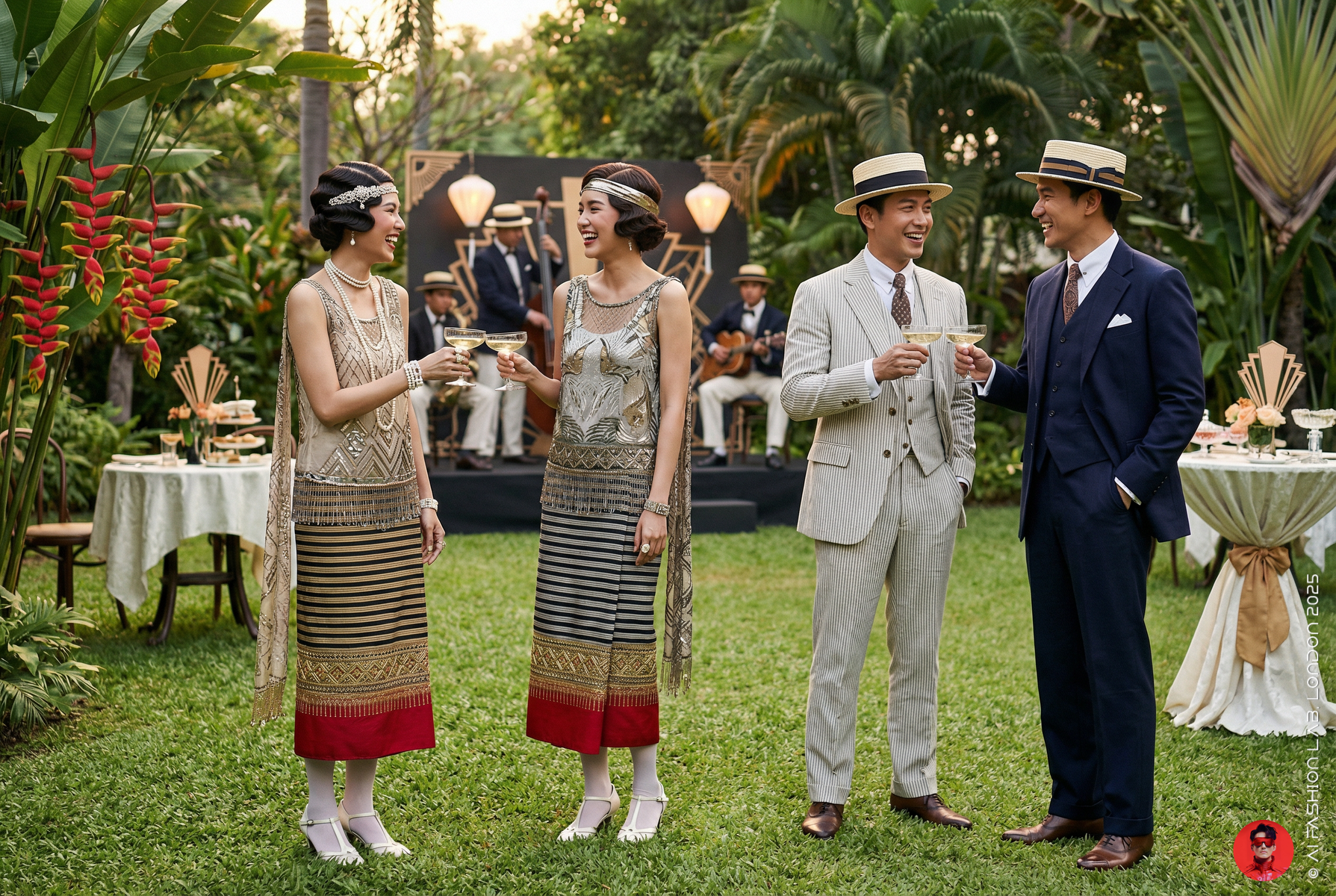
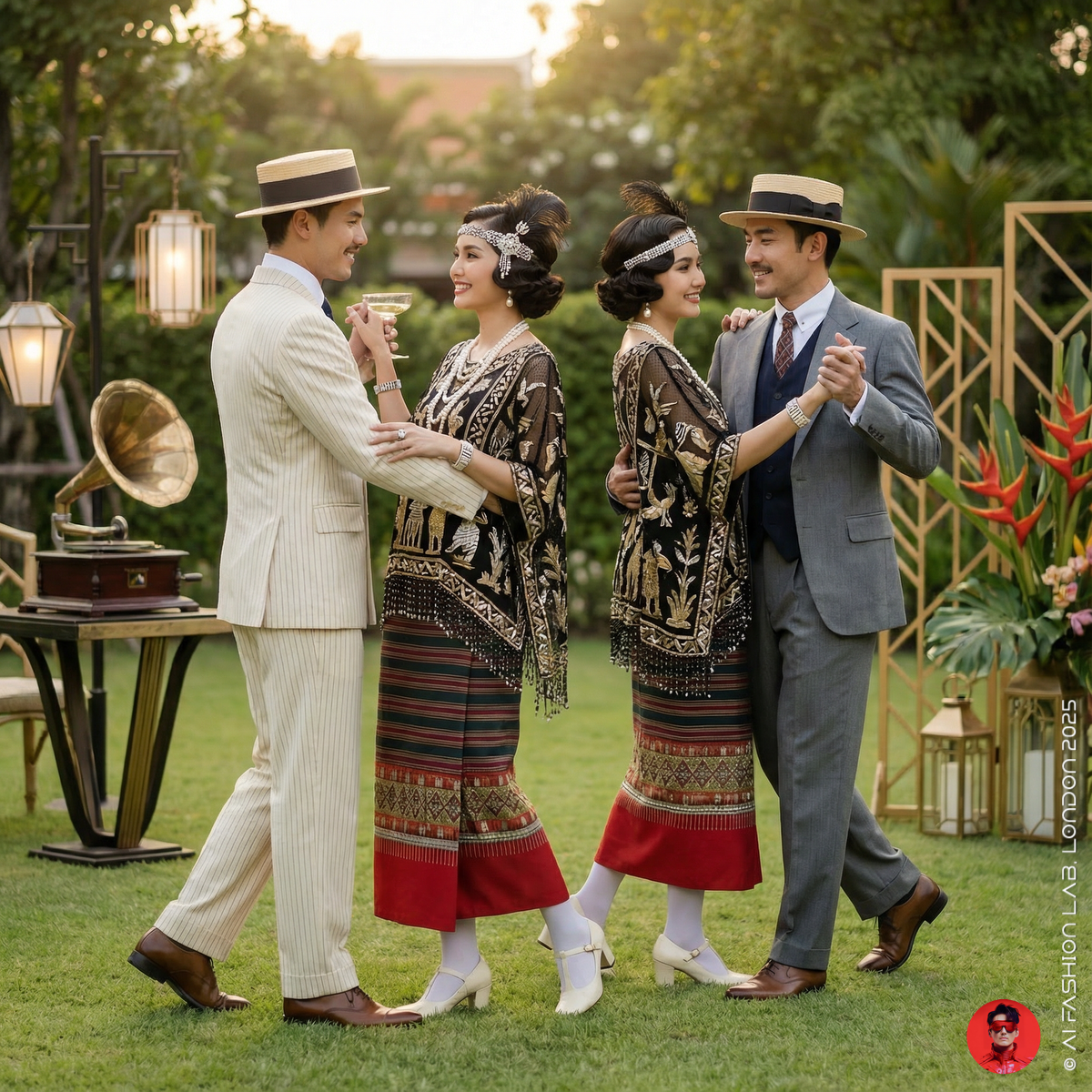
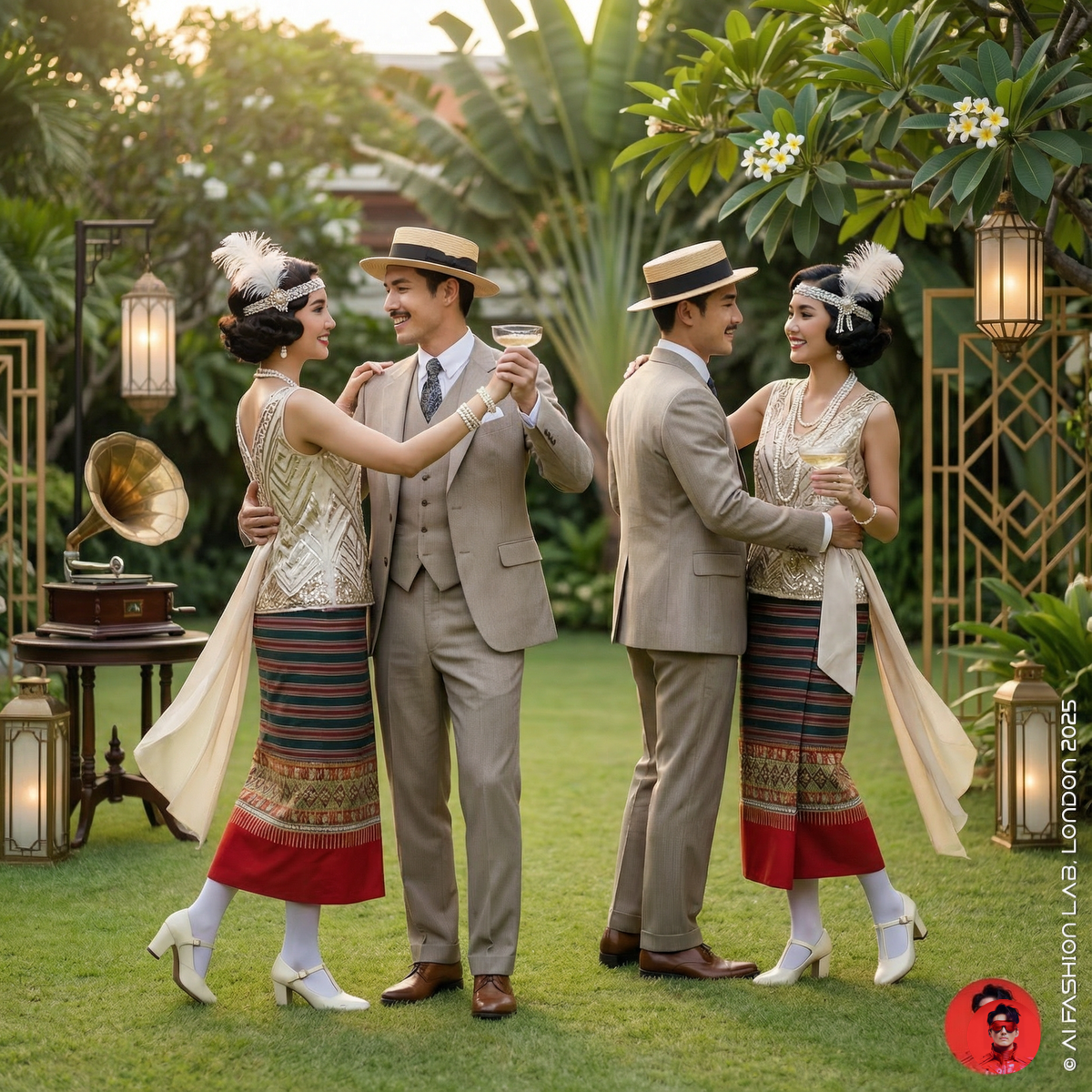
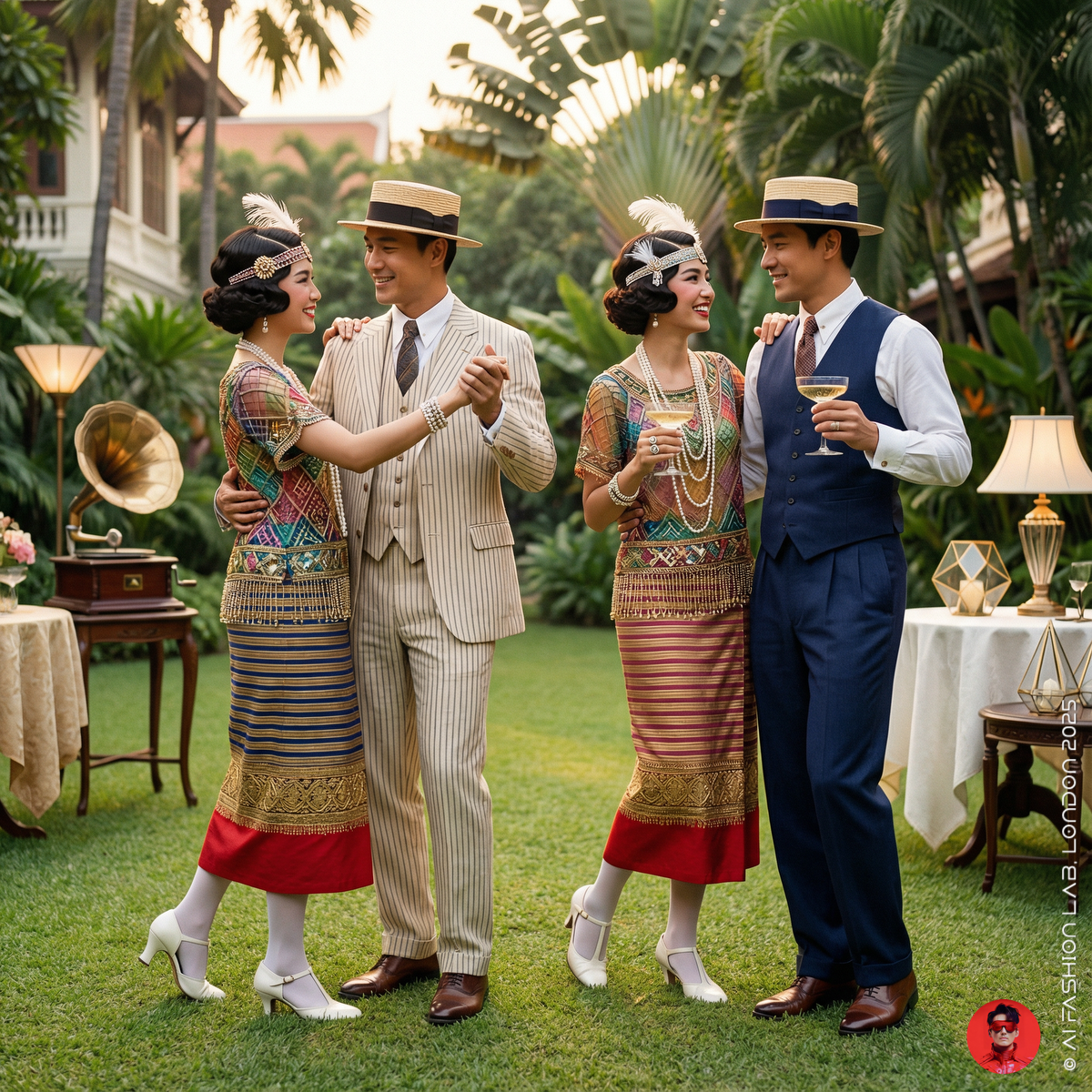
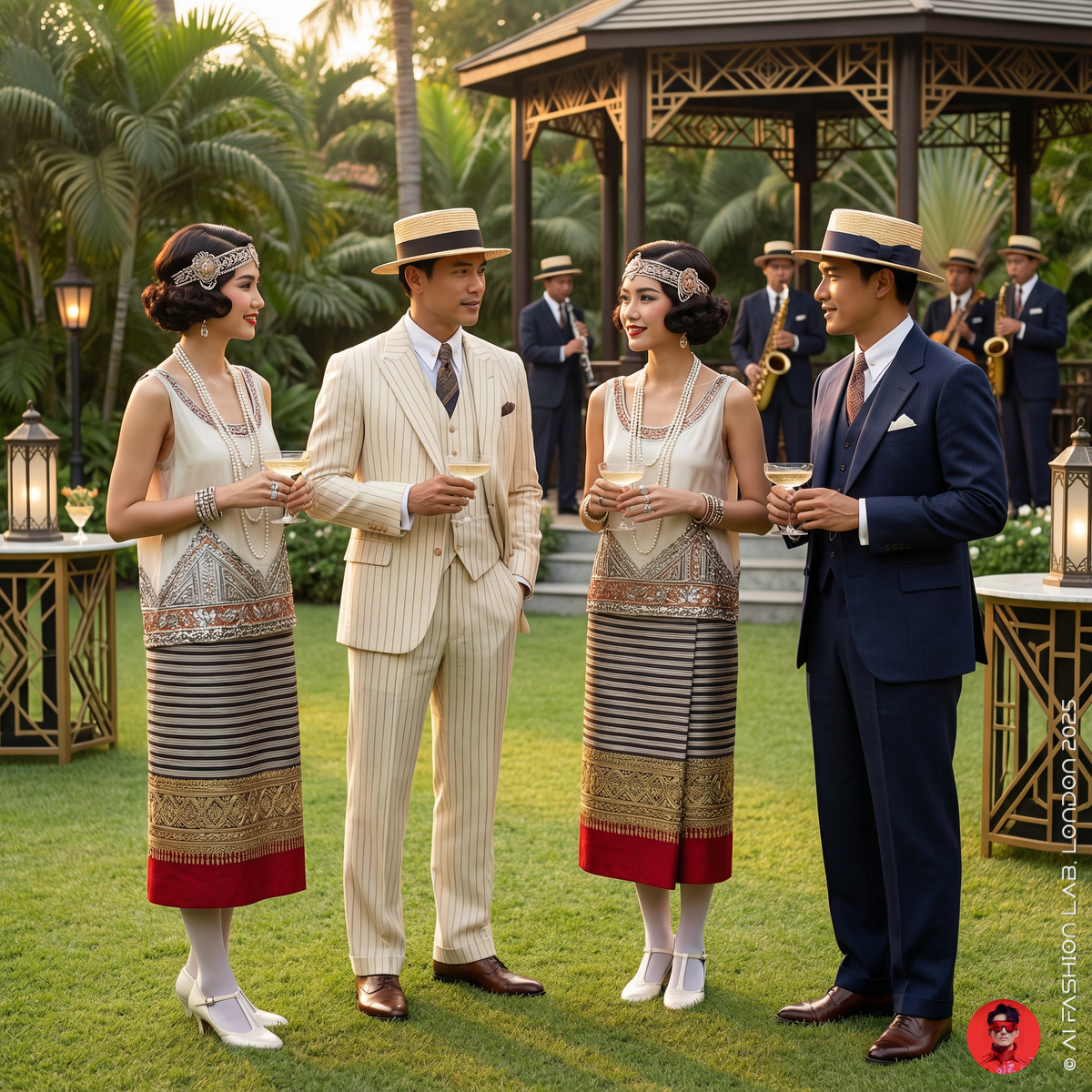
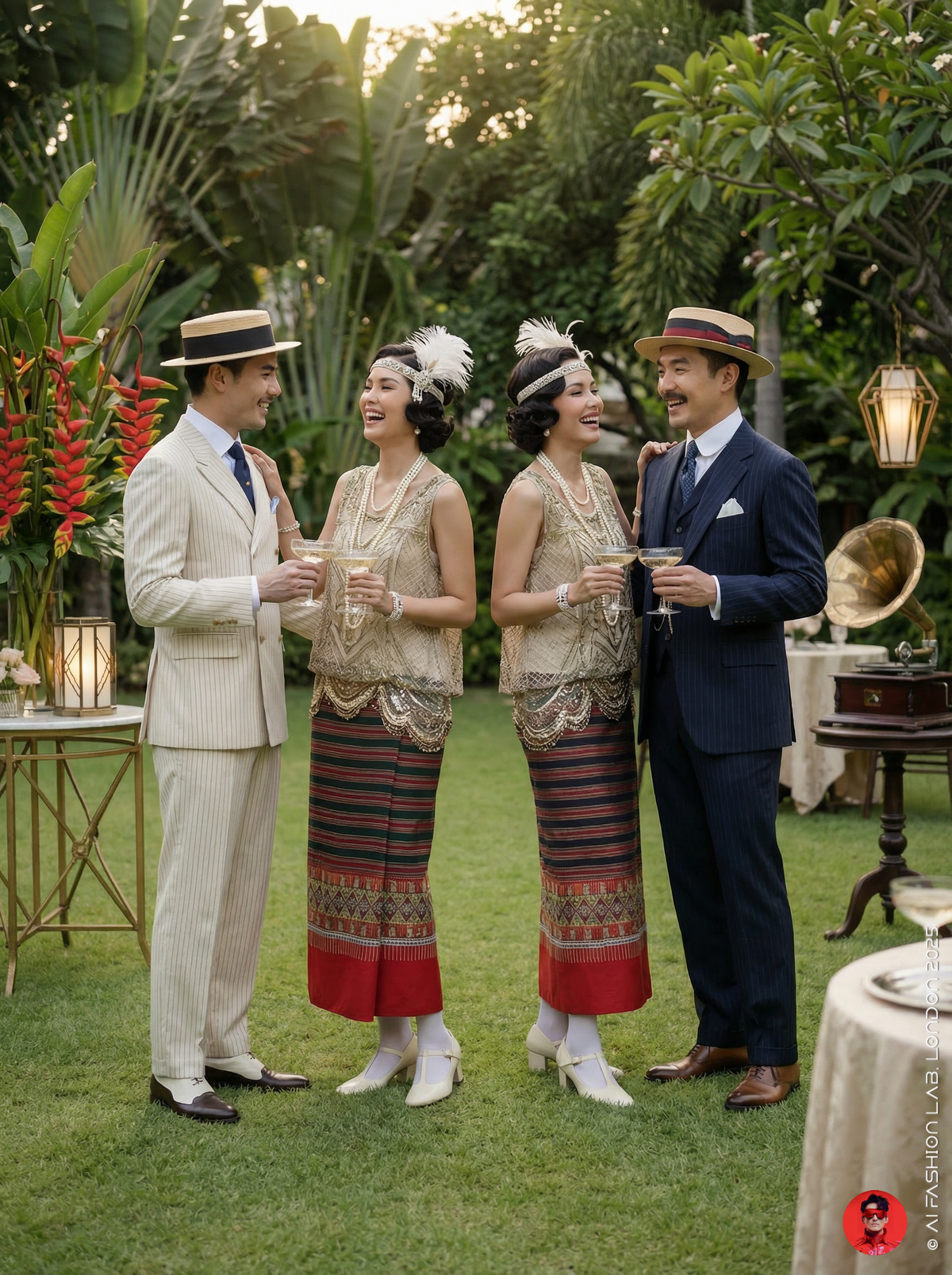
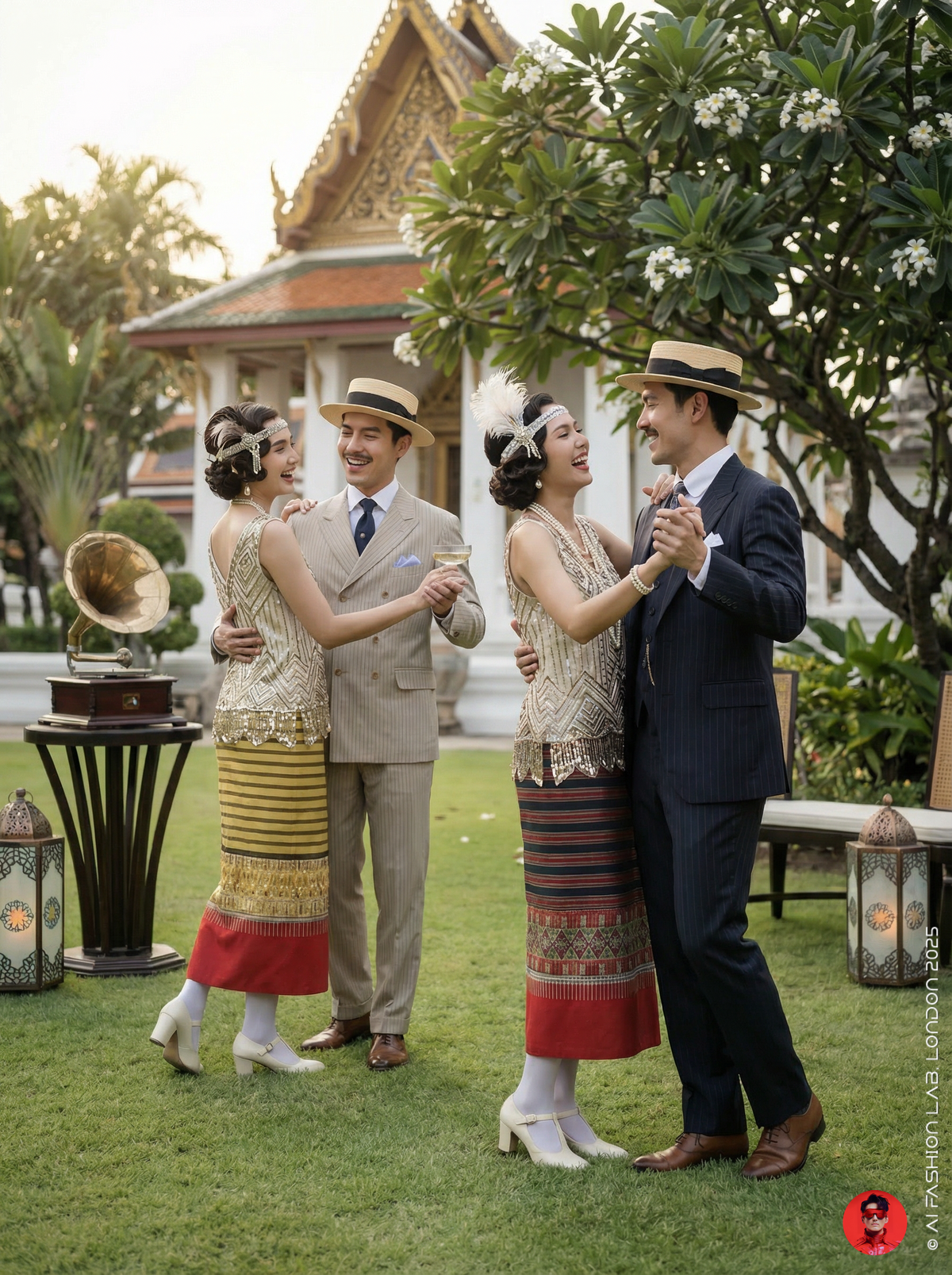
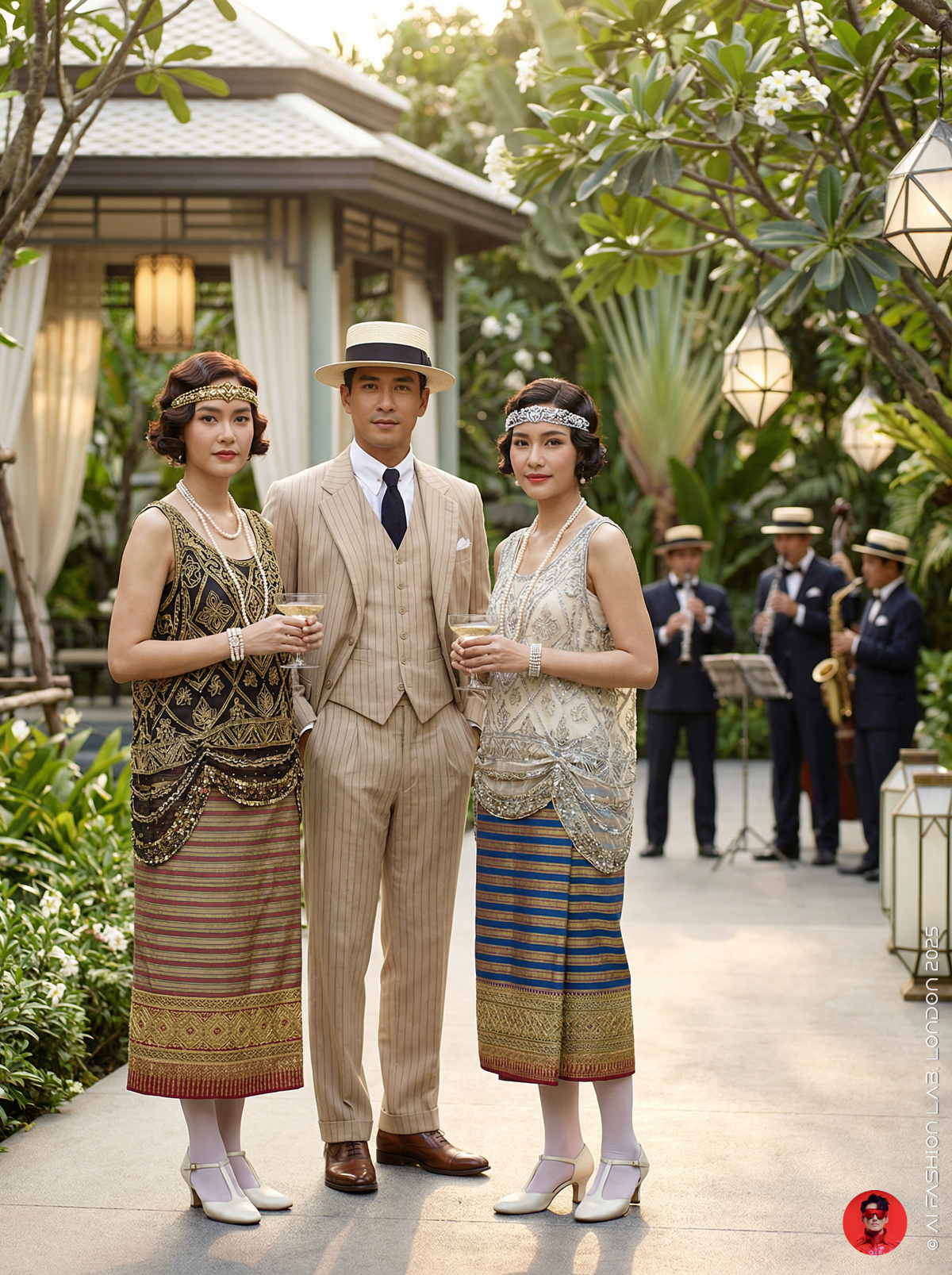
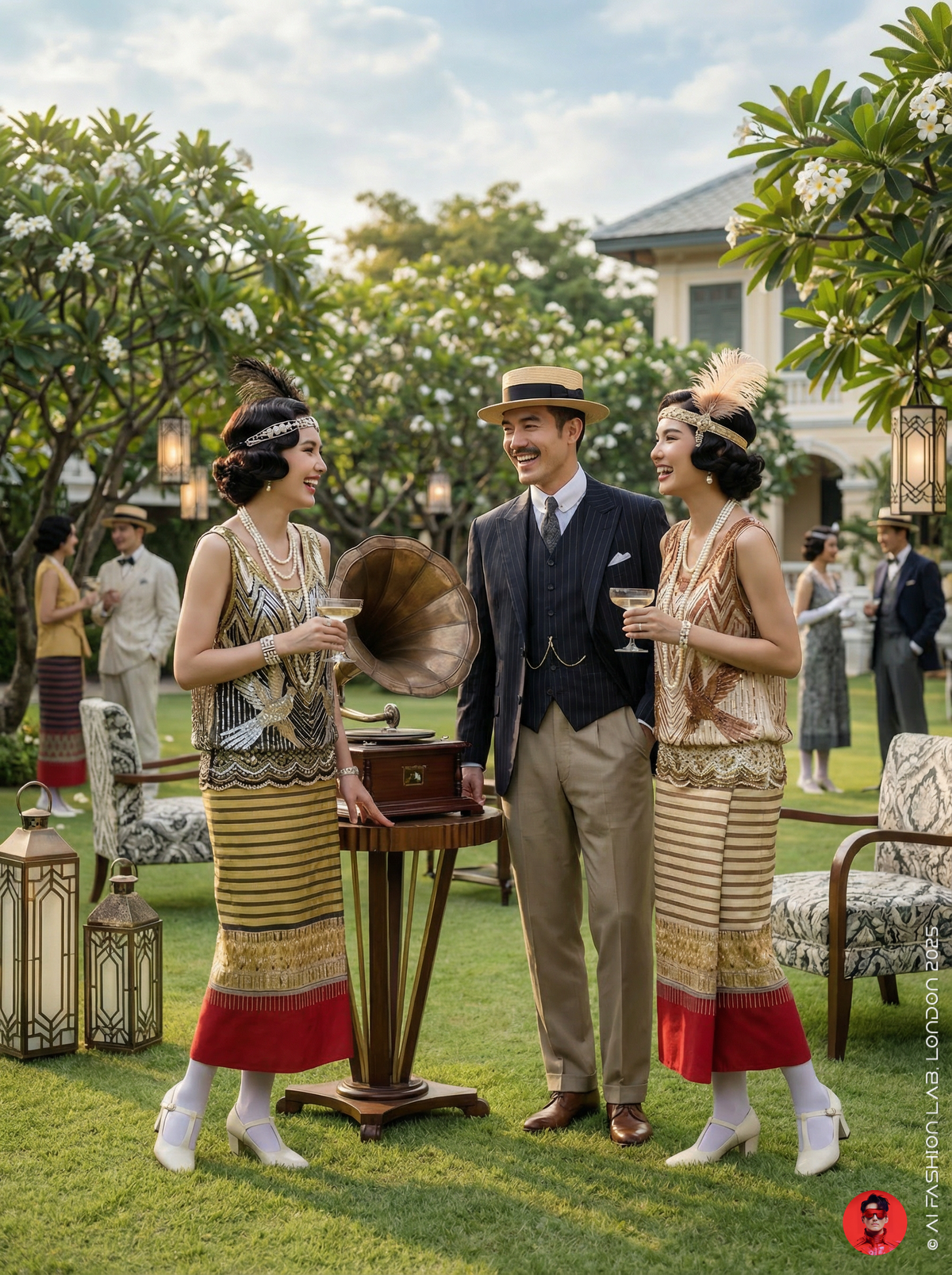
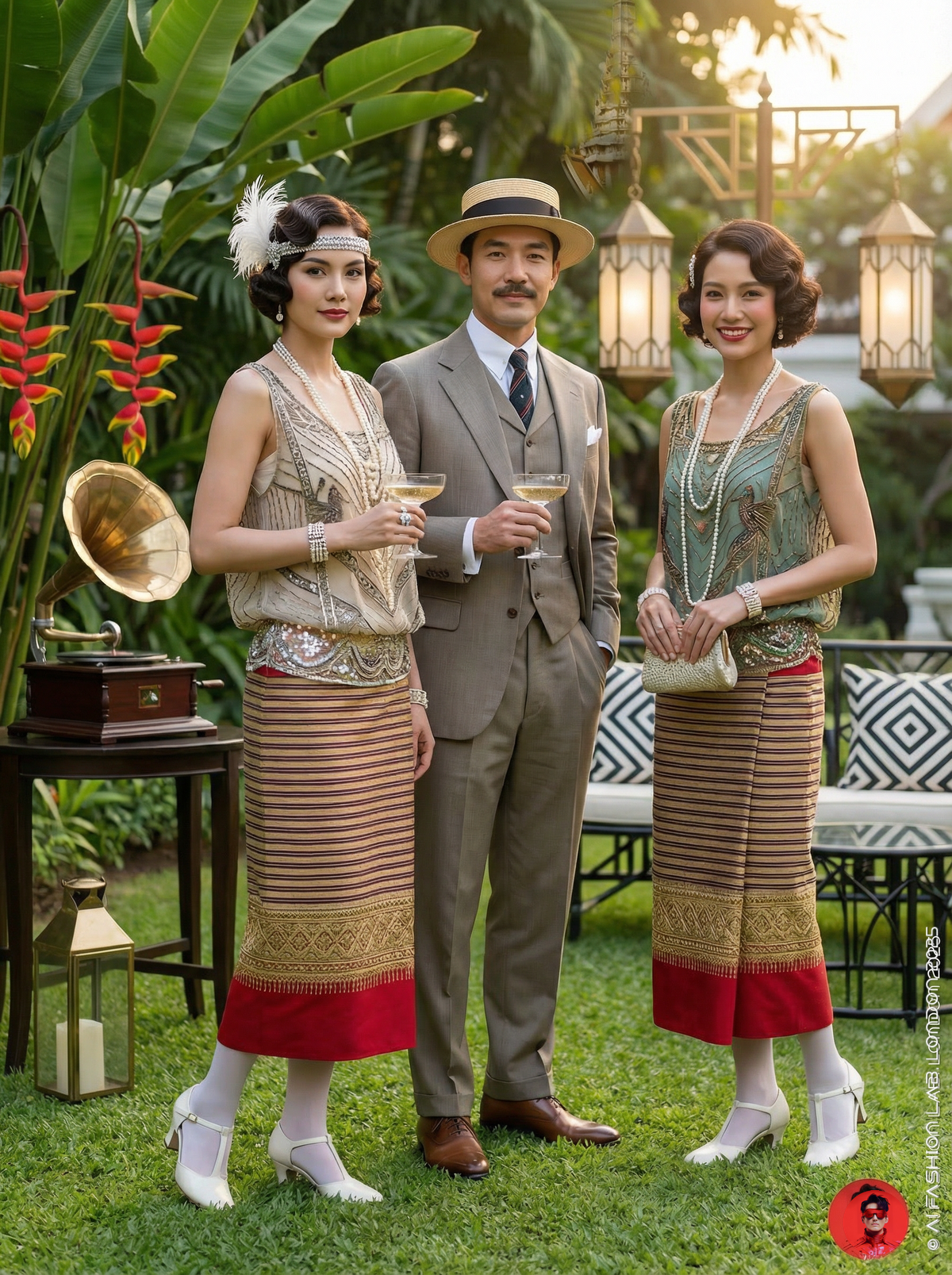
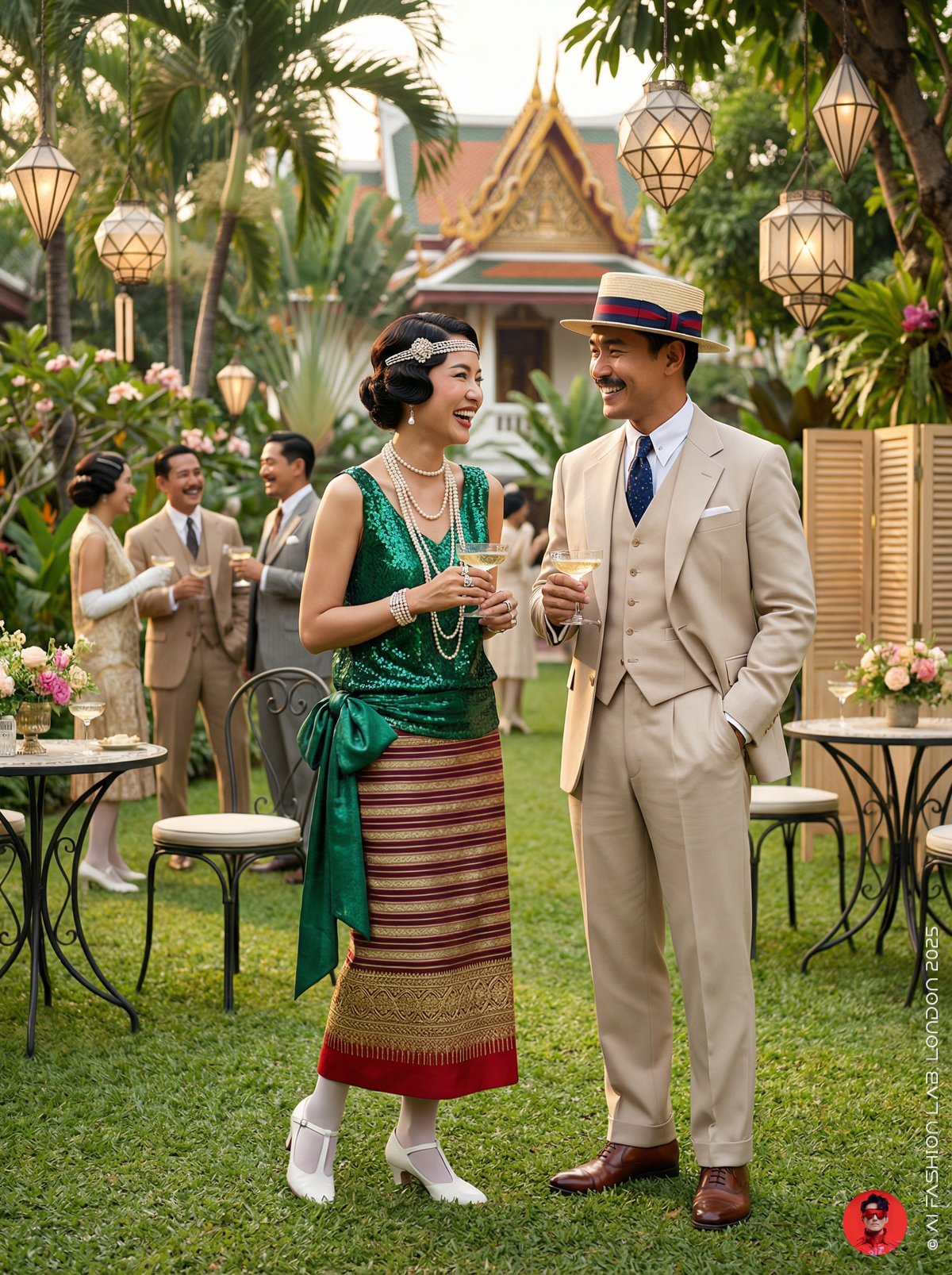
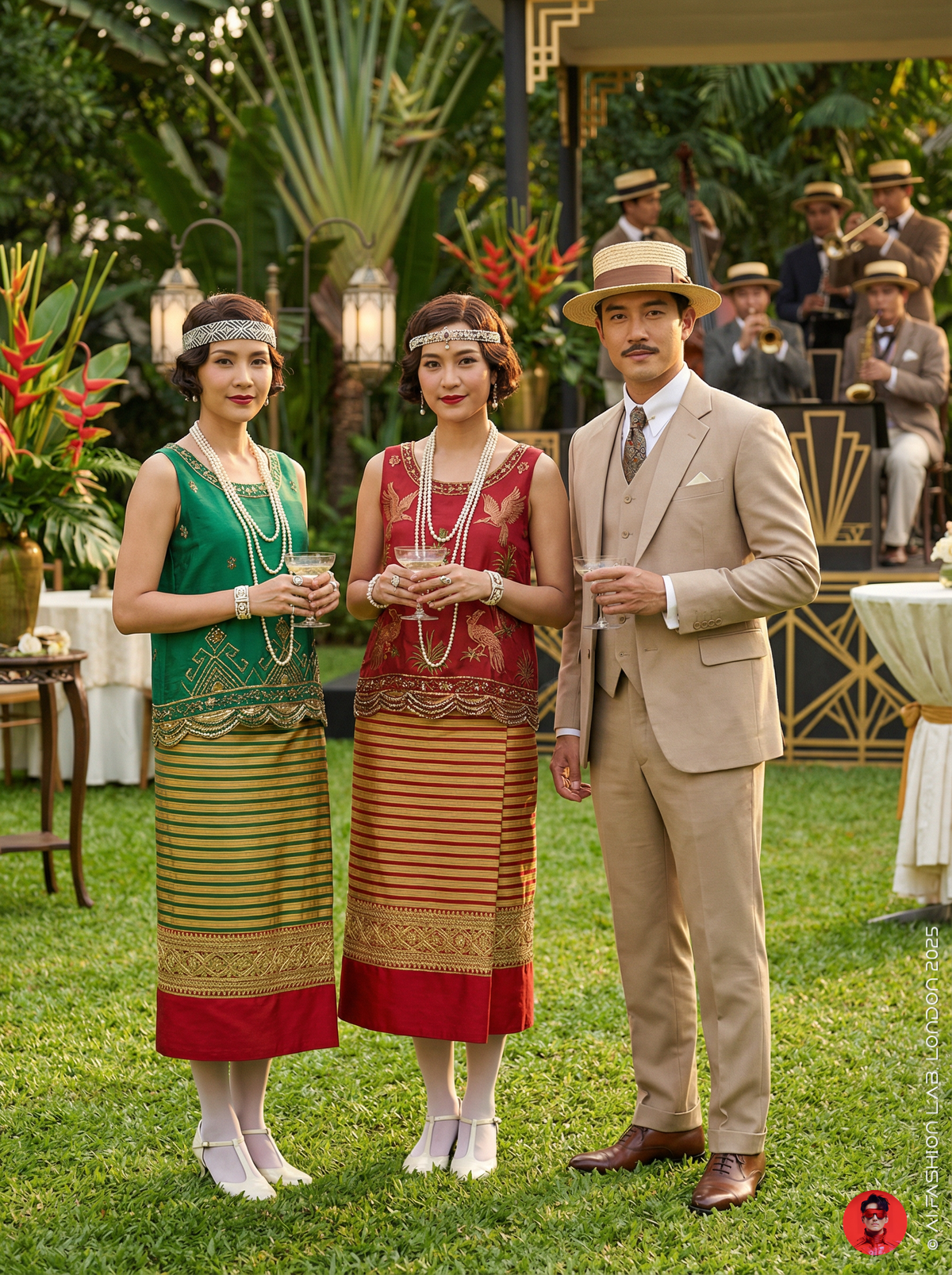
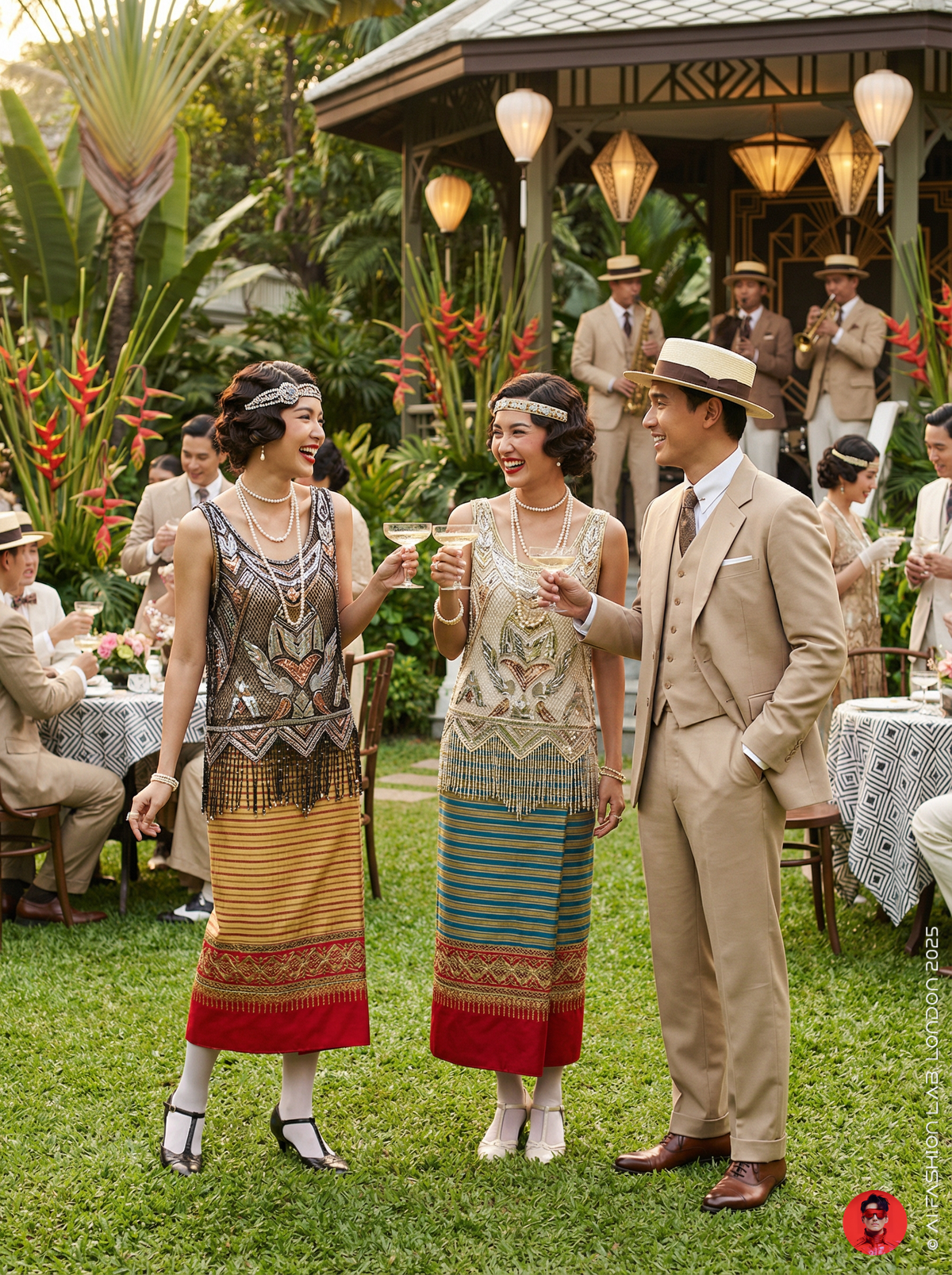
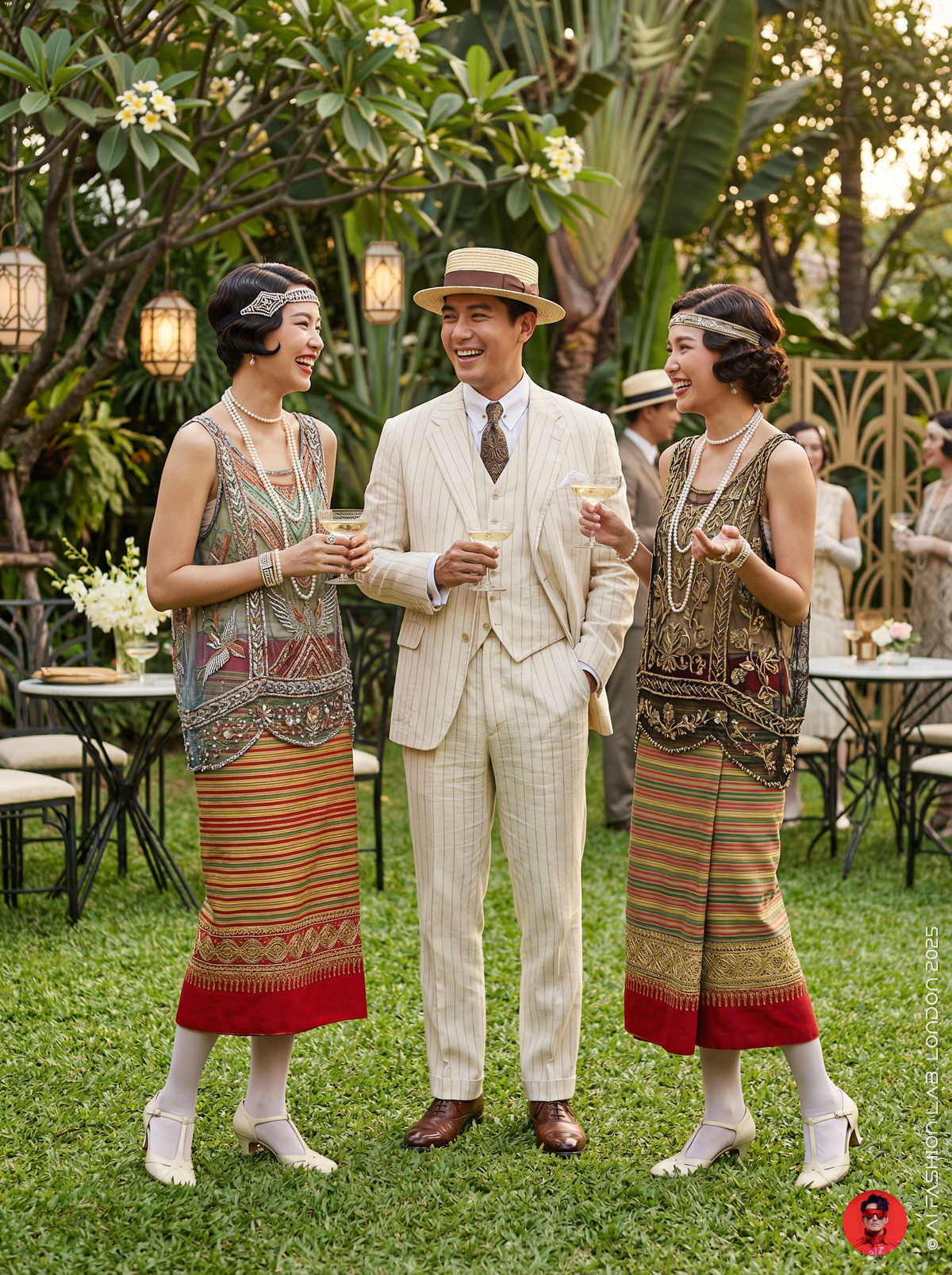
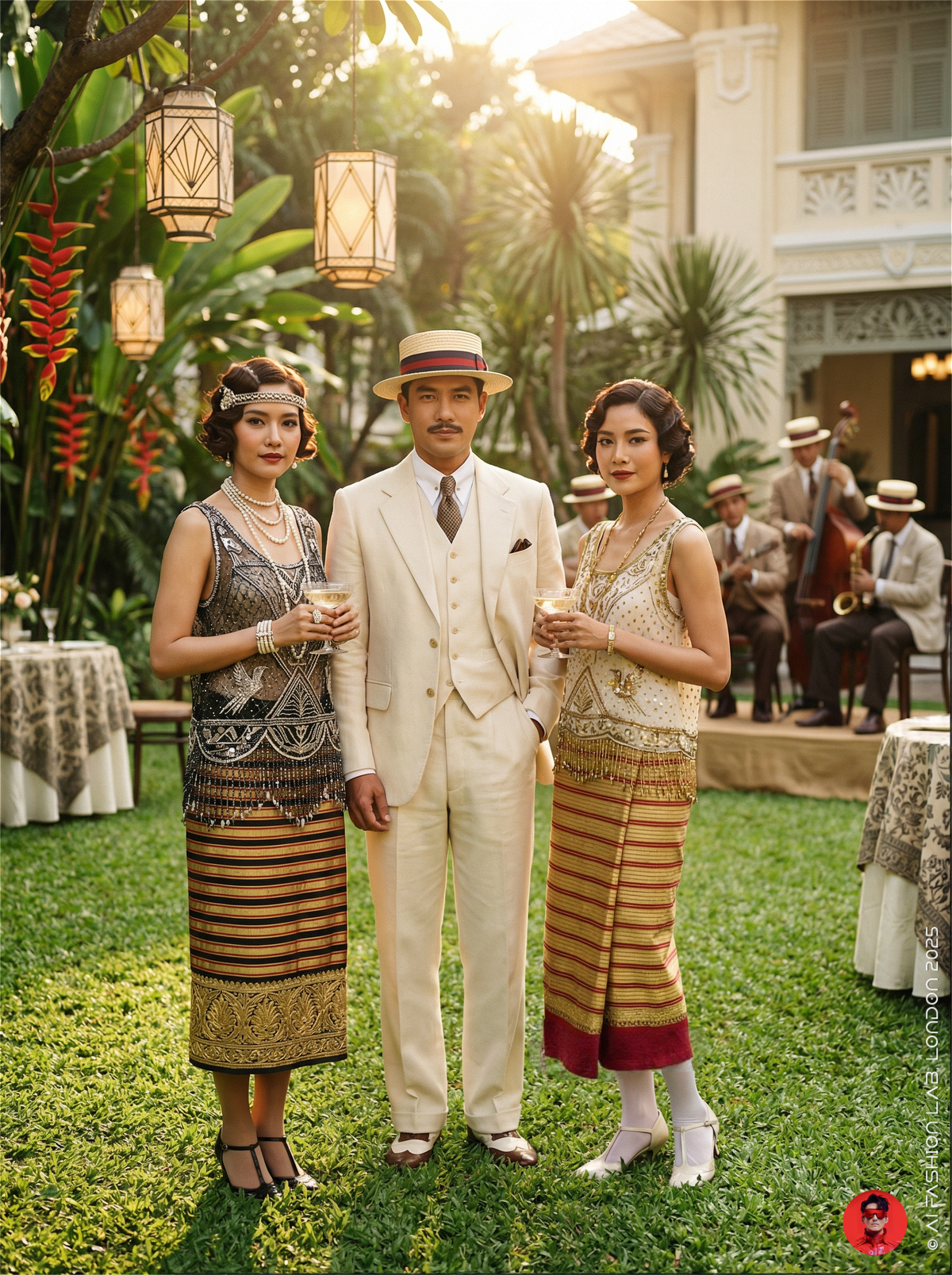
แฟชั่นที่ปรากฏในคอลเลกชันนี้ถ่ายทอดความหรูหราของสไตล์อาร์ตเดโค (Art Deco) ในช่วงต้นรัชกาลพระบาทสมเด็จพระปกเกล้าเจ้าอยู่หัว (รัชกาลที่ ๗, พ.ศ. ๒๔๖๘–๒๔๗๗) ผ่านจินตนาการของงานสังสรรค์ในสวนยามบ่าย ซึ่งผสานเสน่ห์ของแฟชั่นตะวันตกยุคอาร์ตเดโคเข้ากับความละเมียดละไมของวัฒนธรรมไทยในช่วงเวลานั้นอย่างงดงาม
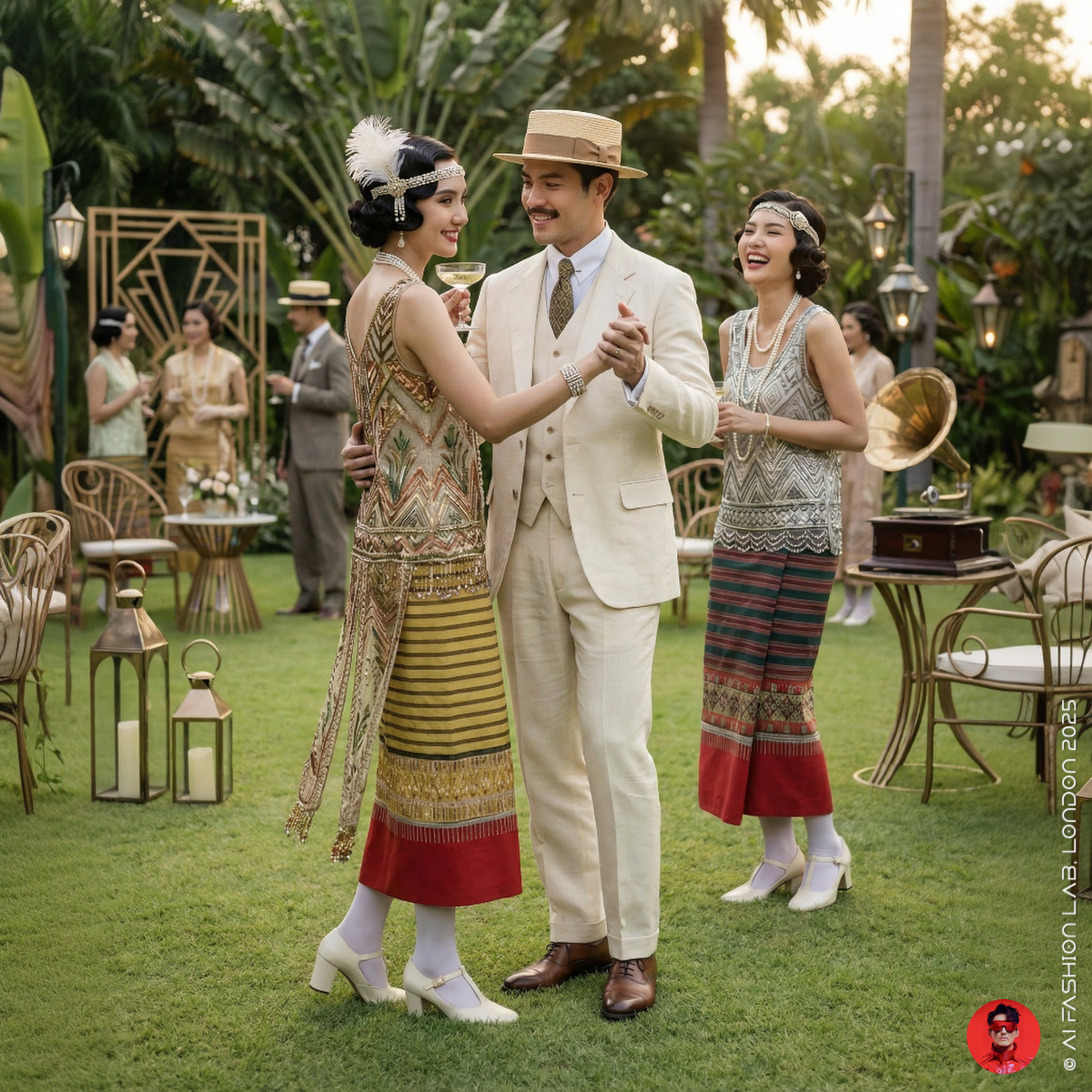
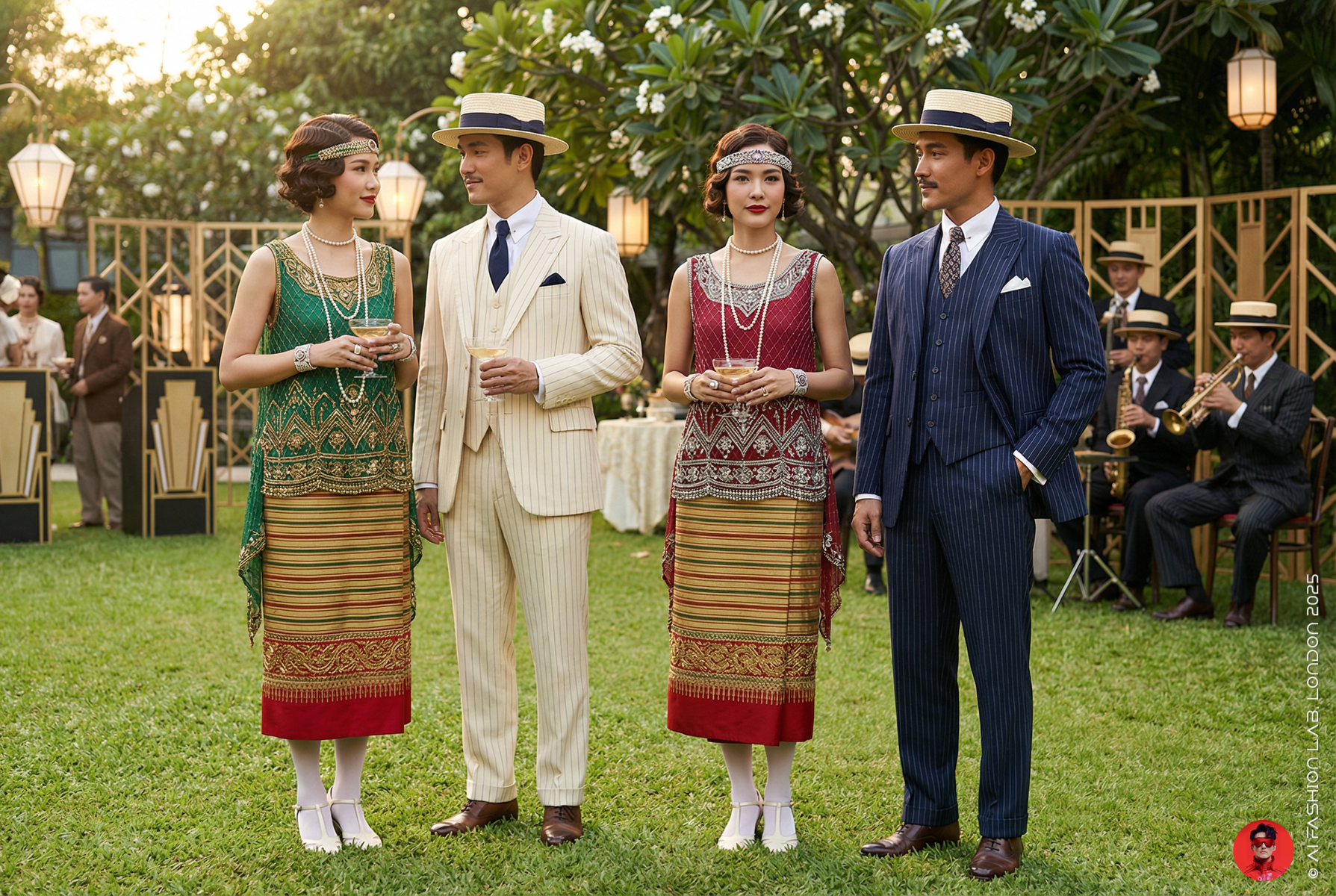
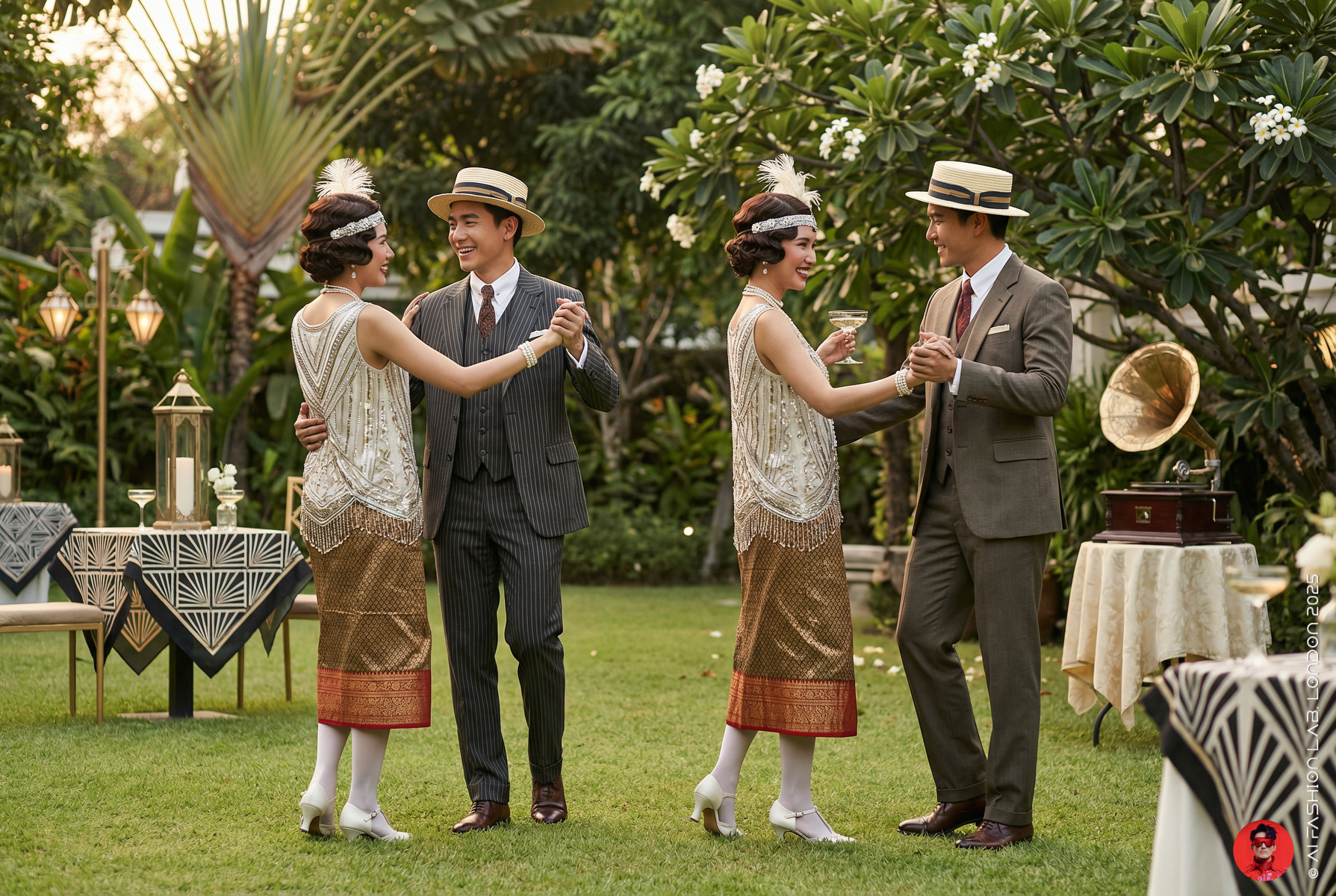
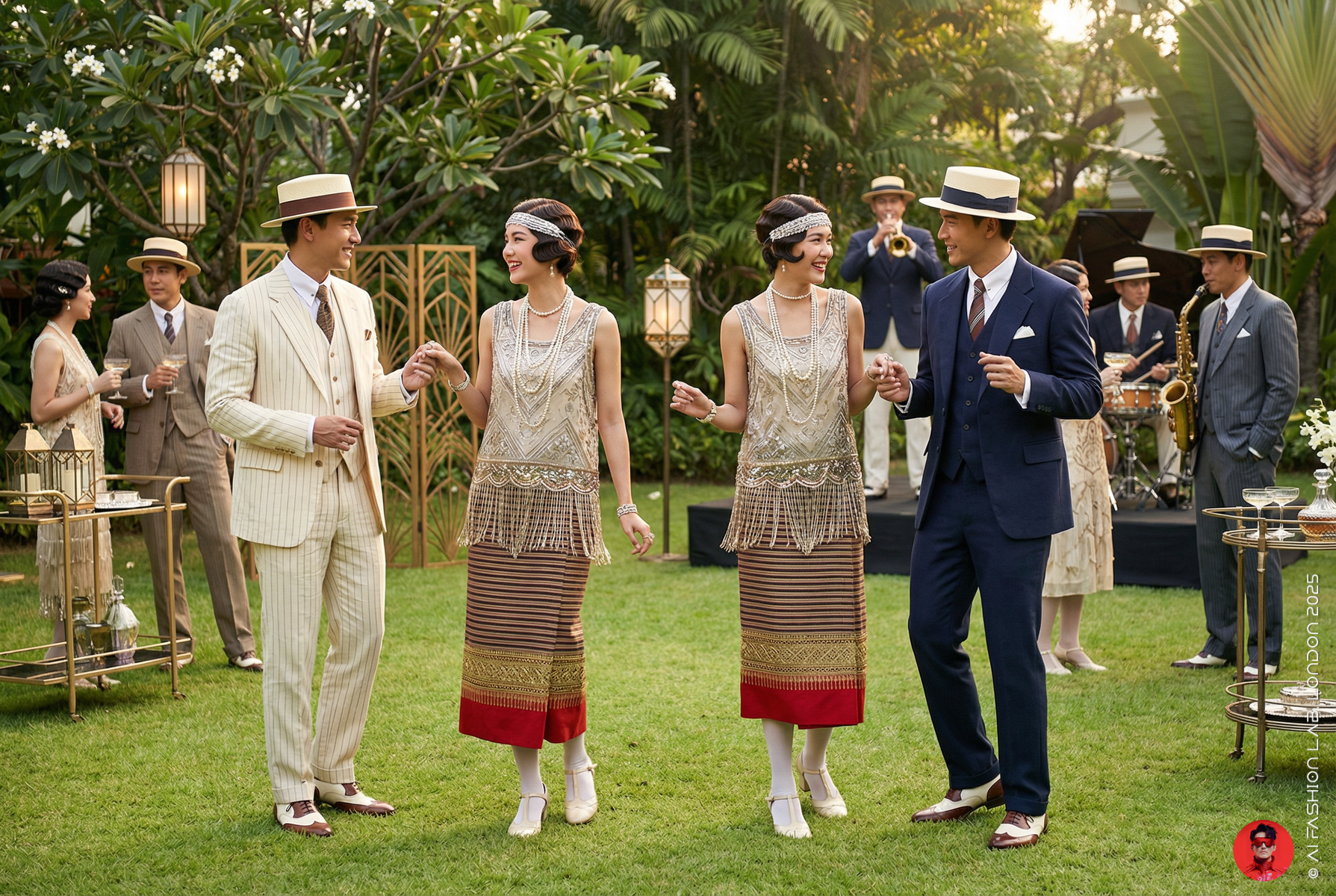
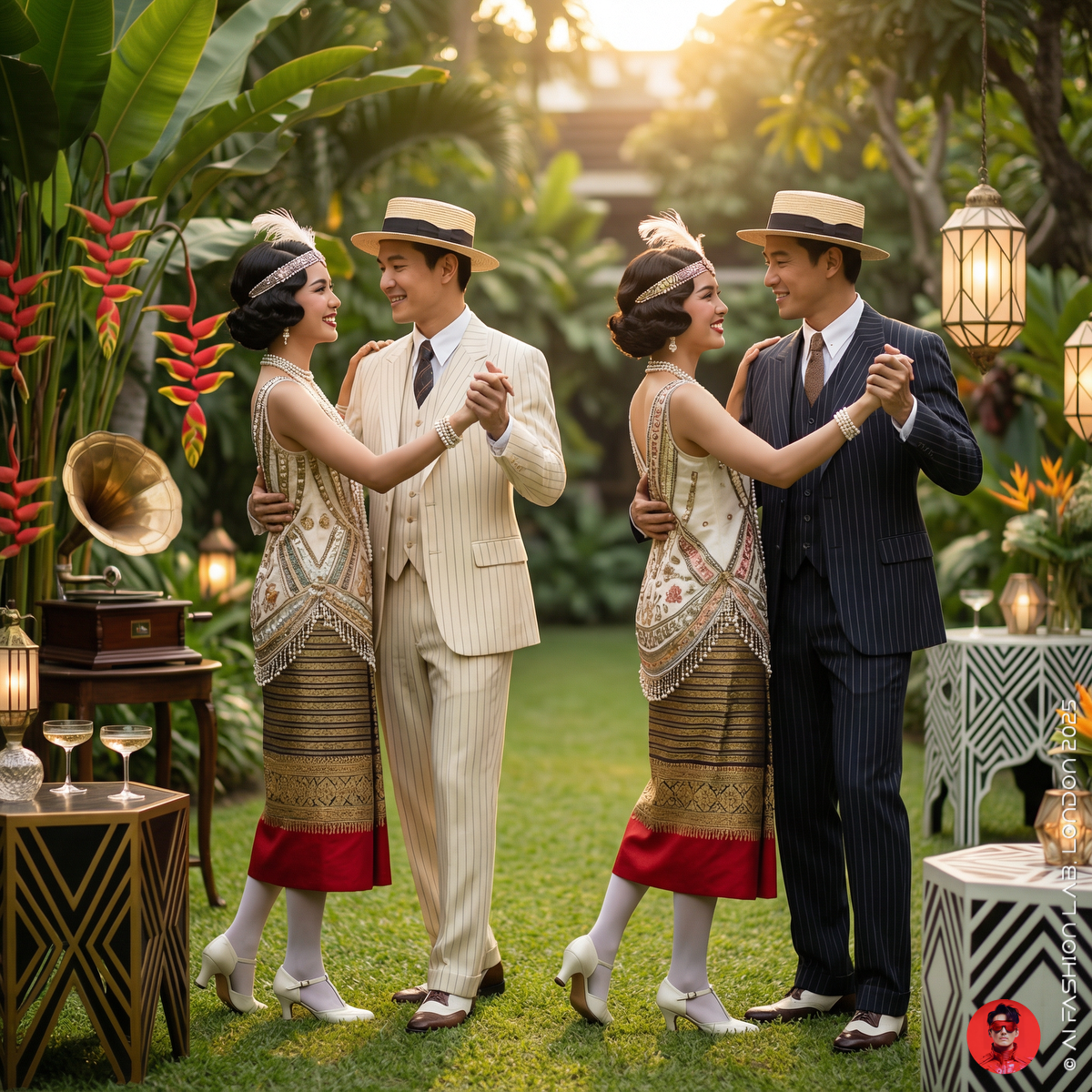
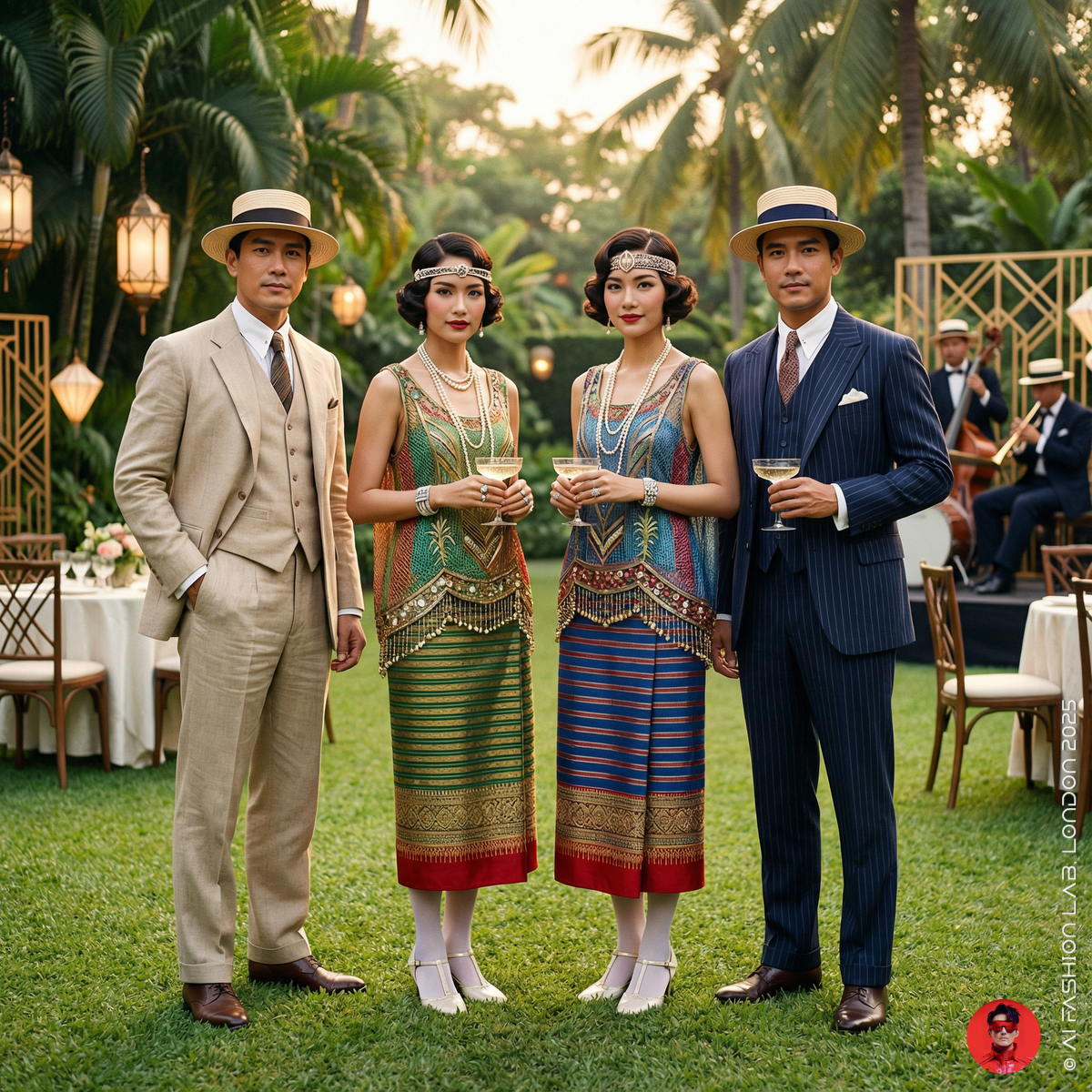
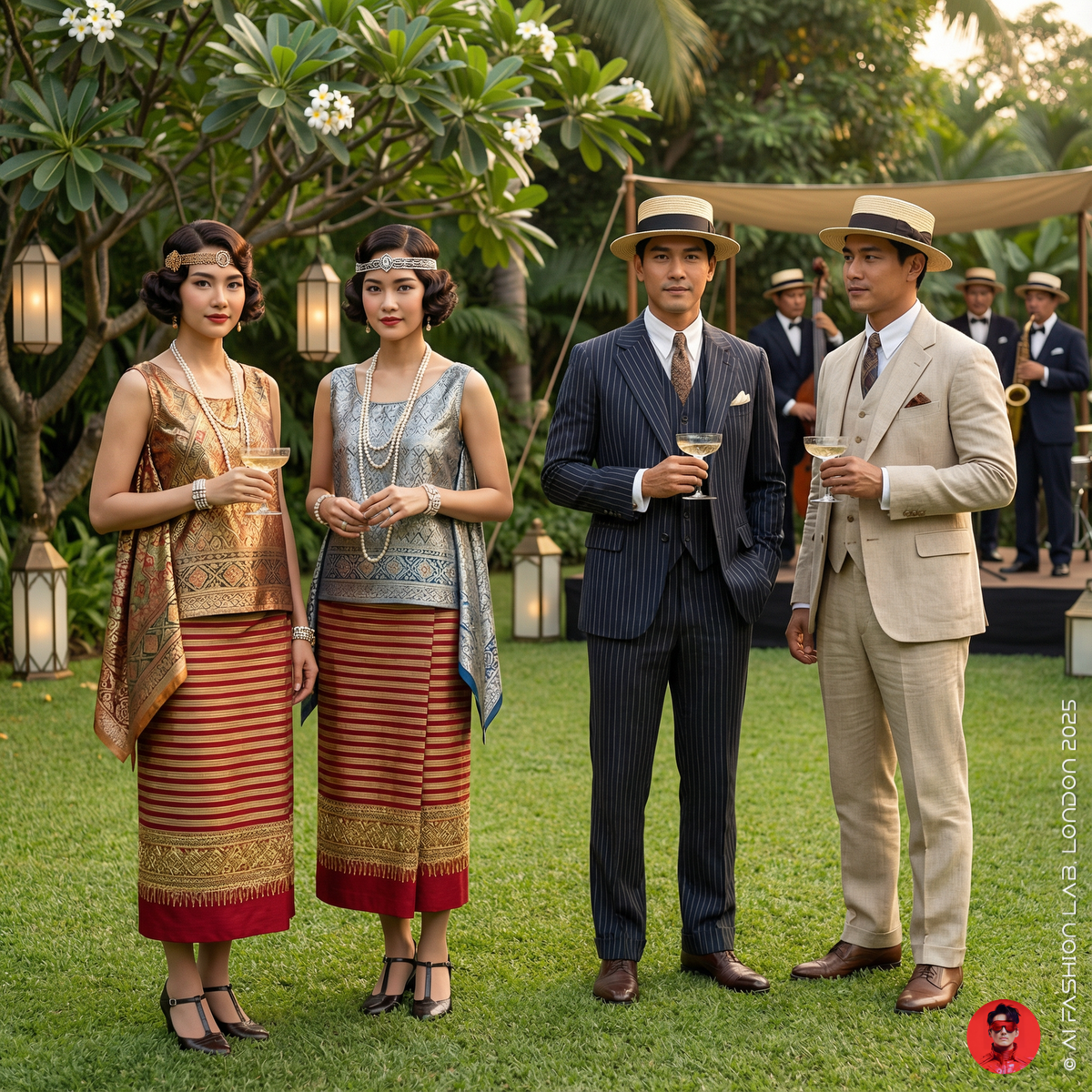
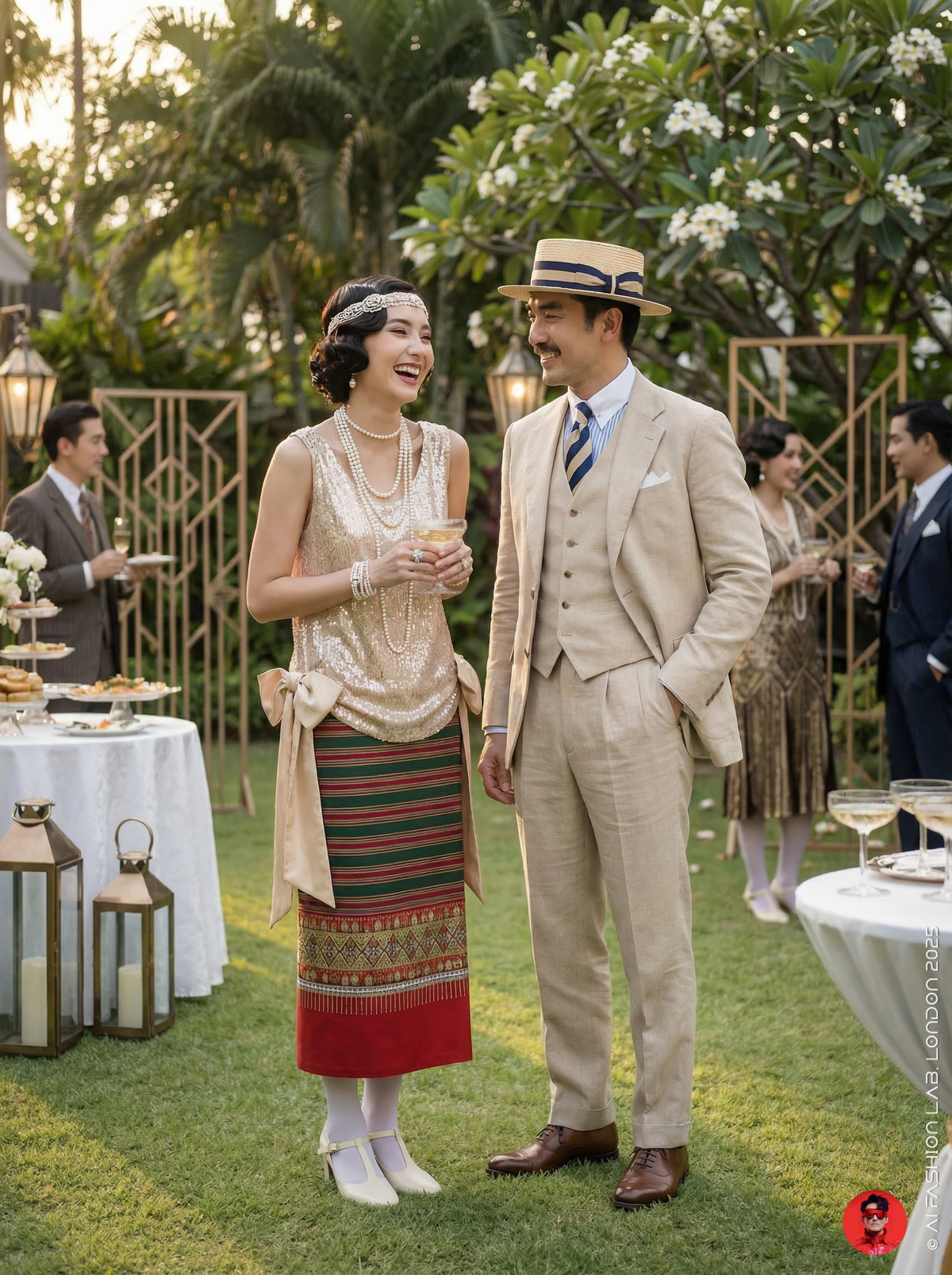
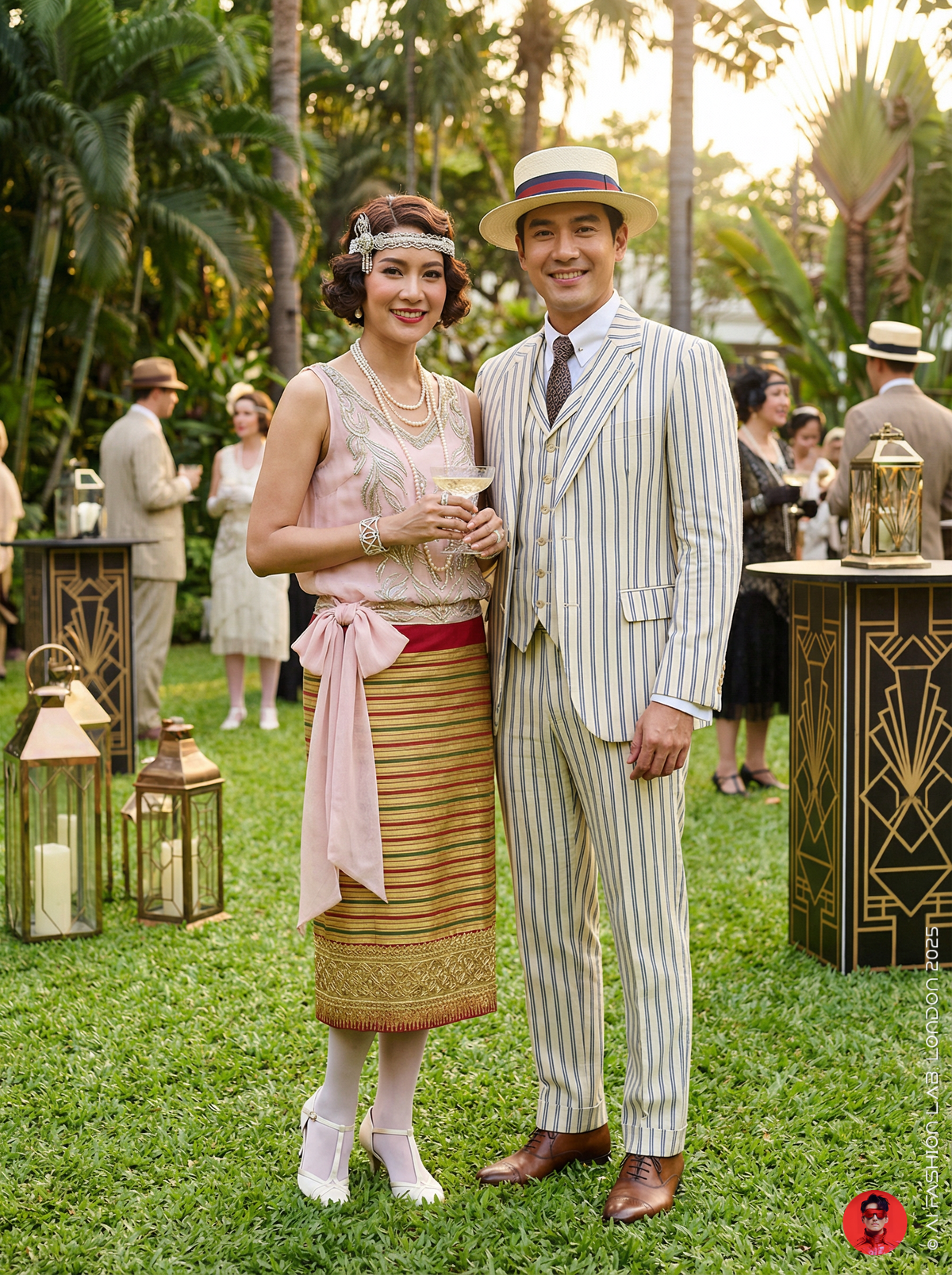
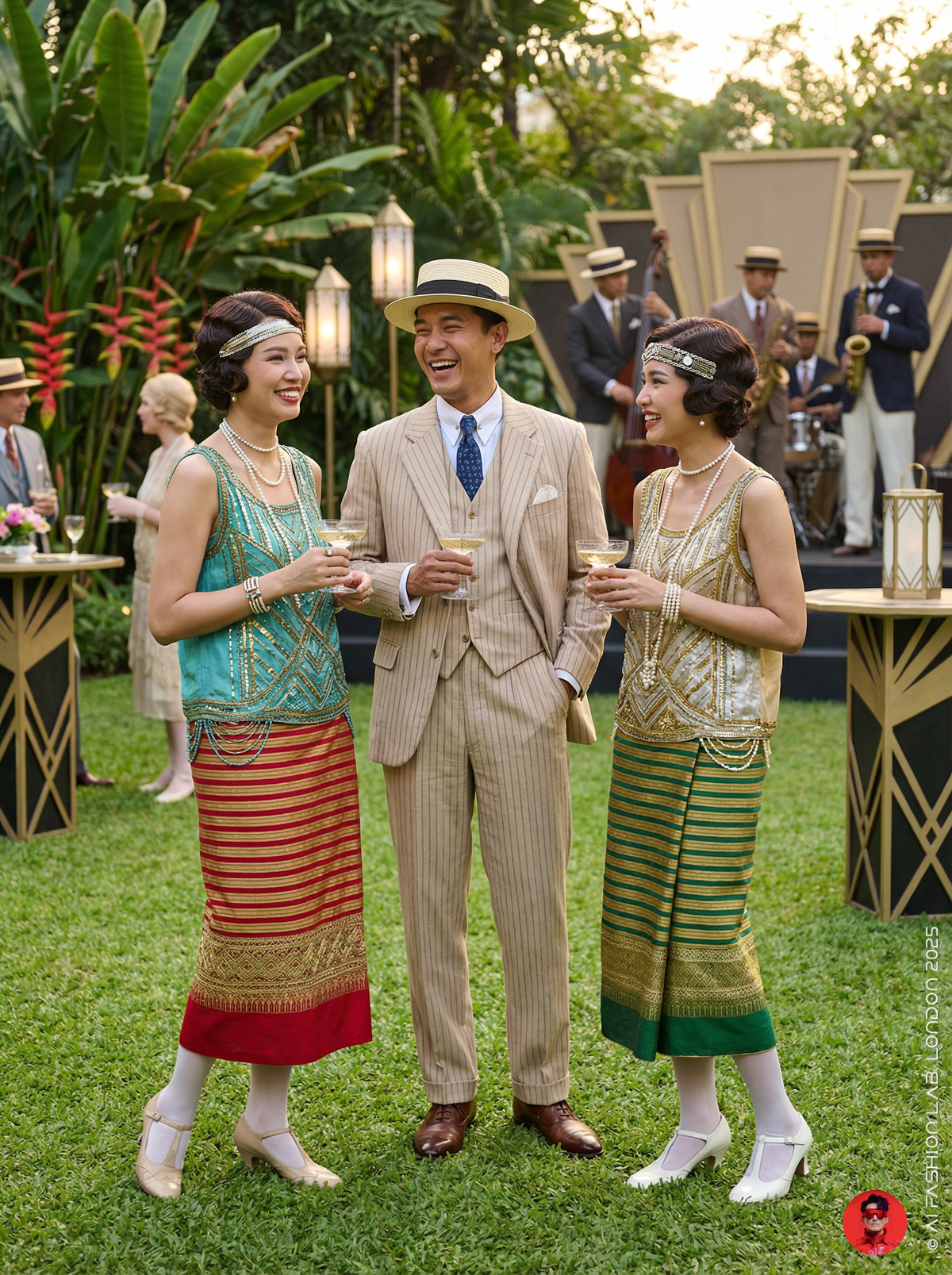
แฟชั่นอาร์ตเดโคแห่งทศวรรษ 1920 ซึ่งมักเรียกกันว่า “แฟชั่นฟลัปเปอร์ (Flapper Fashion)” โดดเด่นด้วยซิลูเอตที่พลิกโฉมไปจากยุคก่อนอย่างสิ้นเชิง สรีระถูกเน้นให้ดูยาว โปร่ง และลดการพึ่งพาคอร์เซ็ต เสื้อผ้าสตรีเป็นแบบแขนกุดหรือแขนสั้น เอวต่ำ ตกแต่งด้วยลายเรขาคณิต ผ้าปักดิ้น เลื่อม และลูกปัดวาวระยับ ทรงผมสั้นประดับด้วยคลื่นแบบ “มาร์เซลเวฟ (Marcel Wave)” และคาดศีรษะด้วยแถบโลหะ เพชรพลอย หรือขนนกอันอ่อนช้อย เป็นสัญลักษณ์เด่นของยุคนั้น
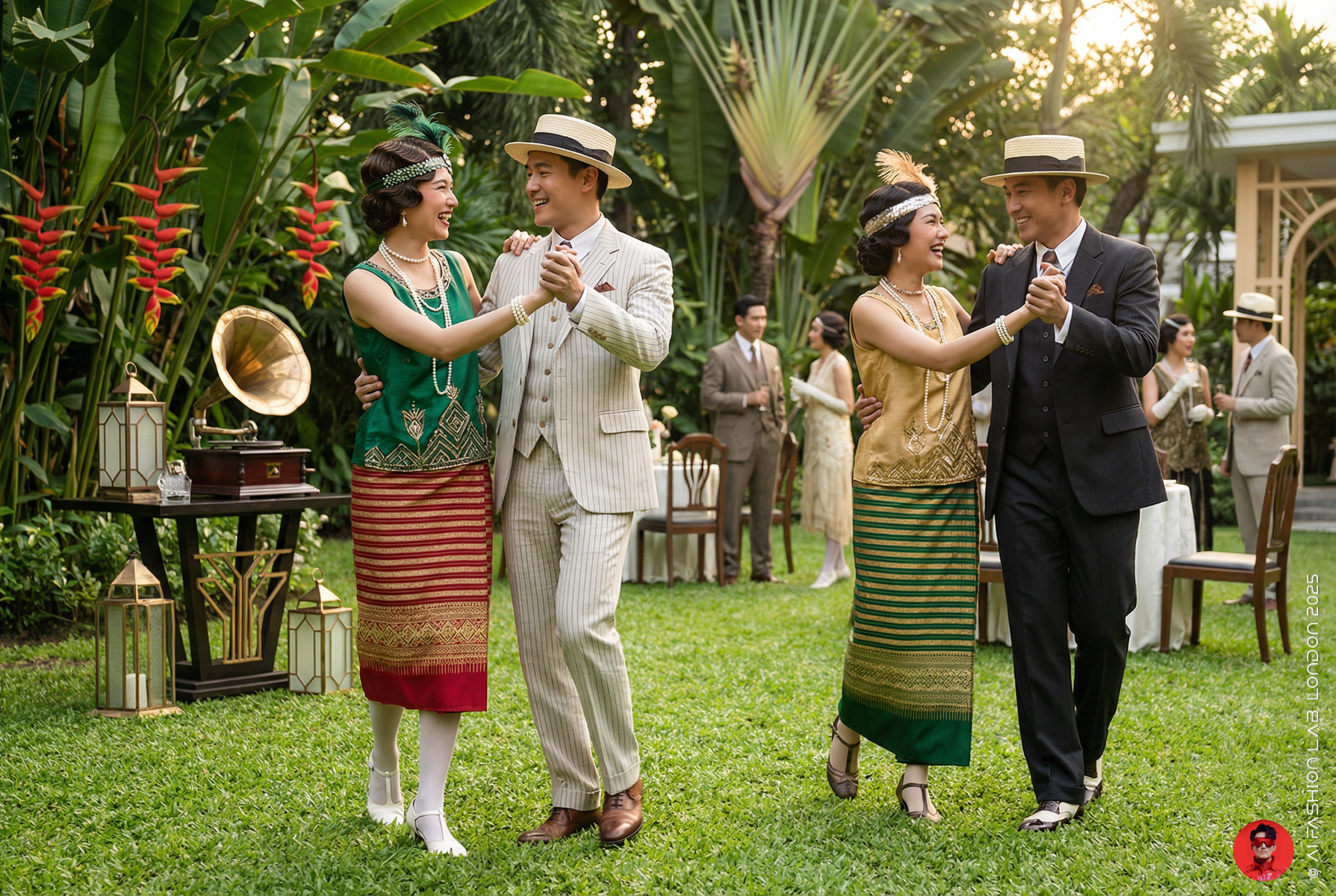
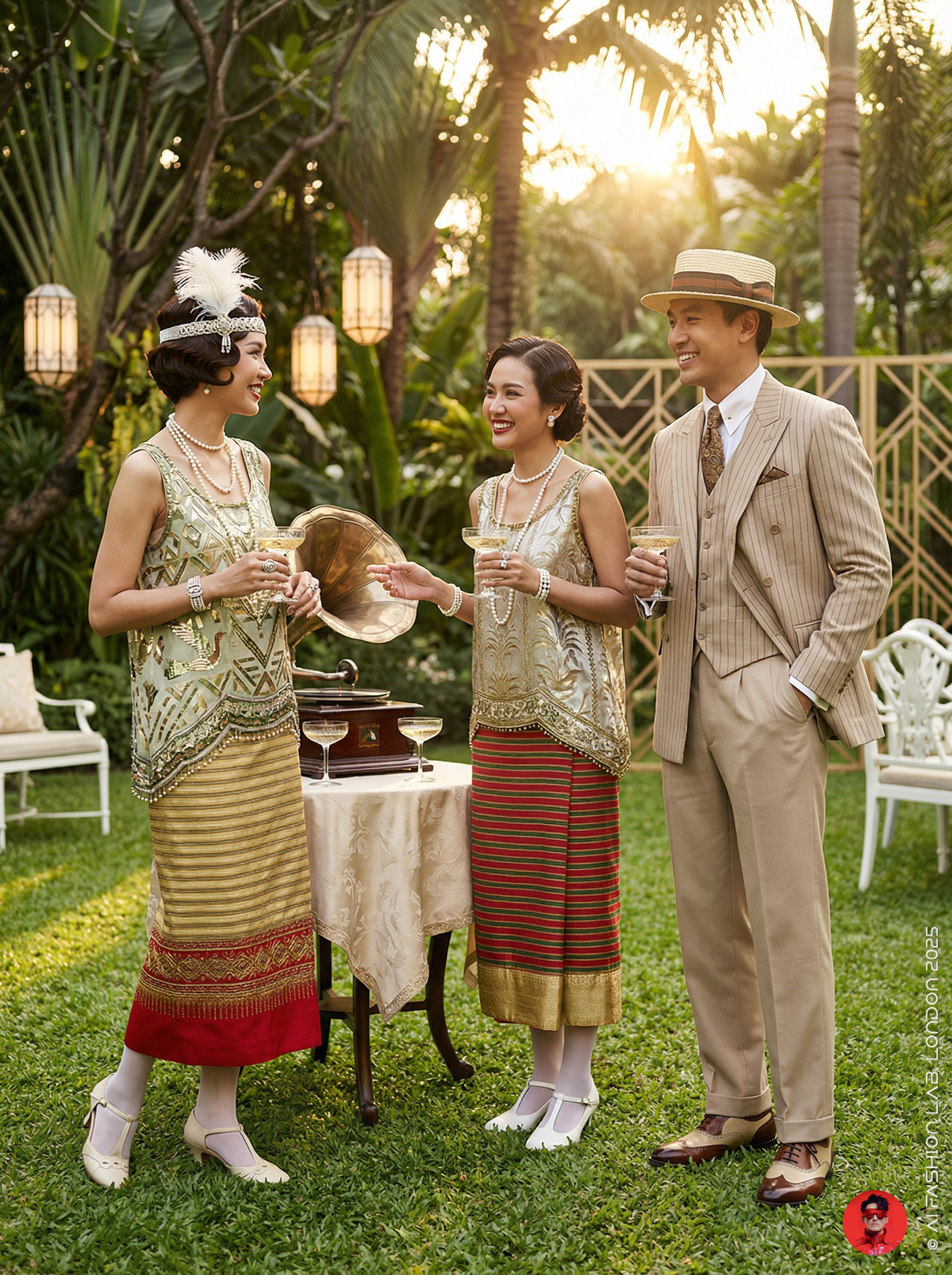
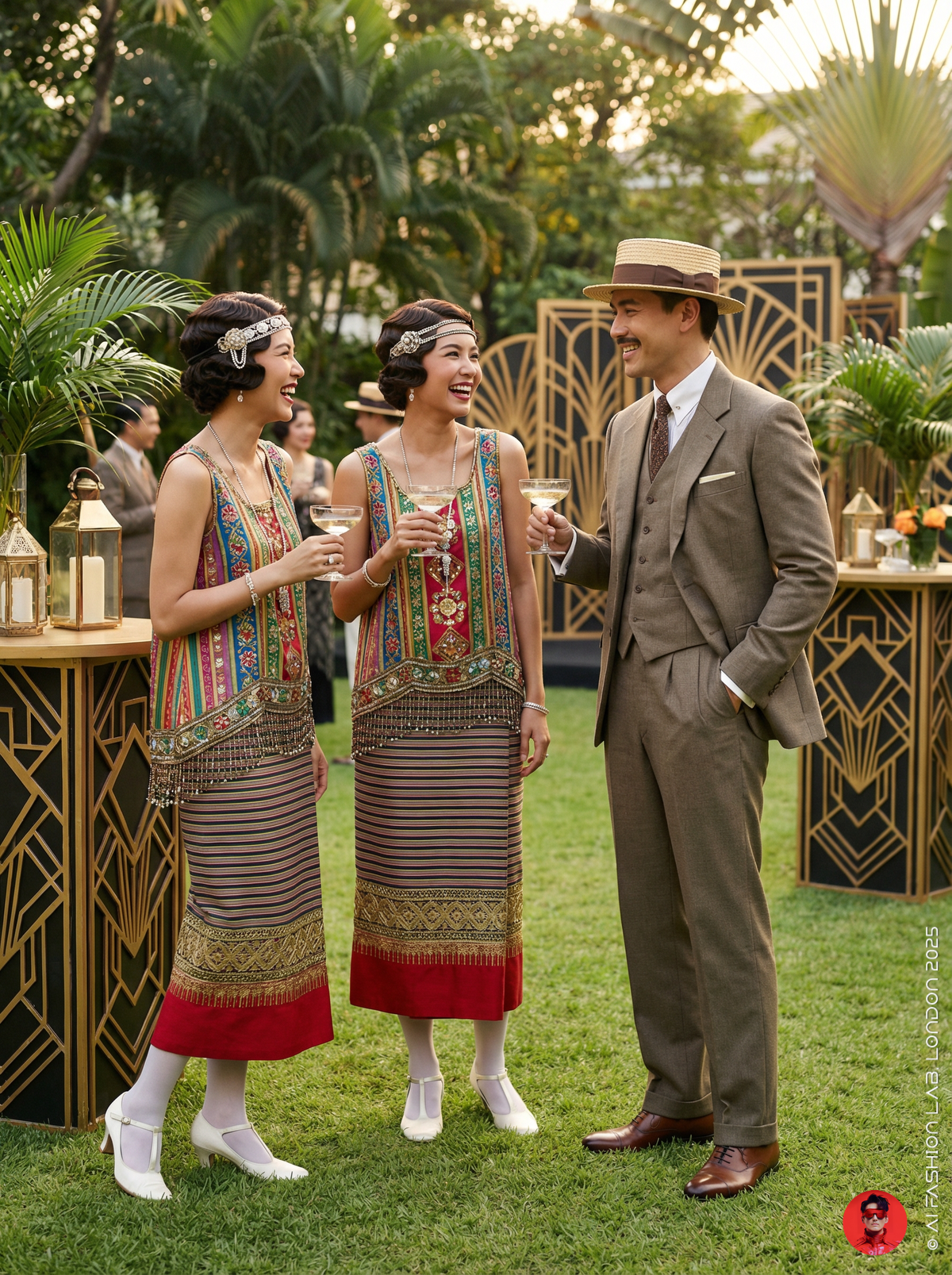
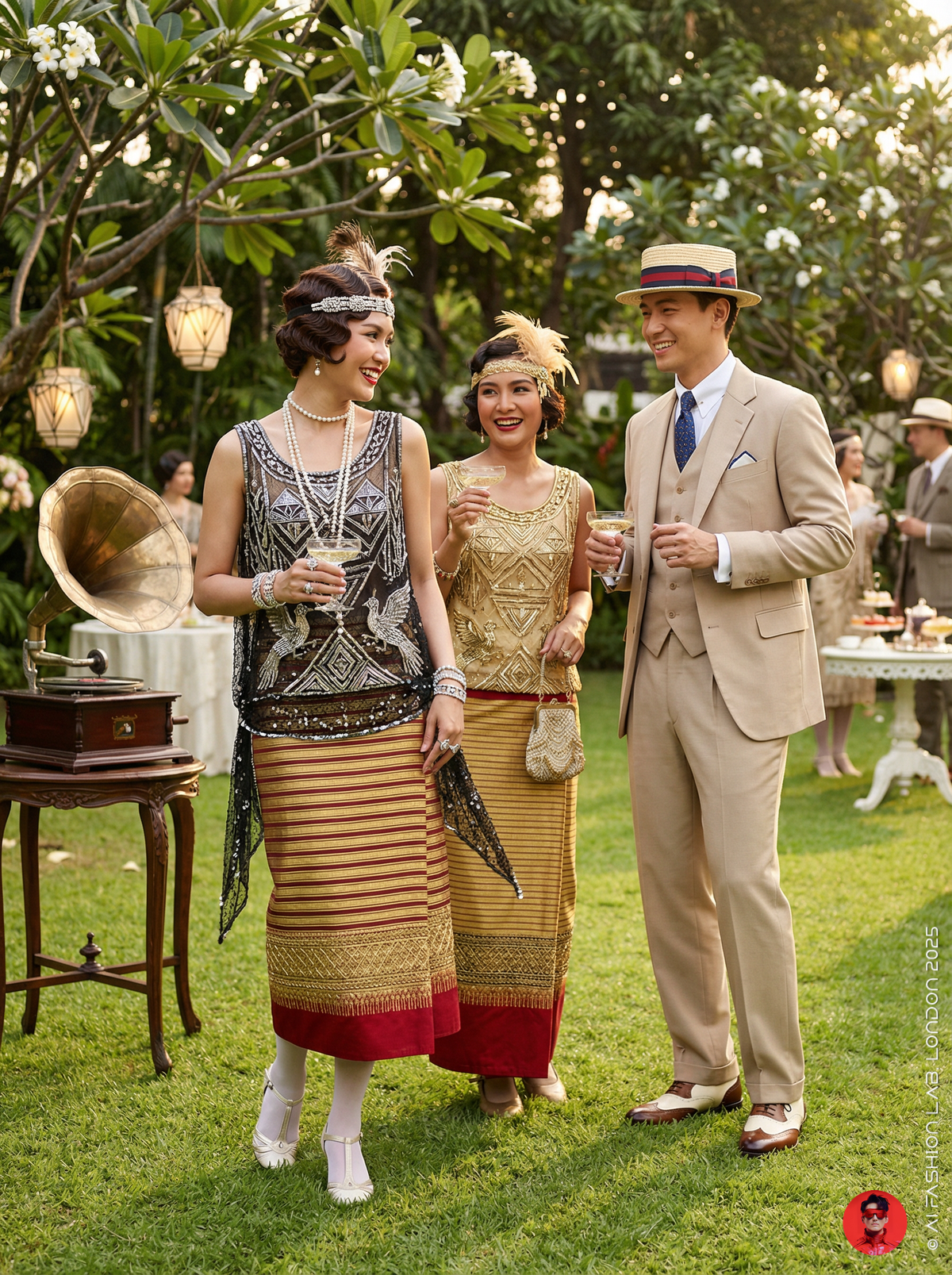
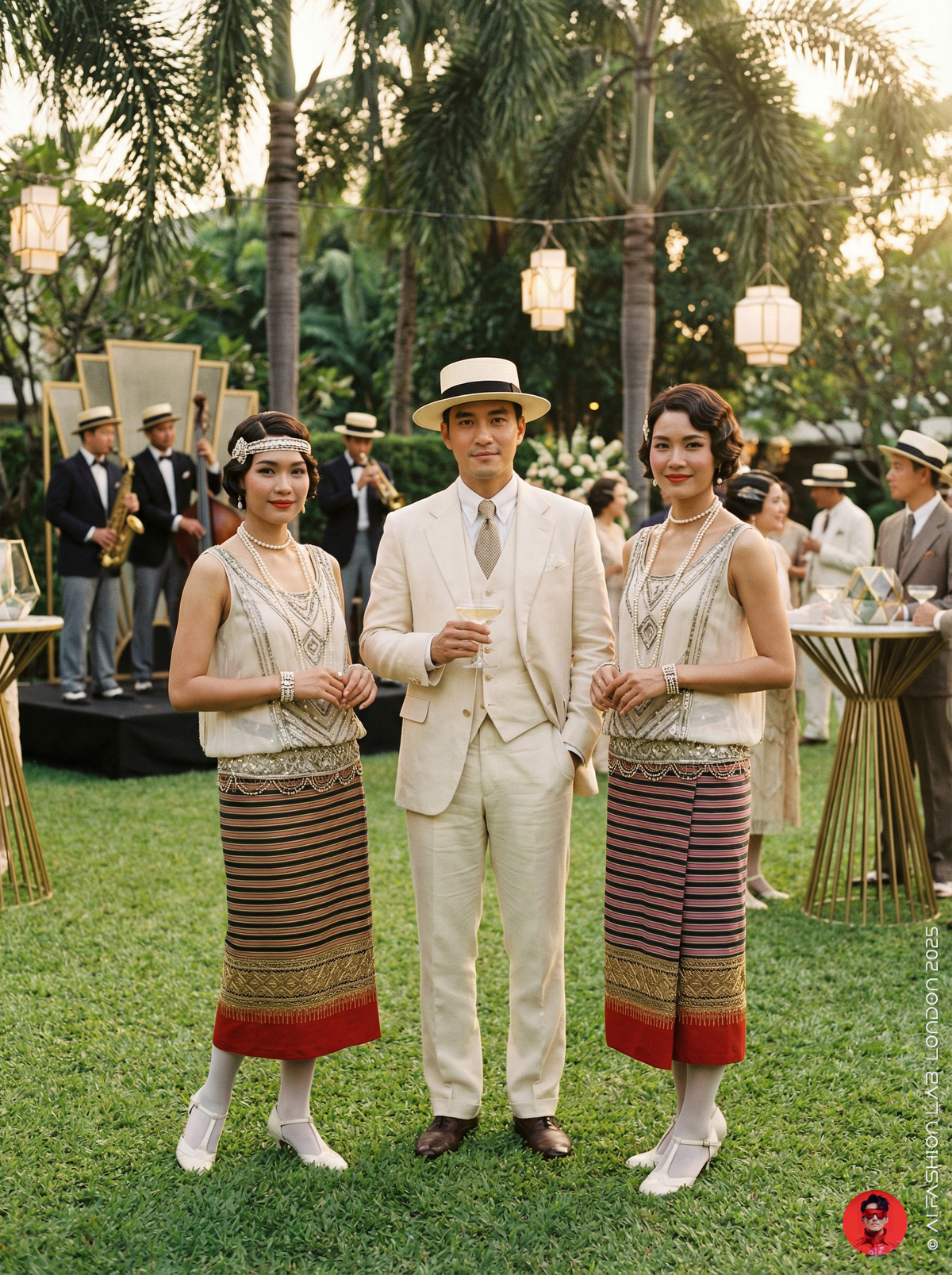
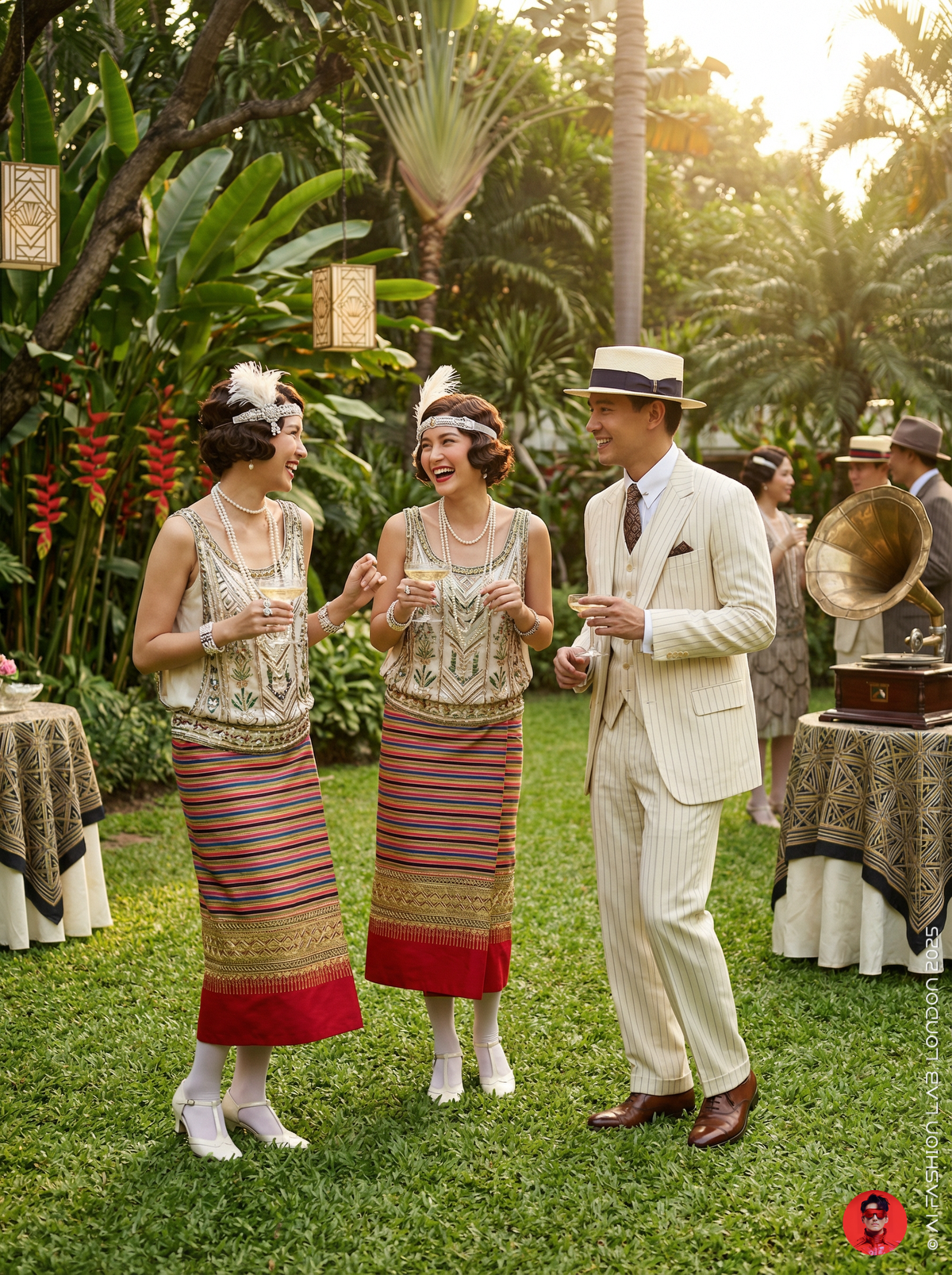
เมื่อกระแสแฟชั่นนี้แพร่เข้าสู่สยาม การแต่งกายแบบอาร์ตเดโคถูกปรับให้เข้ากับความเป็นไทยได้อย่างกลมกลืน เสื้อแขนกุดหรือเสื้อปักเลื่อมสไตล์อาร์ตเดโคถูกจับคู่กับผ้าซิ่นทรงกระบอกยาวระดับกลางน่อง สวมร่วมกับถุงน่องและรองเท้าส้นสูง ขณะที่เครื่องประดับอย่างสร้อยไข่มุกหรือชายระบายลูกปัดช่วยให้ลุคดูร่วมสมัย โก้หรู และยังคงกลิ่นอายความอ่อนช้อยแบบสตรีไทยในยุคเปลี่ยนผ่านทางวัฒนธรรม
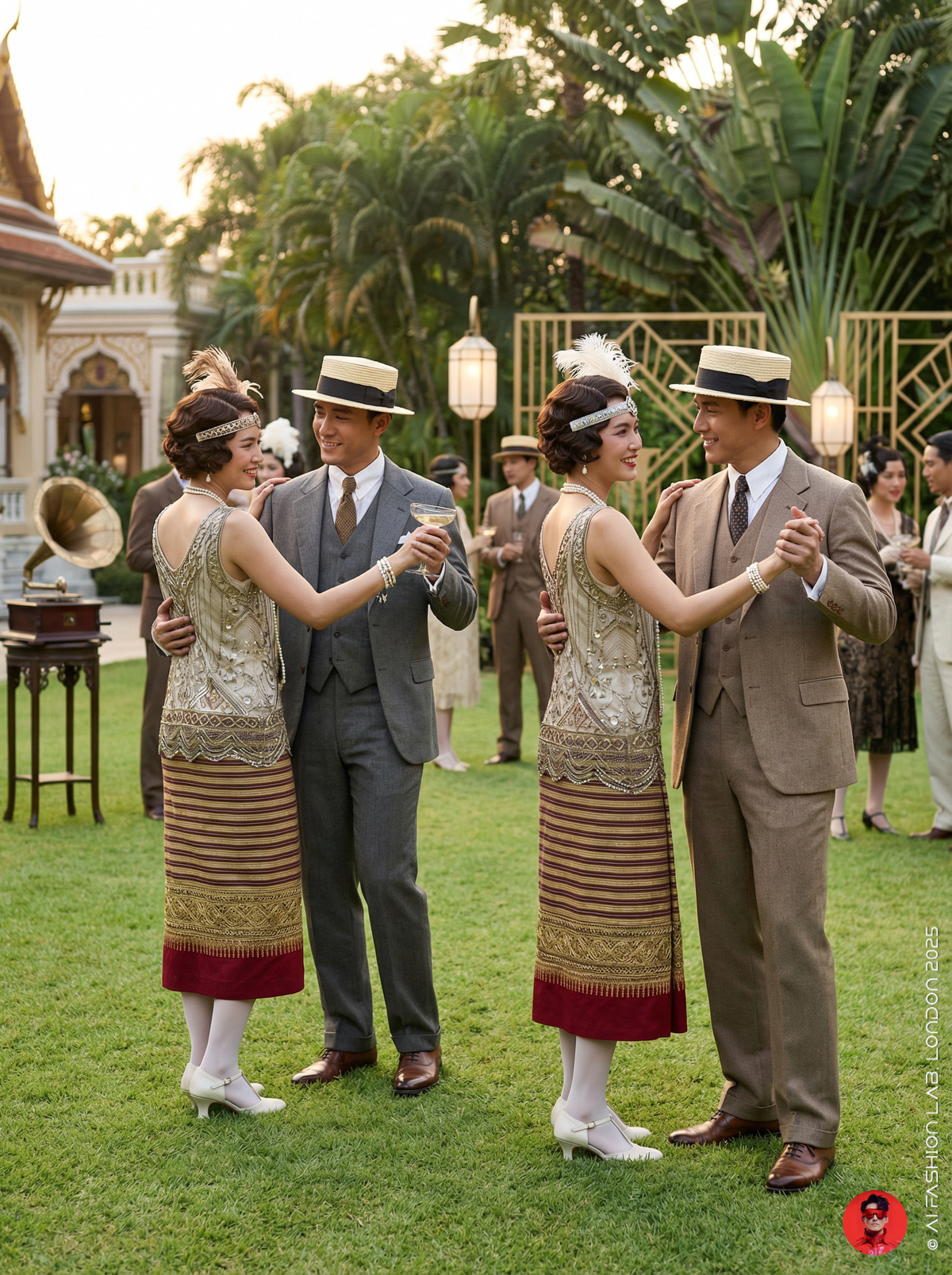
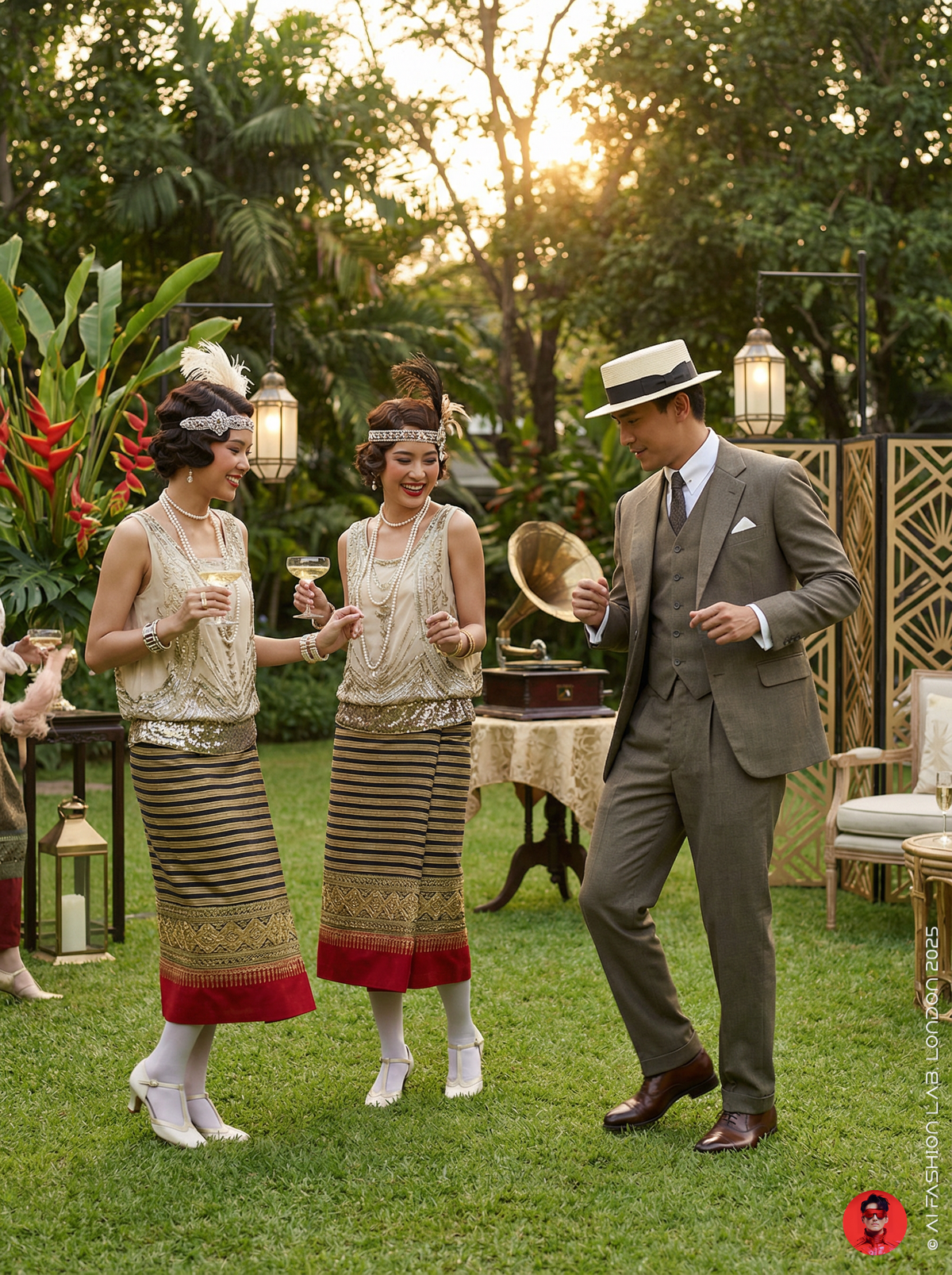
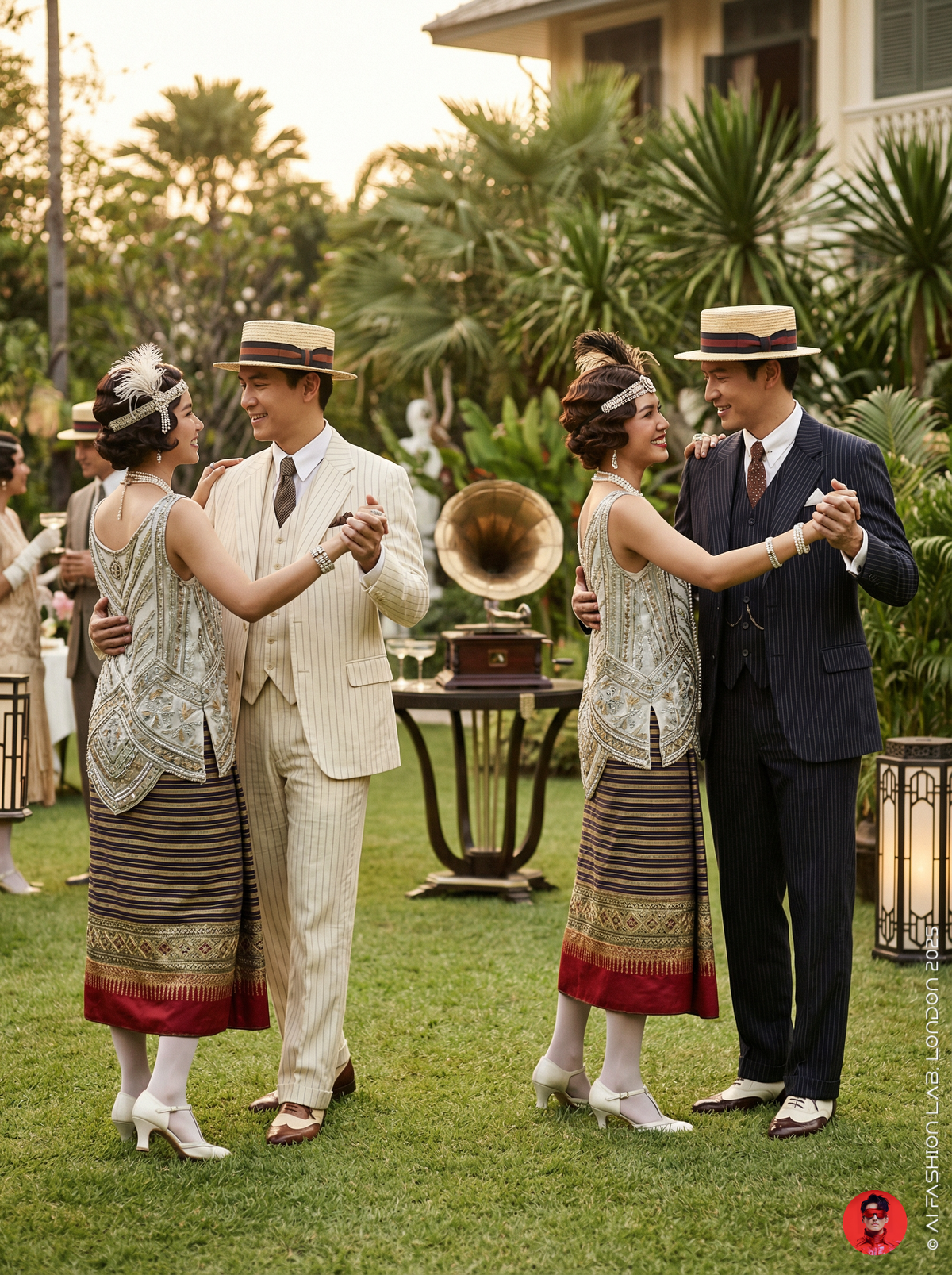
บรรยากาศของงานสังสรรค์กลางสวนยามบ่ายนี้นำเสนอการผสมผสานวัฒนธรรมตะวันตกและตะวันออกอย่างลงตัว เสน่ห์ของสถาปัตยกรรมไทย เช่น ฉากวัดหรือเรือนไทยที่ตั้งอยู่เบื้องหลัง ช่วยเสริมภาพลักษณ์สยาม ขณะที่เครื่องเล่นแผ่นเสียง เฟอร์นิเจอร์หวาย และการตกแต่งสไตล์โมเดิร์นของทศวรรษ 1920 สะท้อนให้เห็นถึงความทันสมัยที่สยามกำลังโอบรับในยุคนั้น ทำให้ภาพรวมเป็นงานเลี้ยงที่สะท้อนทั้งความศิวิไลซ์และความเป็นไทยร่วมยุคได้อย่างงดงาม
ในส่วนของแฟชั่นบุรุษ สุภาพบุรุษในช่วงทศวรรษ 1920 นิยมสวมสูทสามชิ้นพร้อมเสื้อกั๊ก ปกแหลม (peak lapel) และเนกไท ใช้โทนสีอ่อนเหมาะกับกิจกรรมกลางแจ้ง หมวกโบ๊ตเตอร์ (Boater Hat) ถือเป็นเครื่องแต่งกายสำคัญที่ช่วยสร้างบุคลิกแบบสุภาพชนยุคใหม่ หมวกชนิดนี้มีต้นกำเนิดในอังกฤษและฝรั่งเศสกลางคริสต์ศตวรรษที่ 19 ใช้ในการพายเรือและกิจกรรมสันทนาการ ก่อนจะเฟื่องฟูในทศวรรษ 1920 และแพร่หลายไปทั่วโลก รวมถึงในสยาม โดยกลายเป็นสัญลักษณ์ของความสง่างามแบบสมัยใหม่ และปรากฏให้เห็นบ่อยครั้งในละครย้อนยุคเพื่อบ่งบอกบรรยากาศแห่งยุคแจ๊ซ
บรรยากาศโดยรวมของคอลเลกชันนี้เต็มไปด้วยความอบอุ่นของแสงอาทิตย์ยามบ่าย สนามหญ้าเขียวขจี คู่หนุ่มสาวเต้นรำอย่างอ่อนหวาน ผู้ร่วมงานคนอื่น ๆ แลกเปลี่ยนบทสนทนา จิบแชมเปญ และหัวเราะอย่างเป็นกันเอง เสียงเพลงจากเครื่องเล่นแผ่นเสียงช่วยเสริมอารมณ์ให้ภาพของงานเลี้ยงในสวนดูสมจริงและมีชีวิตชีวา ขณะเดียวกันผ้าไหมไทยที่สะท้อนแสงเป็นประกายเฉดทอง เขียว ม่วง และแดง ช่วยเชื่อมยุคอาร์ตเดโคเข้ากับความงามแบบไทยอย่างไร้รอยต่อ
_________________________________
An Afternoon Garden Gathering – Art Deco Elegance in Early King Rama VII’s Reign, Created with Google’s Nano Banana Pro
This collection was created to test the capabilities of Google’s Nano Banana Pro, the latest image-generation model from Google, using image prompts derived from my previously designed Art Deco–era Thai womenswear and menswear collection as the foundational reference. The results demonstrate a remarkable improvement in clarity, realism, and accuracy when compared with the earlier Nano Banana model — which was already of a very high standard. In this Pro version, the model captures character likeness with impressive fidelity, producing images of such high resolution that further upscaling is rarely necessary. It also reveals an exceptional understanding of Thai culture and Thai material culture, whether in textile patterns, jewellery, contemporary interpretations of Thai dress, or even the atmosphere of urban Siam during the 1920s.
Most notably, the model interprets period-appropriate material culture with outstanding precision. This includes the correct forms of vintage automobiles from the Art Deco era, historically accurate champagne coupe glasses — the shallow, flat design popular in the 1920s rather than the tall flute shape familiar today — and design elements that align seamlessly with the fashions and visual language of the Art Deco period. Altogether, these features allow the generated images to remain historically grounded, culturally coherent, and visually expressive, reflecting a truly significant advancement in AI-driven visual creation.
The fashions depicted in this series reinterpret the elegance of Art Deco style during the early reign of King Prajadhipok (Rama VII, 1925–1935), imagined through the atmosphere of an afternoon garden party. The collection blends the sophistication of Western Art Deco design with the refined sensibilities of Thai cultural aesthetics of the period.
Art Deco fashion of the 1920s—often referred to as “Flapper Fashion”—represented a dramatic departure from the silhouettes of earlier decades. The new form emphasised straight lines, elongated proportions, and freedom from the restrictive corsets of the past. Women’s clothing featured sleeveless or short-sleeved dresses with dropped waists, geometric patterns, metallic embroidery, sequins, and shimmering beadwork. Short hairstyles were styled into soft “Marcel Wave” curls and enhanced with jewelled or feathered headbands—distinctive icons of the era.
When adapted for Siam, this global fashion movement harmonised beautifully with Thai dress. Sleeveless tops decorated with metallic embellishment or sequins were paired with traditional pha sin—a tubular skirt falling to mid-calf—styled together with stockings and high-heeled shoes. Accessories such as pearl necklaces or beaded fringe trims heightened the glamour while retaining a gentle Thai grace, reflecting a moment of cultural transition infused with modernity.
The garden party setting evokes the cultural synthesis between East and West. Thai architectural elements—such as temples or traditional pavilions placed subtly in the background—affirm the Siamese identity, while modern furnishings, gramophones, and rattan furniture highlight the influence of global trends during the 1920s. Together, these visual elements portray a society open to international fashion currents while preserving its own distinctive cultural character.
Men’s fashion of the period is represented through three-piece suits with waistcoats, peak lapels, and neckties, tailored in light colours suitable for outdoor gatherings. A defining accessory is the boater hat—its flat crown and straight brim trimmed with a dark satin ribbon—an emblem of early twentieth-century gentlemanly elegance. Originating in mid-nineteenth-century England and France as sporting and rowing attire, the boater rose to prominence from the late nineteenth century into the 1920s. It became globally popular, including in Siam, especially among the elite and cosmopolitan communities of port cities. Though its popularity declined by the 1930s, the boater remains an enduring symbol of early modern style, often used in period films to evoke the Jazz Age.
The atmosphere of the garden gathering is warm and luminous, set in the golden light of the late afternoon. Couples dance gracefully on the lawn while other guests converse, laugh, and sip champagne. Soft music from a gramophone enriches the mood. Thai silk sin fabrics glimmer in gold, green, violet, and red, their iridescence merging seamlessly with the opulence of the Art Deco world. The result is a vivid portrait of Siam in a moment where elegance, modernity, and cultural identity intertwined in perfect harmony.
#aifashionlab #AI #aiartist #aiart #aifashion #aifashiondesign #aifashionstyling #aifashiondesigner #fashion #fashionhistory #historyoffashion #fashionstyling #fashionphotography #digitalfashiondesign #digitalcostumedesign #digitaldesign #digitalaiart #ThaiFashionHistory #ThaiFashionAI #thailand