แฟชั่นสไตล์อาร์ตเดโคในสมัยต้นรัชกาลที่ ๗ ด้วย Nano Banana Pro (ตอนที่ ๒)
แฟชั่นสไตล์อาร์ตเดโคในสมัยต้นรัชกาลที่ ๗ ด้วย Nano Banana Pro (ตอนที่ ๒)
ศิลปะการแต่งกายสไตล์อาร์ตเดโคในชีวิตประจำวันในสมัยต้นรัชกาลที่ ๗ ด้วย Google’s Nano Banana Pro
คอลเลกชันนี้ได้รับการสร้างสรรค์ขึ้นเพื่อทดสอบศักยภาพของ Google’s Nano Banana Pro ซึ่งเป็นโมเดลล่าสุดของ Google สำหรับการสร้างภาพด้วยปัญญาประดิษฐ์ โดยใช้ image prompt จากคอลเลกชันแฟชั่นสตรีและบุรุษยุคอาร์ตเดโคที่ลุพธ์เคยออกแบบไว้แล้วเป็นฐานต้นแบบ ผลลัพธ์ที่ได้แสดงให้เห็นถึงความคมชัด ความสมจริง และความแม่นยำที่เหนือกว่า Nano Banana รุ่นก่อนหน้าอย่างชัดเจน ทั้งที่รุ่นก่อนก็มีคุณภาพสูงอยู่แล้ว รุ่น Pro นี้สามารถถ่ายทอดคาแรกเตอร์ได้อย่างครบถ้วน มีความละเอียดสูงจนแทบไม่จำเป็นต้องอัปสเกลเพิ่มเติม อีกทั้งยังแสดงให้เห็นถึงความเข้าใจวัฒนธรรมไทยและวัฒนธรรมวัตถุ (material culture) ของไทยได้อย่างยอดเยี่ยม ทำให้ภาพที่สร้างขึ้นมีความถูกต้องตามบริบท และสะท้อนอัตลักษณ์แบบไทยร่วมสมัยได้อย่างงดงาม
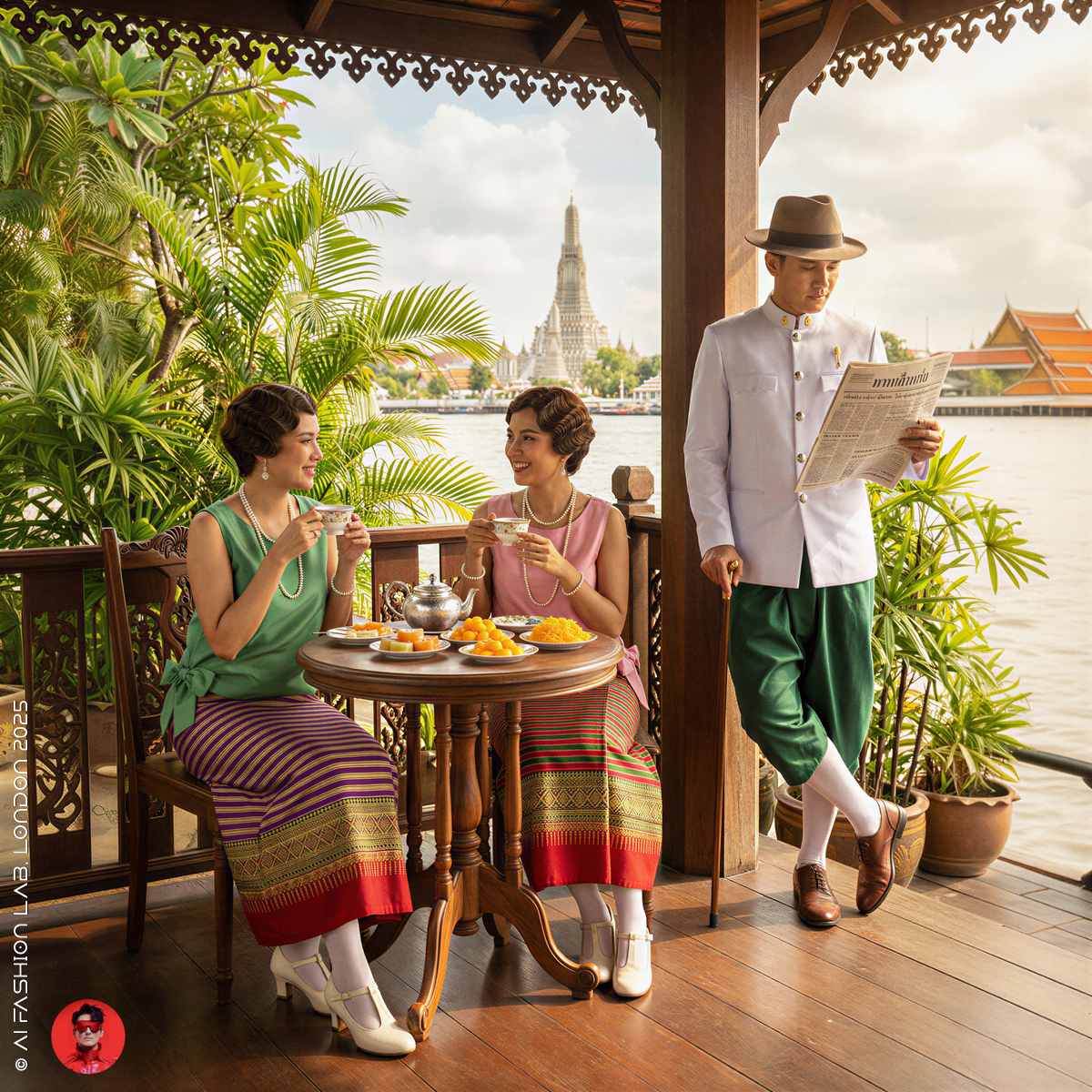
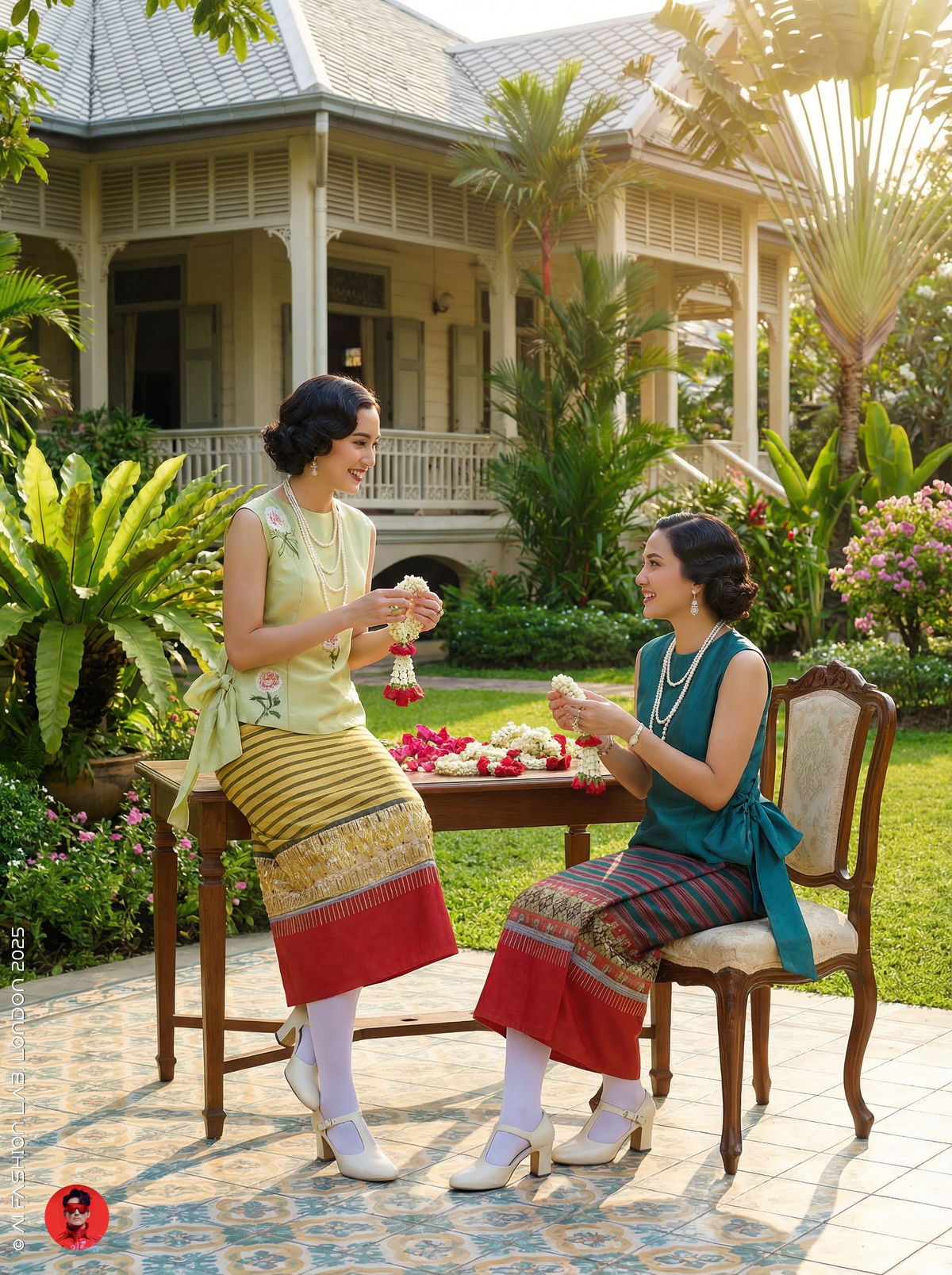
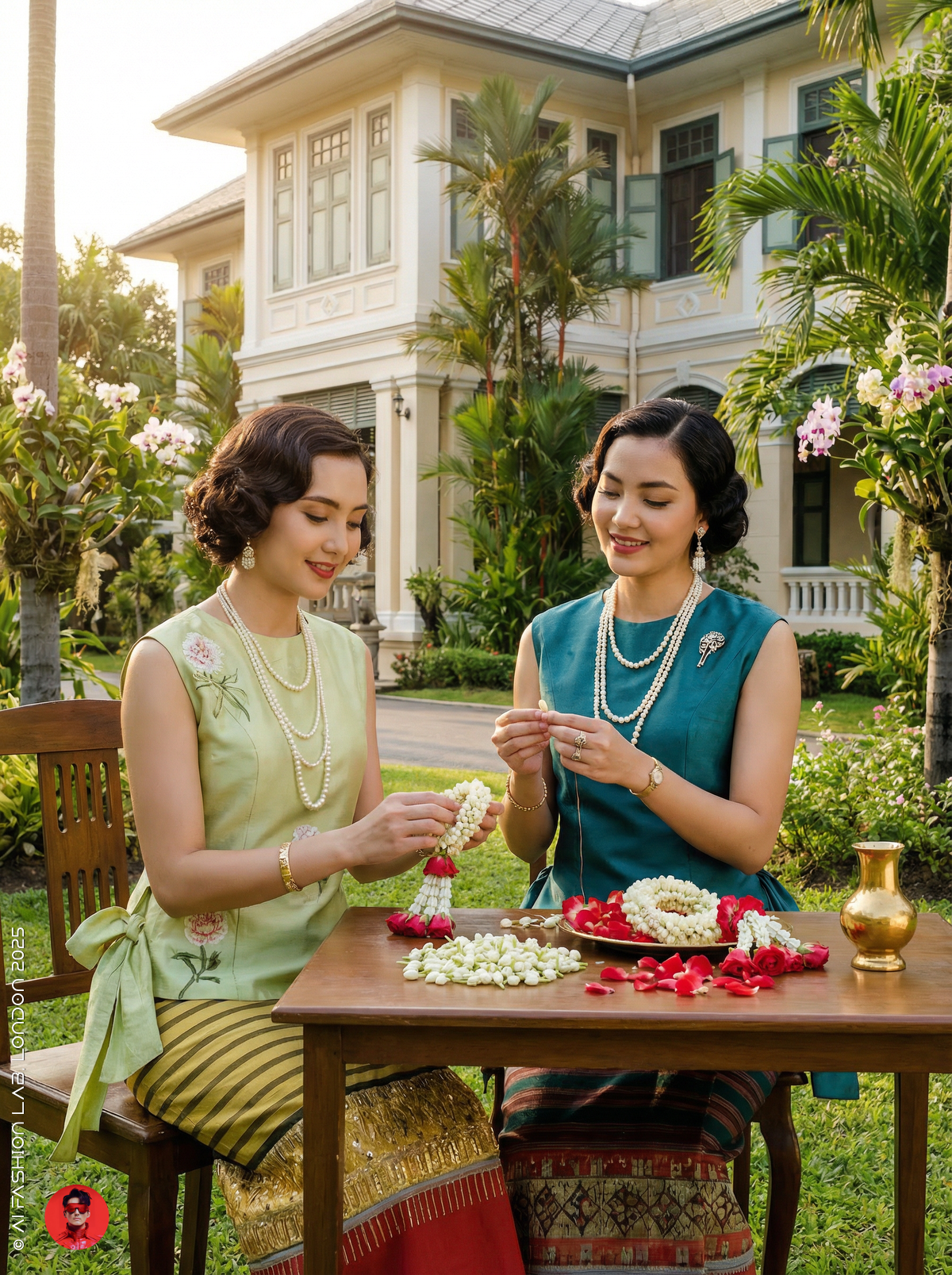
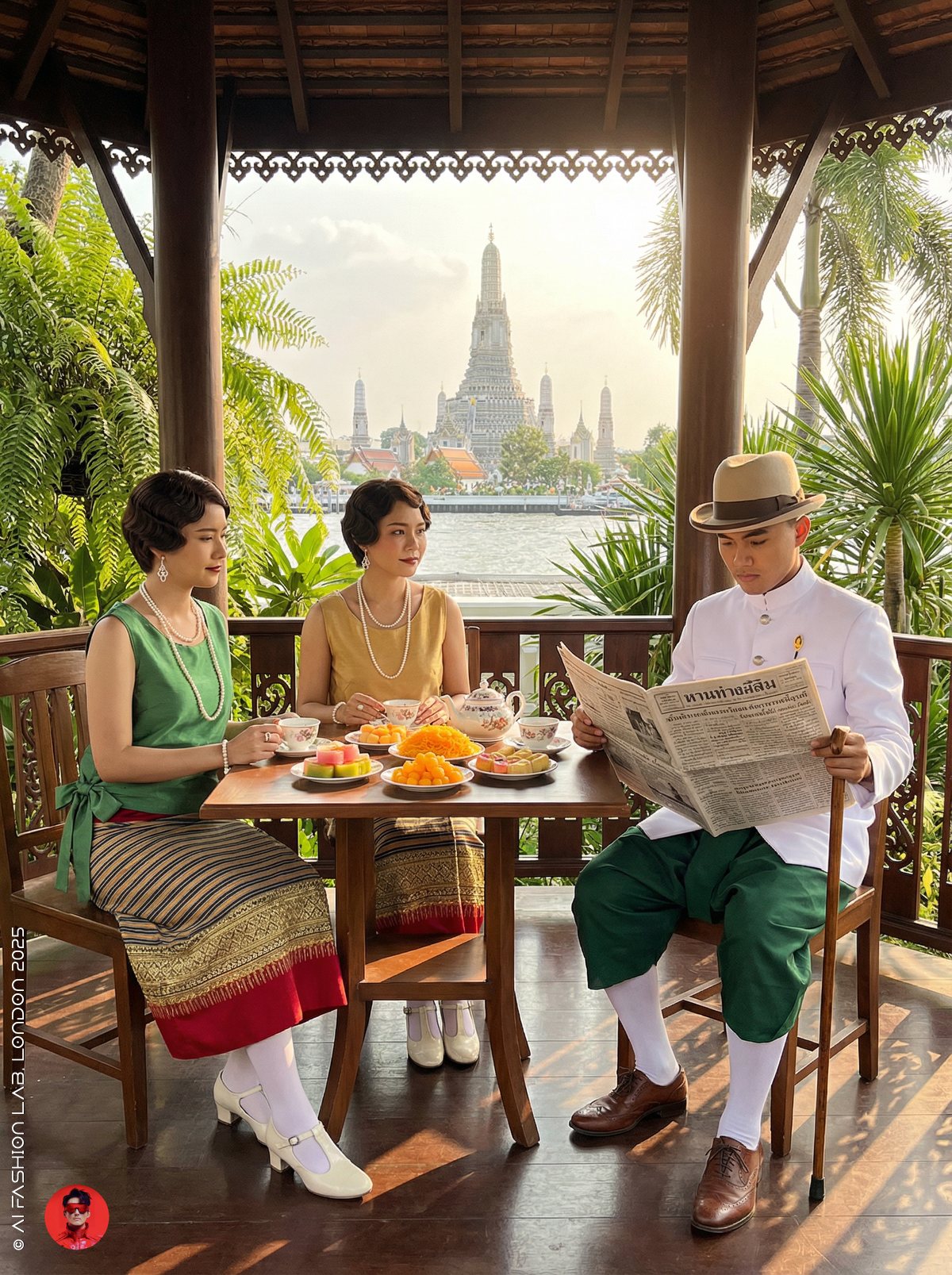
นอกจากนี้ Nano Banana Pro ยังสามารถถ่ายทอดองค์ประกอบแบบไทยได้ดียิ่ง—ไม่ว่าจะเป็นขนมไทย เช่น ทองหยอด ฝอยทอง และขนมชั้นในชุดน้ำชายามบ่าย, การร้อยพวงมาลัย, หรือการจำลองถนนหนทาง ตึกรามบ้านช่อง และบรรยากาศของกรุงเทพฯ ในสมัยรัชกาลที่ ๗ ได้อย่างน่าอัศจรรย์
แฟชั่นที่ปรากฏในคอลเลกชันนี้ถ่ายทอดสไตล์อาร์ตเดโค (Art Deco) ในช่วงต้นรัชกาลพระบาทสมเด็จพระปกเกล้าเจ้าอยู่หัว (รัชกาลที่ ๗, พ.ศ. ๒๔๖๘–๒๔๗๗) ผ่านจินตนาการของวิถีชีวิตประจำวันของผู้คนในกรุงเทพฯ โดยผสานเสน่ห์ของแฟชั่นตะวันตกยุคอาร์ตเดโคเข้ากับความละเมียดละไมของวัฒนธรรมไทยร่วมยุคได้อย่างกลมกลืน
ในระดับสากล แฟชั่นอาร์ตเดโคแห่งทศวรรษ 1920—ซึ่งมักเรียกกันว่า Flapper Fashion—โดดเด่นด้วยซิลูเอตที่พลิกจากยุคก่อนอย่างสิ้นเชิง เน้นรูปลักษณ์ที่ยาว โปร่ง และคล่องตัว ลดการพึ่งพาคอร์เซ็ต เสื้อผ้าสตรีนิยมแขนกุดหรือแขนสั้น เอวต่ำ ตกแต่งด้วยลวดลายเรขาคณิต ผ้าปักดิ้น เลื่อม และลูกปัดที่สะท้อนแสงเป็นประกาย ทรงผมสั้นประดับด้วยคลื่นแบบ Marcel Wave และคาดศีรษะด้วยแถบโลหะ เพชร พลอย หรือขนนก ซึ่งล้วนเป็นสัญลักษณ์ของความทันสมัยในยุคแจ๊ซ
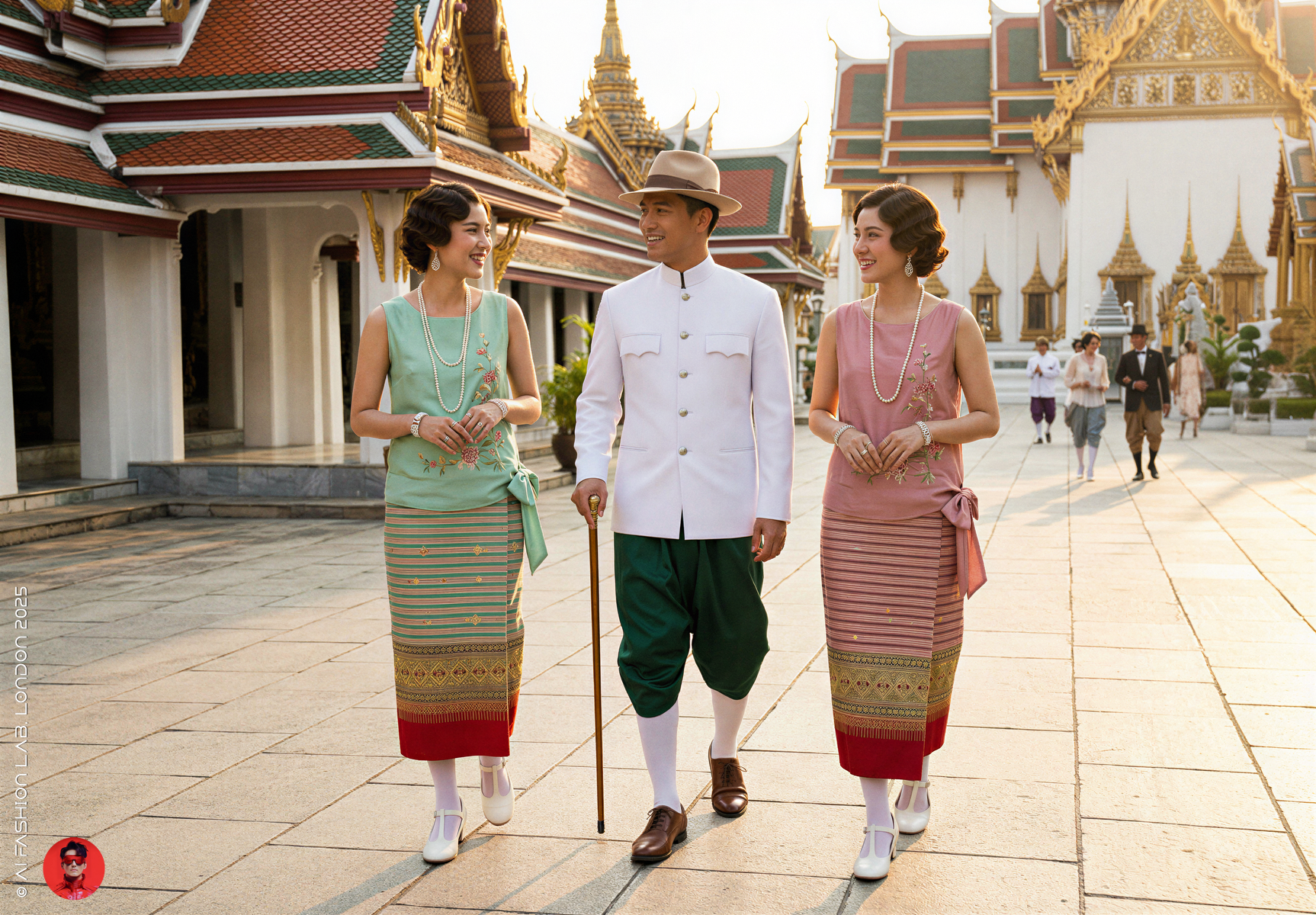
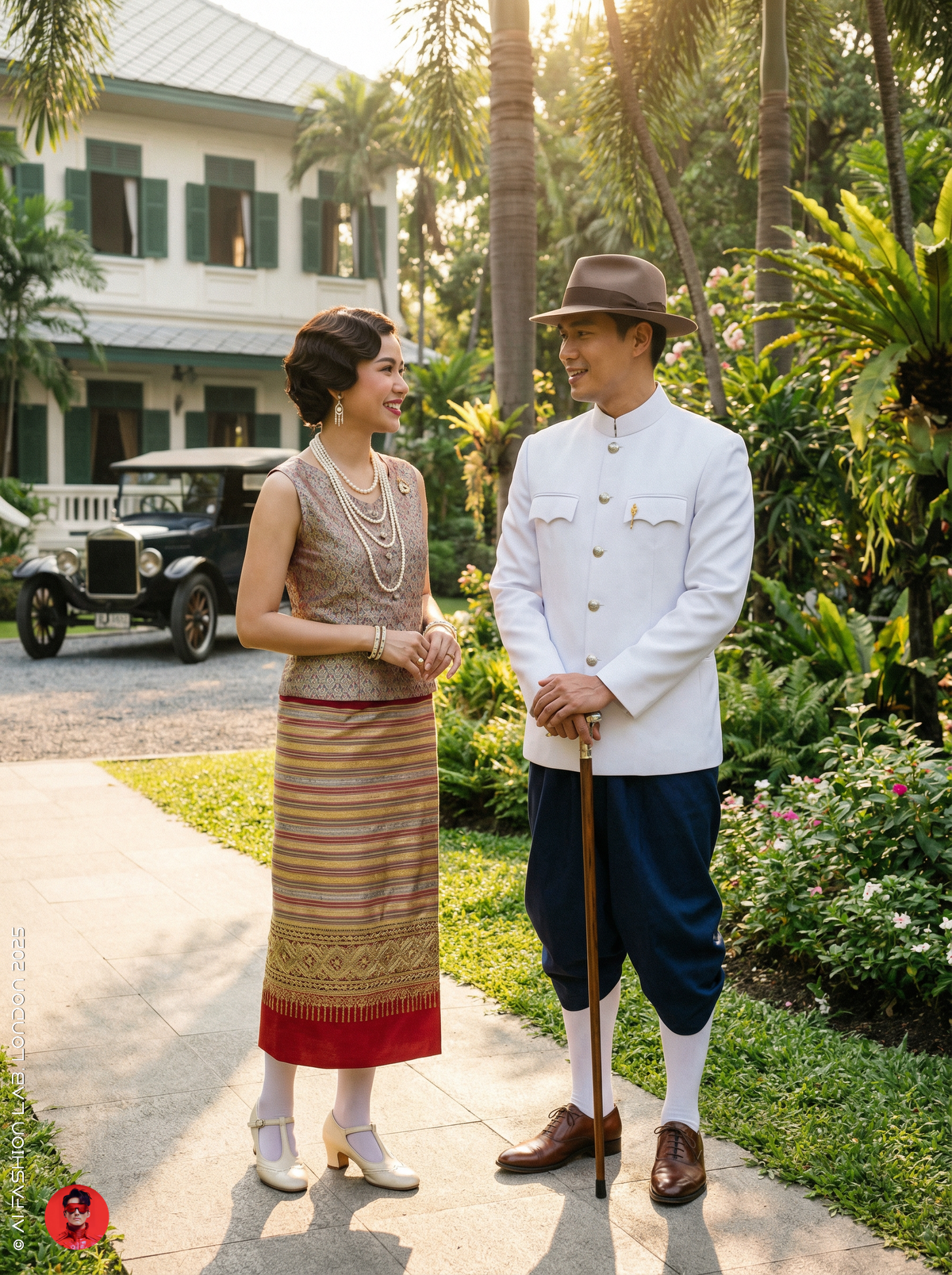
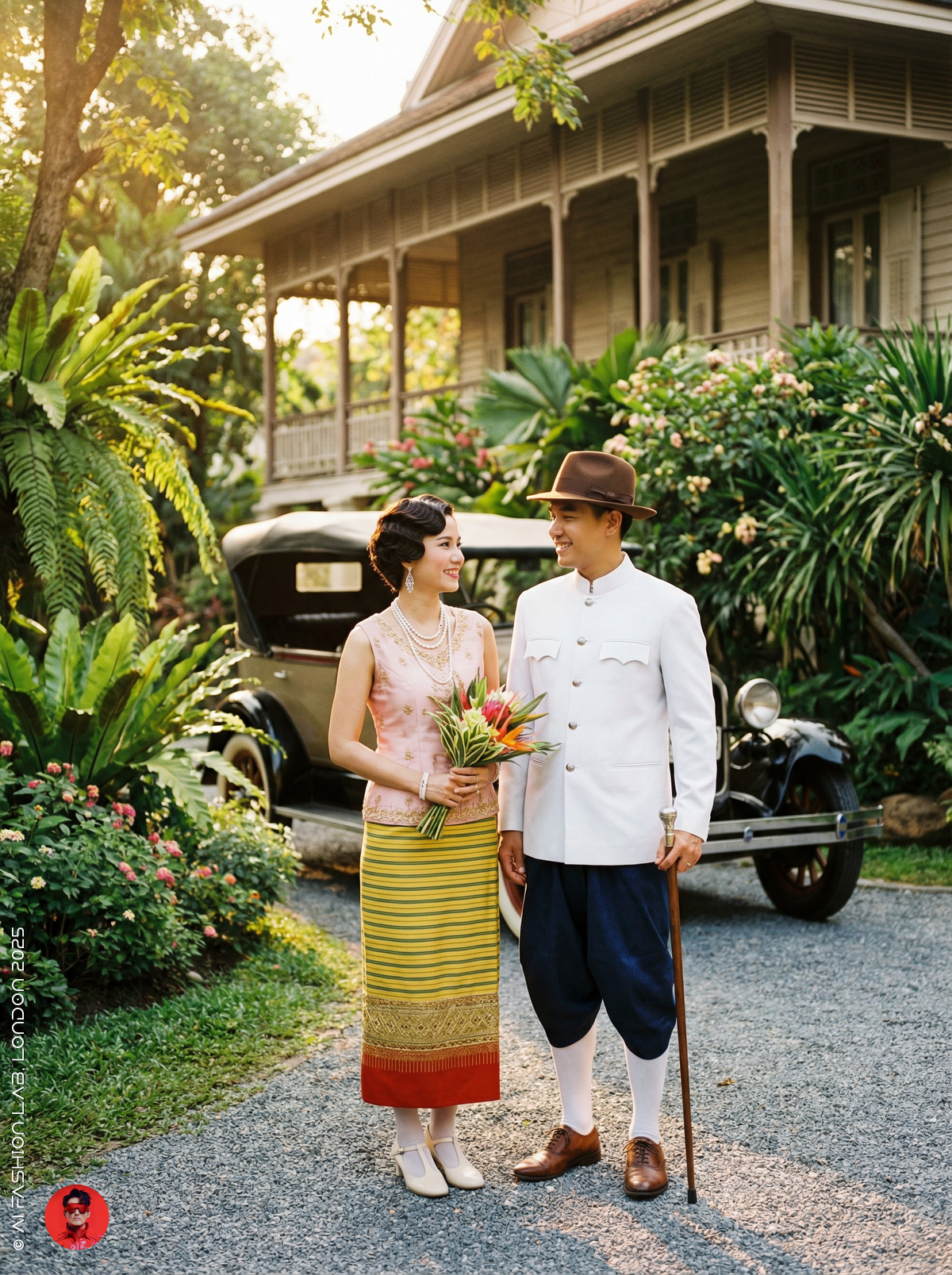
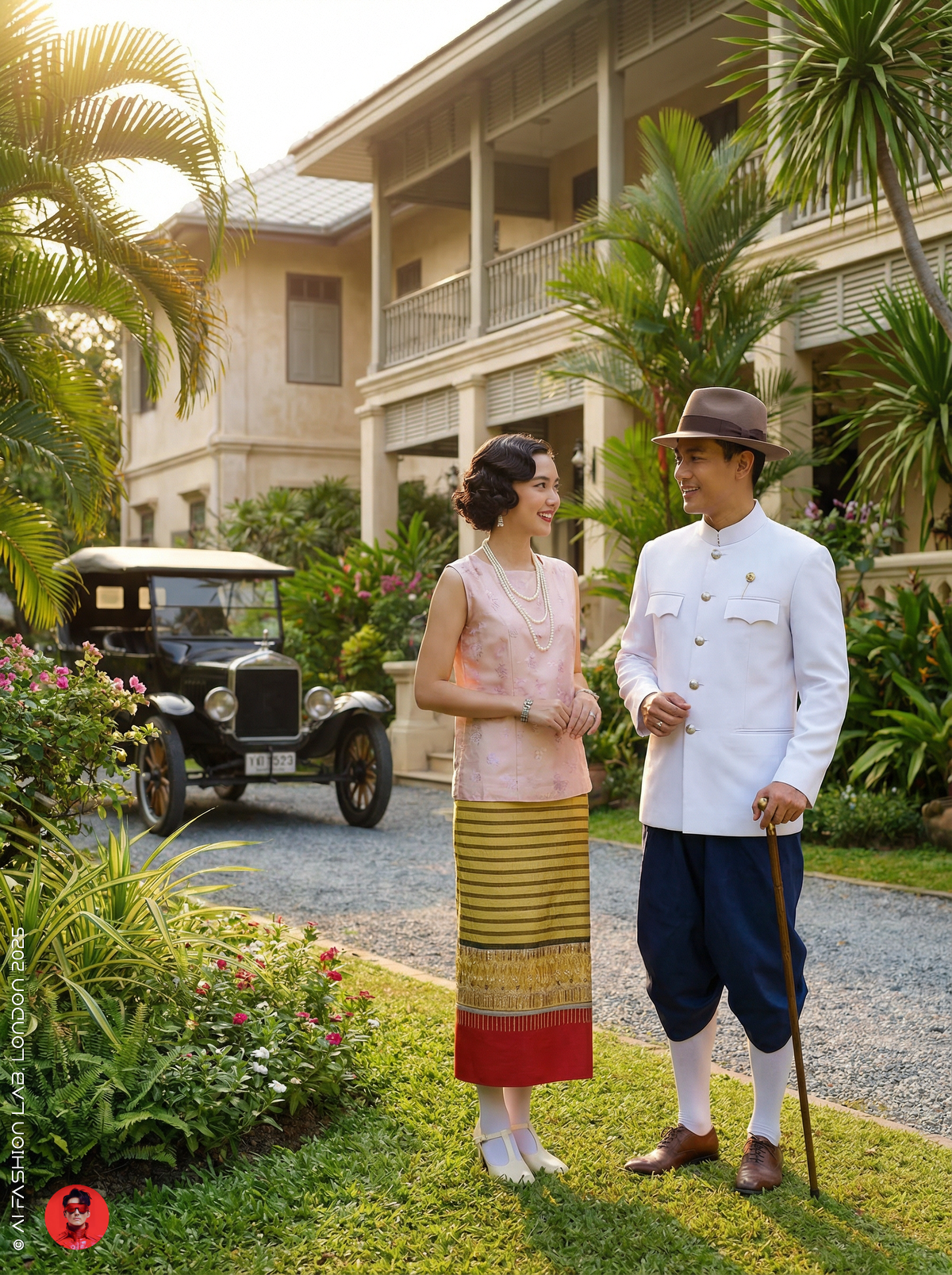
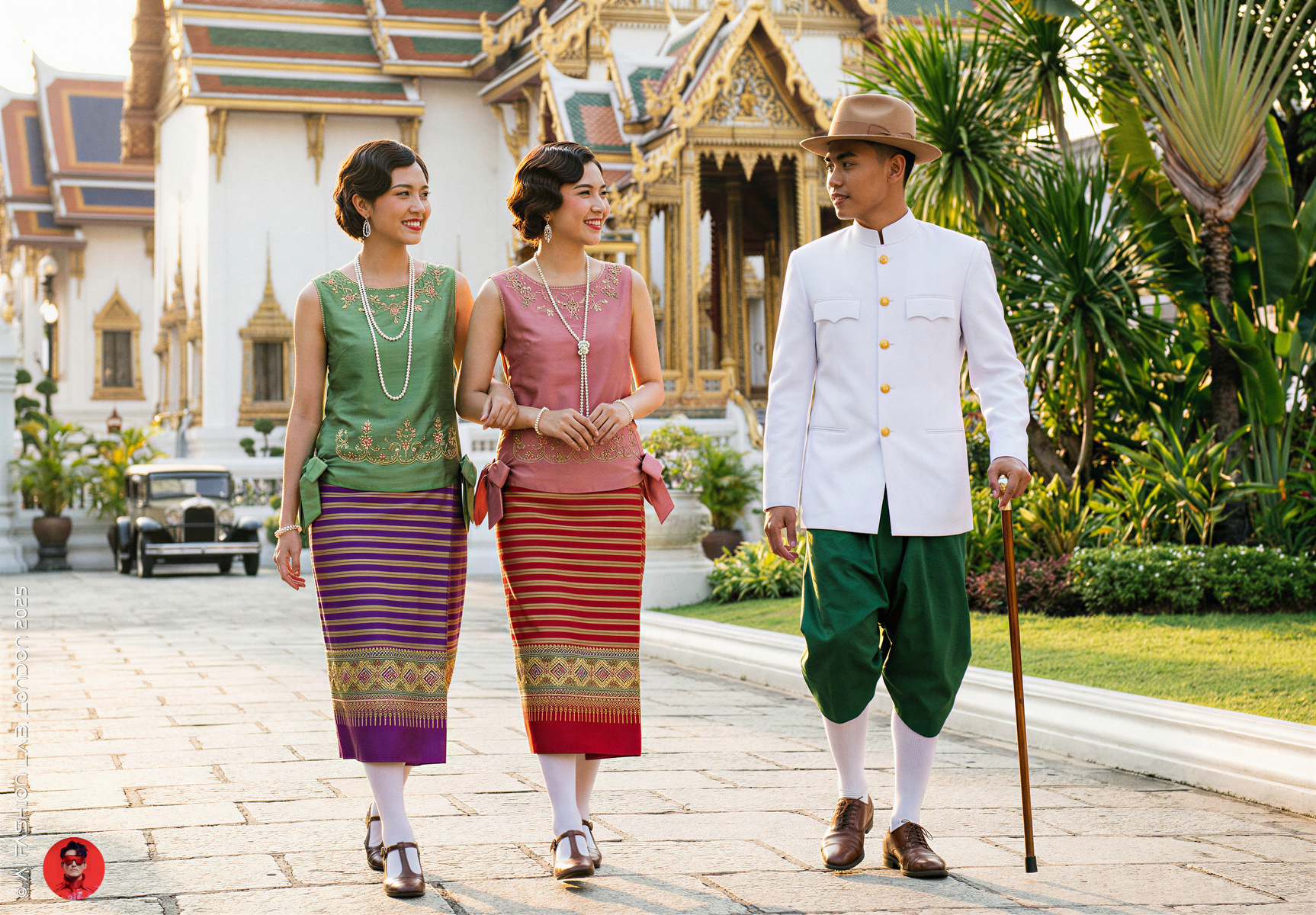
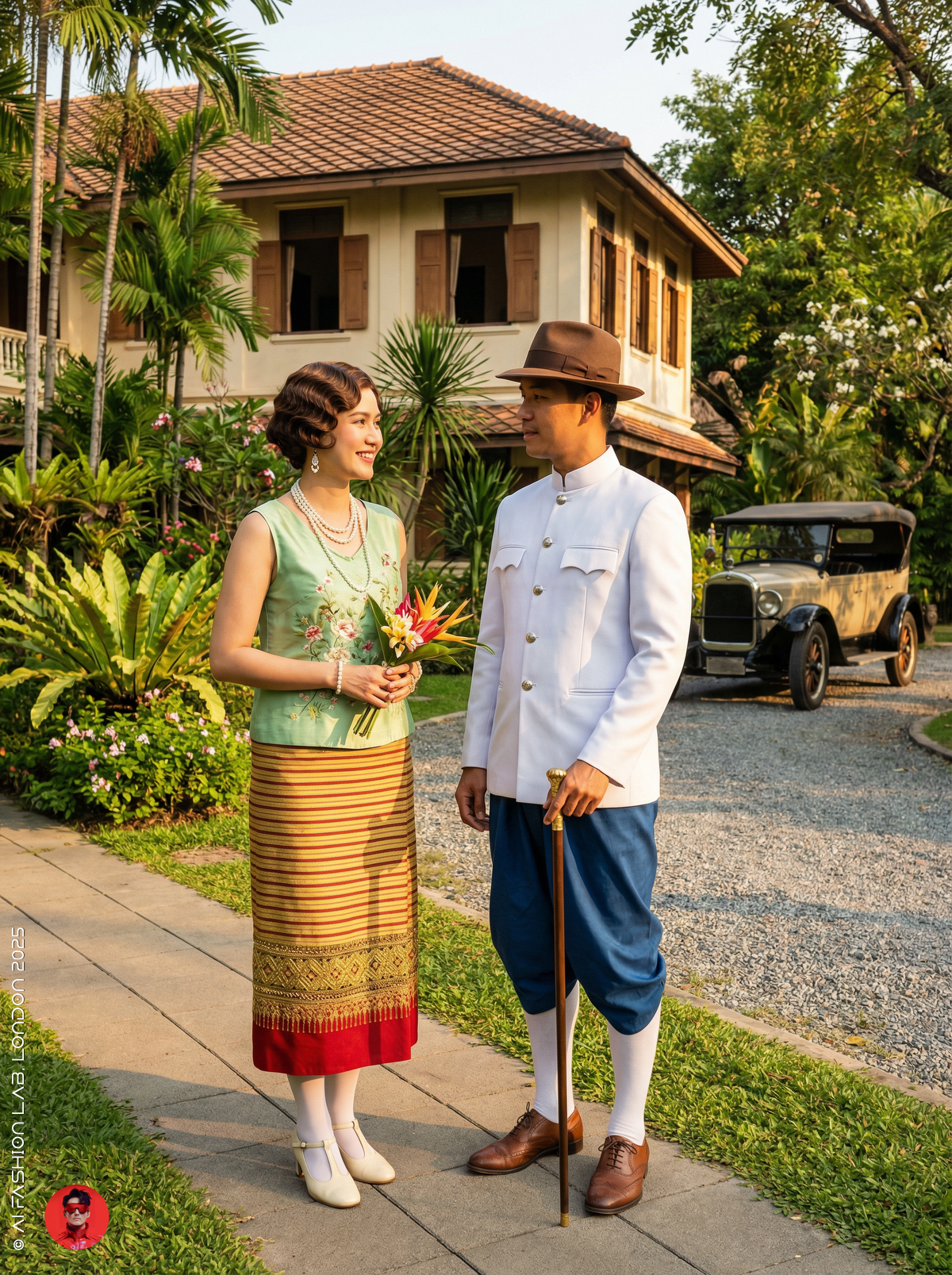
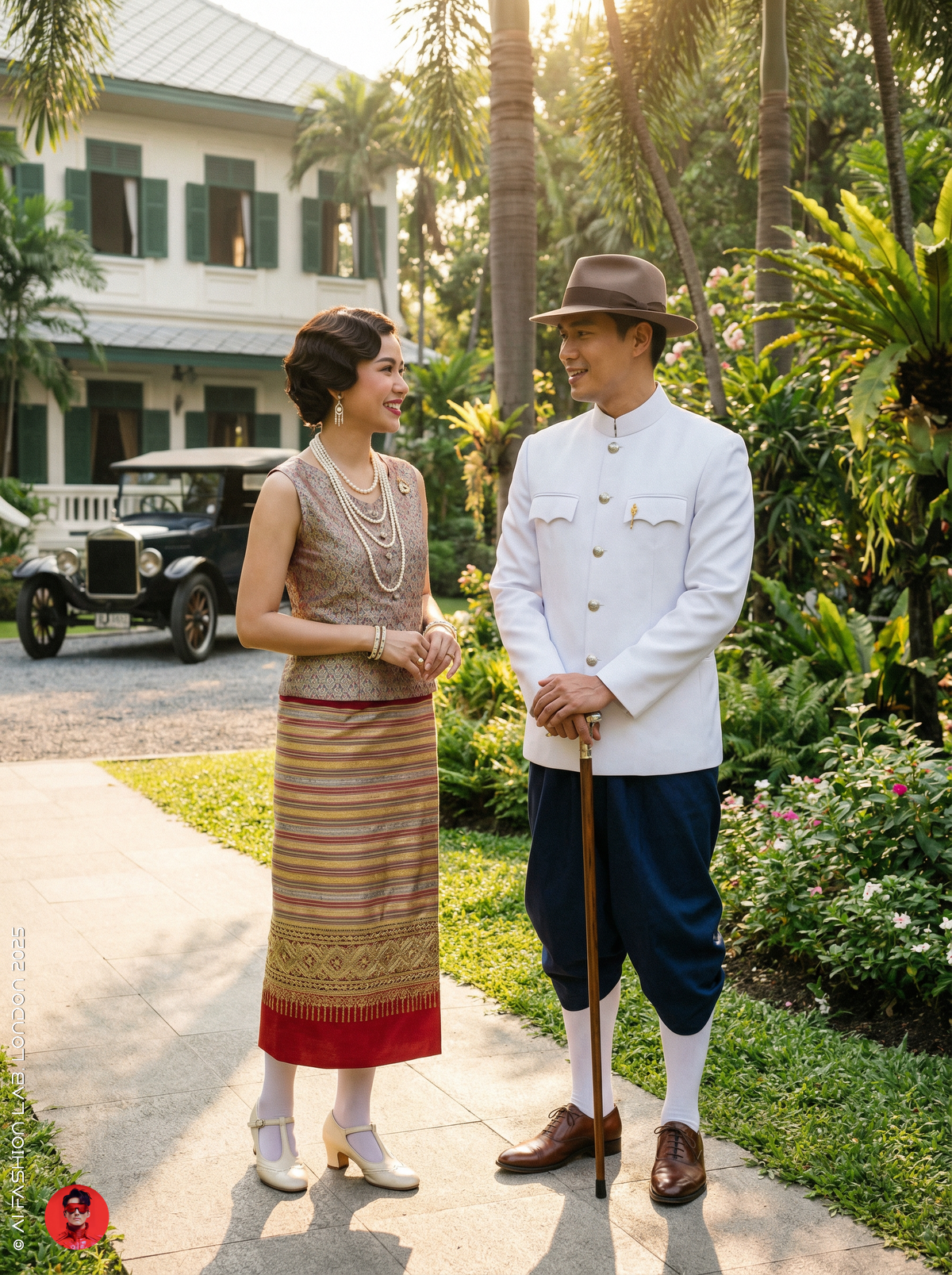
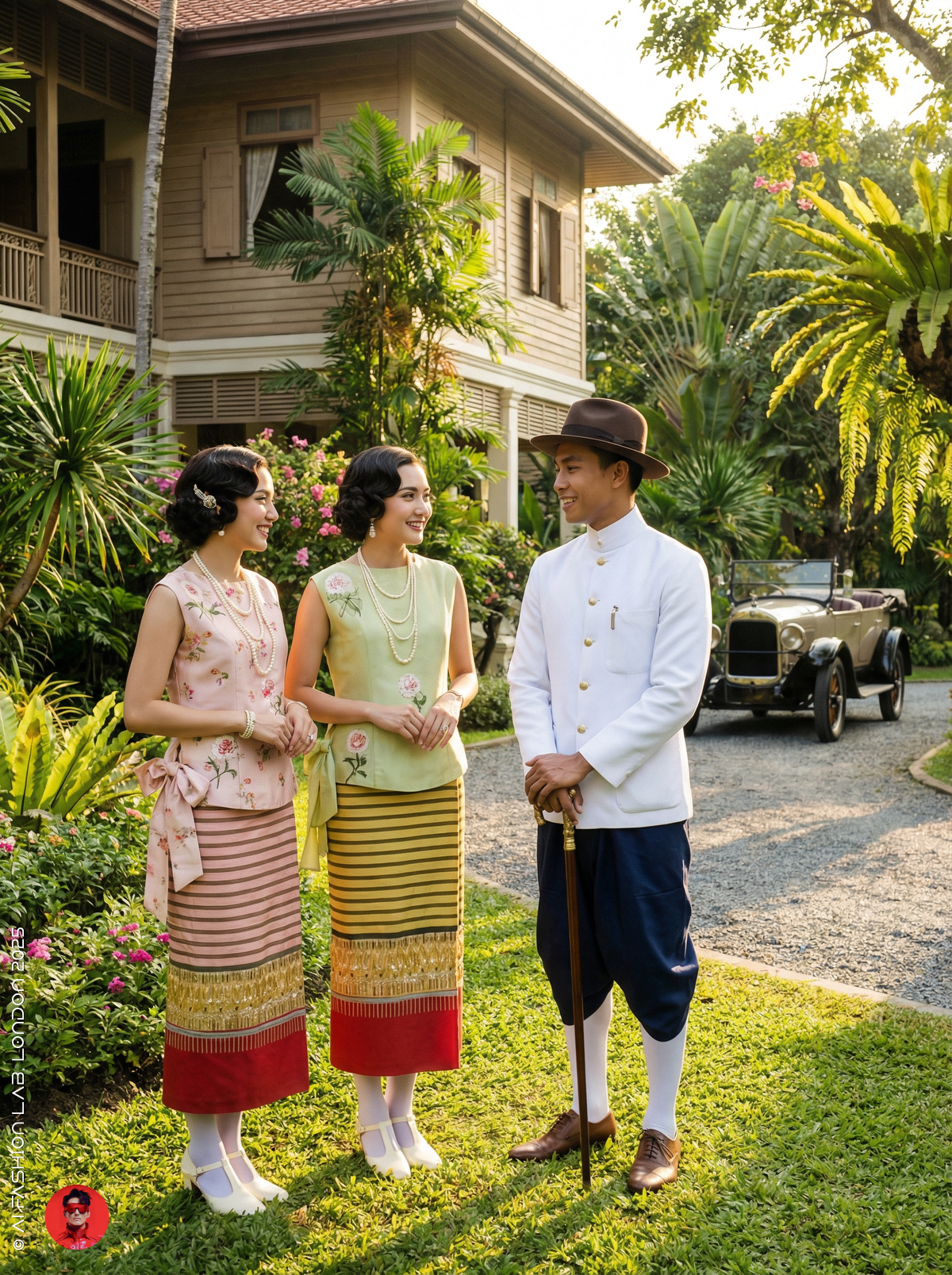
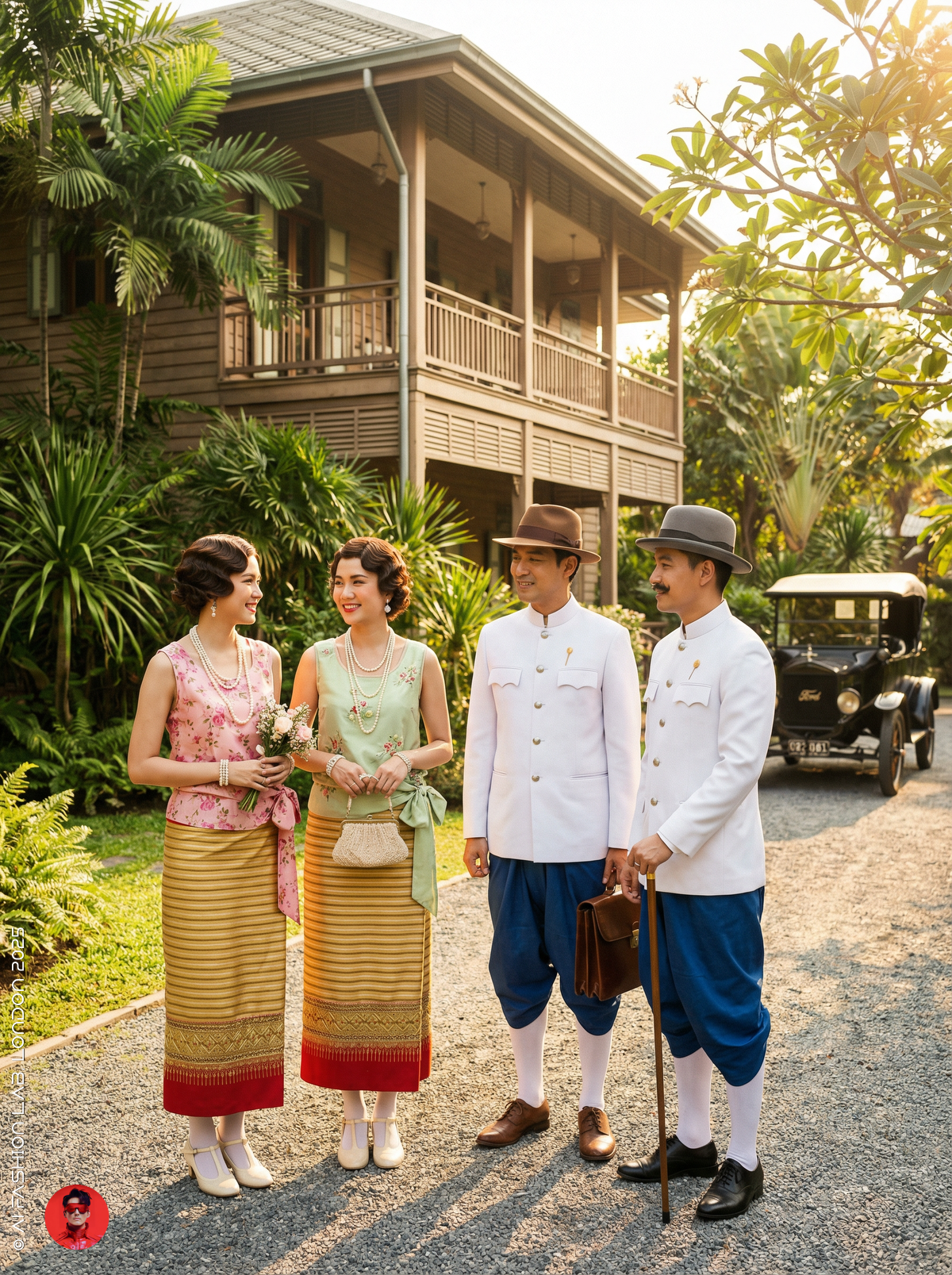
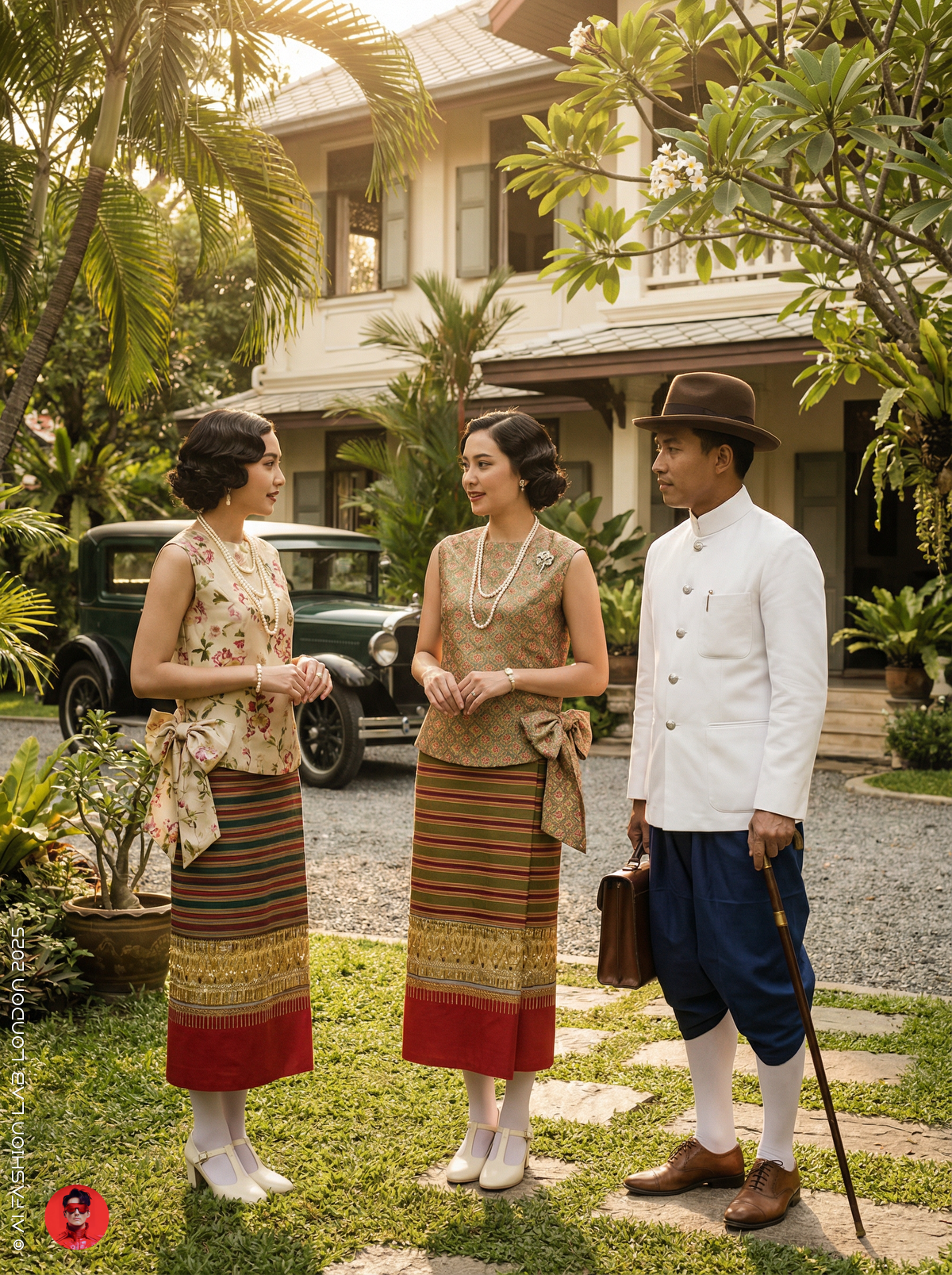
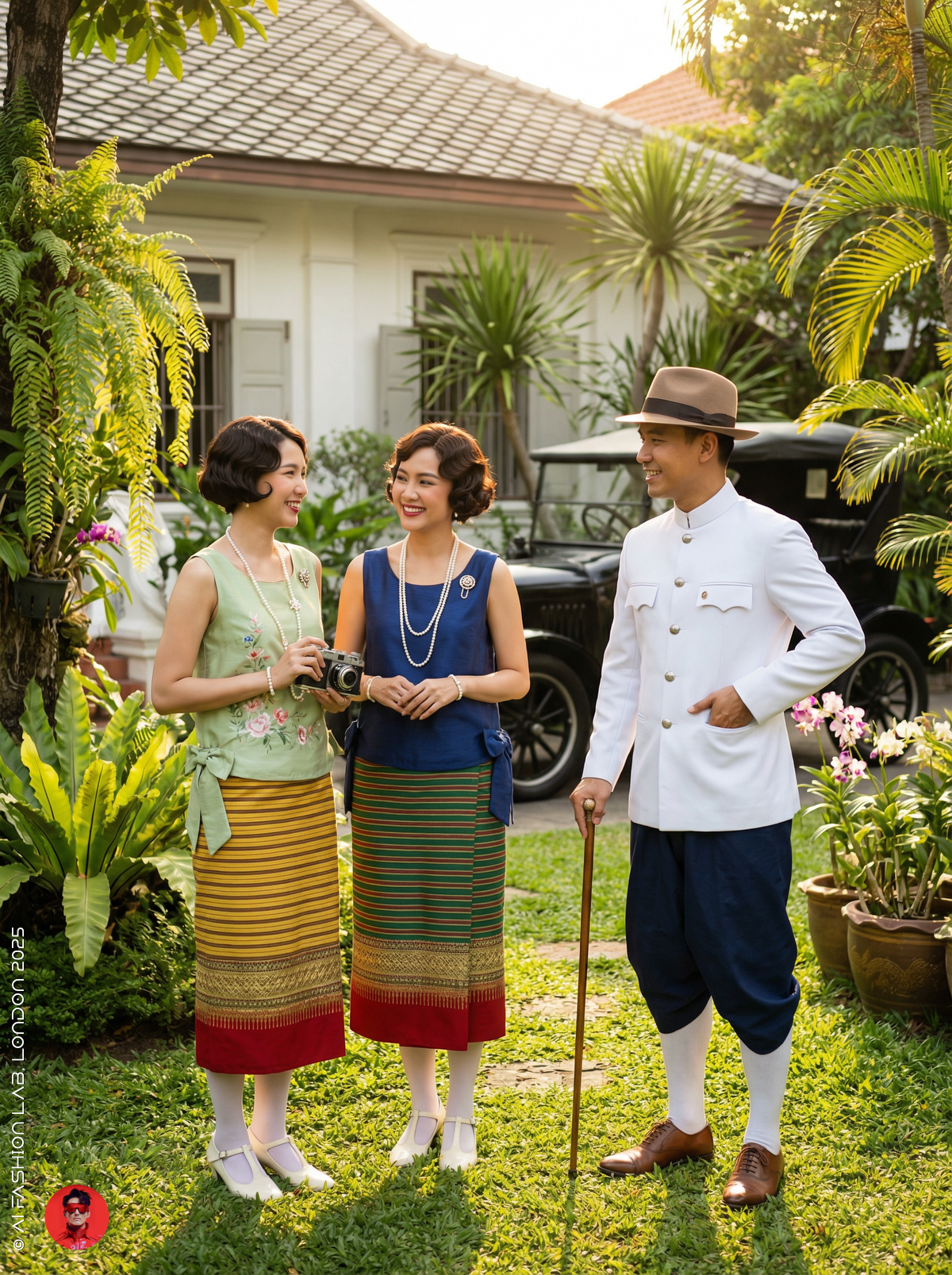
เมื่อกระแสแฟชั่นนี้แพร่เข้าสู่สยาม การแต่งกายแบบอาร์ตเดโคถูกปรับให้เข้ากับอัตลักษณ์ไทยได้อย่างกลมกลืน เสื้อแขนกุดหรือเสื้อปักเลื่อมตามแบบตะวันตกถูกจับคู่กับผ้าซิ่นทรงกระบอกยาวระดับกลางน่อง สวมคู่กับถุงน่องและรองเท้าส้นสูง เครื่องประดับอย่างสร้อยไข่มุกหรือชายระบายลูกปัดช่วยขับให้ลุคดูโก้หรูและร่วมสมัย ขณะเดียวกันยังคงความอ่อนช้อยและสำรวมแบบสตรีไทยในช่วงเปลี่ยนผ่านของสังคม
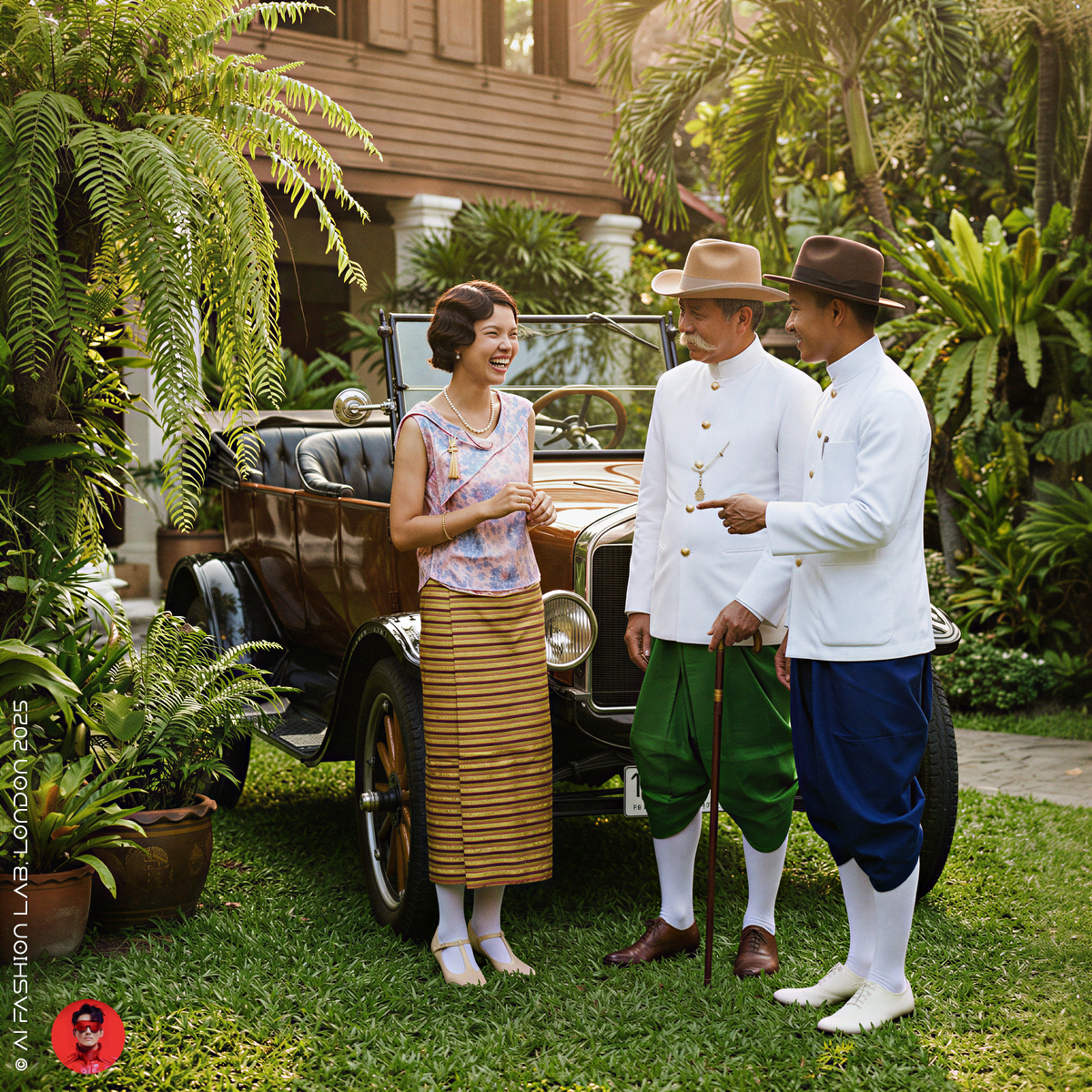
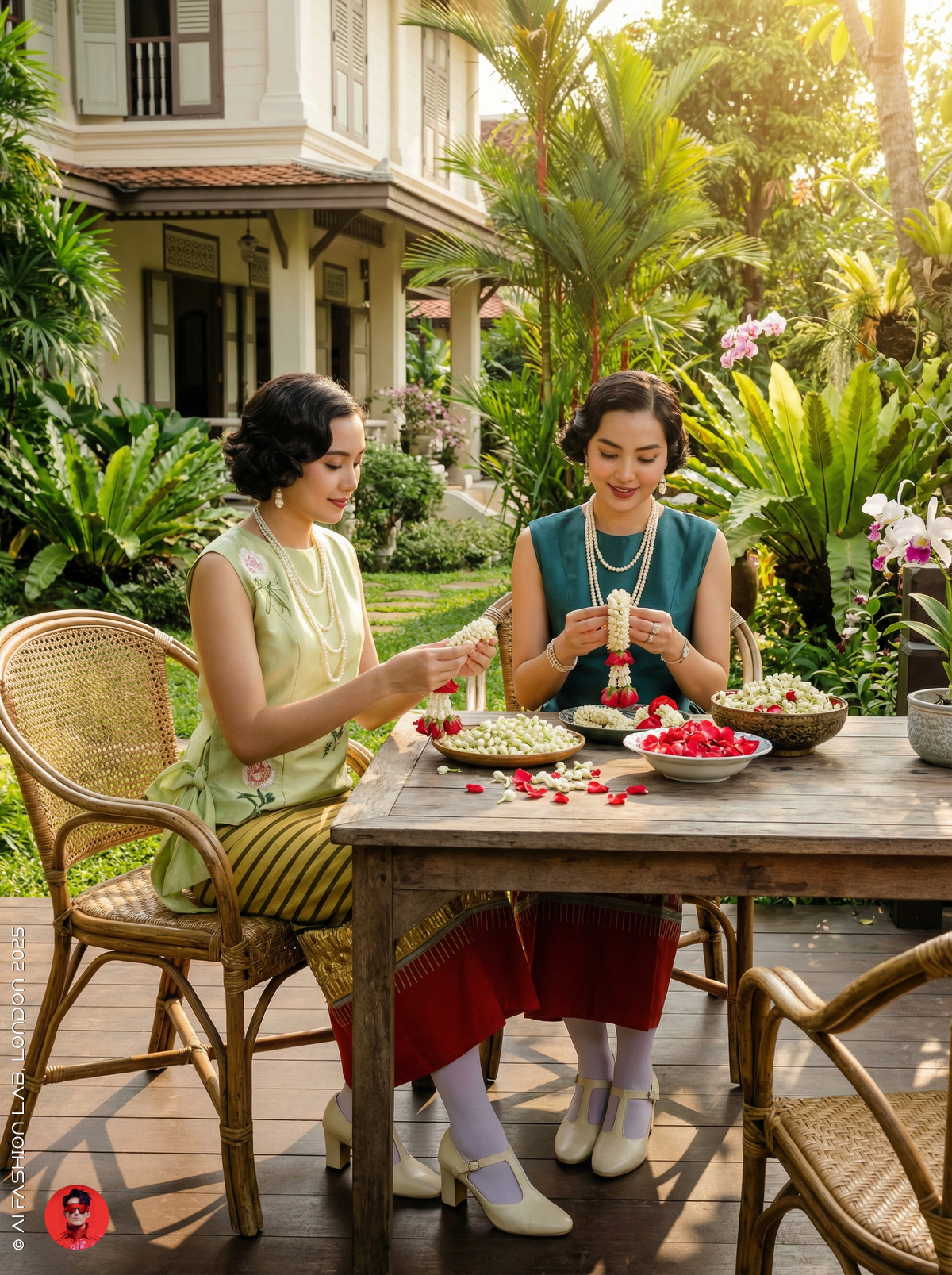
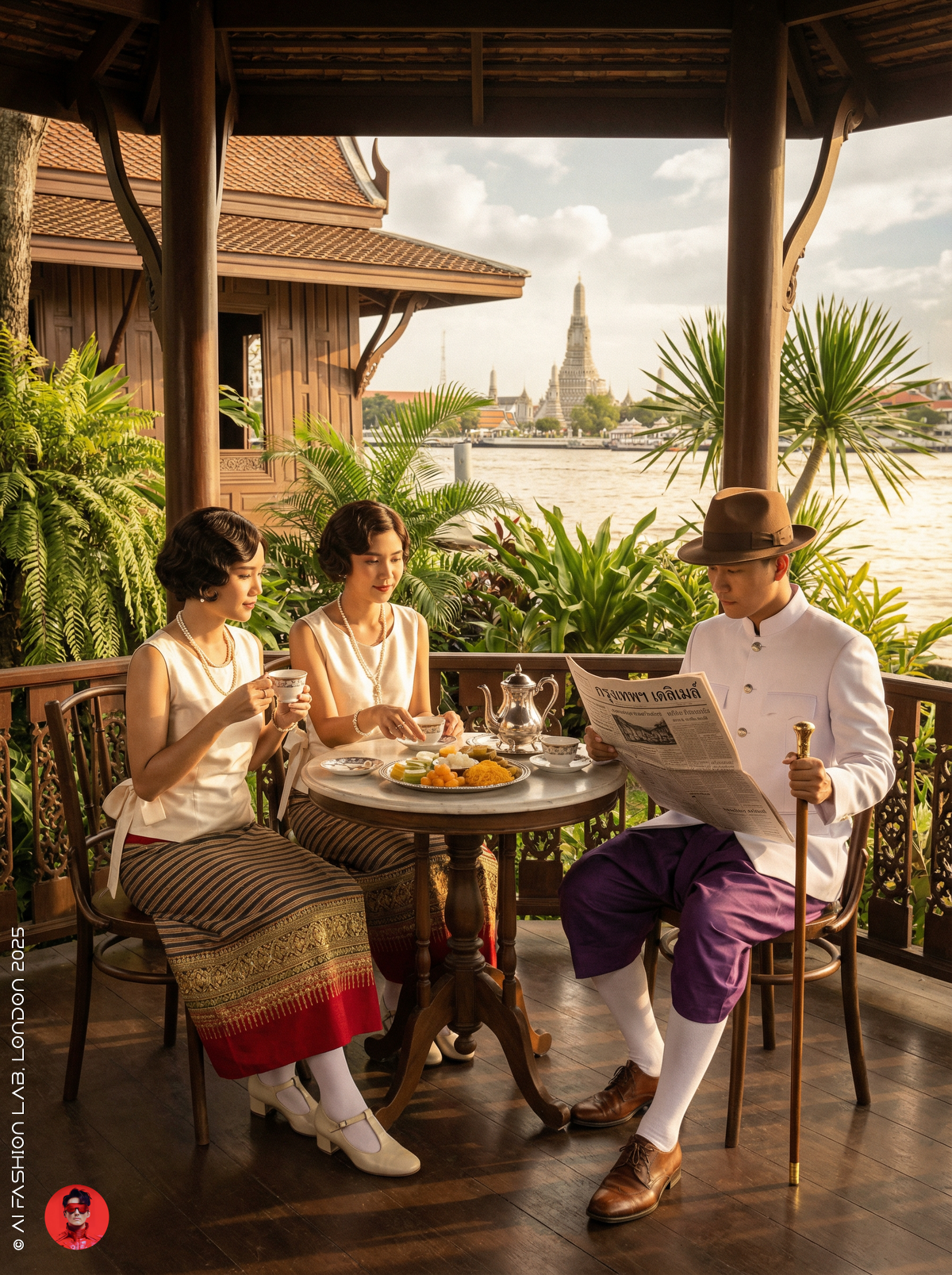
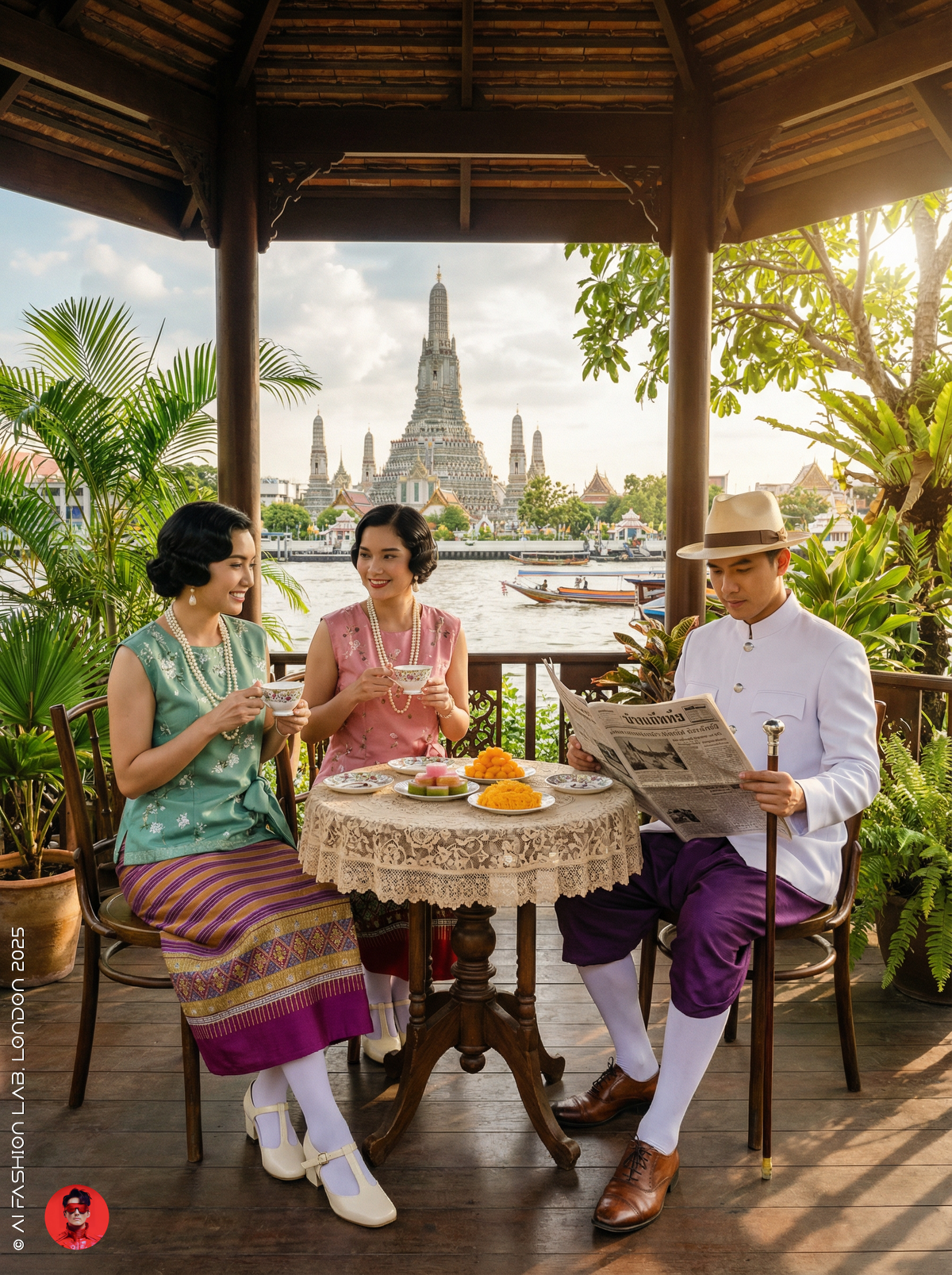
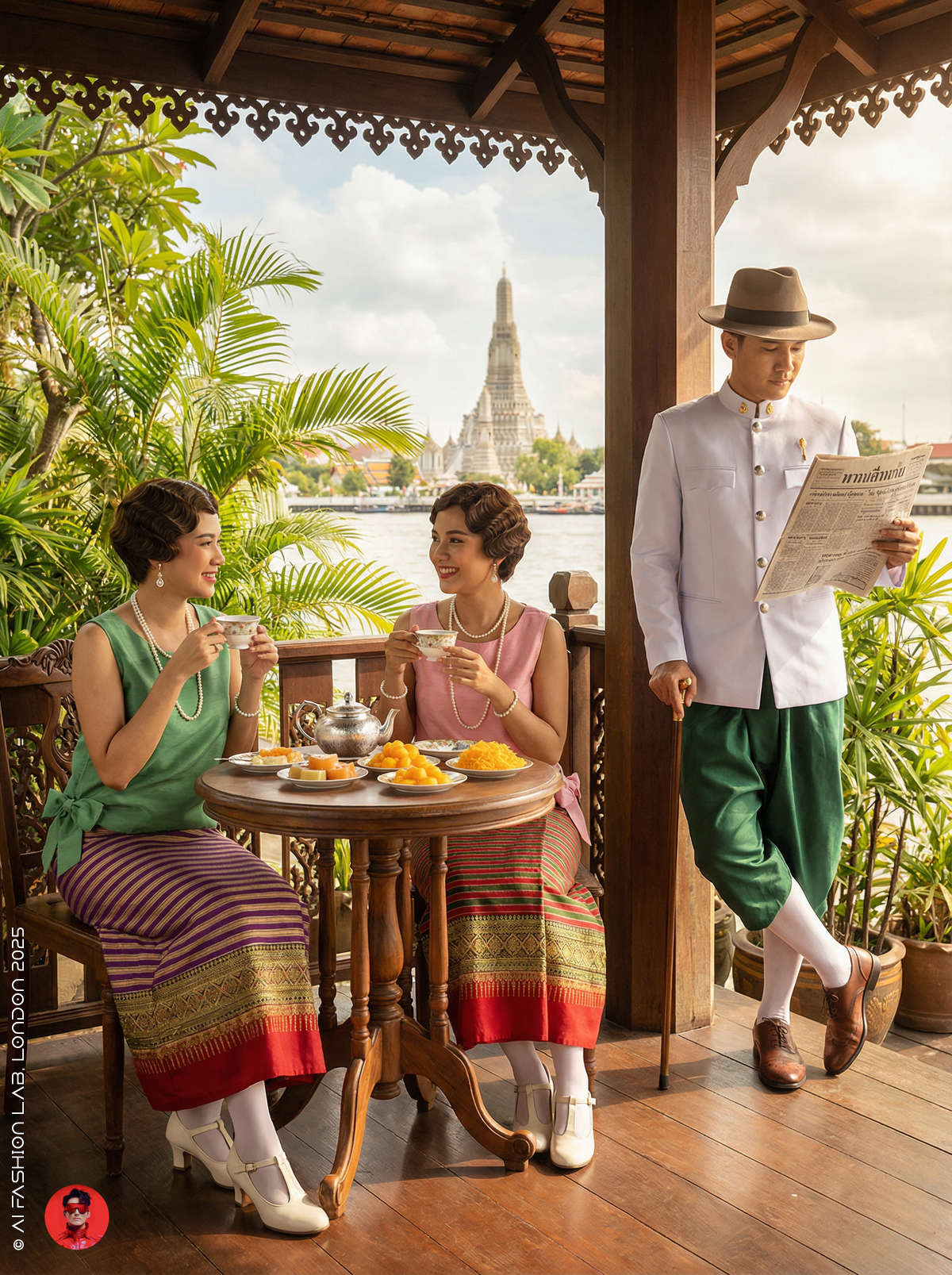
บรรยากาศของคอลเลกชันนี้ถ่ายทอดชีวิตของผู้คนในสยามยุคต้นรัชกาลที่ ๗ ผ่านฉากกิจกรรมกลางวันสุดละเมียดละไม ไม่ว่าจะเป็นการจิบน้ำชายามบ่ายริมเจ้าพระยาที่มีวัดอรุณอยู่เบื้องหลัง การจัดชุดขนมไทยอย่างทองหยอด ฝอยทอง และขนมชั้นวางเคียงกาน้ำชา ไปจนถึงการร้อยพวงมาลัยมะลิท่ามกลางสวนร่มรื่นในเรือนเก่าแบบโคโลเนียล ภาพแต่ละฉากล้วนสะท้อนเสน่ห์แบบไทยร่วมสมัยที่ผสานกลิ่นอายอาร์ตเดโคได้อย่างงดงาม—ตั้งแต่ทรงผมมาร์เซลเวฟ สร้อยไข่มุกยาวหลายชั้น เสื้อแขนกุดปักดิ้น ไปจนถึงผ้าซิ่นที่ขับให้ซิลูเอตแบบฟลัปเปอร์โดดเด่นยิ่งขึ้นในบริบทไทย
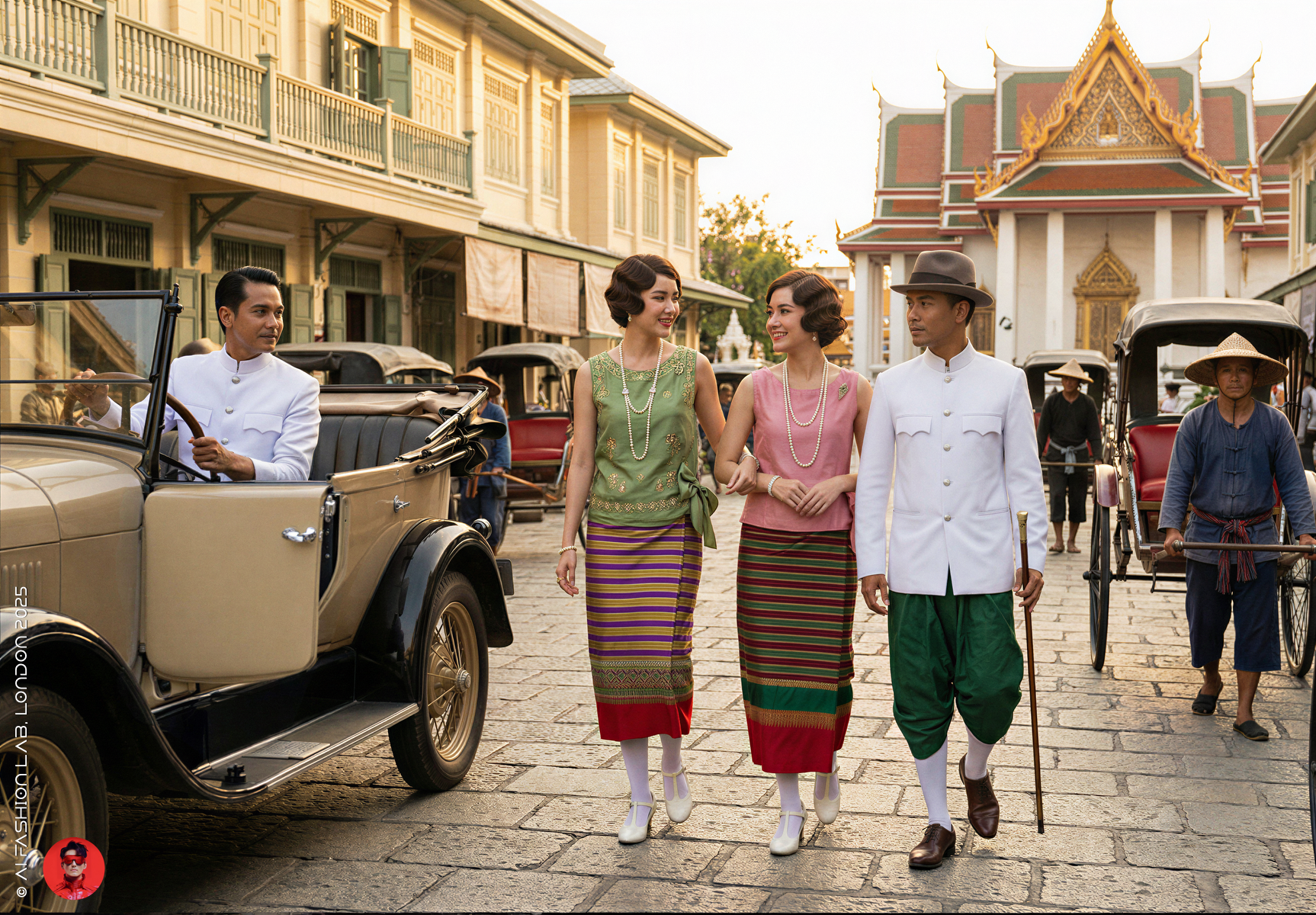
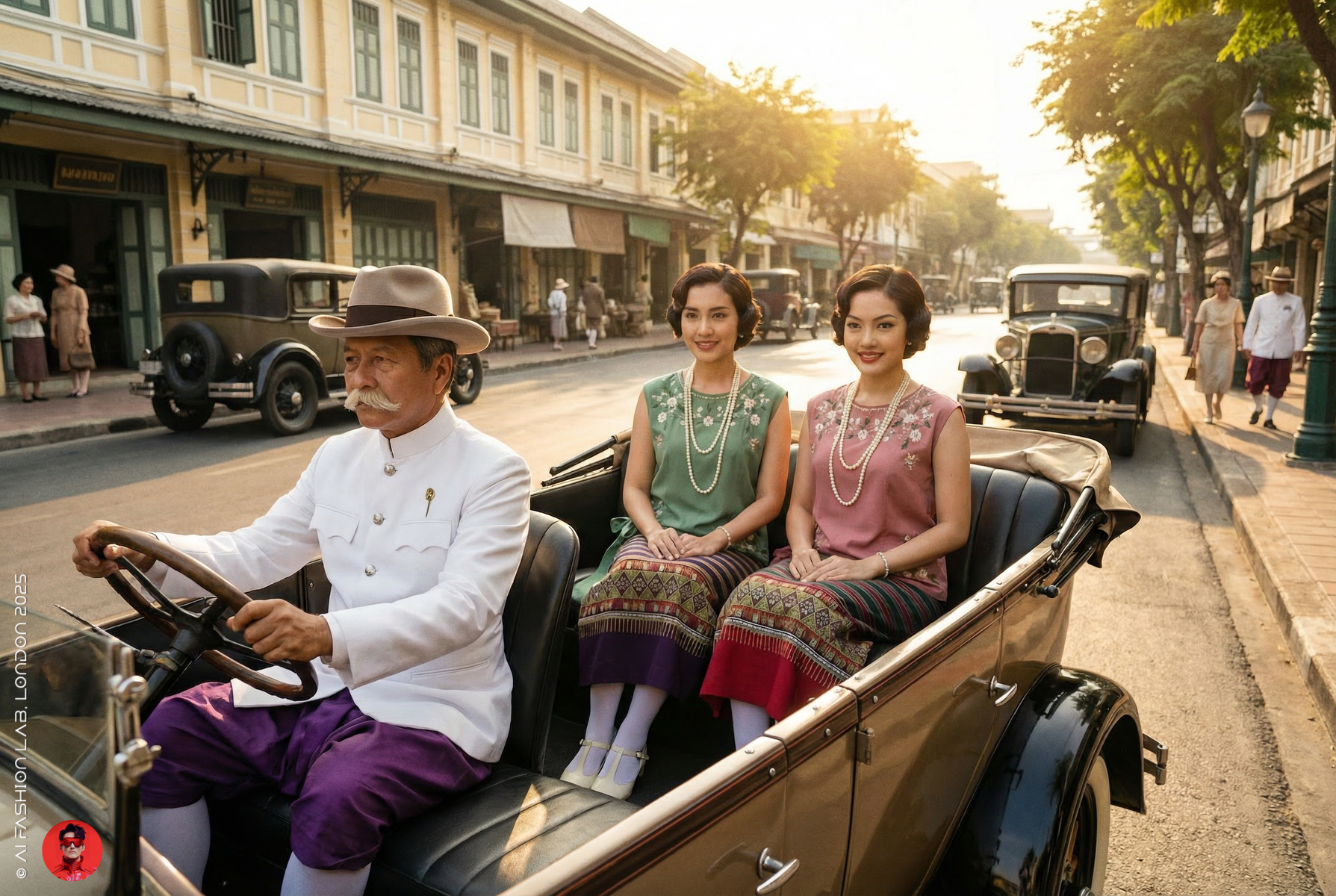
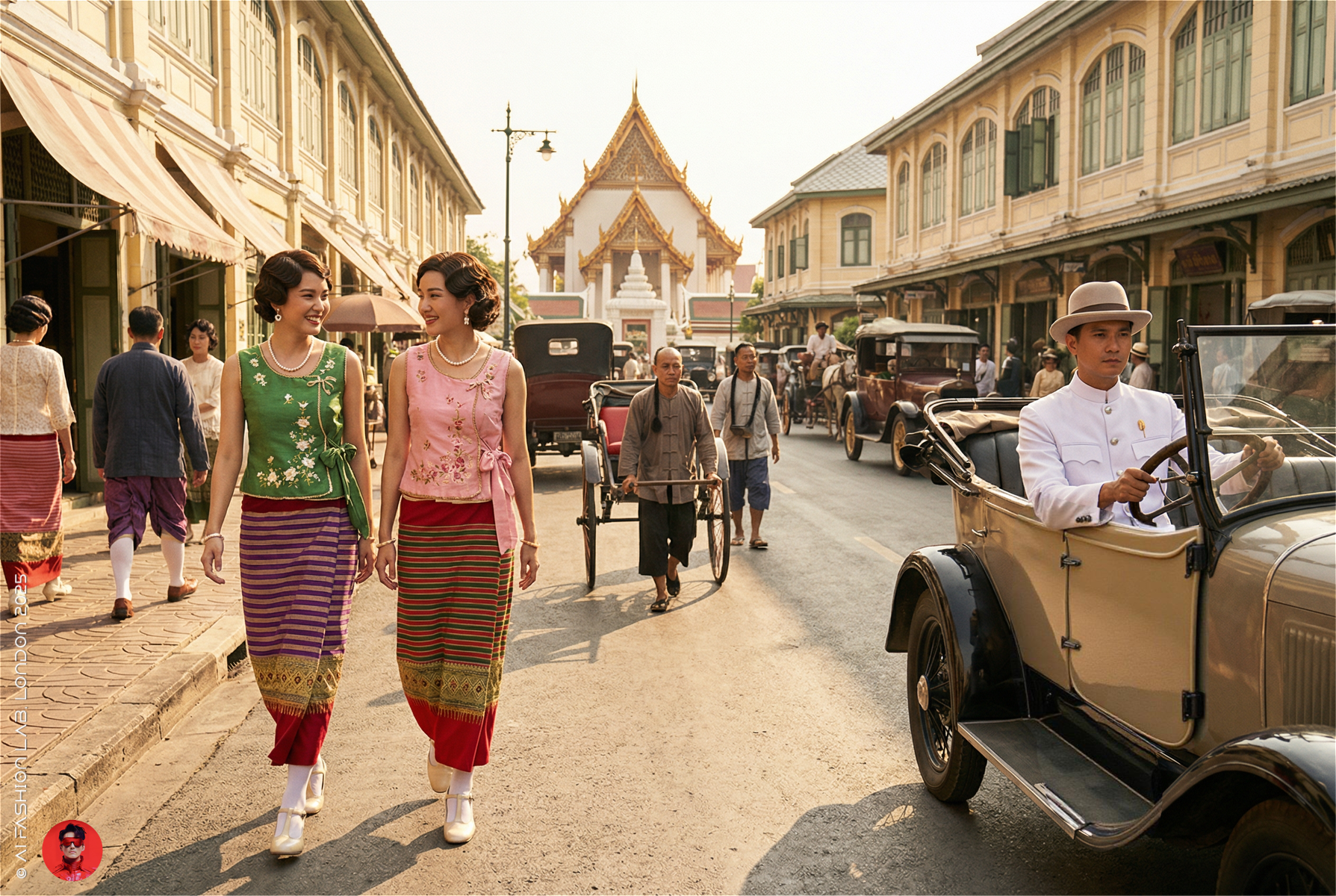
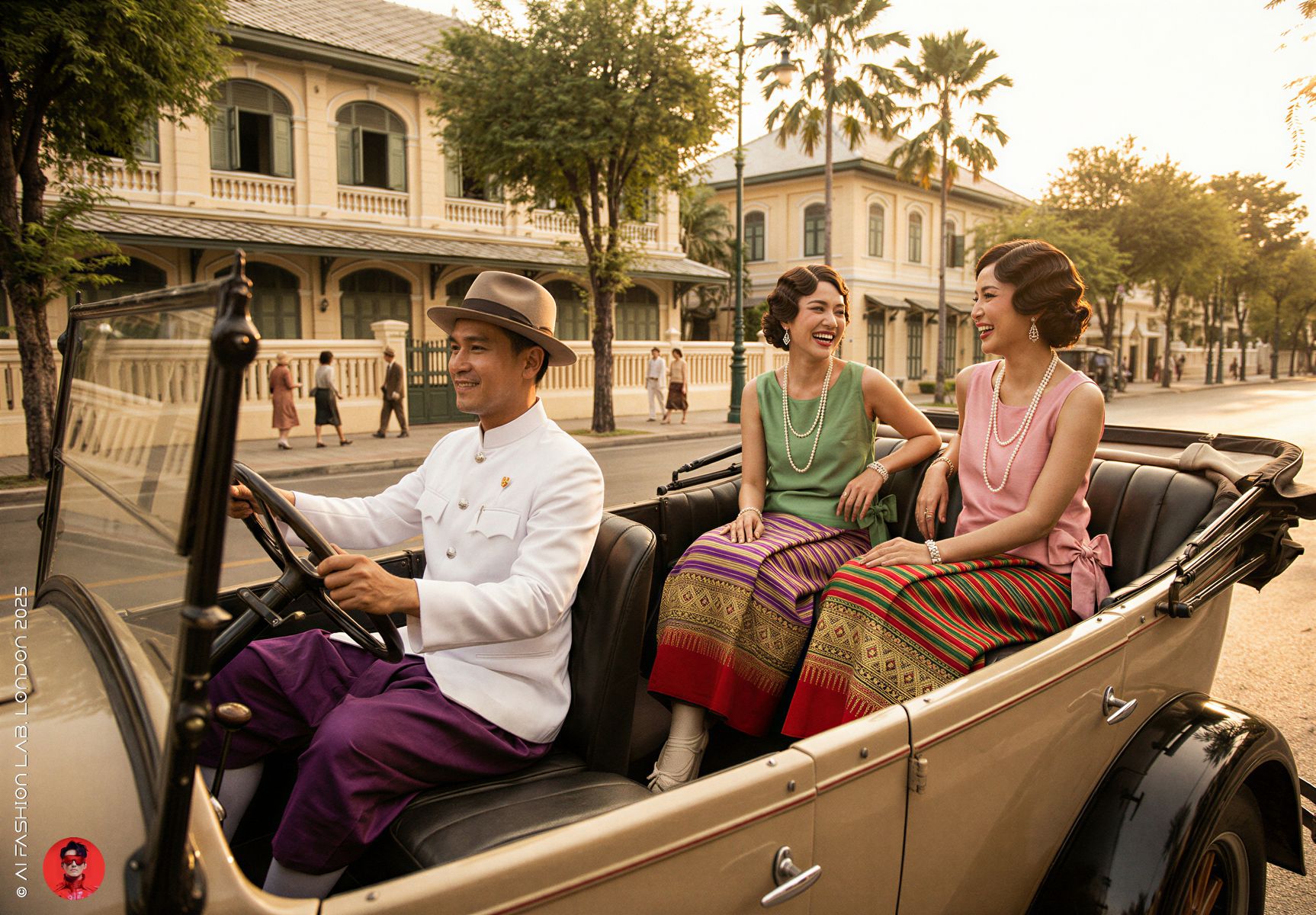
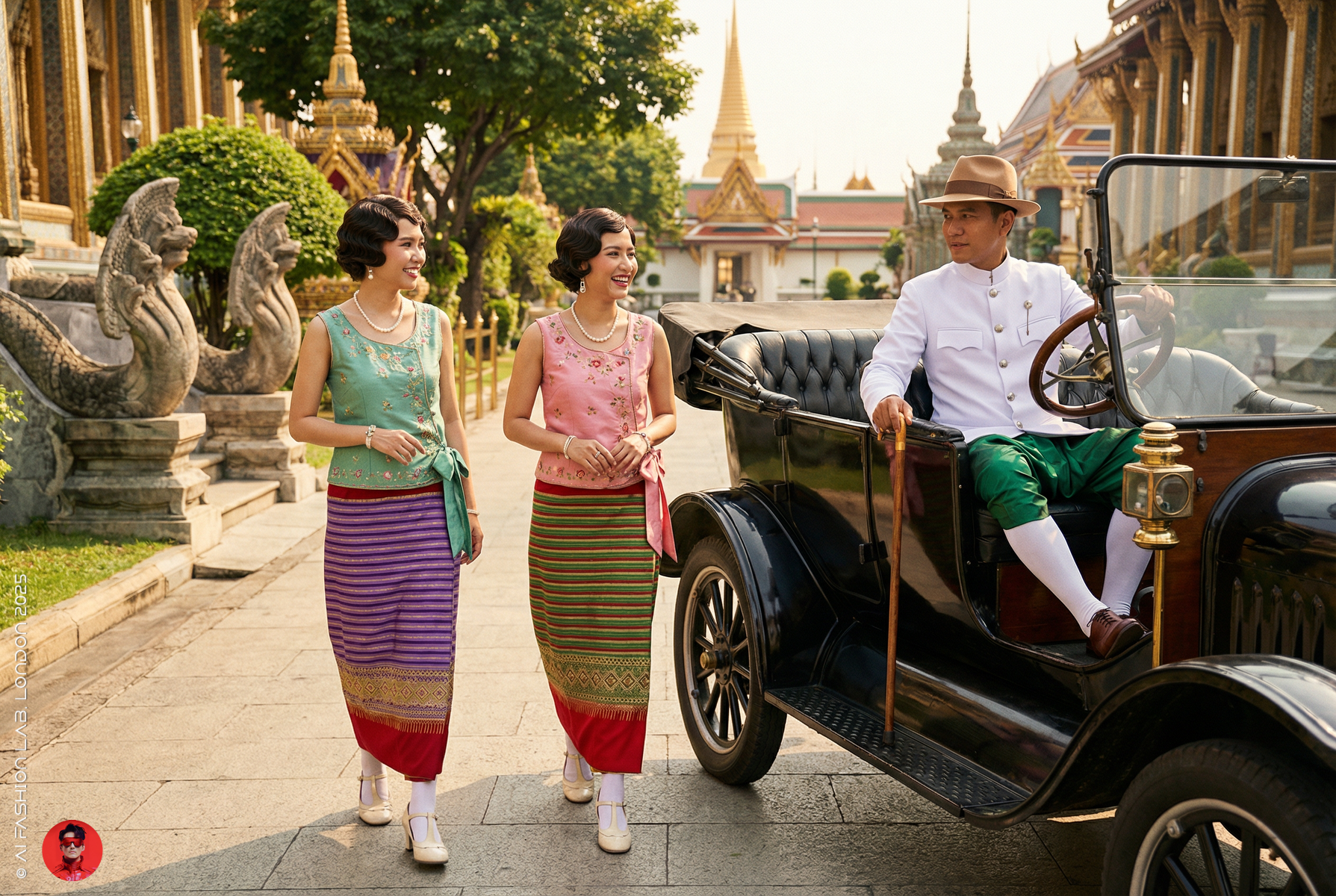
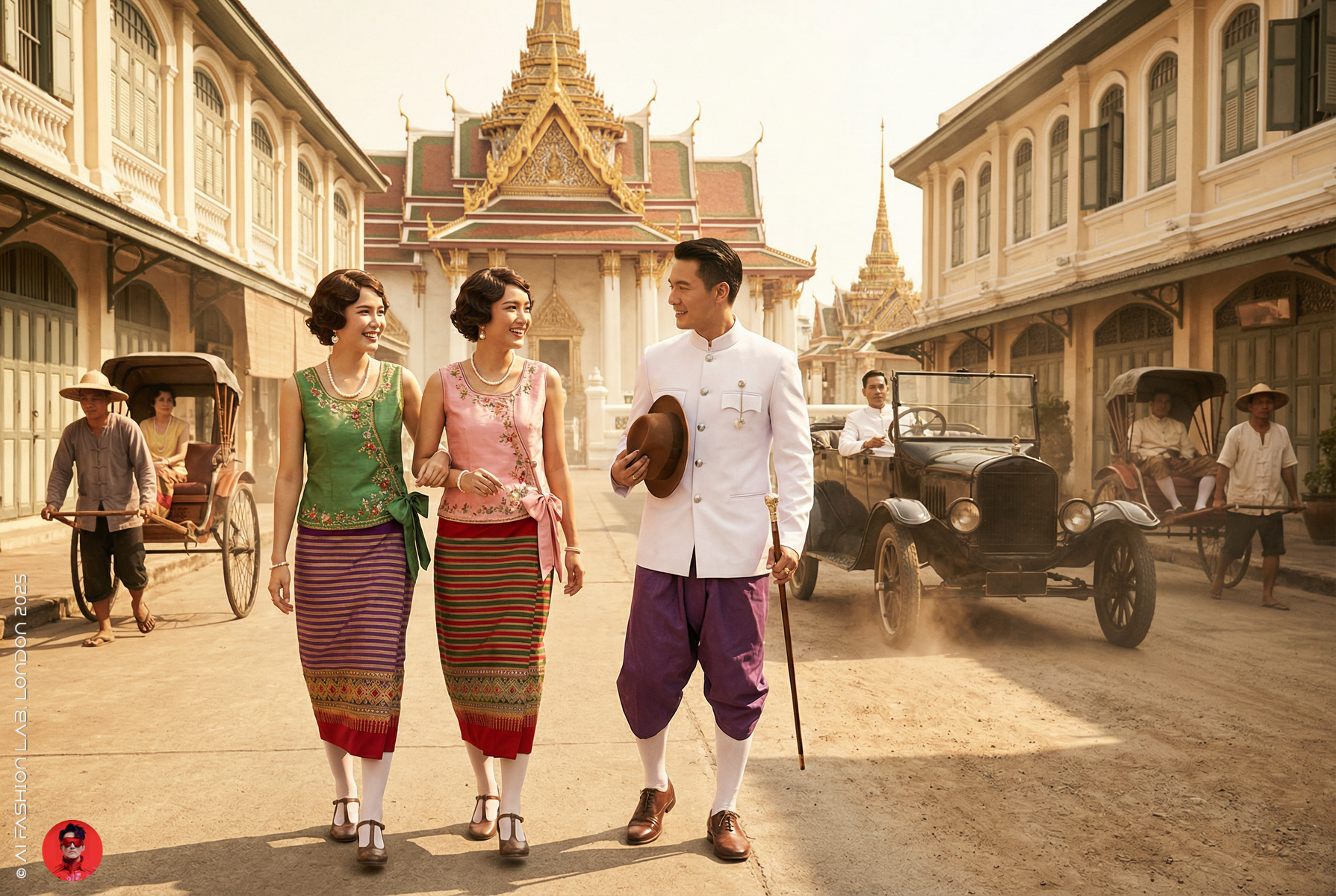
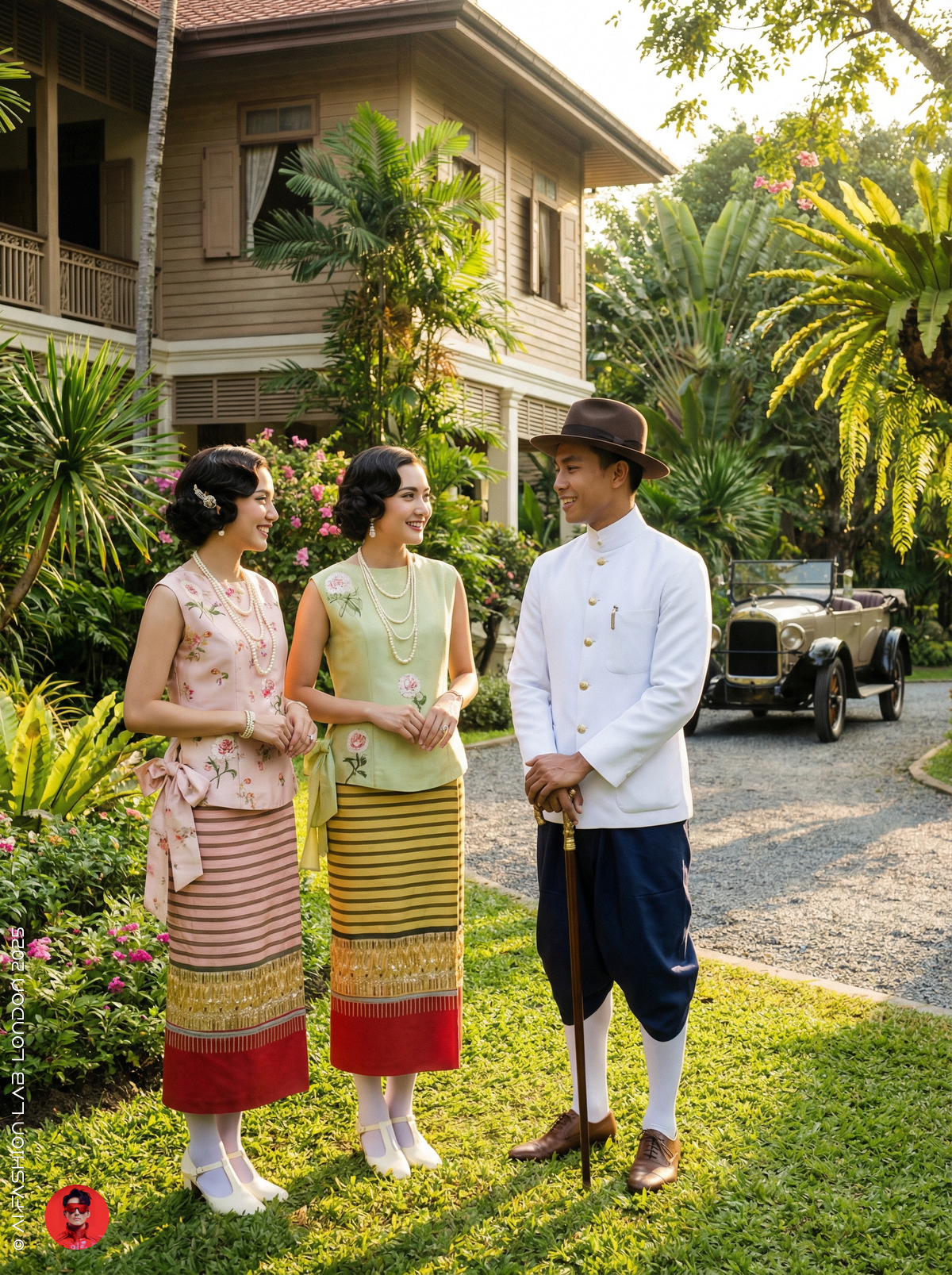
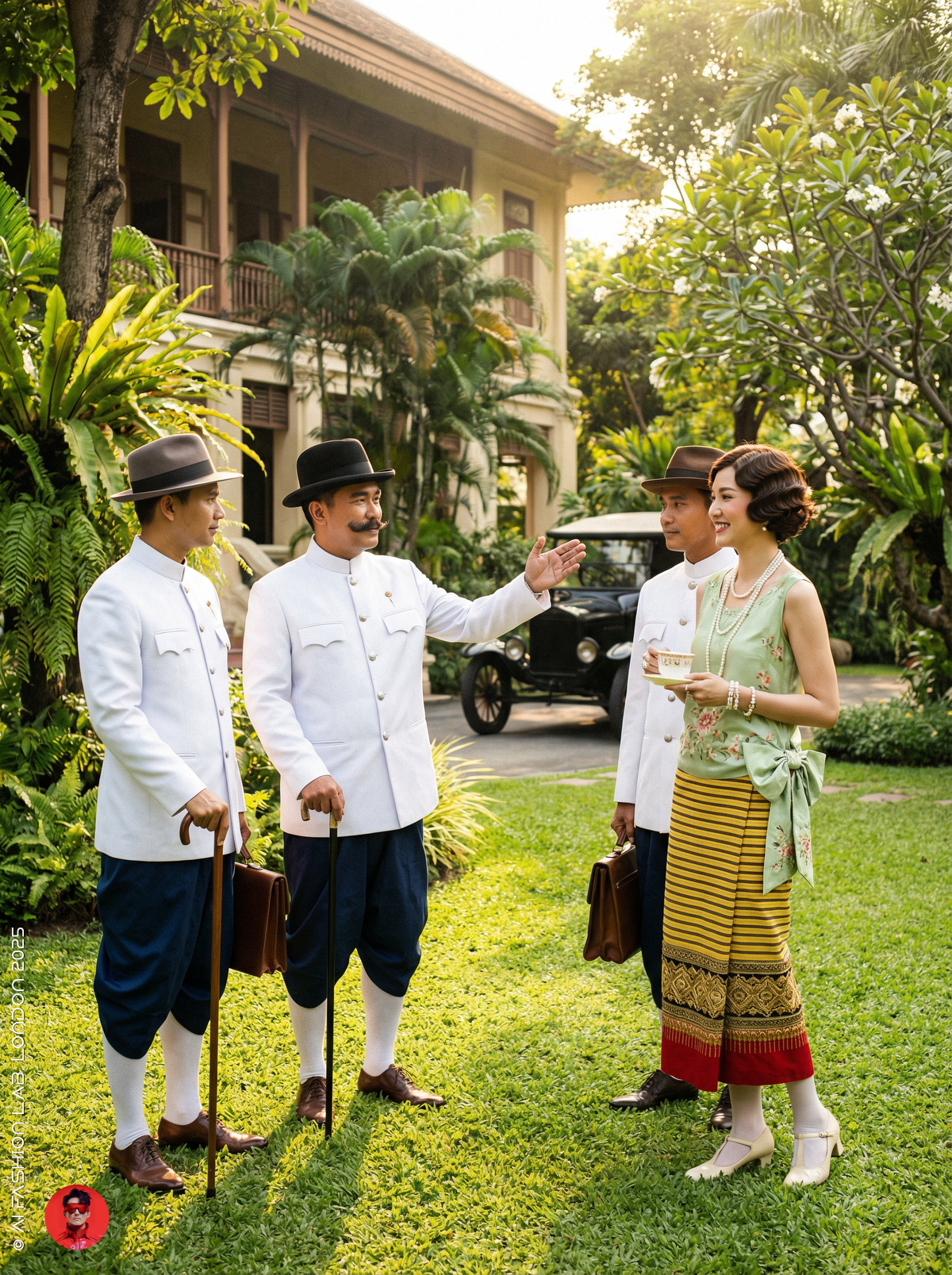
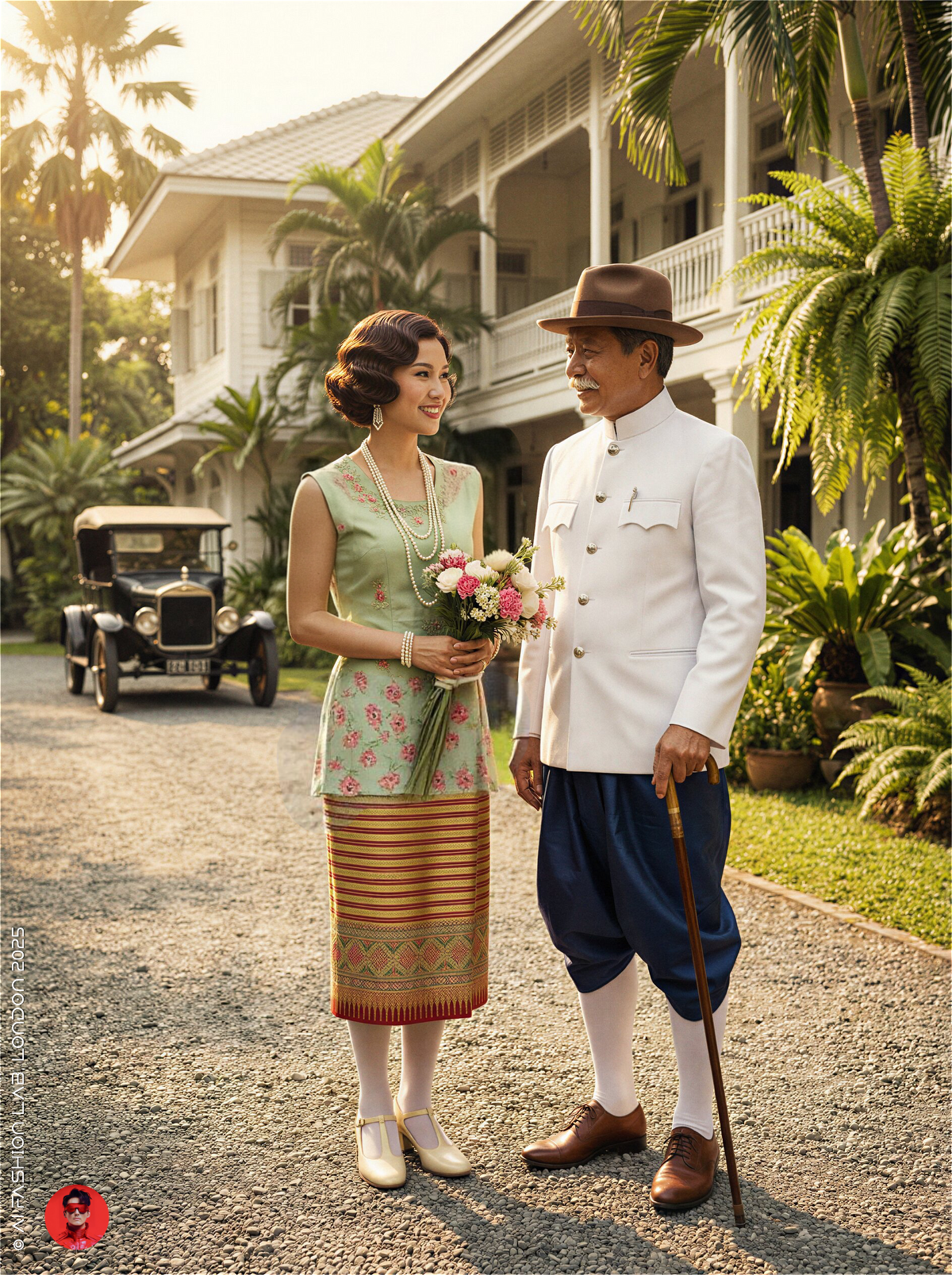
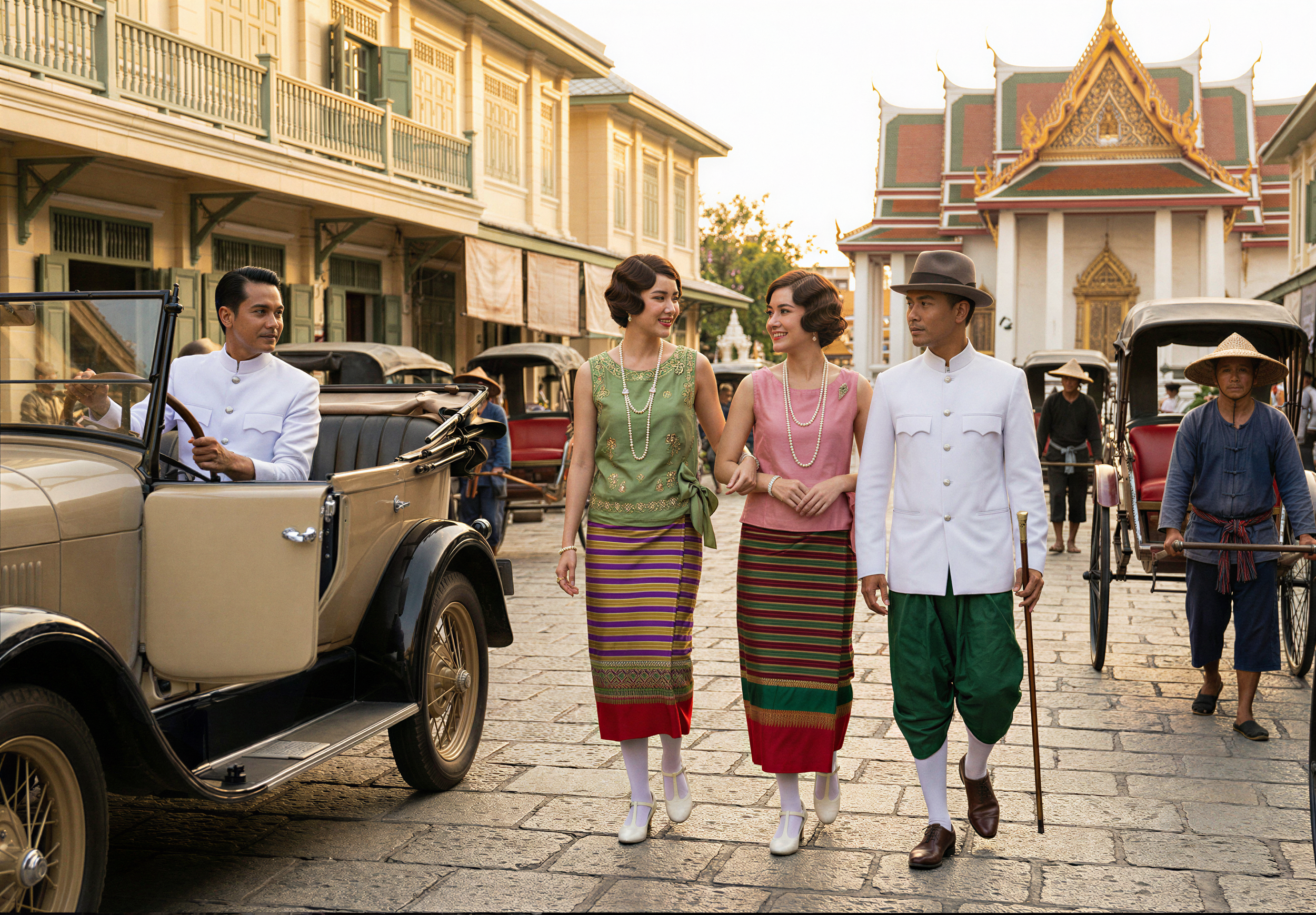
ในฉากท้องถนนและย่านการค้า—ซึ่งดัดแปลงจากภาพอ้างอิงของถนนฝั่งพระนคร—โมเดล Nano Banana Pro สามารถจินตนาการอาคารเรือนไม้ชั้นสองแบบสมัยรัชกาลที่ ๖–๗ รถลาก พ่อค้าแม่ค้า และรถยนต์โบราณอย่าง Ford Model T ได้อย่างสมจริง ราวกับเป็นภาพถ่ายจริงจากยุคทศวรรษ 1920 ที่มีชีวิตชีวา ตัวแบบสตรีและบุรุษเดินเล่นสนทนาท่ามกลางสถาปัตยกรรมไทยผสมยุโรป—ทั้งวัดและเรือนไม้ทรงไทยประยุกต์—ซึ่งล้วนช่วยสะท้อนความวิจิตรแบบสยามในช่วงกึ่งศตวรรษแห่งความทันสมัย
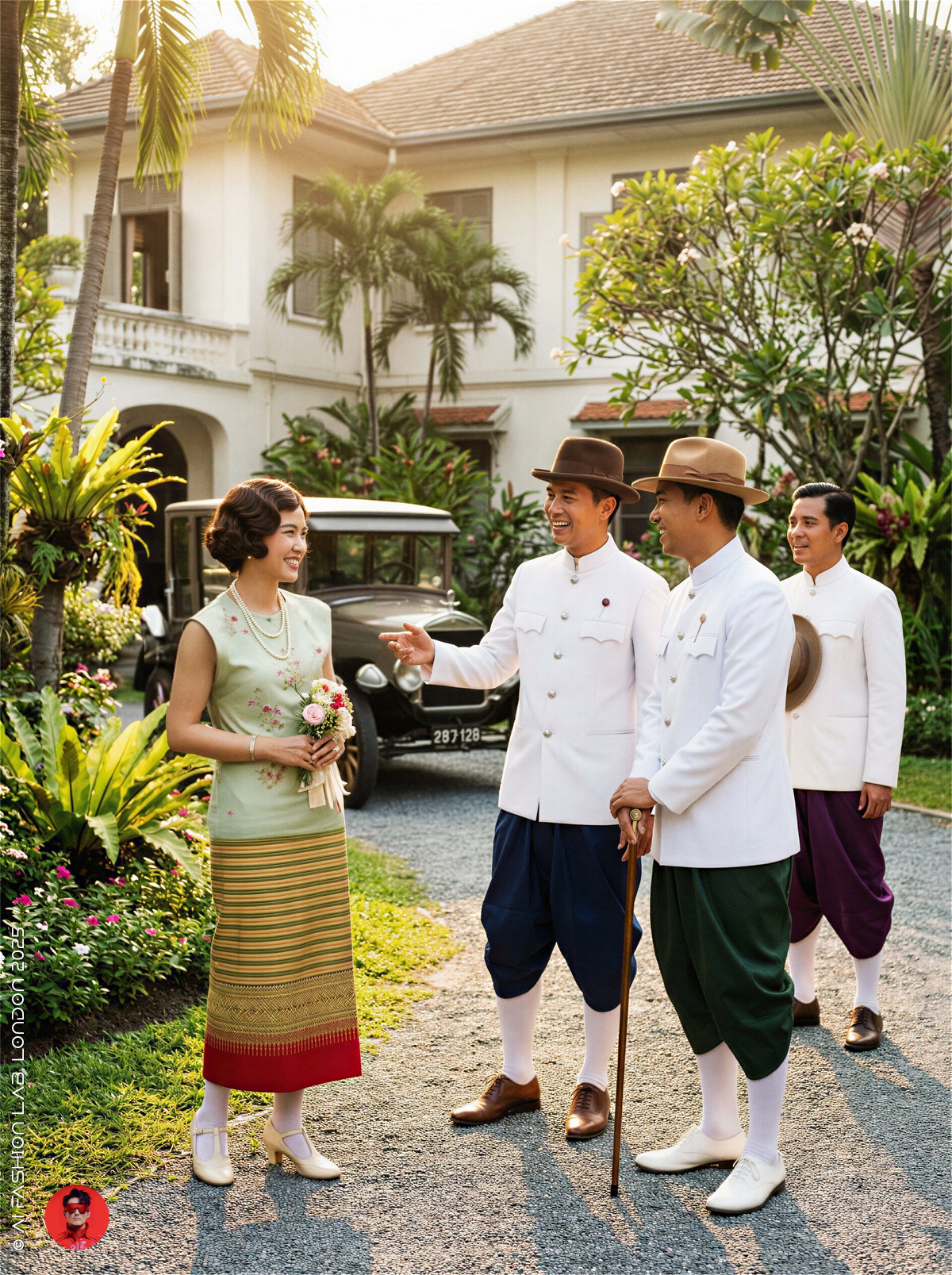
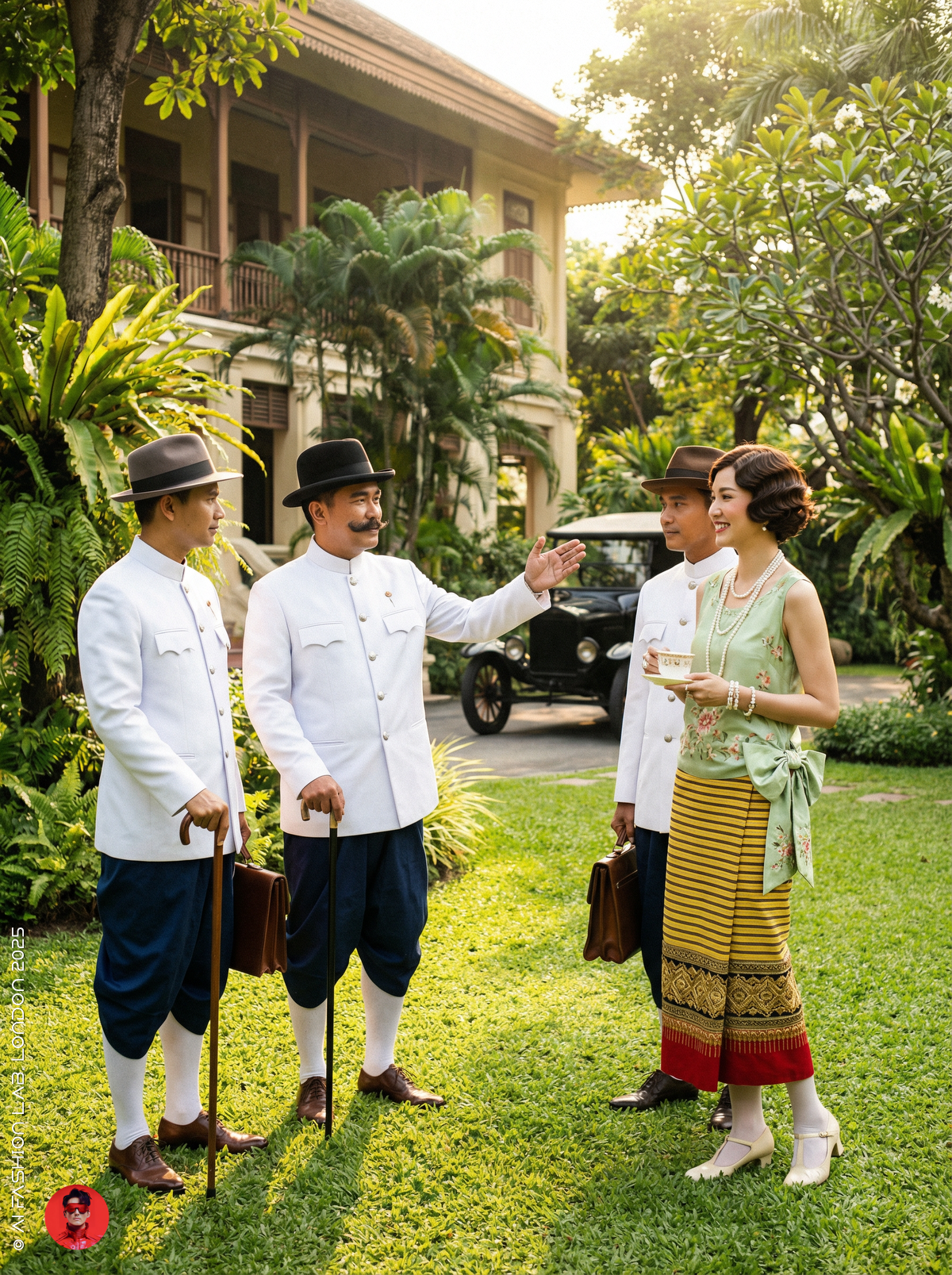
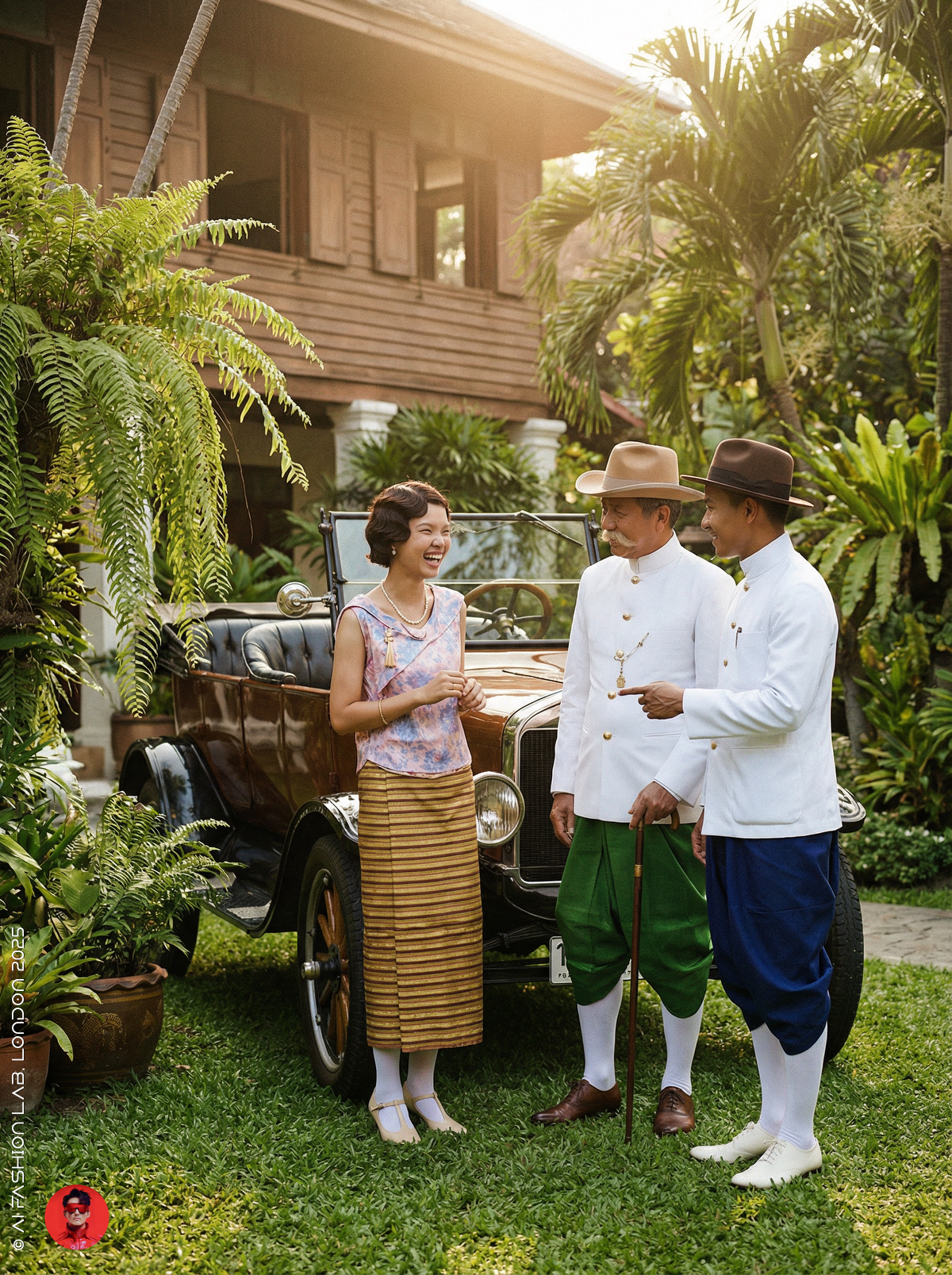
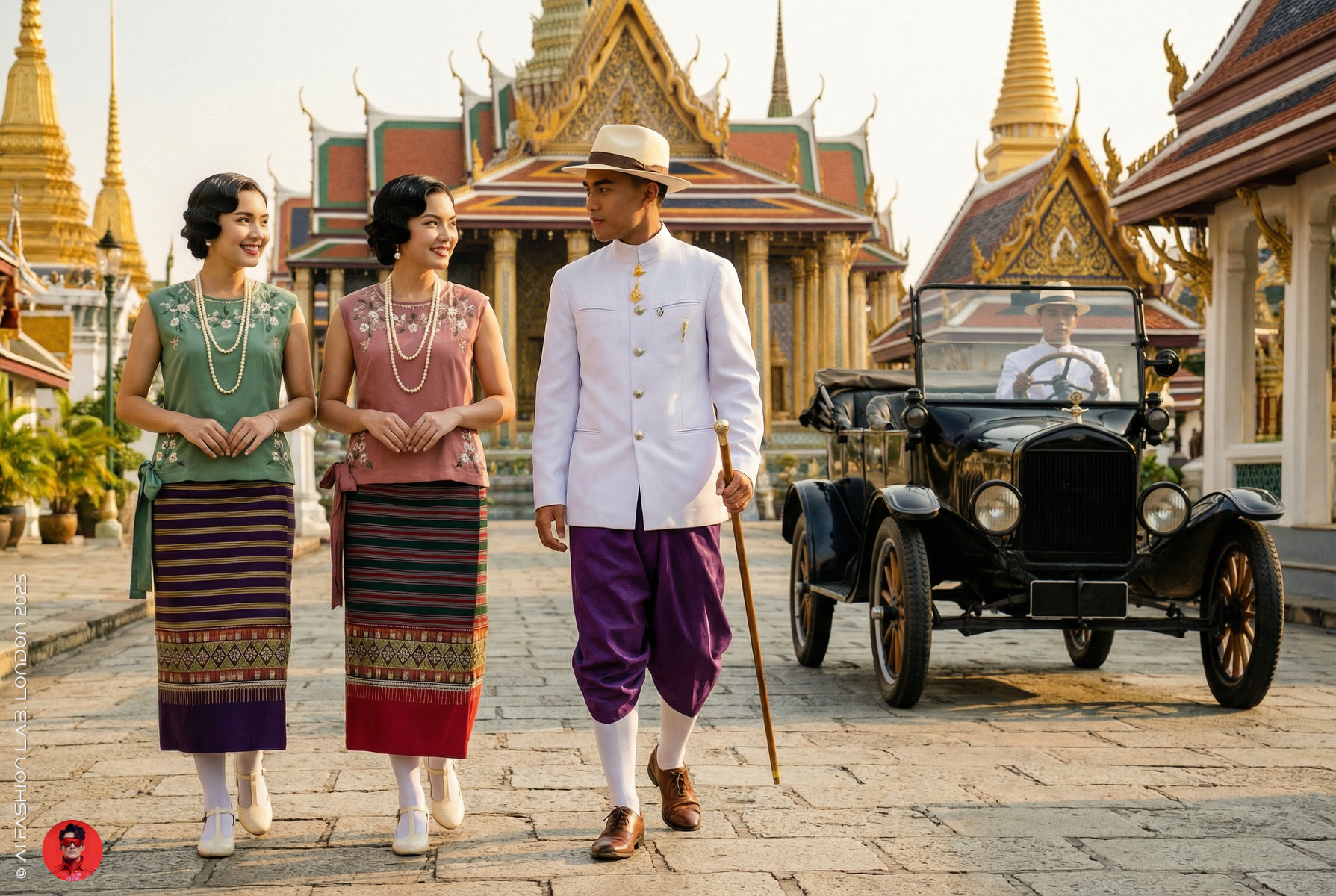
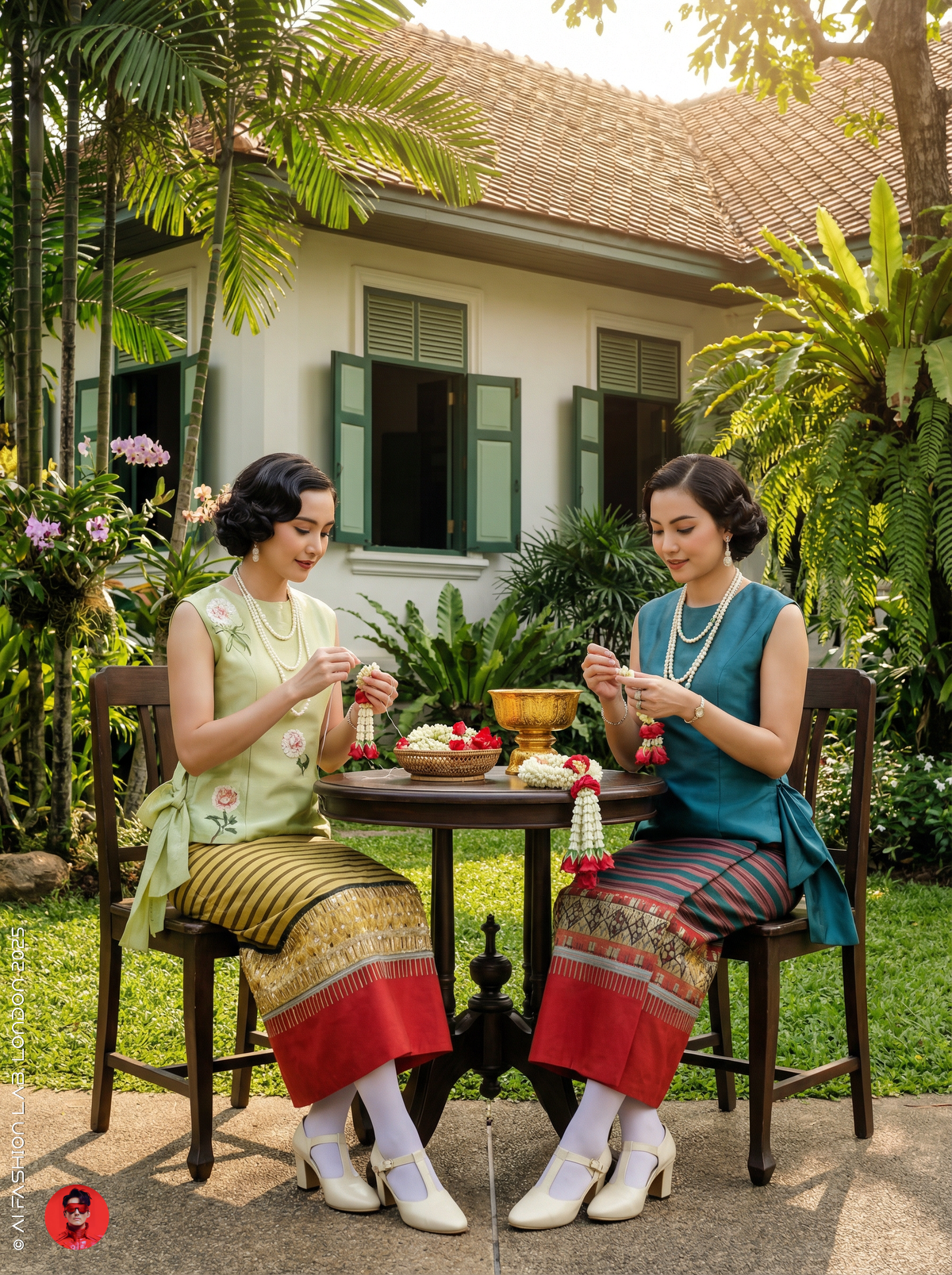
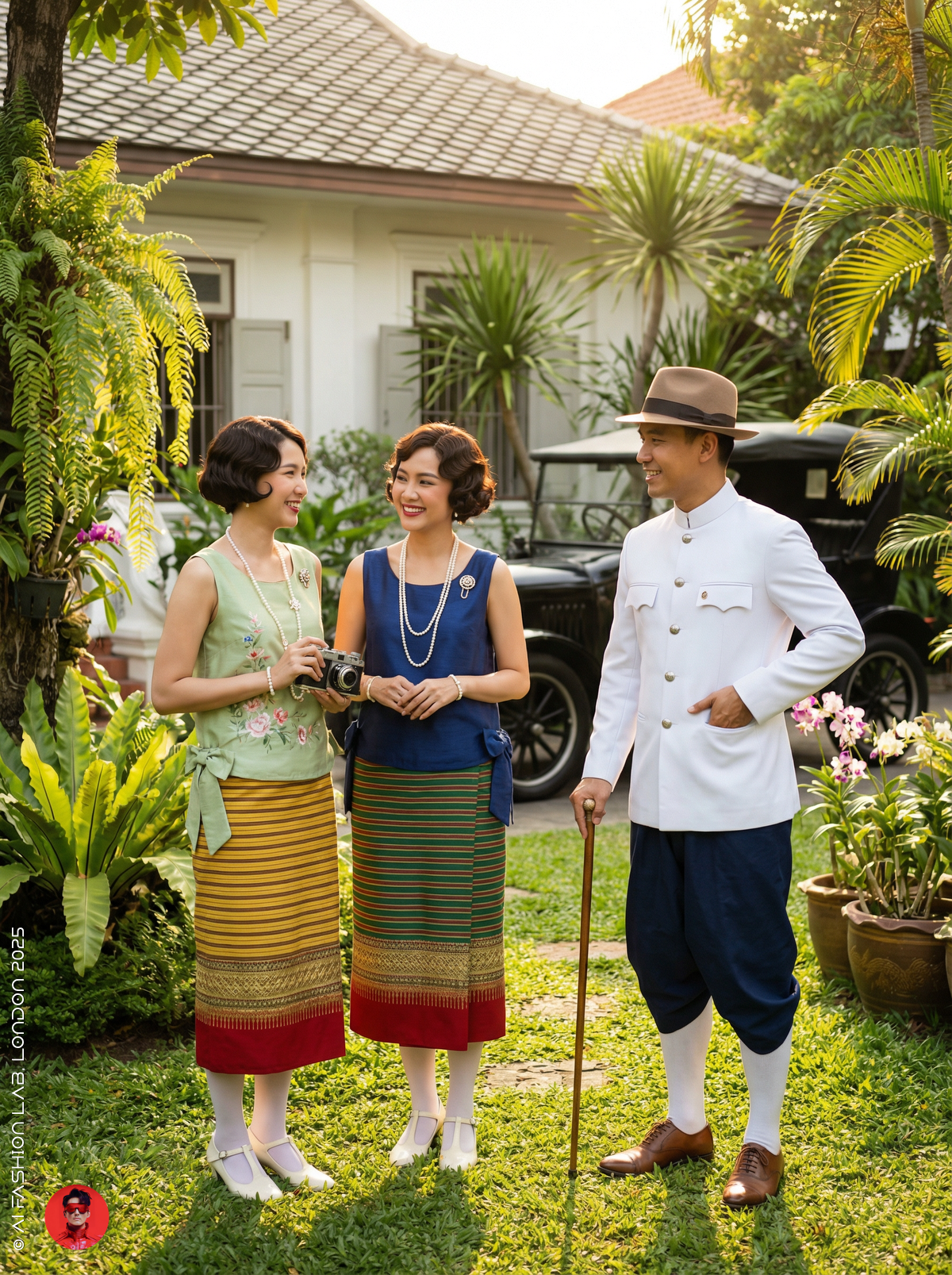
รายละเอียดของการแต่งกายก็สมบูรณ์แบบอย่างยิ่ง สุภาพสตรีแต่งกายด้วยเสื้อแขนกุดผ้าไหมปักลายดอกไม้ โทนเขียว ลิ้นจี่ กุหลาบ และน้ำเงิน เข้าคู่กับผ้าซิ่นตีนจกยกดิ้นทอง สวมถุงน่องสีงาช้างและรองเท้าคัตชูมีสายแบบ Mary Jane ซึ่งเป็นแฟชั่นร่วมสมัย ขณะที่บุรุษแต่งกายเสื้อราชปะแตนสีขาว โจงกระเบนแพรสีเขียว น้ำเงิน หรือม่วง พร้อมหมวกเฟโดราหรือหมวกโบ๊ทเตอร์ซึ่งได้รับอิทธิพลจากตะวันตก แสดงถึงความประณีตของรสนิยมชนชั้นนำในสยามช่วงก่อนสงครามโลกครั้งที่ ๒
องค์ประกอบทั้งหมด เช่นแสงแดดยามบ่ายที่ลอดผ่านใบเฟิร์นในสวน สนามหญ้าเขียวขจี เงาสะท้อนของแม่น้ำเจ้าพระยา เสียงหัวเราะของหนุ่มสาวระหว่างจิบน้ำชา และฉากเมืองที่มีรถลากกับรถยนต์จอดเคียงกัน ช่วยเติมเต็มจินตนาการ “ความร่วมสมัยแบบไทย” ที่สมบูรณ์ ระหว่างความหรูหราแบบอาร์ตเดโคและความอ่อนช้อยของวิถีชีวิตแบบไทยในรัชสมัยพระบาทสมเด็จพระปกเกล้าเจ้าอยู่หัว
___________________________
Art Deco Fashion in Early Reign of King Rama VII with Nano Banana Pro (Part II)
Everyday Art Deco Style in the Early Reign of King Rama VII with Google’s Nano Banana Pro
This collection was created to test the capabilities of Google’s Nano Banana Pro, the latest model developed by Google for AI-generated imagery. Using image prompts based on my previously designed collections of Art Deco fashion for both women and men, the results reveal a level of clarity, realism, and precision markedly superior to earlier versions of Nano Banana. Even though the previous model already offered high quality, this Pro version captures character and detail with exceptional fidelity—so detailed that upscaling becomes almost unnecessary. Moreover, it demonstrates an impressive understanding of Thai culture and material culture, allowing each generated image to remain faithful to historical context while beautifully expressing a distinctly modern Thai identity.
Nano Banana Pro is also remarkably adept at rendering quintessential Thai elements—whether traditional desserts such as thong yod, foi thong, and khanom chan served during afternoon tea; or scenes of garland-making; or reconstructions of the streets, architecture, and everyday atmosphere of Bangkok during the reign of King Rama VII.
The fashions appearing in this collection interpret Art Deco style during the early reign of King Prajadhipok (King Rama VII, 1925–1935), imagined through the daily lives of people in Bangkok. The images harmonise the allure of Western Art Deco aesthetics with the refined sensibilities of contemporary Thai culture.
Globally, Art Deco fashion of the 1920s—often referred to as Flapper Fashion—was defined by a radically transformed silhouette. Figures became elongated, slender, and mobile, reflecting a move away from the restrictive corset. Women’s garments featured sleeveless or short-sleeved designs with low waistlines, adorned with geometric patterns, metallic embroidery, sequins, and shimmering beadwork. Short hairstyles styled in Marcel Waves, along with jewelled or feathered headbands, were iconic symbols of the Jazz Age.
When this fashion wave reached Siam, Art Deco attire was adapted seamlessly into local aesthetics. Sleeveless tops or beaded blouses in Western style were paired with long tubular Thai silk skirts (pha sin) falling to mid-calf, worn with ivory stockings and high-heeled shoes. Accessories such as pearls and beaded fringes elevated the look to something both cosmopolitan and refined, while retaining a recognisably Thai softness and grace during a culturally transitional era.
This collection portrays the everyday elegance of Siamese life during the early reign of King Rama VII through exquisitely staged scenes—afternoon tea by the Chao Phraya River with Wat Arun in the background; trays of thong yod, foi thong, and khanom chan arranged beside a polished silver teapot; or jasmine garland-making in a lush colonial-era garden. Every scene showcases a distinctly modern Thai charm infused with Art Deco influences—from Marcel Wave hairstyles and multi-layered pearl necklaces to intricately embroidered sleeveless blouses and Thai silk skirts that enhance the flapper-inspired silhouette in a uniquely Thai context.
In the street and marketplace scenes—modelled after early 20th-century neighbourhoods on the Phra Nakhon side—Nano Banana Pro vividly imagines two-storey wooden shophouses of the Rama VI–VII era, rickshaws, street vendors, and vintage automobiles such as the Ford Model T. The results are strikingly lifelike, as though captured in real photographs from the 1920s. Figures stroll through a cityscape defined by a mixture of Thai and European architectural influences—temples, colonial-era houses, and hybrid Thai-Western residences—reflecting Siam’s refinement during an era of burgeoning modernity.
The clothing details are equally meticulous. Women wear sleeveless silk blouses embroidered with floral motifs in shades of green, lychee pink, rose, and deep blue, paired with gold-threaded sin tian chok or striped silk skirts. Ivory stockings and Mary Jane shoes complete the contemporary 1920s look. Men wear immaculate white rajpattern jackets with silk jongkraben in green, blue, or purple, complemented by Western-influenced fedoras or boater hats—an elegant testament to the sartorial tastes of Siam’s upper class before the Second World War.
All these elements—the golden afternoon light filtering through fern fronds, the lush green lawns, reflections on the Chao Phraya River, the laughter of young couples during tea, and streets where rickshaws and early automobiles stand side by side—combine to evoke a fully realised vision of “modern Thai elegance”. It is a world in which the luxury of Art Deco harmonises seamlessly with the gentle beauty of Thai life during the reign of King Rama VII.
#aifashionlab #AI #aiartist #aiart #aifashion #aifashiondesign #aifashionstyling #aifashiondesigner #fashion #fashionhistory #historyoffashion #fashionstyling #fashionphotography #digitalfashiondesign #digitalcostumedesign #digitaldesign #digitalaiart #ThaiFashionHistory #ThaiFashionAI #thailand