เจ้าจอมตนกูสุเบีย: ชีวิตที่ถูกพัดพาโดยการเมือง อัตลักษณ์ทางศาสนา และผืนผ้าซองเก็ตแห่งโลกมลายู–สยาม
เจ้าจอมตนกูสุเบีย: ชีวิตที่ถูกพัดพาโดยการเมือง อัตลักษณ์ทางศาสนา และผืนผ้าซองเก็ตแห่งโลกมลายู–สยาม
กลางคริสต์ศตวรรษที่ 19 โลกมลายูมิได้ดำรงอยู่อย่างสงบ หากถูกแรงกดดันจากอำนาจอาณานิคมยุโรปอย่างหนัก ปี พ.ศ. 2400 (ค.ศ. 1857) สุลต่านมะฮ์มุดที่ 4 มูซัฟฟาร์ ชะฮ์ แห่งรีเยา–ลิงกา (หรือ สิงคา) (Sultan Mahmud Muzaffar of Riau–Lingga; เอกสารไทยเรียก มะหะหมุด หรือ มะหมุด) ถูกทางการดัตช์ปลดจากราชสมบัติในขณะที่ประทับอยู่ ณ สิงคโปร์ พระองค์พยายามแสวงหาความช่วยเหลือทางการเมืองจากสิงคโปร์ และพยายามจะกลับคืนสู่บัลลังก์ด้วยการยึดครองอาณาจักรปะหัง แต่ไม่ประสบความสำเร็จ พร้อมกันนั้นยังถูกทั้งฝ่ายอังกฤษและบาตาเวียกดดัน เตือน และข่มขู่อย่างต่อเนื่อง จนไม่อาจต้านทานได้
ในที่สุด ปี พ.ศ. 2404 (ค.ศ. 1861) สุลต่านมะฮ์มุดเสด็จลี้ภัยเข้าสู่กรุงเทพฯ และได้เข้าเฝ้า พระบาทสมเด็จพระจอมเกล้าเจ้าอยู่หัว พระมหากษัตริย์สยามทรงต้อนรับอย่างอบอุ่น และถึงกับทรงแต่งตั้งสุลต่านองค์นี้ให้ดำรงตำแหน่งผู้แทนฝ่ายสยาม ดูแลหัวเมืองมลายู ได้แก่ กลันตันและตรังกานู
ทว่า การยอมรับจากสยามมิได้ปราศจากเงื่อนไข ภายในคณะผู้ติดตามของสุลต่าน มีสตรีผู้หนึ่งซึ่งชะตากรรมจะเปลี่ยนไปตลอดกาล นางคือ เติงกูซาฟียะฮ์ บินตี อัลมาร์ฮุม ซุลตัน มูฮัมเมด มูอัซซัม ชะฮ์ (Tengku Safiyah binti al-Marhum Sultan Muhammad Muazzam Shah) พระธิดาของ สุลต่านมูฮัมมัดที่ 2 มูอัซซัม ชะฮ์ แห่งลิงกา (Sultan Muhammad II Muazzam Shah) ประสูติแต่ เติงกูเกิลซุม เลอบาร์ ปูติฮ์ (Tengku Kelsum Lebar Putih) ซึ่งในพงศาวดารเมืองตรังกานูปรากฏพระนามว่า ตนกูลีปอ หรือ ริบอ พระชายาพระองค์แรก และเป็นพระธิดาใน สุลต่านอะฮ์มัด ชะฮ์ แห่งตรังกานู (Sultan Ahmad Shah of Terengganu) หรือที่เอกสารไทยเรียกว่า พระยาตรังกานูอามัด
แม้ผู้ว่าการสิงคโปร์จะเคยเตือนว่า การนำสตรีสูงศักดิ์จากโลกมลายูเข้าสู่ราชสำนักต่างแดนเช่นสยามเป็นการตัดสินใจที่อันตราย แต่คำเตือนนั้นก็ถูกละเลย และในปีเดียวกันนั้นเอง เติงกูซาฟียะฮ์ได้เข้ารับราชการในพระบาทสมเด็จพระจอมเกล้าเจ้าอยู่หัว ในฐานะ เจ้าจอมตนกูสุเบีย (Chao Chom Suphiya) และเป็น พระสนมมุสลิมท่านแรกและท่านเดียว ในรัชสมัยนี้
ราชสำนักสยามในคริสต์ศตวรรษที่ 19 ยึดถือธรรมเนียมการทูตแบบเปิดกว้าง เจ้านายต่างชาติได้รับอนุญาตให้สวมเครื่องแต่งกายประจำถิ่น และจัดเตรียมอาหารตามหลักศาสนาอย่างเหมาะสม เนื่องจากกษัตริย์และเจ้านายจากเคดะห์ กลันตัน ปัตตานี และตรังกานู เสด็จมาเยือนกรุงเทพฯ อยู่เสมอ เจ้าจอมตนกูสุเบียจึงมิได้ถูกบังคับให้ละทิ้งอัตลักษณ์ หากกลับใช้เครื่องแต่งกายเป็นภาษาแห่งตัวตน
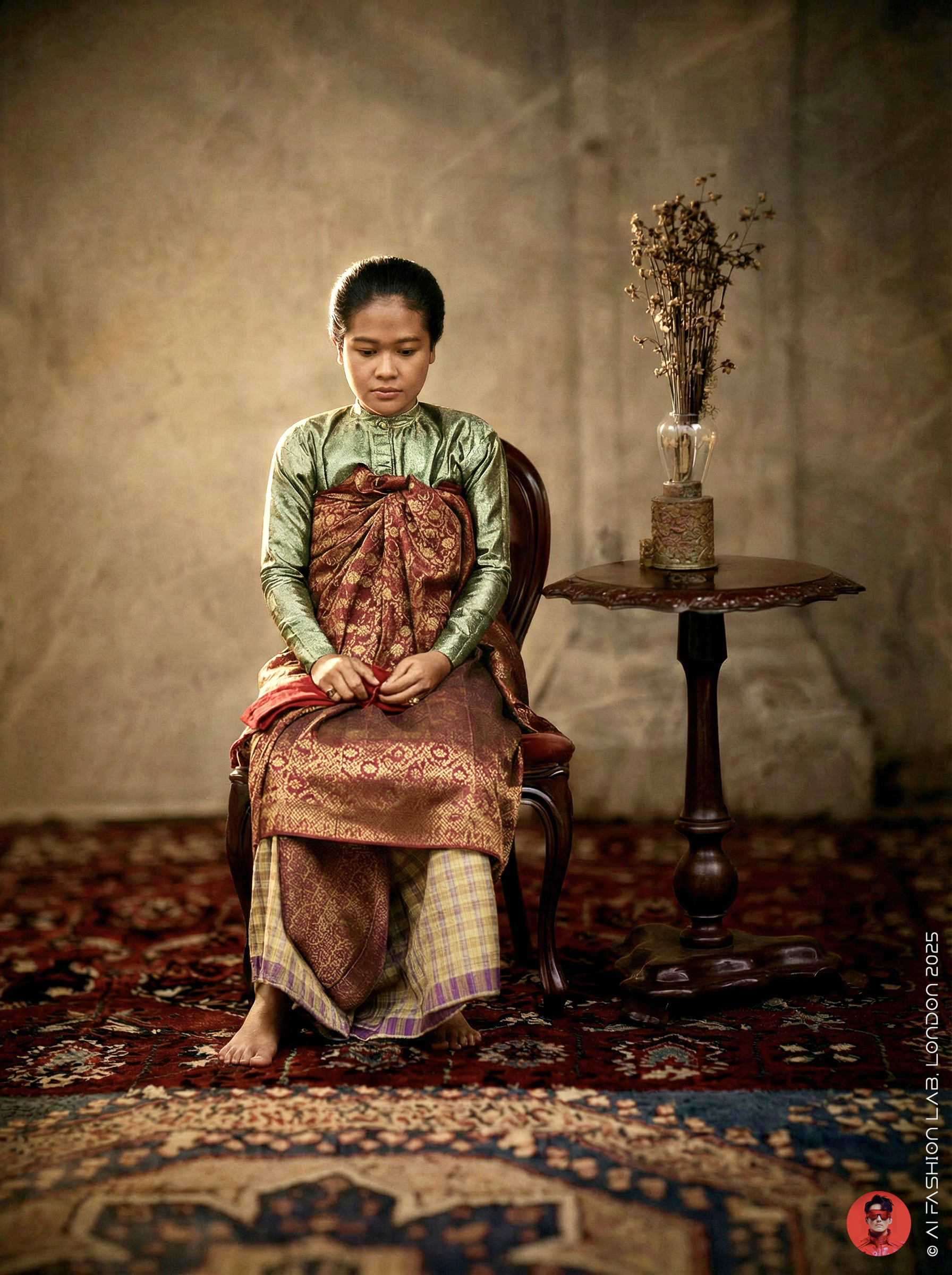
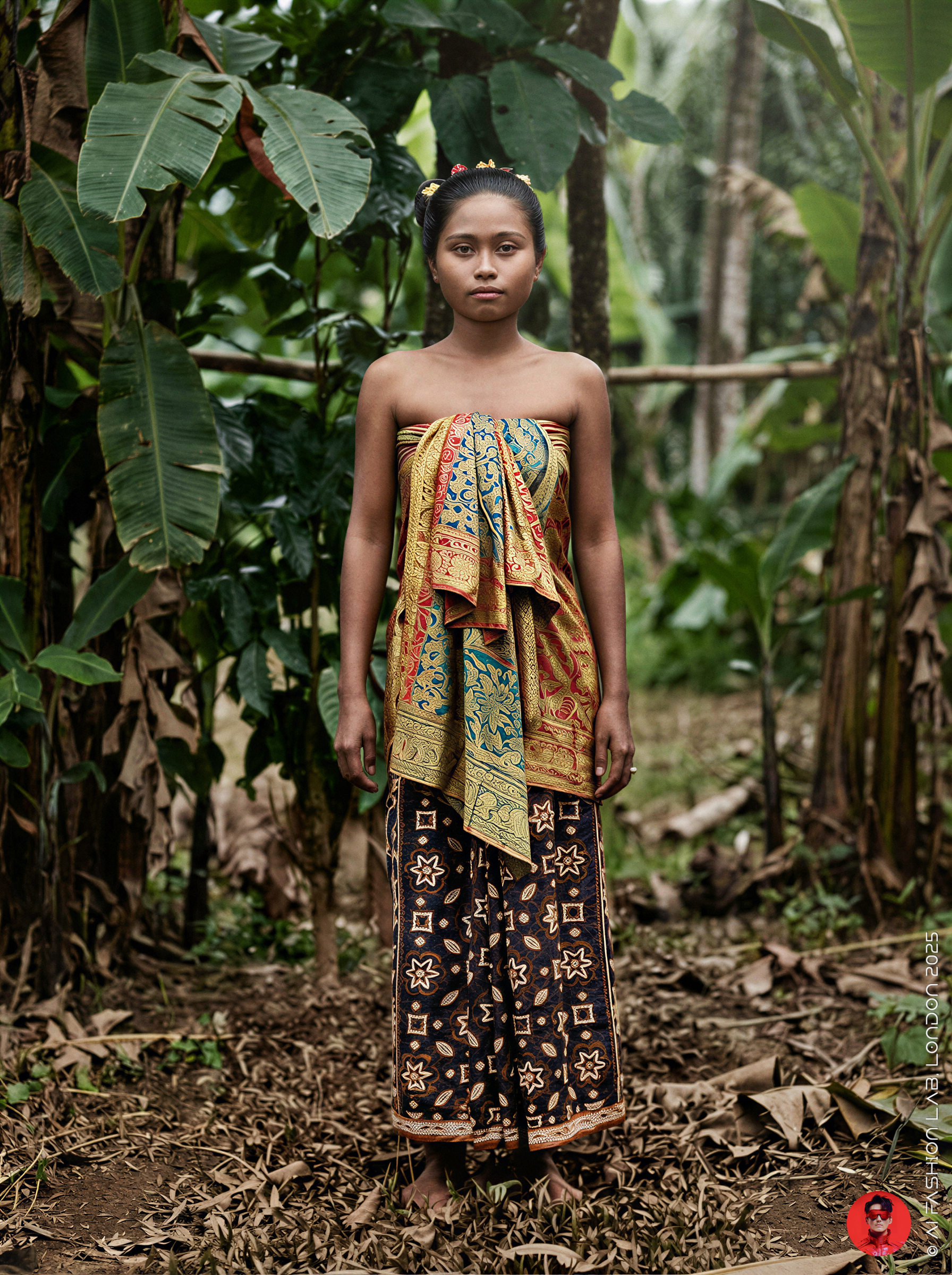
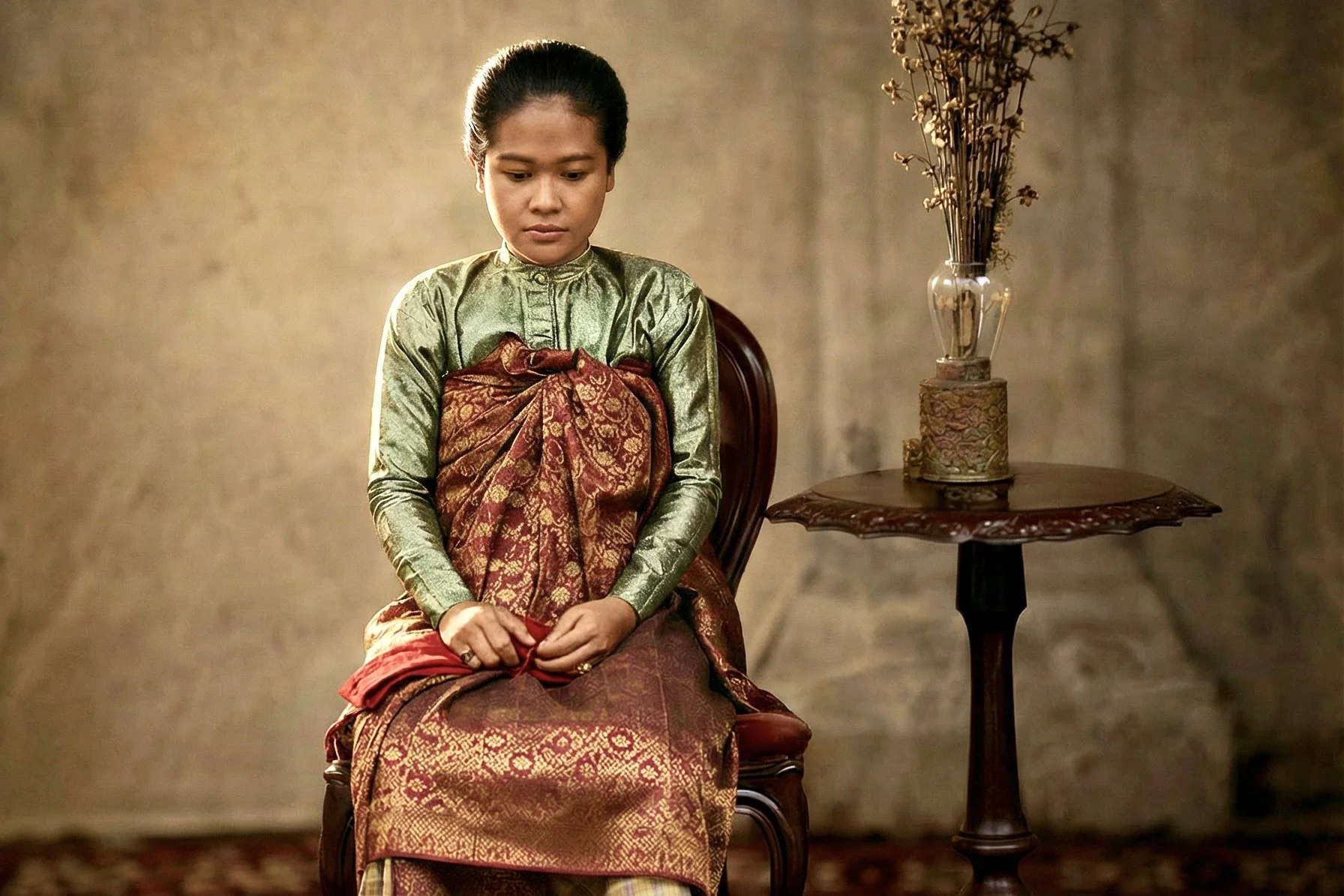
ในภาพถ่ายจากกรุงเทพฯ ราวทศวรรษ 1860 โดยคาร์ล ไฮน์ริช บิสมาร์ก ช่างภาพประจำคณะของเคานต์ฟรีดริช อัลเบรชท์ แห่งปรัสเซีย ในภาพนี้เจ้าจอมตนกูสุเบียห่ม ผ้าแถบ—คำไทยที่ใช้เรียกผ้าพันอกของสตรี—ซึ่งในโลกมลายูเรียกว่า เข็มบัน (kemban) ในชวาเรียกว่า เคมเบิน (kemben) และในบริบทมลายู–ไทยแห่งอดีตรัฐสุลต่านปัตตานี เรียกว่า บาหยัง (bahyang) ผ้าแถบชนิดนี้พันรัดรอบอก ปล่อยไหล่เปลือย และเป็นเครื่องแต่งกายปกติของสตรีในภูมิอากาศร้อนชื้นมาแต่โบราณ มิได้มีนัยทางศีลธรรมในตัวเอง หากเป็นสัญลักษณ์ของความเป็นหญิงและสถานะทางสังคม
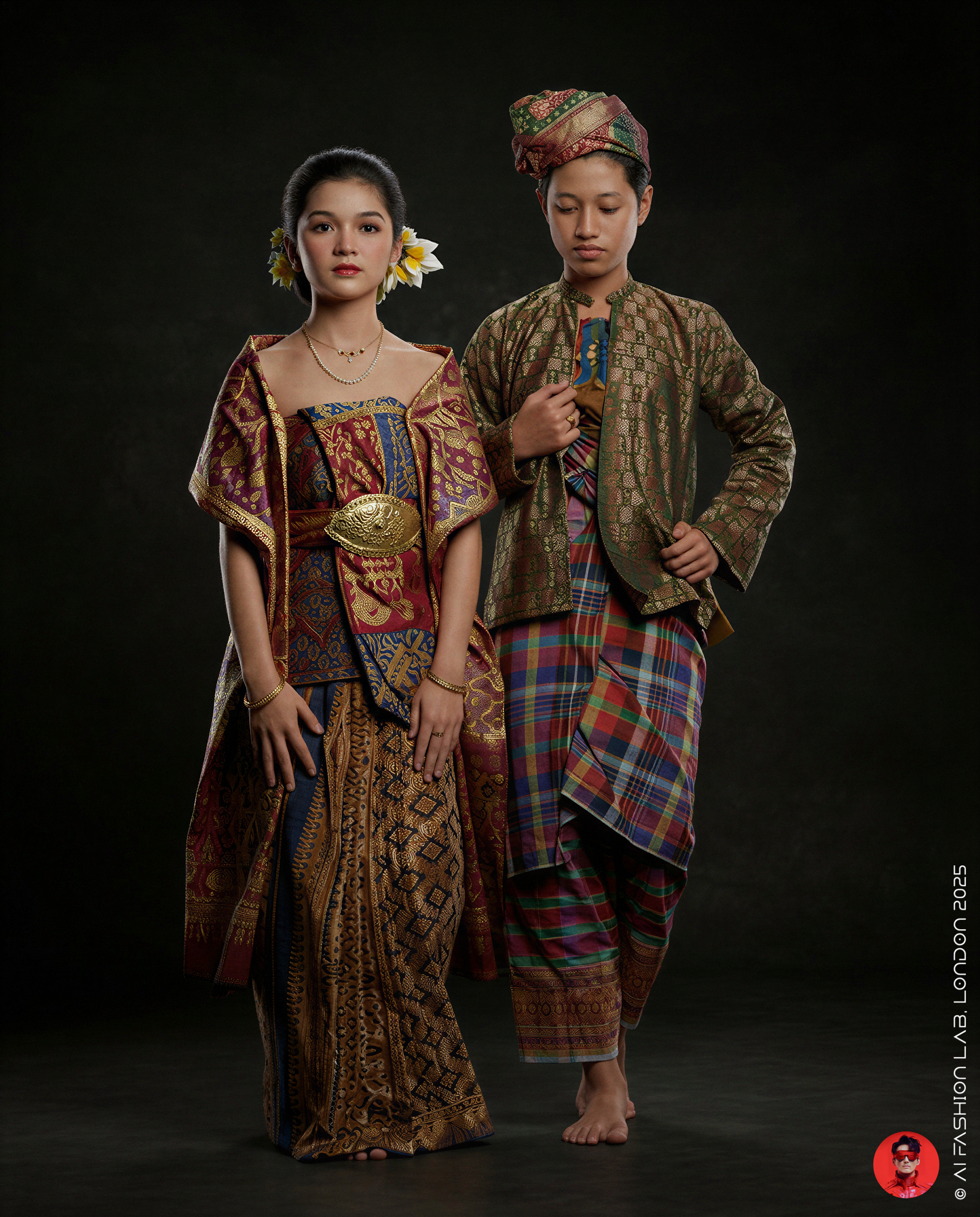
ผ้าแถบของเจ้าจอมตนกูสุเบียทำจาก ซองเก็ต (Songket) ผ้าทอมือแบบ ผ้าทอยกดอกแบบเส้นพุ่งพิเศษ (supplementary weft brocade) อันทรงคุณค่า ชื่อซองเก็ตมาจากคำมลายูว่า “ซุงกิต” (sungkit) แปลว่า “ขอเกี่ยว” อธิบายถึงเทคนิคการทอที่ใช้ไม้ปลายแหลมสะกิดยกเส้นด้ายยืน เพื่อสอด ด้ายพุ่งพิเศษ ซึ่งมักเป็น ด้ายทอง (gold thread) หรือ ด้ายเงิน (silver thread) ให้เกิดลวดลายที่ดูราวกับเส้นด้ายลอยเหนือพื้นผ้า อีกทฤษฎีหนึ่งโยงรากศัพท์กับคำว่า “มะยองเก็ต” ซึ่งหมายถึงการปักด้วยด้ายโลหะ ลวดลายซองเก็ตนิยมเป็นเรขาคณิตแทรกองค์ประกอบธรรมชาติ เช่น ดอกไม้ นก และแมลง สีสันสดใส แวววาว และสงวนใช้ในพระราชพิธี งานมงคล และโอกาสสำคัญทั่วคาบสมุทรมลายู อินโดนีเซีย บรูไน และภาคใต้ของไทย
อย่างไรก็ตาม ภาพถ่ายของเจ้าจอมตนกูสุเบียแสดงให้เห็นสิ่งที่น่าสังเกตยิ่ง นั่นคือพระองค์ สวมเสื้อแขนยาวคลุมท่อนบนทับผ้าแถบ การเพิ่มเสื้อเช่นนี้มิใช่ขนบดั้งเดิมของเคมเบินหรือเข็มบัน หากเป็นการประนีประนอมเชิงวัฒนธรรมและศาสนา ในโลกอิสลามยุคดั้งเดิม การเปิดไหล่ของผ้าแถบมิได้ถูกห้ามโดยตรง พงศาวดารมลายู (Sejarah Melayu) กล่าวถึงพระราชโองการในรัชสมัยของ สุลต่านมันซูร์ ชาห์ แห่งมะละกา (Sultan Mansur Shah of Malacca) ผู้ครองราชย์ราวกลางคริสต์ศตวรรษที่ 15 ว่า สตรีมลายูไม่ควรนุ่งเข็มบันหรือเคมเบินเพียงชิ้นเดียว เนื่องจากขัดต่อความเหมาะสมและความสุภาพตามหลักศาสนาอิสลาม อย่างไรก็ตาม พงศาวดารมิได้ระบุปีที่แน่ชัด หากกล่าวถึงในฐานะ “ขนบและกฎแห่งรัชสมัย” มากกว่าการบันทึกเหตุการณ์เฉพาะวันเวลา
สิ่งสำคัญยิ่งกว่าคือ พระราชโองการดังกล่าว มิได้ทำให้การนุ่งผ้าแถบหายไปในทันที ตรงกันข้าม การนุ่งผ้าพันอกในรูปแบบต่าง ๆ—ไม่ว่าจะเรียกว่า เคมเบิน เข็มบัน หรือในบริบทมลายู–ไทยว่า บาหยัง—ยังคงดำรงอยู่ในชีวิตประจำวัน ราชสำนัก และพิธีกรรมของสตรีมลายูต่อมาอีกหลายศตวรรษ โดยเฉพาะในพื้นที่นอกศูนย์กลางอำนาจ เช่น ปัตตานี กลันตัน ตรังกานู และหมู่เกาะอินโดนีเซีย
การเลือนหายของผ้าแถบในฐานะเครื่องแต่งกายประจำวันของสตรีมุสลิมเกิดขึ้นจริงในช่วง ปลายคริสต์ศตวรรษที่ 19 ถึงต้นคริสต์ศตวรรษที่ 20 สอดคล้องกับการขยายตัวของการตีความกฎหมายอิสลามแบบสมัยใหม่ ซึ่งได้รับอิทธิพลจากโลกอาหรับและขบวนการปฏิรูปศาสนา แนวคิดเรื่องความสุภาพ (modesty) ถูกกำหนดใหม่อย่างเข้มงวด ส่งผลให้สตรีมลายูหันไปสวมเครื่องแต่งกายที่มิดชิดมากขึ้น เช่น บาจูกูรง (Baju Kurung)—เสื้อคลุมตัวยาว แขนยาว หลวม คลุมร่างกายตั้งแต่คอถึงข้อเท้า—ซึ่งมักสวมคู่กับ ผ้าคลุมศีรษะ (tudong) ต่อมาคือ บาจูเกบายา (Baju Kebaya / Kebaya) เสื้อเข้ารูปแบบเปิดหน้า สวมกับผ้านุ่ง และในภาคใต้ของไทย บานง หรือ เกบายาแบบไทย ซึ่งเป็นการปรับเกบายาให้เข้ากับบริบทสยาม
ดังนั้น การหายไปของบาหยังหรือผ้าแถบ มิได้เป็นผลจากศาสนาอิสลามในรูปแบบดั้งเดิม หากเป็นผลจาก การตีความศาสนาในยุคสมัยใหม่ ที่ทับซ้อนและกลบวัฒนธรรมการแต่งกายพื้นถิ่นเดิม เมื่อมองในกรอบนี้ เครื่องแต่งกายอย่างบาหยังหรือเคมเบินจึงมิใช่ “สิ่งต้องห้าม” หากเป็นร่องรอยของโลกก่อนสมัยใหม่ ที่ซึ่งศาสนา วัฒนธรรม และการแต่งกายยังสามารถดำรงอยู่ร่วมกันอย่างยืดหยุ่นและหลากหลาย
หลังการสวรรคตของพระบาทสมเด็จพระจอมเกล้าเจ้าอยู่หัวในปี พ.ศ. 2411 (ค.ศ. 1868) เจ้าจอมตนกูสุเบียพ้นจากสถานะทางการเมือง พระองค์ถวายบังคมลาออกในปี พ.ศ. 2419 เสด็จกลับตรังกานู พำนักกับ พระยาตรังกานูอุมา ผู้เป็นลุง และสมรสใหม่ตามหลักชะรีอะฮ์กับ เติงกู ลง อิสมาอิล บิน เติงกู อับดุล กอดีร์ ญะมาลุดดีน (Tengku Long Ismail bin Tengku Abdul Kadir Jamaluddin) หรือที่พงศาวดารเมืองตรังกานูเรียกว่า ตนกูหลง พระองค์มีบุตรธิดาสองคน และพำนักอยู่ที่ตรังกานูจนกระทั่งสิ้นชีวิตในปี พ.ศ. 2428
แม้ชีวิตจะผันผวน บันทึกยังคงยืนยันการมีอยู่ของพระองค์ จดหมายเหตุรายวันของ สมเด็จพระบรมโอรสาธิราช เจ้าฟ้ามหาวชิรุณหิศ (Crown Prince Maha Vajirunhis) ลงวันที่ ๗ กันยายน พ.ศ. ๒๔๓๑ ระบุถึงการพบ “ตนกูสะเปีย” ร่วมเฝ้ารับเสด็จ พระบาทสมเด็จพระจุลจอมเกล้าเจ้าอยู่หัว (King Chulalongkorn / Rama V) ณ เมืองตรังกานู ความตอนหนึ่งว่า
“…๓ โมงเช้า ๔๐ มินิต (๐๙.๔๐ น.) ถึงเมืองตรังกานู […] เสด็จลงเรือไปประทับที่บ้านพระยาตรังกานู มีแขกแต่งเป็นคู่แห่เหมือนเมืองกลันตัน ถึงบ้านมีผู้หญิงแต่งตัวคลุมหัวมาคอยรับอยู่มาก มีตนกูสะเปียซึ่งเคยเข้าอยู่เป็นเจ้าจอมทูลกระหม่อมปู่เป็นต้น…”
แสดงให้เห็นว่า แม้พ้นจากราชสำนักสยามแล้ว เจ้าจอมตนกูสุเบียยังคงดำรงอัตลักษณ์สตรีมุสลิมชั้นสูงอย่างมั่นคง
วันนี้ การห่ม บาหยัง แบบดั้งเดิมอาจหลงเหลือเพียงในความทรงจำ หากเรื่องราวของเจ้าจอมตนกูสุเบียยังคงย้ำเตือนว่า แฟชั่นมิใช่เพียงการแต่งกาย หากเป็นหลักฐานของการเมือง ศาสนา และการตีความในโลกที่เปลี่ยนไปตามกาลเวลา
___________________
Chao Chom Tengku Suphiya: A Life Shaped by Politics, Religious Identity, and the Songket Cloth of the Malay–Siamese World
In the mid-nineteenth century, the Malay world was far from tranquil. It stood under intense pressure from European colonial powers. In 1857 (B.E. 2400), Sultan Mahmud IV Muzaffar Shah of Riau–Lingga—also known in Thai documents as Mahamut or Mahahamut—was deposed by the Dutch colonial authorities while residing in Singapore. The Sultan sought political assistance from Singapore and attempted to reclaim his throne by asserting control over the Pahang Sultanate, but these efforts proved unsuccessful. At the same time, he was repeatedly warned, pressured, and constrained by both the British and the Batavian administrations, until resistance was no longer possible.
In 1861 (B.E. 2404), Sultan Mahmud Muzaffar Shah went into exile in Bangkok, where he was granted an audience with King Mongkut of Siam (Rama IV). The Siamese monarch received him warmly and went so far as to appoint the Sultan as a Siamese representative responsible for overseeing the Malay states of Kelantan and Terengganu.
Yet this acceptance was not without consequence. Among the Sultan’s entourage was a woman whose destiny would be irrevocably transformed. She was Tengku Safiyah binti al-Marhum Sultan Muhammad Muazzam Shah, daughter of Sultan Muhammad II Muazzam Shah of Lingga, born to Tengku Kelsum Lebar Putih—known in the Terengganu chronicles as Tengku Lipo or Ribo—the Sultan’s principal consort and daughter of Sultan Ahmad Shah of Terengganu, referred to in Thai records as Phraya Terengganu Amat.
Although the Governor of Singapore had warned that bringing a high-born Malay woman into a foreign court such as Siam was a grave political risk, this counsel was ignored. In that same year, 1861, Tengku Safiyah entered the service of King Mongkut and was formally installed as Chao Chom Tengku Suphiya, becoming the first and only Muslim royal consort of the reign.
The Siamese court of the nineteenth century adhered to an unusually open diplomatic ethos. Foreign royalty and nobles were permitted to retain their traditional dress, and religious dietary practices were respected—an accommodation made necessary by the frequent visits of rulers and dignitaries from Kedah, Kelantan, Patani, and Terengganu. As such, Chao Chom Tengku Suphiya was not compelled to abandon her cultural identity. Instead, dress became her language of self-definition.
In photographs taken in Bangkok during the 1860s, she appears wearing a breast cloth, known in Thai as pha thaep. In the Malay world, this garment was called kemban, in Java kemben, and in the Malay–Thai context of the former Patani Sultanate, bahyang. This form of dress consisted of a length of cloth wrapped tightly around the torso, leaving the shoulders bare. In tropical societies, it was a conventional and socially accepted mode of dress, bearing no inherent moral implication. Rather, it signified femininity, status, and refinement.
Chao Chom Tengku Suphiya’s breast cloth was made of songket, a prestigious handwoven textile produced using the supplementary weft brocade technique. The term songket derives from the Malay word sungkit, meaning “to hook” or “to lift,” referring to the method by which a pointed tool is used to raise warp threads so that supplementary weft threads—often gold or silver metallic threads—can be inserted to create raised decorative motifs. Another etymological theory links the term to mayongket, meaning embroidery with metallic threads. Songket designs typically combine geometric patterns with natural motifs such as flowers, birds, and insects, and were traditionally reserved for royal ceremonies, weddings, and formal occasions throughout the Malay Peninsula, Indonesia, Brunei, and southern Thailand.
Notably, Chao Chom Tengku Suphiya is shown wearing a long-sleeved blouse layered over the breast cloth. This was not part of the original kemban or kemben tradition, but rather a cultural and religious adaptation. In early Islamic societies, the exposure of shoulders through traditional breast cloths was not explicitly prohibited. However, the Malay Annals (Sejarah Melayu) record that during the reign of Sultan Mansur Shah of Malacca—who ruled in the mid-fifteenth century—Malay women were discouraged from wearing the kemban alone, as it was deemed inconsistent with Islamic notions of modesty. The chronicle does not specify an exact year, presenting the prohibition instead as a normative rule of the reign rather than a dated decree.
Crucially, this royal injunction did not result in the immediate disappearance of the breast cloth. Kemben, kemban, and bahyang continued to be worn for centuries in daily life, court settings, and ritual contexts—particularly in regions distant from political centres, such as Patani, Kelantan, Terengganu, and the Indonesian archipelago.
The decline of the breast cloth as everyday attire occurred much later, in the late nineteenth to early twentieth centuries, coinciding with the spread of modernist interpretations of Islamic law, heavily influenced by reformist movements and Middle Eastern religious thought. Concepts of modesty were redefined with greater rigidity, particularly regarding the exposure of the shoulders and upper body. As a result, Malay Muslim women increasingly adopted more concealing garments, such as the Baju Kurung, a loose, long-sleeved tunic extending from neck to ankle, typically worn with a tudong (headscarf). This was followed by the Baju Kebaya, a fitted, front-opening blouse worn with a wrapped skirt, and in southern Thailand, the Banong, a Thai adaptation of the kebaya suited to Siamese cultural norms.
Thus, the disappearance of bahyang and related breast cloths was not a consequence of Islam in its early or traditional form, but rather the outcome of modern reinterpretations of religious law that gradually eclipsed indigenous modes of dress. Seen in this light, garments such as the kemben and bahyang are not “forbidden relics,” but vestiges of a pre-modern world in which religion, culture, and clothing coexisted with far greater flexibility.
Following the death of King Mongkut in 1868, Chao Chom Tengku Suphiya was released from her political position. In 1876, she formally withdrew from the Siamese court and returned to Terengganu, where she lived with her uncle, Phraya Terengganu Uma, and later contracted a lawful Islamic marriage with Tengku Long Ismail bin Tengku Abdul Kadir Jamaluddin, known in the Terengganu chronicles as Tengku Long. She bore two children and remained in Terengganu until her death in 1885.
Despite the upheavals of her life, historical records confirm her continued presence and status. The daily journal of Crown Prince Maha Vajirunhis of Siam, dated 7 September 1888 (B.E. 2431), records that during King Chulalongkorn’s southern tour, “Tengku Sapia”—formerly a royal consort of King Mongkut—was among those who received the royal party in Terengganu.
This account demonstrates that even after leaving the Siamese court, Chao Chom Tengku Suphiya remained firmly rooted in her identity as a Muslim noblewoman.
Today, the traditional bahyang survives largely in memory. Yet the story of Chao Chom Tengku Suphiya reminds us that fashion is never merely about clothing. It is evidence of political power, religious interpretation, and cultural negotiation across time. And the songket cloth continues to tell these stories, even as the world that created it continues to change with the passage of time.
___________________
เรียนเชิญกด Subscribe ได้ที่ลิงก์นี้ครับ เพื่อร่วมติดตามงานสร้างสรรค์ต้นฉบับ งานวิจัยประวัติศาสตร์แฟชั่น และผลงานอนุรักษ์มรดกวัฒนธรรมด้วยเทคโนโลยี AI ของ AI Fashion Lab, London ซึ่งมุ่งตีความอดีตผ่านมิติใหม่ของการบูรณะภาพ การสร้างสรรค์ภาพ และการเล่าเรื่องด้วยศิลปะเชิงดิจิทัล 🔗 https://www.facebook.com/aifashionlab/subscribe/
#aifashionlab #AI #aiartist #aiart #aifashion #aifashiondesign #aifashionstyling #aifashiondesigner #fashion #fashionhistory #historyoffashion #fashionstyling #fashionphotography #digitalfashion #digitalfashiondesign #digitalcostumedesign #digitaldesign #digitalaiart #ThaiFashionHistory #ThaiFashionAI #thailand #UNESCO