เจ้าพระยาธรรมศักดิ์มนตรี
เจ้าพระยาธรรมศักดิ์มนตรี
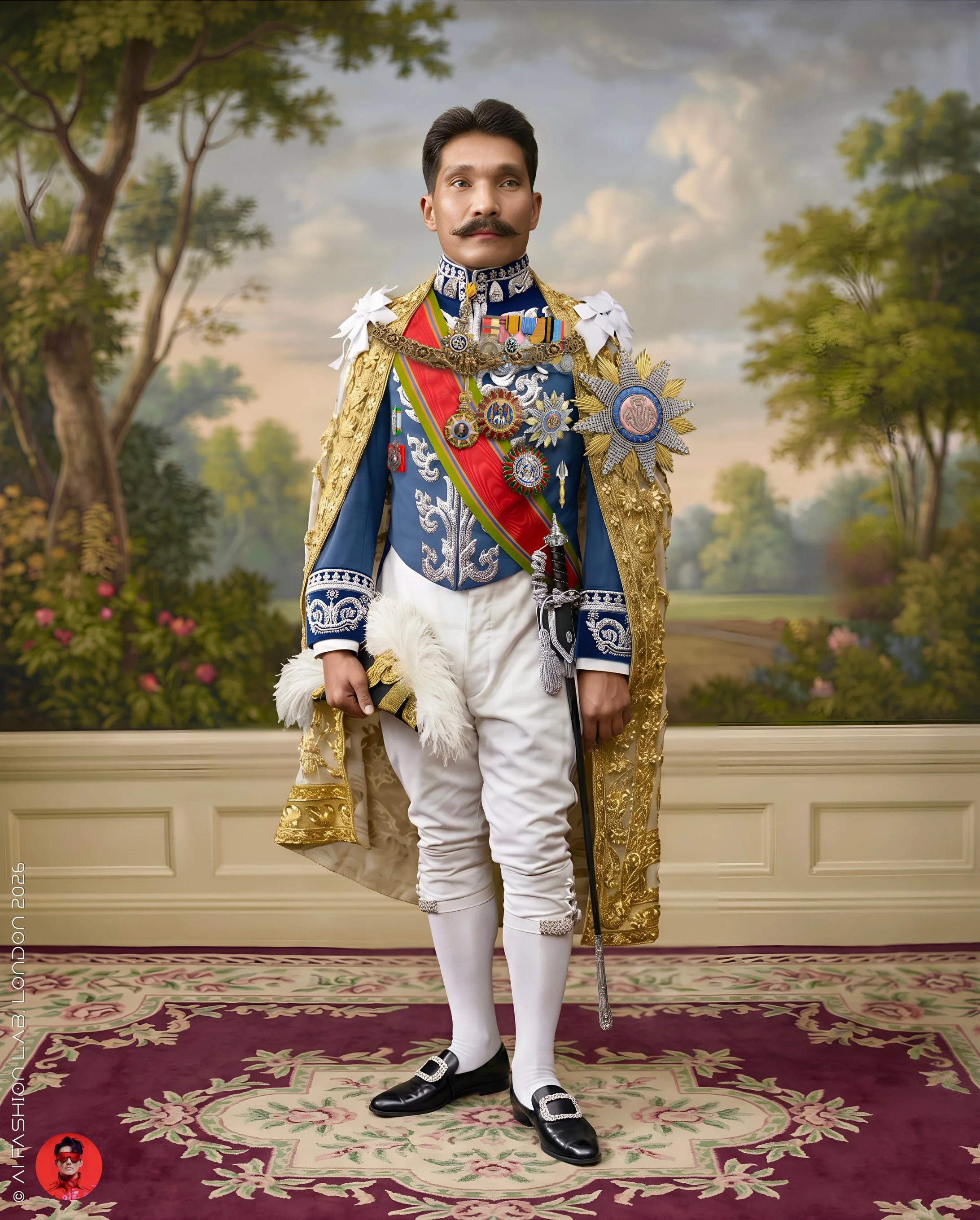
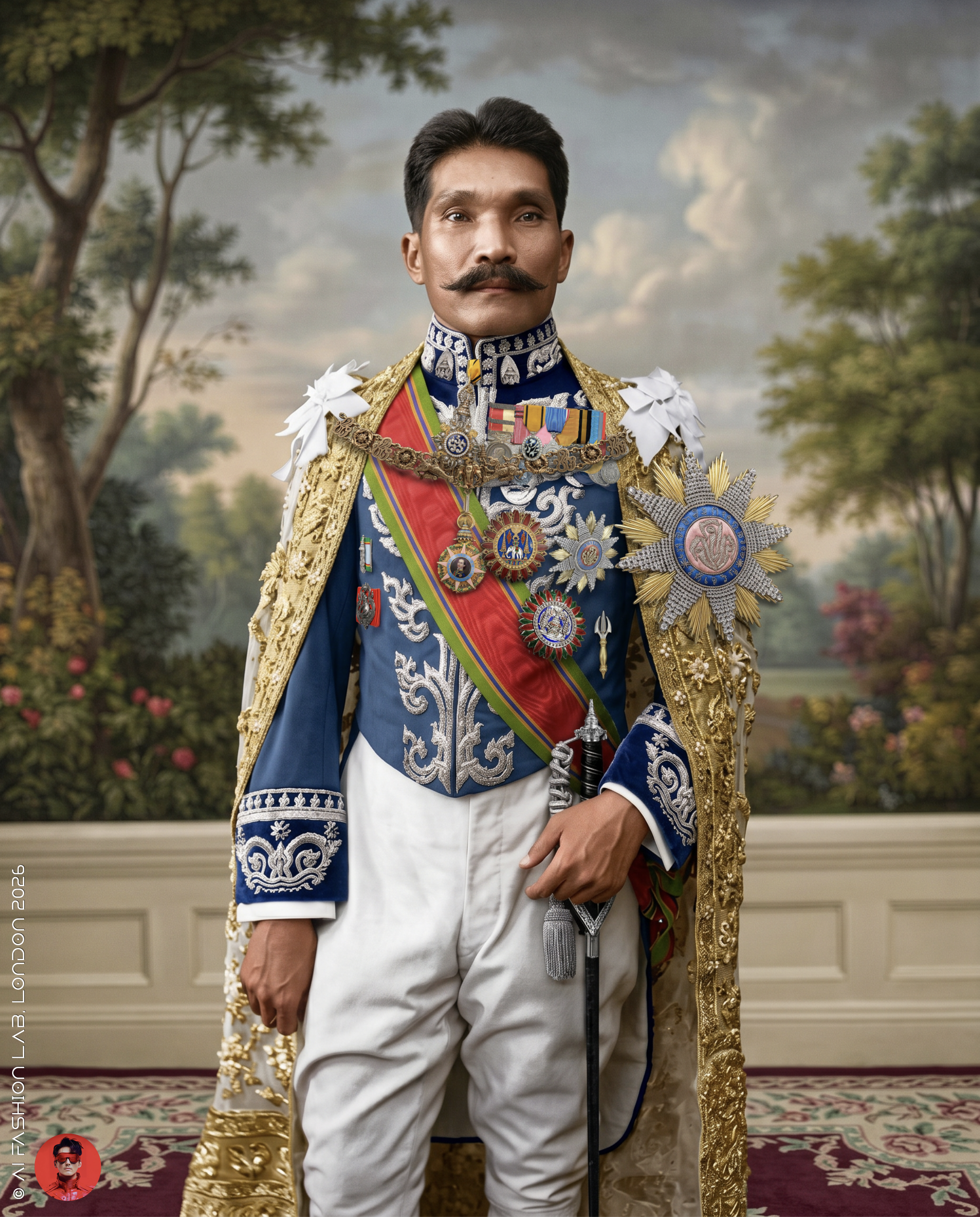
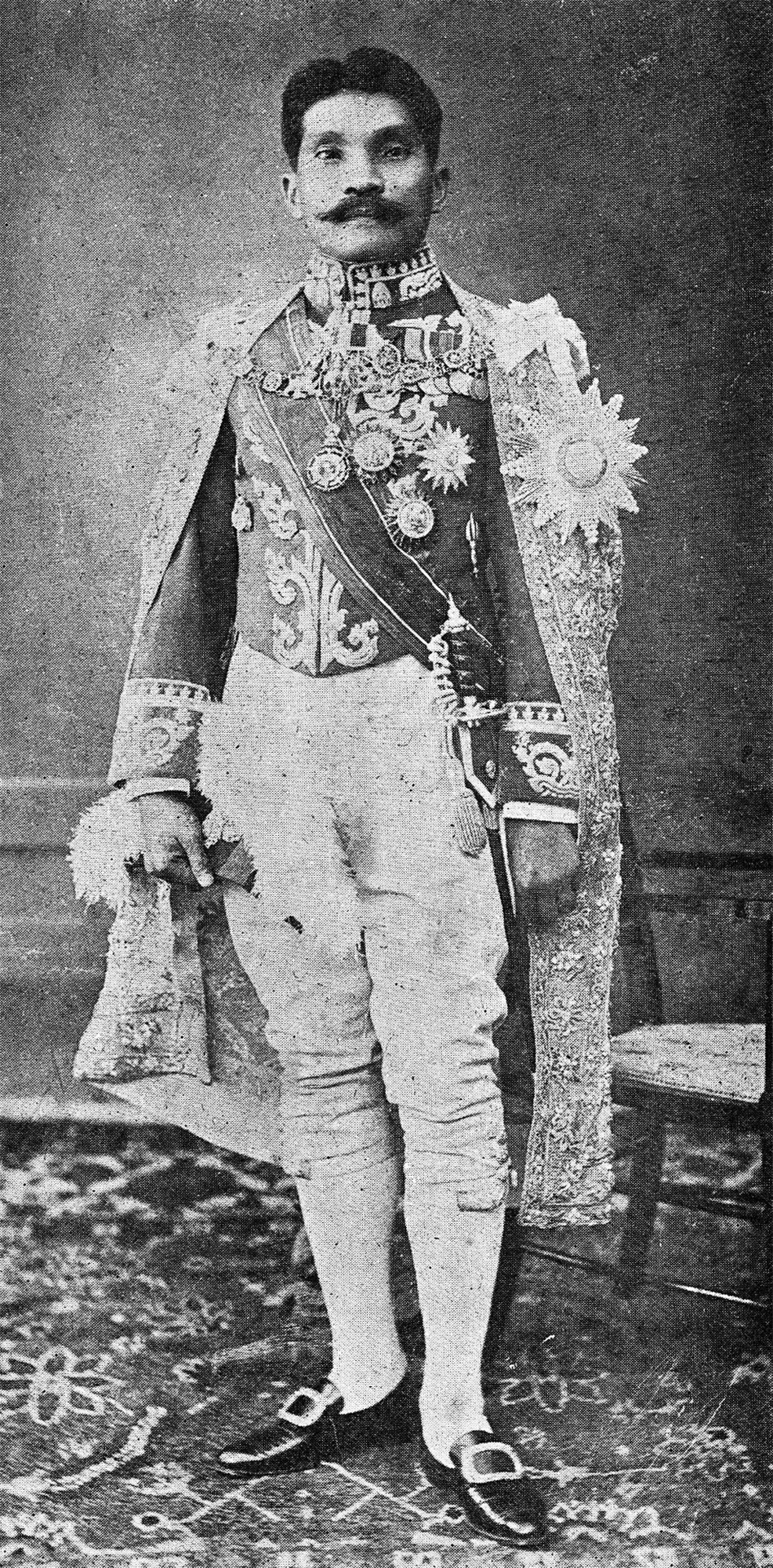
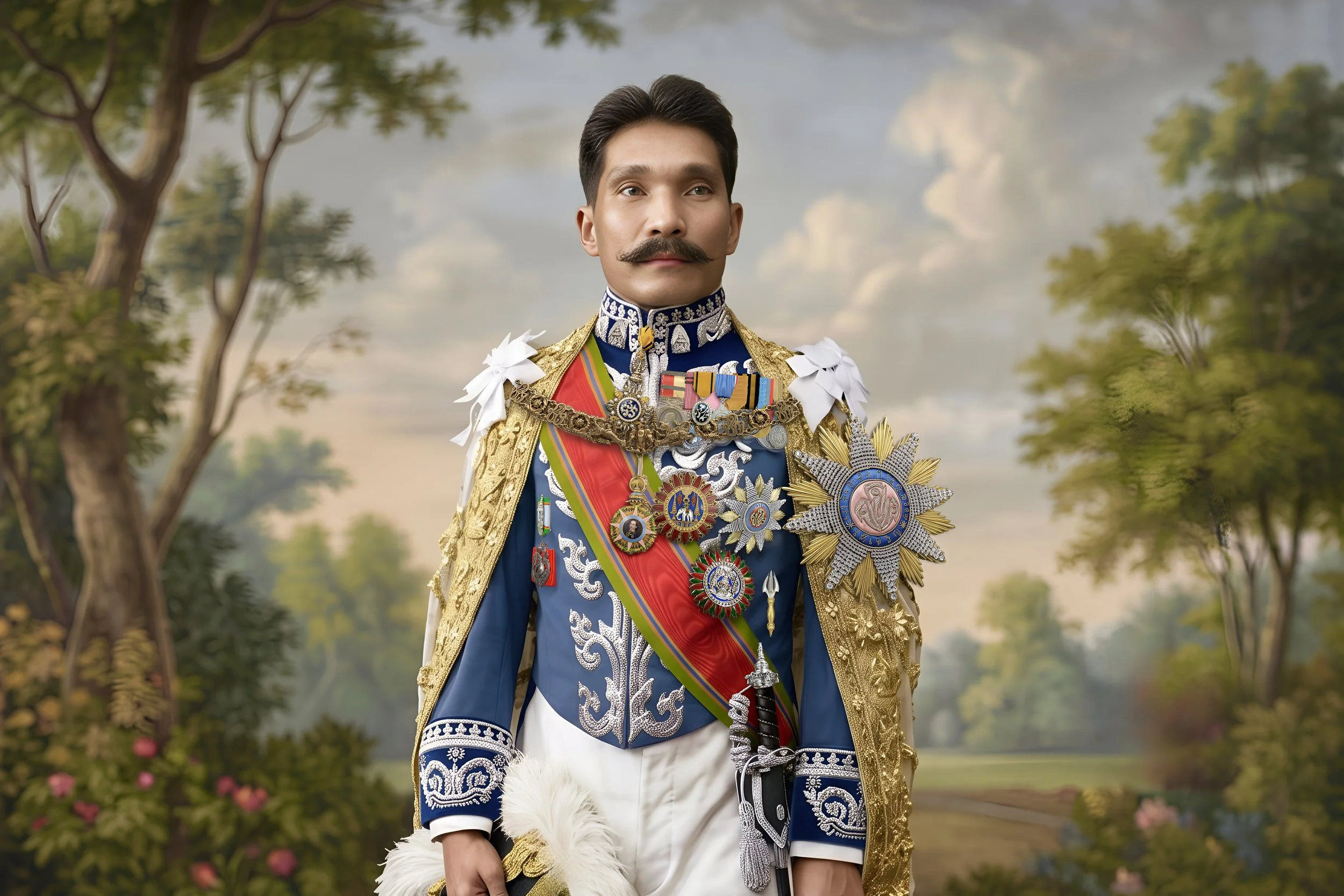
ภาพที่ได้รับการบูรณะและสร้างสรรค์ขึ้นด้วยเทคโนโลยี AI ในคอลเล็กชันนี้ เป็นภาพของ เจ้าพระยาธรรมศักดิ์มนตรี (สนั่น เทพหัสดิน ณ อยุธยา)
เจ้าพระยาธรรมศักดิ์มนตรี สวมเครื่องแบบเต็มยศใหญ่ของข้าราชการพลเรือน กรมมหาดเล็ก กระทรวงวัง ในสมัยรัชกาลที่ ๖ ซึ่งได้รับอิทธิพลมาจากราชสำนักตะวันตก โดยเฉพาะราชสำนักอังกฤษในสมัยพระเจ้าเอ็ดเวิร์ดที่ ๗ ก่อนจะปรับให้เข้ากับระเบียบแบบแผนของราชสำนักสยามได้อย่างสมบูรณ์
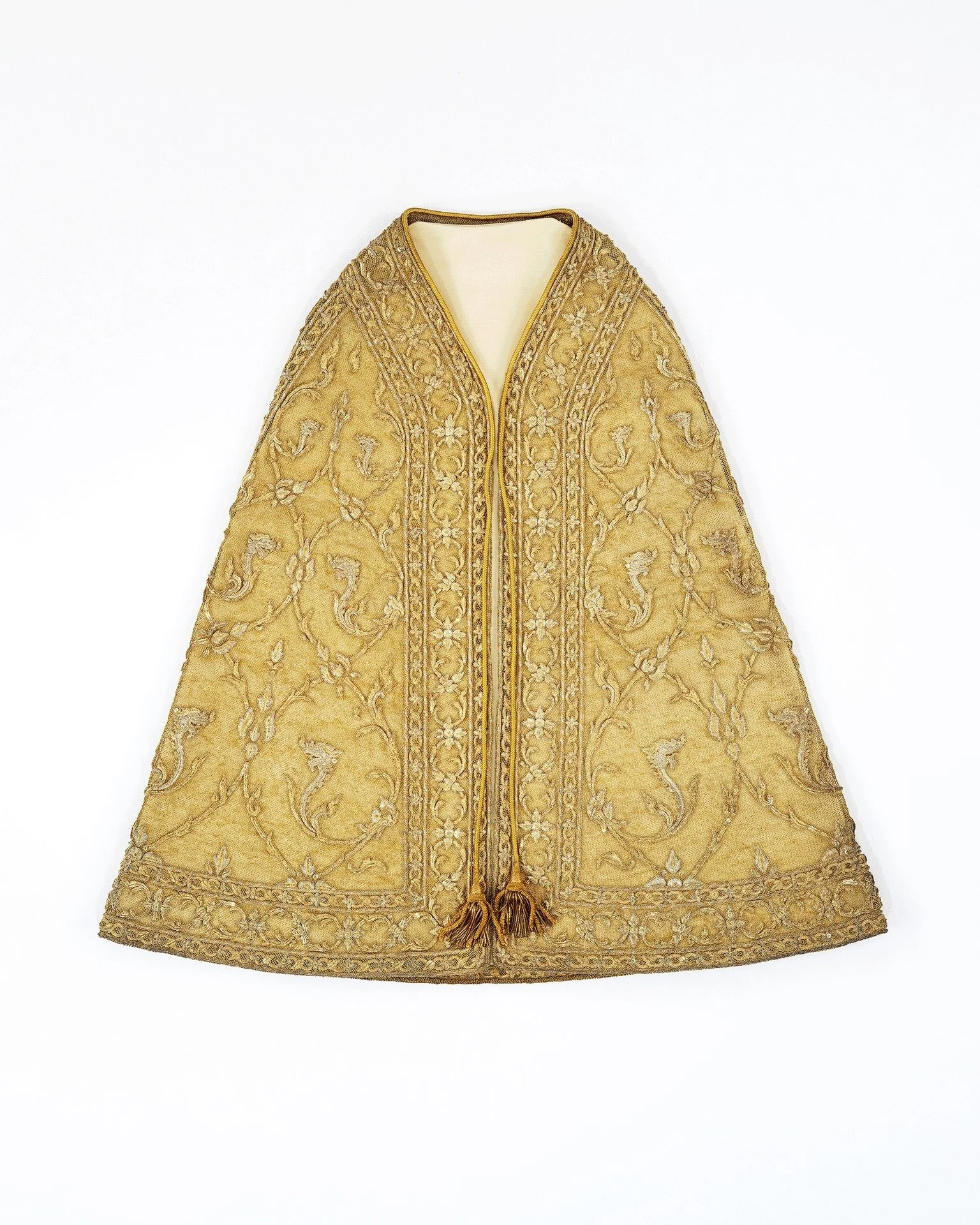
โครงหลักของเครื่องแบบชุดนี้ประกอบด้วย เสื้อ tailcoat, กางเกงขาสั้นแบบ breeches และหมวก bicorne อันเป็นองค์ประกอบมาตรฐานของเครื่องแบบเต็มยศสำหรับข้าราชการพลเรือนชั้นเอกในยุคนั้น แล้วสวมทับด้วยเสื้อคลุมเต็มยศปักดิ้นทองและเงิน ซึ่งเป็นชั้นนอกของเครื่องแบบที่ช่วยเสริมความสง่างามและเกียรติยศยิ่งขึ้น
ในส่วนของลักษณะเฉพาะประจำกรม ข้าราชการกรมมหาดเล็กจะใช้ผ้าสีน้ำเงินเข้มปักดิ้นเงิน พร้อมเครื่องประกอบที่เป็นเงินทั้งหมด โดยมีสีน้ำเงินแก่เป็นสีประจำกรมมหาดเล็ก ปรากฏอยู่ที่ปกเสื้อและแขนเสื้อ อันบ่งบอกทั้งสังกัดและตำแหน่งในระบบราชการได้อย่างชัดเจน
เครื่องประกอบยศที่น่าสนใจอีกประการหนึ่งคือ กระบี่แบบพลเรือนยอดพระเกี้ยว ฝักหนังดำประดับเครื่องเงิน ผูกพู่กระบี่ไหมเงิน อันเป็นส่วนหนึ่งของเครื่องแต่งกายเต็มยศของข้าราชการในกรมมหาดเล็กและกระทรวงวัง
สำหรับเครื่องราชอิสริยาภรณ์นั้น ประดับดวงดาราปฐมจุลจอมเกล้าแบบปักไหมและดิ้นทองที่ต้นแขนซ้ายของเสื้อคลุมเต็มยศ พร้อมด้วยสายสะพายเครื่องราชอิสริยาภรณ์อันเป็นที่เชิดชูยิ่งช้างเผือก ชั้นที่ ๑ ประถมาภรณ์ช้างเผือก
___________
คำพูดที่ว่า “รักวัวให้ผูก รักลูกให้ตี” เปรียบเสมือนแนวทางในการอบรมเด็กที่ “ผู้ใหญ่” ในบ้านและในเมืองไทยเชื่อถือและปฏิบัติสืบต่อกันมา เครื่องมือที่ใช้ทำโทษอย่าง “ไม้เรียว” ก็ได้รับการยกย่องว่ามีส่วนช่วยสร้างคน เพราะทำให้เด็กจดจำได้ว่าสิ่งใดควรทำและสิ่งใดไม่ควรทำ
หากแต่เจ้าพระยาธรรมศักดิ์มนตรี หรือ “ครูเทพ” กลับเห็นต่างออกไป
เจ้าพระยาธรรมศักดิ์มนตรี (พ.ศ. ๒๔๑๙–๒๔๘๖) ชื่อเดิม สนั่น เทพหัสดิน ณ อยุธยา เจ้าของนามปากกา “ครูเทพ” เป็นบุคคลสำคัญในวงการศึกษาไทย เคยดำรงบทบาททั้งครูผู้สอนและผู้บริหารในตำแหน่งต่าง ๆ เช่น เจ้ากรมแบบเรียน เสนาบดีกระทรวงธรรมการ รัฐมนตรีว่าการกระทรวงธรรมการ และประธานสภาผู้แทนราษฎร เป็นต้น อีกทั้งยังเป็นผู้ริเริ่มให้มีการเล่นฟุตบอลในโรงเรียนต่าง ๆ โดยเริ่มจากโรงเรียนฝึกหัดครู ตลอดจนริเริ่มการอาชีวศึกษาอีกด้วย
เมื่อ พ.ศ. ๒๔๗๗ เจ้าพระยาธรรมศักดิ์มนตรีได้แต่งกลอนชื่อ “ไม้เรียว” เพื่อนำเสนอมุมมองต่อการใช้ไม้เรียวว่า “ให้โทษมากกว่าคุณ” โดยเห็นว่าผู้ใช้ไม้เรียวส่วนใหญ่มักมีโทสจริต ใช้อำนาจประหนึ่งศาลเตี้ย และยืนยันว่าการเฆี่ยนตี “เป็นยาพิษมิให้ใช้บำรุง” ดังกลอนบางส่วนที่ยกมานี้
ให้เหตุผลครอบงำย่อมทำได้
เด็ก ผู้ใหญ่ ครูศิษย์ ไม่ผิดที่
อบรมด้วยเหตุผลได้คนดี
น้ำรักมีเมตตาเป็นยาพอ
เก็บไม้เรียวห่อไว้ในตู้เหล็ก
สำหรับเด็กเกกมะเหรกและเหลือขอ
ทารกอ่อนเชาวน์ไวใช้ลูกยอ
แล้วหุ้มห่อด้วยรักจักมีชัย
ครูเป็นผู้เพ่งจิตตวิทยา
ใช้วิชาด้วยวิธีที่แจ่มใส
เพื่อศิษย์ล้วนร่าเริงบันเทิงใจ
ได้เจริญเชาวน์ไวในชีวิต
การเฆี่ยนตีเป็นวิธีทำลายขวัญ
โทษมหันต์ คุณมีกะจี้หริด
ห้ามก้าวหน้าพาหู่อยู่เป็นนิตย์
เป็นยาพิษมิให้ใช้บำรุง
ผู้เฆี่ยนตีโดยมากไม่อยากคิด
โทสจริตครอบงำทำให้ยุ่ง
มีอำนาจก็จะใช้ไม่ปรับปรุง
ตั้งศาลเตี้ยตามมุ่งแต่ใจตน
เหตุฉะนั้นการตีมีแต่ห้าม
ไม่ต้องตามยุยงส่งเสริมผล
ก็สงครามใครตามไปปรือปรน
มีแต่คนคอยห้ามสงครามไว้
โบราณว่าเสียดายไม้เป็นภัยแก่
ยุวชนนั้นแน่หรือไฉน?
เดี๋ยวนี้โลกเจริญมากหากเปลี่ยนไป
เป็นขอให้เสียดายพร้อมออมไม้เรียว
อารยชนไม่ชอบหวาย, ฉันใด
ลูกของเขาไม่ชอบไม้หวดเควี้ยว ๆ
อันนี้เป็นเช่นกันฉันนั้นเทียว
พึงเฉลียวเลือกใช้ให้ชอบ เทอญฯ
___________
ผู้เขียน เสมียนนารี
เผยแพร่ วันพุธที่ ๒๘ ธันวาคม พ.ศ. ๒๕๖๕
บทความต้นฉบับ : https://www.silpa-mag.com/quotes-in-history/article_86730
___________
Chaophraya Thammasakmontri
This restored and creatively reimagined image in this collection, produced with AI technology, portrays Chaophraya Thammasakmontri (เจ้าพระยาธรรมศักดิ์มนตรี), Sanan Thephatsadin na Ayutthaya (สนั่น เทพหัสดิน ณ อยุธยา).
Chaophraya Thammasakmontri is dressed in the full-dress court uniform of a senior civil official of the Royal Pages Department, Ministry of the Royal Household, during the reign of King Rama VI. This form of attire was influenced by Western court dress, especially that of the British court in the age of King Edward VII, before being fully adapted to the regulations and ceremonial conventions of the Siamese court.
The principal structure of this uniform consists of a tailcoat, breeches, and a bicorne hat, all of which were standard elements of full-dress uniform for high-ranking civil officials of the period. Over these is worn an embroidered full-dress outer coat, worked in gold and silver bullion, forming the outermost layer of the ensemble and lending it even greater dignity and distinction.
As for the departmental distinction, officials of the Royal Pages Department used dark blue cloth embroidered in silver bullion, with all accompanying metal fittings executed in silver. Dark blue was the identifying colour of the Royal Pages Department, visible at the collar and cuffs, clearly indicating both departmental affiliation and official rank within the bureaucracy.
Another notable insignia of rank is the civilian court sword with a Phra Kiao hilt, in a black leather scabbard mounted in silver and tied with a silver silk sword knot. This formed part of the full-dress attire of officials attached to the Royal Pages Department and the Ministry of the Royal Household.
As for his decorations, he wears the breast star of the First Class of the Order of Chula Chom Klao, embroidered in silk and gold bullion on the left side of the full-dress coat, together with the sash of the Most Exalted Order of the White Elephant, First Class.
___________
The saying, “If you love your cattle, tie them; if you love your child, beat them,” may be taken as a guiding principle in child-rearing that many adults in Thai households and in Thai society once believed in and practised from one generation to the next. The cane, as an instrument of punishment, was often praised as something that helped shape character, because it taught children to remember what ought to be done and what ought not.
Yet Chaophraya Thammasakmontri (เจ้าพระยาธรรมศักดิ์มนตรี), also known by the pen name Khru Thep (ครูเทพ), held a very different view.
Chaophraya Thammasakmontri (1877–1943), born Sanan Thephatsadin na Ayutthaya (สนั่น เทพหัสดิน ณ อยุธยา), was an important figure in Thai education. He served both as a teacher and as an administrator in several major positions, including Director-General of Textbooks, Minister of Public Instruction, Minister of Education, and President of the House of Representatives. He was also one of the first to introduce football into schools, beginning with the teacher training school, and he likewise played an important role in initiating vocational education in Thailand. His public career as an educator and statesman is well documented in biographical records.
In 1934, Chaophraya Thammasakmontri composed a poem entitled “Mai Riao” (ไม้เรียว, “The Cane”), in which he presented the view that the cane did more harm than good. He argued that those who used it were often governed by anger, wielded power like vigilantes, and insisted that corporal punishment was “a poison that should never be used for nurture.” The following are some selected verses:
Let reason prevail, and all can be achieved;
Child and adult, teacher and pupil alike, are not at fault in themselves.
When guided by reason, one grows into a good person;
Affection and compassion are remedy enough.
Keep the cane wrapped up and locked away in an iron cupboard,
Reserved only for the most unruly and incorrigible.
For young children, quick of mind, use praise instead,
And wrap them in love, and success shall follow.
A teacher is one who studies the mind,
Applying knowledge through methods clear and bright,
So that pupils may be joyful and take delight,
And their intelligence may flourish in life.
Beating and flogging are ways of destroying morale;
Their harm is immense, their benefit scarcely worth mentioning.
They obstruct progress and keep people backward,
A poison that should never be used for nurture.
Those who beat others are often unwilling to think;
Ill temper overcomes them and causes disorder.
If they have power, they will use it without reform,
Setting themselves up as a law unto themselves.
For this reason, beating deserves only prohibition;
It should not be encouraged or supported.
For even in war, people seek ways to restrain it;
There are always those who try to prevent war.
The ancients said that sparing the rod harms the child —
But is that truly so?
The world has progressed; times have changed.
Now we should learn instead to spare and preserve the cane.
Civilised people do not delight in the lash;
Their children too do not care for the striking rod.
This matter is no different from that;
One should reflect carefully and choose what is right.
___________
เรียนเชิญกด Subscribe ได้ที่ลิงก์นี้ครับ เพื่อร่วมติดตามงานสร้างสรรค์ต้นฉบับ งานวิจัยประวัติศาสตร์แฟชั่น และผลงานอนุรักษ์มรดกวัฒนธรรมด้วยเทคโนโลยี AI ของ AI Fashion Lab, London ซึ่งมุ่งตีความอดีตผ่านมิติใหม่ของการบูรณะภาพ การสร้างสรรค์ภาพ และการเล่าเรื่องด้วยศิลปะเชิงดิจิทัล https://www.facebook.com/aifashionlab/subscribe/
#aifashionlab #AI #aiartist #aiart #aifashion #aifashiondesign #aifashionstyling #aifashiondesigner #fashion #fashionhistory #historyoffashion #fashionstyling #fashionphotography #digitalfashion #digitalfashiondesign #digitalcostumedesign #digitaldesign #digitalaiart #ThaiFashionHistory #ThaiFashionAI #thailand #UNESCO