พระบาทสมเด็จพระจุลจอมเกล้าเจ้าอยู่หัว รัชกาลที่ 5 ขณะเสด็จถึงเมืองแรมบูเยต์ (Rambouillet) ประเทศฝรั่งเศส เมื่อวันที่ 20 สิงหาคม ค.ศ. 1907 หรือ พ.ศ. 2450 ระหว่างการเสด็จประพาสยุโรปครั้งที่สอง
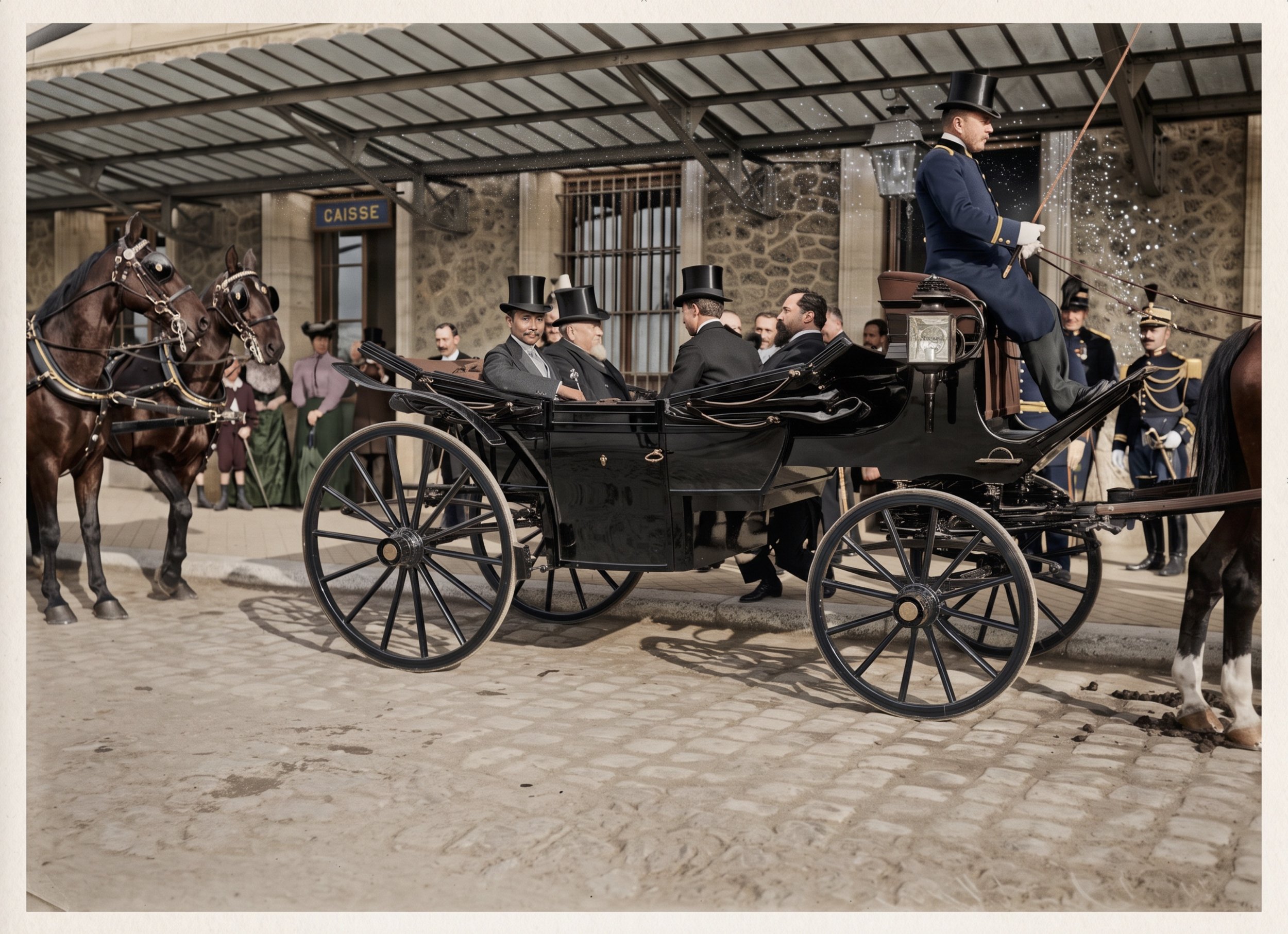
ภาพที่ได้รับการบูรณะและสร้างสรรค์ด้วยเทคโนโลยี AI ภาพนี้คือพระบรมฉายาลักษณ์พระบาทสมเด็จพระจุลจอมเกล้าเจ้าอยู่หัว รัชกาลที่ 5 ขณะเสด็จถึงเมืองแรมบูเยต์ (Rambouillet) ประเทศฝรั่งเศส เมื่อวันที่ 20 สิงหาคม ค.ศ. 1907 หรือ พ.ศ. 2450 ระหว่างการเสด็จประพาสยุโรปครั้งที่สอง
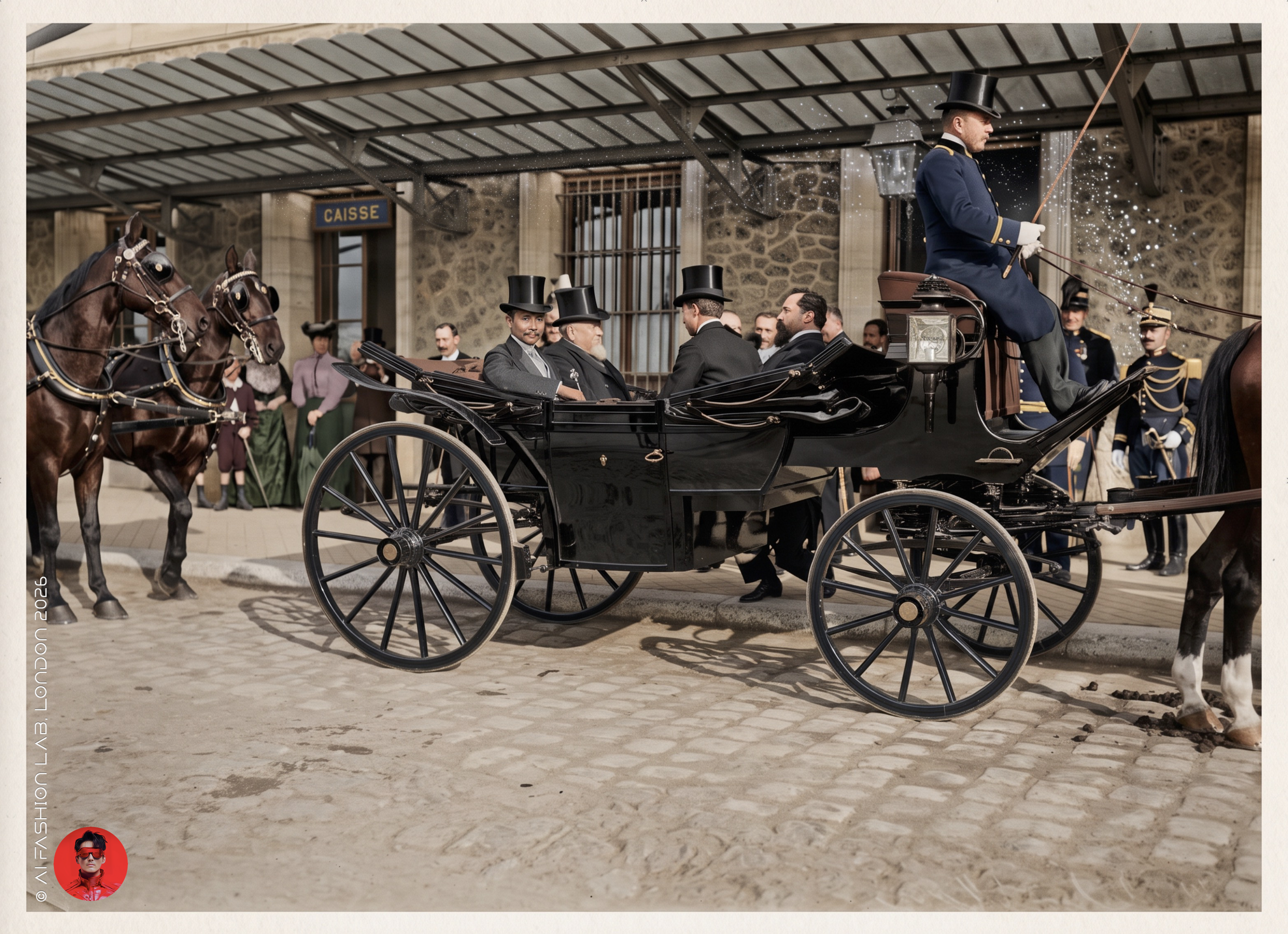
ในภาพ รถม้าพระที่นั่งแบบเปิดจอดอยู่บริเวณหน้าสถานีรถไฟแรมบูเยต์ เหนือประตูด้านหลังมีป้ายคำว่า Caisse หรือห้องจำหน่ายตั๋ว พระองค์และคณะทรงเครื่องแต่งกายแบบพิธีการตะวันตก สวมเสื้อสูท ฟร็อคโคท และหมวกทรงสูง ขณะที่นายทหารฝรั่งเศสและเจ้าหน้าที่ฝ่ายต้อนรับยืนเฝ้าอยู่โดยรอบ รถม้าเทียมม้าสองตัว มีสารถีในเครื่องแบบนั่งอยู่บนที่นั่งด้านหน้า ภาพจับช่วงเวลาที่ขบวนกำลังเตรียมเคลื่อนออกจากสถานีไปยังพระราชวังแรมบูเยต์ ท่ามกลางการต้อนรับอย่างเป็นทางการของฝ่ายฝรั่งเศส
ภาพนี้เป็นภาพข่าวจาก Agence Rol ถ่ายลงบนแผ่นกระจกเนกาทีฟขนาด 13 × 18 เซนติเมตร และได้รับการตีพิมพ์ในหนังสือพิมพ์ฝรั่งเศสหลายฉบับในเดือนเดียวกัน ปัจจุบันเก็บรักษาอยู่ในหอสมุดแห่งชาติฝรั่งเศส
พระองค์ประทับร่วมรถม้ากับใคร
บุคคลสำคัญที่ร่วมรถม้าพระที่นั่งคือ นายอาร์ม็อง ฟาลิแยร์ — Armand Fallières ประธานาธิบดีแห่งสาธารณรัฐฝรั่งเศสในขณะนั้น ซึ่งดำรงตำแหน่งระหว่าง ค.ศ. 1906–1913 หอสมุดแห่งชาติฝรั่งเศสระบุชื่อทั้งรัชกาลที่ 5 และประธานาธิบดีฟาลิแยร์เป็นบุคคลในภาพนี้โดยตรง
หลักฐานที่ยืนยันได้ชัดเจนยิ่งขึ้นมาจากพระราชหัตถเลขาของรัชกาลที่ 5 ซึ่งทรงบันทึกเหตุการณ์วันที่ 20 สิงหาคมไว้ว่า ประธานาธิบดีฟาลิแยร์พร้อมด้วยหัวหน้าพิธีการ เจ้าหน้าที่ประจำแรมบูเยต์ และบุคคลในคณะสยาม มารอรับเสด็จที่สถานี จากนั้น
“ในรถคันแรก ประธานาธิบดีและฉันได้นั่งร่วมกัน”
นอกจากทั้งสองพระองค์และประธานาธิบดีแล้ว รถม้าคันแรกยังมี Charoun, นาย Jean Lannes และเจ้าหน้าที่ผู้ดูแลแรมบูเยต์ร่วมโดยสารด้วย จึงเป็นรถม้าขนาดใหญ่ที่มีผู้โดยสารหลายคน มิได้มีเพียงรัชกาลที่ 5 กับประธานาธิบดีสองคนเท่านั้น
บริบททางประวัติศาสตร์
การเยือนแรมบูเยต์ครั้งนี้เป็นส่วนหนึ่งของการเสด็จประพาสยุโรปครั้งที่สองใน พ.ศ. 2450 โดยประธานาธิบดีฟาลิแยร์ทรงเชิญเสด็จไปประทับที่ Château de Rambouillet ซึ่งขณะนั้นใช้เป็นบ้านพักฤดูร้อนของประธานาธิบดีฝรั่งเศส
ในพระราชหัตถเลขา รัชกาลที่ 5 ทรงเล่าว่า แรมบูเยต์เป็นเมืองเล็กและสถานที่รับรองมีจำนวนห้องจำกัด การต้อนรับจึงจัดขึ้นในลักษณะค่อนข้างเป็นส่วนพระองค์ ฝ่ายฝรั่งเศสประดับธงไตรรงค์ของฝรั่งเศสคู่กับธงช้างเผือกของสยาม มีประชาชนและวงดนตรีตั้งรับเสด็จตลอดเส้นทาง พระองค์ยังทรงสังเกตว่าไม่เคยมีกษัตริย์พระองค์ใดได้รับเชิญมาประทับที่แรมบูเยต์ในลักษณะเช่นนี้มาก่อน
ดังนั้น ภาพนี้จึงไม่ใช่เพียงภาพการเดินทางด้วยรถม้า แต่เป็นหลักฐานของการทูตระดับประมุขระหว่างสยามกับฝรั่งเศสในช่วงเวลาที่ความสัมพันธ์ของทั้งสองประเทศยังมีความละเอียดอ่อนจากการแข่งขันทางอาณานิคม รัชกาลที่ 5 ทรงใช้การเสด็จประพาสและพระราชไมตรีส่วนพระองค์เป็นส่วนหนึ่งของการรักษาสถานะและเอกราชของสยามบนเวทีระหว่างประเทศครับ 🇹🇭🇫🇷
_____________
King Chulalongkorn at Rambouillet, France, 20 August 1907
Restored and recreated using AI technology, this image is a royal portrait of His Majesty King Chulalongkorn, Rama V of Siam, upon his arrival at Rambouillet, France, on 20 August 1907 (B.E. 2450), during his second royal tour of Europe.
In the photograph, an open royal carriage is waiting outside Rambouillet railway station. Above the doorway in the background is a sign reading Caisse, indicating the ticket office. His Majesty and members of his entourage are dressed in formal Western attire, including suits, frock coats, and top hats, while French military officers and reception officials stand nearby. The carriage is drawn by two horses, with a uniformed coachman seated at the front. The photograph captures the moment when the procession was preparing to leave the station for the Château de Rambouillet, amid an official welcome organised by the French authorities.
The photograph was taken by the Agence Rol news agency on a 13 × 18 centimetre glass-plate negative. It was published in several French newspapers during the same month and is now preserved in the Bibliothèque nationale de France, the National Library of France.
Who accompanied the King in the carriage?
The most prominent figure accompanying His Majesty in the royal carriage was Armand Fallières, President of the French Republic, who served in office from 1906 to 1913. The National Library of France identifies both King Chulalongkorn and President Fallières as individuals depicted in the photograph.
Further confirmation is found in King Chulalongkorn’s own royal correspondence. In his account of the events of 20 August, His Majesty recorded that President Fallières, accompanied by the Chief of Protocol, officials stationed at Rambouillet, and members of the Siamese delegation, was waiting to receive him at the railway station. The King then wrote:
“In the first carriage, the President and I sat together.”
In addition to the King and the President, the first carriage also carried Charoun, Jean Lannes, and an official responsible for the administration of Rambouillet. It was therefore a large carriage carrying several passengers, rather than one occupied solely by King Chulalongkorn and President Fallières.
Historical context
The visit to Rambouillet formed part of King Chulalongkorn’s second European tour in 1907. President Fallières invited His Majesty to stay at the Château de Rambouillet, which was then used as the summer residence of the President of the French Republic.
In his royal correspondence, King Chulalongkorn described Rambouillet as a small town with limited accommodation. The reception was therefore arranged on a comparatively private and intimate scale. The French authorities decorated the route with the French tricolour alongside Siam’s white-elephant flag, while local residents and musical bands assembled along the route to welcome the King. His Majesty also observed that no other monarch had previously been invited to stay at Rambouillet in this particular manner.
This photograph is therefore more than a record of a ceremonial carriage journey. It is an important visual document of diplomacy at the highest level between Siam and France, at a time when relations between the two countries remained sensitive because of European colonial expansion and rivalry. King Chulalongkorn used his royal tours and personal diplomatic relationships as part of a broader strategy to preserve Siam’s international status, sovereignty, and independence. 🇹🇭🇫🇷
_____________
เรียนเชิญกด Subscribe ได้ที่ลิงก์นี้ครับ เพื่อร่วมติดตามงานสร้างสรรค์ต้นฉบับ งานวิจัยประวัติศาสตร์แฟชั่น และผลงานอนุรักษ์มรดกวัฒนธรรมด้วยเทคโนโลยี AI ของ AI Fashion Lab, London ซึ่งมุ่งตีความอดีตผ่านมิติใหม่ของการบูรณะภาพ การสร้างสรรค์ภาพ และการเล่าเรื่องด้วยศิลปะเชิงดิจิทัล 🔗 https://www.facebook.com/aifashionlab/subscribe/
#aifashionlab #AI #aiartist #aiart #aifashion #aifashiondesign #aifashionstyling #aifashiondesigner #fashion #fashionhistory #historyoffashion #fashionstyling #fashionphotography #digitalfashion #digitalfashiondesign #digitalcostumedesign #digitaldesign #digitalaiart #ThaiFashionHistory #ThaiFashionAI #thailand #UNESCO
![[Le_roi_de_Siam]_Chulalongkorn_[...]Agence_Rol_btv1b532248553_1.png](https://images.squarespace-cdn.com/content/v1/670aa9e14f001a3b58a8c764/1784855139335-M0NQTEUOS3403CCJP1LG/%5BLe_roi_de_Siam%5D_Chulalongkorn_%5B...%5DAgence_Rol_btv1b532248553_1.png)