ปกเสื้อถอดได้กับความเป็นสตรีสมัยใหม่ในสยาม
ปกเสื้อถอดได้กับความเป็นสตรีสมัยใหม่ในสยาม
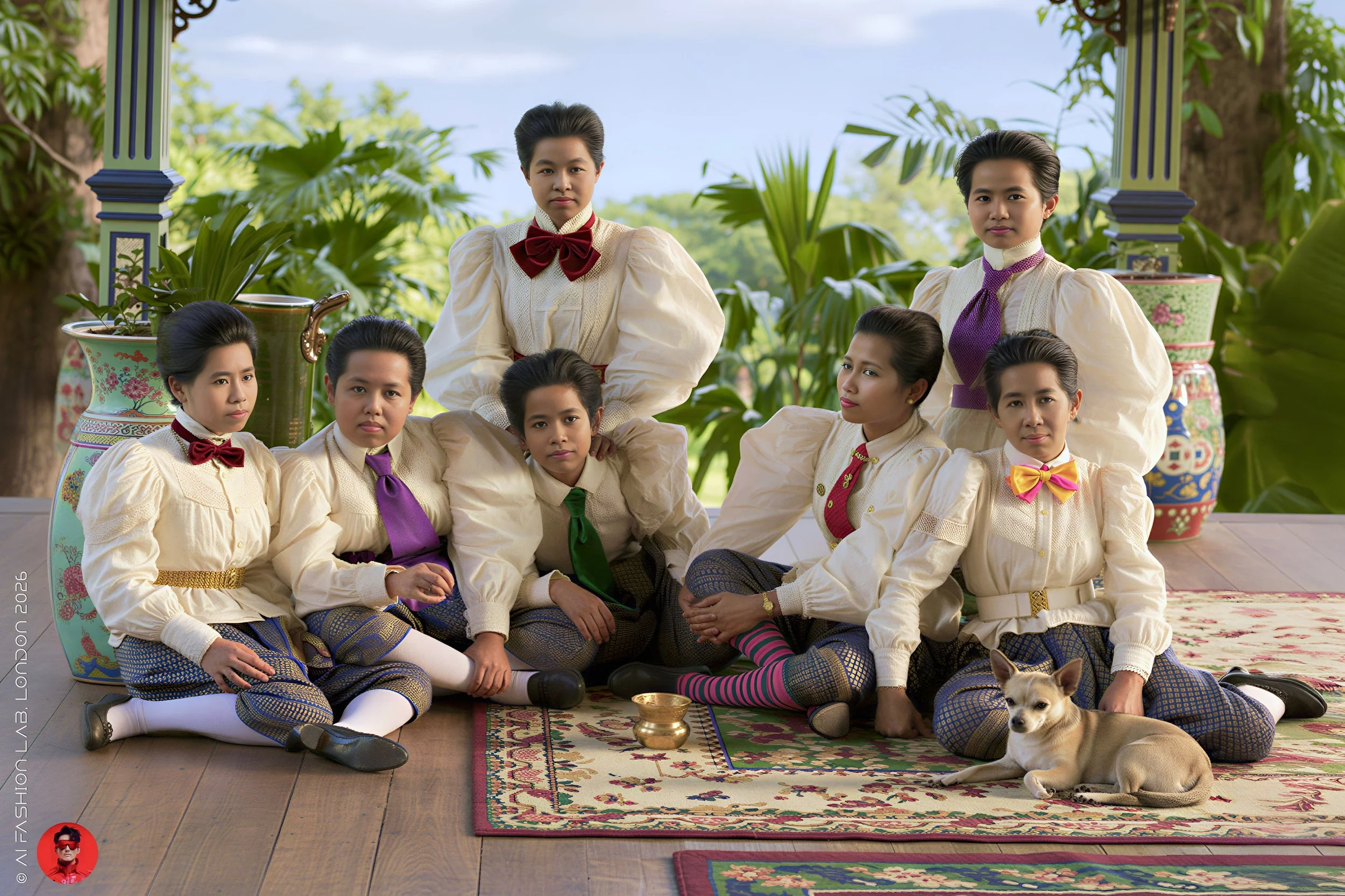
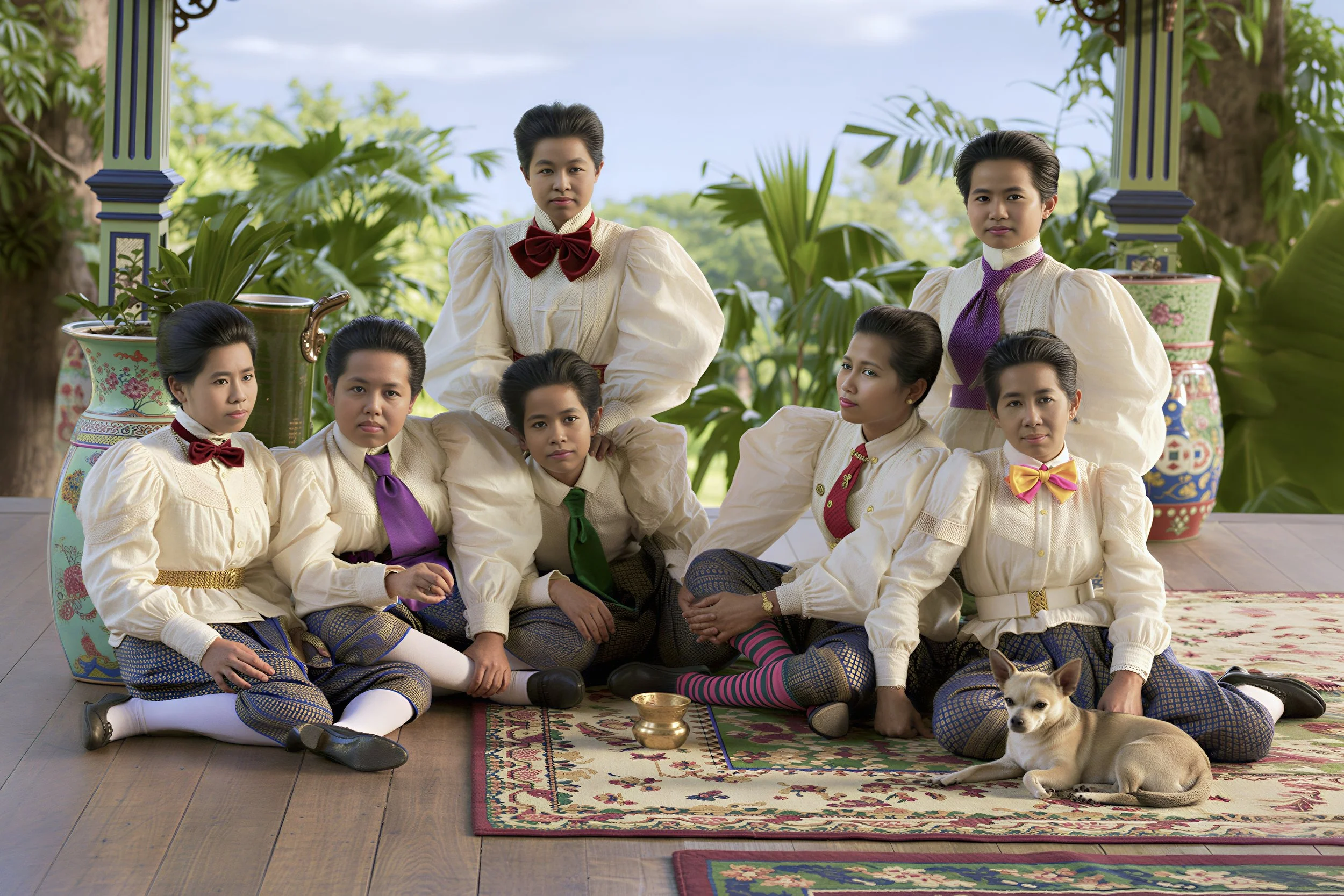
เมื่อเรามอง พระรูปหมู่เจ้านายฝ่ายใน ภาพนี้ สิ่งที่เห็นไม่ได้เป็นเพียงภาพหมู่ของพระบรมวงศานุวงศ์ฝ่ายในในช่วงปลายคริสต์ศตวรรษที่ 19 เท่านั้น หากแต่เป็นภาพที่ “จัดวางความหมาย” ของความเป็นสมัยใหม่อย่างรอบคอบ ผ่านการแต่งกาย อิริยาบถ และความสัมพันธ์ระหว่างบุคคลในภาพ พระรูปนี้จึงเป็นมากกว่าภาพพิธีการ หากคือภาพแทนของสตรีชั้นสูงในรัฐสมัยใหม่ที่กำลังก่อตัวขึ้น
พระรูปนี้ประกอบด้วยเจ้านายฝ่ายในหลายพระองค์ ได้แก่
แถวหน้าจากซ้าย
พระเจ้าบรมวงศ์เธอ พระองค์เจ้าแขไขดวง
สมเด็จพระศรีพัชรินทรา บรมราชินีนาถ พระพันปีหลวง
พระเจ้าบรมวงศ์เธอ พระองค์เจ้าประดิษฐสารี
สมเด็จพระศรีสวรินทิรา บรมราชเทวี พระพันวัสสาอัยยิกาเจ้า
พระเจ้าบรมวงศ์เธอ พระองค์เจ้านภาพรประภา กรมหลวงทิพยรัตนกิริฏกุลินี
แถวหลังจากซ้าย
6. พระเจ้าบรมวงศ์เธอ พระองค์เจ้าพวงสร้อยสอางค์
7. สมเด็จพระปิตุจฉาเจ้า สุขุมาลมารศรี พระอัครราชเทวี
ใกล้พระบาทของ กรมหลวงทิพยรัตนกิริฏกุลินี มีสุนัขทรงเลี้ยงหมอบอยู่อย่างสงบ ซึ่งมีความเป็นไปได้สูงว่าจะเป็น “อีเบส” รายละเอียดเล็ก ๆ นี้ช่วยลดความเป็นทางการของภาพลงเล็กน้อย และทำให้พระรูปมีมิติของชีวิตประจำวันในราชสำนัก มากกว่าจะเป็นเพียงภาพพิธีการแข็งทื่อ
สิ่งที่น่าสนใจอย่างยิ่งในพระรูปนี้ คือ ฉลองพระองค์ของเจ้านายฝ่ายในทั้งหมด ซึ่งสอดคล้องอย่างชัดเจนกับแฟชั่นสากลในช่วงทศวรรษ 1890s หรือที่มักเรียกว่า Gay Nineties ในโลกตะวันตก ช่วงเวลานี้เป็นยุคเปลี่ยนผ่านจากความเคร่งครัดแบบวิกตอเรียน ไปสู่โลกสมัยใหม่ที่เปิดรับเสรีภาพ การศึกษา และการทำงานของสตรีอย่างเป็นรูปธรรม
เสื้อที่เจ้านายฝ่ายในทรงสวม คือฉลองพระองค์แบบ shirtwaist — เสื้อสตรีที่ตัดเย็บตามโครงเสื้อเชิ้ตบุรุษ โดยจุดสำคัญอยู่ที่การใช้ ปกเสื้อถอดได้ (detachable collar) ซึ่งเป็นองค์ประกอบสำคัญของการแต่งกายเชิงวิชาชีพในโลกตะวันตกช่วงปลายคริสต์ศตวรรษที่ 19 ปกเสื้อถอดได้ทำจากผ้าลินินหรือผ้าฝ้ายที่ผ่านการอัดแข็ง สามารถถอดซักหรือเปลี่ยนใหม่ได้โดยไม่ต้องซักทั้งตัวเสื้อ จึงเป็นสัญลักษณ์ของความสะอาด ความเป็นระเบียบ และวินัยในโลกของสำนักงาน การศึกษา และระบบราชการ
การตกแต่งด้วย โบหรือเนกไท (tie / bow) ซึ่งเป็นองค์ประกอบที่ยืมมาจากเครื่องแต่งกายชายโดยตรง ยิ่งตอกย้ำภาพลักษณ์ของความเป็นสมัยใหม่แบบสากล ขณะที่แขนเสื้อแบบ leg-of-mutton หรือ gigot sleeves ซึ่งพองใหญ่บริเวณหัวไหล่ เป็นลักษณะเด่นของแฟชั่นราว ค.ศ. 1894–1897 (พ.ศ. 2437–2440) และถือว่า “ทันสมัย” อย่างยิ่งในช่วงเวลานั้น แสดงให้เห็นว่าเจ้านายฝ่ายในทรงอยู่ร่วมสมัยกับแฟชั่นยุโรป มิใช่เพียงรับอิทธิพลอย่างล่าช้า
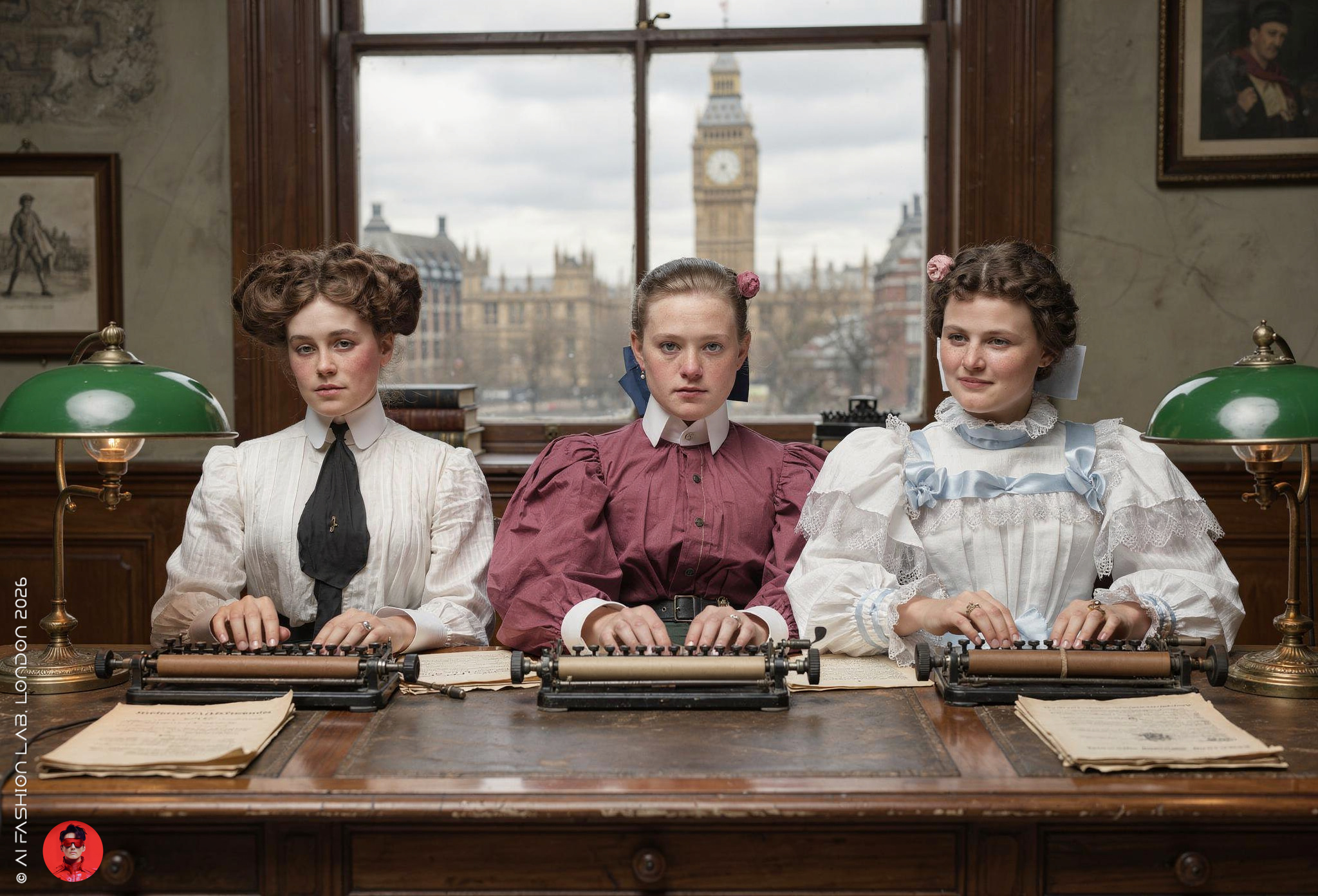
ในโลกตะวันตก เสื้อ shirtwaist พร้อม detachable collar กลายเป็นเครื่องแบบของสตรีที่เข้าสู่แรงงานสมัยใหม่ ไม่ว่าจะเป็นเสมียน ครู บรรณารักษ์ หรือพนักงานพิมพ์ดีด ภาพที่สร้างสรรค์ด้วย AI ที่แสดงให้เห็นถึงสตรีสมัยใหม่ในสำนักงานที่ลอนดอนที่นั่งอยู่หน้าพิมพ์ดีด แสดงให้เห็นเสื้อผ้าลักษณะเดียวกันอย่างแทบไม่ต่างกันเลย—ปกเสื้อถอดได้ เนกไท และโครงเสื้อที่เน้นความเป็นมืออาชีพ เครื่องแต่งกายเช่นนี้ไม่ได้ออกแบบมาเพื่อความงามเชิงประดับ หากแต่เพื่อสื่อสารว่า “ผู้สวมใส่มีวินัย มีการศึกษา และมีที่ยืนในพื้นที่สาธารณะ”
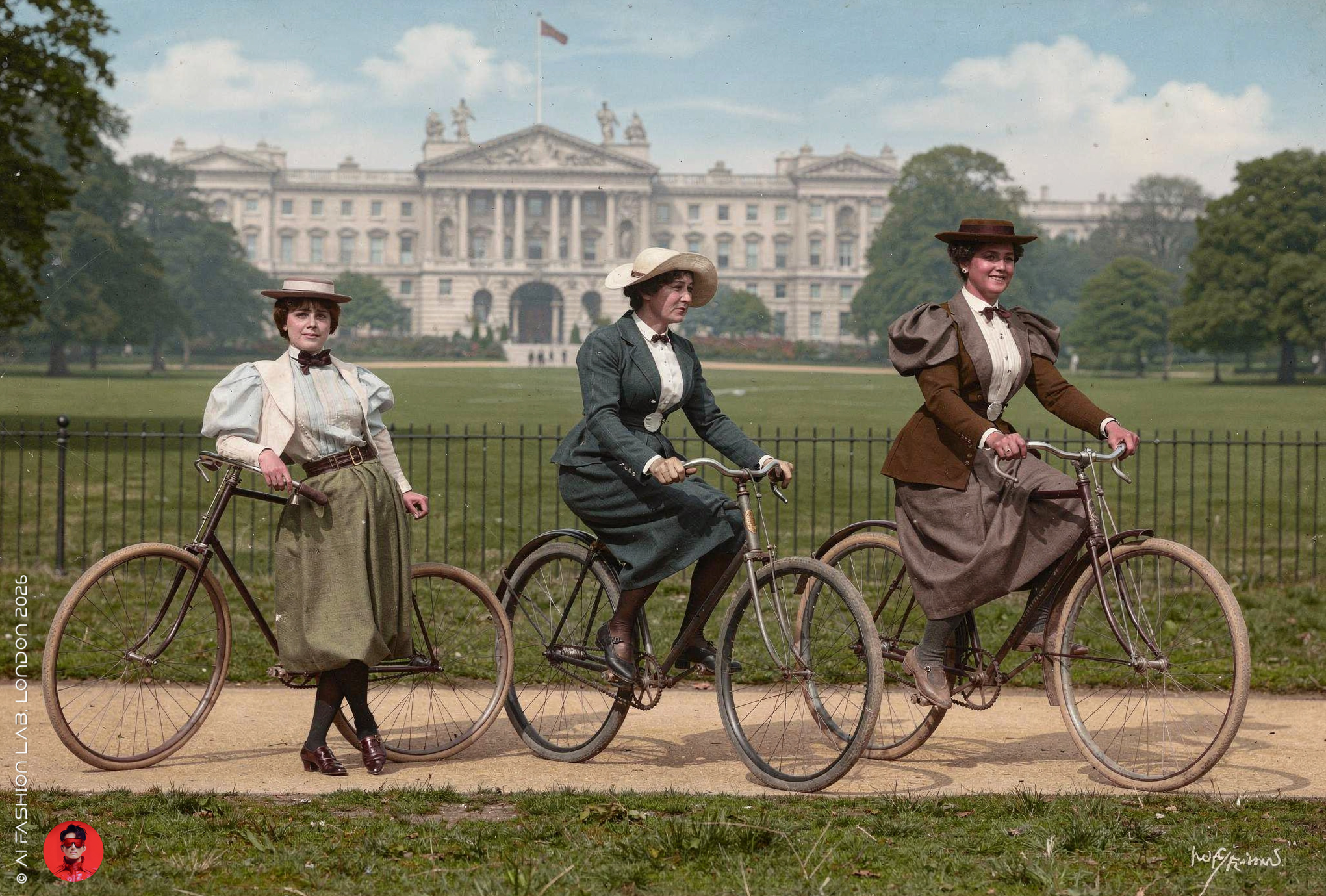
ภาพสตรีนักปั่นจักรยานในช่วงเวลาเดียวกัน ยิ่งช่วยขยายความเข้าใจนี้ได้ชัดเจนขึ้น การแต่งกายสำหรับการปั่นจักรยานในความเป็นจริง ไม่ได้หมายถึงกางเกงบลูมเมอร์อันหวือหวาอย่างที่มักเข้าใจกัน แต่ส่วนใหญ่คือ shirtwaist จับคู่กับกระโปรงที่ปรับให้เคลื่อนไหวได้สะดวก หรือซ่อนกางเกงไว้ด้านใน เป้าหมายไม่ใช่การท้าทายศีลธรรม หากคือการทำให้ผู้หญิง “เคลื่อนไหวได้ โดยยังคงความเหมาะสม”
เมื่อเรานำภาพเหล่านี้มาเปรียบเทียบกับพระรูปเจ้านายฝ่ายใน จะเห็นได้ว่ากำลังเกิดสิ่งเดียวกันในบริบทที่แตกต่างกัน สตรีในราชสำนักสยามไม่ได้ปั่นจักรยานหรือทำงานในสำนักงาน แต่พระองค์ทรงอยู่ในโครงสร้างของรัฐสมัยใหม่ เป็นผู้มีบทบาทด้านการศึกษา การอุปถัมภ์ และพิธีการ เครื่องแต่งกายที่รับอิทธิพลจากเสื้อเชิ้ตบุรุษ โดยเฉพาะ shirtwaist และ detachable collar จึงเป็นภาษาที่เหมาะสมที่สุดในการแสดง “ความเป็นสมัยใหม่อย่างมีระเบียบ”
สิ่งสำคัญคือ นี่ไม่ใช่การเลียนแบบตะวันตกอย่างไร้รากเหง้า หากเป็นการ แปลความเป็นสมัยใหม่ผ่านกรอบวัฒนธรรมสยาม เสื้อแบบตะวันตกถูกผสานเข้ากับการนั่ง พระอิริยาบถแบบผ่อนคลาย และฉลองพระองค์ที่ผสมผสานระหว่างตะวันตกและสยาม เกิดเป็น “ฉลองพระองค์ฝ่ายในสมัยใหม่” ที่ทั้งสากลและแบบราชสำนักสยามในเวลาเดียวกัน
พระรูปนี้จึงไม่ใช่เพียงภาพหมู่ทั่วไป หากเป็นคำประกาศว่า สตรี—ทั้งในโลกตะวันตกและในราชสำนักสยาม—กำลังก้าวเข้าสู่ศตวรรษใหม่ในฐานะผู้มีบทบาท มีความสามารถ และมีพื้นที่ในโลกสาธารณะอย่างชัดเจน เสื้อ shirtwaist, ปกเสื้อถอดได้ (detachable collar) และเนกไท จึงไม่ใช่เพียงแฟชั่น หากคือโครงสร้างหนึ่งของโลกสมัยใหม่ที่สตรีเป็นส่วนหนึ่งอย่างเต็มภาคภูมิ
_____________
Detachable Collars and Modern Womanhood in Siam
When we look at this group portrait of Siamese royal women, we are not simply seeing a formal image of court life at the end of the nineteenth century. What we are looking at is a carefully constructed visual statement of modernity, articulated through dress, posture, and the relationships between the sitters. This photograph does cultural work. It stages modern womanhood with deliberation.
The sitters include several senior and junior members of the Siamese royal family.
In the front row, from left to right, are:
– Her Royal Highness Princess Khaekhaiduang (พระเจ้าบรมวงศ์เธอ พระองค์เจ้าแขไขดวง)
– Her Majesty Queen Saovabha Phongsri, the Queen Regent (สมเด็จพระศรีพัชรินทรา บรมราชินีนาถ พระพันปีหลวง)
– Her Royal Highness Princess Praditsasari (พระเจ้าบรมวงศ์เธอ พระองค์เจ้าประดิษฐสารี)
– Her Majesty Queen Savang Vadhana, the Queen Grandmother (สมเด็จพระศรีสวรินทิรา บรมราชเทวี พระพันวัสสาอัยยิกาเจ้า)
– Her Royal Highness Princess Naphaprapha, Princess of Thipphayarat Kiritkulini (พระเจ้าบรมวงศ์เธอ พระองค์เจ้านภาพรประภา กรมหลวงทิพยรัตนกิริฏกุลินี)
Standing behind them, from left to right, are:
– Her Royal Highness Princess Phuangsroi Sa-nga (พระเจ้าบรมวงศ์เธอ พระองค์เจ้าพวงสร้อยสอางค์)
– Her Royal Highness Princess Sukhumala Marasri, the Queen Aunt (สมเด็จพระปิตุจฉาเจ้า สุขุมาลมารศรี พระอัครราชเทวี)
Near the feet of Princess Naphaprapha (กรมหลวงทิพยรัตนกิริฏกุลินี), a royal dog lies calmly on the floor, very likely “Ibes” (อีเบส). This small, intimate detail subtly softens the formality of the composition and grounds the image in everyday court life rather than rigid ceremonial display.
What is most striking in this portrait is the clothing. The women are dressed in a manner that aligns closely with international fashion of the 1890s, often referred to in the West as the Gay Nineties. This decade marked a transition away from rigid Victorian moralism toward a modern world shaped by education, professional work, and the increasing public visibility of women.
The royal women wear shirtwaists—women’s blouses cut according to the structure of men’s shirts. Crucially, these shirtwaists are worn with detachable collars, an important technological and sartorial innovation of the period. Made of starched linen or cotton, detachable collars could be removed and laundered separately, symbolising cleanliness, discipline, and order. In the late nineteenth century, detachable collars were closely associated with professional life—offices, schools, and bureaucratic institutions.
The addition of ties or bows, borrowed directly from men’s dress, reinforces this association with the modern working world. At the same time, the blouses feature dramatic leg-of-mutton (gigot) sleeves, which reached the height of fashion between 1894 and 1897. Their presence here signals that the women of the Siamese court were not merely imitating Western dress belatedly, but were fully conversant with contemporary European fashion.
In Western contexts, the combination of shirtwaist and detachable collar became the uniform of the new female workforce. Clerks, teachers, librarians, and typists were frequently photographed wearing precisely this ensemble. These garments were not designed for decorative display; they communicated seriousness, education, and rightful presence in public and professional spaces.
Photographs of women cyclists from the same period further illuminate this shared visual language. Contrary to popular belief, most women did not wear radical bifurcated bloomers. Instead, they typically wore shirtwaists paired with modified skirts that allowed movement while preserving social respectability. Cycling dress was not about scandal—it was about mobility with dignity.
When we place these Western images alongside the Siamese royal portrait, a clear parallel emerges. The women of the Siamese court were not riding bicycles or working at typewriters, but they occupied positions within a modernising state. They were involved in education, patronage, governance, and ceremonial life. The adoption of menswear-derived elements—especially the shirtwaist and detachable collar—provided a visual language suited to these roles.
Importantly, this is not a story of simple Western imitation. What we see here is translation rather than copying. Western upper-body tailoring is combined with Siamese lower garments, posture, and courtly comportment. The result is a distinctly Siamese form of modern court dress—simultaneously international and local.
This photograph, then, is not merely a group portrait. It is a visual declaration that women—both in the West and in Siam—were entering the twentieth century as educated, capable participants in public life. The shirtwaist, detachable collar, and tie are not just fashion details. They are part of the material structure of modernity itself—one in which women claimed visibility, authority, and a place in the modern world with quiet confidence.
_____________
เรียนเชิญกด Subscribe ได้ที่ลิงก์นี้ครับ เพื่อร่วมติดตามงานสร้างสรรค์ต้นฉบับ งานวิจัยประวัติศาสตร์แฟชั่น และผลงานอนุรักษ์มรดกวัฒนธรรมด้วยเทคโนโลยี AI ของ AI Fashion Lab, London ซึ่งมุ่งตีความอดีตผ่านมิติใหม่ของการบูรณะภาพ การสร้างสรรค์ภาพ และการเล่าเรื่องด้วยศิลปะเชิงดิจิทัล 🔗 https://www.facebook.com/aifashionlab/subscribe/
#aifashionlab #AI #aiartist #aiart #aifashion #aifashiondesign #aifashionstyling #aifashiondesigner #fashion #fashionhistory #historyoffashion #fashionstyling #fashionphotography #digitalfashion #digitalfashiondesign #digitalcostumedesign #digitaldesign #digitalaiart #ThaiFashionHistory #ThaiFashionAI #thailand #UNESCO