สมเด็จพระจักรพรรดิขาย ดิ่ญ แห่งราชวงศ์เหงียน ประเทศเวียดนาม (Emperor Khải Định of Vietnam)
สมเด็จพระจักรพรรดิขาย ดิ่ญ แห่งราชวงศ์เหงียน ประเทศเวียดนาม (Emperor Khải Định of Vietnam)
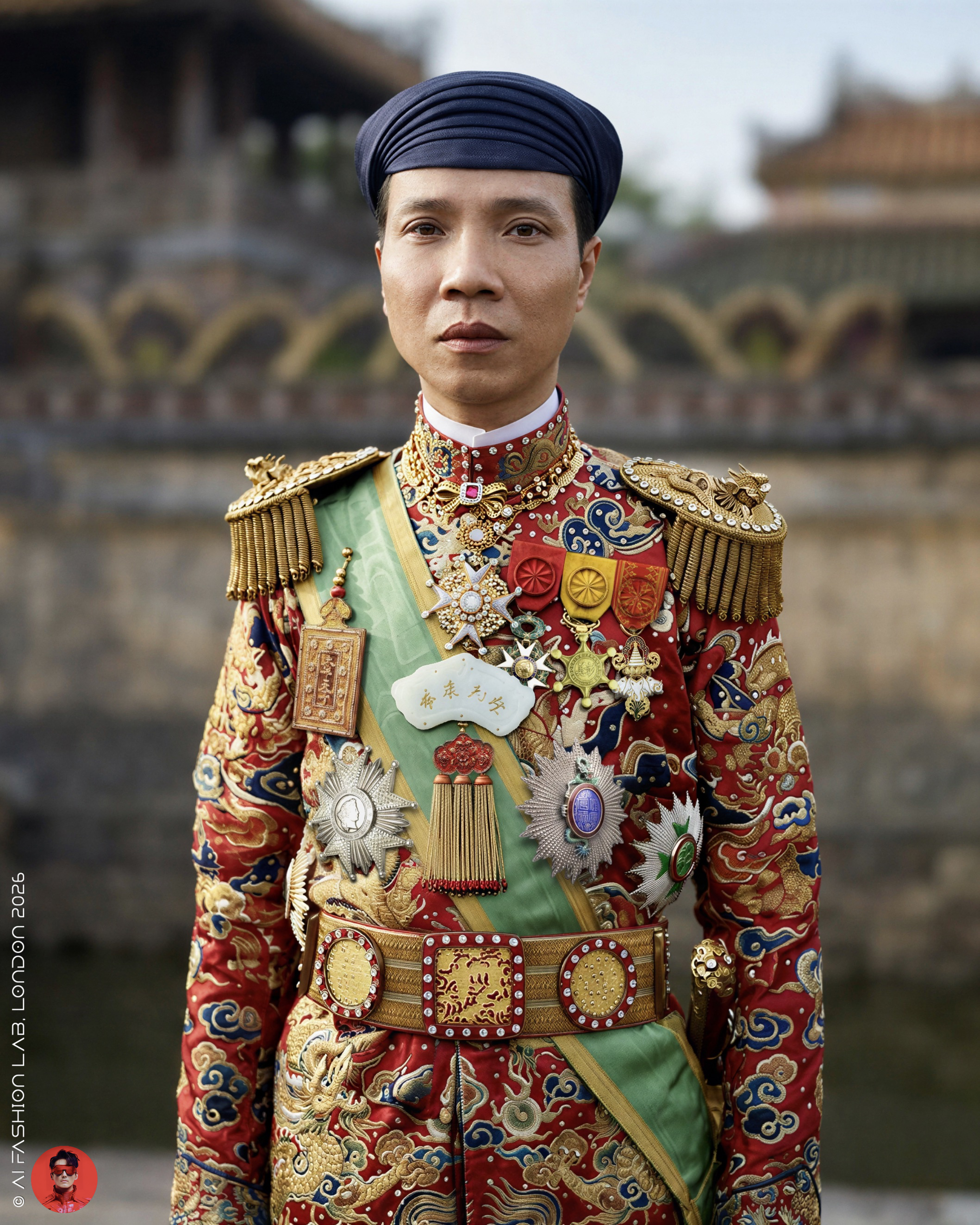
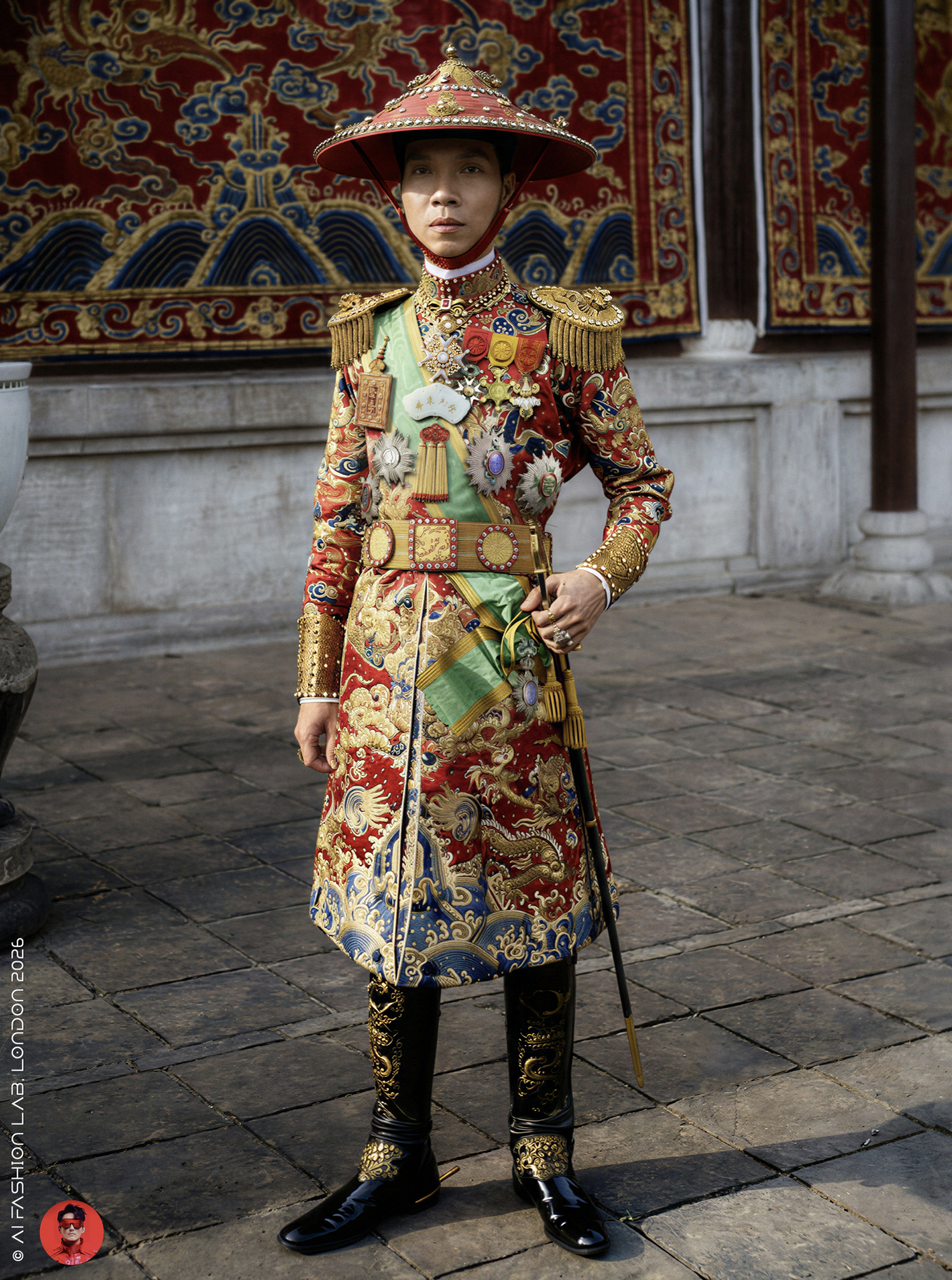
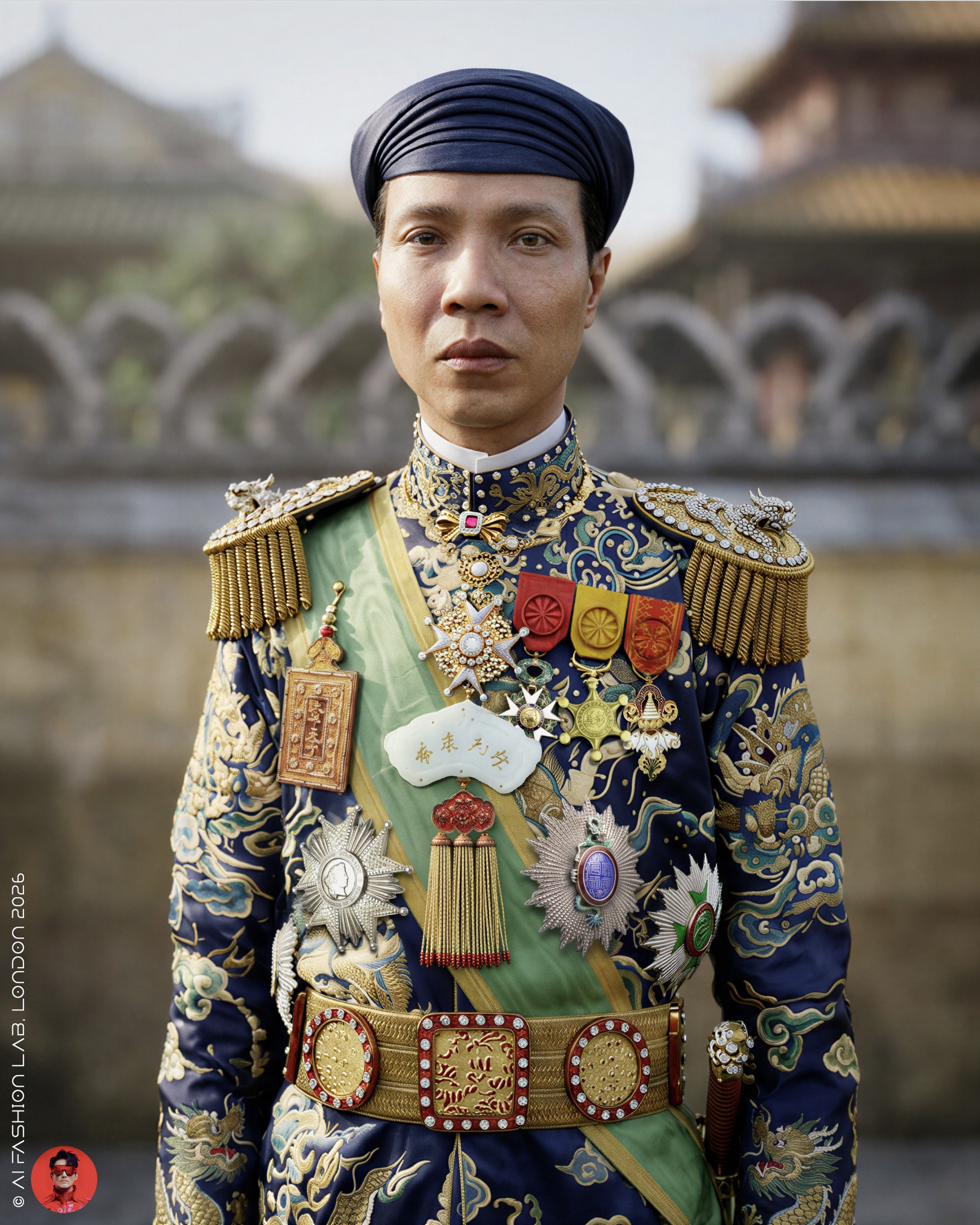
สมเด็จพระจักรพรรดิขาย ดิ่ญ แห่งราชวงศ์เหงียน ประเทศเวียดนาม (Emperor Khải Định of Vietnam) เป็นจักรพรรดิองค์ที่ 12 ของราชวงศ์เหงียน ทรงครองราชย์ระหว่างปี ค.ศ. 1916–1925 ภาพที่ได้รับการบูรณะและสร้างสรรค์ด้วยเทคโนโลยี AI นี้ คือพระบรมฉายาลักษณ์ของพระองค์ ซึ่งสะท้อนทั้งพระอิสริยยศเชิงพิธี ความสัมพันธ์ทางการเมือง และบริบทของเวียดนามภายใต้การปกครองแบบอารักขาของฝรั่งเศสในต้นคริสต์ศตวรรษที่ 20
สมเด็จพระจักรพรรดิขาย ดิ่ญ (เวียดนาม: Khải Định; จื๋อโนม: 啓定; 8 ตุลาคม ค.ศ. 1885 – 6 พฤศจิกายน ค.ศ. 1925) มีพระนามเดิมว่า เจ้าชายเหงียน ฟุก บื๋ว ด๋าว (Nguyễn Phúc Bửu Đảo, 阮福寶嶹) เป็นพระราชโอรสของสมเด็จพระจักรพรรดิด่ง คั้ญ (Emperor Đồng Khánh) อย่างไรก็ดี พระองค์มิได้สืบราชสมบัติโดยตรงในทันที ภายหลังการเนรเทศจักรพรรดิถั่ญ ท้าย (Thành Thái) และจักรพรรดิซวี เติน (Duy Tân) ซึ่งทรงพยายามต่อต้านอำนาจอาณานิคม ฝรั่งเศสจึงเลือกเจ้าชายบื๋ว ด๋าว ขึ้นครองราชย์ในวันที่ 18 พฤษภาคม ค.ศ. 1916 โดยทรงใช้พระนามว่า “ขาย ดิ่ญ (Khải Định)” อันมีนัยว่า “ผู้กำหนดความสงบและความมั่นคง”
แม้พระองค์จะทรงมีพระราชประสงค์ฟื้นฟูศักดิ์ศรีจักรวรรดิ แต่การบริหารราชการต้องดำเนินไปภายใต้การกำกับของรัฐบาลฝรั่งเศสอย่างใกล้ชิด ส่งผลให้พระองค์ถูกมองว่าเป็นหุ่นเชิดทางการเมือง กระแสต่อต้านจากชาตินิยมเวียดนามทวีความรุนแรง ฟาน จู จิญ (Phan Chu Trinh) กล่าวหาว่าพระองค์ทรงขายชาติ ขณะที่เหงียน อ๊าย โกว๊ก (Nguyễn Ái Quốc—ต่อมาคือ โฮจิมินห์) เขียนงานเสียดสี “มังกรไม้ไผ่” เพื่อล้อเลียนพระราชอำนาจเชิงพิธีที่ไร้พลังจริง การเสด็จเยือนฝรั่งเศสในปี ค.ศ. 1922 เพื่อร่วมงานนิทรรศการอาณานิคมมาร์แซย์ (Marseille Colonial Exhibition) ยิ่งตอกย้ำภาพลักษณ์ดังกล่าว
ความไม่พอใจถึงจุดเดือดในปี ค.ศ. 1923 เมื่อมีการเพิ่มภาษีเกษตรกรเพื่อนำรายได้ไปใช้สร้างพระราชสุสานของพระองค์เอง พร้อมทั้งการลงพระนามรับรองการปราบปรามผู้นำชาตินิยมจำนวนมาก ทำให้พระองค์ยิ่งห่างไกลจากการยอมรับของประชาชน ในด้านชีวิตส่วนพระองค์ พระองค์ทรงอภิเษกสมรสครั้งแรกกับเจือง ญือ ถิ ติ่ญ (Trương Như Thị Tịnh) ในปี ค.ศ. 1907 ต่อมาพระนางออกบวชเป็นชีในปี ค.ศ. 1915 แต่ยังทรงได้รับการสถาปนาเป็นสมเด็จพระจักรพรรดินี การอภิเษกสมรสครั้งที่สองคือกับเอินฟี (Ân Phi) หรือโห่ ถิ จี๋ (Hồ Thị Chỉ, ค.ศ. 1902–1982) ทั้งสองพระองค์ไม่มีพระราชโอรสธิดาด้วยกัน พระราชโอรสเพียงพระองค์เดียวคือเหงียน ฟุก หวิญ ถวิ (Nguyễn Phúc Vĩnh Thụy) ประสูติจากพระสนมฮหว่าง ถิ กุ๊ก (Hoàng Thị Cúc) และต่อมาขึ้นครองราชย์เป็นจักรพรรดิบ๋าว ดั่ย (Bảo Đại)
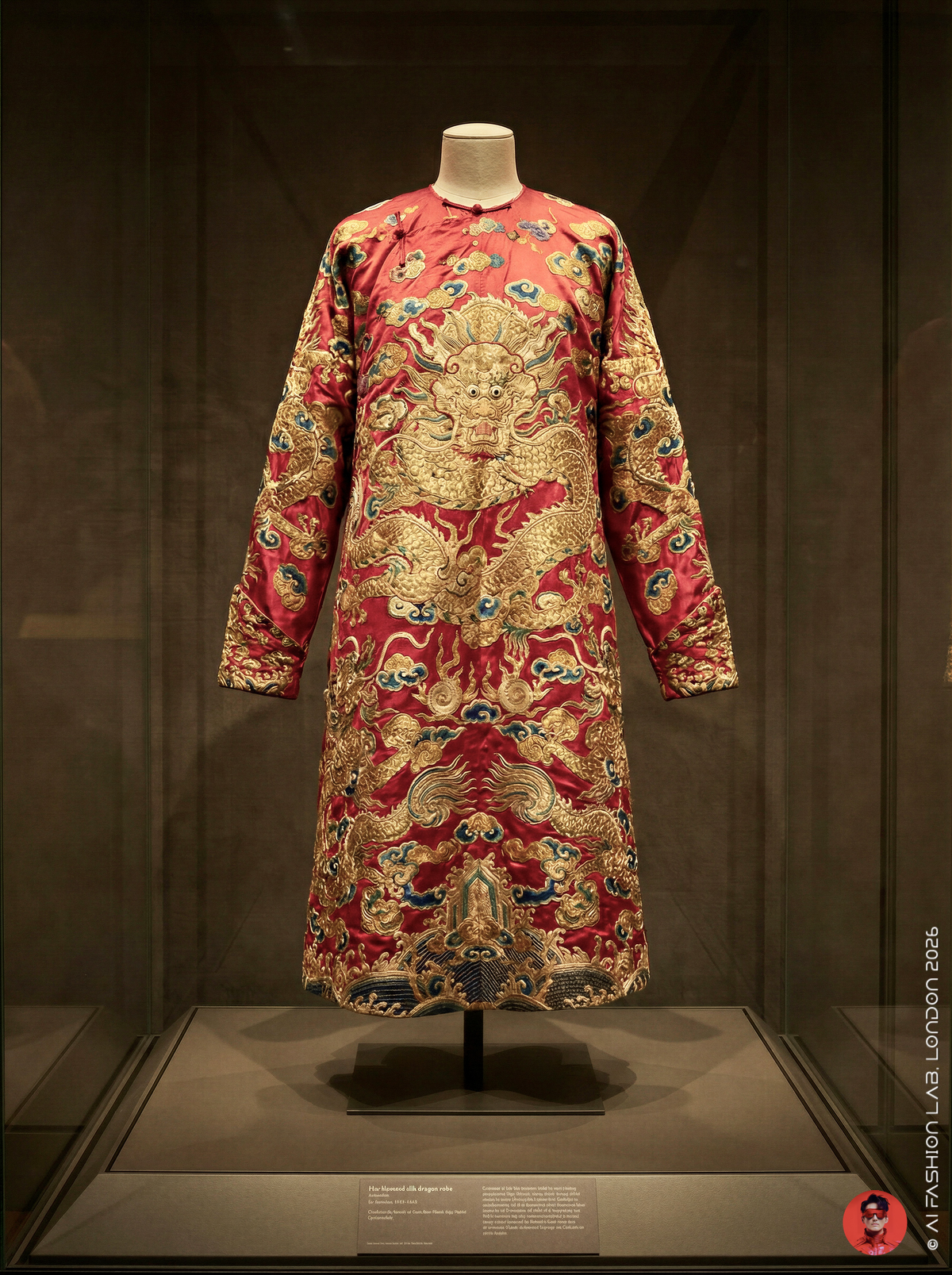
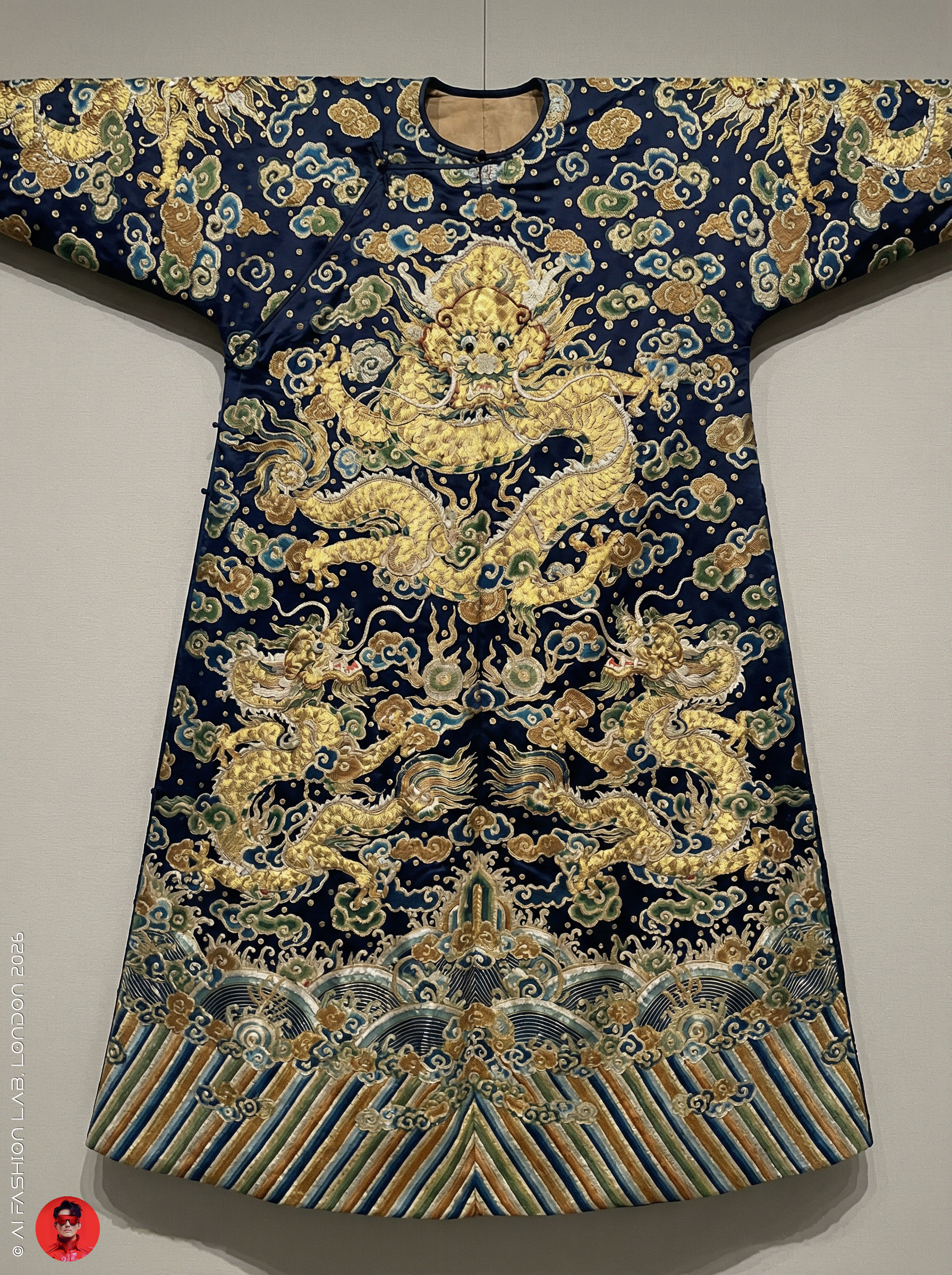
สมเด็จพระจักรพรรดิขาย ดิ่ญ ทรงมีพระพลานามัยอ่อนแอ และสวรรคตด้วยพระโรควัณโรค ณ พระราชวังต้องห้ามสีม่วง เมืองเว้ (Forbidden Purple City, Huế) เมื่อวันที่ 6 พฤศจิกายน ค.ศ. 1925 พระบรมฉายาลักษณ์ชุดนี้โดดเด่นด้วยเครื่องราชอิสริยาภรณ์จำนวนมาก ซึ่งสะท้อนเครือข่ายอำนาจเชิงพิธีและการเมืองระหว่างเวียดนาม ฝรั่งเศส และรัฐเพื่อนบ้าน ฉลองพระองค์ได้รับแรงบันดาลใจจากลายมังกรแบบจักรพรรดิ
___________
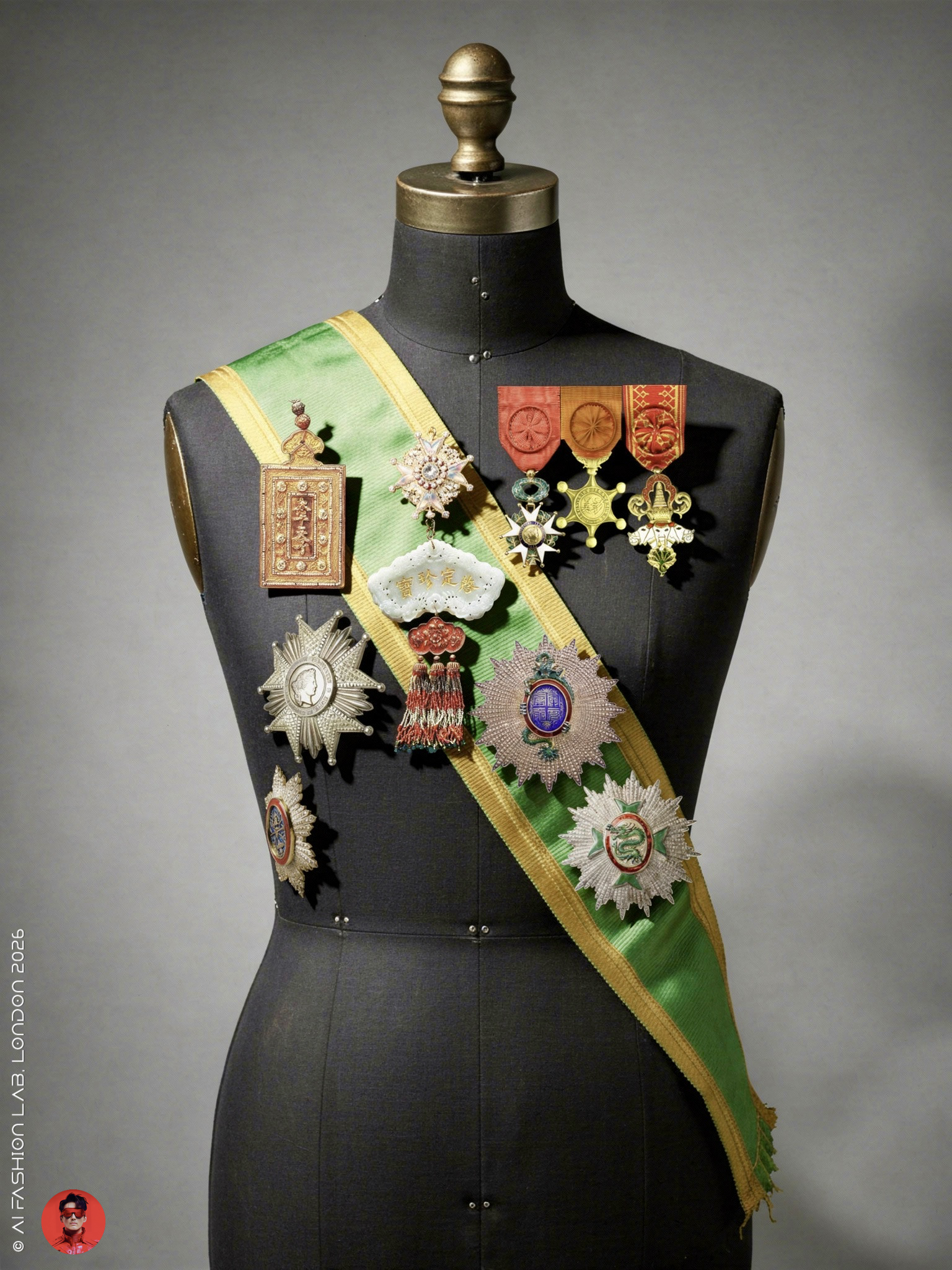
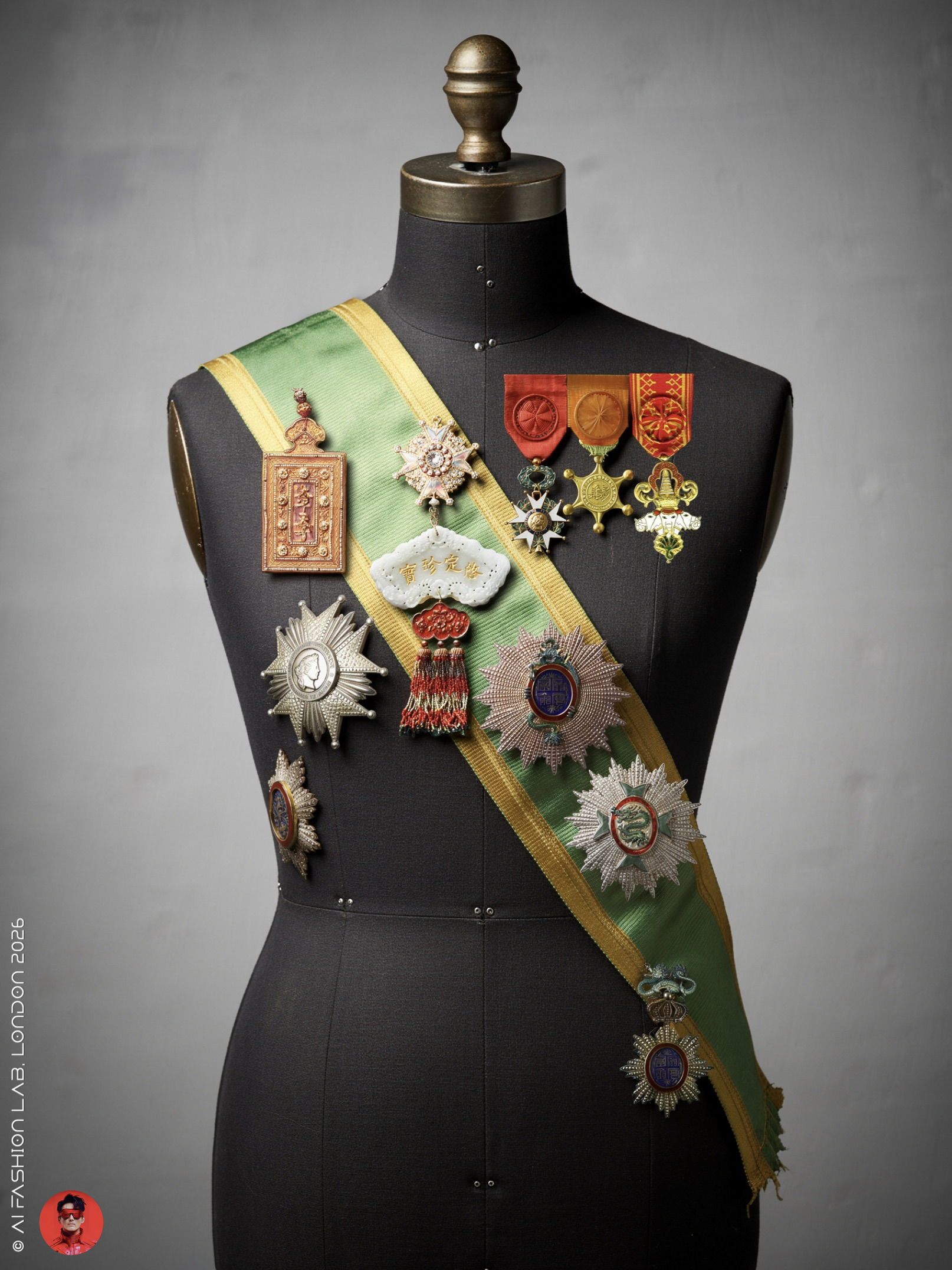
การจัดเรียงเครื่องราชอิสริยาภรณ์
สมเด็จพระจักรพรรดิขาย ดิ่ญ (Emperor Khải Định of Vietnam)
ตามตำแหน่งในพระบรมฉายาลักษณ์
แถวบน (จากซ้ายไปขวา)
1. พระป้ายทอง (Thẻ Bài / Kim Bài)
ป้ายทองพระปรมาภิไธย จารึกอักษรจีน 4 ตัว
太平天子 (Thái Bình Thiên Tử)
หมายถึง “โอรสแห่งสวรรค์ผู้ทรงนำมาซึ่งมหาสันติ”
เป็นเครื่องแสดงสถานะจักรพรรดิในเชิงพิธีและอาณัติแห่งสวรรค์
2. เครื่องราชอิสริยาภรณ์ราชวงศ์เหงียน ชั้นที่ 1 (Neck Badge)
(Nguyễn Dynasty’s Order of Merit – First Class, Neck Badge)
แบบห้อยคอ มีเพียงชิ้นเดียวของพระองค์
ไม่มีภาพสีต้นฉบับหลงเหลืออยู่ สร้างขึ้นใหม่ตามหลักฐานเอกสาร
3. เครื่องราชอิสริยาภรณ์เลฌียงดอเนอร์ ฝรั่งเศส ชั้นนายทหาร
(Légion d’Honneur – Officer Class, French Third Republic 1871–1940)
แพรแถบสีแดงพร้อมโรเซ็ต และดาราเงิน
4. เครื่องราชอิสริยาภรณ์อินโดจีน
(Order of the Indochinese Merit / Ordre du Mérite indochinois)
ชั้นที่ 1
สะท้อนความสัมพันธ์เชิงอาณานิคมของฝรั่งเศสในอินโดจีน
5. เครื่องราชอิสริยาภรณ์ล้านช้างร่มขาว ลาว
(The Order of the Million Elephants and the White Parasol)
ชั้น Officer (จัตุรถาภรณ์)
แถวล่าง (จากซ้ายไปขวา)
1. เครื่องราชอิสริยาภรณ์พระราชอาณาจักรกัมพูชา
(Ordre royal du Cambodge)
เครื่องราชอิสริยาภรณ์สูงสุดของกัมพูชาในยุคอาณานิคมฝรั่งเศส
2. ดาราเครื่องราชอิสริยาภรณ์เลฌียงดอเนอร์ ฝรั่งเศส
(Légion d’Honneur – Breast Star, Officer Class)
ดาราเงิน ประดับที่อกซ้าย
3. ง็อกคั้ญ (Ngọc Khánh) – เครื่องห้อยแสดงพระเกียรติยศ
(Pendant / Badge of Dignity)
ทำจากหยกขาว แกะลายมังกรในเมฆ
ด้านหน้าจารึก: พระเกียรติยศจักรพรรดิขาย ดิ่ญ
ด้านหลังจารึก: “Thọ Thiên Vĩnh Mạng” (夀天永命)
หมายถึง “ทรงได้รับอาณัติแห่งสวรรค์สืบเนื่องเป็นนิตย์”
4. เครื่องราชอิสริยาภรณ์มังกรแห่งอันนัม
(Imperial Order of the Dragon of Annam / Ordre du Dragon d’Annam)
พร้อมสายสะพายสีเขียวขอบทอง
เป็นเครื่องราชอิสริยาภรณ์จักรวรรดิที่มอบแก่ทั้งชาวเวียดนามและชาวต่างชาติ
5. เครื่องราชอิสริยาภรณ์ราชวงศ์เหงียน แบบเก่า
(Nguyễn Dynasty’s Order of Merit – Early Type)
รูปแบบดั้งเดิมก่อนการปรับระบบสมัยปลายราชวงศ์
การจัดทำ รายการเครื่องราชอิสริยาภรณ์ตามแถวและตำแหน่งจริงในพระบรมฉายาลักษณ์ มิได้เป็นเพียงการบอกชื่อสิ่งของที่ปรากฏในภาพเท่านั้น หากเป็นกระบวนการสำคัญยิ่งในการทำความเข้าใจ โครงสร้างอำนาจเชิงพิธี (ceremonial hierarchy) และความสัมพันธ์ทางการเมืองระหว่างราชสำนักเวียดนาม ฝรั่งเศส และรัฐในอินโดจีนช่วงต้นคริสต์ศตวรรษที่ 20 โดยเฉพาะในกรณีของสมเด็จพระจักรพรรดิขาย ดิ่ญ ซึ่งทรงสวมเครื่องราชอิสริยาภรณ์จากหลายระบบพร้อมกัน ทั้งแบบจักรพรรดิเอเชียตะวันออกและแบบตะวันตก
สำหรับงานบูรณะและสร้างสรรค์ภาพด้วยเทคโนโลยี AI ภาพที่มีเครื่องราชอิสริยาภรณ์จำนวนมากและซ้อนทับหลายระดับเช่นนี้ ถือเป็น ภาพที่มีความซับซ้อนสูง (high-complexity ceremonial image) หากปราศจากการจัดทำรายการและลำดับตำแหน่งอย่างเป็นระบบ AI มักจะเกิดความผิดพลาด เช่น การสลับลำดับชั้น การใช้สีแพรแถบผิด การวางดาราไม่ตรงตำแหน่ง หรือการผสมรูปแบบของเครื่องราชอิสริยาภรณ์จากคนละประเทศเข้าด้วยกันโดยไม่ตั้งใจ ซึ่งทำให้ภาพสูญเสียความถูกต้องทางประวัติศาสตร์ในทันที
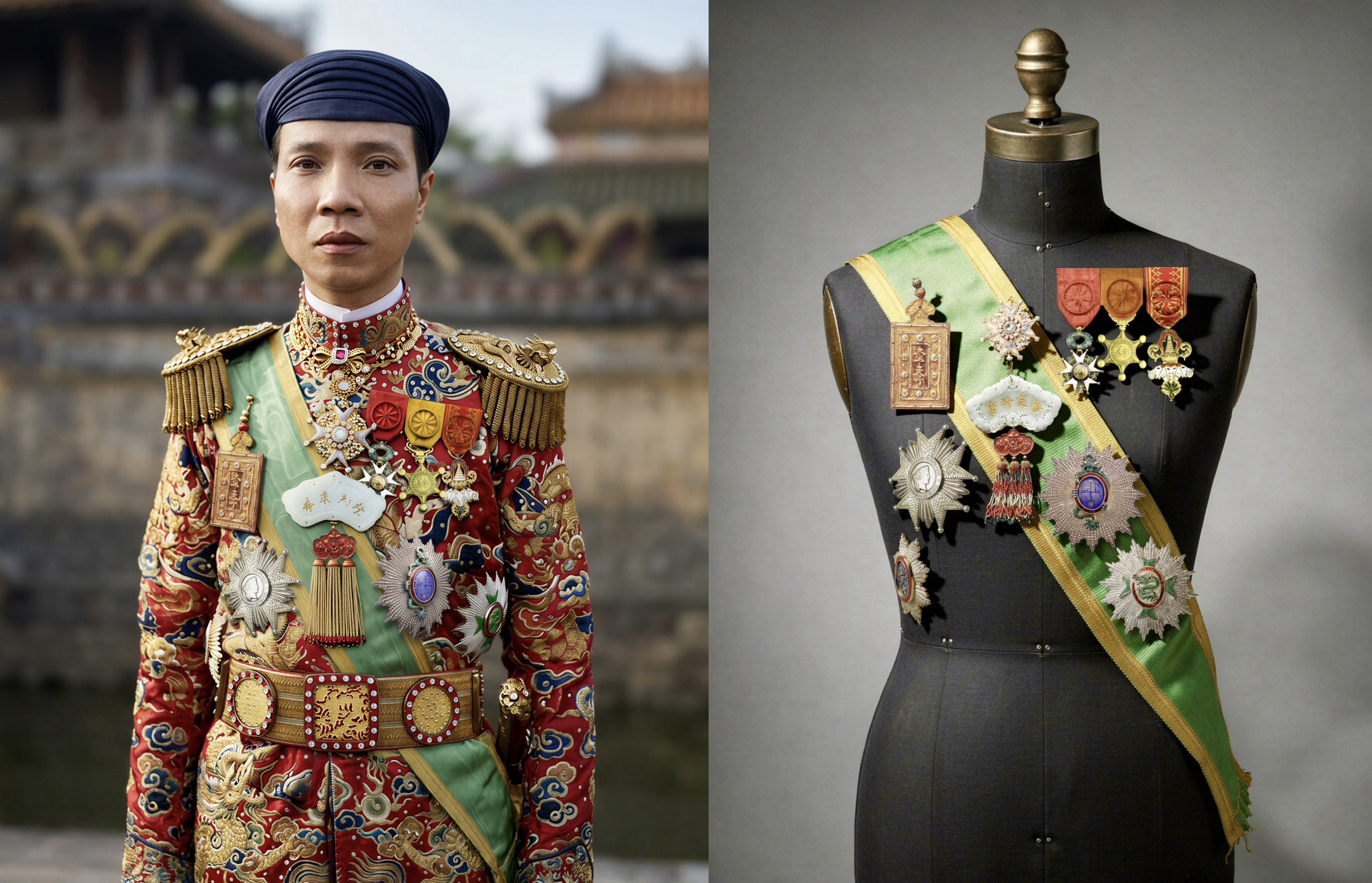
ด้วยเหตุนี้ การจัดทำ mapping-board จึงเป็นหัวใจของกระบวนการทำงาน ภาพ mapping-board ทำหน้าที่เสมือน “แผนที่การแต่งกายเชิงพิธี” ที่กำหนดอย่างชัดเจนว่า เครื่องราชอิสริยาภรณ์แต่ละชิ้นอยู่แถวใด ซ้ายหรือขวา เป็นแบบห้อยคอ ดาราอก หรือสายสะพาย รวมถึงสี วัสดุ และความสัมพันธ์เชิงลำดับชั้นระหว่างกัน เอกสารชนิดนี้ไม่เพียงช่วยควบคุมการสร้างภาพด้วย AI ให้แม่นยำเท่านั้น หากยังเป็นหลักฐานอ้างอิงเชิงวิชาการที่สามารถตรวจสอบย้อนกลับได้
ในกรณีของพระบรมฉายาลักษณ์สมเด็จพระจักรพรรดิขาย ดิ่ญ การมี mapping-board ช่วยให้สามารถแยกแยะได้อย่างชัดเจนว่า พระองค์ทรงประดับ Nguyễn Dynasty’s Order of Merit ถึงสองรูปแบบพร้อมกัน ทรงใช้ Ngọc Khánh เป็นเครื่องหมายประจำพระองค์ และทรงประดับเครื่องราชอิสริยาภรณ์จากฝรั่งเศส กัมพูชา และลาวในตำแหน่งที่มีนัยทางการเมืองเฉพาะ ซึ่งล้วนเป็นข้อมูลที่ไม่สามารถอนุมานได้จากภาพขาวดำเพียงอย่างเดียว
กล่าวโดยสรุป การจัดทำรายการเครื่องราชอิสริยาภรณ์แบบเรียงแถวพร้อม mapping-board ไม่ใช่ขั้นตอนเสริม แต่เป็น โครงสร้างพื้นฐานของการทำงานกับภาพประวัติศาสตร์ที่มีความซับซ้อนสูง ทั้งในด้านการบูรณะด้วย AI การออกแบบเครื่องแต่งกายเชิงภาพยนตร์ งานพิพิธภัณฑ์ และการศึกษาประวัติศาสตร์แฟชั่นและอำนาจรัฐ หากขาดขั้นตอนนี้ ภาพที่ได้อาจสวยงามทางสายตา แต่จะขาดความน่าเชื่อถือและความถูกต้องทางประวัติศาสตร์อย่างหลีกเลี่ยงไม่ได้
__________
Emperor Khải Định of Vietnam
Emperor Khải Định of Vietnam was the twelfth emperor of the Nguyễn dynasty, reigning from 1916 to 1925. The image restored and re-created using AI technology is a portrait of the emperor that reflects not only his ceremonial imperial status but also the political realities of Vietnam under the French protectorate in the early twentieth century. It encapsulates the intersection of ritual authority, colonial power, and regional diplomacy during one of the most complex periods in Vietnamese imperial history.
Emperor Khải Định (Vietnamese: Khải Định; Chữ Nôm: 啓定; 8 October 1885 – 6 November 1925) was born Prince Nguyễn Phúc Bửu Đảo (阮福寶嶹), the son of Emperor Đồng Khánh. He did not immediately succeed to the throne. After the exile of Emperors Thành Thái and Duy Tân, both of whom had attempted to resist French colonial authority, the French administration selected Prince Bửu Đảo to ascend the throne on 18 May 1916. He adopted the reign name “Khải Định,” a title carrying the connotation of “establishing peace and stability.”
Although the emperor expressed a desire to restore the dignity of the Vietnamese monarchy, governance under his reign was conducted in close collaboration with the French authorities. As a result, he was widely perceived as a political figurehead. Opposition from Vietnamese nationalists intensified throughout his reign. Phan Chu Trinh accused him of betraying the nation, while Nguyễn Ái Quốc—later known as Hồ Chí Minh—satirised him in the essay The Bamboo Dragon, mocking the emperor’s grand ceremonial image and lack of real political power. His visit to France in 1922 to attend the Marseille Colonial Exhibition further reinforced this perception and provoked sharp criticism from anti-colonial circles.
Public dissatisfaction reached its height in 1923, when increased taxation on peasants was authorised to fund the construction of the emperor’s own mausoleum, alongside the endorsement of harsh measures against nationalist leaders. These actions further alienated the population. In his private life, Khải Định first married Trương Như Thị Tịnh in 1907; she later entered religious life in 1915 but was posthumously honoured with the title of Empress. His second consort was Ân Phi, Hồ Thị Chỉ (1902–1982), with whom he had no children. His only son, Nguyễn Phúc Vĩnh Thụy, born to the concubine Hoàng Thị Cúc, later ascended the throne as Emperor Bảo Đại.
Emperor Khải Định suffered from poor health and died of tuberculosis on 6 November 1925 in the Forbidden Purple City at Huế. The portrait presented here is remarkable for the large number of orders and decorations worn by the emperor, symbolising overlapping spheres of ceremonial authority and political allegiance linking Vietnam, France, and neighbouring states. His imperial robe draws inspiration from traditional dragon motifs associated with East Asian imperial sovereignty.
The decorations visible in the portrait are arranged precisely according to their actual positions. In the upper row, from left to right, appear the imperial gold plaque (Thẻ Bài / Kim Bài) engraved with the four Chinese characters 太平天子 (Thái Bình Thiên Tử), meaning “Son of Heaven who brings Great Peace,” a powerful symbol of heavenly mandate. This is followed by the Nguyễn Dynasty’s Order of Merit, First Class neck badge, a unique piece known only from documentary sources; the French Légion d’Honneur, Officer Class, with red ribbon and rosette; the Order of the Indochinese Merit, First Class; and the Lao Order of the Million Elephants and the White Parasol, Officer Class.
In the lower row, from left to right, are the Royal Order of Cambodia; the breast star of the Légion d’Honneur; the Ngọc Khánh jade pendant, engraved on the reverse with the phrase Thọ Thiên Vĩnh Mạng (夀天永命), meaning “Eternal mandate of Heaven”; the Imperial Order of the Dragon of Annam with its green-and-gold sash; and an early form of the Nguyễn Dynasty’s Order of Merit.
Compiling an order-of-decoration list according to precise rows and positions in the portrait is not merely an exercise in identification. It is a crucial analytical process for understanding ceremonial hierarchy and the political relationships linking the Vietnamese court, France, and other Indochinese states in the early twentieth century. This is particularly important in the case of Emperor Khải Định, who simultaneously wore decorations from multiple systems—East Asian imperial, French, and regional Southeast Asian—within a single ceremonial image.
For AI-based restoration and reconstruction, such a portrait represents a high-complexity ceremonial image. Without a rigorously structured list and positional hierarchy, AI systems are prone to errors such as incorrect ribbon colours, misplaced breast stars, reversed orders of precedence, or the unintended blending of insignia from different national systems. Any of these mistakes would immediately compromise historical accuracy.
For this reason, the creation of a detailed mapping-board is central to the workflow. The mapping-board functions as a “ceremonial dress map,” specifying the exact row, left–right position, type of insignia (neck badge, breast star, or sash), colour, material, and hierarchical relationship of each decoration. It not only ensures precision in AI-generated imagery but also serves as a verifiable scholarly reference.
In the case of Emperor Khải Định’s portrait, the mapping-board makes it possible to identify clearly that he wore two different forms of the Nguyễn Dynasty’s Order of Merit simultaneously, used the Ngọc Khánh as a personal emblem of imperial legitimacy, and displayed French, Cambodian, and Lao orders in positions charged with specific political meaning. None of these details can be reliably inferred from black-and-white photography alone.
In conclusion, the systematic listing of orders and decorations by row, combined with a mapping-board, is not an optional enhancement but a foundational structure for working with historically complex ceremonial images. Whether for AI restoration, film costume design, museum interpretation, or the study of fashion history and state power, this methodology ensures that visual beauty is matched by historical credibility and scholarly integrity.
__________
เรียนเชิญกด Subscribe ได้ที่ลิงก์นี้ครับ เพื่อร่วมติดตามงานสร้างสรรค์ต้นฉบับ งานวิจัยประวัติศาสตร์แฟชั่น และผลงานอนุรักษ์มรดกวัฒนธรรมด้วยเทคโนโลยี AI ของ AI Fashion Lab, London ซึ่งมุ่งตีความอดีตผ่านมิติใหม่ของการบูรณะภาพ การสร้างสรรค์ภาพ และการเล่าเรื่องด้วยศิลปะเชิงดิจิทัล 🔗 https://www.facebook.com/aifashionlab/subscribe/
#aifashionlab #AI #aiartist #aiart #aifashion #aifashiondesign #aifashionstyling #aifashiondesigner #fashion #fashionhistory #historyoffashion #fashionstyling #fashionphotography #digitalfashion #digitalfashiondesign #digitalcostumedesign #digitaldesign #digitalaiart #ThaiFashionHistory #ThaiFashionAI #thailand #UNESCO