ซูสีไทเฮา (慈禧太后) (ตอนที่ ๑)
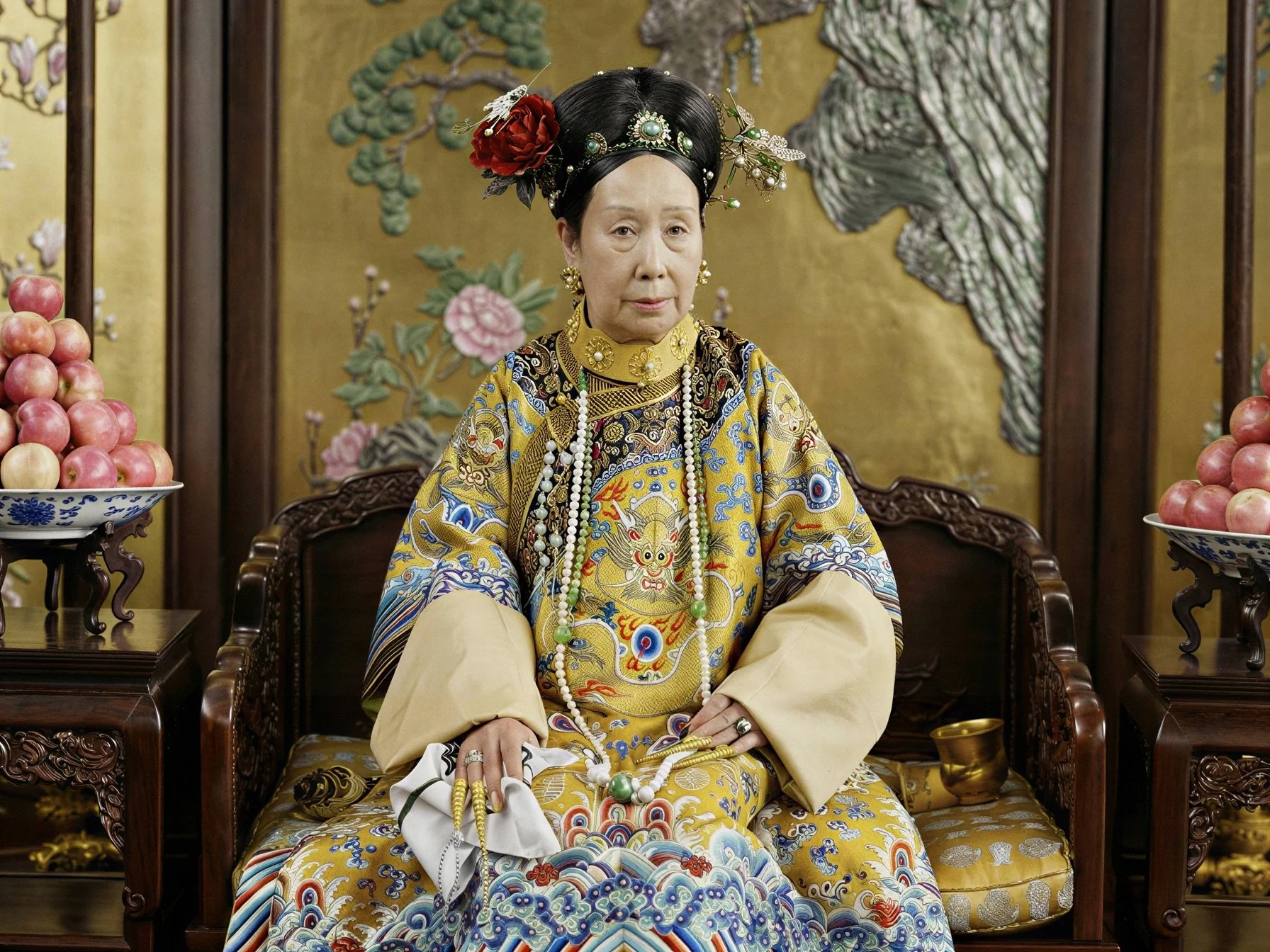
ซูสีไทเฮา (慈禧太后)
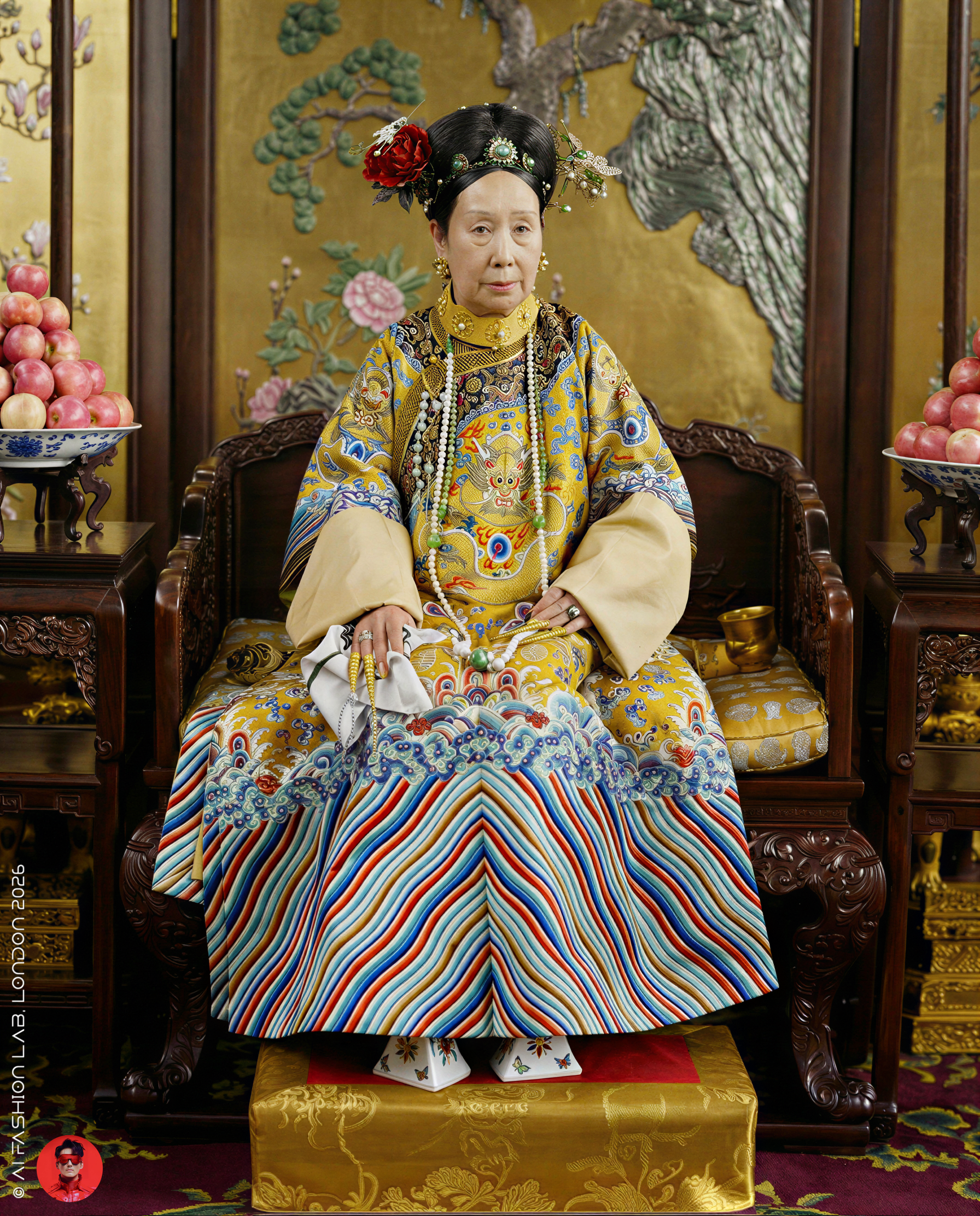
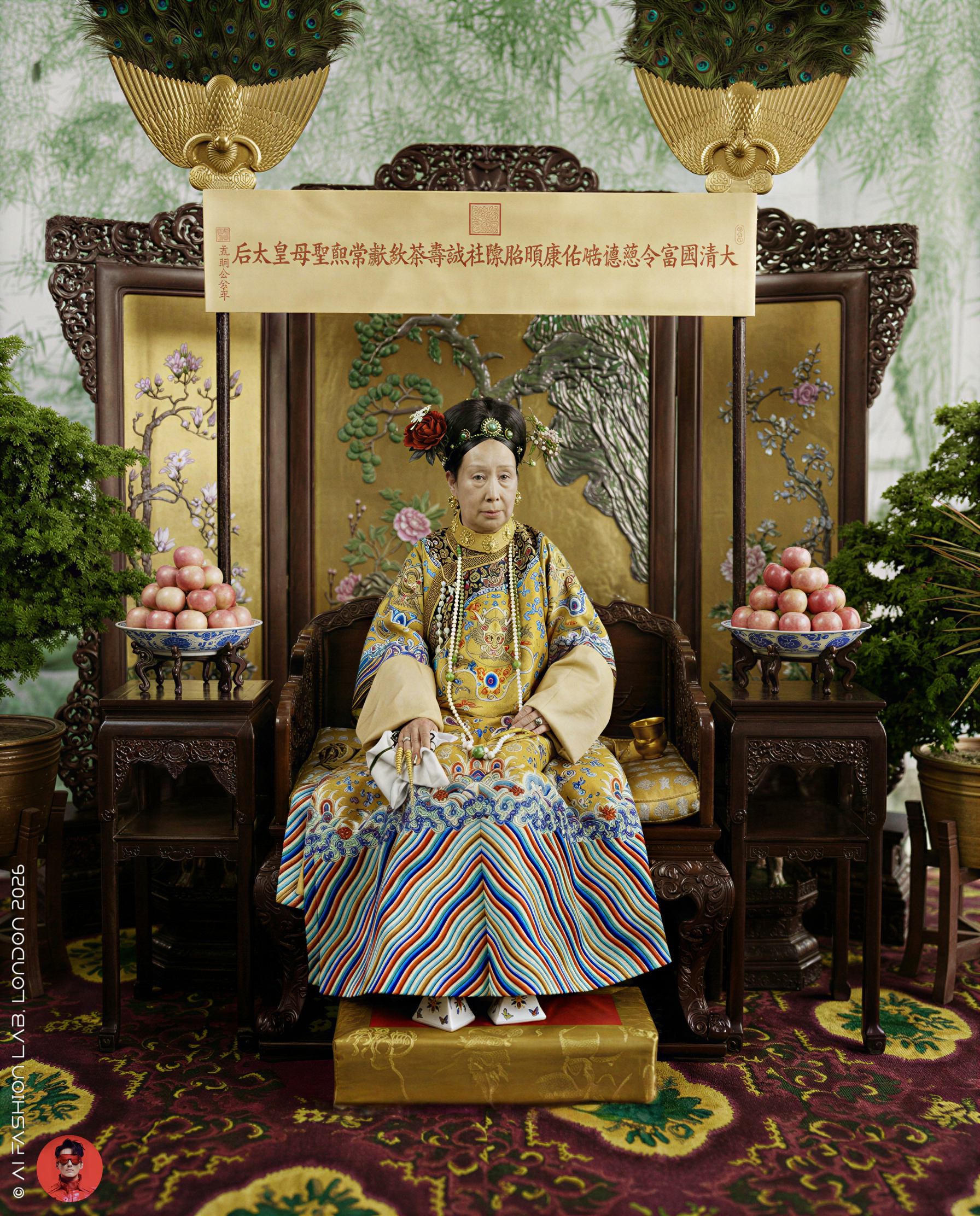
ซูสีไทเฮา หรือ ฉือสี่ไท่โฮ่ว (จีน: 慈禧太后; พินอิน: Cíxǐ Tàihòu) เป็นสตรีผู้ทรงอำนาจสูงสุดพระองค์หนึ่งในประวัติศาสตร์ราชวงศ์ชิง (清朝) พระฉายาลักษณ์ต้นฉบับขาวดำซึ่งถ่ายเมื่อ ค.ศ. 1904 และได้รับการบูรณะพร้อมลงสีด้วยเทคโนโลยี AI ในปัจจุบัน แสดงให้เห็นพระนางทรงฉลองพระองค์ จี้ฝู (吉服, Jifu) พื้นสีเหลืองจักรพรรดิ ประดับลวดลาย สิบสองสัญลักษณ์แห่งพระราชอำนาจ (十二章紋, Shí’èr zhāng wén) ซึ่งตามขนบแล้วเป็นเครื่องแต่งกายที่สงวนไว้สำหรับจักรพรรดิ (皇帝) เท่านั้น ฉลองพระองค์ชุดนี้จึงมิใช่เพียงอาภรณ์เชิงพิธี หากเป็นถ้อยแถลงทางอำนาจและสถานะทางการเมืองของซูสีไทเฮาในฐานะผู้สำเร็จราชการแทนจักรพรรดิอย่างชัดเจน
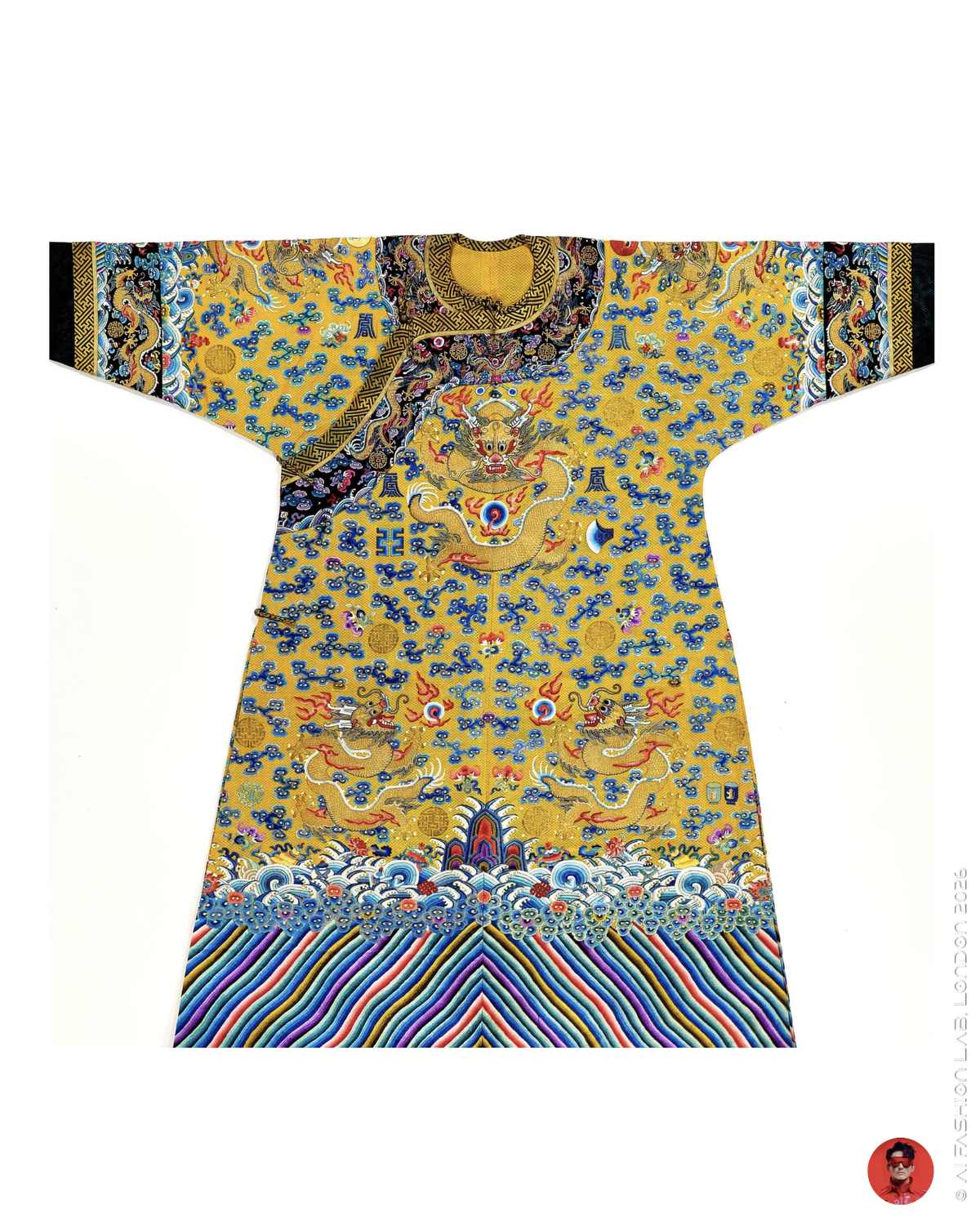
ฉลองพระองค์ดังกล่าวเป็น ฉลองพระองค์มังกร (龍袍, Longpao) แบบกึ่งพิธี ทอด้วยผ้าก๊อซโปร่ง ปักดิ้นทอง (gold-wrapped thread) และไหมซาตินอย่างวิจิตร ประดับมังกรห้าเล็บ (五爪龍) จำนวนเก้ามังกร รายล้อมด้วยเมฆมงคล (祥雲), ค้างคาว (蝠) อันเป็นสัญลักษณ์แห่ง ฝู หรือความเป็นสิริมงคล, ลูกท้อคู่ (雙桃) สื่อถึงอายุยืน และอักษรมงคลเหนือแถบลายคลื่นน้ำ หลี่สุ่ย (立水, Lishui) บริเวณชายฉลองพระองค์ พื้นสีเหลืองจักรพรรดิ (明黃色) ถือเป็นสีมงคลสูงสุดในจักรวรรดิชิง สงวนไว้สำหรับพระราชวงศ์ระดับสูงสุด การที่ฉลองพระองค์นี้ตัดเย็บสำหรับสตรี—สังเกตจากการไม่มีช่องผ่าหน้า–หลัง และการต่อแขนเสื้อ—ยิ่งตอกย้ำสถานะพิเศษของผู้สวมใส่ในฐานะ หวงไท่โฮ่ว (皇太后)
แก่นสำคัญของฉลองพระองค์ชุดนี้คือ สิบสองสัญลักษณ์แห่งพระราชอำนาจ (十二章) ได้แก่ พระอาทิตย์ (日), พระจันทร์ (月), กลุ่มดาว (星辰), ภูเขา (山), ลายฝู (黼), ขวาน (黻), มังกร (龍), สัตว์มงคล (華蟲), ถ้วยบูชา (宗彝), สาหร่ายน้ำ (藻), เปลวไฟ (火) และเมล็ดข้าว (米) ซึ่งมีรากฐานจากจักรวาลวิทยาจีนโบราณ และสัมพันธ์กับพิธีกรรมที่จักรพรรดิทรงประกอบในฐานะ “โอรสแห่งสวรรค์” (天子) ตามคัมภีร์ หวงเฉา หลี่ฉี่ ถูซื่อ (皇朝禮器圖式) ซึ่งประกาศใช้เมื่อ ค.ศ. 1766 สัญลักษณ์ทั้งสิบสองนี้ถูกกำหนดให้ใช้เฉพาะจักรพรรดิเท่านั้น โดยปรกติไม่ปรากฏบนฉลองพระองค์ของพระมเหสีหรือรัชทายาท
อย่างไรก็ตาม หลักฐานจากเอกสาร ภาพถ่าย และฉลองพระองค์ที่หลงเหลือในคอลเลกชันตะวันตก ชี้ชัดว่า ซูสีไทเฮาใช้สิบสองสัญลักษณ์บนฉลองพระองค์สีเหลืองในช่วงที่พระนางสำเร็จราชการแทนจักรพรรดิถงจื้อ (同治帝) ระหว่าง ค.ศ. 1861–1875 และอาจอีกครั้งในช่วงบั้นปลายพระชนม์ ภาพถ่ายของพระนางที่เก็บรักษาอยู่ใน Freer Gallery of Art, Smithsonian Institution แสดงให้เห็นสัญลักษณ์พระอาทิตย์ พระจันทร์ และกลุ่มดาวอย่างชัดเจน สะท้อนว่าพระนางทรงสวมฉลองพระองค์ที่มีสถานะเทียบเท่าเครื่องทรงจักรพรรดิในทางสัญลักษณ์
ในเชิงประวัติศาสตร์แฟชั่น ฉลองพระองค์ชุดนี้ยังสะท้อนการเปลี่ยนผ่านด้านเทคโนโลยีสิ่งทอในยุคปลายราชวงศ์ชิงอย่างเด่นชัด การปรากฏของสีม่วงสดในแถบ หลี่สุ่ย (立水) สอดคล้องกับการแพร่หลายของสีย้อมสังเคราะห์ “Lauth’s Purple” หลัง ค.ศ. 1861 ซึ่งเริ่มเข้าสู่จีนในรัชสมัยของซูสีไทเฮา สีม่วงโทนใหม่นี้กลายเป็นสีที่พระนางโปรดปรานและปรากฏในฉลองพระองค์หลายชุด สะท้อนการผสมผสานระหว่างเทคโนโลยีตะวันตกกับสุนทรียะจักรวรรดิแบบจีน
ดังนั้น ฉลองพระองค์ จี้ฝูมังกรสิบสองสัญลักษณ์พื้นสีเหลืองจักรพรรดิ ของซูสีไทเฮา จึงมิใช่เพียงหลักฐานทางแฟชั่นราชสำนัก หากแต่เป็นเอกสารทางประวัติศาสตร์ที่เผยให้เห็นความสัมพันธ์ระหว่าง อำนาจ (權力), เพศ (性別) และสัญลักษณ์ (象徵) ในราชสำนักชิงช่วงปลายยุคจักรวรรดิ เครื่องแต่งกายชุดนี้ยืนยันบทบาทของซูสีไทเฮาในฐานะผู้ปกครองโดยพฤตินัย และแสดงให้เห็นว่าแฟชั่นราชสำนักสามารถทำหน้าที่เป็นภาษาทางการเมืองได้อย่างทรงพลังไม่ยิ่งหย่อนไปกว่าพระราชโองการใด ๆ
________________
Empress Dowager Cixi
Empress Dowager Cixi—known in Chinese as Cixi Taihou (慈禧太后)—was one of the most powerful women in the history of the Qing dynasty (Qing chao 清朝). The restored and AI-colourised image presented here is based on an original black-and-white photograph taken in 1904, showing the Empress Dowager wearing an Imperial yellow dragon robe known as jifu (吉服), decorated with the Twelve Symbols of Imperial Authority (Shí’èr zhāng 十二章). This garment is not merely ceremonial dress; it is a visual proclamation of sovereignty, political legitimacy, and regental power at the very end of imperial China.
The robe worn by Cixi is an imperial dragon robe (longpao 龍袍) woven in fine gauze and embroidered with couched gold thread and satin stitch. It is decorated with nine five-clawed dragons (wǔ zhǎo lóng 五爪龍), surrounded by auspicious clouds (xiangyun 祥云), bats (fu 蝠, a homophone for good fortune), double peaches (shuang tao 雙桃, symbolising longevity), and auspicious characters. At the hem appears the stylised wave border known as lishui (立水), representing the cosmic ocean. The entire design is reserved on an Imperial yellow ground (ming huangse 明黃色)—the most sacred colour in Qing court culture, strictly restricted to the imperial family.
Crucially, this robe bears the Twelve Symbols of Imperial Authority (十二章紋): the sun (ri 日), moon (yue 月), constellation (xingchen 星辰), mountain (shan 山), paired “fu” pattern (fu 黼), axe motif (fu 黻), dragon (long 龍), floral creature (huachong 華蟲), sacrificial vessels (zongyi 宗彝), aquatic grass (zao 藻), flames (huo 火), and grains of millet (mi 米). These symbols derive from ancient Chinese cosmology and ritual theory, expressing the emperor’s role as Son of Heaven (Tianzi 天子), mediating between Heaven, Earth, and humankind. According to the Illustrated Regulations for Ceremonial Paraphernalia of the Qing Dynasty (Huangchao Liqi Tushi 皇朝禮器圖式) published in 1766, the full set of twelve symbols was reserved exclusively for the emperor (Huangdi 皇帝).
Under normal circumstances, neither empresses nor crown princes were permitted to wear garments bearing all twelve symbols. Yet surviving garments, archival records, and historical photographs indicate that Empress Dowager Cixi deliberately adopted the Twelve Symbols during her regency, particularly while ruling on behalf of her son, the Tongzhi Emperor (Tongzhi Di 同治帝) between 1861 and 1875. Photographs preserved today in the Freer Gallery of Art, Smithsonian Institution clearly show Cixi wearing what appears to be a twelve-symbol robe, with the sun, moon, and constellation visible at the upper body, and ritual motifs discernible above the wave band. Through dress, Cixi visually asserted authority equivalent to that of the emperor himself.
From the perspective of fashion history, this robe also reflects technological and aesthetic transitions in the late Qing period. The appearance of a vivid purple tone within the lishui (立水) band corresponds with the introduction of synthetic dyes such as Lauth’s Purple, discovered in 1861 and introduced to China shortly thereafter. This colour became particularly favoured by Cixi and appears in several imperial garments from her regency, demonstrating how Western chemical innovations were selectively absorbed into Qing court textile culture while maintaining traditional symbolic structures.
The robe’s exceptional state of preservation—virtually unworn, unstained, and retaining extraordinarily vivid colours—further underscores its historical importance. Very few imperial garments have been convincingly attributed to Empress Dowager Cixi, and none in gauze fabric are known in comparable condition. Its pristine state suggests careful handling and an awareness of its political and symbolic significance from the moment it left the Forbidden City (Zijincheng 紫禁城), likely during the turmoil surrounding the Boxer Rebellion (Yihetuan yundong 義和團運動).
In conclusion, the Imperial yellow twelve-symbol jifu (明黃色十二章吉服) worn by Empress Dowager Cixi should be understood not merely as court costume, but as a sophisticated language of power expressed through dress. It embodies the intersection of gender (xingbie 性別), authority (quanli 權力), and symbolism (xiangzheng 象徵) in late imperial China. Through this garment, Cixi positioned herself visually and ritually as ruler of the empire—demonstrating that in the Qing court, fashion could function as a form of governance as potent as any imperial edict.
________________
เรียนเชิญกด Subscribe ได้ที่ลิงก์นี้ครับ เพื่อร่วมติดตามงานสร้างสรรค์ต้นฉบับ งานวิจัยประวัติศาสตร์แฟชั่น และผลงานอนุรักษ์มรดกวัฒนธรรมด้วยเทคโนโลยี AI ของ AI Fashion Lab, London ซึ่งมุ่งตีความอดีตผ่านมิติใหม่ของการบูรณะภาพ การสร้างสรรค์ภาพ และการเล่าเรื่องด้วยศิลปะเชิงดิจิทัล 🔗 https://www.facebook.com/aifashionlab/subscribe/
#aifashionlab #AI #aiartist #aiart #aifashion #aifashiondesign #aifashionstyling #aifashiondesigner #fashion #fashionhistory #historyoffashion #fashionstyling #fashionphotography #digitalfashion #digitalfashiondesign #digitalcostumedesign #digitaldesign #digitalaiart #ThaiFashionHistory #ThaiFashionAI #thailand #UNESCO