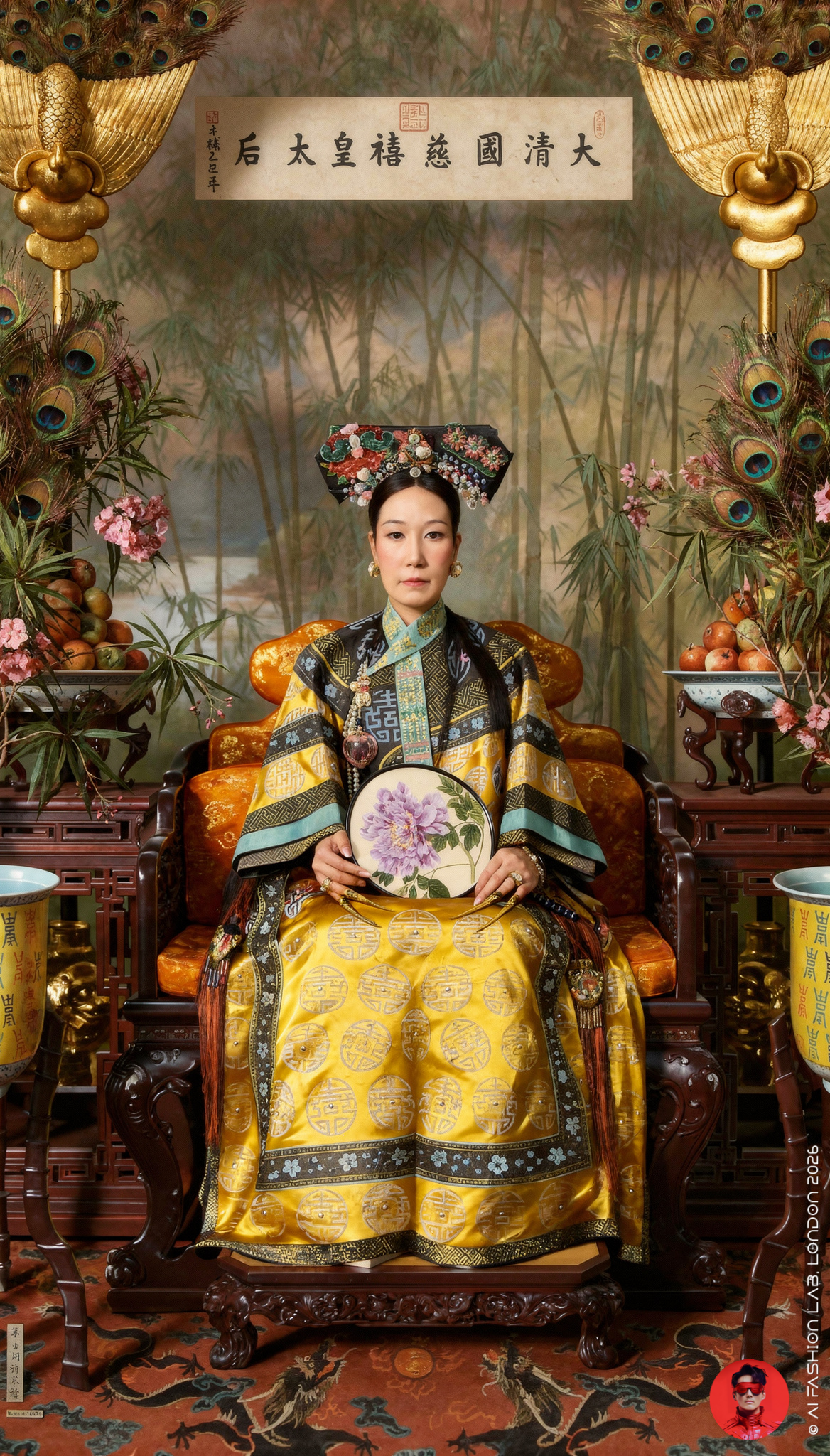
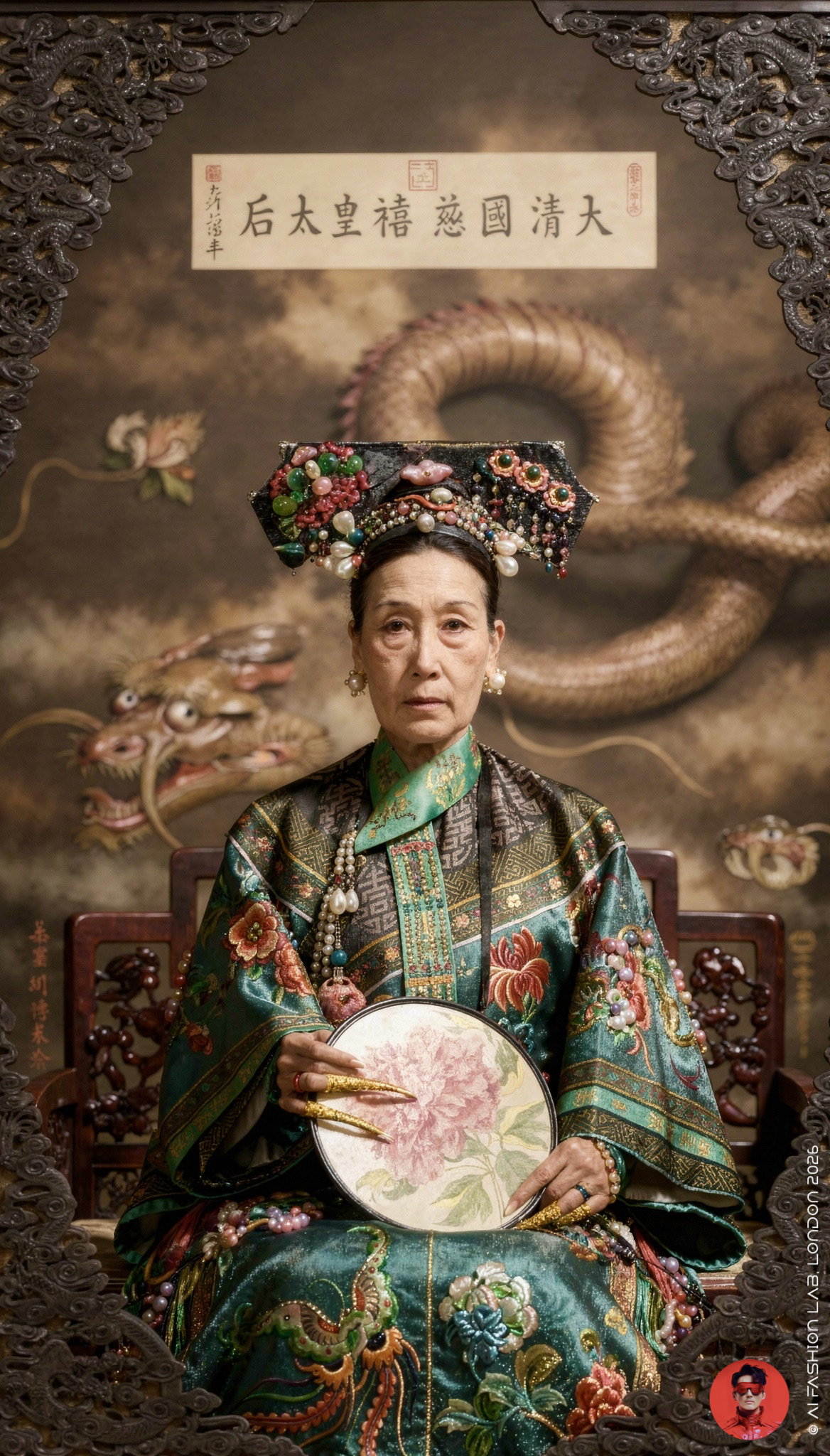
ซูสีไทเฮา (慈禧太后) ตอนที่ ๙ ภาพแทน “วัยเยาว์” ของซูสีไทเฮา (慈禧太后)ในงานจิตรกรรม โดยจิตรกรชาวดัตช์ Hubert Vos
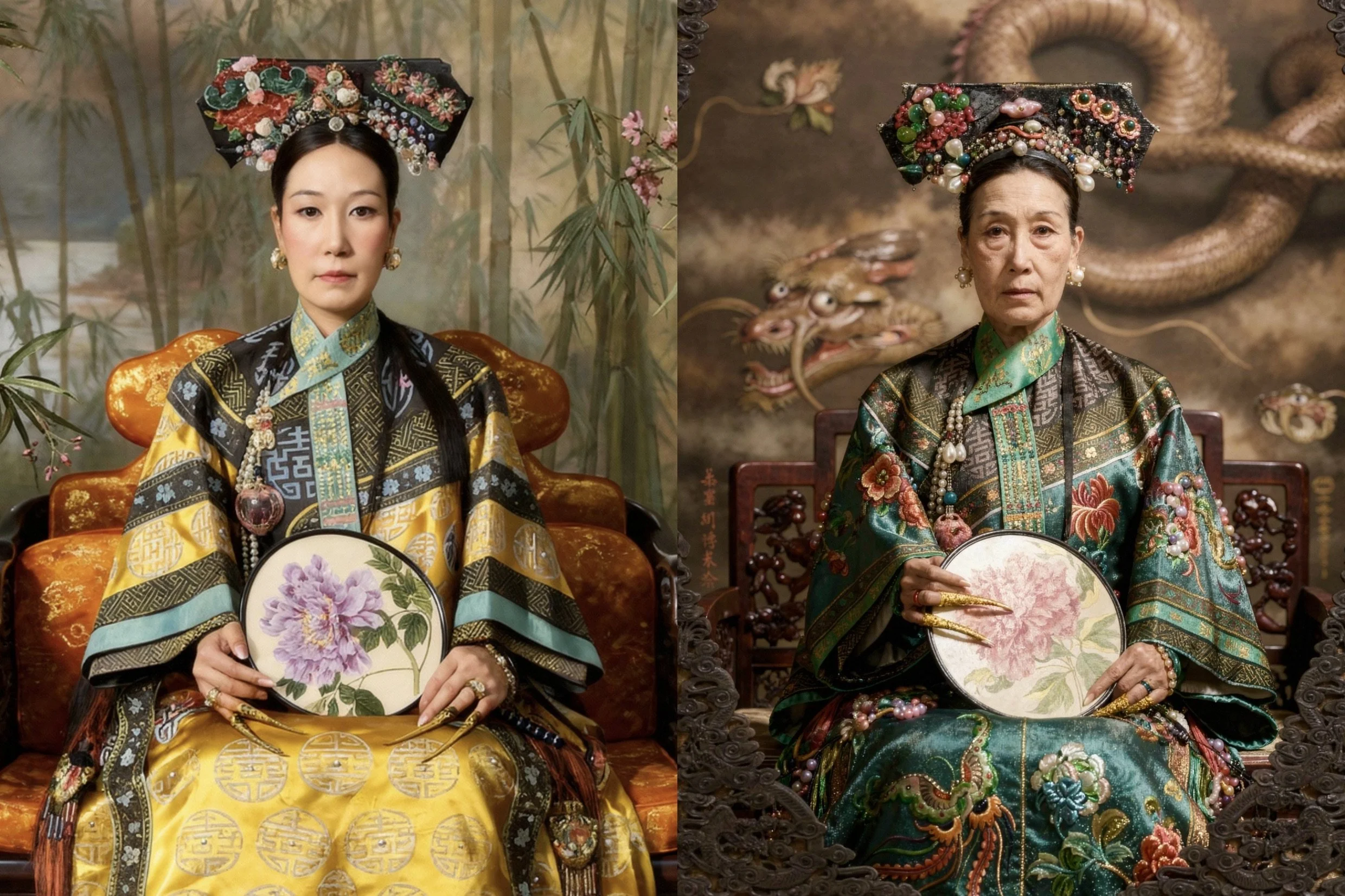
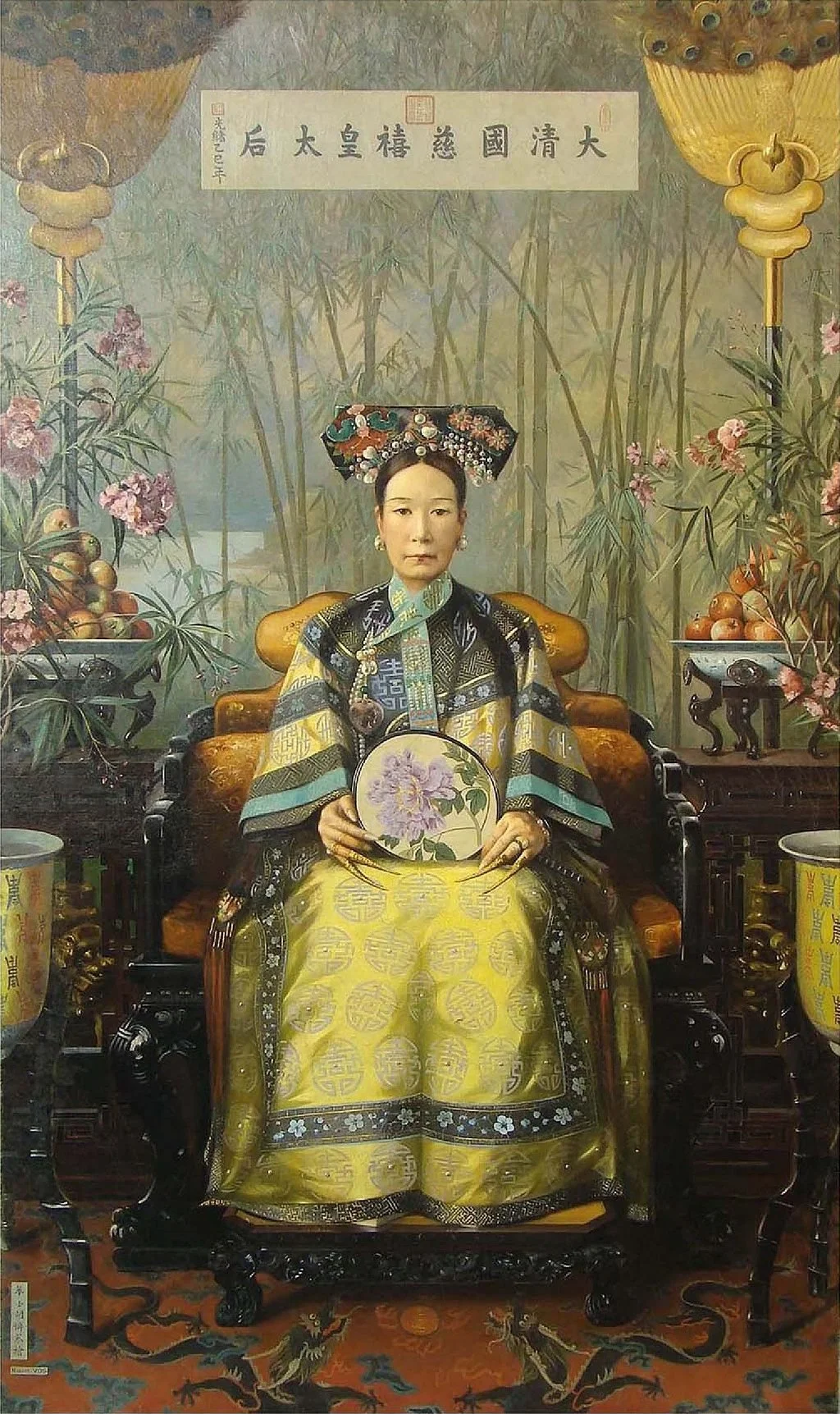
This AI-restored and creatively reinterpreted image is based on a Western-style oil portrait of Empress Dowager Cixi (慈禧太后; Cíxǐ Tàihòu), painted in 1905 by the Dutch-born artist Hubert Vos.
ซูสีไทเฮา (慈禧太后) ตอนที่ ๙
ภาพแทน “วัยเยาว์” ของซูสีไทเฮา (慈禧太后)ในงานจิตรกรรม โดยจิตรกรชาวดัตช์ Hubert Vos
ภาพที่ได้รับการบูรณะและสร้างสรรค์ด้วยเทคโนโลยี AI ภาพนี้ อ้างอิงจาก พระฉายาทิสลักษณ์สีน้ำมันแบบตะวันตก ของ Empress Dowager Cixi (ซูสีไทเฮา; 慈禧太后, Cíxǐ Tàihòu) ซึ่งวาดขึ้นในปี ค.ศ. 1905 โดยจิตรกรชาวดัตช์ Hubert Vos
ผลงานชิ้นนี้อยู่ในช่วงหัวเลี้ยวหัวต่อสำคัญของราชสำนักชิง เมื่อการสร้าง “ภาพแทนอำนาจ” กลายเป็นเครื่องมือเชิงการเมืองและวัฒนธรรมที่จำเป็นอย่างยิ่ง โดยเฉพาะต่อสายตาชาวตะวันตกซึ่งมีความรู้เกี่ยวกับจีนจักรวรรดิอย่างจำกัด และมักถูกกรองผ่านข่าวลือหรือการเล่าขานเชิงอคติ
ปัจจุบัน ภาพต้นฉบับเก็บรักษาอยู่ ณ Summer Palace กรุงปักกิ่ง
“Hubert Vos และจุดเปลี่ยนในปี ค.ศ. 1893”
Hubert Vos เข้าร่วมงาน World’s Fair ที่ชิคาโก ค.ศ. 1893 ในฐานะรองกรรมาธิการของเนเธอร์แลนด์ เหตุการณ์ครั้งนั้นกลายเป็นแรงบันดาลใจสำคัญที่เปลี่ยนทิศทางงานศิลปะของเขาอย่างสิ้นเชิง
Vos เขียนไว้ภายหลังว่า เขาตกตะลึงกับคุณภาพของภาพประกอบในงานชาติพันธุ์วิทยาร่วมสมัย ซึ่งแม้จะมีเนื้อหาทางวิชาการที่ลึกซึ้ง หากกลับขาดภาพแทนที่เหมาะสมต่อศักดิ์ศรีและความงามของผู้คนที่ถูกกล่าวถึง
จากความไม่พอใจนั้น Vos จึงตั้งเป้าจะสร้าง “แบบแผนแห่งความงาม” และศักดิ์ศรีของผู้คนจากหลากหลายวัฒนธรรม ก่อนที่อัตลักษณ์เหล่านั้นจะถูกกลืนหายหรือเจือจางไปตามกระแสโลกสมัยใหม่
แม้เขาจะยังคงรับงานภาพเหมือนชนชั้นสูงเพื่อยังชีพ แต่ชื่อเสียงของ Vos ค่อย ๆ โดดเด่นในฐานะจิตรกรผู้วาด “ชนชาติพันธุ์” (ethnic types) อย่างมีมนุษยธรรมและความละเมียด
“การเดินทางและจีนก่อนพายุ Boxer”
ในปี ค.ศ. 1897 Vos ใช้เวลานานถึงแปดเดือน ณ Fort Totten รัฐนอร์ทดาโคตา วาดภาพชนพื้นเมืองอเมริกัน ก่อนจะออกเดินทางต่อไปยัง ฮาวาย เกาหลี ญี่ปุ่น ฮ่องกง และในที่สุดคือ จีน
ในปี ค.ศ. 1899 เพียงไม่กี่เดือนก่อนการปะทุของกบฏนักมวย (Boxer Rebellion) Vos อยู่ในจีนและได้วาดภาพบุคคลหลากหลายระดับชนชั้น หนึ่งในนั้นคือชายหนุ่มผู้ซึ่งต่อมาจะกลายเป็น ประธานาธิบดีคนแรกของจีน
เขาเคยยื่นคำร้องขอวาดภาพซูสีไทเฮา แต่ถูกปฏิเสธ และจำต้องเดินทางกลับสหรัฐอเมริกา
“การยอมรับในเวทีนานาชาติ”
ผลงานภาพเหมือนชาติพันธุ์กว่า ๔๐ ชิ้น จากการเดินทางในเอเชียของ Vos ถูกนำไปจัดแสดง ณ Union League Club ในนิวยอร์ก, Corcoran Gallery of Art กรุงวอชิงตัน ดี.ซี. และ Paris International Exposition of 1900
นักวิจารณ์ศิลปะสังเกตว่า ภูมิหลังการวาดภาพชนชั้นสูงของ Vos ทำให้ภาพชาวเอเชียของเขาเปี่ยมด้วยความสง่างามและศักดิ์ศรี หนึ่งในคำวิจารณ์ระบุว่า ภาพของเขา “ละเอียด นุ่มนวล และสำเร็จสมบูรณ์”
“Katherine Carl และภาพเหมือนตะวันตกภาพแรกของซูสีไทเฮา”
ด้วยการสนับสนุนของ Sarah Pike Conger ภริยาทูตสหรัฐฯ ประจำปักกิ่ง จิตรกรชาวอเมริกัน Katherine Carl ได้รับเชิญให้เดินทางมายังกรุงปักกิ่งในปี ค.ศ. 1903 เพื่อวาดภาพซูสีไทเฮาสำหรับงาน Louisiana Purchase Exposition ค.ศ. 1904 ณ เมืองเซนต์หลุยส์
Carl ใช้เวลาหลายเดือนสร้างภาพเหมือนขนาดใหญ่สูงกว่าเก้าฟุต ซึ่งถูกส่งไปจัดแสดงพร้อมขบวนข้าราชการแมนจูอย่างเป็นทางการ ถือเป็นการนำเสนอพระราชอำนาจจีนสู่เวทีโลกอย่างไม่เคยมีมาก่อน
“Vos กับซูสีไทเฮา: ค.ศ. 1905”
ในปี ค.ศ. 1905 Hubert Vos ซึ่งขณะนั้นได้รับสัญชาติอเมริกันแล้ว ได้เดินทางกลับจีนและได้รับโอกาสเป็น จิตรกรชาวอเมริกันคนที่สอง ที่ได้วาดภาพซูสีไทเฮา
ในเวลานั้น พระนางทรงกุมอำนาจมาแล้วกว่า ๔๐ ปี และเป็นเป้าของข่าวลือในโลกตะวันตก ตั้งแต่ข้อกล่าวหาเรื่องการวางยาพิษพระจักรพรรดิกวางซวี่ ไปจนถึงการลงโทษพระสนมเอก
Vos ต้องเข้าพบพระนางตั้งแต่ ตีห้า และได้รับอนุญาตให้วาดเพียง สี่ครั้งสั้น ๆ ในสตูดิโอชั่วคราวบนชั้นบนสุดของโรงแรมแห่งหนึ่งในปักกิ่ง
ในจดหมายภายหลัง เขาบรรยายความประทับใจที่มีต่อพระนางไว้ว่า
“ทรงยืนตรง เปี่ยมด้วยพลังเจตจำนงยิ่งใหญ่กว่ามนุษย์ใดที่ข้าพเจ้าเคยพบ เส้นสายแห่งความคิดและความแน่วแน่แข็งกร้าว แต่มีหน้าผากที่เปี่ยมด้วยความเมตตาและความรักในความงาม ข้าพเจ้าตกหลุมรักพระนางในทันที”
“ภาพแทน “วัยเยาว์” ของพระราชอำนาจ”
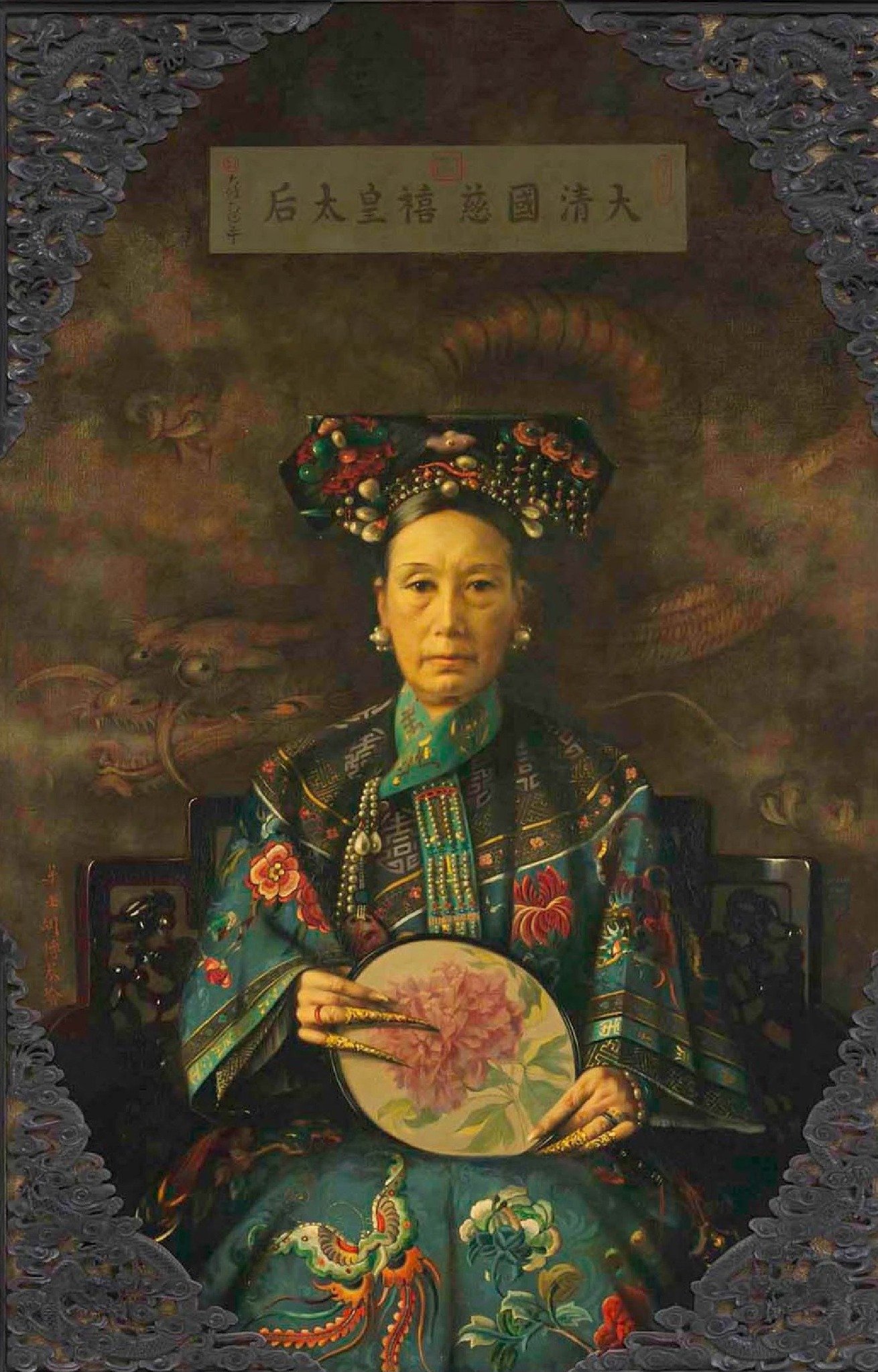
Vos วาดภาพซูสีไทเฮา สองฉบับ ขณะพระนางมีพระชนมายุ ๗๑ พรรษา หากในภาพ พระนางกลับดูอ่อนวัยอย่างเห็นได้ชัด
มีบันทึกว่าการขยายดวงตาและเพิ่มความอวบอิ่มของริมพระโอษฐ์เป็นไปตามพระประสงค์ของซูสีไทเฮาเอง—สะท้อนการควบคุมภาพลักษณ์อย่างมีสติ มิใช่เพียงการเอาใจจิตรกร
ภาพหนึ่งอยู่ในคอลเลกชันของ Harvard University ส่วนภาพขนาดใหญ่ยังคงอยู่ในจีน แม้จะได้รับความเสียหายอย่างหนักในทศวรรษ 1950 แต่ได้รับการบูรณะโดยผู้เชี่ยวชาญจากแคว้น Limburg ประเทศเนเธอร์แลนด์ และนำกลับจัดแสดง ณ พระราชวังฤดูร้อนในปี ค.ศ. 2008
“มรดกและการคืนถิ่นของภาพเหมือน”
ในเดือนสิงหาคม ค.ศ. 2011 หลานชายของ Vos คือ Hubert D. Vos ได้บริจาคภาพเหมือนจีนจำนวนหกชิ้นให้แก่ Capital Museum กรุงปักกิ่ง ซึ่งประกอบด้วยภาพของ
หลี่หงจาง
หยวนซื่อไข่
เจ้าชายอี้กวง
เด็กชายแมนจู
บุตรสาวข้าราชการกองทัพเรือฝูเจี้ยน
สตรีชนชั้นสูงจากซูโจว
เขากล่าวกับผู้สื่อข่าวจีนว่า แม้จะรักผลงานเหล่านี้อย่างยิ่ง แต่ “ผมคิดว่าพวกมันควรกลับคืนสู่แผ่นดินที่ถือกำเนิดขึ้นมา”
ในภาพเหมือนของ Hubert Vos ซูสีไทเฮาไม่ได้ปรากฏเพียงในฐานะผู้ปกครองหรือสตรีสูงวัย หากแต่เป็น ภาพแทนอำนาจที่ถูกสร้างขึ้นอย่างจงใจ—ซึ่งทำให้พระนางดู เยาว์วัย สง่างาม และมั่นคง—ณ จุดบรรจบระหว่างการเมืองจักรวรรดิและศิลปะตะวันตกสมัยใหม่
____________
Empress Dowager Cixi (慈禧太后) — Part 9
The Younger Self of the Empress Dowager in Painting - HUBERT VOS: PAINTER OF CHINA’S DOWAGER EMPRESS CIXI
This AI-restored and creatively reinterpreted image is based on a Western-style oil portrait of Empress Dowager Cixi (慈禧太后; Cíxǐ Tàihòu), painted in 1905 by the Dutch-born artist Hubert Vos.
The painting belongs to a critical moment when the late Qing court became acutely aware of the power of portraiture in shaping the Empress Dowager’s image for the outside world—particularly for Western audiences whose knowledge of China was fragmentary and often filtered through sensationalism.
Today, the original painting is preserved at the Summer Palace, Beijing.
“Hubert Vos and the Turning Point of 1893”
Hubert Vos attended the 1893 Chicago World’s Fair as Deputy Commissioner for the Netherlands. The event proved transformative. In later writings, Vos recalled his astonishment at the inadequacy of visual representations used in contemporary ethnological studies. Despite the intellectual ambition of these works, the images themselves struck him as crude and reductive.
Vos conceived a different approach: to establish a visual language of beauty, dignity, and individuality among the world’s peoples—before, as he feared, cultural identities became diluted or erased. This conviction redirected his artistic career.
Although he continued to earn a living through society portraiture, Vos increasingly became recognised as a painter of what he termed “ethnic types.” In 1897, he spent eight months at Fort Totten, North Dakota, painting Native Americans. This was followed by extensive travel across Hawaii, Korea, Japan, Hong Kong, and eventually China.
“China Before the Storm”
In 1899, only months before the outbreak of the Boxer Rebellion, Vos was in China painting a wide range of sitters—from aristocrats to ordinary figures of daily life. Among them was a young man who would later become the first president of China.
Vos sought permission to paint the Empress Dowager herself, but his request was initially refused, and he returned to the United States.
“Ethnographic Portraits and International Recognition”
Approximately forty of Vos’ Asian portraits were later exhibited at the Union League Club in New York, the Corcoran Gallery of Art in Washington, D.C., and the Paris International Exposition of 1900.
Critics noted that Vos’ background in society portraiture endowed his Asian subjects with a distinctive glamour and poise. One reviewer described his works as “delicate, smooth, and accomplished,” praising their refinement and restraint.
“Katherine Carl and the First Western Portrait of Cixi”
Through the influence of Sarah Pike Conger, wife of the American envoy to Beijing, the American painter Katherine Carl was invited to Beijing in 1903. She was commissioned to paint Empress Dowager Cixi for the 1904 Louisiana Purchase Exposition in St. Louis.
Carl spent many months producing a monumental, life-size portrait measuring over nine feet tall. The completed work was shipped to St. Louis, accompanied by a formal retinue of Manchu officials, and occupied a place of prominence within the exhibition—an unprecedented act of imperial self-representation.
“Vos and the Empress Dowager: 1905”
In 1905, now an American citizen, Hubert Vos returned to China and was granted the opportunity to become the second American artist to paint the Empress Dowager. At the time, Cixi had effectively ruled China for forty years and was widely vilified in Western popular discourse. Rumours circulated that she had poisoned her nephew, the Guangxu Emperor, and ordered the death of his favourite consort.
Vos’ working conditions were tightly controlled. He was required to present himself at court at 5 a.m. and was granted only four brief sittings, conducted in a temporary studio on the top floor of a Beijing hotel.
In letters written afterwards, Vos described his subject with striking admiration:
“Erect, with a tremendous will power—more than I have ever seen in a human being. Hard, firm will and thinking lines, and with a brow full of kindness and a love for the beautiful. I fell straight in love with her.”
“The Younger Image of Power”
Vos ultimately painted two portraits of the Empress Dowager, who was 71 years old at the time. In both, she appears noticeably younger. According to contemporary accounts, Vos enlarged her eyes and subtly plumped her lips at Cixi’s own request—an intentional act of image control rather than mere flattery.
One version entered the collection of Harvard University, while the larger painting remained in China. Severely damaged during the 1950s, the latter was painstakingly restored by specialists from the Dutch province of Limburg and returned to public display at the Summer Palace in November 2008.
“Legacy and Repatriation”
In August 2011, Hubert Vos’ grandson, Hubert D. Vos, donated six of Vos’ Chinese portraits to Beijing’s Capital Museum. These works depict:
Li Hongzhang, the Qing statesman
Yuan Shikai, later President of China
Prince Yikuang
A Manchu boy
The daughter of a Fujian naval official
A Suzhou aristocratic girl
Speaking to a Chinese reporter, Vos’ grandson remarked that although he cherished these paintings deeply, “I think they should return to their birthplace.”
In Hubert Vos’ portraits of Empress Dowager Cixi, we do not simply encounter a ruler, nor merely an ageing woman softened by paint. Instead, we see a consciously constructed image of authority—timeless, youthful, and resolute—crafted at the intersection of imperial self-fashioning and Western artistic modernity.
_______________
บทความต้นฉบับ : https://geringerart.com/hubert-vos-painter-of-chinas-dowager-empress-cixi/
เรียนเชิญกด Subscribe ได้ที่ลิงก์นี้ครับ เพื่อร่วมติดตามงานสร้างสรรค์ต้นฉบับ งานวิจัยประวัติศาสตร์แฟชั่น และผลงานอนุรักษ์มรดกวัฒนธรรมด้วยเทคโนโลยี AI ของ AI Fashion Lab, London ซึ่งมุ่งตีความอดีตผ่านมิติใหม่ของการบูรณะภาพ การสร้างสรรค์ภาพ และการเล่าเรื่องด้วยศิลปะเชิงดิจิทัล 🔗 https://www.facebook.com/aifashionlab/subscribe/
#aifashionlab #AI #aiartist #aiart #aifashion #aifashiondesign #aifashionstyling #aifashiondesigner #fashion #fashionhistory #historyoffashion #fashionstyling #fashionphotography #digitalfashion #digitalfashiondesign #digitalcostumedesign #digitaldesign #digitalaiart #ThaiFashionHistory #ThaiFashionAI #thailand #UNESCO