วัฒนธรรมการแต่งกายไว้ทุกข์ในสมัยรัชกาลที่ ๕
วัฒนธรรมการแต่งกายไว้ทุกข์ในสมัยรัชกาลที่ ๕
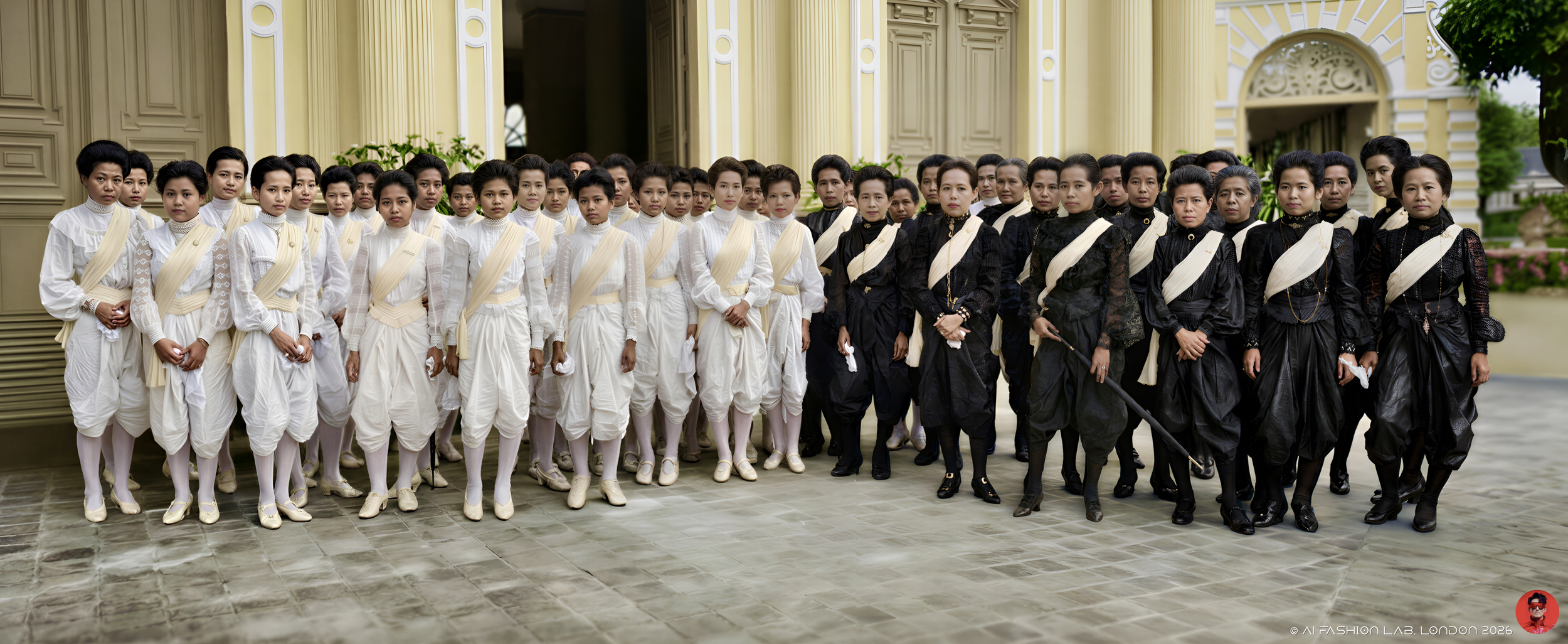
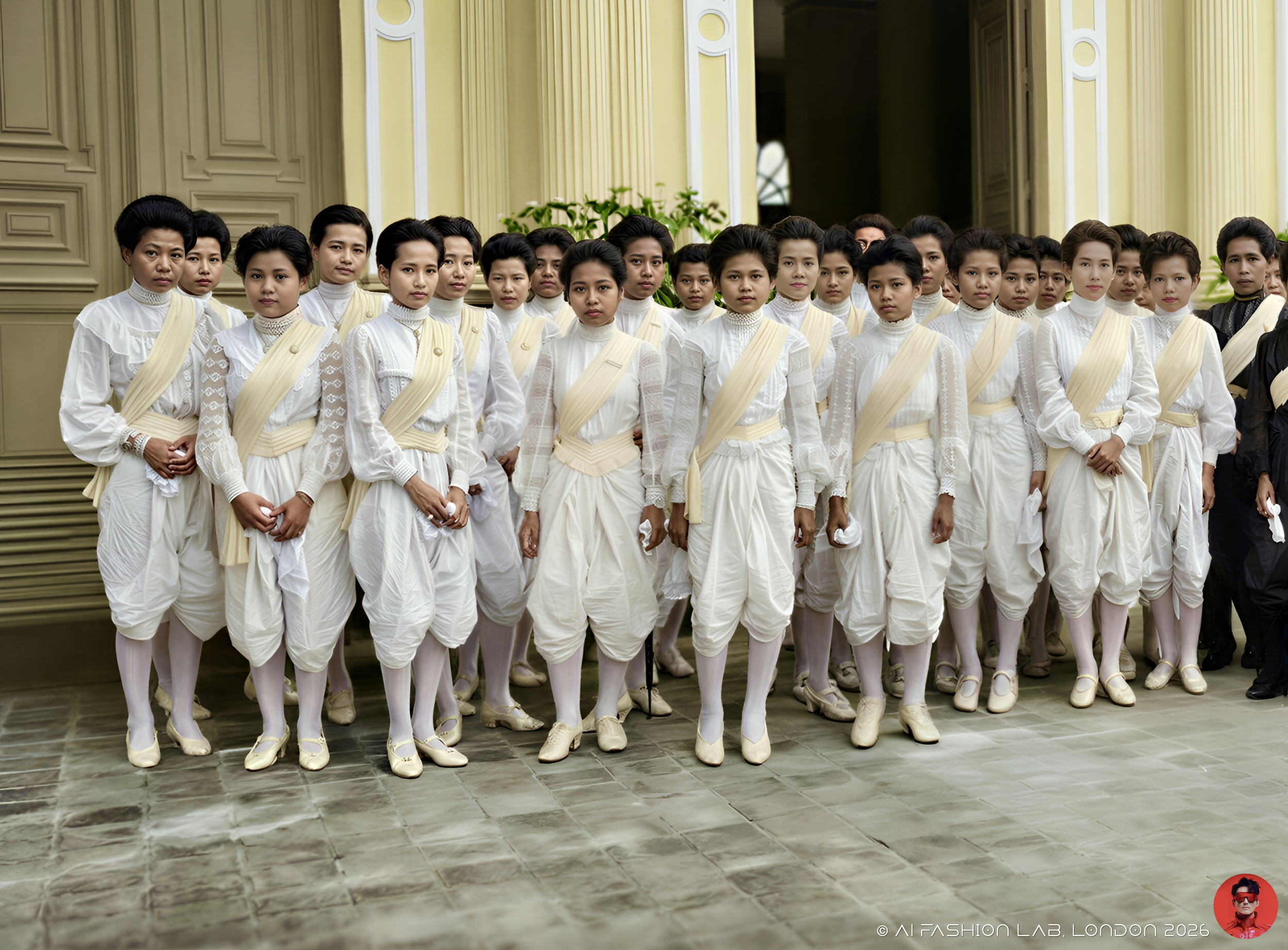
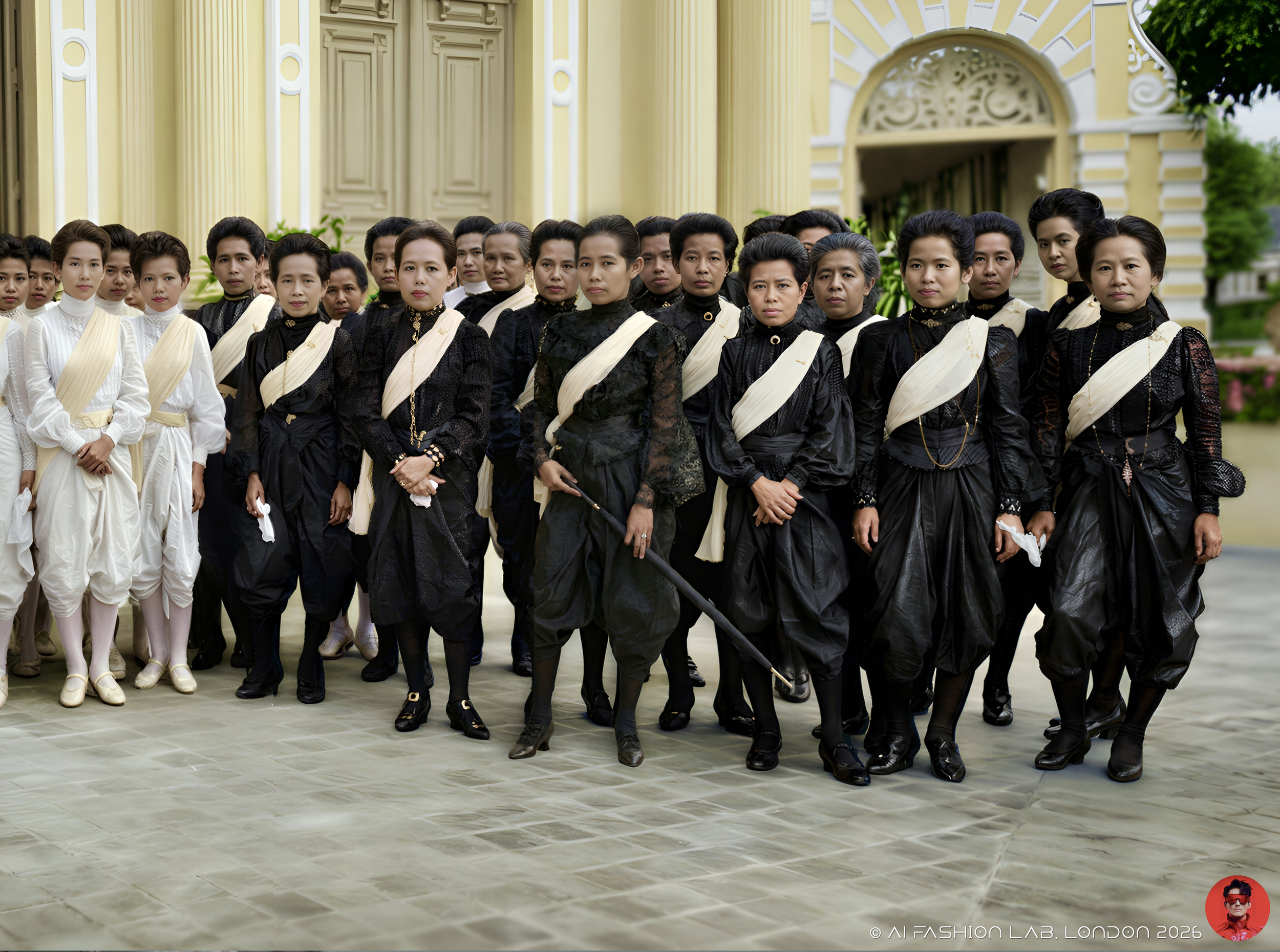
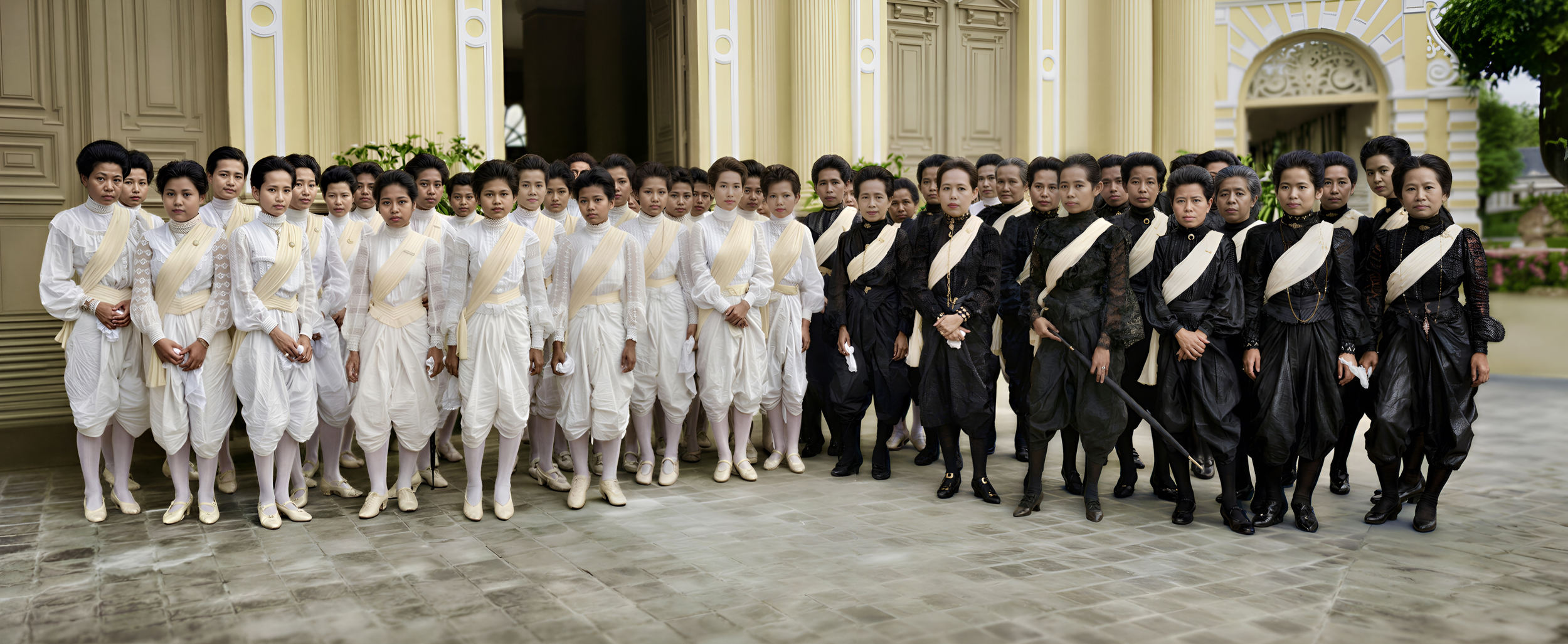
ภาพที่ได้รับการบูรณะและสร้างสรรค์ขึ้นด้วยเทคโนโลยี AI นี้ คือพระฉายาลักษณ์ สมเด็จพระศรีพัชรินทรา บรมราชินีนาถ และสมเด็จพระศรีสวรินทิรา บรมราชเทวี พร้อมด้วยพระมเหสี พระเจ้าลูกเธอ เจ้าจอมมารดา พระบรมวงศานุวงศ์และข้าราชบริพารฝ่ายใน ทรงฉายภาพเป็นที่ระลึกในงานพระเมรุ พระเจ้าลูกเธอ พระองค์เจ้าศรีวิไลยลักษณ์ สุนทรศักดิ์กัลยาวดี กรมขุนสุพรรณภาควดี ณ พระราชวังบางปะอิน โดยผู้มีพระชันษาสูงกว่าพระเจ้าลูกเธอในพระโกศ จะทรงสีดำไว้ทุกข์ ส่วนผู้ที่มีพระชันษาอ่อนกว่าจะทรงชุดขาว ตามธรรมเนียมในสมัยนั้น
ภาพนี้คาดว่าถ่ายระหว่าง วันที่ 8 – 14 กุมภาพันธ์ พ.ศ. 2448 ที่ฝ่ายในล่วงหน้าไปที่พระราชวังบางปะอินก่อน และก่อนที่สมเด็จพระเจ้าบรมวงศ์เธอ เจ้าฟ้าจันทราสรัทวาร กรมขุนพิจิตรเจษฎ์จันทร์ จะทรงประชวร ซึ่งต่อมาได้สิ้นพระชนม์ ในวันที่ 21 กุมภาพันธ์ พ.ศ. 2448 เพราะภายหลังพระบาทสมเด็จพระจุลจอมเกล้าเจ้าอยู่หัวทรงมีพระราชดำริที่จะทรงชุดขาวไว้ทุกข์ จึงเปลี่ยนมาแต่งขาวทั้งหมด.
______
สีไว้ทุกข์ สำหรับการไว้ทุกข์ในสมัยก่อนนั้นมีอยู่หลายอย่างต่างชนิด คือ
1. สีดำ สำหรับผู้ใหญ่หรือผู้ที่มีอายุแก่กว่าผู้ตาย
2. สีขาว สำหรับผู้เยาว์หรือผู้ที่มีอายุอ่อนกว่าผู้ตาย
3. สีม่วงแก่ หรือ น้ำเงินแก่ สำหรับผู้ที่มิได้เป็นญาติเกี่ยวดองกับผู้ตายแต่ประการใด
ฝั่ง ทรงสีดำไว้ทุกข์ พระองค์ที่สำคัญ มีดังต่อไปนี้
สมเด็จพระศรีพัชรินทรา บรมราชินีนาถ
สมเด็จพระศรีสวรินทิรา บรมราชเทวี
สมเด็จพระปิตุจฉาเจ้า สุขุมาลมารศรี พระอัครราชเทวี
พระวิมาดาเธอ พระองค์เจ้าสายสวลีภิรมย์ กรมพระสุทธาสินีนาฏ ปิยมหาราชปดิวรัดา
พระเจ้าบรมวงศ์เธอ พระองค์เจ้านภาพรประภา กรมหลวงทิพยรัตนกิริฎกุลินี
พระเจ้าบรมวงศ์เธอ พระองค์เจ้าพวงสร้อยสอางค์
พระเจ้าบรมวงศ์เธอ พระองค์เจ้าโสมาวดี กรมหลวงสมรรัตนศิริเชฐ
เจ้าคุณพระประยุรวงศ์
พระเจ้าบรมวงศ์เธอ พระองค์เจ้าประดิษฐาสารี
ฝั่ง ทรงสี ขาวไว้ทุกข์ พระองค์ที่สำคัญ มีดังต่อไปนี้
สมเด็จพระเจ้าบรมวงศ์เธอ เจ้าฟ้าสุทธาทิพยรัตน์ กรมหลวงศรีรัตนโกสินทร
สมเด็จพระราชปิตุจฉา เจ้าฟ้าวไลยอลงกรณ์ กรมหลวงเพชรบุรีราชสิรินธร
สมเด็จพระเจ้าบรมวงศ์เธอ เจ้าฟ้ามาลินีนภดารา ศิรินิภาพรรณวดี กรมขุนศรีสัชนาลัยสุรกัญญา
สมเด็จพระเจ้าบรมวงศ์เธอ เจ้าฟ้านิภานภดล วิมลประภาวดี กรมขุนอู่ทองเขตขัตติยนารี
พระเจ้าบรมวงศ์เธอ พระองค์เจ้าอรประพันธ์รำไพ
พระเจ้าบรมวงศ์เธอ พระองค์เจ้าสุวพักตร์วิไลยพรรณ
______
พระเจ้าบรมวงศ์เธอ พระองค์เจ้าศรีวิไลยลักษณ์ สุนทรศักดิ์กัลยาวดี กรมขุนสุพรรณภาควดี
เป็นพระราชธิดาพระองค์แรกในพระบาทสมเด็จพระจุลจอมเกล้าเจ้าอยู่หัวที่ประสูติแต่เจ้าคุณพระประยูรวงศ์ และเป็นเหลนของ สมเด็จเจ้าพระยาบรมมหาศรีสุริยวงศ์ (ช่วง บุนนาค) ผู้สำเร็จราชการแผ่นดินในรัชกาลที่ ๕ พระองค์ประสูติเมื่อวันศุกร์ ขึ้น ๕ ค่ำ เดือน ๙ ปีมะโรง สัมฤทธิศก จ.ศ. ๑๒๓๐ ตรงกับวันที่ ๒๔ กรกฎาคม พ.ศ. ๒๔๑๑ พระบาทสมเด็จพระจุลจอมเกล้าเจ้าอยู่หัวตรัสเรียกพระองค์ว่า "เจ้าหนู" พระเจ้าน้องทั้งหลายทรงเรียกว่า "พี่หนู" และชาววังเรียกว่า "เสด็จพระองค์ใหญ่"
ตั้งแต่ทรงพระเยาว์ พระเจ้าบรมวงศ์เธอ กรมขุนสุพรรณภาควดี ทรงเป็นที่โปรดปรานและไว้วางพระราชหฤทัยของพระราชบิดาเป็นอย่างยิ่ง ถึงกับทรงรับสั่งเรียกพระองค์ว่าเป็น “ลูกคู่ทุกข์คู่ยาก” อันเป็นคำที่สะท้อนถึงความผูกพันแน่นแฟ้นระหว่างพระบิดากับพระราชธิดาในช่วงเวลาที่ยากลำบากของการเปลี่ยนแปลงประเทศ พระองค์ทรงเติบโตขึ้นภายในพระบรมมหาราชวัง ท่ามกลางขนบธรรมเนียมอันเคร่งครัดของฝ่ายใน แต่ก็ได้รับการอบรมให้ทรงมีความรู้ ความเข้าใจในกิจการบ้านเมืองและหน้าที่ของสตรีชั้นสูงในราชสำนัก
ด้วยความไว้วางพระราชหฤทัยจากพระราชบิดา พระเจ้าบรมวงศ์เธอ กรมขุนสุพรรณภาควดี ทรงได้รับมอบหมายให้ดูแลพระขนิษฐาที่ยังทรงพระเยาว์ โดยเฉพาะอย่างยิ่งทรงได้รับพระราชทานเกียรติให้เป็นผู้ “สั่งพระขนิษฐาให้เป็นสาว” ซึ่งเป็นหน้าที่สำคัญตามขนบธรรมเนียมฝ่ายในของราชสำนักสยาม การที่สตรีฝ่ายในจะได้รับอนุญาตให้เข้าสู่วัยสาวได้นั้น ต้องได้รับอนุญาตจากผู้ใหญ่ผู้ทรงเกียรติในราชสำนักก่อน ซึ่งการที่พระบาทสมเด็จพระจุลจอมเกล้าเจ้าอยู่หัวทรงมอบหมายหน้าที่นี้ให้พระเจ้าบรมวงศ์เธอ กรมขุนสุพรรณภาควดี จึงแสดงถึงความไว้วางพระราชหฤทัยอย่างสูงสุด
พระองค์ก็สิ้นพระชนม์ลงเมื่อวันที่ ๒๖ ตุลาคม พ.ศ. ๒๔๔๗ สิริพระชันษา ๓๖ ปี การพระศพดำเนินไปตามโบราณราชประเพณี โดยพระบาทสมเด็จพระจุลจอมเกล้าเจ้าอยู่หัวทรงพระภูษานวล เพื่อทรงแสดงออกถึงความอาลัยในพระราชธิดาพระองค์นี้ เช่นครั้งพระบาทสมเด็จพระพุทธยอดฟ้าจุฬาโลกฯ ก็เคยทรงพระภูษาขาว ในงานพระศพเจ้าฟ้ากรมขุนศรีสุนทรเทพ พระเจ้าลูกเธอที่ทรงรักยิ่ง ถึงกับมีพระราชดำรัสว่า “ลูกคนนี้รักมากต้องนุ่งขาวให้”
____________
Mourning Dress Culture during the Reign of King Rama V
This AI-restored and artistically reconstructed image depicts a royal commemorative photograph taken during the cremation rites of Her Royal Highness Princess Sri Vilaiyalaksana Sunthornsakdi Kalyavadi, Princess of Suphanphakdi
(พระเจ้าบรมวงศ์เธอ พระองค์เจ้าศรีวิไลยลักษณ์ สุนทรศักดิ์กัลยาวดี กรมขุนสุพรรณภาควดี),
held at Bang Pa-In Royal Palace (พระราชวังบางปะอิน).
At the centre of the image appear Queen Saovabha Phongsri
(สมเด็จพระศรีพัชรินทรา บรมราชินีนาถ) and
Queen Savang Vadhana
(สมเด็จพระศรีสวรินทิรา บรมราชเทวี),
accompanied by royal consorts, princesses, Chao Chom Manda (เจ้าจอมมารดา), members of the extended royal family, and female officials of the Inner Court (ฝ่ายใน).
The photograph was taken as a memorial image during the royal funeral ceremonies of the Princess. According to Siamese court custom of the period, those senior in age or rank to the deceased wore black mourning attire, while those younger wore white. This distinction is clearly visible in the composition of the group.
Date and Historical Context
The image is believed to have been taken between 8 and 14 February 1905 (B.E. 2448), when the Inner Court ladies travelled ahead to Bang Pa-In Palace in preparation for the funeral rites.
It predates the illness of Princess Chandrasarabhi Varadej
(สมเด็จพระเจ้าบรมวงศ์เธอ เจ้าฟ้าจันทรสารภีวรเดช กรมขุนพิจิตรเจษฎ์จันทร์), who later passed away on 21 February 1905.
Subsequently, King Chulalongkorn
(พระบาทสมเด็จพระจุลจอมเกล้าเจ้าอยู่หัว, Rama V) issued a royal directive that white mourning dress should be adopted universally, prompting a change in court mourning practice after this photograph was taken.
Mourning Colours in Traditional Siamese Court Practice
Mourning colours in pre-modern Siam varied according to age, status, and kinship:
Black – for elders or those senior to the deceased
White – for juniors or those younger than the deceased
Dark purple or dark navy blue – for those not related by blood or marriage
Principal Figures Wearing Black Mourning Dress
Queen Saovabha Phongsri
(สมเด็จพระศรีพัชรินทรา บรมราชินีนาถ)Queen Savang Vadhana
(สมเด็จพระศรีสวรินทิรา บรมราชเทวี)Queen Sukhumala Marasri
(สมเด็จพระปิตุจฉาเจ้า สุขุมาลมารศรี พระอัครราชเทวี)Princess Sai Sanwali Bhiromya
(พระวิมาดาเธอ พระองค์เจ้าสายสวลีภิรมย์ กรมพระสุทธาสินีนาฏ ปิยมหาราชปดิวรัดา)Princess Naphaporn Prabha
(พระเจ้าบรมวงศ์เธอ พระองค์เจ้านภาพรประภา กรมหลวงทิพยรัตนกิริฎกุลินี)Princess Phuangsoi Sangaeng
(พระเจ้าบรมวงศ์เธอ พระองค์เจ้าพวงสร้อยสอางค์)Princess Somavadi
(พระเจ้าบรมวงศ์เธอ พระองค์เจ้าโสมาวดี กรมหลวงสมรรัตนศิริเชฐ)Chao Khun Phra Prayurawong
(เจ้าคุณพระประยูรวงศ์)Princess Praditsasari
(พระเจ้าบรมวงศ์เธอ พระองค์เจ้าประดิษฐาสารี)
Principal Figures Wearing White Mourning Dress
Princess Suddhatipyaratana
(สมเด็จพระเจ้าบรมวงศ์เธอ เจ้าฟ้าสุทธาทิพยรัตน์ กรมหลวงศรีรัตนโกสินทร)Princess Valaya Alongkorn
(สมเด็จพระราชปิตุจฉา เจ้าฟ้าวไลยอลงกรณ์ กรมหลวงเพชรบุรีราชสิรินธร)Princess Malini Nobhadara
(สมเด็จพระเจ้าบรมวงศ์เธอ เจ้าฟ้ามาลินีนภดารา ศิรินิภาพรรณวดี กรมขุนศรีสัชนาลัยสุรกัญญา)Princess Nibhanobadol
(สมเด็จพระเจ้าบรมวงศ์เธอ เจ้าฟ้านิภานภดล วิมลประภาวดี กรมขุนอู่ทองเขตขัตติยนารี)Princess Oraprapan Ramphai
(พระเจ้าบรมวงศ์เธอ พระองค์เจ้าอรประพันธ์รำไพ)Princess Suvapakta Vilaiyapan
(พระเจ้าบรมวงศ์เธอ พระองค์เจ้าสุวพักตร์วิไลยพรรณ)
Biography of Princess Sri Vilaiyalaksana
Her Royal Highness Princess Sri Vilaiyalaksana Sunthornsakdi Kalyavadi, Princess of Suphanphakdi
(พระเจ้าบรมวงศ์เธอ พระองค์เจ้าศรีวิไลยลักษณ์ สุนทรศักดิ์กัลยาวดี กรมขุนสุพรรณภาควดี)
was the first daughter of King Chulalongkorn (Rama V) born to Chao Khun Phra Prayurawong (เจ้าคุณพระประยูรวงศ์). She was a great-granddaughter of Somdet Chao Phraya Si Suriyawong
(สมเด็จเจ้าพระยาบรมมหาศรีสุริยวงศ์, Chuang Bunnag), Regent of Siam during the Fifth Reign.
She was born on Friday, the 5th waxing day of the 9th lunar month, Year of the Dragon, corresponding to 24 July 1868 (B.E. 2411).
King Chulalongkorn affectionately called her “Chao Nu” (“Little One”), while her younger siblings called her “Phi Nu”(“Elder Sister Nu”), and within the palace she was known as “Sadet Phra Ong Yai” (“The Great Princess”).
From childhood, she enjoyed exceptional royal favour and trust. The King once described her as his “companion in hardship and struggle”, a phrase that reveals the profound emotional bond between father and daughter during the transformative years of Siam’s modernisation.
Raised within the strict etiquette of the Inner Court, the Princess was nevertheless educated in matters of governance and the expected responsibilities of high-ranking royal women. Owing to the King’s confidence in her judgement, she was entrusted with overseeing her younger sisters and granted the honour of formally authorising their transition into womanhood (“sang phra khanittha pen sao”), a significant ceremonial duty in Siamese court tradition.
She passed away on 26 October 1904 (B.E. 2447) at the age of 36. Her funeral was conducted according to ancient royal custom. In a striking display of personal grief, King Chulalongkorn dressed entirely in white mourning robes, echoing an earlier precedent set by King Rama I, who had similarly worn white at the funeral of a beloved daughter—declaring, “This child was dearly loved; I must wear white for her.”
This passage means that Her Royal Highness Princess Sri Vilaiyalaksana passed away on 26 October 1904 (B.E. 2447) at the age of 36, and that her funeral rites were conducted in accordance with ancient royal tradition. Crucially, King Chulalongkorn
(พระบาทสมเด็จพระจุลจอมเกล้าเจ้าอยู่หัว, Rama V) chose to wear white mourning robes (phra phusa nuan) in order to express his personal grief for this daughter.
Under normal Siamese court custom, those senior in age or rank to the deceased wore black, while white mourning dress was reserved for those younger than the deceased. By deliberately wearing white—despite being her father and therefore senior—the King reversed the expected hierarchy of mourning colours. This act was not a breach of protocol, but a highly symbolic gesture.
It signified exceptional affection, humility, and deep respect towards the deceased Princess, effectively placing himself, in ritual terms, among those younger than her. In doing so, the King publicly expressed that his grief transcended formal rank and convention.
The text further explains that this was not without historical precedent. King Rama I (King Phutthayotfa Chulalok) had once worn white mourning robes at the funeral of Princess Sri Sunthon Thep, a beloved daughter, declaring:
“This child is dearly loved; I must wear white for her.”
In the case of Princess Sri Vilaiyalaksana—the King’s second eldest daughter—the decision to wear white thus underscored the profound emotional bond between father and daughter, and elevated the funeral rites from a matter of court ceremony to a deeply personal expression of royal mourning.
____________
อ่านข่าวต้นฉบับได้ที่ : https://www.silpa-mag.com/old-photos-tell-the-historical-story/article_15133
เรียนเชิญกด Subscribe ได้ที่ลิงก์นี้ครับ เพื่อร่วมติดตามงานสร้างสรรค์ต้นฉบับ งานวิจัยประวัติศาสตร์แฟชั่น และผลงานอนุรักษ์มรดกวัฒนธรรมด้วยเทคโนโลยี AI ของ AI Fashion Lab, London ซึ่งมุ่งตีความอดีตผ่านมิติใหม่ของการบูรณะภาพ การสร้างสรรค์ภาพ และการเล่าเรื่องด้วยศิลปะเชิงดิจิทัล 🔗 https://www.facebook.com/aifashionlab/subscribe/
#aifashionlab #AI #aiartist #aiart #aifashion #aifashiondesign #aifashionstyling #aifashiondesigner #fashion #fashionhistory #historyoffashion #fashionstyling #fashionphotography #digitalfashion #digitalfashiondesign #digitalcostumedesign #digitaldesign #digitalaiart #ThaiFashionHistory #ThaiFashionAI #thailand #UNESCO