จักรพรรดินีโชเก็น และฉลองพระองค์ Manteau de Cour: การทูตผ่านเครื่องแต่งกาย และความเป็นสมัยใหม่ของเอเชีย พ.ศ. ๒๔๒๙–๒๔๕๓
จักรพรรดินีโชเก็น และฉลองพระองค์ Manteau de Cour: การทูตผ่านเครื่องแต่งกาย และความเป็นสมัยใหม่ของเอเชีย พ.ศ. ๒๔๒๙–๒๔๕๓
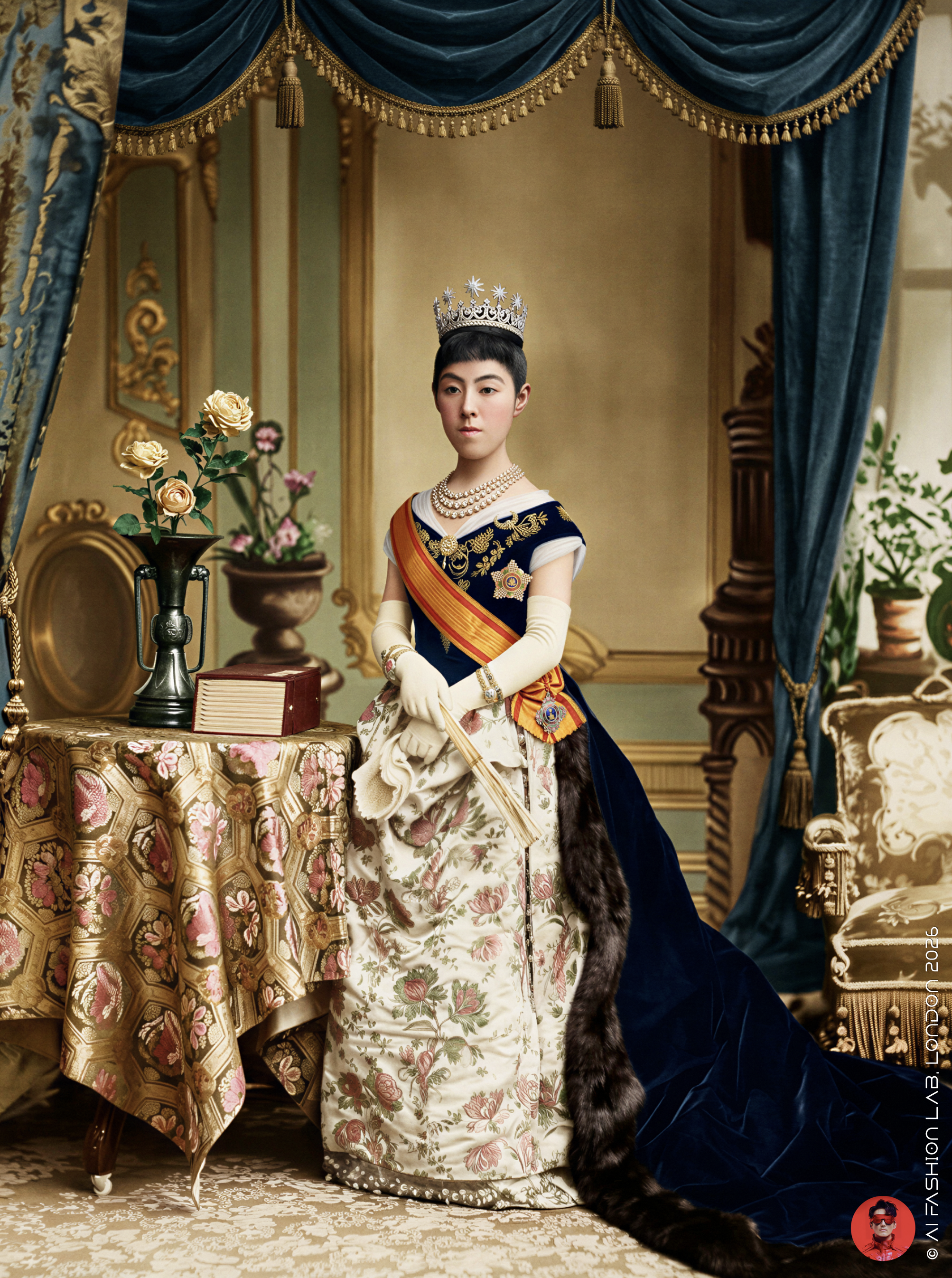
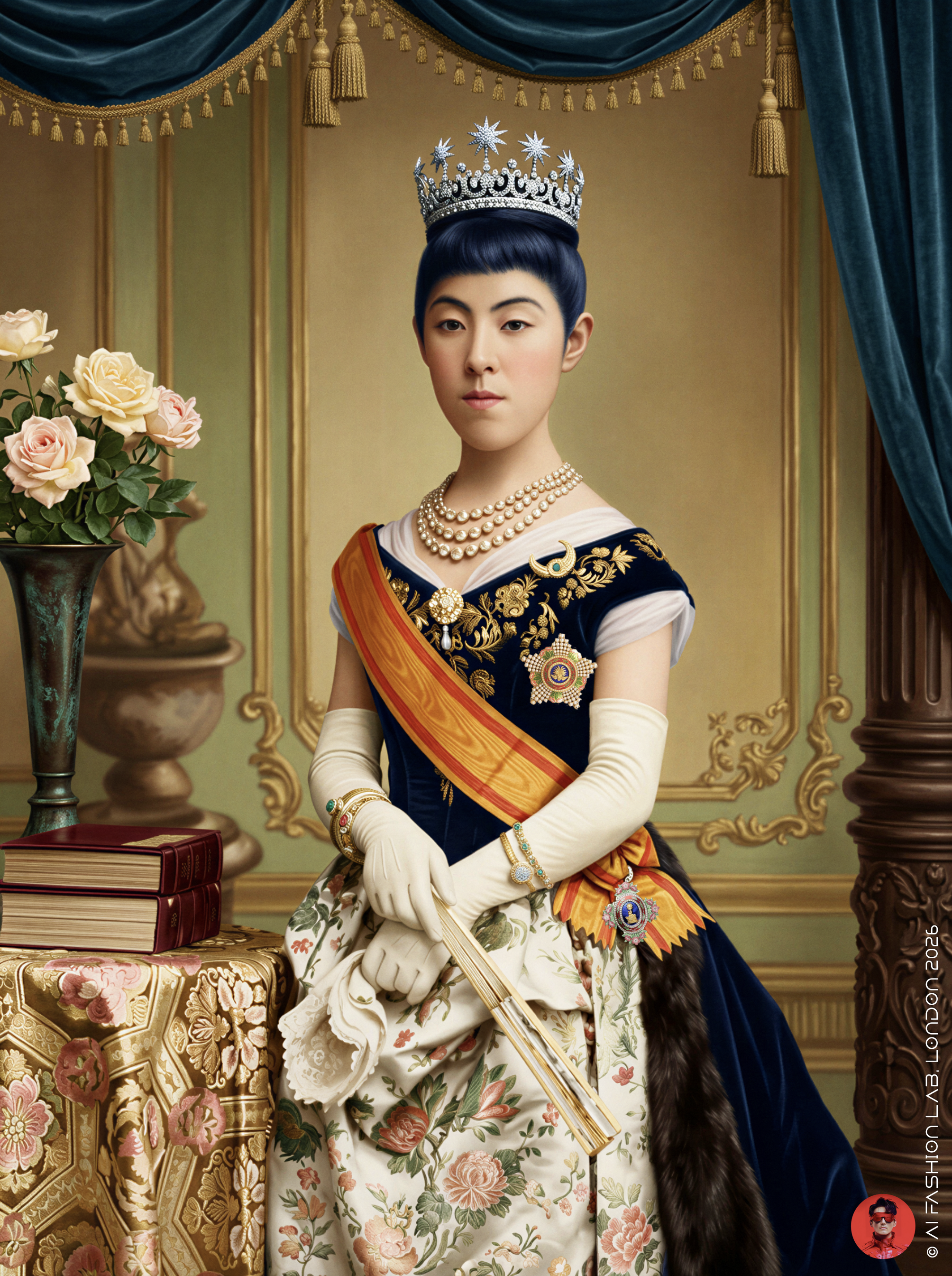
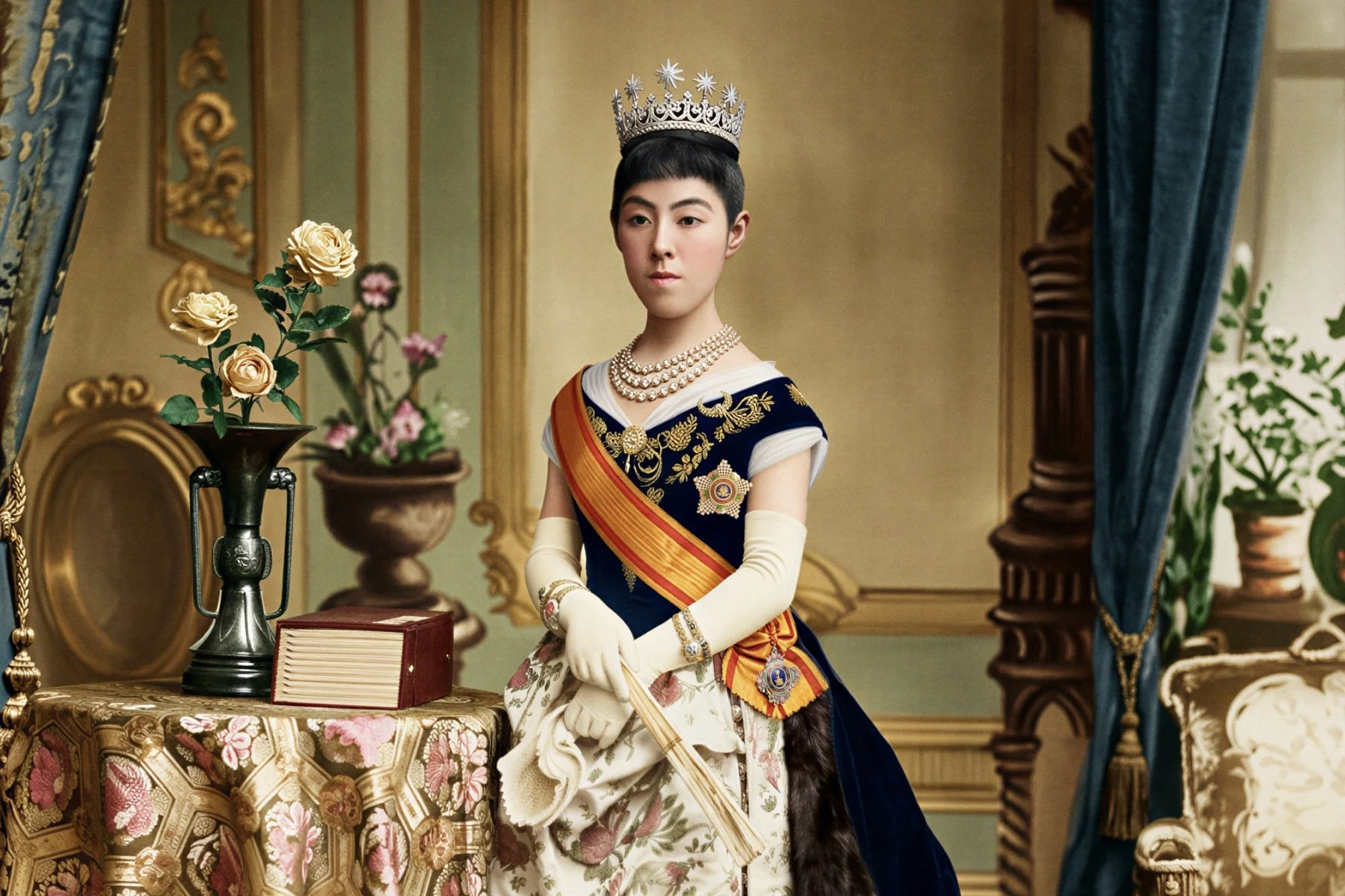
ภาพที่ผมเพิ่งลงสีใหม่นี้ตั้งอยู่ ณ จุดสูงสุดของหนึ่งในปฏิบัติการทางการทูตผ่านเครื่องแต่งกายที่ถูกออกแบบอย่างชาญฉลาดที่สุดในเอเชียคริสต์ศตวรรษที่ ๑๙ สมเด็จพระจักรพรรดินีโชเก็น (昭憲皇后 พระนามเดิม อิจิโจ มาซาโกะ, พ.ศ. ๒๓๙๒–๒๔๕๗) พระมเหสีในสมเด็จพระจักรพรรดิเมจิ มิได้ทรงฉลองพระองค์แบบตะวันตกจนกระทั่ง พ.ศ. ๒๔๒๙ หรือสิบแปดปีหลังการปฏิรูปเมจิ และสิบสี่ปีหลังจากที่พระจักรพรรดิเมจิทรงประกาศให้ข้าราชสำนักฝ่ายหน้าแต่งกายแบบยุโรปใน พ.ศ. ๒๔๑๕
ช่องว่างของเวลานี้มีความหมายอย่างยิ่ง การทำให้ “ฝ่ายหน้า” ของรัฐเมจิเป็นแบบตะวันตก ไม่ว่าจะเป็นกองทัพ ระบบราชการ หรือกฎหมาย สามารถดำเนินผ่านเครื่องแบบได้โดยตรง แต่สำหรับฝ่ายใน เรื่องนี้ซับซ้อนกว่านั้นมาก เพราะญี่ปุ่นไม่เคยมีต้นแบบของสตรีชั้นสูงที่จะปรากฏพระองค์อย่างเป็นทางการ โดยลำพัง ต่อหน้าคณะทูตต่างประเทศในระบบพิธีการแบบยุโรป
ปีที่ชี้ขาดคือ พ.ศ. ๒๔๒๙ วันที่ ๓๐ กรกฎาคมปีนั้น สมเด็จพระจักรพรรดินีเสด็จพระราชดำเนินไปในพิธีสำเร็จการศึกษาของโรงเรียนสตรีขุนนางในฉลองพระองค์แบบตะวันตก และวันที่ ๑๐ สิงหาคม ทรงรับรองแขกต่างประเทศในฉลองพระองค์แบบตะวันตกเป็นครั้งแรก ในงานคอนเสิร์ตดนตรีตะวันตกที่ทรงเป็นเจ้าภาพร่วมกับสมเด็จพระจักรพรรดิ นับจากนั้น ข้าหลวงฝ่ายในจึงเริ่มแต่งกายตามแบบเดียวกัน
ประกาศภายในของรัฐมนตรีกระทรวงพระราชสำนัก ลงวันที่ ๒๓ มิถุนายน พ.ศ. ๒๔๒๙ ได้กำหนดเครื่องแต่งกายฝ่ายในออกเป็นสี่ประเภท โดยใช้คำเรียกทั้งภาษาฝรั่งเศสและภาษาญี่ปุ่น ได้แก่ manteau de cour (taireifuku), robe décolletée (chūreifuku), robe mi-décolletée (shōreifuku) และ robe montante (tsūjōreifuku) การใช้ศัพท์ฝรั่งเศสเช่นนี้ไม่ใช่เรื่องผิวเผิน แต่เป็นการประกาศว่าฝ่ายในของจักรวรรดิญี่ปุ่นสามารถถูกอ่านความหมายได้ในราชสำนักยุโรปทุกแห่ง โดยไม่ต้องแปลรหัสทางพิธีการใหม่
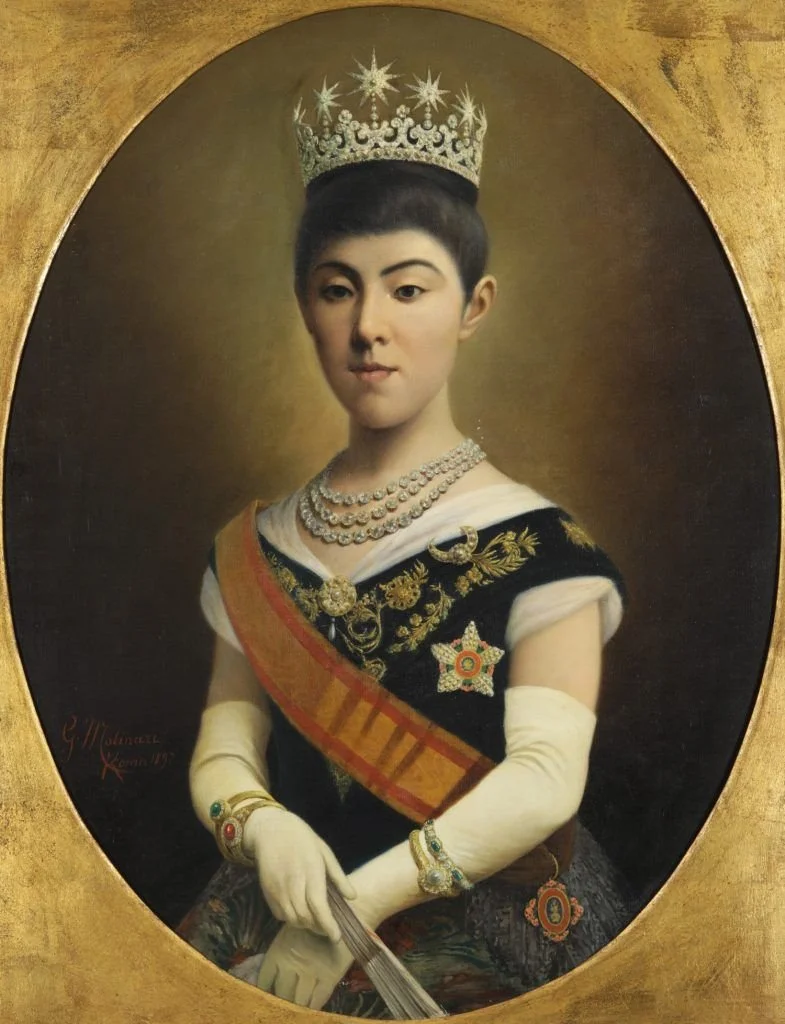
ภาพเขียนสีน้ำมันโดย Giuseppe Molinari ที่กรุงโรมใน พ.ศ. ๒๔๔๐ และภาพถ่ายต้นแบบของภาพเขียนนั้น แสดงสมเด็จพระจักรพรรดินีในฉลองพระองค์ระดับสูงสุด คือ manteau de cour ซึ่งใช้เฉพาะในพระราชพิธีขึ้นปีใหม่เท่านั้น ฉลองพระองค์ชุดนี้ยังคงอยู่ในคอลเลกชันของพิพิธภัณฑ์เมจิจิงกูในสภาพที่ได้รับการบูรณะบางส่วน เอกสารระบุว่าฉลองพระองค์ตัดเย็บในเยอรมนี แต่ระหว่างการอนุรักษ์กลับพบว่างานปักทำขึ้นในญี่ปุ่น และยังพบกระดาษวาชิที่มีตัวอักษรคันจิเขียนอยู่ ใช้เป็นวัสดุเสริมโครงด้านหลังงานปักบนชายกระโปรง
ตัววัตถุจึงเป็นลูกผสมในตัวเอง — โครงสร้างแบบเยอรมัน ฝีมือปักแบบญี่ปุ่น — และประเด็นนี้สำคัญ เพราะเครื่องแต่งกายชิ้นเดียวกันนี้ได้ซ้อมข้อโต้แย้งเชิงอุดมการณ์ที่สมเด็จพระจักรพรรดินีจะทรงประกาศเป็นลายลักษณ์อักษรในเวลาต่อมา
วันที่ ๑๗ มกราคม พ.ศ. ๒๔๓๐ ทรงออก kashikomi หรือพระราชบันทึกที่เผยแพร่ผ่านหนังสือพิมพ์ Chōya ข้อโต้แย้งในเอกสารฉบับนี้มีความแหลมคมอย่างยิ่ง เมื่อทรงกล่าวถึงการแต่งกายแบบตะวันตกสำหรับสตรี พระองค์ทรงเสนอว่าเครื่องแต่งกายแบบตะวันตก ซึ่งประกอบด้วยเสื้อหรือแจ็กเก็ตคู่กับกระโปรงนั้น มีลักษณะใกล้เคียงกับระบบเครื่องแต่งกายญี่ปุ่นโบราณมากกว่ากิโมโน ขณะที่กิโมโนถูกอธิบายว่าเป็นรูปแบบที่ได้รับอิทธิพลจากจีน ถูกดัดแปลงจนผิดรูป และไม่เหมาะสมกับชีวิตสมัยใหม่
ในความเห็นของผม นี่คือหนึ่งในประโยคที่บรรจุอุดมการณ์เข้มข้นที่สุดในประวัติศาสตร์แฟชั่นเอเชียคริสต์ศตวรรษที่ ๑๙ เพราะมันทำให้การรับเครื่องแต่งกายตะวันตกไม่ใช่การยอมจำนนต่อสิ่งแปลกปลอม แต่เป็นการ “กลับคืน” ไปสู่ความเป็นญี่ปุ่นที่เก่าแก่กว่า ลึกไปกว่าชั้นอิทธิพลจีน และในขณะเดียวกันก็ตัดสายสัมพันธ์ทางสัญลักษณ์กับมรดกการแต่งกายของจีนและเอเชียตะวันออกภาคพื้นทวีป
พระราชบันทึกฉบับเดียวกันยังทรงขอให้สตรีญี่ปุ่นยอมรับแฟชั่นตะวันตก แต่มีเงื่อนไขสำคัญว่า ควรสนับสนุนผู้ผลิตภายในประเทศด้วย ข้อความนี้จึงไม่ใช่เพียงคำแนะนำด้านรสนิยม หากเป็นทั้งนโยบายวัฒนธรรมและนโยบายเศรษฐกิจที่ช่วยผลักดันอุตสาหกรรมไหมญี่ปุ่นให้ก้าวสู่คุณภาพระดับส่งออก
ผลทางการเมืองของยุทธศาสตร์นี้เห็นได้ชัดใน พ.ศ. ๒๔๓๒ เมื่อสมเด็จพระจักรพรรดินีโชเก็นเสด็จออกในฉลองพระองค์ manteau de cour เต็มยศ ทรงเทียร่า สายสะพายและดาราแห่งเครื่องราชอิสริยาภรณ์มงกุฎอันสูงค่ายิ่ง ซึ่งสถาปนาขึ้นสำหรับสตรีใน พ.ศ. ๒๔๓๑ ในวันประกาศใช้รัฐธรรมนูญเมจิ พระองค์ทรงเป็นจักรพรรดินีเอเชียพระองค์แรก ๆ ที่ถูกถ่ายภาพและเผยแพร่ผ่านภาพพิมพ์ nishiki-e ในฐานะภาพสมมูลกับสมเด็จพระราชินีนาถวิกตอเรีย จักรพรรดินีเอากุสตาแห่งเยอรมนี หรือจักรพรรดินียูเฌนีแห่งฝรั่งเศส
ในความหมายที่เคร่งครัดที่สุด การทำให้เป็นตะวันตกจึงเสร็จสมบูรณ์แล้ว ตั้งแต่ศีรษะจรดพื้น เฉพาะในพื้นที่สาธารณะ และภายใต้ระบบพิธีการที่ถูกจัดหมวดหมู่ไว้อย่างเป็นลายลักษณ์อักษร
___________
Empress Shōken and the Manteau de Cour
The portrait you have just colourised stands at the apex of one of the most consciously engineered acts of sartorial diplomacy in nineteenth-century Asia. Empress Shōken (昭憲皇后, born Lady Masako Ichijō, 1849–1914), consort of the Meiji Emperor, did not adopt Western dress until 1886, eighteen years after the Restoration and fourteen years after her husband's own 1872 proclamation prescribing European clothing for the male court. That gap is itself the most telling fact in her wardrobe history. The Meiji state's male Westernisation — military, bureaucratic, juridical — could be performed through uniform; the female counterpart had to be constructed almost from nothing, since there was no existing Japanese template for a woman appearing officially, alone, before foreign dignitaries.
The decisive year was 1886. On 30 July 1886 the Empress attended the Peeresses School graduation ceremony in Western clothing, and on 10 August she received foreign guests in Western dress for the first time, hosting a Western music concert with the Emperor. From that moment her court ladies followed. A private notice from the Imperial Household Minister of 23 June 1886 then established four categories of women's court clothing in both French and Japanese terms: manteau de cour (taireifuku), robe décolletée (chūreifuku), robe mi-décolletée (shōreifuku), and robe montante (tsūjōreifuku). The terminology mattered: by importing the French protocol vocabulary wholesale, the Meiji court was signalling that Japanese imperial women would now be legible at any European court without translation.
The portrait by Giuseppe Molinari (Rome, 1897) and the photograph it derives from show her in the highest of these four categories — the manteau de cour, worn only at New Year's audience. The dress survives, partially restored, in the Meiji Jingu Museum collection. Records suggest the gown was tailored in Germany, but during conservation it was found that the embroidery was made in Japan; a piece of Japanese washi paper with kanji written on it was discovered serving as a stiffener behind the embroidery on the train. The object is itself a hybrid — German cut, Japanese hand — and this matters because it rehearses, in a single garment, the methodological argument the Empress would soon make in writing.
On 17 January 1887 she issued a kashikomi (memorandum) circulated through the newspaper Chōya. Its argument was double-edged and remarkable. When the Empress addressed her female subjects on the topic of Western dress, she argued that the Western combination of top or jacket and skirt was similar to the ancient system of Japanese dress, while the kimono was a sino-form, deformed and inappropriate for the demands of modern life. To my reading this is the single most ideologically loaded sentence in nineteenth-century Asian fashion history: it reframes Westernisation not as foreign imposition but as a return to a deeper, pre-Sinitic Japanese authenticity, and simultaneously cuts the cord with continental East Asian sartorial heritage. The same memorandum urged her fellow women to embrace Western fashion with the caveat that they should support domestic manufacturers — a protectionist clause that gave the Japanese silk industry an export-quality stimulus from which it never looked back.
The political pay-off was visible by 1889. Shōken appeared in full manteau de cour with tiara, Grand Cordon of the Order of the Precious Crown, instituted for her in 1888, and breast star at the promulgation of the Meiji Constitution — the first Asian empress consort to be photographed and circulated in nishiki-e prints as the visual equivalent of Queen Victoria, the Empress Augusta of Germany, or the Empress Eugénie. The Westernisation was, in the strictest sense, complete: head to floor, public sphere only, every category codified.
___________
เรียนเชิญกด Subscribe ได้ที่ลิงก์นี้ครับ เพื่อร่วมติดตามงานสร้างสรรค์ต้นฉบับ งานวิจัยประวัติศาสตร์แฟชั่น และผลงานอนุรักษ์มรดกวัฒนธรรมด้วยเทคโนโลยี AI ของ AI Fashion Lab, London ซึ่งมุ่งตีความอดีตผ่านมิติใหม่ของการบูรณะภาพ การสร้างสรรค์ภาพ และการเล่าเรื่องด้วยศิลปะเชิงดิจิทัล https://www.facebook.com/aifashionlab/subscribe/
#aifashionlab #AI #aiartist #aiart #aifashion #aifashiondesign #aifashionstyling #aifashiondesigner #fashion #fashionhistory #historyoffashion #digitalfashiondesign #digitalcostumedesign #digitaldesign #digitalaiart #AsianFashionHistory #JapaneseFashionHistory #Meiji #MeijiEra #EmpressShoken #昭憲皇后 #ManteauDeCour #CourtDress #SartorialDiplomacy #RoyalDress #ImperialJapan