สมเด็จพระศรีสวรินทิราบรมราชเทวี พระพันวัสสาอัยยิกาเจ้า และแฟชั่นยุค La Belle Époque
สมเด็จพระศรีสวรินทิราบรมราชเทวี พระพันวัสสาอัยยิกาเจ้า และแฟชั่นยุค La Belle Époque
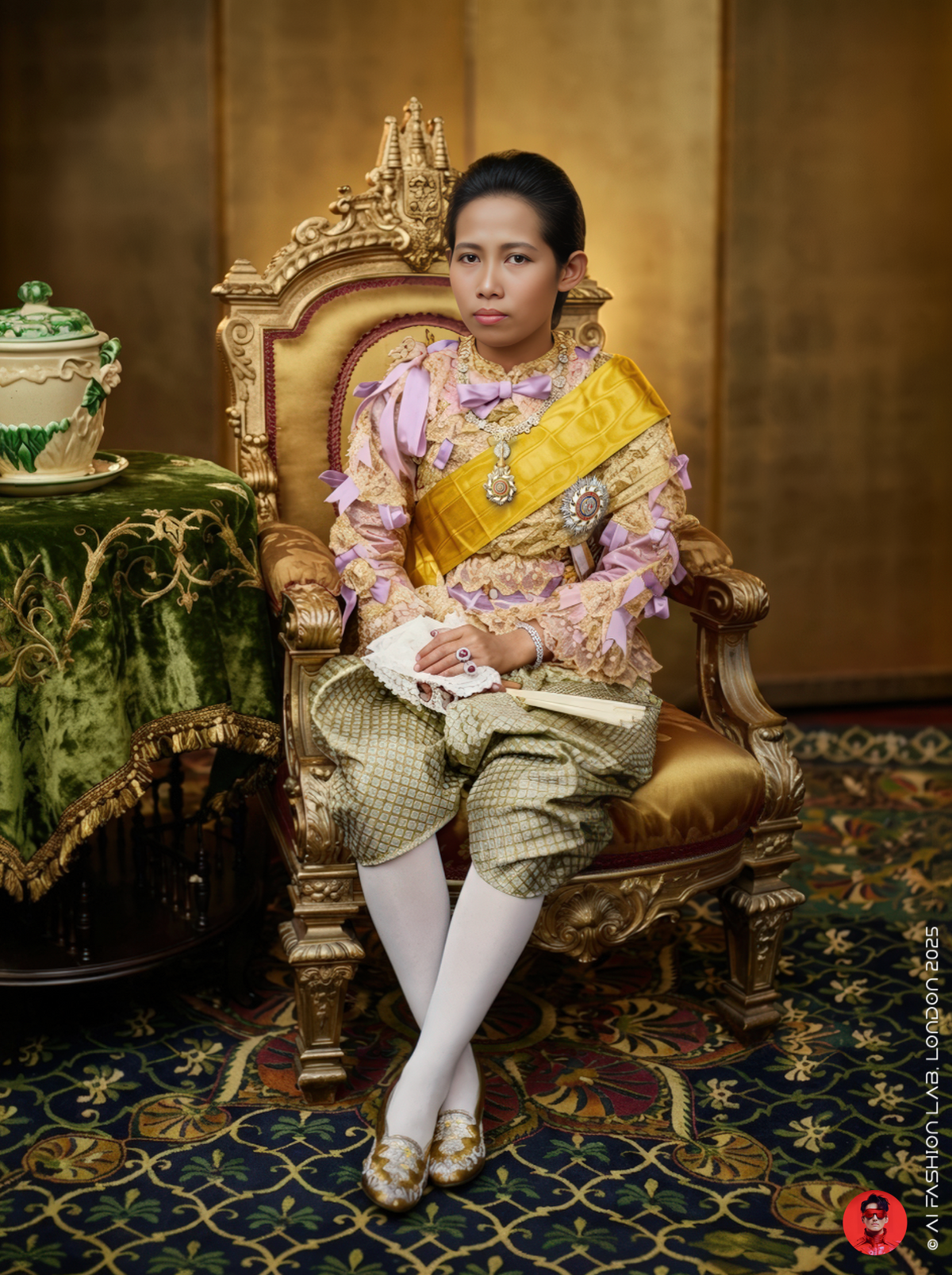
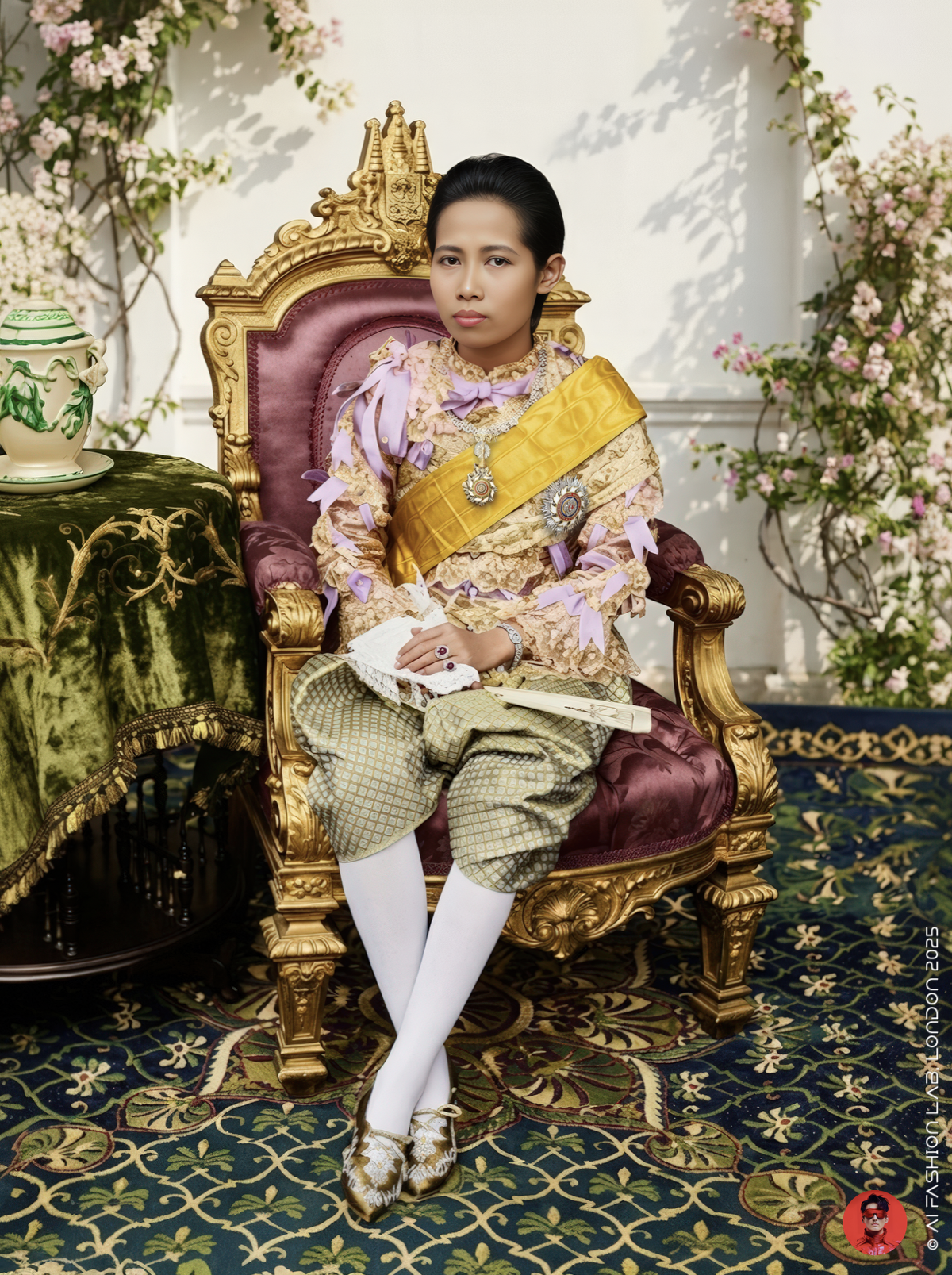
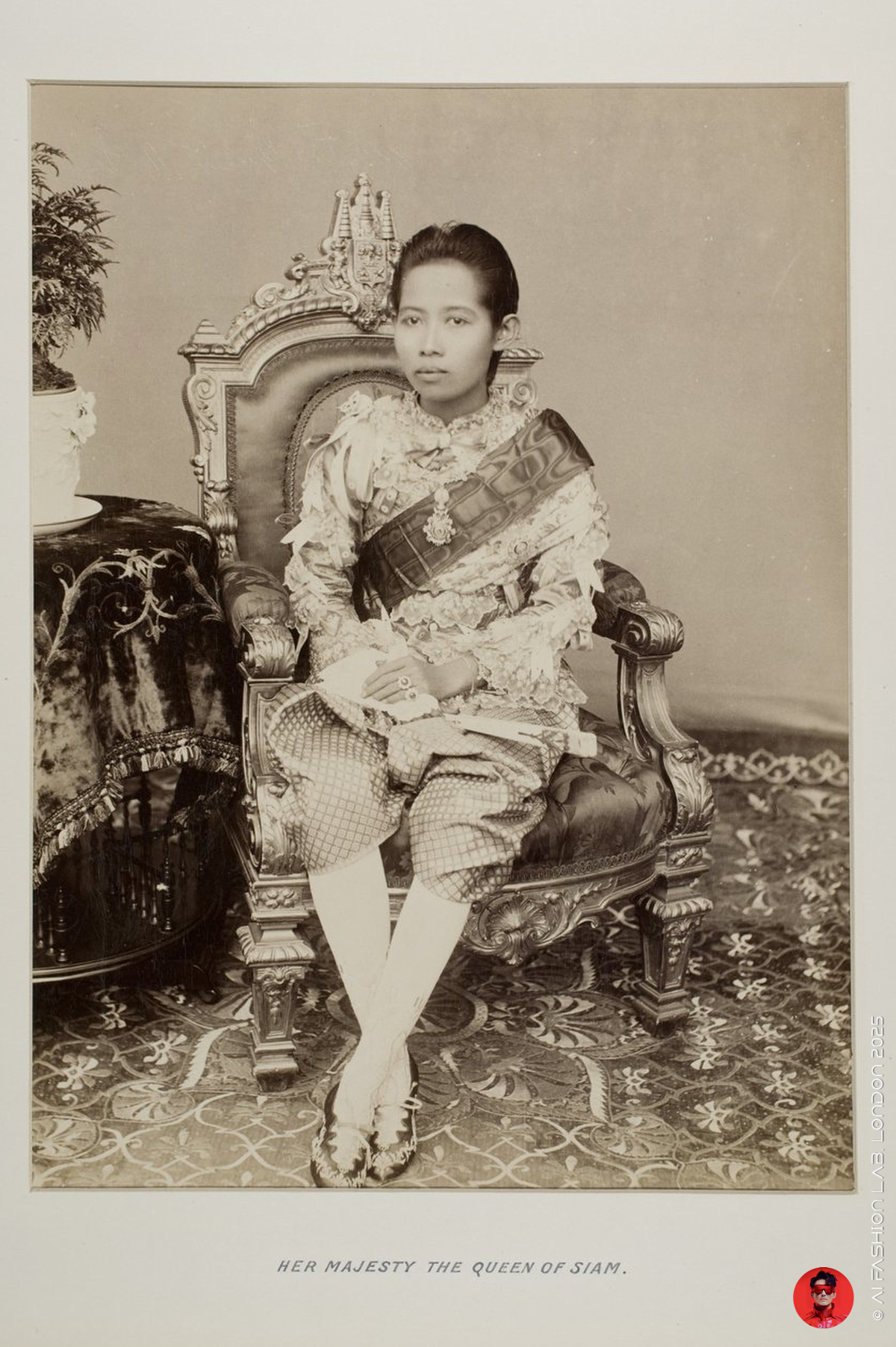
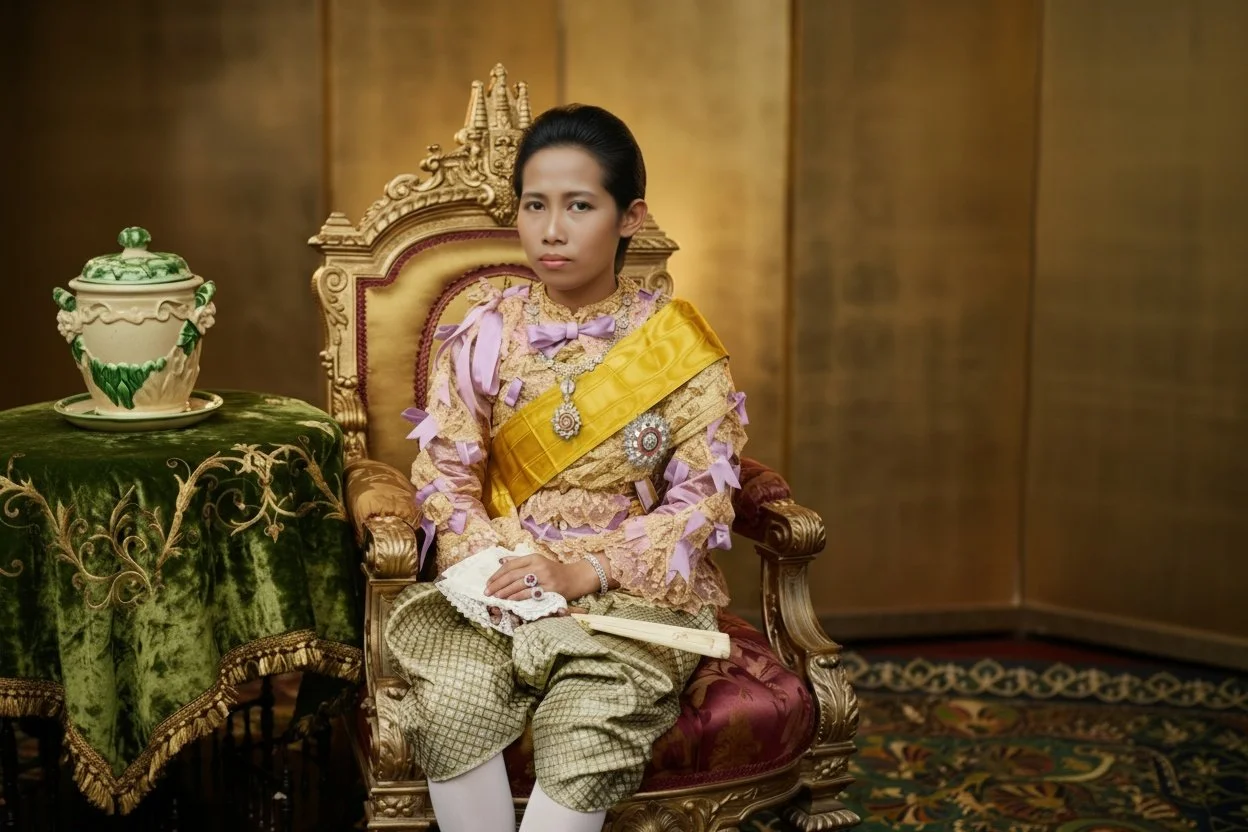
ภาพที่ได้รับการบูรณะและสร้างสรรค์ด้วยเทคโนโลยี AI นี้ คือ พระฉายาลักษณ์ของสมเด็จพระศรีสวรินทิราบรมราชเทวี พระพันวัสสาอัยยิกาเจ้า ซึ่งคาดว่าทรงฉายก่อนปี พ.ศ. ๒๔๓๘ (ค.ศ. 1895) ไม่นานนัก—เป็นช่วงเวลา ก่อนการสิ้นพระชนม์ของสมเด็จพระบรมโอรสาธิราช เจ้าฟ้ามหาวชิรุณหิศ
สไตล์การแต่งกายในพระฉายาลักษณ์นี้สะท้อนแฟชั่นยุคแรกของ La Belle Époque ซึ่งยังไม่เข้าสู่ความนิยมของแขนเสื้อทรงหมูแฮม (leg-of-mutton sleeves) อันโดดเด่นในภายหลัง อีกทั้งบนภาพต้นฉบับยังระบุชัดว่าเป็น “Her Majesty Queen of Siam”
ภายหลังการสวรรคตของสมเด็จพระบรมโอรสาธิราช เจ้าฟ้ามหาวชิรุณหิศ สยามมกุฎราชกุมาร พระบาทสมเด็จพระจุลจอมเกล้าเจ้าอยู่หัวทรงสถาปนาสมเด็จพระเจ้าลูกยาเธอ เจ้าฟ้ามหาวชิราวุธ พระราชโอรสในพระนางเจ้าเสาวภาผ่องศรี พระวรราชเทวี ขึ้นเป็นสมเด็จพระบรมโอรสาธิราช สยามมกุฎราชกุมารพระองค์ต่อไป และในวันที่ 15 กันยายน พ.ศ. 2438 จึงโปรดให้ออกพระนามพระราชชนนีแห่งสมเด็จพระบรมโอรสาธิราชนั้นว่า สมเด็จพระนางเจ้า พระอรรคราชเทวี ในฐานะเป็นพระชนนีในสมเด็จพระบรมโอรสาธิราชฯ พระองค์ใหม่ ซึ่งเป็นพระยศพระอัครมเหสีเช่นเดียวกับสมเด็จพระนางเจ้าสว่างวัฒนา พระบรมราชเทวี
บริบททางประวัติศาสตร์และแฟชั่น: La Belle Époque แห่งสยาม
พระฉายาลักษณ์องค์นี้มีความเป็นไปได้สูงว่าจะทรงฉาย ในช่วงทศวรรษ 1880s–1890s (พ.ศ. ๒๔๒๓–๒๔๒๕) ซึ่งเป็นยุคเดียวกับความรุ่งเรืองของ La Belle Époque ในยุโรป และ The Gilded Age ในสหรัฐอเมริกา—ยุคที่ศิลปะ วัฒนธรรม สถาปัตยกรรม และเทคโนโลยีต่างเติบโตอย่างก้าวกระโดด
ในขณะเดียวกัน สยามภายใต้รัชกาลที่ ๕ กำลังดำเนินการปฏิรูปบ้านเมืองครั้งใหญ่ ทั้งด้านการปกครอง การศึกษา การคมนาคม และวัฒนธรรม เพื่อธำรงรักษาเอกราชท่ามกลางกระแสล่าอาณานิคม การเปิดรับวัฒนธรรมตะวันตกในราชสำนักจึงเป็นหนึ่งในยุทธศาสตร์สำคัญ
อิทธิพลแฟชั่นวิกตอเรียในราชสำนักสยาม
ในยุโรป ยุคนี้เป็นช่วงรุ่งเรืองของชุด bustle gown หรือ “กระโปรงโครงหางกระรอก” ที่ช่วยเสริมสัดส่วนช่วงหลัง พร้อมประดับด้วยผ้าลูกไม้ โบ และเครื่องตกแต่งอันวิจิตรบรรจง แฟชั่นเช่นนี้แพร่เข้ามาสู่ราชสำนักฝ่ายในของสยามผ่านการเสด็จประพาส การรับราชทูต และภาพสิ่งพิมพ์จากยุโรป
เจ้านายฝ่ายในจึงทรงนำ เสื้อเข้ารูปแบบ Victorian bodice มาปรับใช้ โดยตกแต่งด้วยลูกไม้ โบ และระบายบริเวณคอเสื้อและปลายแขน ซึ่งเป็นลักษณะเด่นของแฟชั่นวิกตอเรียตอนปลาย
แฟชั่นผสมผสานแบบสยาม–ตะวันตก
ความงดงามอันเป็นเอกลักษณ์ของแฟชั่นสยามในยุครัชกาลที่ ๕ อยู่ที่การผสมผสานระหว่างตะวันตกและอัตลักษณ์ไทยอย่างลงตัว เสื้อเข้ารูปแบบวิกตอเรียถูกสวมคู่กับ โจงกระเบนผ้ายกไหม ซึ่งเป็นเครื่องแต่งกายดั้งเดิมของชนชั้นสูงในราชสำนัก
รูปแบบดังกล่าวก่อเกิดเป็น แฟชั่นแบบผสมผสาน (hybrid fashion) ที่งดงาม น่าศึกษา และสะท้อนการเปิดรับโลกสมัยใหม่ของสยามในขณะเดียวกันก็ยังรักษารากวัฒนธรรมของตนเองไว้ได้อย่างสง่างาม
_______________________________
Her Majesty Queen Sri Savarindira, the Queen Grandmother, and La Belle Époque Fashion
This AI-restored and artistically re-imagined portrait depicts Her Majesty Queen Sri Savarindira, the Queen Grandmother, taken in the years immediately before 1895—prior to the death of Crown Prince Maha Vajirunhis.
The fashion observed in the portrait reflects the early phase of the La Belle Époque era, before the widespread adoption of the dramatic leg-of-mutton sleeves. The original photograph bears a clear handwritten annotation identifying her as “Her Majesty the Queen of Siam.” After the passing of Crown Prince Maha Vajirunhis, King Chulalongkorn elevated Prince Vajiravudh, the son of Queen Saovabha Phongsri, to the position of Crown Prince. Subsequently, on 15 September 1895, His Majesty graciously conferred upon Queen Saovabha the title “Somdet Phra Nang Chao Phra Akkhararatchathewi”, recognising her status as the mother of the new Crown Prince—equivalent in rank to Queen Savang Vadhana, the Queen Consort.
Historical and Fashion Context: La Belle Époque in Siam
This portrait was likely taken between the late 1880s and early 1890s, a period corresponding to the height of La Belle Époque in Europe and The Gilded Age in the United States—a time of flourishing arts, culture, and technological innovation.
Siam under King Chulalongkorn was undergoing profound modernisation to preserve national sovereignty during the age of colonial expansion. Western visual culture, etiquette, and fashion increasingly entered the royal court, blending with long-established Siamese traditions.
Victorian Influences in the Siamese Court
Across Europe, the period was characterised by the popularity of the bustle gown, with its signature rear-enhancing structure and lavish lace ornamentation. These styles influenced the Siamese inner court, where royal ladies adapted Western silhouettes into a form suitable for Siamese dress.
The Victorian bodice, fitted to the torso and decorated with lace, bows, and pleated detailing at the neckline and cuffs, became a significant fashionable element adopted in Siam during the late reign of King Rama V.
A Refined Siamese–Western Hybrid Aesthetic
In Siam, the Victorian fitted bodice was harmoniously paired with the jongkraben made of silk brocade, a garment deeply rooted in Thai court culture.
This combination—Western structure above and traditional Siamese attire below—created a distinctive hybrid court fashion unique to the era. It symbolised the royal court’s ability to modernise and internationalise while retaining its cultural identity.
The result is an elegant cross-cultural synthesis that reflects both global fashion trends of the La Belle Époque and the sophisticated sartorial language of the Siamese royal court.
#aifashionlab #AI #aiartist #aiart #aifashion #aifashiondesign #aifashionstyling #aifashiondesigner #fashion #fashionhistory #historyoffashion #fashionstyling #fashionphotography #digitalfashion #digitalfashiondesign #digitalcostumedesign #digitaldesign #digitalaiart #ThaiFashionHistory #ThaiFashionAI #thailand #UNESCO