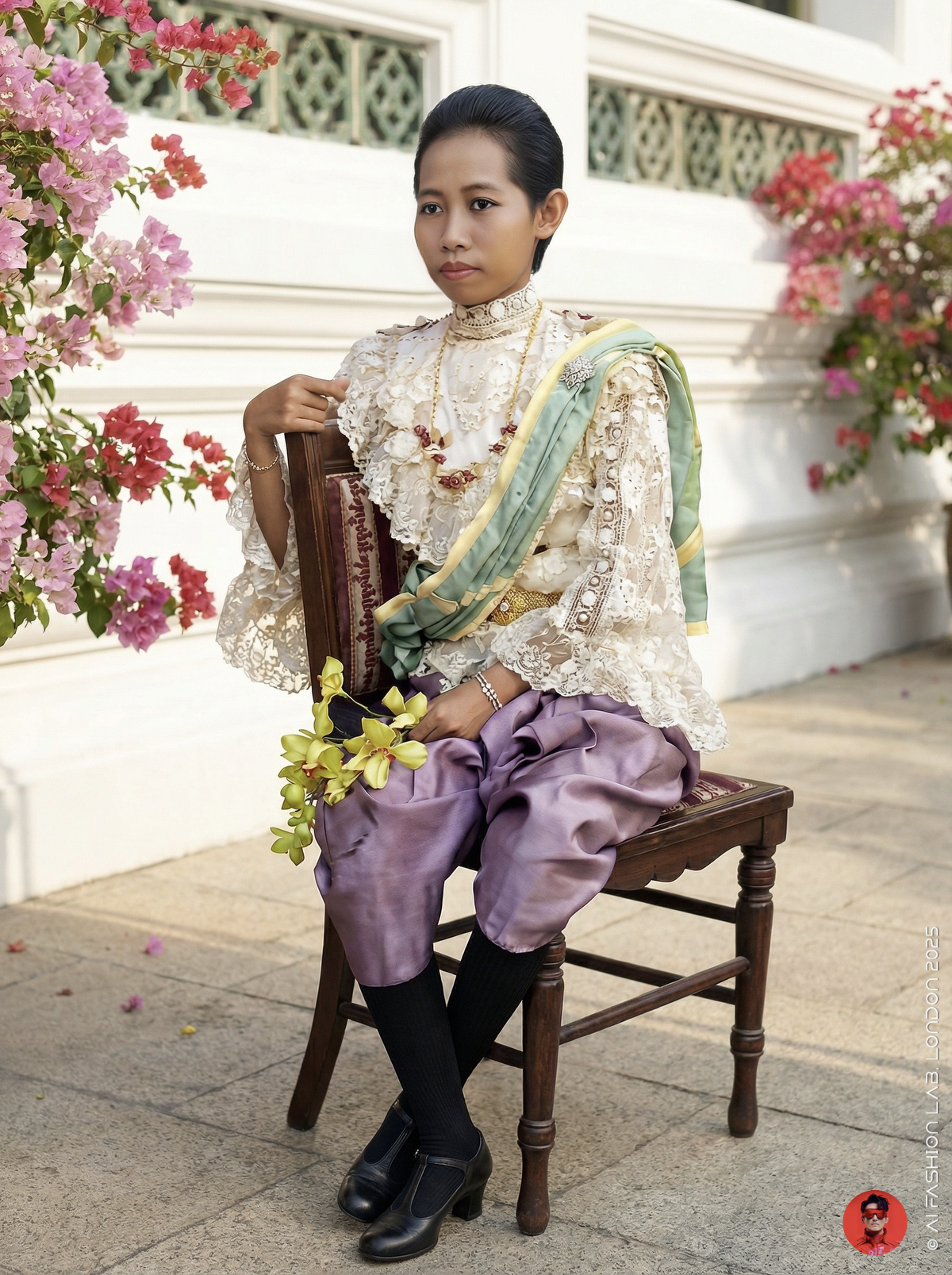
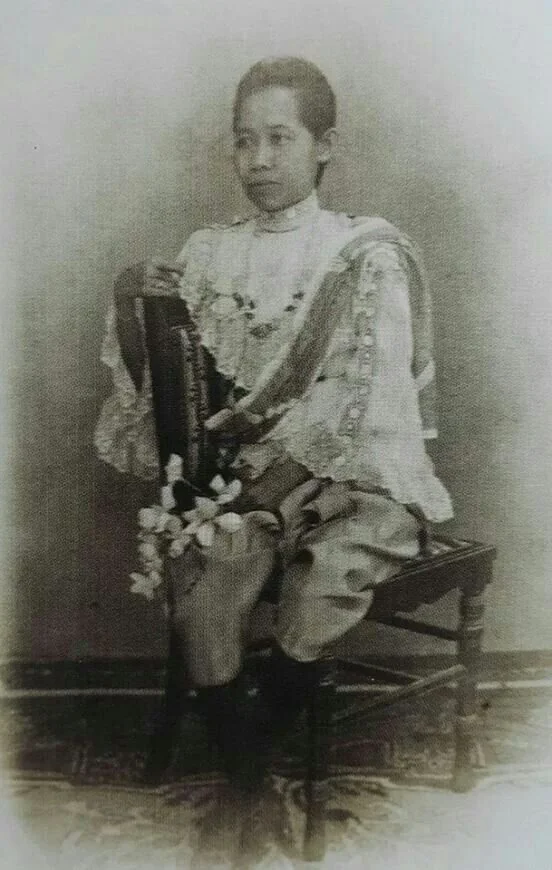
สมเด็จพระพันวัสสาอัยยิกาเจ้า ทรงฉลองพระองค์ผ้าลูกไม้แบบแขนกระดิ่ง (ruffled trumpet/bell sleeves)
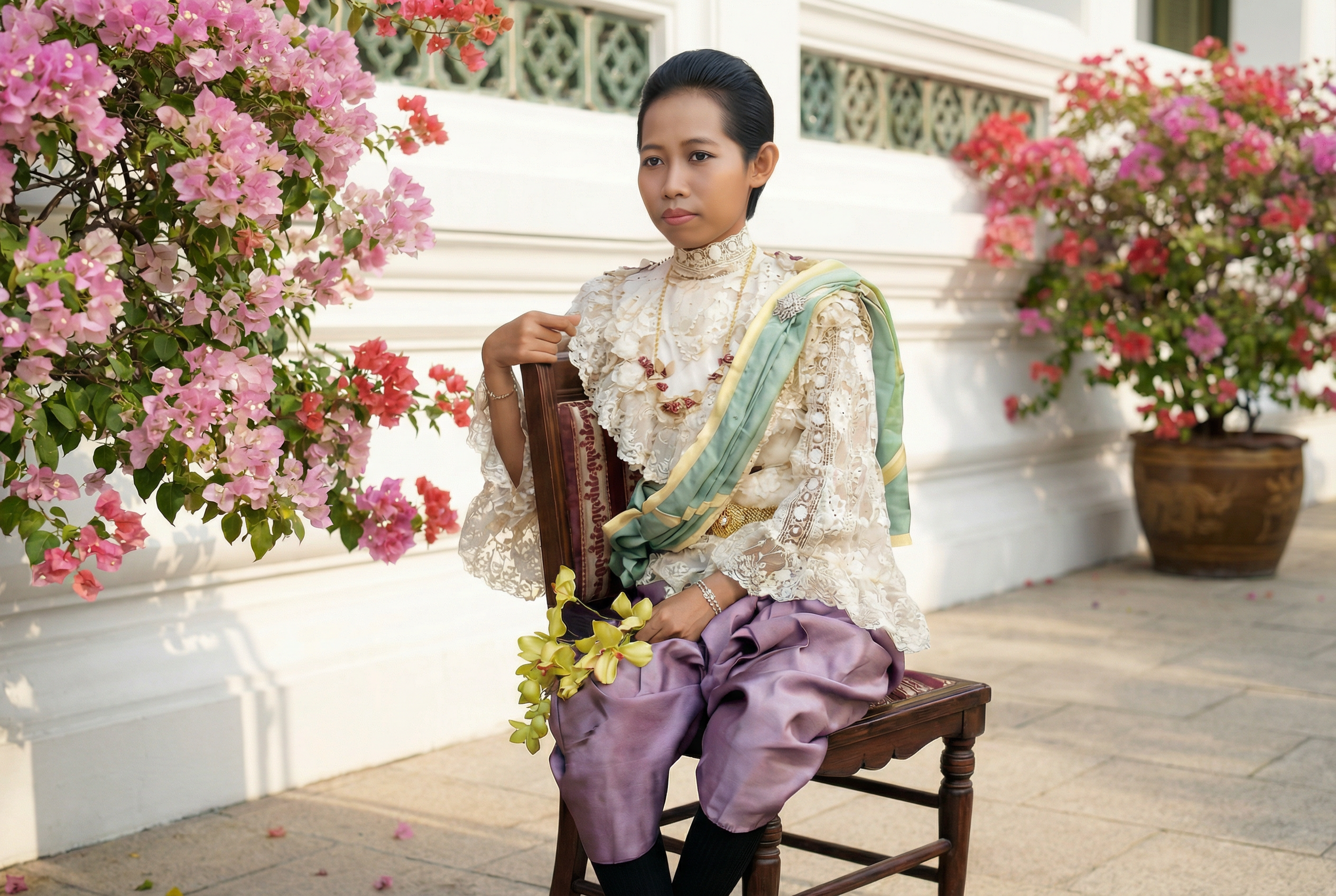
สมเด็จพระพันวัสสาอัยยิกาเจ้า ทรงฉลองพระองค์ผ้าลูกไม้แบบแขนกระดิ่ง (ruffled trumpet/bell sleeves)
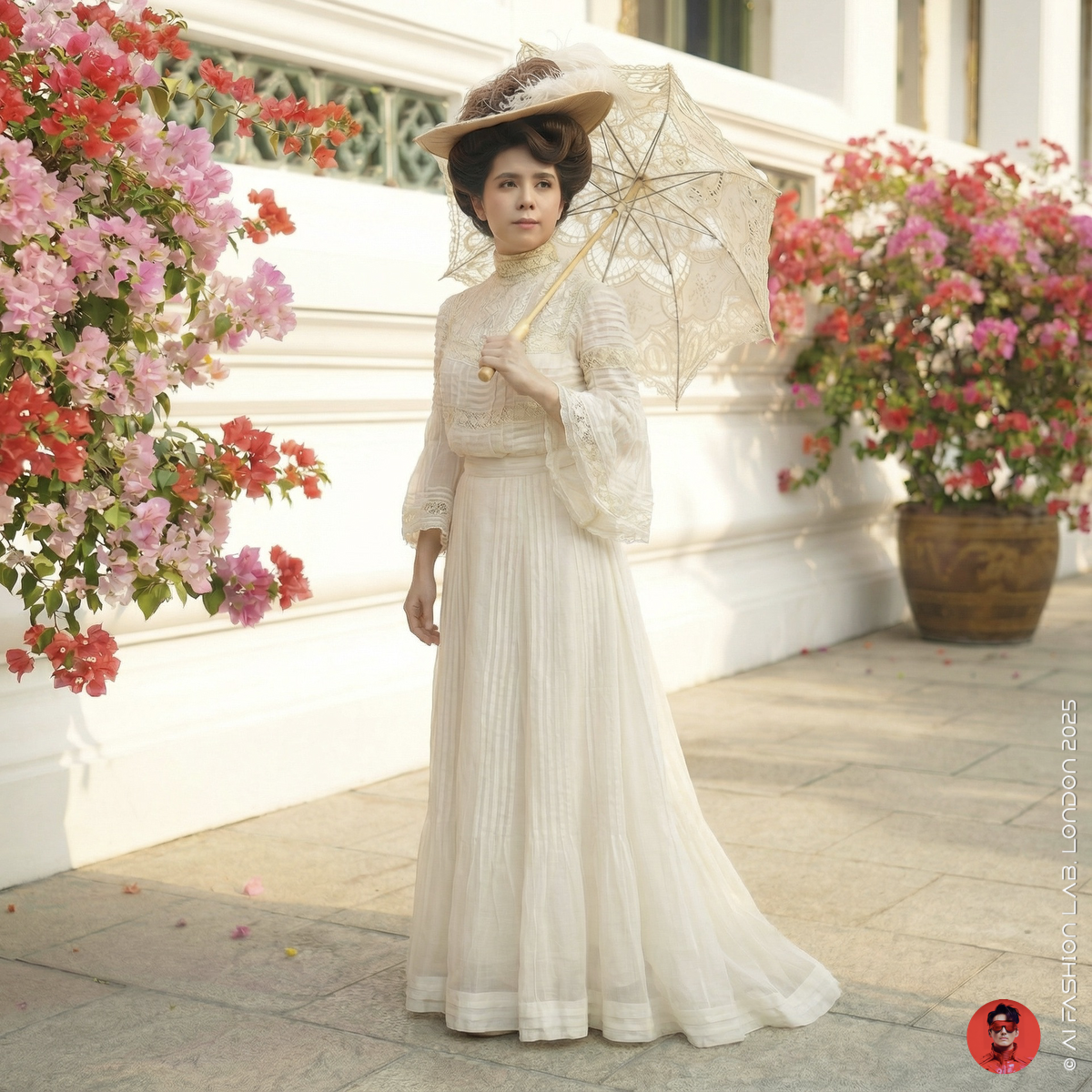
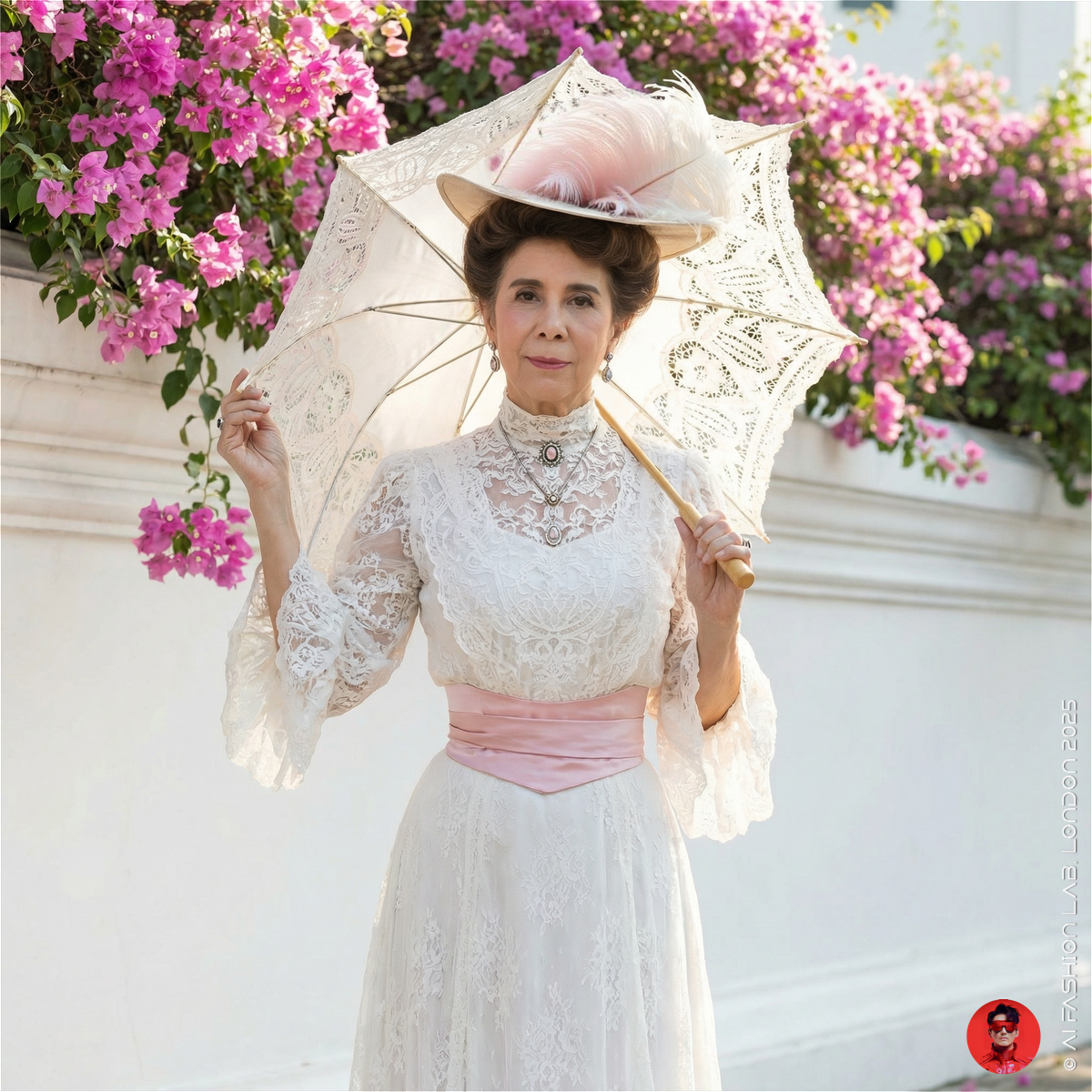
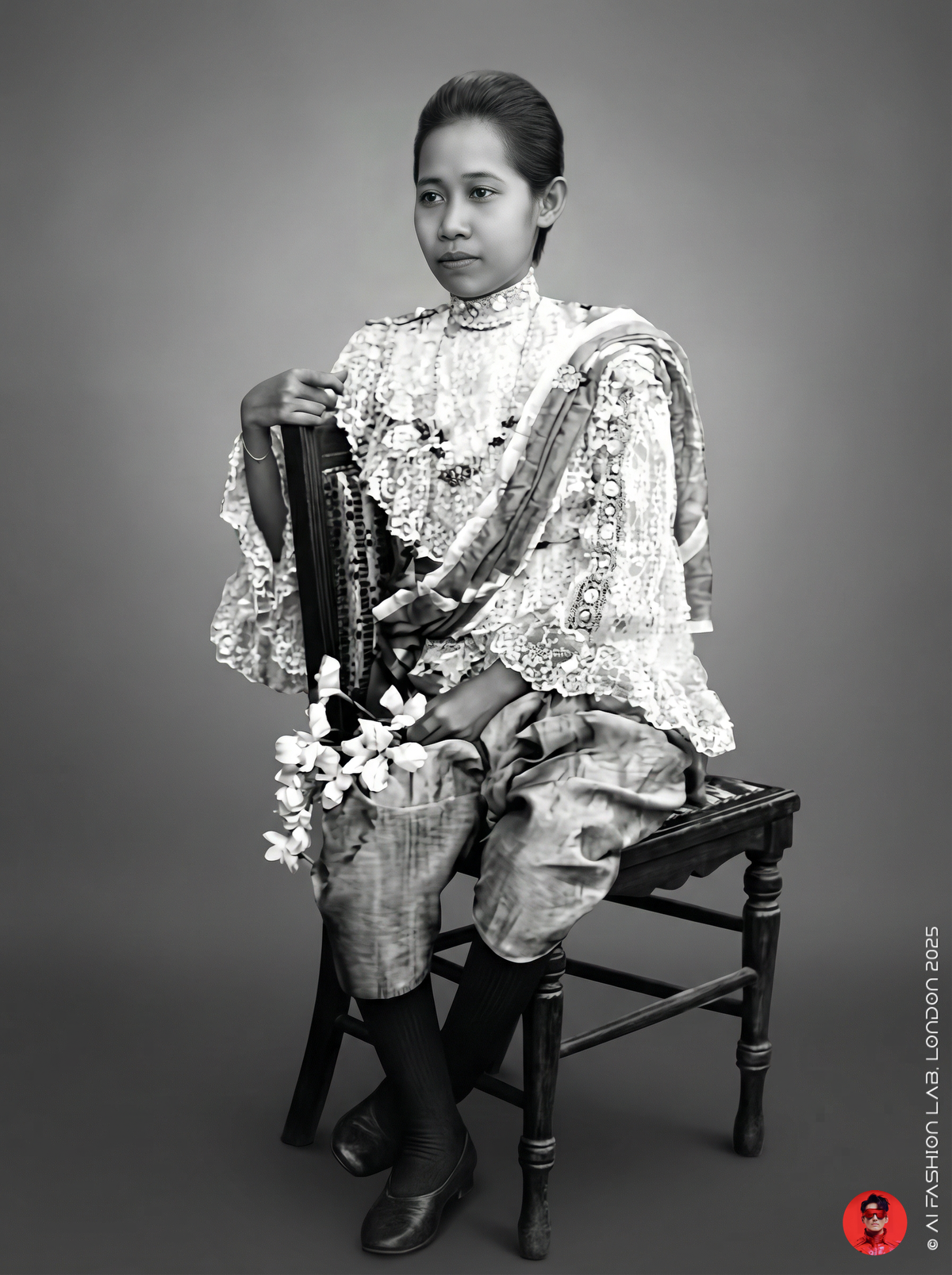
ภาพที่ได้รับการบูรณะและสร้างสรรค์ด้วยเทคโนโลยี AI นี้ คือพระฉายาลักษณ์ของสมเด็จพระศรีสวรินทิราบรมราชเทวี พระพันวัสสาอัยยิกาเจ้า ซึ่งคาดว่าทรงฉายในช่วงปลายรัชกาลที่ ๕ ต่อรัชกาลที่ ๖ โดยมีลักษณะตรงกับแฟชั่นช่วงปลายยุคเอ็ดเวิร์ดเดียนถึงต้นยุคทีนส์ (ค.ศ. 1908–1914) อย่างชัดเจน ในช่วงเวลานี้แฟชั่นในราชสำนักสยามกำลังเคลื่อนผ่านยุคสมัยแห่งการเปลี่ยนรูปแบบ จากสไตล์ตะวันตกที่สง่างามแบบเอ็ดเวิร์ดเดียน ไปสู่แนวโน้มใหม่ของความอ่อนช้อยตามธรรมชาติในยุคทีนส์ ทำให้ฉลองพระองค์ของพระองค์ท่านสะท้อนการผสมผสานระหว่างการตัดเย็บแบบยุโรปกับเครื่องแต่งกายแบบราชสำนักไทยได้อย่างงดงามและกลมกลืน
ฉลองพระองค์ผ้าลูกไม้คอสูงที่ทรงสวม แสดงลักษณะสำคัญของแฟชั่นยุคเอ็ดเวิร์ดเดียนอย่างสมบูรณ์แบบ ไม่ว่าจะเป็นคอเสื้อที่ตั้งสูง ช่วยขับลำคอให้ดูเรียวยาวและสง่างาม หรือเนื้อผ้าลูกไม้ที่ปักและฉลุด้วยเทคนิคชั้นสูงจากปารีส ซึ่งนิยมอย่างมากในหมู่สุภาพสตรีชนชั้นสูงยุคนั้น ส่วนแขนเสื้อสามส่วนที่บานออกเป็นระบาย หรือที่เรียกว่า “pagoda sleeves” / “bell sleeves” / “ruffled trumpet sleeves” ให้ความพลิ้วไหวทุกครั้งที่ขยับแขน และเป็นหนึ่งในรายละเอียดที่สะท้อนความประณีตอ่อนละมุนของแฟชั่นปลายยุคนั้นได้อย่างเด่นชัด เมื่อประกอบเข้ากับโจงกระเบนราชสำนักที่ทรงนุ่งตามแบบแผนของฝ่ายใน ทำให้พระฉายาลักษณ์นี้เป็นตัวอย่างอันงดงามของการผสมผสานระหว่างอัตลักษณ์ไทยและความร่วมสมัยแบบตะวันตกในระดับสูง
แขนเสื้อแบบ “แขนกระดิ่ง” (pagoda sleeves หรือ bell sleeves) เองนั้นมีประวัติยาวนานในโลกตะวันตก เริ่มต้นจากสมัยโรโคโคในศตวรรษที่ ๑๘ ซึ่งนิยมปลายแขนที่บานออกเป็นชั้น ๆ พร้อมลูกไม้และระบายเพื่อเน้นความพลิ้วไหว ก่อนจะกลับมาได้รับความนิยมอีกครั้งในยุควิกตอเรียช่วงกลางศตวรรษที่ ๑๙ โดยสุภาพสตรีนิยมใส่คู่กับ engageantes หรือลูกไม้ปลายแขนที่ถอดเปลี่ยนได้ จนกระทั่งเข้าสู่ยุคเอ็ดเวิร์ดเดียนและต้นยุคทีนส์ แขนกระดิ่งได้รับการปรับให้เบาบางและอ่อนช้อยขึ้น เพื่อให้สอดรับกับสไตล์เสื้อผ้าที่เปลี่ยนจากทรวดทรง S-curve สู่เส้นสายตามธรรมชาติที่นุ่มนวลกว่าเดิม ในช่วง ค.ศ. 1908–1914 ห้องเสื้อระดับ Haute Couture เช่น House of Worth, Callot Soeurs และ Lucile ต่างก็มีบทบาทสำคัญในการผลักดันให้แขนเสื้อทรงนี้กลายเป็นสัญลักษณ์ของความงามแบบสตรีสมัยใหม่
การที่สมเด็จพระพันวัสสาอัยยิกาเจ้าทรงฉลองพระองค์ด้วยเสื้อลูกไม้แขนกระดิ่งในพระฉายาลักษณ์นี้ จึงไม่เพียงสะท้อนความสมัยนิยมของโลกแฟชั่นยุโรปเท่านั้น หากยังเป็นหลักฐานของการปรับตัวอย่างสง่างามของราชสำนักสยามในการรับอิทธิพลตะวันตก พร้อมทั้งธำรงรากเหง้าบรรทัดฐานไทยไว้ได้อย่างวิจิตรและมีเอกลักษณ์ ผลลัพธ์คือภาพลักษณ์แบบ “ไฮบริดแฟชั่น” ระหว่างโลกตะวันตกกับราชสำนักไทย ที่ทั้งร่วมสมัย งดงาม และลุ่มลึกด้วยความหมายทางวัฒนธรรม
____________________
Her Majesty Queen Sri Savarindira, the Queen Grandmother wearing a lace blouse with ruffled trumpet sleeves
Her Majesty Queen Sri Savarindira, the Queen Grandmother (สมเด็จพระศรีสวรินทิราบรมราชเทวี พระพันวัสสาอัยยิกาเจ้า) appears here wearing an exquisite lace blouse with ruffled trumpet or bell sleeves—an ensemble recreated and restored through AI technology. This portrait is believed to date from the late reign of King Chulalongkorn (Rama V) into the early reign of King Vajiravudh (Rama VI), corresponding closely with fashion trends of the late Edwardian period through the early Teens era (c. 1908–1914). During this transitional moment in Siamese court culture, Western Edwardian dress began to harmonise with traditional Siamese court attire, resulting in a hybrid style that was both modern and deeply rooted in local identity. The Queen Grandmother’s ensemble beautifully embodies this refined synthesis of European elegance and Siamese royal tradition.
Her high-collared lace blouse displays the essential characteristics of Edwardian couture: a tall, structured neckline that elongates the throat, combined with delicate lacework featuring embroidery, cutwork, and open-work patterns typical of Parisian fashion houses of the period. The three-quarter-length ruffled trumpet sleeves—also known as pagoda or bell sleeves—create a sense of softness and fluid movement with every gesture. When paired with the traditional chong kraben (โจงกระเบน) worn in the Siamese court, the overall appearance achieves a graceful balance between Western sophistication and indigenous court dress, reflecting the Queen Grandmother’s discerning aesthetic sensibility.
The bell or pagoda sleeve itself has a long and illustrious history in Western fashion. Its earliest prominence can be traced to the Rococo era of the eighteenth century, particularly within the French court of Queen Marie Antoinette, where voluminous, layered sleeves adorned with lace ruffles symbolised luxury and ornamental refinement. The style re-emerged in the mid-nineteenth-century Victorian era, when women’s gowns frequently incorporated wide, flared sleeves worn with removable lace engageantes—undersleeves that enhanced both practicality and decoration.
As fashion evolved into the Edwardian period (1901–1910), the pagoda sleeve was reimagined with a lighter, more flowing silhouette that harmonised with the shift away from the strict S-curve figure of the earlier decade. By the late Edwardian and early Teens years (c. 1908–1914), couture houses such as the House of Worth, Callot Soeurs, and Lucile (Lady Duff-Gordon) popularised softer, more natural forms, including ruffled trumpet sleeves that emphasised delicacy, femininity, and understated elegance.
The Queen Grandmother’s adoption of this sleeve style must therefore be understood not merely as a fashion choice but as a cultural statement. It reflects the Siamese court’s sophisticated ability to adopt Western modernity while preserving its own ceremonial identity. This portrait stands as a testament to a unique moment in Siam’s sartorial history—when global fashion currents from Europe met the enduring traditions of the Chakri court, resulting in a hybrid visual language that was at once contemporary, dignified, and deeply meaningful.
เรียนเชิญกด Subscribe ได้ที่ลิงก์นี้ครับ เพื่อร่วมติดตามงานสร้างสรรค์ต้นฉบับ งานวิจัยประวัติศาสตร์แฟชั่น และผลงานอนุรักษ์มรดกวัฒนธรรมด้วยเทคโนโลยี AI ของ AI Fashion Lab, London ซึ่งมุ่งตีความอดีตผ่านมิติใหม่ของการบูรณะภาพ การสร้างสรรค์ภาพ และการเล่าเรื่องด้วยศิลปะเชิงดิจิทัล 🔗 https://www.facebook.com/aifashionlab/subscribe/
#aifashionlab #AI #aiartist #aiart #aifashion #aifashiondesign #aifashionstyling #aifashiondesigner #fashion #fashionhistory #historyoffashion #fashionstyling #fashionphotography #digitalfashion #digitalfashiondesign #digitalcostumedesign #digitaldesign #digitalaiart #ThaiFashionHistory #ThaiFashionAI #thailand #UNESCO