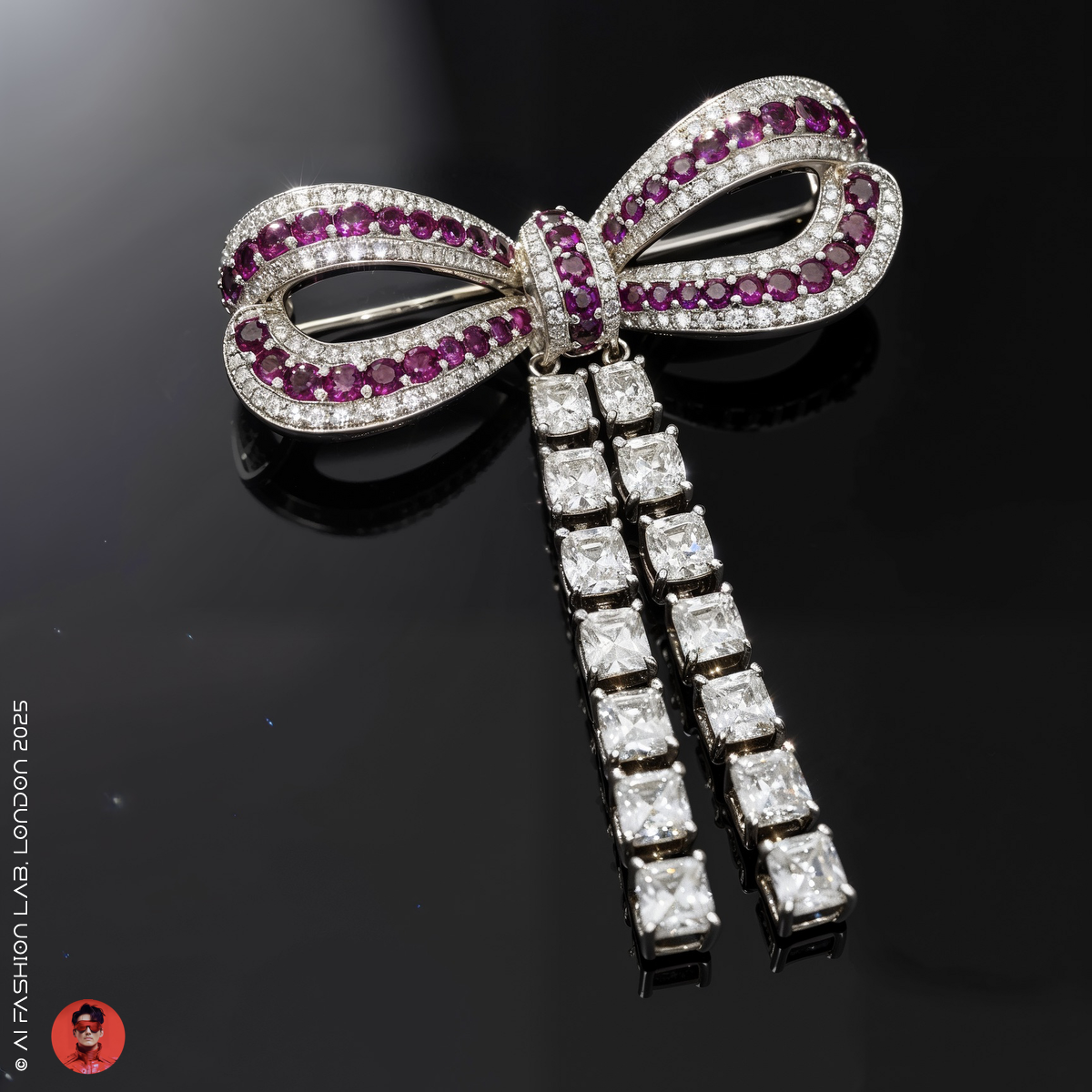
สมเด็จพระเจ้าบรมวงศ์เธอ เจ้าฟ้ามาลินีนภดาราฯ และเข็มกลัดเพชร รูปโบ
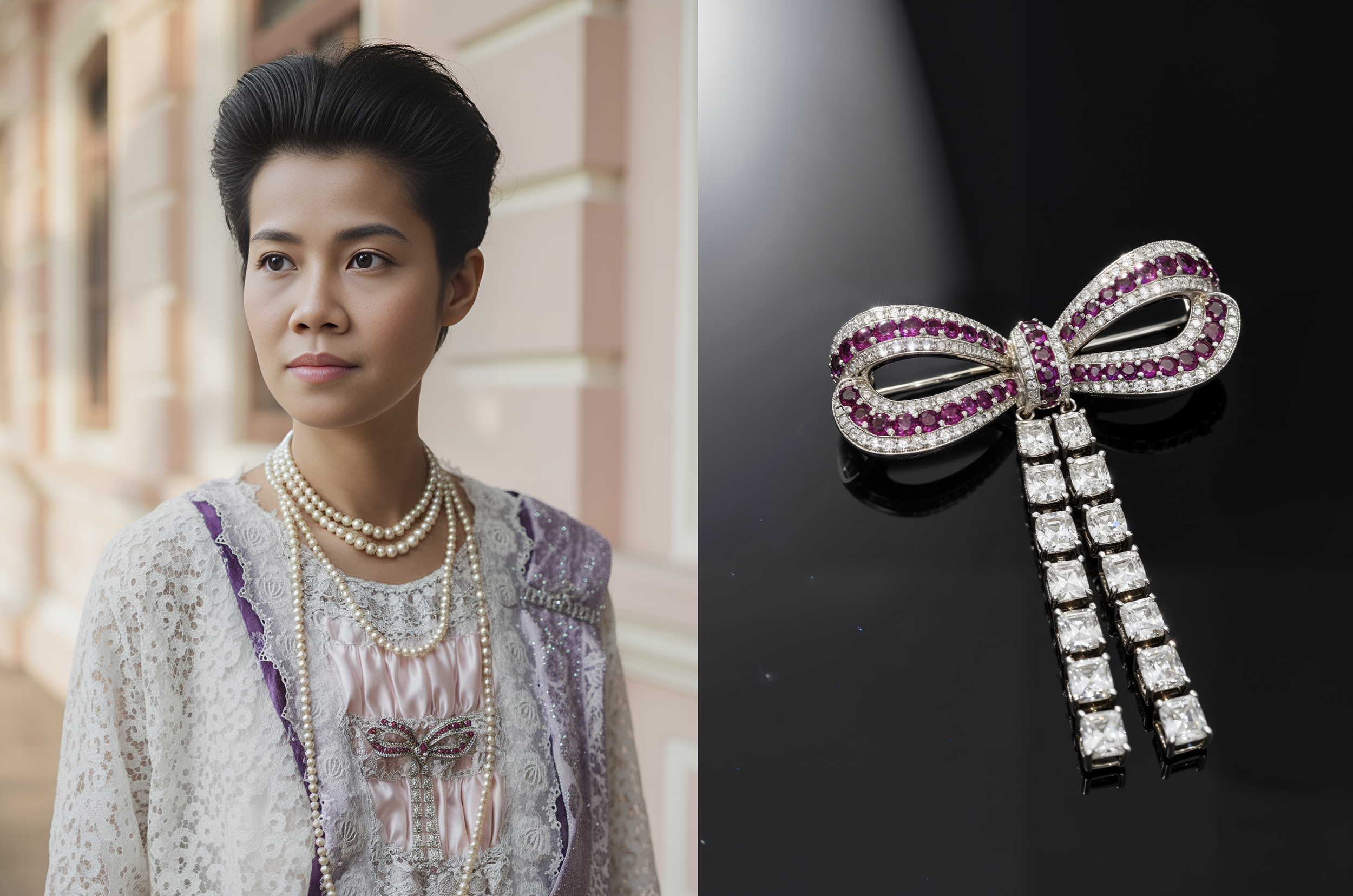
สมเด็จพระเจ้าบรมวงศ์เธอ เจ้าฟ้ามาลินีนภดาราฯ และเข็มกลัดเพชร รูปโบ
ภาพที่ได้รับการบูรณะด้วยเทคโนโลยี AI ชุดนี้ คือพระรูปของสมเด็จพระเจ้าบรมวงศ์เธอ เจ้าฟ้ามาลินีนภดารา ศิรินิภาพรรณวดี กรมขุนศรีสัชนาลัยสุรกัญญา (๓๑ กรกฎาคม พ.ศ. ๒๔๒๘ – ๒๒ ธันวาคม พ.ศ. ๒๔๖๗) พระราชธิดาพระองค์ที่ ๕๕ ในพระบาทสมเด็จพระจุลจอมเกล้าเจ้าอยู่หัว ประสูติแต่พระวิมาดาเธอ พระองค์เจ้าสายสวลีภิรมย์ กรมพระสุทธาสินีนาฏ ปิยมหาราชปดิวรัดา เมื่อแรกประสูติทรงมีพระนามว่า “พระเจ้าลูกเธอ พระองค์เจ้ามาลินีนภดารา”
เมื่อปี พ.ศ. ๒๔๓๑ พระบาทสมเด็จพระจุลจอมเกล้าเจ้าอยู่หัวทรงพระกรุณาโปรดเกล้าฯ สถาปนาพระราชโอรสและพระราชธิดาที่ประสูติแต่พระอรรคชายาเธอขึ้นเป็นเจ้าฟ้า ดังนั้น พระองค์จึงได้รับสถาปนาขึ้นเป็น “พระเจ้าลูกเธอ เจ้าฟ้ามาลินีนภดารา” ต่อมาในปี พ.ศ. ๒๔๓๙ พระบาทสมเด็จพระจุลจอมเกล้าเจ้าอยู่หัวทรงพระราชทานพระสุพรรณบัตรเฉลิมพระนามาภิไธย สถาปนาขึ้นเป็น “สมเด็จพระเจ้าลูกเธอ เจ้าฟ้ามาลินีนภดารา ศิรินิภาพรรณวดี”
สิ่งที่น่าสนใจในภาพนี้คือ เข็มกลัดรูปโบประดับเพชรและอัญมณี ซึ่งผมสร้างสรรค์ให้เป็น “ทับทิม” โดยอิงจากการวิเคราะห์ค่า greyscale ของต้นฉบับขาวดำ เพื่อให้ได้เฉดสีที่สมเหตุสมผลและสอดคล้องกับแฟชั่นเครื่องประดับของยุคสมัยนั้น
________________________
ประวัติศาสตร์ “ลายโบ” ในเครื่องประดับยุโรป: จากความหรูหราแบบโรโคโค สู่ความอ่อนหวานแบบวิกตอเรีย
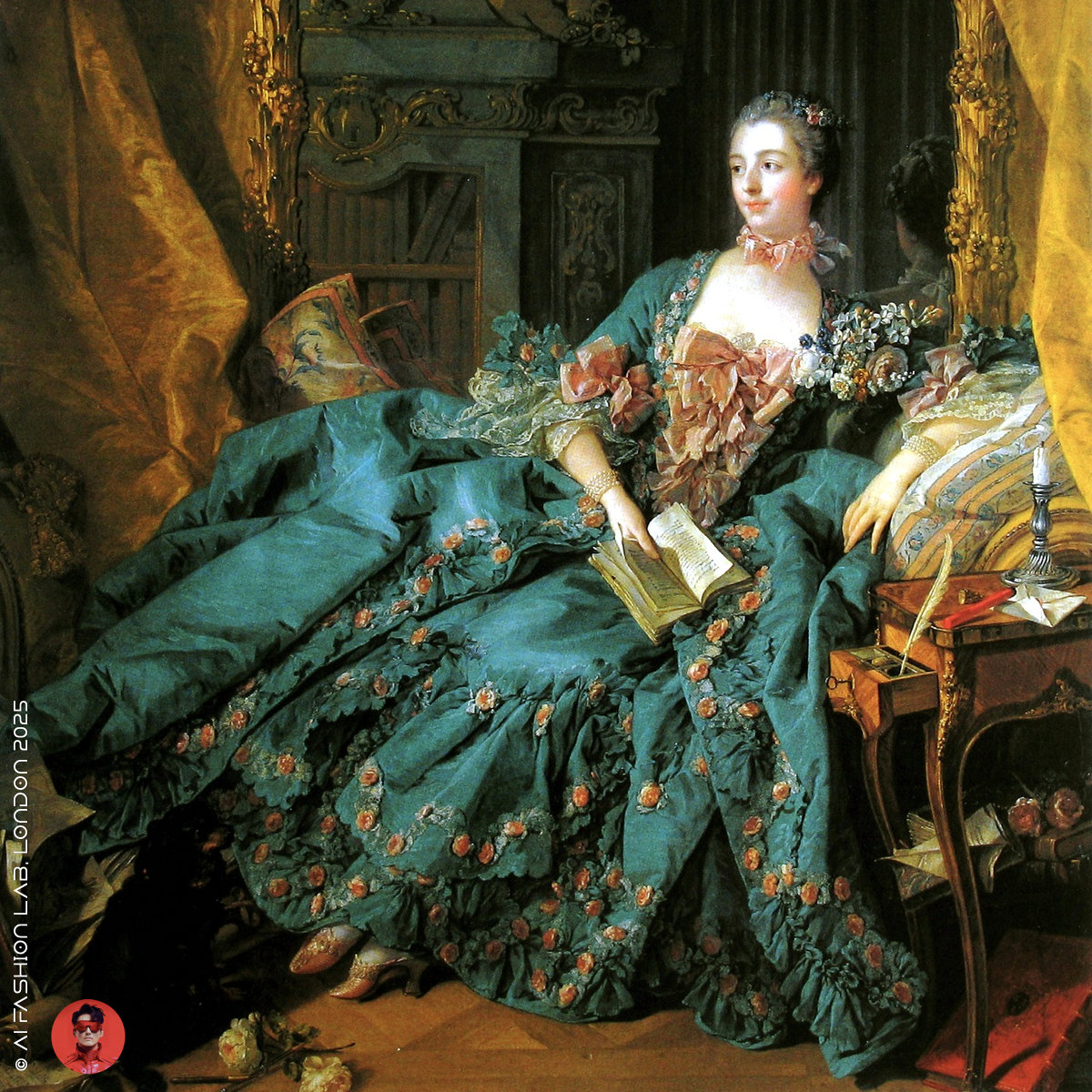
ลวดลาย “โบ” (bow motif) ถือเป็นหนึ่งในแบบเครื่องประดับที่มีความต่อเนื่องยาวนานที่สุดในยุโรป ทั้งในเชิงสัญลักษณ์และความงามทางศิลปะ โดยสืบย้อนรากได้ตั้งแต่ศตวรรษที่ ๑๗–๑๘ ในราชสำนักฝรั่งเศส ก่อนจะกลายเป็นหนึ่งในสัญลักษณ์แห่งความอ่อนหวานและสตรีภาพของสุภาพสตรีชั้นสูงทั่วยุโรป ลวดลายนี้เริ่มปรากฏอย่างชัดเจนในรัชกาลพระเจ้าหลุยส์ที่ ๑๔ และหลุยส์ที่ ๑๕ แต่บุคคลที่ทำให้ “โบ” กลายเป็นแฟชั่นชั้นสูงอันเป็นเอกลักษณ์คือ มาดาม เดอ ปงปาดูร์ (Madame de Pompadour) พระสนมเอกผู้ทรงอิทธิพลของพระเจ้าหลุยส์ที่ ๑๕ ผู้ซึ่งเป็นผู้อุปถัมภ์ศิลปินและแฟชั่นระดับสูงของยุโรปยุคโรโคโคอย่างแท้จริง
มาดามเดอปงปาดูร์ทรงนิยมประดับ “โบ” ทั้งในฉลองพระองค์ เครื่องประดับ ทรงผม และงานศิลป์ที่พระนางทรงอุปถัมภ์ ทำให้ลวดลายโบซึ่งมีความโค้งมน พริ้วไหวดังริบบิ้นจริง ๆ กลายเป็นเอกลักษณ์ของศิลปะฝรั่งเศสยุคนั้น ช่างทองจึงเริ่มสร้างเข็มกลัดและเครื่องประดับรูปโบจำนวนมาก ซึ่งกลายเป็นต้นแบบสำคัญของเครื่องประดับ “bowknot” ในยุคต่อมา
เข้าสู่ศตวรรษที่ ๑๙ โดยเฉพาะในรัชสมัยพระราชินีวิกตอเรีย ลวดลายโบได้รับการตีความใหม่ในความหมายเชิงอารมณ์—สื่อถึงความรัก ความผูกพัน และความอ่อนหวาน—จนกลายเป็นหนึ่งในเครื่องประดับที่สตรีผู้ดีอังกฤษใช้แพร่หลายมากที่สุด
________________________
Belle Époque: ยุคที่ “โบแพลทินัม” กลายเป็นผลงานศิลป์ระดับสูง
ช่วงเวลาที่ทำให้ลายโบกลายเป็นศิลปะชั้นสูงอย่างแท้จริงคือยุค Belle Époque (ค.ศ. 1890–1914) เมื่อช่างอัญมณีแห่งยุโรป—นำโดย Louis Cartier—ค้นพบศักยภาพของแพลทินัม วัสดุที่มีความแข็งแรง เบาบาง และสามารถขึ้นรูปละเอียดระดับเส้นลวดได้ดีกว่าเงินหรือทอง
Louis Cartier เจเนอเรชันที่ ๓ แห่งสำนัก Cartier คือผู้บุกเบิกการนำแพลทินัมมาใช้ในงานจิวเวลรีระดับสูงอย่างเป็นระบบ พระองค์เป็นผู้สร้างมาตรฐานใหม่ของเครื่องประดับที่ “โปร่ง เบา และพริ้ว” อย่างไม่เคยมีมาก่อน โดยเฉพาะเข็มกลัดรูปโบ ซึ่งมีลักษณะเด่นคือเส้นโค้งแบบ Garland Style ที่ดูเหมือนริบบิ้นผูกจริง ๆ และประดับเพชรเม็ดเล็ก (rose-cut และ old European cut) อย่างละเอียดลออ ผลงานเหล่านี้ได้รับความนิยมอย่างยิ่งทั้งในราชสำนักยุโรปและราชสำนักสยามในรัชกาลที่ ๕–๖
นอกจาก Cartier ยังมีสำนักจิวเวลรีระดับตำนานอีกหลายแห่งที่ร่วมสร้างยุคทองของ “โบแพลทินัม” ได้แก่
Boucheron — ผู้เชี่ยวชาญงานโครงสร้างแบบลูกไม้ (lacework) ที่ละเอียดประดุจผ้าปัก
Chaumet — ผู้บุกเบิกสไตล์ Neoclassical Ribbon และเส้นโค้งพริ้วแบบ naturalistic
Lacloche Frères — ผู้ผลิตเข็มกลัดโบปลายริบบิ้นคู่และด้ามยาว ซึ่งเป็นสไตล์โปรดของสุภาพสตรีชั้นสูง
Oscar Massin — ผู้คิดค้นเทคนิคการกระจายประกายเพชร (massin setting) ทำให้โบมีประกายละอองน้ำแข็งทั่วทั้งตัว
นวัตกรรมของช่างอัญมณีเหล่านี้ทำให้ “โบในยุค Belle Époque” แตกต่างจากโบในยุคก่อนหน้าอย่างชัดเจน—จากเดิมที่รูปทรงและแบบ จะมีหนำ้หนักมาก ดูแข็ง และเน้นมวลวัสดุ กลายเป็นโบที่เบาบางราวกับลอยอยู่บนผิวผ้า เส้นโครงแพลทินัมสามารถทำได้บางระดับเส้นลวด และเพชรสามารถเรียงแน่นได้โดยไม่ต้องใช้โครงหนาอีกต่อไป นี่คือสุนทรียภาพที่กลายเป็นสัญลักษณ์ของเครื่องประดับยุโรประดับสูงในต้นคริสต์ศตวรรษที่ ๒๐
________________________
โบกับราชสำนักสยาม
ในราชสำนักสยามช่วงรัชกาลที่ ๕–๖ ลวดลายโบจากยุโรปแพร่เข้ามาพร้อมแฟชั่นตะวันตก สุภาพสตรีชั้นสูงและเจ้านายฝ่ายในมักประดับเข็มกลัดโบร่วมกับฉลองพระองค์แบบยุโรป โดยหลายชิ้นเป็นงานสั่งทำจากยุโรปหรือได้รับอิทธิพลจาก Cartier และ Boucheron โดยตรง แสดงให้เห็นว่าลวดลายนี้ไม่เพียงเป็นแฟชั่นสากล แต่เป็นสัญลักษณ์ของรสนิยมและสถานะทางสังคมในราชสำนักไทยด้วย
________________________
การสร้างสรรค์เข็มกลัดโบด้วย AI ในภาพของเจ้าฟ้ามาลินีนภดารา
เมื่อพิจารณางานที่ผมสร้างสรรค์ขึ้น—เข็มกลัดโบประดับทับทิมพร้อมปลายริบบิ้นคู่จากเพชรทรงเหลี่ยม—จะเห็นได้ชัดว่ามีรากฐานมาจาก Belle Époque โดยตรง ทั้งในเชิงโครงสร้าง การใช้แพลทินัมเป็นแรงบันดาลใจ การจัดวางอัญมณีแบบยุคต้นคริสต์ศตวรรษที่ ๒๐ และปลายริบบิ้นคู่ซึ่งเป็นเอกลักษณ์ของ Cartier, Lacloche Frères และ Fabergé งานนี้จึงสะท้อนความงามของโบแพลทินัมยุคแรกเริ่มได้อย่างงดงามสมบูรณ์แบบ
________________________
Her Royal Highness Princess Malini Nobhadara and the Diamond Bow-Shaped Brooch
This AI-restored portrait depicts Her Royal Highness Princess Malini Nobhadara, Princess of Srisatchanalai (สมเด็จพระเจ้าบรมวงศ์เธอ เจ้าฟ้ามาลินีนภดารา ศิรินิภาพรรณวดี กรมขุนศรีสัชนาลัยสุรกัญญา) (31 July 1885 – 22 December 1924). She was the fifty-fifth daughter of King Chulalongkorn (Rama V) (พระบาทสมเด็จพระจุลจอมเกล้าเจ้าอยู่หัว) and was born to Princess Saisavali Bhiromya (พระวิมาดาเธอ พระองค์เจ้าสายสวลีภิรมย์ กรมพระสุทธาสินีนาฏ ปิยมหาราชปดิวรัดา).
At birth, she was styled Phra Chao Luk Thoe Phra Ong Chao Malini Nobhadara (พระเจ้าลูกเธอ พระองค์เจ้ามาลินีนภดารา). In 1888, following King Chulalongkorn’s elevation of children born to the Princess Consorts to princely rank, she was raised to Phra Chao Luk Thoe Chao Fa Malini Nobhadara (พระเจ้าลูกเธอ เจ้าฟ้ามาลินีนภดารา). Later, in 1896, she was further elevated to the rank of Somdet Phra Chao Luk Thoe Chao Fa Malini Nobhadara Siriniphapannawadi (สมเด็จพระเจ้าลูกเธอ เจ้าฟ้ามาลินีนภดารา ศิรินิภาพรรณวดี).
A notable feature in this portrait is the bow-shaped brooch worn at her chest, adorned with diamonds and gemstones. In the restored version, this brooch has been artistically re-imagined with rubies, based on a meticulous greyscale analysis of the original monochrome photograph to ensure historical plausibility in tone, depth, and material.
The Bow Motif in European Jewellery: From Rococo Grace to Victorian Sentiment and Belle Époque Refinement
The bow motif is one of the longest-standing decorative themes in European jewellery. Emerging prominently in the 17th and early 18th centuries within the French royal courts, the motif symbolised refinement, delicacy, and feminine elegance. Its popularity surged during the Rococo period, largely due to the influence of Madame de Pompadour, the influential favourite of King Louis XV, who championed fashion, fine arts, and the ornate aesthetic characteristic of the era. Her taste made the bow motif not merely decorative but emblematic of aristocratic identity.
During the Victorian period, the bow motif evolved into a form of sentimental jewellery—a token symbolising love, devotion, and emotional attachment. Yet it was in the Belle Époque (c. 1890–1914) that the bow motif reached its highest artistic expression, when the use of platinum completely transformed the technical possibilities of jewellery design.
Cartier and the Belle Époque Jewellers Who Transformed Platinum Setting
The Belle Époque saw jewellery ateliers explore the extraordinary strengths of platinum, a metal far stronger and more workable in fine detail than gold or silver. This innovation allowed jewellers to create airy, lace-like structures that appeared almost weightless.
At the forefront of this movement was Louis Cartier (Louis François Cartier), who pioneered the widespread use of platinum in high jewellery. Cartier’s platinum bow brooches of the early 20th century embody the Garland Style—a hallmark of the period characterised by delicate ribbon-like curves, finely millegrained edges, and pavé-set diamonds that shimmered with an icy brilliance. These designs became highly sought after among European royalty and aristocracy, and their aesthetic influence extended as far as the Siamese court during the reigns of Kings Rama V and Rama VI.
Other leading Belle Époque maisons also contributed to the elevation of the bow as a masterpiece of high jewellery:
Boucheron – renowned for lace-like platinum work, mimicking delicate embroidery in diamonds.
Chaumet – celebrated for Neoclassical ribbon motifs and naturalistic sweeping forms.
Lacloche Frères – created elongated bow brooches with distinctive double ribbon tails, a style beloved by fashionable society ladies.
Oscar Massin – a visionary setter whose innovative “Massin setting” achieved unparalleled diamond scintillation, giving bow jewels a frosted, ethereal luminosity.
Together, these ateliers defined the technical and aesthetic vocabulary of the bow motif as it is recognised today.
The Bow Motif and the Court of Siam
By the late 19th and early 20th centuries, bow-shaped brooches and ribbon jewels had found their place in the Siamese royal court. Princesses and noblewomen frequently incorporated European jewellery into their Western court dress, especially during ceremonial and diplomatic occasions. Several pieces worn by members of the Chakri dynasty during the reigns of King Chulalongkorn (Rama V) and King Vajiravudh (Rama VI) demonstrate clear stylistic connections to Cartier, Boucheron, and other Belle Époque ateliers, reflecting the cosmopolitan taste of the period.
The AI-Reimagined Bow Brooch in Princess Malini Nobhadara’s Portrait
The bow brooch recreated in this AI-restored portrait—featuring rubies set within a platinum-inspired framework and completed with double diamond-set ribbon tails—aligns closely with Belle Époque design principles. Its structure, proportions, and gemstone arrangement echo the craftsmanship of Cartier, Lacloche Frères, and even the opulent ribbon jewels of Fabergé. This interpretation captures the spirit of early 20th-century platinum jewellery with historical sensitivity while celebrating the artistic possibilities of AI-enabled restoration.
เรียนเชิญกด Subscribe ได้ที่ลิงก์นี้ครับ เพื่อร่วมติดตามงานสร้างสรรค์ต้นฉบับ งานวิจัยประวัติศาสตร์แฟชั่น และผลงานอนุรักษ์มรดกวัฒนธรรมด้วยเทคโนโลยี AI ของ AI Fashion Lab, London ซึ่งมุ่งตีความอดีตผ่านมิติใหม่ของการบูรณะภาพ การสร้างสรรค์ภาพ และการเล่าเรื่องด้วยศิลปะเชิงดิจิทัล 🔗 https://www.facebook.com/aifashionlab/subscribe/
#aifashionlab #AI #aiartist #aiart #aifashion #aifashiondesign #aifashionstyling #aifashiondesigner #fashion #fashionhistory #historyoffashion #fashionstyling #fashionphotography #digitalfashion #digitalfashiondesign #digitalcostumedesign #digitaldesign #digitalaiart #ThaiFashionHistory #ThaiFashionAI #thailand #UNESCO