พระวรวงศ์เธอ พระองค์เจ้าปิยบุตร
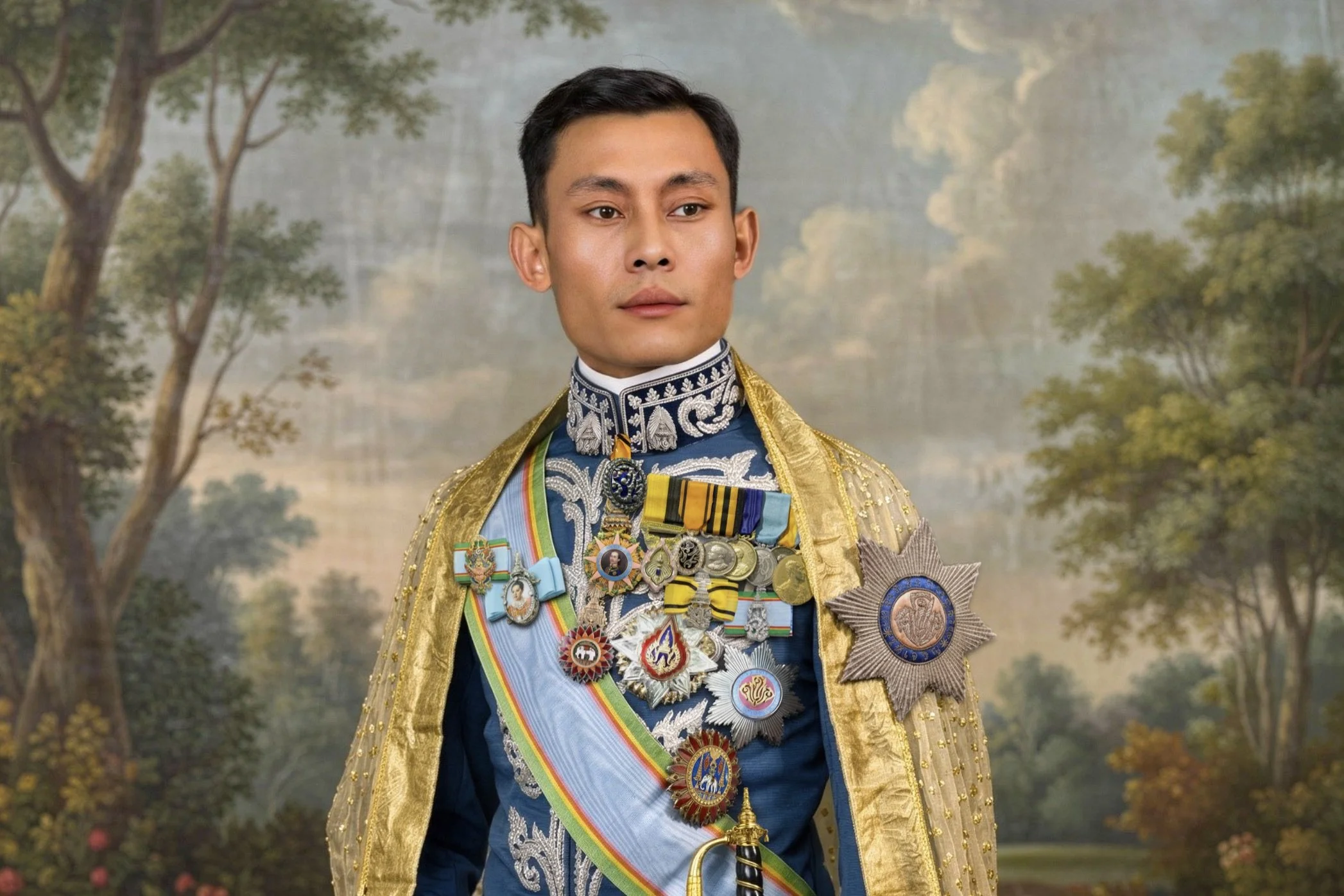
พระวรวงศ์เธอ พระองค์เจ้าปิยบุตร
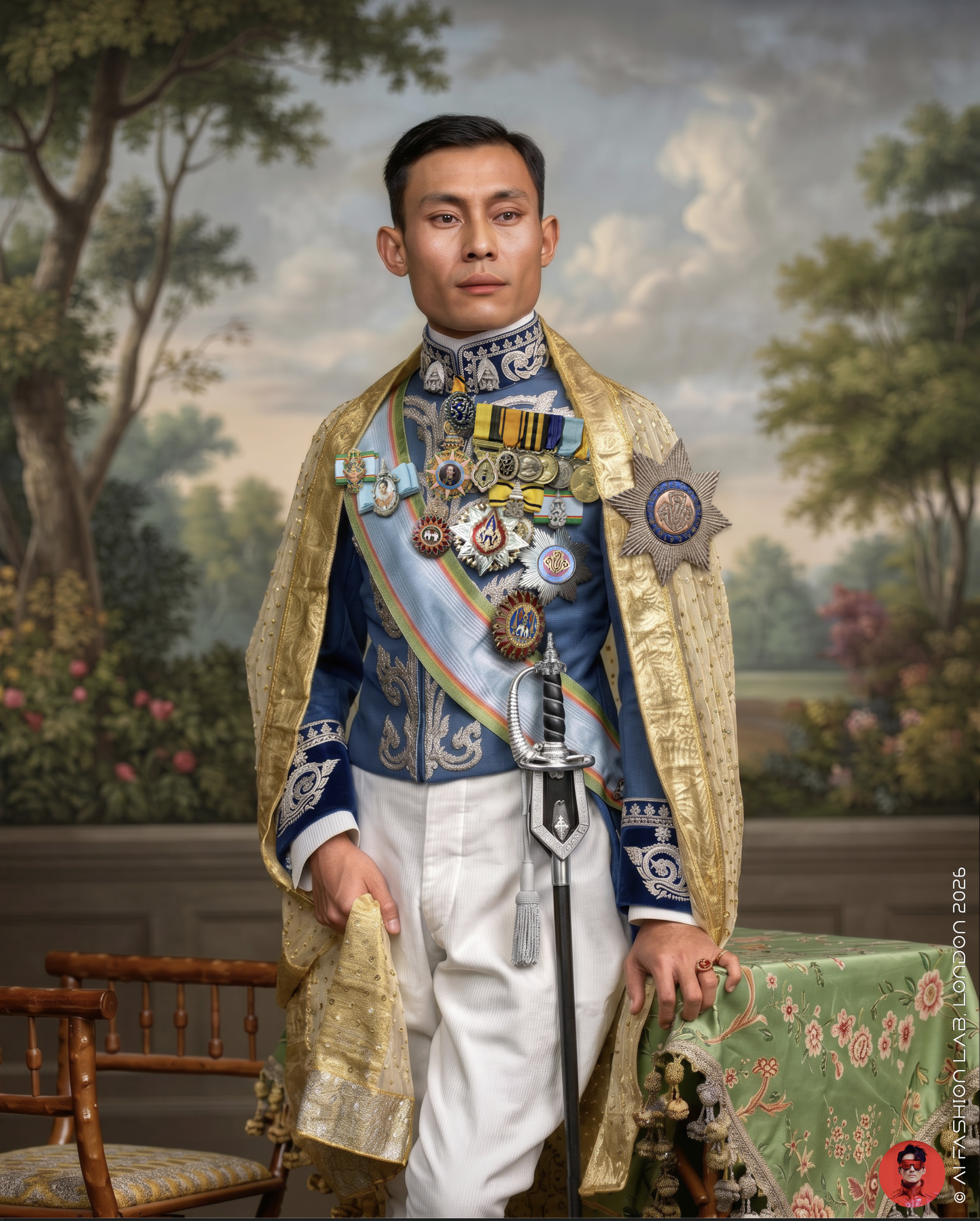
ภาพที่ได้รับการบูรณะและสร้างสรรค์ขึ้นด้วยเทคโนโลยี AI ในคอลเล็กชันนี้ เป็นพระรูปของ พระวรวงศ์เธอ พระองค์เจ้าปิยบุตร พระโอรสในสมเด็จพระเจ้าบรมวงศ์เธอ เจ้าฟ้าจาตุรนต์รัศมี กรมพระจักรพรรดิพงษ์ ประสูติแต่หม่อมราชวงศ์ปุ้ย จักรพันธุ์
ประสูติเมื่อวันที่ ๖ ตุลาคม พ.ศ. ๒๔๓๓ สิ้นพระชนม์เมื่อวันที่ ๖ มกราคม พ.ศ. ๒๔๖๔ เมื่อแรกประสูติมีพระยศเป็น หม่อมเจ้าปิยบุตร ต่อมาใน พ.ศ. ๒๔๗๐ พระบาทสมเด็จพระปกเกล้าเจ้าอยู่หัว รัชกาลที่ ๗ ทรงพระกรุณาโปรดเกล้าฯ สถาปนาพระองค์ขึ้นเป็น พระวรวงศ์เธอ พระองค์เจ้าปิยบุตร พร้อมกับพระโอรสธิดาในเจ้าฟ้าที่มารดามิได้เป็นเจ้าทุกพระองค์ในคราวเดียวกัน
พระองค์มีหม่อม ๒ ท่าน คือ หม่อมสุวรรณ และหม่อมสนม จักรพันธุ์ ณ อยุธยา มีโอรสธิดารวม ๖ คน ได้แก่ หม่อมราชวงศ์ปิยสุวรรณ หม่อมราชวงศ์พันธ์ปรี หม่อมราชวงศ์ปรีย์พจน์พดุง หม่อมราชวงศ์หญิงปรุงสมร หม่อมราชวงศ์หญิงอรสนม และหม่อมราชวงศ์นิยมสิริ จักรพันธุ์
______________
พระวรวงศ์เธอ พระองค์เจ้าปิยบุตร ในพระรูปนี้ ทรงฉลองพระองค์ เครื่องแบบเต็มยศใหญ่ของข้าราชการพลเรือน กรมมหาดเล็ก กระทรวงวัง ในสมัยรัชกาลที่ ๖ ซึ่งเป็นแบบแผนการแต่งกายราชสำนักที่สยามรับอิทธิพลมาจากตะวันตก โดยเฉพาะจากราชสำนักอังกฤษในยุคพระเจ้าเอ็ดเวิร์ดที่ ๗ แล้วนำมาปรับให้อยู่ในระเบียบแบบแผนของราชสำนักสยามอย่างสมบูรณ์
โครงหลักของฉลองพระองค์ชุดนี้ประกอบด้วย เสื้อ tailcoat, กางเกงขาสั้นแบบ breeches, และ หมวก bicorne ซึ่งเป็นองค์ประกอบมาตรฐานของการแต่งกายเต็มยศสำหรับข้าราชการพลเรือนชั้นสูงในยุคนั้น จากนั้นจึงสวมทับด้วย เสื้อคลุมเต็มยศปักดิ้นทองและเงิน อันเป็นชั้นนอกของเครื่องแบบ ซึ่งทำให้ชุดนี้มีลักษณะสง่างามและสมพระเกียรติยิ่งขึ้น
ในส่วนของลักษณะเฉพาะประจำกรม ข้าราชการ กรมมหาดเล็ก จะใช้ ผ้าสีน้ำเงินเข้ม ปักดิ้นเงิน และใช้เครื่องประกอบที่เป็นเงิน ทั้งหมด อันเป็นสีและวัสดุตามแบบของกรม และเนื่องจากพระองค์ทรงดำรงตำแหน่ง รองอธิบดีกรมมหาดเล็ก จึงทรงมี สีหมายกรมที่ปกเสื้อและข้อพระหัตถ์เป็นสีน้ำเงินแก่ ซึ่งช่วยบ่งบอกทั้งสังกัดและตำแหน่งในระบบราชการสมัยนั้น
เครื่องประกอบยศที่สำคัญอีกประการคือ กระบี่แบบพลเรือนยอดพระเกี้ยว ฝักหนังดำ ประดับเครื่องเงิน และผูก พู่กระบี่ไหมเงิน ซึ่งเป็นส่วนหนึ่งของเครื่องแต่งกายเต็มยศสำหรับข้าราชการพลเรือนในกรมมหาดเล็กและกระทรวงวัง
สำหรับเครื่องราชอิสริยาภรณ์ พระองค์ทรงประดับ ดวงดาราทุติยจุลจอมเกล้าแบบปักไหมและดิ้นทองที่ต้นแขนซ้าย บนเสื้อคลุมเต็มยศ และยังทรง สายสะพายเครื่องราชอิสริยาภรณ์อันมีเกียรติยศยิ่งมงกุฎไทย ซึ่งช่วยเสริมให้พระฉายาลักษณ์นี้ไม่เพียงสะท้อนระเบียบของเครื่องแบบราชสำนัก หากยังแสดงพระอิสริยยศและเกียรติยศที่ทรงได้รับด้วย
ดังนั้น หากจะสรุป “องค์ประกอบของการแต่งกาย” ของภาพนี้ให้เข้าใจง่าย ก็คือ พระองค์ทรงฉลองพระองค์ เครื่องแบบข้าราชการพลเรือนเต็มยศแบบตะวันตก เป็นโครงหลัก แล้วเพิ่ม เสื้อคลุมปักดิ้นสำหรับเต็มยศ เป็นชั้นพิธีการภายนอก ก่อนจะเติม สีและรายละเอียดประจำกรมมหาดเล็ก และปิดท้ายด้วย กระบี่ เครื่องราชอิสริยาภรณ์ และสายสะพาย ซึ่งล้วนทำหน้าที่บอกยศ ตำแหน่ง สังกัด และเกียรติยศของผู้ทรงฉลองพระองค์อย่างครบถ้วน
สิ่งที่น่าสนใจในภาพนี้คือการพัฒนาการของ เครื่องราชอิสริยาภรณ์อันมีเกียรติยศยิ่งมงกุฎไทย และสีของสายสะพาย
คนส่วนมากจะคุ้นเคยกับสีของสายสะพายนำ้เงิน แขบเขียว และริ้วแดงเหลือง แต่ในสมัย รัชกาลที่ ๕-๗ สายสะพายยังเป็นสีฟ้าพาสเทล และยังมีสีฟ้าเฉดอื่นด้วยครับ รวมไปถึงแบบของดวงตราที่เปลี่ยนไปอีกด้วย
______________
เครื่องราชอิสริยาภรณ์อันมีเกียรติยศยิ่งมงกุฎไทย ประวัติ · การออกแบบ · และการเปลี่ยนแปลงที่คนส่วนใหญ่ไม่รู้
ในงานวิจัยและบูรณะภาพถ่ายโบราณของราชสำนักสยามของเรา เรื่องที่ต้องเข้าใจให้ลึกที่สุดเรื่องหนึ่งคือ เครื่องราชอิสริยาภรณ์ เพราะเครื่องราชไม่ใช่แค่เครื่องประดับ มันคือ "รหัส" ทางสังคมที่บอกตำแหน่ง ยศ และความสัมพันธ์กับสถาบันกษัตริย์ได้ในทันทีที่มองเห็น
วันนี้ขอพูดถึงตระกูล มงกุฎไทย ซึ่งเป็นเครื่องราชฯอันดับรองจากช้างเผือก และเป็นตระกูลที่ปรากฏในภาพถ่ายราชสำนักสมัยรัชกาลที่ ๕ บ่อยที่สุด
จุดเริ่มต้น — สถาปนาเมื่อ พ.ศ. ๒๔๑๒
พระบาทสมเด็จพระจุลจอมเกล้าเจ้าอยู่หัว รัชกาลที่ ๕ ทรงสถาปนาเครื่องราชนี้ขึ้นในปีแรกของรัชกาล ชื่อเดิมคือ "เครื่องราชอิสริยาภรณ์มงกุฎสยาม" และมีพระราชประสงค์ให้เป็นเครื่องราชที่พระราชทานได้อย่างกว้างขวาง ทั้งแก่ขุนนาง ข้าราชการ และบุคคลต่างชาติที่ทำคุณประโยชน์ต่อสยาม
ที่มาของชื่อนี้น่าสนใจมาก พระราชบัญญัติฉบับแรกในราชกิจจานุเบกษา รัตนโกสินทรศก ๑๒๘ บันทึกชื่อแต่ละชั้นไว้เป็นภาษาบาลี-สันสกฤตแบบกวีนิพนธ์ที่มีความหมายในตัวเอง ดังนี้
🎖️ชั้นที่ ๑ เรียกว่า มหาสุราภรณ์ — แปลว่า เครื่องประดับอันประเสริฐยิ่งใหญ่ 🎖️ชั้นที่ ๒ เรียกว่า จุลสุราภรณ์ — แปลว่า เครื่องประดับอันประเสริฐรองลงมา 🎖️ชั้นที่ ๓ เรียกว่า มัณฑนาภรณ์ — แปลว่า เครื่องประดับตกแต่ง 🎖️ชั้นที่ ๔ เรียกว่า ภัทราภรณ์ — แปลว่า เครื่องประดับอันเป็นมงคล 🎖️ชั้นที่ ๕ เรียกว่า วิจิตราภรณ์ — แปลว่า เครื่องประดับงดงามวิจิตร
สังเกตว่าชื่อเหล่านี้ไม่ได้บอกลำดับชั้นตรงๆ แต่ใช้คำที่มีความหมายเชิงกวีแต่ละคำ ฟังดูมีกลิ่นอายราชสำนักและวรรณคดีสูงมาก
______________
การเปลี่ยนชื่อครั้งใหญ่ — พ.ศ. ๒๔๘๔
เมื่อจอมพล ป. พิบูลสงคราม เปลี่ยนชื่อประเทศจากสยามเป็นไทยใน พ.ศ. ๒๔๘๒ พระราชบัญญัติฉบับใหม่ในรัชกาลที่ ๘ เมื่อ พ.ศ. ๒๔๘๔ จึงเปลี่ยนทุกอย่างพร้อมกันในคราวเดียว ทั้งชื่อตระกูลและชื่อแต่ละชั้น
ชื่อใหม่เปลี่ยนจากกวีนิพนธ์มาใช้ ระบบเลขลำดับสันสกฤต แทน ได้แก่
ชั้นสูงสุด มหาวชิรมงกุฎ (ม.ว.ม.) — เพิ่มขึ้นใหม่สมัยรัชกาลที่ ๖ พ.ศ. ๒๔๖๑ 🎖️ ชั้นที่ ๑ ประถมาภรณ์มงกุฎไทย (ป.ม.) — ประถม = ที่หนึ่ง 🎖️ชั้นที่ ๒ ทวีติยาภรณ์มงกุฎไทย (ท.ม.) — ทวีติย = ที่สอง 🎖️ชั้นที่ ๓ ตริตาภรณ์มงกุฎไทย (ต.ม.) — ตริต = ที่สาม 🎖️ชั้นที่ ๔ จัตุรถาภรณ์มงกุฎไทย (จ.ม.) — จัตุรถ = ที่สี่ 🎖️ชั้นที่ ๕ เบญจมาภรณ์มงกุฎไทย (บ.ม.) — เบญจม = ที่ห้า 🎖️ชั้นที่ ๖ เหรียญทองมงกุฎไทย (ร.ท.ม.) — เพิ่มขึ้นใหม่ พ.ศ. ๒๔๔๕ 🎖️ชั้นที่ ๗ เหรียญเงินมงกุฎไทย (ร.ง.ม.) — เพิ่มขึ้นใหม่ พ.ศ. ๒๔๔๕
ระบบใหม่นี้อ่านเข้าใจง่ายกว่า และเป็นมาตรฐานเดียวกับเครื่องราชตระกูลอื่นๆ ทั้งหมดในปัจจุบัน แต่ก็สูญเสียความงามทางกวีของชื่อดั้งเดิมไปด้วยเช่นกัน
______________
การออกแบบ — สิ่งที่พระราชบัญญัติ ๒๔๘๔ บอกไว้ละเอียดมาก
พระราชบัญญัติฉบับรัชกาลที่ ๘ นั้นพิเศษมากในแง่ที่ระบุรายละเอียดการออกแบบของดวงตราแต่ละชั้นไว้ชัดเจน ซึ่งมีประโยชน์อย่างยิ่งสำหรับงานบันทึกภาพประวัติศาสตร์
ดวงตราทุกชั้นมีโครงสร้างหลักเหมือนกัน คือด้านหน้าเป็นรูปพระมหามงกุฎอยู่ในลายหว่านล้อมทอง พื้นลงยาสีน้ำเงินและสีแดง มีกระจังเงินรอบนอก ส่วนด้านหลังเปลี่ยนพระมหามงกุฎเป็นอักษรพระปรมาภิไธยย่อ จ.ป.ร. เบื้องบนมีจุลมงกุฎ
สิ่งที่ต่างกันระหว่างชั้นคือ ขนาด วัสดุ และวิธีการประดับ ดังนี้
🎖️ชั้นสูงสุดและชั้นที่ ๑ ใช้ สายสะพาย พาดจากไหล่ขวาลงมาสะโพกซ้าย กว้าง ๑๐ เซนติเมตร ดวงตราห้อยที่สะโพกขวา และมีดารา (ดาว) ติดอกเสื้อซ้ายเพิ่มเติม ขนาดดวงตราและดาราของสตรีจะย่อมกว่าบุรุษ
🎖️ชั้นที่ ๒ และ ๓ ใช้ แพรแถบสวมคอ กว้าง ๔ เซนติเมตร ดวงตราห้อยตรงหน้าอก
🎖️ชั้นที่ ๔ และ ๕ ใช้ แพรแถบขนาด ๓ เซนติเมตร ติดที่อกเสื้อด้านซ้าย สำหรับสตรีผูกเป็นรูปแมลงปอประดับเสื้อด้านหน้าซ้าย
🎖️ชั้นที่ ๖ และ ๗ เป็น เหรียญ ไม่ใช่ดวงตรา ชั้นที่ ๖ ทำจากเงินชุบทอง ชั้นที่ ๗ เป็นเงินล้วน รูปแบบเหมือนกันทุกอย่าง
______________
สีสายสะพายและแพรแถบ — จุดที่เปลี่ยนแปลงมากที่สุด
นี่คือประเด็นที่สำคัญที่สุดสำหรับการทำงานกับภาพถ่ายโบราณ เพราะสีสายสะพายเปลี่ยนไปอย่างมีนัยสำคัญระหว่างยุค
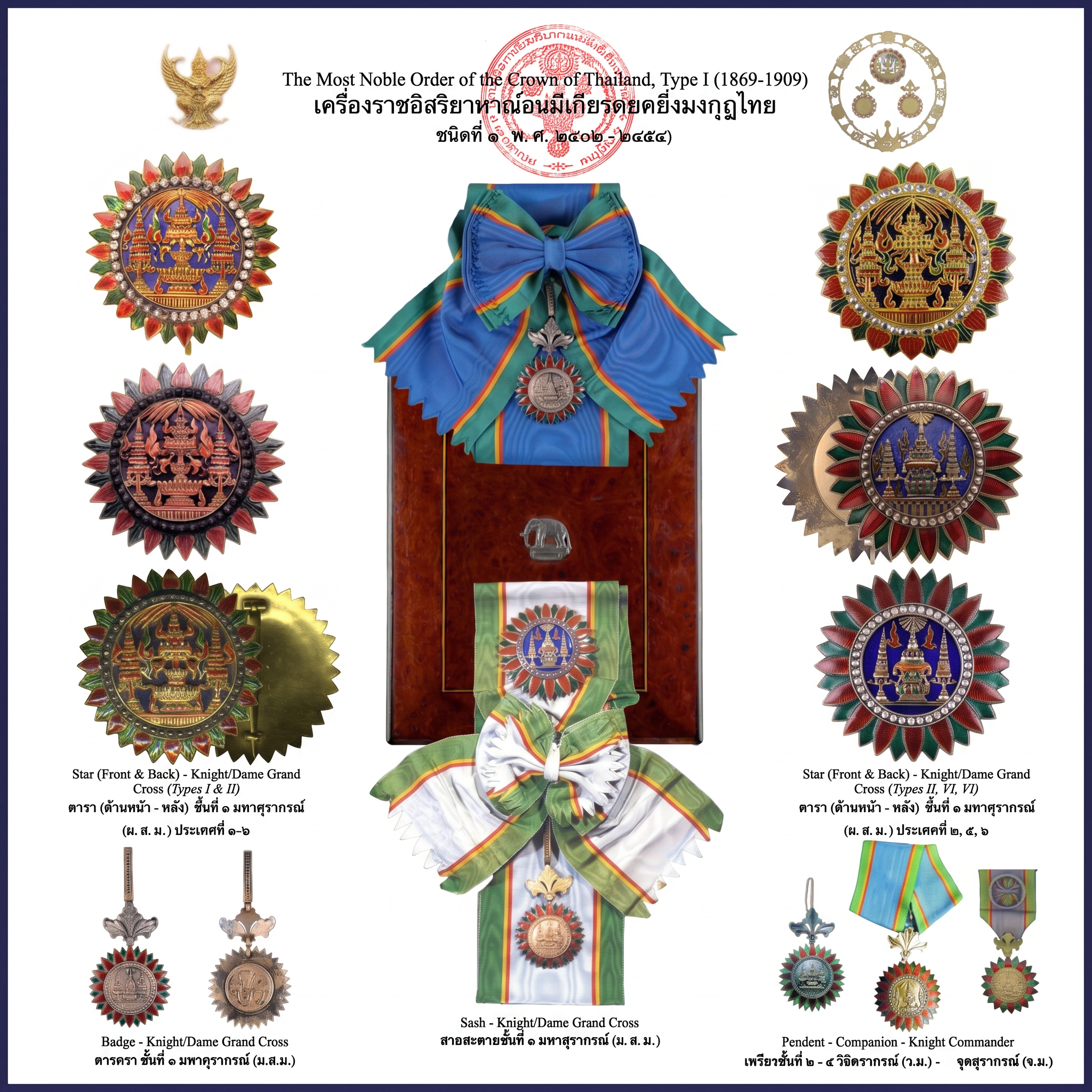
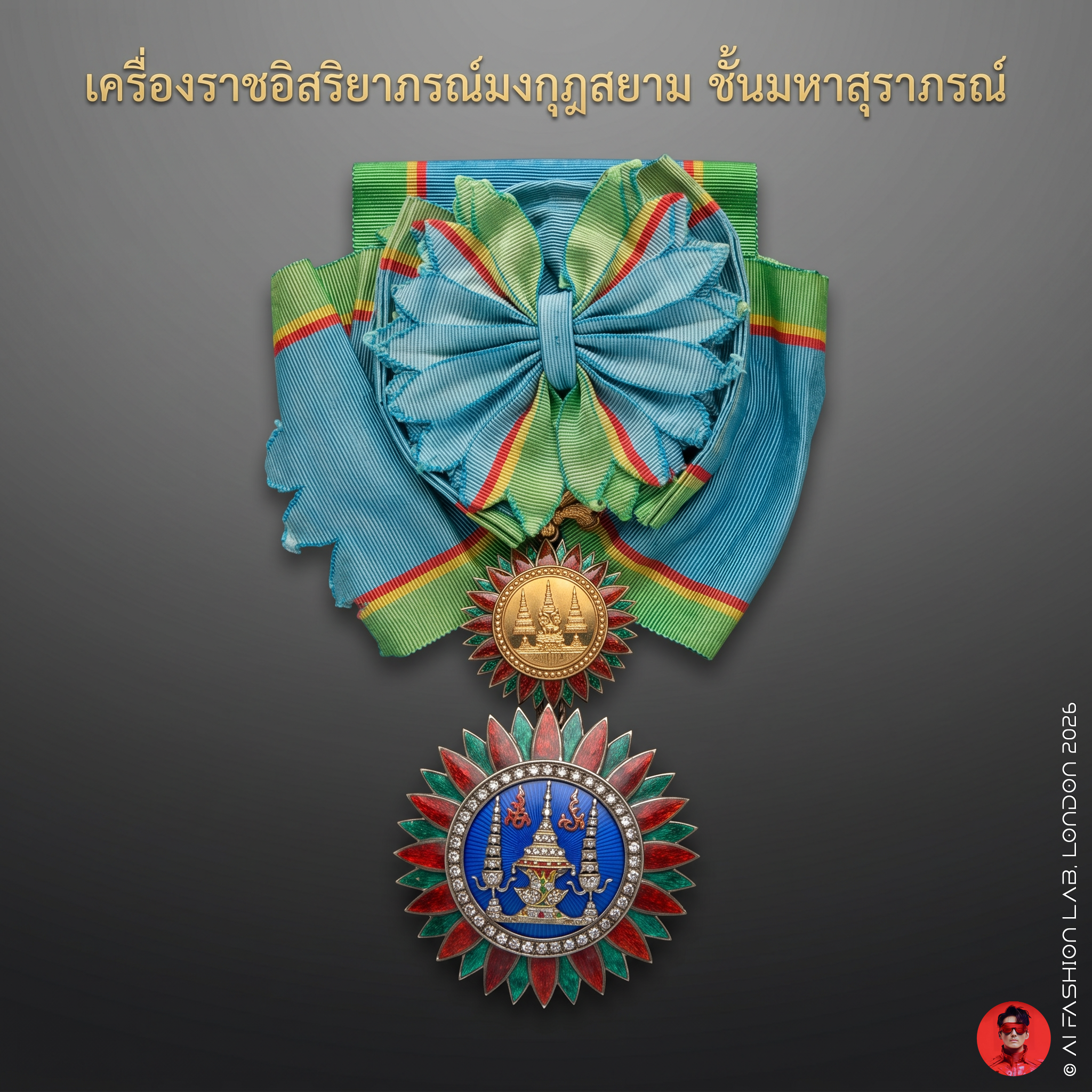
สมัยรัชกาลที่ ๕ ชั้นที่ ๑ (มหาสุราภรณ์) ใช้สายสะพาย สีฟ้าอ่อน หรือฟ้าพาสเทล ดังที่เห็นได้ชัดในภาพเครื่องราช Type I ที่เก็บในกล่องเดิม สีนี้อ่อนและนวลตา ใกล้เคียงกับฟ้าครามอ่อนหรือสีฟ้าสว่าง
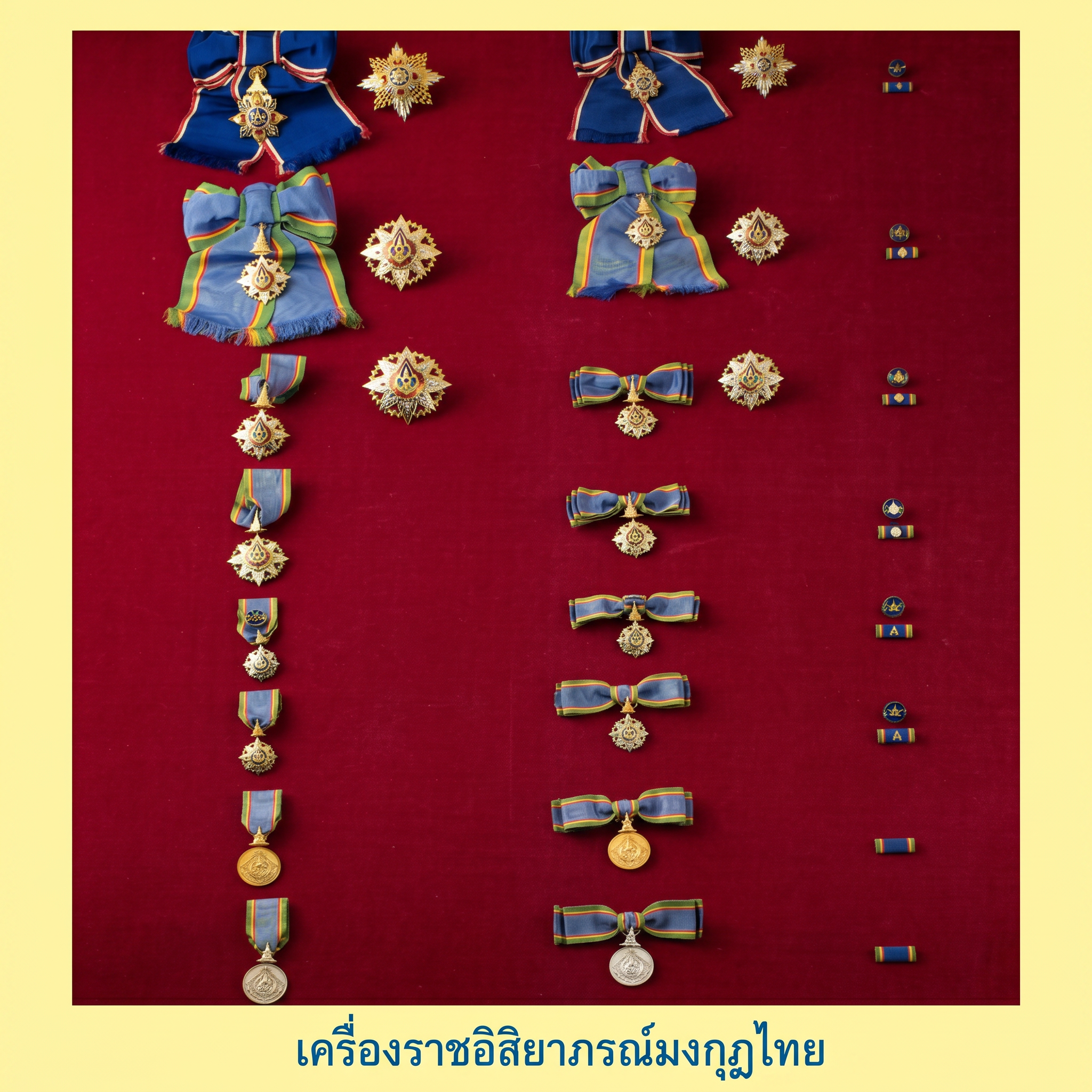
ต่อมาพระราชบัญญัติ พ.ศ. ๒๔๘๔ กำหนดสีสายสะพายชั้นสูงสุด (ม.ว.ม.) ไว้ว่า สีคราม ริมสีแดงและสีขาว และสายสะพายชั้นที่ ๑ (ป.ม.) ไว้ว่า สีน้ำเงิน ริมเขียว มีริ้วเหลืองและริ้วแดง ซึ่งเป็นแบบที่เห็นในชุดแสดงเครื่องราชปัจจุบัน สีเข้มและชัดเจนกว่าสมัย ร.๕ มาก
ความแตกต่างนี้ไม่ใช่เรื่องเล็กน้อยสำหรับการทำงานบูรณะภาพ เพราะถ้าเราใช้สีสายสะพายปัจจุบันไปใส่ในภาพถ่ายสมัย ร.๕ ก็จะผิดยุคทันที
______________
ข้อสังเกตจากการทำงานจริง
ในงาน AI Fashion Lab เราพบว่าเครื่องราชอิสริยาภรณ์มงกุฎไทย Type I ที่ปรากฏในภาพถ่ายฟิล์มกระจกสีของหอจดหมายเหตุแห่งชาตินั้น การระบุชั้นทำได้จากหลายองค์ประกอบพร้อมกัน ได้แก่ ทิศทางและความกว้างของสาย ตำแหน่งดวงตรา การมีหรือไม่มีดารา และที่สำคัญมากคือ โทนสี ซึ่งต้องอ้างอิงจากราชกิจจาฯ และหลักฐานวัตถุในพิพิธภัณฑ์ควบคู่กัน ไม่สามารถเดาจากภาพขาวดำเพียงอย่างเดียวได้
ข้อมูลทั้งหมดในโพสต์นี้ดึงตรงจากราชกิจจานุเบกษาสองฉบับหลัก ได้แก่ ฉบับ รัตนโกสินทรศก ๑๒๘ วันที่ ๒๘ พฤศจิกายน พ.ศ. ๒๔๑๒ ซึ่งเป็นพระราชบัญญัติสถาปนาฉบับดั้งเดิม และฉบับ เล่ม ๕๘ หน้า ๑๔๗๓ วันที่ ๑๒ พฤศจิกายน พ.ศ. ๒๔๘๔ ซึ่งเป็นฉบับที่ใช้อยู่จนถึงปัจจุบัน
______________
His Highness Prince Piyabut (พระวรวงศ์เธอ พระองค์เจ้าปิยบุตร์)
This AI-restored and AI-reconstructed image from our collection depicts His Highness Prince Piyabut (พระวรวงศ์เธอ พระองค์เจ้าปิยบุตร์), son of His Royal Highness Prince Chaturonrasmi, the Prince Chakkrabatradipongse (สมเด็จพระเจ้าบรมวงศ์เธอ เจ้าฟ้าจาตุรนต์รัศมี กรมพระจักรพรรดิพงษ์), born of Mom Rajawongse Pui Chakrabandhu (หม่อมราชวงศ์ปุ้ย จักรพันธุ์).
Born on 6 October 1890, he passed away on 6 January 1921. At birth he held the rank of Mom Chao Piyabut (หม่อมเจ้าปิยบุตร์). In 1927, His Majesty King Prajadhipok (พระบาทสมเด็จพระปกเกล้าเจ้าอยู่หัว), Rama VII, graciously elevated all children of royal princes whose mothers were not of royal birth to the rank of Phra Worawongse Ther Phra Ong Chao (พระวรวงศ์เธอ พระองค์เจ้า). Mom Chao Piyabut was accordingly elevated to His Highness Prince Piyabut (พระวรวงศ์เธอ พระองค์เจ้าปิยบุตร์) at the same time.
He had 2 consorts: Mom Suwan (หม่อมสุวรรณ) and Mom Sanom Chakrabandhu na Ayudhya (หม่อมสนม จักรพันธุ์ ณ อยุธยา), and 6 children, all bearing the surname Chakrabandhu (จักรพันธุ์):
1. Mom Rajawongse Piyasuwan Chakrabandhu (หม่อมราชวงศ์ปิยสุวรรณ จักรพันธุ์)
2. Mom Rajawongse Phanpri Chakrabandhu (หม่อมราชวงศ์พันธ์ปรี จักรพันธุ์)
3. Mom Rajawongse Priphojphadung Chakrabandhu (หม่อมราชวงศ์ปรีย์พจน์พดุง จักรพันธุ์)
4. Mom Rajawongse Ying Prungsamorn Chakrabandhu (หม่อมราชวงศ์หญิงปรุงสมร จักรพันธุ์)
5. Mom Rajawongse Ying Ornsanom Chakrabandhu (หม่อมราชวงศ์หญิงอรสนม จักรพันธุ์)
6. Mom Rajawongse Niyomsiri Chakrabandhu (หม่อมราชวงศ์นิยมสิริ จักรพันธุ์)
______________
The Dress in This Portrait — Full Dress Uniform of the Royal Pages Department (กรมมหาดเล็ก), Reign of Rama VI
What makes this portrait particularly remarkable is the dress. Prince Piyabut is depicted in the full dress uniform of the Royal Pages Department (กรมมหาดเล็ก, Krom Mahadlek) as worn during the reign of King Vajiravudh (พระบาทสมเด็จพระมงกุฎเกล้าเจ้าอยู่หัว), Rama VI. The uniform was modelled directly on the court dress of Edwardian England under King Edward VII, and consists of a gold-embroidered court coat (เสื้อคลุมปักดิ้นทอง) worn over a tailcoat, with breeches (กางเกงขาสั้นแบบ breeches) and a bicorne hat (หมวกแบบ bicorne). This style of civil full dress reflects the Western court influences that Siam formally adopted from the reign of Rama IV and fully developed under Rama V and Rama VI.
In this portrait, Prince Piyabut's gold and silver embroidered court coat is adorned with:
The Star of the Second Class of the Order of Chula Chom Klao (ดวงดาราทุติยจุลจอมเกล้า, Thutiya Chulachomklao), in silk and gold thread embroidery on the upper left sleeve — a distinctive feature of how decorations were displayed on the embroidered court coat rather than on the breast.
The sash of the Most Noble Order of the Crown of Thailand (สายสะพายของเครื่องราชอิสริยาภรณ์อันมีเกียรติยศยิ่งมงกุฎไทย, Khrueang Ratcha-itsariyaphon An Mi Kiattiyot Ying Mongkut Thai), worn over the left shoulder descending to the right hip.
The civil sword with the Phra Kiao hilt (กระบี่หัวพระเกี้ยว, Krabi Hua Phra Kiao), the ceremonial sword issued to civil officers of the Royal Palace Ministry (กระทรวงวัง).
What is especially notable here is the development of the Order of the Crown of Thailand and specifically the colour of the sash. Most people today are familiar with the current sash in deep navy blue with green border and yellow-red stripes. But during the reigns of Rama V through Rama VII, the sash was still in a pastel or powder blue, with other blue shades also in use depending on the period and type. The design of the badge itself also evolved considerably across these periods.
______________
The Most Noble Order of the Crown of Thailand (เครื่องราชอิสริยาภรณ์อันมีเกียรติยศยิ่งมงกุฎไทย) History · Design · and Changes Most People Don't Know About
In our research and restoration work on historical photographs of the Siamese royal court, one of the most important things to understand in depth is the royal orders of chivalry. These are not merely decorations — they are a visual social code that instantly communicates rank, position, and one's relationship to the monarchy.
Today we focus on the Order of the Crown (ตระกูลมงกุฎไทย), which ranks second only to the Order of the White Elephant (ช้างเผือก) in the Thai honours system, and is the order that appears most frequently in royal court photographs of the reign of Rama V.
______________
Origins — Established in 1869
His Majesty King Chulalongkorn (พระบาทสมเด็จพระจุลจอมเกล้าเจ้าอยู่หัว), Rama V, established this order in the first year of his reign under the original name "The Most Noble Order of the Crown of Siam" (เครื่องราชอิสริยาภรณ์มงกุฎสยาม). It was intended to be conferred broadly upon nobles, civil servants, and foreign nationals who had rendered distinguished service to Siam.
What is particularly fascinating is the original naming of each class. The founding Royal Gazette decree, published in the Rattanakosin Era Year 128 (รัตนโกสินทรศก ๑๒๘), records each class in Pali-Sanskrit poetic language, with names carrying meaning in themselves:
🎖️ Class 1 — Maha Surabhorn (มหาสุราภรณ์) — "The Great and Exalted Ornament" 🎖️ Class 2 — Chula Surabhorn (จุลสุราภรณ์) — "The Lesser Exalted Ornament" 🎖️ Class 3 — Mandanabhorn (มัณฑนาภรณ์) — "The Ornament of Adornment" 🎖️ Class 4 — Bhadrabhorn (ภัทราภรณ์) — "The Auspicious Ornament" 🎖️ Class 5 — Vichitrabhorn (วิจิตราภรณ์) — "The Ornament of Exquisite Beauty"
Note that none of these names denotes numerical rank directly — each is an independent poetic epithet carrying a distinctly literary, courtly flavour.
______________
The Great Renaming — 1941
When Field Marshal Plaek Phibunsongkhram (จอมพล ป. พิบูลสงคราม) renamed the country from Siam to Thailand in 1939, the new Royal Act of B.E. 2484 (พ.ศ. ๒๔๘๔) under Rama VIII in 1941 changed everything simultaneously — both the name of the order and the name of every class — replacing the poetic system with a Sanskrit ordinal numbering system:
Special Class — Maha Vajira Mongkut (มหาวชิรมงกุฎ) · M.V.M. — added by Rama VI in 1918 🎖️ Class 1 — Prathamabhorn Mongkut Thai (ประถมาภรณ์มงกุฎไทย) · P.M. — prathama = first 🎖️ Class 2 — Dvitiyabhorn Mongkut Thai (ทวีติยาภรณ์มงกุฎไทย) · T.M. — dvitiya = second 🎖️ Class 3 — Tritabhorn Mongkut Thai (ตริตาภรณ์มงกุฎไทย) · T.M. — trita = third 🎖️ Class 4 — Chatturathaphon Mongkut Thai (จัตุรถาภรณ์มงกุฎไทย) · Ch.M. — chatturatha = fourth 🎖️ Class 5 — Benchamaphon Mongkut Thai (เบญจมาภรณ์มงกุฎไทย) · B.M. — benchama = fifth 🎖️ Class 6 — Rian Thong Mongkut Thai (เหรียญทองมงกุฎไทย) · R.Th.M. — Gold Medal, added 1902 🎖️ Class 7 — Rian Ngoen Mongkut Thai (เหรียญเงินมงกุฎไทย) · R.Ng.M. — Silver Medal, added 1902
The new system is more legible and consistent with the naming conventions of all other Thai royal orders today. However it sacrificed the poetic beauty of the original names in the process.
______________
Design — What the Royal Act of 1941 Specifies in Remarkable Detail
The 1941 Act under Rama VIII is remarkable in specifying the physical design of each class's insignia with precision — invaluable for historical image documentation work.
All classes share the same basic structure: the obverse bears the image of the Royal Crown (พระมหามงกุฎ) within a gold tracery surround, on a blue and red enamel field, with a silver border of decorative spandrels. The reverse replaces the crown with the royal cipher J.P.R. (จ.ป.ร.) surmounted by the minor crown (จุลมงกุฎ). What differs between classes is size, material, and method of wear:
🎖️ The Special Class and Class 1 use a sash (สายสะพาย) worn over the left shoulder to the right hip, 10 cm wide, with the badge suspended at the right hip and a star (ดารา) on the left breast. Ladies' insignia is smaller in scale. 🎖️ Classes 2 and 3 use a neck ribbon (แพรแถบสวมคอ), 4 cm wide, with the badge at the chest. 🎖️ Classes 4 and 5 use a breast ribbon (แพรแถบ), 3 cm wide, pinned to the left chest. For ladies, formed as a dragonfly bow on the front left. 🎖️ Classes 6 and 7 are medals (เหรียญ), not badges. Class 6 is silver gilt; Class 7 is plain silver. Both are otherwise identical in form.
______________
Sash and Ribbon Colours — Where the Change is Most Dramatic
This is the most critical point for anyone working with historical photographs, as the sash colour changed significantly between eras.
During the reigns of Rama V through Rama VII, the Class 1 sash (มหาสุราภรณ์ / Maha Surabhorn) was in pale or pastel blue — a soft, luminous tone, close to powder blue or light sky blue — as clearly visible in the original boxed Type I insignia sets and in court photographs of the period.
The Royal Act of 1941 then defined the colours precisely as they are used today: the Special Class sash (ม.ว.ม.) is deep indigo (สีคราม) with scarlet and white borders; the Class 1 sash (ป.ม.) is navy blue (สีน้ำเงิน) with green borders and yellow and red stripes. Both are considerably deeper and more saturated than the Rama V-era version.
This distinction is not a minor detail for restoration work. Using the current sash colour in an image from the Rama V–VII period is an immediate anachronism.
______________
A Note from Practice
In the AI Fashion Lab, we have found that identifying the class of the Order of the Crown of Thailand in Type I glass plate negatives from the National Archives requires reading multiple visual elements simultaneously: the direction and width of the sash, the position of the badge, the presence or absence of a star, and — critically — the colour tone, which must be cross-referenced against the Royal Gazette text and surviving physical objects in museum collections. It cannot be determined from monochrome photography alone.
All information in this post is drawn directly from two primary sources: the Royal Gazette, Rattanakosin Era Year 128, dated 28 November 1869, being the original founding decree; and Royal Gazette Volume 58, Page 1473, dated 12 November 1941, being the act currently in force.
______________
อ่านเพิ่มเติมได้ที่ : https://www.facebook.com/share/p/1E9KDmHLUK/?mibextid=wwXIfr
เรียนเชิญกด Subscribe ได้ที่ลิงก์นี้ครับ เพื่อร่วมติดตามงานสร้างสรรค์ต้นฉบับ งานวิจัยประวัติศาสตร์แฟชั่น และผลงานอนุรักษ์มรดกวัฒนธรรมด้วยเทคโนโลยี AI ของ AI Fashion Lab, London ซึ่งมุ่งตีความอดีตผ่านมิติใหม่ของการบูรณะภาพ การสร้างสรรค์ภาพ และการเล่าเรื่องด้วยศิลปะเชิงดิจิทัล https://www.facebook.com/aifashionlab/subscribe/
#aifashionlab #AI #aiartist #aiart #aifashion #aifashiondesign #aifashionstyling #aifashiondesigner #fashion #fashionhistory #historyoffashion #fashionstyling #fashionphotography #digitalfashion #digitalfashiondesign #digitalcostumedesign #digitaldesign #digitalaiart #ThaiFashionHistory #ThaiFashionAI #thailand #UNESCO