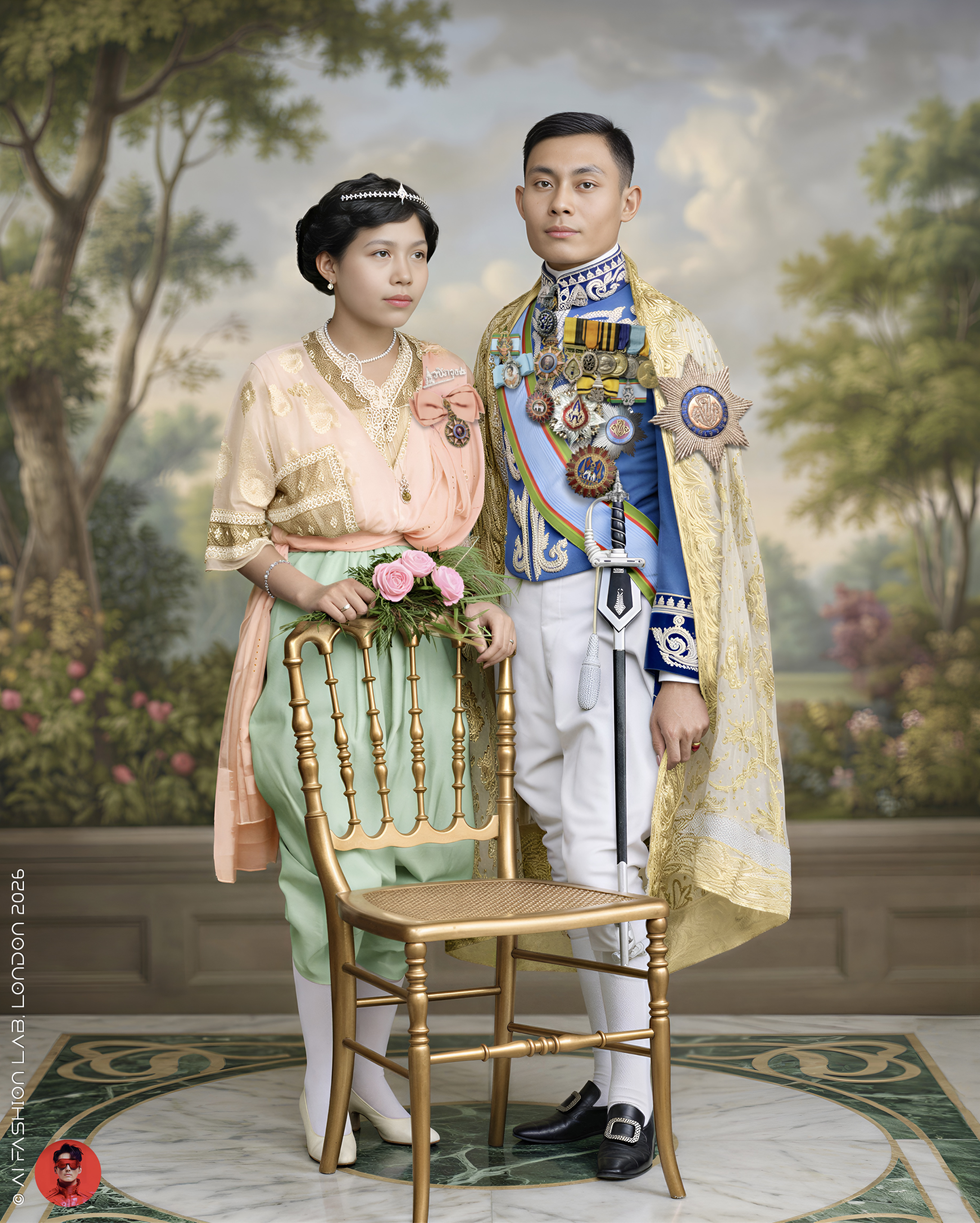
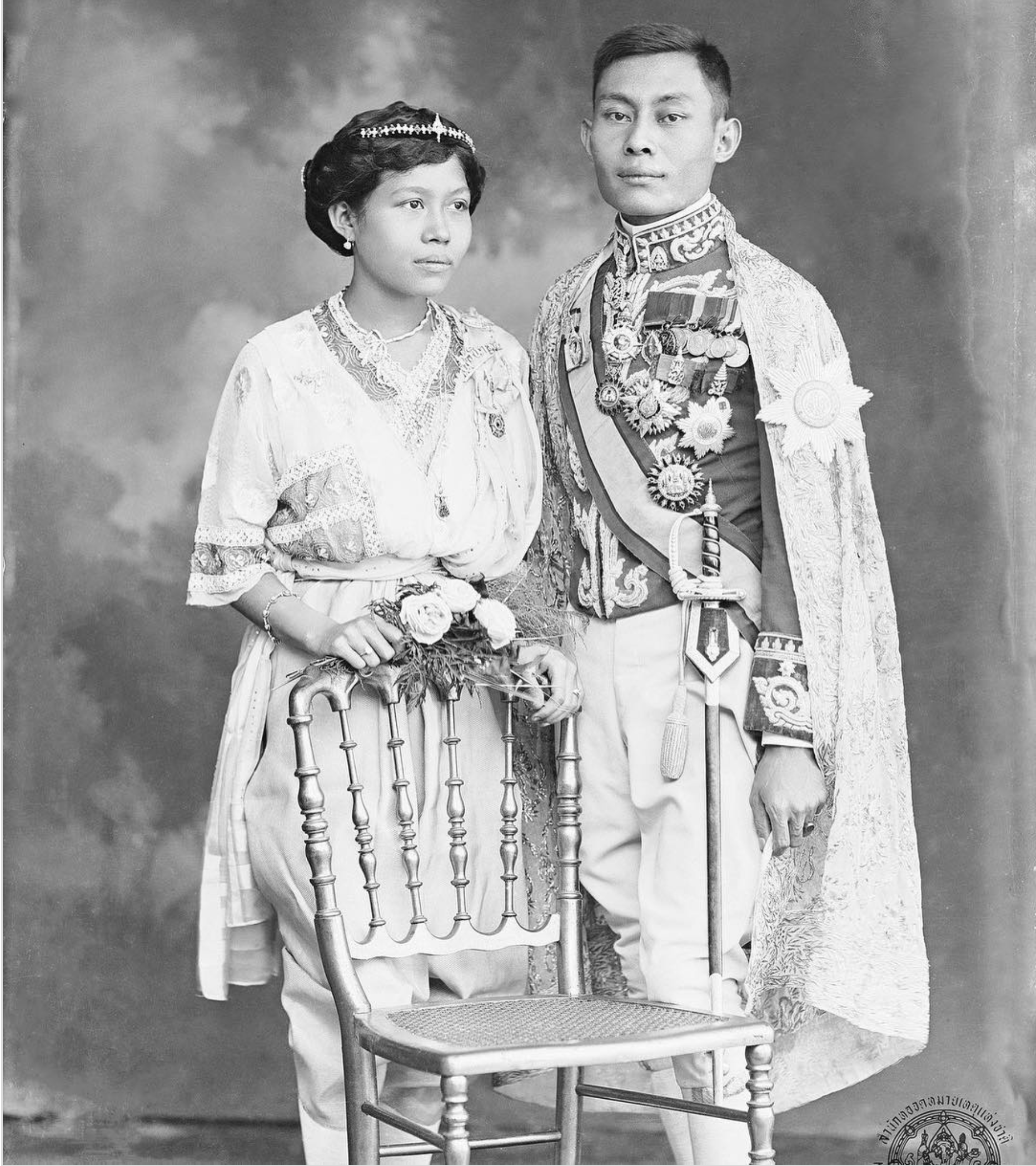
พระวรวงศ์เธอ พระองค์เจ้าปิยบุตร และหม่อมสนม จักรพันธุ์ ณ อยุธยา
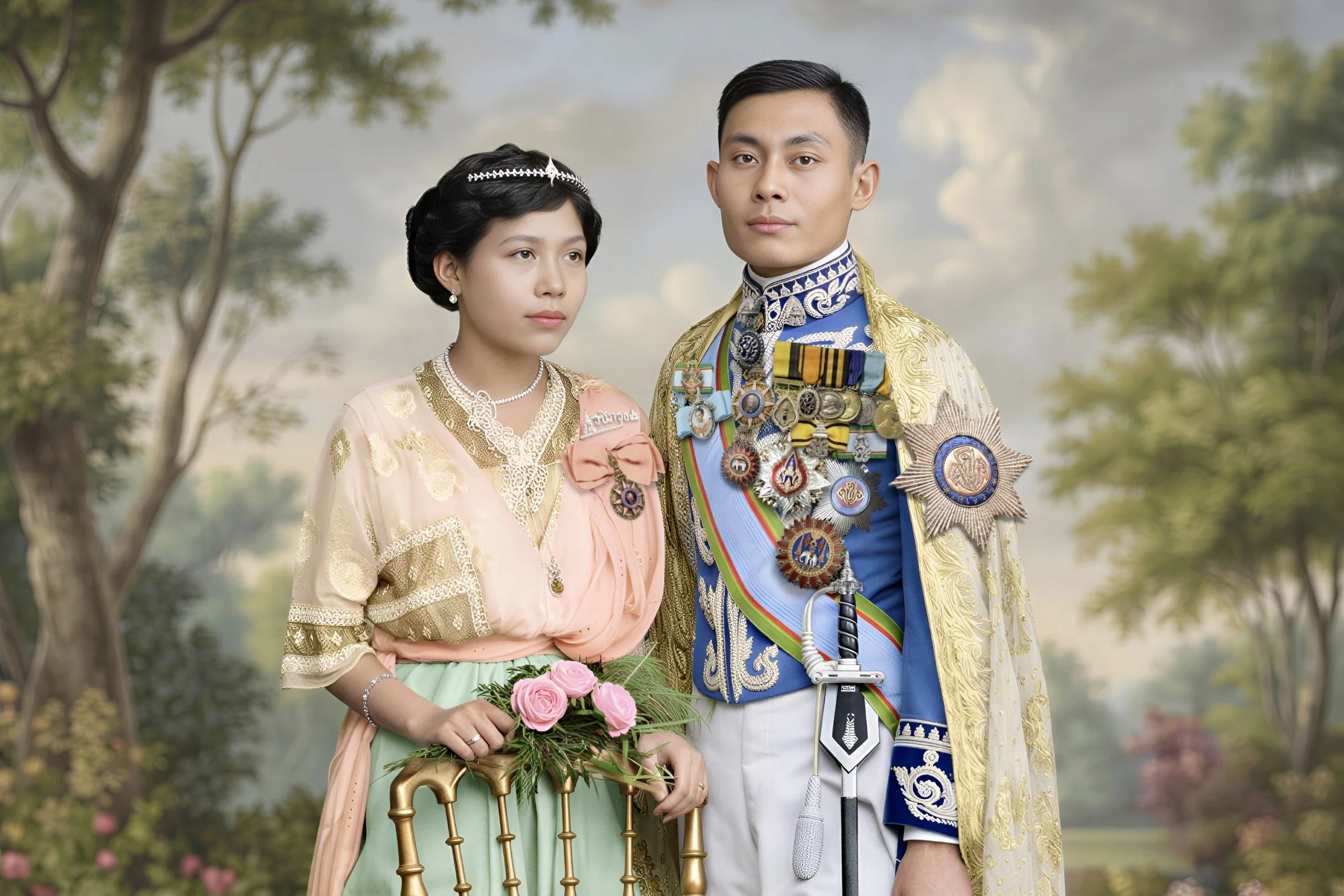
พระวรวงศ์เธอ พระองค์เจ้าปิยบุตร และหม่อมสนม จักรพันธุ์ ณ อยุธยา
ภาพที่ได้รับการบูรณะและสร้างสรรค์ขึ้นด้วยเทคโนโลยี AI ในคอลเล็กชันนี้ เป็นพระรูปของ พระวรวงศ์เธอ พระองค์เจ้าปิยบุตร (หม่อมเจ้าปิยบุตร จักรพันธุ์) ทรงฉายพระรูปคู่กับ หม่อมสนม จักรพันธุ์ ณ อยุธยา (สกุลเดิม ณ มหาชัย)
พระวรวงศ์เธอ พระองค์เจ้าปิยบุตร เป็นพระโอรสในสมเด็จพระเจ้าบรมวงศ์เธอ เจ้าฟ้าจาตุรนต์รัศมี กรมพระจักรพรรดิพงษ์ ประสูติแต่หม่อมราชวงศ์ปุ้ย จักรพันธุ์ ประสูติเมื่อวันที่ ๖ ตุลาคม พ.ศ. ๒๔๓๓ และสิ้นพระชนม์เมื่อวันที่ ๖ มกราคม พ.ศ. ๒๔๖๔ เมื่อแรกประสูติทรงมีพระยศเป็น หม่อมเจ้าปิยบุตร
ในสมัยรัชกาลที่ ๕ ทรงเป็นกรรมการทวีปัญญาสโมสร ซึ่งเป็นสโมสรที่สมเด็จพระบรมโอรสาธิราช เจ้าฟ้ามหาวชิราวุธ สยามมกุฎราชกุมาร ทรงก่อตั้งขึ้น
พ.ศ. ๒๔๔๗ พระบาทสมเด็จพระจุลจอมเกล้าเจ้าอยู่หัวโปรดพระราชทานที่ดินสำหรับสร้างวังบริเวณตำบลสนามกระบือ ใกล้คลองรอบกรุง แก่พระราชนัดดา ๖ พระองค์ รวม ๖ วัง โดยสร้างให้หันหน้าออกคนละด้าน ด้านละ ๓ วัง หลังวังติดกันเป็นคู่ ดังนี้
วังกรมหมื่นอนุพงศ์จักรพรรดิ คู่กับ วังกรมหมื่นอนุวัตรจาตุรงค์ วังหม่อมเจ้าดนัยวรนุช คู่กับ วังหม่อมเจ้าดรุณวัยวัฒน์ วังหม่อมเจ้าปิยบุตร คู่กับ วังหม่อมเจ้าทศสิริวงศ์
เมื่อมีการตัดถนนผ่านบริเวณนั้น จึงตั้งชื่อถนนตามสถานที่สำคัญในย่านนั้นเพื่อเป็นอนุสรณ์ว่า ถนนหลานหลวง
ต่อมาพระบาทสมเด็จพระปกเกล้าเจ้าอยู่หัวทรงพระกรุณาโปรดเกล้าฯ ให้สถาปนาพระโอรสธิดาในเจ้าฟ้าที่มารดามิได้เป็นเจ้าทุกพระองค์เป็น พระวรวงศ์เธอ พระองค์เจ้า เมื่อวันที่ ๘ พฤศจิกายน พ.ศ. ๒๔๗๐ หม่อมเจ้าปิยบุตรจึงได้รับการสถาปนาเป็น พระวรวงศ์เธอ พระองค์เจ้าปิยบุตร
พระองค์มีหม่อม ๒ ท่าน คือ หม่อมสุวรรณ และหม่อมสนม จักรพันธุ์ ณ อยุธยา มีพระโอรสธิดารวม ๖ คน ได้แก่ หม่อมราชวงศ์ปิยสุวรรณ หม่อมราชวงศ์พันธ์ปรี หม่อมราชวงศ์ปรีย์พจน์พดุง หม่อมราชวงศ์หญิงปรุงสมร หม่อมราชวงศ์หญิงอรสนม และหม่อมราชวงศ์นิยมสิริ จักรพันธุ์
__________________
ในพระรูปนี้ หม่อมสนม จักรพันธุ์ ณ อยุธยา แต่งกายแบบสตรีราชสำนักในยุครัชกาลที่ ๖ ช่วงกลางรัชสมัย ซึ่งเราอาจเรียกได้ว่าเป็นยุค Late Teens หรือช่วงปลายทศวรรษแรกของรัชกาล ชุดในยุคนี้เริ่มมีผ้าแพรหรือไหมซาตินเย็บประดับบนเสื้อแล้ว แต่ยังคงนิยมแพรสะพายหย่อนๆ คู่กับการนุ่งโจงกระเบนอยู่
ส่วนที่ชอบมากในภาพนี้คือบองโด (bandeau) ของหม่อม — มีขนาดเล็ก เรียบ แต่ดูโก้มากๆ และการโพสท่าถ่ายภาพก็น่าสนใจทีเดียว คือฝ่ายหญิงไม่นั่งเก้าอี้ตามแบบนิยมของคู่สามีภรรยาในยุคนั้น แต่กลับตั้งเก้าอี้เป็นเพียงพร็อพประกอบฉากเท่านั้น ดูมีสไตล์และทันสมัยกว่ามาก
สำหรับพระองค์เจ้าปิยบุตรนั้น ทรงฉลองพระองค์เครื่องแบบเต็มยศใหญ่ของข้าราชการพลเรือน กรมมหาดเล็ก กระทรวงวัง ในสมัยรัชกาลที่ ๖ ซึ่งรับอิทธิพลมาจากราชสำนักตะวันตก โดยเฉพาะราชสำนักอังกฤษในยุคพระเจ้าเอ็ดเวิร์ดที่ ๗ แล้วปรับให้เข้ากับระเบียบแบบแผนของราชสำนักสยามอย่างสมบูรณ์
โครงหลักของเครื่องแบบชุดนี้ประกอบด้วย เสื้อ tailcoat, กางเกงขาสั้นแบบ breeches และหมวก bicorne อันเป็นองค์ประกอบมาตรฐานของเครื่องแบบเต็มยศสำหรับข้าราชการพลเรือนชั้นสูงในยุคนั้น สวมทับด้วยเสื้อคลุมเต็มยศปักดิ้นทองและเงิน ซึ่งเป็นชั้นนอกของเครื่องแบบที่เสริมความสง่างามและสมพระเกียรติยิ่งขึ้น
ในส่วนของลักษณะเฉพาะประจำกรม ข้าราชการกรมมหาดเล็กจะใช้ผ้าสีน้ำเงินเข้มปักดิ้นเงิน พร้อมเครื่องประกอบที่เป็นเงินทั้งหมด และเนื่องจากพระองค์ทรงดำรงตำแหน่งรองอธิบดีกรมมหาดเล็ก จึงทรงมีสีหมายกรมที่ปกเสื้อและข้อพระหัตถ์เป็นสีน้ำเงินแก่ บ่งบอกทั้งสังกัดและตำแหน่งในระบบราชการได้อย่างชัดเจน
เครื่องประกอบยศที่น่าสนใจอีกประการคือกระบี่แบบพลเรือนยอดพระเกี้ยว ฝักหนังดำประดับเครื่องเงิน ผูกพู่กระบี่ไหมเงิน อันเป็นส่วนหนึ่งของเครื่องแต่งกายเต็มยศของข้าราชการในกรมมหาดเล็กและกระทรวงวัง
สำหรับเครื่องราชอิสริยาภรณ์ ทรงประดับดวงดาราทุติยจุลจอมเกล้าแบบปักไหมและดิ้นทองที่ต้นแขนซ้ายบนเสื้อคลุมเต็มยศ พร้อมด้วยสายสะพายเครื่องราชอิสริยาภรณ์อันมีเกียรติยศยิ่งมงกุฎไทย
และนี่คือสิ่งที่น่าสนใจมากในภาพนี้ครับ — เรื่องของพัฒนาการของเครื่องราชอิสริยาภรณ์อันมีเกียรติยศยิ่งมงกุฎไทย และสีของสายสะพาย
คนส่วนมากคุ้นเคยกับสีน้ำเงิน แซบเขียว และริ้วแดงเหลือง แต่ในสมัยรัชกาลที่ ๕–๗ สายสะพายยังเป็นสีฟ้าพาสเทล และยังมีสีฟ้าในเฉดอื่นด้วยครับ รวมถึงแบบของดวงตราเองก็ยังมีการเปลี่ยนแปลงที่น่าศึกษาอีกด้วย
__________________
His Highness Prince Piyabut and Mom Sanom Chakrabandhu na Ayudhya (พระวรวงศ์เธอ พระองค์เจ้าปิยบุตร และหม่อมสนม จักรพันธุ์ ณ อยุธยา)
This AI-restored and AI-reconstructed image from our collection depicts His Highness Prince Piyabut (พระวรวงศ์เธอ พระองค์เจ้าปิยบุตร), photographed together with Mom Sanom Chakrabandhu na Ayudhya (หม่อมสนม จักรพันธุ์ ณ อยุธยา), née Na Mahachai (สกุลเดิม ณ มหาชัย).
Prince Piyabut was the son of His Royal Highness Prince Chaturonrasmi, the Prince Chakkrabatradipongse (สมเด็จพระเจ้าบรมวงศ์เธอ เจ้าฟ้าจาตุรนต์รัศมี กรมพระจักรพรรดิพงษ์), born of Mom Rajawongse Pui Chakrabandhu (หม่อมราชวงศ์ปุ้ย จักรพันธุ์). He was born on 6 October 1890 and passed away on 6 January 1921. At birth he held the rank of Mom Chao Piyabut (หม่อมเจ้าปิยบุตร).
During the reign of Rama V, he served as a committee member of the Thawi Panya Club (ทวีปัญญาสโมสร), an association founded by Crown Prince Maha Vajiravudh, the Siamese Crown Prince (สมเด็จพระบรมโอรสาธิราช เจ้าฟ้ามหาวชิราวุธ สยามมกุฎราชกุมาร).
In 1904, His Majesty King Chulalongkorn (พระบาทสมเด็จพระจุลจอมเกล้าเจ้าอยู่หัว), Rama V, graciously granted land in the Sanam Krabue district near the Klong Rop Krung canal for the construction of six palaces for six royal nephews — all sons of his younger brother, Prince Chaturonrasmi. The palaces were built in pairs facing opposite directions, three to each side, as follows:
The palace of Prince Anuphong Chakrapat — paired with the palace of Prince Anuwat Chaturon The palace of Prince Danai Woranut — paired with the palace of Prince Darun Waiyawat The palace of Prince Piyabut — paired with the palace of Prince Totsasiriwongsa
When a new road was subsequently cut through the area, it was named to commemorate these royal residences: Lan Luang Road (ถนนหลานหลวง), meaning "the road of the royal grandsons."
In 1927, His Majesty King Prajadhipok (พระบาทสมเด็จพระปกเกล้าเจ้าอยู่หัว), Rama VII, graciously elevated all children of royal princes whose mothers were not of royal birth to the rank of Phra Worawongse Ther Phra Ong Chao (พระวรวงศ์เธอ พระองค์เจ้า) on 8 November of that year. Mom Chao Piyabut was accordingly elevated to His Highness Prince Piyabut (พระวรวงศ์เธอ พระองค์เจ้าปิยบุตร).
He had two consorts: Mom Suwan (หม่อมสุวรรณ) and Mom Sanom Chakrabandhu na Ayudhya (หม่อมสนม จักรพันธุ์ ณ อยุธยา), and six children, all bearing the Chakrabandhu surname (จักรพันธุ์): Mom Rajawongse Piyasuwan (หม่อมราชวงศ์ปิยสุวรรณ), Mom Rajawongse Phanpri (หม่อมราชวงศ์พันธ์ปรี), Mom Rajawongse Priphojphadung (หม่อมราชวงศ์ปรีย์พจน์พดุง), Mom Rajawongse Ying Prungsamorn (หม่อมราชวงศ์หญิงปรุงสมร), Mom Rajawongse Ying Onsamom (หม่อมราชวงศ์หญิงอรสนม), and Mom Rajawongse Niyomsiri (หม่อมราชวงศ์นิยมสิริ).
__________________
In this portrait, Mom Sanom Chakrabandhu na Ayudhya is dressed in the style of Siamese court ladies during the reign of Rama VI — a fashion already well into mid-reign territory, which we might call the Late Teens period. Gowns of this era began to incorporate silk or satin trim sewn onto the blouse, though the loosely draped sabai sash and chong kraben (โจงกระเบน) trousers remained firmly in fashion.
What I particularly love in this image is her bandeau (บองโด) — small, understated, and impossibly chic. Her posing is also rather brilliant: rather than sitting in the chair as was conventional for couples' portraits of the period, she simply uses it as a prop, a piece of scenery. It reads as remarkably stylish and modern for its time.
As for Prince Piyabut himself, he is dressed in the grand full dress uniform of a civil official of the Royal Pages Department (กรมมหาดเล็ก, Krom Mahadlek), Ministry of the Royal Household (กระทรวงวัง), during the reign of King Vajiravudh (พระบาทสมเด็จพระมงกุฎเกล้าเจ้าอยู่หัว), Rama VI. The uniform was modelled directly on the court dress of Edwardian England under King Edward VII, and fully adapted to the ceremonial conventions of the Siamese court.
The foundation of the uniform consists of a tailcoat, breeches, and a bicorne hat — the standard elements of civil full dress for senior officials of the era — worn beneath an embroidered outer coat of gold and silver bullion work, which gives the ensemble its full ceremonial grandeur.
In terms of departmental distinction, officials of the Royal Pages Department wore dark navy blue cloth embroidered in silver, with all accessories in silver — the prescribed colours and materials of the department. As Deputy Director-General of the Royal Pages Department (รองอธิบดีกรมมหาดเล็ก), Prince Piyabut wore the department's collar and cuff markings in deep blue, indicating both his departmental affiliation and his seniority within the administrative hierarchy.
Of particular note among the accessories is the civil sword with a phra kiao (chao phraya) finial (กระบี่แบบพลเรือนยอดพระเกี้ยว), in a black leather scabbard mounted with silver fittings and hung with a silver silk sword tassel (พู่กระบี่ไหมเงิน) — standard issue for civil full dress within the Royal Pages Department and the Ministry of the Royal Household.
For decorations, he wears the Second Class Star of the Most Illustrious Order of Chula Chom Klao (ดวงดาราทุติยจุลจอมเกล้า), embroidered in silk and gold bullion on the left upper sleeve of the court coat, together with the sash of the Most Noble Order of the Crown of Thailand (เครื่องราชอิสริยาภรณ์อันมีเกียรติยศยิ่งมงกุฎไทย).
And here lies something that I find particularly fascinating about this image — the evolution of the Most Noble Order of the Crown of Thailand and, specifically, the colour of its sash.
Most people today are familiar with the current deep navy blue sash with its green border and yellow-red stripes. But during the reigns of Rama V through Rama VII, the sash was still in a powder or pastel blue — and there were indeed other shades of blue in use depending on the period. The design of the badge itself also changed considerably across these reigns, in ways that most people have never noticed.
__________________
เรียนเชิญกด Subscribe ได้ที่ลิงก์นี้ครับ เพื่อร่วมติดตามงานสร้างสรรค์ต้นฉบับ งานวิจัยประวัติศาสตร์แฟชั่น และผลงานอนุรักษ์มรดกวัฒนธรรมด้วยเทคโนโลยี AI ของ AI Fashion Lab, London ซึ่งมุ่งตีความอดีตผ่านมิติใหม่ของการบูรณะภาพ การสร้างสรรค์ภาพ และการเล่าเรื่องด้วยศิลปะเชิงดิจิทัล https://www.facebook.com/aifashionlab/subscribe/
#aifashionlab #AI #aiartist #aiart #aifashion #aifashiondesign #aifashionstyling #aifashiondesigner #fashion #fashionhistory #historyoffashion #fashionstyling #fashionphotography #digitalfashion #digitalfashiondesign #digitalcostumedesign #digitaldesign #digitalaiart #ThaiFashionHistory #ThaiFashionAI #thailand #UNESCO