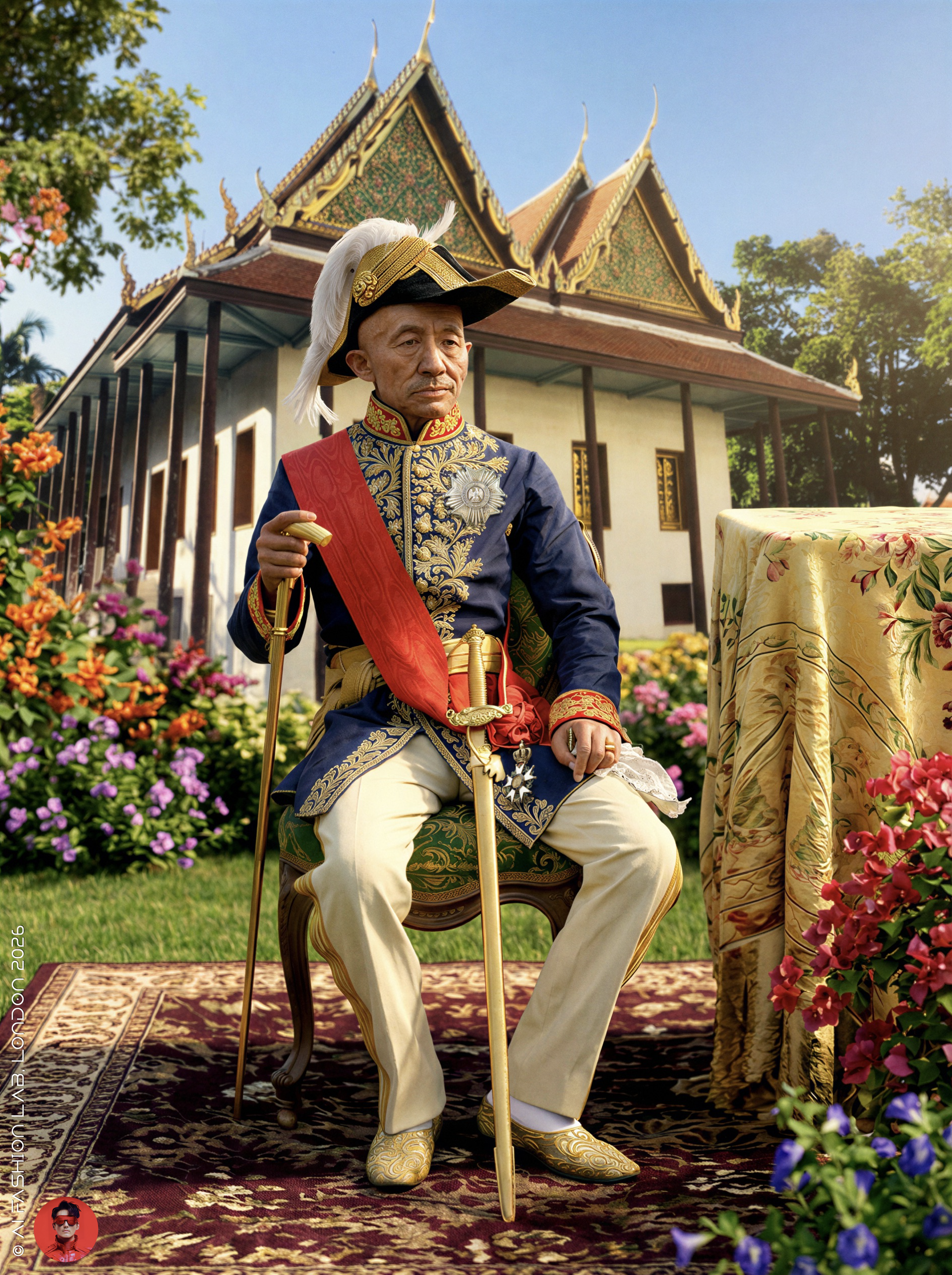
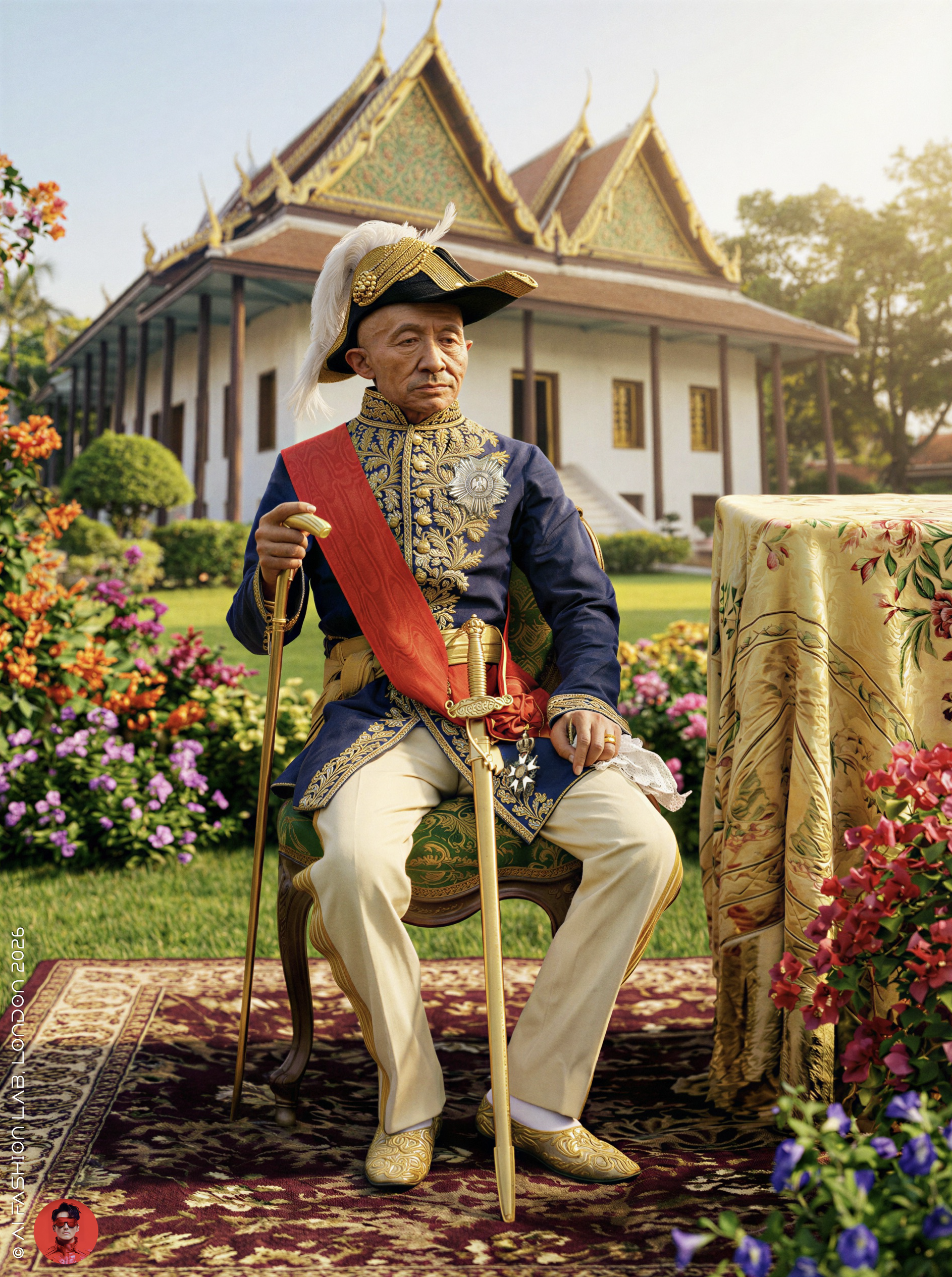
พระบาทสมเด็จพระจอมเกล้าเจ้าอยู่หัว ฉลองพระองค์เต็มยศแบบฝรั่งเศส
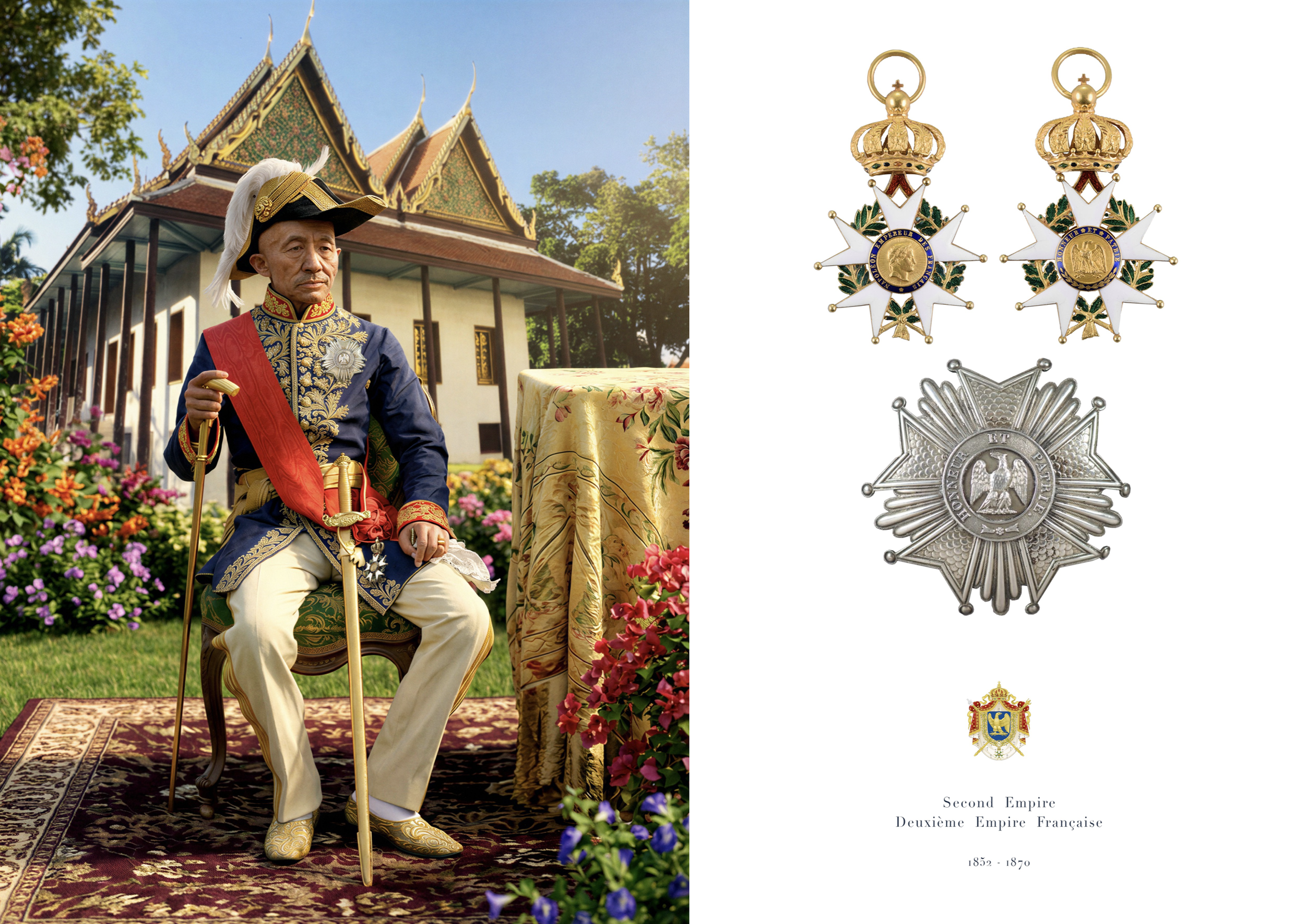
พระบาทสมเด็จพระจอมเกล้าเจ้าอยู่หัว ฉลองพระองค์เต็มยศแบบฝรั่งเศส
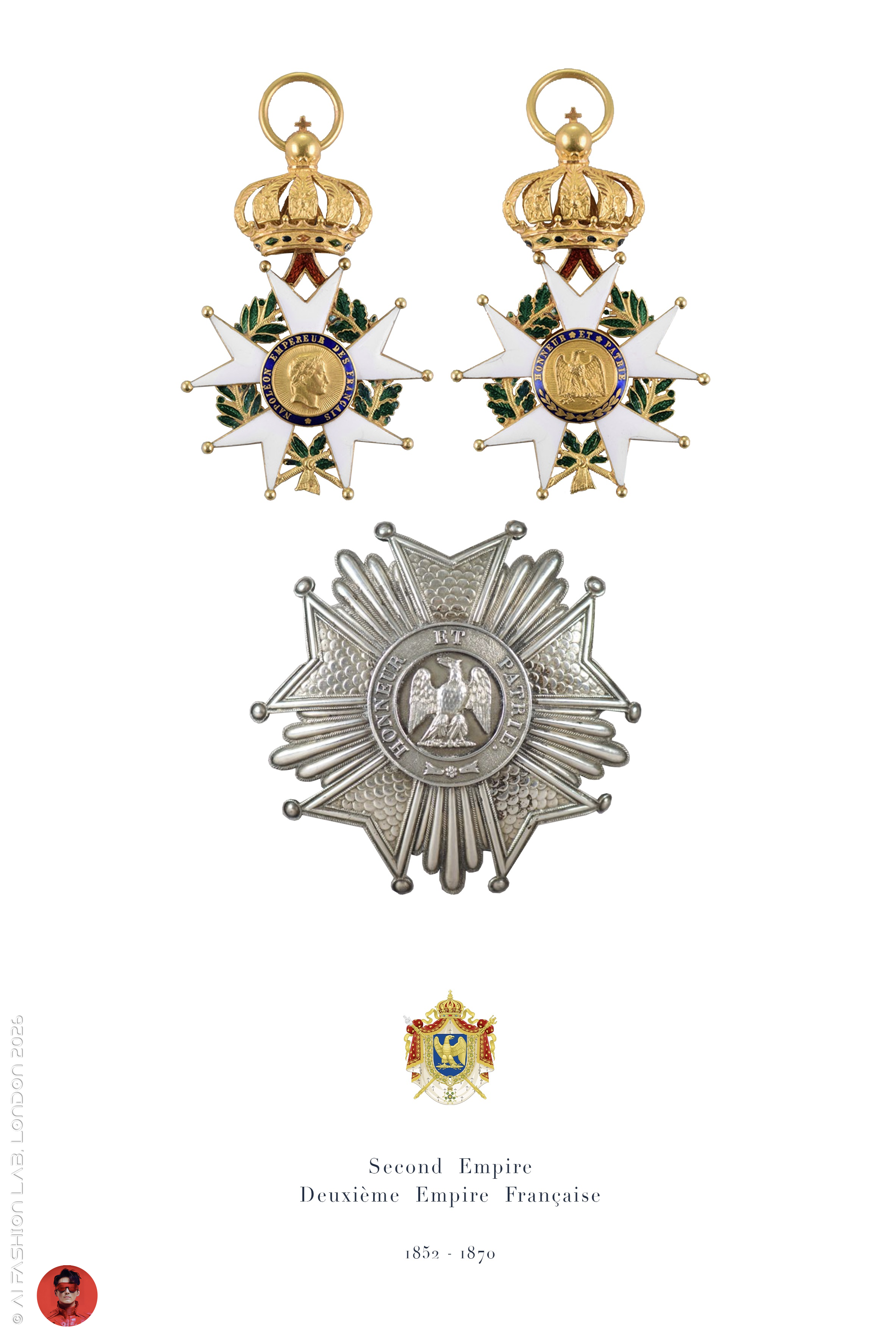
ภาพที่ได้รับการบูรณะและสร้างสรรค์ขึ้นด้วยเทคโนโลยี AI นี้ เป็นพระบรมฉายาลักษณ์ของ พระบาทสมเด็จพระจอมเกล้าเจ้าอยู่หัว ขณะทรงฉลองพระองค์เครื่องแบบเต็มยศแบบฝรั่งเศส ประดับเครื่องราชอิสริยาภรณ์ Légion d’Honneur สมัยจักรวรรดิฝรั่งเศสที่สอง (Second Empire) ชั้น Grand-Croix โดยทรงสายสะพายสีแดงพร้อมเหรียญตรา และดาราที่พระอุระด้านซ้าย องค์ประกอบทั้งหมดสะท้อนการจัดวางภาพลักษณ์เชิงรัฐศาสตร์ในแบบราชสำนักยุโรปอย่างจงใจและมีนัยสำคัญ
ในปีพุทธศักราช 2399 (ค.ศ. 1856) จักรพรรดินโปเลียนที่ 3 แห่งฝรั่งเศส ได้ส่งคณะราชทูตซึ่งนำโดย หลุยส์ ชาร์ล เดอ มงตินญี (Louis Charles de Montigny) เข้ามาเจริญสัมพันธไมตรีกับสยาม พร้อมถวายเครื่องราชบรรณาการ รวมถึงฉลองพระองค์เครื่องแบบเต็มยศแบบฝรั่งเศสและพระแสงดาบ แด่พระบาทสมเด็จพระจอมเกล้าเจ้าอยู่หัว และสมเด็จพระเจ้าลูกยาเธอ เจ้าฟ้าจุฬาลงกรณ์ อันเป็นการสถาปนาภาษาทางการทูตผ่านวัตถุอย่างเป็นรูปธรรม
ต่อมาในปีพุทธศักราช 2404 (ค.ศ. 1861) สยามได้ส่งคณะราชทูตไปเจริญสัมพันธไมตรี ณ ประเทศฝรั่งเศส อัญเชิญพระราชสาส์น เครื่องราชบรรณาการ และเครื่องราชอิสริยาภรณ์นพรัตนราชวราภรณ์ ไปทูลเกล้าทูลกระหม่อมถวายจักรพรรดินโปเลียนที่ 3 ณ พระราชวังฟงแตนโบล เมื่อวันที่ 27 มิถุนายน พุทธศักราช 2404
ในปีพุทธศักราช 2406 (ค.ศ. 1863) เพื่อเป็นการตอบแทนเชิงสัญลักษณ์และการสื่อสารทางวัตถุ จักรพรรดินโปเลียนที่ 3 ได้พระราชทานเครื่องราชอิสริยาภรณ์เลฌียงดอนเนอร์ ชั้นสูงสุด คือ Grand-Croix พร้อมสายสะพาย เหรียญตรา และดาราเงิน แด่พระบาทสมเด็จพระจอมเกล้าเจ้าอยู่หัว พร้อมกันนี้ยังได้พระราชทานเครื่องราชอิสริยาภรณ์เลฌียงดอนเนอร์ ชั้น Grand Officier แบบเหรียญแพรแถบพร้อมดาราเงิน แด่ พระบาทสมเด็จพระปิ่นเกล้าเจ้าอยู่หัว อีกด้วย ทั้งยังเป็นไปได้อย่างยิ่งว่ารัฐบาลฝรั่งเศสได้ถวายฉลองพระองค์เครื่องแบบเต็มยศควบคู่มากับเครื่องราชอิสริยาภรณ์ เพื่อให้สามารถทรงฉลองพระองค์และทรงประดับเหรียญตราได้อย่างถูกต้องตามธรรมเนียมตะวันตก
ของถวายเหล่านี้สะท้อนการแลกเปลี่ยนเกียรติยศระหว่างราชสำนักสยามและฝรั่งเศสในฐานะการทูตเชิงสัญลักษณ์ ซึ่ง “ของขวัญ” ทำหน้าที่เป็นถ้อยแถลงทางการเมืองในตัวเอง ตามแนวคิดว่าด้วยการให้ของขวัญของ Marcel Mauss ที่อธิบายวัฏจักรสามประการของการให้ การรับ และการตอบแทน เพื่อรักษาดุลแห่งเกียรติและศักดิ์ศรีระหว่างผู้ให้กับผู้รับ พระบรมฉายาลักษณ์ที่ทรงฉลองพระองค์เต็มยศ ติดเหรียญตรา และทรงพระแสงดาบ จึงเป็นการยืนยันความเคารพซึ่งกันและกันและการจัดวางตำแหน่งทางการเมืองอย่างเท่าเทียม
การเลือกฉลองพระองค์เต็มยศฝรั่งเศสพร้อมพระมาลาแบบก๊อกแฮต (bicorn hat) มิใช่เรื่องบังเอิญ หากเป็นการประกาศตนในคตินิยมแบบพระมหากษัตริย์ตะวันตกอย่างสมบูรณ์ ในศตวรรษที่ 19 พระมหากษัตริย์ยุโรปนิยมใช้เครื่องแบบทหารเป็นภาษาทางอำนาจและความชอบธรรม แนวปฏิบัตินี้ซึ่งสืบทอดจากพระเจ้าเฟรเดอริกมหาราชแห่งปรัสเซียและจักรพรรดินโปเลียนที่ 1 ถูกนำมาใช้ในภาพถ่ายราชวงศ์อย่างแพร่หลาย และสยามได้เลือกใช้ภาษาภาพเดียวกันอย่างชาญฉลาด
พระบรมฉายาลักษณ์นี้จึงนับเป็นหลักฐานสำคัญของการปรากฏเครื่องราชอิสริยาภรณ์แบบตะวันตกในราชสำนักสยามเป็นครั้งแรก อีกทั้งสะท้อนบทบาทของเครื่องแบบและเหรียญตราในฐานะ “ภาษาการทูต” ของโลกสมัยใหม่ได้อย่างชัดเจนและทรงพลัง
________
ในฉากหลังของภาพที่สร้างสรรค์ขึ้นนี้คือ พระที่นั่งมูลมนเทียร (พระที่นั่งมูลมณเฑียร) เคยเป็นส่วนหนึ่งของหมู่พระที่นั่งในพระอภิเนาว์นิเวศน์ พระราชมณเฑียรที่ประทับของพระบาทสมเด็จพระจอมเกล้าเจ้าอยู่หัวในพระบรมมหาราชวัง โดยทรงพระกรุณาโปรดเกล้าฯ ให้รื้อพระตำหนักเดิมที่เคยใช้เป็นที่ประทับก่อนทรงผนวชในรัชกาลที่ ๒ มาแก้ไขใหม่ จากพระตำหนักเครื่องไม้เป็นพระที่นั่งแฝดก่ออิฐถือปูน ตั้งอยู่ทางด้านเหนือระหว่างพระที่นั่งภาณุมาศจำรูญและพระพุทธนิเวศน์ พระราชทานนามว่า “พระที่นั่งมูลมนเทียร”
ภายหลังหมู่พระที่นั่งในพระอภิเนาว์นิเวศน์ชำรุดทรุดโทรมลง เนื่องจากมีโครงสร้างเป็นไม้และสร้างในบริเวณที่เคยเป็นสระน้ำของพระราชยานอุทยานสวนขวา ประกอบกับพระบาทสมเด็จพระจุลจอมเกล้าเจ้าอยู่หัว โปรดเกล้าฯ ให้สร้างหมู่พระที่นั่งจักรีมหาปราสาทขึ้นเป็นพระราชมณเฑียรที่ประทับ จึงได้มีการรื้อพระที่นั่งในพระอภิเนาว์นิเวศน์ลงทั้งหมด ส่วนพระที่นั่งมูลมณเฑียรนั้น โปรดเกล้าฯ ให้รื้อไปปลูกถวายเป็นเสนาสนะที่วัดเขมาภิรตาราม ซึ่งเป็นวัดสำคัญที่สมเด็จพระศรีสุริเยนทราบรมราชินี และพระบาทสมเด็จพระจอมเกล้าเจ้าอยู่หัว ทรงเคยบูรณปฏิสังขรณ์มา โดยเมื่อรื้อย้ายพระที่นั่งมูลมณเฑียรมาที่วัดเขมาภิรตารามแล้ว ปรากฏหลักฐานว่าพระบาทสมเด็จพระจุลจอมเกล้าเจ้าอยู่หัว ได้เสด็จพระราชดำเนินมาทอดพระเนตร เมื่อวันที่ ๑๔ กรกฎาคม ๒๔๔๗
“...เรือพระที่นั่งจอดประทับที่น่าวัดเขมาภิรตาราม เวลาย่ำค่ำเสศ เสด็จขึ้นบนพระอุโบสถ ทรงนมัสการพระพุทธรูปแล้ว พระราชทานเงินสำหรับปฏิสังขรณ์พระอาราม ๒๐ ชั่ง แล้วเสด็จตำหนักเขียว ซึ่งเปนกุฏิพระครู พระที่นั่งมูลมณเฑียร แล้วเสด็จลงมาประทับแรมในเรือพระที่นั่ง ณะ ที่นี้...”
________________
King Mongkut in Full French Dress Uniform
This AI-restored and imaginatively reconstructed image presents King Mongkut wearing a full French dress uniform, adorned with the Légion d’Honneur of the Second French Empire, class Grand-Croix. The red sash with badge and the star worn on the left breast follow Western conventions precisely, signalling a deliberate and highly literate engagement with nineteenth-century European diplomatic visual language.
In 1856 (B.E. 2399), Napoleon III, Emperor of the French, dispatched a diplomatic mission to Siam led by Louis Charles de Montigny to formalise relations. Among the diplomatic gifts presented were Western courtly objects, including a French full dress uniform and a ceremonial sword, bestowed upon King Mongkut and upon His Royal Highness Prince Chulalongkorn. These were not incidental curiosities, but carefully selected instruments of statecraft.
In 1861 (B.E. 2404), Siam reciprocated by sending its own diplomatic mission to France, bearing royal letters, state gifts, and the Siamese Order of the Nine Gems to Emperor Napoleon III. The audience took place at Fontainebleau Palace on 27 June 1861, affirming the mutual recognition of sovereign status between the two courts.
Two years later, in 1863 (B.E. 2406), Napoleon III formally returned this gesture by conferring the Grand-Croix of the Légion d’Honneur—the order’s highest class—upon King Mongkut, complete with sash, badge, and silver star. At the same time, the Emperor awarded the Grand Officier class of the Légion d’Honneur to King Pinklao. It is highly plausible that the French government also presented full dress uniforms alongside these decorations, enabling their recipients to wear insignia in strict accordance with Western protocol.
These exchanges exemplify diplomacy conducted through objects—honours, uniforms, and regalia functioning as political statements in their own right. This dynamic closely aligns with the theory of gift exchange articulated by Marcel Mauss, who described a moral cycle of giving, receiving, and reciprocating gifts in order to maintain balance, honour, and mutual obligation. The portrait of King Mongkut in full French uniform, complete with decorations and sword, visually consolidates this cycle of diplomatic reciprocity.
The choice to appear in French full dress was therefore neither accidental nor merely decorative. With the bicorn hat completing the ensemble, the image consciously places the Siamese monarch within the Western monarchical tradition. Throughout the nineteenth century, European rulers increasingly adopted military dress for ceremonial portraiture, a practice shaped by figures such as Frederick the Great of Prussia and Napoleon I. Military uniform became a visual shorthand for sovereignty, legitimacy, and modern statehood—and this same visual language was astutely adopted by the Siamese court.
This royal portrait thus stands as a crucial historical document: among the earliest visual records of Western orders and uniforms within the Siamese court. More broadly, it demonstrates how dress, decoration, and photographic representation operated as instruments of diplomacy in the modern world—where clothing and insignia spoke as eloquently as treaties and royal letters.
________________
Background Setting: Phra Thinang Mun Monthian (พระที่นั่งมูลมนเทียร / พระที่นั่งมูลมณเฑียร)
In the background of this imaginatively reconstructed image stands Phra Thinang Mun Monthian (พระที่นั่งมูลมนเทียร หรือ พระที่นั่งมูลมณเฑียร), formerly part of the royal residential group within Phra Aphinaw Niwet (พระอภิเนาว์นิเวศน์), the inner palace precinct that served as the principal royal residence of King Mongkut (พระบาทสมเด็จพระจอมเกล้าเจ้าอยู่หัว) inside the Grand Palace (พระบรมมหาราชวัง).
King Mongkut ordered the dismantling of an earlier residence—originally a wooden palace that he had occupied prior to his ordination during the reign of King Rama II (พระบาทสมเด็จพระพุทธเลิศหล้านภาลัย)—and had it rebuilt and transformed. The former timber structure was converted into a pair of masonry buildings constructed of brick and mortar, representing a more permanent architectural form. The new complex was situated on the northern side of the precinct, between Phra Thinang Phanumart Chamrun (พระที่นั่งภาณุมาศจำรูญ) and Phra Phutthanivet (พระพุทธนิเวศน์), and was bestowed the name Phra Thinang Mun Monthian (พระที่นั่งมูลมนเทียร).
In later years, the buildings of Phra Aphinaw Niwet fell into disrepair. Much of the complex had been constructed primarily of timber and stood on land that had formerly been part of a pond within the royal garden known as Suan Khwa (สวนขวา). When King Chulalongkorn (พระบาทสมเด็จพระจุลจอมเกล้าเจ้าอยู่หัว) ordered the construction of Chakri Maha Prasat (พระที่นั่งจักรีมหาปราสาท) as the new principal royal residence, the older structures of Phra Aphinaw Niwet were dismantled entirely.
Phra Thinang Mun Monthian, however, was treated differently. By royal command, it was carefully dismantled and re-erected as monastic quarters (senāsana) at Wat Khema Phirataram (วัดเขมาภิรตาราม), an important temple previously restored by Queen Sri Suriyendra (สมเด็จพระศรีสุริเยนทราบรมราชินี) and King Mongkut himself. Documentary evidence records that after its relocation, King Chulalongkorn visited the site on 14 July 1904 (พ.ศ. 2447).
A contemporary royal record states:
“...The royal barge moored at the landing of Wat Khema Phirataram (วัดเขมาภิรตาราม) at dusk. His Majesty ascended to the ordination hall to pay homage to the Buddha images, then graciously granted funds amounting to twenty chang for the restoration of the monastery. Thereafter, His Majesty proceeded to the Green Residence, formerly the abbot’s dwelling—Phra Thinang Mun Monthian (พระที่นั่งมูลมณเฑียร)—and later returned to spend the night aboard the royal barge at this place...”
Within the context of this AI-created image, the inclusion of Phra Thinang Mun Monthian (พระที่นั่งมูลมนเทียร) as the backdrop is therefore not merely architectural. It situates King Mongkut within a space intimately connected to his personal history, religious life, and kingship, reinforcing the layered dialogue between Siamese royal tradition and the Western-inflected visual language of modern diplomacy expressed through uniform, insignia, and ceremonial display.
________________
เรียนเชิญกด Subscribe ได้ที่ลิงก์นี้ครับ เพื่อร่วมติดตามงานสร้างสรรค์ต้นฉบับ งานวิจัยประวัติศาสตร์แฟชั่น และผลงานอนุรักษ์มรดกวัฒนธรรมด้วยเทคโนโลยี AI ของ AI Fashion Lab, London ซึ่งมุ่งตีความอดีตผ่านมิติใหม่ของการบูรณะภาพ การสร้างสรรค์ภาพ และการเล่าเรื่องด้วยศิลปะเชิงดิจิทัล 🔗 https://www.facebook.com/aifashionlab/subscribe/
#aifashionlab #AI #aiartist #aiart #aifashion #aifashiondesign #aifashionstyling #aifashiondesigner #fashion #fashionhistory #historyoffashion #fashionstyling #fashionphotography #digitalfashion #digitalfashiondesign #digitalcostumedesign #digitaldesign #digitalaiart #ThaiFashionHistory #ThaiFashionAI #thailand #UNESCO