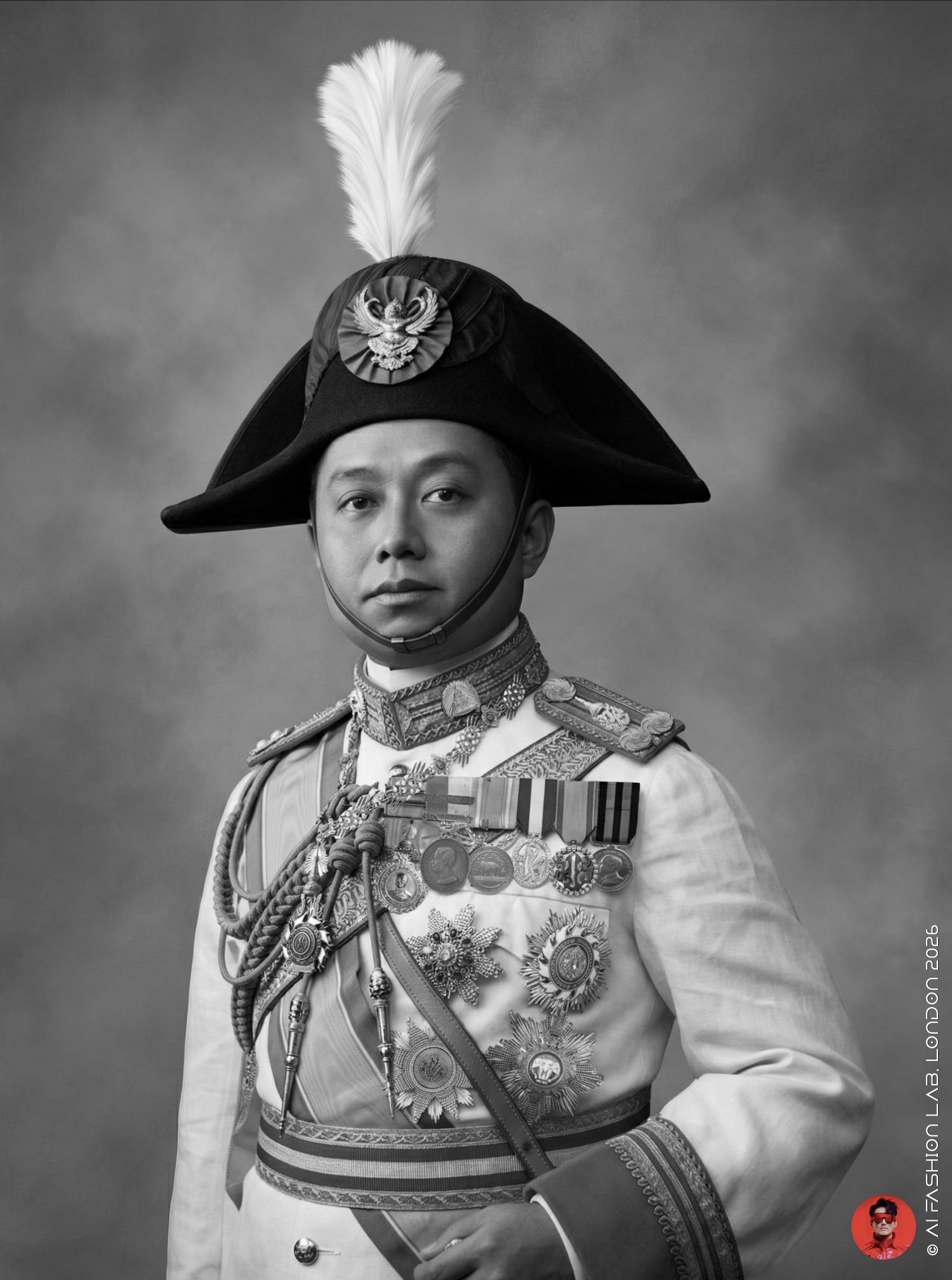
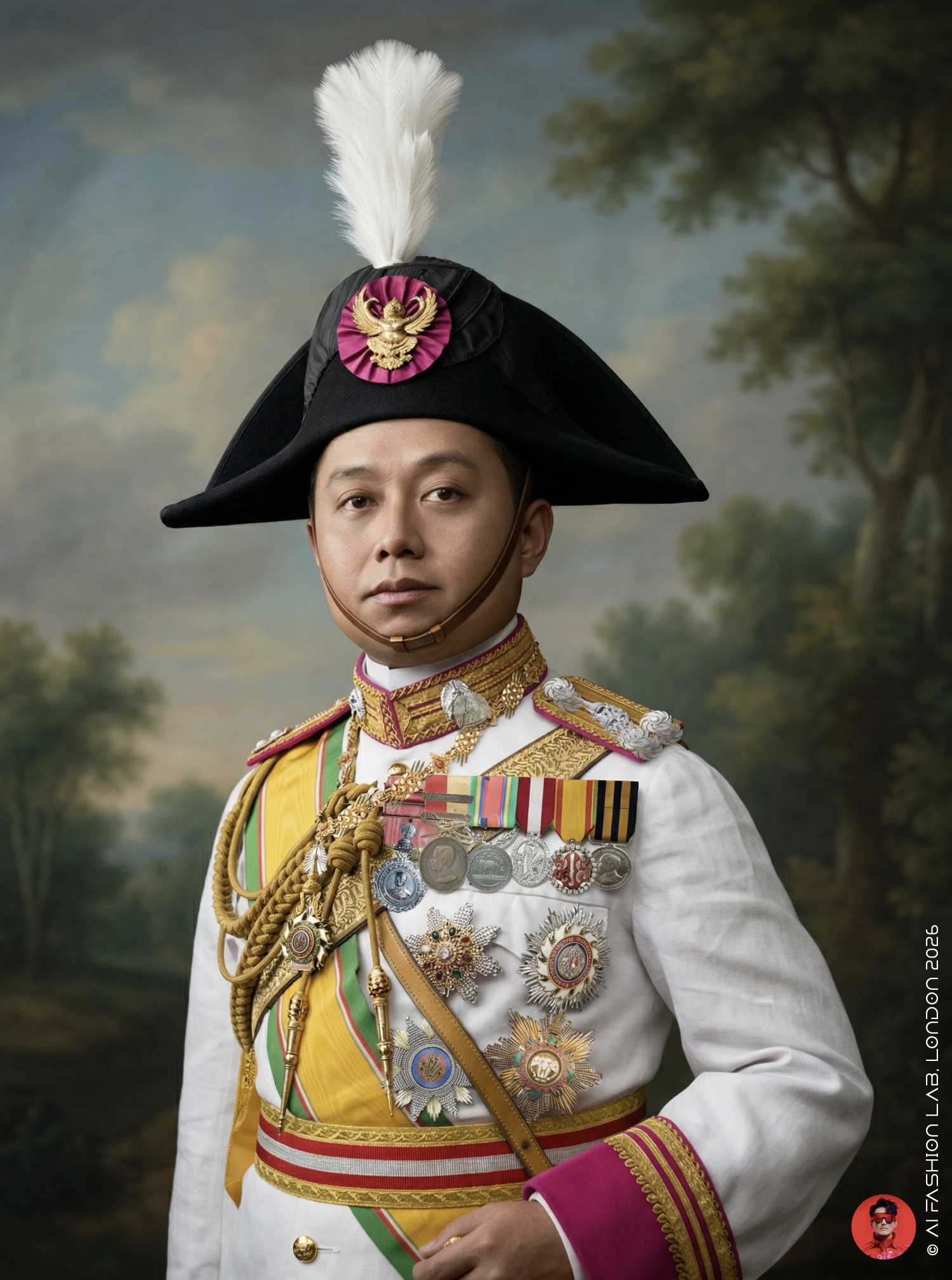
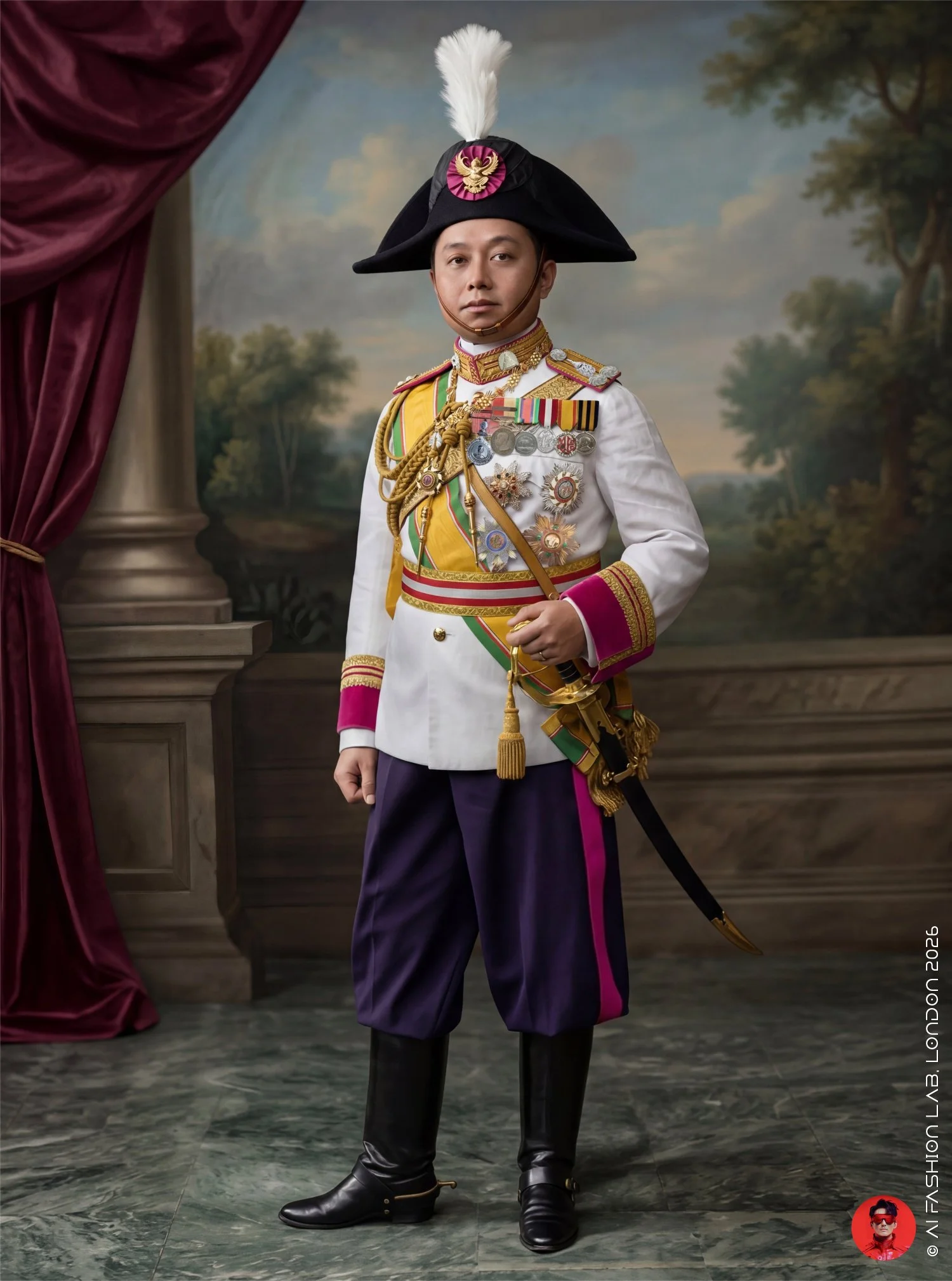
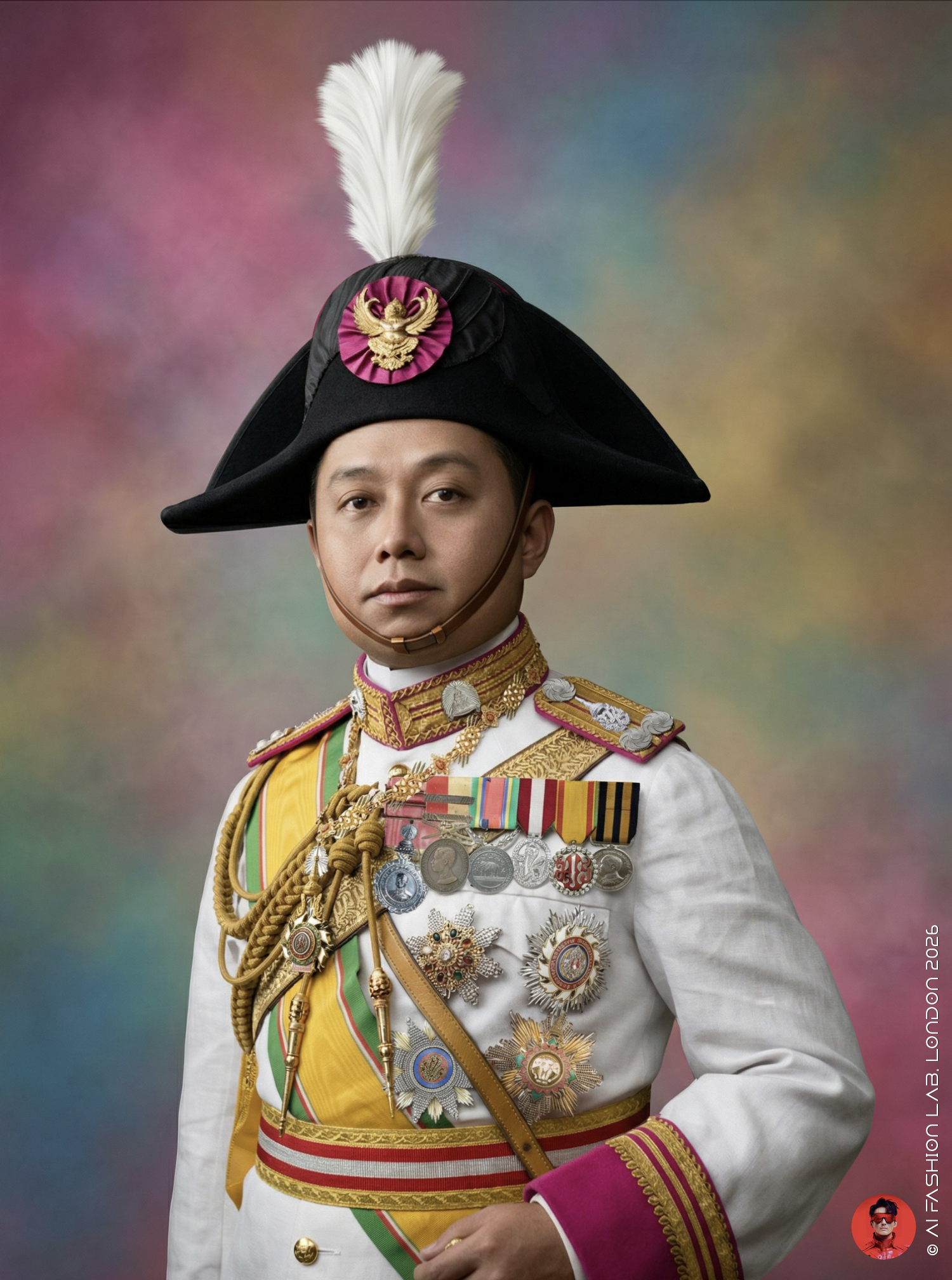
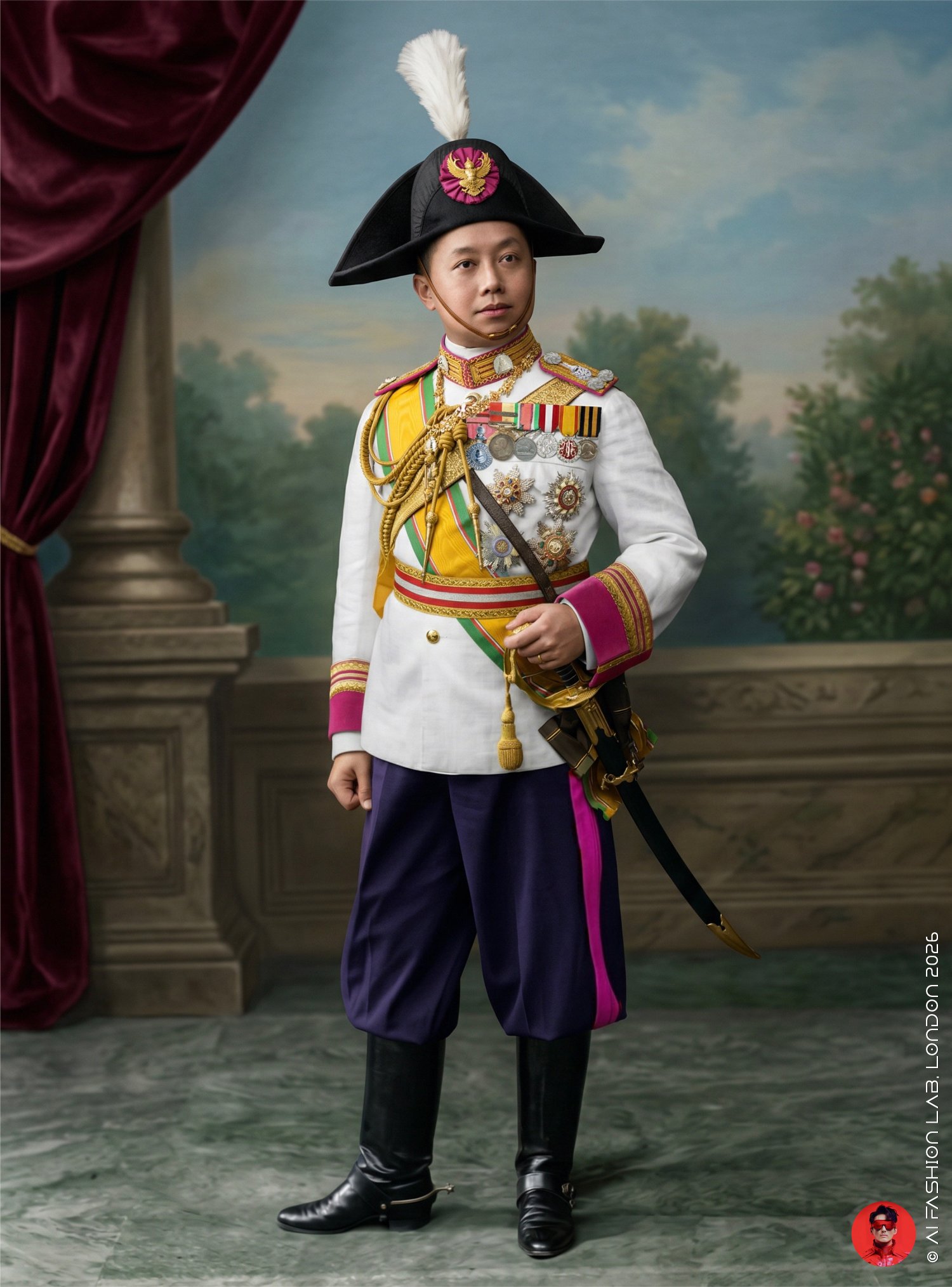
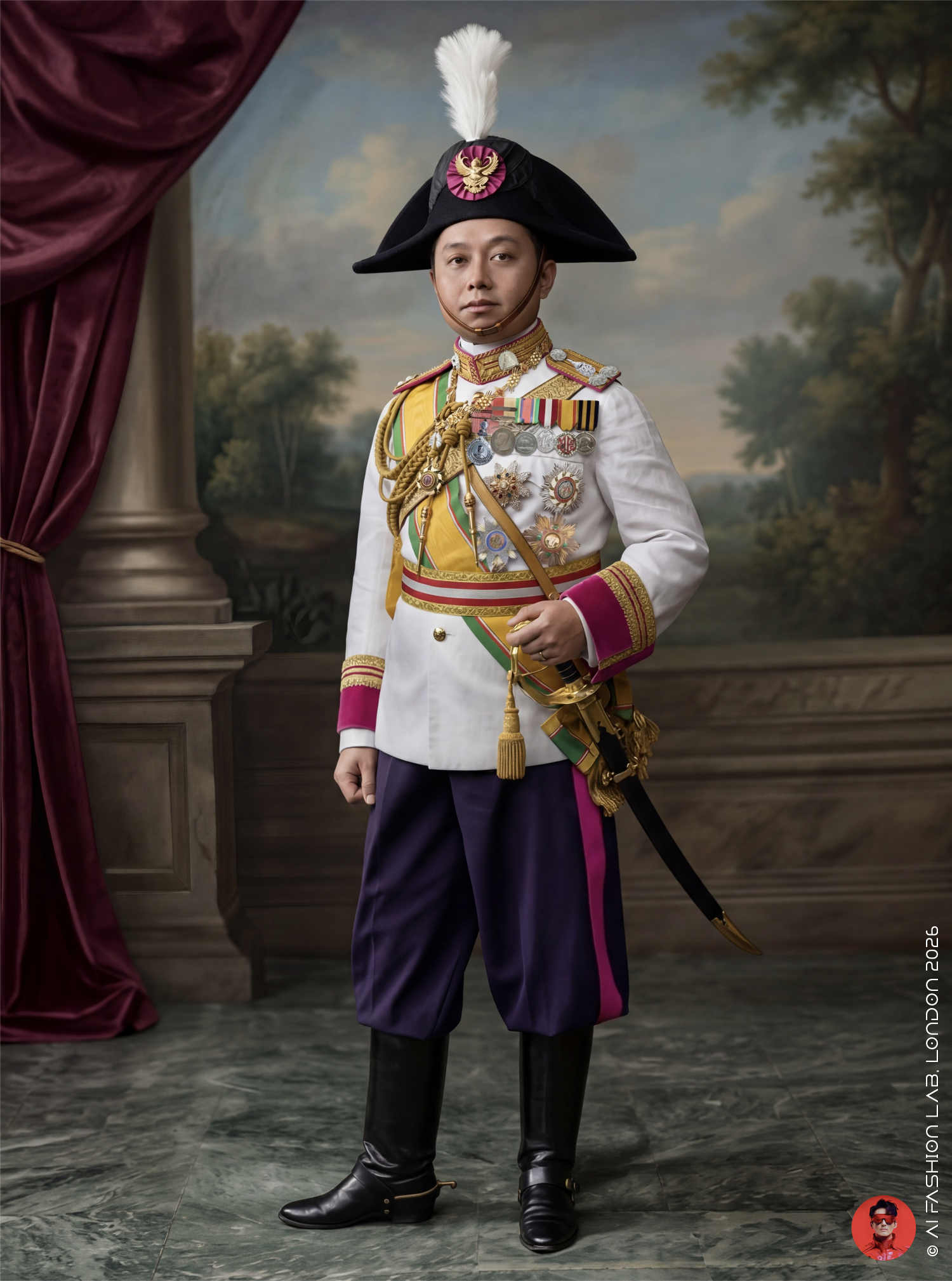
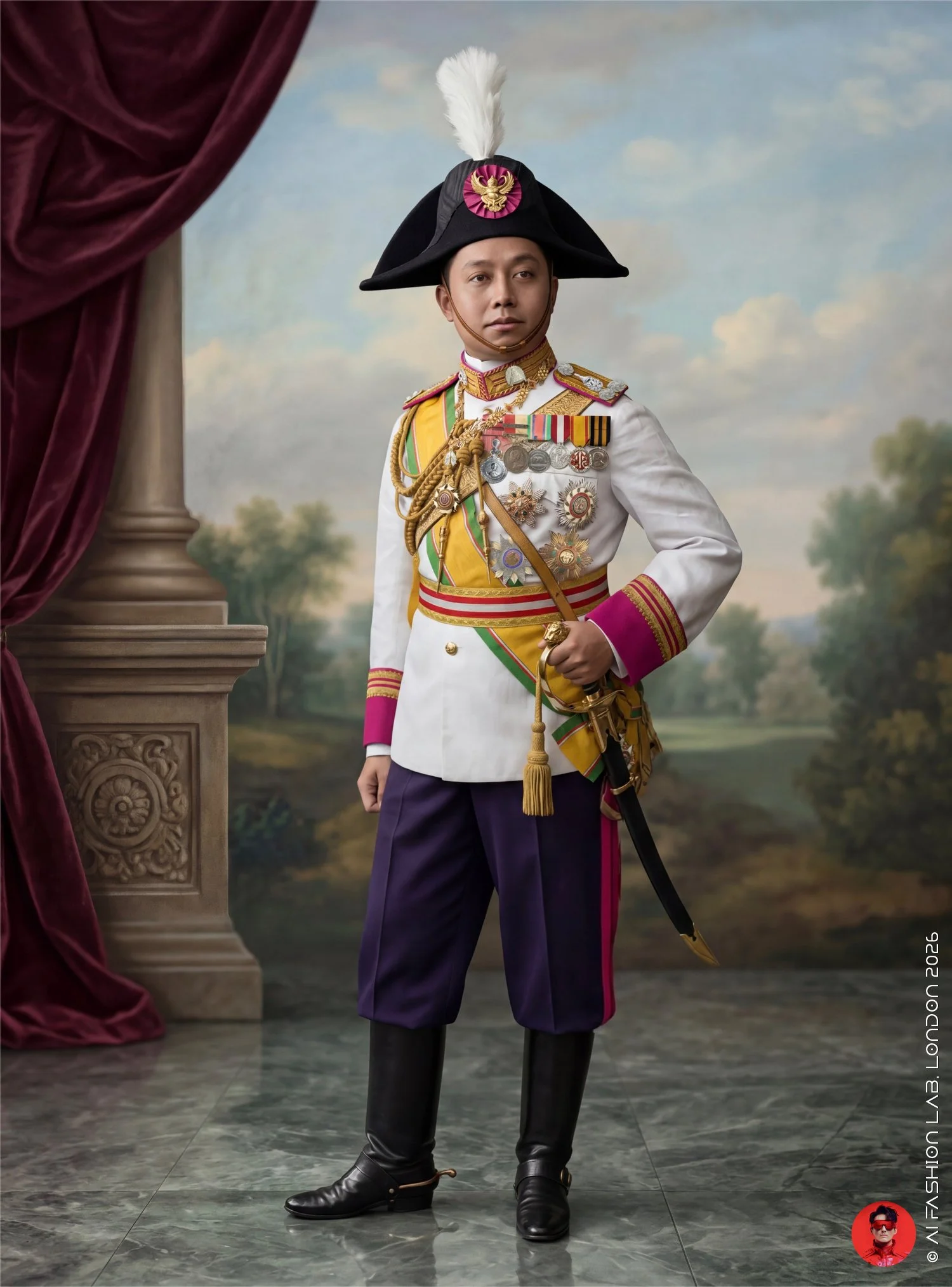
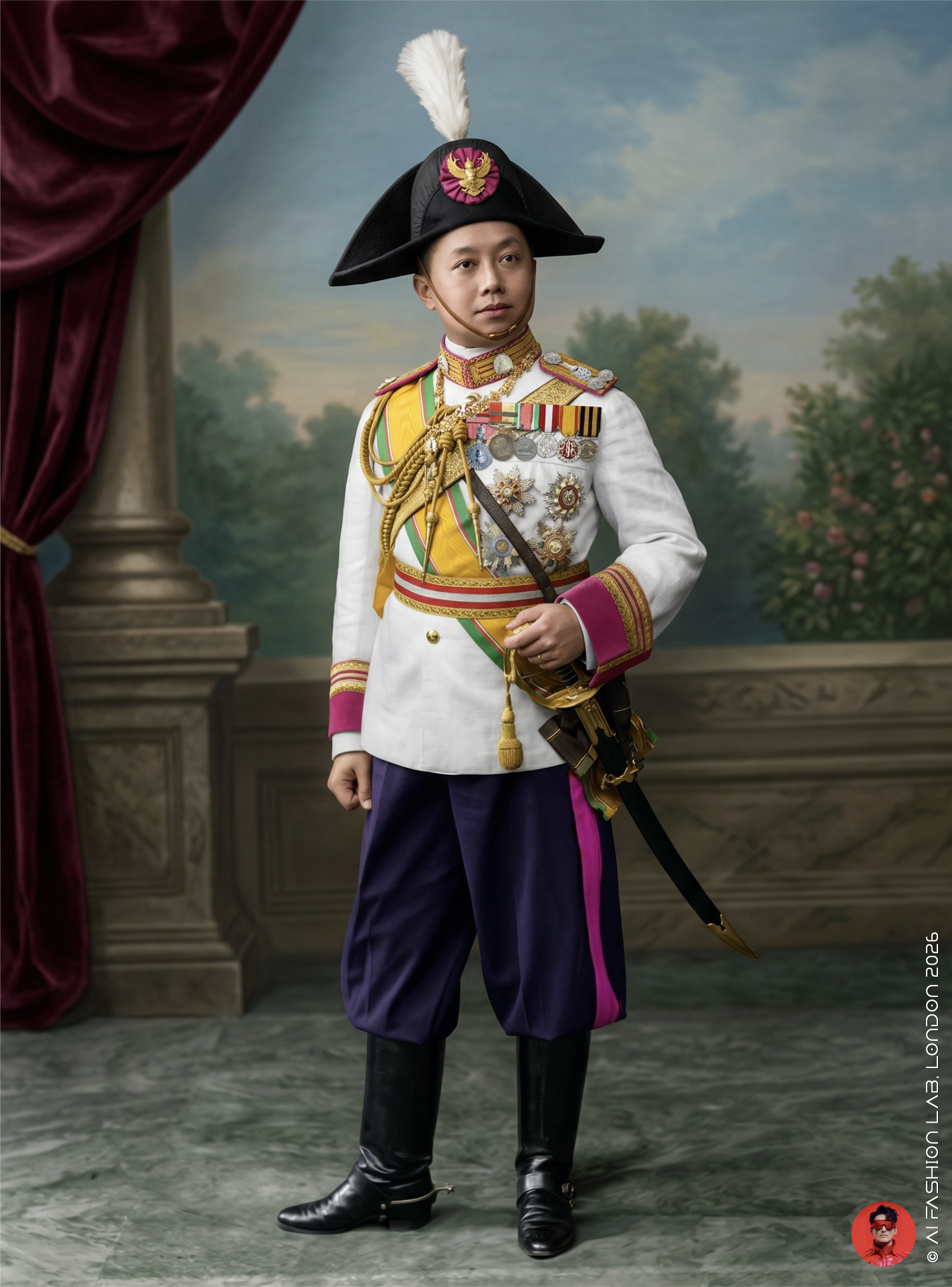
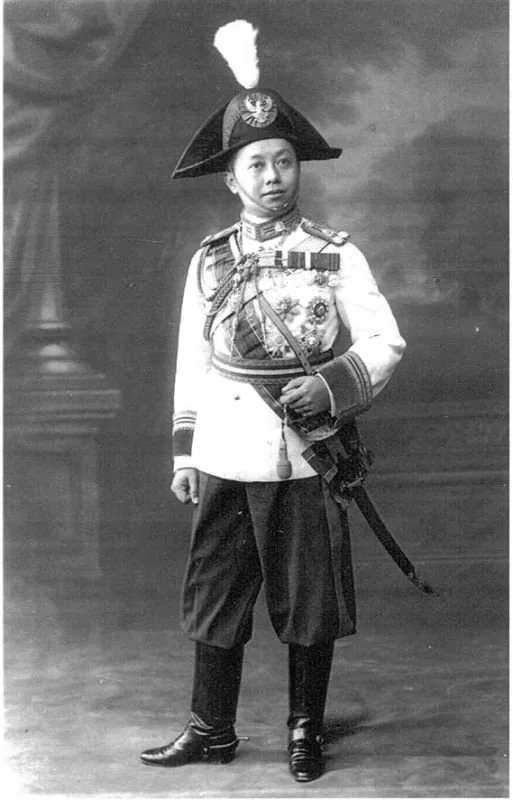
รัชกาลที่ ๖ ทรงฉลองพระองค์เครื่องแบบเต็มยศทหารรักษาวัง
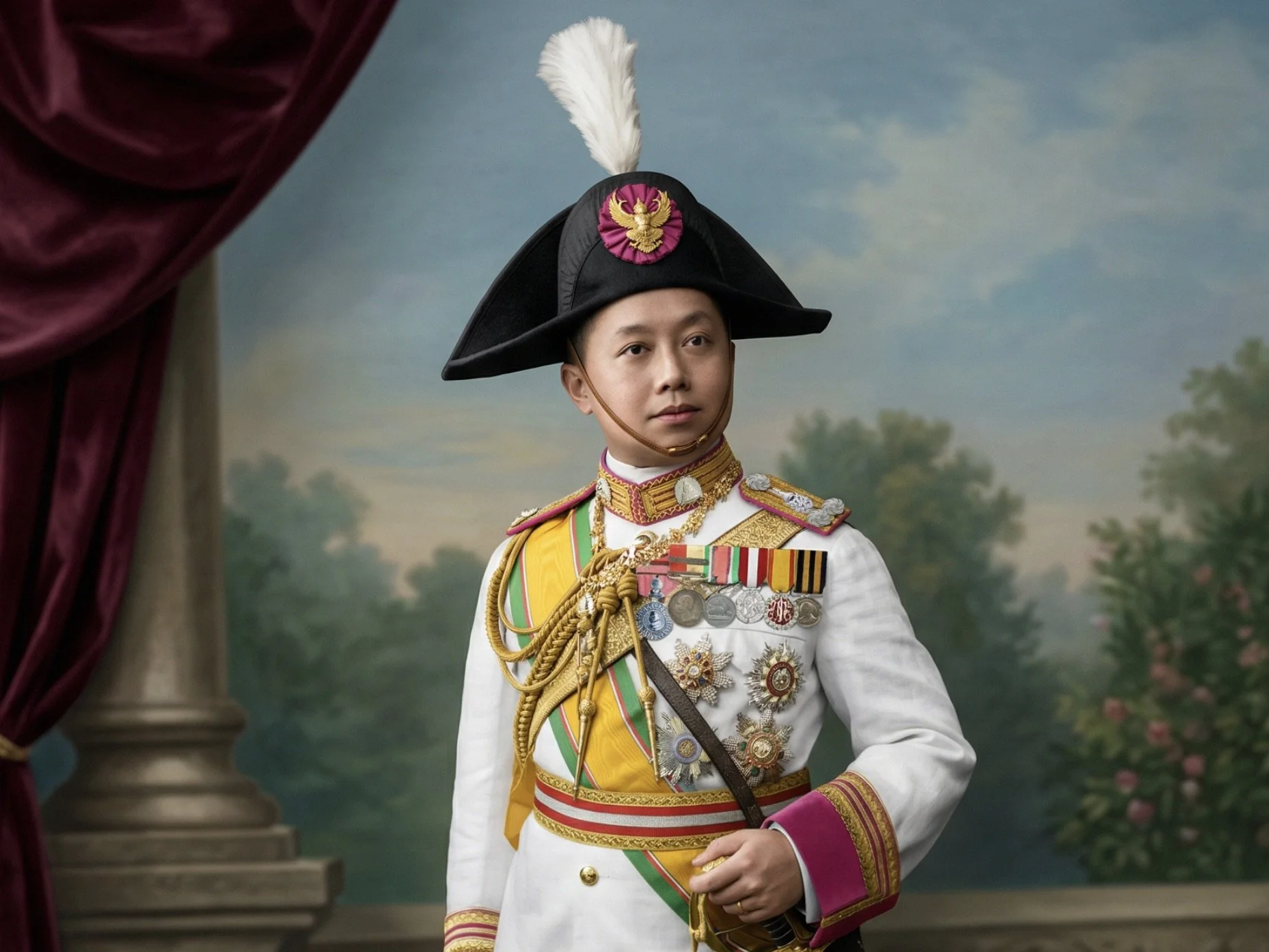
รัชกาลที่ ๖ ทรงฉลองพระองค์เครื่องแบบเต็มยศทหารรักษาวัง
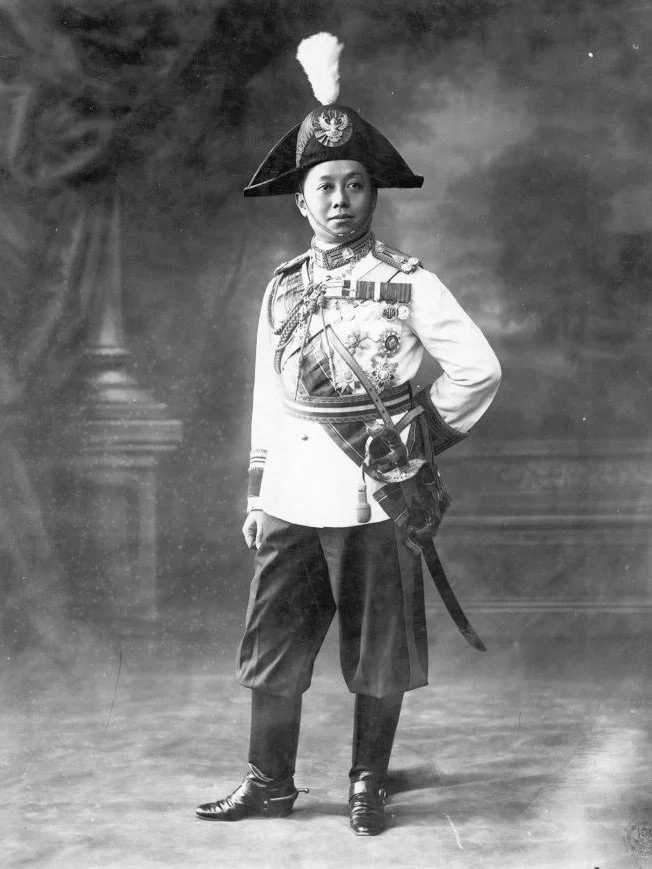
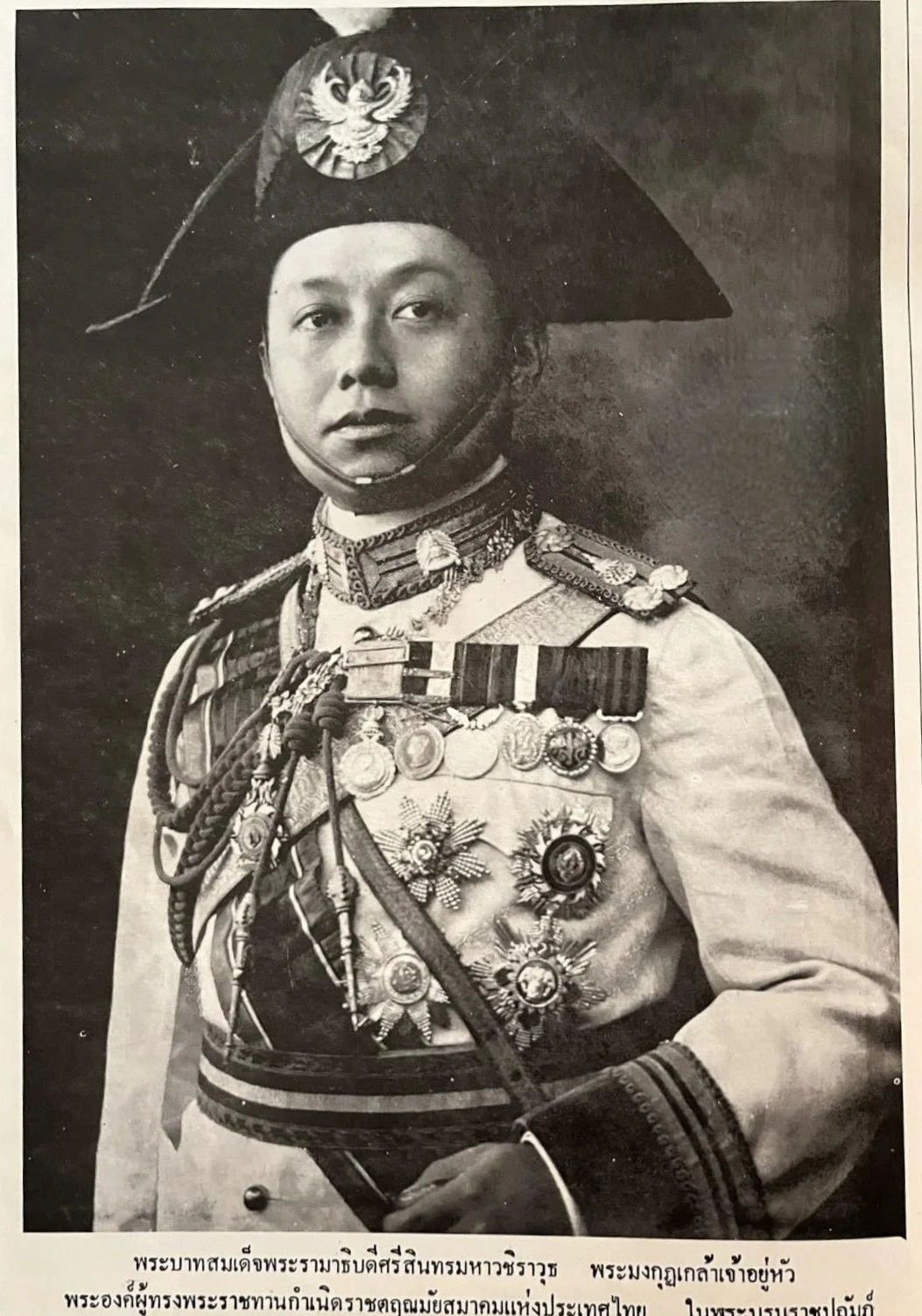
ภาพที่ได้รับการบูรณะและสร้างสรรค์ด้วยเทคโนโลยี AI นี้ เป็นพระบรมฉายาลักษณ์พระบาทสมเด็จพระปรเมนทรมหาวชิราวุธ พระมงกุฎเกล้าเจ้าอยู่หัว (รัชกาลที่ ๖) ทรงฉลองพระองค์เครื่องแบบเต็มยศทหารรักษาวัง กรมทหารรักษาวัง วปร.
พระบาทสมเด็จพระมงกุฎเกล้าเจ้าอยู่หัวทรงมีพระราชกรณียกิจด้าน “การทหาร” หลายประการ เช่น การก่อตั้งกองเสือป่า การก่อตั้งราชนาวีสมาคมในพระบรมราชูปถัมภ์ การนำสยามเข้าร่วมสงครามโลกครั้งที่ ๑ และการสถาปนา “กรมทหารรักษาวัง” เป็นต้น
หลังการเสด็จขึ้นครองราชสมบัติได้ไม่นาน ทหารจำนวนหนึ่งได้รวมกลุ่มกันก่อการกบฏ ซึ่งเป็นที่รู้จักกันในนาม “กบฏ ร.ศ. ๑๓๐” แม้การก่อการจะไม่สำเร็จ แต่เหตุการณ์ดังกล่าวก็ส่งผลกระทบโดยตรงต่อความมั่นคงของพระราชบัลลังก์ เนื่องจากนับเป็นครั้งแรกที่ราชวงศ์และสถาบันพระมหากษัตริย์ถูกท้าทายพระราชอำนาจจากสามัญชน
รัชกาลที่ ๖ จึงมิได้ทรงแน่พระราชหฤทัยต่อความจงรักภักดีของทหารในกองทัพ และเพียง ๓ เดือนหลังเหตุการณ์กบฏ ได้ทรงสถาปนากรมทหารรักษาวังขึ้น เพื่อถวายความปลอดภัยเป็นการส่วนพระองค์ แทนการใช้ทหารจากกรมทหารมหาดเล็กรักษาพระองค์
กรมทหารรักษาวังที่จัดตั้งขึ้นใหม่นั้น เดิมแบ่งออกเป็น ๒ กองพัน คือ กองพันที่ ๑ ประจำการอยู่ที่พระบรมมหาราชวัง และกองพันที่ ๒ ประจำการอยู่ที่พระราชวังดุสิต มีสมุหราชองครักษ์เป็นผู้บังคับการ ทำหน้าที่รับสนองพระบรมราชโองการ โดยใช้เงินพระราชทรัพย์ส่วนพระองค์เป็นงบประมาณสำหรับบริหารกิจการภายในกรม ทั้งนี้ สายการบังคับบัญชาของกรมทหารรักษาวังแยกออกจากกระทรวงกลาโหม แต่กรมทหารรักษาวังก็มีการเกณฑ์ทหารเช่นเดียวกับกองทัพบก
ในส่วนของกำลังพลนั้น มีการโอนย้ายจากข้าราชบริพารที่สังกัดกรมวังนอกเดิม และนายทหารบางนายในสังกัดกระทรวงกลาโหมเข้ามาสังกัดกรมทหารรักษาวัง นอกจากนี้ ยังมีข้าราชการในพระราชสำนัก รวมทั้งมหาดเล็กในพระราชสำนักสมเด็จพระศรีพัชรินทราบรมราชินีนาถ พระบรมราชชนนีพันปีหลวง สมัครเข้าเป็นทหารรักษาวังด้วย
ด้วยพระราชประสงค์ให้กรมทหารรักษาวังทำหน้าที่ถวายความปลอดภัยและเป็นกองทัพส่วนพระองค์ ผู้บังคับบัญชาของกรมทหารรักษาวังจึงเป็นบุคคลที่ทรงไว้วางพระราชหฤทัย หรือเป็นผู้ที่ทำงานรับใช้ใกล้ชิดพระองค์ เช่น พระยาประสิทธิ์ศุภการ (หม่อมหลวงเฟื้อ พึ่งบุญ) จเรทหารรักษาวัง, พระยานนทิเสนสุเรนทรภักดี (แมค เศียนเสวี) รองจเรทหารรักษาวัง และพระยาอนิรุทธเทวา (หม่อมหลวงฟื้น พึ่งบุญ) ผู้บังคับการกรมทหารรักษาวัง เป็นต้น
ต่อมา กรมทหารรักษาวัง วปร. มีรูปแบบการจัดกำลังแบบทหารราบในสังกัดกระทรวงกลาโหม โดยแบ่งออกเป็น ๓ กองพัน คือ
๑. กองพันที่ ๑ กรมทหารรักษาวัง วปร. ประจำการอยู่ที่พระบรมมหาราชวัง ๒. กองพันที่ ๒ กรมทหารรักษาวัง วปร. ประจำการอยู่ที่พระราชวังดุสิต ๓. กองพันที่ ๓ กรมทหารรักษาวัง วปร. ประจำการอยู่ที่จังหวัดนครศรีธรรมราช ก่อตั้งขึ้นเมื่อวันที่ ๒๐ สิงหาคม พ.ศ. ๒๔๕๘ ดูแลพื้นที่มณฑลนครศรีธรรมราช ปัตตานี สุราษฎร์ธานี ภูเก็ต และเพชรบูรณ์ ก่อนจะยุบเลิกเมื่อวันที่ ๕ สิงหาคม พ.ศ. ๒๔๖๘
กรมทหารรักษาวังมีสมุหราชองครักษ์เป็นผู้บังคับการ ทำหน้าที่รับสนองพระบรมราชโองการ โดยใช้เงินพระราชทรัพย์ส่วนพระองค์เป็นงบประมาณสำหรับบริหารกิจการภายในกรม และยังมีศาลทหารรักษาวังสำหรับพิจารณาคดีโดยเฉพาะ ทำให้สายการบังคับบัญชาแยกออกจากกองทัพบกและกระทรวงกลาโหม
ทหารรักษาวัง วปร. แต่งกายด้วยหมวกอุศเรน ซึ่งมีตราพระครุฑพ่าห์โลหะสีทองติดทับบนดอกไม้แพรจีบสีบานเย็น ประดับพู่สีขาว สวมเสื้อราชปะแตน และกางเกงสีขาบแถบสีบานเย็น
เมื่อสิ้นรัชสมัยแล้ว กรมทหารรักษาวังก็ตกอยู่ในสภาพเดียวกับกองเสือป่า ซึ่งกลายเป็นส่วนเกินของระบบราชการ รัชกาลที่ ๗ ทรงลดความสำคัญของกรมทหารรักษาวังลง ด้วยการลดอัตรากำลังพลของกรม และภายหลังการเปลี่ยนแปลงการปกครอง กรมทหารรักษาวังก็ถูกยุบเลิก โดยหน่วยทหารในสังกัดได้โอนไปขึ้นกับกองทัพบกแทน
ต่อมาหน่วยดังกล่าวได้เปลี่ยนเป็น กองพันทหารราบที่ ๙ (ร.พัน.๙) และในเวลาต่อมาเปลี่ยนเป็น กองพันทหารราบที่ ๓ ของกรมทหารราบที่ ๑ มหาดเล็กรักษาพระองค์ (ร.๑ พัน.๓ รอ.) ปัจจุบันย้ายไปสังกัดหน่วยบัญชาการถวายความปลอดภัยรักษาพระองค์ (นถปภ.รอ.)
_____________
King Rama VI in Full Dress Uniform of the Royal Palace Guard
This AI-restored and artistically enhanced image presents a royal portrait of King Vajiravudh (พระบาทสมเด็จพระมงกุฎเกล้าเจ้าอยู่หัว, Phra Bat Somdet Phra Mongkutklao Chao Yu Hua), Rama VI (รัชกาลที่ ๖), wearing the full dress uniform of the Royal Palace Guard Regiment (กรมทหารรักษาวัง วปร.).
King Vajiravudh undertook numerous military-related royal initiatives. These included the establishment of the Wild Tiger Corps (กองเสือป่า) in 1911, a paramilitary organisation under royal command, as well as the founding of naval associations and the decision to bring Siam into World War I. He also formally established the Royal Palace Guard Regiment (กรมทหารรักษาวัง) as part of his broader effort to consolidate royal authority.
Shortly after his accession to the throne, a group of military officers attempted a coup, later known as the R.S. 130 Rebellion (กบฏ ร.ศ. ๑๓๐) in 1912. Although the rebellion failed, it significantly affected the stability of the throne, marking the first time that the monarchy faced a direct challenge from commoners within the modern military structure.
As a result, King Vajiravudh grew uncertain about the loyalty of the existing army. Within just three months of the rebellion, he established the Royal Palace Guard Regiment as a personal military force responsible for his protection, replacing reliance on the Royal Guards (กรมทหารมหาดเล็กรักษาพระองค์). This new unit was placed directly under his command, separate from the Ministry of Defence.
Initially, the regiment was divided into two battalions:
1. The 1st Battalion, stationed at the Grand Palace (พระบรมมหาราชวัง)
2. The 2nd Battalion, stationed at Dusit Palace (พระราชวังดุสิต)
The regiment was commanded by the Lord Chamberlain (สมุหราชองครักษ์), who acted under direct royal command. Its operations were funded from the King’s personal treasury, and its chain of command was entirely independent of the conventional military hierarchy, although conscription practices followed those of the Royal Siamese Army.
Personnel were drawn from several sources: former officials of the Outer Palace (กรมวังนอก), selected officers transferred from the Ministry of Defence, and members of the royal court. Pages and attendants from the court of Queen Saovabha Phongsri (สมเด็จพระศรีพัชรินทราบรมราชินีนาถ พระบรมราชชนนีพันปีหลวง) also volunteered to serve in the regiment.
In keeping with the King’s intention that this unit serve as both a personal guard and a loyal military force, its senior officers were individuals in whom he placed great trust. These included:
1. Phraya Prasitsupphakan (พระยาประสิทธิ์ศุภการ, M.L. Fue Puengboon / หม่อมหลวงเฟื้อ พึ่งบุญ) – Inspector General
2. Phraya Nondhisensurendrabakdi (พระยานนทิเสนสุเรนทรภักดี, Max Siensewee / แมค เศียนเสวี) – Deputy Inspector General
3. Phraya Anuruth Deva (พระยาอนิรุทธเทวา, M.L. Fuen Puengboon / หม่อมหลวงฟื้น พึ่งบุญ) – Commander
Later, the regiment expanded into three battalions in line with standard infantry organisation:
1. 1st Battalion – Grand Palace
2. 2nd Battalion – Dusit Palace
3. 3rd Battalion – Based in Nakhon Si Thammarat (นครศรีธรรมราช), established on 20 August 1915, covering southern regions including Pattani, Surat Thani, and Phuket. This battalion was later disbanded on 5 August 1925.
The regiment functioned as a fully independent military entity. It maintained its own court-martial system and administrative structure, further reinforcing its separation from the Royal Siamese Army and the Ministry of Defence.
In terms of dress, the Royal Palace Guard wore a distinctive uniform: a ceremonial helmet adorned with a gilt Garuda emblem (ครุฑพ่าห์) mounted on a pleated pink cockade, with a white plume. This was paired with a raj-pattern jacket (เสื้อราชปะแตน) and indigo trousers with pink stripes—combining Siamese court dress with European military styling.
Following the end of King Vajiravudh’s reign in 1925, the Royal Palace Guard—like the Wild Tiger Corps—was increasingly viewed as redundant within the evolving bureaucratic system. Under King Prajadhipok (พระบาทสมเด็จพระปกเกล้าเจ้าอยู่หัว, Rama VII), the regiment was reduced in size and importance.
After the 1932 Revolution (การเปลี่ยนแปลงการปกครอง พ.ศ. ๒๔๗๕), the Royal Palace Guard was formally dissolved. Its units were absorbed into the Royal Thai Army, later becoming the 9th Infantry Battalion, and subsequently reorganised as part of the 1st Infantry Regiment, King’s Guard (กรมทหารราบที่ ๑ มหาดเล็กรักษาพระองค์). Today, its legacy continues under the Royal Security Command (หน่วยบัญชาการถวายความปลอดภัยรักษาพระองค์).
_____________
เรียนเชิญกด Subscribe ได้ที่ลิงก์นี้ครับ เพื่อร่วมติดตามงานสร้างสรรค์ต้นฉบับ งานวิจัยประวัติศาสตร์แฟชั่น และผลงานอนุรักษ์มรดกวัฒนธรรมด้วยเทคโนโลยี AI ของ AI Fashion Lab, London ซึ่งมุ่งตีความอดีตผ่านมิติใหม่ของการบูรณะภาพ การสร้างสรรค์ภาพ และการเล่าเรื่องด้วยศิลปะเชิงดิจิทัล https://www.facebook.com/aifashionlab/subscribe/
#aifashionlab #AI #aiartist #aiart #aifashion #aifashiondesign #aifashionstyling #aifashiondesigner #fashion #fashionhistory #historyoffashion #fashionstyling #fashionphotography #digitalfashion #digitalfashiondesign #digitalcostumedesign #digitaldesign #digitalaiart #ThaiFashionHistory #ThaiFashionAI #thailand #UNESCO