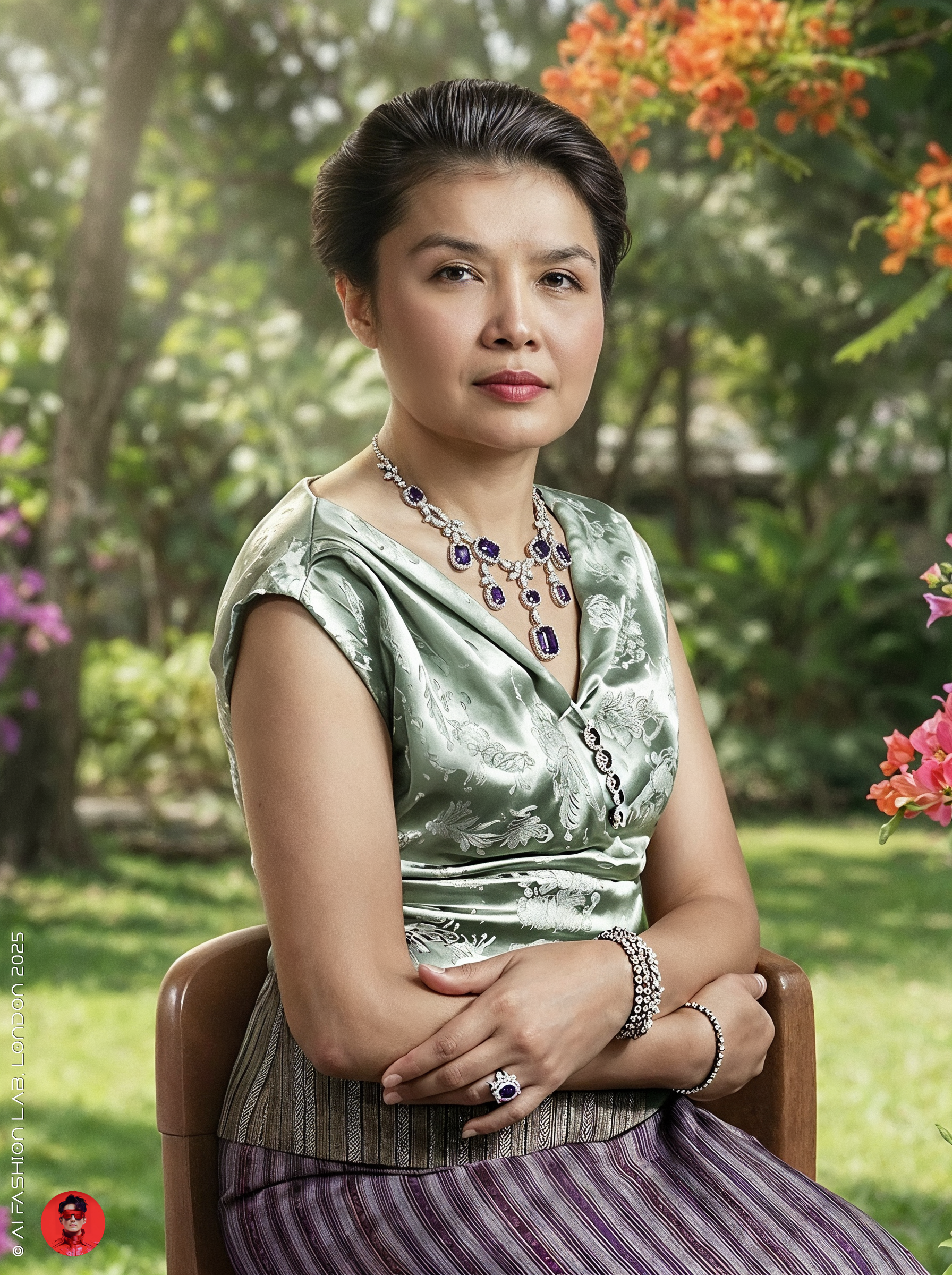
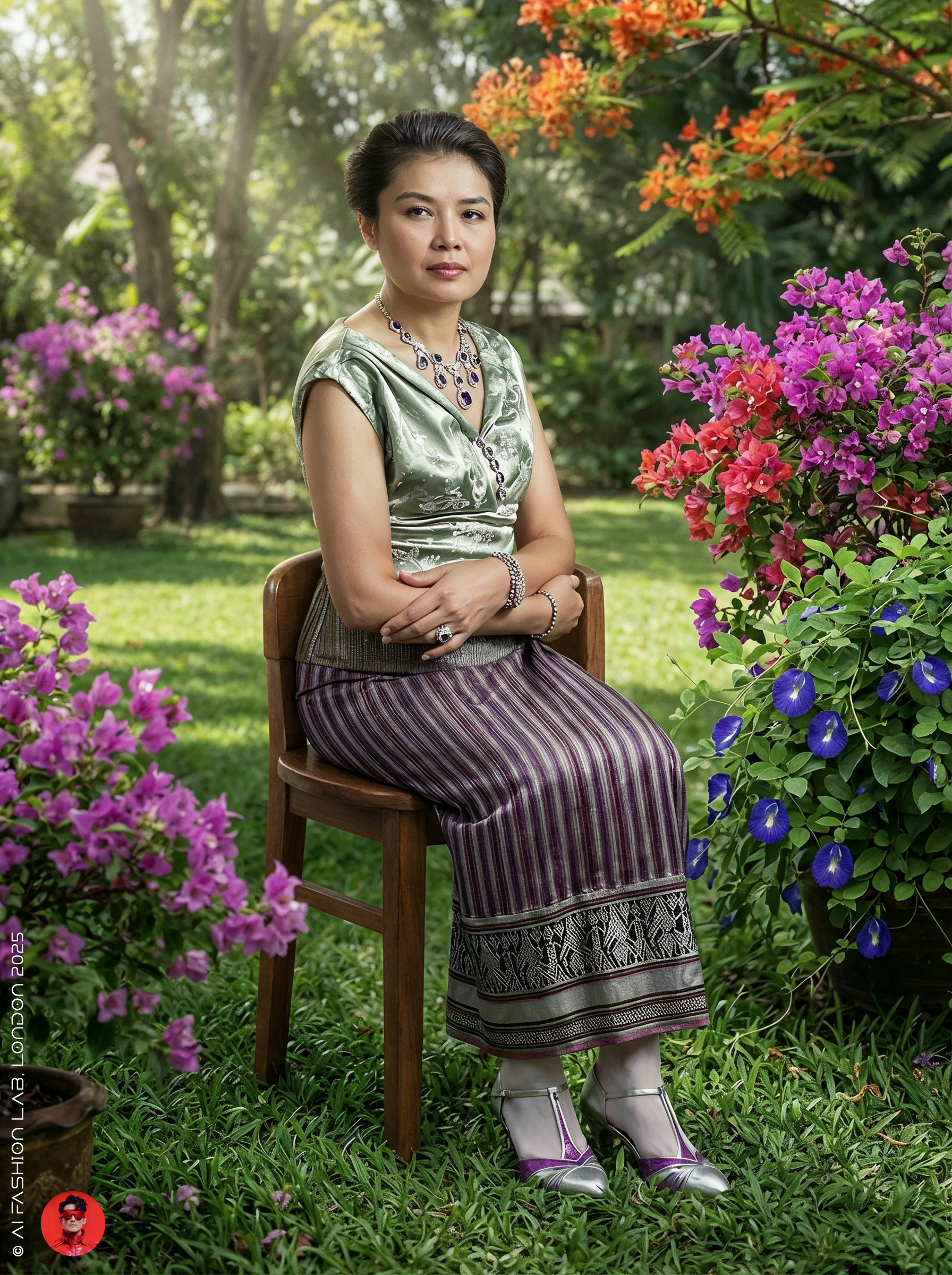
หม่อมเจ้าบุญจิราธร จุฑาธุช กับเครื่องเพชรชุดนิลกาฬ ของสมเด็จพระพันปี
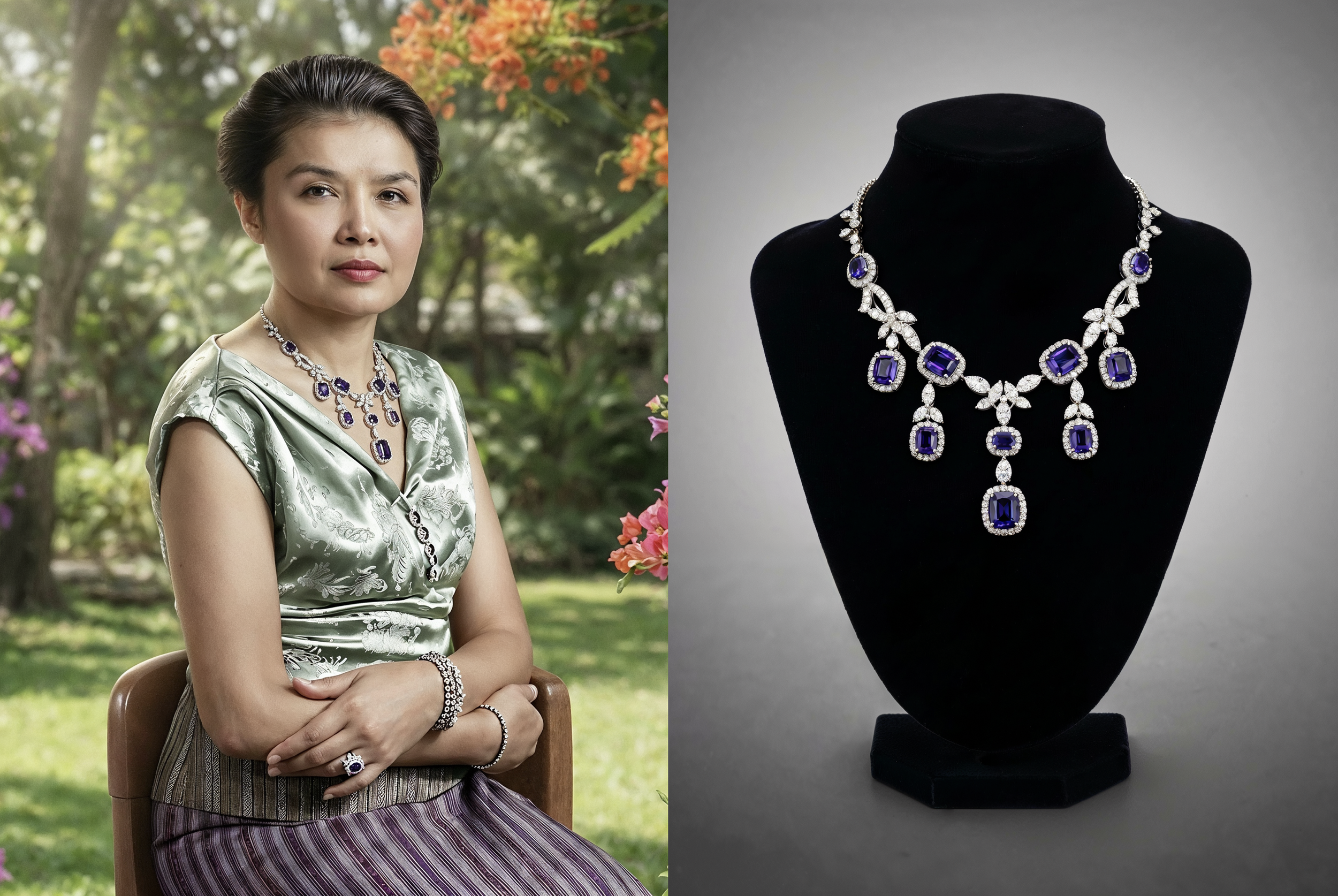
หม่อมเจ้าบุญจิราธร จุฑาธุช กับเครื่องเพชรชุดนิลกาฬ ของสมเด็จพระพันปี
หม่อมเจ้าบุญจิราธร จุฑาธุช กับเครื่องเพชรชุดนิลกาฬ ของสมเด็จพระศรีพัชรินทราบรมราชินีนาถ พระบรมราชชนนีพันปีหลวง
ภาพที่ได้รับการบูรณะและสร้างสรรค์ขึ้นตามจินตนาการด้วยเทคโนโลยี AI นี้ เป็นพระรูปของ หม่อมเจ้าบุญจิราธร จุฑาธุช (ชุมพล) พระชายาใน สมเด็จพระเจ้าบรมวงศ์เธอ เจ้าฟ้าจุฑาธุชธราดิลก กรมขุนเพ็ชรบูรณ์อินทราชัย
________
“เครื่องนิล” ในราชสำนัก: นิลกาฬ ≠ นิลสีดำ
จากบันทึกของ ท่านผู้หญิงดุษฏี มาลากุล ใน เรื่องของคน ๕ แผ่นดิน กล่าวว่า สมเด็จพระพันปีทรงมีเครื่องเพชรชุดใหญ่หลายชุด และในบรรดาเครื่องเพชรเหล่านั้น สมเด็จพระเจ้าบรมวงศ์เธอ เจ้าฟ้าจุฑาธุชธราดิลก ได้ “เครื่องนิล” เพราะประสูติวันอังคาร
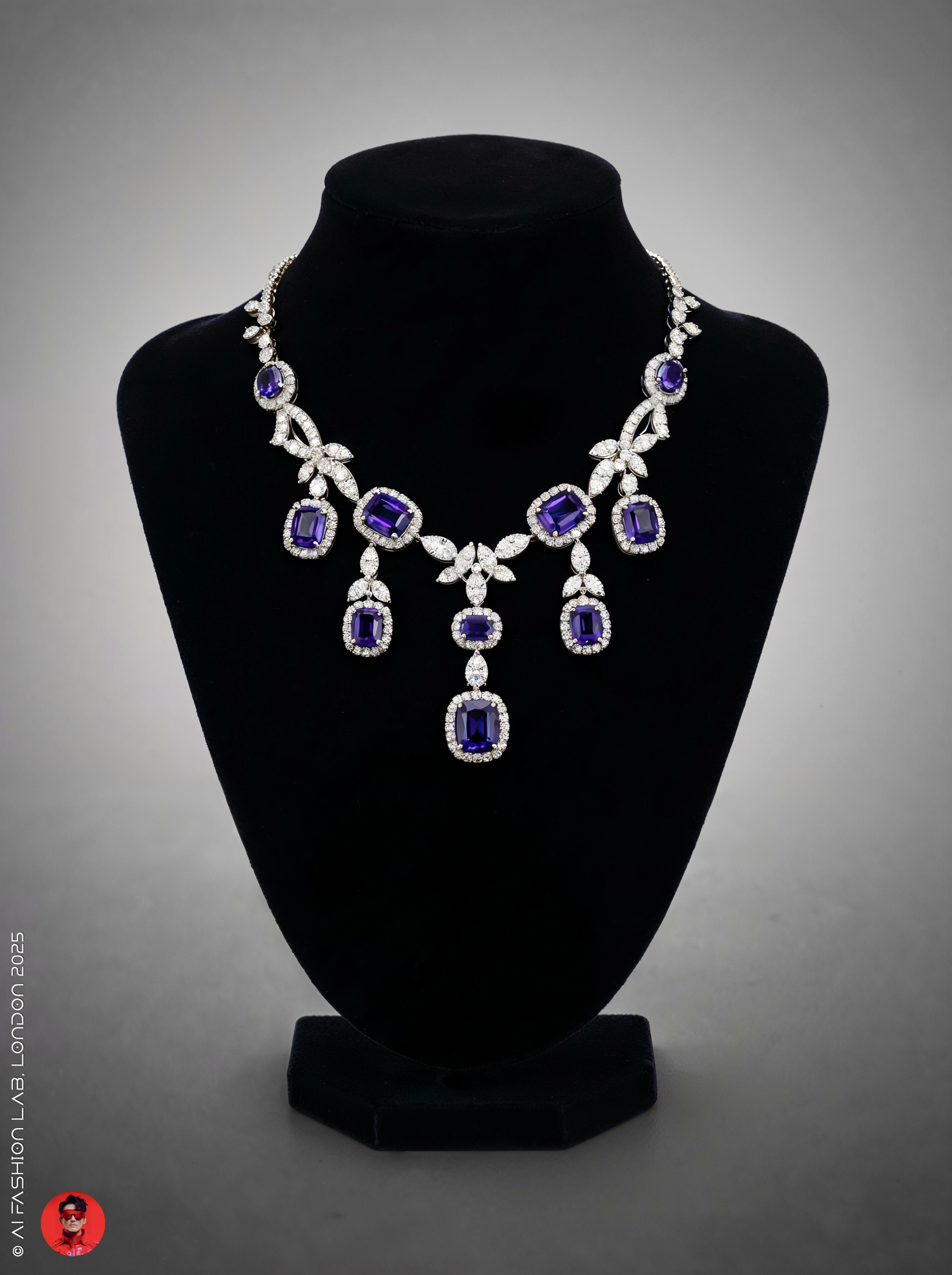
คำว่า “นิลกาฬ” ในบริบทโบราณ มิได้หมายถึงนิลสีดำ (onyx) หากหมายถึง ไพลิน/แซฟไฟร์ (sapphire) ซึ่งมีสีน้ำเงินเข้มไปจนถึงน้ำเงินแกมม่วง อันสอดคล้องกับสีประจำวันอังคารในคติไทยโบราณ
สีประจำวันไทย ปรากฏเป็นหลักฐานลายลักษณ์อักษรที่เด่นชัดที่สุดในบทประพันธ์ “สวัสดิรักษา” ของสุนทรภู่ที่ใช้ถวายการสอนสมเด็จเจ้าฟ้าอาภรณ์พระเจ้าลูกยาเธอ ในรัชกาลที่ 2 และปรากฏในตำราพิชัยสงครามหลายๆ เล่ม
วันอาทิตย์ = สีแดง
วันจันทร์ = สีขาวนวล
อังคาร = สีม่วงปนคราม
วันพุธ = สีแสดออกเหลือบ
พฤหัส = สีเขียวเหลือง
วันศุกร์ = สีเมฆหมอก
วันเสาร์ = สีดำ
เมื่อเชื่อมโยงคติสีประจำวันเข้ากับธรรมเนียมราชสำนัก จึงมีเหตุผลรองรับว่า “เครื่องนิล” ที่กล่าวถึงนั้นควรเป็น ไพลินสีน้ำเงินเข้ม หรือแกมม่วง มากกว่านิลสีดำ
________
การตีความเครื่องเพชรชุดนิลกาฬ
ด้วยข้อมูลดังกล่าว การสร้างสรรค์ภาพ AI ชุดนี้จึงตั้งอยู่บนสมมติฐานเชิงประวัติศาสตร์ว่า
เครื่องเพชร “นิลกาฬ” เป็น ไพลิน (sapphire) เจียระไนแบบยุโรป
จัดวางในกรอบเพชรขาวหรือแพลทินัม สอดคล้องกับรสนิยม ปลายยุคเอ็ดเวิร์เดียน–ต้น Teens Fashion (ราว ค.ศ. 1911–1919)
ใช้เป็นเครื่องประดับที่เหมาะแก่พระชายาในสมเด็จเจ้าฟ้าพระราชโอรสของพระบรมราชชนนีพันปีหลวง ทั้งในเชิงสัญลักษณ์วันประสูติ และสถานะในราชสำนัก
ภาพเหล่านี้เป็น งานสร้างสรรค์ด้วย AI โดยใช้จินตนาการทางศิลปะ (artistic licence) มิใช่ภาพถ่ายจริง และมิได้อ้างว่าเป็นสีหรือรูปแบบดั้งเดิมที่ยืนยันได้ทางเอกสารทุกประการ หากเป็นการศึกษาผ่านบริบทแฟชั่น ประเพณี และหลักฐานร่วมสมัย
________
หม่อมเจ้าหญิงบุญจิราธร จุฑาธุช (๑๐ สิงหาคม พ.ศ. ๒๔๔๐ – ๑๙ มีนาคม พ.ศ. ๒๕๒๓) เป็นพระธิดาใน พระเจ้าบรมวงศ์เธอ พระองค์เจ้าชุมพลสมโภช กรมหลวงสรรพสิทธิประสงค์ ประสูติ ณ วังสงัด เมืองอุบลราชธานี ต่อมาทรงได้รับพระราชทานพระนามใหม่จาก พระบาทสมเด็จพระจุลจอมเกล้าเจ้าอยู่หัว ภายหลังทรงตรวจปฏิทินอย่างละเอียด ทรงเป็นที่โปรดปรานในรัชกาลที่ ๕ ตั้งแต่ทรงพระเยาว์ มีพระอุปนิสัยสุภาพ เรียบง่าย และประหยัด ทรงสามารถสื่อสารกับผู้คนต่างชนชั้นได้อย่างเหมาะสม และทรงสนพระทัยศิลปะ โดยเฉพาะการวาดเขียน
ทรงอภิเษกสมรสกับ สมเด็จพระเจ้าบรมวงศ์เธอ เจ้าฟ้าจุฑาธุชธราดิลก กรมขุนเพ็ชรบูรณ์อินทราชัย เมื่อวันที่ ๒๕ สิงหาคม พ.ศ. ๒๔๖๕ เป็นสะใภ้หลวงชั้นเอก โดยมี พระบาทสมเด็จพระมงกุฎเกล้าเจ้าอยู่หัว ทรงเป็นพระราชธุระในพิธีทั้งหมด อย่างไรก็ตาม ชีวิตสมรสมีระยะเวลาไม่นาน เนื่องจากสมเด็จเจ้าฟ้าจุฑาธุชธราดิลกสิ้นพระชนม์ในปีถัดมา คือ พ.ศ. ๒๔๖๖ ทำให้ทรงดำรงพระชนมชีพในฐานะพระชายาม่าย และมิได้มีพระโอรสหรือพระธิดา ต่อมาทรงประทับ ณ วังเพ็ชรบูรณ์ บริเวณวัดสระปทุม จนสิ้นชีพิตักษัยเมื่อวันที่ ๑๙ มีนาคม พ.ศ. ๒๕๒๓ สิริพระชันษา ๘๓ ชันษา และมีการพระราชทานเพลิงศพ ณ เมรุหลวงหน้าพลับพลาอิสริยาภรณ์ วัดเทพศิรินทราวาสราชวรวิหาร
________
Mom Chao Bunjirathorn Chudadhuj and the Nilakan (Sapphire) Jewellery of the Queen Mother
Mom Chao Bunjirathorn Chudadhuj and the Nilakan jewellery of Queen Saovabha Phongsri, the Queen Mother.
This AI-restored and imaginatively recreated image presents Mom Chao Bunjirathorn Chudadhuj (née Chumphon), consort of Prince Chudadhuj Dharadilok, Prince of Phetchabun Intharachai.
“Nil” in the Royal Court: Nilakan ≠ Black Onyx
According to the memoirs of Thanphuying Dusdi Malakul in The Story of People of Five Reigns, the Queen Mother possessed several major jewellery suites. Among these, Prince Chudadhuj Dharadilok received a “nil” set because he was born on a Tuesday.
In historical usage, nilakan does not denote black onyx. Rather, it refers to blue sapphire (nil/sapphire), ranging from deep blue to blue-violet hues—colours that correspond with Tuesday in traditional Thai colour symbolism.
The Thai system of colours associated with days of the week is clearly documented in Sawatdiraksa, the didactic poem by Sunthorn Phu, composed for royal instruction during the reign of King Rama II, and reiterated in several classical military treatises:
Sunday – Red
Monday – Off-white
Tuesday – Purple with a blue cast
Wednesday – Orange with iridescence
Thursday – Yellow-green
Friday – Misty grey
Saturday – Black
When this colour system is considered alongside royal court practice, it is reasonable to infer that the “nil” jewellery in question would have comprised deep blue or blue-violet sapphires, rather than black stones.
Interpreting the Nilakan Jewellery Suite
On the basis of the above evidence, this AI visualisation rests on the following historically grounded assumptions:
The nilakan suite is composed of sapphires, cut in European styles.
The stones are set in diamond frameworks or platinum, consistent with late Edwardian to early Teens Fashion (c. 1911–1919) tastes.
The jewellery is appropriate for a princess consort of a son of the Queen Mother, both symbolically—through birth-day colour association—and socially, in terms of court rank.
These images are AI-generated artistic interpretations, not photographs, and do not claim to reproduce verifiable original colours or designs. They are intended as a study grounded in fashion history, court custom, and contemporaneous sources, employing artistic licence where documentary certainty is absent.
Biographical Note: Mom Chao Bunjirathorn Chudadhuj
Mom Chao Bunjirathorn Chudadhuj
(10 August 1897 – 19 March 1980)
She was a daughter of Prince Chumphon Somphoch, Prince of Saprasit Prasong, and was born at Wang Sa-ngat, Ubon Ratchathani. She later received a new royal name from King Chulalongkorn after a careful consultation of the calendar. From childhood, she was favoured at court during the Fifth Reign, noted for her gentle disposition, frugality, and propriety. She was able to communicate comfortably across social classes and showed a particular interest in the arts, especially drawing.
She married Prince Chudadhuj Dharadilok, Prince of Phetchabun Intharachai, on 25 August 1922, becoming a senior royal daughter-in-law. King Vajiravudh personally oversaw the betrothal and wedding ceremonies and conferred upon her the Second Class of the Order of Chula Chom Klao. The marriage, however, was brief: Prince Chudadhuj Dharadilok died the following year, in 1923, after which she lived as a widowed princess consort and had no children. She later resided at Wang Phetchabun near Sa Pathum, and died on 19 March 1980 at the age of 83. Her royal cremation was held at the Royal Crematorium, Wat Thepsirintrawat.
________
เรียนเชิญกด Subscribe ได้ที่ลิงก์นี้ครับ เพื่อร่วมติดตามงานสร้างสรรค์ต้นฉบับ งานวิจัยประวัติศาสตร์แฟชั่น และผลงานอนุรักษ์มรดกวัฒนธรรมด้วยเทคโนโลยี AI ของ AI Fashion Lab, London ซึ่งมุ่งตีความอดีตผ่านมิติใหม่ของการบูรณะภาพ การสร้างสรรค์ภาพ และการเล่าเรื่องด้วยศิลปะเชิงดิจิทัล 🔗 https://www.facebook.com/aifashionlab/subscribe/
#aifashionlab #AI #aiartist #aiart #aifashion #aifashiondesign #aifashionstyling #aifashiondesigner #fashion #fashionhistory #historyoffashion #fashionstyling #fashionphotography #digitalfashion #digitalfashiondesign #digitalcostumedesign #digitaldesign #digitalaiart #ThaiFashionHistory #ThaiFashionAI #thailand #UNESCO