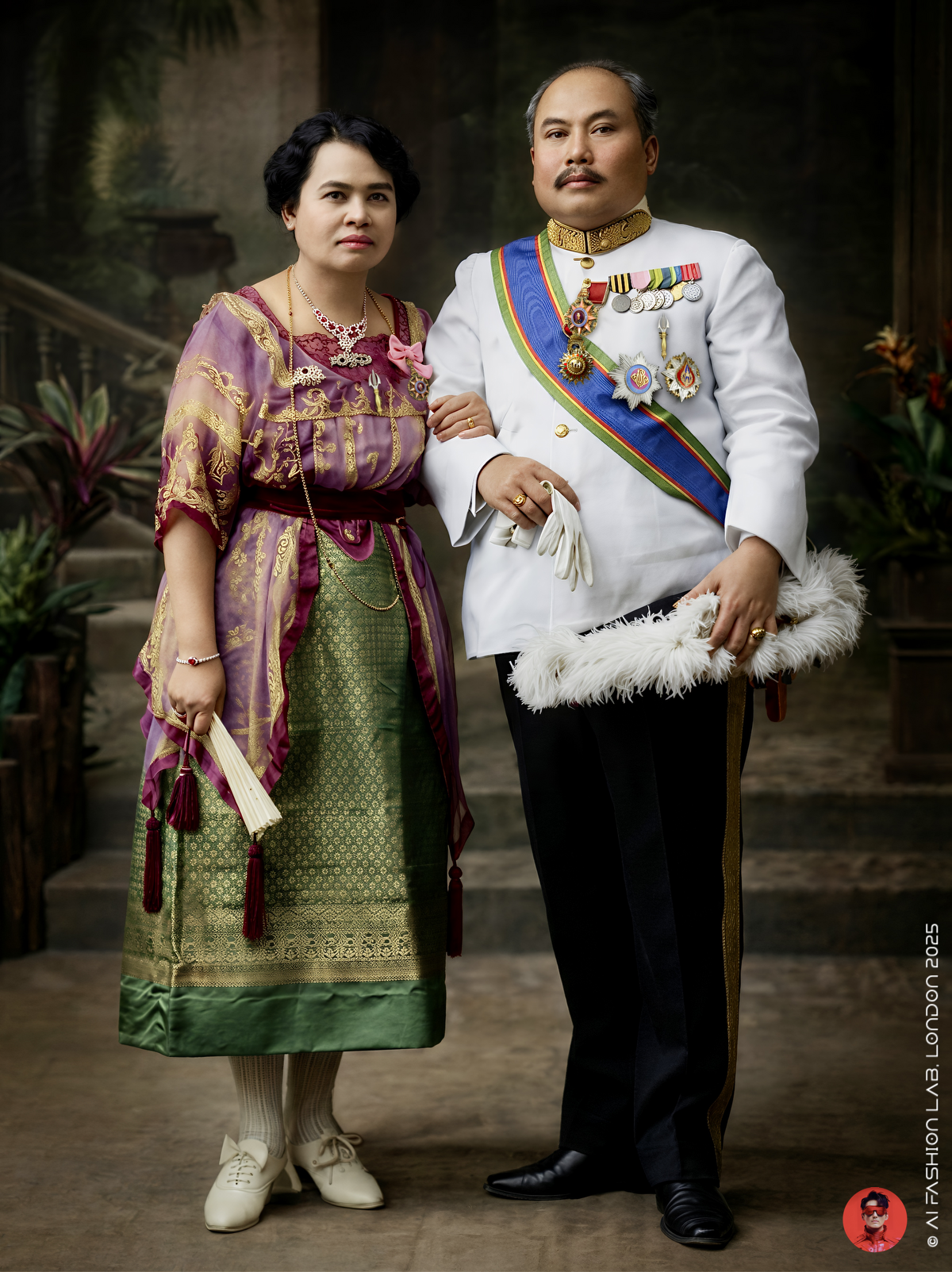
พระยาศรีสุริยราชวรานุวัตร (ศุข ดิษยบุตร์) และคุณหญิงน้อม ศรีสุริยราชวรานุวัตร
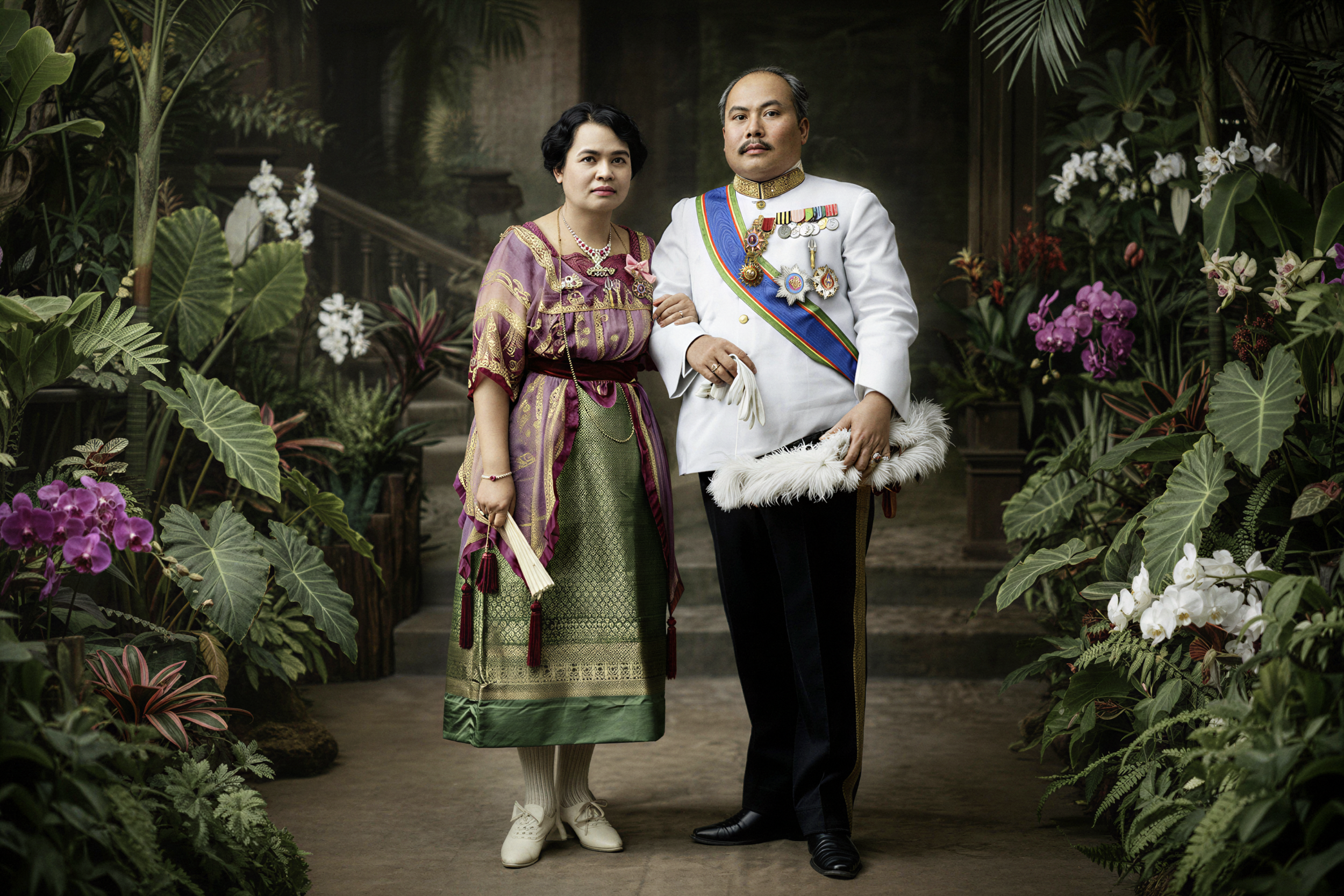
พระยาศรีสุริยราชวรานุวัตร (ศุข ดิษยบุตร์) และคุณหญิงน้อม ศรีสุริยราชวรานุวัตร
ภาพที่ผ่านการบูรณะและสร้างสรรค์ด้วยเทคโนโลยี AI นี้ เป็นภาพของ พระยาศรีสุริยราชวรานุวัตร (ศุข ดิษยบุตร์) สมุหเทศาภิบาลสำเร็จราชการมณฑลอุดร และ คุณหญิงน้อม ศรีสุริยราชวรานุวัตร ผู้เป็นภริยา ซึ่งทั้งสองนับเป็นบุคคลสำคัญยิ่งในประวัติศาสตร์จังหวัดอุดรธานี
พระยาศรีสุริยราชวรานุวัตร (ศุข ดิษยบุตร์) ดำรงตำแหน่งสมุหเทศาภิบาลสำเร็จราชการมณฑลอุดรคนที่ ๒ ระหว่างปี พ.ศ. ๒๔๕๗–๒๔๖๕ สืบตำแหน่งต่อจากพระยาศรีสุริยราชวรานุวัตร (โพธิ์ เนติโพธิ์) ซึ่งถึงแก่อนิจกรรมไปก่อนหน้า ส่วนคุณหญิงน้อม ศรีสุริยราชวรานุวัตร เป็นเอกภริยาของท่าน ทั้งสองมีบทบาทสำคัญในการพัฒนามณฑลอุดรให้เจริญรุ่งเรืองในหลายด้าน โดยเฉพาะอย่างยิ่งด้านการศึกษา
คุณหญิงน้อม ศรีสุริยราชวรานุวัตร เล็งเห็นความสำคัญของการจัดการศึกษาสำหรับกุลธิดาในมณฑลอุดร จึงได้ก่อตั้งโรงเรียนสำหรับเด็กหญิงขึ้นภายในเขตจวนสมุหเทศาภิบาล ใช้ชื่อว่า “โรงเรียนอุปถัมภ์นารี” และเริ่มเปิดทำการสอนเป็นครั้งแรกเมื่อวันที่ ๑ พฤษภาคม พ.ศ. ๒๔๖๐ โดยมีคุณหญิงน้อมเป็นผู้อุปการะดูแลโรงเรียนอย่างใกล้ชิด
ต่อมาในปี พ.ศ. ๒๔๖๒ เมื่อ สมเด็จพระศรีพัชรินทราบรมราชินีนาถ พระบรมราชชนนีพันปีหลวง ในรัชกาลที่ ๖ เสด็จสวรรคต คุณหญิงน้อมได้ออกแจ้งความเชิญชวนข้าราชการ พ่อค้า และประชาชนในมณฑลอุดร ร่วมกันบริจาคทรัพย์ตามกำลังศรัทธา เพื่อก่อสร้างอาคารเรียนหลังใหม่สำหรับโรงเรียนสตรี เนื่องจากอาคารเดิมมีพื้นที่คับแคบลง ทั้งยังเป็นการน้อมเกล้าฯ อุทิศถวายเป็นพระราชกุศลแด่สมเด็จพระพันปีหลวง เพื่อสนองพระราชดำริที่ทรงมีพระราชปณิธานจะทรงสร้างโรงเรียนสตรีในมณฑลอุดร แต่ยังมิทันได้ดำเนินการก็เสด็จสวรรคตเสียก่อน
ในเวลาต่อมา โรงเรียนแห่งใหม่นี้ได้รับพระราชทานนามจาก พระบาทสมเด็จพระมงกุฎเกล้าเจ้าอยู่หัว (รัชกาลที่ ๖) ว่า “ราชินูทิศ” ซึ่งมีความหมายว่า อุทิศแด่พระราชินี
ในด้านเครื่องราชอิสริยาภรณ์ พระยาศรีสุริยราชวรานุวัตร (ศุข ดิษยบุตร์) ได้รับพระราชทานเครื่องราชอิสริยาภรณ์ชั้นสูงหลายตระกูล ได้แก่
๑. เครื่องราชอิสริยาภรณ์อันเป็นที่เชิดชูยิ่งช้างเผือก ชั้นที่ ๒ ทวีติยาภรณ์ช้างเผือก (ท.ช.) ฝ่ายหน้า
๒. เครื่องราชอิสริยาภรณ์อันมีเกียรติยศยิ่งมงกุฎไทย ชั้นที่ ๑ ประถมาภรณ์มงกุฎไทย (ป.ม.) ฝ่ายหน้า
๓. เครื่องราชอิสริยาภรณ์จุลจอมเกล้า ชั้นที่ ๒ ทุติยจุลจอมเกล้าวิเศษ (ท.จ.ว.) ฝ่ายหน้า
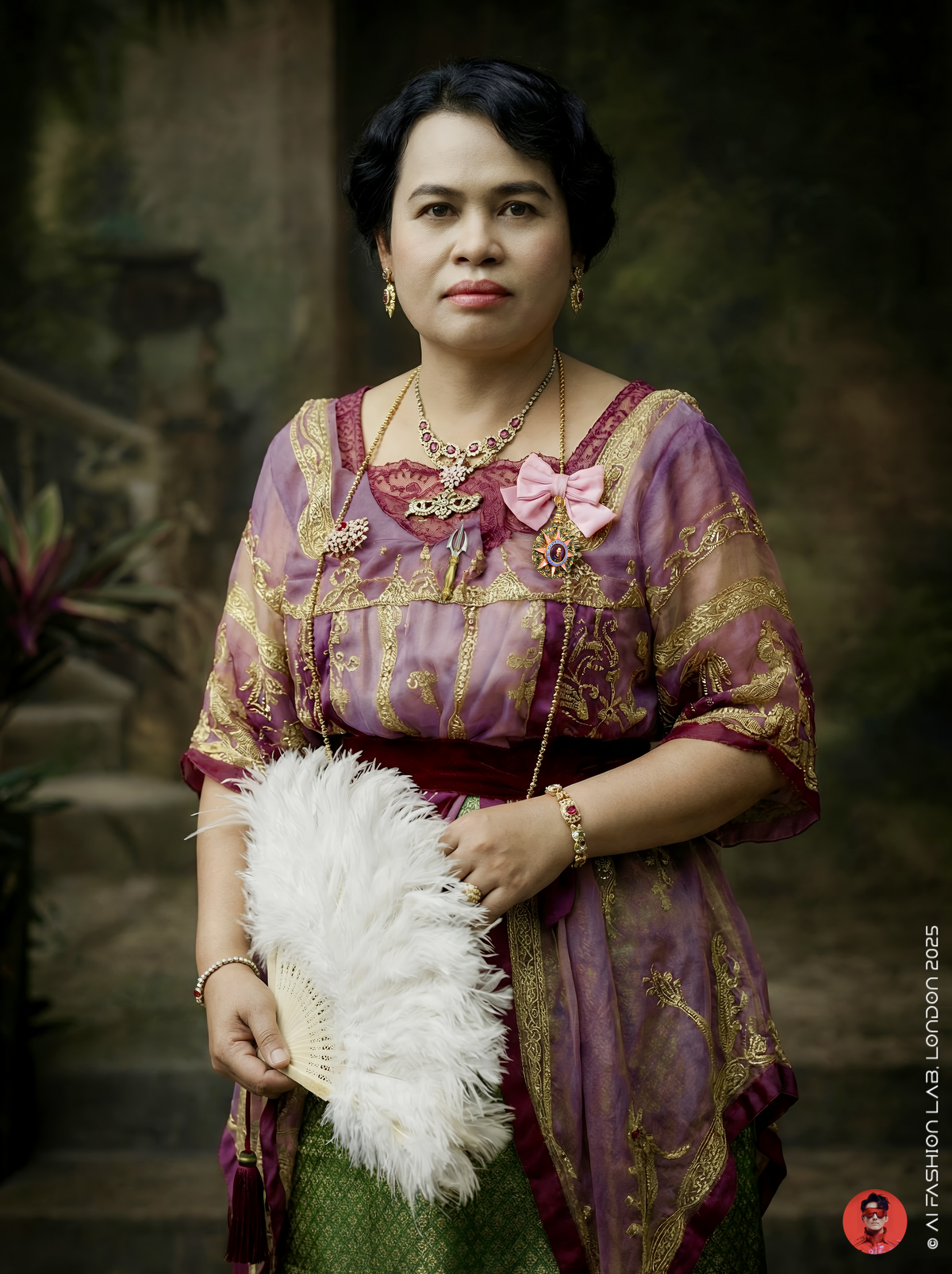
ส่วนคุณหญิงน้อม ศรีสุริยราชวรานุวัตร ได้รับพระราชทาน เครื่องราชอิสริยาภรณ์จุลจอมเกล้า ชั้นที่ ๓ ตติยจุลจอมเกล้า (ต.จ.) ฝ่ายใน
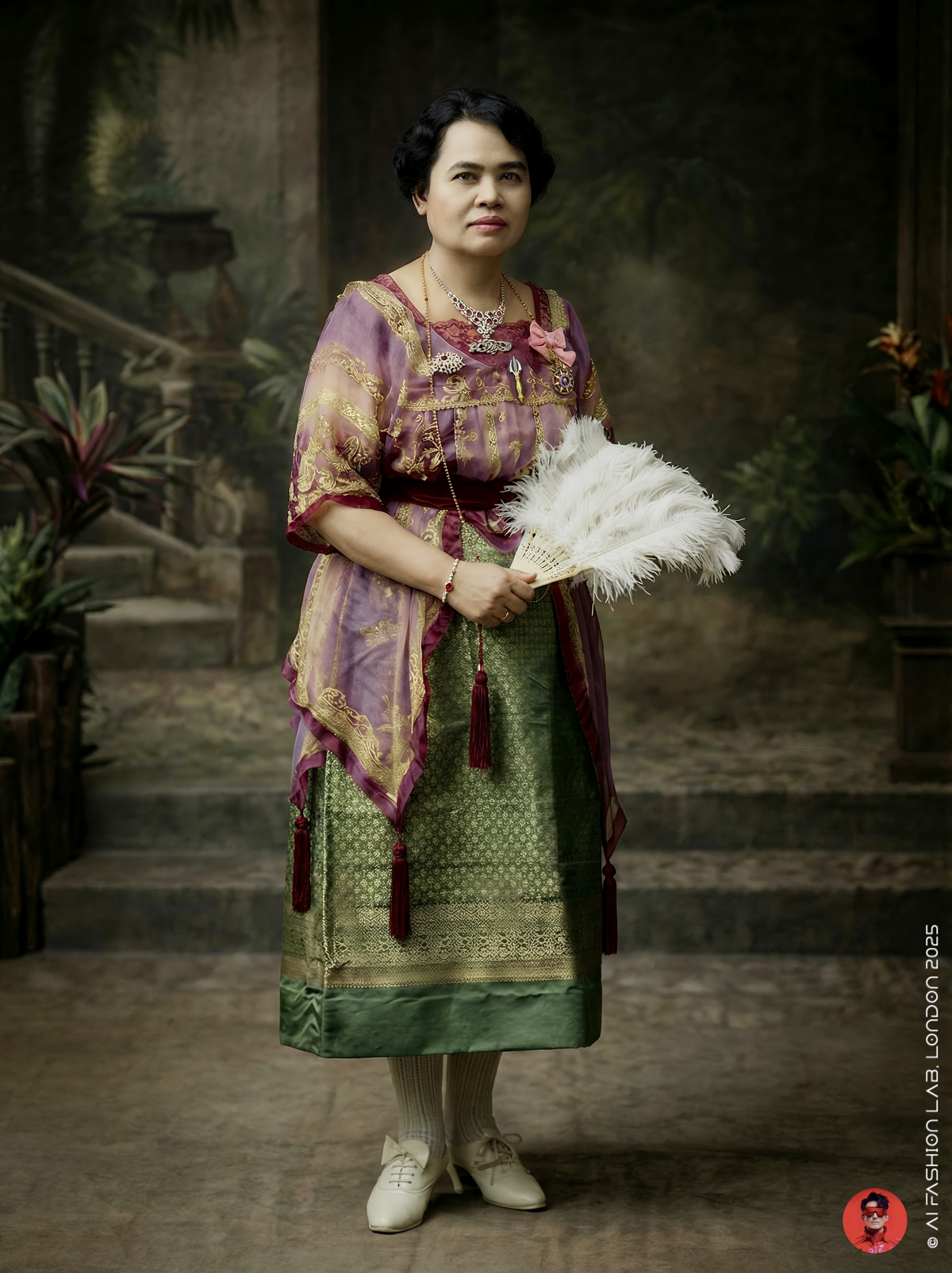
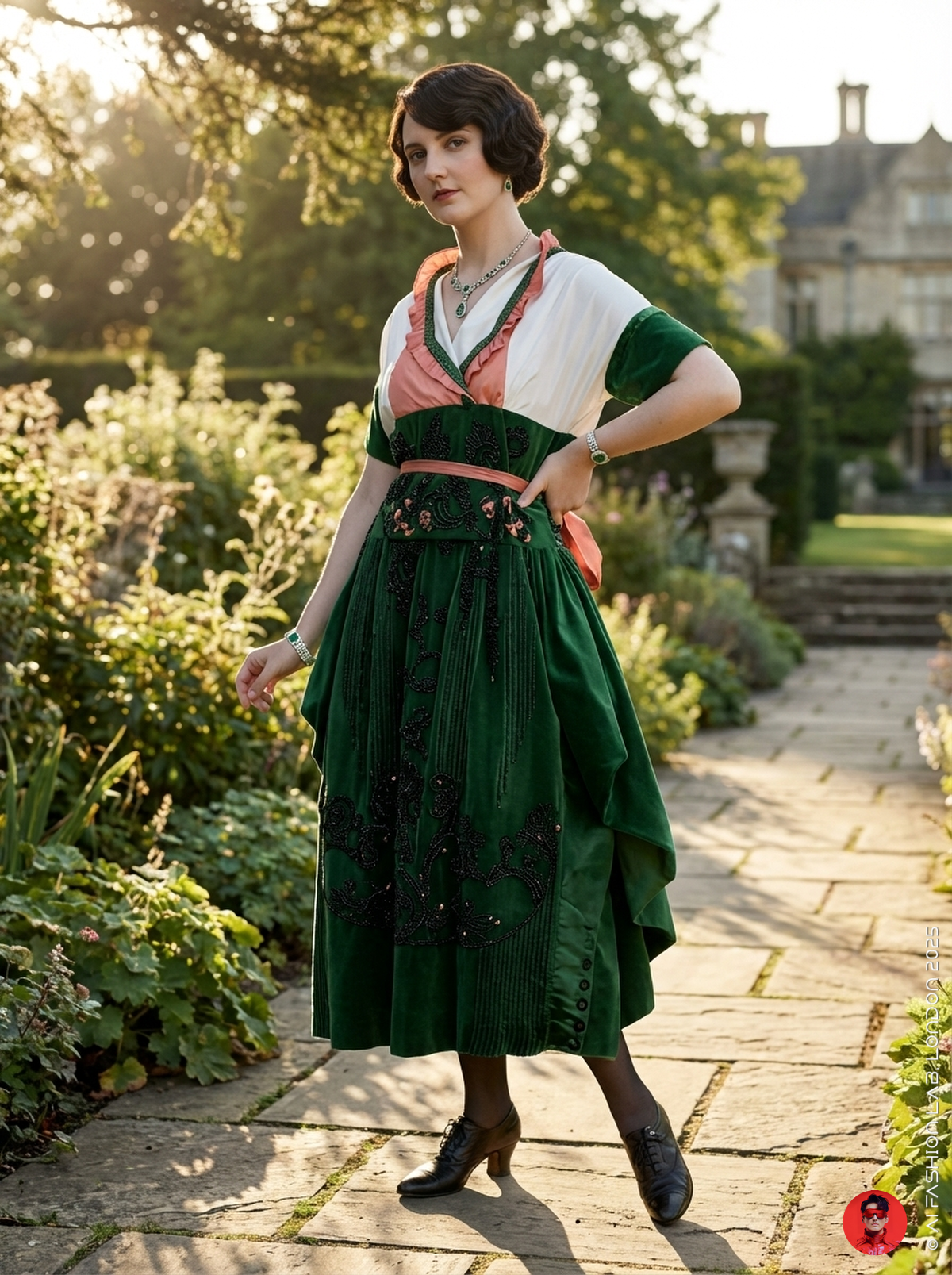
สิ่งที่น่าสนใจเป็นพิเศษในภาพนี้ คือ การแต่งกายของคุณหญิงน้อม ศรีสุริยราชวรานุวัตร ซึ่งสะท้อนแฟชั่นสตรีในสมัยรัชกาลที่ ๖ ช่วง Late Teens Fashion หรือแฟชั่นหลังสงครามโลกครั้งที่ ๑ (ราว ค.ศ. ๑๙๑๖–๑๙๑๙) อย่างชัดเจน เป็นการผสมผสานระหว่างโครงสร้างการตัดเย็บแบบตะวันตกกับการใช้ผ้าไทย กล่าวคือ ใช้รูปแบบกระโปรงตะวันตกแทนการนุ่งโจงกระเบนหรือผ้าซิ่นแบบล้านนา โดยกระโปรงในช่วงเวลานี้มีความยาวไม่กรอมเท้า หากยกสูงขึ้นมาประมาณกลางน่อง ซึ่งถือเป็นช่วงรอยต่อสำคัญ ก่อนที่ความยาวกระโปรงจะพัฒนาไปสู่ระดับใต้เข่า และนำไปสู่แฟชั่นยุค Art Deco ในทศวรรษ ๑๙๒๐ ต่อไป
_______________
Phraya Srisuriyarachawaranuwat (Suk Ditsayabut) and Khunying Nom Srisuriyarachawaranuwat
This AI-restored and creatively reconstructed image depicts Phraya Srisuriyarachawaranuwat (Suk Ditsayabut), Samuhathesaphiban (High Commissioner and Acting Governor) of Udon Thani Monthon, together with Khunying Nom Srisuriyarachawaranuwat, his wife. Both figures are regarded as highly significant personalities in the history of Udon Thani Province.
Phraya Srisuriyarachawaranuwat (Suk Ditsayabut) served as the second Samuhathesaphiban and Acting Governor of Udon Thani Monthon from B.E. 2457–2465 (1914–1922), succeeding Phraya Srisuriyarachawaranuwat (Pho Netiphoth), who had passed away prior to his appointment. Khunying Nom Srisuriyarachawaranuwat was his principal wife. Together, they played an important role in the development and prosperity of Udon Thani Monthon in many respects, particularly in the field of education.
Khunying Nom Srisuriyarachawaranuwat recognised the importance of education for young women in Udon Thani Monthon and therefore founded a girls’ school within the grounds of the Samuhathesaphiban Residence. The school was named “Uppatham Nari School” and officially opened for the first time on 1 May B.E. 2460 (1917), with Khunying Nom herself acting as its close patron and supervisor.
Later, in B.E. 2462 (1919), following the passing of Her Majesty Queen Saovabha Phongsri, the Queen Mother (Somdet Phra Si Patcharinthra Borommarachininat, Phra Borommaratchachonnani Phan Pi Luang) during the reign of King Vajiravudh (Rama VI), Khunying Nom issued a public appeal inviting government officials, merchants, and the people of Udon Thani Monthon to contribute donations according to their means in order to construct a new school building for female students. The original premises had become overcrowded, and the new construction was also intended as a royal act of merit dedicated to the Queen Mother, in fulfilment of Her Majesty’s royal intention to establish a girls’ school in Udon Thani Monthon—an initiative that had not yet been realised before her passing.
In due course, this new school was graciously bestowed with the name “Rachinuthit” by His Majesty King Vajiravudh (Rama VI), meaning “Dedicated to the Queen.”
Regarding royal decorations, Phraya Srisuriyarachawaranuwat (Suk Ditsayabut) was awarded several high orders of chivalry, including:
The Most Exalted Order of the White Elephant, Second Class, Commander (T. Ch.), Civil Division
The Most Noble Order of the Crown of Thailand, First Class, Knight Grand Cordon (P. M.), Civil Division
The Order of Chula Chom Klao, Second Class, Knight Commander (Special) (T. Ch. W.), Civil Division
Meanwhile, Khunying Nom Srisuriyarachawaranuwat received The Order of Chula Chom Klao, Third Class, Companion (T. Ch.), Ladies’ Division.
Of particular interest in this image is the attire of Khunying Nom Srisuriyarachawaranuwat, which clearly reflects women’s fashion during the reign of King Rama VI, specifically the Late Teens Fashion period, or post–World War I fashion (circa 1916–1919). Her dress demonstrates a synthesis of Western tailoring and Thai textiles: adopting a Western-style skirt rather than the traditional chong kraben or Lanna pha sin. During this transitional period, skirt lengths no longer reached the ankles but were raised to approximately mid-calf—an important turning point before hemlines evolved further to below-the-knee length, eventually leading into Art Deco fashion of the 1920s.
_______________
เรียนเชิญกด Subscribe ได้ที่ลิงก์นี้ครับ เพื่อร่วมติดตามงานสร้างสรรค์ต้นฉบับ งานวิจัยประวัติศาสตร์แฟชั่น และผลงานอนุรักษ์มรดกวัฒนธรรมด้วยเทคโนโลยี AI ของ AI Fashion Lab, London ซึ่งมุ่งตีความอดีตผ่านมิติใหม่ของการบูรณะภาพ การสร้างสรรค์ภาพ และการเล่าเรื่องด้วยศิลปะเชิงดิจิทัล 🔗 https://www.facebook.com/aifashionlab/subscribe/
#aifashionlab #AI #aiartist #aiart #aifashion #aifashiondesign #aifashionstyling #aifashiondesigner #fashion #fashionhistory #historyoffashion #fashionstyling #fashionphotography #digitalfashion #digitalfashiondesign #digitalcostumedesign #digitaldesign #digitalaiart #ThaiFashionHistory #ThaiFashionAI #thailand #UNESCO