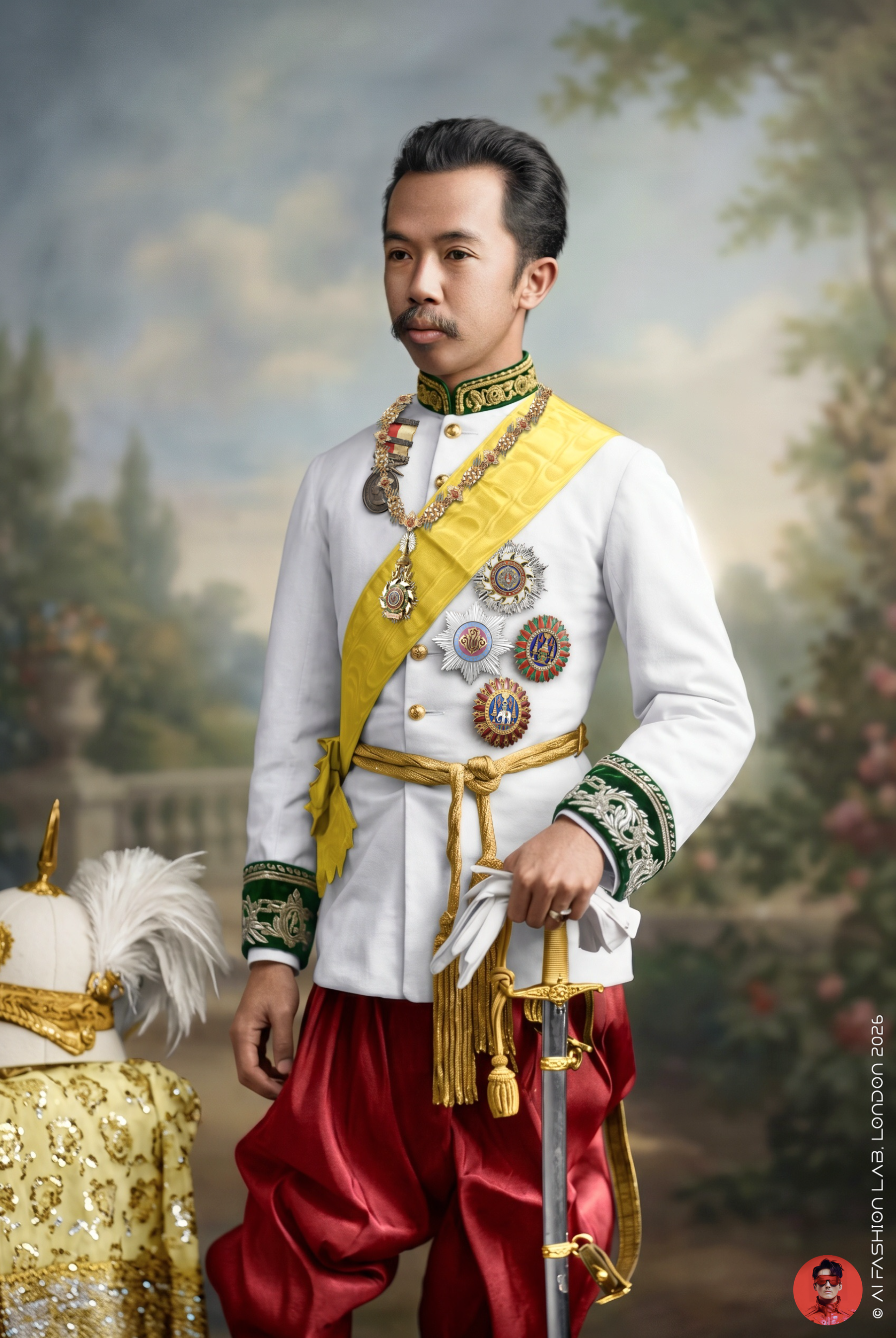
สมเด็จพระเจ้าบรมวงศ์เธอ กรมพระยาดำรงราชานุภาพ และฉลองพระองค์ "คณาภยันดร" แห่ง เครื่องขัตติยราชอิสริยาภรณ์อันมีเกียรติคุณรุ่งเรืองยิ่งมหาจักรีบรมราชวงศ์
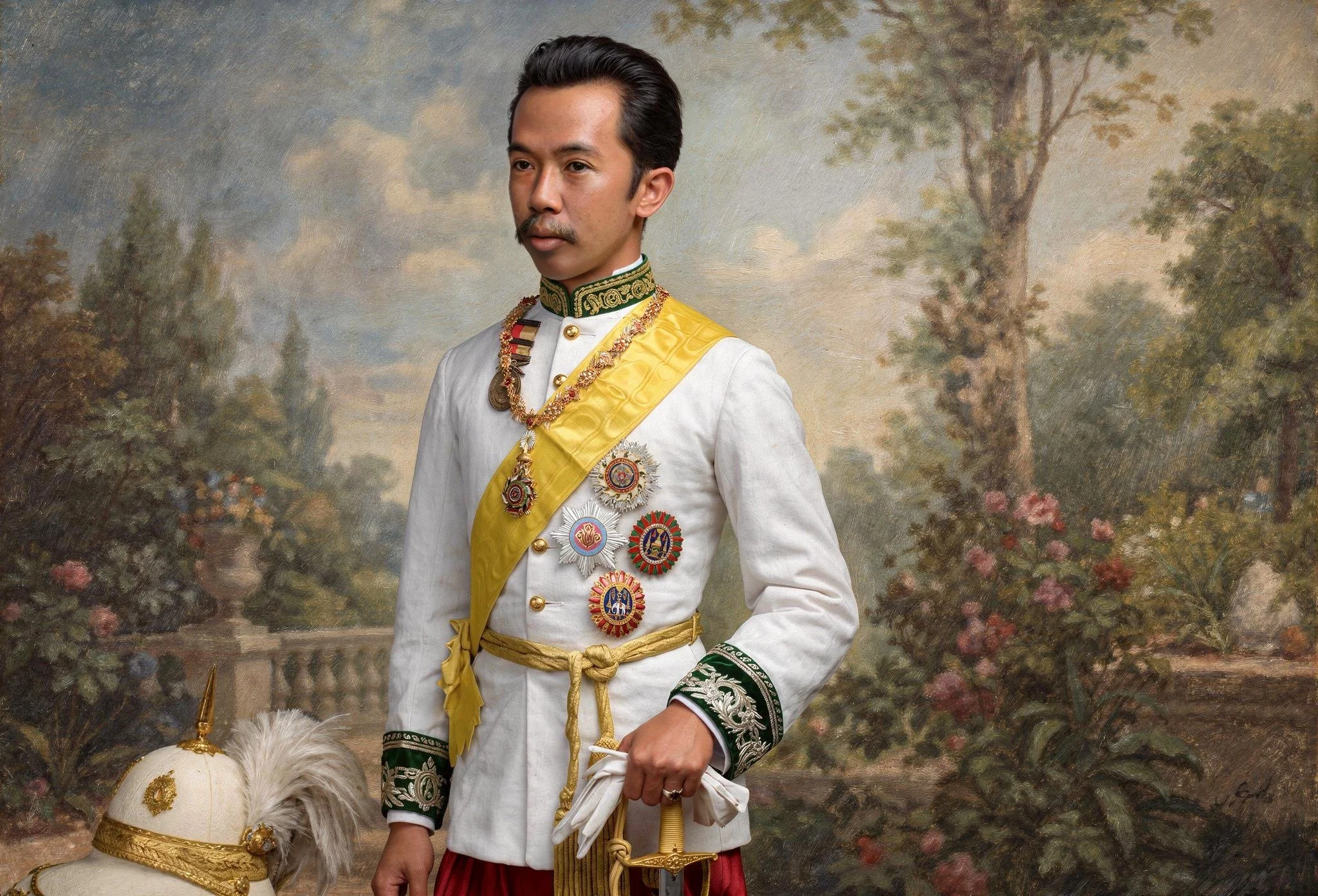
สมเด็จพระเจ้าบรมวงศ์เธอ กรมพระยาดำรงราชานุภาพ และฉลองพระองค์ "คณาภยันดร" แห่ง เครื่องขัตติยราชอิสริยาภรณ์อันมีเกียรติคุณรุ่งเรืองยิ่งมหาจักรีบรมราชวงศ์
ภาพที่ได้รับการบูรณะและสร้างสรรค์ขึ้นด้วยเทคโนโลยี AI ภาพนี้ เป็นพระฉายาลักษณ์ของ สมเด็จพระเจ้าบรมวงศ์เธอ กรมพระยาดำรงราชานุภาพ ขณะทรงฉลองพระองค์ "คณาภยันดร" แห่ง เครื่องขัตติยราชอิสริยาภรณ์อันมีเกียรติคุณรุ่งเรืองยิ่งมหาจักรีบรมราชวงศ์ ในฐานะองค์สมาชิกฝ่ายหน้า
ฉลองพระองค์คณาภยันดร คือชุดเครื่องแบบสำหรับฝ่ายหน้าในชั้นพระบรมวงศานุวงศ์ ใช้สวมคู่กับเครื่องขัตติยราชอิสริยาภรณ์มหาจักรีบรมราชวงศ์ ซึ่งเป็นเครื่องขัตติยราชอิสริยาภรณ์ชั้นสูงของราชสำนักสยาม
ผู้เป็นใหญ่แห่งเครื่องขัตติยราชอิสริยาภรณ์ฝ่ายหน้า เรียกว่า มหาสวามิศราธิบดี ได้แก่พระมหากษัตริย์ หรือพระบรมวงศานุวงศ์ที่ได้รับพระบรมราชโองการโปรดเกล้าฯ แต่งตั้ง คณะผู้ที่ได้รับพระราชทานเครื่องขัตติยราชอิสริยาภรณ์ฝ่ายหน้า เรียกว่า คณาภยันดร และผู้ที่ได้รับพระราชทานตราเฉพาะพระองค์ เรียกว่า ภราดร โดยสามารถใช้อักษรย่อ ภ.จ.ก. ต่อท้ายพระนามได้ เครื่องขัตติยราชอิสริยาภรณ์ฝ่ายหน้ามีจำนวนรวมทั้งสิ้น ๔๒ สำรับ
ฉลองพระองค์คณาภยันดรฝ่ายหน้าประกอบด้วย
๑. ฉลองพระองค์ราชปะแตนสีขาว คอและแถบข้อมือสีเขียว ปักดิ้นทองและเงิน ๒. พระภูษาโจงแพรสีแดง ๓. พระมาลาขาวยอดตรี ประดับขนนกการเวกสีขาว ปักพระยี่ก่าทอง และตราจักรีสีทอง ๔. พระแสงกระบี่จักรี ๕. สายสะพายสีเหลือง พาดจากพระอังสาซ้าย พร้อมสายสร้อย ตรามหาจักรี และดาราจักรี
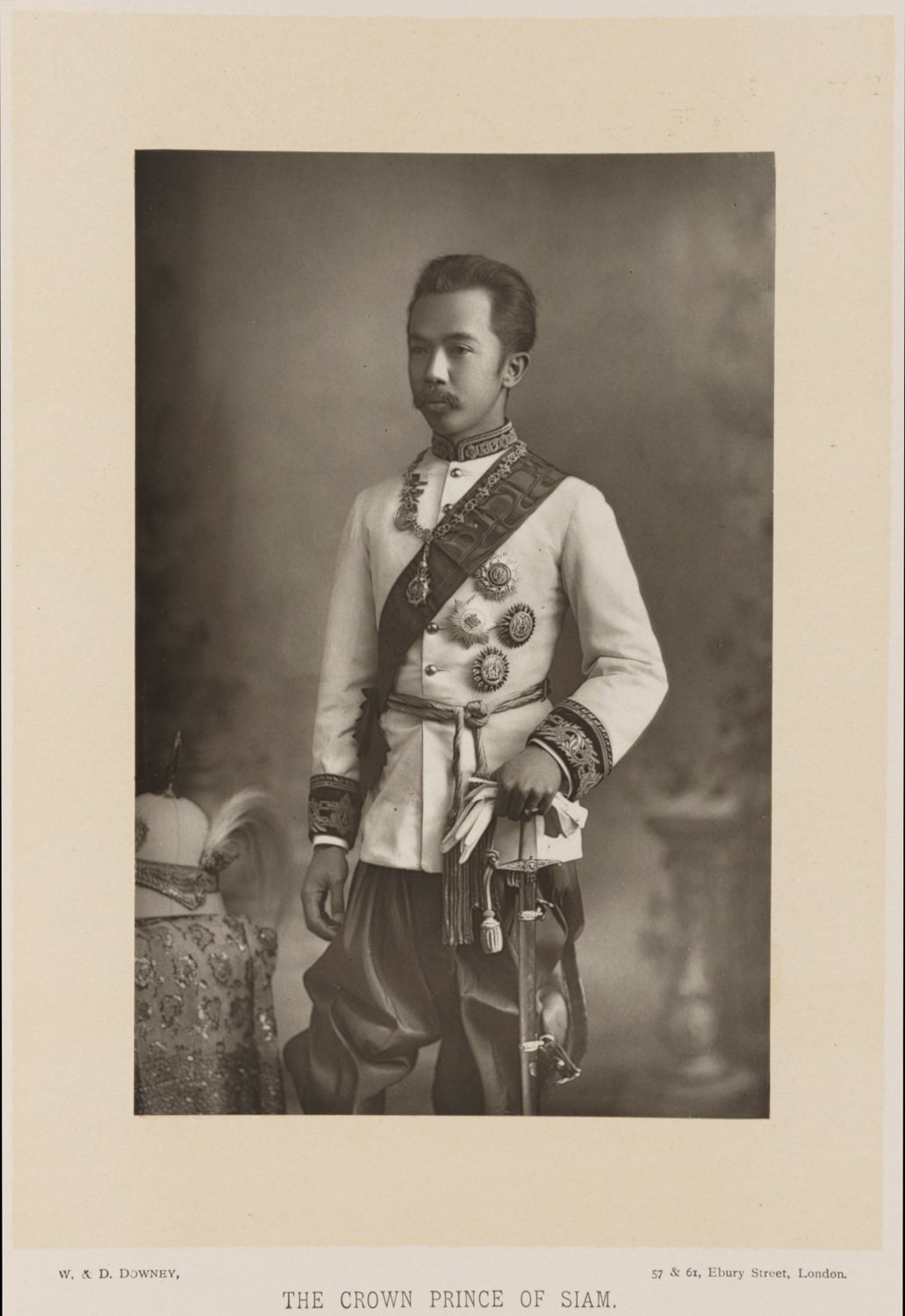
ผมพบพระฉายาลักษณ์ต้นฉบับนี้ในเว็บไซต์ National Portrait Gallery, London ซึ่งปัจจุบันระบุว่าเป็นพระฉายาลักษณ์ของ สมเด็จพระบรมโอรสาธิราช เจ้าฟ้ามหาวชิรุณหิศ สยามมกุฎราชกุมาร อย่างไรก็ตาม เมื่อพิจารณาจากพระพักตร์ พระชนมายุ เครื่องแต่งกาย และบริบททางประวัติศาสตร์แล้ว มีความเป็นไปได้สูงว่าการระบุพระนามดังกล่าวคลาดเคลื่อน และบุคคลในพระฉายาลักษณ์น่าจะเป็น สมเด็จพระเจ้าบรมวงศ์เธอ กรมพระยาดำรงราชานุภาพ
พระฉายาลักษณ์นี้เป็นผลงานของสตูดิโอ W. & D. Downey ในกรุงลอนดอน และระบุว่าตีพิมพ์ในปี ค.ศ. ๑๘๙๔ แต่สมเด็จเจ้าฟ้ามหาวชิรุณหิศประสูติในปี ค.ศ. ๑๘๗๘ และเสด็จสวรรคตที่กรุงเทพฯ เมื่อวันที่ ๔ มกราคม พ.ศ. ๒๔๓๗ หรือ ค.ศ. ๑๘๙๕ตามระบบปฏิทินสากล ขณะมีพระชนมายุเพียง ๑๖ พรรษา อีกทั้งไม่ปรากฏหลักฐานว่าพระองค์เคยเสด็จพระราชดำเนินไปยังประเทศอังกฤษ ในทางกลับกัน สมเด็จฯ กรมพระยาดำรงราชานุภาพเสด็จยุโรปในช่วงต้นทศวรรษ ๑๘๙๐ ซึ่งสอดคล้องกับสถานที่ ช่วงเวลา และสตูดิโอผู้ถ่ายพระฉายาลักษณ์นี้มากกว่า
_____________
เครื่องขัตติยราชอิสริยาภรณ์อันมีเกียรติคุณรุ่งเรืองยิ่งมหาจักรีบรมราชวงศ์
📜ประวัติ
เมื่อปี พ.ศ. ๒๔๒๕ ในโอกาสครบรอบการสถาปนากรุงเทพมหานครเป็นราชธานีมาเป็นเวลาครบ ๑๐๐ ปี พระบาทสมเด็จพระจุลจอมเกล้าเจ้าอยู่หัวจึงได้ทรงสร้างเครื่องราชอิสริยาภรณ์นี้ขึ้น เพื่อเป็นการระลึกถึงพระมหากรุณาธิคุณ และเพื่อเฉลิมพระเกียรติยศแห่งพระบาทสมเด็จพระพุทธยอดฟ้าจุฬาโลก ปฐมบรมกษัตริย์แห่งราชวงศ์จักรี พระราชทานนามว่า “เครื่องขัตติยราชอิสริยาภรณ์อันมีเกียรติคุณรุ่งเรืองยิ่งมหาจักรีบรมราชวงศ์” หรือเรียกอย่างย่อว่า “ตรามหาจักรีบรมราชวงศ์” สำหรับพระราชทานแก่พระบรมวงศานุวงศ์ที่สืบเชื้อสายโดยตรงจากพระบาทสมเด็จพระพุทธยอดฟ้าจุฬาโลก
ตรามหาจักรีบรมราชวงศ์นี้ มีพระมหากษัตริย์ทรงเป็นประธานแห่งเครื่องขัตติยราชอิสริยาภรณ์ และพระราชทานแก่พระบรมวงศานุวงศ์ รวมทั้งสิ้น ๗๑ สำรับ โดยแบ่งออกเป็น ๒ ฝ่าย ได้แก่
⚜️ฝ่ายหน้า ผู้เป็นใหญ่แห่งเครื่องขัตติยราชอิสริยาภรณ์ฝ่ายหน้า เรียกว่า มหาสวามิศราธิบดี ได้แก่พระมหากษัตริย์ หรือพระบรมวงศานุวงศ์ที่ได้รับพระบรมราชโองการโปรดเกล้าฯ แต่งตั้ง คณะผู้ที่ได้รับพระราชทานเครื่องขัตติยราชอิสริยาภรณ์ฝ่ายหน้า เรียกว่า คณาภยันดร และผู้ที่ได้รับพระราชทานตราเฉพาะพระองค์ เรียกว่า ภราดร โดยสามารถใช้อักษรย่อ ภ.จ.ก. ต่อท้ายพระนามได้ เครื่องขัตติยราชอิสริยาภรณ์ฝ่ายหน้ามีจำนวนรวมทั้งสิ้น ๔๒ สำรับ
🌸ฝ่ายใน ผู้เป็นใหญ่แห่งเครื่องขัตติยราชอิสริยาภรณ์ฝ่ายใน เรียกว่า มหาสวามินี ได้แก่สมเด็จพระบรมราชเทวี คณะผู้ที่ได้รับพระราชทานเครื่องขัตติยราชอิสริยาภรณ์ฝ่ายใน เรียกว่า คณาภยันดรี และผู้ที่ได้รับพระราชทานตราเฉพาะพระองค์ เรียกว่า ภคินี โดยสามารถใช้อักษรย่อ ภ.จ.ก. ต่อท้ายพระนามได้ เครื่องขัตติยราชอิสริยาภรณ์ฝ่ายในมีจำนวนรวมทั้งสิ้น ๒๙ สำรับ
นอกจากนี้ เครื่องขัตติยราชอิสริยาภรณ์นี้ยังสามารถพระราชทานแก่พระประมุขของต่างประเทศ เรียกว่า กิตติมศักดิ์คณาภยันดร โดยนับแยกจำนวนจากสำรับสำหรับพระราชทานแก่พระบรมวงศานุวงศ์
ต่อมา ในรัชสมัยพระบาทสมเด็จพระเจ้าอยู่หัวอานันทมหิดล ได้มีการตราพระราชบัญญัติเครื่องขัตติยราชอิสริยาภรณ์อันมีเกียรติคุณรุ่งเรืองยิ่งมหาจักรีบรมราชวงศ์ขึ้นใหม่ โดยลดจำนวนเครื่องขัตติยราชอิสริยาภรณ์เหลือ ๒๕ สำรับ ได้แก่ สำหรับพระมหากษัตริย์ ๑ สำรับ สมเด็จพระบรมราชินี ๑ สำรับ และสำหรับพระราชทานแก่พระบรมวงศานุวงศ์ ๒๓ สำรับ พร้อมทั้งยกเลิกตำแหน่งเดิมบางตำแหน่ง เช่น มหาสวามิศราธิบดี และ มหาสวามินี พระราชบัญญัติเครื่องขัตติยราชอิสริยาภรณ์อันมีเกียรติคุณรุ่งเรืองยิ่งมหาจักรีบรมราชวงศ์ พ.ศ. ๒๔๘๔ นี้ เป็นพระราชบัญญัติที่ใช้มาจนถึงปัจจุบัน
เครื่องขัตติยราชอิสริยาภรณ์อันมีเกียรติคุณรุ่งเรืองยิ่งมหาจักรีบรมราชวงศ์เคยจัดเป็นเครื่องราชอิสริยาภรณ์ที่มีลำดับเกียรติสูงสุด ก่อนที่จะมีการสร้าง เครื่องราชอิสริยาภรณ์อันเป็นมงคลยิ่งราชมิตราภรณ์ ขึ้นในรัชสมัยพระบาทสมเด็จพระเจ้าอยู่หัวภูมิพลอดุลยเดช ปัจจุบัน มหาจักรีบรมราชวงศ์จัดเป็นเครื่องราชอิสริยาภรณ์ที่มีลำดับเกียรติเป็นลำดับที่ ๒ รองจากราชมิตราภรณ์ ซึ่งเป็นเครื่องราชอิสริยาภรณ์สำหรับพระราชทานแด่พระประมุขของต่างประเทศเท่านั้น อย่างไรก็ตาม เครื่องขัตติยราชอิสริยาภรณ์มหาจักรีบรมราชวงศ์ยังคงเป็นเครื่องราชอิสริยาภรณ์สูงสุดที่พระบรมวงศานุวงศ์จะได้รับพระราชทาน
🔱ตรามหาจักรี
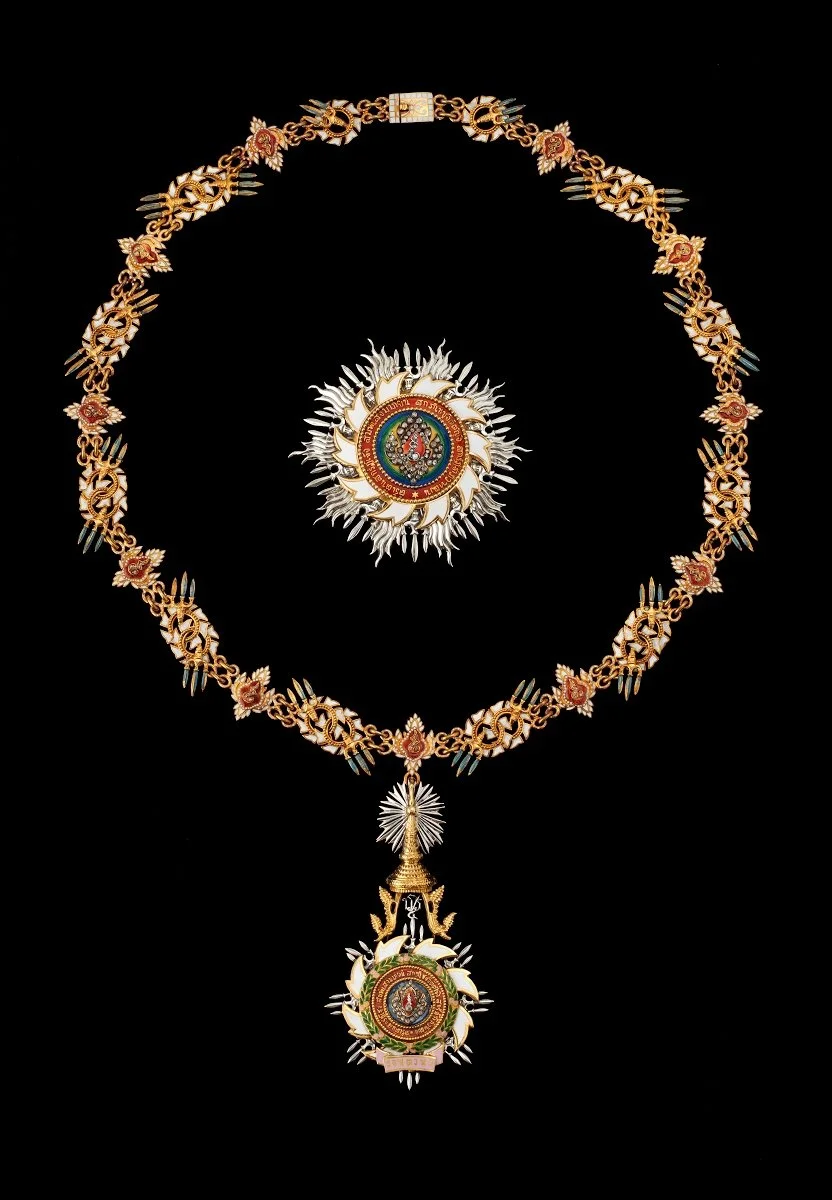
ตรามหาจักรีด้านหน้าเป็นรูปจักร ๘ กลีบ ลงยาสีขาว มีรูปตรีศูลเงินอยู่ระหว่างกลีบจักร กลางวงจักรเป็นรูปปทุมอุณาโลมประดับเพชร พื้นลงยาสีฟ้า ขอบลงยาสีแดง มีอักษรทองเป็นคาถาภาษิตภาษาบาลีว่า “ติรตเนสกรัฏ์เฐจ สัมพํเสจมมายนํ สกราโชชุจิต์ตัญ์จ สกรัฏ์ฐภิวัฑํฒนํ” สามารถถอดเป็นรูปการเขียนภาษาบาลีด้วยอักษรไทยแบบปัจจุบันได้ว่า “ติรตนเน สกรฏฺเฐ จ สมฺพํเส จ มมายนํ สกราโชชุจิตฺตญฺจ สกรฏฺฐภิวฑฺฒนํ” แปลว่า “ความนับถือรักใคร่ในพระรัตนตรัยก็ดี ในรัฐของตนก็ดี ในวงศ์ตระกูลของตนก็ดี มีจิตซื่อตรงในพระราชาของตนก็ดี ย่อมเป็นเครื่องทำให้รัฐของตนเจริญยิ่ง”
รอบขอบเป็นมาลัยชัยพฤกษ์ ใบลงยาสีเขียว ดอกลงยาสีชมพู ใต้พวงมาลัยเป็นแพรแถบลงยาสีชมพู มีอักษรย่อเป็นภาษิตของเครื่องขัตติยราชอิสริยาภรณ์นี้ว่า ร.จ.บ.ต.ว.ห.จ. ย่อมาจาก “เราจะบำรุงตระกูลวงศ์ให้เจริญ” ซึ่งปรากฏเป็นภาษิตของเครื่องราชอิสริยาภรณ์จุลจอมเกล้าด้วย
เบื้องบนมีอักษรพระปรมาภิไธยย่อ ป.ร.ร. ๔ ไขว้กัน โดยย่อมาจากคำว่า “บรมราชาธิราชรามาธิบดีที่ ๔” อันหมายถึงพระบาทสมเด็จพระพุทธยอดฟ้าจุฬาโลกมหาราช ปฐมกษัตริย์แห่งพระบรมราชจักรีวงศ์ และมีพระมหามงกุฎทองรัศมีเงิน ด้านหลังเป็นรูปครุฑปราสาท มหามงกุฎ และจุลมงกุฎ ทำด้วยทอง พื้นลงยาสีเขียว ขอบรอบลงยาสีแดง และมีอักษรทองว่า “ปีมะเมีย จัตวาศก ศักราช ๑๒๔๔” โดยตรามหาจักรีสำหรับพระราชทานฝ่ายในมีลักษณะเช่นเดียวกับที่พระราชทานสำหรับฝ่ายหน้า แต่มีขนาดย่อมกว่าและประดับเพชรทั้งดวง
⚔️ตราจุลจักรี
ตราจุลจักรีเป็นรูปจักรและตรีศูลขัดกัน เบื้องบนเป็นเครื่องอัษฎาวุธ อันประกอบด้วย พระแสงหอกเพชรรัตน์ พระแสงดาบเชลย พระแสงตรี พระแสงจักร พระแสงดาบและเขน หรือดาบและโล่ พระแสงธนู พระแสงของ้าวแสนพลพ่าย พระแสงปืนคาบชุดข้ามแม่น้ำสะโตง และเครื่องพิชัยสงครามไขว้กัน ทำด้วยทอง และมีคาถาภาษิตในวงจักรอย่างเดียวกับตรามหาจักรี โดยตราจุลจักรีสำหรับพระราชทานฝ่ายในมีลักษณะเช่นเดียวกับที่พระราชทานสำหรับฝ่ายหน้า แต่มีขนาดย่อมกว่า
✴️ดาราจักรี
ดาราจักรีเป็นรูปจักร ๑๐ กลีบ ลงยาสีขาว มีรูปตรีศูลเงินและรัศมีเปลวสีเงินสลับกันไปรอบกลีบจักร กลางดาราเป็นรูปปทุมอุณาโลมประดับเพชร ขอบลงยา และมีคาถาภาษิตเช่นเดียวกับตรามหาจักรี แต่ไม่มีพวงมาลัย ใช้ประดับที่อกเสื้อเบื้องซ้าย โดยดาราจักรีสำหรับพระราชทานฝ่ายในมีลักษณะเช่นเดียวกับที่พระราชทานสำหรับฝ่ายหน้า แต่มีขนาดย่อมกว่า
🟡สายสร้อยและแพรแถบ
สายสร้อยเป็นรูปอุณาโลมลงยา กลางอุณาโลมประดับเพชร สลับกับจักรีแฝดลงยา มีสร้อยทองยึดตลอด ยาว ๕๕ เซนติเมตรสำหรับห้อยกับตรามหาจักรี ส่วนแพรแถบมีลักษณะสีเหลือง กว้าง ๑๐ เซนติเมตร สำหรับฝ่ายหน้า และกว้าง ๗.๕ เซนติเมตรสำหรับฝ่ายใน โดยให้สะพายบ่าซ้ายเฉียงลงทางขวา พร้อมทั้งห้อยตราจุลจักรี
นอกจากนี้ ยังมีเครื่องหมายสำหรับประดับแพรแถบเครื่องราชอิสริยาภรณ์ มีลักษณะเป็นรูปปทุมอุณาโลมเพชรสร่งเงิน และมีเครื่องหมายที่ใช้เป็นดุมเสื้อ เป็นรูปดอกไม้จีบด้วยแพรแถบของเครื่องราชอิสริยาภรณ์ ผู้ได้รับพระราชทานมีสิทธิใช้ประดับเป็นดุมเสื้อเวลาแต่งเครื่องสากล โดยให้ประดับที่รังดุมคอพับของเสื้อชั้นนอกเบื้องซ้าย และสามารถใช้ประดับเมื่อสวมชุดไทยได้ด้วย โดยบุรุษมีสิทธิใช้ประดับเป็นดุมเสื้อเวลาแต่งเสื้อชุดไทยสีสุภาพ โดยประดับที่อกเสื้อเบื้องซ้ายบริเวณปากกระเป๋าเสื้อ ส่วนสตรีมีสิทธิใช้ประดับเป็นดุมเสื้อเวลาแต่งเสื้อชุดไทยเรือนต้น ชุดไทยจิตรลดา ชุดไทยอมรินทร์ และชุดไทยบรมพิมาน โดยประดับที่อกเสื้อเบื้องซ้าย
ภาพต้นฉบับค้นหาได้ที่เว็บไซต์ National Portrait Gallery, London https://www.npg.org.uk/collections/search/person/mp101002/maha-vajirunhis-crown-prince-of-siam
_____________
Prince Damrong Rajanubhab and The Khanaphayandon ceremonial dress
Somdet Phra Chao Boromwongse Ther, Krom Phraya Damrong Rajanubhab (สมเด็จพระเจ้าบรมวงศ์เธอ กรมพระยาดำรงราชานุภาพ)
This AI-restored and creatively enhanced image is a portrait of Somdet Phra Chao Boromwongse Ther, Krom Phraya Damrong Rajanubhab (สมเด็จพระเจ้าบรมวงศ์เธอ กรมพระยาดำรงราชานุภาพ), shown wearing the ceremonial dress of a Khanaphayandon (คณาภยันดร), a male member of The Most Illustrious Order of the Royal House of Chakri(เครื่องขัตติยราชอิสริยาภรณ์อันมีเกียรติคุณรุ่งเรืองยิ่งมหาจักรีบรมราชวงศ์).
The Khanaphayandon ceremonial dress (ฉลองพระองค์คณาภยันดร) was the formal uniform worn by male members of the royal family in connection with the insignia of the Royal House of Chakri, one of the highest dynastic orders of the Siamese court.
The head of the male division of the order was known as the Maha Savamissaradhibodi (มหาสวามิศราธิบดี), a position held by the monarch or by a royal prince appointed by royal command. Male recipients of the order were collectively known as Khanaphayandon (คณาภยันดร), while an individual recipient of the personal insignia was known as a Phradon (ภราดร), with the right to use the post-nominal letters ภ.จ.ก. after his name. The male division of the order consisted of 42 sets of insignia.
The male Khanaphayandon ceremonial dress consisted of:
1. A white raj pattern court jacket, with green collar and cuffs embroidered in gold and silver thread.
2. A red silk chong kraben.
3. A white ceremonial hat with a tri-pointed finial, decorated with white karavek feathers, gold embroidery, and a gold Chakri emblem.
4. The Chakri ceremonial sword.
5. A yellow sash worn from the left shoulder, together with the collar chain, the Maha Chakri badge, and the Chakri star.
I found the original portrait on the website of the National Portrait Gallery, London, where it is currently identified as Maha Vajirunhis, Crown Prince of Siam (สมเด็จพระบรมโอรสาธิราช เจ้าฟ้ามหาวชิรุณหิศ สยามมกุฎราชกุมาร). However, when the facial features, apparent age, costume, and historical context are considered together, there is a strong possibility that this identification is incorrect, and that the sitter is in fact Prince Damrong Rajanubhab (กรมพระยาดำรงราชานุภาพ). (National Portrait Gallery)
The portrait was taken by the London studio W. & D. Downey and was published in 1894. Crown Prince Maha Vajirunhis (สมเด็จพระบรมโอรสาธิราช เจ้าฟ้ามหาวชิรุณหิศ) was born in 1878 and passed away in Bangkok on 4 January 1895, corresponding to 4 January B.E. 2437 in the Siamese calendar then in use, at the age of only 16. There is no known evidence that he ever travelled to England. By contrast, Prince Damrong Rajanubhab travelled to Europe in the early 1890s, which corresponds more convincingly with the place, date, and photographic studio associated with this portrait. (National Portrait Gallery)
_____________
The Most Illustrious Order of the Royal House of Chakri
Khrueang Khattiyaratcha Itsariyaphon An Mi Kiattikhun Rungrueang Ying Maha Chakri Boromma Ratchawong (เครื่องขัตติยราชอิสริยาภรณ์อันมีเกียรติคุณรุ่งเรืองยิ่งมหาจักรีบรมราชวงศ์)
📜History
In B.E. 2425 / 1882, on the occasion of the centenary of the establishment of Bangkok as the royal capital, King Chulalongkorn (พระบาทสมเด็จพระจุลจอมเกล้าเจ้าอยู่หัว) created this order to commemorate the royal grace and to honour King Phutthayotfa Chulalok, Rama I (พระบาทสมเด็จพระพุทธยอดฟ้าจุฬาโลก), the first monarch of the Chakri dynasty. The order was named “The Most Illustrious Order of the Royal House of Chakri” (เครื่องขัตติยราชอิสริยาภรณ์อันมีเกียรติคุณรุ่งเรืองยิ่งมหาจักรีบรมราชวงศ์), commonly shortened to “the Order of the Royal House of Chakri” or “the Maha Chakri Order”. It was intended for members of the royal family descended directly from King Phutthayotfa Chulalok. (decor.soc.go.th)
The Order of the Royal House of Chakri had the monarch as its sovereign head and was conferred upon members of the royal family in a total of 71 sets, divided into two divisions:
⚜️The male division The head of the male division was called Maha Savamissaradhibodi (มหาสวามิศราธิบดี), referring to the monarch or a royal prince appointed by royal command. Recipients of the male division were known collectively as Khanaphayandon(คณาภยันดร), while an individual recipient of the personal insignia was known as a Phradon (ภราดร), with the right to use the post-nominal letters ภ.จ.ก. after his name. The male division consisted of 42 sets.
🌸The female division The head of the female division was called Maha Savamini (มหาสวามินี), referring to the Queen Consort or chief royal consort. Recipients of the female division were known collectively as Khanaphayandari (คณาภยันดรี), while an individual recipient of the personal insignia was known as a Phakhini (ภคินี), with the right to use the post-nominal letters ภ.จ.ก. after her name. The female division consisted of 29 sets.
In addition, the order could also be conferred upon foreign sovereigns, who were known as honorary Khanaphayandon(กิตติมศักดิ์คณาภยันดร). These honorary awards were counted separately from the sets reserved for members of the Siamese royal family.
Later, during the reign of King Ananda Mahidol (พระบาทสมเด็จพระเจ้าอยู่หัวอานันทมหิดล), a new Act governing the Order of the Royal House of Chakri was enacted. This reduced the number of sets to 25: 1 for the monarch, 1 for the Queen, and 23 for members of the royal family. It also abolished earlier positions such as Maha Savamissaradhibodiand Maha Savamini. The Royal House of Chakri Order Act, B.E. 2484 / 1941, remains the basis for the order as used today.
The Order of the Royal House of Chakri was formerly the highest order of chivalry in Siam, before the creation of The Most Auspicious Order of the Rajamitrabhorn (เครื่องราชอิสริยาภรณ์อันเป็นมงคลยิ่งราชมิตราภรณ์) during the reign of King Bhumibol Adulyadej. Today, the Royal House of Chakri ranks second in the Thai order of precedence, after the Rajamitrabhorn, which is reserved for foreign heads of state. Nevertheless, it remains the highest order that may be conferred upon members of the Thai royal family. (decor.soc.go.th)
🔱The Maha Chakri Badge
The front of the Maha Chakri badge (ตรามหาจักรี) takes the form of an eight-pointed chakra enamelled in white, with silver tridents placed between the points of the wheel. At the centre is a diamond-set pathum unalom motif on a blue enamel ground, edged in red enamel. Around it appears a Pali motto in gold letters:
“ติรตเนสกรัฏ์เฐจ สัมพํเสจมมายนํ สกราโชชุจิต์ตัญ์จ สกรัฏ์ฐภิวัฑํฒนํ”
This may be transcribed in modern Thai-script Pali as:
“ติรตนเน สกรฏฺเฐ จ สมฺพํเส จ มมายนํ สกราโชชุจิตฺตญฺจ สกรฏฺฐภิวฑฺฒนํ”
The motto may be translated as:
“Reverence and affection for the Triple Gem, for one’s own state, and for one’s own lineage, together with a loyal heart towards one’s king, are the means by which one’s state may prosper.”
The outer border consists of a wreath of chaiyaphruek leaves enamelled in green, with flowers enamelled in pink. Beneath the wreath is a pink enamel ribbon bearing the abbreviated motto ร.จ.บ.ต.ว.ห.จ., standing for “เราจะบำรุงตระกูลวงศ์ให้เจริญ”, meaning “We shall uphold our lineage and cause it to flourish.” This same motto also appears in connection with the Order of Chula Chom Klao.
Above the badge are four interlaced royal cyphers ป.ร.ร. 4, an abbreviation of “Borommarachathirat Ramathibodi IV”(บรมราชาธิราชรามาธิบดีที่ 4), referring to King Phutthayotfa Chulalok, Rama I, the first monarch of the Chakri dynasty. Above this is a gold Great Crown with silver rays. The reverse shows the Garuda, a prasat, the Great Crown, and the Lesser Crown, all in gold, against a green enamel ground bordered in red enamel. It bears the inscription “ปีมะเมีย จัตวาศก ศักราช 1244”. The Maha Chakri badge conferred upon the female division was similar to that of the male division, but smaller and entirely set with diamonds.
⚔️The Chula Chakri Badge
The Chula Chakri badge (ตราจุลจักรี) consists of a chakra crossed with a trident. Above it are the eight royal weapons(เครื่องอัษฎาวุธ), comprising the diamond spear, the captured sword, the trident, the chakra, the sword and shield, the bow, the glaive known as Saen Phon Phai, the matchlock gun associated with the crossing of the Sittaung River, and crossed weapons of war. It is made of gold and contains the same Pali motto within the wheel as the Maha Chakri badge. The Chula Chakri badge for the female division was similar to that of the male division, but smaller.
✴️The Chakri Star
The Chakri star (ดาราจักรี) takes the form of a ten-pointed chakra enamelled in white, with silver tridents and silver flame-like rays alternating around the points of the wheel. At the centre is a diamond-set pathum unalom motif with an enamelled border, bearing the same Pali motto as the Maha Chakri badge, though without the wreath. It is worn on the left breast. The Chakri star for the female division was similar to that of the male division, but smaller.
🟡The Collar and Sash
The collar consists of enamelled unalom motifs, each with a diamond at the centre, alternating with enamelled twin Chakri emblems and linked throughout by gold chains. It measures 55 centimetres in length and is used for suspending the Maha Chakri badge.
The sash is yellow. For the male division it measures 10 centimetres in width, while for the female division it measures 7.5 centimetres. It is worn from the left shoulder diagonally to the right hip, with the Chula Chakri badge suspended from it.
There is also a ribbon-device for the order, in the form of a diamond pathum unalom set in silver. Another form of insignia is a button made from the order’s ribbon, shaped as a folded flower. This may be worn with Western formal dress at the left lapel buttonhole. It may also be worn with Thai formal dress. For men, it may be worn as a button on a formal Thai jacket of a suitable colour, placed at the left breast near the pocket opening. For women, it may be worn with Chud Thai Ruean Ton (ชุดไทยเรือนต้น), Chud Thai Chitralada (ชุดไทยจิตรลดา), Chud Thai Amarin (ชุดไทยอมรินทร์), and Chud Thai Boromphiman (ชุดไทยบรมพิมาน), placed at the left breast.
The original portrait can be found on the website of the National Portrait Gallery, London. (National Portrait Gallery)
_____________
เรียนเชิญกด Subscribe ได้ที่ลิงก์นี้ครับ เพื่อร่วมติดตามงานสร้างสรรค์ต้นฉบับ งานวิจัยประวัติศาสตร์แฟชั่น และผลงานอนุรักษ์มรดกวัฒนธรรมด้วยเทคโนโลยี AI ของ AI Fashion Lab, London ซึ่งมุ่งตีความอดีตผ่านมิติใหม่ของการบูรณะภาพ การสร้างสรรค์ภาพ และการเล่าเรื่องด้วยศิลปะเชิงดิจิทัล https://www.facebook.com/aifashionlab/subscribe/
#aifashionlab #AI #aiartist #aiart #aifashion #aifashiondesign #aifashionstyling #aifashiondesigner #fashion #fashionhistory #historyoffashion #fashionstyling #fashionphotography #digitalfashion #digitalfashiondesign #digitalcostumedesign #digitaldesign #digitalaiart #ThaiFashionHistory #ThaiFashionAI #thailand #UNESCO