สมเด็จพระนางเจ้ารำไพพรรณี พระบรมราชินี และแฟชั่นอาร์ตเดโคในทศวรรษ ๑๙๒๐
สมเด็จพระนางเจ้ารำไพพรรณี พระบรมราชินี และแฟชั่นอาร์ตเดโคในทศวรรษ ๑๙๒๐
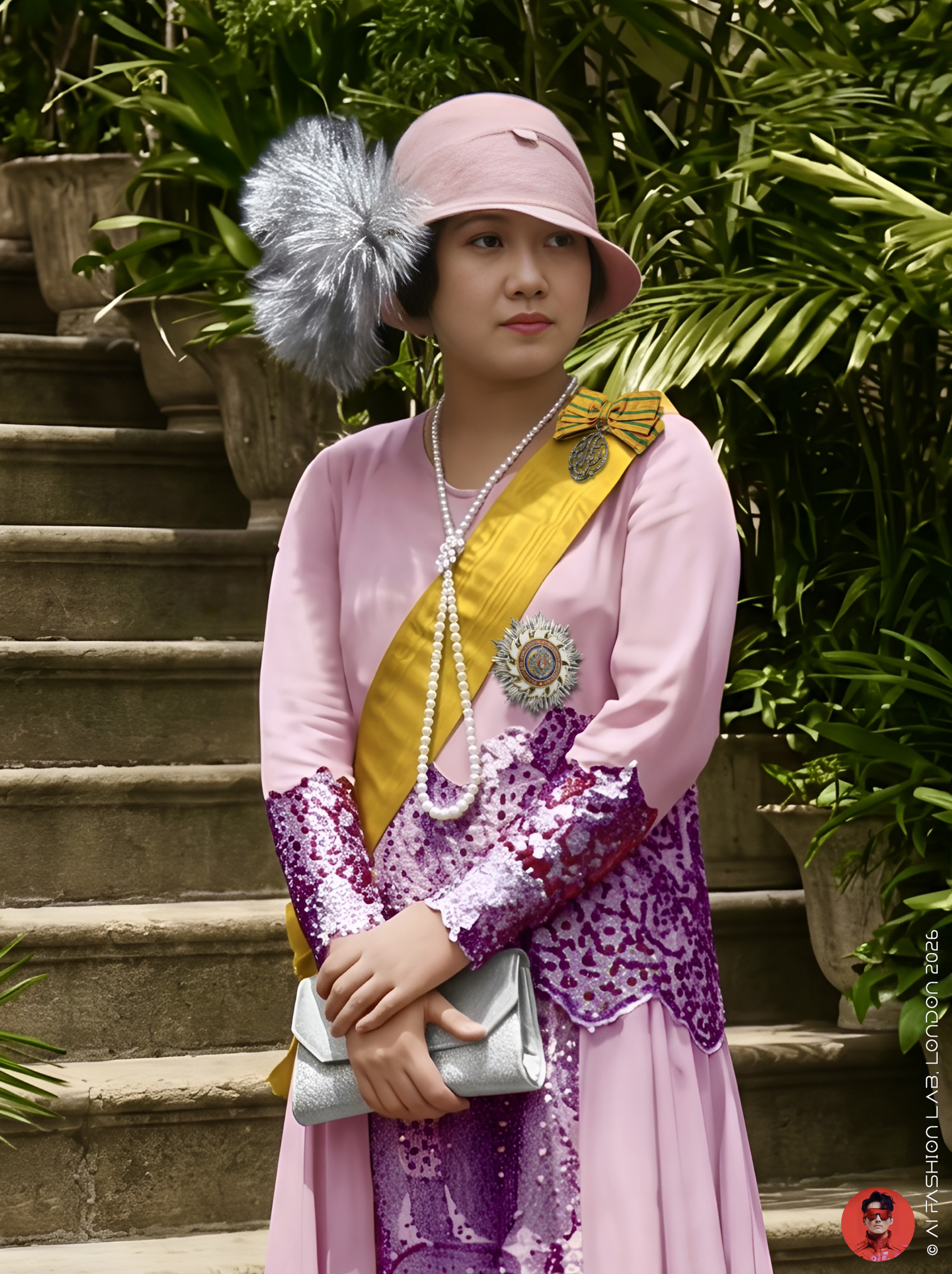
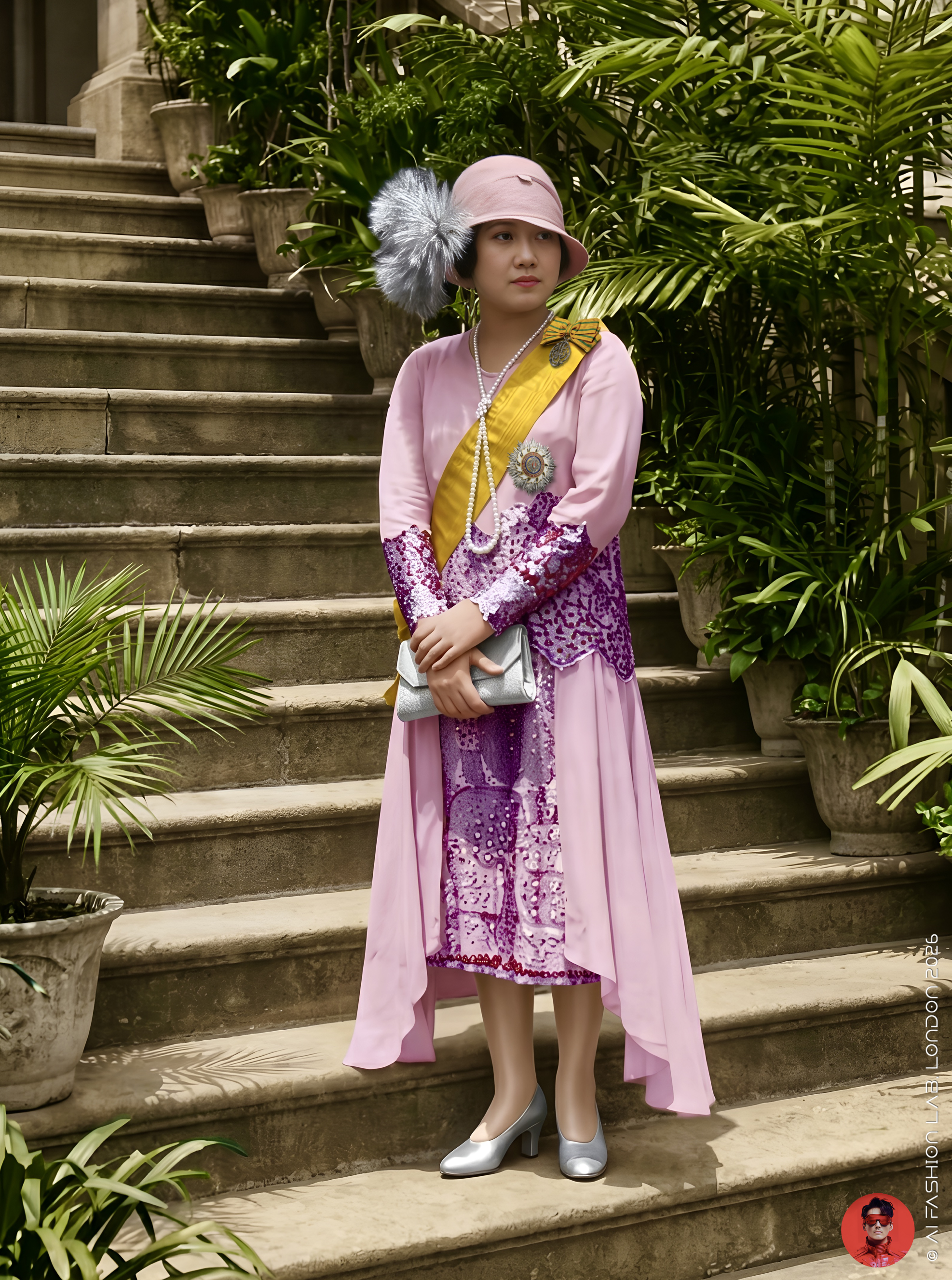
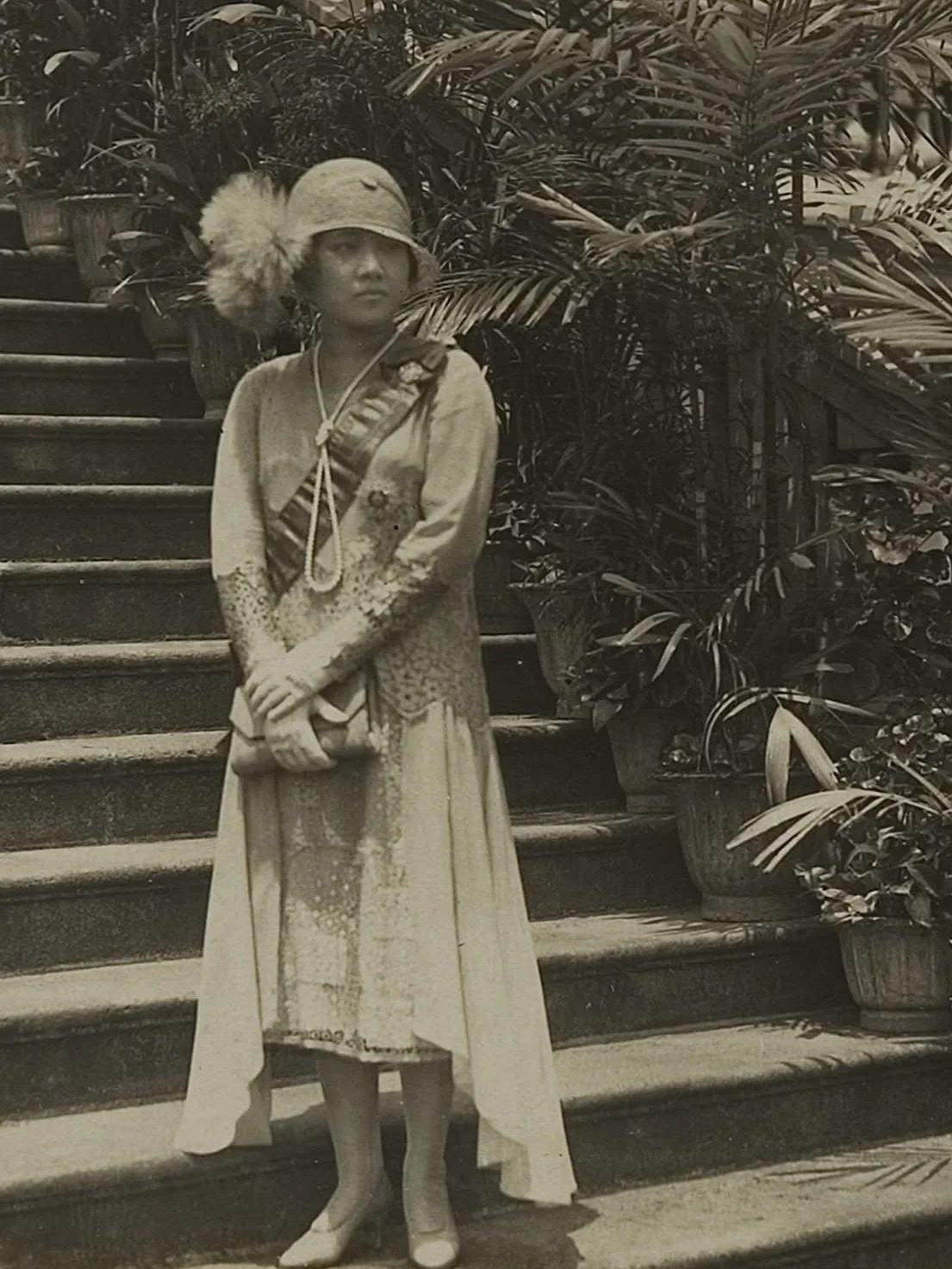
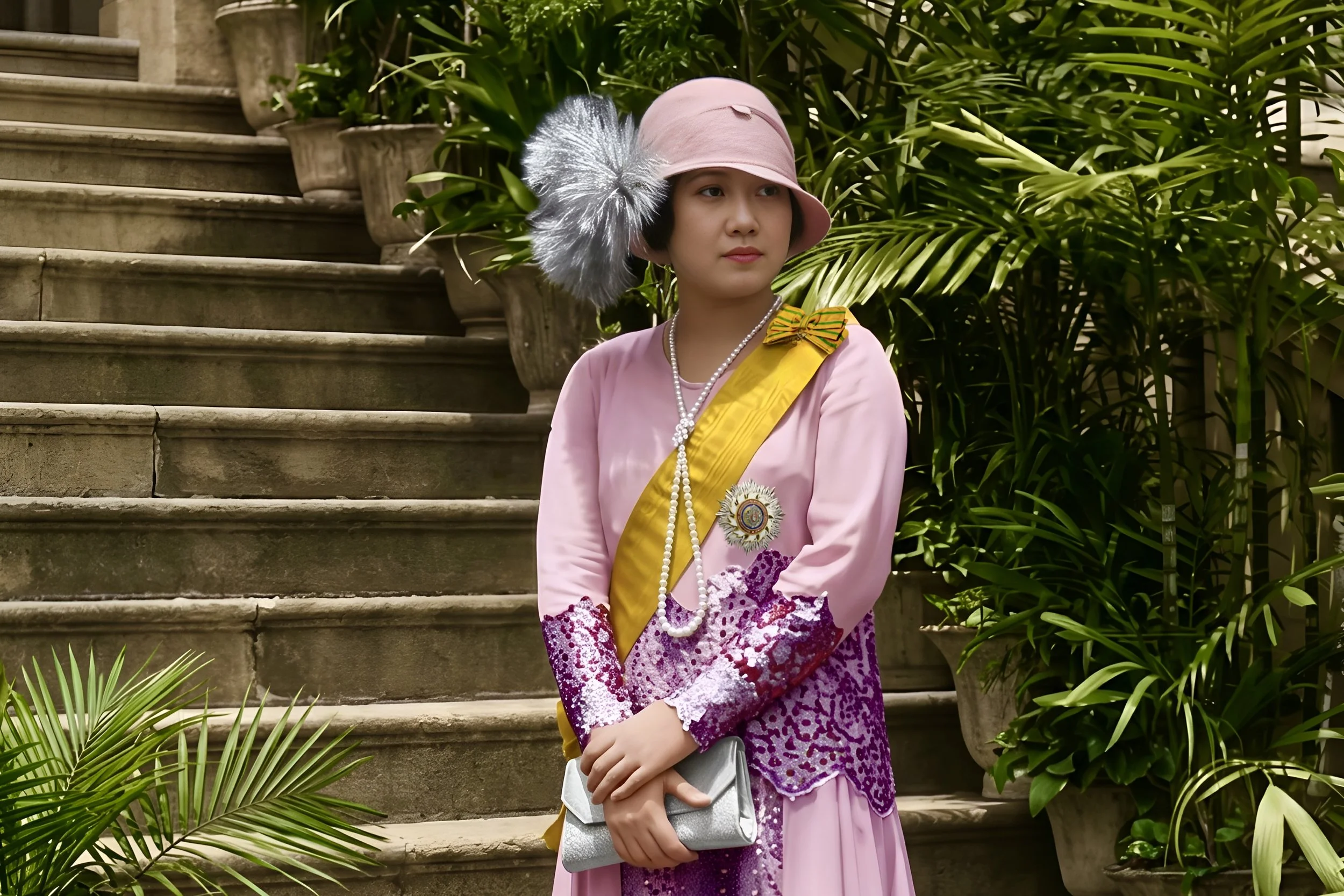
ภาพนี้เป็นพระฉายาลักษณ์ที่ได้รับการบูรณะและสร้างสรรค์จากภาพถ่ายขาวดำต้นฉบับด้วยเทคโนโลยี AI เพื่อรังสรรค์ให้เห็นรายละเอียดของฉลองพระองค์และเครื่องประดับของ สมเด็จพระนางเจ้ารำไพพรรณี พระบรมราชินี ในพระบาทสมเด็จพระปกเกล้าเจ้าอยู่หัว รัชกาลที่ ๗
ฉลองพระองค์แบบตะวันตกในภาพสะท้อนความงามของแฟชั่น อาร์ตเดโค (Art Deco) ในช่วงทศวรรษ ๑๙๒๐ อันเป็นยุคต้นแห่งรัชกาลที่ ๗ และเป็นช่วงเวลาที่ราชสำนักสยามรับอิทธิพลจากโลกตะวันตกอย่างเด่นชัด เครื่องแต่งกายสตรีในยุคนี้มักมีเส้นสายตรง เรียบหรู ความยาวประมาณกลางน่อง และเอวต่ำลงมาบริเวณสะโพก สอดคล้องกับรสนิยมสากลหลังสงครามโลกครั้งที่ ๑ ที่เน้นความคล่องตัว ความทันสมัย และภาพลักษณ์ของสตรีในโลกใหม่
สมเด็จพระนางเจ้ารำไพพรรณีทรงเป็นพระบรมราชินีที่อยู่ ณ จุดเปลี่ยนสำคัญของประวัติศาสตร์ไทยหลายประการ คือ
๑. ทรงเป็นพระบรมราชินีองค์สุดท้ายในระบอบสมบูรณาญาสิทธิราชย์ และเป็นพระบรมราชินีพระองค์แรกในระบอบรัฐธรรมนูญ ๒. ทรงเป็นพระราชินีคู่พระบารมีเพียงพระองค์เดียวของพระมหากษัตริย์ตามแบบราชสำนักสมัยใหม่ ๓. ทรงเป็นพระบรมราชินีในรัชกาลที่พระมหากษัตริย์ทรงสละราชสมบัติ ๔. ทรงผ่านชีวิตพลัดถิ่นทางการเมืองในต่างแดน ๕. ทรงเคยตกอยู่ในสถานะจำเลยทางการเมืองของรัฐบาล
พระนามเดิมของพระองค์คือ หม่อมเจ้ารำไพพรรณี สวัสดิวัตน์ ประสูติเมื่อวันอังคารที่ ๒๐ ธันวาคม พ.ศ. ๒๔๔๗ เป็นพระธิดาองค์เดียวในสมเด็จพระเจ้าบรมวงศ์เธอ กรมพระสวัสดิวัตนวิศิษฎ์ กับพระเจ้าวรวงศ์เธอ พระองค์เจ้าอาภาพรรณี เมื่อยังทรงพระเยาว์ ทรงได้รับการถวายตัวเข้าสู่ราชสำนักสมเด็จพระศรีพัชรินทราบรมราชินีนาถ และทรงศึกษาในระบบการศึกษาของเจ้านายฝ่ายใน ทั้งภาษาไทย เลข และภาษาอังกฤษ
ในราชสำนัก ทรงเป็นที่รู้จักกันในพระนามลำลองว่า “ท่านหญิงนา” ซึ่งพระเจ้าวรวงศ์เธอ พระองค์เจ้าจุลจักรพงษ์ทรงเล่าไว้ใน เกิดวังปารุสก์ ว่ามาจากเรื่องเล่าสมัยทรงพระเยาว์ เมื่อถูกถามว่าอยากเป็น “เต่าทอง” หรือ “เต่านา” พระองค์ทรงตอบว่าอยากเป็น “เต่านา” จึงกลายเป็นพระนามเรียกเล่นที่คนใกล้ชิดจดจำสืบมา
พระองค์ทรงอภิเษกสมรสกับสมเด็จพระเจ้าน้องยาเธอ เจ้าฟ้าประชาธิปกศักดิเดชน์ กรมขุนสุโขทัยธรรมราชา ใน พ.ศ. ๒๔๖๑ หลังจากทรงมีพระราชหฤทัยผูกพันกันมาแต่เดิม พระราชพิธีอภิเษกสมรสครั้งนั้นนับเป็นหนึ่งในพิธีสำคัญหลังการตรากฎมณเฑียรบาลว่าด้วยการอภิเษกสมรสแห่งเจ้านายในพระราชวงศ์ ทั้งสองพระองค์ประทับ ณ วังสุโขทัย สามเสน ซึ่งกลายเป็นเรือนหอและสถานที่สำคัญในพระชนม์ชีพของสมเด็จพระนางเจ้ารำไพพรรณี
เดิมทีพระบาทสมเด็จพระปกเกล้าเจ้าอยู่หัวแทบจะไม่ได้ทรงอยู่ในลำดับที่จะขึ้นครองราชย์ เนื่องจากทรงเป็นพระอนุชาพระองค์เล็กในบรรดาเจ้าฟ้าชายร่วมพระชนนีหลายพระองค์ แต่เมื่อพระเชษฐาหลายพระองค์สิ้นพระชนม์ก่อนเวลา ราชสมบัติจึงมาถึงพระองค์ หลังพระบาทสมเด็จพระมงกุฎเกล้าเจ้าอยู่หัวเสด็จสวรรคตใน พ.ศ. ๒๔๖๘ พระองค์ทรงรับอัญเชิญขึ้นครองราชย์ แม้จะมิได้ทรงเต็มพระราชหฤทัยนัก
เมื่อพระบาทสมเด็จพระปกเกล้าเจ้าอยู่หัวเสด็จขึ้นครองราชย์ สมเด็จพระนางเจ้ารำไพพรรณีจึงทรงดำรงฐานันดรศักดิ์เป็นพระบรมราชินีอย่างมิได้ทรงคาดหมายมาก่อน พระองค์ทรงปฏิบัติพระราชกรณียกิจในฐานะศูนย์รวมใจของสตรีไทย โดยเฉพาะด้านการศึกษา ศิลปวัฒนธรรม และงานสาธารณกุศลอย่างสง่างาม
หลังการเปลี่ยนแปลงการปกครอง พ.ศ. ๒๔๗๕ พระบาทสมเด็จพระปกเกล้าเจ้าอยู่หัวและสมเด็จพระนางเจ้ารำไพพรรณีเสด็จไปยุโรปใน พ.ศ. ๒๔๗๖ เพื่อทรงรักษาพระเนตรและเจริญพระราชไมตรี แต่ความขัดแย้งทางการเมืองกับรัฐบาลในกรุงเทพฯ ดำเนินต่อเนื่อง จนในวันที่ ๒ มีนาคม พ.ศ. ๒๔๗๗ พระบาทสมเด็จพระปกเกล้าเจ้าอยู่หัวทรงประกาศสละราชสมบัติขณะประทับอยู่ในประเทศอังกฤษ
ภายหลังการสละราชสมบัติ ทั้งสองพระองค์ประทับในชนบทใกล้กรุงลอนดอน ดำรงพระชนม์ชีพอย่างเรียบง่ายในฐานะคหบดีชนบท ทรงทำสวน เลี้ยงนก เลี้ยงปลา และยังทรงพบปะนักศึกษาไทยในอังกฤษเป็นครั้งคราว จนกระทั่งพระบาทสมเด็จพระปกเกล้าเจ้าอยู่หัวเสด็จสวรรคตอย่างฉับพลันเมื่อวันที่ ๓๐ พฤษภาคม พ.ศ. ๒๔๘๔ ณ คอมพ์ตัน เฮาส์ เวอร์จิเนียวอเตอร์ ประเทศอังกฤษ สมเด็จพระนางเจ้ารำไพพรรณีทรงจัดการพระบรมศพอย่างเรียบง่ายท่ามกลางภาวะสงครามโลกครั้งที่ ๒
ในช่วงสงคราม พระองค์ยังประทับอยู่ในอังกฤษ และทรงสนับสนุนขบวนการเสรีไทยในอังกฤษอย่างไม่เป็นทางการ ทั้งด้านกำลังใจและงานกาชาด จนได้รับการกล่าวถึงด้วยความเคารพว่าเป็น “อภิเสรีไทย”
เมื่อเสด็จนิวัตประเทศไทยใน พ.ศ. ๒๔๙๒ พร้อมพระบรมอัฐิของพระบาทสมเด็จพระปกเกล้าเจ้าอยู่หัว พระองค์ทรงกลับมาประทับในไทยอีกครั้ง ต่อมาได้ทรงสร้าง สวนบ้านแก้ว ที่จังหวัดจันทบุรี บนที่ดินกว่า ๖๘๗ ไร่ เพื่อเป็นไร่ตัวอย่างด้านเกษตรกรรม ทรงปลูกพืช เลี้ยงสัตว์ ทดลองการเกษตร และเผยแพร่ความรู้แก่ประชาชน
ที่สวนบ้านแก้ว พระองค์ยังทรงพัฒนาหัตถกรรม เสื่อจันทบูร ให้มีคุณภาพ สีสัน และรูปแบบร่วมสมัยยิ่งขึ้น โดยโปรดให้ตั้งโรงงานทอเสื่อ ผลิตทั้งเสื่อ กระเป๋า ถาด กล่อง และของใช้ต่าง ๆ ภายใต้เครื่องหมายการค้า “อุตสาหกรรมชาวบ้าน” พระองค์ทรงออกแบบและตรวจคุณภาพด้วยพระองค์เอง ทำให้หัตถกรรมพื้นบ้านของจันทบุรีได้รับการยกระดับทั้งด้านความงามและเศรษฐกิจชุมชน
พระราชกรณียกิจสำคัญอีกประการคือการอุปถัมภ์โรงพยาบาลจังหวัดจันทบุรี ซึ่งต่อมาได้รับพระราชทานนามว่า โรงพยาบาลพระปกเกล้าฯ เพื่อเป็นพระบรมราชานุสรณ์แด่พระบาทสมเด็จพระปกเกล้าเจ้าอยู่หัว
ใน พ.ศ. ๒๕๑๑ พระองค์ทรงขายสวนบ้านแก้วให้แก่กระทรวงศึกษาธิการในราคาย่อมเยา เพื่อใช้เป็นสถานศึกษา ก่อนเสด็จกลับมาประทับที่วังสุโขทัยเป็นการถาวร และยังทรงดูแลกิจการทอเสื่อในขนาดเล็กต่อไป
สมเด็จพระนางเจ้ารำไพพรรณี พระบรมราชินีในรัชกาลที่ ๗ เสด็จสวรรคตเมื่อวันที่ ๒๒ พฤษภาคม พ.ศ. ๒๕๒๗ ณ พระตำหนักวังสุโขทัย สิริพระชนมพรรษา ๗๙ พรรษา พระชนม์ชีพของพระองค์จึงเป็นทั้งประวัติของพระบรมราชินีผู้ผ่านรอยต่อของระบอบการปกครอง การพลัดถิ่น สงคราม และการกลับคืนสู่แผ่นดิน พร้อมทั้งทรงทิ้งมรดกสำคัญด้านศิลปวัฒนธรรม หัตถกรรม การเกษตร และงานสาธารณสุขไว้แก่สังคมไทยอย่างยั่งยืน
ในมิติของแฟชั่น พระฉายาลักษณ์นี้จึงมิได้สะท้อนเพียงความงดงามของฉลองพระองค์อาร์ตเดโคในทศวรรษ ๑๙๒๐ เท่านั้น หากยังเป็นภาพแทนของพระราชินีสยามในยุคเปลี่ยนผ่าน ผู้ทรงเชื่อมโยงความสง่างามแบบราชสำนักเข้ากับความทันสมัยของโลกตะวันตก และต่อมาทรงแปรพระสถานะจากพระบรมราชินีแห่งราชสำนักสมัยใหม่ สู่สตรีผู้ทำงานเพื่อชุมชนและประชาชนอย่างแท้จริง.
________________
Queen Rambai Barni and Art Deco Fashion in the 1920s
This image is an AI-restored and creatively reconstructed royal photograph based on an original black-and-white photograph. It reimagines the dress and jewellery of Queen Rambai Barni, consort of King Prajadhipok, Rama VII.
Her Western-style dress reflects the elegance of Art Deco fashion in the 1920s, the early years of Rama VII’s reign, when the Siamese court increasingly embraced Western visual culture. Women’s fashion of this period was marked by a straighter silhouette, refined simplicity, calf-length skirts, and a lowered waistline that sat around the hips. These elements reflected the international post-World War I style, which favoured modernity, movement, and a new image of womanhood.
Queen Rambai Barni stood at several important turning points in Thai history:
1. She was the last Queen Consort of the absolute monarchy and the first Queen Consort of the constitutional era.
2. She was the sole Queen Consort of the King, in the modern Western sense.
3. She was Queen Consort during the reign in which the King abdicated the throne.
4. She experienced political exile abroad.
5. She was the only Thai Queen Consort to become a defendant in a case brought by the government.
Her original name was Mom Chao Rambai Barni Svastivatana. She was born on 20 December 1904, the only daughter of Prince Svasti Sobhana, Prince Svastivatana Visishtha, and Princess Abhabanni. As a young girl, she was presented to the household of Queen Saovabha Phongsri, as was customary for royal children of the period, and received her education within the royal court, studying Thai, arithmetic, and English.
Within the court, she was affectionately known as “Than Ying Na”. Prince Chula Chakrabongse later recalled in Born in the Paruskavan Palace that the nickname came from a childhood story: when asked whether she would rather be a golden turtle or a field turtle, the young princess replied that she wanted to be a field turtle. From then on, the name “Than Ying Na” remained among those close to her.
In 1918, she married Prince Prajadhipok Sakdidej, Prince of Sukhothai, who later became King Rama VII. Their marriage took place after a long-standing personal attachment and was one of the significant royal marriages following the introduction of palace regulations concerning marriage within the royal family. The couple lived at Sukhothai Palacein Samsen, which became both their marital home and one of the most meaningful places in Queen Rambai Barni’s life.
King Prajadhipok had not originally been expected to ascend the throne. He was the youngest of several full brothers, but after the deaths of his elder brothers, the succession eventually passed to him. When King Vajiravudh, Rama VI, died in 1925, Prince Prajadhipok was invited to ascend the throne, although he was initially reluctant to accept the position.
Queen Rambai Barni therefore became Queen Consort unexpectedly. She had married the King’s youngest brother without anticipating that she would one day assume the duties of Queen. Once in that role, she carried out her royal responsibilities with grace, particularly in relation to women’s education, culture, and public welfare.
After the Siamese Revolution of 1932, King Prajadhipok and Queen Rambai Barni travelled to Europe in 1933 for medical treatment and diplomatic purposes. Political disagreements with the government in Bangkok continued, and on 2 March 1935, while still in England, King Prajadhipok formally abdicated.
After the abdication, the couple lived quietly in the English countryside near London. They adopted the life of country householders, gardening, keeping birds and fish, visiting historical sites, and occasionally meeting Thai students in Britain. King Prajadhipok died suddenly on 30 May 1941 at Compton House, Virginia Water, England. Queen Rambai Barni arranged his cremation privately and simply during the difficult conditions of World War II.
During the war, she remained in England and gave informal support to the Free Thai Movement in Britain, offering encouragement and assistance through Red Cross activities. She was later respectfully referred to as an “honorary Free Thai” figure.
In 1949, Queen Rambai Barni returned to Thailand with the ashes of King Prajadhipok. She later established Suan Ban Kaew in Chanthaburi on more than 687 rai of land, developing it as a model agricultural estate. There, she cultivated crops, raised animals, experimented with farming methods, and shared practical knowledge with local communities.
At Suan Ban Kaew, she also developed the local craft of Chanthaburi reed mat weaving. She improved dyeing methods, expanded the colour range, and encouraged the production of mats, handbags, trays, boxes, and other household objects under the trademark “Utsahakam Chao Ban”, or “Village Industry”. She personally designed and inspected many of the products, helping to raise both the aesthetic and economic value of this local craft.
Another important royal contribution was her support for the provincial hospital in Chanthaburi, which was later named Prapokklao Hospital in memory of King Prajadhipok.
In 1968, she sold Suan Ban Kaew to the Ministry of Education at a modest price so that the land could be used for educational purposes. She then returned permanently to Sukhothai Palace, while continuing reed-mat production on a smaller scale.
Queen Rambai Barni passed away on 22 May 1984 at Sukhothai Palace, aged 79. Her life encompassed monarchy, constitutional change, exile, war, return, public service, agriculture, craft development, and healthcare. She left an enduring legacy in Thai cultural history.
In terms of fashion history, this royal photograph is therefore more than an image of Art Deco elegance in the 1920s. It represents a Siamese Queen at the threshold of modernity, combining royal refinement with Western modern fashion, before later transforming her role from Queen Consort of a modernising court into a woman devoted to community, craft, and public service.
________________
อ่านเพิ่มเติมพร้อมทั้งบทความภาษาอังกฤษได้ที่ :
เรียนเชิญกด Subscribe ได้ที่ลิงก์นี้ครับ เพื่อร่วมติดตามงานสร้างสรรค์ต้นฉบับ งานวิจัยประวัติศาสตร์แฟชั่น และผลงานอนุรักษ์มรดกวัฒนธรรมด้วยเทคโนโลยี AI ของ AI Fashion Lab, London ซึ่งมุ่งตีความอดีตผ่านมิติใหม่ของการบูรณะภาพ การสร้างสรรค์ภาพ และการเล่าเรื่องด้วยศิลปะเชิงดิจิทัล https://www.facebook.com/aifashionlab/subscribe/
#aifashionlab #AI #aiartist #aiart #aifashion #aifashiondesign #aifashionstyling #aifashiondesigner #fashion #fashionhistory #historyoffashion #fashionstyling #fashionphotography #digitalfashion #digitalfashiondesign #digitalcostumedesign #digitaldesign #digitalaiart #ThaiFashionHistory #ThaiFashionAI #thailand #UNESCO