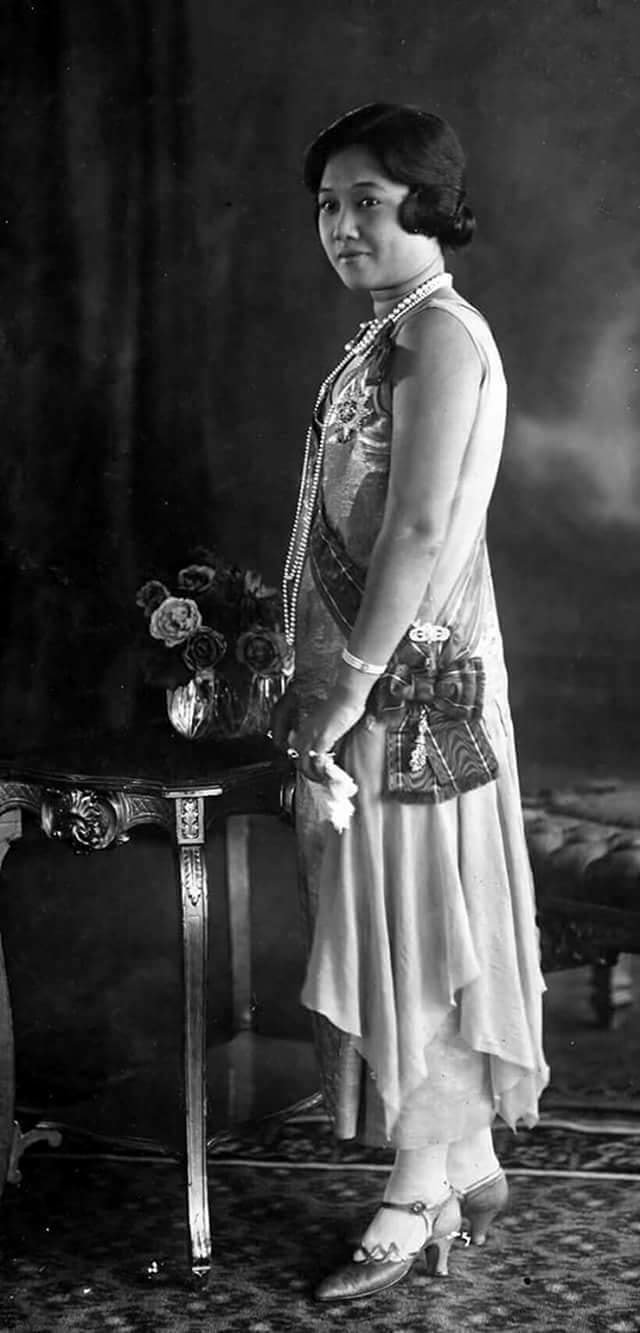
สมเด็จพระนางเจ้ารำไพพรรณี พระบรมราชินี และแฟชั่นแบบ Art Deco ในทศวรรษ 1920 (ตอนที่ ๒)
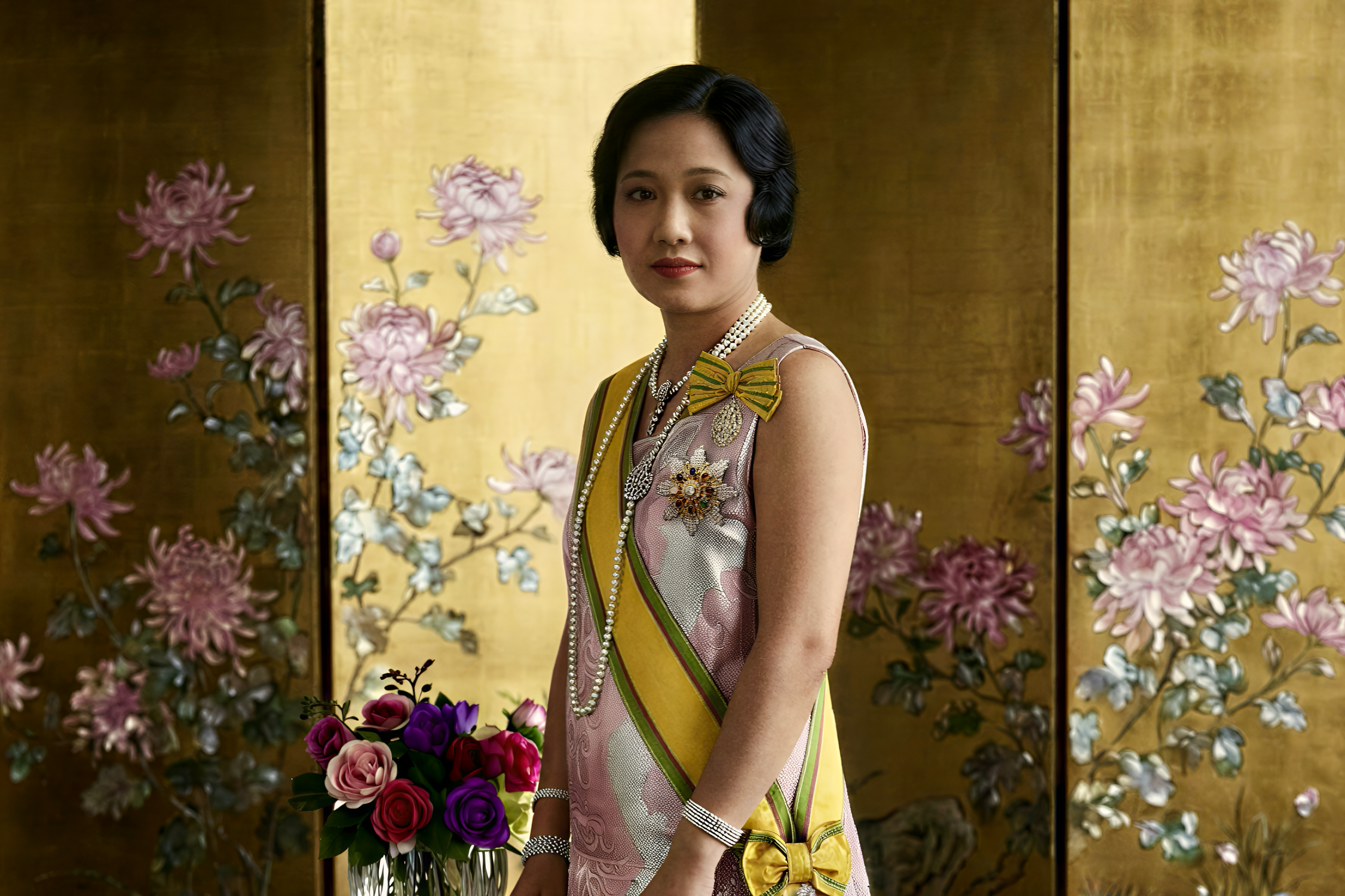
สมเด็จพระนางเจ้ารำไพพรรณี พระบรมราชินี และแฟชั่นแบบ Art Deco ในทศวรรษ 1920 (ตอนที่ ๒)
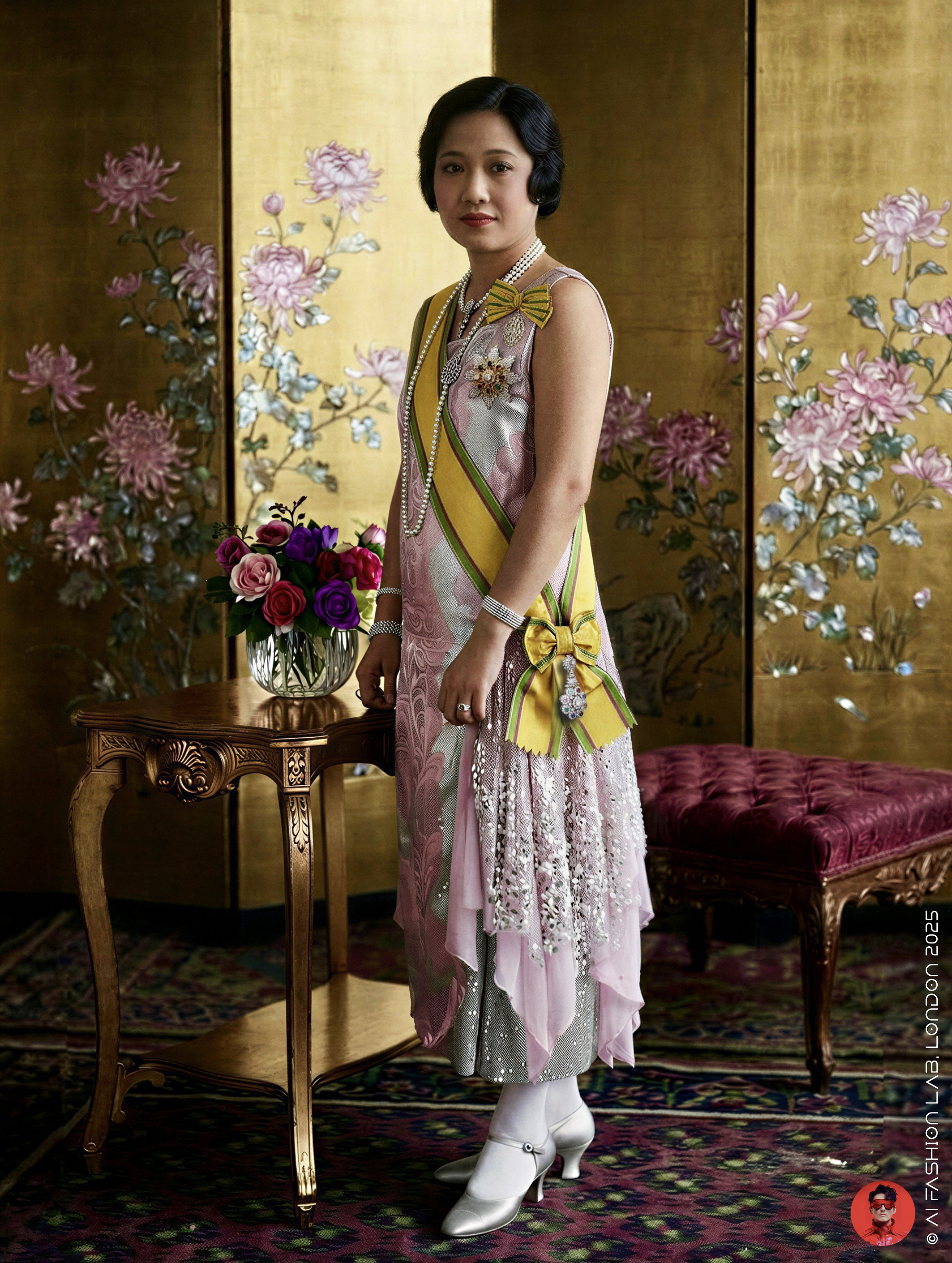
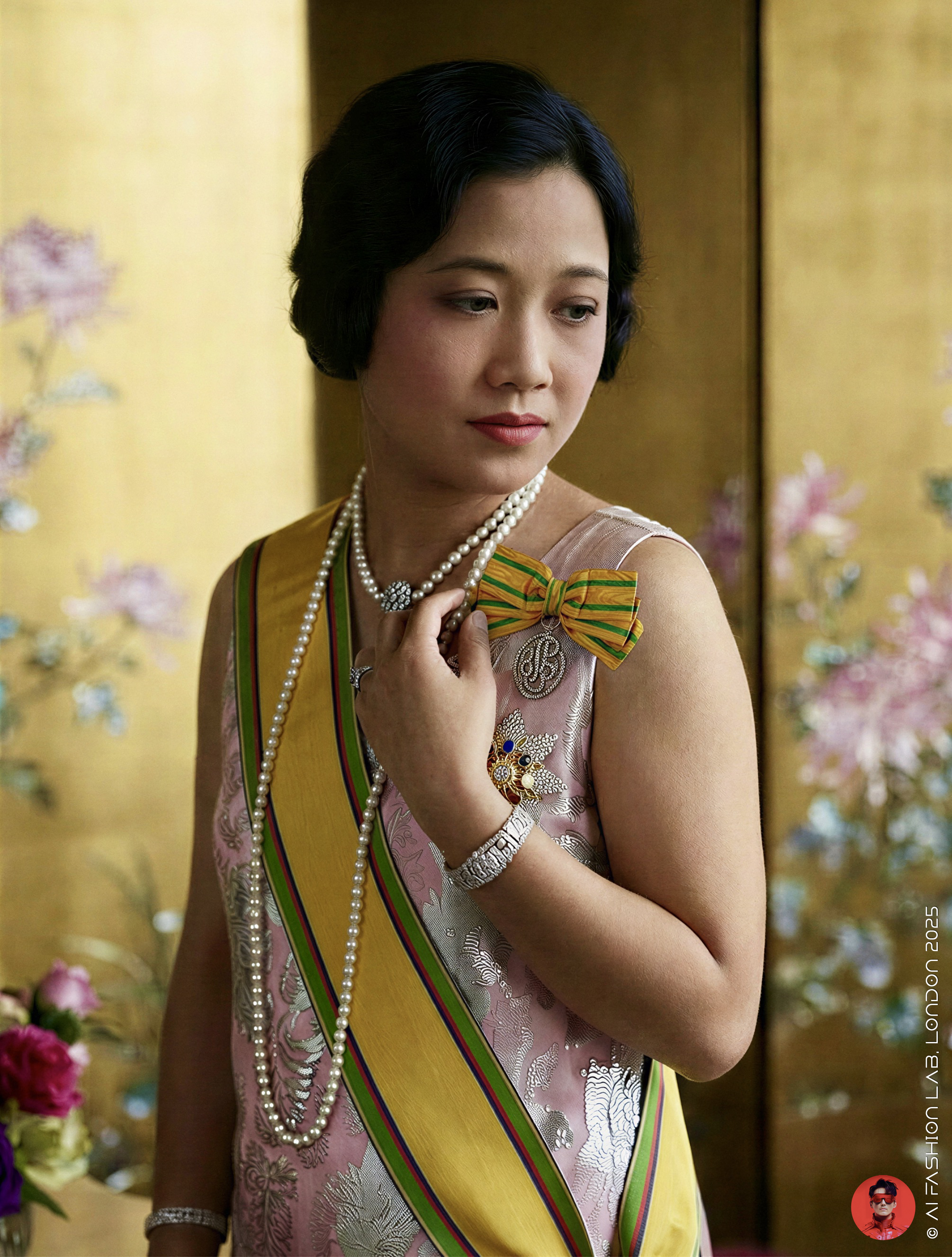
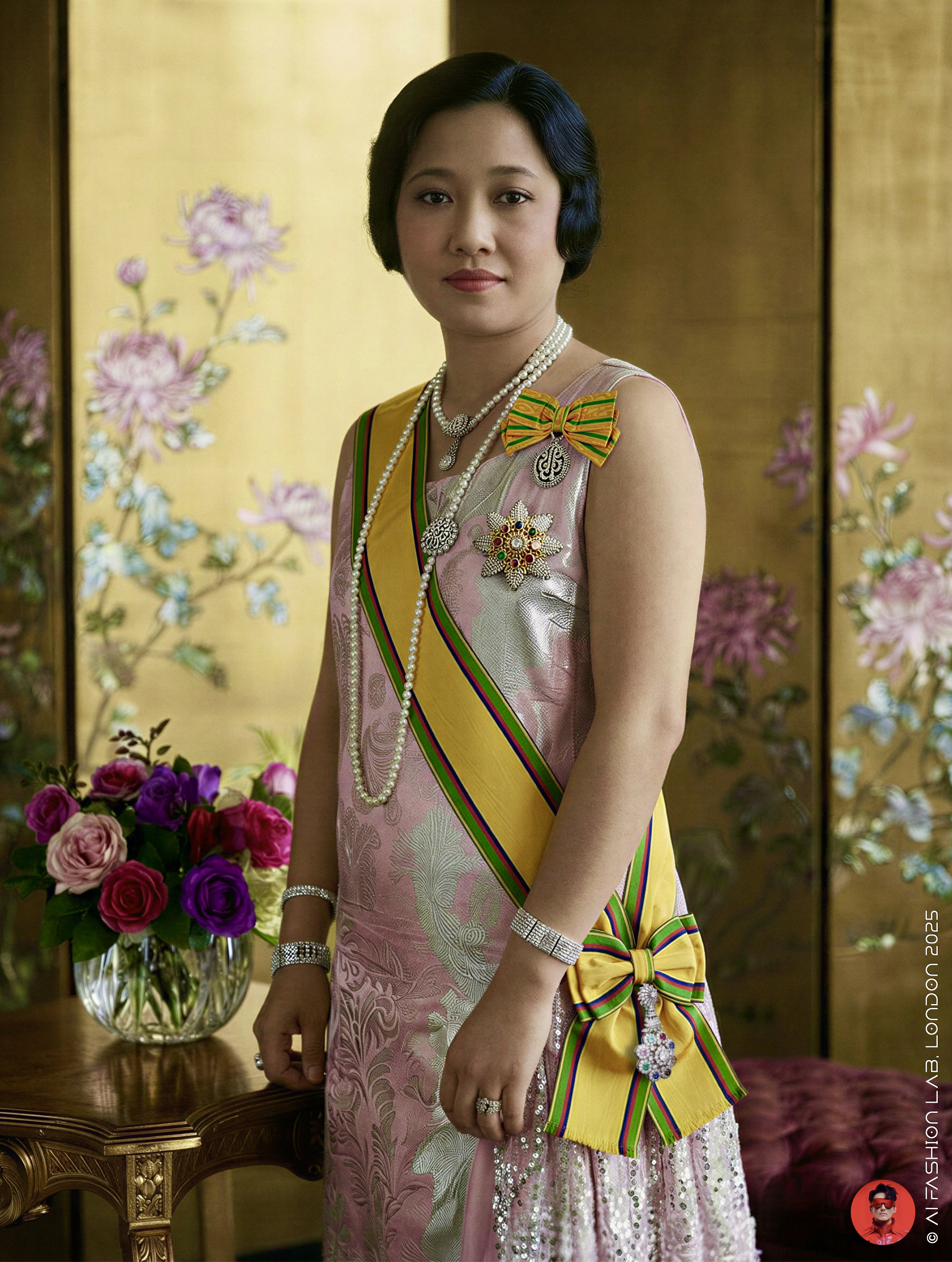
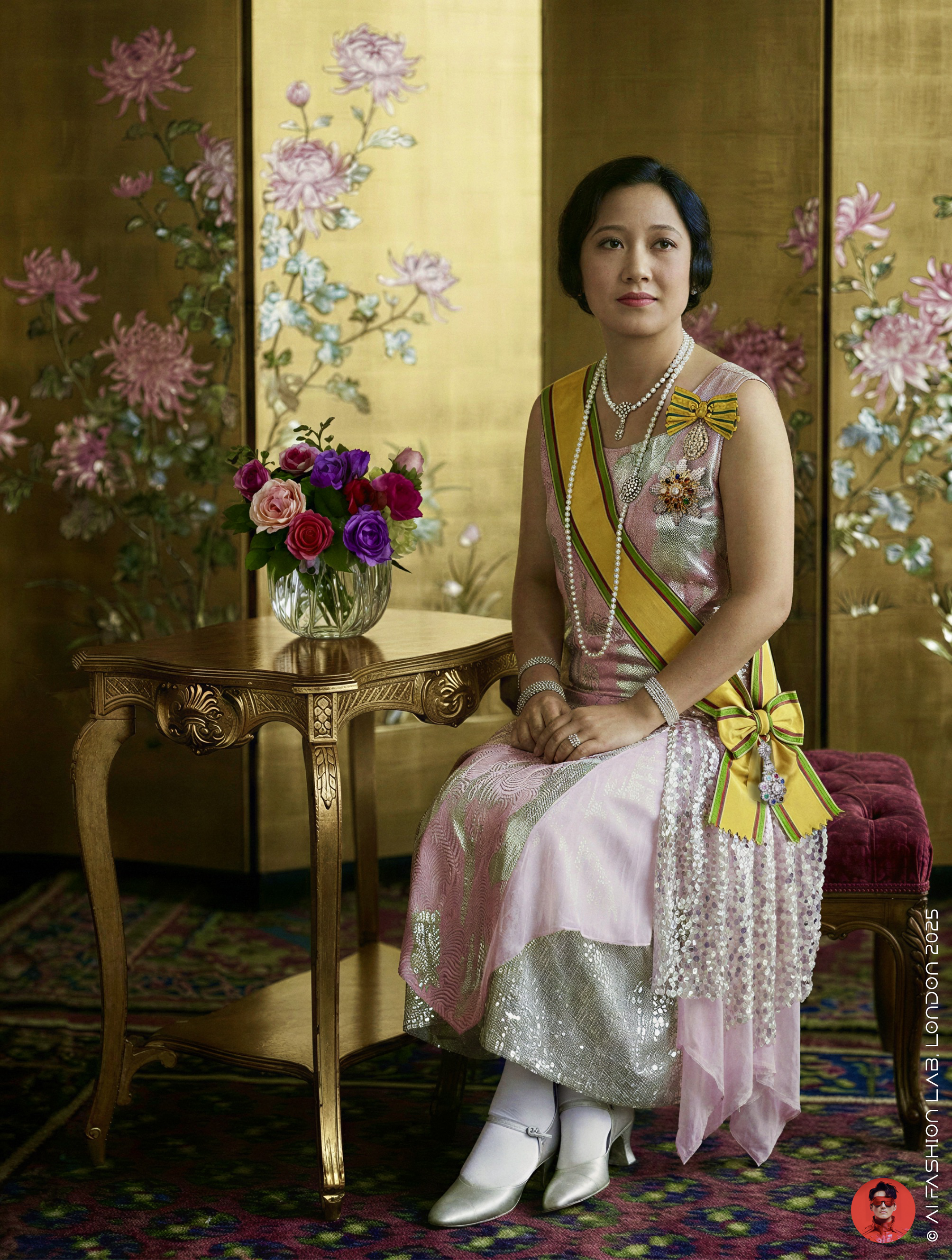
พระฉายาลักษณ์ที่ปรากฏนี้ เป็นผลงานการบูรณะและสร้างสรรค์จากภาพถ่ายขาวดำต้นฉบับด้วยเทคโนโลยี AI โดยมีจุดมุ่งหมายเพื่อการศึกษา วิเคราะห์ และทำความเข้าใจประวัติศาสตร์แฟชั่นในบริบทราชสำนักสยามช่วงต้นคริสต์ศตวรรษที่ 20 ภาพดังกล่าวถ่ายทอดฉลองพระองค์ของ สมเด็จพระนางเจ้ารำไพพรรณี พระบรมราชินีในพระบาทสมเด็จพระปกเกล้าเจ้าอยู่หัว (รัชกาลที่ ๗) ซึ่งสะท้อน “การเปลี่ยนผ่านสู่โลกสมัยใหม่” ของสยามได้อย่างชัดเจนที่สุด ทั้งในเชิงวัฒนธรรม และแฟชั่น
ทศวรรษ 1920 เป็นช่วงหัวเลี้ยวหัวต่อของประวัติศาสตร์โลกหลังสงครามโลกครั้งที่ 1 หลายประเทศเข้าสู่ยุคของความทันสมัย การขยายตัวของวัฒนธรรมเมือง การเปลี่ยนแปลงบทบาทสตรี และการปฏิวัติทางศิลปะและการออกแบบ หนึ่งในกระแสสำคัญที่สุดคือ ศิลปะแบบอาร์ตเดโค (Art Deco) ซึ่งเน้นเส้นสายเรขาคณิต ความเรียบคม ความหรูหราที่ควบคุมได้ และการเฉลิมฉลองความก้าวหน้าทางอุตสาหกรรมและเทคโนโลยี
ราชสำนักสยามในช่วงต้นรัชกาลที่ ๗ มิได้อยู่นอกกระแสนี้ หากแต่เป็นส่วนหนึ่งของโลกสากลที่กำลังเปลี่ยนแปลง พระมหากษัตริย์และพระบรมวงศานุวงศ์ทรงมีพระราชไมตรีกับราชสำนักยุโรป เสด็จประพาสและประทับรักษาพระองค์ในต่างประเทศ การรับอิทธิพลตะวันตกจึงมิใช่เพียงเรื่องการเมืองการปกครอง หากยังรวมถึงรสนิยมทางศิลปะ สถาปัตยกรรม และการแต่งกาย
ฉลองพระองค์ที่ปรากฏในภาพสะท้อนลักษณะสำคัญของแฟชั่นสตรีตะวันตกในยุคอาร์ตเดโคอย่างชัดเจน ชุดราตรีมีลักษณะทรงตรง (straight silhouette) ความยาวระดับกลางน่อง เอวต่ำลงมาถึงตะโพก ซึ่งเป็นเอกลักษณ์ของแฟชั่นทศวรรษ 1920 อันแตกต่างอย่างสิ้นเชิงจากแฟชั่นยุคก่อนสงครามโลกครั้งที่ 1 ที่เน้นเอวคอด กระโปรงยาวลากพื้น และโครงสร้างที่ซับซ้อน ชุดลักษณะนี้สะท้อนแนวคิดใหม่เกี่ยวกับร่างกายสตรี ความคล่องตัว และอิสรภาพในการเคลื่อนไหว
การออกแบบเสื้อแขนกุดและคอเปิดต่ำอย่างพอเหมาะ เป็นสัญลักษณ์ของความกล้าในการท้าทายขนบเดิม แต่ยังคงความสุภาพสง่างาม เครื่องประดับไข่มุกที่สวมเป็นชั้นยาวหลายเส้นเป็นแฟชั่นยอดนิยมของยุคอาร์ตเดโค ผ้าไหมที่ใช้มีความเงางามแบบโลหะ (metallic sheen) ซึ่งสอดคล้องกับรสนิยม Art Deco ที่หลงใหลความแวววาวของยุคอุตสาหกรรม
ฉลองพระองค์แบบ Art Deco พร้อมทั้งการประดับด้วย ดาราแห่งเครื่องราชอิสริยาภรณ์นพรัตนราชวราภรณ์ และ เหรียญรัตนาภรณ์ รัชกาลที่ ๗ ชั้นที่ ๑ ของสมเด็จพระนางเจ้ารำไพพรรณี แสดงให้เห็นว่าแฟชั่นสามารถทำหน้าที่เป็น ภาษาทางการเมืองและวัฒนธรรม ได้อย่างทรงพลัง
๑. เครื่องราชอิสริยาภรณ์อันเป็นโบราณมงคลนพรัตนราชวราภรณ์ (อังกฤษ: The Ancient and Auspicious Order of the Nine Gems) มีอักษรย่อว่า น.ร. เป็นเครื่องราชอิสริยาภรณ์ที่มีความเป็นมาสืบแต่ครั้งกรุงศรีอยุธยา ต่อมา พระบาทสมเด็จพระจอมเกล้าเจ้าอยู่หัว ทรงพระกรุณาโปรดเกล้าฯ ให้สร้างดารานพรัตนขึ้นสำหรับใช้ประดับที่เสื้อ ซึ่งทรงเรียกว่า "เครื่องประดับสำหรับยศ" นอกจากนี้ ทรงพระกรุณาโปรดเกล้าฯ ให้สร้างแหวนนพรัตนสำหรับพระราชทานแก่พระราชวงศ์ฝ่ายหน้า และฝ่ายใน ตลอดจนข้าราชการชั้นผู้ใหญ่ซึ่งเป็นพุทธมามกะ ต่อมา ในรัชสมัยพระบาทสมเด็จพระจุลจอมเกล้าเจ้าอยู่หัว ทรงพระกรุณาโปรดเกล้าฯ ให้สร้างดวงตรามหานพรัตน สำหรับห้อยสายสะพายขึ้นเป็นครั้งแรกของเครื่องราชอิสริยาภรณ์ไทย
เครื่องราชอิสริยาภรณ์ตระกูลนี้ มีเฉพาะชั้นสายสะพายชั้นเดียว ทั้งนี้ ผู้รับพระราชทานต้องเป็นพุทธมามกะ และจะประดับเครื่องราชอิสริยาภรณ์นี้ในงานมงคล หรืองานที่มีหมายกำหนดการระบุไว้เท่านั้น
เครื่องราชอิสริยาภรณ์อันเป็นโบราณมงคลนพรัตนราชวราภรณ์ จัดเป็นเครื่องราชอิสริยาภรณ์ที่มีลำดับเกียรติเป็นลำดับที่ ๓ รองจากเครื่องราชอิสริยาภรณ์อันเป็นมงคลยิ่งราชมิตราภรณ์และเครื่องขัตติยราชอิสริยาภรณ์อันมีเกียรติคุณรุ่งเรืองยิ่งมหาจักรีบรมราชวงศ์ และเป็นเครื่องราชอิสริยาภรณ์ชั้นสูงสุดที่สามัญชนจะได้รับพระราชทาน
๒. เหรียญรัตนาภรณ์รัชกาลที่ ๗ (ป.ป.ร.) เป็นเครื่องราชอิสริยาภรณ์ที่พระบาทสมเด็จพระปกเกล้าเจ้าอยู่หัว (รัชกาลที่ ๗) ทรงสร้างขึ้นในปี พ.ศ. ๒๔๖๙ ลักษณะเป็นเหรียญวงรีมีอักษรพระปรมาภิไธยย่อ "ป.ป.ร." พร้อมประดับด้วยเพชรและทองคำ สลับชั้นตามลำดับ โดยมี ๕ ชั้น (ป.ป.ร. ๑ ถึง ป.ป.ร. ๕) มีการมอบเป็นบำเหน็จความชอบในราชสำนักแก่พระบรมวงศานุวงศ์และข้าราชการชั้นผู้ใหญ่ และมีแพรแถบสีเหลืองริ้วเขียวเป็นเอกลักษณ์
______________
Queen Rambai Barni and Art Deco Fashion in the 1920s (Part II)
The portrait presented here is an AI-assisted restoration and creative interpretation derived from an original black-and-white photograph. Its purpose is scholarly: to support the study, analysis, and understanding of fashion history within the context of the Siamese royal court in the early twentieth century. The image depicts Queen Rambai Barni, consort of King Prajadhipok, and offers one of the clearest visual expressions of Siam’s transition into modernity—culturally and sartorially.
The 1920s and the Emergence of Art Deco
The 1920s marked a global turning point in the aftermath of World War I. Nations entered an era defined by modernity: expanding urban life, shifting roles for women, and revolutions in art and design. Among the most influential movements was Art Deco, characterised by geometric linework, crisp simplicity, controlled luxury, and a celebration of industrial and technological progress.
The Siamese court at the beginning of King Prajadhipok’s reign was very much part of this international current. Far from being isolated, the monarchy and royal family maintained close diplomatic and cultural ties with European courts. Overseas travel and extended stays abroad meant that Western influences were absorbed not only in governance and diplomacy, but also in artistic taste, architecture, and dress.
Art Deco Silhouette and the Modern Female Body
The gown shown in the portrait clearly reflects key features of Western women’s fashion during the Art Deco era. The evening dress adopts a straight silhouette, falling to mid-calf length, with the waistline lowered to the hips—an unmistakable hallmark of 1920s fashion. This marked a radical departure from pre–World War I styles that emphasised tightly cinched waists, floor-length skirts, and complex internal structures.
Such a silhouette embodied new ideas about the female body, prioritising mobility, ease of movement, and personal freedom. The sleeveless cut and modestly lowered neckline subtly challenged traditional conventions while maintaining dignity and refinement appropriate to royal status.
Long, layered pearl necklaces—an iconic accessory of the Art Deco period—further situate the ensemble firmly within its era. The silk fabric, rendered with a metallic sheen, resonates with Art Deco’s fascination with lustre, surface brilliance, and the aesthetics of the machine age.
Fashion as Political and Cultural Language
The Art Deco gown is complemented by the display of the Star of the Ancient and Auspicious Order of the Nine Gems and the Order of the Royal Cypher of King Prajadhipok (Rama VII), First Class, worn by Queen Rambai Barni. Together, these elements demonstrate how fashion can function as a powerful political and cultural language.
1. The Ancient and Auspicious Order of the Nine Gems
(Thai: เครื่องราชอิสริยาภรณ์อันเป็นโบราณมงคลนพรัตนราชวราภรณ์; English: The Ancient and Auspicious Order of the Nine Gems, abbreviation N.R.)
This order traces its origins to the Ayutthaya period. During the reign of King Mongkut (Rama IV), the star insignia—referred to as a “decoration of rank”—was formally created for wear on court dress. Rings bearing the Nine Gems were also instituted for presentation to members of the royal family and senior Buddhist officials. Under King Chulalongkorn (Rama V), the grand badge of the Order, worn suspended from a sash, was introduced for the first time.
The Order has only one class and may be conferred exclusively upon Buddhists. It is worn solely on occasions explicitly designated by royal protocol. In the hierarchy of Thai orders, it ranks third, following the Most Auspicious Order of the Rajamitrabhorn and the Most Illustrious Order of the Royal House of Chakri, making it the highest order that may be bestowed upon a commoner.
2. The Order of the Royal Cypher of King Prajadhipok (Rama VII)
(Thai: เหรียญรัตนาภรณ์ รัชกาลที่ ๗, abbreviation P.P.R.)
Established in 1926, this order takes the form of an oval medallion bearing the royal cypher “ป.ป.ร.” (P.P.R.), set with diamonds and gold. It is divided into five classes (P.P.R. I–V) and was awarded as a mark of royal favour to members of the royal family and senior court officials. Its distinctive ribbon is yellow with green stripes.
Conclusion
Seen together, the Art Deco gown and the royal insignia encapsulate a moment when Siam consciously positioned itself within a global modernity. Through dress, Queen Rambai Barni projected an image of a monarchy that was at once traditional and forward-looking—rooted in Siamese royal symbolism, yet fluent in the visual language of the modern world.
______________
เรียนเชิญกด Subscribe ได้ที่ลิงก์นี้ครับ เพื่อร่วมติดตามงานสร้างสรรค์ต้นฉบับ งานวิจัยประวัติศาสตร์แฟชั่น และผลงานอนุรักษ์มรดกวัฒนธรรมด้วยเทคโนโลยี AI ของ AI Fashion Lab, London ซึ่งมุ่งตีความอดีตผ่านมิติใหม่ของการบูรณะภาพ การสร้างสรรค์ภาพ และการเล่าเรื่องด้วยศิลปะเชิงดิจิทัล 🔗 https://www.facebook.com/aifashionlab/subscribe/
#aifashionlab #AI #aiartist #aiart #aifashion #aifashiondesign #aifashionstyling #aifashiondesigner #fashion #fashionhistory #historyoffashion #fashionstyling #fashionphotography #digitalfashion #digitalfashiondesign #digitalcostumedesign #digitaldesign #digitalaiart #ThaiFashionHistory #ThaiFashionAI #thailand #UNESCO