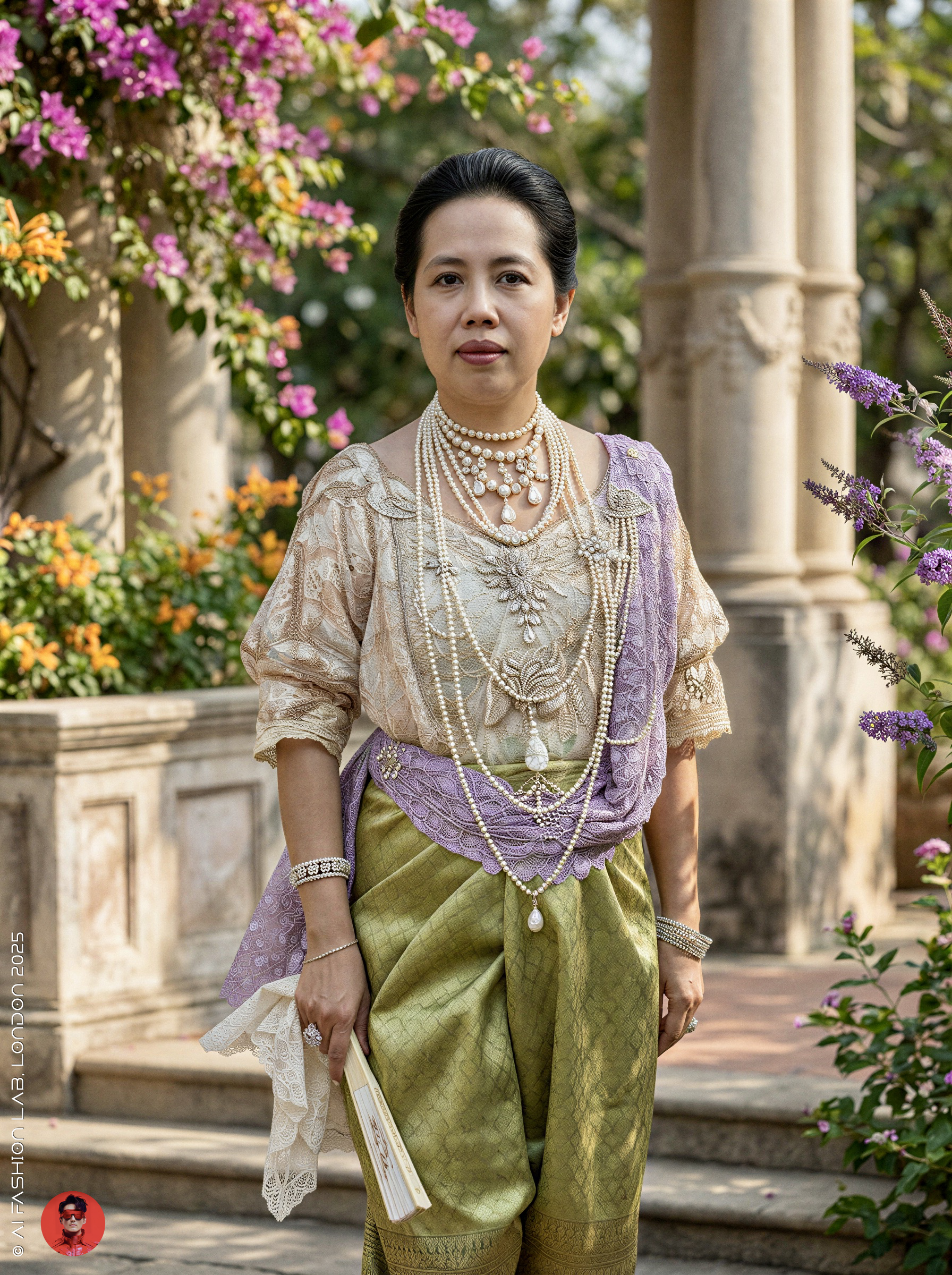
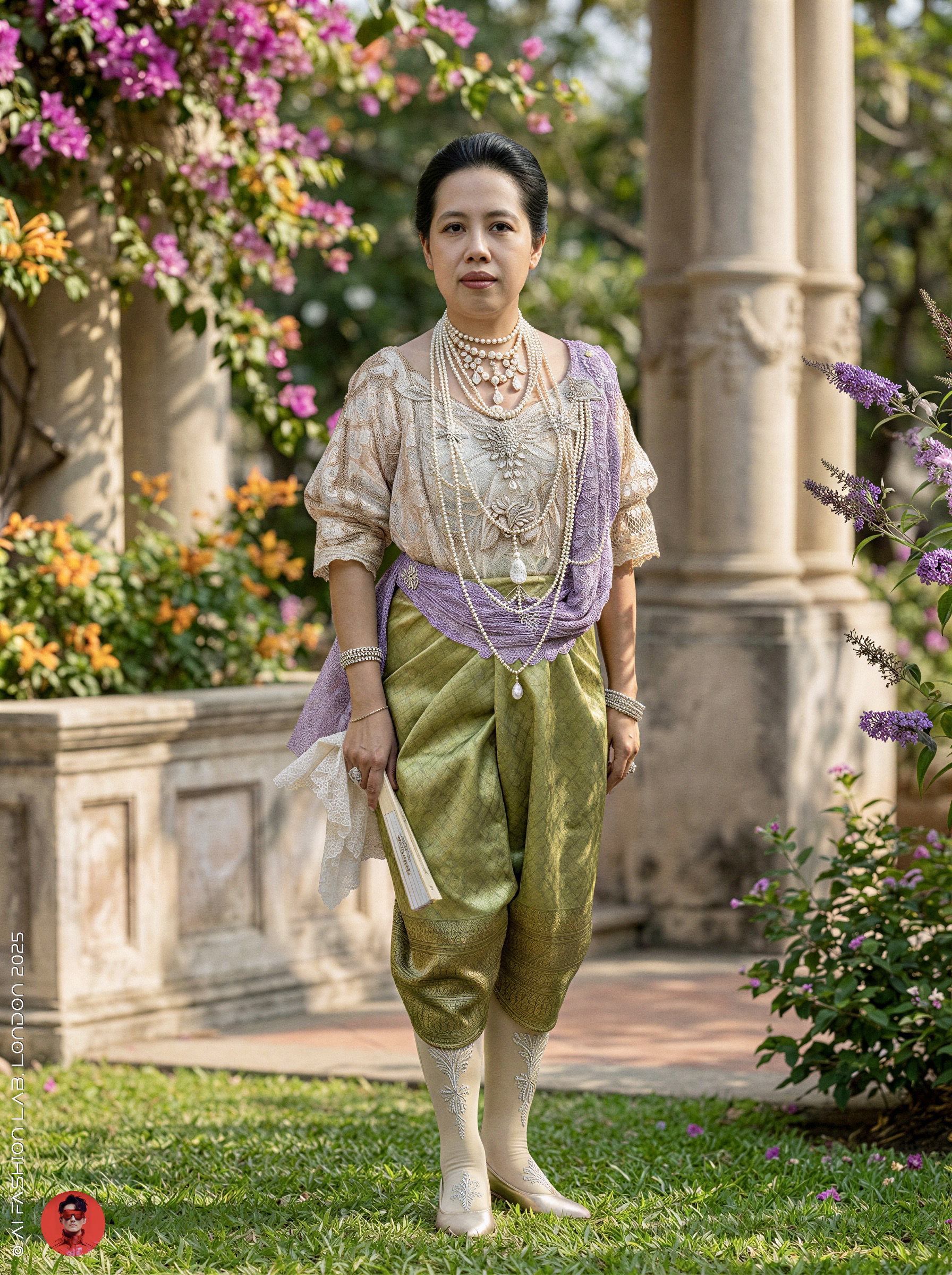
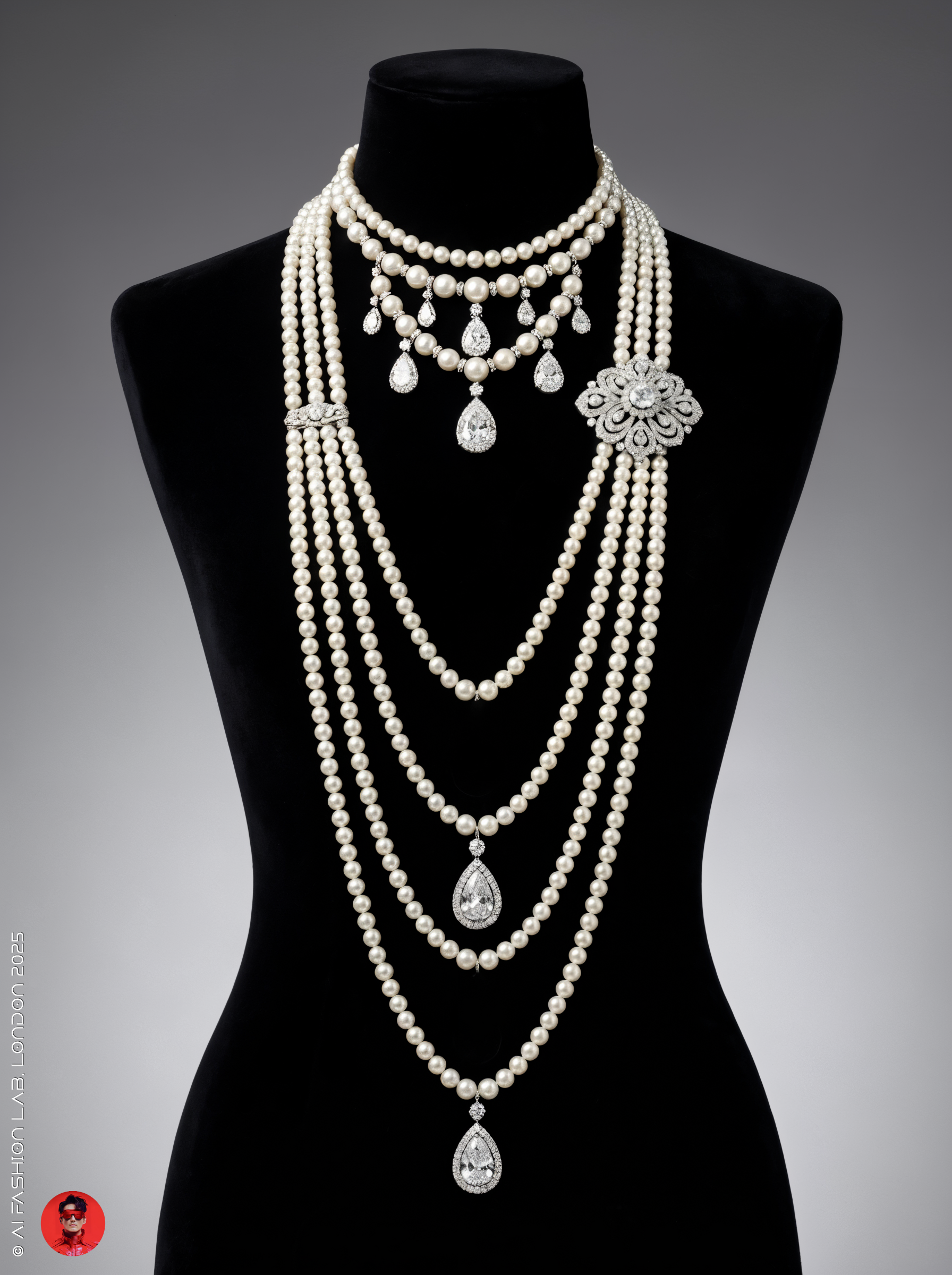
สมเด็จพระศรีพัชรินทราบรมราชินีนาถ และสร้อยพระศอมุกแบบ Sautoir สไตล์เครื่องประดับแบบเอ็ดเวิร์เดียนและอาร์ตนูโว (Edwardian and Art Nouveau style jewellery)
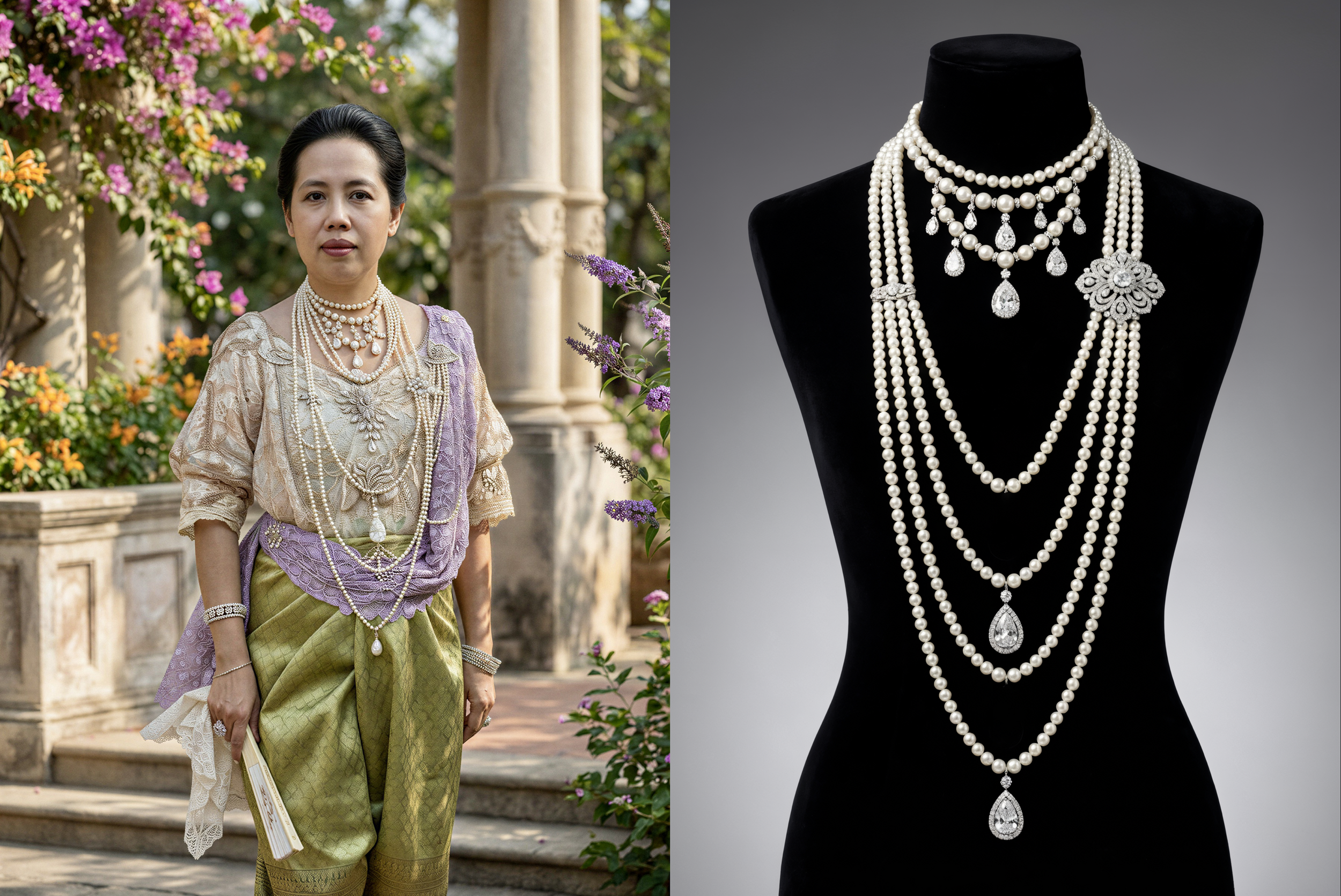
สมเด็จพระศรีพัชรินทราบรมราชินีนาถ และสร้อยพระศอมุกแบบ Sautoir สไตล์เครื่องประดับแบบเอ็ดเวิร์เดียนและอาร์ตนูโว
ภาพที่ได้รับการบูรณะและสร้างสรรค์ขึ้นด้วยเทคโนโลยี AI นี้ เป็นพระฉายาลักษณ์ของ สมเด็จพระศรีพัชรินทราบรมราชินีนาถ พระบรมราชชนนีพันปีหลวง
พระฉายาลักษณ์ต้นฉบับคาดว่าฉายในช่วงต้นรัชกาลที่ ๖ ประมาณระหว่าง พ.ศ. ๒๔๕๔–๒๔๕๘ (ค.ศ. 1911–1915) ซึ่งเป็นยุคที่ยังคงมีหลักฐานทางภาพถ่ายมากมายหลงเหลืออยู่
ฉลองพระองค์ เป็นสไตล์ ลูกไม้แบบปลายยุคเอ็ดเวิร์เดียน (Late Edwardian) หรือช่วงต้นของ ยุคทีนส์ (Early Teens) ลักษณะเด่นคือ คอเสื้อต่ำและแขนเสื้อแบบสามส่วน ประดับด้วยผ้าลูกไม้พาดคล้ายแพรสะพาย โดยมีผ้าสไบพาดไหล่รอบพระอังสา ติดเข็มกลัดบริเวณด้านบนของพระอุระด้านซ้าย แล้วปล่อยให้ชายผ้าทิ้งยาวลงข้างพระวรกายด้านขวา พระองค์ ทรงนุ่งโจงกระเบน และ ทรงถือผ้าเช็ดพระพักต์ลูกไม้ ซึ่งเพิ่มความอ่อนช้อยให้กับองค์ประกอบโดยรวม
พระองค์ทรงประดับฉลองพระองค์ด้วย สร้อยพระศอมุกเส้นยาวและสร้อยพระศอเพชรซ้อนกันหลายเส้น ตามแบบนิยมในตะวันตก พร้อม เข็มกลัดเพชรและเครื่องประดับเพชรนำ้งามหลากหลายชิ้น อันสะท้อนพระเกียรติยศและรสนิยมอันประณีต
นอกจากนี้ เครื่องเพชรที่ทรงสวมใส่ยังแสดงให้เห็นถึง อิทธิพลของศิลปะแบบเอ็ดเวิร์เดียนและอาร์ตนูโว (Edwardian and Art Nouveau style jewellery) ซึ่งเน้นความอ่อนช้อยของเส้นสายและแรงบันดาลใจจากธรรมชาติ พระองค์ทรงเลือกเครื่องเพชรในรูปแบบที่เป็นที่นิยมในยุคนั้น เช่น
1. สร้อยพระศอมุกแบบ Sautoir — สร้อยมุกเส้นยาวที่มักประดับพู่ห้อยปลาย
2. สร้อยพระศอเพรชแบบ Lavalier — สร้อยเพชรมีจี้ห้อยระย้าอันยาวและประณีต
3. และ เครื่องประดับลายดอกไม้ ใบไม้ และกลีบดอก (floral and leaf motifs) ซึ่งเป็นเอกลักษณ์ของศิลปะแบบอาร์ตนูโวที่กำลังรุ่งเรืองในช่วงต้นคริสต์ศตวรรษที่ ๒๐
ความสง่างามในยุคเอ็ดเวิร์เดียน และ La Belle Époque
ในยุโรป ยุคเอ็ดเวิร์เดียนเป็นที่รู้จักกันในนามว่า La Belle Époque ซึ่งเป็นช่วงเวลาแห่งความมั่งคั่ง ความหรูหรา และความรื่นรมย์ของชนชั้นสูง ภายใต้การนำของ สมเด็จพระเจ้าเอ็ดเวิร์ดที่ ๗ (King Edward VII) ผู้ทรงโปรดปรานความฟุ่มเฟือยและรสนิยมทางศิลปะอันหรูหรา
แม้รัชสมัยของพระองค์จะสั้น แต่ก็เต็มไปด้วยความเจิดจรัส พระองค์ทรงมีชื่อเสียงในฐานะ กษัตริย์ผู้รักความสนุกและการละเล่น (light-hearted, gambling playboy) และรสนิยมแห่งความหรูหรานี้เองที่มีอิทธิพลอย่างมากต่อโลกแห่งแฟชั่นและอัญมณี
ในช่วงเวลานั้น พระเจ้าเอ็ดเวิร์ดทรงจัดพระราชพิธีบรมราชาภิเษกอันยิ่งใหญ่ โดยมีพระราชวงศ์และชนชั้นสูงจากทั่วโลกมาร่วมงาน ต่างแข่งขันกันแต่งกายให้สง่างามที่สุด นอกจากนี้ยังทรงจัดงานเลี้ยงเต้นรำและงานสังคมราตรี (soirées) อันหรูหราอย่างต่อเนื่อง ส่งผลให้เกิดความต้องการเครื่องประดับอันวิจิตรเพิ่มขึ้นอย่างมหาศาล ในหมู่ชนชั้นสูง การแสดงออกถึงฐานะและความมั่งคั่งผ่านเครื่องเพชรพลอยถือเป็นเรื่องปกติ — และไม่มีสิ่งใดจะสะท้อนยุคสมัยนั้นได้ชัดเจนเท่า “เครื่องเพชรสไตล์เอ็ดเวิร์เดียน” ซึ่งผสานทั้งความหรูหรา ความละเอียด และความอ่อนช้อยไว้ในชิ้นเดียวกัน
คาร์เทียร์: ช่างอัญมณีแห่งราชสำนักเอ็ดเวิร์เดียน
คาร์เทียร์ (Cartier) ก่อตั้งขึ้นในช่วงกลางคริสต์ศตวรรษที่ ๑๙ และได้รับการยอมรับอย่างสูงในช่วงต้นคริสต์ศตวรรษที่ ๒๐ จนกลายเป็นสัญลักษณ์แห่งนวัตกรรมและความประณีตสูงสุดของยุโรป แบรนด์ยิ่งมีชื่อเสียงมากขึ้นเมื่อได้รับการแต่งตั้งให้เป็น ช่างอัญมณีประจำราชสำนักของสมเด็จพระเจ้าเอ็ดเวิร์ดที่ ๗ ซึ่งทรงขนานนามคาร์เทียร์ว่า “The jeweller of kings and the king of jewellers” — “ช่างอัญมณีแห่งกษัตริย์ และกษัตริย์แห่งช่างอัญมณี”
คาร์เทียร์มีแนวทางที่เน้นทั้งความงามเชิงแฟชั่นและเทคนิคเชิงช่างขั้นสูง โดยเป็นผู้บุกเบิกการนำ โลหะแพลทินัม (Platinum) มาใช้ในงานอัญมณี ซึ่งทำให้สามารถสร้างเครื่องเพชรที่มีโครงสร้างบางเบาและซับซ้อนอย่างที่ไม่เคยมีมาก่อน เกิดเป็นกระแสแฟชั่นที่เรียกว่า “White on White” — การผสมผสานระหว่างเพชรและแพลทินัมที่ขาวบริสุทธิ์ กลายเป็นเอกลักษณ์ของยุคเอ็ดเวิร์เดียนตั้งแต่ต้นคริสต์ศตวรรษที่ ๒๐ จนถึงการเริ่มต้นของสงครามโลกครั้งที่ ๑ ในปี ค.ศ. 1914
อิทธิพลของคาร์เทียร์ขยายไปไกลเกินยุโรป — ในระหว่างการเสด็จประพาสยุโรปของ พระบาทสมเด็จพระจุลจอมเกล้าเจ้าอยู่หัว พระองค์ได้ทรงซื้อเครื่องเพชรจากคาร์เทียร์ เพื่อพระราชทานแด่ สมเด็จพระศรีพัชรินทราบรมราชินีนาถ เครื่องประดับเหล่านี้ไม่เพียงแสดงถึงพระราชนิยมในศิลปะตะวันตก แต่ยังสะท้อนให้เห็นถึง การเปิดรับวัฒนธรรมโลกและรสนิยมร่วมสมัยของราชสำนักสยามในยุค La Belle Epoque อีกด้วย
วัสดุและเทคนิค (Materials & Techniques)
เครื่องเพชรในยุคเอ็ดเวิร์เดียนมีลักษณะ อ่อนช้อย งดงาม และประณีตละเอียดลออ ผลิตโดยช่างอัญมณีฝีมือชั้นสูงที่ให้ความสำคัญกับความคงทนและความประณีตมากกว่าการผลิตด้วยเครื่องจักร ถือเป็น การหวนคืนสู่ความเป็นงานศิลป์ทำมือ หลังยุคอุตสาหกรรม
แรงบันดาลใจสำคัญมาจากศิลปะจากศตวรรษที่ ๑๘ โดยเฉพาะลวดลายแบบ โบว์ พวงดอกไม้ ริบบิ้น และลูกไม้ (bows, garlands, ribbons, and lace) ซึ่งสะท้อนความโรแมนติกแบบเฟมินีนที่สังคมสมัยนั้นชื่นชม
แพลทินัม เป็นโลหะที่ได้รับความนิยมสูงสุด เนื่องจากมีความแข็งแรงพอสำหรับสร้างสรรค์เครื่องเพชรแบบบางเบาและซับซ้อนอย่างเครื่องเพชร “ลูกไม้เพชร” (lace jewellery) ที่เข้ากันได้ดีกับ เฉดสีพาสเทลของแฟชั่นสตรีในยุคนั้น
หลังจากการก่อตั้งบริษัท De Beers Consolidated Mines Ltd. ในปี ค.ศ. 1888 เพชรกลายเป็นอัญมณีที่หาได้ง่ายขึ้น และมีการพัฒนาเทคนิคการเจียระไนรูปแบบใหม่ ๆ อย่างต่อเนื่องในชิ้นเดียวกัน อย่างไรก็ตาม ไข่มุก (pearls) ยังคงเป็นสัญลักษณ์สูงสุดของความมั่งคั่ง เพราะในขณะนั้นมีมูลค่าสูงกว่าเพชร การประดับไข่มุกและเพชรร่วมกันจึงถือเป็นยอดแห่งรสนิยม
เทคนิคตกแต่งยอดนิยมในยุคนั้น ได้แก่
1. Invisible setting — เทคนิคที่ทำให้เพชรดูราวกับลอยอยู่บนผิวกาย
2. Filigree setting — การขึ้นลายลูกไม้ด้วยเส้นโลหะขนาดเล็กและเม็ดโลหะละเอียด
3. Millegrain technique — การประดับขอบเพชรด้วยเม็ดโลหะละเอียดเป็นจุดเล็ก ๆ ทำให้เครื่องเพชรดูนุ่มนวลและมีมิติ
สร้อยคอและรูปแบบการประดับ (Necklaces and Adornment)
เมื่อแนวคอเสื้อของสตรีเริ่มเปิดมากขึ้นหลังยุควิกตอเรียน เครื่องประดับและสร้อยคอจึงกลายเป็นส่วนสำคัญของแฟชั่นในสังคมชั้นสูง โดยมีหลายรูปแบบที่ได้รับความนิยม เช่น
1. Colliers de chien (Dog Collars) — สร้อยคอแบบช็อกเกอร์ทำจากริบบิ้น ประดับเข็มกลัดหรืออัญมณี
2. Chokers — สร้อยมุกหลายเส้นร้อยชิดลำคอ
3. Sautoirs — สร้อยมุกหรือสร้อยลูกปัดเส้นยาว มักมีพู่ระย้าที่ปลายทั้งสองด้าน ห้อยยาวต่ำกว่าเอว
4. Lavalier — สร้อยเพชรมีจี้ห้อยระย้าอันยาวและประณีต
คาร์เทียร์ ยังได้ออกแบบสร้อยคอแบบ Lavalier สองชั้น (Double-Pendant Lavalier) ซึ่งต่อมารู้จักกันในชื่อ Négligée Necklace ตามชื่อนักแสดงหญิงชาวฝรั่งเศส เอฟ ลาวาลิแยร์ (Ève Lavallière) ส่วนแบรนด์ บูเชรอง (Boucheron) มีแบบอันเป็นเอกลักษณ์คือสร้อยมุกคั่นเพชรที่ออกแบบโดย ปอล เลอกรองด์ (Paul LeGrand)
อย่างไรก็ตาม เมื่อสงครามโลกครั้งที่ ๑ ปะทุขึ้นในปี ค.ศ. 1914 วัสดุมีค่าทั้งหมดรวมถึงแพลทินัมถูกนำไปใช้ในอุตสาหกรรมสงคราม ความหรูหราและความฟุ้งเฟ้อของยุคเอ็ดเวิร์เดียนจึงสิ้นสุดลง — นับเป็นการปิดฉาก “ยุคแห่งความรื่นรมย์ของโลกตะวันตก (The Hedonistic Edwardian Era)” อย่างสมบูรณ์
หมอสมิธ แพทย์หลวง ส่วนพระองค์ กล่าวถึงสร้อยพระศอไข่มุกของสมเด็จพระพันปีหลวง
“หมอสมิธบันทึกว่า เมื่อครั้ง พระบาทสมเด็จพระจุลจอมเกล้าเจ้าอยู่หัว เสด็จประพาสยุโรปครั้งแรกเมื่อ พ.ศ. 2440 พระองค์ทรงซื้อสร้อยพระศอไข่มุกพระราชทานแด่สมเด็จพระพันปีหลวง เมื่อครั้งยังทรงดำรงพระอิสริยยศเป็น สมเด็จพระนางเจ้าเสาวภาผ่องศรี พระบรมราชินีนาถ ซึ่งสร้อยพระศอไข่มุกเส้นดังกล่าวมีมูลค่าถึง 100,000 ปอนด์
“คืนนั้นข้าพเจ้าได้ทูลขอให้สมเด็จพระพันปีหลวงทรงนำสร้อยพระศอไข่มุก ที่พระบาทสมเด็จพระจุลจอมเกล้าเจ้าอยู่หัวพระราชทานเป็นของขวัญแก่พระองค์ เมื่อคราวเสด็จประพาสยุโรปครั้งแรก ซึ่งมีมูลค่าถึง ๑๐๐,๐๐๐ ปอนด์ออกมาให้ชม
แม้ว่าข้าพเจ้าจะเคยเห็นสร้อยพระศอเส้นนี้มาแล้วหลายครั้งในขณะที่พระองค์ทรงสวมอยู่ แต่ก็ยังไม่เคยได้เห็นและสัมผัสอย่างใกล้ชิด สร้อยพระศอเส้นดังกล่าวถูกนำออกมาจากห้องที่อยู่ติด ๆ กันเกือบจะในทันที และเมื่อข้าพเจ้าเห็นข้าพเจ้าก็มิได้รู้สึกผิดหวังเลย
ไข่มุกเม็ดที่จัดว่าเป็น ‘น้ำเอก’ มีขนาดกำลังพอเหมาะ ประดับตกแต่งด้วยอัญญมณีงดงาม ภายใต้แสงตะเกียงสลัว ๆ ขณะปล่อยให้มันไหวตัวกลิ้งไปมาส่งประกายระยิบระยับอยู่ในอุ้งมือของข้าพเจ้า นับเป็นประสบการณ์ที่ไม่อาจลืมเลือน
ความยาวเต็มที่ของสร้อยที่ร้อยเข้าไว้ด้วยกันทั้งเส้นวัดได้เกือบ ๖ ฟุต เวลาสวมสามารถจัดแต่งให้พันรอบพระศอได้เป็น ๒ ทบ มุกเม็ดที่ใหญ่ที่สุดขนาดเท่าลูกหินห้อยอยู่ตรงกลางของมุกแต่ละสาย”
นอกจากสร้อยพระศอไข่มุกเส้นนี้แล้ว ยังมีสร้อยพระศอไข่มุกเส้นที่สอง ซึ่งมีขนาดเล็กกว่า ทรงซื้อไว้เมื่อ พ.ศ. 2450 ด้วยราคา 20,000 ปอนด์ ภายหลังถูกโจรกรรมที่สิงคโปร์ แต่ในที่สุดก็สามารถตามกลับคืนมาได้
________________
Queen Saovabha Phongsri and the Sautoir Necklace: Edwardian and Art Nouveau Style Jewellery
This AI-restored and artistically reimagined image presents Queen Saovabha Phongsri, Her Majesty the Queen Mother of Siam.
The original photograph is believed to date from the early reign of King Rama VI, approximately 1911–1915, a period for which a substantial body of photographic evidence still survives.
Her attire reflects Late Edwardian fashion, or what is often described as Early Teens fashion (pre–World War I). Characteristic features include a lowered neckline and three-quarter-length sleeves, embellished with fine lace. A lace stole is draped across the shoulders in the manner of a sash, secured with a brooch on the upper left of the bodice and allowed to fall freely along the right side of the body. She wears a chong kraben and holds a lace handkerchief, adding delicacy and softness to the overall composition.
Her jewellery ensemble is particularly striking. She is adorned with long pearl necklaces layered with diamond necklaces, in keeping with Western court fashion of the period, accompanied by diamond brooches and other refined ornaments. Together, these pieces project both royal dignity and a highly cultivated aesthetic sensibility.
Edwardian and Art Nouveau Influences in Jewellery
The jewels worn by Queen Saovabha clearly demonstrate the influence of Edwardian and Art Nouveau jewellery, styles distinguished by flowing lines, lightness of structure, and inspiration drawn from nature. Popular forms of the era include:
Sautoir pearl necklaces — long strands of pearls, often finished with tassels
Lavalier necklaces — diamond necklaces with elongated, elegant pendants
Floral and leaf motifs — hallmarks of Art Nouveau design, reflecting organic forms and natural rhythms
These elements were widely fashionable in the early twentieth century and strongly associated with elite European taste.
Edwardian Elegance and La Belle Époque
In Europe, the Edwardian era coincided with what is known as La Belle Époque, a time marked by prosperity, luxury, and social refinement among the upper classes. This period flourished under the reign of King Edward VII, whose love of splendour, society, and the arts profoundly influenced fashion and jewellery.
Although his reign was relatively brief, it was exceptionally radiant. Lavish coronation ceremonies, grand balls, and glittering evening soirées created an ever-growing demand for magnificent jewels. Among the aristocracy, the display of wealth and status through jewellery was entirely expected—and nothing embodied the spirit of the age more fully than Edwardian jewellery, which combined opulence with delicacy and technical refinement.
Cartier: Jeweller of the Edwardian Courts
Founded in the mid-nineteenth century, Cartier rose to prominence in the early twentieth century as the foremost innovator in European jewellery. Its reputation was sealed when it was appointed jeweller to King Edward VII, who famously described the house as “the jeweller of kings and the king of jewellers.”
Cartier pioneered the use of platinum, a metal strong enough to support intricate, airy constructions previously impossible with gold or silver. This innovation gave rise to the celebrated Edwardian aesthetic of “white on white”—diamonds set in platinum—producing an effect of shimmering lightness that defined elite jewellery from the early 1900s until the outbreak of World War I in 1914.
Cartier’s influence extended far beyond Europe. During his European tours, King Chulalongkorn purchased jewellery from Cartier as royal gifts for Queen Saovabha. These pieces signified not only royal favour but also the Siamese court’s engagement with global modernity during the era of La Belle Époque.
Materials and Techniques
Edwardian jewellery is celebrated for its refinement, elegance, and craftsmanship. Created by master jewellers rather than industrial machines, these pieces represented a return to artisanal values in the wake of the Industrial Revolution.
Key inspirations included eighteenth-century decorative arts, particularly bows, garlands, ribbons, and lace, all expressing a refined, feminine romanticism. Platinum enabled the creation of delicate, lace-like structures—often referred to as “diamond lace jewellery”—which harmonised beautifully with the pastel colour palette of contemporary women’s fashion.
After the founding of De Beers in 1888, diamonds became more accessible, and cutting techniques rapidly evolved. Nevertheless, pearls remained the ultimate symbol of wealth, often valued more highly than diamonds. The combination of pearls and diamonds thus represented the pinnacle of taste.
Popular techniques included:
Invisible setting, creating the illusion that gems float on the skin
Filigree, using fine metal threads and granulation
Millegrain, decorating edges with tiny beaded metalwork for softness and depth
Necklaces and Modes of Adornment
As women’s necklines lowered after the Victorian era, necklaces became central to fashionable dress. Popular styles included:
Colliers de chien (dog collars)
Chokers made of multiple strands of pearls
Sautoirs, long pearl or bead necklaces often extending below the waist
Lavalier necklaces, featuring elegant, elongated pendants
Cartier also introduced the double-pendant lavalier, later known as the négligée necklace, named after the French actress Ève Lavallière. Meanwhile, Boucheron became known for pearl necklaces accented with diamonds, designed by Paul LeGrand.
The outbreak of World War I in 1914 brought this world of opulence to an abrupt end. Precious metals such as platinum were diverted to military use, marking the close of what has often been called “the hedonistic Edwardian era.”
Dr. Malcolm Smith on Queen Saovabha’s Pearl Necklace
Dr. Malcolm Smith, royal physician, recorded a remarkable account of Queen Saovabha’s pearls:
“When King Chulalongkorn undertook his first European tour in 1897, he purchased a pearl necklace as a gift for Her Majesty, then Queen Saovabha Phongsri. The necklace was valued at £100,000.”
“Although I had seen this necklace many times when Her Majesty wore it, I had never examined it closely. That evening, it was brought from the adjoining room almost immediately. I was not disappointed. The pearls, of the finest quality, were beautifully matched, and under the dim lamplight they rolled and shimmered in my hands—an unforgettable experience.”
“The full length of the necklace measured nearly six feet, allowing it to be worn doubled around the neck. The largest pearl, the size of a small pebble, hung at the centre of each strand.”
Dr. Smith further noted that a second, smaller pearl necklace was purchased in 1907 for £20,000. Although it was later stolen in Singapore, it was eventually recovered.
Together, these accounts illuminate not only the splendour of Queen Saovabha’s jewellery but also the profound dialogue between Siamese royalty and the visual language of European modernity at the height of the Edwardian age.
________________
เรียนเชิญกด Subscribe ได้ที่ลิงก์นี้ครับ เพื่อร่วมติดตามงานสร้างสรรค์ต้นฉบับ งานวิจัยประวัติศาสตร์แฟชั่น และผลงานอนุรักษ์มรดกวัฒนธรรมด้วยเทคโนโลยี AI ของ AI Fashion Lab, London ซึ่งมุ่งตีความอดีตผ่านมิติใหม่ของการบูรณะภาพ การสร้างสรรค์ภาพ และการเล่าเรื่องด้วยศิลปะเชิงดิจิทัล 🔗 https://www.facebook.com/aifashionlab/subscribe/
#aifashionlab #AI #aiartist #aiart #aifashion #aifashiondesign #aifashionstyling #aifashiondesigner #fashion #fashionhistory #historyoffashion #fashionstyling #fashionphotography #digitalfashion #digitalfashiondesign #digitalcostumedesign #digitaldesign #digitalaiart #ThaiFashionHistory #ThaiFashionAI #thailand #UNESCO