เครื่องเพชรชุดทับทิม ของสมเด็จพระศรีพัชรินทราบรมราชินีนาถ พระบรมราชชนนีพันปีหลวง
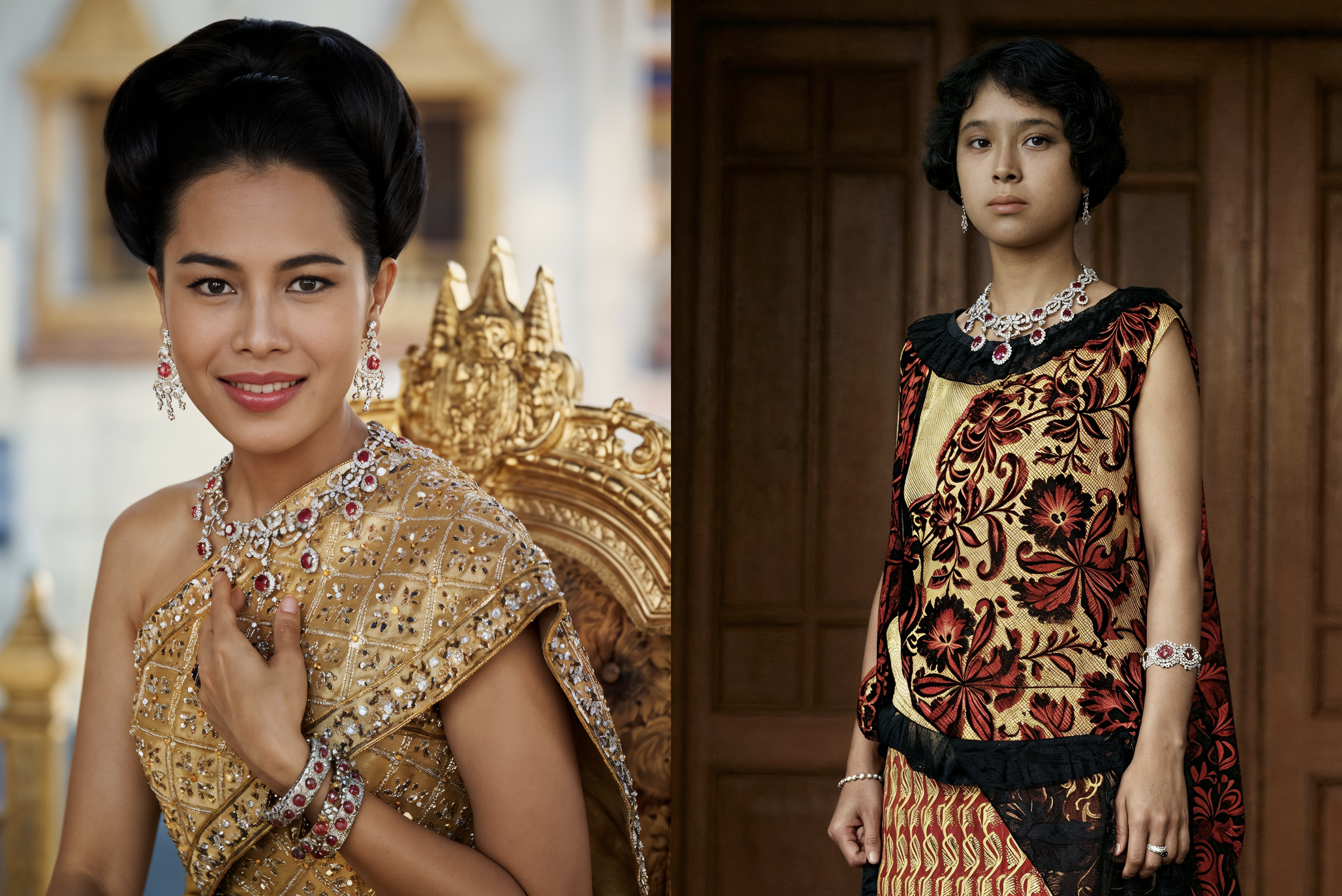
เครื่องเพชรชุดทับทิม ของสมเด็จพระศรีพัชรินทราบรมราชินีนาถ พระบรมราชชนนีพันปีหลวง
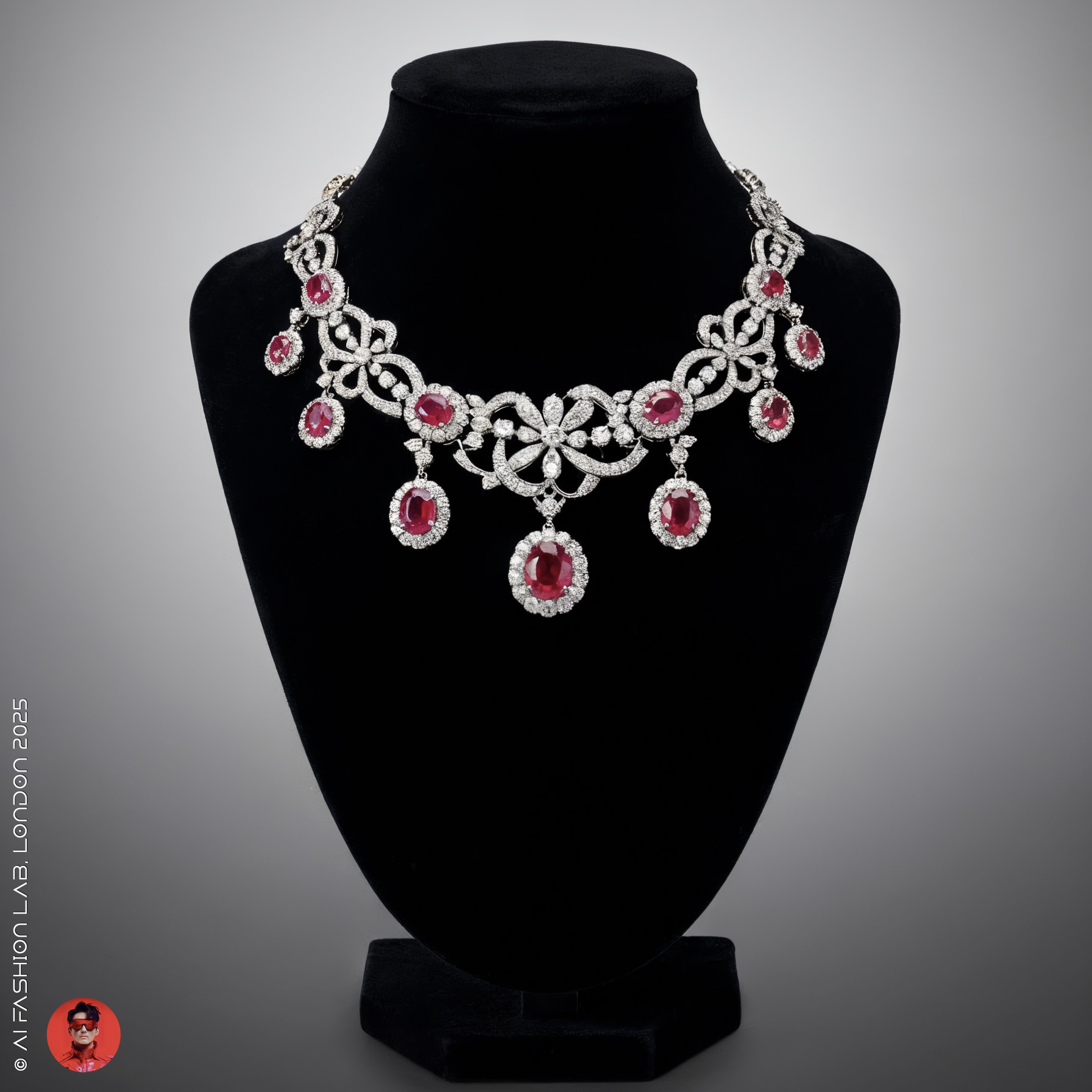
เครื่องเพชรชุดทับทิม ชุดนี้นับเป็นพระราชมรดกชิ้นสำคัญที่สืบทอดมาจาก
“สมเด็จพระศรีพัชรินทราบรมราชินีนาถ พระบรมราชชนนีพันปีหลวง”
เครื่องเพชรชุดทับทิมชุดนี้นับเป็นพระราชมรดกชิ้นสำคัญที่สืบทอดมาจาก สมเด็จพระศรีพัชรินทราบรมราชินีนาถ พระบรมราชชนนีพันปีหลวง ผู้ทรงมีบทบาทอย่างยิ่งในการกำหนดรสนิยมเครื่องประดับของราชสำนักสยามในช่วงปลายคริสต์ศตวรรษที่ 19 ต่อเนื่องถึงต้นคริสต์ศตวรรษที่ 20
เครื่องเพชรชุดนี้สะท้อนอิทธิพลจากราชสำนักยุโรปอย่างเด่นชัด ทั้งในด้านโครงสร้าง การจัดวางอัญมณีแบบตะวันตก ขณะเดียวกันยังคงคุณค่าเชิงสัญลักษณ์ของราชสำนักสยาม ผ่านการเลือกใช้ “ทับทิม” ซึ่งเป็นอัญมณีที่สื่อถึงพระบารมี อำนาจ และความเป็นสิริมงคลในคติความเชื่อของราชสำนัก
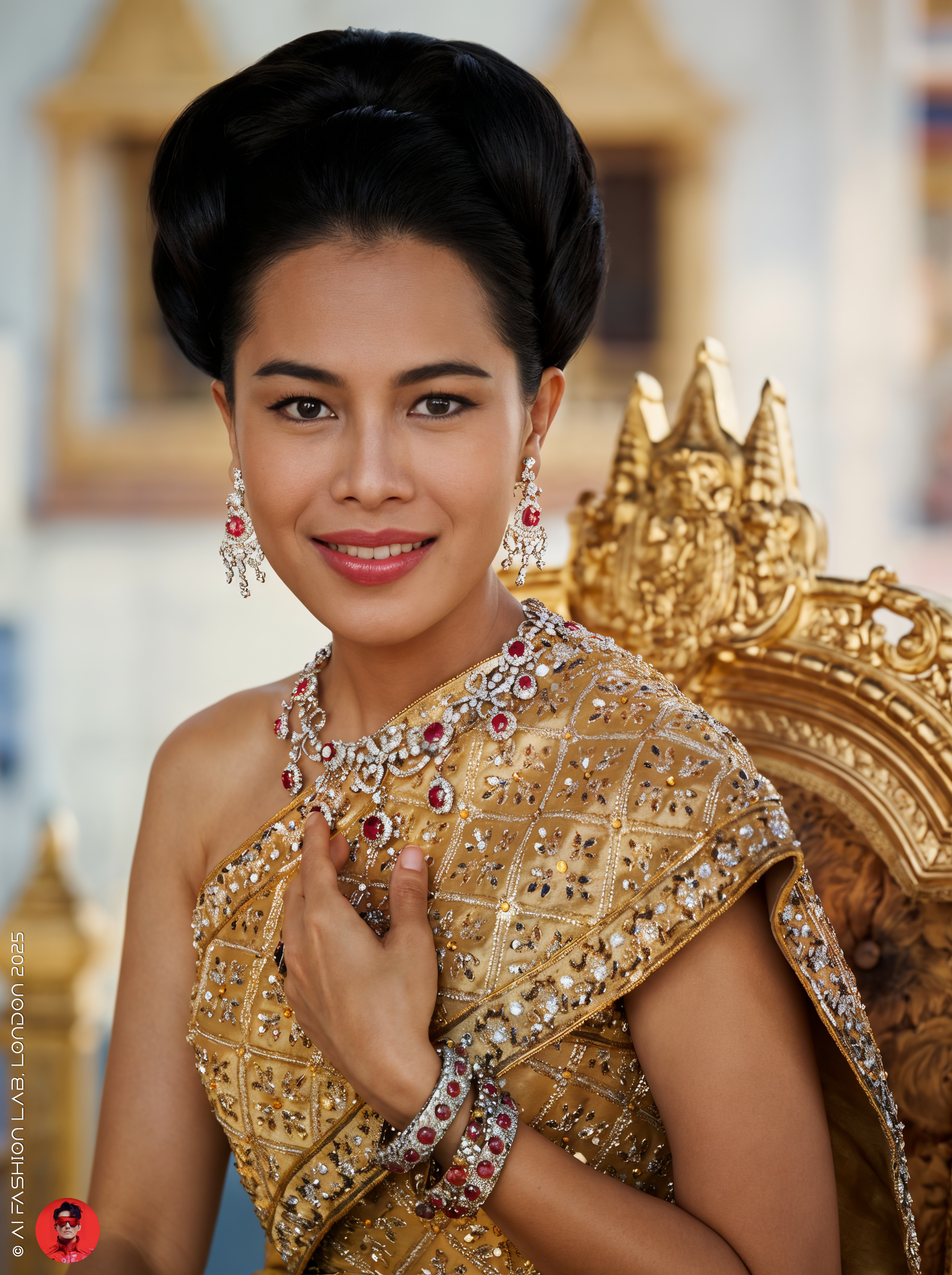
ภาพที่ 1 เป็นพระฉายาลักษณ์ของ สมเด็จพระนางเจ้าสิริกิติ์ พระบรมราชินีนาถ พระบรมราชชนนีพันปีหลวง
ทรงฉลองพระองค์ ชุดไทยจักรี ในช่วง พุทธศักราช ๒๕๑๐ ประดับพระองค์ด้วย เครื่องเพชรชุดทับทิม อันเป็นพระราชมรดกที่สืบเนื่องมาจากสมเด็จพระศรีพัชรินทราบรมราชินีนาถ และสมเด็จเจ้าฟ้าอัษฎางค์เดชาวุธ กรมหลวงนครราชสีมา แสดงถึงการสืบทอดรสนิยม ความสง่างาม และสายใยแห่งพระราชประเพณีจากรุ่นสู่รุ่น
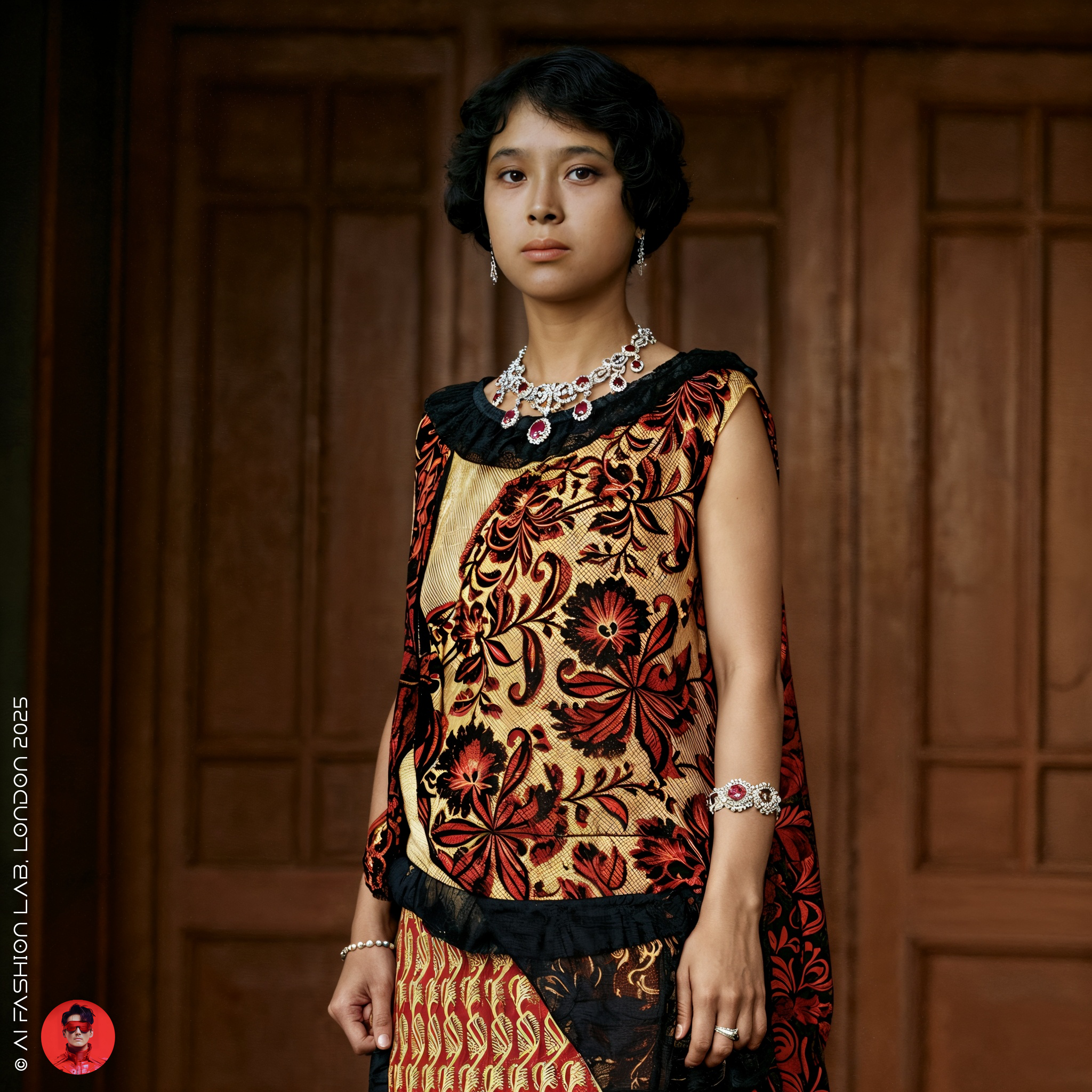
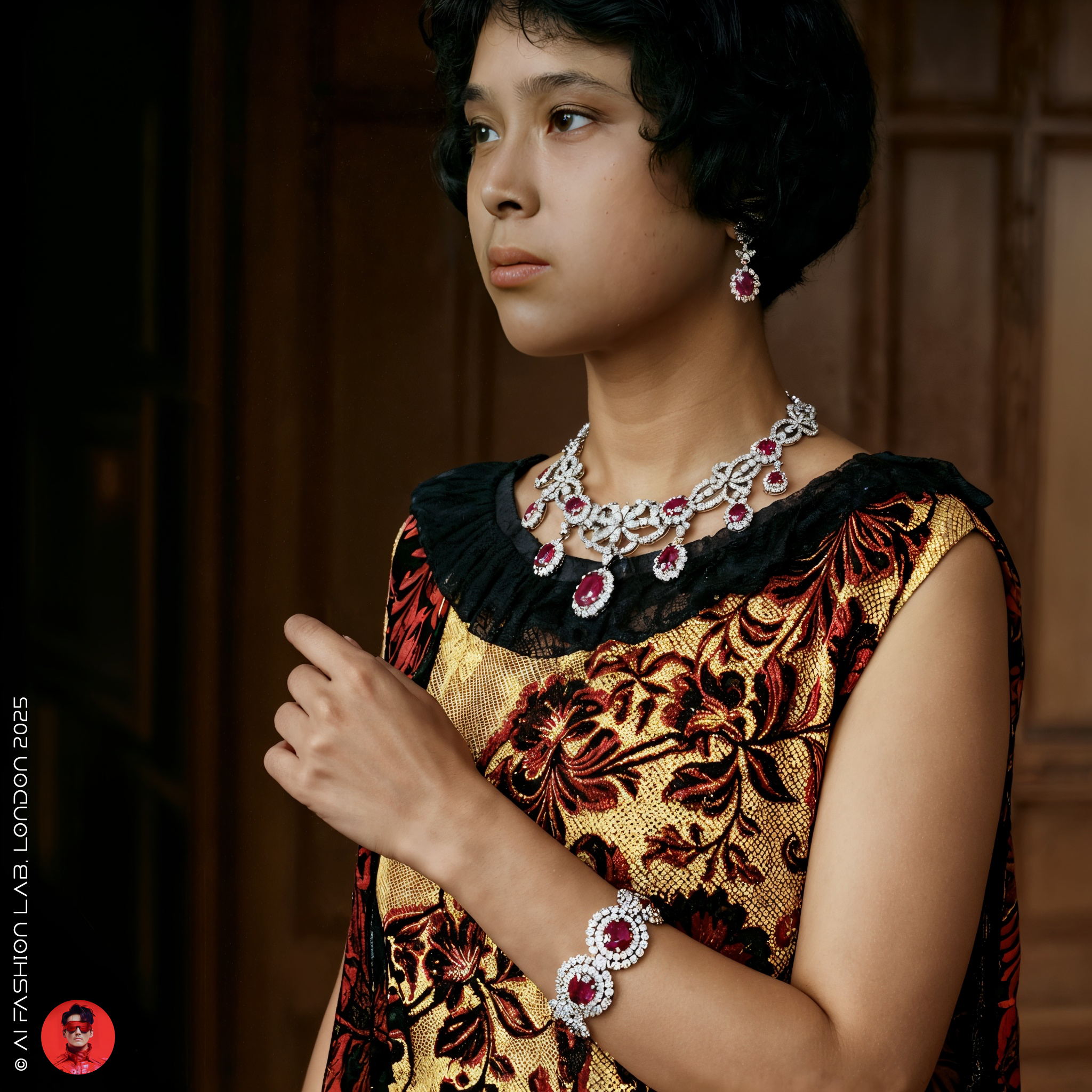
ภาพที่ 2 และ 3 เป็นภาพที่ได้รับการบูรณะและสร้างสรรค์ด้วยเทคโนโลยี AI ของ ท่านผู้หญิงแผ้ว สนิทวงศ์เสนี
แต่งกายใน สไตล์ Art Deco ซึ่งเป็นที่นิยมในช่วงปลายรัชกาลที่ ๖ พร้อมประดับ เครื่องเพชรชุดทับทิม อันเป็นพระราชมรดกจากสมเด็จพระศรีพัชรินทราบรมราชินีนาถฯ ถึงสมเด็จเจ้าฟ้าอัษฎางค์เดชาวุธ กรมหลวงนครราชสีมา
ภาพของท่านผู้หญิงแผ้วสร้างสรรค์ขึ้นโดยอ้างอิงจากภาพต้นฉบับที่เป็นภาพคู่กับ สมเด็จพระอนุชาธิราช เจ้าฟ้าอัษฎางค์เดชาวุธ กรมหลวงนครราชสีมา ขณะที่ท่านผู้หญิงแผ้วเป็นหม่อมในกรมหลวงนครราชสีมา
ขณะท่านผู้หญิงแผ้วมีอายุ 13 ปี ได้ทำการแสดงที่กระทรวงการต่างประเทศ แสดงคู่กับคุณหญิงเทศ นัฏกานุรักษ์ โดยท่านได้แสดงเป็นเมขลา ส่วนคุณหญิงนัฏกานุรักษ์แสดงเป็นรามสูร ต่อมาได้แสดงเรื่องอิเหนา รับบทเป็นดรสา ที่กระโดดกองไฟตายตามระตู เป็นที่ต้องพระหฤทัยของสมเด็จพระอนุชาธิราช เจ้าฟ้าอัษฎางค์เดชาวุธ กรมหลวงนครราชสีมา และทรงขอท่านเข้าเป็นหม่อมห้าม มีนามว่า หม่อมแผ้ว นครราชสีมา แม้จะเป็นการเสกสมรสกับหญิงสามัญชนแต่ก็ไม่มีผู้ใดขัดพระทัย ส่วนหนึ่งก็เพราะเจ้านายพระองค์นี้เป็นที่ห่วงใยของพระราชชนกชนนี เนื่องจากมีพระพลานามัยไม่สู้สมบูรณ์มานาน
หลังการทิวงคตของสมเด็จพระเชษฐาธิราช เจ้าฟ้าจักรพงษ์ภูวนาถ กรมหลวงพิษณุโลกประชานาถ เมื่อ พ.ศ. 2463 สามีของท่านได้ขึ้นดำรงตำแหน่งเป็นรัชทายาทอันดับหนึ่งแห่งกรุงสยามแทน และต่อมาได้ทรงกราบบังคมทูลพระบาทสมเด็จพระมงกุฎเกล้าเจ้าอยู่หัว ซึ่งทรงมีพระมหากรุณาธิคุณรับหม่อมแผ้วเข้าเป็นสะใภ้หลวง ถือเป็นหญิงสามัญชนที่ไม่ใช่ลูกหลานขุนนางคนแรกที่ได้เป็นสะใภ้หลวง และได้พระราชทานเครื่องราชอิสริยาภรณ์จุลจอมเกล้าชั้นทุติยจุลจอมเกล้าเมื่อวันที่ 25 พฤศจิกายน พ.ศ. 2466
ทว่าชีวิตสะใภ้หลวงได้สิ้นสุดลง เมื่อสมเด็จพระอนุชาธิราช เจ้าฟ้าอัษฎางค์เดชาวุธ กรมหลวงนครราชสีมาประชวรด้วยพระโรคพระวักกะอักเสบ ก่อนทิวงคต ณ พระตำหนักวังสวนกุหลาบ พระราชวังดุสิต เมื่อวันที่ 9 กุมภาพันธ์ พ.ศ. 2467 (ปฏิทินแบบปัจจุบัน พ.ศ. 2468) สิริพระชนมายุได้ 36 พรรษา ยังความทุกข์เข้าสู่จิตใจของหม่อมแผ้วยิ่งนัก โดยท่านเคยกล่าวถึงความรู้สึกของตนหลังการทิวงคตของสมเด็จพระอนุชาธิราชไว้ว่า
“…ตอนนั้นพระองค์ท่านมีพระชนมายุได้ 36 ปี ฉันอายุได้ 21 ปี ฉันรู้สึกว้าเหว่และเศร้าโศกถึงกับเป็นลมพับไป และรู้สึกว่าโลกนี้ช่างไม่มีอะไรแน่นอนทั้งสิ้น…”
ในปี พ.ศ. 2470 หม่อมแผ้วได้กราบถวายบังคมลาออกจากตำแหน่งหม่อมห้ามสะใภ้หลวง พระบาทสมเด็จพระปกเกล้าเจ้าอยู่หัวพระราชทานพระบรมราชานุญาต และได้ถวายคืนเครื่องราชอิสริยาภรณ์ทุติยจุลจอมเกล้าที่ได้รับพระราชทานไว้ พร้อมทั้งเครื่องเพชรชุดทับทิมชุดนี้ซึ่งเป็นพระราชมรดกของเจ้าฟ้าอัษฎางค์เดชาวุธ กรมหลวงนครราชสีมา
ท่านผู้หญิงแผ้วได้กล่าวถึงความยากลำบากหลังการสูญเสียสามีและการดำรงชีวิตโดยลำพังโดยไม่มีพระโอรสธิดาไว้ว่า
“…ฉันไม่มีทรัพย์สมบัติติดตัวมาเลย เพราะฉันอยู่กับทูลกระหม่อมอัษฎางค์ เวลาฉันจะใช้ก็เบิกเอามาจากเจ้ากรม และเงินทั้งหลายแหล่ก็เป็นของทูลกระหม่อมอัษฎางค์ไม่ใช่ของหลวง หลังจากทูลกระหม่อมเสด็จทิวงคต ฐานะฉันก็ยอบแยบสิ้นดี อยู่ต่อมาฉันจึงนึกว่าฉันจะลาออก… ฉันจึงเอาตราสะใภ้หลวงซึ่งพระบาทสมเด็จพระมงกุฎเกล้าเจ้าอยู่หัวพระราชทานให้ไปถวายคืนพระบาทสมเด็จพระปกเกล้าเจ้าอยู่หัว และขอลาออกจากตำแหน่งชายา…”
__________
สมรสครั้งที่สอง
หลังสมเด็จพระอนุชาธิราช เจ้าฟ้าอัษฎางค์เดชาวุธ กรมหลวงนครราชสีมาทิวงคตไปแล้วสามปี ท่านผู้หญิงแผ้วได้สมรสใหม่กับหม่อมราชวงศ์ตัน สนิทวงศ์ พระโอรสในพระวรวงศ์เธอ พระองค์เจ้าสายสนิทวงศ์ กับหม่อมแจ่ม ซึ่งได้รับพระราชทานบรรดาศักดิ์เป็นหม่อมสนิทวงศ์เสนี เป็นทูตทหารประจำประเทศฝรั่งเศส ประเทศอังกฤษ และประเทศอิตาลี เป็นอัครราชทูตประจำประเทศโปรตุเกส และเป็นรัฐมนตรีว่าการกระทรวงอุตสาหกรรม
ท่านผู้หญิงแผ้วได้ติดตามสามีซึ่งรับราชการเป็นทูตประเทศต่าง ๆ ในทวีปยุโรปในฐานะภรรยาทูต ทั้งสองมีบุตรธิดาด้วยกันจำนวน 4 คน ได้แก่ หม่อมหลวงแต้ว สนิทวงศ์, ท่านผู้หญิงนวลผ่อง เสนาณรงค์, พันตำรวจเอก (พิเศษ) หม่อมหลวงเติม สนิทวงศ์ และหม่อมหลวงตวง สนิทวงศ์
ขณะอาศัยอยู่ในต่างประเทศ ท่านผู้หญิงแผ้วมีหน้าที่เลี้ยงดูบุตรไปพร้อมกับการทำงานบ้านด้วยตนเองทุกชนิด และในช่วงสงครามโลกครั้งที่สอง ท่านต้องดูแลนักเรียนไทยที่ตกค้างอยู่ในประเทศอิตาลีเสมือนบุตรของตน ในยามตกระกำลำบาก ท่านได้ขายเครื่องประดับและของใช้ส่วนตัวมาจุนเจือค่าใช้จ่ายโดยไม่นึกเสียดาย ด้วยมองว่าเป็นการทำคุณประโยชน์แก่ประเทศชาติ หลังใช้ชีวิตเป็นภรรยาทูตในทวีปยุโรปราว 10 ปี ท่านผู้หญิงแผ้วและครอบครัวกลับไปอาศัยที่จังหวัดพระนครเมื่อ พ.ศ. 2489
__________
เครื่องเพชรชุดทับทิม: สัญลักษณ์แห่งความทรงจำ
เครื่องเพชรชุดทับทิมจึงมิได้เป็นเพียงเครื่องประดับอันล้ำค่า หากแต่เป็นพยานเงียบแห่งประวัติศาสตร์ ที่ถักทอเรื่องราวของราชสำนักสยาม สตรีผู้เปี่ยมด้วยศักดิ์ศรี และชีวิตที่ผันแปรไปตามกาลเวลา จากสมเด็จพระศรีพัชรินทราบรมราชินีนาถ พระบรมราชชนนีพันปีหลวง สู่หม่อมแผ้ว ก่อนจะย้อนคืนสู่ราชสำนัก และมาบรรจบ ณ สมเด็จพระนางเจ้าสิริกิติ์ พระบรมราชินีนาถ เครื่องเพชรชุดนี้สะท้อนทั้งความรุ่งเรือง ความรัก ความสูญเสีย และความเสียสละ อันฝังแน่นอยู่ในหน้าประวัติศาสตร์ไทย
__________
The Ruby Jewellery Parure of Her Majesty Queen Saovabha Phongsri, Queen Mother of Siam
The ruby jewellery parure is regarded as one of the most significant royal heirlooms inherited from Her Majesty Queen Saovabha Phongsri, Queen Mother of Siam, a figure of profound importance in shaping the aesthetic sensibilities of the Siamese court from the late nineteenth century through the early twentieth century.
This remarkable set of jewellery reflects a strong influence from European royal courts, particularly in its structural composition and Western-style gemstone settings. At the same time, it preserves the symbolic values deeply rooted in Siamese royal tradition through the deliberate use of rubies, gemstones long associated with royal authority, power, and auspicious virtue within courtly belief systems.
Image 1
Image 1 depicts Her Majesty Queen Sirikit, The Queen Mother, dressed in the Chakri style of traditional Thai attire during the year 1967. She is adorned with the ruby jewellery parure—an heirloom that traces its lineage back to Queen Saovabha Phongsri and His Royal Highness Prince Asdang Dejavudh, Prince of Nakhon Ratchasima. The image powerfully conveys the continuity of royal taste, elegance, and ceremonial heritage passed down through generations.
Images 2 and 3
Images 2 and 3 present AI-restored and artistically reconstructed portraits of Than Ying Phlaew Sanitwongse Senee, depicted in an Art Deco style popular during the late reign of King Rama VI. She is shown wearing the same ruby jewellery parure, a royal inheritance that passed from Queen Saovabha Phongsri to Prince Asdang Dejavudh.
These reconstructed images are based on an original historical photograph showing Than Ying Phlaew alongside Prince Asdang Dejavudh, taken during the period when she held the position of consort to the Prince of Nakhon Ratchasima.
At the age of thirteen, Than Ying Phlaew performed classical dance at the Ministry of Foreign Affairs, appearing opposite Khun Ying Thet Nattakanurak. On that occasion, Phlaew performed the role of Mekhala, while Khun Ying Thet portrayed Ramasura. She later performed in the Inao dance drama, taking the role of Dorasa, the character who leaps into the fire to follow her lord in death. These performances deeply impressed Prince Asdang Dejavudh, who subsequently requested her admission into the royal household as his consort, bestowing upon her the name Mom Phlaew of Nakhon Ratchasima.
Although this marriage united the Prince with a commoner, it met with no opposition, in part due to the Prince’s long-standing fragile health, which had made him a source of concern to his royal parents.
Following the death of Prince Chakrabongse Bhuvanath, Prince of Phitsanulok, in 1920, Prince Asdang Dejavudh became the first heir apparent to the Siamese throne. He formally sought royal approval from King Vajiravudh (Rama VI), who graciously accepted Mom Phlaew into the royal family as a royal daughter-in-law. She thus became the first common-born woman, not descended from the nobility, to hold this status, and was awarded the Order of Chula Chom Klao, Second Class, on 25 November 1923.
However, her life as a royal daughter-in-law came to an abrupt end when Prince Asdang Dejavudh fell gravely ill with renal inflammation and passed away at Suan Kularb Palace, Dusit, on 9 February 1924 (corresponding to 1925 in the modern calendar), at the age of thirty-six. The loss plunged Mom Phlaew into profound grief. She later recalled:
“At that time, His Royal Highness was thirty-six years old, and I was only twenty-one. I felt utterly desolate and overwhelmed by sorrow, to the point of fainting. It made me realise that nothing in this world is truly certain.”
In 1927, Mom Phlaew formally requested permission to resign from her position as a royal consort. King Prajadhipok (Rama VII) granted his approval. She returned the insignia of the Order of Chula Chom Klao, Second Class, along with the ruby jewellery parure, which had been a royal inheritance of Prince Asdang Dejavudh.
Reflecting on her hardship after her husband’s death and her life without children, she stated:
“I had no personal wealth at all, for while I lived with Prince Asdang, I drew expenses through the palace officials, and all monies belonged to His Royal Highness, not to the Crown. After his passing, my circumstances deteriorated greatly. I therefore resolved to resign. I returned the insignia of royal daughter-in-law bestowed upon me by King Vajiravudh to King Prajadhipok and asked to withdraw from my position as a consort.”
Second Marriage
Three years after the passing of Prince Asdang Dejavudh, Than Ying Phlaew remarried Mom Rajawongse Tan Sanitwong, son of Prince Sai Sanitwong and Mom Jaem. He later received the title Mom Sanitwongse Senee, serving as military attaché to France, Britain, and Italy, Ambassador to Portugal, and Minister of Industry.
Than Ying Phlaew accompanied her husband on diplomatic postings across Europe, fulfilling her role as a diplomat’s wife while raising their four children: Mom Luang Taew Sanitwong, Than Ying Nuanphong Senanarong, Police Colonel (Special) Mom Luang Toem Sanitwong, and Mom Luang Tuang Sanitwong.
During their years abroad, she managed the household entirely on her own while raising her children. During the Second World War, she also cared for stranded Thai students in Italy as if they were her own children. In times of hardship, she sold her personal jewellery and belongings without hesitation to support expenses, viewing such sacrifices as a service to the nation. After approximately ten years in Europe, she and her family returned to Bangkok in 1946.
The Ruby Jewellery Parure: A Symbol of Memory
The ruby jewellery parure is therefore far more than a collection of precious adornments. It stands as a silent witness to history, weaving together the story of the Siamese royal court, women of dignity and resilience, and lives shaped by the passage of time. From Queen Saovabha Phongsri, to Than Ying Phlaew, before returning to the royal household and ultimately resting with Her Majesty Queen Sirikit, the jewels embody splendour and love, loss and sacrifice—enduring legacies engraved into the fabric of Thai history.
__________
เรียนเชิญกด Subscribe ได้ที่ลิงก์นี้ครับ เพื่อร่วมติดตามงานสร้างสรรค์ต้นฉบับ งานวิจัยประวัติศาสตร์แฟชั่น และผลงานอนุรักษ์มรดกวัฒนธรรมด้วยเทคโนโลยี AI ของ AI Fashion Lab, London ซึ่งมุ่งตีความอดีตผ่านมิติใหม่ของการบูรณะภาพ การสร้างสรรค์ภาพ และการเล่าเรื่องด้วยศิลปะเชิงดิจิทัล 🔗 https://www.facebook.com/aifashionlab/subscribe/
#aifashionlab #AI #aiartist #aiart #aifashion #aifashiondesign #aifashionstyling #aifashiondesigner #fashion #fashionhistory #historyoffashion #fashionstyling #fashionphotography #digitalfashion #digitalfashiondesign #digitalcostumedesign #digitaldesign #digitalaiart #ThaiFashionHistory #ThaiFashionAI #thailand #UNESCO