พระบรมวงศานุวงศ์และข้าราชการ ในการเสด็จประพาสต้น ครั้งที่ ๒
พระบรมวงศานุวงศ์และข้าราชการ ในการเสด็จประพาสต้น ครั้งที่ ๒
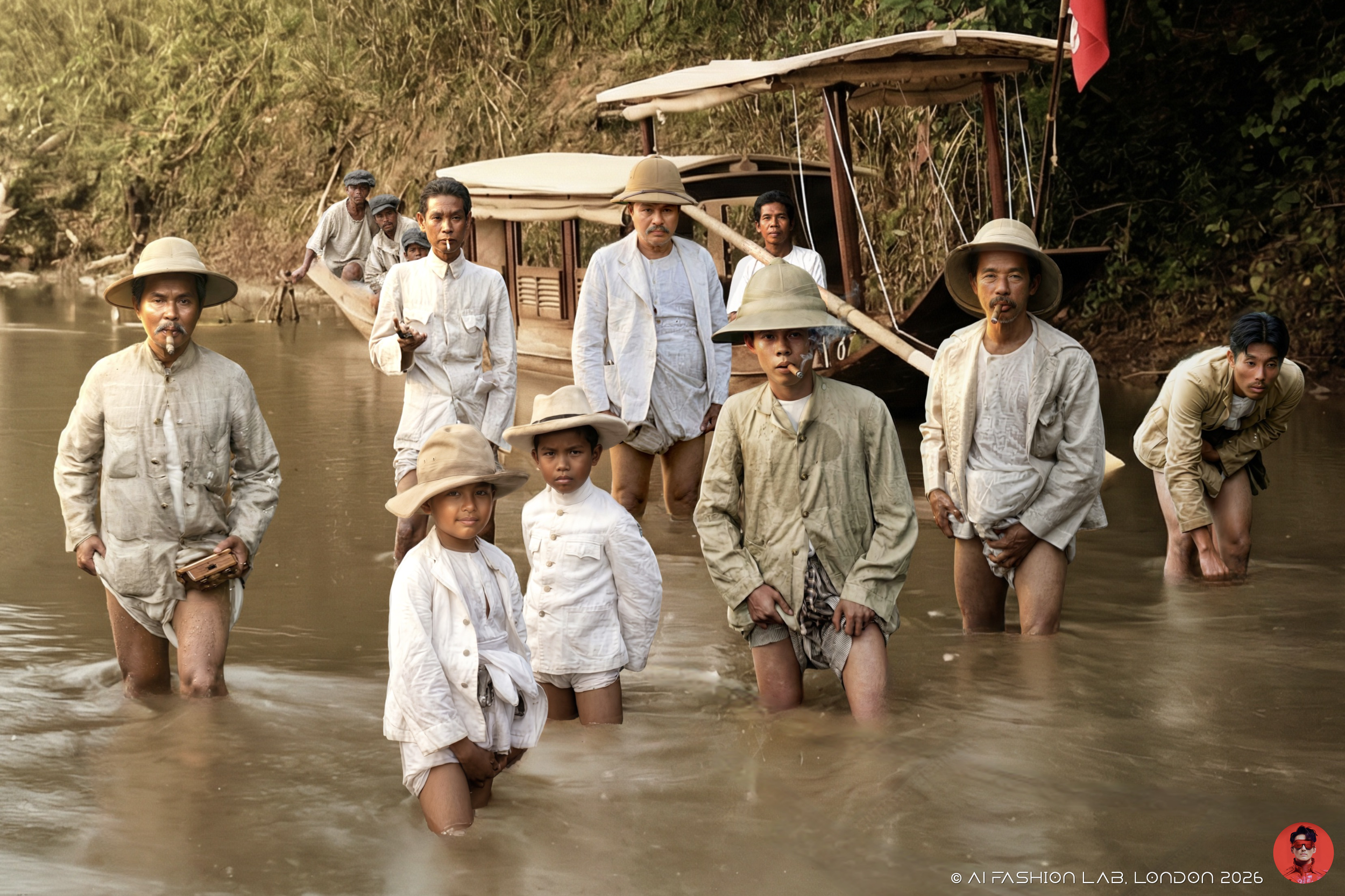
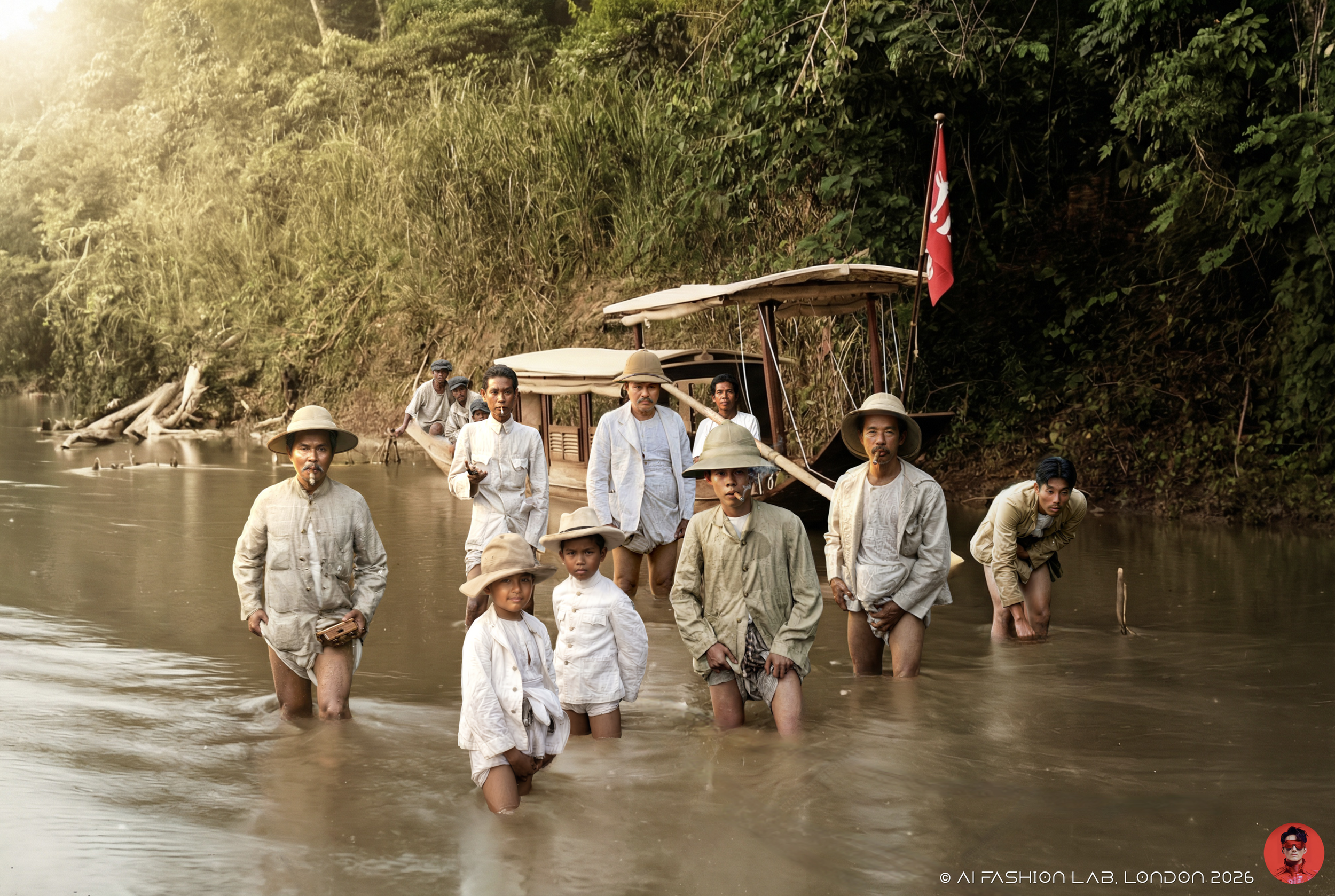
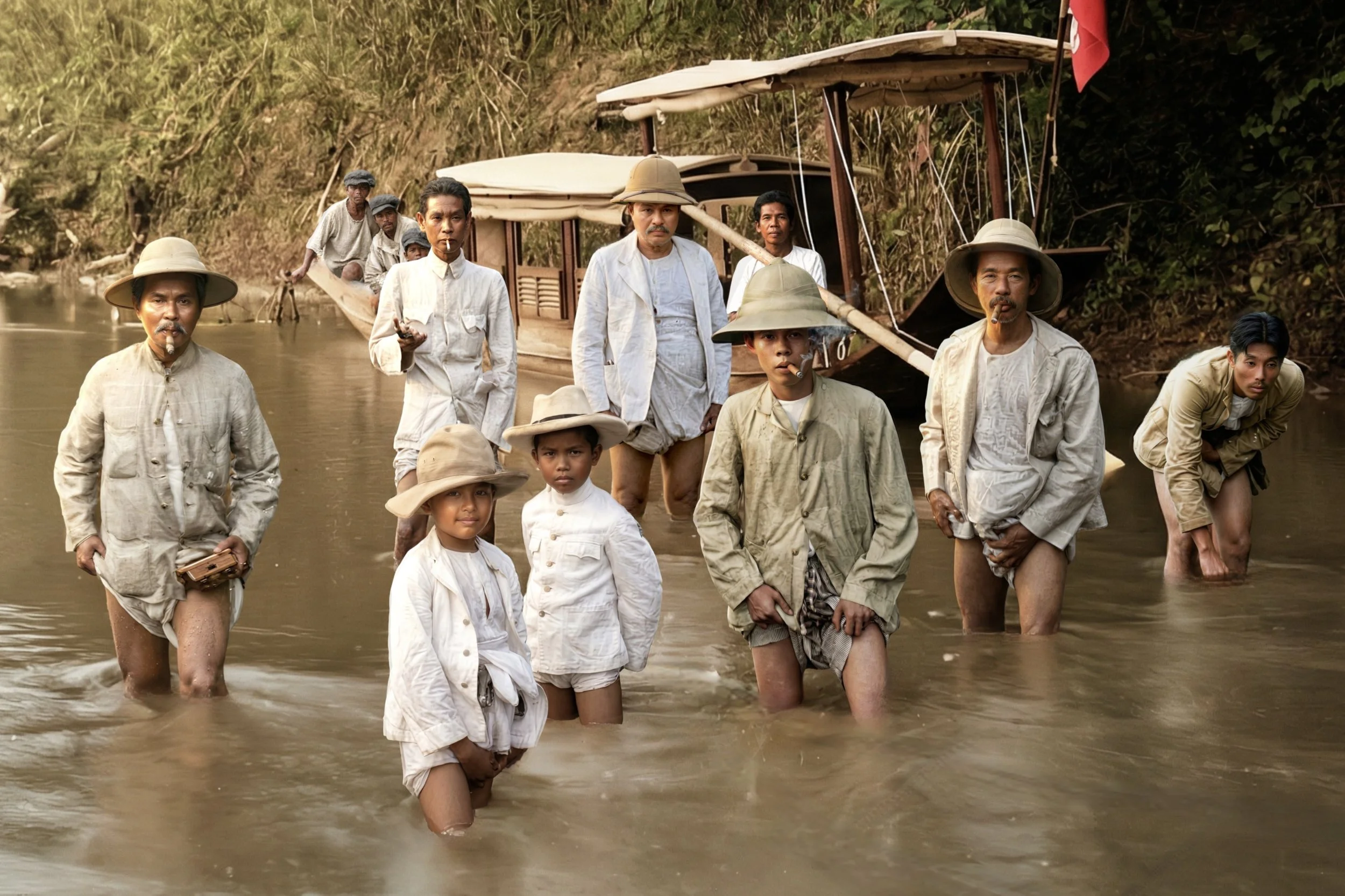
พระบรมวงศานุวงศ์และข้าราชการ ณ ริมแม่น้ำปิงฝั่งตะวันออก บริเวณ บ้านวังนางร้าง เมืองกำแพงเพชร ระหว่างการตามเสด็จ พระบาทสมเด็จพระจุลจอมเกล้าเจ้าอยู่หัว ในการเสด็จประพาสต้น ครั้งที่ ๒ เมื่อวันที่ ๒๐ สิงหาคม พุทธศักราช ๒๔๔๙
ภาพที่ได้รับการบูรณะและสร้างสรรค์ขึ้นด้วยเทคโนโลยี AI ภาพนี้ เป็นพระรูปของ พระบรมวงศานุวงศ์และข้าราชการ ณ ริมแม่น้ำปิงฝั่งตะวันออก บริเวณ บ้านวังนางร้าง เมืองกำแพงเพชร ระหว่างการตามเสด็จ พระบาทสมเด็จพระจุลจอมเกล้าเจ้าอยู่หัว ในการเสด็จประพาสต้น ครั้งที่ ๒ เมื่อวันที่ ๒๐ สิงหาคม พุทธศักราช ๒๔๔๙ (๑ ปี ก่อนการเสด็จประพาสยุโรปครั้งที่ ๒ ในปี พ.ศ. ๒๔๕๐ )
(จากซ้ายไปขวา ไม่รวมบุคคลที่อยู่บนเรือ)
๑. พระเจ้าน้องยาเธอ กรมหลวงประจักษ์ศิลปาคม
๒. พระยาโบราณบุรานุรักษ์ (พร เดชะคุปต์)
๓. พระเจ้าลูกยาเธอ พระองค์เจ้าอุรุพงษ์รัชสมโภช
๔. หม่อมเจ้าทองต่อ ทองแถม
๕. พระเจ้าน้องยาเธอ กรมขุนสรรพสาตรศุภกิจ
๖. สมเด็จพระเจ้าลูกยาเธอ เจ้าฟ้ายุคลทิฆัมพร
๗. พระเจ้าน้องยาเธอ กรมหลวงดำรงราชานุภาพ
๘. พระยาบุรุษรัตนราชพัลลภ (นพ ไกรฤกษ์)
กระบวนการบูรณะและความท้าทายของงานฟื้นฟูภาพ
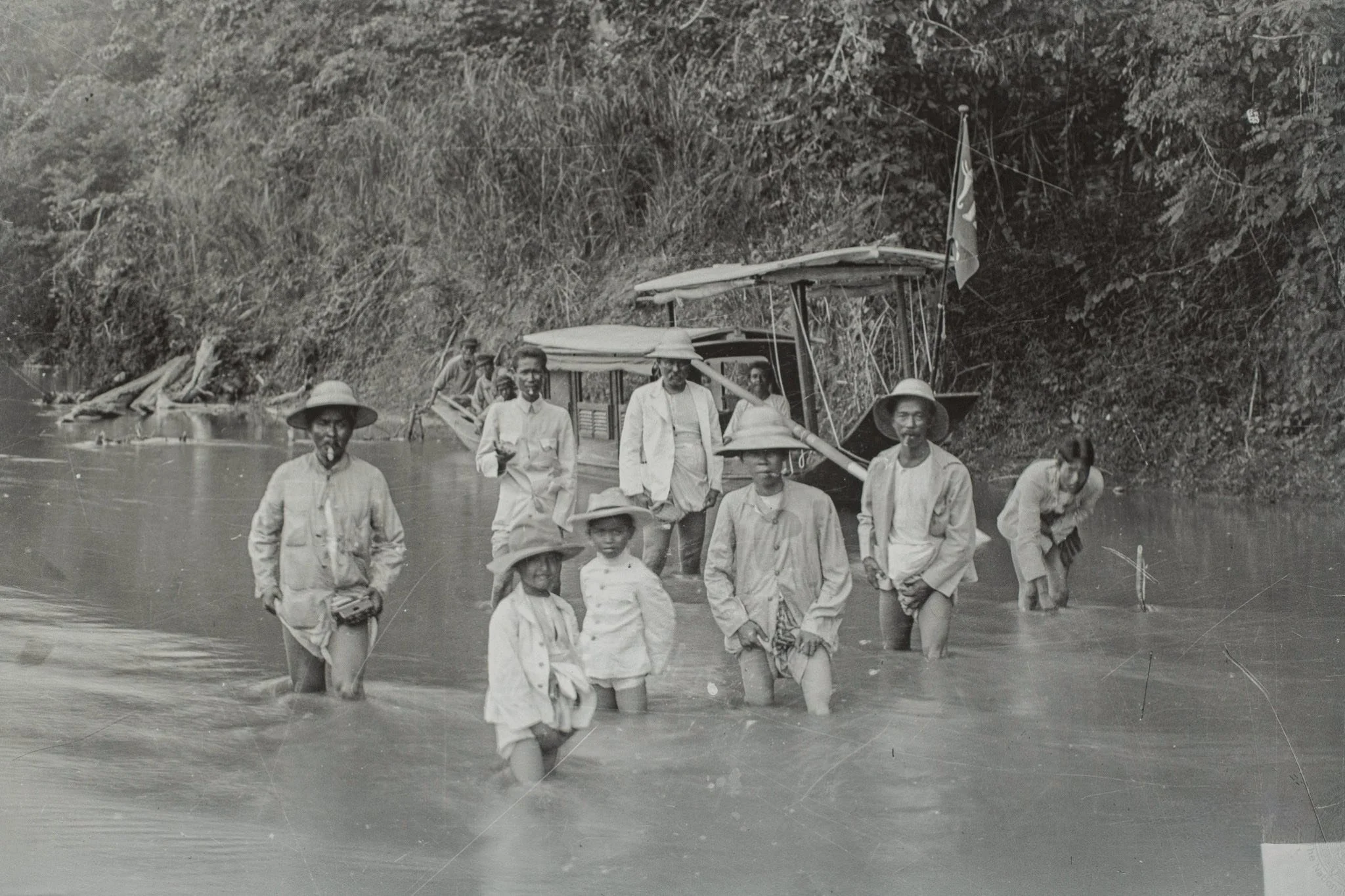
ความท้าทายสำคัญของการบูรณะภาพนี้อยู่ที่คุณภาพของภาพต้นฉบับ ซึ่งมีลักษณะพร่ามัวและมีการรับแสงต่ำ (underexposed) ส่งผลให้รายละเอียดของใบหน้า โครงสร้างร่างกาย มิติของแสง และระยะชัดลึกของภาพสูญหายไปเป็นอย่างมาก อย่างไรก็ตาม บุคคลที่ปรากฏในภาพได้รับการระบุตัวตนอย่างชัดเจนแล้ว ซึ่งถือเป็นเงื่อนไขสำคัญที่เอื้อให้การบูรณะสามารถดำเนินไปได้อย่างมีความรับผิดชอบทางประวัติศาสตร์
กระบวนการบูรณะเริ่มต้นจากการฟื้นฟูภาพรวมทั้งภาพก่อน เพื่อปรับสมดุลแสง เงา โทนภาพ และระยะชัดลึก ให้กลับคืนสู่สภาพของภาพถ่ายที่มีโครงสร้างทางการถ่ายภาพสมบูรณ์ จากนั้นจึงดำเนินการบูรณะภาพของบุคคลแต่ละรายแยกกัน โดยให้ความสำคัญกับความชัดเจนของใบหน้า และความถูกต้องของเค้าโครงและลักษณะเฉพาะของแต่ละบุคคล การฟื้นฟูในขั้นตอนนี้อ้างอิงจากพระรูปหรือภาพถ่ายอื่น ๆ ของบุคคลเดียวกันในช่วงเวลาใกล้เคียงกัน เพื่อรักษาความแม่นยำด้านสัดส่วนและลักษณะใบหน้าตามบริบทของยุคสมัย
ในขั้นตอนการบูรณะรายบุคคล ความท้าทายเพิ่มเติมคือการควบคุม ความกลมกลืนของ colour palette (โทนสี) ของเครื่องแต่งกายและรายละเอียดทางวัตถุ ให้สอดคล้องกันทั้งภาพ โดยใช้แนวคิดของ colour palette (โทนสี) ในบริบทอาณานิคมปลายคริสต์ศตวรรษที่ ๑๙ เป็นกรอบอ้างอิง เนื่องจากเครื่องแต่งกายในช่วงเวลาดังกล่าวส่วนใหญ่ทำจากผ้าฝ้าย และใช้สีย้อมจากธรรมชาติเป็นหลัก ส่งผลให้โทนสีมีความนุ่ม ละมุน ไม่ฉูดฉาด และแปรผันตามสภาพแสงและพื้นผิวผ้า เมื่อบูรณะภาพบุคคลแต่ละรายจึงต้องควบคุม colour palette (โทนสี) ของเครื่องแต่งกายให้สม่ำเสมอ เพื่อไม่ให้เกิดความคลาดเคลื่อนทางสายตาหรือความรู้สึกแยกส่วนของภาพ
เมื่อการบูรณะรายบุคคลแล้วเสร็จ บุคคลทั้งหมดถูกนำกลับมาประกอบรวมกันใหม่ในองค์ประกอบภาพหลัก จากนั้นจึงเข้าสู่ขั้นตอนการกำหนดและปรับ ทิศทางของแสง ซึ่งยึดตามแหล่งกำเนิดแสงจากด้านข้างที่ปรากฏในภาพต้นฉบับ เป็นแสงหลัก (key light) เพื่อให้แสง เงา ปริมาตรของร่างกาย และพื้นผิวของเครื่องแต่งกายสอดคล้องกันอย่างเป็นเอกภาพทั้งภาพ
ในขั้นตอนสุดท้าย มีการปรับแสงและโทนภาพโดยรวม (final relighting and tonal harmonisation) เพื่อให้ภาพมีความสมจริงในเชิงภาพถ่าย มีมิติ และคงบรรยากาศของช่วงเวลาทางประวัติศาสตร์อย่างเหมาะสม กระบวนการทั้งหมดดำเนินการโดยใช้เทคโนโลยี AI เป็นเครื่องมือในการฟื้นฟูและเสริมศักยภาพของภาพ ภายใต้การกำกับด้วยองค์ความรู้ด้านประวัติศาสตร์แฟชั่น เทคโนโลยีสิ่งทอ และหลักการถ่ายภาพในยุคสมัยนั้น เพื่อให้ผลลัพธ์สุดท้ายยังคงความถูกต้องทางประวัติศาสตร์ ควบคู่ไปกับความสมเหตุสมผลทางสายตา มิใช่การสร้างภาพขึ้นใหม่ด้วยการคาดเดา
กระบวนการทั้งหมด สร้างสรรค์พร้อมกับการใช้ AI อย่างมีจริยธรรม และคำนึงถึงความถูกต้องทางประวัติศาสตร์เป็นสำคัญครับ
________
ภาพต้นฉบับมาจาก นิทรรศการฟิล์มกระจกหมายเหตุ: หนึ่งพันภาพ ประวัติศาสตร์รัตนโกสินทร์ ครั้งที่ ๓ พุทธศักราช ๒๕๖๘
ซึ่งจัดขึ้นเพื่อบอกเล่าเรื่องราวประวัติศาสตร์สยามในช่วงรัชสมัยพระบาทสมเด็จพระจุลจอมเกล้าเจ้าอยู่หัว ผ่านภาพถ่ายฟิล์มกระจกอันทรงคุณค่าทางประวัติศาสตร์
นิทรรศการดังกล่าวสะท้อนช่วงเวลาแห่งการเปลี่ยนผ่านของสยาม จากระบบมณฑลแบบดั้งเดิม สู่รัฐชาติสมัยใหม่ที่มีการจัดวางเขตแดนและระบบราชการอย่างชัดเจน ภายใต้บริบทของการเมืองยุคล่าอาณานิคม ซึ่งเป็นยุคแห่งการขยายอำนาจของชาติตะวันตกในเอเชียตะวันออกเฉียงใต้ ภาพถ่ายเหล่านี้จึงมิได้เป็นเพียงหลักฐานทางประวัติศาสตร์ หากยังเป็นหน้าต่างที่เปิดให้เห็นถึงวิธีคิด วิธีการปกครอง และความเคลื่อนไหวของสยามในยุคแห่งการเปลี่ยนผ่านอย่างลึกซึ้ง
ระยะเวลาจัดแสดง: ๒๒ พฤษภาคม – ๒๗ กรกฎาคม พุทธศักราช ๒๕๖๘ (เมื่อปีที่ผ่านมา)
สถานที่: ห้องนิทรรศการหลัก ชั้น ๙ หอศิลปวัฒนธรรมแห่งกรุงเทพมหานคร (BACC)
Credit: Facebook: Asawin Thongtham Na Ayudhya
__________________
Siamese royal family and senior officials on Second Royal Inspection Tour
Siamese royal family and senior officials during the royal escort of King Chulalongkorn (Rama V) on his Second Royal Inspection Tour (Phra Phatson Ton), dated 20 August 1906
This AI-restored and digitally reconstructed image depicts members of the Siamese royal family and senior officials gathered on the eastern bank of the Ping River, at Ban Wang Nang Rang, Kamphaeng Phet, during the royal escort of King Chulalongkorn (Rama V) (พระบาทสมเด็จพระจุลจอมเกล้าเจ้าอยู่หัว) on his Second Royal Inspection Tour (Phra Phatson Ton), dated 20 August 1906—one year prior to his second European tour in 1907 (1907–1908).
(From left to right, excluding figures on the boat):
Prince Prachak Silpakom (พระเจ้าน้องยาเธอ กรมหลวงประจักษ์ศิลปาคม)
Phra Boran Buranu Rak (Phon Detchakup) (พระยาโบราณบุรานุรักษ์ – พร เดชะคุปต์)
Prince Urubongse Rajsombhoj (พระเจ้าลูกยาเธอ พระองค์เจ้าอุรุพงษ์รัชสมโภช)
Mom Chao Thongto Thongtham (หม่อมเจ้าทองต่อ ทองแถม)
Prince Sanphasit Suphakit (พระเจ้าน้องยาเธอ กรมขุนสรรพสาตรศุภกิจ)
Prince Yugala Dighambara (สมเด็จพระเจ้าลูกยาเธอ เจ้าฟ้ายุคลทิฆัมพร)
Prince Damrong Rajanubhab (พระเจ้าน้องยาเธอ กรมหลวงดำรงราชานุภาพ)
Phra Burusratanaratchaphallop (Nop Krairiksh) (พระยาบุรุษรัตนราชพัลลภ – นพ ไกรฤกษ์)
Restoration Process and Technical Challenges
The principal challenge in restoring this photograph lay in the condition of the original image, which was significantly blurred and underexposed. As a result, critical visual information—such as facial detail, bodily structure, light modelling, and depth of field—had been substantially lost. Fortunately, the identities of all individuals in the photograph have been firmly established, providing an essential foundation for a historically responsible restoration.
The restoration process began with reconstructing the image as a whole, rebalancing exposure, lighting, tonal values, and depth of field in order to re-establish a coherent photographic structure. Once the overall image integrity was restored, each individual figure was processed separately, with particular emphasis on facial clarity and the accurate reconstruction of likeness. This stage was informed by comparative analysis with other authenticated portraits of the same individuals from a similar period, ensuring proportional accuracy and period-appropriate facial characteristics.
At the level of individual restoration, an additional challenge involved maintaining the coherence of the colour palette (tonal range) of costumes and material details across the entire image. A late nineteenth-century colonial colour palette was adopted as the contextual framework, reflecting the historical reality that most garments of the period were cotton-based and dyed with natural pigments. Such textiles typically produced soft, muted tones rather than vivid or saturated colours, with variations shaped by light, wear, and fabric texture. Careful control of the colour palette was therefore essential to avoid visual inconsistency or fragmentation once the individual figures were recombined.
Following the completion of individual restorations, all figures were reassembled into the main composition. Particular attention was then given to the direction of light, which was reconstructed based on the lateral light source visible in the original photograph, likely entering from a side opening or doorway. This light source was treated as the primary key light, ensuring consistent shadows, volume, and surface rendering across faces, garments, and bodies.
The final stage involved overall relighting and tonal harmonisation, refining contrast and depth to achieve photographic realism while preserving the historical atmosphere of the period. Throughout the entire process, AI was employed strictly as a restoration and enhancement tool, guided by historical research, fashion history, textile knowledge, and photographic principles. The result is not a speculative reconstruction, but a historically grounded visual restoration that balances technological capability with scholarly responsibility.
All stages of this work were carried out with a strong commitment to ethical AI practice, prioritising historical accuracy, contextual integrity, and transparency in the use of artificial intelligence.
_________
The original photograph is drawn from the exhibition Glass Plate Negatives: One Thousand Images of Rattanakosin History, Third Edition (B.E. 2568 / 2025), which was organised to present the history of Siam during the reign of King Chulalongkorn (Rama V) through historically significant glass plate photographs.
The exhibition reflects a critical moment of transition in Siamese history, marking the shift from the traditional mandala-based administrative system to a modern nation-state with clearly defined territorial boundaries and bureaucratic structures. This transformation unfolded within the broader context of colonial-era geopolitics, a period characterised by the expansion of Western imperial powers across Southeast Asia. As such, these photographs function not only as historical records, but also as visual windows into the political thought, systems of governance, and social dynamics of Siam during a pivotal era of change.
Exhibition dates: 22 May – 27 July B.E. 2568 (2025)
Venue: Main Exhibition Gallery, 9th Floor, Bangkok Art and Culture Centre (BACC)
Credit: Facebook: Asawin Thongtham Na Ayudhya
__________________
เรียนเชิญกด Subscribe ได้ที่ลิงก์นี้ครับ เพื่อร่วมติดตามงานสร้างสรรค์ต้นฉบับ งานวิจัยประวัติศาสตร์แฟชั่น และผลงานอนุรักษ์มรดกวัฒนธรรมด้วยเทคโนโลยี AI ของ AI Fashion Lab, London ซึ่งมุ่งตีความอดีตผ่านมิติใหม่ของการบูรณะภาพ การสร้างสรรค์ภาพ และการเล่าเรื่องด้วยศิลปะเชิงดิจิทัล 🔗 https://www.facebook.com/aifashionlab/subscribe/
#aifashionlab #AI #aiartist #aiart #aifashion #aifashiondesign #aifashionstyling #aifashiondesigner #fashion #fashionhistory #historyoffashion #fashionstyling #fashionphotography #digitalfashion #digitalfashiondesign #digitalcostumedesign #digitaldesign #digitalaiart #ThaiFashionHistory #ThaiFashionAI #thailand #UNESCO