ท้าวทรงกันดาล (หุ่น): คุณท้าวนางชั้นผู้ใหญ่ในสมัยรัชกาลที่ ๕
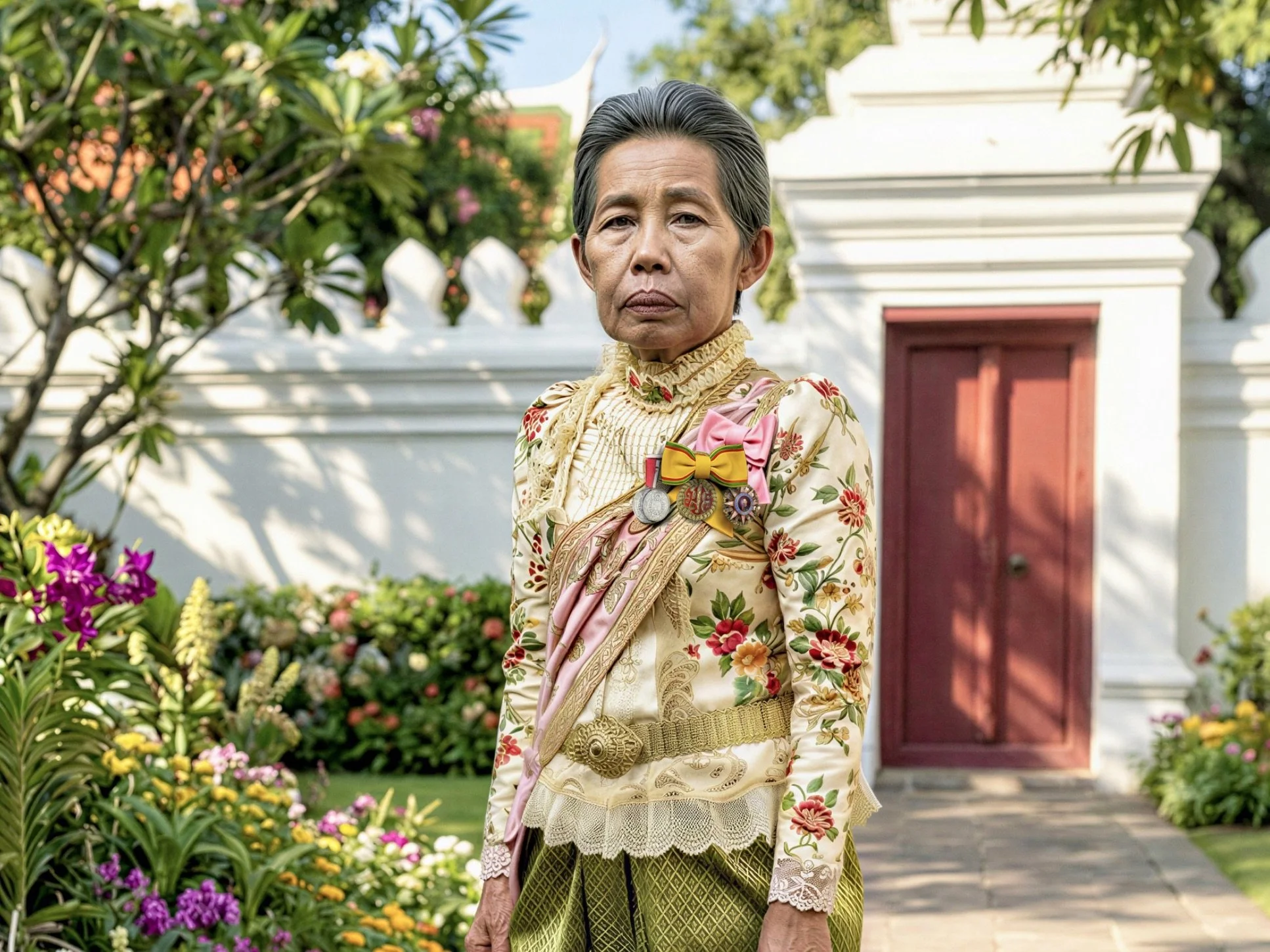
ท้าวทรงกันดาล (หุ่น): คุณท้าวนางชั้นผู้ใหญ่ในสมัยรัชกาลที่ ๕
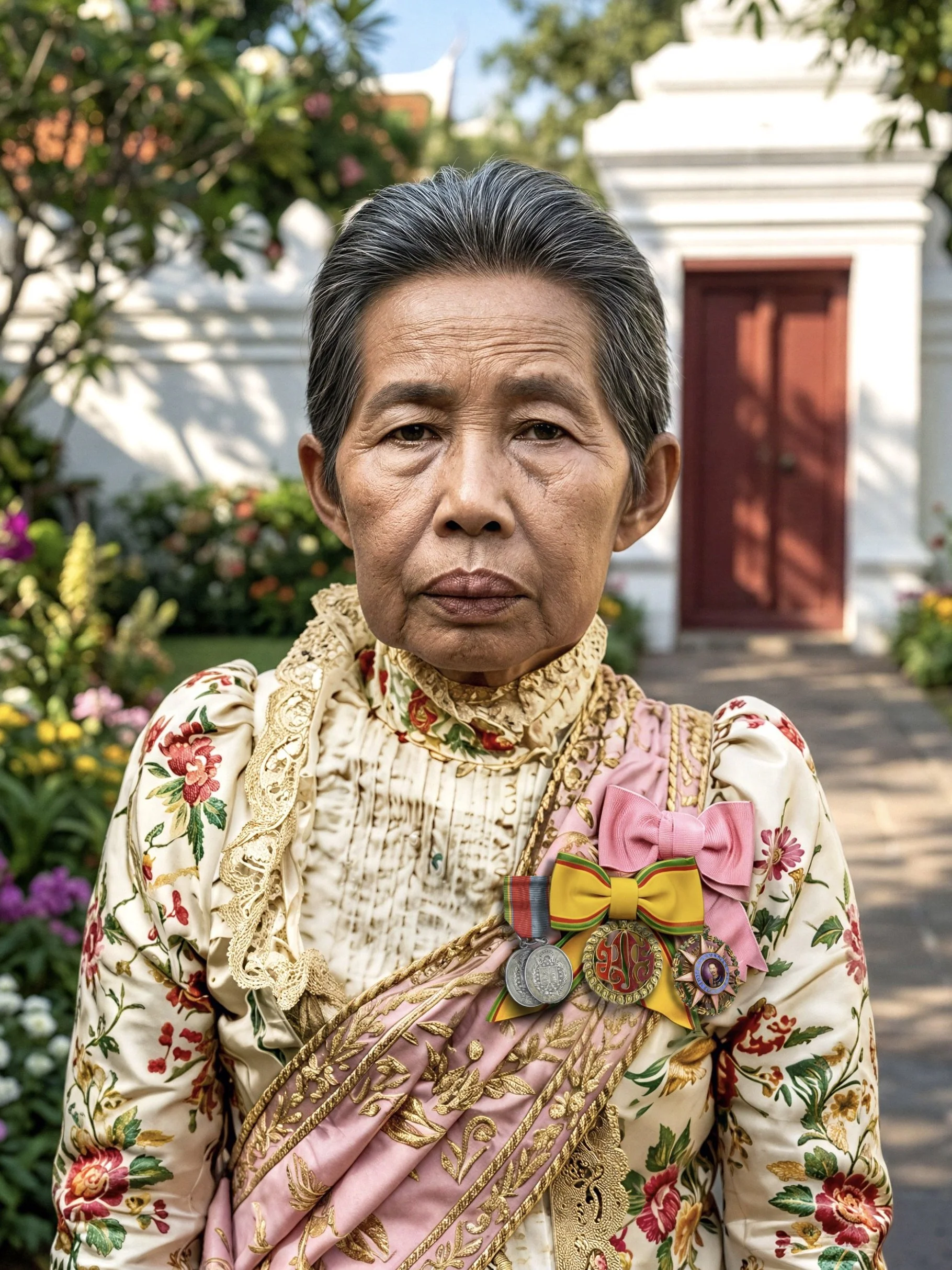
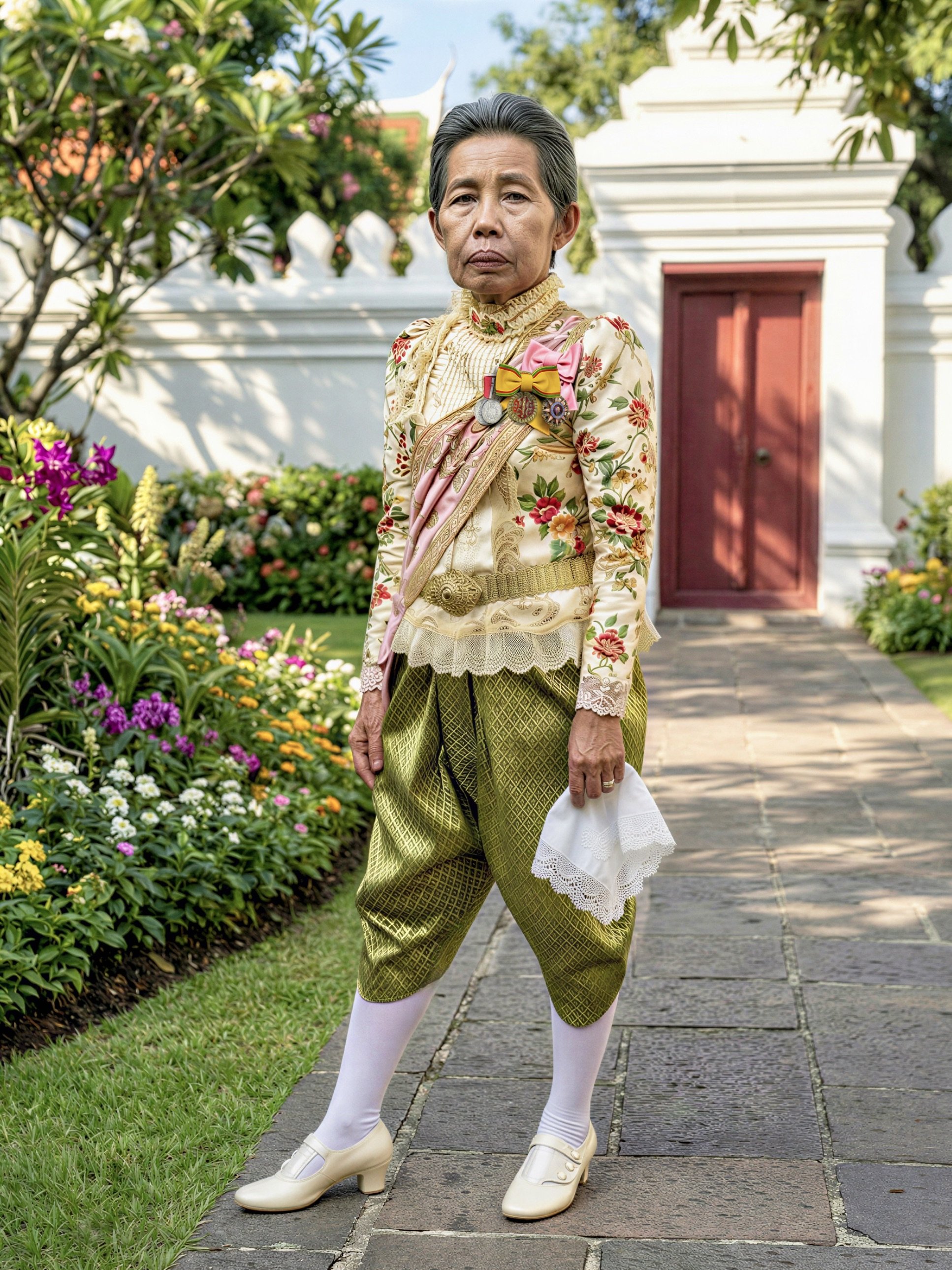
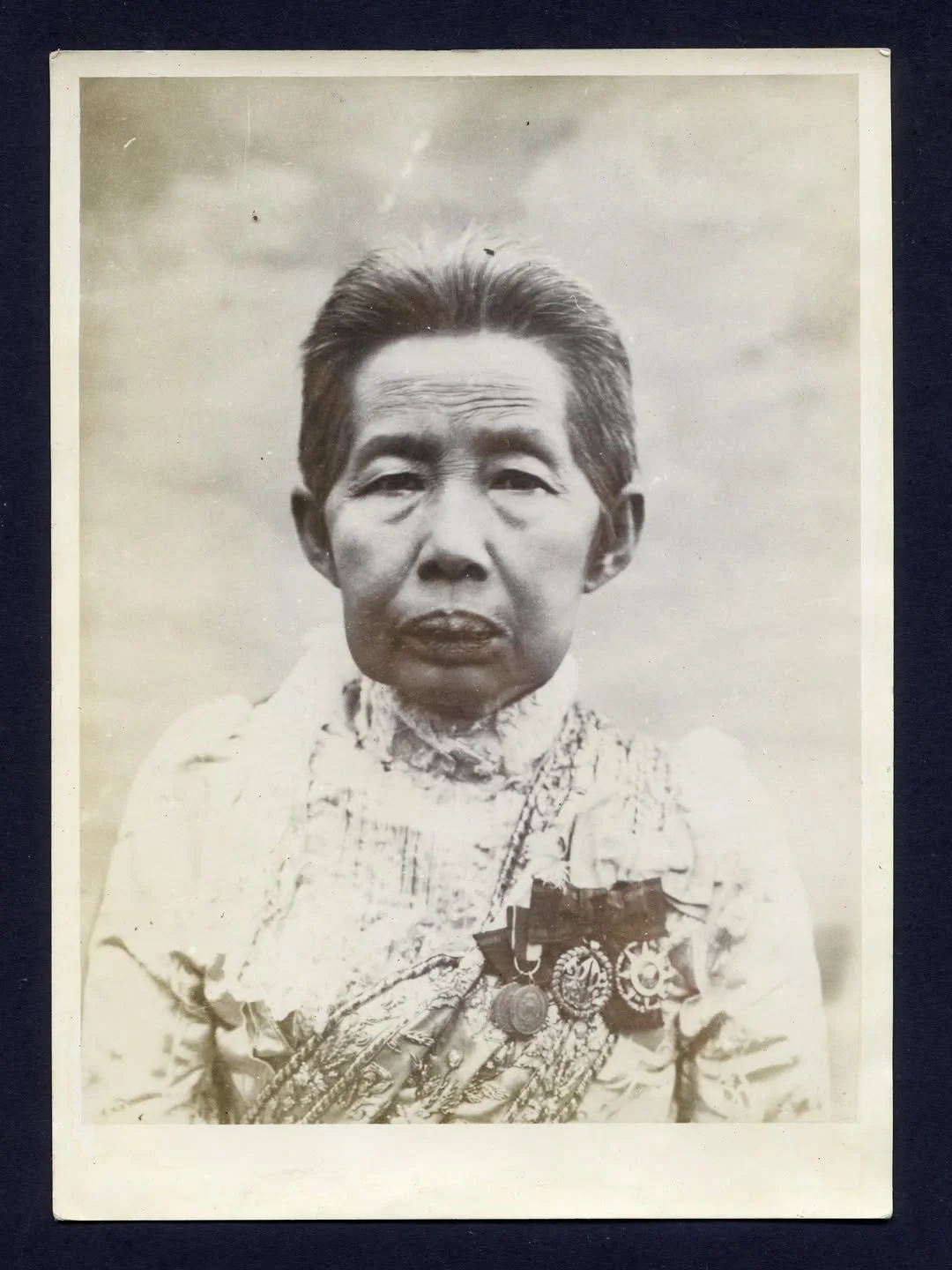
ภาพที่ได้รับการบูรณะและสร้างสรรค์ขึ้นด้วยเทคโนโลยี AI นี้ เป็นภาพของ ท้าวทรงกันดาล นามเดิม หุ่น ซึ่งเป็นสามัญชน มิใช่เจ้านาย พระสนมในรัชกาลที่ ๔ และเป็นบุคคลสำคัญอย่างยิ่งของระบบบริหารฝ่ายในช่วงปลายคริสต์ศตวรรษที่ ๑๙
เจ้าจอมมารดาหุ่นเกิดในสมัยรัชกาลที่ ๓ ไม่พบหลักฐานประวัติตระกูล ต่อมาได้ถวายตัวเป็นบาทบริจาริกาในรัชกาลที่ ๔ และมีพระราชโอรสเพียงพระองค์เดียว คือ พระองค์เจ้าสวัสดิประวัติ ซึ่งต่อมาได้รับสถาปนาเป็น กรมพระสมมตอมรพันธุ์ ต้นราชสกุล สวัสดิกุล และทำหน้าที่ราชเลขานุการในรัชกาลที่ ๕
ในรัชกาลที่ ๕ เจ้าจอมมารดาหุ่น ได้รับแต่งตั้งให้ดำรงตำแหน่ง “ท้าวทรงกันดาล”
ซึ่งเป็นตำแหน่งท้าวนางชั้นสูงที่มีมาแต่โบราณ มีหน้าที่บังคับบัญชา พระคลังฝ่ายใน ดูแลการจัดการเงิน ทอง พรรณผ้า เครื่องทองขาว ทองเหลือง และควบคุมการเบิกจ่ายทั้งหมดของฝ่ายใน ถือเป็นตำแหน่งด้านการคลังที่สำคัญที่สุดตำแหน่งหนึ่งในราชสำนัก
ท้าวทรงกันดาลถึงแก่อสัญกรรมด้วยโรคชราในสมัยรัชกาลที่ ๖ เมื่อปี พ.ศ. ๒๔๖๖ (ค.ศ. 1923) สิริอายุ ๘๓ ปี
ในพระราชพิธี เฉลิมพระราชมณเฑียร ท้าวทรงกันดาลเป็นผู้ถือและถวาย กุญแจทองคำ ซึ่งเป็นหน้าที่เชิงพิธีการที่สะท้อนบทบาทของผู้ควบคุมทรัพย์สินฝ่ายในโดยตรง
ตำแหน่งท้าวทรงกันดาลมีผู้ช่วย ๑ ตำแหน่ง คือ ท้าวสุภัตติการภักดี ซึ่งในสมัยรัชกาลที่ ๖ เปลี่ยนชื่อเป็น ท้าวภัณฑสารนุรักษ์เช่นเดียวกับกรณีของ ท้าวภัณฑสารนุรักษ์ (เจ้าจอมเพิ่ม ในรัชกาลที่ ๕)
ท้าวทรงกันดาลคนสุดท้ายคือ ม.ร.ว.แป้ม มาลากุล (มีศักดิ์เป็นเหลนทวดในรัชกาลที่ ๒) ได้รับตำแหน่งในสมัยรัชกาลที่ ๗ และในสมัยรัชกาลที่ ๙ ได้เลื่อนเป็น “ท้าววรคณานันท์ อัพภันตรปตานี ราชนารีกิจวิจารณ์” มีศักดินา ๓,๐๐๐ สูงกว่าท้าวนางตำแหน่งอื่นทั้งหมด
คุณท้าวคนสุดท้ายของระบบท้าวนางฝ่ายใน คือ ท้าวศรีสัจจา (สังวาลย์ บุณยรัตพันธุ์) ได้รับแต่งตั้งในสมัยรัชกาลที่ ๙ เมื่อปี พ.ศ. ๒๔๙๕ (ค.ศ. 1952)
_________
เครื่องราชอิสริยาภรณ์และเหรียญที่ปรากฏในภาพ
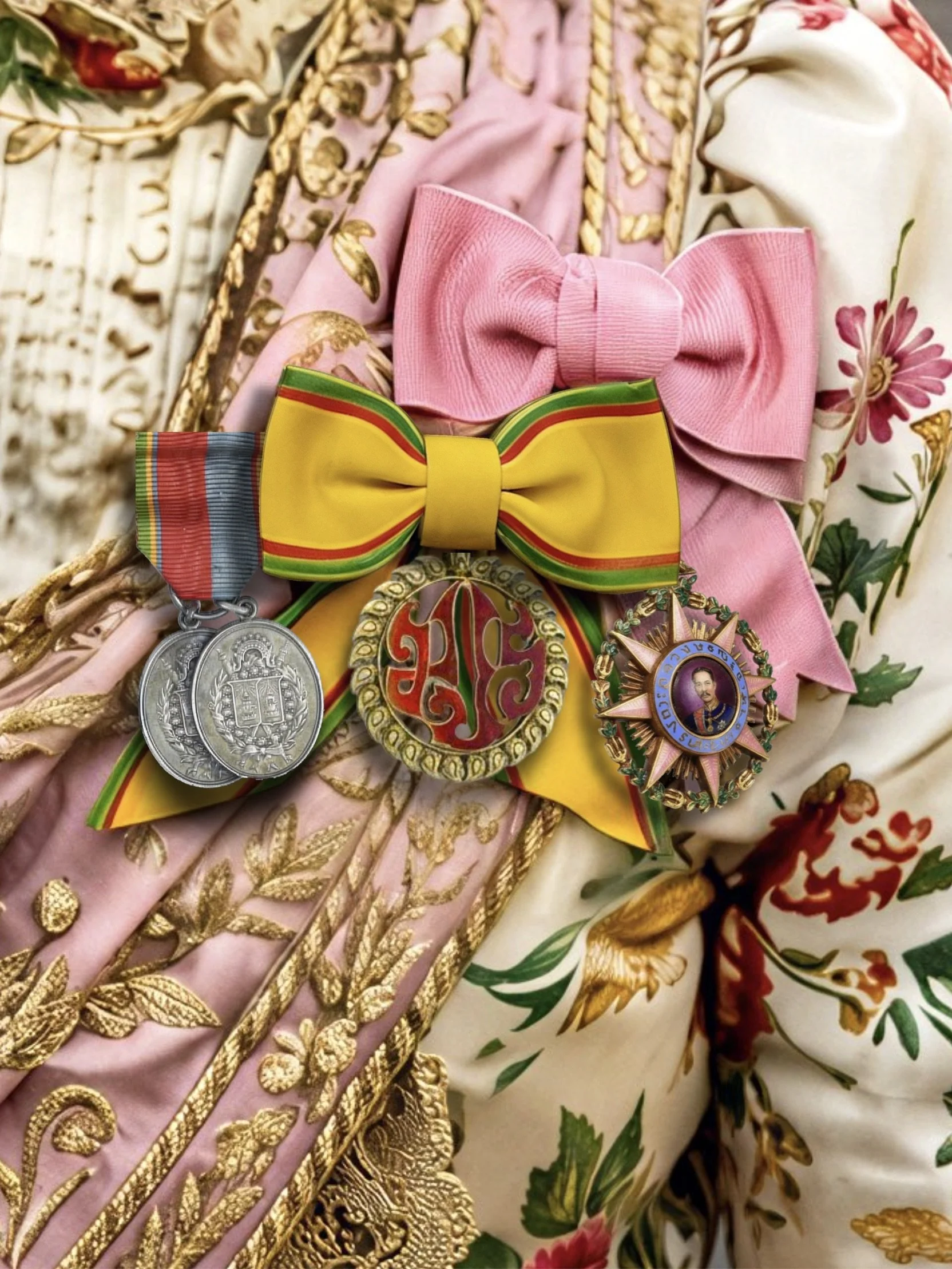
ในภาพนี้ ท้าวทรงกันดาลประดับ เหรียญและเครื่องราชอิสริยาภรณ์ ๓ รายการ ได้แก่
พ.ศ. ๒๔๔๖ (ค.ศ. 1903) – เหรียญเสมอ (เหรียญที่ระลึก)
พ.ศ. ๒๔๔๗ (ค.ศ. 1904) – เหรียญรัตนาภรณ์ รัชกาลที่ ๔ ชั้นที่ ๓ (ม.ป.ร.๓)
พ.ศ. ๒๔๕๔ (ค.ศ. 1911) – เครื่องราชอิสริยาภรณ์จุลจอมเกล้า ชั้นที่ ๒ ทุติยจุลจอมเกล้าวิเศษ (ท.จ.ว.) ฝ่ายใน
ตลอดชีวิตการรับการ ท้าวทรงกันดาล ได้รับเหรียญเพิ่มอีก ๒ รายการในช่วงต้นรัชกาลที่ ๖ แต่ ยังไม่ปรากฏในภาพนี้ คือ
พ.ศ. ๒๔๕๔ (ค.ศ. 1911) – เหรียญรัตนาภรณ์ รัชกาลที่ ๕ ชั้นที่ ๓ (จ.ป.ร.๓)
พ.ศ. ๒๔๕๔ (ค.ศ. 1911) – เหรียญรัตนาภรณ์ รัชกาลที่ ๖ ชั้นที่ ๓ (ว.ป.ร.๓)
ดังนั้น ภาพนี้จึงน่าจะถ่าย หลัง พ.ศ. ๒๔๔๗ (ค.ศ. 1904) และก่อน พ.ศ. ๒๔๕๔ (ค.ศ. 1911)
เหรียญเสมอ (พ.ศ. ๒๔๔๖ / ค.ศ. 1903): บริบทและความหมาย
เหรียญเสมอ เป็นเหรียญที่ระลึกสำคัญในรัชกาลที่ ๕ สร้างขึ้นเมื่อ พ.ศ. ๒๔๔๖ (ค.ศ. 1903) เพื่อฉลองวาระที่รัชกาลที่ ๕ ครองราชย์ยาวนานถึง ๑๒,๒๔๔ วัน นับถึงวันที่ ๓ ตุลาคม ร.ศ. ๑๒๒ ซึ่งยาวนานกว่ากษัตริย์พระองค์ก่อนในราชวงศ์จักรี และมีระยะเวลา เป็นสองเท่าของรัชกาลที่ ๔
คำว่า “เสมอ” ในที่นี้ มิได้หมายถึงความเท่าเทียมเชิงสถานะ แต่หมายถึง การครองราชย์ยาวนาน “เสมอกันเป็นสองเท่า”เมื่อเทียบกับรัชกาลก่อนหน้า เหรียญนี้จึงเป็นสัญลักษณ์ของความต่อเนื่อง ความมั่นคง และความสำเร็จของการบริหารราชการแผ่นดินในยุคปฏิรูปสยาม
เหรียญเสมอถูกพระราชทาน ทั้งฝ่ายหน้าและฝ่ายใน แก่บุคคลที่รับราชการใกล้ชิดและมีบทบาทสำคัญในระบบราชสำนัก ไม่จำกัดเฉพาะเจ้านาย แต่รวมถึงข้าราชการและท้าวนางฝ่ายในระดับสูงด้วย การที่ท้าวทรงกันดาลได้รับเหรียญนี้สะท้อนให้เห็นอย่างชัดเจนว่า เธอเป็นสามัญชนที่ก้าวขึ้นสู่ตำแหน่งบริหารระดับสูง และมีบทบาทสำคัญต่อความมั่นคงด้านการคลังของฝ่ายในอย่างแท้จริง
_________
เรือนท้าวทรงกันดาลในวังหลวง
หม่อมเจ้าวิบุลยสวัสดิวงศ สวัสดิกุล พระโอรสในพระเจ้าบรมวงศ์เธอ กรมพระสมมตอมรพันธุ์ กับหม่อมเพิ่ม สวัสดิกุล ได้ทรงเล่าถึงเรือนของคุณย่า หรือท้าวทรงกันดาล ซึ่งเป็นผู้บังคับบัญชาพระคลังฝ่ายในในพระบรมมหาราชวัง ไว้อย่างน่าสนใจ ปรากฏความโดยละเอียดว่า
“…พ่อจำความได้แต่เมื่อตอนอยู่ในพระราชวังหลวงกับคุณย่า คุณย่า (คุณทวดของลูก ๆ) คือ ท้าวทรงกันดาล (เจ้าจอมมารดาหุ่น) เรือนคุณย่าเดิมอยู่หลังตึกพระคลังใน มีเรือนใหญ่ ๒ ชั้นสร้างด้วยอิฐ และมีเรือนอีกหลังหนึ่งอยู่ใกล้ประตูหน้า ซึ่งคุณท้าวภู่ (พ่อเคยเรียกว่าคุณย่าภู่) อยู่
เรือนคุณย่าแม้นับว่าเป็นตึก ๒ ชั้นก็ดี แต่ใช้ข้างบนเท่านั้น ข้างล่างมีห้อง ๓ ห้อง ไม่เห็นใช้สำหรับอะไรนอกจากเก็บของ เช่น ฟืน ๑ ห้อง ห้องเล็ก ๑ ห้อง และทิ้งว่างไว้อีก ๑ ห้อง ถ้านับตามหลักอนามัยในสมัยนี้แล้ว นับว่าสกปรกมาก เพราะมีแต่มูลฝอยซึ่งไม่เห็นมีใครกวาดหรือเทเลย และมีหนูตัวโต ๆ วิ่งอยู่เสมอ เวลานั้นยังไม่มีเครื่องชักโครก พวกคนใช้จึงต้องไปทุ่งที่อุโมง ซึ่งต้องเดินไปจากเรือนนั้นเป็นระยะไม่น้อยกว่า ๔ นาที
ข้างบนเรือนมีห้องยาวและใหญ่มากอยู่กลางเรือน ซึ่งเป็นห้องของคุณย่าและของพ่อ การกินอยู่และการนอนใช้ห้องนั้น มีอีก ๒ ห้องอยู่ข้างซ้ายและข้างขวา นับว่าห้องใหญ่พอใช้ แต่ไม่เท่าห้องกลาง ห้องข้างขวาเป็นห้องของคนใช้บางคน เช่น แม่อบ (ภายหลังเป็นหม่อมอบ) และแม่ผ่อง ห้องข้างซ้ายเป็นห้องของหม่อมแม่ และสำหรับเก็บรักษาเครื่องแต่งตัวของพ่อไว้ด้วย
ต่อออกมามีห้องเล็ก ๆ ที่นอกชาน ซึ่งใช้เป็นครัวของพ่อ ห้องขวาที่นอกชานเป็นห้องของแม่เปลี่ยนและลูกของเขาชื่อคล้าม ซึ่งภายหลังเป็นภรรยาของพระเจริญโภคสมบูรณ์ (ปลัดกรมพุฒ)
ที่หน้านอกชานมีแคร่ใหญ่ ซึ่งพ่อใช้เป็นที่เล่นอยู่เสมอ หน้าเรือนคุณทวดมีห้องแถวสำหรับคนใช้ และมีห้องอาบน้ำติดกับห้องแถวซึ่งคุณย่าใช้ ส่วนคนใช้นั้น เมื่ออาบน้ำก็ต้องใช้ที่ว่างหน้าห้องแถวนั้นเอง
ในเขตนั้นไม่มีสวนเลย ข้างล่างปูหินชนิดโบราณทั่วไป แต่ข้างบันไดขวาของเรือนคุณย่ามีเขาซึ่งสร้างด้วยปูนซีเมนต์ กว้างประมาณ ๓ ศอกกว่า ๆ ยาวประมาณ ๒ วา มีต้นเล็บครุฑสูงปลูกอยู่ข้างเขา และต้นสลัดไดเล็ก ๆ มีถ้ำและตุ๊กตาเล็ก ๆ ติดอยู่ตามเขา เป็นที่เล่นของพ่อ…”
เหตุการณ์ตามที่หม่อมเจ้าวิบุลยสวัสดิวงศทรงเล่าไว้นี้ เกิดขึ้นระหว่างปี พ.ศ. ๒๔๒๘–๒๔๓๘ โดยมีข้อมูลเพิ่มเติมว่า เรือนหลังนี้สร้างขึ้นในสมัยรัชกาลที่ ๔ และพระราชทานให้เป็นที่พำนักของท้าวทรงกันดาลตั้งแต่เมื่อยังเป็นเจ้าจอมมารดาหุ่น และด้วยความที่เจ้าของเรือนเป็นผู้บังคับบัญชาพระคลังฝ่ายใน จึงมีผู้เรียกเรือนนี้ว่า “พระคลังผ้าเหลือง”
ต่อมาในสมัยรัชกาลที่ ๕ โปรดเกล้าฯ ให้สร้างตำหนักไม้เพิ่มขึ้นที่ลานกลาง แล้วพระราชทานให้เป็นที่ประทับของพระราชธิดา คือ พระองค์เจ้าวรลักษณาวดี ตามข้อสันนิษฐาน เรือนที่อยู่ด้านขวามือติดกับตำหนักพระองค์เจ้าวรลักษณาวดี (ด้านซ้าย) จึงน่าจะเป็นเรือนของท้าวทรงกันดาลที่หม่อมเจ้าวิบุลยสวัสดิวงศทรงกล่าวถึง
_________
Thao Songkandal (Hun) [ท้าวทรงกันดาล (หุ่น)]: Senior Lady Official of the Inner Court during the Reign of King Rama V
This AI-restored and digitally re-created image depicts Thao Songkandal (Hun) [ท้าวทรงกันดาล (หุ่น)], originally named Hun [หุ่น], a commoner rather than a royal. She served as a royal consort during the reign of King Rama IV and later became one of the most significant figures in the administrative system of the Siamese Inner Court in the late nineteenth century.
Chao Chom Manda Hun [เจ้าจอมมารดาหุ่น] was born during the reign of King Rama III. No record of her family background has been found. She later entered royal service as a consort during the reign of King Rama IV and had only one son, Phra Ong Chao Sawatdi Pravat [พระองค์เจ้าสวัสดิประวัติ], who was subsequently elevated to the rank of Krom Phra Sommot Amornphan [กรมพระสมมตอมรพันธุ์], the progenitor of the Sawatdikul lineage [ราชสกุลสวัสดิกุล], and later served as Royal Secretary during the reign of King Rama V.
During the reign of King Rama V, she was appointed to the position of
“Thao Songkandal” [ท้าวทรงกันดาล], Chief Administrator of the Siamese Inner Court Treasury
a senior female court office that had existed since earlier periods. The role entailed authority over the Inner Treasury [พระคลังฝ่ายใน], including responsibility for the management of money, gold, textiles, white metalwork, brassware, and the supervision of all internal disbursements. It was one of the most important financial posts within the Inner Court administration.
Thao Songkandal died of old age during the reign of King Rama VI in 2466 BE (1923 CE), at the age of eighty-three.
During the Chaloem Phra Ratcha Monthian Ceremony [เฉลิมพระราชมณเฑียร], she was responsible for holding and presenting the golden key, a ceremonial duty that directly reflected her role as custodian of the Inner Court’s assets.
The position of Thao Songkandal included one assistant post, known as Thao Suphattikarnphakdi [ท้าวสุภัตติการภักดี], which during the reign of King Rama VI was renamed Thao Phansanurak [ท้าวภัณฑสารนุรักษ์], in the same manner as Thao Phansanurak (Chao Chom Phoem) [ท้าวภัณฑสารนุรักษ์ (เจ้าจอมเพิ่ม)] during the reign of King Rama V.
The last individual to hold the title of Thao Songkandal was Mom Rajawongse Paem Malakul [ม.ร.ว.แป้ม มาลากุล], a great-great-grandchild of King Rama II, who received the appointment during the reign of King Rama VII. In the reign of King Rama IX, she was promoted to
Thao Worakanan Aphanntrapattani Ratchanarikij Wijan
[ท้าววรคณานันท์ อัพภันตรปตานี ราชนารีกิจวิจารณ์],
with a sakdina rank of 3,000, higher than all other female court offices.
The final holder within the Inner Court female official system was Thao Srisatcha (Sangwan Boonyaratphan) [ท้าวศรีสัจจา (สังวาลย์ บุณยรัตพันธุ์)], appointed during the reign of King Rama IX in 2495 BE (1952 CE).
Decorations and Medals Visible in the Photograph
In this image, Thao Songkandal is shown wearing three decorations and medals, namely:
2446 BE (1903 CE) – Samo Medal [เหรียญเสมอ], commemorative medal
2447 BE (1904 CE) – Royal Cypher Medal of King Rama IV, Third Class
[เหรียญรัตนาภรณ์ รัชกาลที่ ๔ ชั้นที่ ๓ (ม.ป.ร.๓)]2454 BE (1911 CE) – Order of Chula Chom Klao, Second Class (Special), Inner Court division
[เครื่องราชอิสริยาภรณ์จุลจอมเกล้า ชั้นที่ ๒ ทุติยจุลจอมเกล้าวิเศษ (ท.จ.ว.) ฝ่ายใน]
Over the course of her career, she later received two additional medals during the late reign of King Rama VI, which do not yet appear in this photograph:
2454 BE (1911 CE) – Royal Cypher Medal of King Rama V, Third Class
[เหรียญรัตนาภรณ์ รัชกาลที่ ๕ ชั้นที่ ๓ (จ.ป.ร.๓)]2454 BE (1911 CE) – Royal Cypher Medal of King Rama VI, Third Class
[เหรียญรัตนาภรณ์ รัชกาลที่ ๖ ชั้นที่ ๓ (ว.ป.ร.๓)]
The photograph can therefore be dated to after 2447 BE (1904 CE) and before 2454 BE (1911 CE).
The Samo Medal (2446 BE / 1903 CE): Context and Significance
The Samo Medal [เหรียญเสมอ] was a major commemorative medal instituted during the reign of King Rama V in 2446 BE (1903 CE). It marked the occasion on which King Rama V had reigned for 12,244 days, calculated up to 3 October R.S. 122, a duration longer than that of any previous monarch of the Chakri dynasty and exactly double the length of the reign of King Rama IV.
The term “samo” (เสมอ) does not imply equality of rank, but rather refers to the reign being “equal in length to two reigns combined.” The medal thus symbolised continuity, stability, and the success of state administration during the era of Siam’s modernising reforms.
The Samo Medal was bestowed upon both Front Court and Inner Court officials who had rendered close and significant service to the royal household. It was not restricted to royalty, but included senior civil servants and high-ranking female officials of the Inner Court. Thao Songkandal’s receipt of this medal clearly reflects her rise from commoner status to a senior administrative role and her importance to the financial stability of the Inner Court.
The Residence of Thao Songkandal within the Grand Palace
Mom Chao Wibunsawatdiwong Sawatdikul
[หม่อมเจ้าวิบุลยสวัสดิวงศ สวัสดิกุล], son of Krom Phra Sommot Amornphan [กรมพระสมมตอมรพันธุ์], together with Mom Phoem Sawatdikul [หม่อมเพิ่ม สวัสดิกุล], recorded a detailed account of the residence of their grandmother, Thao Songkandal, who oversaw the Inner Treasury within the Grand Palace.
“…I remember from the time I lived in the Grand Palace with my grandmother. My grandmother (the children’s great-grandmother) was Thao Songkandal (Chao Chom Manda Hun). Her residence was originally located behind the Inner Treasury building. It consisted of a large two-storey brick structure, and there was another house nearby the front gate where Khun Thao Phu (whom I used to call Grandmother Phu) lived.
Although the residence was a two-storey building, only the upper floor was used. The lower floor contained three rooms, which were not used for living but merely for storage—one room for firewood, one small room, and one left unused. By modern standards of sanitation, it would be considered very unhygienic, as rubbish accumulated and no one appeared to clean it, with large rats frequently running about. At that time, there were no flush toilets, so servants had to walk to the fields near the tunnel area, which took no less than four minutes from the house.
Upstairs there was a very long and large central room, used by my grandmother and myself for eating, living, and sleeping. There were two additional rooms on the left and right. Though spacious, they were smaller than the central room. The right room was occupied by some servants, such as Mae Op (later known as Mom Op) and Mae Phong. The left room belonged to my mother and was also used to store my clothing.
Extending outward was a small room on the veranda, used as my kitchen. The room on the right side of the veranda belonged to Mae Plian and her child, Khlam, who later became the wife of Phra Charoen Phok Sombun (Deputy Director of the Department of Agriculture).
At the front of the veranda was a large raised platform where I often played. In front of my great-grandmother’s house were row rooms for servants and a bathing room used by my grandmother; servants, however, bathed in the open area in front of those quarters.
There was no garden in that compound. The ground was paved with old-style stone throughout. However, beside the right staircase of my grandmother’s house was an artificial hill made of cement, approximately three cubits wide and two wa long, planted with tall lep-khrut trees and small saladai plants, with miniature caves and figurines attached—this was where I used to play…”
The events described occurred between 2428–2438 BE (1885–1895 CE). Additional sources note that the residence was constructed during the reign of King Rama IV and granted to Thao Songkandal when she was still Chao Chom Manda Hun. Because she was in charge of the Inner Treasury, the house was sometimes referred to as the “Yellow Cloth Treasury” [พระคลังผ้าเหลือง].
Later, during the reign of King Rama V, an additional wooden residence was constructed in the central courtyard and granted to Princess Woralaksanawadi [พระองค์เจ้าวรลักษณาวดี]. Based on this information, the building situated to the right of Princess Woralaksanawadi’s residence (on the left) is likely to be the house of Thao Songkandal referred to in this account.
_________
เรียนเชิญกด Subscribe ได้ที่ลิงก์นี้ครับ เพื่อร่วมติดตามงานสร้างสรรค์ต้นฉบับ งานวิจัยประวัติศาสตร์แฟชั่น และผลงานอนุรักษ์มรดกวัฒนธรรมด้วยเทคโนโลยี AI ของ AI Fashion Lab, London ซึ่งมุ่งตีความอดีตผ่านมิติใหม่ของการบูรณะภาพ การสร้างสรรค์ภาพ และการเล่าเรื่องด้วยศิลปะเชิงดิจิทัล 🔗 https://www.facebook.com/aifashionlab/subscribe/
#aifashionlab #AI #aiartist #aiart #aifashion #aifashiondesign #aifashionstyling #aifashiondesigner #fashion #fashionhistory #historyoffashion #fashionstyling #fashionphotography #digitalfashion #digitalfashiondesign #digitalcostumedesign #digitaldesign #digitalaiart #ThaiFashionHistory #ThaiFashionAI #thailand #UNESCO