เข็มกลัดเพชรรูปขนนกกระจอกเทศ: สมเด็จพระนางเจ้าสิริกิติ์ พระบรมราชินีนาถ(ตอนที่ ๒)
เข็มกลัดเพชรรูปขนนกกระจอกเทศ: สมเด็จพระนางเจ้าสิริกิติ์ พระบรมราชินีนาถ(ตอนที่ ๒)
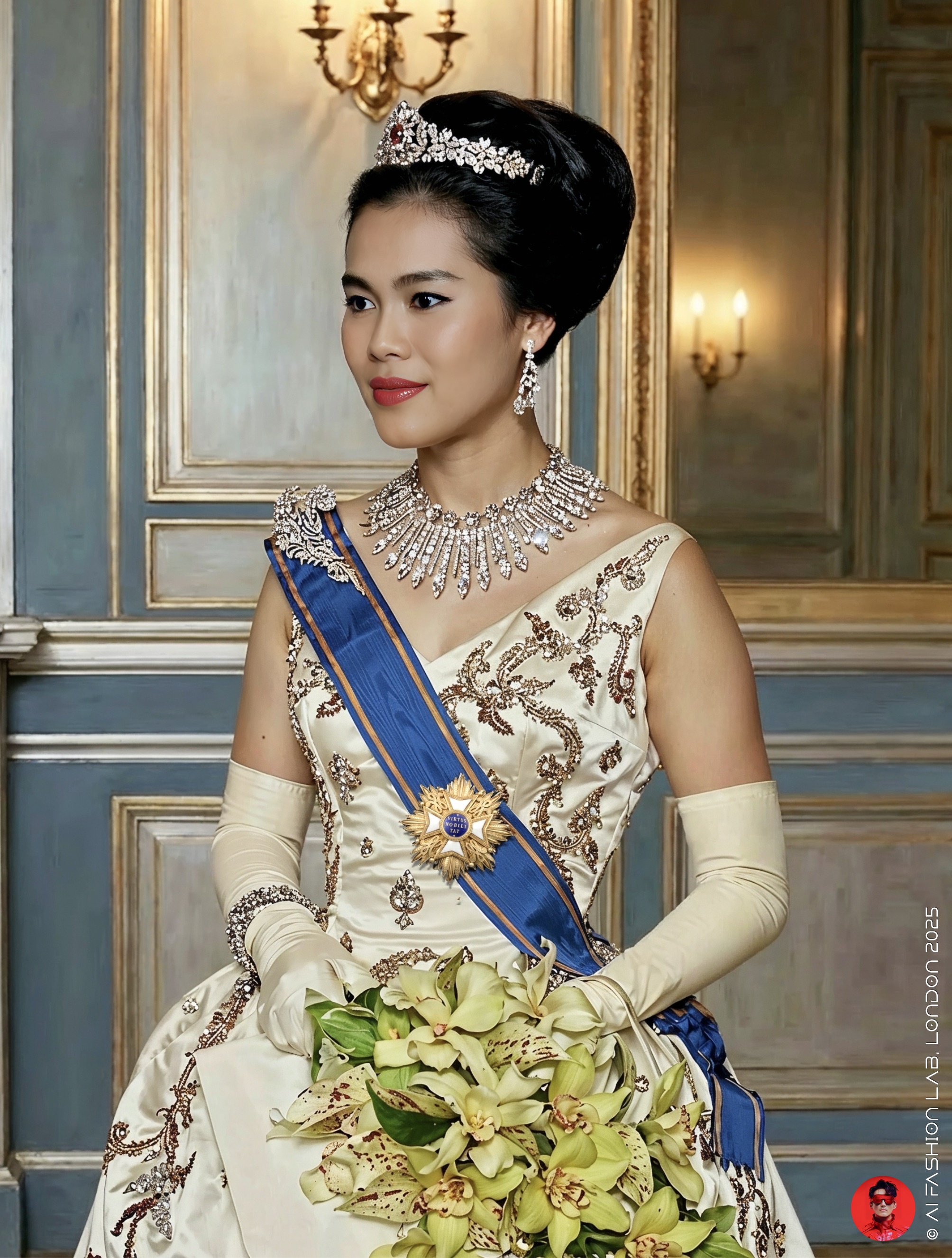
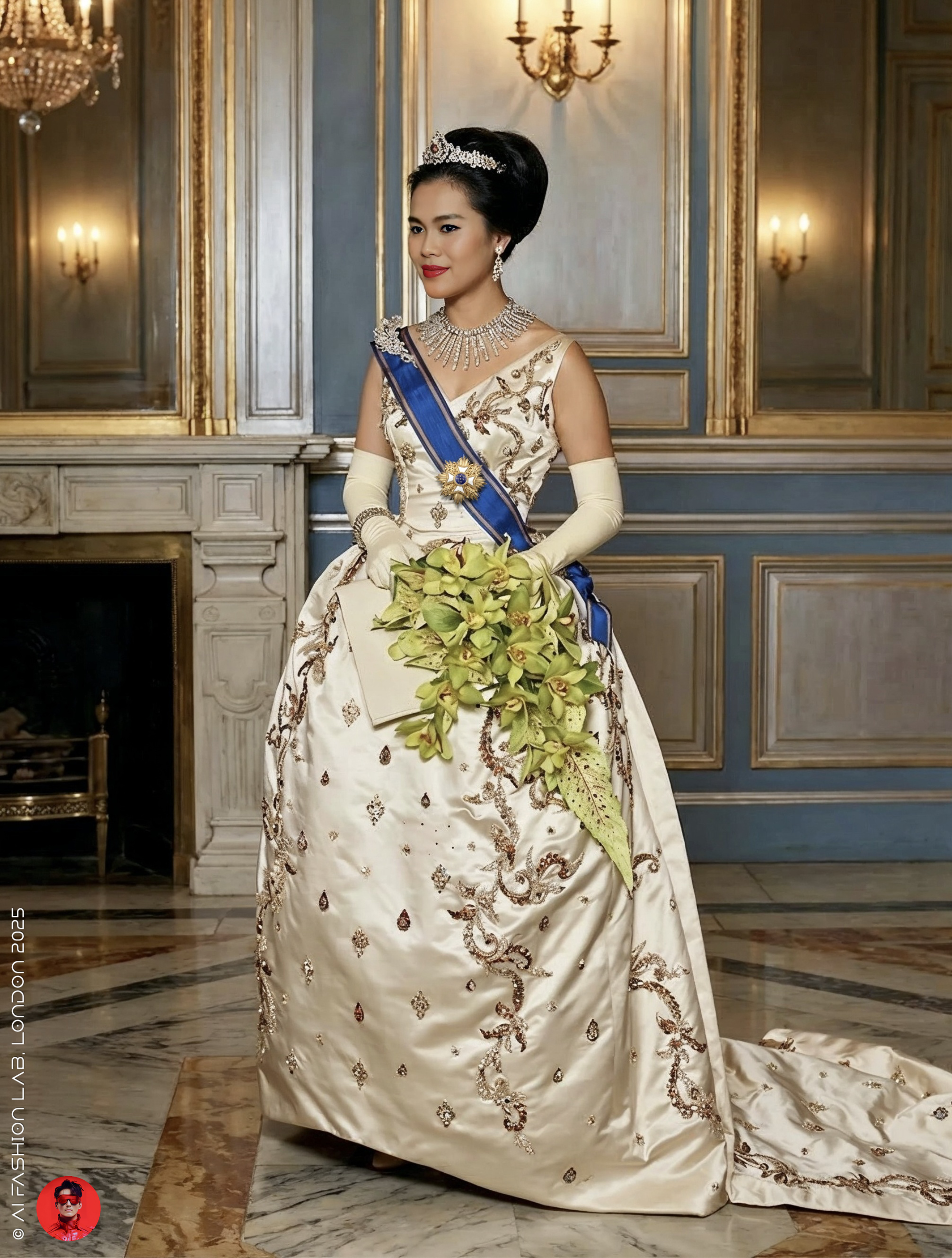
คอลเลกชันภาพที่ได้รับการบูรณะและสร้างสรรค์ด้วยเทคโนโลยี AI นี้ คือพระฉายาลักษณ์ของ สมเด็จพระนางเจ้าสิริกิติ์ พระบรมราชินีนาถ พระบรมราชชนนีพันปีหลวง ฉายในงาน gala concert ณ Kurzaal เมือง The Hague เมื่อปีพุทธศักราช ๒๕๐๓ (ค.ศ. 1960)
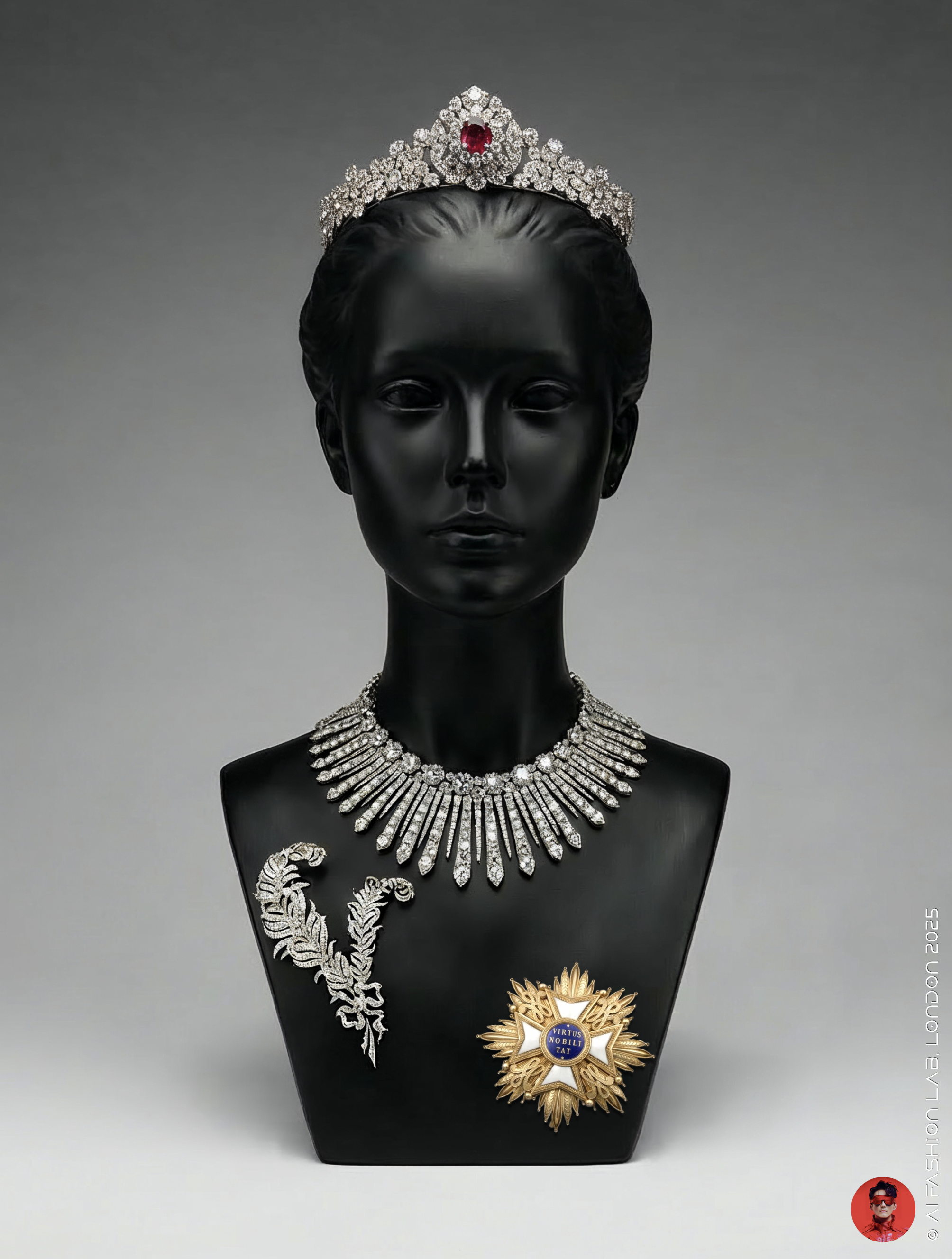
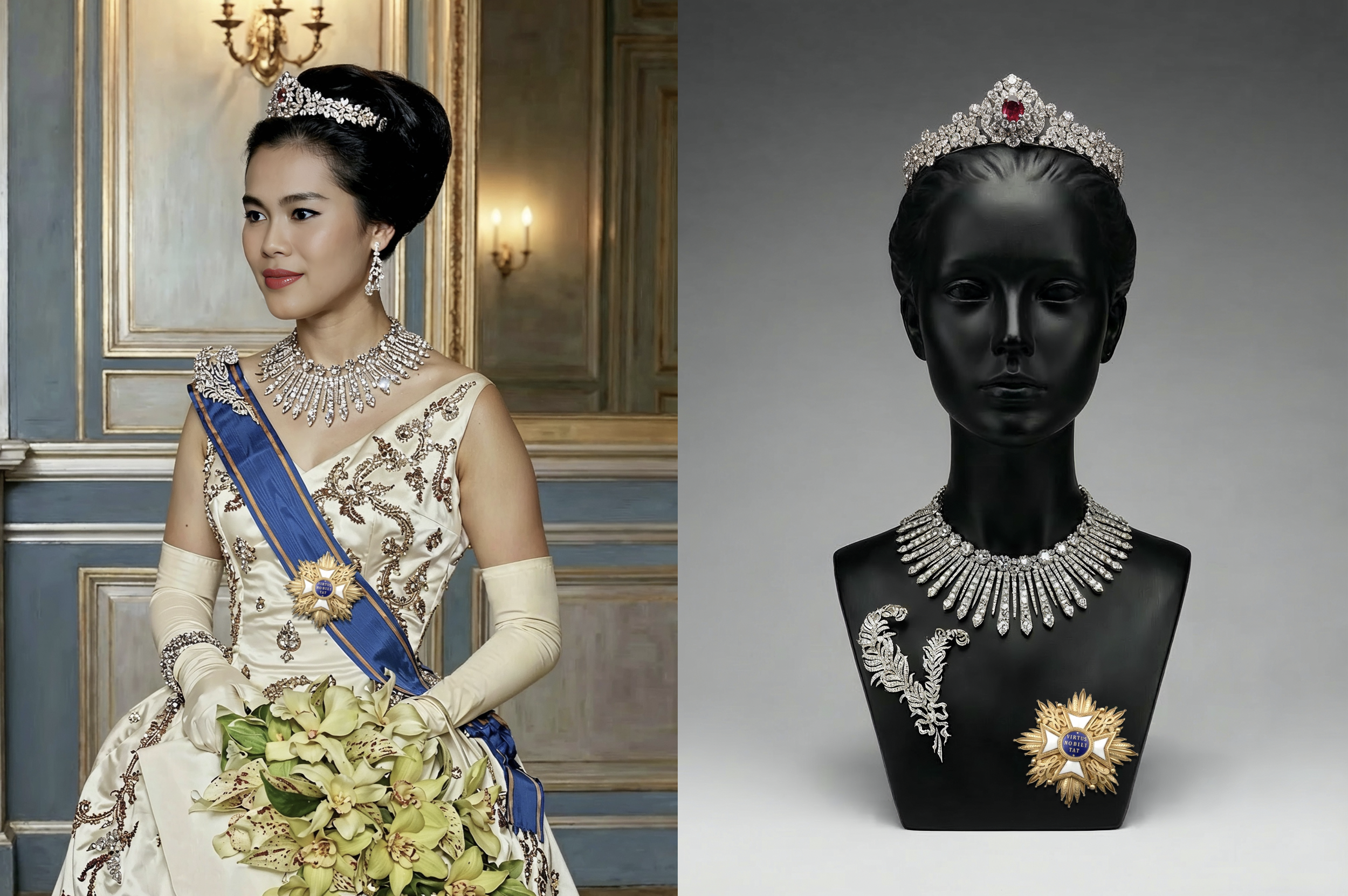
องค์ประกอบของฉลองพระองค์ชุดราตรีครั้งนี้สะท้อนรสนิยมแฟชั่นชั้นสูงระดับนานาชาติอย่างชัดเจน ประกอบด้วยฉลองพระองค์ชุดราตรีออกแบบโดย Pierre Balmain การประดับ Order of the Netherlands Lion เทียร่าเพชรรูปดอกไม้ประดับทับทิม สร้อยพระศอเพชรแบบ Rivière หรือที่เรียกกันในภาษาไทยว่า “สร้อยเพชรแม่เศรษฐี” สร้อยพระศอแบบแฉกรัศมี (fringe) และเข็มกลัดเพชรรูปขนนกกระจอกเทศ ซึ่งเป็นจุดเด่นเชิงสัญลักษณ์ของฉลองพระองค์ทั้งหมด
เข็มกลัดเพชรรูปขนนกกระจอกเทศองค์นี้ เป็นเครื่องประดับของ สมเด็จพระศรีพัชรินทราบรมราชินีนาถ พระบรมราชชนนีพันปีหลวงในรัชกาลที่ ๕ และต่อมาได้กลายเป็นหนึ่งในพระราชมรดกเครื่องประดับสำคัญที่สืบทอดมาถึงสมเด็จพระนางเจ้าสิริกิติ์ พระบรมราชินีนาถ พระบรมราชชนนีพันปีหลวง พระองค์ทรงเลือกประดับเข็มกลัดเพชรชิ้นนี้คู่กับฉลองพระองค์ราตรีอย่างงดงามในคราวเสด็จเยือนยุโรป และทรงเข็มกลัดองค์นี้ในงาน gala concert ณ Kurzaal เมือง The Hague เมื่อปี พ.ศ. ๒๕๐๓ (ค.ศ. 1960)
ในโลกแฟชั่นของชนชั้นสูงยุโรป “ขนนกกระจอกเทศ” มิได้เป็นเพียงวัสดุตกแต่ง หากเป็นสัญลักษณ์ที่สะสมความหมายทางสังคมมาอย่างยาวนาน ตั้งแต่คริสต์ศตวรรษที่ 18 เป็นต้นมา ขนนกกระจอกเทศได้กลายเป็นภาพแทนของความมั่งคั่ง ความสูงศักดิ์ และชีวิตที่อยู่เหนือความจำเป็นพื้นฐาน ขนนกที่ยาว เบา และพลิ้วไหวนี้ปรากฏอย่างโดดเด่นบนทรงผมสูงสลับซับซ้อนของสตรีผู้ดี ทำหน้าที่เสมือน “จุดสูงสุดแห่งแฟชั่น” ที่สามารถบ่งบอกฐานะของผู้สวมใส่ได้ในทันที
ความนิยมของขนนกกระจอกเทศในช่วงเวลาดังกล่าว มิได้เกิดจากความงามเพียงอย่างเดียว หากเกิดจากคุณค่าของความหายากและต้นทุนที่สูงลิ่ว ขนนกต้องเดินทางไกลจากดินแดนนอกยุโรป ผ่านเครือข่ายการค้าระหว่างทวีป ก่อนจะผ่านกระบวนการคัดเลือก ทำความสะอาด และจัดรูปทรง ซึ่งล้วนต้องอาศัยแรงงานและช่างฝีมือระดับสูง ด้วยเหตุนี้ ขนนกกระจอกเทศจึงมีราคาสูง ถูกเก็บรักษา ใช้ซ้ำ หรือถ่ายทอดเป็นทรัพย์สิน ไม่ต่างจากอัญมณีหรือเครื่องประดับล้ำค่าอื่น ๆ
เมื่อเข้าสู่คริสต์ศตวรรษที่ 19 ความหมายเชิงสัญลักษณ์ของขนนกกระจอกเทศได้ขยายจากทรงผมและศีรษะ มาสู่โลกของเครื่องประดับอย่างเด่นชัด ช่างอัญมณีเริ่ม “แปลภาษา” ของขนนกจริงให้กลายเป็นรูปทรงถาวร ด้วยการใช้เพชรเรียงเป็นเส้นโค้งเลียนแบบโครงสร้างของขน ความพลิ้วไหวซึ่งเคยเป็นของธรรมชาติ ถูกถ่ายทอดผ่านประกายเพชรและเส้นโลหะอันละเอียดอ่อน จนเกิดเป็น เข็มกลัดเพชรรูปขนนก ซึ่งทำหน้าที่เป็นทั้งเครื่องประดับและสัญลักษณ์ทางชนชั้นในคราวเดียวกัน
เข็มกลัดเพชรรูปขนนกกระจอกเทศจึงมิได้ถือกำเนิดขึ้นอย่างโดดเดี่ยว หากเป็นผลสืบเนื่องโดยตรงจากวัฒนธรรมการประดับขนนกกระจอกเทศจริงในแฟชั่นชั้นสูง การเลือกใช้เพชร—อัญมณีที่สะท้อนแสงอย่างคมชัดและคงทนถาวร—แทนขนนกที่เปราะบางและเสื่อมสภาพง่าย คือการยกระดับสัญลักษณ์แห่งความมั่งคั่งจากสิ่งชั่วคราวสู่สิ่งที่เป็นอมตะ เข็มกลัดเพชรรูปขนนกจึงกลายเป็น “ขนนกแห่งสถานะ” ที่ไม่ร่วงโรยตามกาลเวลา
เมื่อเข็มกลัดเพชรรูปขนนกกระจอกเทศชิ้นนี้ถูกสืบทอดและนำมาประดับโดยสมเด็จพระนางเจ้าสิริกิติ์ พระบรมราชินีนาถ พระบรมราชชนนีพันปีหลวง บนเวทีแฟชั่นราตรีและเวทีนานาชาติ ความหมายของขนนกกระจอกเทศได้แปรเปลี่ยนอีกครั้ง จากสัญลักษณ์แห่งความมั่งคั่งในราชสำนักยุโรป สู่สัญลักษณ์ของความสง่างามร่วมสมัยและการสืบต่อมรดกทางวัฒนธรรม
ดังนั้น เข็มกลัดเพชรรูปขนนกกระจอกเทศในคอลเลกชันนี้ จึงมิใช่เพียงเครื่องประดับอันวิจิตร หากเป็นบทสนทนาทางประวัติศาสตร์ ระหว่างขนนกกระจอกเทศในโลกแฟชั่นของศตวรรษที่ 18 กับเพชรในฐานะอัญมณีแห่งอำนาจและความยั่งยืน และระหว่างราชสำนักยุโรปกับราชสำนักสยาม ซึ่งต่างเข้าใจภาษาของความงาม ความมั่งคั่ง และศักดิ์ศรีในระดับสากลอย่างลึกซึ้ง
_________________
The Ostrich Feather Diamond Brooch: Her Majesty Queen Sirikit, The Queen Mother (Part II)
This AI-restored and creatively reimagined image collection presents a formal portrait of Queen Sirikit, The Queen Mother of Thailand, taken during a gala concert at the Kurzaal, The Hague, in 1960.
The evening ensemble worn on this occasion reflects a highly sophisticated dialogue between European haute couture, royal protocol, and inherited dynastic jewellery. The gown was designed by Pierre Balmain, one of the leading figures of post-war Parisian couture. It was complemented by the insignia of the Order of the Netherlands Lion, worn alongside a diamond floral tiara set with rubies, a Rivière diamond necklace (widely known in Thai as the “Mae Seththi” or “Millionaire’s Necklace”), a radiant fringe-style diamond necklace, and, most notably, an ostrich feather diamond brooch.
The ostrich feather diamond brooch is a historic jewel that originally belonged to Queen Saovabha, Queen Mother during the reign of King Chulalongkorn (Rama V). Over time, it became one of the most significant heirloom jewels of the Thai royal collection, later inherited by Queen Sirikit. During her European tour, Her Majesty chose to wear this brooch with an evening gown of exceptional refinement, most memorably at the gala concert at the Kurzaal in 1960, where its symbolic resonance was fully realised on an international stage.
Within European aristocratic fashion, ostrich feathers were never merely decorative. From the eighteenth century onwards, they accumulated layered social meanings, becoming powerful signifiers of wealth, rank, and a life lived beyond material necessity. Their length, lightness, and fluid movement made them ideal ornaments for towering and elaborate coiffures, serving as an immediate visual marker of elite status—what might be described as the “summit of fashion” in its era.
The desirability of ostrich feathers did not stem from beauty alone. Their rarity and high cost played an equally crucial role. Feathers travelled vast distances from regions outside Europe, passing through complex intercontinental trade networks. Only the finest plumes were selected, meticulously cleaned, shaped, and styled by skilled artisans. As a result, ostrich feathers commanded extremely high prices and were often preserved, reused, and passed down as assets—valued in a manner comparable to precious gemstones.
By the nineteenth century, the symbolic language of ostrich feathers expanded decisively into the realm of jewellery. Jewellers began to “translate” the ephemeral qualities of real feathers into permanent form. Diamonds were arranged in curved, tapering lines that echoed the structure of a plume, capturing the sense of movement and lightness through brilliance rather than physical motion. Thus emerged the diamond feather brooch: an object that functioned simultaneously as adornment and as a marker of social hierarchy.
The ostrich feather diamond brooch, therefore, did not arise in isolation. It represents a direct continuation of the long-standing fashion culture of real ostrich feather adornment. The substitution of diamonds—durable, luminous, and eternal—for fragile organic feathers transformed a fleeting symbol of luxury into a permanent one. In this sense, the diamond feather became a “feather of status” immune to the passage of time.
When this historic brooch was inherited and worn by Queen Sirikit in the context of formal evening wear and international diplomacy, its meaning evolved once again. No longer merely a European aristocratic emblem of wealth, it became a symbol of modern royal elegance and cultural continuity—bridging generations, geographies, and aesthetic traditions.
Accordingly, the ostrich feather diamond brooch in this collection should not be understood simply as a magnificent jewel. It is a historical conversation: between eighteenth-century European fashion and diamonds as enduring emblems of power; between impermanent natural beauty and lasting material splendour; and between European courts and the Siamese royal tradition—both fluent in the shared visual language of elegance, prestige, and sovereign dignity.
_________________
เรียนเชิญกด Subscribe ได้ที่ลิงก์นี้ครับ เพื่อร่วมติดตามงานสร้างสรรค์ต้นฉบับ งานวิจัยประวัติศาสตร์แฟชั่น และผลงานอนุรักษ์มรดกวัฒนธรรมด้วยเทคโนโลยี AI ของ AI Fashion Lab, London ซึ่งมุ่งตีความอดีตผ่านมิติใหม่ของการบูรณะภาพ การสร้างสรรค์ภาพ และการเล่าเรื่องด้วยศิลปะเชิงดิจิทัล 🔗 https://www.facebook.com/aifashionlab/subscribe/
#aifashionlab #AI #aiartist #aiart #aifashion #aifashiondesign #aifashionstyling #aifashiondesigner #fashion #fashionhistory #historyoffashion #fashionstyling #fashionphotography #digitalfashion #digitalfashiondesign #digitalcostumedesign #digitaldesign #digitalaiart #ThaiFashionHistory #ThaiFashionAI #thailand #UNESCO