เครื่องเพชรชุดไพลิน ของสมเด็จพระศรีพัชรินทราบรมราชินีนาถ พระบรมราชชนนีพันปีหลวง
เครื่องเพชรชุดไพลิน ของสมเด็จพระศรีพัชรินทราบรมราชินีนาถ พระบรมราชชนนีพันปีหลวง
เครื่องเพชรชุดไพลิน ชุดนี้นับเป็นพระราชมรดกชิ้นสำคัญที่สืบทอดมาจาก
“สมเด็จพระศรีพัชรินทราบรมราชินีนาถ พระบรมราชชนนีพันปีหลวง”
ซึ่งทรงเป็นบุคคลสำคัญในการเผยแพร่รสนิยมเครื่องประดับราชสำนักสยามในช่วงปลายคริสต์ศตวรรษที่ 19 ถึงต้นคริสต์ศตวรรษที่ 20 โดยเฉพาะเครื่องเพชรที่ได้รับอิทธิพลจากราชสำนักยุโรป แต่ยังคงคุณค่าเชิงสัญลักษณ์แบบราชสำนักสยามอย่างชัดเจน
ในส่วนของที่มา (provenance) เทียร่า/สร้อยพระศอไพลิน ชิ้นสำคัญนั้น เดิมเป็นทรัพย์สินของ ขุนนางชั้นสูงชาวยุโรป พระบาทสมเด็จพระจุลจอมเกล้าเจ้าอยู่หัว ทรงซื้อมาในระหว่างการเสด็จประพาสยุโรป เพื่อพระราชทานเป็นของขวัญแด่ สมเด็จพระศรีพัชรินทราบรมราชินีนาถ อันเป็นการสะท้อนพระราชนิยมและการเชื่อมโยงทางวัฒนธรรมระหว่างราชสำนักสยามกับราชสำนักยุโรปในช่วงปลายคริสต์ศตวรรษที่ 19
ต่อมา สร้อยพระศอ ได้รับการออกแบบและจัดสร้างขึ้น โดยช่างอัญมณีชาวสยาม ตามคติเครื่องประดับแบบยุโรป เพื่อให้ เข้าชุดและสอดคล้องกับเทียร่าเดิม ที่ทรงได้รับพระราชทานมาแล้ว แสดงให้เห็นถึงการผสมผสานอย่างประณีตระหว่างรูปแบบตะวันตกกับฝีมือช่างในราชสำนักสยาม
นอกจากนี้ เครื่องเพชรชุดไพลินดังกล่าวยังประกอบด้วย กำไล/เข็มกลัดขนาดใหญ่ ซึ่งมีรูปแบบการออกแบบในแนวเดียวกัน ยืนยันว่าชุดนี้ถูกสร้างขึ้นในฐานะ เครื่องเพชรเป็น “ชุด” (parure หรือ demi-parure) อย่างแท้จริง มิใช่เพียงเครื่องประดับชิ้นเดียว หากเป็นการออกแบบให้ใช้ร่วมกันอย่างมีเอกภาพ ทั้งในเชิงสุนทรียะ พิธีการ และฐานันดรศักดิ์
โดยรวมแล้ว ประวัติและที่มาของเครื่องเพชรชุดไพลินนี้สะท้อน การแลกเปลี่ยนทางวัฒนธรรมระหว่างสยามกับยุโรป บทบาทของพระมหากษัตริย์สยามในฐานะผู้เลือกสรรและกำหนดรสนิยมราชสำนัก และการสืบทอดพระราชมรดกฝ่ายในในฐานะสัญลักษณ์แห่งความต่อเนื่อง อำนาจ และสายสัมพันธ์ของราชสำนักไทยในยุคสมัยใหม่
__________
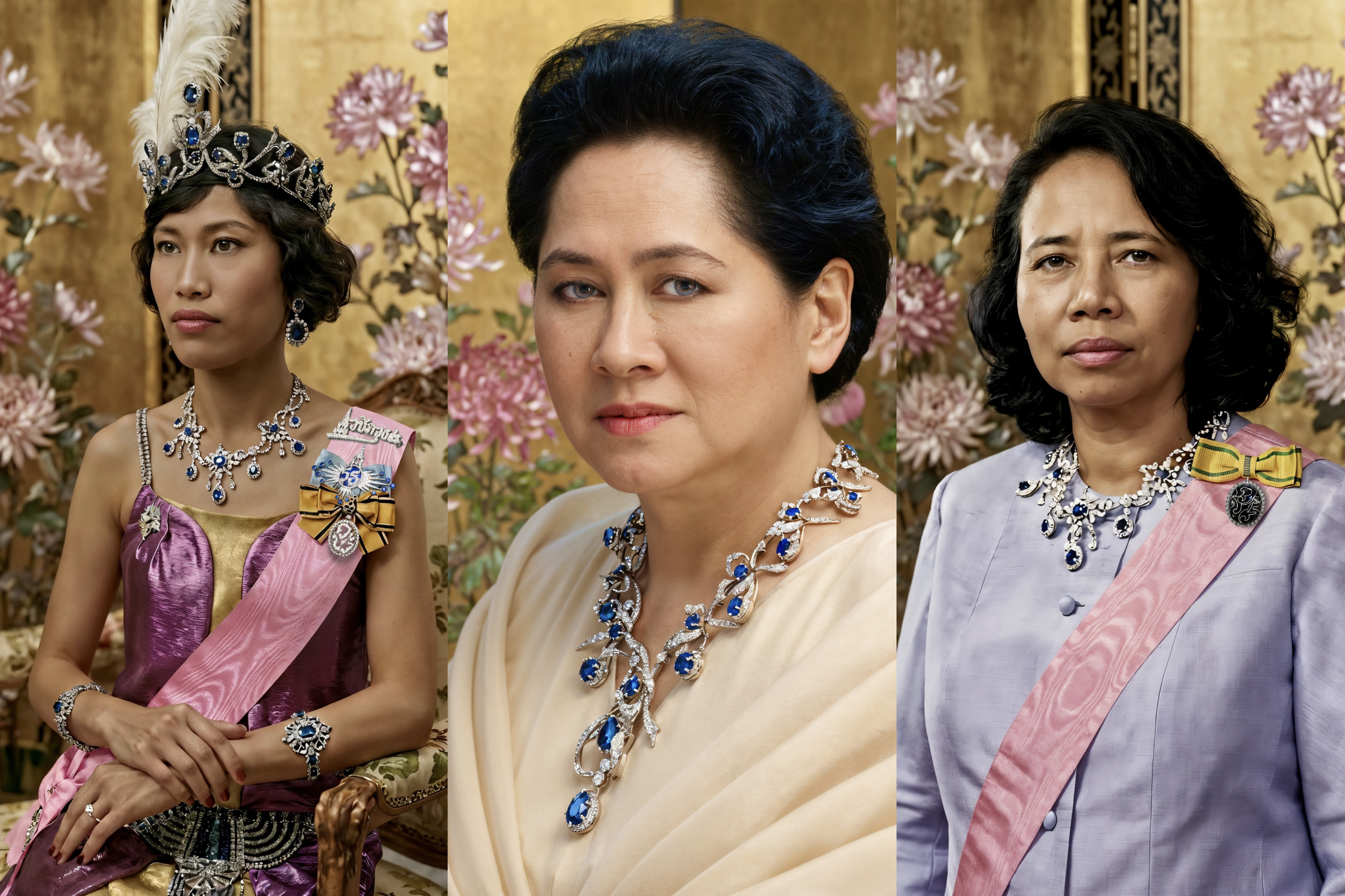
จากพระรูปทั้งสาม สามารถเห็นได้ว่า
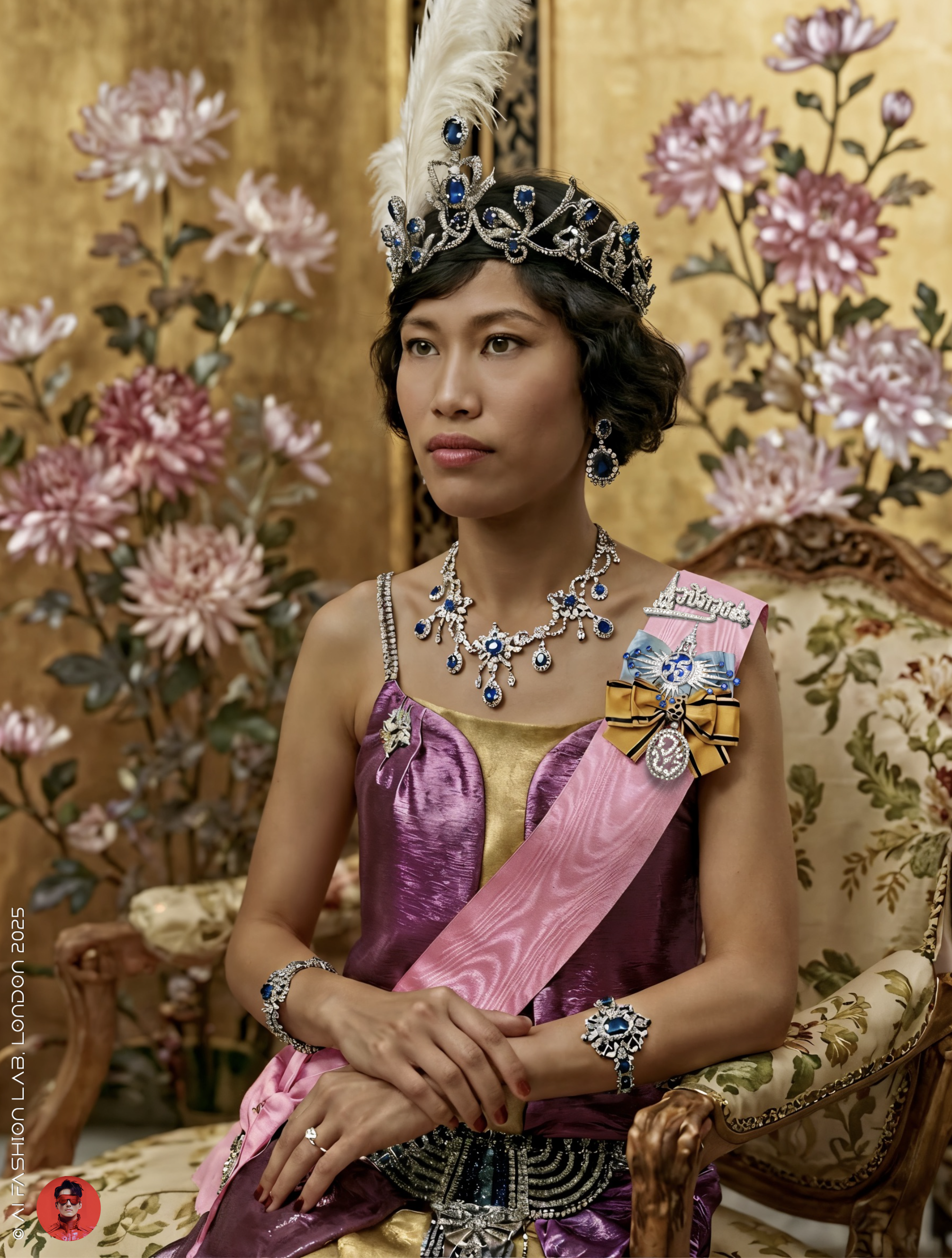
พระนางเจ้าสุวัทนา พระวรราชเทวี ในรัชกาลที่ ๖
ทรงประดับ เครื่องเพชรชุดไพลิน ซึ่งสะท้อนการสืบทอดพระราชมรดกและรสนิยมของราชสำนัก เครื่องเพชรชุดนี้มิได้เป็นเพียงเครื่องประดับ หากแต่เป็น “ภาษาทางสายตา” ที่บอกถึงสายสัมพันธ์ระหว่างพระราชวงศ์ฝ่ายในข้ามรัชกาล
จุดที่น่าสนใจเป็นพิเศษคือ เทียร่าไพลิน ซึ่งออกแบบตามคติเครื่องเพชรยุโรปปลายศตวรรษที่ 19–ต้นศตวรรษที่ 20 ให้สามารถ ถอดและแปลงรูปแบบ ได้ เทียร่าชิ้นเดียวกันนี้สามารถเปลี่ยนมาใช้เป็น สร้อยพระศอ ได้ ดังที่ปรากฏในพระรูปของ
__________
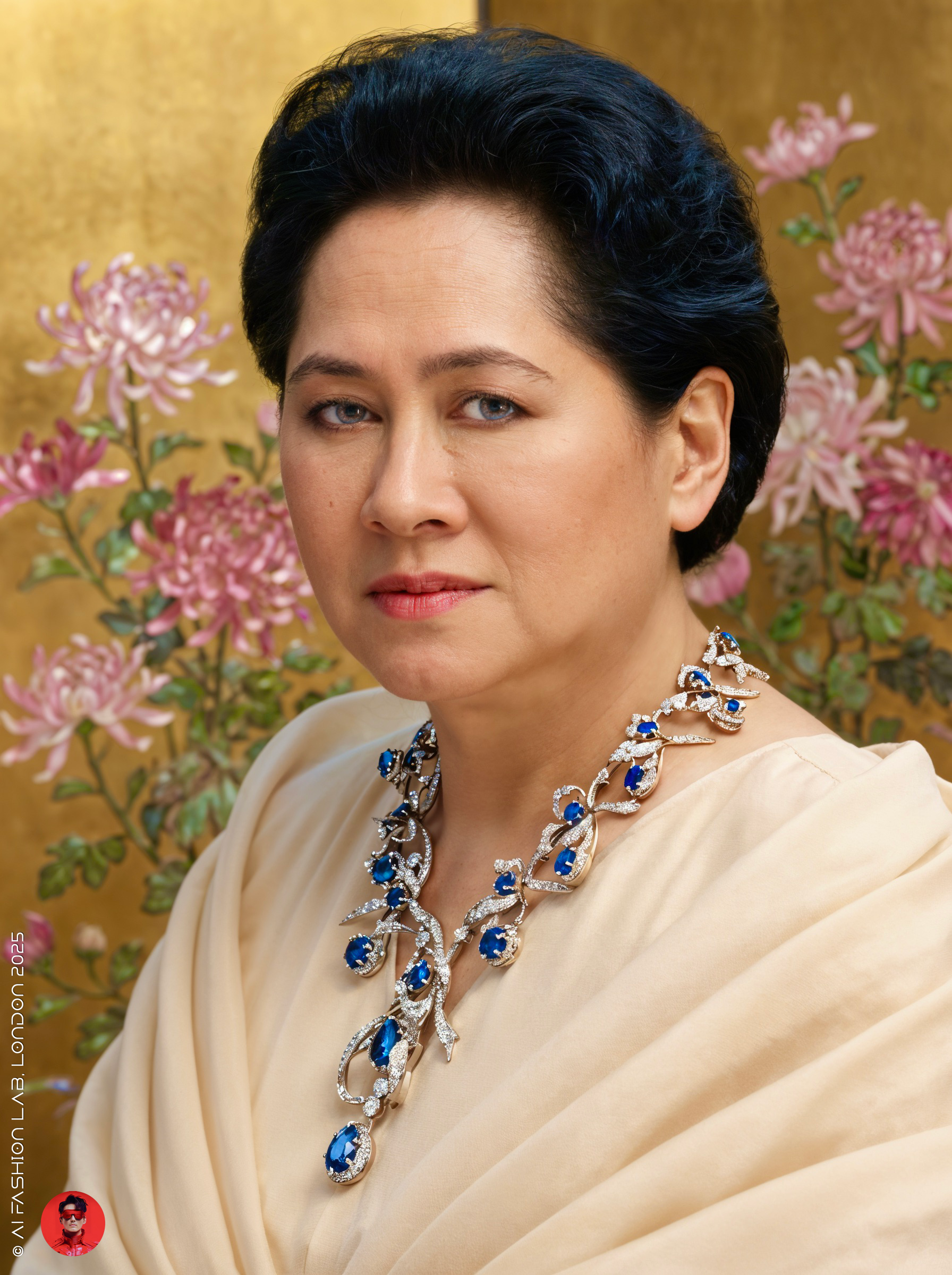
2. สมเด็จเจ้าฟ้ากรมพระนราธิวาสราชนครินทร์ บดินทรเชษฐภคินี
ซึ่งแสดงให้เห็นถึงความยืดหยุ่นของเครื่องเพชรชั้นสูงในราชสำนัก มิใช่เพื่อความหรูหราเพียงอย่างเดียว หากยังสะท้อนความเข้าใจแฟชั่นและมารยาทการแต่งกายแบบสากล
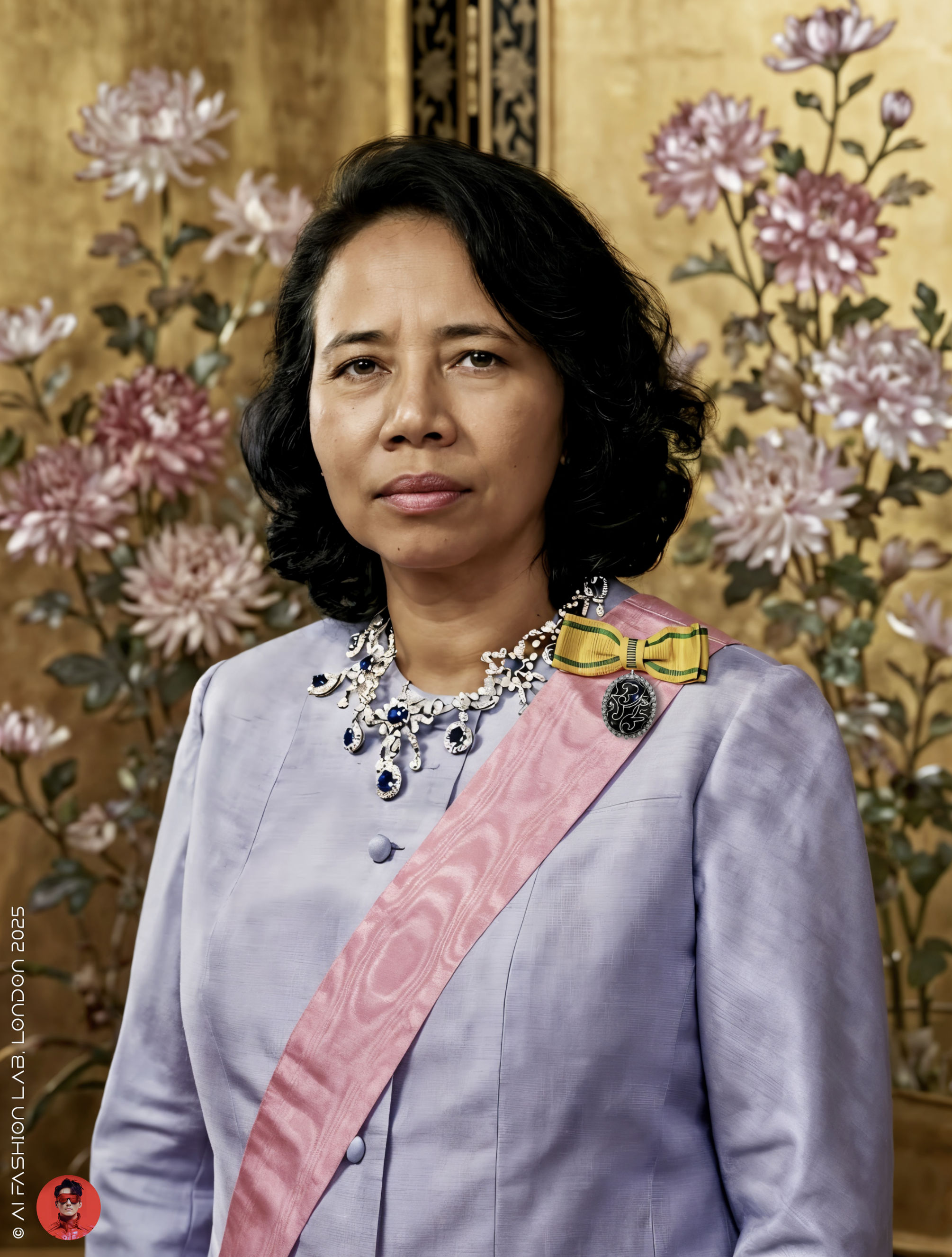
ขณะเดียวกัน สร้อยพระศอไพลิน องค์เดียวกันนี้ ยังปรากฏในพระรูปของ
__________
3. พระวรวงศ์เธอ พระองค์เจ้าสุทธสิริโสภา
พระธิดาในสมเด็จพระเจ้าบรมวงศ์เธอ เจ้าฟ้าจุฑาธุชธราดิลก กรมขุนเพ็ชรบูรณ์อินทราไชย ประสูติแต่หม่อมลออ จุฑาธุช ณ อยุธยา ซึ่งยืนยันอย่างชัดเจนว่า เครื่องเพชรชุดนี้เป็น พระราชมรดกที่ถูกนำกลับมาใช้ซ้ำในบริบทต่างยุค ต่างพระองค์ โดยยังคงสถานะ ความหมาย และคุณค่าทางประวัติศาสตร์ไว้อย่างครบถ้วน
โดยสรุป เครื่องเพชรชุดไพลินนี้จึงมิใช่เพียงงานช่างชั้นสูง หากแต่เป็นหลักฐานทางวัฒนธรรมที่สะท้อน การสืบทอดภายในราชสกุล รสนิยมแฟชั่นแบบสากลของสตรีราชสำนักสยาม และบทบาทของเครื่องประดับในฐานะสัญลักษณ์แห่งสายสัมพันธ์ อำนาจ และความต่อเนื่องของราชสำนักไทยในยุคเปลี่ยนผ่านสู่โลกสมัยใหม่
__________
The Sapphire Parure of Her Majesty Queen Sri Bajarindra, the Queen Mother
The Sapphire Parure is regarded as an important royal heirloom inherited from
สมเด็จพระศรีพัชรินทราบรมราชินีนาถ, Her Majesty Queen Sri Bajarindra, the Queen Mother,
who played a decisive role in shaping and disseminating the jewellery taste of the Siamese royal court from the late nineteenth to the early twentieth century. Her patronage particularly favoured diamond and gemstone jewellery influenced by European court traditions, while still maintaining the symbolic meanings and hierarchical values intrinsic to the Siamese royal system.
History and Provenance
With regard to its provenance, the sapphire tiara/necklace, the most significant component of the suite, originally belonged to a European nobleman. It was acquired by
พระบาทสมเด็จพระจุลจอมเกล้าเจ้าอยู่หัว
during his visit to Europe and presented as a gift to Queen Sri Bajarindra. This acquisition reflects both the King’s personal aesthetic discernment and the cultural connections established between the Siamese and European royal courts in the late nineteenth century.
Subsequently, a matching sapphire necklace was designed and created by a Thai jeweller, following European jewellery conventions, to complement the original tiara. This demonstrates a refined synthesis of Western design principles with the craftsmanship of Siamese court jewellers, and highlights the ability of local artisans to engage fluently with international luxury aesthetics.
The sapphire suite also includes a large bracelet/brooch, executed in the same stylistic language, confirming that it was conceived as a coherent jewellery set—either a parure or demi-parure—rather than as an isolated ornament. The suite was therefore intended to be worn in combination, with visual unity appropriate to ceremonial use, court etiquette, and royal rank.
Use Across Generations
From the three surviving royal portraits, it is evident that:
พระนางเจ้าสุวัทนา พระวรราชเทวี, Royal Consort in the reign of King Rama VI,
frequently wore the sapphire jewellery suite. This reflects both the inheritance of royal property and the continuity of courtly taste across generations. The jewellery functions not merely as adornment, but as a visual languageexpressing lineage, proximity, and continuity among royal women across different reigns.
A particularly notable feature is the convertible sapphire tiara, designed according to late nineteenth- and early twentieth-century European high jewellery practices. The same piece could be detached and reconfigured into a necklace, as seen in the portrait of:
สมเด็จเจ้าฟ้ากรมพระนราธิวาสราชนครินทร์, Princess Naradhiwas Rajanagarindra,
demonstrating the adaptability of high jewellery within the Siamese court. This flexibility reflects not only luxury, but also an advanced understanding of international fashion norms and court etiquette.
At the same time, the same sapphire necklace appears in the portrait of:
พระองค์เจ้าสุทธสิริโสภา,
daughter of His Royal Highness Prince Chudadhuj Dharadilok, Prince of Phetchabun Indrachai, born to Mom La-or Chudadhuj na Ayudhya. Its appearance here clearly confirms that this sapphire suite was a royal heirloom, repeatedly reused by different royal women across different periods, while fully retaining its status, meaning, and historical significance.
Conclusion
In conclusion, the sapphire jewellery suite is not merely an example of exceptional craftsmanship. It stands as a cultural artefact that embodies the transmission of royal heritage, the cosmopolitan fashion sensibilities of Siamese court women, and the role of jewellery as a symbol of connection, authority, and continuity during Siam’s transition into the modern world.
__________
เรียนเชิญกด Subscribe ได้ที่ลิงก์นี้ครับ เพื่อร่วมติดตามงานสร้างสรรค์ต้นฉบับ งานวิจัยประวัติศาสตร์แฟชั่น และผลงานอนุรักษ์มรดกวัฒนธรรมด้วยเทคโนโลยี AI ของ AI Fashion Lab, London ซึ่งมุ่งตีความอดีตผ่านมิติใหม่ของการบูรณะภาพ การสร้างสรรค์ภาพ และการเล่าเรื่องด้วยศิลปะเชิงดิจิทัล 🔗 https://www.facebook.com/aifashionlab/subscribe/
#aifashionlab #AI #aiartist #aiart #aifashion #aifashiondesign #aifashionstyling #aifashiondesigner #fashion #fashionhistory #historyoffashion #fashionstyling #fashionphotography #digitalfashion #digitalfashiondesign #digitalcostumedesign #digitaldesign #digitalaiart #ThaiFashionHistory #ThaiFashionAI #thailand #UNESCO